Home Blog Page 753

NBI names acting chief
PHILSTAR FILE PHOTO

THE National Bureau of Investigation (NBI) on Wednesday officially announced that Angelito DLP Magno has assumed office as officer-in-charge (OIC) of the government’s lead agency for criminal investigations.

Mr. Magno, appointed by President Ferdinand R. Marcos, Jr., succeeded former NBI Director Jaime B. Santiago, whose irrevocable resignation was accepted by Malacañang earlier this week.

A career officer with more than three decades of service, Mr. Magno began his NBI career in 1991 as a project worker and steadily rose through the ranks to become assistant director, holding key posts in the Bureau’s Legal, Investigation, and Information and Communication Technology services.

He previously served as regional director in Ilocos region, central Luzon, Calabarzon and northern Mindanao, overseeing major operations across Luzon, Visayas, and Mindanao.

Among the high-profile cases under his leadership were the P3.8-billion drug bust in Pampanga, the investigation into the assassination of Negros Oriental Gov. Roel R. Degamo, the probe into the MT Princess Empress oil spill, and the dismantling of the Socorro Bayanihan child exploitation network.

In a statement, the NBI said Mr. Magno aims to strengthen the bureau’s investigative capacity and institutional integrity, urging personnel to uphold ethical conduct and public trust. 

Mr. Magno holds a Bachelor of Laws from the University of San Carlos and a Bachelor of Arts in Philosophy from the University of Santo Tomas.

In his resignation letter to the President dated Aug. 15, former NBI Director Santiago said he decided to step down due to “incessant moves” by “detractors and those who have sinister interest in my position” to discredit him.

He said his tenure focused on cleansing the Bureau of erring personnel and investigating irregularities, including the abolition of a unit allegedly prone to misconduct. Mr. Santiago said he resigned to prevent the controversies surrounding his leadership from disrupting NBI operations. — Erika Mae P. Sinaking
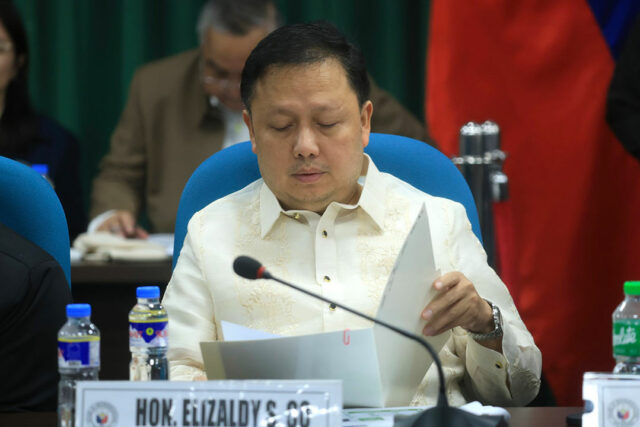
CAAP: 3 aircraft tied to Co left PHL

X.COM/ZALDYCO_

THE Civil Aviation Authority of the Philippines (CAAP) said three air assets tied to former Party-list Rep. Elizaldy S. Co are no longer in the Philippines.

“CAAP confirms that three registered air assets connected to Mr. Co have departed from the country,” CAAP said in a statement on Wednesday.

Two AgustaWestland choppers landed in Kota Kinabalu on Aug. 20 and Sept. 11; while another Gulfstream aircraft registered to Mr. Co has remained in Singapore since Aug. 16, CAAP said.

“CAAP reiterates that it continues to closely monitor all registered air assets in accordance with the law,” it said.

The Department of Public Works and Highways (DPWH) in September requested the Anti-Money Laundering Council (AMLC) to freeze the billions of pesos worth of air and vehicle assets belonging to personalities, contractors and agency officials linked to anomalies in flood control projects.

These include at least 10 air assets with a combined value of $82.59 million tied to Mr. Co.

A total of P4.7 billion or $82.59 million worth of air assets were registered under Mr. Co’s Misibis Aviation and Development Corp. and Hi-Tone Construction and Development Corp. — founded by his brother Christopher S. Co.

Hi-Tone and Sunwest, Inc. founded by Mr. Co were among the 15 contractors that cornered more than P100 billion worth of flood control projects between July 2022 and May 2025. — Ashley Erika O. Jose

DPWH taps experts for flood control plan

DEPARTMENT of Public Works and Highways (DPWH) Secretary Vivencio “Vince” B. Dizon speaks during a press briefing with the Malacañang Press Corps on Sept. 1, 2025. — PHILIPPINE STAR/RYAN BALDEMOR

THE Department of Public Works and Highways (DPWH) has tapped environmental and flood management experts to prepare the agency’s flood control plan, while also helping assess locally funded flood control projects.

“We reached out to various experts to form a working group. Because as you know one of the problems we discovered is the lack of planning, we discovered that several flood control projects were not planned at all,” Public Works Secretary Vivencio B. Dizon told reporters on Wednesday.

He said the agency has reached out to experts like Environment and Natural Resources Undersecretary Carlos Primo C. David as well as experts from the University of the Philippines to form the technical working group.

The agency is preparing to shift toward science-based planning backed by data-driven solutions, Mr. Dizon said.

“I am asking the group to vet the plans. If they say the plans are good and will have a positive effect on flood mitigation in various plans, then we will put those in the 2027 budget,” he said, noting that plans without experts’ approval won’t make the agency’s budget proposal for 2027.

The agency slashed around P255 billion worth of locally funded flood control projects from its proposed 2026 budget.

“But we really need flood control projects, because many areas in the Philippines are flood prone. This time we will plan this right,” Mr. Dizon said.

The technical working group will also come up with an initial plan, Mr. Dizon said, adding that the agency is still awaiting the 18 major river system masterplan that is still being completed. — Ashley Erika O. Jose

DoJ case sought vs Senate witness

BW FILE PHOTO

A CONGRESSMAN on Wednesday urged the Department of Justice (DoJ) to file charges against a Senate witness who linked former House Speaker Ferdinand Martin G. Romualdez to a multibillion-peso flood control scandal.

In a statement, Party-list Rep. Terry L. Ridon said DoJ should consider filing falsification charges against the witness that has tagged ex-Party-list Rep. Elizaldy S. Co and Mr. Romualdez involvement in the flood control scandal.

He claimed to have delivered suitcases of cash to Mr. Co and the former House speaker in his affidavit to a Senate hearing on the flood control controversy, which has cast a shadow over President Ferdinand R. Marcos, Jr.’s administration and implicated politicians, officials and private contractors.

“Our legislative inquiries — in both the Senate and the House — depend on the authenticity of every document submitted,” Mr. Ridon said. “When fabricated evidence is used to manipulate proceedings, it is not just an attack on individuals but on Congress itself.”

“This was no clerical mistake — it was a premeditated attempt to subvert truth.” — Kenneth Christiane L. Basilio

DMW to boost labor ties with Austria

THE DEPARTMENT of Migrant Workers (DMW) on Wednesday said that it is seeking to bolster employment opportunities for overseas Filipino workers (OFW) in Austria.

In a statement, the agency said that Austria has indicated a willingness to create new opportunities in caregiving, tourism, and hospitality sectors, following a meeting between DWM Secretary Hans Leo J. Cacdac and Austrian Federal Minister of Labor and Economy Wolfgang Hattmannsdorfer.

“During the meeting, both officials reaffirmed their commitment to further strengthen and expand Philippine-Austrian labor cooperation, especially under the 2023 twin bilateral agreements on recruiting professional and skilled workers, including nurses,” the agency added.

According to the agency, the recruitment will be conducted through a special hiring arrangement that guarantees ethical recruitment and worker protection.

“Austria’s willingness to hire more Filipino workers shows the trust and high regard for the Filipino workforce,” Mr. Cacdac said.

The are about 8,000 OFWs working in Austria, with an estimates 700 new deployments in the past two years. — Adrian H. Halili

PHL stocks extend climb before Fed decision

BW FILE PHOTO

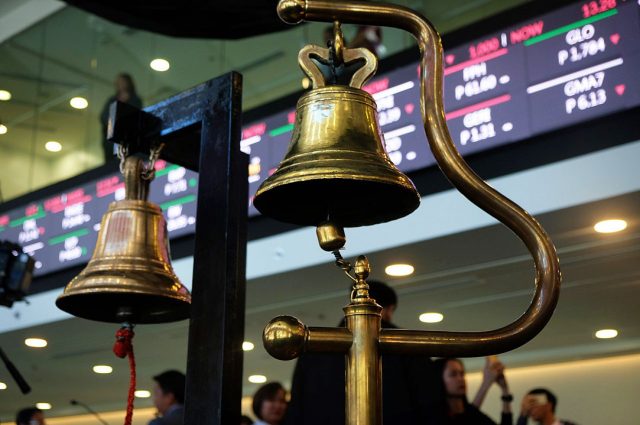
PHILIPPINE SHARES rose further on Wednesday as players continued to buy cheap stocks and amid expectations of a US Federal Reserve cut overnight.

The benchmark Philippine Stock Exchange index (PSEi) went up by 0.17% or 10.61 points to close at 5,963.77, while the broader all shares index rose by 0.43% or 15.70 points to end at 3,605.21.

“The local market extended its gains as investors continued with their bargain hunting. Hopes of a rate cut by the Federal Reserve and a solid agreement between the US and China in their meeting this week gave the market a boost… However, gains were eventually trimmed as investors traded cautiously amid lingering concerns primarily the Philippines’ corruption issues and their impact on economic outlook,” Philstocks Financial, Inc. Research Manager Japhet Louis O. Tantiangco said in a Viber message.

“The Philippine market ended higher as traders took advantage of the cheaper prices,” Regina Capital Development Corp. Head of Sales Luis A. Limlingan said in a Viber message.

The US Federal Reserve was expected to cut interest rates by a quarter of a percentage point on Wednesday as policymakers steer the US economy based on limited data that has nevertheless kept concerns about the strength of the job market top of mind, Reuters reported.

Economists polled by Reuters were nearly unanimous in expecting the US central bank to reduce its benchmark policy rate to the 3.75%-4% range when its latest two-day meeting concludes.

Mr. Tantiangco and Mr. Limlingan said the peso’s rebound against the dollar also boosted market sentiment. The peso surged by 44 centavos to close at P58.69 per dollar on Wednesday from its new all-time low of P59.13 on Tuesday, Bankers Association of the Philippines data showed.

The local unit opened the trading session weaker at P59.15 and even hit an intraday low of P59.26 per dollar, but managed to recoup its losses in the afternoon session.

Most sectoral indices closed higher on Wednesday. Mining and oil jumped by 3.29% or 402.36 points to 12,633.05; industrials rose by 1.38% or 121.63 points to 8,894.1; holding firms increased by 0.78% or 37.64 points to 4,844.89; and financials went up by 0.55% or 11 points to 1,981.64.

Meanwhile, property went down by 0.77% or 17.06 points to 2,181.48 and services dropped by 0.63% or 14.37 points to 2,268.05.

“LT Group, Inc. was the day’s top index gainer, jumping 5% to P14.70. Ayala Land, Inc. was the worst index performer, dropping 2.66% to P20.15,” Mr. Tantiangco said.

Advancers outnumbered decliners, 110 to 74, while 61 names closed unchanged.

Value turnover jumped to P6.46 billion on Wednesday with 690.95 million shares changing hands from Tuesday’s P4.64 billion with 1.18 billion issues traded.

Net foreign selling went up to P477.97 million from P432.57 million. — Alexandria Grace C. Magno with Reuters

Bill grants greater investigative powers for Ombudsman

OFFICE OF THE OMBUDSMAN PHILIPPINES FACEBOOK PAGE

A CONGRESSMAN on Wednesday filed a bill that would grant the Ombudsman authority to access bank accounts without a court order, as calls for greater public accountability grow amid a widening flood control scandal.

The Office of the Ombudsman should have the power to examine back records of government officials under investigation to strengthen the anti-graft body’s power to look into anomalous deals involving politicians, Deputy Minority Leader and Party-list Rep. Leila M. de Lima said.

“These unchecked flows of dirty money – including possible patterns of money laundering – are made possible by the lack of sufficient enforcement and regulatory mechanisms to detect and report suspicious transactions in our banks,” she said in a statement.

Ms. De Lima said House Bill No. 5701 could empower the Ombudsman to issue subpoenas and take testimonies from persons of interest, while also granting access to their bank accounts without needing formal charges or court approval. — Kenneth Christiane L. Basilio

Bill filed vs overpricing of infra projects

Men are working on a construction project in Manila. — PHILIPPINE STAR/RYAN BALDEMOR

A PHILIPPINE senator has filed a bill seeking to prevent overpricing and ensure transparency for Public Works infrastructure projects.

Senate Bill No. 1467, filed by Senator Francis G. Escudero, proposes a Detailed Unit Price Analysis (DUPA) system that would ensure that appropriations for government projects reflect actual market costs and are backed by technical documents.

The proposed measure will also require a detailed breakdown of labor, equipment, materials, and other expenses before it can be included in the national spending plan.

“The cost of a project cannot be simply estimated. There must be a basis, there must be details, and there must be accountability,” he said.

“When the price of every nail, cement, and service is clear, government spending becomes more honest. The people can see better where every peso goes,” Mr. Escudero added.

The bill also proposes the creation of a national reference manual, containing criteria and methodologies for preparing and updating DUPAs.

It also mandates capacity-building programs for engineers, budget officers, and auditors.

“By establishing this uniform and transparent method of estimating appropriations, this measure can deter unscrupulous budget practices, promote fiscal discipline, create fiscal space for other priority programs and projects and provide a technical and financial safeguards against corrupt and inefficiencies in public spending,” he said.

The proposed measure also imposes perpetual disqualification from holding public office for public officials who falsify data under the system.

Infrastructure projects under the Public Works department have been under investigation due to anomalies in funding allocated for flood control projects, where lawmakers and Public Works officials have allegedly siphoned off billions. — Adrian H. Halili

Lawmaker pushes bill mandating refunds for internet outages

STOCK PHOTO | Image from Freepik

A BILL mandating refunds for consumers hit by internet connectivity disruptions was filed at the House of Representatives, in a bid to strengthen consumer rights in a country long plagued by slow and unreliable internet service.

House Bill No. 5318 seeks to grant refund credits to consumers who experience at least 24 hours of internet service disruptions within a month, excluding scheduled outages from the proposed scheme.

“Consumers have a right to uninterrupted service and any outage beyond reasonable duration,” Quezon Rep. Reynante U. Arrogancia said in the explanatory note of the measure, which was filed on Oct. 3.

Filipinos pay an average of P2,049 per month for internet subscriptions, according to 2024 data from Cable.co.uk, ranking the Philippines as the seventh most expensive country for broadband in East and Southeast Asia.

All internet service providers are covered under the measure and are required to automatically apply bill adjustments when service disruptions reach 24 hours, “without need of demand from a consumer,” according to the bill.

Telecommunications companies must issue a 48-hour maintenance notice to exempt downtimes from the mandatory refund scheme.

Companies that fail to issue rebates to affected users face fines ranging from P50,000 to P200,000 for each violation, the proposal stated, and repeated violations could result in the revocation of a service provider’s congressional franchise.

The measure would compel telecommunications companies to uphold service reliability standards, reinforcing their responsibility to maintain consistent and uninterrupted internet access for consumers, said Ronald B. Gustilo, national campaigner for digital advocacy network Digital Pinoys.

“It’s high time that a refund mechanism for lost service be put into place and the government should pass this as soon as possible,” he said in a Viber message.

He said the refund system should be transparent, recommending it should be computed by multiplying the monthly internet fee by the number of hours lost, then dividing it by 730 – the average number of hours in a month.

He added that internet service providers should provide periodic reports to the National Telecommunications Commission for auditing and ensuring compliance with service standards. — Kenneth Christiane L. Basilio

Unprogrammed allocations cap seen deterring GAA ‘insertions’

BW FILE PHOTO

By Katherine K. Chan

THE LIMIT on unprogrammed appropriations (UAs) in the government’s proposed budget modernization bill holds the potential to deter budget “insertions,” the Department of Budget and Management (DBM) said.

Assistant Budget Secretary Romeo Matthew T. Balanquit said the DBM typically sends a draft spending plan to Congress with a certain amount of UAs that double or triple once Congress is through legislating it.

Bumabalik ’yan sa amin under the GAA (General Appropriations Act), nadodoble o natitriple (it comes back to us as a GAA bill with double or triple the original level),” Mr. Balanquit told reporters on the sidelines of an event on Monday. 

“That’s something that we don’t have control over. But hopefully, under the law, halimbawa ma-push ’yung Philippine budget code, magkakaroon ng cap ’yan (for example if the Philippine budget code goes through, there will be a cap on that),” he added.

UA spending is considered contingent on the availability of funds, which will require the government to either exceed its revenue targets or borrow more.

The budget process has been plagued by last-minute insertions and amendments at the bicameral conference committee level, spurring calls to do away with UAs. 

Budget Secretary Amenah F. Pangandaman and the Palace, on separate occasions, have defended  UAs, saying that some allowance must be made for unforeseen spending needs.

Ms. Pangandaman has proposed a 5% ceiling on UAs in the National Expenditure Program (NEP), the document prepared by the DBM which Congress then converts into a budget bill.

GlobalSource Partners country analyst Diwa C. Guinigundo said any wiggle room on UAs “opens the floodgates for abuse.”

“This is the best time to get rid of UA — it has been misused all these years to finance corruption through congressional insertions,” he said via Viber. “DBM together with all line agencies and other instrumentalities of government should sharpen their pencils in capturing key expenditure items already based on one, necessary and priority list and two, absorptive capacity.”

Mr. Guinigundo said the government should not fund programs that are not spelled out in the national budget.

“Even disaster and emergency situations should have been covered by risk management and scenario-building exercises of various agencies of government,” he said. “Kunin sa discretionary funds ng Malacañang if disaster funds are not enough (Take it from the discretionary funds of Malacañang if disaster funds are not enough).”

Finance Secretary Ralph G. Recto has called a 5% UA cap excessive and “maybe” 2% would be sufficient.

Mr. Balanquit said he prefers any UAs to be “the lower the better.”

In the 2026 NEP, unprogrammed appropriations have amounted to P243 billion so far, equivalent to about 3.6% of the P6.793-trillion proposed spending plan.

A cap of 5% would imply a UA level of around P340 billion.

Mr. Balanquit said that the government’s current cash budgeting system still gives legislators room to modify the level of programmed funds for infrastructure projects, allowing for potential budget misuse.

’Yung sinasabi naming cash budgeting system is somehow just being implemented. Pero… walang kapit because in the end, ginagalaw pa rin ng Congress (The cash budgeting system we’re referring to is somehow just being implemented. However… it has not taken hold because, in the end, Congress will manipulates it),” Mr. Balanquit said.

The proposed Progressive Budgeting for Better and Modernized Governance Bill has been included in the Legislative-Executive Development Advisory Council’s 44 priority bills for the 20th Congress.

The measure seeks to introduce reforms to the budget and public financial management process by institutionalizing the Cash Budgeting System, the Treasury Single Account and the Integrated Financial Management Information System.

Marcos expecting regional trade to offset threat to ‘rules-based’ order

PHILIPPINE STAR/NOEL B. PABALATE

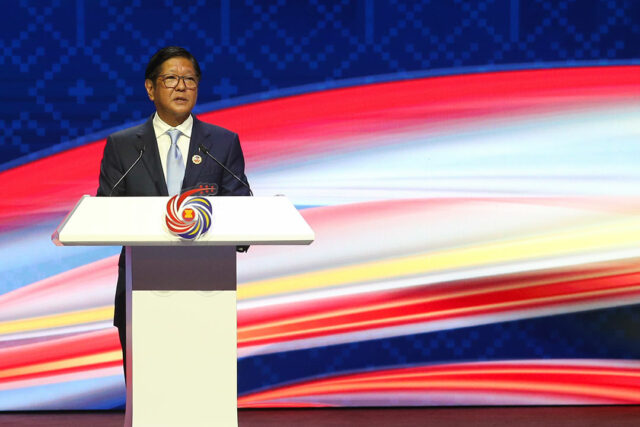
PRESIDENT Ferdinand R. Marcos, Jr. said the Philippines will play a prominent role in regional trade and investment networks as ASEAN leaders called for measures to boost resilience in the face of uncertain global markets.

In his arrival statement in Manila after attending the 47th ASEAN Summit in Kuala Lumpur, Mr. Marcos said ASEAN is pushing to strengthen trade ties to uphold a “rules-based, open, inclusive, transparent, and non-discriminatory” economic order.

The bloc’s ongoing efforts on trade include revisions to the ASEAN Trade in Goods Agreement and greater utilization of the Regional Comprehensive Economic Partnership (RCEP), which are expected to provide “transparency, stability, and predictability” for investors, he said.

“At a time when the rules-based trading system faces significant challenges, these agreements will provide transparency, stability, and predictability — key foundations for building confidence among businesses and investors, and for sustaining ASEAN’s role as a driver of regional and global growth,” Mr. Marcos said.

He said the Philippines will continue to deepen partnerships with economies that share its commitment to peace and development, while asserting its sovereign rights in the South China Sea in accordance with international law.

At the summit, ASEAN leaders discussed efforts to “future-proof” ASEAN economies through sustainable growth, with a focus on climate adaptation, education, green jobs, and digital transformation.

Mr. Marcos said discussions with the International Monetary Fund, Group of 20, and BRICS underscored ASEAN’s central role in global value chains.

On the sidelines, Mr. Marcos held bilateral meetings with leaders from Japan, the European Union, Canada, Vietnam, Australia and the United Nations, with talks centering on trade, maritime cooperation, and investment promotion.

He also welcomed Timor-Leste’s accession as ASEAN’s 11th member, saying the Philippines supports capacity-building efforts to integrate the new member into the bloc’s economic and political frameworks.

The President said the Philippines is preparing to assume the ASEAN chairmanship in 2026, during which it will focus on inclusive growth, sustainability, and regional connectivity.

“We look forward to carrying ASEAN forward as we navigate our future together,” he said.

ASEAN is the world’s fifth-largest economy, with a combined gross domestic product of around $4 trillion in 2023 and a population exceeding 670 million.

The region’s strategic location, young workforce, and deepening integration through trade agreements such as the RCEP have positioned it as a critical hub for supply chains and emerging industries. — Chloe Mari A. Hufana

Food safety measures receive over P4 billion in funding in 2025

PHILSTAR FILE PHOTO

FOOD safety programs were allocated more than P4 billion in funding in 2025, the Department of Agriculture (DA) said in a statement.

The allocations include P3.298 billion for inspection, border control, and other regulatory services, P1.197 billion for integrated laboratories, and P85.219 million for food testing support, it said.

The announcement was made in conjunction with Food Safety Awareness Week, jointly organized by the DA and the Department of Health, which focused on deploying scientific measures to ensure food safety.

Undersecretary and Chief of Staff Alvin John F. Balagbag said at the opening ceremony that the DA Inspectorate and Enforcement Office has conducted 124 inspection and condemnation activities, confiscating unsafe and unregulated agri-fishery products valued at P1.18 billion.

In 2026, the DA is proposing a P4.37-billion budget for such programs to upgrade laboratories and the food-safety regulatory regime.

The DA also reactivated its Food Safety Focal Group to harmonize safety standards across agencies and is finalizing a memorandum of agreement with the Food and Drug Administration (FDA) for joint inspection of agricultural shipments to curb smuggling.

FDA Director General Paolo S. Teston, who also serves as alternate chair of the Food Safety Regulation Coordinating Board, said the agency will soon launch a Food Safety Contact Center to address public concerns about food handling, processing, and distribution.

According to the World Health Organization, around 1.6 million people worldwide fall victim to contaminated food daily. The organization has recorded 200 diseases caused by unsafe food.