Home Blog Page 7510

New taxes are inevitable

PCH.VECTOR-FREEPIK

The economy is in the doldrums, and with all its spending of late, the government is in dire need of money. The Department of Budget and Management has just submitted to Congress a proposed national budget of over P5 trillion for 2022. With the urgent and compelling need to fund this unprecedentedly humongous budget, it is all too clear that new taxes are inevitable.

They may not come this year, or from this Congress, but they will come. No administration will try to impose new taxes, or jack up old ones, right before an election. Unless it is desperate. Or so truly well-meaning that it will sacrifice and prioritize economic reform over political fortune. The burden of fixing fiscal issues usually falls on a succeeding administration, and a new Congress.

Even a national budget heavily funded by borrowings, local and foreign, will necessitate some manner of payment in the future. And those payments can come from more borrowings, or new or higher taxes. After all, any debt today is a probable tax tomorrow. Privatization is not much of an option nowadays, with asset prices depressed by prevailing economic circumstances.

As a consumer, I am not crazy about consumption taxes like sales tax and value-added tax. But I would rather be taxed on my consumption — on things I buy or services I secure — than on my income, which is not much. Admittedly, this sounds regressive rather than progressive. Higher consumption taxes hit everyone across the board, including the poor. Not necessarily the same case with income taxation.

However, with the tax reform measures put in place in the last three years, individual and corporate income tax rates are going down. And so is income tax collection. The slack or gap will have to be covered by consumption taxes. Congressional proposals include the imposition of a digital services tax, which is like a 12% value-added tax or VAT on digital services.

The proposed digital tax will be an amendment to current VAT regulations, so they will cover or include online or electronic transactions. Basically, it will be a 12% tax on sales by digital service providers of goods that are digital or electronic in nature, and on services electronically rendered locally. The tax will cover resident as well as non-resident service providers, or those with subsidiaries, branches, or a local office operating within Philippine territory.

According to digital tax proponents in Congress, the proposed Digital Services Tax is not a new tax, but just an administrative measure clarifying the coverage of the current VAT to include sales and services locally by local or foreign digital service providers. But while this may be the case, for most consumers, this will surely feel like an altogether new tax. The measure has been pending in Congress since 2020, and I doubt if it will get through in 2021.

However, as a consumer, I am more inclined to support a Digital Services Tax — which hits a certain demographic belonging to a higher income bracket — rather than an across-the-board VAT hike or higher taxes on motor vehicles or fuel. In fact, among possible calibrations in consumption taxes, I believe a digital services tax will be less painful for most consumers. At the same time, the tax potential is significant. However, its legislation by Congress remains unclear.

Asia, including the Philippines, is estimated to have about two billion internet users. And in a blog published Sept. 14, experts from the International Monetary Fund (IMF) noted that “new global reforms will change where tech giants pay taxes in Asia, and make the international tax system more robust.”

“A new set of agreed global tax reforms will change where these tech giants and other global giants pay taxes,” wrote Era Dabla-Norris, division chief in the IMF’s Asia Pacific Department and mission chief for Vietnam; Ruud De Mooij, advisor in the IMF’s Fiscal Affairs Department; Andrew Hodge, economist in the IMF’s Western Hemisphere Department; and, Dinar Prihardini, an economist in the IMF’s Fiscal Affairs Department.

“More than half of all services trade in Asia is digitally delivered, making it hard to collect value-added taxes when these services cross borders. Cross-border e-commerce sales of goods have also been exempt from value-added taxes when shipped internationally in small parcels. Resolving these challenges pays off. Requiring nonresident suppliers of digital services and e-commerce marketplaces to register with local tax authorities and remit value-added taxes on their sales could raise revenue between 0.04 and 0.11 percent of GDP in some countries in Asia, translating to an additional $166 million in Bangladesh, $4.8 billion in India, $1.1 billion in Indonesia, $365 million in the Philippines, and $264 million in Vietnam,” the experts wrote in their blog.

“As Asian consumers and businesses increase their online activity in the coming years, tech giants will expand further into Asian countries, making taxation in a digitalizing economy even more important. Countries in Asia, in particular, can invest in ways to harness digitalization for tax administration helping to reduce tax evasion, boost revenue mobilization, and make tax collection more efficient. With countries further shaping the agreement in the OECD-led IF, the fundamental reforms that lie ahead may make the international tax system more robust for the digital age,” they added.

The challenge locally, however, is that it will be difficult to convince an incumbent legislator, more so one running for reelection, to pass any tax-related legislation now. Last year would have been better timing, but to do so would have seemed insensitive to the plight of consumers locked in their homes and relying on digital services for entertainment and essential purchases.

How to best go about this situation requires a thorough examination of the tax’s potential. Data and analysis should present a compelling case in favor of this particular consumption tax. Perhaps the economic benefits significantly outweigh even the political risks to an outgoing administration. A strong push from the top may yet see this reform measure get through.


Marvin Tort is a former managing editor of BusinessWorld, and a former chairman of the Philippine Press Council


matort@yahoo.com

Gems from two gutsy ladies

FORMER Supreme Court Associate Justice and Ombudsman Conchita Carpio-Morales

“Insight from Oversight” was the title of the talk of former Commission on Audit (CoA) Commissioner Heidi L. Mendoza when she and former Supreme Court Associate Justice and Ombudsman Conchita Carpio-Morales appeared before the regular Archer Talks and Eagles Meet our Leaders Zoom webinar. The joint webinar is organized by alumni of De La Salle Manila Grade School class of ’61, High School ’65, and College ’70 and Ateneo de Manila University Grade School ’57, High School ’61, and College ’65.

Commissioner Mendoza, a staunch anti-corruption crusader, was with the CoA for 20 years starting in 1995, including her stint as Commissioner from 2011-2015. She is an accomplished United Nations (UN) auditor who currently chairs the Audit Committees on the Public Sector Auditing Standards Board, the Foreign-Based Government Agencies, the UN Food and Agriculture Organization (FAO), and World Health Organization (WHO). She is also chair of the Audit Steering Committees of various programs funded by Australian Assistance for International Development Aid (AusAid).

From 2006 to 2010, just before she was appointed Commissioner, Mendoza served as governance and anti-corruption consultant to the Asian Development Bank (ADB), AusAid, and the Presidential Anti-Graft Commission. Commissioner Mendoza’s involvement with international and local agencies provided her the opportunity to engage anti-corruption and governance stakeholders in the private and public sector, especially local governments, in policy dialogues on governance issues. Mendoza, who hails from Tayabas, Quezon, has also assessed the impact of procurement reforms in local and National Government agencies for the World Bank-Manila and the accounting and internal audit system of local government units for ALTAIR-European Commission.

Mendoza’s experience in investigation, assessment, promoting accountability and transparency should be obvious by now even if there are many more facets of her overall experience that we need to surface. With our still incomplete list of Mendoza’s experiences and achievements, we can say we have more than enough insights of Mendoza to share. And this is precisely what she did: share her experiences and provide some tips to budding auditors and plain citizens on how to detect possible irregularities.

Acting like a tag team, Commissioner Mendoza discussed two points: Ano ang dapat malaman (What we should know) and Ano ang dapat bantayan (What we should we look out for) while Justice Morales discussed: Ano ang maaaring gawin ng ordinaryong mamamayan (What can an ordinary citizen do, to heighten accountability and transparency).

In making her points, Mendoza uses as reference point a timely and relevant issue: the purchase by government, at the height of the pandemic, of face masks and shields worth P8 billion from a company with a paid-up capital of P625,000 and headed by a Chinese national.

Right at the opening bell, Mendoza asked four basic questions:

1. Is negotiated procurement a normal recourse during an emergency?

2. Is procuring fast in conflict with being prudent?

3. Are we (achieving) the objective of swift or expedited response (and still) getting the best value for our money?

4. What do I think of emergency procurement?

In answering these questions, Mendoza says that the main principle to remember is “to exercise the prudence of a good father.”

Based on her vast experience, people who want to make fast money often hide behind or use as a shield from scrutiny and stringent controls, emergency procurement. But even when implementing emergency procurement, trained CoA personnel scrutinize the transactions carefully since “these are public funds.” But even if controls are relaxed in emergency procurement, we must still stick to the basic safeguards and not do away totally with so-called hand rails, cautions Mendoza.

Even if warranted, there are, however, risks involved in emergency procurement based on a study of 12 countries: higher and more uncertain prices for key emergency items; increased multi-purpose suppliers or companies without previous experience or with no experience in selling emergency supplies (referring to a hardware store allegedly supplying toilet paper); no experience in selling emergency supplies.

Mendoza cites RA 9184 which refers to the financial capability of the supplier. Even if it’s an emergency procurement, the net financial capacity is still a critical factor and so is the experience of the supplier in delivering or performing the service or the item. “There’s no compromising here,” Mendoza says. A rigorous study of the financial statements of a particular supplier does “not inspire confidence,” Mendoza says, quoting the observation of a group of young CPA, accounting and business graduates from La Salle and Ateneo on the financial capacity of a supplier of medical supplies which has earned for itself bad publicity and, possibly, notoriety. Mendoza adds that “the comments of those Lasallians and Ateneans show that they are very polite.”

Mendoza cites so many other instances of other different attempts to defraud the government starting at the bidding stage but are too many to cite in some kind of detail.

Mendoza summarized her overarching position on emergency and negotiated procurement by stating that, “the pandemic may have justified certain exceptions in order to afford the government the most expedient response but it may not be enough to throw into the wind the exercise of prudence of a good father of the family. It is the public nature of the funds involved that somehow delimits the extent to which one can go to relax the rules in the name of expediency.”

In her usual passionate statements decrying corruption, lack of integrity and honesty in government, former Supreme Court Associate Justice and Ombudsman Conchita Carpio-Morales, called on the citizens to empower themselves in fighting corruption.

Justice Morales’s presentation, entitled “Get Involved and Organize,” started with a quote from the National Democratic Institute: “Participation is an instrumental driver of democratic and socio-economic change, and fundamental way to empower citizens.”

Justice Morales offers specific suggestions to the citizens, starting with seizing every opportunity to influence public decision by demanding access to information like public officials’ Statement of Assets, Liabilities and Net Worth (SALN), monitoring budget hearings, taking advantage that this is an election year, and utilize both social and print media.

Morales, who retired from public service after 47 years of exemplary public life, urged citizens to pursue social accountability mechanisms by reporting corruption in on-line platforms and confidential hotlines, and by, among other things, educating the public on procurement, budgeting, and the power of audit. Pressing the attack, the former Ombudsman called for the public to do systematic collection, analysis, and broad dissemination of information. She urged cause-oriented individuals to lead the formation of coalitions like Rights to Know, People and Budget, Citizens’ Budget Tracker and to help these movements by providing information, expertise, and, when possible, funds.

Finally, former Justice Morales spurred Filipinos to fight apathy and indifference by denouncing corruption, participating in anti-corruption efforts, and helping formulate anti-corruption strategies. In her final message that would put the finishing touches on a stirring call to action and a morning of informative, instructive, and ethical lessons in governance, Morales pointedly quoted Transparency International, “Populist leaders tend to use public outrage for corrupt behavior to punish political adversaries. Populist movements present themselves as an anti-corruption force drawing on the idea that corrupt elites work against the interest of the people. In many cases, however, such movements are not accompanied by an actual anti-corruption strategy and even facilitate new forms of corruption.”


Philip Ella Juico’s areas of interest include the protection and promotion of democracy, free markets, sustainable development, social responsibility and sports as a tool for social development. He obtained his doctorate in business at De La Salle University. Dr. Juico served as Secretary of Agrarian Reform during the Corazon C. Aquino administration.

Advocacies in search of a candidate

PCH.VECTOR-FREEPIK

CERTAIN ISSUES are too predictable and almost expected to be adopted by any candidate for high office. What about positions on inconsequential issues often overlooked in favor of the sweeping themes that pop up in debates?

Here are some insignificant advocacies searching for a candidate:

1.) Public pronouncements should be taken at face value, even when made late at night and in an unfamiliar setting. If somebody doesn’t want to be misquoted, he should stick to a carefully prepared speech. Off-the-cuff pronouncements on the body weight and hairdo of critics, their dubious parentage, and the categorization as organic waste of auditing organizations can be avoided.

2.) Working from home should be governed by common rules, including attire, at least for the upper body. Such distractions as barking dogs and crying babies can be solved by muting the offending party. Other areas for concern include turn-taking and a time limit on questions. Such rules can be promulgated, even as mere suggestions.

3.) Civility in social media should be restored. Worthless sniping at pet peeves and critics only invites violence, even if only verbal. Good manners can start with the conviction that every person is entitled to her own opinion. Political discourse over chat groups can be contentious and best avoided. The same with stands on vaccination, the behavior of admitting desks of hospitals, and the alternative cures for the virus. Offenders posting fake news and doomsday scenarios can just be ignored by all.

4.) Trolls that are paid and unleashed on critics of their client or principal should be identified by their affiliation. This is anyway obvious by the positions they take and the targets they attack.

5.) Euphemisms contribute to a more fruitful discussion. Instead of scabrous rants, some formula for a response that is harmless and does not rattle the climate for investments can be devised. The effort will allow people to be more indirect in alluding to another’s mother belonging to the oldest profession. Example — your mother is a hibiscus enthusiast.

6.) The economic recovery of small businesses in the various categories of lockdowns should be considered. These SMSE’s employ over 90% of the labor force in various states of employment including contractuals, outsourced organization (like messengerial services), and professionals like tax consultants and dermatologists. Do they have a lobby group? Are there government organizations, like the Department of Trade or NEDA that should be listened to occasionally when they advocate economic recovery held back by the lockdowns in all shapes and forms?

7.) The understanding of the issue of fishing rights and control of the disputed waters can be illuminated with the proper nomenclature. Can everybody agree to call this area the “West Philippine Sea,” instead of the other reference using another country’s southern parts?

8.) What about a biggie, like the fight against corruption which not only enlarges the national debt and widens the budget deficit but also distorts national priorities? This is too obvious to even include in this list of issues. But then again, somebody already made this the cornerstone of his winning campaign and has since forgotten the promise he made. (If you can’t beat them, join them?) Of course, he might claim that it was all a joke. Everything seems to be.

Political analysts are quick to point out that issues to be championed need to connect with the voting majority, often referred to as the masa. This anonymous demographic segment, mostly below the poverty line, is characterized as uninterested in issues and open to vote buying, free meals and transport, and under the control of political dynasties. Do they even pay attention to speeches and issues?

Voter’s education, pursued by civil society, mostly revolve on accelerating registration of new voters (the youth) and highlighting candidates and what they stand for. Do issues like poverty, food sufficiency, education, and upward mobility connect with the voting majority? It is the frustration of those who push for “educating the voter” that we are stuck with the politics of personality. Should celebrity status always trump issues?

Can social media make issues (and those who champion them) relevant again? As Alexander Pope puts it, “Hope springs eternal in the human breast.” Maybe, with a little push.


Tony Samson is Chairman and CEO of TOUCH xda

ar.samson@yahoo.com

N. Korea tests ballistic missiles amid deadlocked nuclear talks

KCNA VIA REUTERS
A giant North Korean flag is unfurled during a paramilitary parade in Pyongyang in this undated image supplied by North Korea’s Korean Central News Agency on Sept. 9, 2021. — KCNA VIA REUTERS

SEOUL — North Korea fired a pair of ballistic missiles off its east coast, South Korea’s military said on Wednesday, ratcheting up tensions just days after testing a cruise missile with possible nuclear capabilities.

Pyongyang has been steadily developing its weapons program amid a standoff over talks aimed at dismantling its nuclear and ballistic missile arsenals in return for US sanctions relief. The negotiations have stalled since 2019.

“North Korea fired two unidentified ballistic missiles from its central inland region toward the east coast, and intelligence authorities of South Korea and the United States are conducting detailed analysis for further information,” South Korea’s Joint Chiefs of Staff (JCS) said in a statement.

The South Korean military has raised its level of surveillance, and is maintaining a full readiness posture in close cooperation with the United States, the JCS added.

Japan’s Coast Guard also reported an object that could be a ballistic missile was fired from North Korea that landed outside its exclusive economic zone.

Japanese Prime Minister Yoshihide Suga called the missile launch “outrageous,” and strongly condemned the action as a threat to peace and security of the region.

Both Mr. Suga and South Korean President Moon Jae-in would convene sessions of their national security councils to discuss the launches, according to their offices.

Mr. Moon’s office said he was immediately briefed about the ballistic missile tests, North Korea’s first since March this year and a further breach of U.N. sanctions.

The latest launch came as foreign ministers of South Korea and China were holding talks in Seoul amid concerns over North Korea’s recent cruise missile test and the stalled denuclearization negotiations between Pyongyang and Washington.

North Korea said it successfully tested a new long-range cruise missile last weekend, calling it “a strategic weapon of great significance.” Analysts say that weapon could be the country’s first cruise missile with a nuclear capability.

Chinese Foreign Minister Wang Yi, when asked about the earlier cruise missile tests, said all parties should work to promote peace and stability on the Korean peninsula.

“Not only North Korea but other countries are carrying out military activity,” he told reporters. “All of us should make efforts in a way that helps resume dialogue.” — Reuters

Biden denies China’s Xi turned down meeting offer

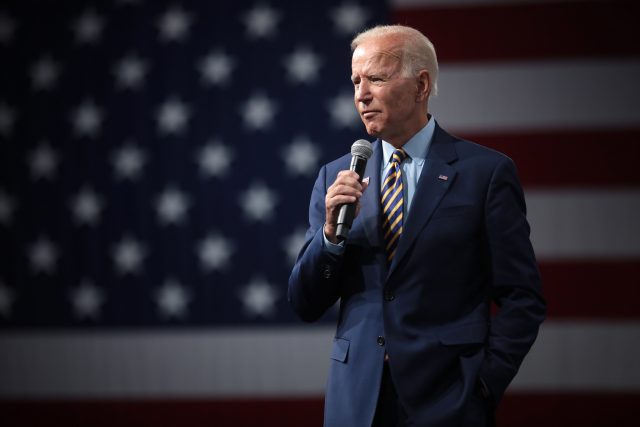
US PRESIDENT JOSEPH R. BIDEN, JR. — IMAGE VIA GAGE SKIDMORE/CC BY-SA 2.0/FLICKR

WASHINGTON — US President Joseph R. Biden denied on Tuesday a media report that his Chinese counterpart, Xi Jinping, last week turned down an offer from Mr. Biden for a face-to-face meeting.

The Financial Times cited multiple people briefed on a 90-minute call between the two leaders last week as saying Mr. Xi did not take Mr. Biden up on the offer and instead insisted that Washington adopt a less strident tone toward Beijing.

“It’s not true,” Mr. Biden said when asked by reporters if he was disappointed that Mr. Xi did not want to meet with him.

Mr. Biden’s national security adviser, Jake Sullivan, said in a statement earlier on Tuesday that the report was “not an accurate portrayal of the call. Period.”

A source who was among those briefed on the call confirmed the report was accurate.

“Xi apparently intimated that the tone and atmosphere of the relationship needed to be improved first,” the source told Reuters.

China’s embassy in Washington did not immediately respond when asked to comment.

The Financial Times quoted one of its sources as saying Mr. Biden had floated the summit as one of several possibilities for follow-on engagement with Mr. Xi, and he had not expected an immediate response.

It cited one US official as saying that while Mr. Xi did not engage with the idea of a summit, the White House believed that was partly due to concerns about COVID-19 (coronavirus disease 2019).

The G20 (Group of 20) summit in Italy in October has been talked about as a possible venue for a face-to-face meeting, but Mr. Xi has not left China since the outbreak of the pandemic early last year.

In his statement, Mr. Sullivan added: “As we’ve said, the Presidents discussed the importance of being able to have private discussions between the two leaders, and we’re going to respect that.”

The call between Mr. Biden and Mr. Xi was their first in seven months and they discussed the need to ensure that competition between the world’s two largest economies does not veer into conflict.

A US official briefing before the conversation called it a test of whether direct top-level engagement could end what had become a stalemate in ties, which are at the worst level in decades.

The White House said afterward it was intended to keep channels of communication open, but it has announced no plans for follow-on engagements.

Chinese state media said Mr. Xi had told Mr. Biden that US policy on China imposed “serious difficulties” on relations, but added that both sides agreed to maintain frequent contact and ask working-level teams to step up communications. — Reuters

US pushes world leaders to embrace 70% global COVID-19 vaccination target

PHILIPPINE STAR/ MICHAEL VARCAS

WASHINGTON — The United States is pushing global leaders to endorse what it calls ambitious targets for ending the coronavirus disease 2019 (COVID-19) pandemic, including ensuring 70% of the world’s population is vaccinated against the virus by the 2022, according to a draft US document viewed by Reuters on Tuesday.  

The three-page outline is addressed to countries, international organizations, and private sector groups invited to a virtual COVID-19 summit planned by the United States on the sidelines of the United Nations General Assembly beginning this week.  

The document also asks countries with “relevant capabilities” to donate a billion additional vaccine doses and expedite delivery of 2 billion doses already committed.  

White House deputy press secretary Karine Jean-Pierre confirmed the 70% vaccination target, but gave no further details about the summit or the document. The New York Times, which first reported the new targets, said summit invitations to world leaders were sent last week.  

The US document calls for richer countries to ensure at least $3 billion is made available in 2021 and $7 billion in 2022 for vaccine readiness and to combat vaccine hesitancy.  

Other key targets include ensuring at least one in 1,000 people are tested weekly before the end of 2021, and building surge capacity to ensure that all healthcare workers have access to personal protective equipment such as masks in 2021.  

The draft also called on richer countries to provide $2 billion to bolster the supply of bulk liquid oxygen, donate at least 1 billion test kits by 2022 for low- and lower-middle income countries, and donate $3 billion in COVID-19 therapeutic medicines through 2022.  

It called on the private sector to fund a $2 billion global strategy to boost the supply of oxygen systems by the end of next year, and to make testing kits available in poorer countries for no more than $1 a kit.  

Last month, the International Monetary Fund, World Bank and other international groups urged world leaders to accelerate vaccinations, warning that fewer than 2% of adults in most low-income countries were vaccinated, compared with almost 50% in high-income countries. They also noted that fewer than 10% of pledged doses had actually been shipped. — Reuters

Malaysia holiday hotspot readies for reopening with tourism bubble

The Datai Langkawi

LANGKAWI, Malaysia — Businesses at Malaysia’s prime holiday destination are gearing up to welcome the return of tourists this week, as the country takes an early step towards recovery from a devastating coronavirus crisis.  

Langkawi, a cluster of 99 islands in the Straits of Malacca, will reopen from Sept. 16 to fully vaccinated travelers as part of a domestic tourism bubble, with strict protocols in place to thwart the spread of the coronavirus.  

Restaurant owner Esther Lee said she was excited the bubble was finally being launched.  

“Finally we can welcome customers and this is actually our main source of income to actually survive,” she said.  

“We have like staff under us, we have overhead costs to bear so we definitely need dining customers.”  

The plan is similar to that introduced in Thailand, which started with the July reopening of Phuket, 220 km north of Langkawi, to vaccinated foreign tourists. Malaysia has yet to invite foreign tourists to return.  

Like Phuket, Langkawi, known for its beaches, geoparks, bird life and rock formations, is not expecting huge numbers initially, with 400,000 visitors targeted by the end of the year and estimated revenues of 165 million ringgit ($39.66 million).  

“We still do not want congestion even though we need a high number. What is important is that we can control the tourists to ensure their compliance,” said Tuan Nasaruddin Abdul Muttalib, head of the Langkawi development authority.  

Malaysia has recorded 2 million coronavirus cases overall among its 32 million population, one of Asia’s highest per-capita infection rates, with more than 20,000 deaths.  

Its vaccination program has progressed faster than its neighbours, with more than half the population inoculated, in the hope of a quicker return to normalcy.  

“A big sigh of relief, the team is ready, everybody is very happy to welcome you know, our local tourists again,” said Arnaud Girodon, general manager of luxury resort The Datai Langkawi.  

“We can’t wait to see them back.” — Ebrahim Harris/Reuters  

China’s hard climate stance with US imperils Glasgow talks

Shubert Ciencia/CC BY 2.0/Wikimedia Commons

SHANGHAI — China’s refusal to accept requests for deeper carbon emissions cuts during recent visits from the top climate envoys of the United States and Britain may undermine progress at the upcoming global climate summit in Glasgow in November, experts say.  

China rebuffed US envoy John Kerry’s appeal to strengthen its emissions goals ahead of the COP26 summit by saying climate could not be separated from the wider breakdown in the countries’ relationship.  

This shift in China’s tone on climate relations between the world’s two biggest greenhouse gas emitters has sapped momentum for the Glasgow talks and contrasts with the cooperation between the two countries in 2015 that paved the way for the landmark Paris climate agreement.  

China no longer feels obliged to consider requests for deeper carbon cuts after former President Donald J. Trump rejected US climate change commitments, most notably by withdrawing from the Paris accord, especially after relations between the two countries deteriorated during Trump’s term over trade, human rights and geopolitical issues, experts say.  

China and the US still have an understanding on climate issues but “the bigger problem now is the difference in the political positions of the two sides,” said Zou Ji, the president of Energy Foundation China who was part of China’s delegation at the 2015 Paris talks.  

“The balance of power and influence of the two sides has changed.”  

The United States says China, the world’s biggest greenhouse gas emitter, has not done enough despite pledging to bring emissions to “net zero” by 2060. They want China to pledge to reach peak emissions earlier and do more to cut coal consumption, a key source of greenhouse gases.  

However, China argues its current commitments are strong.  

President Xi Jinping has repeatedly promised to “increase the strength” of its nationally determined contributions (NDC), the emissions goals that each country must submit under the Paris accords, to reflect China’s commitment to reach the 2060 “net zero” target.  

China’s top climate envoy Xie Zhenhua said in August that China had already strengthened other pledges, including a new renewable energy target and a commitment to bring emissions to a peak “before” 2030 instead of “around” 2030.  

China has also said it will cut coal consumption starting in 2026 and produce 25% of its energy from non-fossil fuel sources by 2030.  

OVERSEAS PRESSURE 
The Chinese government is unwilling to be seen buckling to overseas pressure on the coal consumption cuts, US diplomatic sources said. China is the world’s biggest coal user and the industry employs many workers.  

“Amid all the uncertainties, one thing has become clear — Beijing will not give in to foreign powers,” said Li Shuo, a climate expert with Greenpeace. “The best way to propel Chinese climate action is to align it with China’s self-interest.”  

China must submit updated NDCs before the COP26 begins. But, rather than introduce new pledges, analysts expect them to provide more details about how existing long-term targets, described by Premier Li Keqiang as extremely arduous, can be achieved.  

Environmental think-tanks, such as the Innovative Green Development Program (IGDP) base in Beijing, say the government may update China’s NDCs to include a 2025 energy consumption cap, more action on greenhouse gases other than carbon dioxide, as well as a “roadmap” to achieve existing targets.  

Last week, the China Center for International Cooperation on Environment and Development, a government advisory body, also recommended China set a 2025 total emissions cap.  

However, it is uncertain if the government will make bigger changes in the NDCs and China’s comments following the meetings with Kerry are not a cause for optimism.  

The US had hoped to keep climate discussions as “standalone” issues from other items such as its support for Taiwan and allegations of human rights abuses in Xinjiang.  

But senior Chinese diplomat Wang Yi told Kerry during their meeting that the “oasis” of climate cooperation could not be separated from the diplomatic “desert” between them.  

For its part, China could seek exemptions from a new European carbon border tax and push richer countries to fulfil financing pledges to developed nations, analysts said.  

Beijing will also seek reassurances that Washington can meet its own pledges, said Zou at the Energy Foundation China.  

“If Trump or someone with the same views returns, then it is a matter of concern to everyone whether US climate policy will experience another twist,” he said.  

Alex Wang, an expert in environmental law at the University of California, Los Angeles, said the best way the United States could influence China’s climate actions was by example.  

“The US critiques are not surprising and point to real areas where China needs to do better,” he said. “But the United States has also not done nearly enough. One of the best ways the United States could exert pressure now is by taking decisive and durable climate action at home.” — David Stanway and Muyu Xu/Reuters 

BusinessWorld welcomes participants at the MAP 2021 International CEO Conference

BusinessWorld Editor-in-Chief (EIC) Wilfredo G. Reyes welcomed participants at the Management Association of the Philippines’ (MAP) 2021 International CEO Conference held yesterday, via Zoom. Citing the timeliness of the conference’s theme “Hindsights, Insights, Foresights: The Future in the Present Tense,” he reiterated how the COVID-19 pandemic has forced organizations to think hard about advancing amid recent disruptions. BusinessWorld is a co-presentor of the MAP 2021 International CEO Conference.

Cybercrime spreads in Australia as COVID-19 pushes more people online

SYDNEY — Australia reported on Wednesday a 13% jump in cybercrime in the past year, with about one incident in four targeting critical infrastructure and services as working from home during the pandemic made more people vulnerable to online attacks.  

The Australian Cyber Security Centre (ACSC) received one cybercrime report every eight minutes over the 12 months to June 30, 2021, it said in its annual report.  

Hackers have switched their focus to people working remotely online, and used fear created by coronavirus disease 2019 (COVID-19) to actively target vulnerable people and health services to conduct espionage, and steal money and sensitive data, Assistant Minister of Defence Andrew Hastie said in a statement.  

Ransomware incidents increased nearly 15%, with the health sector reporting the second-highest number of attacks.  

Ransom software works by encrypting victims’ data and typically hackers will offer victims a passcode — or a “key” — to retrieve it in return for cryptocurrency payments that can run into millions of dollars.  

“Malicious cyber criminals are escalating their attacks on Australians,” Mr. Hastie said.  

In June last year, Australia said it was being targeted by a “sophisticated state-based cyber actor” with the attacks targeting all levels of the government, political parties and essential service providers. Sources told Reuters that Australia viewed China as the chief suspect, which Beijing has denied.  

In July this year, the United States and its allies, including Australia, accused China of a global cyberespionage campaign, which Secretary of State Antony Blinken said posed “a major threat to our economic and national security”.  

IDCare, which works with regulators to support identity theft victims, said the ACSC figures were the “tip of the iceberg” because many victims did not report to authorities. It said it had experienced a 47% jump in complaints so far in 2021, compared to 2020 which was itself a record year.  

“The general indicators are that it’s not slowing and is likely to increase,” IDCare managing director David Lacey said.  

“It’s a perfect storm for scammers — it’s conditions that they love and thrive in.” — Reuters

Indonesia aims to reopen to foreigners in November — minister

Gunawan Kartapranata/CC BY-SA 4.0/Wikimedia Commons

JAKARTA — Indonesia plans to start opening its borders to foreigners in November once 70% of its target population have received at least one vaccine shot, its health minister said on Tuesday.  

 In an interview with Reuters, Budi Gunadi Sadikin said he was taking cues from the strategy adopted by Britain, which he said prioritized rolling out first doses and had achieved a lower rate of hospital admissions and fatalities.  

“So for us we concentrate on the first dose. If we can vaccinate 70% of the target population of 208 million, if we can hit 140150 million, 70% with the first dose, then we can gradually start reopening,” he said.  

“And my calculation is that will be reached by November.”  

The November 2021 timeline is the first time a senior Indonesian minister has committed publicly to a dateline for reopening the country’s borders.  

Only foreign nationals who have diplomatic or working visas, or are eligible for other exemptions, are permitted to enter Indonesia.  

Mr. Budi said border restrictions would be eased even further once 70% of the target population had received two doses.  

Cabinet ministers have also flagged reopening the resort island of Bali but no timeline has been set.  

Indonesia has recorded more than 4.1 million coronavirus cases and 139,000 deaths from coronavirus disease 2019 (COVID-19), but the positivity rate — the number of those tested who are positive — has dropped. It was 31% in late July, but was 2% on Tuesday.  

Social restrictions have been in place since early July, but have gradually eased to allow malls, restaurants, cinemas and factories to operate at limited and conditional capacity.  

Southeast Asia’s largest economy, struck by one of the worst COVID-19 outbreaks in Asia, has vaccinated about 25% of its target population but Mr. Budi said vaccine rates would need to be almost doubled to 2 million shots per day by deploying the police and army to help dispense shots.  

Indonesia’s inoculation program has been hampered by distribution and logistics problems, and vaccine hesitancy, but it hopes more than 140 million people will have been vaccinated twice by next March.  

The health ministry is looking to use a network of about 300,000 midwives from the national family planning agency to help accelerate vaccinations, based on a model trialed in West Java.  

Indonesia, the world’s fourth most populous country, has the sixth highest number of people who have received their first vaccine dose, the minister said, after China, the United States, India, Brazil and Japan.  

Mr. Budi said he could not guarantee there would not be a third surge of infections in Indonesia.  

“It is extremely difficult to predict,” he said. — Kate Lamb and Tom Allard/Reuters  

This year’s National Economics Summit to discuss economy in light of upcoming elections

The UP Economics Society will livestream the annual National Economics Summit (NES) on Sept. 18 to 19, with the theme “Electionomics: Philippine Economics in the Face of Elections.”

In its 11th year, the Summit will be open to the public to discuss Philippine Economics in the Face of Elections, specifically the following: political motives behind economic policies and programs, analyzing the impact of political beliefs and influences on the economy, gauging the impact of the economy in determining electoral outcomes, and the relationship of economic outcome with political decisions.

The annual NES is a forum for the brightest Economics and Business undergraduates across the Philippines. The NES evaluates key issues in the country and around the world from the viewpoint of economics with the purpose of leaving a lasting and beneficial impact on the next generation of economists and leaders of the country.

Over the years, the Summit has grown into a renowned economic event tackling topics such as Jobs and Unemployment, Inequality and Poverty, ASEAN Integration, Philippine Economic Growth, Case Study Competitions, Business Economics, and many more.

The Summit has established its reputation as one of the premier economic forums in the country, gaining endorsements and connections with various Senatorial offices, the Department of Labor and Employment (DoLE), the Securities and Exchange Commission (SEC), the National Economic and Development Authority (NEDA), Commission on Higher Education (CHEd), Junior Philippine Economics Society (JPES), Philippine Center for Economic Development (PCED), and the Office of the Vice-President (OVP).

The event has also invited reputable speakers such as former NEDA Director Dr. Cayetano Paderanga, Jr., UP Diliman Professor Emeritus Winnie Monsod, former DENR Secretary Gina Lopez, PCC Commissioners Stella Quimbo and Johannes Bernabe, Dr. Bernardo Villegas, and Dr. Ernesto Pernia.


Spotlight is BusinessWorld’s sponsored section that allows advertisers to amplify their brand and connect with BusinessWorld’s audience by enabling them to publish their stories directly on the BusinessWorld Web site. For more information, send an email to online@bworldonline.com.

Join us on Viber to get more updates from BusinessWorld: https://bit.ly/3hv6bLA.

ADVERTISEMENT
ADVERTISEMENT