Home Blog Page 751

Senator files measure vs power bill deposits

A SENATOR on Wednesday said that he has filed a bill seeking to scrap the collection of bill deposits by distribution utilities (DUs) and electric cooperatives (ECs) to ease costs for power consumers.

“This bill seeks to abolish the collection and reimposition of bill deposits and mandate the refund of existing deposits, together with accrued interest,” Senator Sherwin T. Gatchalian said in the explanatory note of Senate Bill No. 1470, the Anti-Bill Deposit bill.

The proposed measure orders the DUs and ECs to refund all existing bill deposits, together with accrued interest up to the date of the actual release.

“In this way, we can ensure equal and affordable access to electricity for everyone, without having to pay a deposit,” he added.

The refunds should be released in cash, check, or electronic transfer, unless consumers choose to apply them to future bills.

“This measure strengthen consumer protection, promotes equitable access to electricity, and aligns regulatory practices with the Senate’s mandate to provide reliable and affordable power service,” he said.

The bill also mandates the Energy Regulatory Commission (ERC) to conduct an independent audit of all bill-deposit accounts and to prescribe non-deposit-based credit-risk alternatives.

Mr. Gatchalian added that the ERC should prescribe non-deposit bases credit risk alternatives such as prepaid or installment-based arrangement to maintain payment discipline to consumers without imposing upfront costs. — Adrian H. Halili

PSEi plunges to three-year low on growth woes

REUTERS

PHILIPPINE STOCKS retreated on Wednesday, with the benchmark index plunging to a three-year low, amid fears over slowing economic growth that were worsened by negative sentiment from Wall Street due to concerns over the valuation of the artificial intelligence (AI) sector.

The bellwether Philippine Stock Exchange index (PSEi) fell by 0.83% or 48.98 points to close at 5,818.06, while the broader all shares index decreased by 0.68% or 24.50 points to end at 3,534.38.

This was the PSEi’s worst finish in over three years or since it closed at 5,783.15 on Oct. 3, 2022.

The main index opened Wednesday’s session at 5,891.23, higher than Tuesday’s close, but sank to an intraday low of 5,763.68. It managed to recoup some of its losses before the closing bell.

“The Philippine market closed lower amid heavy selling pressure despite inflation figures aligning with expectations. However, the upcoming release of GDP (gross domestic product) data and corporate earnings from major index constituents will likely influence market sentiment and determine the market’s next direction,” Regina Capital Development Corp. Head of Sales Luis A. Limlingan said in a Viber message.

“The local market dropped as investors traded cautiously while looking forward to the third-quarter GDP data release, which is expected to be below target,” Philstocks Financial, Inc. Research Manager Japhet Louis O. Tantiangco said in a Viber message.

The Philippine economy likely grew by 5.3% in the third quarter, according to the median forecast of 18 economists and analysts in a BusinessWorld poll. This would be slower than the 5.5% expansion in the second quarter and is below the government’s full-year GDP growth target of 5.5%-6.5%.

The Philippine Statistics Authority will release third-quarter GDP data on Friday (Nov. 7).

“Negative spillovers from Wall Street amid overvaluation concerns with the US’ artificial intelligence sector also affected the local bourse today,” Mr. Tantiangco added.

All sectoral indices closed in the red. Mining and oil sank by 3.62% or 446.88 points to 11,891; holding firms dropped by 1.3% or 61.88 points to 4,689.75; property fell by 0.99% or 21.62 points to 2,142.74; industrials went down by 0.69% or 60.24 points to 8,588.41; services decreased by 0.57% or 12.99 points to 2,255.07; and financials retreated by 0.52% or 10.20 points to 1,925.98.

“Metropolitan Bank & Trust Co. was the day’s index leader, climbing 2.26% to P68. Aboitiz Equity Ventures, Inc. was the main index laggard, falling 4.78% to P26.90,” Mr. Tantiangco said.

Decliners overwhelmed advancers, 137 to 53, while 61 names were unchanged.

Value turnover went down to P4.72 billion on Wednesday with 406.27 million shares traded from the P6.37 billion with 538.81 million issues exchanged on Tuesday.

Net foreign buying edged down to P339.58 million from P339.79 million. — A.G.C. Magno

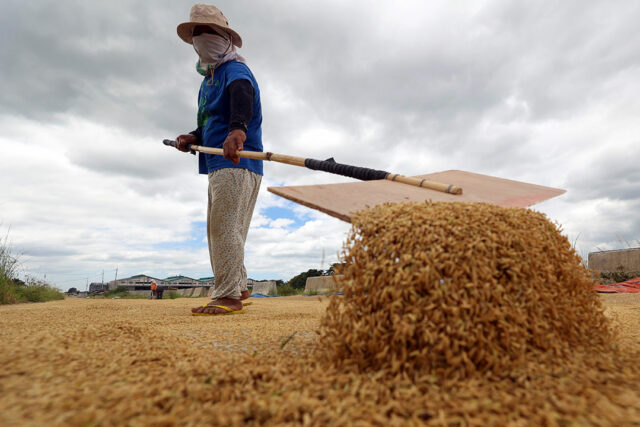
Palay production up 12.6% in Q3 after increase in planted area

PHILIPPINE STAR/ KJ ROSALES

PRODUCTION of palay (unmilled rice) rose 12.6% year on year in the third quarter to 3.75 million metric tons (MT), aided by a 15.7% increase in the land planted to rice, the Philippine Statistics Authority (PSA) said.

Palay output comes in below the PSA’s adjusted estimate of 3.93 million MT issued last month.

Cagayan Valley was the top producer of palay with 499,700 MT or 13.3% of the total. The Western Visayas produced 489,640 MT (13.1%) and Central Luzon 385,100 MT (10.3%).

The three regions accounted for 36.7% of the national total during the quarter.

The harvested area in the third quarter was estimated at 916,770 hectares, up 15.7% from a year earlier.

The Western Visayas accounted for 15.8% or 145,100 hectares of the total palay harvested area, followed by Soccsksargen and the Cagayan Valley with 102,200 hectares (11.1%) and 100,080 hectares (10.9%), respectively.

The yield per hectare of palay in the third quarter declined 2.7% year on year to 4.20 MT.

Cagayan Valley was the top yielding province with 4.99 MT per hectare, followed by the Ilocos Region and Davao Region with yields of 4.95 MT and 4.92 MT, respectively.

The PSA estimates fourth-quarter palay output at 7.06 million MT, which would represent a decline of 2.3% from a year earlier. — Vonn Andrei E. Villamiel

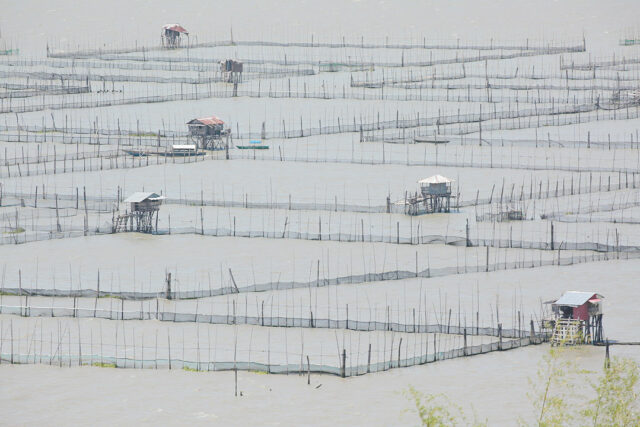
Fisheries output drops 7.5% in Q3 on typhoon damage to aquaculture

BW FILE PHOTO

FISHERIES production fell 7.5% year on year in the third quarter to 894,320 metric tons (MT), with aquaculture leading the decline after extensive typhoon and flood damage during the period, according to the Philippine Statistics Authority (PSA).

“Decreases in production were noted in aquaculture, marine municipal fisheries, and inland municipal fisheries. Meanwhile, commercial fisheries posted production increments during the quarter,” the PSA said.

Aquaculture production fell 12.3% year on year in the third quarter, bringing the total production to 454,860 MT. The subsector accounted for 50.9% of the total fisheries production.

Commercial fisheries, which accounted for 25.1% of fisheries output, rose 4.7% to 224,560 MT.

Marine municipal fisheries production declined 9.7% in the third quarter, with production valued at 168,920 MT. The subsector accounted for 18.9% of total production.

Inland municipal fisheries production fell  0.6% to 45,990 MT, equivalent to 5.1% of overall fisheries output.

The PSA added that of the 21 major species, seaweed production fell 15.7%, bali sardinella (tamban) 13.3%, and milkfish (bangus) 9.7%.

Output grew for skipjack (gulyasan) 15.9%, squid (pusit) 22.6%, and tilapia (3.1%). — Vonn Andrei E. Villamiel

Agri output likely fell in Q3 led by fisheries; ASF concerns continue

PHILIPPINE STAR/ MICHAEL VARCAS

By Andre Christopher H. Alampay

AGRICULTURAL OUTPUT is estimated to have slowed or fallen in the third quarter after a sharp drop in fisheries volume, with analysts and industry officials also skeptical of the performance of the hog industry due to the continuing African Swine Fever (ASF) outbreak.

If borne out, their worries about the third quarter would check the momentum gained a quarter earlier, when output rose 5.7% year on year, the strongest performance in eight years.

Nevertheless, the crops subsector is expected to turn in a positive performance, despite the impact of typhoons and flooding during the period.

Former Agriculture Secretary William D. Dar said via Viber that crop output likely rose 1% despite the typhoons and two major earthquakes in Cebu and the Davao region.

“The growth would have been higher if not for these challenges and problems… farmers continue with dedication to plant rice,” he said.

He credits the Masagana Rice Industry Program and the Rice Competitiveness Enhancement Fund in supporting farmers and farm production during this quarter.

Federation of Free Farmers National Manager Raul Q. Montemayor said via Messenger that output of palay (unmilled rice) will likely rise during the period, coming off a low year-earlier base of 3.33 million metric tons (MMT).

He added that the third-quarter 2023 volume of 3.8 MMT remains out of reach “due to reduced plantings because of low palay prices.”

The Philippine Statistics Authority’s own updated estimate based on the standing crop is 3.93 MMT, which would be up 18% year on year but down 9.7% from a quarter earlier.

Corn production is expected to come in at around 2.4 MMT for the quarter, down 0.4% year on year but up 62.1% from the second quarter.

Mr. Dar also said livestock and poultry were “not growing well” or could post “minimal growth,” though he added that the poultry segment is “rebounding.”

Former Agriculture Undersecretary Fermin D. Adriano said via Viber that livestock production remains a worry due to ASF.

Mr. Adriano said official assessments of the ASF situation could be too optimistic.

The Bureau of Animal Industry (BAI) reported a drop-off in the geographic scope of ASF outbreaks this year. As of Oct. 3, the BAI said the number of barangays with active ASF cases dropped to 31 from 505.

These reports, Mr. Adriano said, do not take into account the sharp decline in the swine population.

“At a certain level of decrease, decline will plateau. This does not mean we have checked for the spread of disease… It will undoubtedly be checked if there is an increase in swine population without a setback for a period of time.”

Mr. Adriano said that if an effective vaccine against ASF is not rolled out, farmers will have to resort to drastic isolation measures as did Spain and China.

Such a strategy “will have adverse consequences to backyard raisers who cannot afford the cost of biosecurity measures,” he said.

National Fisheries Research and Development Institute Board Member Norberto Chingcuanco said via Messenger that fisheries production will fall after storms affected major aquaculture sites like Taal Lake and Pangasinan.

Fisheries production had fallen 5.1% in the third quarter of 2024, also due to typhoons. The government announced this week that fisheries production by volume in the third quarter fell 7.5% to 894.32 thousand metric tons.

Mr. Chingcuanco said the Bureau of Fisheries and Aquatic Resources and the Department of Environment and Natural Resources need to find regions to farm fish that are not along the usual typhoon track.

He named Lake Mainit in northeast Mindanao, the Pantabangan Dam reservoir in Nueva Ecija, and Naujan Lake in Oriental Mindoro as potential sites to invest in.

Agriculture output data will be released today, Nov. 6.

‘Lifeline’ subsidized-power program could expand with more consumers being classified as eligible

BW FILE PHOTO

MORE low-income electricity consumers could be admitted to the power subsidy program with the Energy Regulatory Commission (ERC) considering adjustments to the eligibility threshold for availing of “lifeline” rates.

In a statement on Wednesday, the ERC said it is conducting consultations on a proposed uniform national lifeline subsidy rate which will expand the coverage of the Lifeline Subsidy Program.

Under the proposal, qualified end-users consuming 50 kilowatt hours (kWh) per month or less will get a 100% discount on their electricity bills.

Qualified beneficiaries of the Pantawid Pamilyang Pilipino Program (4Ps) whose power consumption does not exceed the 50-kWh threshold will automatically be enrolled in the program and enjoy the lifeline rate.

According to Republic Act No. 9136 or the Electric Power Industry Reform Act, the ERC must offer subsidized electricity to qualified low-income consumers unable to pay their electricity bills at full cost.

At present, lifeline rate discounts vary depending on the prevailing rates of distribution utilities (DUs) or electric cooperatives.

Within the franchise area of Manila Electric Co. — the country’s largest private distribution utility — qualified lifeline consumers using 20 kWh per month or less are granted a 100% discount on generation, transmission, system loss, distribution, supply, metering, and other charges.

To fund the discounted rates under the enhanced program, a one-centavo per kWh lifeline subsidy rate will be collected. A lifeline subsidy fund will be created, which will be administered by state-run Power Sector Assets and Liabilities Management Corp. (PSALM).

DUs, retail electricity suppliers, and the National Grid Corp. of the Philippines will collect the subsidy rate and remit all proceeds to PSALM.

The ERC said it will conduct an annual review of the subsidy rate, consumption threshold, and sufficiency of the fund.

“We are conducting public consultation to gather valuable insights from all stakeholders. This participatory approach ensures that the proposed uniform national lifeline subsidy framework is not only aligned with the law, but is fair, transparent, and responsive to the needs of the marginalized electricity consumers,” ERC Chairman and Chief Executive Officer Francis Saturnino C. Juan said.

In a position paper dated Nov. 5, the National Association of Electricity Consumers for Reforms, Inc. (Nasecore) said the ERC should observe “equity and cost-of-service principles across all consumer classes,” instead of offering subsidies.

“Continuing to rely on the Lifeline Program to mask unfair pricing perpetuates dependence on cross-subsidies and hides inefficiencies, while punishing millions of non-lifeline households who dutifully pay but receive no protection,” Nasecore President Petronilo L. Ilagan said.

Gerry C. Arances, convenor of People for Power Coalition, said that  the expansion of the program will only provide a “fraction of the relief needed by consumers as electricity costs soar.” 

Since the program comes in the form of cross-subsidies, consumers are “pitted against each other while distribution utilities, especially those privately owned, continue to rake in billions,” he said.

“If the ERC and the Marcos administration are serious about solving the problem of energy poverty, they should have pushed through with the review of the Electric Power Industry Reform Act and its failed promise of least-cost electricity,” Mr. Arances said.

As of June 2025, around 4.5 million households have been identified by the Department of Social Welfare and Development as eligible for the Lifeline program, primarily through the 4Ps registry.

Only about 330,000 households or 7.34% of those qualified have registered with their respective DUs as of July, according to the Department of Energy. — Sheldeen Joy Talavera

Waste-to-energy auction could offer up to 200 MW in capacity to bidders

DAVAOCITY.GOV.PH

THE Department of Energy (DoE) may set an installation target of up to 200 megawatts (MW) for the special green energy auction (GEA) round focused on waste-to-energy (WTE) technology next year, with the projects scheduled for delivery in 2028.

According to the draft terms of reference, the DoE said the special auction round will be conducted exclusively for WTE projects employing thermal combustion technology, which will be eligible under Renewable Portfolio Standards.

The WTE projects will source their waste feedstock within Metro Manila and highly urbanized cities (HUCs).

The DoE is proposing to set the installation target at 170 MW, with an option to raise the total by up to 30 MW.

The installation target has initially been set at 20 MW each for Metro Manila and Davao, and 10 MW each for Bacolod, Cebu, and Cagayan de Oro.

According to 2024 estimates from the National Solid Waste Management Commission, Metro Manila and HUCs generate an estimated 6.12 million metric tons of municipal solid waste, which can be converted to 335 MW of baseload power.

WTE converts non-recyclable waste materials into usable heat, electricity, or fuel using various technologies.

Last month, the DoE announced that it will launch the special auction round in January 2026.

A succeeding auction round planned for the second quarter of 2026 will cover biomass and WTE projects.

“The integration of WTE projects into the GEA framework underscores the DoE’s commitment to ensuring energy security, environmental protection, and private sector participation in the country’s transitioning to clean and sustainable energy,” the DoE said.

The GEA program aims to promote renewable energy as a primary source of energy through competitive selection. The supply contract for winning renewable energy projects will run for 20 years, starting from the commercial operation date. 

As a flagship government initiative, the program is expected to contribute to the national target of achieving a 35% renewable energy share in the power generation mix by 2030 and 50% by 2040. — Sheldeen Joy Talavera

PEZA expects new Batangas plant to generate $920 million in export sales

IDEAL PRO METAL and Plastic Fabrication Corp. is projected to generate $920 million worth of export sales during its incentive period from its new facility in Batangas, the Philippine Economic Zone Authority (PEZA) said.

In a Facebook post on Wednesday, PEZA said it signed a registration agreement with the company, which makes parts for gym and fitness equipment and household goods.

PEZA said the company exports to the US, Europe, and Japan. It did not disclose investment numbers for the facility, which will be located at Lima Technology Center-Special Economic Zone in Lipa City.

To date, Lima houses 118 locators, with investments in the economic zone topping P5 billion in the first 10 months of the year. — Justine Irish D. Tabile

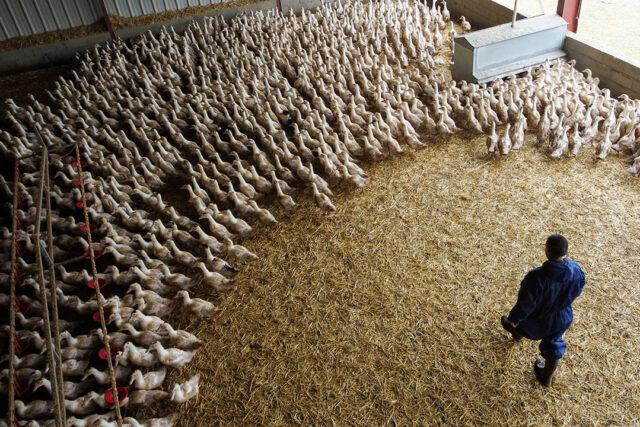
PHL, France to implement bird flu regionalization plan

REUTERS

THE PHILIPPINES and France are preparing to implement an agreement that will do away with sweeping national import bans in the event of bird flu outbreaks, instead limiting the prohibitions to specific regions where the disease is present, the Department of Trade and Industry said.   

“We were able to finalize the HPAI (Highly pathogenic avian influenza) regionalization agreement, which will basically facilitate the export of poultry products from France to the Philippines,” Trade Undersecretary Allan B. Gepty told a news briefing on Tuesday evening, following a Joint Economic Committee meeting.

Under the regionalization agreement, poultry exports from unaffected zones of France will continue to be admitted to the Philippines.

In March the Department of Agriculture lifted the temporary ban on French poultry imports following clearance from the World Organisation for Animal Health, which certified that all cases of bird flu have been resolved.

“These are market access issues that we have been addressing in the course of time,” Mr. Gepty said.

“Of course, there are other market access issues that also concerns our access to the European Union market, and these are the things also that we are discussing right now,” he added.

French Economic Counsellor Alain Fontanel said consumers from Europe, especially France, are very interested in Philippine farm goods.

“European countries and French consumers are also very interested in agriculture and food products from the Philippines, he told reporters, “We are cooperating to increase and to expand geographical indications for products from the Philippines,” he said, referring to the system for designating unique products from specific regions to grant them a marketing advantage.

He added that more Philippine farm products should be recognized under international best-practice standards.

France is the Philippines’ 19th largest trading partner with trade amounting to $1.54 billion. It is also the 20th biggest export market for Philippine goods, accounting for $404.28 billion. — Adrian H. Halili

Agriculture trade deficit widens to 15.7% in Sept.

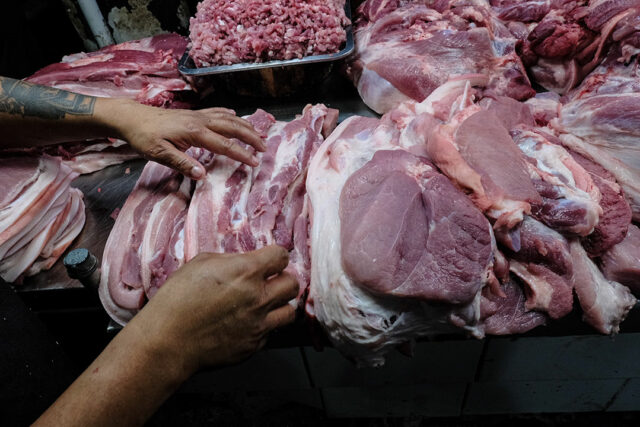
A vendor sells pork products at a market in Pasay City. — PHILIPPINE STAR/RYAN BALDEMOR

THE deficit in the agricultural goods trade widened 15.7% in September to $932.15 million, according to preliminary data from the Philippine Statistics Authority (PSA).

Agricultural exports in September rose 19.1% to $794.46 million, accounting for 11% of total exports. As a share of the $2.52 billion in two-way trade in farm products, exports accounted for 31.5%.

Imports of agricultural commodities in September dipped 2.6% year on year to $1.73 billion, accounting for 14.9% of overall imports.

Two-way agricultural trade in September was up 3.3% year on year. In August and September 2024, two-way agriculture trade grew 5.0% and 26.1%, respectively.

The PSA said animal, vegetable, or microbial fats and oils and their cleavage products; prepared edible fats; and animal or vegetable waxes were valued at $297.51 million, accounting for 37.4% of agricultural exports.

Agricultural shipments to members of the Association of Southeast Asian Nations (ASEAN) in September hit $73.92 million, with top buyer Malaysia accounting for $26.34 million or 35.6% of the total.

Exports to the Netherlands, the Philippines’ top destination for agricultural commodities in the European Union (EU), amounted to $142.82 million or 61.1% of Philippine agricultural exports to the region.

Among the major commodity groups, cereals accounted for the largest share of agricultural imports in September, totaling $361.25 million or 20.9%.

Indonesia was the leading supplier of agricultural products to the Philippines within ASEAN, accounting for $190.86 million or 28.3% of total imports from the region.

The top agricultural goods imported from ASEAN included animal, vegetable, or microbial fats and oils and their cleavage products; prepared edible fats; animal or vegetable waxes; and cereals.

Within the EU, Spain was the Philippines’ top supplier of agricultural commodities, with imports valued at $44.51 million.

Top agricultural commodities from the EU included meat and edible meat offal; dairy produce, birds’ eggs, natural honey, and other edible products of animal origin; and beverages, spirits, and vinegar. — Vonn Andrei E. Villamiel

PHL must help producers become aware of FTA benefits, Korean researcher says

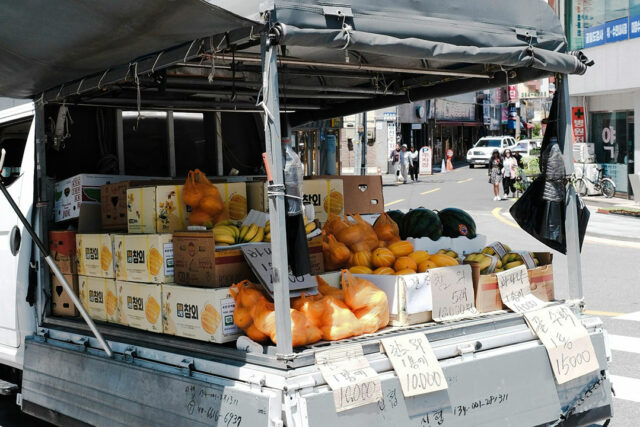
JULIE BOUNSENG-UNSPLASH

By Justine Irish D. Tabile, Reporter

THE PHILIPPINES needs to promote awareness among its exporters of the benefits available from the free trade agreement (FTA) with South Korea, a Korean analyst said.

Kye Hwan Kim, senior research fellow at the Korea Institute for Industrial Economics & Trade, said an FTA doesn’t automatically translate to increased exports.

“Exports are affected by a web of multiple factors, including tariff benefits, market accessibility, supply chain readiness, quality and branding, and government support,” he said.

“The FTA should be viewed not merely as a tariff-reduction tool but as a strategic opportunity for cooperation and value chain restructuring,” he added.

Further, he said demand, competition from similarly situated countries, supply chain factors, and quality may have also affected Philippine exports to South Korea, despite the FTA being in place since the end of 2024.

The Philippine Statistics Authority reported that exports to South Korea declined 15% in the first nine months to $2.39 billion, while imports from South Korea grew 9.2% to $7.74 billion.

Mr. Kim added that the Philippines needs to diversify its product offerings, enhance the quality of its brands, and improve logistics and supply chains, apart from promoting the FTA.

Over the medium to long term, he recommended joint value chain development, broader service and technology cooperation, market and product diversification, stronger government support, and bilateral cooperation platforms.

In particular, he said that Korean and Philippine firms should work together to develop products tailored to Korean tastes.

He said technology transfer and localization in agro-processing, information and communications technology, smart farming, and food-processing technology will help broaden the Philippines’ export offerings.

The Philippines, he said, could also expand its mix of exports to South Korea to diversify risk.

Other than agricultural goods, he said that the Philippines could also export “electrical and electronic parts, optical medical instruments, processed food and health supplements, marine and aquatic products, processed seafood, and raw materials” to South Korea.

He said that he expects international trade and investment to restructure and end up looking like “the multipolar order” akin to a great-power competition scenario.

He said that amid protectionism, larger countries are relatively advantaged, as they can achieve economies of scale through their domestic markets alone.

On the other hand, emerging economies or middle powers like the Philippines need to participate in international trade to achieve such scale.

“Economies of scale can be achieved through solidarity and cooperation among middle powers, depending on which independent roles they can strengthen,” he said.

“I believe it will be crucial to achieve prosperity by pooling each country’s industrial capabilities and collaborating with one another,” he added.

From paper to portal: The SEC’s digital leap

The government continues to align its regulatory frameworks by steadily adopting technology to streamline public services and ease doing business. As such, the Securities and Exchange Commission (SEC) issued Memorandum Circular (MC) No. 3, Series of 2025, requiring the use of the Zuper Easy Registration Online (ZERO) system for registering corporations. This initiative aims to modernize corporate registration, reduce red tape, and foster a more efficient, transparent, and accessible business environment.

In 2021, the SEC launched the Electronic Simplified Processing of Application for Registration of Company (eSPARC). This system replaced the older Company Registration System (CRS)and was designed to simplify and digitize the registration of domestic stock and non-stock corporations with up to 15 incorporators. eSPARC also facilitated registration applications for partnerships and for foreign-corporation licenses to do business.

eSPARC features two main subsystems: Regular Processing and OneSEC (One-day Submission and E-registration of Companies). Under Regular Processing, applicants begin by reserving a proposed company name and entering the proposed company’s details online for the SEC’s review, which typically takes up to seven working days. Once pre-approved, they then upload the notarized and authenticated or apostilled documents to the portal, pay the registration fees via eSPAYSEC, and receive a digital Certificate of Incorporation (CoI). However, applicants must still submit hard copies of signed and notarized documents and proof of payment before they can secure the physical CoI. With the numerous back-and-forth interactions on the portal, as well as the additional time and cost required for notarization and authentication, this process can be tedious and prone to red tape, which may result in delayed registration.

In contrast, OneSEC is a fully automated system designed for domestic stock corporations, including OPCs (One Person Corporations). It uses pre-filled templates. The entire process — from name verification to issuing the Digital CoI — can be completed within just one day. Similar to Regular Processing, the original CoI is released only after submission to the SEC of the digital CoI, proof of payment of assessed fees, and the originally signed and authenticated or notarized registration documents. While OneSEC offers speed and convenience, it is limited to domestic corporations and OPCs, and only covers 81 approved industry classifications. Additionally, because the system is fully automated, applicants cannot customize their Articles of Incorporation or By-laws.

In 2024, the SEC continued its digital evolution by introducing the Electronic SEC Universal Registration Environment (eSECURE), a digital identity verification and credentialing platform that serves as a “digital passport” for accessing the SEC’s various online services (e.g., eAMEND, eSEARCH, etc.). In the same year, the Electronic Submission Authentication Portal (eSAP)was launched to enable the digital authentication of documents, effectively removing the need for physical signatures and notarization, as well as the submission of hard copies.

Building on these advancements, SEC MC No. 3, Series of 2025 now requires the use of the new SEC ZERO system, an application within the eSPARC system that integrates both the eSECURE and eSAP platforms. Through SEC ZERO, applicants can digitally authenticate registration documents via eSAP, eliminating the need for traditional wet signatures and notarization of the registration documents. This not only streamlines the process and reduces the delays caused by the notarial and authentication/apostille process, but also reduces the costs associated with notarial, authentication, and apostille services. Moreover, the submission of hard copies is no longer required, enabling a fully digital, end-to-end registration process.

To initiate the registration process through SEC ZERO, each incorporator and signatory must first create and credential their individual eSECURE accounts. This involves paying a credentialing fee (P400 for initial credentialing that is valid for two years or P250 for renewal of credentialing account) and uploading either a PhilSys ID or any two valid government-issued IDs. The incorporators and signatories will have to undergo a liveness check in order to fully verify their accounts.

After all incorporators and signatories have completed the credentialing process in eSECURE, applicants may proceed with registration by accessing the eSPARC portal and selecting either the regular option with ZERO processing or OneSEC with ZERO processing option on the eSPARC portal. These options function similarly to their standard counterparts but include an added feature: digital authentication of registration documents.

Once all required company information is entered, the system automatically generates the necessary documents (e.g., Cover Sheet, Articles of Incorporation, By-Laws, and supporting documents). These documents are then digitally authenticated by the incorporators and signatories through eSAP.

Upon successful authentication, the Payment Assessment Form is then issued and may be paid through eSPAYSEC. Once payment is confirmed, an eOR will be issued and the system generates a digital Certificate of Incorporation, which holds the same legal validity as that of a physical certificate.

In accordance with the Memorandum, ZERO processing applies to domestic stock corporations (except lending and financing companies), whether fully Filipino-owned or with foreign equity, including OPCs and corporations with two to 15 incorporators. On the other hand, OneSEC with ZERO Processing is available exclusively for fully Filipino-owned domestic stock corporations with two to 15 incorporators.

The Memorandum also provides that all other types of corporations not listed above (such as lending companies, financing companies, and foreign corporations, including branch offices and representative offices) will eventually be processed through SEC ZERO after three months from its effectivity. However, pending the SEC’s issuance of the official notice announcing their integration to the system, applications for these types of corporations will continue to be under the regular processing option.

The implementation of SEC ZERO marks a pivotal step in the Philippines’ journey toward full digitalization of government services. By centralizing and digitizing the registration process through SEC ZERO, the SEC enhances operational efficiency and reinforces its commitment to accessibility and innovation.

This digital-first approach not only simplifies compliance but also minimizes delays, making it easier for entrepreneurs, investors and corporations to start and grow their businesses in the Philippines.

By forgoing the need for notarization and authentication/apostille of documents, as well as removing the submission of hard copies of the documents, SEC ZERO significantly reduces the time, costs, and effort required to register a company, thereby accelerating business formation and improving ease of doing business.

Through these comprehensive initiatives, the SEC is championing a landscape where efficiency, growth, and digital innovation are at the forefront, heralding a new era for corporate registration in the Philippines.

The views or opinions expressed in this article are solely those of the author and do not necessarily represent those of Isla Lipana & Co. The content is for general information purposes only and should not be used as a substitute for specific advice.


Jerimae Celine Galope is an assistant manager at the Tax Services department of Isla Lipana & Co., the Philippine member firm of the PwC network.

+63 (2) 8845-2728

jerimae.celine.n.galope@pwc.com