Home Blog Page 751

Mid-income condos to drive property market recovery — Colliers
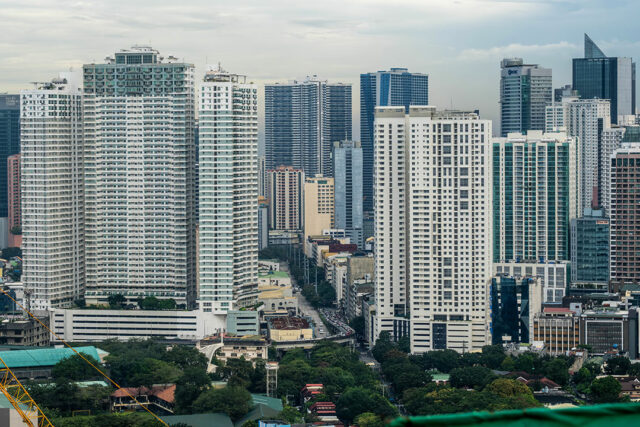
High-rise buildings dominate the skyline of Makati City’s central business district on Tuesday. — PHILIPPINE STAR/RYAN BALDEMOR

By Beatriz Marie D. Cruz, Reporter

RESIDENTIAL VACANCY in Metro Manila is expected to decline steadily by 2027, driven by renewed demand for middle-income condominium, according to real estate consultancy firm Colliers Philippines.

In its Third Quarter Property Market Report, Colliers expects residential vacancy rates to reach 26.5% this year, before falling to 26% in 2026 and to 24.9% in 2027.

“What stands out is that the mid-income residential segment continues to perform well,” Colliers Philippines Director and Head of Research Joey Roi H. Bondoc said at a briefing on Wednesday.

“Hopefully, we see a greater take-up for the affordable, lower mid-income, and upper mid-income condominium units by the end of this year, the fourth quarter, and towards 2026,” he added.

In the third quarter, residential take-up surged by 108% to 5,900 units from 2,800 units in the second quarter. This was also the highest in nine quarters or since the 8,500 units in the second quarter of 2023.

“When you look at the take-up for the first nine months of 2025, more than 90% of these projects are coming from the affordable to mid-income segment,” Mr. Bondoc said, noting that these units are typically priced between P2.5 million and P12 million.

Backout rates, where buyers cancel their purchases, also fell by 26% to 2,700 units in the third quarter from 3,600 units in the second quarter. This marked two consecutive quarters of a decline in backouts.

The improved residential vacancy rate can also be attributed to the lower completions in Metro Manila, Mr. Bondoc said.

“We call it developers turning off the supply tap and really recalibrating and just catering to what the market organically requires at this point,” he noted.

Colliers data showed that residential completions between 2026 and 2028 will average just 3,600 units, an 87% drop from the 13,000 units completed on average from 2017 to 2019.

“If you have limited supply right now, then you have a stable or even growing demand,” Mr. Bondoc said. “Intersect those two factors, we’re projecting a much lower vacancy moving forward.”

Colliers noted that residential vacancy rate is expected to inch up to 26.5% by end-2025 from 25% as of the third quarter due to additional units in the Bay Area, Alabang, and Makati Central Business District scheduled for turnover by yearend.

By submarket, the Bay Area is projected to have the highest residential vacancy at 58.6% by end-2025, followed by Fort Bonifacio (20.2%) and Makati central business district (13.2%).

As of the third quarter, about 30,400 units remain unsold in Metro Manila.

Of the total, 47% of unsold inventory in Metro Manila comes from the mid-income segments, falling from the 59% share of mid-income condominiums to unsold inventory in 2024.

Colliers added that 35% of unsold units come from the affordable segment, which is valued at P2.5 million to P3.19 million, 35% from lower mid-income (P3.2 million to P6.99 million), and 12% from the upper mid-income segment (P7 million to P11.99 million).

Mr. Bondoc noted that promos for ready-for-occupancy (RFO) units have been attracting buyers, thus improving residential take-up.

“This only indicates that the ready-for-occupancy promos being offered by developers right now, which continue to abound, have really been doing wonders for the residential sector here in Metro Manila,” he said.

In the previous quarters, Colliers said developers have offered attractive promos for RFO units, including discounts of up to 60% for spot cash payment, free parking, and rent-to-own promos.

Developers must be creative in their RFO promos to sustain buyer demand, Mr. Bondoc said.

Ayala Land raises P15 billion in ESG-linked bonds

Evo City is Ayala Land’s 207-hectare mixed-use estate in Kawit, Cavite. — AYALALAND.COM

LISTED Ayala Land, Inc. (ALI) said it has raised P15 billion through sustainability-linked bonds (SLBs) to fund green initiatives.

In a disclosure on Wednesday, ALI said the offering includes five-year Series C SLB due 2030 and 10-year Series D SLB due 2035.

The Series C and Series D bonds have fixed rates of 6.0671% and 6.3192% per annum, respectively.

“The inclusion of sustainability-linked performance targets further underscores Ayala Land’s alignment with global ESG (environmental, social, and governance) investment standards, appealing to institutional investors seeking responsible and future-oriented capital placements,” Globalinks Securities and Stocks, Inc. Head of Sales Trading Toby Allan C. Arce said in a Viber message.

“The fact that it could attract strong demand for a sustainability-linked bond at this scale suggests investors view its ESG commitments as genuine, not symbolic — a critical differentiator in the post-pandemic capital market landscape,” he added.

Philippine Rating Services Corp. (PhilRatings) assigned the bonds a PRS Aaa rating with a stable outlook, the developer said. A PRS Aaa rating indicates that the issuer has a “very strong capacity” to meet financial obligations and that credit risk is low.

“The bond’s linkage to sustainability targets also reflects a growing trust in the company’s commitment to ESG principles and its long-term strategic direction,” Regina Capital Development Corp. Head of Sales Luis A. Limlingan said in a Viber message.

The offering also marks the fourth tranche under ALI’s P50-billion debt securities program.

“We have raised a total of P56 billion or approximately $1 billion — a milestone that reflects our collective progress in integrating sustainability into the way we fund growth,” ALI Chief Finance Officer Jose Eduardo A. Quimpo II said.

With the latest issuance completing the developer’s debt funding plan for this year, Mr. Arce noted that ALI has secured sufficient liquidity to support expansion, refinance existing obligations, and maintain development momentum in its residential, commercial, and estate projects.

Around 60% of the SLB proceeds will be allocated to refinance existing debt, while the remaining 40% will fund major projects, including the redevelopment of the BPI Headquarters and Greenbelt 1 in Makati City, and the development of Ayala Malls Evo City in Cavite.

The redevelopment of the BPI Headquarters features a 45-storey energy-efficient tower integrated with the new Dela Rosa Gardens. Greenbelt 1 is also slated to become a modern lifestyle destination with sustainability features like skylights and rainwater collection systems.

ALI linked its SLBs to the 42% reduction in greenhouse gas emissions across its malls, offices, and hotels by 2030, and EDGE Zero Carbon certification for 1.5 million square meters of office space by end-2025.

For the first half, ALI’s net income rose by 8% to P14.2 billion on the back of higher contributions from its property development, leasing, and hospitality businesses.

ALI shares on Wednesday were down by 2.66% or 55 centavos to close at P20.15 each. — Beatriz Marie D. Cruz

MGreen increases stake in SPNEC to nearly 70%

SOLARPHILIPPINES.PH

PANGILINAN-LED MGEN Renewable Energy, Inc. (MGreen) has gained greater control of solar developer SP New Energy Corp. (SPNEC) after businessman-turned-politician Leandro Antonio L. Leviste completed the sale of his shares worth P13.76 billion through a block sale.

The transaction involved MGreen’s acquisition of 10.83 billion common shares of SPNEC in Solar Philippines Power Project Holdings, Inc. (SPPHI), following the maturity of their loan agreements, the company said in a regulatory filing on Wednesday.

This follows the two block sale transactions involving a P7.5-billion loan that can be converted into 5.8 billion common shares of SPPHI in SPNEC at a price of P1.2873 per share. SPNEC also paid P6.3 billion for five billion common shares at P1.25 apiece.

The transaction brought MGreen’s equity stake in SPNEC from 53.7% to 69.26%, comprising 28.71 billion common shares and 19.4 billion preferred “B” shares.

Meanwhile, Mr. Leviste’s ownership has decreased to 9.35 billion shares, or 18.66% of the SPNEC’s common shares.

In June, SPPHI announced Mr. Leviste’s move to divest most of his shares in SPNEC before assuming office on June 30. He was elected congressman of the first district of Batangas.

Last week, SPPHI transferred P6.3 billion worth of shares to Mr. Leviste, effectively changing his ownership from indirect to direct.

MGreen is wholly owned by Meralco PowerGen Corp., the power generation subsidiary of Manila Electric Co. (Meralco).

The company is currently developing the P200-billion MTerra Solar Power Project, featuring a 3,500-megawatt-peak solar power plant and a 4,500-megawatt-hour energy storage system in Nueva Ecija and Bulacan.

The first phase of the project is targeted for completion next year, while the second phase is expected by 2027.

Meralco’s majority owner, Beacon Electric Asset Holdings, Inc., is partly owned by PLDT Inc. Hastings Holdings, Inc., a unit of the PLDT Beneficial Trust Fund subsidiary MediaQuest Holdings, Inc., has an interest in BusinessWorld through the Philippine Star Group, which it controls.

At the local bourse on Wednesday, shares in the company climbed by 2.5% or three centavos to close at P1.23 each. — Sheldeen Joy Talavera

SM Prime sets interest rates for up to P17-billion bond offering

SM Xiamen Complex Perspective — SMSUPERMALLS.CN

SM PRIME HOLDINGS, Inc. (SMPH) has announced the initial interest rates for its fixed-rate retail bond Series AB, AC, and AD, which aim to raise up to P17 billion.

In a regulatory filing on Wednesday, the listed property developer said the bonds will carry interest rates of 5.9096% for Series AB maturing in 2030, 6.0858% for Series AC due in 2032, and 6.2855% for Series AD due in 2035.

The offering, consisting of P12 billion in fixed-rate bonds with an oversubscription option of up to P5 billion, represents the third tranche of SM Prime’s P100-billion debt securities program approved by the Securities and Exchange Commission (SEC) in June last year.

In September, SM Prime said proceeds from the issuance would be used to finance 16 major redevelopment projects and 12 new lifestyle malls scheduled through 2030, as well as the launch of new malls in Xiamen and Fujian, China.

Philippine Rating Services Corp. (PhilRatings) assigned the bonds its highest rating of PRS Aaa, with a “stable” outlook, indicating an “extremely strong” capacity to meet financial obligations.

The offering follows SM Prime’s $350-million debut issuance of US dollar-denominated senior notes.

SM OFFICES
In a separate disclosure, SM Prime said its office arm SM Offices has increased its use of renewable energy, sourcing more than half of its power from certified renewable sources to reduce operational costs and align with sustainability-focused tenants.

By mid-2025, the company expects to have installed solar photovoltaic systems with a total capacity of 73 megawatts-peak (MWp) across 48 malls and office buildings.

SM said it is incorporating solar grids, sensor-enabled fixtures, and energy-efficient cooling systems in its properties to manage energy costs, enhance reliability, and support tenant sustainability goals.

“SM Offices not only supports but also goes beyond the Philippine government’s target of having 50 percent of the country’s power generation come from renewable sources by 2040,” Vice-President and Head of SM Offices Alexis L. Ortiga said.

The Department of Energy’s National Renewable Energy Program (NREP) 2020-2040 seeks to increase renewable energy’s share in the country’s power generation mix to 35% by 2030 and 50% by 2040.

Several of SM Prime’s major buildings — including Three E-Com and Four E-Com in the Mall of Asia Complex, Aura Tower near SM Aura Premier, Mega Tower in Ortigas, and North Towers in Quezon City — have earned LEED Gold certification from the US Green Building Council.

The company said its One E-Com, Two E-Com, and Five E-Com buildings are currently pursuing LEED O+M certification, which recognizes sustainable operation and maintenance practices that improve energy and water efficiency, indoor air quality, and occupant well-being.

“SM Offices remains resilient by integrating sustainability initiatives into its core strategies. Our offices are located closer to where people live, helping reduce travel time and emissions, and we are expanding renewable energy use and EV charging infrastructure to support a lower-carbon economy,” Mr. Ortiga said.

At the local bourse on Wednesday, shares in SM Prime fell by 0.87%, or 20 centavos, to close at P22.70 apiece. — Alexandria Grace C. Magno

Twilio sees growing demand for AI voice bots

By Beatriz Marie D. Cruz, Reporter

SYDNEY, AUSTRALIA — US-based customer engagement platform Twilio expects demand for artificial intelligence (AI)-driven voice bots to grow in the Asia Pacific & Japan (APJ) region as more businesses seek to personalize customer support.

“I think voice and voice AI is the area of renaissance,” Twilio Chief Revenue Officer Thomas Wyatt told BusinessWorld on the sidelines of SIGNAL 2025, a conference hosted by Twilio, on Oct. 16.

“What wasn’t possible in the past in terms of automating voice and driving personalization is now possible with the combination of the core data and an understanding of the person you’re interacting with,” he said. “You combine that with the real-time nature of a voice communications primitive like Twilio, combine that with a large language model, and you can have these incredible voice AI assistant experiences that make it a lot easier to deliver.”

Twilio helps companies build and embed communication features into their applications by integrating data, communications tools, and AI.

Clients mainly tap the platform for key functions like short message service marketing, contact center support, bulk text messaging and e-mail, and voice response system.

Mr. Wyatt said they expect continued revenue growth in the APJ region driven by their growing market penetration and through partnerships with independent software vendors and system integrators.

For the APJ market, he also expects continued demand for Twilio’s messaging solutions.

“In general, messaging is always going to be the lion’s share of almost every region, including APJ,” he said.

“There’s a lot of voice, Twilio Flex, contact center capabilities and use cases that are in the region, particularly in the Philippines, where there’s a lot of business process optimization and customer support centers. We see those products do really well here.”

The Philippines’ information technology-business process management industry is expected to generate $40 billion in export revenue and increase its workforce to 1.9 million this year, according to the IT & Business Process Association of the Philippines.

Mr. Wyatt added that Twilio is increasing investments across its product portfolio to allow its customers to use its other products.

“The lion’s share of our customers still use only one or two of Twilio’s products, but there’s a lot of natural value-add synergies if you use more,” he said.

“We’re investing heavily in the product architecture to make it easier to consume more Twilio services across messaging, voice, security, e-mail, and personalization data.”

The company is also looking to expand its product offerings across its markets, like rich communication services messaging and silent network authentication.

Other opportunities in the Philippine market that would drive demand for Twilio’s products include the need to eliminate fraud in companies’ platforms through advanced verification, as well as targeted advertising and marketing, Mr. Wyatt said.

He said companies need to upskill their employees to better integrate modern technologies into their workflows.

Twilio’s products have been deployed across 180 countries, serving industries like financial services, electronic commerce, transportation, retail, and airlines.

As of early 2025, it has a market cap of $14 billion.

Megawide receives permit to sell preferred shares

MEGAWIDE.COM.PH

MEGAWIDE Construction Corp. has secured approval from the Securities and Exchange Commission (SEC) to offer up to 20 million preferred shares as part of its fundraising initiative to reduce debt and meet other corporate obligations.

In a regulatory filing on Wednesday, the listed infrastructure company said it had received the SEC’s approval for the registration of up to 20 million cumulative, non-voting, non-participating, non-convertible, redeemable (non-reissuable), perpetual Series 7 preferred shares, with an oversubscription option of up to 10 million shares.

The Series 7 preferred shares comprise Series 7A preferred shares and Series 7B preferred shares, with an initial offer price of P100 each.

If fully subscribed, the offering is expected to generate net proceeds of up to P2.97 billion, which Megawide intends to use for debt refinancing, partial financing of pipeline projects, and general corporate purposes, the company said previously.

Megawide’s attributable net income declined by 14.6% to P220.79 million in the second quarter on lower revenues during the period.

For April to June, the company’s total revenues dropped by 28.34% to P4.45 billion from P6.21 billion in the same period last year.

For the six months ended June, the company’s attributable net income fell by 2.73% to P434.79 million from P447.03 million a year earlier.

At the local bourse on Wednesday, shares in the company rose by three centavos, or 0.95%, to close at P3.18 apiece. — Ashley Erika O. Jose

Reinventing gaming with AI: How studios can stay competitive

AN ESPORTS PLAYER competes at the International Dota 2 World Championships, Mercedes-Benz Arena, Shanghai, China, Aug. 25, 2019. — REUTERS

By Genie Yuan

GAMING today is far from child’s play. The sophistication of games and the professionalization of gaming through e-sports have pushed the industry into a lucrative growth driver that could be worth $300 billion by 2028.

With over 43 million active gamers, the Philippine gaming industry posted a record $7.16 billion in gross revenue last year. These figures stem from the fact that the Philippines has a distinct mobile-first gaming culture, with a strong e-sports scene officially sanctioned by the Games and Amusements Board.

The Department of Science and Technology is also connecting with active local gamers through partnerships and collaborations. These initiatives demonstrate an understanding that gaming can continue to be a significant national economic contributor.

Propelled by the statewide rollout of 5G and greater aspirations for digital infrastructure, this growth will coincide with a wider digital transformation in Philippine society. In fact, projections by MarkNtel estimate that revenue in the local cloud gaming sector could reach $16.57 million by 2030, quadrupling from its current level.

However, with rapidly rising demand, the onus is on developers and studios to deliver smooth, scalable, and internationally competitive gaming experiences.

TRANSFORMING THE PLAYER EXPERIENCE
Artificial intelligence (AI) is often touted as a force multiplier for efficiency and performance. Imagine national e-sports competitions such as the Mobile Legends Professional League enhanced by AI-powered matchmaking and interactive content, or mobile studios providing cloud gaming at scale with tailored experiences.

From designing intelligent opponent behaviors to procedurally generating entire environments, real-time AI deployments have already started to revolutionize game design. Now, matchmaking algorithms are able to swiftly put together balanced teams, assess players’ skill levels, and forecast user satisfaction with particular game modes.

In a matter of seconds, fraud detection systems can spot unusual login patterns or win rates. Generative AI even opens up new kinds of storytelling, where plots can react in real time to each player’s decisions, producing experiences tailored to a diverse range of preferred play styles.

Generative models also lessen the need for human scriptwriters by producing realistic voice exchanges and infinite questlines. At the same time, retrieval-augmented generation (RAG) can assist in-game AI to improve and maintain contextually relevant responses.

These advancements in gaming experience are completely achievable and far less intimidating than they appear but will depend on whether studios in the Philippines have the data architecture in place to realize them.

DELIVERING WHAT THE CUSTOMERS DEMAND
Gaming has evolved markedly. Where games were once just about running, jumping, or shooting, today they blend social engagement, user-generated content, branded partnerships, and even real-world shopping — sometimes all in a single session. Players switch between devices and network connections, but they will not compromise on consistent performance and real-time personalization.

Users’ faith in a platform can quickly erode if scheduled server maintenance exercises or unexpected data refreshes get in the way of their gaming experience. It’s not surprising, then, that Couchbase finds many studios have day-28 retention rates of as low as 6.5%.

In the Philippines, the problem is exacerbated by unpredictable internet performance. Despite median speeds of 58.37 Mbps for mobile and 103.71 Mbps for fixed connections, connectivity remains a key challenge. To meet these expectations, studios and developers must plan for extreme performance, stable uptime, and instant responsiveness.

THE NEXT WAVE OF GAMING
There’s a golden opportunity for developers and studios to leverage AI to personalize in-game content and manage player trust and fairness in real time.

These cutting-edge methods, when combined with a memory-first, high-performance database that employs event-driven triggers and quick data storage, give developers the ability to quickly adapt to environments. Whether that means adding a surprise event for a holiday promotion or modifying item drops for a team with limited resources, developers have the agility to retain gamers’ attention.

It’s how Lotum, a Germany-based global gaming powerhouse with more than 800 million downloads worldwide, was able to guarantee seamless performance for its users even when dealing with unreliable network connectivity. Lotum’s games are available across Android, iOS, and multiple social network platforms, so keeping gamers engaged across multiple devices was of utmost importance.

The studio was able to pull this off with the help of a cloud-based NoSQL Database-as-a-Service, giving them speed, flexibility, and real-time analytics while minimizing administration efforts.

This allowed players to easily switch devices and maintain their progress, with the system automatically syncing data once a connection is restored. It’s easy to see how this can work within the Philippines’ mobile-first player base — and how developers and studios can capitalize on this opportunity.

POWERING NEXT-GEN GAMING
Filipino studios aiming to gain a first-mover advantage must first look inward and ask a critical question: is their backend built to deliver low latency, sync seamlessly across devices, scale during sudden traffic surges, integrate AI, and uphold responsible gaming standards?

In a market that is competitive, mobile-first, and increasingly regulated, removing infrastructure burdens is the key to unlocking creativity. By relying on a unified platform designed for performance at scale, local developers can focus on crafting unforgettable, locally immersive experiences while ensuring their games meet global expectations for speed, fairness, and engagement. The opportunity to lead starts with building on a stronger data foundation.


Genie Yuan is the regional vice-president, APAC Japan at Couchbase.

Yields on term deposits go down on easing bets

BW FILE PHOTO

YIELDS on the term deposits continued to go down on Wednesday amid the Bangko Sentral ng Pilipinas’ (BSP) dovish stance and before an expected rate cut by the US Federal Reserve.

The central bank’s term deposit facility (TDF) attracted bids amounting to P142.886 billion, above the P130 billion on the auction block but lower than the P165.488 billion seen a week ago for the same offer volume. The BSP accepted only P128.126 billion in bids as it partially awarded the 14-day tenor, which went undersubscribed.

Broken down, tenders for the seven-day papers reached P74.76 billion, higher than the P60 billion auctioned off by the central bank and the P74.602 billion in bids logged last week for the same offer volume. The BSP made a full P60-billion award of the one-week term deposits.

Banks asked for yields ranging from 4.79% to 4.825%, narrower than the 4.76% to 4.88% band seen a week ago. This caused the weighted average accepted rate of the one-week deposits to go down by 1.75 basis points (bps) to 4.8073% from 4.8248% the previous week.

Meanwhile, bids for the 14-day term deposits amounted to P68.126 billion, below the P70-billion offer and the P90.886 billion in tenders seen for the same volume auctioned off last week. The central bank awarded all the submitted bids.

Accepted rates were from 4.77% to 4.87%, also slimmer than the 4.75% to 4.875% margin from the prior auction. With this, the average rate for the two-week papers declined by 1.34 bps to 4.8216% from 4.835% previously.

The BSP has not auctioned off 28-day term deposits for more than five years to give way to its weekly offerings of securities with the same tenor.

Both the TDF and BSP bills are used by the central bank to mop up excess liquidity in the financial system and to better guide market rates towards the policy rate.

“The BSP TDF average auction yields again slightly lower as seen in recent weeks, largely due to the continuing effects of the surprise 25-bp BSP rate cut on Oct. 9,” Rizal Commercial Banking Corp. Chief Economist Michael L. Ricafort said in a Viber message, adding that dovish signals from policymakers also caused rates to decline.

The Monetary Board this month cut benchmark borrowing costs by 25 bps for a fourth straight meeting, bringing the policy rate to 4.75%.

It was now trimmed rates by 175 bps since its easing cycle began in August 2024.

BSP Governor Eli M. Remolona, Jr. has said that more cuts are possible until next year as they want to support the economy amid weakening growth prospects as a graft scandal involving state flood control and infrastructure projects has dented investor confidence.

On Monday, Monetary Board member Benjamin E. Diokno said in a Bloomberg Television interview that a 25-bp cut is likely at their Dec. 11 meeting, with further reductions possible as the economic fallout from the corruption mess may last until end-2026.

Expectations of a second straight cut from the Fed overnight also pulled TDF yields lower, Mr. Ricafort added.

“Dovish signals from most Fed officials recently would help support possible future Fed rate cuts that could be matched by the BSP to maintain healthy interest rate differentials,” he said.

“The series of BSP rate cuts in recent months and possible BSP and Fed rate cuts in the coming months led more investors to lock in yields before they go down further.”

The Federal Reserve was expected to cut interest rates by a quarter of a percentage point on Wednesday as policymakers steer the US economy based on limited data that has nevertheless kept concerns about the strength of the job market top of mind, Reuters reported.

Economists polled by Reuters were nearly unanimous in expecting the US central bank to reduce its benchmark policy rate to the 3.75%-4% range when its latest two-day meeting concludes.

But it’s a decision at least partly based on inertia, not the firm grounding in data Fed officials like to say they use in setting monetary policy.

A federal government shutdown means the US central bank did not receive the official employment report covering the month of September, a key input to its policy discussion when officials are focused on the strength of hiring and the evolution of the labor force under President Donald J. Trump’s tightened immigration policies.

Through August, the last month for which the Bureau of Labor Statistics published a jobs report before the shutdown began on Oct. 1, the unemployment rate had been rising slowly, up from 4% in January, when Mr. Trump began his second term in the White House, to 4.3%.

But the pace of hiring had fallen dramatically, with a decline in the number of foreign-born people looking for work helping temper what might have otherwise been a much larger increase in the jobless rate.

While Fed officials feel the job market remained roughly balanced between the demand for and supply of workers, they were also concerned that businesses might begin to cut hiring even further or resort to layoffs given concerns about underlying economic growth — a risk highlighted by both recent layoff announcements at Amazon.com and an uptick in state unemployment claims. State employment agencies are still collecting and publishing weekly data on applications for unemployment benefits, providing one barometer for the health of the labor market.

A final report on inflation in September, released last week on orders from the White House because it figured into the calculation of Social Security benefit increases, showed the consumer price index rose at a slower-than-expected pace last month as tepid housing inflation offset increases in the costs of gas and imported goods now subject to tariffs.

The combination of relatively positive inflation news and ongoing job market concerns means “there hasn’t been much basis for changing views” since policymakers in September indicated that quarter-percentage-point rate cuts were likely at the Oct. 28-29 and Dec. 9-10 meetings, wrote Steven Englander, head of North America macro strategy at Standard Chartered.

In the event that there is a deal to reopen the government soon, the Fed would have about six weeks for any catch-up data to arrive before its final meeting of the year. — Katherine K. Chan with Reuters

Evolving lifestyles among households: The Philippine property market finds its next phase

Freepik

By Bjorn Biel M. Beltran, Special Features and Content Assistant Editor

The Philippine real estate market has been showing remarkable resilience on the back of the country’s economic momentum. While economists posit that natural disasters and the ongoing corruption scandal involving government flood control projects may dampen economic growth in the third quarter, the Philippines maintains an optimistic target of 5.5%-6.5% growth amid a gloomy global environment.

Inflation remains subdued at an average of 1.7% for the first nine months of the year. Recently, the Bangko Sentral ng Pilipinas Monetary Board even lowered benchmark borrowing costs for a fourth straight meeting, bringing the policy rate to 4.75%.

Such an environment tempered headwinds in the property market. For the residential sector in particular, while Metro Manila continues to see dampened take-up for mid-income condominium projects, the same cannot be said of luxury and high-end developments.

According to real estate analysts Colliers Philippines, the sluggish take-up in mid-income markets prompted major property developers into “aggressively offering attractive and innovative” ready-for-occupancy promos to lure buyers, including hefty discounts for spot cash purchases, extended terms, free appliances, and other concessions. The promos appear to be working, with Colliers recording improved take-up practically across all condominium price segments in Metro Manila.

“What we are seeing now is a more pronounced influx of luxe — high-end property developments dominating supply thru new launches and demand as represented by positive net take-up for luxury to ultra luxury units,” Colliers said in their Q2 2025 Property Market Report.

It is clear the Filipino market still has a healthy appetite for new developments. The slow take-up within Metro Manila only signals to developers that Filipinos are becoming more discerning with their real estate purchases, particularly with their location and value. Property firms, Colliers noted, have become more prudent with their launches within and outside Metro Manila, taking advantage of a consumer base that was “awash with cash and proactively taking advantage of capital value appreciation opportunities even outside Metro Manila.”

A separate report by property experts Cushman and Wakefield pointed out that decentralized growth is becoming more prominent as investment activity spreads into regional hubs outside the country’s capital, bolstered by improved infrastructure and local economic development.

According to the firm’s Q2 2025 Philippine Office and Investment MarketBeat Report, urban professionals and mid-market buyers are driving demand for suburban hubs in Cavite and Laguna. Regional hubs like Cebu, Clark, and Davao are gaining traction as decentralization creates opportunities for future-ready developments in secondary markets.

“The Philippine real estate market continues to reflect the country’s economic momentum, driven by strong consumption patterns, tourism recovery, and advancing logistics demands. Each sector is adapting to the evolving needs of end-users, creating long-term opportunities for developers and investors alike,” Claro Cordero, director and head of Research, Consulting & Advisory Services at Cushman and Wakefield, said.

“Investors are now shifting their focus to secondary markets, which offer more attractive entry points and opportunities for diversification,” said Mr. Cordero.

The mark of luxury

At the same time, sustainability is also taking center stage across these developments, with property firms increasingly prioritizing green-certified and disaster-resilient buildings to align with long-term environmental goals.

The idea of a residential community that engenders a holistic, sustainable lifestyle has become the defining trend of the next generation of real estate. As hybrid work models continue to grow more popular among millennials and Gen Z professionals, developers have started focusing on offering wellness-oriented spaces and flexible living terms.

“These trends reflect a shift in how businesses view real estate — no longer just as a functional space but as a strategic asset that supports growth, sustainability, and employee well-being,” Mr. Cordero said.

This is especially true for higher-income households. The flush of new luxury residences in the market is capitalizing on the demand for living spaces that prioritize good design, privacy, and high-end amenities.

“Today’s high-end investors value tourism-driven developments that seamlessly integrate thoughtful design, privacy, and personalized service with lifestyle-enhancing amenities such as wellness facilities, curated leisure spaces, and tech-enabled living,” Elizabeth Ventura, president of luxury real estate developer Anchor Land, said in an email.

“For them, true luxury lies not only in the quality of life but also in long-term wealth preservation — owning a tourism-inspired property that balances exclusivity, functionality, and investment stability in a prime, strategic location.”

Sustainability, Ms. Ventura noted, has become a mark of true luxury. Investors are increasingly drawn to properties that emphasize efficiency, sustainability, and long-term livability. Modern developments now commonly feature green spaces, natural ventilation, energy-efficient systems, and smart home technologies, reflecting a broader shift toward wellness-oriented and environmentally conscious design.

“We’ve embraced this evolution at Anchor Land. Integrating smart technology is no longer an afterthought but a key principle embedded early in our design process. Our team actively keeps pace with the latest advancements in green architecture and collaborates with regional experts to ensure our developments meet global sustainability standards,” she said.

“We also place great importance on open, breathable spaces — seen across all our projects through offerings that range from resort-style settings to pockets of gardens thoughtfully woven into expansive outdoor amenity floors — promoting a lifestyle centered on wellness, comfort, and balance,” Ms. Ventura said.

Real estate has always mirrored the economy, but today it also mirrors changing aspirations. A resilient economy may have opened doors, yet it is discernment that is defining the next evolution of the Philippine residential property market.

Developers are no longer competing on scale or speed, but on purpose — designing homes that use less, last longer, and respond to the way Filipinos actually want to live.

Former Sun Life Philippines president joins AB Capital board

ALEXANDER S. NARCISO — PHILSTAR FILE PHOTO

AB CAPITAL and Investment Corp. has named former Sun Life of Canada (Philippines), Inc. President Alexander S. Narciso as an independent director, after securing the Bangko Sentral ng Pilipinas’ (BSP) approval of his appointment.

Mr. Narciso brings decades of leadership experience in the life insurance and financial services industries, the company said in a statement on Wednesday.

As president of Sun Life Philippines, he oversaw the firm’s operational, financial, and regulatory performance, it added.

Under his leadership, Sun Life posted total premiums of P55.79 billion and new-business annual premium equivalent (NBAPE) of P10 billion in 2023, maintaining its position as the country’s top life insurer for 13 consecutive years, the company also said.

During his tenure, Mr. Narciso also restructured Sun Life’s salesforce into a high-performing network of around 21,000 advisors, it noted.

“Over this period, the company earned the Trusted Brand Platinum Award in Life Insurance for 14 consecutive years and repeatedly produced the most Million Dollar Round Table qualifiers nationwide.”

Mr. Narciso serves as an independent trustee for the Jesuit Volunteers Philippines Foundation and the World Surgical Foundation.

He holds a degree in philosophy from Ateneo de Manila University, a master’s in industrial economics from the Center for Research and Communication, and is a fellow (with distinction) of the Life Management Institute. — Alexandria Grace C. Magno

China’s Oppo sees AI driving demand, not worried about a bubble

BARCELONA — Chinese smartphone maker Oppo is seeing signs of new artificial intelligence (AI) features in phones helping boost demand in China and is upbeat about growing in Europe, unfazed by the risk of an AI bubble in the industry, a top executive said on Tuesday.

Oppo’s Chief Executive for Europe, Elvis Zhou, told Reuters its observation of the Chinese market had led it to believe that “AI will drive people to think about replacing their phones.”

“So we believe that with AI, we will see that the overall market will also grow in the smartphone industry,” he said, speaking in Mandarin through a translator. He spoke during a launch in Barcelona of its phone model Find X9 Pro, which includes AI features.

Mr. Zhou said company surveys were showing that users under 35 were particularly driven by AI features in their phones, including for translation and photo editing.

“I don’t think it’s a bubble for our industry,” he said, referring to AI.

Announcements of multi-billion-dollar investments in AI have raised concerns among investors in recent months about the formation of a bubble reminiscent of the 1990s dotcom boom that subsequently crashed.

Mr. Zhou said Oppo saw the European market as second only to China in terms of growth potential. It would not be driven by prices, as Oppo considers it a market for high-end smartphones, but rather by phone features such as durability, he added.

In the second quarter of this year, Oppo ranked fifth among phone brands in terms of shipments to Western Europe, according to data provided by the company. — Reuters

Morning coffee and mourning

RAJA CERAMIC URN — SAMSARA.PH

HOW WOULD YOU like coffee with a reminder of death?

It sounds macabre at first, but at Myth Café in Makati, death is business as usual: aside from offering Filipino-forward drinks, the café doubles as an urn showroom for the creations of Samsara Designs, founded by friends Camille Ayala and Eber Sy (no relation to the conglomerate families).

During a visit on Oct. 25, the two ladies sat down with BusinessWorld over a cup of their hot chocolate (P260, made with Davao cacao tablea, served with a torched marshmallow). Ms. Ayala appeared in a black lace outfit, bells on her jewelry announcing her arrival. Ms. Sy wore a black T-shirt over white pants, and simple sandals.

Myth opened just this year, in June, but the urn business started in 2020 — a year of death, right smack in the misery of the COVID-19 pandemic. Ms. Sy says that she had planned to open a business related to the death industry since 2019 (caskets), but decided to scale down. The required cremations of remains and the rush of funerals during the pandemic gave them a bittersweet start.

Ms. Sy had been a frequent visitor of funeral homes due to deaths in the family during her childhood. This led to a fascination with death rituals (she’s quite cheerful if you meet her), and their expense.

“The funeral homes here in the Philippines, we just follow the death rituals of the US,” she said.

Based on her own observations and some of her studies, including of the book The American Way of Death by Jessica Mitford (a British noblewoman turned communist who used the book to criticize the expense of funerals; where grief is exploited for profit), Ms. Sy concluded, “Nakaka-konsensya (it triggered my conscience).” From her initial plans to open a new kind of funeral home (something less gloomy, as per her memories), she tried her hand at designing caskets, then switched to cremation urns, as part of her own ethical decisions. “It’s a lesser evil,” she said, citing her concerns about the environmental effects of embalming fluid, and the land use for burials.

When the women started the urn business, they had two lines: the premier Samsara urns (P20,000 to P45,000), designed by them and manufactured in the Philippines; and Sara, a less-expensive line of urns (P9,000 to P15,000) imported from India. Sara was in response to the hyperinflation of funeral expenses during the pandemic. Ms. Sy recalls urns sold at funeral homes for P60,000 for the most basic designs, while their imported urns could be sold at P10,000, with profit.

Ms. Ayala said, “We would get messages from funeral homes. Nasisira daw business nila (we’re ruining their business).” Ms. Sy said she had to change her name on Facebook because she was being harassed — by funeral homes, during a mass-death event.

Ms. Sy discussed the challenges they face in an industry ruled by tradition, legacy, name recall, and age: “People don’t know they have a choice,” she said, citing her own experiences.

Ms. Ayala, meanwhile, showed us some of the Samsara urns: there’s one shaped like a bomb, in marble; then one with a chic contrasting lid. Another has a lid with a sharp object (either a nail, or a sword; up to interpretation), but most charming of all is an urn made of limestone, carved to have grooves. The grooves fit fingers, almost as if holding a loved one again.

The urns use local materials, such as wood, nacreous shell, or rattan — in a way it’s celebrating Filipino craftsmanship from cradle to grave (urn). Ms. Ayala also pointed out that everything in the café is also made from local ingredients. Their beans are from Atok in Benguet, while the salts used for the excellent Artisanal Sea Salt Cream Latte (P240), come from Pangasinan, Guimaras, and Zambales.

“We have an abundance of beautiful things that we use as home decor. The way we see urns, we see them as someone’s final home. It’s more than just a container of ashes. It’s someone’s final resting place,” she said.

Of course it’s essentially a heavy vase, but Ms. Ayala told us about the design considerations. A cremated person weighing about 200 lbs. would yield ashes weighing about two to three kilograms — each urn then, has to be about 200 cubic inches to fit all of that.

COFFEE AND COFFINS (SORT OF)
The women recall that finding a space for the showroom took them a whole year. Landlords refused them because they first thought there would be dead bodies involved. When told that the urns would be empty, they were told that the business might invite bad luck into the building (they are located above a dive shop). Besides, “It’s not like we can invite people inside an urn showroom, and change their perspective about death,” said Ms. Ayala.

“We thought of something that’s more familiar, more welcoming, and more approachable,” she said.

The name Samsara comes from the Hindu belief of the cycle of death and rebirth — “What they want to do is escape that cycle,” said Ms. Ayala. “What we want to do with our brand is promote death positivity.”

Ms. Sy says, “Right now, we’re playing a slow game. We introduced the café to young people. In a way, the café introduces our urns also.”

The cyclical nature of Samsara is reflected in the café’s design: sails (suggestive of the journey to the afterlife) are arranged in concentric circles. Bulul guardians stand in some niches within the café, because there are almost no corners: there is therefore an air of softness and warmth all around. Ms. Ayala said that she wanted the place to look like a shrine, or a temple: a place of peace. As for the name of the café itself, it comes from how their friends didn’t believe that they combined the two businesses together (thus making it a “myth”).

Not to say they haven’t received flak: comments on social media joke about them using ashes as part of their recipes, or all of it being a part of a gimmick, but for them, what was important was a grieving customer shopping for a loved one’s urn saying, “Bili nga rin ako ng coffee (maybe I should get a coffee),” thus making that one customer’s day a little better.

They’ve recently hosted events, such as a botanical sculpting workshop, called “We Too Shall Wither,” and a Halloween film screening and portrait session. All of these events are under an umbrella theme: Memento Mori (Latin for “Remember you will die.”)

“It’s part of life. It’s acknowledging nature: of being born, and then, later on, dying,” said Ms. Ayala.

On the urns again, we mention that she calls them someone’s final home. They have to be beautiful, she says, because “It’s the thing that your relatives see when they visit you. It’s nice if what they see is something that would remind them of you.”

Myth is on the 4th floor of the BABS Bldg., 9304 Kamagong St., Makati. It’s open from 10 a.m. to 8 p.m., except on Tuesdays and Wednesdays, when they open at noon. — Joseph L. Garcia