Home Blog Page 7443

National Artist for Literature Cirilo Bautista commemorated in zine collection
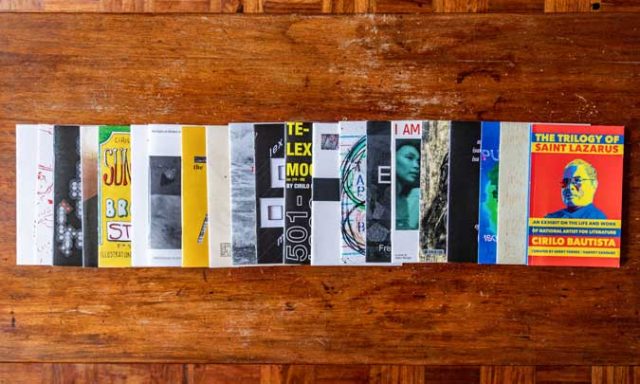
TWENTY-ONE visual art zines celebrate the life and work of the late National Artist for Literature Cirilo Francisco Bautista, through a compilation entitled The Trilogy of Saint Lazarus.

According to Wikipedia, a zine is a small-circulation self-published work of original or appropriated texts and images, usually reproduced via a copy machine. The zine set is produced by the Center of Campus Art of De La Salle-College of Saint Benilde (DLS-CSB).

The zine set is inspired by the multi-awarded poet, writer, essayist, critic, and educator’s renowned epic poem The Trilogy of Saint Lazarus, comprised of The Archipelago (1970), Telex Moon (1981), and Sunlight on Broken Stones (1999.)

The series, which took 30 years to complete, retells Philippine history and earned Mr. Bautista a number of recognitions including the National Centennial Commission First Prize in Epic Writing, the Manila Critics Circle National Book Award, and the Book Development Association of the Philippines Gintong Aklat Award, among many others.

The anthology was illustrated by contemporary artists and architects, to include Nel Banaag, Gringo Benedicto, Blic, Gab Brioso, Tricia Castillo, Julius Clar, Mariah Concepcion, Jackie Cruz, Bayani Galera, Winna Go, Miguel Infante, Doktor Karayom, Charles Mañez, Stephen Matti, Regina Morales, Walther Ocampo, Levyn Purcil, Robin Ravago, Gabby Rosario, Isola Tong, and Thea Torres.

DLS-CSB Manila and La Salle Green Hills President Brother Edmundo Fernandez FSC wrote the introduction for the zine series.

The collection is part of an exhibit on the life and work of the National Artist, presented in book form. Meanwhile, a digital installation entitled House of Words, reimagines the Quezon City home of the late poet and his wife architect Rose Marie, the former dean of DLS-CSB School of Design and Arts.

Using the concept of “Text as Image,” DLS-CSB architecture students Tracie Bejar, Bea Carague, Jackie Cruz, Janelle Gan, Kevin Nuñez, Emilio Tenorio and Aaron Yu, together with Multimedia Arts students Marco Ajero, Gelo Fabian, Enrique Masias and Raine Sanciangco selected phrases and stanzas from the epic poem and recreated the house using environmental graphics and architectonic volumes.

Mr. Bautista taught at the Waseda University in Japan and Ohio University in USA. He was the only Filipino granted with an honorary degree from the International Program of the University of Iowa, USA. He had honed aspiring writers as the Professor Emeritus at DLSU Manila, San Beda University Manila, and St. Louis University Baguio.

He was a Don Carlos Palanca Memorial Awards Hall of Famer, given to those who have won more than five times, the 2012 Cultural Center of the Philippines (CCP) Gawad CCP Para sa Sining Awardee, and the 2013 National Commission for Culture and the Arts (NCAA) Achievement Awardee.

Originally created as a physical exhibition in 2020, the virtual gallery may now be accessed at www.thetrilogyofsaintlazarus.com.
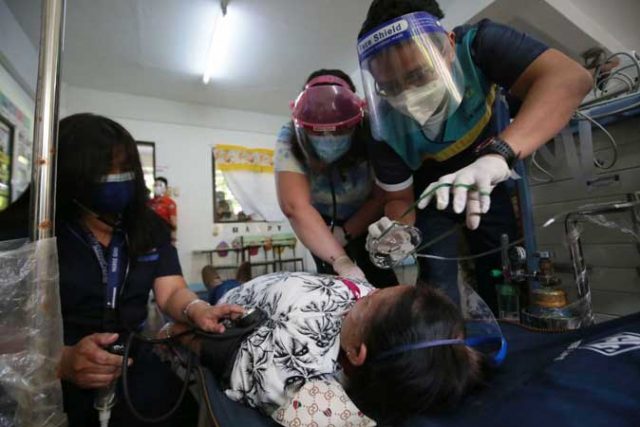
Coronavirus crisis exposes health system weaknesses

PHILIPPINE STAR/ MICHAEL VARCAS

By Patricia B. Mirasol

A RESILIENT public health system combines all the components that make a city livable, including food, energy, transport, infrastructure, and funding. “If you’re working in siloes, it’s not going to work,” said former Department of Health (DoH) Secretary Dr. Manuel M. Dayrit, at a recent event organized by Liveable Cities Philippines, an innovation-sharing platform. “You have to synergize everything and then bring together the cultural knowledge, social competence, and technical excellence of both the private and public sectors.”

A resilient public health system, according to Dr. Dayrit, should have a mechanism for delivering all types of services, including preventive and curative care. This mechanism has to be supported by adequate facilities, trained manpower, good financing, technological capabilities, and well-informed policies.

Because of the interconnectedness of our globalized world, the World Health Organization said that a well-functioning health system also needs the capacity to control and address global public health threats such as epidemics.

The challenge when it comes to a city’s responsiveness to disasters is that each city is unique in terms of infrastructure, sprawl, and growth, said DoH undersecretary Dr. Leopoldo J. Vega. A city’s livability, he added, can be sustained by addressing issues such as maximizing human resources for health, proper patient referrals, information and communication technologies, as well as the readiness of the healthcare system itself.

To make the healthcare system easier to navigate, DoH is rolling out the One Hospital Command Center (OHCC) in parts of the country, starting with regions 3 and 4A. The OHCC was launched in August 2020 to facilitate a comprehensive and coordinated response to the coronavirus disease 2019 (COVID-19) pandemic through effective and efficient health facility referrals.

CRISIS RESPONSIVENESS
“A crisis has a way of exposing weaknesses,” said Pasig City Mayor Vico R. Sotto, noting the lack of a pandemic playbook. “Do we weather this storm and get out of this alive, or do we get past this and improve how everything is going, moving forward?”

To prevent the spread of COVID-19, Pasig implemented a digital contact-tracing solution called PasigPass, and converted the Pasig City Children’s Hospital as a COVID-19 referral center. It also procured 400,000 doses of the AstraZeneca vaccine to supplement the National Government’s allocation.

Pasig increased its healthcare budget to P3.141 billion this year from P2.548 billion in 2020. In addition, 1,502 new positions were created to beef up the city’s healthcare staff. Efforts are also being made to improve the capacity of barangay health centers and thus unclog hospitals of patients only requiring primary healthcare.

“The lesson for us is that we have to accept risks. We can’t sit idly by,” Mr. Sotto said at the virtual event. “We have to make bold decisions even if they might turn out to be wrong.”   

Noting how Pasig City is strengthening the components of its health system, Dr. Dayrit said that the issue now is what the other cities are doing. “What you want, long-term, is for Filipinos to get the services [they need], regardless of where they live,” he said. “We don’t want a situation where some cities are doing better than others. We want a standardization of services at a high level.”

Megawide expands precast portfolio through PHirst Park

BW FILE PHOTO

MEGAWIDE Construction Corp. is expanding its precast portfolio and its presence in horizontal housing through PHirst Park Homes, Inc. (PPHI).

“The growing number of housing projects we undertake is also in line with our thrust to expand our business operations into emerging growth segments, with sizeable end-user demand,” Megawide Executive Vice-President Markus Hennig said in a statement on Tuesday.

The company will be supplying precast materials for 1,974 housing units in PHirst Park’s project in Batulao, Nasugbu in Batangas province.

Megawide said it plans to build an onsite facility and batching plant for the manufacturing and supply of precast housing units for efficiency. The company added that more developers are realizing the benefits of using precast materials.

“With a more efficient process, less manpower needs, and more cost-efficient structure in the long-run, our clients can turn over more units and realize higher revenues in a shorter period of time compared with conventional methods,” Mr. Hennig said.

The Batulao project is the company’s sixth with PHirst Park. It has built nearly 9,400 units with the developer in its projects at Laguna’s San Pablo and Calamba, Tanza in Cavite, and Lipa in Batangas.

“We are grateful for the continued trust that PPHI has placed in us, and we are committed to ensuring the high level of quality that they have been accustomed to receiving with our service through the years,” Mr. Hennig said.

Shares of Megawide at the stock exchange were up by 0.75% or five centavos on Tuesday to close at P6.75 each. — Keren Concepcion G. Valmonte

Advocates call for better access to cancer care information

Image by Marco Verch/CC BY 2.0

CANCER, a deadly disease that poses a major healthcare challenge in the Philippines, has been neglected the past year due to the focus on coronavirus disease 2019 (COVID-19). According to the World Health Organization, prevention and treatment of non-communicable diseases like cancer have been disrupted globally because of the crisis.

“The pandemic is not an excuse. We have to prioritize our health,” said breast cancer survivor Kara Magsanoc-Alikpala, a broadcast journalist, filmmaker, and member of ICanServe Foundation and Cancer Coalition of the Philippines.

While cancer is among the top 10 causes of mortality in the Philippines, it is by no means a death sentence. Like Ms. Magsanoc-Alikpala, many will find it easier to cope with the stress of a serious illness by having a support group or network, said Maria Fatima “Girlie” Garcia-Lorenzo of Kythe Foundation and the Philippine Alliance of Patients’ Organizations.

An online survey commissioned by Merck Sharp & Dohme (MSD) showed that two out of five Filipinos have personal experiences with cancer either as patients or through family, friends or colleagues diagnosed with the disease, according to data revealed in the first episode of “Tita Hope Talks,” a four-part conversation series organized by MSD Philippines’ cancer care advocacy campaign Hope From Within (HFW). 

The same “Tita Hope Talks” episode pushed for access to correct information and treatment options.

“One-third of Filipinos are generally aware of different cancer treatment options,” said Mylene G. Rodriguez, general manager of IQVIA Philippines, an analytics provider that conducts market research in the healthcare industry. Innovative treatments, such as gene therapy and targeted drug delivery, are effective and less painful options for patients, according to research commissioned by MSD. 

“We have to mold that so people will be proactive about cancer. If we’re able to get consultations and primary health benefits, people will be more encouraged to go for check-ups,” said Kythe’s Ms. Garcia-Lorenzo.

When it comes to funding, the Philippine Charity Sweepstakes Office and Philippine Health Insurance Corporation are top of mind. There are, however, lesser-known cancer funding institutions such as the Malasakit Centers, which are a one-stop shops for medical and financial assistance run by the Department of Health.

RELYING ON COMMUNITY SUPPORT
At the “Tita Hope Talks” panel, HFW ambassador and veteran actress Susan Africa shared her personal journey as a caregiver for her husband, Spanky Manikan, who passed away in 2018 from lung cancer.

“It was challenging because we had to learn a lot about what to do, where to go, what to avail of, whom to ask for help. I learned a lot about radiation treatments, chemotherapy, clinical trials, and how to deal with issues like loss of appetite, anxiety, and discomfort,” she shared.

A major source of comfort, information, and even finances were concerned loved ones. “Help can be found through the support of our community, especially those who champion and advocate for the rights of the patients who have cancer,” said Dr. Ma. Via Jucille M. Roderos, a sustainable health and business professional and one of the panelists in the latest Alaga Health consult, “They not only advocate for the ones who have cancer, but also the loved ones who fight with the patients.”

Cancer patients and advocates are still waiting for the full implementation of the National Integrated Cancer Control Act, which was signed into law in February 2019. — Brontë H. Lacsamana

LANDBANK net profit up 1.67% in 1st quarter

LANDBANK
BW FILE PHOTO

LAND BANK of the Philippines (LANDBANK) saw its net earnings climb by 1.67% to P5.48 billion in the first quarter, the state-run bank said in a press release on Tuesday.

LANDBANK said its performance in the first three months put it on track to hit its profit target of P19.68 billion by the year’s end.

The bank’s net income at end-March translated to a return on equity of 10.09% and return on assets of 0.77%.

Meanwhile, its net interest margin stood at 3.11%.

On the other hand, LANDBANK’s capital jumped by 32.44% to P194.59 billion in the first quarter from P146.93 billion a year ago. It attributed the increase to higher deposits and the P27.5 billion equity infusion from the national government in February.

Republic Act No. 11494 or the Bayanihan to Recover as One Act (Bayanihan II) mandated the government to provide supplemental funding to LANDBANK and other key state-run financial institutions to help sectors recover from the pandemic.

Deposits with the bank climbed 16.2% to P2.123 trillion in the first quarter from P1.827 trillion at the end of 2020.

Meanwhile, it approved a combined P93.14 billion in loans as of April.

Broken down, around P20.07 billion of the total went to 434 micro-, small- and medium-sized enterprise (MSME) borrowers, 81 cooperatives, 56 big firms and five microfinance institutions.

It also granted 245 local government units (LGUs) P72.18 billion in loans to help boost their local economies, while P889 million was approved for 20 private schools to support a “study now, pay later” scheme for students.

LANDBANK launched several lending programs for MSMEs, LGUs, and schools that have been affected by the prolonged coronavirus crisis.

“The robust growth of our deposit base coupled with the equity booked from Bayanihan II allows us to extend greater financial assistance to our priority sectors, especially to small farmers and fishers, MSMEs, and other key development players. LANDBANK remains in prime position to continue providing for the recovery requirements of clients and the nation at large,” LANDBANK President and CEO Cecilia C. Borromeo was quoted as saying.

Meanwhile, the state-run bank’s assets grew by 16.13% to P2.405 trillion at the end of March from P2.071 trillion in the same period last year.

Other details were not immediately available.

LANDBANK saw a 7.57% drop in its net income to P17.1 billion last year amid the economic downturn caused by the coronavirus pandemic. — BML

Lin-Manuel Miranda’s In the Heights now a movie

KEOMI Key, Melissa Barrera, and Anthony Ramos in In the Heights (2021) — IMDB.COM/

LOS ANGELES — Lin-Manuel Miranda is looking forward to the day when a movie starring a US Latino cast, featuring characters who aren’t stereotyped as maids or gardeners, is a regular fixture in cinemas. Until then, he is hoping musical In The Heights changes the conversation in Hollywood about the wider appeal of such movies, just as Crazy Rich Asians did in 2018. “The hope for me is that in five years’ time, people will go, ‘Why was In the Heights such a big deal? We have 10 Latino movies every year now,’” said Mr. Miranda. “To be quaint would be a dream come true. No one movie can encompass the sheer tonnage of stories we have to offer,” said Mr. Miranda, who is of Puerto Rican descent and is the creator of hit musical Hamilton. Latinos in the United States go to the movies more than Blacks and Asian Americans, according to a 2018 report by the Motion Picture Association of America. Latinos make up around 18% of the US population. But a 2019 study by the Annenberg Inclusion Initiative at the University of Southern California found that just 3% of the top-grossing movies from 2007-2018 had Latinos as lead or co-lead actors. Mr. Miranda originally wrote In the Heights about the vibrant multi-racial community in Manhattan’s Washington Heights neighborhood as a stage musical, before Hamilton, which reframes the story of America’s founding fathers through the perspective of Blacks and Latino immigrants. Shot on the streets of Washington Heights, with huge dance numbers and featuring a cast of rising talent like Anthony Ramos and Melissa Barrera, In the Heights took 13 years to get to the big screen. Directed by Jon M. Chu, with some dialogue in both Spanish and English and storylines about the struggle to succeed in the United States and the pull of the homeland, it has won rave reviews. —  Reuters

Shell’s Batangas import facility shifts to renewables

PILIPINAS Shell Petroleum Corp.’s import terminal in Tabangao, Batangas now runs on renewable energy (RE) sourced from its retail electricity supplier and in-house solar farm, the firm said on Tuesday.

“Shell’s Tabangao import terminal shifted to RE in partnership with Shell Energy Philippines (SEPH), a retail electricity supplier which is registered under the Shell Companies in the Philippines. The import terminal is now 100% powered by SEPH’s clean energy solutions and (the terminal’s) own solar farm,” Pilipinas Shell said in a statement.

The solar farm, which has been supplying power to the oil company’s import facility since December, is owned by the listed firm for its own use. The facility is made up of 5,220 panels with a peak capacity of 1.8 megawatts direct current.

Last year, Pilipinas Shell recorded P7.5 billion in one-off charges in the third quarter after it closed down the Tabangao refinery. It subsequently transformed the facility into an import terminal.

In its strategy plan covering the years 2021 to 2025, the firm emphasized the reduction of its carbon footprint and tapping into clean energy for its power needs.

“The company is strongly positioned to meet the resulting recovery of energy demand as well as the growth in consumer spending,” Pilipinas Shell President and Chief Executive Officer Cesar G. Romero said in a statement.

“We intend to do our share in contributing towards Royal Dutch Shell’s aspirations to be a net-zero carbon business by 2050,” he added.

Jeremy Bentham, the group’s vice-president for global business environment, noted that population growth led to billions seeking a decent quality of life, bringing up the demand for power.

“There will be a need for faster deployment of cleaner technologies in the economy… There is still a huge need for energy for a growing market, as being able to serve customers is important. [There will be] decarbonization in all types of business,” he said.

In April, Pilipinas Shell said that it was looking at investing up to P20 billion in the next five years to finance the construction of oil import terminals and more “mobility sites,” among others, as it transitions to a new business model.

Shares in Pilipinas Shell at the local bourse inched down by 0.48% or 10 centavos to finish at P20.60 apiece on Tuesday. — Angelica Y. Yang

National ID to be accepted by banks as sole proof of identity

THE CENTRAL BANK has told lenders to accept the national ID as a sole proof of identity for those who want to open accounts to help Filipinos who have been prevented from joining the formal financial system by this documentary requirement.

Memorandum No. M-2021-035 signed by Bangko Sentral ng Pilipinas (BSP) Deputy Governor Chuchi G. Fonacier said BSP-supervised financial institutions could face penalties if they refuse to recognize a national ID card or the Philippine Identification System (PhilSys) as proof of identity for their Know-Your-Customer (KYC) process.

“Consistent with PSA (Philippine Statistics Authority) Advisory dated May 19, 2021, the PhilSys ID should be accepted as official and sufficient proof of identity without the need to present any other identification documents,” the BSP memorandum said.

The BSP said Republic Act 11055 or the Philippine Identification System Act imposes a P500,000 penalty for entities or persons that refuse to recognize the national ID as the only identification of a holder “without just and sufficient cause.”

BSP-supervised financial institutions are also allowed to do online or offline authentication procedures to verify the identity of an individual presenting their national ID as proof of identity.

The central bank told financial institutions to consider advisories that will be issued by PSA regarding digital authentication and electronic KYC using fingerprint, iris, facial, one-time passwords, or demographic verifications.

Data from the Philippine Statistics Authority showed nearly 104,000 national IDs were already distributed as of May 15. These were delivered by the Philippine Postal Corp.

The government is targeting to register 50 to 70 million Filipinos to the PhilSys by the end of this year.

The national ID is expected to benefit the marginalized and low-income sector as registration is free of charge versus other government IDs that require fees.

More than two-thirds of Filipino adults remained unbanked in 2019. A central bank study found that lack of documentary requirements (26%) is a major factor that prevents Filipinos from opening a bank account, next to lack of money (45%) and the view that they do not need an account (27%).

Prior to the national ID, financial institutions required at least two valid government IDs to open an account. — L.W.T. Noble

Royal frocks, including Diana wedding dress, on display in London

Wedding dress of Lady Diana Spencer — EN.WIKIPEDIA.ORG

LONDON —  The voluminous ivory dress Princess Diana wore to marry Prince Charles in 1981 has gone on display at her former London home, as part of a new exhibition showcasing a selection of gowns worn by members of Britain’s royal family. Royal Style in the Making looks at the works of designers and their royal clients, and features outfits created for Queen Elizabeth the Queen Mother, Princess Margaret, and Diana, as well as sketches, fabric swatches, and photographs from the Royal Ceremonial Dress Collection. Among the most recognizable frocks is Diana’s taffeta and lace wedding gown, made up of a bodice, full skirt, puffed sleeves, and 25-foot train. Designed by David and Elizabeth Emanuel, the dress is on loan from Diana’s sons, Princes William and Harry. Among other items on show is a rare surviving toile for a gown worn by Queen Elizabeth the Queen Mother for King George VI’s coronation in 1937. The exhibition, which opened last week and runs until January, is at Kensington Palace, where Diana lived until her death in a Paris car crash in 1997. — Reuters

SLMC acquires diagnostic machines, offers teleconsult services

ST. LUKE’s Medical Center (SLMC) acquired three new machines from Siemens AG for its disease detection and cancer treatment services. The systems will be dedicated to patients who need radiation treatment and imaging, such as those with cancer.

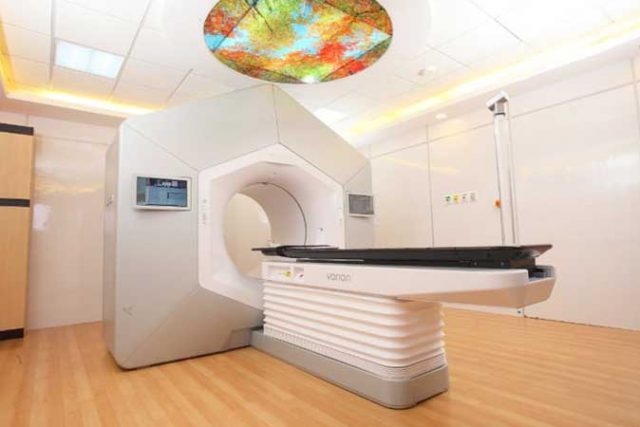
The Halcyon linear accelerator, a radiotherapy machine in SLMC’s Department of Radiation Oncology, offers safer and quicker radiation treatment for patients with cancer.

Meanwhile, the Symbia Intevo SPECT-CT and Biograph Vision PET-CT, found in SLMC’s Department of Nuclear Medicine, allow faster detection and diagnosis of diseases. The Symbia Intevo can generate an anatomic and metabolic picture of the patient’s condition in just a single scan. The Biograph Vision PET-CT scanner, on the other hand, accurately monitors and determines the extent of cancer.

For appointments and queries on radiation treatment, patients may contact St. Luke’s Department of Radiation Oncology at 8-723-0101 local 5414 (Quezon City) or 8-789-7700 local 5413 (Bonifacio Global City).

In addition to procuring these machines, SLMC also offers teleconsult services to suspected or confirmed coronavirus disease 2019 (COVID-19) patients. Patients should give the name of their preferred SLMC doctor in order to check for his/her availability.

To schedule an appointment, patients should call SLMC’s Teleconsult hotlines. Those who want to schedule a consultation with SLMC Global City can call at (+63) 919-065-3019, while SLMC Quezon City can be reached at (+63) 947-993-8210. These hotlines are open daily from 8 a.m. to 6 p.m.

Marcventures Mining records income surge on higher nickel ore exports

MARCVENTURESHOLDINGS.COM

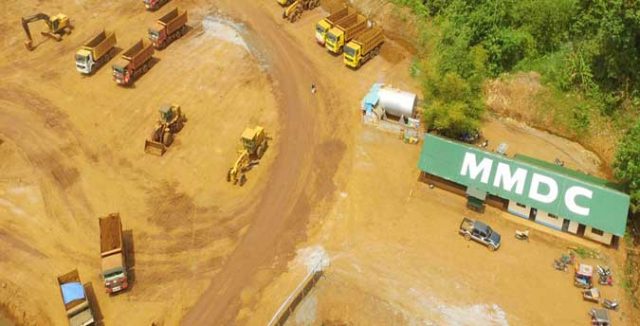
MARCVENTURES Mining and Development Corp. reported a net income of P530 million last year, or more than three times the figure a year earlier, on the back of higher nickel ore shipments.

The mining firm, which is a wholly owned subsidiary of listed firm Marcventures Holdings, Inc., said in a statement that its gross revenues last year increased 100.8% to P2.87 billion against P1.43 billion the year earlier.

“Nickel ore shipments increased by 21.2%, from 1.42 million wet metric tons (WMT) in 2019 to 1.732 million WMT of saprolite ore in 2020 reflecting a leap to 32 shipments in 2020 from the 26 vessels in 2019,” the company said in the statement.

For the year, Marcventures Mining said it is eyeing to ship 2.035 million WMT of saprolite and limonite ore, adding that it will be supported by the allotment of a P27.64-million capital expenditure budget.

Meanwhile, the company said it remains committed in its efforts to preserve the environment and to help its host communities.

“The company continues to provide livelihood opportunities, educational and health assistance to all 42 communities in the municipalities Cantillan, Carrascal and Madrid, in Surigao del Sur,” the company said.

On Tuesday, shares of Marcventures Holdings, Inc. — the parent company of Marcventures Mining — fell 0.78% or one centavo to end at P1.28 apiece. — Revin Mikhael D. Ochave

BSP eyes green design for new complex

PHILIPPINE STAR/ GEREMY PINTOLO

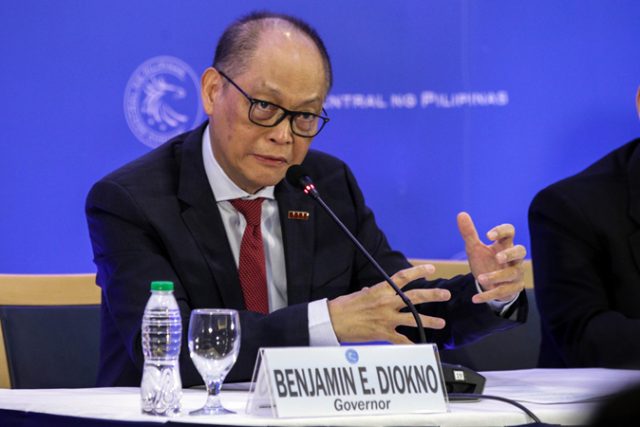
THE CENTRAL BANK is looking for consultants for its new security plant complex in New Clark City to help design a “modern, green” facility for seven months starting October, Bangko Sentral ng Pilipinas (BSP) Governor Benjamin E. Diokno said.

“The New BSP Complex Design Competition will enable the central bank to benefit from multiple design ideas for the construction of its iconic, smart, green, and modern facility at New Clark City,” Mr. Diokno said.

“The proposed project design should be sustainable and incorporate Green Building measures to promote efficient use of resources such as power, water, and materials. These are intended to foster the health of its occupants and to protect the environment,” he said in an online briefing on Tuesday.

The contest has two stages: the eligibility screening and shortlisting; and submission of technical and financial proposals and conceptual design.

Mr. Diokno said the construction process for the facility is expected to start by the second quarter of 2022.

The complex will be built on a 31-hectare land that will house the central bank’s executive offices and facilities for currency and security documents production, information technology, security, training, wellness, and sports activities. An academic building, the BSP’s research academy, and a museum will also be constructed within the complex.

“The estimated cost for the development of the construction of the complex will be determined after the approval of the design drawings,” Mr. Diokno said.

The BSP said the winning bidder will be awarded a contract for the design of the facility in accordance with Republic Act 9184 or the Government Procurement Reform Act. Mr. Diokno said the procurement for the architectural and engineering consultancy design for this project has already started.

“I estimate that it will take about three months for the awarding of the contract, so by October this year, the design consultant is expected to be on board. He will be required to complete the design in seven months,” he said.

Meanwhile, Mr. Diokno said the BSP has yet to decide what will happen to its current security plant complex in Quezon City.

“On the Security Plant [in Quezon City], a task force has been created to study what we want to do with that security complex. We could retain it, we could sell it, or we could join the development with a private sector,” he said.

The central bank’s upcoming complex in New Clark City will be a “contingency plan” in case of an earthquake or a typhoon or other events that could affect the operations of the BSP’s main office in Roxas Boulevard and the security plant in Quezon City, Mr. Diokno said.

The project is in line with the government’s vision to decongest Metro Manila by transferring some administration facilities in New Clark City.

In January, the central bank signed a contract with the Bases Conversions and Development Authority to lease the land for its new complex for a period of 50 years. The BSP will have the option to renew this for another 25 years upon agreement. — L.W.T. Noble