Home Blog Page 7417

IEMOP notes improved forecasting after EWDO rollout

THE Independent Market Operator of the Philippines (IEMOP) observed an improvement in its peak demand projections following the launch of its five-minute wholesale electricity spot market (WESM) last month. 

“In our old system, our day-ahead projections only had an accuracy of roughly around 80%. Right now, our accuracy for a day-ahead perspective is at around 94.7% in Luzon. In Visayas, its 92% and in Mindanao, it’s actually faring much better at 96%. These are the improved market projections we saw,” IEMOP Manager of Operations Planning and Modeling Edward I. Olmedo told reporters in a virtual briefing on Friday, referring to the peak forecast accuracy levels recorded from June 27 to July 8. 

Better forecasts allow market participants to access accurate estimates of the changes in prices and conditions for the next day, he said. 

“Having improved market projections will allow (participants) to make better decisions in their commitments in terms of generation…and requirements,” Mr. Olmedo said. 

The IEMOP rolled out the enhanced WESM design and operations (EWDO) setup in Luzon and the Visayas on June 26. The EWDO sought to implement various rule changes to the WESM, which reduced the time between scheduling and dispatch of power to five minutes, among others. 

In a separate statement issued on its website, the IEMOP said with the shift to a new market design, the WESM is now “at par with the electricity markets of developed countries including the United States and Australia.” 

The shift to a five-minute dispatch model also made the Philippine spot market “one of the technologically advanced markets based on global industry standards”, it said. 

The market operator on Friday said the average spot market price last month hit P6.53 per kilowatt-hour (kWh), down from the P7.66 per kWh recorded in May. 

Meanwhile, the effective settlement spot price for June declined by around 13% to P7.25 per kWh from P8.31 the month prior. — Angelica Y. Yang 
ADB to align operations with Paris agreement goals

THE ASIAN Development Bank (ADB) has committed to align its operations with the goals of the Paris Agreement as the multilateral lender seeks to help its developing member countries (DMCs) achieve sustainability and resilience. 

“ADB will achieve full alignment of its sovereign operations by 1 July 2023. Alignment of its non-sovereign operations will reach 85% by 1 July 2023 and 100% by 1 July 2025,” it said in a news release posted on its website Thursday. 

Sovereign operations include loans and grants, which have not yet received financial close, while non-sovereign operations cover investments cleared by the ADB, among others. 

“ADB recognizes that the implementation of the Paris Agreement is critical in the global fight against climate change,” ADB President Masatsugu Asakawa was quoted as saying. 

“By fully aligning our operations to the goals of the Paris Agreement and expanding our investments in resilience and adaptation, ADB will lower the carbon footprint across Asia and the Pacific and help our developing member countries (DMCs) to move their economies toward a more sustainable, resilient, and inclusive future,” he added. 

Mr. Asakawa made the announcement on Thursday during the V20 Climate Vulnerables Finance Summit, which was hosted by the Bangladesh government. 

The Paris agreement is a global treaty that aims to keep the global temperature’s rise below 2°C. The Philippines is one of the signatories of the global treaty. 

The ADB said in a statement that it will support the climate plans of DMCs by addressing physical risks and ensuring a “just transition” away from fossil fuel-dependent industries. 

The bank added it is planning to ramp up investments in climate change adaptation and resilience, with cumulative financing of $9 billion from 2019 to 2024. 

The ADB said its goal to align its operations with the Paris treaty and scale up investments in adaptation and resilience complement its 2030 target of ensuring that 75% of its operations will support climate action, with its climate finance resources reaching $80 billion in a decade. — A.Y. Yang 

BSP fully awards offer of short-term securities

BW FILE PHOTO

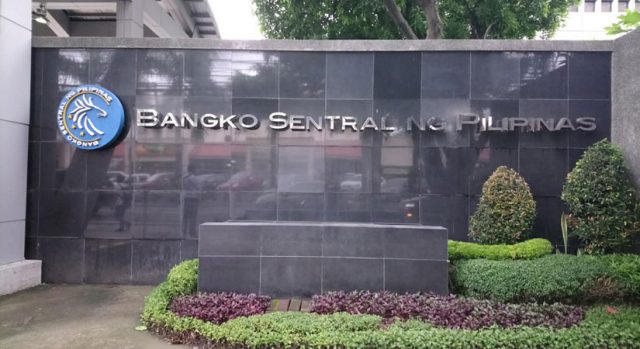
THE BANGKO SENTRAL ng Pilipinas (BSP) fully awarded its offering of short-term securities on Friday as rates inched down after slower-than-expected inflation in June and amid a decline in yields on US benchmark notes. 

The central bank awarded P100 billion as planned in 28-day bills as demand reached P182.21 billion, surpassing the P158.2 billion in bids logged the previous week. 

Accepted rates for the bills ranged from 1.795% to 1.8086%, a narrower margin compared to the 1.78% to 1.8245% band seen in the previous week’s auction. This caused the average rate of the one-month securities to slip by 0.93 basis point (bp) to 1.8022% from 1.8115% previously. 

The BSP bills and the term deposit facility are used by the central bank to gather excess liquidity in the financial system and guide market rates. 

The lower yields fetched for the BSP bills on Friday came after the release of data showing inflation eased in June, Rizal Commercial Banking Corp. Chief Economist Michael L. Ricafort said in a text message. 

Headline inflation slowed to a six-month low last month on the back of easing transport prices. 

Data from the Philippine Statistics Authority showed the consumer price index rose by 4.1% in June. This was slower than the 4.5% print in May but marked the sixth consecutive month of inflation falling beyond the BSP’s 2-4% target for 2021. 

Inflation in the first six months of the year averaged 4.4%, above the central bank’s 4% forecast. 

Mr. Ricafort said the market also took its cue from benchmark US bonds. The rates of US Treasuries dropped by as much as 7 bps across the curve, with the 10-year note’s yield slipping to 1.25% before bouncing back above 1.29%, Reuters reported. — L.W.T. Noble with Reuters 

BPI-BFSB merger secures conditional approval from PDIC

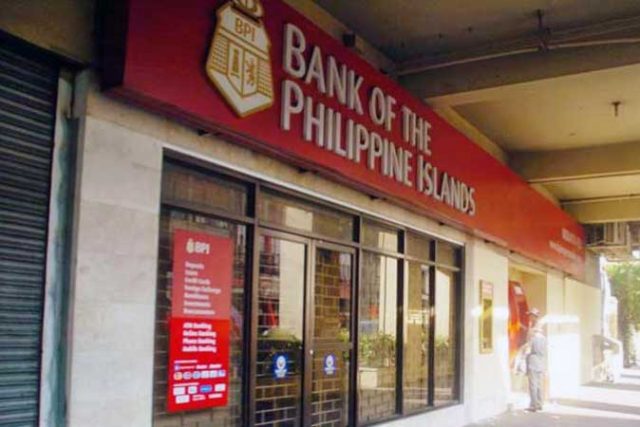
THE Philippine Deposit Insurance Corp. (PDIC) has given its conditional approval for the merger of Ayala-led lenders Bank of the Philippine Islands (BPI) and BPI Family Savings Bank (BFSB), with BPI as the surviving entity. 

PDIC granted its condition consent through a letter dated July 6, BPI said in a filing on Friday. 

The consent granted by the PDIC Board of Directors to the proposed merger of BPI and BPI Family Savings Bank BFSB, with BPI as the surviving entity, shall be valid as long as the Monetary Board has approved the merger. The consent granted by the PDIC is one of the requirements of the MB in approving the merger.

To ensure the protection of depositors, the proponent banks are required to submit to PDIC within five business days from their receipt of the Monetary Board approval the notarized certifications that the proponent banks’ respective depositors and creditors have been duly notified of the approved merger and its full implication on the deposit liabilities and the rights of the depositors; and that the proponent banks have sufficient liquid funds to cover possible withdrawal transactions of depositors.

Aside from the PDIC and the Bangko Sentral ng Pilipinas (BSP), BPI also needs to secure the approvals of other regulators for the merger, including the Securities and Exchange Commission (SEC), Philippine Competition Commission, and the Bureau of Internal Revenue.  

BPI’s plan to absorb BFSB was announced in January and was approved by a quorum or at least two-thirds of BPI’s stockholders in April. 

The listed lender said they expect the SEC to approved its Amended Articles of Incorporation for the merger by October. The merger will be effective upon the SEC’s issuance of the Certificate of Merger or by Jan. 1, 2022. 

BPI’s net earnings dropped 21.64% to P5 billion in the first quarter from P6.381 billion a year earlier. This was caused by declining revenues amid lower net interest income. 

Its shares ended trading at P88.40 each on Friday, up by P1.40 or 1.61% from its previous finish. — LWTN 

Person-to-merchant QR payments to boost digitalization goal

REUTERS

FACILITATING digital payments from persons to merchants (P2M) through standardized QR codes will help the country achieve its goal to be a cash-lite economy where 50% of payments are done online, central bank officials said. 

“Payments to merchants alone account for 70% of retail payment volume. That’s why the upcoming launch of QR PH P2M which we are already piloting is very important,” BSP Deputy Governor Mamerto E. Tangonan said in an online briefing at the central bank’s Youth Summit on Friday. 

The person-to-merchant scheme was piloted in April and is expected to be fully implemented within the third quarter. During the pilot launch period, consumers with accounts in selected banks are able to make payments to firms that also have accounts with these institutions. 

Lenders that participated in the QR PH P2M pilot launch include AllBank (A Thrift Bank) Inc.; Asia United Bank Corp.; China Banking Corp.; Rizal Commercial Banking Corp.; Robinsons Bank Corp.; and UnionBank of the Philippines, Inc. 

“Because of what we have seen in the experience during the pandemic, people have actually embraced digital payments and digital financial transactions. I believe that preference is already cemented and will be more prevalent going forward,” said BSP Assistant Governor Edna C. Villa, who heads the BSP’s Payments and Currency Development unit. 

But Ms. Villa said many Filipinos are not yet at ease with or lack awareness about digital payments, which could be a hindrance to adoption. 

“There are segments of the society that do not yet trust the system…[or] are not yet completely aware, so we need to reach out,” she said. 

The central bank wants the Philippines to be a cash-lite economy by 2023 where 50% of transactions are done digitally. It also targets to bring 70% of adult Filipinos into the financial system in the same year. — LWTN 

Peso sinks to P50:$1 level on import recovery

BW FILE PHOTO

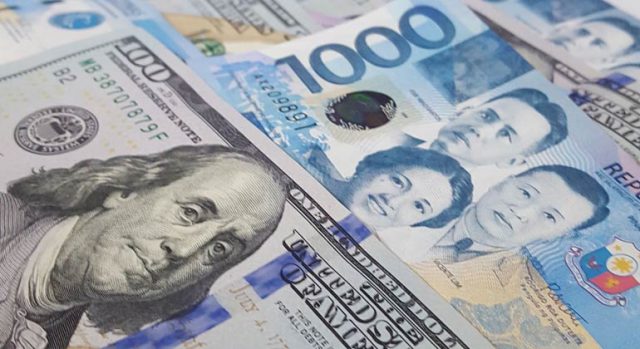
THE PESO sank to the P50-per-dollar level on Friday on data showing a continued recovery in imports and as investors awaited the US Federal Reserve’s latest signals on its policy path. 

The local unit ended trading at P50.08 per dollar on Friday, shedding 20.5 centavos from its P49.875 close on Thursday, based on data from the Bankers Association of the Philippines.  

Friday’s close is the peso’s weakest in more than a year or since June 23, 2020’s P50.19-per-dollar finish. 

The peso opened Friday’s session at P50.10 versus the dollar. Its weakest showing was at P50.17, while its intraday best was at P50 against the greenback. 

The peso weakened following the release of the country’s trade data showing a continued rebound in imports, Rizal Commercial Banking Corp. Chief Economist Michael L. Ricafort said. 

The trade deficit stood at $2.76 billion in May, smaller than the $3.08-billion gap in April but still wider than the $1.31-billion shortfall a year earlier, based on data released by the Philippine Statistics Authority on Friday. Imports climbed by 47.7% to $8.65 billion in May from a year earlier. Meanwhile, exports increased by 29.8% to $5.89 billion. 

Meanwhile, a trader attributed the peso’s depreciation to cautious sentiment ahead of the Fed’s submission of its monetary policy report to the US Congress later on Friday. — LWTN 

Children now allowed outdoors in places under relaxed quarantine levels

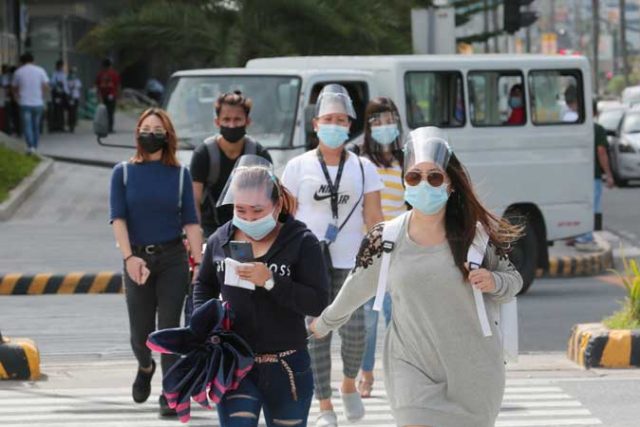
Minors as young as five years are now allowed in some outdoor venues in areas under relaxed community quarantines, according to the presidential palace. 

The country’s pandemic task force has adopted a resolution allowing children aged five and above in specific outdoor areas in places under general community quarantine and modified general community quarantine, the two least restrictive quarantine levels, presidential spokesman Herminio L. Roque, Jr. said in a statement.  

They will be allowed in “parks, playgrounds, beaches, biking and hiking trails, outdoor tourist sites and attractions as may be defined by the Department of Tourism, outdoor non-contact sports courts and venues, and al-fresco dining establishments in the previously mentioned areas,” Mr. Roque said.   

“Mixed-use indoor/outdoor buildings and facilities such as malls and similar establishments are not included in the allowed outdoor areas for children,” he added.  

Children must still be supervised by adults and observe minimum public health standards, Mr. Roque said.  

The Palace official said local authorities may increase the age restrictions on children “depending on the COVID-19 situation in their respective jurisdictions.”  

Metro Manila and nearby cities and provinces were placed under a general quarantine “with some restrictions” from July 1 to 15. 

TRAVEL BY THE VACCINATED 

Meanwhile, the task force is now allowing local government units to require fully vaccinated individuals bound for interzonal travel to undergo swab testing, Mr. Roque said. This came after governors opposed the task force’s earlier resolution stating that fully vaccinated individuals did not need to undergo testing for interzonal travel if they could present a vaccination card or proof of complete vaccination.  

Senator Richard J. Gordon warned that a fully vaccinated domestic traveler could still carry the coronavirus that causes COVID-19.   

Mr. Roque said the intrazonal travel of fully vaccinated senior citizens within areas under the two most relaxed quarantine levels is still allowed.  

He said fully vaccinated seniors must present their coronavirus vaccination card issued by a legitimate vaccination establishment/authority or a vaccination certificate issued by the Bureau of Quarantine. 

SPECIAL OFW FLIGHTS 

In a related development, Mr. Roque said the task force authorized special commercial flights to bring home stranded Filipinos in Oman, Dubai, Abu Dhabi, “and other countries where there are travel restrictions imposed.”  

“These special commercial flights are, however, subject to guidelines, such as the creation of a Special Working Group to determine the implementing protocols for the special commercial flights, in coordination with the concerned airlines,” he said.  

The Palace official said the task force also approved the holding of the Binibining Pilipinas 2021 Coronation Night at the Smart Araneta Coliseum in Quezon City.  

All participants and guests shall be required to undergo coronavirus testing 48 hours prior to the event and shall follow strict health and safety protocols, he said. — Kyle Aristophere Atienza 

PHL administers 12.7 million coronavirus vaccines

PHILIPPINE STAR/ MICHAEL VARCAS

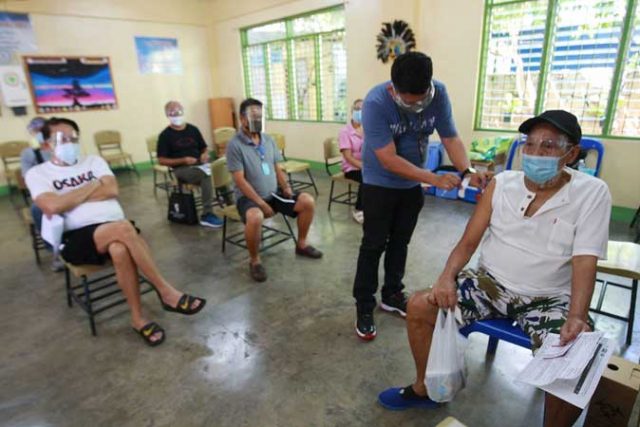
About 12.7 million coronavirus vaccines have been given out as of July 8, according to Philippine health authorities.  

Of the total, 9.4 million were first doses and 3.2 million were second doses, data from the Department of Health (DoH) showed.  

Fully vaccinated individuals consist of more than 1.16 million health workers, 861,560 seniors, about one million seriously ill people, and 103,990 essential workers, it said.  

More than 14,300 outbound migrant Filipino workers and families of healthcare workers, and 24,492 indigent people have also completed their coronavirus vaccination, it added.  

The Philippines on Thursday night took delivery of more than a million AstraZeneca doses donated by the Japanese government. 

The country is set to receive about two million more AstraZeneca doses from a global initiative for equal access this week. About 170,00 doses of the Sputnik V vaccine from Russia are also set to arrive this week.  

The government expects 70 million Filipinos to get their first vaccine dose by November, vaccine czar Carlito G. Galvez, Jr. said on Thursday.  

The Philippines aims to inoculate at least 500,000 people daily in Metro Manila, Rizal, Bulacan, Cavite, Laguna, Pampanga, Metro Cebu, and Metro Davao to achieve herd immunity by Nov. 27. 

5,881 NEW COVID CASES 

The DoH reported 5,881 new coronavirus infections on Friday, bringing the total number of people who have been infected since the start of the pandemic to 1.46 million. 

The death toll rose to 25,720 after 70 more patients died, while recoveries increased by 3,003 to 1.38 million, it said in a bulletin. 

There were 51,902 active cases, 90.3% of which were classified as mild, 4.4% asymptomatic, 2.2% severe, 1.56% moderate, and 1.5% were classified as critical. 

The agency said 10 duplicates had been removed from the tally, seven of which were tagged as recoveries. One case was found to have tested negative and has been removed from the total case count, it added.  

The DoH said 28 cases previously tagged as recoveries have been reclassified as active cases, and 34 cases previously tagged as recoveries were reclassified as deaths. 

It said that while all labs were operational on July 7, five labs were not able to submit their data. — Kyle Aristophere Atienza 

PDP-Laban expels top officials

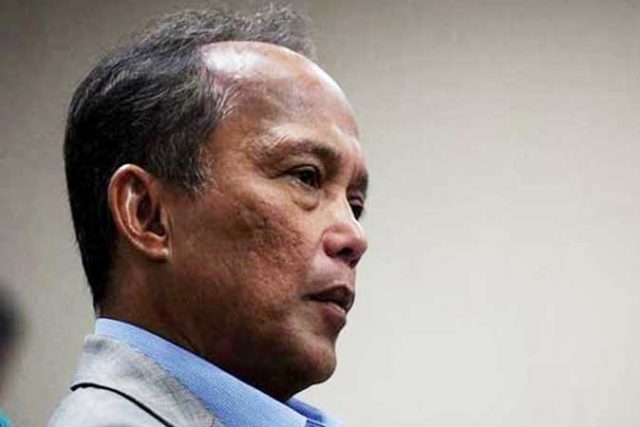
Energy Secretary Alfonso G. Cusi — PHILSTAR

The ruling party chaired by President Rodrigo R. Duterte has expelled three of its top officials, including Energy secretary Alfonso G. Cusi, over alleged violations of its constitution.

The Partido Demokratiko Pilipino – Lakas ng Bayan (PDP-Laban) on Friday announced that it had expelled its vice-chairman Mr. Cusi, and deputy secretary-general , Melvin A. Matibag, for violating its laws “by showing allegiance to a political party apart from PDP Laban.”

The party’s membership committee head, Astravel “Astra” Pimentel-Naik, was also expelled.

“The expulsion of Cusi, Matibag, and Naik was explained in one of the three party resolutions that were issued by Party President Sen. Emmanuel ‘Manny’ D. Pacquiao and the PDP-Laban National Executive Committee (NEC) which constitutes the highest administrative and executive body of the party,” said a statement issued by PDP-Laban Executive Director Ron Munsayac

The party’s executive committee also issued a separate resolution authorizing Mr. Pacquiao to create investigation committees to probe complaints about party members “who may have violated the party Constitution or may have committed acts inimical to the party by showing allegiance to another party,” the statement read.

The statement cited a resolution, which supposedly states that Mr. Cusi “is already manipulating the party to support the Duterte-Duterte tandem which is a blatant admission of supporting Sara Duterte Carpio for President, who is not a member of the Party.”

“He is guilty of having allegiance to a candidate and her political ideals and party. Such a candidate does not even believe in Federalism, her party fielded candidates against and opposed official candidates of PDP-Laban in 2019 Elections, and she is vehemently opposed to joining the PDP-Laban Party,” it added.

Mr. Pacquiao, who is believed to be eyeing the presidency in the 2022 polls, earlier this month said state corruption is rampant. He had also criticized the President’s stance on the country’s sea dispute with China.

In response, Mr. Duterte said he would block the senator’s potential bid in next year’s elections if he fails to identify corrupt government officials.

The President himself had said in October that corruption in government was getting worse.

Mr. Cusi is among the individuals within the party who have been urging the President to run for vice-president next year.

During the PDP-Laban’s televised meeting on Wednesday, Mr. Cusi presented to the President petitions supposedly urging him to run for the country’s second highest post. Senators Ronald M. dela Rosa, Francis N. Tolentino, and House Speaker Lord Allan Q. Velasco, among others, were also present during the meeting.

Responding to the calls of his party mates, the President said he was seriously thinking about running for vice-president. Mr. Duterte, however, said he would turn out inutile if the elected president is not a friend.

Political observers and constitutional experts have said a Duterte vice-presidency violates the spirit of the post-dictatorship Charter.

The 34-year-old 1987 Constitution was crafted after dictator Ferdinand E. Marcos, Sr. Was toppled in 1986. — Kyle Aristophere Atienza

PCOO confirms hiring 375 contractuals, says they are not ‘trolls’

Presidential Communications Operations Office (PCOO) Undersecretary Kris R. Ablan confirmed that the PCOO had hired 375 contractual employees which cost the office P70 million last year, but denied that these employees were recruited as trolls or people paid to anonymously interfere in political opinions online.

“We don’t have trolls in PCOO… Social media specialists (do) not equate to trolls,” Mr. Ablan said in an interview on the ABS-CBN news channel on Friday in response to the Commission on Audit’s (COA) report which stated that the accomplishment reports of the contractual employees hired as social media specialists did not reflect their actual duties or tasks.

“The social media specialists in the COA report are actually our graphic artists who upload our (social media) cards, our infographics explaining our programs on PhilSys (Philippine Identification System), COVID-19 (coronavirus disease 2019) response, and the vaccines,” Mr. Ablan explained.

He further stated that since no one was applying for the positions under the agency’s regular plantilla, or positions for regular employees, possibly because of the low salary offered, there was a need to hire contract of service (COS) employees.

In its annual report, the COA said the PCOO’s hiring of COS personnel was “unrestricted and massive” as it resulted in the agency’s COS employees outnumbering its regular employees by 260%.

With PCOO having only 144 regular personnel in 2020, its contractual employees now make up 70% of its total workforce.

The COA added that the P70 million spent for the COS employees “could have been used for other programs and projects of the government.”

The COA also found that the PCOO had no written policy guidelines on hiring employees, particularly those under contractual agreements.

Nevertheless, Mr. Ablan said the PCOO is “currently undergoing hiring process to transfer some contract of service [employees] to regular plantilla.” — Bianca Angelica D. Añago

SC ready for localized bar exams; reforms on coverage eyed

The Supreme Court (SC) is ready to hold bar examinations in local communities and to digitalize the submission of requirements, said Justice Marvic M.V.F. Leonen.

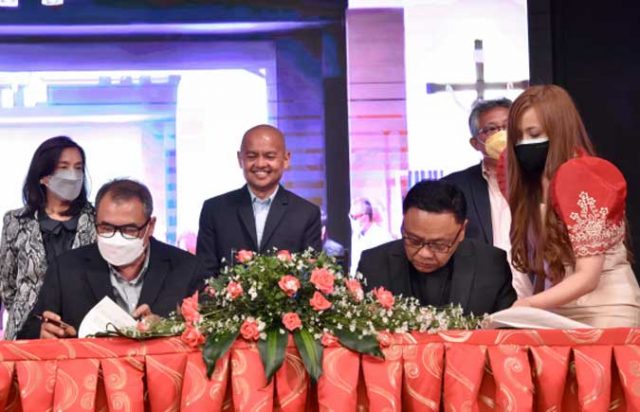
In his presentation during the signing of a contract with Saint Louis University (SLU) in Baguio City on Thursday to make it one of the testing centers for the 2020/2021 bar examinations, Mr. Leonen said the SC is “ready to conduct localized Bar Examinations, with students bringing their own devices into their own classrooms,” according to the SC’s news release on Friday.

“No longer will a Bar applicant have to go to Manila, (to) line up at the Office of the Bar Confidant,” he added, stating that the high court will launch an online portal on July 15 where bar examination applicants can submit the necessary requirements and choose their preferred testing venue.

Mr. Leonen said the SC may have a total of 25 testing sites throughout the country as the high court is currently negotiating with several large schools to accommodate more bar examinees.

As of Thursday, 16 local testing centers have agreed to become testing sites for the bar examinations, Mr. Leonen said.

Aside from SLU Baguio, the other 15 who have signed the agreement are Ateneo de Manila University, Manila Adventist College, Saint Louis College – La Union, Saint Mary’s University, Cagayan State University, De La Salle Lipa, University of Nueva Caceres, University of Saint La Salle – Bacolod, Central Philippine University, University of Cebu – Banilad, Mindanao State University – Iligan, Mindanao State University – General Santos City, Ateneo de Davao University, Xavier University – Cagayan de Oro, and Ateneo de Zamboanga University.

Meanwhile, Chief Justice Alexander G. Gesmundo said that the high court will look into revising the coverage of the bar examinations under Rule 138 of the Rules of Court, as the rules have not been looked into since they were promulgated in 1964.

He said that the coverage of the examination must be in sync with the courses currently offered by law schools.

“I would like the Court to continue looking at the course offerings of law schools along with the Revised Model Curriculum prepared by the Legal Education Board,” Mr. Gesmundo said.

“Law courses have become varied; a lot of changes have happened in the field of law. And yet, we have not looked into these specific provisions of the Rules of Court,” he added.

The 2020/2021 bar examinations are scheduled to be held on Nov. 7, 14, 21, and 28 of this year. — Bianca Angelica D. Añago

PNP chief nixes PHL’s least safe country rank

The crime statistics of the Philippine National Police (PNP) do not support an international business magazine’s ranking of the Philippines as the least safe country in the world, said PNP chief Guillermo Lorenzo T. Eleazar.  

In a video released by the PNP on Friday, Mr. Eleazar said in Filipino that “the PNP’s crime rate statistics do not match the said rating.” He said that “the crime rate in the country decreased by 63% nationwide in the five years of the current administration, compared to the five years of the past administration.”  

However, Mr. Eleazar also mentioned that peace and order are only some of the bases of the magazine’s rating as natural disasters and the effects of the coronavirus disease 2019 (COVID-19) pandemic in the countries were among the bases for the rating.  

“Nevertheless, we will take this latest ranking as a challenge to do more in terms of further improving the peace and order and security in our country,” Mr. Eleazar said.  

On July 6, the New York-based Global Finance Magazine released a list of the “World’s Safest Countries,” ranking 134 countries based on their 2020 statistics on economic stability, healthcare issues, threats of war, natural disasters, and personal security.  

The Philippines ranked 134th or last in the list, which was also its ranking in 2019 before the COVID-19 pandemic struck the world.  

The magazine cited the Philippines as among countries with “serious civil conflict” and of having “risks from natural disaster.”  

It added that the Philippines “reported relatively low death tolls from COVID-19, yet performed poorly in terms of safety overall.”  

The top five countries on the list are Iceland, United Arab Emirates, Qatar, Singapore, and Finland in that order.  

Iceland was given a safety index score of 3.97, while the Philippines’ was 14.89.  

The Philippines was joined by Bosnia and Herzegovina (130th), Nigeria (131st), Guatemala (132nd), and Colombia (133rd) at the bottom of the list. — Bianca Angelica D. Añago