Home Blog Page 7398

PHL urged to adopt ‘endemic’ strategy for COVID-19

PHILIPPINE STAR/ MICHAEL VARCAS

THE TRANSITION to treat the coronavirus disease 2019 (COVID-19) as “endemic” would lift consumer confidence that could support economic recovery, an economist said on Wednesday.

Jonathan L. Ravelas, chief market strategist at BDO Unibank, Inc., said he supports a COVID-19 prevention approach that consists of following minimum safety standards as more of the economy reopens.

“You cannot push the economy when you’re partially closed. So that’s the problem, we need to further reopen the economy and normalize so that government can provide that,” he said at a forum on Wednesday.

He said a strategy that treats COVID-19 as “endemic” would focus on hygiene and preventative health instead of lockdowns, which has hampered business activity.

His suggestion is similar to the strategy started by Singapore and followed by other countries like Indonesia and Malaysia to “live with the virus” instead of a pursuing “zero COVID.”

A recent surge in cases has led the Singapore government to reintroduce social distancing measures. Cases in Singapore surged to a record 3,486 cases on Tuesday, most of whom are asymptomatic or have mild symptoms, as the fully vaccinated population nears 80%

A survey done by scientific journal Nature found that most scientists think COVID-19 will become endemic, or a virus that will continue to circulate in parts of the world, noting that it could pose less danger over time. Factors that could continue to contribute to the spread of the virus include immune escape, waning immunity, and uneven vaccine distribution.

In the Philippines, COVID-19 cases went up by 9,868 on Wednesday, with a total of 112,807 active cases, data from the Health department showed.

Under 23% of the Philippine population has been fully vaccinated against COVID-19, the Johns Hopkins University COVID-19 tracker showed.

Mr. Ravelas said weak consumer confidence could only be addressed if more of the population is confident enough to go outside.

The “endemic” strategy, he said, would help stabilize employment figures, which he added could reach pre-pandemic levels in the next 24 months.

Business and consumer confidence continues to be low despite the available liquidity, he said.

“If there is no business confidence, they will not borrow. What we need to be able to do is to eventually reverse that.”

The Filipino-Chinese business chamber last month said one of the keys to recovery will be liquidity of sufficient volume to encourage a major boost in consumer spending.

The Federation of Filipino Chinese Chambers of Commerce & Industry, Inc., called on banks and the National Government to help “unleash liquidity” to fuel consumption.

Household spending in the second quarter rose 7.2% year on year after declining 15% a year earlier. The unemployment rate in August was at 8.1%, the highest since April’s 8.7%, government data showed. — Jenina P. Ibañez


Megaworld to build P98-B township in Bulacan

MEGAWORLD Corp. said in a statement on Wednesday that it will be developing a P98-billion “global business district” in the municipalities of Marilao and Bocaue in Bulacan within the next 15 to 20 years.

“This is like building a new city that will put the province of Bulacan in the global business map because we envision huge multinational companies to be operating here once our commercial district and our office towers will be completed,” said Kevin Andrew L. Tan, chief strategy officer of Megaworld.

The company launched Northwin Global City, which will be situated on 85 hectares of land along the North Luzon Expressway. It will also be home to one of the stations of the Manila-Clark Railway Project.

Megaworld said the project will be 20 minutes away from the planned New Manila International Airport, while the Philippine Arena will be just five minutes away.

“Once completed, Northwin Global City will have convenient access to three international airports in Bulacan, Clark, and even in Metro Manila,” Mr. Tan said.

Northwin Global City will house a themed commercial district, office towers, mixed-use commercial buildings, malls, hotels, high-rise residential condominiums, as well as educational institutions.

The company said 40% of the 85-hectare township development will be used for “green and open spaces.” The township will also have its own bike lanes, Megaworld said.

Northwin Global City will be wired with Megaworld’s “iTownship” features, which include solar-powered LED streetlights, underground cable system, fiber optic cabling, and a stormwater detention facility.

“Finally, our vision of having a truly modern and global business district for Bulacan is coming to a reality,” said Mr. Tan.

Megaworld has 26 townships across the country. Last month, the company also said it is developing a P40-billion eco-tourism township in Palawan, which will be called Paragua Coastown.

On Wednesday, shares of Megaworld at the stock market closed higher by 2.06% or six centavos at P2.97 apiece. — Keren Concepcion G. Valmonte

KKR to hike stake in First Gen for P8.68 billion

GLOBAL investment firm Kohlberg Kravis Roberts & Co. (KKR) said it intends to spend P8.68 billion to raise its ownership interest in Lopez-led First Gen Corp.

In a statement on Wednesday, KKR said its subsidiary Philippines Clean Energy Holding, Inc. is set to acquire 262.94 million of the listed power firm’s common shares at P33 apiece through a block sale on the stock exchange this Friday.

The company said these shares represent 7.3% of First Gen’s outstanding common shares.

“The transaction represents a total investment value of P8.68 billion (around $171 million). With the completion of the share acquisition, KKR, which is an existing shareholder in First Gen, will hold an approximately 19.9% ownership stake in the company,” KKR said.

The private equity firm said Philippines Clean Energy Holding waived its maximum limit of 205 million shares and instead accepted all of the 262.94 million common shares tendered by First Gen’s shareholders.

“We are pleased to have this opportunity to extend our shareholding in First Gen and support its work to provide critical energy solutions to millions of Filipinos across the country. This investment marks the latest milestone for KKR in the Philippines, and deepens our commitment to the market,” said Michael de Guzman, the managing director of KKR’s infrastructure team.

Aside from its stake in First Gen, KKR’s other investments in the Philippines include telecommunications tower platform Pinnacle Towers, Metro Pacific Hospitals, and technology firm Voyager Innovations.

As First Gen conducts its tender offer exercise, it will be removed from the Philippine Stock Exchange index (PSEi) and will be replaced by home improvement and construction supplies retailer Wilcon Depot, Inc., according to a memorandum issued by the local bourse on Wednesday.

The stock exchange added that First Gen will not be part of the industrial index.

“All changes shall be made effective on start of day, Monday, Oct. 11, 2021,” it said.

The memorandum provided no further details.

According to the PSE’s Policy on Index Management released in 2018, a firm may be removed from the main index if “a corporate action causes a significant change in the constituent’s ability to fulfill its requirements,” among others.

The vacancy after a PSEi-listed company’s removal will be replaced by a firm deemed eligible by the exchange.

Wilcon’s inclusion in the bellwether index signifies that companies with “strong” public participation, liquidity, and sound and sustainable business models are likely to benefit from being listed under the main market index, First Metro Investment Corp. Head of Research Cristina S. Ulang said in a Viber message.

First Gen shares at the local bourse fell by 7.69% or P2.50 to finish at P30 apiece on Wednesday. Meanwhile, Wilcon’s shares improved 8.1% or P2.35 to close at P31.35 apiece on the same trading day. — Angelica Y. Yang with inputs from Keren Concepcion G. Valmonte

CLI obtains notice to start reclamation for techno hub project

BW FILE PHOTO

CEBU Landmasters, Inc. (CLI) on Wednesday said it has received the final notice to proceed from the Philippine Reclamation Authority (PRA) to start the reclamation in Minglanilla, Cebu for its techno business hub.

“In its Resolution 5389 series of 2021, the PRA Board of Directors unanimously approved the NTP (notice to proceed), which will pave the way for the creation of a techno-business hub in Minglanilla with a fully integrated port facility,” CLI said in a disclosure to the exchange.

Ming-Mori Development Corp. (MMDC), which CLI has an 80% stake in, and the municipality of Minglanilla will be working on a 100-hectare “island type” reclamation project called the Ming-Mori Techno Business Park.

The bidding and the awarding of contracts to contractors and suppliers for the project is slated for the fourth quarter. CLI said it is targeting to begin the reclamation within the first half of next year.

The Ming-Mori project also received project approval from the PRA in June after a five-year review. It also has an environmental compliance certificate from the Department of Environment and Natural Resources (DENR).

“The process involved extensive consultation with a wide range of stakeholders as well as submission of development objectives demonstrating environmental responsiveness,” CLI said.

The P20-billion techno business park will have its own port facility as well as commercial, industrial, and recreational centers. CLI said it anticipates the project to generate over 75,000 job opportunities in light manufacturing industries.

CLI increased its stake in MMDC in August to 80% to “strengthen its position as developer and project manager of this township development.” The Ming-Mori Techno Business Park will be CLI’s third large-scale township development after its projects in Davao and Cagayan de Oro.

On Wednesday, shares of CLI at the stock market went up by 1.37% or four centavos to close at P2.97 apiece. — Keren Concepcion G. Valmonte

Lufthansa Technik PHL targets to complete $40-M hangar in Feb

LUFTHANSA TECHNIK FACEBOOK PAGE

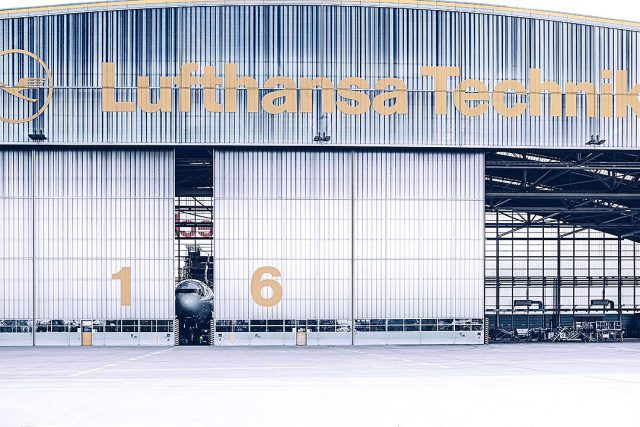
WORK on Lufthansa Technik Philippines, Inc.’s (LTP) $40-million hangar expansion project in Pasay City has resumed after being halted due to the pandemic crisis, its chief executive officer said on Wednesday.

“So, our decision was made at the end of August, [at a] board meeting, to unfreeze the additional investment to complete the hangar, so we fully mobilized in September,” LTP President and Chief Executive Officer Elmar Lutter said at a virtual briefing.

The aircraft maintenance and repair company also intend to rehire the employees who were laid off last year.

“The rehiring will start soon… We have 2,700 employees at the moment. I hope that by next year, we will be back to 3,400. We reduced by 700 employees, a mixture of early retirement, voluntary separation and also a small portion of retrenchment,” Mr. Lutter said.

The company broke ground for its new hangar at the MacroAsia Special Economic Zone in Pasay City in November 2019.

The hangar, which will be known as Hangar 1A, is part of the company’s efforts to expand its capacity in the Philippines.

The 9,000-square meter hangar is expected to contribute 20% to LTP’s revenues. It was initially expected to start operations in the fourth quarter of 2020.

“The new target [for] completion is February next year. We are pushing for the completion because we think the demand will come back sustainably… We think that the indications, which we have from the industry, show us that we will see recovery coming strong even in the first phase as many aircraft come out of parking,” Mr. Lutter said.

The new hangar will allow LTP to service more aircraft including Airbus A380.

“The hangar alone is $20 million, and all the ancillary buildings and tools related to full capacity is another $20 million,” Mr. Lutter said.

At the same briefing, Trade Secretary Ramon M. Lopez said the government is now looking at the possibility of reducing the quarantine period for air travelers in order to help the industry.

“As to the discussion on reducing the number of days for quarantine, yes, it is being taken up now… First at the technical level and for consideration… probably at this week’s meeting or next week,” he said.

“While COVID-19 (coronavirus disease 2019) may have temporarily affected the operations of the entire aviation industry, we are happy to note that now, with the anticipated completion of Hangar 1A…, and the re-opening of Lufthansa Technik Philippines’ aircraft maintenance, repair, and overhaul services, we can say that indeed our country’s aviation industry and its support sector are beginning to bounce back from the effects of the global health crisis,” Mr. Lopez also said. — Arjay L. Balinbin

ICTSI unit raises stake in Pakistan terminal to 71.7%

A SUBSIDIARY of International Container Terminal Services, Inc. (ICTSI) has acquired an additional 7.15% stake in Pakistan International Container Terminal Ltd. (PICT), the Enrique K. Razon, Jr.-led port operator said on Wednesday.

“ICTSI Mauritius Ltd., a wholly-owned subsidiary of ICTSI, today concluded the acquisition of an additional 7.15% stake in PICT after 7,800,000 ordinary shares were crossed in the Pakistan Stock Exchange,” ICTSI said in a disclosure to the stock exchange.

The company said the transaction has increased ICTSI Mauritius’s ownership in PICT from 64.54% to 71.68%.

On its website, ICTSI said PICT is part of the larger Karachi Port in Pakistan’s largest metropolitan city, and capital of Sindh province.

PICT, located at the east wharf of the Karachi Port, handles 85% of the Arabian/Persian Gulf market, including industrial scrap, according to ICTSI.

ICTSI recently reported an 89% increase in its second-quarter net income, exceeding its 2019 pre-pandemic performance.

The company’s net income for the second quarter was $118.2 million, up from $62 million in 2020 and $65 million in 2019.

Its attributable net income for the quarter climbed 98% to $106.6 million from $53.8 previously. Total revenues rose 28% to $447 million.

The results were driven by favorable market conditions and prudent actions taken by the company at the onset of the pandemic, Mr. Razon said in a statement.

ICTSI shares closed 1.44% lower at P192.20 apiece on Wednesday. — Arjay L. Balinbin

Blessed bounty

A RESTAURANT built on church grounds can be expected to be the recipient of some heavenly assistance, but it recently received a decidedly more earth-bound blessing — an award from Tripadvisor.

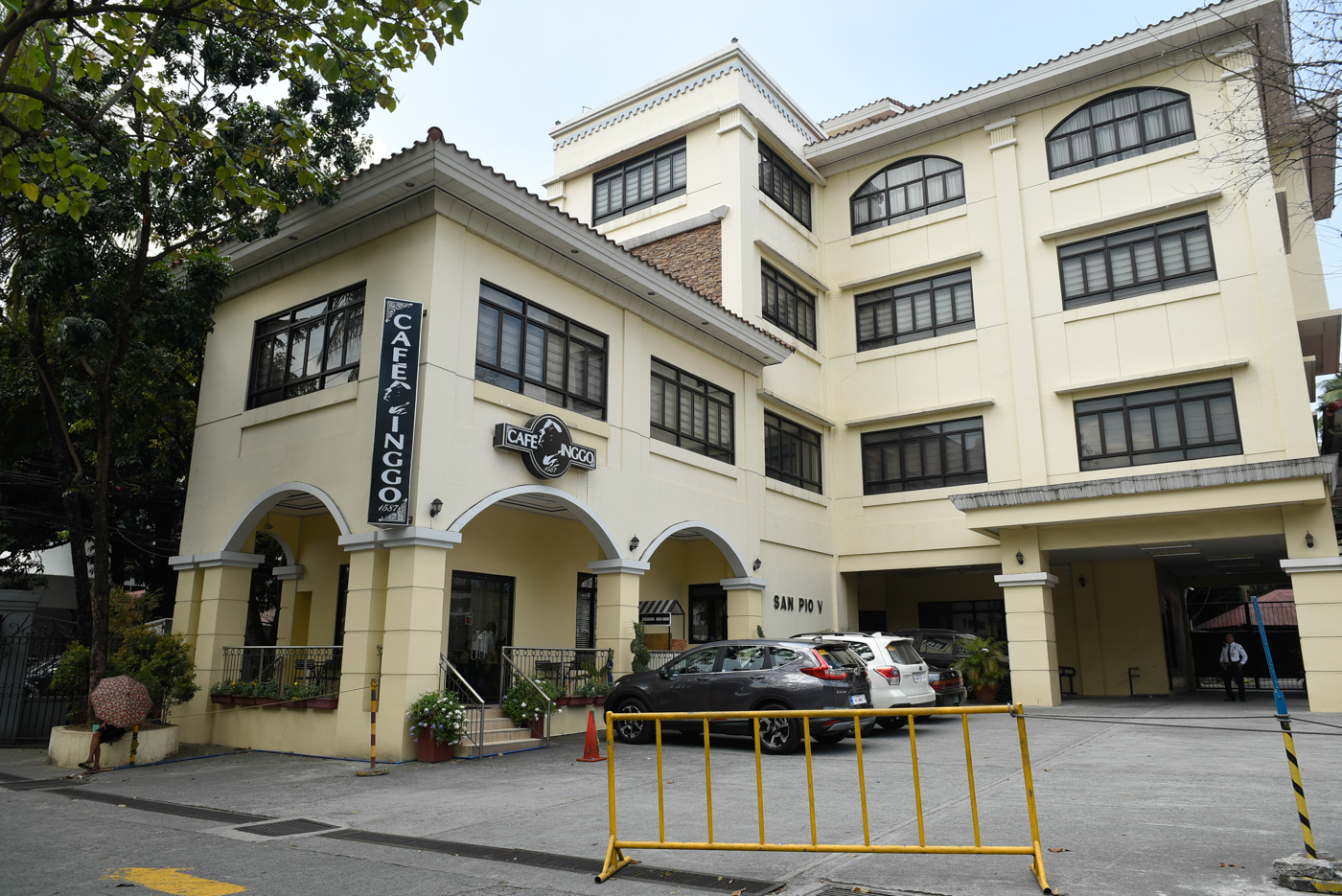
The travel company gave a 2021 Travelers’ Choice Award for Restaurants to Café Inggo 1587, which is located within the Sto. Domingo Church complex in Quezon City.

According to a statement from the restaurant, “This achievement celebrates businesses that consistently deliver fantastic experiences to diners around the globe, having earned great traveler reviews on Tripadvisor over the last 12 months.”

Owner Vic Alcuaz told BusinessWorld in an e-mail that, “Tripadvisor gave us the award because out of the 170 ratings we received, 162 rated us a 5 for ‘excellent.’”

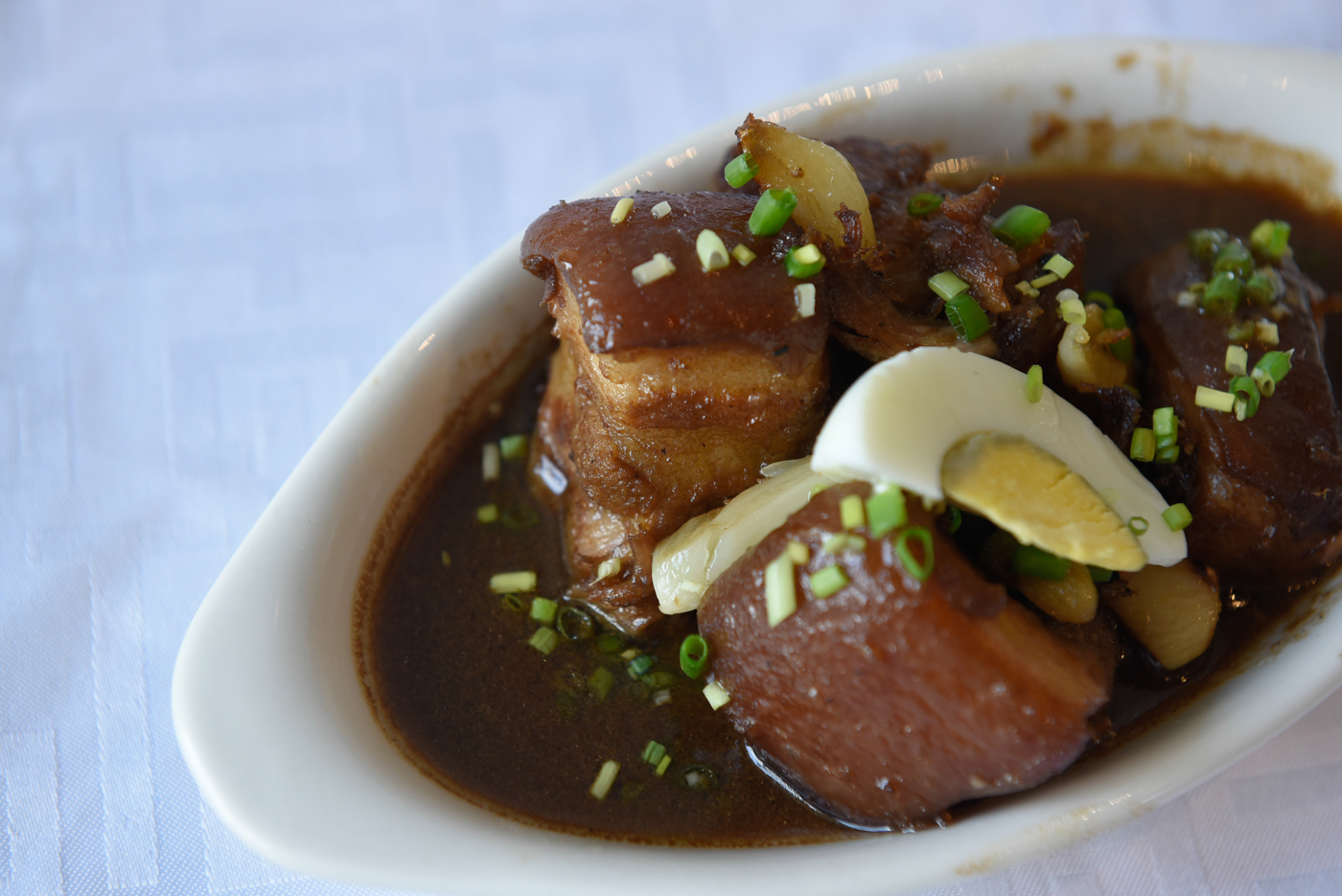
The restaurant is known for serving festive food like lechon kawali sinigang (sour soup made with deep-friend pork belly), chicken gallantine, and apple strudel; combined with comforting favorites like arroz caldo (savory rice porridge), champorado (a sweet rice porridge flavored with chocolate), and puto bumbong (purple rice cakes).

Located as it is within church grounds, their regular patrons include members of the clergy, some of whom have inspired dishes. “Among their favorites are our famous breakfast item Daing na Bangus (fried butterflied milkfish), and Longganisa ni Filemon OP (sausage of Filemon OP),” said Mr. Alcuaz. The later refers to Filemon Dela Cruz, OP, the newly elected Father Provincial of the Philippine Dominican Province (minted earlier this year). “That longganisa,” Mr. Alcuaz pointed out, is homemade.”

“Congratulations to all the winners of the 2021 Travelers’ Choice Awards,” Kanika Soni, Chief Commercial Officer at Tripadvisor was quoted as saying in a statement issued by Café Inggo. “I know the past year has been extremely challenging for tourism businesses. What has impressed me is how businesses adapted to these challenges, implementing new cleanliness measures, adding social distancing guidelines, and utilizing technology to prioritize guest safety,” she said. “The Travelers’ Choice Awards highlight the places that are consistently excellent — delivering quality experiences time and time again even while navigating changing customer expectations and new ways of working. Based on a full year of reviews from customers, this award speaks to the great service and experience you provided guests in the midst of a pandemic.”

Mr. Alcuaz noted the ways they navigated through differing dining restrictions due to changing quarantine levels. “Just like all other restaurateurs, we had to greatly scale down on working schedules, manage spoilage, and keep in constant touch with our patrons. We are lucky to have survived 2020. Luckily, we are surviving 2021.”

“Thanks to our generous partners, the Dominicans,” he said. “Our loyal and efficient staff kept their motivations high at all times and our patrons appreciated their positive attitudes.”

While allowing for deliveries, as most restaurants did and are doing during the pandemic, Mr. Alcuaz said, “We followed IATF rules strictly and implemented these with much tact amongst our patrons.”

Still, the restaurant being on church grounds as it is, with patrons “close” to God, with decor and even the music in the restaurant sometimes dedicated to religious themes, one may infer that at least some divine providence must have had a hand in its survival during the pandemic — not to mention receiving an award in such times.

“But of course,” said Mr. Alcuaz. He notes that the restaurant is dedicated to the founder of the Dominican Order, Sto. Domingo de Guzman (Saint Dominic de Guzman, patron saint of astronomers); Inggo being a nickname for Domingo in Filipino.  “Every good thing happening to Cafe Inggo 1587 is divinely blessed, especially by our patron.”

Cafe Inggo 1587 is located in Sto. Domingo Church, and is open from 9 a.m. to 8 p.m. Only fully vaccinated patrons are allowed inside, as per IATF rules. Vaccination cards are required for entry. — Joseph L. Garcia

AC Energy’s Ingrid diesel plant goes online

AYALA-LED AC Energy Corp. said its 150-megawatt (MW) diesel power plant in Pililla, Rizal has gone online on Wednesday, marking its third power facility which has begun commercial operations this year.

In a disclosure, the company said its Ingrid power plant will boost energy capacity and provide reserve power to the Luzon grid.

AC Energy has partnered up with Japan-based Marubeni Corp.’s unit Axia Power Holdings Philippines Corp. to develop the P1.9-billion diesel-run power plant.

The listed power firm said it tapped UK-based power generation rental provider Aggreko plc, which has installed 162 units of diesel generators in the Ingrid plant. Aggreko will also be providing operations and maintenance services to the new facility.

“Thermal firming capacity is critical to our energy transition strategy towards a lower carbon portfolio. To complement our renewables and to provide flexibility and stability to the grid, these firming assets will remain in our portfolio while we develop to scale up our energy storage facilities,” AC Energy’s Chief Development Officer Jose Maria P. Zabaleta said.

Before the Ingrid power plant, the company switched on this year its 120-MW GigaSol Alaminos in Laguna and 63-MW GigaSol Palauig in Zambales.

The Ayala group’s energy platform, which aspires to become Southeast Asia’s largest renewables platform, is on track to reach its renewable energy target of 5,000 MW by 2025.

At present, AC Energy’s renewables capacity stands at around 2,100 MW.

AC Energy shares at the local bourse improved 3.68% or 44 centavos to finish at P12.40 apiece on Wednesday. — Angelica Y. Yang

Russian actor blasts off to attempt a world first: a movie in space

THE INTERNATIONAL Space Station (ISS) crew members Russian cosmonaut Anton Shkaplerov, film director Klim Shipenko and actress Yulia Peresild wave as they leave to board the spacecraft shortly before the launch at the Baikonur Cosmodrome, Kazakhstan, Oct. 5 . — ROSCOSMOS/HANDOUT VIA REUTERS

MOSCOW —  A Russian actress and a film director blasted off for the International Space Station on Tuesday, beating Tom Cruise in the race to shoot the first movie in space.

The Soyuz MS-19 spacecraft is set to dock at 1212 GMT at the station, which orbits Earth at an altitude of around 220 miles (354 km).

Russian state media provided blanket and patriotic coverage in the run-up, with a countdown clock running on Channel One and news anchors framing the development as a significant breakthrough by Russia that the rest of the world is watching closely.

The launch to film the movie The Challenge puts Russia on course to beat the United States in the latest chapter of the space race. Actress Yulia Peresild and director Klim Shipenko will reach the cosmos ahead of Mr. Cruise, whose plans to blast off on a SpaceX rocket for an as-yet-untitled Hollywood film were announced by NASA last year.

Russia’s own space industry has in recent years been dogged by delays, accidents, and corruption scandals, while US-based private firms backed by rich businessmen such as Elon Musk and Jeff Bezos have developed new spaceships.

Ms. Peresild and Mr. Shipenko were accompanied at the launch of their 12-day mission by two Russian cosmonauts.

In the film, Ms. Peresild plays a doctor who is asked to travel to the space station to save a cosmonaut’s life. Cosmonaut crew members are also set to appear.

Director Klim Shipenko, whose height of 1.9 metres (6 feet 2 inches) makes the flight in a small capsule especially challenging, has already said he is looking forward to a Mars-based sequel. —  Reuters

Term deposit yields mixed on inflation

YIELDS ON THE central bank’s term deposits ended mixed on Wednesday on slower inflation and following the government’s offering of retail dollar bonds (RDBs).

Demand for the term deposit facility of the Bangko Sentral ng Pilipinas (BSP) reached P532.24 billion on Wednesday, surpassing the P510-billion offer but lower than the P540.613 billion in tenders logged last week.

Broken down, the seven-day papers fetched bids amounting to P195.377 billion, higher than the P150 billion auctioned off by the BSP as well as the P160.051 billion in bids seen in the previous offering.

Lenders sought for rates ranging from 1.69% to 1.875%, a thinner band compared with the 1.68% to 2.2% seen a week ago. This caused the average rate of the one-week term deposits to inch down by 1.12 basis points (bps) to 1.7259% from the 1.7371% in the previous week’s auction.

Meanwhile, tenders for the two-week papers amounted to P336.863 billion, lower than the P360-billion offer as well as the P380.562 billion in bids seen last week.

Accepted rates for the tenor ranged from 1.715% to 2.1%, wider than the 1.7095% to 1.88% margin seen last week. With this, the average rate of the papers increased by 4.42 bps to 1.7885% from 1.7443% previously.

The central bank has not offered 28-day term deposits for more than a year to give way to its weekly offerings of bills with the same tenor.

The term deposits and the 28-day bills are used by the BSP to mop up excess liquidity in the financial system and to better guide market rates.

“The results of the TDF auction continue to reflect stable market conditions, supported by sustained ample liquidity in the financial system,” BSP Deputy Governor Francisco G. Dakila, Jr. said in a statement.

The mixed TDF yields reflected market sentiment following the slower-than-expected inflation print in September, Rizal Commercial Banking Corp. Chief Economist Michael L. Ricafort said.

Headline inflation eased to 4.8% last month from 4.9% in August, based on preliminary data reported by the Philippine Statistics Authority on Tuesday. This was slower than the 5% median estimate in a BusinessWorld poll of 17 analysts last week but still above the central bank’s 2-4% target.

The decline in the September inflation print was attributed to slower increase in transport and food prices.

For the first nine months, inflation averaged 4.5%, higher than the central bank’s 4.4% forecast for 2021.

Mr. Ricafort said the RDB offering the Bureau of the Treasury also affected TDF yields.

“This could have siphoned off some of the excess liquidity in the financial system,” he said.

The government raised $1.593 billion from its sale of five-year and 10-year RDBs. The offer ran from Sept. 15 to Oct. 1. — Luz Wendy T. Noble

Growth in country’s data centers seen to boost jobs, investments

TRUSTPAIR.COM

THE Philippines could benefit from the growth in data centers in Southeast Asia amid the rapid digital transformation due to the pandemic, Fitch Solutions Country Risk and Industry Research said.

“Beyond Indonesia, markets such as Philippines, Vietnam, Thailand, and Malaysia also show strong potential for growth in the region, with increasing regulatory support, government-driven initiatives and rapidly-rising investor interests for data center projects,” Fitch Solutions said in a note on Tuesday.

The think tank said more relaxed foreign ownership restrictions as well as gradually improving regulatory framework are key to boosting digital infrastructure.

It noted that the construction of data centers has continued despite disruptions caused by restriction measures due to the pandemic.

In the Philippines, ePLDT, Inc. is considered as the largest operator of data centers as it covers more than 25,000 square meters across its locations in Metro Manila, Clark, Cebu, and Davao, said Claro dG. Cordero, Jr., research head at the Philippine office of Cushman & Wakefield.

Mr. Cordero said the remote work landscape has been key to the growth in data centers.

“As more corporations and government agencies continue to accelerate their automation and digital transformations in the country, there is a potentially high growth of demand for new, high-quality data center facilities,” Mr. Cordero said.

The growth in the online gaming industry as well as prospects for expansion from regional players like Alibaba Group and IBM may also boost the country’s data center industry, he added.

Demand for spaces for data centers go beyond the capital, Colliers Philippines Associate Director Joey Roy H. Bondoc said.

“There is interest for spaces in Metro Manila, Cebu, and Pampanga. Those are the areas that we are getting queries from data centers,” Mr. Bondoc said in a phone interview.

JOB OPPORTUNITIES SEEN
More investments in data centers will help boost related jobs in the country, Asian Institute of Management economist John Paolo R. Rivera said.

In particular, people skilled in data science, machine learning, artificial intelligence, business incubation could be tapped by these firms.

“While there are economies in ASEAN that have the superior infrastructure to operate data centers, there is opportunity for the Philippines to take part in this emerging undertaking if the Philippines can harness its strengths in its human resources and existing knowledge capital,” Mr. Rivera said in a Viber message.

He said the country is already seeing more schools offering data analytics, artificial intelligence, and data science in their curricula.

“This is a good starting point in signaling to investors that we have the skills, talents, manpower to supply the requirements of data centers,” Mr. Rivera added.

To make the country more attractive for data center investors, the Philippines must address “weak spots,” including the high cost of electricity and the reliability of its infrastructure, Mr. Cordero said.

“The government and the regulators can thus begin with imposing enough competitiveness and incentives for more players to engage in the development of sustainable power generation sources and facilities and fast-track the implementation of landmark legislations to relatively ease up the cost of doing business in the country,” he said.

ePLDT is the information and communications technology unit of PLDT Enterprise. Hastings Holdings, Inc., a unit of PLDT Beneficial Trust Fund subsidiary MediaQuest Holdings, Inc., has a stake in BusinessWorld through the Philippine Star Group, which it controls. — Luz Wendy T. Noble

Roxas and Co. says units set for recovery

SUBSIDIARIES of listed firm Roxas and Co., Inc. (RCI) are seen to benefit from higher demand, expected travel resurgence, and real estate developments amid the coronavirus disease 2019 (COVID-19) pandemic.

RCI said in a stock exchange disclosure on Wednesday that its coconut unit Roxas Sigma Agriventures, Inc. (RSAI) is increasing production after the approval and partial release of a P100-million loan from the Development Bank of the Philippines in July.

“August tonnage versus same period last year rose 13%, netting a 40% improvement in average throughput year on year. The company forecasts up to a 50% increase in full year revenues versus 2020,” RCI said in the disclosure.

Meanwhile, RCI said the four budget Go Hotels of its hotel business unit, Roxaco Asia Hospitality Corp. (RAHC) have recorded strong occupancy figures due to high demand for affordable and health-compliant quarantine locations.

It added that RAHC is beginning to book corporate clients as it slowly regains regular guests.

RCI also disclosed that Anya Resort Tagaytay is gearing to reopen for clients in the National Capital Region (NCR), where 90% of its customers are coming from.

“It offers room, dining, wellness, and events services with its 78 world-class rooms, two restaurants, a heated pool, and a new spa offer in a secure and serene location. It also caters to conferences, meetings, and family functions,” RCI said.

Further, RCI’s property development unit Roxaco Land Corp. (RLC) has various projects in progress.

“The southward expansion of housing and commercial developments as well as tollway and utility investments by private firms and government open compelling options for RLC’s strategically located landbanks,” RCI said.

“The group achieved an overall 89% vaccination rate across its businesses, with RCI companies on track to hit 90% in all companies by early fourth quarter of 2021,” it added.

For the first half, RCI trimmed its net loss to P98 million while its revenues rose 250% to P632 million “as its real estate, hospitality, and coconut processing units bucked the pandemic and recession.”

On Wednesday, shares of RCI at the stock exchange rose 7.79% or 60 centavos to end at 83 centavos per share. — Revin Mikhael D. Ochave