Home Blog Page 7397

PayMongo, GCash partner to offer ‘buy now, pay later’ option

ONLINE payments provider PayMongo Philippines, Inc. announced on Thursday its partnership with GCash.

The partnership aims to offer GCredit on the PayMongo platform to allow consumers to buy essentials and pay later, the payment processing company said in an e-mailed statement.

“GCredit is now live for around 7,000 businesses who use PayMongo and available for customers who pay via GCash,” it added.

GCredit can give customers up to P10,000 credit line and for as low as 1% interest rate, according to the official website of GCash.

PayMongo said small and medium-sized businesses make up the bulk of its merchants, and they primarily deal in the sale of essential goods.

“To activate GCredit, users simply need to tap ‘Manage Credit’ in the GCash App, complete their profile, verify their e-mail, and wait for the activation e-mail. Only fully verified GCash users can use GCredit as a payment option on GCash-accepting online sites.”

Martha M. Sazon, president and chief executive officer of Mynt (Globe Fintech Innovations, Inc.), the fintech arm of Globe and operator of mobile wallet GCash, said her company’s goal is to encourage more users to experience how they can maximize their GCredit.

“Our partnership to offer GCredit via PayMongo expands the payment options our merchants have to offer their customers. At the same time, it empowers more Filipinos to buy their needs, especially those who do not have immediate access to funds,” PayMongo Chief Executive Officer Francis Plaza said. — Arjay L. Balinbin

Singer Tina Turner sells music rights to BMG

TINA TURNER — FACEBOOK.COM/TINATURNER

SOUL and rock star Tina Turner has sold the rights to her music catalogue to music company BMG, the latest vocal artist to strike such a deal for their work.

In a statement on Wednesday, BMG, owned by German media company Bertelsmann AG, said it would “be a partner in all of Tina Turner’s music interests.”

The deal includes Turner’s artist’s share of her recordings, her music publishing writer’s share, neighboring rights and name, image, and likeness. BMG did not disclose the price it paid.

The “What’s Love Got to Do with It,” “Private Dancer” and “The Best” singer, 81, launched her solo career in the 1980s.

Ms. Turner has 10 solo studio albums, two live albums, two soundtracks, and five compilations, which together have sold more than 100 million records, BMG said, adding Warner Music would remain as the Grammy Award winner’s record company.

Bob Dylan and Mick Fleetwood have also made similar deals in the past year, while Hipgnosis Songs Fund has snapped up the rights to artists from Neil Young to Shakira, benefiting from a pandemic-driven boom in music streaming. — Reuters

PSE adds seven to list of Shari’ah-compliant firms, five bumped off

BW FILE PHOTO

THE Philippine Stock Exchange (PSE) added seven new firms to its list of Shari’ah-compliant securities after screening for the latest period ending Sept. 25, as five issues were bumped off the list.

According to a circular posted on its website, Shari’ah-compliant firms listed at the PSE now total 62, inching up from last quarter’s list of 60 companies.

The PSE included the following firms to the list: Concepcion Industrial Corp., Del Monte Pacific Ltd., Ever-Gotesco Resources and Holdings, Inc., LMG Corp., Monde Nissin Corp., Philippine Infradev Holdings, Inc., and Semirara Mining and Power Corp.

Meanwhile, 2GO Group, Inc., Abra Mining & Industrial Corp., Cyber Bay Corp., Primex Corp., and Pryce Corp. did not make the cut.

The PSE’s quarterly review of firms under its Shari’ah stock market program aims to “open up more investment opportunities for Muslims in the Philippines and worldwide.”

“The exchange engaged the services of IdealRatings, Inc. to screen listed companies in accordance with the standards for Shari’ah compliance as stipulated by the Accounting and Auditing Organization for Islamic Finance Institutions,” the PSE said.

IdealRatings provides services focused on Islamic finance, such as checking securities for their compliance with Shari’ah laws via a business and financial ratios screening.

To be Shari’ah compliant, a listed company must not derive over 5% of its income from businesses in adult entertainment, alcohol, cinema, defense and weapons, financial services, gold and silver hedging, investments with interests, music, pork, and tobacco.

Meanwhile, the financial ratios screening checks if a firm’s cash or interest-bearing deposits or investments and interest-bearing debt both do not exceed 30% of its market capitalization. — Keren Concepcion G. Valmonte

The Harder They Fall opens London Film Fest

THE Harder They Fall (2021) — IMDB.COM

LONDON —  Netflix Western The Harder They Fall opened the London Film Festival on Wednesday, with an all-star red carpet kicking off the return to glitzy in-person premieres at the annual event following a mainly virtual 2020 version.

Oscar winner Regina King, Luther star Idris Elba and Da 5 Bloods actor Jonathan Majors feature in the movie about an outlaw who joins forces with his old gang to hunt down a crime boss recently freed from jail. The movie, whose cast also includes Joker actress Zazie Beetz and Oscar nominee LaKeith Stanfield, is inspired by real-life African American cowboys.

The 65th edition of the festival will feature 159 feature films, including 21 world premieres over 12 days. Stars of hugely popular television drama Succession will also premiere its third series.

Highly anticipated films showing at the festival include Spencer, starring Kristen Stewart as the late Princess Diana, Wes Anderson’s love letter to journalism The French Dispatch, and coming-of-age drama The Tender Bar directed by George Clooney. The Tragedy of Macbeth, starring Oscar winners Denzel Washington and Frances McDormand, will close the festival on Oct. 17. — Reuters

Digital payments at 20.1% of 2020 transaction volume

BW FILE PHOTO

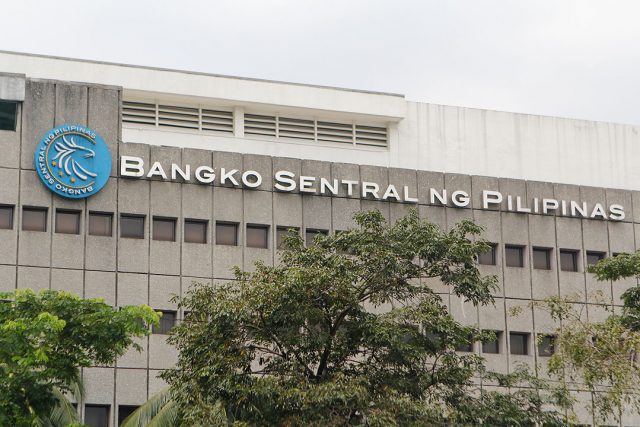
DIGITAL PAYMENTS made up 20.1% of all transactions last year, a tad higher than the 20% target by the central bank for 2020, Bangko Sentral ng Pilipinas (BSP) Governor Benjamin E. Diokno said.

Digital payments saw its share in the total transaction volume rise by 10.1 percentage points from the 10% in 2018, Mr. Diokno said at an online briefing on Thursday.

This means one in five payments or a total of 910 million transactions last year were done online, he added.

“We are seeing an accelerated rate of increase in the usage of digital payments. This could strongly indicate that Filipino consumers are moving away from conventional cash payments toward digital payments,” Mr. Diokno said.

“While the COVID-19 pandemic may have disrupted our way of life, it also created exceptional opportunities to boost digital payments and financial inclusion in the country,” he added.

The central bank chief said payment-to-merchant and person-to-person payments grew by 47.8% and 18.1% year on year, which drove the rise in the share of digital payments.

He added that full digitalization of the payment of salaries of government employees last year likewise contributed to the higher volume of online transactions.

Meanwhile, digital transactions made up 26.8% of total transactions in terms of value last year, up by 6.8 percentage points from the 20% share seen in 2018.

Transactions done by individuals continued to have the largest share of retail payments volume at 78.1%. Those by businesses dominated high-value transactions as they made up 64.3% of the total.

“Payments made by individuals have the greatest potential for raising the share of digital payments volume. Meanwhile, payments made by businesses can accelerate growth in terms of value,” Mr. Diokno said.

Mr. Diokno said the government was the most cash-lite in 2020 as 93.2% of its payments were done digitally. This was followed by individuals (23.4%) and businesses (5.4%).

CONNECTIVITY A KEY ISSUE
The central bank said merchant payments, person-to-person payments, utility payments, supplier payments, and social benefits should be digitalized further.

“These five comprised 96.1% of total monthly retail payments in the country. We are targeting to digitalize these use cases since they have the highest potential to shift digital payments given their huge consumer base,” Mr. Diokno said.

Philippine Payments Management, Inc. General Manager Carmelita R. Araneta said there are still some issues to address in the country’s transition to a cash-lite economy, such as slow internet connectivity and cybersecurity issues, including fraud.

“[There should be] allocation of resources for technology, operations and manpower. In short, a shift from legacy systems in banks from brick-and-mortar models to digital models,” Ms. Araneta said.

The BSP wants 50% of the volume and value of payments in the country done digitally by 2023. — L.W.T. Noble

MerryMart activates first MBOX Smart Locker in Pasay

MERRYMART Consumer Corp. installed its first smart locker at its MerryMart Grocery branch in DoubleDragon Plaza in Pasay City on Thursday, kicking off its goal of rolling out 5,000 smart lockers by 2030.

“We believe that MBOX will improve Filipinos’ online purchase experience and give buyers, couriers, and sellers a more convenient, efficient, and secure alternative for delivering and receiving packages,” said Edgar “Injap” J. Sia II, chairman of Merrymart and MBOX.

MBOX Smart Lockers are self-service lockers, which can be used as a location for pickup and drop-offs of delivery items.

Packages may be placed inside the lockers by couriers at any time and they can also deliver multiple parcels at one MBOX location.

Meanwhile, recipients will be notified via a text message with their pickup code once their packages arrive at the smart locker. Packages may be picked up at the MBOX Smart Locker at their convenience.

“CCTV cameras capture and record package arrival and retrieval to ensure the safety and accountability of every package,” said Fernando de Guzman II, head of technology of MBOX Smart Lockers Corp.

MBOX Smart Lockers is the first unit under MerryMart subsidiary MM Consumer Technologies Corp. MerryMart said it would initially roll out 100 MBox Smart Lockers in Metro Manila and key provincial areas.

It also plans to set up “MBOX Community Hubs” in provincial town centers, which will have an MBOX Smart Locker and an ATM at one location. Its first set of community hubs will be launched next month in Iloilo, Roxas, Kalibo, Bacolod, and Dumaguete.

“With MBOX Community Hub, we aim to bridge the distance gap by consolidating delivery in key locations,” MBOX Chief Executive Officer and President Ginger Co See said.

“The cost and time saving will enable couriers to offer more competitive delivery prices, thus making online shopping more accessible to the community.”

On Thursday, shares of MerryMart at the stock exchange declined by 2.62% or 10 centavos to close at P3.71 apiece. — Keren Concepcion G. Valmonte

Dubai Expo offers close-up of Michelangelo’s David, but only from neck up

DAVID at its current location in the Galleria dell’Accademia. — MARCUSOBAL/EN.WIKIPEDIA.ORG

DUBAI —  Expo Dubai visitors hoping to see the 3-D twin of Michelangelo’s David in all its glory at Italy’s pavilion may be disappointed as only the statue’s head is visible to the public in a display slammed by some Italian media as self-censorship.

The head and neck of the six-meter-tall reproduction of the Renaissance statue are showcased in an octagonal structure at first-floor level while the genitalia and legs are visible at a lower level reserved for functions and select visitors.

Organizers of Italy’s pavilion denied suggestions in Italian media that they had deliberately tried to hide the statue’s genitalia due to religious and social sensitivities in the Gulf Arab state and the predominantly Muslim region. “We planned to position David’s statue the way it is now many, many months ago,” commissioner Paolo Glisenti said. “We took the David statue here… at the end of April in the middle of (the holy fasting month of) Ramadan, by the way, in the presence of many high officials of the Emirati and Italian government.”

Artistic director Davide Rampello said the aim was to provide a new experience by allowing visitors to see the David at eye level, whereas art lovers have to look up at the original statue at the Galleria dell’Accademia museum in Florence.

Creating the replica using one of the world’s largest 3D printers involved 40 hours of digital scanning of the original 16th-century marble artwork with finishing touches completed by hand, according to the Expo website. — Reuters

DBP’s loans to construction firms hit P39.5B in first half

BW FILE PHOTO

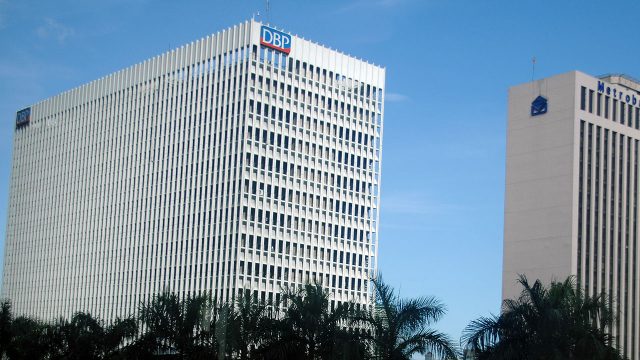
DEVELOPMENT BANK of the Philippines (DBP) approved P39.5 billion in loans in the first half for construction firms working on public infrastructure projects.

The state-owned bank said it has extended credit to 440 borrowers from January to June this year through its Infrastructure Contractors Support (ICONS) program introduced in 2017.

The ICONS program extends direct financing to construction contractors for infrastructure activities in transport, water supply and wastewater and sanitation, and communications, DBP said in a press release on Thursday. The bank also supports infrastructure projects under the social, power and energy sectors.

Broken down, the program benefited 151 borrowers in Luzon, 134 in Visayas, and 145 in Mindanao. Ten firms have multiple project sites.

DBP first rolled out its ICONS program in 2017 to provide special credit lines for contractors tapped by the National Government to implement big-ticket projects, including those under the “Build, Build, Build” program.

The revised list of 112 priority projects under the government’s flagship infrastructure program has a total cost of P4.687 trillion. Of the total, 29 are targeted for completion within the Duterte administration, while 51 are ongoing and 28 are in the pipeline.

DBP President and Chief Executive Officer Emmanuel G. Herbosa said the bank will continue to support the National Government’s infrastructure program.

“DBP has sharpened its focus on the infrastructure buildup program of the National Government to provide further impetus to the country’s economic rebound,” Mr. Herbosa said.

“DBP continues to assist contractors in meeting the growing demand for meaningful public infrastructure projects,” he added.

Fitch Solutions Country Risk & Industry Research last month said the country’s construction sector is expected to rebound “strongly” this year, although this outlook could be dampened by lockdowns and the Delta variant-driven surge in coronavirus disease 2019 cases.

The construction industry could grow by 24.2% this year after a 25.7% slump in 2020, Fitch Solutions said. — Jenina P. Ibañez

SL Agritech obtains PRS Aa credit rating

AGRICULTURAL firm SL Agritech Corp. obtained a PRS Aa (corp.) rating with a stable outlook from local credit rating agency Philippine Rating Services Corp. (PhilRatings).

PhilRatings said in a recent statement that the issued rating was for SL Agritech’s commercial paper issuance of up to P4 billion.

Proceeds from the commercial paper issuance will be used to pay SL Agritech’s short-term obligations and to buy rice and seed inventories from the company’s contract growers, the credit rating agency said.

“A company rated PRS Aa (corp.) differs from the highest-rated corporates only to a small degree, and has a strong capacity to meet its financial commitments relative to that of other Philippine corporates,” PhilRatings said.

According to PhilRatings, a company that has a stable outlook means that the rating is “likely to be maintained or to remain unchanged in the next 12 months.”

The credit rating agency added that the rating was assigned to SL Agritech after examining the company’s competitive market position locally, potential growth in the medium to long run, profitability, and the impact of the coronavirus disease 2019 (COVID-19) pandemic.

Based on its website, SL Agritech has business interests in the production of commercial hybrid rice seeds and milled rice production. It is also involved in hybrid rice seed research and development. — Revin Mikhael D. Ochave

No Time to Die: the problem with Bond villains having facial disfigurements

Daniel Craig in No Time to Die (2021) — IMDB.COM/

AS THE 25th James Bond film No Time to Die hits the cinemas, we are once again reminded of the way that disability is depicted negatively in Hollywood films. The new James Bond film features three villains, all of who have facial disfigurements (Blofeld, Safin, and Primo).

If you take a closer look at James Bond villains throughout history, the majority have facial disfigurements or physical impairments. This is in sharp contrast to the other characters, including James Bond, who are able-bodied and presented with no physical bodily differences.

Indeed, many films still rely on outdated disability tropes, including Star Wars and various Disney classics. Rather than simply being part of a character’s identity, the physical difference is exploited and exaggerated to become a plot point and visual metaphor for villains.

In their book about depictions of disability in fiction, academics David Mitchell and Sharon Snyder coined the term “narrative prosthesis” to highlight how disability is used to prop up or propel a narrative.

Although James Bond films are particularly consistent with this trope, other examples include Peter Pan and The Lion King, where Scar has a facial scar and Captain Hook has a missing limb. In both films, their impairments are exploited so much that they are even named after them.

There’s also Dr. Poison from Wonder Woman, Voldermort from Harry Potter, Kylo Ren from Star Wars and many more — particularly in horror and sci-fi films. Often, these characters have a tragic backstory that provides their narrative with an explanation of their facial disfigurement as well as a reason why they are evil. Many of these characters seek revenge because of what happened to them.

The reliance on this trope and the continuous use of it in films has been labelled as lazy, boring, and outdated by disability activists. It is also important to note that many of these characters are played by actors who do not have facial disfigurements, which is another issue of representation in the film industry.

These representations are harmful to people with facial differences. When facial differences are used only as signs of evil, this reinforces the damaging beliefs about people with facial differences in society.

Disabled people want to see disability represented in a variety of roles and narratives on the screen instead of constantly being portrayed as evil, pitied or for comedic value. Tom Shakespeare, a disability studies scholar, says: “The use of disability as a character trait, plot device, or atmosphere is a lazy shortcut. These representations are not accurate or fair reflections of the experience of disabled people. Such stereotypes reinforce negative attitudes towards disabled people and ignorance about the nature of disability.”

Changing Faces, a charity that supports people who have a visible difference or disfigurement, has set up a campaign “I am not your villain” to fight for equal representations of visible difference on screen. It has called on the film industry to stop using scars, burns, and other facial disfigurements as a shorthand for villainy. The British Film Institute (BFI) was the first organization to sign up and has committed to stop funding films that feature negative representations depicted through scars or facial differences – a step in the right direction.

Research from Changing Faces has found that people with facial differences feel lower levels of confidence, struggle with body image and self-esteem, and have mental health problems because they are not represented accurately in society and popular culture.

This short film —  #IAmNotYourVillain – YouTube  highlights how these representations are damaging to people with facial differences, stressing the importance of change in the film industry. As one woman in the video states, “often or not, it’s not their own acceptance it’s society’s acceptance that is the problem. How do you integrate yourself into work, dating, into schools? But if you had a positive character, I think some of these things would just make it easier to deal with.”

This is why it’s time we moved beyond the regressive stereotypes of disability as evil, and for people with facial differences to be portrayed as the hero or the love interest rather than just the villain.


Jessica Gibson is a PhD Candidate in the Center for Research on Education and Social Justice, University of York.


CIMB records nearly 5 million users at end-September

CIMBBANK.COM.PH/

CIMB BANK Philippines registered nearly five million users at end-September as it targets to boost financial inclusion in the Philippines, it said in a statement.

Among these clients, nearly one million have tapped the bank for their lending needs, it said in a statement on Thursday.

CIMB has so far disbursed P9.3 billion in financing as of end-September, surging by 12 times from the amount it lent in same period in 2020.

Meanwhile, its deposits climbed by more than three times to P62 billion at end-September from a year ago.

“The driving force behind everything we do in CIMB has always been to provide Filipinos real value and accessible financial solutions that enable them to provide more for their themselves and their families,” CIMB Bank Philippines Chief Executive Officer Vijay Manoharan said in a statement.

Amid the rise of digital transactions during the pandemic, the gross transaction value facilitated by the lender reached more than P142 billion as of end-September, surging by more than four times from a year earlier.

As it looks to diversify its offerings, CIMB recently launched REVI credit, which provides borrowers with up to P250,000 in credit. It is currently available to selected clients but will soon be an option for all accounts, the bank said.

Clients can tap REVI credit to pay bills, withdraw cash, and shop online. It will also allow customers to convert their credit line into cash or a term loan.

Mr. Manoharan earlier said they are eyeing to launch more offerings that include insurance and investment products as their lending business is already “at scale.”

The bank started operating in the country in 2019, prior to the release of the central bank’s digital banking framework which was unveiled in 2020. It offers all of its services, starting from account opening, through its app.

CIMB’s total assets stood at P17.843 billion at end-June, based on central bank data. — L.W.T. Noble

IPOPHL launches MSME trademark program

THE Intellectual Property Office of the Philippines (IPOPHL) said it launched a program that will protect the trademarks of micro, small, and medium enterprises (MSMEs), facilitating their global expansion.  

At a virtual launch Thursday, IPOPHL introduced the “Juan for the World” program targeting about 100 MSMEs for registry under the Madrid Protocol by the end of 2024.

The Madrid Protocol is an international trademark filing system established by the Madrid Union. It is recognized by 109 members in 125 countries and allows for a single and low-cost application for trademark registration. 

The project involves IPOPHL, the Department of Trade and Industry (DTI), the Philippine Franchise Association, and the Philippine Retailers Association.

IPOPHL will provide training and advisory assistance, while the DTI will endorse eligible MSMEs for the program. The private sector partners will sponsor the basic application fee to participate in the Madrid Protocol.

As of 2020, IPOPHL said that 399 resident registrations were recorded under the filing system. Of the total, only 39% or 154 are small companies.

Rowel S. Barba, IPOPHL director general, said the low participation rate is due to lack of funding and knowledge of the international trademark process.

“We hope to make them realize the opportunities in the global markets and how early protection of trademarks can help them grow their business with ease,” Mr. Barba said.  

Jesus Antonio Z. Ros, Bureau of Trademarks director, said IPOPHL will help in the registration process of the MSME beneficiary and will waive a handling fee worth P2,618.

Meanwhile, the private sector partners will pay the basic fee of P49,627 for a colored mark and P35,888 for a black and white mark.  

MSMEs under the program will have to pay other expenses such as the supplementary fee worth P5,496, individual fee ranging from P13,000 to P30,000, and costs to hire trademark agents in case of objections.

“This program provides big savings for MSMEs who are burdened by the overall Madrid Protocol registration fees but would like to protect their marks internationally. With this program, we can protect Filipino brands in several major markets,” Mr. Ros said. — Revin Mikhael D. Ochave

ADVERTISEMENT
ADVERTISEMENT