Home Blog Page 7387

Taiwan won’t be forced to bow to China, says president Tsai

REUTERS

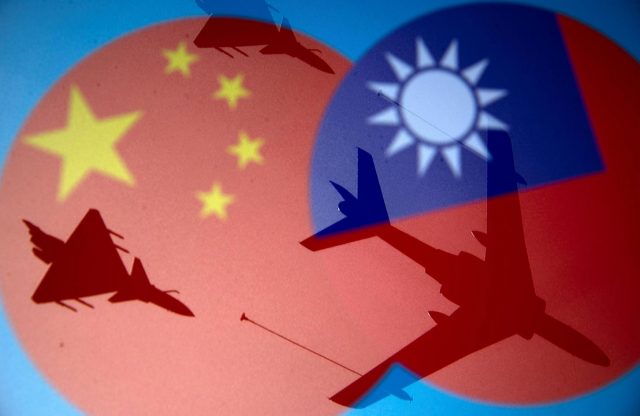
TAIPEI  — Taiwan will keep bolstering its defenses to ensure nobody can force the island to accept the path China has laid down that offers neither freedom nor democracy, President Tsai Ing-wen said on Sunday, in a strong riposte to Beijing.

Claimed by China as its own territory, Taiwan has come under growing military and political pressure to accept Beijing’s rule, including repeated Chinese air force missions in Taiwan’s air defense identification zone, to international concern.

Chinese President Xi Jinping vowed on Saturday to realize “peaceful reunification” with Taiwan and did not directly mention the use of force. Still, he got an angry reaction from Taipei, which said only Taiwan’s people can decide its future.

Addressing a National Day rally, Ms. Tsai said she hoped for an easing of tensions across the Taiwan Strait, and reiterated Taiwan will not “act rashly.”

“But there should be absolutely no illusions that the Taiwanese people will bow to pressure,” she said in the speech outside the presidential office in central Taipei.

“We will continue to bolster our national defense and demonstrate our determination to defend ourselves in order to ensure that nobody can force Taiwan to take the path China has laid out for us,” Ms. Tsai added.

“This is because the path that China has laid out offers neither a free and democratic way of life for Taiwan, nor sovereignty for our 23 million people.”

China has offered a “one country, two systems” model of autonomy to Taiwan, much like it uses with Hong Kong, but all major Taiwanese parties have rejected that, especially after China’s security crackdown in the former British colony.

Ms. Tsai repeated an offer to talk to China on the basis of parity, though there was no immediate response from Beijing to her speech.

Beijing has refused to deal with her, calling her a separatist who refuses to acknowledge Taiwan is part of “one China”, and does not recognize Taiwan’s government.

Ms. Tsai says Taiwan is an independent country called the Republic of China, its formal name, and that she will not compromise on defending its sovereignty or freedom.

Still Taiwan’s goodwill will not change, and it will do all it can to prevent the status quo with China from being unilaterally altered, she said.

Ms. Tsai warned that Taiwan’s situation is “more complex and fluid than at any other point in the past 72 years,” and that China’s routine military presence in Taiwan’s air defense zone has seriously affected national security and aviation safety.

She is overseeing a military modernization program to bolster its defenses and deterrence, including building its own submarines and long-range missiles that can strike deep into China.

The Armed Forces were a major part of the National Day parade Ms. Tsai oversaw, with fighter jets roaring across the skies above the presidential office and truck-mounted missile launchers among other weaponry passing in front of the stage where she sat. Taiwan stands on the frontlines of defending democracy, Ms. Tsai added.

“The more we achieve, the greater the pressure we face from China. So I want to remind all my fellow citizens that we do not have the privilege of letting down our guard.” — Reuters

Japan PM says no plan to alter capital gains tax

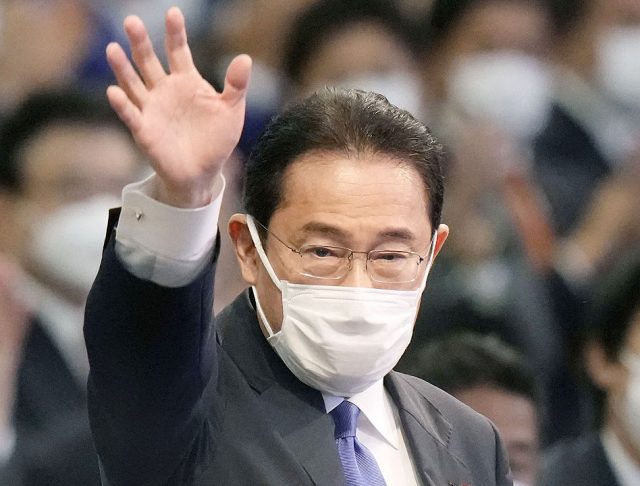
Japanese Prime Minister Fumio Kishida — KYODO/VIA REUTERS
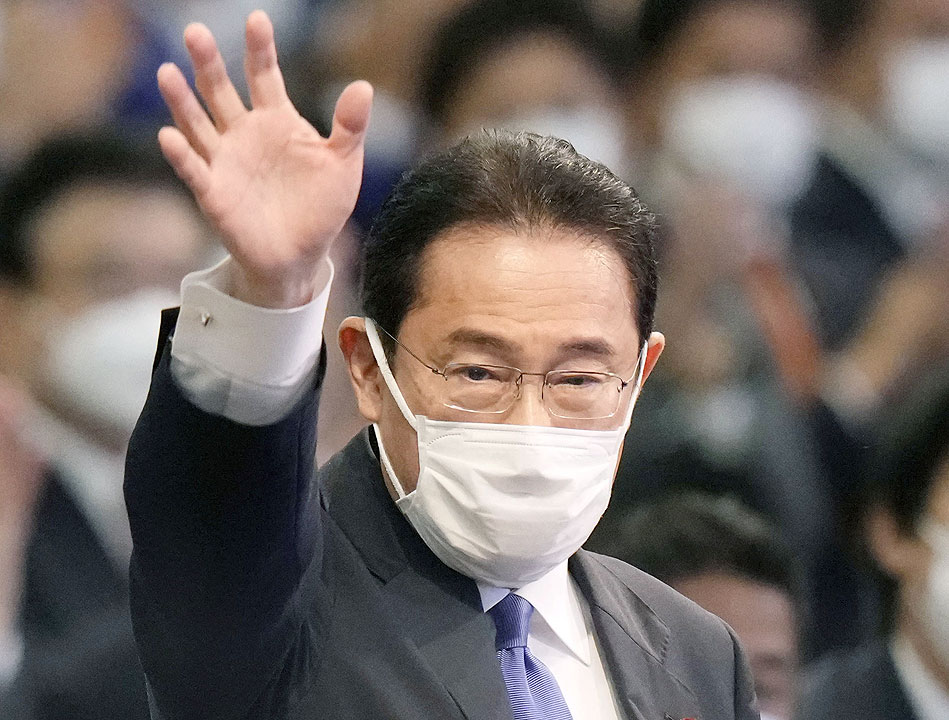
JAPAN’S new Prime Minister, Fumio Kishida — REUTERS

TOKYO — Japan’s new Prime Minister, Fumio Kishida, said on Sunday he won’t seek to change the country’s taxes on capital gains and dividends for now as he intends to pursue other steps for better wealth distribution, such as raising wages of medical workers.

Mr. Kishida, who has vowed to rectify wealth disparities, had previously said reviewing those taxes would be an option in addressing income gaps.

Mr. Kishida took the top job in the world’s third-largest economy on Monday, replacing Yoshihide Suga, who had seen his support undermined by surging coronavirus disease 2019 (COVID-19) infections.

“I have no plan to touch the financial income tax for the time being … There are many other things to tackle first,” Mr. Kishida told a news program on commercial broadcaster Fuji Television Network.

“Misunderstanding is spreading that I may do it soon. That will give unnecessary worry to people concerned if not dispelled firmly.”

Some investors have expressed concern that the new premier may press ahead with capital-gains tax hikes, signaling a turnaround from investor friendly economic policies pursued by Japan’s longest-serving premier Shinzo Abe from 2013 to 2020.

Japan’s benchmark Nikkei average has declined 7% since Mr. Kishida won the ruling Liberal Democratic Party’s (LDP) leadership election late last month, practically securing the post of premier by virtue of the LDP’s parliamentary majority. — Reuters

Australia mulls measures making social media giants responsible for defamatory postings

MELBOURNE — The Australian government is considering a range of measures that would make social media companies more responsible for defamatory material published on their platforms, Communications Minister Paul Fletcher said on Sunday.

“We expect a stronger position from the platforms,” Mr. Fletcher said in an interview on the Australian Broadcasting Corp. “For a long time, they’ve been getting away with not taking any responsibility in relation to content published on their sites.”

Intensifying a debate over the country’s libel and defamation laws, Prime Minister Scott Morrison on Thursday called social media “a coward’s palace,” saying platforms should be treated as publishers when defamatory comments by unidentified people are posted.

Mr. Fletcher said the government was looking at that option and the extent of the responsibility in general of platforms, such as Twitter and Facebook when defamatory material was published on their sites.

Asked whether the government would consider laws that would fine social media platforms for posting defamatory material, Mr. Fletcher said the government was looking at “a whole range” of measures.

“We will look at that. We’ll go through a careful, methodical process,” he said. “In a whole range of ways, we are cracking down on this idea that what is posted online can be posted with impunity.”

The country’s Highest Court ruled last month that publishers can be held liable for public comments on online forums, a judgement that has pitted Facebook and news organizations against each other.

It also spread alarm among all sectors that engage with the public via social media and, in turn, has lent new urgency to an ongoing review of Australia’s defamation laws. — Reuters

El Salvador to use bitcoin gains to fund veterinary hospital

ANDRE FRANCOIS MCKENZIE-UNSPLASH

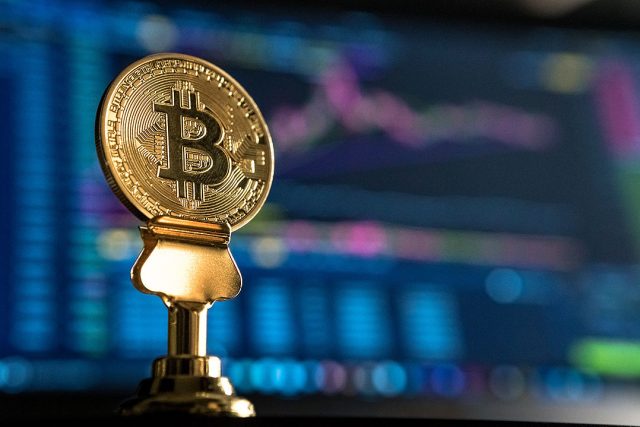
SAN SALVADOR — El Salvador will invest some of the $4-million gains it has obtained from its bitcoin operations to build a veterinary hospital, President Nayib Bukele said on Saturday.

Bitcoin lost almost 10% of its value on Sept. 9, after the Central American nation became the first worldwide to authorize the cryptocurrency as legal tender. But it has surged more than 30% in the past week to its highest levels since May.

The Bitcoin Trust, which Congress authorized in August, with a balance of $150 million, now has a “surplus” of $4 million, Mr. Bukele said. “So we decided to invest a part of that money in this: a veterinary hospital for our furry friends,” Mr. Bukele wrote on Twitter.

Mr. Bukele said the veterinary hospital would services for basic and emergency care as well as rehabilitation. — Reuters

How can we sustainably increase agriculture’s growth by at least 1%?

PHILIPPINE STAR/MICHAEL VARCAS

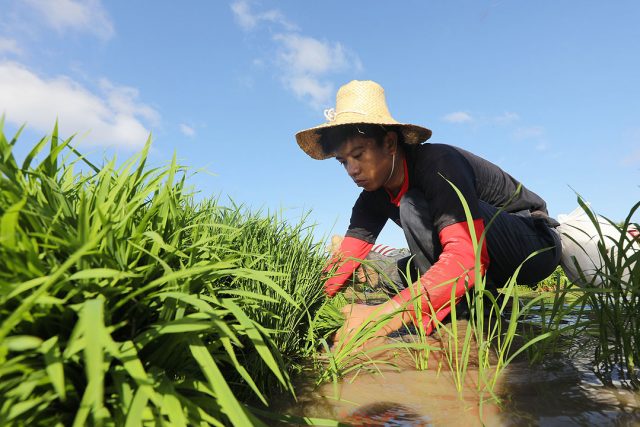
The Philippine economy is set to grow this year at perhaps between 4% and 5%, breaking out of a deep contraction last year largely because of the economic lockdowns here and global economic recession, all due to COVID-19. If agriculture is going to make a significant contribution to economic recovery, it should recover its growth performance of several years back.

Recent data is not encouraging. Agricultural growth failed to contribute to the higher growth of the economy in the last decade. When the economy expanded faster until it became the second-best performer in East Asia after China, the growth disparity between GDP (gross domestic product; the monetary measure of the market value of all the final goods and services produced in a specific time period) and GVA (gross value added; the measure of the value of goods and services produced in an area, industry or sector) from the sector growth had widened. Agriculture was left behind.

It is not surprising that as the economy recovers this year and sustains higher growth in 2022, the sector will, as in the past, be left behind.

To reverse this trend, authorities may want to focus on realizing the comparative advantage of the agriculture and fisheries sector. In the 1960s, the agriculture’s share in total exports used to be 64%. Its contribution to GVA was 33%. In 2019, those figures dropped to 8% and 1.6% respectively.

Considering both exports and imports, the tradability of the sector fell from 38% in the 1960s to only 3.5% in 2019.

If the sector can increase its share in overall growth of the economy, the sector has just to expand its exports and imports. It has to become more open to the global economy. Economic performance correlates strongly with export performance, and robust export performance in turn correlates with more imports.

We had focused our attention on increasing productivity, investing significant amounts of public money to increase the yield of our rice farmers. The problem has been that we had overly concentrated on doing that on just the rice industry at the expense of the other commodities with great potential of increasing the sector’s exports. Rice, it’s true, had been our success story in exports in the 1970s. But that was only for a few years, and at their peak, was not that significant.

Our apparent mantra to relive our golden age in rice has come at the expense of falling export performance. We used to take pride in our coconut exports in the 1970s, but we lost that advantage to palm oil exports. It is concerning to note that agriculture-based exports accounted for only 7% of the total merchandise exports in 2018, 9% if we include processed foods and beverages.

I tried to estimate the value of forgone exports of the top 20 agricultural exports in the top 20 market destinations. We may have lost $230 million by not taking advantage of the strong growth of imports in our trading partners like the United States of products that we can supply. In fact, 65% of these potential exports forgone is accounted for by our agricultural exports to the US.

It is about time that as we continue to expand the productivity of our farmers and fisherfolk, we give more weight to expanding our exports, to realizing the comparative advantage of the sector in global markets.

FOOD SAFETY STANDARDS
There are many constraints to exports, but I want to focus on our failure to meet international food safety standards. Top 20 Philippine exports over the period 2014-2018 were benchmarked against the food safety measures applied by the country’s top export markets. Over the five-year period, the mean share of the top 20 commodities was nearly 3/4 of all such exports. The trading partners in turn, which include the East Asian countries, the EU, Australia, and the United States account for 91% of all export markets of these products of the country.

Food safety related measures comprise the bulk of all non-tariff measures on traded merchandise. World Trade Organization (WTO) member countries maintain their right to develop and adopt their own food safety regulations that provide their respective appropriate levels of protection. While different countries have different SPS standards, the Sanitary and Phytosanitary (SPS) Agreement strongly endorses the international standards set by the international standard setting bodies.

International benchmarking of agricultural exports is key to understanding overall export performance in these products. Failure cases or refusals at the border of the country’s exports is evidence of a weak capacity to conform to international standards. I examined the reasons for rejections of our agricultural exports going to three markets, Australia, the EU, and the United States.

In Australia, the cases of export rejections are traced to these products not meeting maximum residue limits (MRL) of non-microbiological substances; prohibited substances used in processing the food product; and aflatoxin incidence. Two SPS standards are at issue: MRLs and prohibited or restricted substances. For MRL, the SPS capacity in question involves the production and post-production processes resulting in the final products (dried fish and jute leaves). Enhancing the capacity in this area may entail improving the production processes and post-harvest/production handling, or providing wider access to testing laboratories for export-bound food products.

For prohibited or restricted substances, food exports are obligated to conform with the negative list of substances set by Australia. Most of the pertinent incidents identify processed foods that have had micronutrients (vitamins) added. While micronutrients may not be innately hazardous to health, the Australian standard does not permit the indicated product-micronutrient combinations. Unless the scientific legitimacy of prohibiting the substances in question has been challenged by the Philippines, the SPS issue then becomes an awareness problem. Providing relevant information in advance to food exporters on this Australian standard avoids incidents of failed food export inspections and allows time for exporters to adjust the product composition.

In the case of our exports to the European Union, 13 different product categories were reported in 83 cases of food safety alerts. The most affected export products are prepared dishes and snacks, accounting for almost 23% of all the cases. These processed foods were notified as health risks due mostly to their use of prohibited coloring additives and other substances. For soups, broths, sauces, and condiments, most of the issues are about the excessive levels of coloring additives and a carcinogenic chemical food contaminant.

The associated health risks for nuts, nut products, and seeds are mostly due to high levels of aflatoxin. The secondary reason is the undeclared use of coloring additives, which are all not authorized.

Risk notifications for fish and fish products were mostly because of damaged or defective packaging and inadequate temperature control while in transit or storage.

In the case of the US market, the import refusal charges can be organized into three general categories: adulteration, misbranding, and all others. Seven out of 10 import refusal charges were due to adulteration. Adulteration due to biological contaminants (pathogen or toxin) accounted for 14%. Chemical-related adulteration were 17% of all charges, and two-thirds of these pertain to use of color additives deemed unsafe.

Adulteration due to all other factors besides biological and chemical is the top reason for all import refusals, and the charge reads as: “article appears to consist of a filthy, putrid, or decomposed substance.” This represents almost 40% of all refusal charges and almost 41% of all adulteration charges.

Next to adulteration are charges related to labeling which cover both SPS and technical reasons. Out of 1,090 import refusal charges, 235 were due to the above labeling reasons. The most frequent labeling case is failure to declare the use of artificial coloring.

Other refusal charges outside of adulteration and misbranding solely refer to “no New Drug Application.” This applies to products that claim health and other therapeutic benefits.

The weak points or constraints of our country’s exports can be reversed by informing and assisting producers and exporters comply with the market standards of trading partners. International benchmarking to the world’s product and market standards would be an important assistance to exporters to expand their earnings, and to diversify the markets for the country’s top food and agricultural products.

If we want the sector to increase its growth by at least 1%, the authorities may perhaps focus their assistance to helping our agriculture and fishery exporters meet international food-safety standards.


Ramon L. Clarete Is a professor at the University of the Philippines School of Economics.

Chito Gascon: Padayon!

ORIGINAL FILE PHOTO: PHILSTAR

Padayon! Press on! These were Chito’s favorite words.

Chito left us soon after Dinky Soliman did. Chito, the Chair of the Commission on Human Rights (CHR) and Dinky, the former Social Welfare Secretary, had many things in common.

They were friends. They were activists who shared the same politics and democratic values. They were colleagues in government and comrades in the parliament of the streets.

They, too, suffered from diabetes, which made them most vulnerable to COVID-19. COVID-19 killed Dinky and Chito, but their untimely deaths could have been averted if they were not diabetic.

Diabetes is a most deceptive disease. It is a silent killer. It is not diabetes per se that kills but its complications. When my late wife, Mae, a diabetic herself, and I would argue about her health, she would beg for empathy. She lamented that people not experiencing diabetes could not fully internalize the agony that diabetics endure.

Even amid his COVID-19 infection, Chito’s diabetes deceived us. It hid behind Chito’s cheerfulness and optimism. His friends and I thought that Chito’s good spirits and bright disposition indicated recovery.

It was when I communicated with Chito to seek CHR assistance that I learned that he had COVID-19. I requested CHR’s intervention on behalf of a brother of a friend of my friend and colleague who was detained without an arrest warrant just because the innocent guy was in the vicinity of a police anti-drug operation. Chito said he would attend to the problem immediately.

He was upbeat. But in the course of his message, he matter-of-factly said that he had COVID-19 for more than 10 days. He responded to my message in the wee hours of the morning, when he should have been resting!

At that hour I was already asleep and received his message later. His message that he had COVID shocked me. So, I immediately texted him to express my deep concern, especially considering that he was diabetic.

And I apologized for disturbing him, for anyhow I could have communicated with other CHR friends. His response, as always, was cheery. He did not have a tinge of gloom. “Thanks for your concern… we keep fighting… laban lang (just fight).”

Which again lulled me into thinking that Chito would be OK. We ended our chat exchanging sweet words. I told Chito: “Ingat (Be careful)! Lab u!” Chito replied: “Will do… love you too… be well… stay strong… we fight!” And I said: “You do inspire me Chito; in spite of your frail condition, you continue to fight!”

Later in the afternoon, Jo-Ann, my colleague who sought help regarding the detention of the brother of her friend, informed me that CHR was already assisting the victim. The CHR’s response was swift despite the scant information I sent Chito. Two other Commissioners, Gwen (Pimentel Gana) and Karen (Dumpit Gomez) and Anelyn (de Luna), Chito’s aide, likewise communicated with me.

Jo-Ann’s message: “Hi Ninong Men! Just want to update you. Na-meet na ni J [for privacy, name is anonymized] ’yung mga taga-CHR at nakausap na din ng mga taga-CHR si C [for privacy name is hidden]. Praise God for their quick response! ” (J has met with the CHR personnel and they also talked with C.)

I forwarded Jo-Ann’s message to Chito: “Maraming salamat (thank you), Ninong Men. Yes, please do let them know, we are very grateful for their timely help. ⁄ ⁄ ⁄ Praising God for how they quickly responded to our call!” Chito’s response was a thumb up.

And so, I thought everything was going to be OK.

Further, Anelyn received good news from Chito upon his release from hospital care. She said that his condition was improving and that he was ready to report back to office on Oct. 12.

On Oct. 9, Chito died.

Chito’s death has resulted in an outpouring of grief and sympathy from thousands of his friends and admirers. I choose one that was privately sent to me by Carol Pagaduan Araullo. The best compliment for Chito is to receive words of deep sympathy and great admiration from someone belonging to a different activist tradition.

Carol is “natdem” (national democrat); Chito was “socdem” (social democrat). It goes without saying that the natdem and the socdem are ideological and political rivals.

With a heavy heart, Carol wrote: “He was a decent, upright man. Broad-minded and fair…. Kahit iba ang philosophical moorings niya sa akin (even though his philosophical moorings were different from mine), his moral compass was straight, and he was consistent in his democratic human rights-based viewpoint and commitment, He walked the talk. So, so sad.”

Chito’s sudden passing is most painful. The deluge of deaths in the time of COVID-19 has drained my emotions. But Chito’s death has made me weep again: for him, for the many who recently died; for Mae, too. I couldn’t help but relate Chito’s demise to Mae’s death.

Upon retrieving Mae’s old Chicago Manual of Style that I intend to give to Maia, a young promising editor and the granddaughter of the late Saling Boncan (also Chito’s friend), I found a sealed envelope inserted between the book’s pages. It was an undelivered letter from Mae addressed to her friend Snooky. I wonder why the letter was unsent. I am not privy to the letter’s content, but Mae wrote in block letters two quotations on the surface of one side of the envelope.

The first quotation is from Psalm 34 (18): “The Lord is close to the broken-hearted, and rescues those whose spirit is crushed.”

The second quotation is from Wordsworth: “The eye — it cannot choose but see, we cannot bid the ear be still; our bodies feel, where’er they be, against or with our will.”

I surmise that Mae chose these quotes during a bout of depression. Mae was expressing hope and embracing humanity and a wonderful world.

These quotes are apropos as we grieve Chito’s passing. In the darkest of times, even in his time of physical agony, Chito was full of hope and full of grace. In his last words to me, he said, “let’s be sure to meet up in better days… they will come… laban lang!”


Filomeno S. Sta. Ana III coordinates the Action for Economic Reforms.

www.aer.ph

What’s next for the airline industry?

PEXELS-ANDREA PIACQUADIO

Commercial aviation is the pandemic’s most severely affected industry in terms of gross losses. Unfortunately, our very own Philippine Airlines (PAL) and Cebu Pacific were among those who suffered the brunt of the carnage. PAL Holding posted a massive loss of P73 billion in 2020 followed by another loss of P16.6 billion in the first half of 2021. Last month, the flag carrier filed for Chapter 11 bankruptcy in the United States to gain creditors protection and the legal basis to restructure its debts. Filing bankruptcy will also give it leverage to re-negotiate aircraft leases. For its part, Cebu Pacific posted a loss of P20.8 billion last year and another P13.8 billion in the first half of 2021.

Unlike Singapore Airlines, Malaysian Airlines, Garuda Indonesia, Vietnam Air, and Thai Airways, all of whom received financial bailouts from their respective governments, PAL and Cebu Pacific received no financial aid from the Philippine government despite their crucial role in national security, trade, tourism, social security, and national logistics. Both must survive on the back of their own resources. This is why the Philippine carriers had to undergo a comprehensive restructuring.

About 12,000 Filipinos rely on PAL and Cebu Pacific for their livelihood. Of this number, 40% have already been retrenched, retired, or put on furlough.

PAL and Cebu Pacific mirror the trends in the international airline industry. Last year, airline revenues worldwide dropped to just $328 billion, from $820 billion in 2019. For perspective, the revenues generated last year were about the same as it was in the year 2000. Analysts forecast that the industry will only recover to 2019 levels by 2025.

Like most other industries, COVID-19 changed the competitive landscape of the airline industry. It has also changed the way people fly. What can we expect from the aviation industry as we move forward?

According to Changi Airport Consultants of Singapore, there will be a new obsession towards sanitation and disinfection. We will see dark floor carpets giving way to white marble flooring or slate tiles to better see dirt and grime. We will also see mandatory hand disinfection in every touch point, UV disinfection lamps in the luggage conveyors as well as testing and vaccination centers as a permanent fixture in airports. Contactless check-in, immigration, and customs processes will become the new normal.

In terms of passenger volume, analysts estimate that only 80% of business travel will recover by 2024 due to the prevalence of remote working. Leisure trips and family visits will fuel the recovery in the next three years. The downside is that most leisure travelers fly economy and usually purchase heavily discounted tickets. Airlines that rely on business travelers (those who book flights on Business Class, pay a premium for direct flights and last-minute bookings) will continue to experience losses per flights.

This will compel airlines to restructure the economics of their fleets and destination networks. Whereas in pre-COVID years, airlines maintained several flights between hubs using small wide-bodied aircrafts like the Boeing 787, the subdued demand will compel airlines to lessen their frequencies but use larger aircrafts like the A350 or Boeing 777.

Airlines will also reconfigure the layout of their cabins to address the reduction in business passengers and increase leisure passengers. At the simplest level, lower business-class demand may warrant smaller business-class cabins.

The flying public can expect higher ticket prices too. Many airlines have had to borrow huge sums of money to stay afloat and cope with high daily cash burn rates, PAL and Cebu Pacific included. The industry amassed a staggering $180 billion in debt in 2020 alone, which represents half of the industry’s revenues. These costs will need to be recouped and higher ticket prices is one of the ways airlines will do it.

The pressure on price is exacerbated by demand exceeding supply. Last year, large chunks of airline’s fleet were either retired or returned to their manufacturer or lessor. Many airlines cancelled orders of new aircrafts. There are substantially less air seats available today than there were two years ago. It will take some time before supply of air-seats meets the demand.

The few airlines in good financial position will take advantage of the supply glut to acquire (or lease) new aircrafts. See, prior to COVID, aircraft manufacturers ramped up production in anticipation of continued growth. When COVID hit, orders were cancelled by the hundreds while hundreds more planes were returned to their manufacturers. Brand new or slightly used aircraft can be had for deep discounts. In fact, PAL recently sold one of its A350s to Lufthansa. For those leasing, the monthly rate of a 2016 Boeing 777-300ER aircraft was around $1.2 million in 2019. It now goes for less than $800,000.

Demand for air freight services will continue to increase. Before the pandemic, cargo typically made up 12% of the sector’s total revenue. However, with e-commerce coming into the mainstream, demand for airfreight has increased three-fold. Cargo space has been scarce and this allowed carriers to charge a premium for airfreight. A recent survey showed that cargo revenue accounted for 49% of total airline revenues last year.

In response to the high demand and low supply of air freight, carriers are now looking into boosting their cargo capacities by converting some of their aircrafts into “preighters” or passenger airplanes that are used to transport cargo. This will become a growing trend in the industry, especially since most airlines have already reduced their fleets.

The circumstances of the airline industry have changed dramatically. Carriers need to be agile to survive. Although tourism is slowly normalizing in certain parts of the world with vaccinations ramped-up, still, the road to recovery is three years away. At least the worst is over and things can only improve from here.

There is a silver lining at the end of all this. Air travel will become greener and more efficient since inefficient aircrafts have been forced into retirement. More importantly, airlines that survive the carnage will emerge leaner, meaner, and more profitable. This includes our very own Philippine Airlines and Cebu Pacific.


Andrew J. Masigan is an economist

andrew_rs6@yahoo.com

Facebook@AndrewJ. Masigan

Twitter @aj_masigan

A Nobel to remind us there’s no peace without free speech

A NOBEL PEACE PRIZE doesn’t solve thorny political problems. It didn’t draw a line under Apartheid when South African activist Albert Luthuli won it in 1960, or bring freedom to the Soviet Union when physicist and human rights campaigner Andrei Sakharov did in 1975. But it does, unfailingly, shed light on causes that need global attention. And rarely has a cause been in greater need of support than press freedom in 2021.

Friday’s win for Maria Ressa —  indefatigable Filipino journalist, co-founder of digital media company Rappler, and bete noire of President Rodrigo Duterte — and Dmitry Muratov — co-founder and editor-in-chief of Russia’s Novaya Gazeta, an opposition voice in a country that leaves no room for criticism — is a joint victory that highlights their resilience in the face of near-daily harassment. Both continue to publish critical work in countries run by strongmen who will stop at very little to silence them.

Novaya Gazeta has been under pressure throughout Vladimir Putin’s presidency. Fifteen years ago nearly to the day, Anna Politkovskaya, an investigative journalist working for Muratov’s paper who chronicled abuses in the region of Chechnya, was shot dead in Moscow. The statute of limitations for the crime expired on Thursday. Ressa, meanwhile, critical of police violence in Duterte’s drugs war, has been tangled in libel and tax evasion cases. The Philippines remains one of the most dangerous countries in the world for journalists.

But this year’s prize celebrates more than just the outstanding work of its recipients. It acknowledges many thousands of other reporters who run risks daily — keeping democracy and free speech alive. It’s a victory for civil society.

More journalists than ever were in jail last year and the number of media workers killed rose by a third compared with 2019, numbers that speak to a global attack that is stifling democracy. According to the latest survey from Reporters Without Borders, journalism is completely or partly blocked in nearly three-quarters of the 180 countries ranked by the organization. It’s a grim picture that few pause to take in — much less to consider its consequences.

Russia has been waging the most aggressive crackdown in years on independent media, labeling critical outlets as “foreign agents,” hampering their ability to operate. But there are more pervasive everyday pressures, including the squeeze on media owners, the rise of state-owned outlets and the fostering of disinformation by the powerful. Not to mention basic financial troubles that reduce the ability of any news gathering organization to adequately investigate and report.

It’s significant, in that sense, that the committee chose two different journalists working in different parts of the world, under different political regimes. The Philippines is still a democracy, though one left bruised by Duterte’s years in power. Russia is far harder to define that way. But free speech, assaulted by demagogues and misinformation, is under fire everywhere, and by extension so, too, is democracy and peace. We need only think back to Donald Trump’s years in the White House to remember a time when even in the United States, where press freedoms are guaranteed by the constitution, the president referred to critical media as “enemies of the people.” 

The Nobel Prize is often castigated for awarding prizes to those who have not achieved enough. The committee has certainly not always got its choices right. But it very clearly understands its role as an amplifying force, one that takes into account not only what individuals have achieved, but the positive effects that attention might bring to the issue at hand. It loudly proclaimed, in the words of Ressa on hearing the announcement, that a world without facts means a world without truth or trust. And one where giant challenges like coronavirus and climate change cannot be conquered.

There are risks too. Regimes may not take kindly to having their critics lauded, and can come down even harder. But for those who live in countries like Putin’s Russia, those risks already exist.

BLOOMBERG OPINION

Ceteris Paribus

PHILIPPINE STAR/MICHAEL VARCAS

Ceteris paribus, literally ‘holding other things constant,’ is a Latin phrase that is commonly translated into English as ‘all else being equal.’ A dominant assumption in mainstream economic thinking, it acts as a shorthand indication of the effect of one economic variable on another, provided all other variables remain the same.” (www.investopedia.com).

How can you hold other things constant, while discerning cause and effect between one thing and another, the philosopher asks the scientist? The inertia of interaction moves physics in its space and time. Yet the vanities of the scientific mind venture beyond the insinuations of Reality and foray into the Abstract to insist on measurements, in the frustrating lack of perfect information. (Even technology has limitations.) Economists are perhaps the most guilty of the fallacy of ceteris paribus, in the efforts to measure what one has achieved and what one owns, in this world of scarce resources. The hard science of Statistics has been a handy aide for macroeconomic growth rates and microeconomic market share.

Ceteris paribus is the disclaimer for the equilibrium of the demand-and-supply curve, where prices go up as demand exceeds supply, when all other factors are “held constant” and left out in the analysis. Analysts and investment brokers surely know that in reality, “with something like the stock market, for example, one can never assume ‘all other things being equal.’ There are too many factors affecting stock prices that can and do change constantly; you can’t isolate just one” (Ibid.).

And thus do analysts, academicians, research organizations, governments and even the more scholarly and savvy investors, practitioners and passive onlookers live with the tenuous assumption of ceteris paribus, conscious of its limitations. But how do we ever know the real score, for our surviving and thriving?

In the halt or slowdown of many economic activities in the year-and-a-half COVID-19 pandemic, ceteris paribus becomes oxymoronic more than ironic. In the cowering stillness and isolation forced by the raging contagion, many drastic changes overwhelm the “New Normal” into depressive doubts for the future. Again, as in times of war, the neat economic models of equilibrium become frayed and worn. Ceteris paribus certainly cannot be invoked now, for COVID-19 would certainly be omnipresent in any forced analysis on one dependent variable upon one independent variable of economic consequence.

To summarize the global COVID-19 effects since 2020: “The only major economy to grow in 2020 was China. It registered a growth of 2.3%. The IMF is, however, predicting global growth of 5.2% in 2021. That will be driven primarily by countries such as India and China, forecast to grow by 8.8% and 8.2% respectively. Recovery in big, services-reliant, economies that have been hit hard by the outbreak, such as the UK or Italy, is expected to be slow” (BBC, Jan. 24).

The World Bank says that the Philippines Gross Domestic Product (GDP) growth shrank (-9.573%) as of end-2020 at the height of COVID-19 pandemic, even lower than the slump (-7.307%) in 1985, at the height of political unrest in the last year of the 14-year Marcos martial law dictatorship. “Looking ahead, we see a strong growth of around 7.7% in 2022 and 6.5% in 2023,” Bangko Sentral ng Pilipinas (BSP) Governor Benjamin Diokno said in August (BusinessWorld, Aug. 9). The IMF has not been as optimistic in predicting global growth, with a careful climb of 5.2% in 2021 — perhaps it is difficult to jump to Diokno’s expectations for the Philippines.

The GDP growth rate in the Philippines averaged 1.08% from 1998 until 2021, reaching an all-time high of 8% in the third quarter of 2020 and a record low of -14.90% in the second quarter of 2020 (https://tradingeconomics.com). How acrobatic it seems, to jump from very low negative in one quarter to high positive growth in the next immediate quarter! How arbitrary must the ceteris paribus assumptions in the measurement and analysis have been, in those years of high variance from the average GDP performance! The cumulative and compounding effects of past experience, empirical or deduced, must temper Prophets of Boom and guide Prophets of Gloom alike.

As an example for establishing correlation more than causation, the Consumer Price Index (CPI, average price of a basket of basic goods and services) is watched for its movement to measure inflation, where prices would indicate shifts in the supply/demand curve. The CPI rose 4.8% from a year earlier, but slowed from 4.9% in August, mainly due to a slowdown in the transport index, government data showed last week. The headline inflation was at the low end of the central bank’s projected (wide) range of 4.8%-5.6% for the month (Reuters, Oct. 5). Out of 17 economists, 13 projected the rate of increase in prices of basic commodities to hit between 5% and 5.2% — a level unseen since skyrocketing rice prices jacked up the inflation rate in 2018 (https://www.thestar.com, Oct. 5). BSP’s Diokno expects inflation to remain firmly within target range for 2022 to 2023, with prices likely to be dampened further by lockdown measures, thus reiterating “to maintain an accommodative monetary policy stance (low interest rates) for as long as necessary… to the extent that the inflation outlook would allow.”

Surveys are common instruments used to gather hard statistics on what is happening (as in actual market price increases) and the perceptions or reactions of a calibrated sample universe of random respondents from representative demographics. Where facts mingle with perceptions, biases, or even strong emotions and past trauma, these may challenge the integrity of the research. The survey instrument is very critical. In the extreme, surveys can be tweaked in the process and at the outcome, to the utilitarian interest of the parties participating in the survey research. In the economics of the firm, favorable market survey results are usually the best endorsement for the product.

What for then, are survey research and econometrics that can be force-fit into quantitative models albeit by sincere hard study — or unforgivably, maybe by plain malice and manipulation? Alas for those misled by erudite-sounding proclamations and statistics by so-called reputable authority. Whether true or false, such declarations insinuate into the collective consciousness. And priorities have changed. In the concerns in the New Normal the suggestion of the ceteris paribus model of discernment can be fatal — no one factor may be analyzed independent of other influences. The trauma of the pandemic has made people wary and suspicious of others and of issues that may further aggravate fragile hopes for earlier release from fear and anxiety.

What a dismal, desperate time for the people, to be torturously masked and shackled by the COVID-19 and to rage in anger with the unmasking of graft and corruption in high government! And amidst this, there are the coming national elections on May 9, 2022. Seeming to add insult to injury, the ubiquitous popularity surveys top-ranked surprising “winnables” who are allegedly involved themselves or related to the suspected gang of corrupt incumbents in government. When critics raised doubts as to the integrity of the surveys, survey outfits defended themselves as presenters of the objective results of structured research, as in market-share economics.

The opposite of the economic term ceteris paribus (holding all other things constant) is the legal term Mutatis mutandis which approximately translates as “allowing other things to change accordingly” or “the necessary changes having been made.”

Let us vote for a change to a clean and honest government, on May 9, 2022.


Amelia H. C. Ylagan is a doctor of Business Administration from the University of the Philippines.

ahcylagan@yahoo.com

Philippines OK’s Ronapreve for emergency use

The Philippine Food and Drug Administration (FDA) on Friday said it had approved American and Swiss-developed Ronapreve for the emergency treatment of the coronavirus.

The drug may be used for people aged 12 and above, FDA Director-General Rolando Enrique D. Domingo told an online news briefing.

Ronapreve could cut the risk of hospitalization and death from the coronavirus by at least 70%, he said, citing the results of initial clinical trials.

The Department of Health (DoH) reported 10,670 coronavirus infections on Friday, bringing the total to 2.64 million.

The death toll rose to 39,232 after 191 more patients died, while recoveries increased by 7,691 to 2.49 million, it said in a bulletin.

There were 118,203 active cases, 77.7% of which were mild, 13.4% did not show symptoms, 2.7% were severe, 5.15% were moderate and 1.1% were critical.

The agency said 57 duplicates had been removed from the tally, 42 of which were reclassified as recoveries, while 128 recoveries were tagged as deaths. Two laboratories failed to submit data on Oct. 6.

World should deter China aggression toward Taiwan, says former Aussie PM

By Alyssa Nicole O. Tan

The threat of China invading Taiwan is growing every day, which should push world leaders to work together in ways never done before, former Australian Prime Minister Anthony John Abbott said on Friday.

“The more aggressive it becomes, the more opponents it will have,” he told an online forum organized by the Taiwan-Asia Exchange Foundation.

Mr. Abbott noted that while the world had gained from China’s progress, it has also been harmed by Beijing’s power plays. “It’s been so unreasonable,” he said, enough that countries find the need to unite against it.

Mr. Abbott cited comments by Victor Gao, who was once communist leader Deng Xiaoping’s translator, that Australia would become a target for possible nuclear attacks in the future after it signed a nuclear submarine deal with the United States and Britain.

Mr. Gao said the military pact was a “gross violation of international law” that will have “profound consequences” for “brainless” Aussies.

After secret negotiations with Britain and the US, Prime Minister Scott Morrison last month announced a deal for eight nuclear-powered submarines aimed at dealing with “threats to regional stability.”

With China’s growing belligerence against Taiwan, Beijing may attack soon. “Nothing is more pressing right now than solidarity with Taiwan,” Mr. Abbott said

Taiwan has reported Chinese jets flying nearby for more than a year. Since early October, more than 150 Chinese war planes including military jets and nuclear-capable bombers have entered Taiwan’s air defense identification zone.

Taiwan President Tsai Ing-wen earlier said that it would be catastrophic if the country were to fall to China. Taiwan, although not intending to fight, would “do whatever it takes to defend itself,” she said.

Taiwan sees itself as a sovereign state while China considers it a democratic breakaway province.

Former US Undersecretary of State Keith J. Krach the need for a strategy to combat China’s economic aggression by amplifying democratic values and strengthening international partnerships.

Global support for alliance partners especially Taiwan should be strengthened by building trusted relationships, creating deep economic and technological partnerships and boosting trade ties he told the forum.

Ms. Tsai told the forum Taiwan had been boosting international relationships. She promoted cooperation in the so-called new normal by resetting priorities amid a global coronavirus pandemic.

Duterte critic wins Nobel Peace Prize

PHILSTAR

A journalist critical of President Rodrigo R. Duterte’s government has won the Nobel Peace Prize, organizers of the Oslo-based group tweeted on Friday.

The Norwegian Nobel Committee the prize to Rappler founder Maria A. Ressa along with Russian journalist Dmitry Muratov “for their efforts to safeguard freedom of expression, which is a precondition of democracy and lasting peace.”

“It’s a recognition of the difficulties, but also hopefully of how we’re going to win the battle for truth,” Ms. Ressa told a forum after the announcement.

Mr. Duterte has called Rappler a “fake news outlet.” Ms. Ressa is facing cyber-libel and tax evasion cases that she said were politically motivated. — Russell Louis C. Ku

ADVERTISEMENT
ADVERTISEMENT