PHNOM PENH – Cambodia is set to launch a lockdown in eight provinces bordering Thailand from midnight on Thursday, in a bid to prevent the spread of the Delta variant of the coronavirus in the Southeast Asian country.
Prime Minister Hun Sen signed an order late on Wednesday for the lockdown, which bans people from leaving their homes, gathering in groups and conducting business, except for those involved in operating airlines.
“The temporary lockdown… aims to prevent community-based transmission of the new COVID Delta variant,” Hun Sen said in the order posted on Facebook.
Border checkpoints with Thailand will also be closed except to allow for the transport of goods and in emergencies, Hun Sen said, adding the lockdown was due to run until Aug. 12.
The provinces affected are Koh Kong, Pursat, Battambang, Pailin, Banteay Meanchey, Oddar Meanchey, Preah Vihear and Siem Reap.
Cambodia managed to largely contain the virus for most of last year, but an outbreak first detected in late February has driven up total cases to 75,152, with 1,339 deaths.
Neighbouring Thailand has also faced a stubborn outbreak driven by the Delta variant, which was first detected in India, and has repeatedly reported record numbers of daily infections in recent weeks. – Reuters
Pfizer Inc on Wednesday raised its 2021 sales forecast for its COVID-19 vaccine by 29% to $33.5 billion, and said it believes people will need a third dose of the shot developed with German partner BioNTech to keep protection against the virus high.
The company said it could apply for an emergency use authorization (EUA) for a booster dose as early as August.
Data showed that a third dose generated virus-neutralizing antibodies more than 5 times higher in younger people and more than 11 times higher in older people than from two doses against the more easily transmissible Delta variant of the virus.
“All in all, I think a third dose would strongly improve protection against infection, mild moderate disease, and reduce the spread of the virus,” Chief Scientific Officer Mikael Dolsten said on a call to discuss quarterly results.
Mr. Dolsten added that the data suggested levels of antibodies could be boosted up to 100-fold when compared to levels before the third dose.
The company also posted a non-peer reviewed study on Wednesday suggesting the vaccine’s efficacy declines over time, and had dropped to around 84% effectiveness from a peak of 96% four months after participants received their second dose.
Pfizer shares were up 3.5% at $43.57.
Pfizer’s decision earlier this month to seek authorization for a third dose drew criticism from U.S. health regulators, who said there was not yet enough data to show booster shots are needed. Scientists from U.S. health agencies have since discussed additional doses for people with compromised immune systems.
Meanwhile, billions of people in other countries are still waiting for a first COVID-19 shot.
Even without boosters, the company’s 2021 sales forecast is expected to move higher as it only accounts for 2.1 billion doses that it has committed to countries out of 3 billion it plans to make this year.
Pfizer said it has shipped over 1 billion doses of the vaccine since December. The U.S. drugmaker records most of the combined sales from the vaccine, and splits expenses and profit 50-50 with its German partner.
Pfizer, whose shot was authorized in the United States, Europe and other regions around the world in December of 2020, has won new orders as rivals such as AstraZeneca Plc and Johnson & Johnson have faced manufacturing and safety hurdles.
Pfizer also competes with U.S. mRNA vaccine maker Moderna Inc, which has not been able to scale up production as quickly as its much larger rival.
J&J last week estimated full-year COVID-19 vaccine sales of $2.5 billion, while Moderna has forecast $19.2 billion.
Pfizer and BioNTech plan next month to test a version of the vaccine specifically designed to take on the fast-spreading Delta variant, with the first batch already manufactured, Pfizer said. The variant now accounts for more than 80% of new U.S. COVID-19 cases and has also become dominant in many other countries.
The U.S. Food and Drug Administration recently asked Moderna to expand the size of its pediatric trial.
Pfizer Chief Executive Albert Bourla said the company expects to be able to stick to its timeline to apply for an EUA for the vaccine in children under 12 in September, despite also having been approached by the FDA about new study requirements.
“We are not changing right now our expectations,” Mr. Bourla said. “If we need to do more in less time, we will try to accommodate that.”
Pfizer also raised its estimates for overall full-year profit, with strong sales of blood thinner Eliquis, which it shares with Bristol Myers Squibb, and cancer drug Ibrance.
The vaccine is helping drive a large part of the company’s forecast, but Pfizer’s base business is also growing, said Mizuho analyst Vamil Divan.
Pfizer now expects full-year adjusted profit of $3.95 to $4.05 per share, up from its prior forecast of $3.55 to $3.65. – Reuters
Globe marked another milestone with its inclusion in the distinguished FTSE4Good Index Series for the sixth consecutive year. This proved the telco’s unwavering commitment to environmental, social, and governance (ESG) practices aligned with global benchmarks.
Administered by the Financial Times Stock Exchange-Russell Group (FTSE), the index measures the performance of businesses around the world that demonstrate strong ESG practices.
Investors and market participants utilize the index to create and assess responsible investment funds and other products, and identify environmentally and socially sustainable companies. It is also used as a transparent and evolving global ESG standard against which companies can assess their progress and achievement, and as a benchmark index to track the performance of sustainable investment portfolios.
Globe’s continued inclusion in the FTSE4Good Index results from its dedication to “walk the talk” when it comes to its ESG targets.
“We are committed to continue improving our sustainability practice even as we grow our business. Aside from hitting our ESG targets, our ambition is to create a positive impact on our communities and uplift the lives of our customers. Being a part of the FTSE4Good Index tells us we have chosen the right path and will strive to do even better,” said Yoly Crisanto, Globe Chief Sustainability Officer and SVP for Corporate Communications.
Sustainability at Globe is anchored on its purpose of “treating people right to do a Globe of Good” as it aims to contribute to 10 United Nations Sustainable Development Goals guided by the UN Global Compact Principles. By combining innovation with the power of collaboration among stakeholders, Globe hopes to deliver impactful, inclusive, and sustainable development for all.
This year, the company integrated sustainability principles in its corporate balance scorecard to help guide its different business units. Globe has four key sustainability pillars: Care for the Environment, Care for People, Digital Nation, and Positive Societal Impact.
Stepping up its advocacy on the environment, Globe recently became the first and only Philippine company listed by the Science-Based Targets initiative (SBTi) that committed to emission reductions in its operations as part of its climate action. It has joined the UN-backed #RaceToZero campaign to deliver a healthier, fairer zero-carbon world by 2050. Globe aims to reduce carbon emissions by 30% by 2030 and reach net-zero emissions in 2050.
Since 2019, the company has shifted to buying energy directly from power sources producing renewable energy and today, its headquarters and six offices and facilities are powered through it. Globe has also adopted green network solutions at its cell sites and has deployed over 7,400 of these solutions since 2014.
Through its Globe University, employees are provided access to sustainability-related training, resulting in a high-performing workforce aligned with the company’s vision. Globe adheres to international Occupational Health and Safety standards (ISO 45001) to ensure the well-being of its workforce.
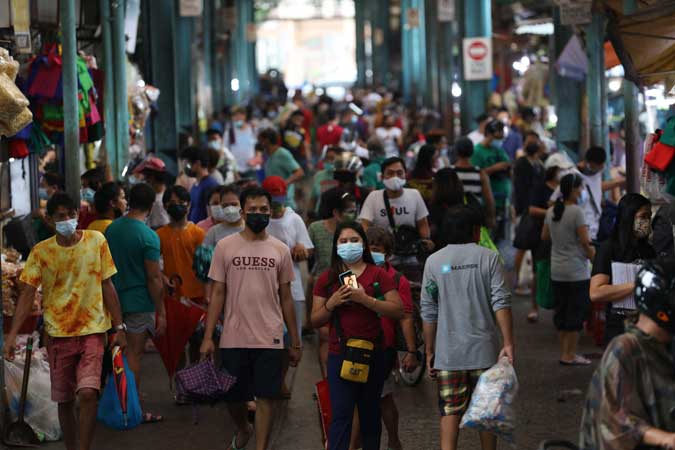
People walk inside the Marikina Public Market, July 28. — PHILIPPINE STAR/ MICHAEL VARCAS
By Kyle Aristophere T. Atienza and Jenina P. Ibañez, Reporters
BUSINESS LEADERS are supporting a two-week lockdown to prevent the spread of the more contagious Delta coronavirusvariant, but requested for more time to prepare before restrictions are tightened.
This as a group of health researchers on Wednesday urged the government to reimpose stricter quarantine rules in the Philippine capital region and nearby provinces as early as Aug. 1 to prevent a possible Delta-fueled surge in infections.
Coronavirus disease 2019 (COVID-19) cases in Metro Manila could go as high as 5,000 a day by the latter part of August if a “circuit-breaking” or an early hard lockdown would not be enforced in the capital region for two weeks starting Aug. 1, OCTA Research fellow Fredegusto P. David told a virtual press briefing. Metro Manila averages 1,000 new COVID-19 infections a day.
Mr. David said imposing a stringent lockdown would enable the country to “regain” effective control of the pandemic within a week or two.
“A late circuit breaker on Aug. 16 will result in high case loads above 2,500 per day for the remainder of the month and will likely require a longer lockdown period,” he said.
“Even if cases are not increasing significantly at this time, if we give it an opportunity to spread, it will spread.”
Presidential Adviser for Entrepreneurship Jose Ma. “Joey” Concepcion III said this is the “best time” to impose a lockdown, noting the sluggish customer demand during the rainy season.
The Delta variant has also dampened consumer activity as health safety fears keep people indoors, he said at a separate virtual event.
Philippine Chamber of Commerce and Industry (PCCI) President Emeritus George T. Barcelon said businesses should be allowed to prepare for at least a week before the hard lockdown. The private sector is recommending that a lockdown begin by the second or third week of August.
“It’s important that a preparation period be allowed for business sectors. One of the issues is mobility. You can have the severe lockdown, but again we should be cognizant that the transport of essentials is important,” he said.
Henry Lim Bon Liong, president of the Federation of Filipino Chinese Chambers of Commerce & Industry, Inc., said a two-week hard lockdown could help prevent further lockdowns caused by a Delta-related surge in the last quarter of the year.
All of us are in the boat together. We either sink or swim together so let us just swim together.”
ECONOMIC IMPACT The stricter lockdown would further dent economic recovery in the third quarter, Mr. Barcelon said, but he hopes that the stricter measures and vaccinations to contain the Delta strain would help the economy recover toward the end of the year.
“This lockdown will have a negative impact in all aspects. Business will be down. The collection of the government will be lessened. There will be more spending by the government for health services,” he said.
Finance Secretary Carlos G. Dominguez III said in a Viber message to reporters the country must sometimes take steps backward to protect the gains achieved in combating the virus, a move that is now prompted by the new coronavirus variant.
“I cannot predict the future with any accuracy, but we can prepare ourselves for any eventuality by protecting our financial capacity to react appropriately to developments,” he said.
Socioeconomic Planning Secretary Karl Kendrick T. Chua, who has advocated for granular lockdowns, said a full analysis was needed before making a recommendation on the type of lockdown needed.
“Our response is to manage the risks by ensuring much faster vaccination rate, and limiting more stringent lockdown in local areas or sectors of highest risk, while allowing the rest of the people, especially those already vaccinated, to earn a living,” he told reporters on Viber. “Our experience last March-April, where we were able to do a better balance can guide our response.”
BUSINESS SECTORS Electronics exporters during the stricter lockdown last year were hampered by mobility issues at checkpoints. Semiconductor and Electronics Industries in the Philippines, Inc. (SEIPI) President Danilo C. Lachica said a strict lockdown would again be needed to curb the Delta variant.
“We just need to ensure the unimpeded movement of materials and employees for the electronics industry. We hope that we can further accelerate the deployment of vaccines at local government units,” he said in a mobile phone message.
The stricter lockdown could also affect the real estate sector. JLL Philippines Head of Research and Consultancy Janlo de los Reyes at a briefing said the hospitality sector would see a decline in occupancy levels, and noted potential uncertainties in the office market.
“It’s a negative impact on the (property) market with regard to the lockdown as you could see in the previous quarters wherein we had those community quarantines,” he said.
The American Chamber of Commerce of the Philippines (AmCham) said the group could not yet speculate on the effects of potential strict lockdown on investment prospects, but the chamber opposes a sweeping strict lockdown.
“AmCham hopes businesses and public transportation will not be locked down and that restrictions will be targeted on ‘hot spots,’” AmCham Senior Advisor John Forbes said in a text message.
ACT NOW Meanwhile, OCTA member Ranjit S. Rye urged the National Government not to wait for coronavirus infections “to explode or for our hospitals to fill up before it decides.”
“We will save lives and save livelihoods. We have a window of opportunity to reverse this surge,” he said.
The National Capital Region (NCR) will have 2,000 new cases daily on average by Aug. 10 if the government maintains the status quo,” Mr. Rye said separately. Coronavirus infections may reach up to 3,000 daily by Aug. 17.
Meanwhile, OCTA fellow Nicanor R. Austriaco, Jr. said Metro Manila’s healthcare use rate may be up by 100% as early as Aug. 15 if the government does not tighten quarantine rules in the region.
The Filipino-American molecular biologist, who is also a priest, based his projections on the experiences of the country’s neighbors such as Thailand, Malaysia and Vietnam.
“Once a Delta surge begins, it accelerates in an explosive fashion,” he said at the same briefing.
The Department of Health (DoH) earlier said the capital region’s healthcare capacity might reach a moderate risk level once it experiences a new virus surge.
On Wednesday, Manuel C. Mapue II of the DoH-NCR said Metro Manila has recorded a total of 22 Delta variant cases. Of these, 16 are active cases, he told a televised news briefing. The country has recorded 119 Delta variant cases as of July 24.
The government must consider “the bigger cost to the economy of a spike in infections that could be avoided by doing an earlier or preemptive lockdown measure,” Rizal Commercial Banking Corp. Chief Economist Michael L. Ricafort told BusinessWorld in a Viber message. “Options to do preemptive restrictive measures would make the economy better off over the long run.”
Mr. Ricafort noted that other Southeast Asian countries “do lockdowns at an early stage” while cases remain relatively low “to nip the cases at the bud.”
“NCR is the major economic center/convergence point and transit to other parts of the country so it is important to protect its population from the coronavirus as a prudent measure to also indirectly protect the rest of the country,” the economist said
Metro mayors were set to hold an emergency meeting on Wednesday to discuss the coronavirus situation in the capital region and their response to the spread of the Delta variant.
By Kyle Aristophere T. Atienza and Beatrice M. Laforga, Reporters
THE LAST TWO packages under the comprehensive tax reform program, as well as a bill equipping state-run banks to lend more to distressed businesses are still priority measures, officials said, even if President Rodrigo R. Duterte did not mention these during his last State of the Nation Address (SONA).
In a Viber message on Wednesday, Finance Assistant Secretary Maria Teresa S. Habitan said they would seek an urgent certification on the proposed Passive Income and Financial Intermediary Taxation Act (PIFITA) and the Real Property Valuation and Assessment Reform Act “as soon as they are approved on second reading at the Senate.”
“We are optimistic that the remaining tax bills will be passed, especially property valuation reform and PIFITA. Both bills are already done in the House of Representatives, and they are also in the Senate agenda,” she said.
The two bills are part of the common legislative agenda of Legislative-Executive Development Advisory Council (LEDAC) that are targeted to be passed by yearend.
Both are still pending at the Senate committee level.
The Real Property Valuation and Assessment Reform bill, which is the third package under the tax reform program, aims to establish a single and improved valuation system in assessing properties. The measure will broaden the tax base used for property-related taxes and boost collections, without increasing the rates or slapping new taxes.
The House passed its version on third reading in November 2019.
Meanwhile, the PIFITA bill aims to simplify the tax structure for financial instruments. It was approved by the House in September 2019.
In his final SONA on Monday, Mr. Duterte did not mention the remaining tax reform packages, but cited the need to revisit and update tax laws regularly amid the changing environment.
“Tax laws are not always perfect and that is why every now and then, they have to be revisited to see if they are at pace with the changing times. Let us therefore continue to monitor the relevance and impact of our tax laws on individuals and private institutions to prevent serious damage on their financial health,” Mr. Duterte said on Monday.
GUIDE BILL Meanwhile, the proposed Government Financial Institutions Unified Initiatives to Distressed Enterprises for Economic Recovery (GUIDE) Act is also still part of Mr. Duterte’s priority legislation because it was “classified as an administration priority bill by the LEDAC,” Palace Spokesperson Herminio L. Roque, Jr. told BusinessWorld in a Viber message.
The bill was already approved by the House of Representatives on third and final reading in February. It is still pending at a Senate committee.
The proposed GUIDE bill gives state lenders Land Bank of the Philippines (LANDBANK) and Development Bank of the Philippines (DBP) more funds to expand their loan programs for micro, small and medium enterprises (MSMEs) heavily affected by the pandemic.
Under the measure, LANDBANK and DBP would be given P7.5 billion and P2.5 billion, respectively, to boost their unified initiatives.
The proposed law creates a state-backed holding firm, which shall be known as Accelerate Recovery to Intensify Solidarity and Equity or ARISE, Inc., allowing both state lenders to enter into joint venture deals with distressed businesses.
Several congressmen who voted against the House bill had opposed to the creation of the special holding company, which will enjoy fee privileges and exemptions from procurement and competition laws as well as tax obligations.
Asked whether Mr. Duterte backs these highly contested provisions, Mr. Roque said: “He does.”
“GUIDE is still under review pending a response from the inter-agency on GUIDE on the several issues we raised,” Senator Grace Poe-Llamanzares said in a Viber message.
In a statement on Monday, Senate President Vicente C. Sotto III named the GUIDE bill, as well as the last two remaining tax reform packages, as priorities for the last regular session.
The National Government missed its first-half spending target by 9.56%, which the Bureau of the Treasury (BTr) partly attributed to the pending enactment of the GUIDE bill.
“The GUIDE bill was supposed to be funded with P10 billion from realigned Bayanihan II funds,” House Ways and Means Chair Jose Maria Clemente S. Salceda said in a Viber message. “Since we did not extend Bayanihan II, if ever we pass GUIDE, we have to draw out of a supplemental appropriation, or realign something from the 2021 budget.”
Mr. Salceda suggested that government financial institutions (GFIs) propose “similar rescue vehicle or investment holding system as far as allowed by their respective charters and have the budgetary requirements proposed in the General Appropriations Act.”
“Whatever spending we infused into the GFIs is not money gone forever. This is an investment, and we expect returns to both the state and the taxpayer,” the Albay solon said.
“While anything towards GUIDE might be counted against short-term deficit spending and on the government’s short-term cash position, in the grand scheme of things, this is not a minus on our fiscal position unless we lose all of it, which is very unlikely,” he added.
THE BUREAU of the Treasury (BTr) has set a P200-billion borrowing program for August as it expects sustained demand for government securities.
The BTr’s borrowing plan for August was lower than the P235-billion program set this month largely because of fewer Treasury bond (T-bond) auctions, National Treasurer Rosalia V. de Leon said in a Viber message.
Based on a notice posted on its website on Wednesday, the government is set to raise P60 billion via Treasury bills (T-bills) next month and another P140 billion in T-bonds.
“Looks like [healthy demand will persist] with liquidity very much around,” Ms. De Leon said.
The Treasury kept its P15-billion offering for T-bills every Monday, broken down into P5 billion each via the 91-, 182- and 364-day T-bills.
It will also continue holding weekly auctions for the T-bonds every Tuesday at P35 billion each.
It will offer 10-year bonds on Aug. 3; seven-year debt on Aug. 10, 20-year notes on Aug. 17 and 11-year instruments on Aug. 24.
This month, the BTr raised P237.86 billion from the local debt market, exceeding the P235-billion program after it opened the tap facility four times.
It borrowed P60 billion as programmed via T-bills and another P177.86 billion from T-bonds, slightly higher than the P175 billion it initially planned.
The government wants to borrow P3 trillion from domestic and external sources this year to help fund a budget deficit seen to hit 9.3% of gross domestic product. — Beatrice M. Laforga
THE Bureau of Internal Revenue (BIR) suspended a regulation that would have increased the corporate income tax for nonprofit private schools, as the bill correcting the tax treatment is still pending in Congress.
BIR Commissioner Caesar R. Dulay signed Revenue Regulations (RR) 14-2021 on Wednesday suspending certain provisions of RR 5-2021 that excluded nonprofit private schools from availing of the preferential tax and effectively increased the rate to the 25% regular corporate income tax.
“To ease the burden of taxation among proprietary educational institutions, especially during this time of COVID-19 pandemic, and taking into account the pending bills in Congress… to finally clarify the income taxation of schools, the implementation of the following provisions of RR 5-2021 dated 8 April 2021 are hereby suspended pending passage of such appropriate legislation,” the signed document obtained by BusinessWorld read.
The new regulation was dated July 26 but only issued on Wednesday. It was signed by Finance Secretary Carlos G. Dominguez III on July 27.
With RR 5-2021 suspended, non-profit private schools will now continue to enjoy the preferential tax rate of 1%, which has been lowered under the Corporate Recovery and Tax Incentives for Enterprises (CREATE) for three years until June 30, 2021, from 10% previously.
Coordinating Council of Private Educational Associations (COCOPEA) earlier flagged the previous RR for its “erroneous” interpretation on the tax imposed on private schools, warning the higher tax rate could force some schools to permanently close amid the pandemic.
“On behalf of the COCOPEA, we thank the Department of Finance and the BIR for heeding the call of the Senate and the pleas of the private education sector to suspend the enforcement of BIR RR 5-2021 pending the passage of appropriate legislation clarifying the taxability of proprietary educational institutions,” Anthony Jose M. Tamayo, chairman of COCOPEA, said in a Viber message on Wednesday.
“This will certainly help many of our struggling schools continue in their delivery of education amidst the COVID-19 pandemic,” he added.
Congress will be tackling a measure amending the Tax Code in order to clarify the definition of proprietary educational institutions by including the phrase “which are nonprofit.” It also aims to clarify the tax treatment of proprietary educational institutions that are nonprofit.
Bills were filed at the House of Representatives and Senate last month to amend certain provisions under the National Internal Revenue Code and clear up the tax treatment of private schools.
THE World Bank (WB) and the Philippine government recently signed an agreement for the $280-million (P14-billion) additional financing for a rural development program that aims to boost farm and fishery production in selected provinces.
According to a World Bank document, Ndiame Diop, the bank’s country director for the Philippines, signed the loan agreement on July 16, while Finance Secretary Carlos G. Dominguez III affixed his signature on the deal on July 19.
Apart from the $280 million in additional financing for the Philippine Rural Development Project, the agreement also covers a grant worth €18.3 million (P1 billion) from the European Union (EU).
The World Bank approved the loan on June 17 to partly finance the $385.44-million project of the Agriculture department that started in 2014.
Agriculture Secretary William D. Dar said the loan agreement was signed in time for the implementation of the second phase of the rural development program, which will start next month.
“It’s such an important platform to enhance the growth of agriculture,” he said in a Viber message.
According to the World Bank documents, the loan is valid for three years or until July 31, 2025, while the grant will be available until July 31, 2024.
According to the bank, the new funds will support an additional of 267 climate-resilient rural infrastructure and 287 small enterprise development projects to improve incomes in selected rural areas and build the capacity of local government units (LGUs) in planning and implementation.
This will also expand the scope of the program by including more poverty- and conflict-stricken LGUs in Mindanao. The grant from the EU will give incentives for LGUs to join the program.
So far, the program has approved 454 rural infrastructure projects to benefit 608,887 households, and 261 of which have been completed.
Of the 637 small enterprise projects under the program, the World Bank said 70% of which had been completed while the remaining 30% are ongoing.
The World Bank set a $3-billion lending pipeline for the Philippines this year, higher than the $1.87 billion it granted in 2020. — B.M.Laforga
CEBU Landmasters, Inc. (CLI) is venturing into resort development as the listed Visayas-Mindanao property company disclosed on Wednesday a P2.5-billion project that will beef up its hotel portfolio.
“Abaca Resort Mactan will put Cebu on the radar of this emerging breed of global travelers seeking world-class, authentic and unique holiday experience,” CLI Chairman and Chief Executive Officer Jose R. Soberano III said in a statement on Wednesday.
Abaca Resort Mactan will be a 17-storey luxury boutique hotel on a 4,500 square meter (sq.m.) property, which was formerly occupied by Abaca Boutique Resort in Punta Engaño, Lapu-Lapu City.
CLI bought the property in 2019, but the Abaca group will continue operating the hotel.
“We are honored that CLI has chosen to partner with us once again through their hospitality arm. Being added to their portfolio of established global brands like Accor, Radisson and Ascott is so inspiring,” said Jason Hyatt, who is the founder and managing partner of the Abaca group as well as its executive chef.
The resort will feature 125 rooms. Each “Oceanfront” suite will range from 40 to 50 sq.m., while “Sky Villas” will span up to 105 sq.m. Each villa will have its own infinity pool.
Abaca Resort Mactan will have an infinity pool, an elevated cascading plunge pool, a 360-degree roof deck bar, and a private beach. It will also have function rooms, a kids center, a gym and spa.
The resort will have three restaurants — a “live fire” Asian concept on the main level, an all-day dining format that will cater to the “new normal,” and a banquet facility that can cater to up to 200 individuals.
“Abaca restaurant will return and have a new home on the impressive rooftop with panoramic views of both the city and the sea,” CLI said.
CLI tapped international architectural house Büro Ole Scheeren Group for the project, along with Philippine architectural firm Aidea Philippines, Inc.
The resort is set to be completed and open in 2024. The company said it is preparing for the tourism boom by then.
“We see tourism in the Visayas and Mindanao driving the economy once global mobility is restored,” Mr. Soberano said. “We will be ready for that boom.”
On Tuesday, CLI shares at the stock market declined by 1.4% or four centavos to close at P2.82 apiece. — Keren Concepcion G. Valmonte
WILCON Depot, Inc. earned P642.97 million in the second quarter, soaring from P23.87 million a year earlier, as sales recovered while the listed retailer’s branches stayed open despite the pandemic lockdown.
It also attributed the surge in profit at nearly 27 times year on year — to the expansion of its gross profit margin.
“We’re pleased that we were able to sustain our first quarter results despite a quite difficult April, which was the height of the NCR (National Capital Region) Plus quarantine,” Wilcon President and Chief Executive Officer Lorraine Belo-Cincochan said.
Meanwhile, sales for the quarter improved by 95.7% to P6.75 billion from last year’s P3.45 billion due to the increased number of transactions, especially in Luzon branches. Its comparable sales grew by 79.7% during the period.
The company, which sells home improvement and construction supplies, finished the quarter with 67 stores, after opening two new branches during the quarter.
Ms. Belo-Cincochan added that “the remaining five new stores targeted to open for the year are on track.” Wilcon Depot will be launching a store in the Bicol region’s Sorsogon province on Friday.
Gross profit for the second quarter amounted to P2.49 billion, 102.5% higher than the P1.23 billion it logged last year.
“The increase was driven by higher sales and gross profit margin rate, which expanded to 36.9% during the quarter,” Wilcon Depot reported.
For the six-month period ending June 30, Wilcon Depot’s net income surged by 254% to P1.25 billion. Net sales for the first half totaled to P13.43 billion, growing by 48.5% from P9.04 billion.
“Comparable sales grew by 36.4%, attributed mainly to the increase in the number of transactions particularly in branches located in Luzon, unlike in 2020, remained opened this year under the NCR Plus bubble quarantine scheme,” Wilcon Depot said.
Sales from its depots improved by 49.6% to P13.068 billion, accounting for 97.3% of the company’s total net sales.
Meanwhile, smaller format Home Essentials stores posted a net sales growth of 24.2% to generate P267 million for the first half, making up for two percent of Wilcon Depot’s total net sales. Project sales also grew 2.1% year on year to P91 million, accounting for 0.7% of total net sales.
Wilcon Depot posted a 57.4% growth in gross profit for the six-month period to P4.91 billion from P3.12 billion in the same semester last year.
“The gross profit margin expansion of 210 basis points is traced mainly to changes in product mix within the exclusive and in-house brands classification, which resulted in a higher overall margin for the class, partly offset by the drop in their contribution to total net sales to 49.4% from 51.2% in the same period in 2020,” the company said.
Wilcon Depot shares at the stock exchange went up by 5.77% or P1.20 to close at P22 apiece on Wednesday.
“[It] was the top gainer for the day after it reported incredible earnings for the first six months of 2021,” AAA Southeast Equities, Inc. Research Head Christopher John Mangun said in an e-mail.
“It is one of the few companies that have topped 2019 pre-pandemic levels,” he added.
In the second quarter of 2019, the company recorded a net income of P510.92 million, while it generated net sales worth P6.04 billion.
Wilcon Depot’s net income for the first half of 2019 reached P994.55 million, while its net sales stood at P11.78 billion. — Keren Concepcion G. Valmonte
A BOTTLE of jam is humanity’s triumph against time. As nature takes its toll on fresh produce, we manage to steal back a little of the food in our home by preserving it and thus, saving it for another day.
The coronavirus disease 2019 (COVID-19) pandemic has made preserving food necessary — on a smaller scale, personal precautions against the virus have prevented us from running to the store and back; but on a larger scale, supply chains that bring fresh produce to stores have been disrupted by the economic and human costs wrought by the pandemic.
Last week, chef and educator Waya Araos-Wijangco appeared on a Zoom meeting with Tastesetters to talk about food preservation techniques. Tastesetters is an initiative by Sysu International, Inc. (which brings brands like Lee Kum Kee, Clara Ole, La Española, Tabasco, among many others, to the Philippines) to reach out to food industry members with workshops and innovations.
Ms. Araos-Wijangco, who has relocated to Baguio since the pandemic, whipped up a familiar Baguio product: strawberry jam. Of course, the various vendors (nuns included) of Baguio each already have their own version, so Ms. Araos-Wijangco put in a twist of her own: Tabasco Habanero sauce.
“It’ll give our jam a little spicy background and a nice surprise,” she said. Added to these were orange juice and apricot jam. The orange juice serves to add pectin, a component in fruit that sets jams and makes them thick. The apricot jam does the same (it already being a jam) but adds a new flavor as well. “I really wanted to do something with… strawberries that were past their prime,” she said. “Kailangan matuto tayong magtipid (We need to learn how to save).”
She cut away the overripe bits from the strawberries and roughly chopped up the rest for some texture. She said that when one buys strawberries, especially in restaurants, there will be some that won’t get used: sometimes, for reasons of aesthetics, as the journey from farm to table has made them no longer pretty enough for salads and desserts. “It’s still pretty good, it just doesn’t look good as new. We in the industry, we need to have recipes… where we can put things like that so they don’t get thrown away,” she said in a mix of English and Tagalog.
The jam was reduced after a while, and was ready for bottling — she instructs to make sure the jars are sterilized — and then sealed. To close the seal, she placed the jars in boiling water for about 10 minutes, adding that one should make sure that no food is left on the rim, to ensure a clean and safe seal.
She moved on to making a savory tomato jam with dehydrated — practically sun-dried — tomatoes (which she showed as a process of slicing, lightly seasoning, and placing in a dehydrator at 80 degrees for about three to four hours). “For me, sun-dried tomatoes taste like summer. You’re able to preserve it just by dehydrating it,” she said. She added too that the process concentrates the flavor, and removes the liquid that attracts mold.
While the dried tomatoes can on their own have already been preserved, she takes it a step further by making them into a jam. She used water (chicken stock optional), sherry vinegar, a bit of brown sugar, and chili oil (just for the kick). After reducing, this was transferred to a jar, following the same safety steps as in the strawberry jam.
Ms. Araos-Wijangco told viewers on Zoom how she got into food preservation.
“At the start of the pandemic, we were doing a lot of frontline feeding,” she said (Read it here: https://www.bworldonline.com/feeding-the-frontliners-we-do-what-we-can-and-we-do-what-we-must/). Their initiative attracted a lot of attention and thus, donations, but there was simply too much food all the time. “I always tell my staff: we have to honor the intentions of the donor… we got so many vegetables. We cannot process them all in one day.”
Since there was a need to feed medical frontliners every day, she decided that the food donations’ shelf-lives had to be extended, which was why she turned to pickling and preserving. “That’s how I got deep into preservation — trying to honor the intent of the donors,” she said. In relocating to Baguio, nearer to the farms, she thus became closer to the people who grew food. “Now you also honor the work of the farmers. You don’t let their food go to waste.”
“Especially in this pandemic,” she said in a mixture of Tagalog and English. “It’s getting harder to get good produce, so it’s really important that you’re able to extend the shelf life of whatever it is you get.”
To stay updated on upcoming Tastesetters webinars, sign up to their website: https://tastesetters.ph/. — JL Garcia
PRIME Metro BMD Corp. (PrimeBMD) is building a trumpet interchange and access bridge that will connect the Montclair estate development of Robinsons Land Corp. in Pampanga to the Subic-Clark-Tarlac Expressway (SCTEx).
The company said in a statement on Wednesday that the Montclair interchange linking the estate to SCTEx has international standard on and off ramps and an eight-lane toll plaza. Adjacent to the interchange is the 323-meter road pavement and the 62-meter Montclair access bridge.
According to PrimeBMD, the progress of the interchange construction is at 75% and is estimated to be finished by December this year, while completion of the access bridge is aimed by 2022.
Construction works to be done for the access bridge include retaining walls, fences, and utilities infrastructure along the roads such as storm drainage, sewer line, water line, and electrical service works.
PrimeBMD Chief Executive Officer J.V. Emmanuel A. de Dios said the project, once completed, will boost economic growth in the region and give ease of connection for potential residents and locators of Montclair.
“We are committed to investing in and supporting infrastructure projects with sustainable outcomes through industry expertise and value creation. We strive to be the partner of choice in delivering critical infrastructure in the Philippines and the region,” Mr. De Dios said.
PrimeBMD is a joint venture between Enrique K. Razon, Jr.’s Prime Infrastructure Holdings Corp. and the BMD Group, which claims to be one of the largest privately owned construction firms in Australia.
The company is a licensed heavy civil and industrial contractor that is involved in the construction of ports, harbors and marine infrastructure, roads, bridges, highways, integrated resort and casino, and land development, among others. — Revin Mikhael D. Ochave