Home Blog Page 7306

DoF still sees PhilHealth as ‘viable’ but may need to adjust coverage

THE PHILIPPINE Health Insurance Corp. (PhilHealth) is expected to remain viable over the near term with P160 billion in reserve funds, but Finance Secretary Carlos G. Dominguez III warned that the insurer will have to adjust its coverage in the event of a prolonged public health crisis.

Mr. Dominguez said PhilHealth has P160 billion in reserves but is currently “struggling” to pay claims due to rising expenses and plummeting contributions during the pandemic.

“PhilHealth is still very viable on a cash flow basis but again, let us point out that PhilHealth has in fact incurred a drop in contributions because of the problems with the COVID-19, and there’s also the increase in expenditures. But so far, I believe they can handle the situation,” he told reporters Tuesday.

Mr. Dominguez said the health insurer “is okay” for a few more months but warned that “everybody has to change their lifestyles” if the pandemic drags on for five years.

The insurer had a P25.5-billion deficit as of June, which is fully covered by the subsidies it obtained from the National Government worth P44.6 billion, he said.

Mr. Dominguez said PhilHealth can still sustain heavy spending for years and will not “disappear” despite its deficits, which need to be offset with subsidies.

“What will happen is some of the coverage might change. It’s hard to tell exactly,” he added.

PhilHealth officials have warned that the insurer may incur a P17-billion net loss this year if a scheduled contribution rate hike is postponed.

They project a diminution of reserve levels to P143.5 billion if the contribution rate hike is deferred.

Bills have been filed in Congress seeking to defer the scheduled increase in member monthly premiums to 3.5% of their basic salary, from 3% previously.

PhilHealth has also built up a backlog in paying hospitals, who are struggling to sustain their operations due to the prolonged pandemic.

BusinessWorld asked PhilHealth for comment but had not responded at the deadline. — Beatrice M. Laforga

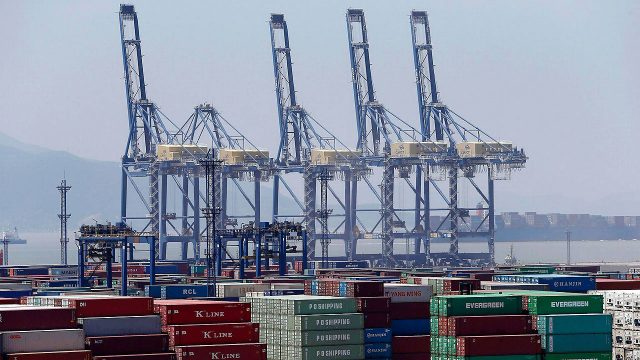
Exporters told to make allowances for China port delays

REUTERS

THE PHILIPPINE Ports Authority (PPA) is asking exporters and importers to make the necessary adjustments for delays caused by port closures in China.

Ningbo port, one of the largest in the world, is partially closed after a coronavirus disease 2019 (COVID-19) case was detected there, worsening congestion in several Chinese ports as ships divert from Ningbo.

“Preparation is key to reduce the negative impact of the delays in their overall daily operations\,” the PPA said.

The PPA noted that other major ports in the region have also reported congestion issues.

The congestion issues add to the current backlog in international trade. The global shipping industry has been facing a shortage of vessel space during the pandemic, pushing freight rates higher and delaying goods shipments.

“We need to prepare. Eventually, the delays in cargo shipments will catch up with us due to the congestion being experienced in these transshipment ports,” PPA General Manager Jay Daniel R. Santiago said.

“We are encouraging all importers and exporters to take the necessary steps to adjust and secure their operations to mitigate the impact of the slowdowns or partial closures of the big ports in their overall operations.”

PPA noted that major Philippine ports are not congested as they are operating below the utilization threshold of 75%. Manila ports that handle 85% of the country’s foreign trade volume are operating as normal, the PPA added.

“PPA assures the shippers that Philippine ports can handle the bulk of the delayed shipments when conditions at the transshipment ports start to normalize,” Mr. Santiago said. — Jenina P. Ibañez

Outlook for upstream energy industry ‘bleak’ as Malampaya winds down

BW FILE PHOTO

FITCH SOLUTIONS Country Risk & Industry Research said it has a “bleak” outlook for the Philippine upstream energy sector, citing the continuing decline in the Malampaya gas field’s reserves and lack of investment in exploration.

“The Philippines’ crude oil and natural gas production remain in freefall under the weight of natural declines and underinvestment in new exploration. The current dire situation poses significant risks to the Philippines’ future energy supply security given how reliant it is on oil and gas for power generation, industrial processes and transportation,” Fitch said in a note Wednesday.

It said output has been “broadly declining” starting 2010, due to the accelerating decline of the Malampaya gas field and a lack of significant discoveries to supplement it.

Fitch deems the imminent depletion of the country’s only indigenous gas field as “problematic,” since the Malampaya project accounts for 30% of Luzon’s power generation. Its services 20% of national demand.

“The gradual reduction in gas production from the field is already driving up consumer electricity costs and causing rotational power outages across the islands; a complete stoppage without replacements in place would prove to be highly damaging for businesses and end-users alike,” it said.

The accelerating decline in the Malampaya field’s output has spurred liquefied natural gas import projects across the country, but they face delays in completion due to the restrictions brought about by the global health emergency, regulatory processes and rising competition from renewables, it added.

Fitch contends that dry natural gas production has been declining since 2020, and will continue to do so until 2027. Meanwhile, the production of crude oil, NGPL (natural gas plant liquids) and other liquids are likely to remain relatively steady until 2030.

Meanwhile, offshore exploration in the West Philippine Sea (WPS) remains a challenge for the country as it faces opposition from China due to the latter’s territorial claims, preventing exploration activity in petroleum blocks in the area, it said.

Despite the recent lifting of the moratorium on oil and gas exploration in the WPS, the Philippines has not embarked on any new activity, though “a growing numbers of firms (are) keen to rekindle interest.”

Energy Secretary Alfonso G. Cusi has said that his department endorses the award of three unnamed service contracts, which are now being reviewed by President Rodrigo R. Duterte.

“As a prospective market to target for investors, however, the Philippines is highly interesting given the large, energy-hungry domestic market and ample trade opportunities throughout the region. Although for now most seem content to wait it out (until) maritime tensions dissipate and below-ground potential to become more concrete,” Fitch said. — Angelica Y. Yang

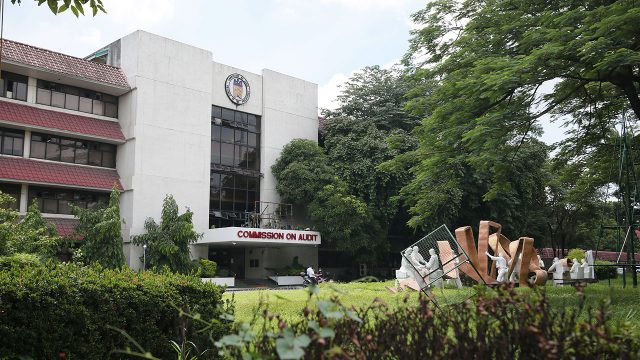
CoA says Agri dep’t failed to spend P9.8 billion 

GOVERNMENT AUDITORS said the Department of Agriculture (DA) left about P9.8 billion unused in 2020 due to bid failures, incomplete procurement documentation, and the difficulties encountered in moving projects forward due to the pandemic.

The Commission on Audit (CoA) said the Department of Agriculture (DA) disbursed P49.25 billion or 83.4% of its P59.06-billion budget, with the balance of P9.8 billion reverting to the Treasury.

In its audit report for 2020 made public on July 13, CoA said many cases of underutilized budgets were due to the failure to submit to local government units billing statements and documents required to process claims, and slow fund disbursement of funds.

It noted quarantine constraints impeding work at the DA head office, the Philippine Rural Development Project and Bureau of Agriculture and Fisheries Engineering.

Lapses were also found in DA regional offices due to delayed or failed procurement exercises, documentary shortcomings to effect payment from local government units or farmers, inadequate planning, and adverse weather particularly in the Soccsksargen region.

DA offices disbursed P588.05 million or 83.9% of theirs P700.73-million allocation for the Provision of Agricultural Equipment and Facilities program, which is part of a broader effort to make rice cultivation more competitive.  

Auditors found “deficiencies” worth P82.15 million in the DA’s Ilocos Region field office, such as partial delivery of machinery in violation of contract terms, non-submission of memoranda of agreement and supporting documents covering spending items, and requests for changes in delivery locations stipulated in the contract.

“Due to the above deficiencies, the expected benefits from the projects, activities, programs funded from the government funds were not fully realized to the disadvantage of the intended beneficiaries,” CoA reported.

Auditors recommended that the DA “plan and strategize to ensure timely implementation of programs and projects” to provide benefits and services to concerned sectors especially during the time of pandemic.

They also recommended that DA agencies maximize the use of disbursements and stay compliant with government budgeting rules. CoA urged the agencies to keep stakeholders informed of the documentary requirements to participate in government programs.

DA Spokesman Noel O. Reyes said via text message Wednesday that the COA has given the department 60 days from receipt of the report — June 30 — to respond to the findings.

“We have until Aug. 29 to make the reply. We are in the process of crafting the updates,” he added. — Russell Louis C. Ku with Revin Mikhael D. Ochave

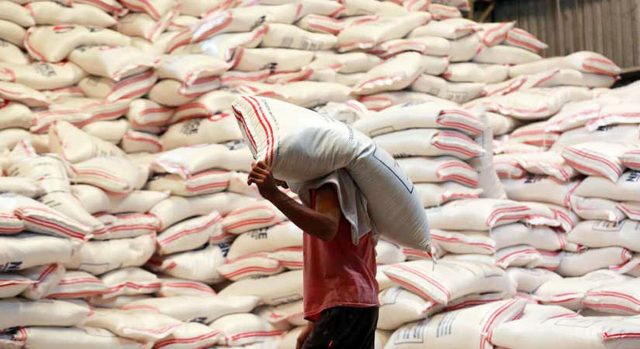
Average retail price of regular-milled rice falls in five regional centers  

PHILIPPINE STAR/ MICHAEL VARCAS

THE AVERAGE retail price of regular-milled rice fell in five regional centers at around mid-July, according to the Philippine Statistics Authority (PSA).

The PSA said in a report Wednesday that the average retail price of regular-milled rice during the period dropped P2 to P32 per kilogram (/kg) in Pagadian City, 42 centavos to P39.08/kg in Tacloban City, 10 centavos to P36.50/kg in Butuan City, 10 centavos to P42.70/kg in Cebu City, and 7 centavos to P38.15/kg in National Capital Region (NCR).

According to PSA, the price sampling period took place in what it calls the second phase of July, which is between July 15 and 17 period. The first phase was July 1-5.

The average retail price of regular-milled rice rose 40 centavos to P34.30/kg in Baguio City, 11 centavos to P35.12/kg in Legazpi City, and 16 centavos to P37/kg in Kidapawan City.

The average retail price for a kilogram of bone-in pork declined in seven regional centers during the second phase.

Pagadian City prices fell P20 to P220/kg, followed by Baguio City, where they dropped P10 to P280/kg, Butuan City, P5 to P255/kg, Cabanatuan City, P5 to P330/kg, Legazpi City, P5 to P315/kg, Iloilo City, P5 to P250/kg, and NCR, 22 centavos to P319.11/kg.

Prices rose by P10 in Tuguegarao City to P320/kg.

The average retail price of galunggong (round scad) fell in five regional centers.

Galunggong sold in Tuguegarao City fell by P20 to P180/kg, by P15 to P140/kg in Pagadian City, by P15 to P145/kg in Legazpi City, by P10 to P160/kg in Iloilo City, and by P10 to P170/kg in Baguio City.

The average retail price of galunggong rose P8.67 to P218.67/kg in the NCR, P15 to P155/kg in San Fernando City, and P10 to P160/kg in Kidapawan City.

The PSA said the average retail price of red onion dropped in four regional centers.

San Fernando City posted the sharpest drop in price at P20 to P100/kg, followed by Pagadian City with P15 to P120/kg, Butuan City, P10 to P135/kg, and NCR, 89 centavos to P108.89/kg.

The average retail price of red onion rose P20 to P120/kg in Legazpi City, P10 to P110/kg in Iloilo City, and P5 to P100/kg in Baguio City. — Revin Mikhael D. Ochave  

TransCo proposes FiT-All rate of P0.3320/kWh

THE NATIONAL Transmission Corp. (TransCo) has asked the energy regulatory to approve its proposed feed-in tariff allowance (FiT-All) rate of P0.3320 per kilowatt-hour (kWh) for 2022 billing periods.

According to a posting on the Energy Regulatory Commission’s (ERC) website, TransCo submitted supporting documents for its proposed rate, including its computations.

The FiT-All is a uniform charge billed to on-grid customers, which is calculated and set annually. It is collected from consumers and remitted to TransCo, which controls the FiT-All fund. TransCo then distributes FiT-All payments to renewable energy developers.

TransCo also proposed an alternative FiT-All rate of P0.3165/kWh which takes into consideration the projected increase in power sales this year as the economy picked up.

TransCo said that it is also open to revising the FiT-All rate based on evidence presented during further deliberations with the ERC.

“TransCo (also asks to) be exempt from payment of permit/supervision fees if any,” it added.

The ERC said it will hold separate hearings on the suggested FiT-All rate on Oct. 12, Oct. 19, Oct. 26 and Nov. 3 via video conferencing.

Last year, the ERC approved a FiT-All rate of P0.0983/kWh, which TransCo began collecting in January. — Angelica Y. Yang

2,400% tax hike on private schools

With the passage of Republic Act (RA) No. 11534 (also known as the Corporate Recovery and Tax Incentives for Enterprises Act or CREATE) in March 2021, companies were given a breather from the substantial losses they sustained due to the pandemic. The legislation intends to cushion the devastating impact on businesses by reducing the tax rates from 30% to 25% (or 20% for small and medium enterprises who meet certain parameters).

To alleviate the losses sustained by schools, CREATE also reduced the tax rates for proprietary educational institutions to 1% (from the standard 10% rate) for three years, from July 2020 until June 2023. However, when the Bureau of Internal Revenue (BIR) issued Revenue Regulations (RR) No. 5-2021 last April, the term “proprietary” schools led to confusion.

According to the BIR, only non-profit private schools can avail of the lower rate of 1%. Thus, profit-based private schools are subject to the 25% rate for businesses, denying them the benefit of the 10% preferential tax rate under the Tax Code. The disparity between the 1% and 25% rates is equivalent to a 2,400% hike.

Thankfully, on July 28, the BIR issued RR 14-2021, suspending the implementation of RR 5-2021, particularly the onerous provisions on the tax treatment of private schools. However, while the suspension is a welcome development, private schools cannot fully celebrate yet until the BIR issues another regulation revoking the contested provisions of RR 5-2021. Pending such an issuance, the following are some points that the BIR may consider in reversing its prior pronouncement on private schools.

CREATE TO ACCELERATE, NOT DEBILITATE
One of the policy statements of CREATE is to “provide support to businesses in their recovery (from) unforeseen events such as an outbreak of communicable diseases or a global pandemic.” The legislative intent is to alleviate the losses encountered by businesses and accelerate their recovery rather than add further burdens.

RR 5-2021, however, appears to contradict this goal. Profit-based private schools have been singled out as subject to a rate hike, while other companies, which are likewise profit-oriented, enjoy reduced rates. Worse, their tax rate will increase from the current 10% to 25%, an onerous imposition that debilitates recovery efforts.

Several lawmakers from both chambers of Congress have expressed their objections through House Bill No. 9913 and Senate Bill No. 2272, both now under discussion. The bills seek to amend Section 27(B) of the Tax Code, allowing private schools to avail of the 1% preferential rate granted under CREATE.

CONTRADICTION IN TERMS
The crux of the dilemma is that RR 5-2021 defines proprietary educational institutions as referring to non-profit private schools.  Under the law, private schools may be classified into two types, either: 1. proprietary (stock corporations) or 2. non-stock/non-profit. The classification is culled from Article XIV, Section 4(3) of the 1987 Constitution that states, “All revenues and assets of non-stock, non-profit educational institutions used actually, directly, and exclusively for educational purposes shall be exempt from taxes and duties. Proprietary educational institutions, including those cooperatively owned, may likewise be entitled to such exemptions subject to the limitations provided by law including restrictions on dividends and provisions for reinvestment.”

To define a proprietary educational institution as non-profit in nature is incongruous — one term contradicts the other. Thus, the BIR must ultimately revoke or amend RR 5-2021 to address this ambiguity.

ABUSE OF POWER
The law takes precedence over administrative regulations in case of a conflict. The BIR cannot legislate by imposing conditions or requirements beyond the scope of the law, such as modifying term definitions, in this case. 

Ultra vires acts or those beyond one’s legal authority are invalid. In 2020, the Supreme Court declared as void Revenue Memorandum Circular (RMC) No. 65-2012, which imposed income tax and VAT on dues and other fees paid by condominium unit owners. The Supreme Court found the BIR to have exceeded its authority by expanding the list of taxable items under the Tax Code, which did not include association dues and other fees.

The High Court applied the legal principle that a law should not be construed as imposing a tax unless it states so clearly and expressly. In case of doubt, tax laws must be construed strictly against the government and in favor of the taxpayer.

WHAT’S NEXT FOR PRIVATE SCHOOLS?
If higher tax rates are imposed, private schools stand to suffer financial distress. Doing so in an economic recession may break the camel’s back, triggering their closure.

Although understandably, the BIR is trying to identify other sources to replace the revenue lost due to the decrease in corporate tax rates under CREATE, personally, it is unacceptable for private schools to become the sacrificial lambs. Not only because the government must prioritize education as one of its constitutional mandates, but also because increasing the tax rates for private schools is not a fair or “win-win” solution.

If more schools shut down due to the increased tax rates, teachers will lose their jobs, and students denied access to education. Also, if private schools increase tuition to cover taxes, financially hard-up parents may ask their children to drop out of school or transfer to already saturated public schools. As an academic partner of the government, private schools provide an alternative to public school education and enable substantial savings by diverting costs from the education budget. Likewise, if private schools close, tax collection is further reduced since the BIR will lose the taxes these establishments would have paid had they continued to operate. In all scenarios, business and economic recovery will not happen.

I hope the BIR soon issues a favorable and sustainable solution to this issue as soon as possible to save the private education sector, and especially the education of our children, the hope of the country.

The views or opinions expressed in this article are solely those of the author and do not necessarily represent those of Isla Lipana & Co. The content is for general information purposes only, and should not be used as a substitute for specific advice.


Edmund James E. Opinio is a Senior Associate at the Client Accounting Services Department of Isla Lipana & Co., the Philippine member firm of the PwC network.

edmund.james.opinio@pwc.com

DoH reports 11,000 more coronavirus cases

By Kyle Aristophere T. Atienza, Reporter

THE DEPARTMENT of Health (DoH) reported 11,085 coronavirus infections on Wednesday, bringing the total to 1.78 million.

The death toll rose to 30,623 after 161 more patients died, while recoveries increased by 11,628 to 1.64 million, it said in a bulletin. 

There were 105,151 active cases, 96% of which were mild, 1% did not show symptoms, 1.3% were severe, 0.91% were moderate and 0.7% were critical.

The agency said 265 duplicates had been removed from the tally, 259 of which were recoveries. Seventy-four recoveries were tagged as deaths. Nine laboratories failed to submit data on Aug. 16.

Meanwhile, health authorities said the government would prioritize the housemates of seniors and seriously ill people for vaccination.

Under the policy, one housemate would be allowed to get a coronavirus vaccine shot, Health Undersecretary Maria Rosario S. Vergeire told a virtual forum on Wednesday.

The vaccination strategy was adopted as the country struggles to inoculate its entire adult population amid a fresh spike in coronavirus infections believed to be triggered by the highly contagious Delta variant.

Ms. Vergeire also reiterated that experts do not yet recommend that children get vaccinated against the coronavirus.

Vaccinating people as young as 19 could deprive eligible people higher in the government’s priority list, she said.

Older and seriously ill people who are more likely to die from the coronavirus should be prioritized, Ms. Vergeire said. She added that vaccinating vulnerable adults would also protect children and other people from getting infected.

People should use surgical masks in areas that are experiencing a spike in infections, she said, citing the World Health Organization.

Medical-grade masks offer better protection against the coronavirus because they are designed to filter organisms in the air, she said. Those who can’t afford to buy surgical masks could still use cloth masks, she added.

In a related development, vaccine Czar Carlito G. Galvez said supply issues had delayed the approval of multi-party deals between the government and entities seeking to buy coronavirus vaccines.

The agreements for the purchase of vaccines made by Moderna, Inc., AstraZeneca Plc and Janssen Pharmaceuticals have been either put on hold or left unsigned because the state is no longer accepting vaccine orders for now through these deals, he said in a statement.

Senator Juan Miguel F. Zubiri earlier asked the chamber to look into why the vaccine order requests of 42 local government units and about 300 private companies have been left unsigned.

Mr. Galvez said Sinovac Biotech Ltd., Pfizer, Inc. and Russia’s Gamaleya National Center of Epidemiology and Microbiology “intend to prioritize the orders of the National Government given current supply constraints.”

He added that Novavax, Inc.  had yet to receive an emergency use authorization from the Food and Drug Administration.

The vaccine made by India’s Bharat Biotech International Limited had yet to be approved by the Health Technology Assessment Council, and the government is worried about potential overpricing, he said.

Local governments must “face the reality that vaccine makers are still not able to produce at a level that would meet the requirements of all nations,” Mr. Galvez said. “The issue is not just about having the resources to procure the vaccines but its limited supply in the world market.” 

A more contagious Delta coronavirus variant has worsened the pandemic situation in the Philippines, with 16% of its hospitals nearly full, Fitch Solutions Country Risk and Industry Research said this week.

Of 1,291 hospitals in the country, more than 200 have reached critical levels amid a fresh surge in infections spurred by the Delta variant from India, it said in a report.

Twenty-five of 159 hospitals in Metro Manila, which is under a strict lockdown from Aug. 6 to 20, are also nearly full, it added.

The slow vaccine rollout and setbacks in containing the pandemic would delay the country’s goal of achieving universal healthcare, it added.

Ms. Vergeire on Tuesday said coronavirus infections nationwide increased by 45% in the previous week.

The spike was being felt in the National Capital Region, Central Luzon, Southern Tagalog, Western Visayas and Central Visayas. Rising infections were being experienced across all age groups, she added.

There was a 74% increase in infections among children aged up to nine years, and a 60% increase among kids aged 10 to 19 years, she said.

CoA flags nonpayment of P333-M concession fees for rail project

PHILIPPINE STAR/ MICHAEL VARCAS

By Russell Louis C. Ku

LIGHT Rail Manila Corp., which operates two of three rapid transit systems in Metro Manila, owes the government P332.9 million in concession fees, according to state auditors.

In a report released on Tuesday, the Commission on Audit (CoA) said the company had failed to pay the fees for the Light Rail 1 (LRT 1) Cavite extension project for five straight quarters through Oct. 2020.

State auditors said the concession payments for the project were supposed to be paid in two installments of P935.01 million by Oct. 2, 2014 and Sept. 12, 2015 — the signing and effective dates of the contract.

The rest of the concession payments worth P7.48 billion are to be paid quarterly starting Oct. 30, 2019.

The Light Rail Transit Authority (LRTA) “should immediately demand the amount which is already due,” the commission said.

In an audit comment, the LRTA said it asked the Transportation department in October to send a notice of demand against Light Rail Manila Corp.

The company had been regularly paying concession fees to the government, spokesperson Jacqueline Gorospe said in a Viber message on Wednesday. “We offset our claims with the concession fees due, which is an allowed formula in our concession agreement,” she said.

The LRT 1 Cavite extension project is a P64.9-billion public-private partnership venture that the National Economic and Development Authority board approved in Nov. 2013. It seeks to extend the existing rail network by 11.7 kilometers by adding eight stations from Baclaran to Bacoor, Cavite.

The 32-year concession contract was awarded to Light Rail Manila, a joint venture of Ayala Corp., Metro Pacific Light Rail Corp. and Macquarie Infrastructure Holdings (Philippines) Pte. Ltd.

Metro Pacific Investments Corp., which owns Metro Pacific Light Rail, is one of three Philippine units of Hong Kong’s First Pacific Co. Ltd. The others are PLDT, Inc. and Philex Mining Corp.

Hastings Holdings, Inc., a unit of PLDT Beneficial Trust Fund subsidiary MediaQuest Holdings, Inc., maintains an interest in BusinessWorld through the Philippine Star Group, which it controls.

Philippines, Australia sign deal to boost defense relations

THE PHILIPPINES and Australia on Wednesday finalized a mutual logistics support deal that seeks to further strengthen their defense ties and improve their response to regional security challenges.

“As Australia and the Philippines face a rapidly evolving strategic environment, seeking new opportunities like this is increasingly important for deepening defense engagement,” Australian Ambassador to the Philippines Steven J. Robinson said in a statement.

“It will be easier for both countries to respond to humanitarian disasters in our region together,” he added.

Mr. Robinson said the deal provides a framework for the Philippines and Australia’s defense organizations to conduct more complex engagements and enhance interoperability in practical ways.

“Our cooperation promotes our shared vision for a peaceful, inclusive and resilient region of sovereign states,” he added.

The Philippines and Australia are celebrating their 75th year of diplomatic relations. — Alyssa Nicole O. Tan

CoA 2020 report: More disparities found in TESDA funds; DICT procurement questioned 

STATE AUDITORS found discrepancies in the Technical Education and Skills Development Authority’s (TESDA) distribution of emergency funds meant for scholarship programs against actual enrollment and graduate numbers.  

The Commission on Audit (CoA), in its 2020 audit report released Monday, said the funds allotted to TESDA under Bayanihan II, the second law passed for pandemic-related response measures, were meant to be used for “retooling, retraining, and upskilling of target beneficiaries” under its Training for Work Scholarship Program (TWSP).   

However, the disbursement did not translate to enrollment numbers as reported by TESDA’s Scholarship Management Division.  

Citing TESDA’s Financial Accountability Report, CoA said the agency reported a 96% percent obligation rate and a 66% disbursement rate with P768.55 million transferred to regional offices. This amount is part of the P950 million that was allotted to the agency under Bayanihan II or the Bayanihan to Recover as One Act under Republic Act 11494.   

Auditors noted that this reported amount did not match with numbers from TESDA’s Scholarship Management Division, which saw only 33,555 scholars enrolled in their programs or 59% of the allocated 57,000 slots. The number of graduates were only 3,139 or 9% of actual scholars enrolled.     

CoA noted that TESDA’s central office “simply allocated P3 million per congressional district [or] party-list,” defeating the purpose of the funds of its original purpose under Bayanihan II. 

At the same time, CoA recognized the “short validity” of the allotments.   

“Although the program implementation was extended up to June 30, 2021, the actual full utilization of the funds and realization of the objective of the program… may not be attained since the release of funds for (regional offices) was not based on the actual needs or the expected number of targeted beneficiaries per district [or] region,” CoA reported.  

CoA recommended for TESDA to direct its offices to properly coordinate and observe timelines and streamline the processing system to expedite the release of funds with approved regional qualification maps.    

They also told TESDA to be prudent in determining beneficiaries and allocating scholarship funds and instruct regional offices to release funds based only on reported actual due and demandable accounts. 

BusinessWorld has reached out to TESDA for a comment on the matter but has yet to receive a reply. 

On the questioned fund transfers of P160.08 million to its regional offices for the implementation of programs under the National Task Force to End Local Communist Armed Conflict, TESDA Director-General Isidro S. Lapeña said late Tuesday that the agency has “existing protocols to ensure proper and lawful disbursement of funds.”   

State auditors cited that these transfers have a “lack of proper authority [or] legal basis and the absence of appropriate guidelines as to how this fund will be utilized,” that could lead to charges for technical malversation of public funds.    

“For the information of the public, TESDA chairs the Poverty Reduction, Livelihood, and Employment Cluster as well as the Regional Task Force to End Local Communist Armed Conflict (in Soccsksargen region,” he said in a statement.  

Mr. Lapeña also said that TESDA is currently coordinating with CoA to resolve the lapses and will release a detailed report on the matter as soon as possible.    

DICT
Meanwhile, the Department of Information and Communications Technology (DICT) defended that its procurement of laptops and gadgets were for education projects undertaken with local government partners.  

The gadgets given by local government units to student beneficiaries would improve education service delivery, DICT said in a statement on Wednesday. 

The Commission on Audit (CoA), in its 2020 audit report, questioned the DICT’s purchase of P170 million worth of gadgets from a construction firm. 

The department bought 1,000 laptops, 26,500 tablets, and 1,001 pocket WiFi units from Lex-Mar General Merchandise and Contractor.  

Providing information and communications technology (ICT) devices to beneficiaries is not part of DICT’s mandate, CoA said. 

The DICT, however, said that its role includes ICT resource sharing and improving public access to the Internet.  

As it implements its policies, DICT works with various government agencies to promote ICT education through various projects, the department added.  

“Through these initiatives, we aim to be more responsive to the needs of our students under the online and blended learning modalities as face-to-face classes are currently suspended during this public health emergency,” DICT Secretary Gregorio B. Honasan II said.  

CoA had also noted the construction firm, Lex-Mar, has no documents proving that it’s in the business of supplying ICT devices and that its current assets were below the P170-million DICT contract.  

In response, DICT said that Lex-Mar is also a wholesaler of office supplies and equipment that has also worked with the Quezon City local government on laptop and computer procurement.  

“Recent financial statements also indicate that the bidder’s revenue or income exceeds and is capable of sustaining its operations, costs and expenses. This sufficiently shows that Lex-Mar is capable of generating sufficient funds and revenue through various types of activities,” DICT said. — Russell Louis C. Ku and Jenina P. Ibañez 

Comelec rejects calls to extend voter registration period, but longer hours OK’d 

THE COMMISSION on Elections (Comelec) has rejected a proposal by lawmakers and non-government groups to extend the voter registration period beyond the Sept. 31 deadline, an official of the poll body said, citing timeline constraints and health issues.  

Comelec Spokesperson James B. Jimenez said the poll body’s en banc junked the petition because an extension may delay preparations for the 2022 polls.  

“The Commission is concerned that if we delay the end of voter registration, it will also cost corresponding delays in all other preparatory activities, especially those that depend on the finalization of the list of voters,” Mr. Jimenez told a virtual news briefing on Wednesday.  

The poll body also took into consideration the “health and safety” of its personnel and the public, he added.  

The poll body, however, has decided to extend voter registration hours and conduct enlistment even on Saturdays and holidays.  

Aabot tayo hanggang lampas alas-singko (We will go beyond the 5 p.m. schedule). The resolution will be coming out presently. We will get the details from there,” Mr. Jimenez said.  

Earlier in the day, Comelec commissioner Rowena Amelia V. Guanzon said in a tweet that the en banc extended the voter registration hours up to 7:00 p.m. on weekdays and up to 5 p.m. on Saturdays.  

Registration hours in areas under a general community quarantine and modified general quarantine are currently from 8 am to 5 pm on weekdays at local offices, and on Saturdays at satellite sites.  

Mr. Jimenez said enlisting would not be allowed in areas under enhanced and modified lockdown categories.  

“If ECQ (enhanced community quarantine) is extended, the suspension is likewise extended,” he said.  

Several lawmakers and civic groups earlier asked the Comelec to extend the registration by at least a month, citing the repeated suspension of enlistment activities due to the coronavirus-induced lockdowns. Deadlines for the registration of voters had been extended in past elections, they said. — Kyle Aristophere T. Atienza