Home Blog Page 7307

Delta surge pops Asia’s travel bubbles
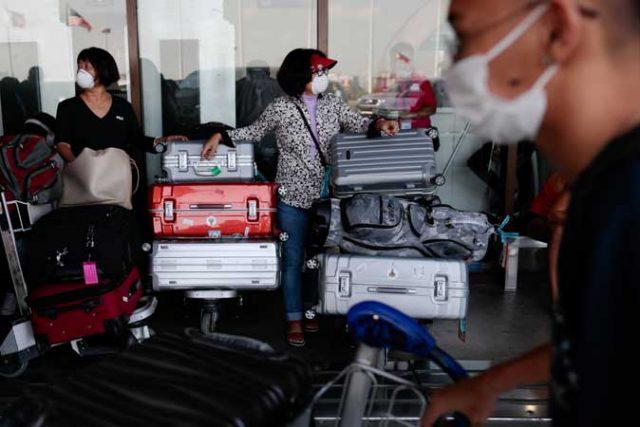
Fresh lockdowns and restrictions in Asia brought on by the faster-spreading delta coronavirus variant are making the region’s pursuit of travel bubbles look like an increasingly fruitless endeavor. 

Air-travel bubbles, corridors that allow movement between countries without the need for quarantine, have largely been a letdown as nations pull up the drawbridge again to contain outbreaks. A travel link between Singapore and Hong Kong, first mooted last year, has never actually gotten underway. Talks between Australia and Singapore are still ongoing while an arrangement between Australia and New Zealand has been stop-start at best and on Friday was halted for at least eight weeks. 

The patchy track record underscores how tough it will be for Asia to return to normal, with some economies clinging to a COVID-zero strategy, or a desire to stamp out the virus at all cost. Governments’ reliance upon strict movement controls to fight waves of infection — Melbourne last week entered its fifth lockdown while Tokyo is under a state of emergency as the Olympics dawns — is in contrast to the approach in Europe and the U.S., where the delta variant is spreading but where higher rates of vaccination mean travel is beginning to recover. 

LOCKDOWN EFFECT 

“Inter-regional travel is so important in Asia Pacific and everyone is watching each other at the moment,” said Gary Bowerman, director of travel and tourism research firm Check-in Asia. “Generally there just seems to be low levels of trust, very different rates of vaccination, very different rates of managing COVID-19.” 

That, in turn, makes forward planning extremely hard for airlines in Asia, he said. “The government regulations, the rules, the border issues  — they keep changing all the time.” 

VACCINES’ IMPACT  

The correlation between higher rates of inoculation and foreign travel is already starting to show up in the data. International capacity remains weak in countries where vaccination rates are low, such as Vietnam and Indonesia, according to flight tracking firm OAG.  

FEWER JABS, LESS TRAVEL 

With several nations in Asia unable to secure sufficient vaccine supply, containment via strict lockdowns has become many governments’ default response. A poll last week by OAG found that about half of respondents think a travel recovery in Asia will only happen by July 2022, another full full year away. 

“Personally, I think that’s verging on the optimistic,” said John Grant, chief analyst with OAG. “Asia is a real worry. Summer 2023 is a more realistic assessment.” 

Globally, the picture continues to improve. With school out in Europe, the Olympics about to get underway in Japan (albeit without spectators) and Indonesia gradually recovering from its latest Covid spike, aviation capacity climbed 2.3 percentage points over the past week. It stands around 70% of 2019 levels, according to Bloomberg’s weekly flight tracker, which uses OAG data to monitor the pulse of the comeback.  

U.S. traffic hit a pandemic-era record on July 18, with 2.23  million travelers passing through Transportation Security Administration check points, even as the country battled its own surge in the delta variant. 

European Union states have seen a steady pickup since last month, and have so far managed to keep travel links mostly open within the bloc. International visits are rising, too, with the number of travelers from the U.S. to Greece, Spain and Italy tripling over the past two months. 

The U.K. was set to join the rebound on July 19, the country’s so-called Freedom Day, when most internal restrictions were lifted and fully vaccinated British travelers returning from medium-risk countries — including most of the EU — no longer were required to quarantine. But a surprise retightening of the rules applied to those returning from France spoiled the reopening. 

The U.S. subsequently lifted its travel alert on the U.K., warning that a surge in cases puts even fully vaccinated Americans at risk if they visit. That snuffed out hopes raised by President Joe Biden last week that the U.S. might soon lift its travel ban on most European countries.  

WHICH SHOT? 

Another potential stumbling block for the recovery in Asia-Pacific is what restrictions countries will place on visitors based on the vaccine they’ve received. 

These questions are posing challenges for airlines as they try to make plans for the future, according to Bryan Foong, chief strategy officer at Malaysia Airlines. “We need a consistent framework across the globe” to make travel as convenient as possible, he told a CAPA Live webinar last week. 

AirAsia Group Bhd. CEO Tony Fernandes was more forthright, labeling Australia a “hermit kingdom” and saying it will be very painful for European and American travelers to come to Asia. 

DRAWBRIDGE UP 

“You can say Australia has managed itself very well from a health perspective, but no one wants to take a vaccine in Australia because there are no cases. There’s no incentive to take one. And now there’s an overreaction,” Fernandes said in reference to the country’s most-recent lockdown that’s snared Sydney, Darwin, Perth, Melbourne and now other parts of New South Wales. 

Knee-jerk reactions, snap lockdowns and case flareups are frustrating politicians and regular folk alike. Singapore Finance Minister Lawrence Wong said in a Facebook post that like many others, he felt disappointed and frustrated about the recent Covid-19 cases at karaoke lounges. That outbreak has more recently spilled over to a wholesale fish market and local food centers, prompting Singapore to re-enforce stricter measures for things like dining-in, gatherings and gymnasiums on Thursday. Many expats in Asia meanwhile are returning home. 

“It’s an enduring holding pattern and there seems to be no end to it,” Bowerman said. — Bloomberg 
Filinvest REIT’s IPO offer begins

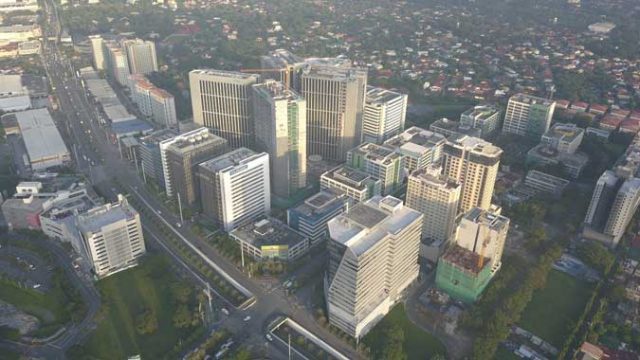
Northgate Cyberzone in Filinvest City is an 18.7-hectare PEZA-registered business park catering to mostly business process outsourcing companies. -- Company handout

Filinvest REIT, Corp. (FILREIT) started the offer period for its P12.6-billion initial public offering (IPO) on Friday, after receiving a permit to sell from the Securities and Exchange Commission.  

FILREIT is the real estate investment trust (REIT) unit sponsored by Filinvest Land, Inc. (FLI). It was formerly Cyberzone Properties, Inc.  

The offer period runs until Aug. 3. It is scheduled to make its debut at the Philippine Stock Exchange on Aug. 12, under the ticker symbol FILRT.  

FILREIT is selling 1.63 billion shares owned by the Gotianun-led property company  for P7.00 each, with an overallotment option of nearly 163.42 million.  

“At the current price, the projected dividend yield as stated in the REIT Plan is 6.3% for FY2021 and 6.6% for FY20221,” the company said in a statement on Friday.  

The company’s initial REIT portfolio includes 17 buildings, 16 of which are in Northgate Cyberzone in Alabang’s Filinvest City and office tower with a retail component in Cebu IT Park in Lahug, Cebu City.  

FILREIT said around 88% of its tenants are multinational business process outsourcing (BPO) firms.   

Meanwhile, shares of FLI at the stock market on Friday declined by 1.77% or two centavos to close at P1.11 each. — Keren Concepcion G. Valmonte 

Atlas Mining swings to profit in first half

https://www.atlasmining.com.ph/

Atlas Consolidated Mining and Development Corp. posted a P1.94 billion net income for the first six months of the year, a turnaround from the P190 million net loss seen a year ago, thanks to higher metal prices and better operations in the second quarter. 

“Metal prices rose in the second quarter this year with average copper price higher by 70% to $4.21/lb (pound) and gold price by 10% to $1,812/ounce compared to the same period last year,” the firm told the local bourse in a regulatory filing. 

Atlas Mining said its wholly owned subsidiary Carmen Copper Corp. reported higher copper production and shipments quarter-on-quarter on the back of improvements in grades and milling tonnage. 

Quarter-on-quarter, production of copper metal rose by 43% to 22.80 million lbs, while gold production increased by 9% to 5,829 ounces.  

However, copper production fell 28% year-on-year to 38.73 million pounds, “due mainly to the decrease in copper grades by 26%.” Gold production also slumped 51% year-on-year to 11,176 ounces, as gold grades fell.   

“Based on its improved earnings, efficient operations and positive outlook, Atlas Mining continues to improve its balance sheet,” the company said. 

Shares of Atlas Mining in the local bourse improved by 12.26% or 71 centavos to finish at P6.50 apiece on Friday.  — Angelica Y. Yang 

Max’s Group appoints new COOs for 3 brands

Max’s Group, Inc. announced two promotions to its executive leadership team as the listed restaurant operator focuses on business engagement and transformation.   

The company appointed Christopher Tiong as the chief operating officer (COO) of its Krispy Kreme and Jamba Juice brands, while Mark De Joya will take the seat as COO of its flagship Max’s Restaurant.  

Mr. Tiong has nearly a decade of experience in sales and marketing, having worked with multiple local and global companies. He was also previously the operations director for Krispy Kreme, Jamba Juice, and Yellow Cab Pizza Co.   

“With my new role in Max’s Group, I’m excited to share this mindset of continuous learning to help the company adapt and respond to whatever comes our way,” Mr. Tiong said in a statement.  

Meanwhile, Mr. De Joya brings with him nearly two decades of marketing experience. He has been with the Max’s Group since 2017.  

“I see this as an opportunity for me to connect the dots between my marketing and communications experience with deep commercial acumen to solve human problems and create valuable programs and systems for the people and customers of one of the most iconic brands in the Philippines,” Mr. De Joya said.   

Max’s Group also includes Max’s Corner Bakery, Max’s Kabisera, Pancake House, Yellow Cab Pizza, Teriyaki Boy, and Dencio’s. 

Shares of Max’s Group at the stock market declined by 3.18% or 20 centavos to end at P6.09 on Friday. — Keren Concepcion G. Valmonte  

Greenergy signs marketing services deal with Dito

Greenergy Holdings Inc. said on Friday that it will be providing marketing services to telecommunications player Dito Telecommmunity Corp. 

In a disclosure to the local bourse, Greenergy said that it signed a deal with Dito to provide online and offline lead generation services on a commission basis for the telco’s programs and services. 

The memorandum of arrangement will last for a year, subject to renewal. 

Lead generation services focus on marketing or capturing the interest of potential customers. 

“The company and Dito will also collaborate in other areas through co-marketing efforts to support the expansion of Dito’s client base and at the same time promote the company’s digital initiatives,” Greenergy said. 

The Tiu-led firm added that its collaboration with Dito will help in promoting the latter’s mobile subscription services among its existing clients, partners and affiliates. The partnership is also in line with Greenergy’s vision of building a digital ecosystem for the agricultural sector by 2030. 

Meanwhile, Greenergy said in a separate disclosure that it has acquired a total of P38.07 million secondary common shares in listed firm Agrinurture, Inc. through an open market purchase. 

Through the transaction, Greenergy now holds 10.86% or 111.30 million shares of the total issued and outstanding shares of the agricultural firm. 

On Friday, shares of the listed firm in the local bourse shed 12.24% or 36 centavos to close at P2.58 apiece. — Angelica Y. Yang 

UnionBank to issue social bonds

UNIONBANK of the Philippines, Inc. is set to issue social bonds to finance small business loans through a $150-million investment from the International Finance Corp. (IFC) 

The dollar-denominated bonds have a seven-year tenor and will be issued under the bank’s sustainable finance framework, the Aboitiz-led lender said in a statement. 

The deal is IFC’s first pandemic response social bond investment in Asia, which is expected to help create jobs in the MSME sector. 

“Our goal in issuing this bond is to support the recovery of micro-, small-, and medium-sized enterprises (MSMEs) from the coronavirus disease 2019 (COVID-19) pandemic. It could not have come at a better time, as this market segment has been hit particularly hard by the current crisis,” UnionBank Chief Financial Officer Jose Emmanuel U. Hilado was quoted as saying. 

“In the wake of the COVID-19 crisis, the use of social bonds to generate financing to meet the needs of vulnerable underserved people, including small businesses, will be critical to helping spur the recovery,” Alfonso Garcia Mora, Vice President, Asia and Pacific at IFC, said. 

UnionBank will use the proceeds from the bond issue to extend credit to over 2,000 MSMEs hit by the pandemic and boost available funding for MSMEs through the bank’s supply chain financing platform. 

The bonds conform with International Capital Markets Association (ICMA) social bond principles and the ASEAN Social Bond Standards, as confirmed by a second-party opinion provided by research and ratings company Sustainalytics.  

As of 2020, IFC has issued 53 social bonds in public and private markets in 11 different currencies. The World Bank Group unit has also backed 153 eligible projects worth $4.3 billion through its social bonds since 2017. 

UnionBank’s social bonds are the second of its kind to be issued in the country. In August 2020, Bank of the Philippine Islands raised P21.5 billion through its COVID-19 Action Response or CARE bonds also meant to help finance MSME loans. 

MSMEs made up 99% of the roughly one million business establishments in the country in 2018, based on data from the Department of Trade and Industry. They also accounted for 5.7 million or 63.19% of the new jobs that year. 

UnionBank’s net earnings jumped by 78% to P4.7 billion in the first quarter from a year ago. 

Its shares went down by 45 centavos or 0.59% to close at P76.05 apiece on Friday. — L.W.T. Noble 

BSP makes full award of short-term bills

BW FILE PHOTO

THE CENTRAL BANK fully awarded its offer of 28-day bills on Friday, with yields inching lower on investors’ strong appetite for safe assets due to concerns on the Delta variant of the coronavirus disease 2019 (COVID-19). 

The Bangko Sentral ng Pilipinas (BSP) awarded P100 billion as planned in one-month bills on Friday. Demand reached P162.51 billion, lower than the P186.61 billion in tenders seen in the previous auction. 

Lenders asked for yields ranging from 1.745% to 1.7705%, down from the 1.77% to 1.789% band logged at last week’s auction. This caused the average rate of the one-month paper to decrease by 2.42 basis points to 1.7602% from 1.7844% previously. 

The BSP bills and the term deposit facility are used by the central bank to gather excess liquidity in the financial system and guide market rates.  

Yields on the BSP securities declined due to safe-haven demand amid tighter restrictions imposed by the government amid a rise in Delta variant infections in the country, Rizal Commercial Banking Corp. Chief Economist Michael L. Ricafort said. 

The high bids for the BSP securities also reflect the excess liquidity in the financial system, Mr. Ricafort added. 

Presidential Spokesperson Herminio L. Roque, Jr. on Friday said Metro Manila will be under general community quarantine “with heightened restrictions” until July 31. 

There were 47 recorded cases of the Delta variant in the Philippines as of Thursday, where eight are active while three have died. — L.W.T. Noble 

Central bank orders LYKA to halt payment operations

THE BANGKO SENTRAL ng Pilipinas (BSP) has ordered social media platform LYKA to stop its operations as it is not registered as an operator of payment system (OPS). 

“The BSP has directed LYKA to suspend activities as an OPS and invited the company to apply for registration with the BSP before it is allowed to continue with its operator of payment system activities,” BSP Governor Benjamin E. Diokno said in a briefing on Friday. 

The central bank said in a statement that the operators of the app “have already expressed their willingness to register with the BSP as an OPS.” 

LYKA is a platform launched in the Philippines by a Hong Kong-based company that allows users to convert likes and the number of activities or posts by a user into Gift cards in Electronic Mode or GEMs that they can use to pay for goods or services at selected merchants. 

“The Monetary Board has ascertained that these activities make LYKA an OPS and it’s thus required to register with the BSP, yet to date, it is not registered with BSP,” Mr. Diokno said. 

Based on BSP regulations, OPS include cash-in providers, merchant acquirers, payment facilitators, payment gateways, platform providers, bills payment service providers and entities facilitating payments for goods and services. 

BSP Circular 1049 requires all OPS to register with the central bank as provided under Republic Act No. 11127 or The National Payment Systems Act.  

The central bank on Friday also reminded the public to transact only with BSP-registered OPS, which are listed on its website. 

COMPLAINTS ON FINANCIAL TRANSACTIONS 

Meanwhile, complaints related to financial transactions received by the Bangko Sentral ng Pilipinas reached nearly 12,000 in the first half of the year, Mr. Diokno said in the same briefing. 

“In 2021, around 31% were resolved in favor of the consumer, another 32% are still for evaluation in coordination with the client, while 21% is still awaiting action, or reply from the concerned financial institution,” he said. Complaints that were not resolved in favor of the client comprised only 13% of the total.” 

The central bank is also backing a law that will give it the power to adjudicate claims and impose restrictions on unreasonable charges by supervised institutions. 

The proposed Financial Consumer Protection Act will give financial regulators the authority to conduct hearings on money claims, significantly helping financial consumers recover justified losses from financial transactions faster. It will also give them power to determine reasonable interest rates, fees and charges.  

House Bill 6768 was already approved by the House of Representatives in June last year. Counterpart bills have been filed in the Senate and are currently pending in the committee level. — LWTN 

Peso down on Delta variant worries, tighter restriction measures

THE PESO weakened on Friday as the government reported more cases of the Delta variant of the coronavirus disease 2019 (COVID-19) in the country. 

The local unit closed at P50.34 per dollar on Friday, sinking by 20.5 from its P50.135 finish on Thursday, based on data from the Bankers Association of the Philippines.  

It also depreciated by 10.5 centavos from its P50.235-a-dollar finish last week. 

The peso opened Friday’s session at P50.10 against the dollar. Its weakest showing was at P50.35, while its intraday best was at P50.075 versus the greenback. 

Dollars exchanged declined to $804.6 million on Friday from $948.95 million on Thursday. 

The trader attributed the peso’s depreciation to escalating worries over rising Delta variant cases in the country. 

The Palace on Friday said Metro Manila will be under general community quarantine “with heightened restrictions” until July 31 to prevent the further spread of the Delta variant, which has already sickened 47 in the country. 

The Philippines has also expanded its travel ban on countries with rising cases of the Delta variant of COVID-19 to include Malaysia and Thailand. 

Meanwhile, Rizal Commercial Banking Corp. Chief Economist Michael L. Ricafort said the peso weakened as the dollar continued to strengthen against major currencies. 

The dollar was set to end the week with small gains after a turbulent few days when currencies were buffeted by shifting risk appetite, with the market’s focus now on next week’s US Federal Reserve meeting, Reuters reported. 

The dollar index was up 0.2% for the week, rising slightly on Friday to stand at 92.891. 

But that was off a 3-1/2-month high of 93.194 hit on Wednesday, after strong Wall Street earnings helped investors regain some of the confidence lost to earlier worries the Delta variant of the coronavirus could derail the global economic recovery. — LWTN with Reuters 

DBP grants P730-M loan for new Quezon hospital

COURTESY OF DBP FACEBOOK PAGE

DEVELOPMENT Bank of the Philippines (DBP) extended a P730-million loan for a new seven-storey hospital in Quezon to boost healthcare capacity in the province. 

The loan will be used for the construction and development of Allied Care Experts (ACE) Medical Center Sariaya, Inc. which will be the first Level 2 hospital in Quezon, the bank said in a statement. 

Healthcare institutions are placed under this classification when they provide facilities such as an intensive care unit and have specialist doctors. 

Once completed, the hospital will have a 104-bed capacity. It is projected to improve the bed-to-population ratio in Quezon to 1:1,134 from the current 1:1,175 ratio. Sariaya town currently has only two community hospitals with a total bed capacity of 30. 

“DBP supports this latest ACE project as it will help address the pressing need for higher quality medical care in Sariaya and the entire Quezon. Financing infrastructure projects that will produce a ripple effect in communities remains a top priority for DBP, especially during these challenging times,” DBP President and Chief Executive Officer Emmanuel G. Herbosa said in a statement. 

The Sariaya unit will be the ninth branch of ACE Medical Center nationwide. 

DBP, which has been designated as the country’s infrastructure bank by the government, saw its net income fall by 30.4% to P3.9 billion in 2020 from P5.6 billion in 2019 due to higher loan loss provisions and operating expenses. 

It is the sixth-largest bank in the country in terms of its assets with $1.042 trillion as of end-2020. — LWTN 

DoF says BIR, BoC digitalization efforts boosted tax administration

FINANCE SECRETARY Carlos G. Dominguez III — PRESIDENTIAL PHOTO/ TOTO LOZANO

THE EFFORTS of the Bureau of Internal Revenue (BIR) and Bureau of Customs (BoC) to digitize their processes helped them improve tax administration, Finance Secretary Carlos G. Dominguez III said on Thursday. 

“On the part of the Department of Finance, our revenue agencies have fully embraced digitalization. Through the help of the private sector, we have set up a number of e-payment and e-filing channels to improve tax collection and administration, curb corruption, and strengthen the business climate in the country,” he said in his speech at an online forum on Thursday. 

The BIR collected P1.034 trillion in the first half, exceeding its target for the period by 1.61%. Meanwhile, Customs also exceeded its P291.833-billion goal for the first half by 3.7% after collecting P302.74 billion. 

Mr. Dominguez said the improved electronic platforms of the BIR allowed almost 100% of taxpayers to file their annual income tax returns (ITRs) online. In 2015, only 10% of tax returns were filed electronically, he said. 

BIR data showed 1.43 million ITRs were filed electronically this year to account for 99.5% of total returns, up from 89.99% in 2020 and 80.38% in 2019. 

The surge in online filings started even before the pandemic, with the number of electronic filings growing from just 58.25% of total ITRs in 2018, 51% in 2017-2016, and 10% in 2015. 

Aside from ITRs, the BIR also allows electronic filing for other major tax types like value added tax (VAT) and percentage tax. It also offers online payment channels via the Development Bank of the Philippines’ PayTax Online, Land Bank of the Philippines’ Link.Biz Portal, UnionBank of the Philippines, Inc.’s online web and Mobile Payment Facility, and via mobile wallets GCash and PayMaya. 

“The Bureau of Customs, for its part, recently launched the Philippine Customs Modernization Project supported by the World Bank. This is a major step towards aligning our processes and standards with the best customs services in the world,” Mr. Dominguez said. 

The BoC launched the P5-billion project in March aiming to automate its processes to improve its tax administration, boost collection, enhance trade facilitation, and lower trade costs. 

Moving forward, the Finance chief said the government is still working on other programs to achieve its target to fully digitalize country’s tax system. 

He said the United States Trade and Development Agency is helping the BIR roll out digital reforms, while South Korea is assisting in the bureau’s plan to set up an electronic invoicing system. 

The government is also considering to replicate Russian Federal Tax Service’s VAT monitoring and collection scheme to help the BIR achieve “world-class tax administration.” 

“In our digitalization efforts, we always encourage close collaboration with the private sector. We believe that the private sector’s expertise and initiative to adopt digital innovations will help us anticipate the changes in the digital economy. The private sector can help us provide a more nurturing policy environment for fintechs,” Mr. Dominguez said. — Beatrice M. Laforga 

DoTr-TRB inks agreement for Marilao East Service Road construction

DEPARTMENT of Transportation (DoTr) Secretary Arthur P. Tugade — PRESIDENTIAL PHOTO

THE Department of Transportation (DOTr) via the Toll Regulatory Board (TRB) has inked a memorandum of agreement (MoA) for the construction of the Marilao East Service Road.   

The department is working with NLEX Corp., the Department of Public Works and Highways (DPWH), and the Marilao municipal government for the project, which will span from Barcelona Academy, Inc. in Barangay Lias to the Mario Santiago Road in Marilao, Bulacan.  

DOTr Secretary and TRB Chair Arthur P. Tugade signed the MoA along with DPWH Region 3 Director Roseller A. Tolentino, Bulacan Fourth District Representative Henry R. Villarica, NLEX President and General Manager J. Luigi L. Bautista, Marilao Mayor Ricardo M. Silvestre, and Meycauyan Mayor Linabelle Ruth R. Villarica.  

The Marilao East Service Road Project will take up a portion of the North Luzon Expressway’s (NLEX) right of way. The MoA lets the project use the area temporarily as it waits for DPWH Region 3 to acquire its own right of way lots for the permanent Marilao East Service Road.   

The areas covered by the project will still be part of NLEX and access will remain limited.   

“Subject to the terms and conditions, access to the NLEX may be reasonably regulated, restricted, or prohibited by the DOTr-TRB. At all times during the effectivity of this agreement, DPWH Region 3 and the government of Marilao in Bulacan shall exert its utmost efforts to abide by NLEX Corp.’s reasonable regulations regarding ingress to NLEX,” the MoA said. — KCGV