Home Blog Page 729

Chinese economy to exceed $23.8T by 2030, premier says
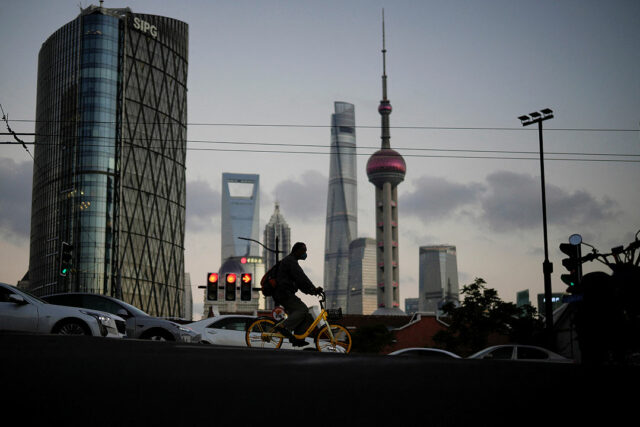
A man rides a bike on a street in Shanghai, China, Oct. 13, 2022. — REUTERS

SHANGHAI — Premier Li Qiang said on Wednesday that China’s economy will exceed 170 trillion yuan ($23.87 trillion) by 2030, presenting a big market opportunity for the world as trade restrictions rise globally.

In his speech at the opening ceremony of the China International Import Expo (CIIE) in Shanghai, Mr. Li criticized tariffs and said that China wanted to reform the global economic trading system to make it more reasonable and transparent, especially for developing countries.

Tariffs are “seriously undermining international economic and trade rules and also disrupting the normal operation of enterprises in various countries,” he said, without mentioning the United States.

“In five years, China’s economy is expected to exceed 170 trillion yuan, which will make new and important contributions to global economic growth,” Mr. Li added.

China has said its gross domestic product will top 140 trillion yuan this year, and the projection by 2030 is in line with proposals for its upcoming five-year plan that predicted annual growth of 4.17% over the next five years.

CIIE was launched under President Xi Jinping in 2018 to promote China’s free trade credentials and counter criticism of its trade surplus with many countries.

But the expo has its skeptics, as the country’s trade surpluses with other markets have only grown in the years since.

While China’s supply of manufactured goods to the world is growing, its contribution to global demand is less significant, with imports barely growing — a dynamic economists have said fuels trade tension abroad and deflationary pressure back home.

Global trade this year has been heavily disrupted by tariffs imposed by US President Donald J. Trump and have launched the US and China into a fresh trade war that has ebbed and flowed in tit-for-tat actions through this year.

Last week, Mr. Xi and Mr. Trump met in South Korea to reach a trade truce. The US agreed to reduce some tariffs on Chinese goods and pause some export controls, and China agreed to pause new export restrictions on rare earth minerals and magnets and resume purchases of American soybeans.

But analysts say it may be no more than a fragile truce in a trade war with root causes still unresolved.

Mr. Li in his speech said China wanted to increase its imports of high-quality products and repeatedly stressed that it was open to business and trade.

“Let enterprises from all over the world develop in China with more peace of mind, more comfort and more confidence,” he said.

China’s trade surplus is set to exceed last year’s record of roughly $1 trillion as exporters offset a plunge in US sales due to higher US tariffs by selling more to the rest of the world, often at a loss in pursuit of market share.

Exports to the US fell about 27% in September versus the same month a year prior, while shipments for the European Union, Southeast Asia and Africa grew 14%, 16% and 56% respectively.

More than 155 countries, regions and organizations plan to participate in this year’s CIIE, the commerce ministry said. Over 4,100 overseas enterprises will take part, with US companies maintaining the largest exhibition area for the seventh consecutive year. ($1 = 7.1230 Chinese yuan renminbi). Reuters

Democrats sweep first major elections of second Trump term

STOCK PHOTO | Image from Rawpixel

WASHINGTON — Democrats swept a trio of races on Tuesday in the first major elections since Donald J. Trump regained the presidency, giving the beleaguered party a shot of momentum as it looks ahead to the congressional midterm elections next year.

In New York City, Zohran Mamdani, a 34-year-old democratic socialist, won the mayoral race, capping a meteoric and unlikely rise from an anonymous state lawmaker to one of the country’s most visible Democratic figures. And in Virginia and New Jersey, Democrats Abigail Spanberger and Mikie Sherrill won the elections for governor with commanding leads, respectively.

Tuesday’s contests offered a barometer of how Americans are responding to Mr. Trump’s tumultuous nine months in office. The races also served as a test of differing Democratic campaign playbooks ahead of 2026, with the party locked out of power in Washington and still trying to forge a path out of the political wilderness.

That said, the midterm elections are a year away, an eternity in the Trump era. And the contests on Tuesday all unfolded in Democratic-leaning regions that did not support Mr. Trump in last year’s presidential election.

All three Democratic candidates emphasized economic issues, particularly affordability. But Ms. Spanberger and Ms. Sherrill hail from the party’s moderate wing, while Mr. Mamdani used a viral video-fueled insurgent campaign to present himself as an unabashed progressive and a new generational voice.

Mr. Mamdani, who will become the first Muslim mayor of the biggest US city, outlasted former Democratic Governor Andrew Cuomo, 67, who ran as an independent after losing the nomination to Mr. Mamdani earlier this year. Mr. Cuomo, who resigned as governor four years ago after sexual harassment allegations that he has denied, portrayed Mr. Mamdani as a radical leftist whose proposals were unworkable and dangerous.

In a sign of how Mr. Mamdani’s campaign had energized many voters, more than 2 million ballots including early voting were cast across the city, according to the board of elections, the most in a mayoral race since at least 1969.

Mr. Mamdani has called for taxing corporations and the wealthy to pay for ambitious left-wing policies such as frozen rents, free childcare and free city buses. Wall Street executives have expressed concern about putting a democratic socialist at the helm of the financial capital of the world.

Republicans have already signaled they intend to present Mr. Mamdani as the face of the Democratic Party. Mr. Trump has incorrectly labeled Mr. Mamdani a “communist” and vowed to cut funding for the city in response to Mr. Mamdani’s ascension.

In a social media post on Tuesday night, Mr. Trump blamed the losses on the fact his name was not on the ballot and on an ongoing federal government shutdown.

TRUMP LOOMS OVER RACES
Ms. Spanberger, who beat Republican Lieutenant Governor Winsome Earle-Sears, will take over from Republican Governor Glenn Youngkin in Virginia. New Jersey’s Ms. Sherrill defeated Republican Jack Ciattarelli and will succeed Democratic Governor Phil Murphy.

Both Ms. Sherrill and Ms. Spanberger had sought to tie their opponents to Mr. Trump in an effort to harness frustration among Democratic and independent voters over his chaotic tenure.

“We sent a message to the world that in 2025 Virginia chose pragmatism over partisanship,” Ms. Spanberger said in her victory speech. “We chose our Commonwealth over chaos.”

Mr. Trump gave both candidates some late-stage grist during the ongoing government shutdown.

His administration threatened to fire federal workers — a move with an outsized impact on Virginia, a state adjacent to Washington, DC, and home to many government employees. He froze billions in funding for a new Hudson River train tunnel, a critical project for New Jersey’s large commuter population.

In interviews at Virginia polling stations on Tuesday, some voters said Mr. Trump’s most contentious policies were on their minds, including his efforts to deport immigrants who entered the US illegally and to impose costly tariffs on imports of foreign goods, the legality of which is being weighed by the US Supreme Court this week.

Juan Benitez, a self-described independent, was voting for the first time. The 25-year-old restaurant manager backed all of Virginia’s Democratic candidates because of his opposition to Mr. Trump’s immigration policies and the federal government shutdown, for which he blamed Mr. Trump.

Separately on Tuesday, California voters were deciding whether to give Democratic lawmakers the power to redraw the state’s congressional map, expanding a national battle over redistricting that could determine which party controls the US House of Representatives after next year’s midterm elections.

In an echo of his false claims about the 2020 election, Mr. Trump called the California vote a scam on social media, suggesting the vote was rigged without providing evidence.

For Republicans, Tuesday’s elections served as a test of whether the voters who powered Mr. Trump’s victory in 2024 will still show up when he is not on the ballot.

But Mr. Ciattarelli and Ms. Earle-Sears, both running in Democratic-leaning states, faced a conundrum: criticizing Mr. Trump risked losing his supporters, but embracing him too closely could have alienated moderate and independent voters who disapprove of his policies.

Mr. Trump remains unpopular: 57% of Americans disapprove of his job performance, a Reuters/Ipsos poll showed. But Democrats are not gaining support as a result, with respondents evenly split on whether they would favor Democrats or Republicans in 2026. — Reuters

EU zones in on weakened climate target in final-hour deal for COP30, draft shows

REUTERS

BRUSSELS — European Union  (EU) climate ministers were close to agreeing a 2040 climate change target in the early hours of Wednesday, but watered down the goal in last-minute negotiations, a draft EU document showed, as they raced to clinch the deal before the United Nations Conference of the Parties (COP30) summit in Brazil.

After more than 16 hours of negotiations, climate ministers from EU countries were debating a compromise to cut emissions 90% by 2040, from 1990 levels, but with flexibilities to weaken this aim. The compromises included the option to buy foreign carbon credits to cover up to 5% of it, according to a draft of their negotiating document, seen by Reuters.

That would effectively weaken to 85% the emissions cuts required from European industries and pay foreign countries to cut emissions on Europe’s behalf to make up the rest.

The draft said the EU would also consider the option, in future, to let countries buy international carbon credits to meet a further 5% of their 2040 emissions reductions — potentially shaving another 5% off their domestic target.

In a further effort to win over skeptical countries, the draft compromise said the EU would weaken other politically sensitive climate policies, including delaying the launch of an upcoming EU carbon market by one year, to 2028.

Poland and the Czech Republic have opposed that policy, citing fears it could raise fuel prices.

Countries’ ministers were still discussing the draft. Diplomats said it was not immediately clear if it would win backing from the “qualified majority” of at least 15 of the 27 member states needed to pass the goal.

EU ministers planned to reconvene for formal talks later on Wednesday morning to vote on it.

Countries including France and Portugal had demanded the 5% carbon credits flexibility, while others including Poland and Italy sought 10%. Spain and the Netherlands were among those opposed to weakening the target further, EU diplomats told Reuters.

The EU is racing to agree its new climate goal to avoid going empty-handed to the COP30 climate summit, where European Commission President Ursula von der Leyen will meet other world leaders on Nov. 6.

“We have a lot at stake. We are risking our international leadership, which is fundamental in this extraordinarily complicated context,” Spanish Environment Minister Sara Aagesen told reporters on Tuesday.

OPPOSING VIEWS
The European Commission had originally proposed a 90% emissions-cutting target, with a maximum 3% share of carbon credits.

The dilution of the target reflects a backlash against Europe’s ambitious climate agenda, from industries and some governments skeptical that it can afford the measures alongside defense and industrial priorities.

“We don’t want to destroy the economy. We don’t want to destroy the climate. We want to save both at the same time,” Polish Deputy Climate Minister Krzysztof Bolesta said on Tuesday.

Poland, Italy, the Czech Republic and others opposed the original 90% target as too restrictive for domestic industries struggling with high energy costs, cheaper Chinese imports and US tariffs.

Others, including the Netherlands, Spain and Sweden, cited worsening extreme weather and the need to catch up with China in manufacturing green technologies as reasons for ambitious goals.

The EU’s independent climate science advisers have warned that buying foreign CO2 credits would divert much-needed investments away from European industries. — Reuters

Japan sends troops to combat deadly wave of bear attacks

MARIOMASSONE-EN.WIKIPEDIA.ORG

KAZUNO, Japan — Japan’s military deployed troops to the country’s mountainous north on Wednesday to help trap bears after an urgent request from local authorities struggling to cope with a wave of attacks.

The operation began in the town of Kazuno, where residents for weeks have been told to avoid the thick forests that surround it, stay home after dark and carry bells to deter bears that might forage near their homes for food.

There have been more than 100 bear attacks with a record 12 people killed across Japan in the year since April, according to the environment ministry. Two-thirds of those deaths were in Akita prefecture, where Kazuno is located, and nearby Iwate.

“As bears continue to enter populated areas in many regions and injuries from bear attacks increase daily, we absolutely cannot afford to put off bear countermeasures,” Deputy Chief Cabinet Secretary Kei Sato told a press conference in Tokyo on Wednesday.

Authorities in Akita say bear sightings have jumped six-fold this year to more than 8,000, prompting the prefecture’s governor to request help from Japan’s Self-Defense Forces last week.

An army truck, several jeeps, and more than a dozen soldiers, some carrying body armor, gathered on Wednesday morning in Kazuno, a town of around 30,000 people known for its hot springs, dramatic landscapes and variety of sweet apples.

The troops will help transport, set and inspect the box traps used to capture the bears, but the culling will be left to trained hunters with weapons more suited to that purpose.

ATTACKS IN SUPERMARKET, HOT SPRING RESORT
Rising bear numbers, climate change-driven shifts in natural food sources and depopulation of rural areas are increasingly bringing people into contact with bears in Japan. An ageing band of hunters that authorities once relied on is overwhelmed.

In recent months, bears have attacked customers inside a supermarket, jumped a tourist waiting at a bus stop near a UNESCO World Heritage site and mutilated a worker cleaning out a bath at a hot spring resort.

Japanese black bears, common across most of the country, can weigh up to 130 kg (287 pounds). Brown bears on the northern island of Hokkaido can weigh as much as 400 kg.

Japan previously deployed the military to assist in wildlife control around a decade ago when they provided aerial surveillance for hunts of wild deer. Elsewhere, the British army provided logistical support in the mass culling of animals infected with foot-and-mouth disease in 2001. — Reuters

China bans foreign AI chips from state-funded data centers, sources say

STOCK IMAGE | AdobeStock

The Chinese government has issued guidance requiring new data center projects that have received any state funds to only use domestically-made artificial intelligence chips, two sources familiar with the matter told Reuters.

In recent weeks, Chinese regulatory authorities have ordered such data centers that are less than 30% complete to remove all installed foreign chips, or cancel plans to purchase them, while projects in a more advanced stage will be decided on a case-by-case basis, the sources said.

The move could represent one of China’s most aggressive steps yet to eliminate foreign technology from its critical infrastructure amid a pause in trade hostilities between Washington and Beijing, and achieve its quest for AI chip self-sufficiency.

China’s access to advanced AI chips, including those made by Nvidia, has been a key point of friction with the US, as the two wrestle for dominance in high-end computing power and AI.

US President Donald Trump said in an interview aired on Sunday following talks with Chinese President Xi Jinping last week that Washington will “let them deal with Nvidia but not in terms of the most advanced” chips.

The latest move by Beijing, however, would dash Nvidia’s hopes of regaining Chinese market share, while giving local rivals, including Huawei, yet another opportunity to secure more chip sales.

It is unclear whether the guidance applies nationwide or only to certain provinces, sources said. The sources did not identify which Chinese regulatory bodies had issued the order. They declined to be named due to the sensitivity of the matter.

Besides Nvidia, other foreign chipmakers that sell data center chips to China include AMD and Intel.

The Cyberspace Administration of China and the National Development and Reform Commission, two of Beijing’s most powerful regulators, did not respond to requests for comment. Nvidia and AMD did not respond, while Intel declined to comment.

NVIDIA THE BIGGEST CASUALTY
AI data center projects in China have drawn over $100 billion in state funding since 2021, according to a Reuters review of government tenders. Most data centers in China have received some form of state funding to aid their construction, but it is not immediately clear how many projects are subject to the new guidance.

Some projects have already been suspended before breaking ground as a result of the directive, including a facility in a northwestern province that had planned to deploy Nvidia chips, one of the sources said.

The project, being developed by a private technology company that received state funding, has been put on hold, the source said.

Beijing has long been irked by Washington’s export controls aimed at impeding China’s tech progress and has taken a series of measures, including retaliatory moves, to wean itself off US technology.

The US has justified its restrictions by alleging the Chinese military would use the chips to increase its capabilities.

China discouraged local tech giants from purchasing advanced Nvidia chips over security concerns this year, while showing off a new data center powered solely by domestic AI chips.

And in 2023, Beijing banned the use of Micron’s products in its critical infrastructure, which paved the way for a decision this year by the largest US memory chipmaker to exit the server chip market in China, Reuters reported last month.

Nvidia CEO Jensen Huang has repeatedly lobbied Trump and his cabinet to allow the sale of more AI chips to China, arguing that keeping its superpower rival’s AI industry dependent on US hardware was good for America’s interests.

Its current share of the Chinese AI chip market is zero, compared to 95% in 2022, according to the company.

Excluding foreign chipmakers like Nvidia from big state projects would eliminate a significant portion of their China revenue, even as a deal is agreed to allow the resumption of advanced chip sales to China.

The new guidance on data centers covers Nvidia’s H20 chips, the most advanced AI chip the US firm is allowed to sell to China, but also more powerful processors such as the B200 and H200, the sources said.

While the B200 and H200 are barred from being shipped to China by US export controls, they remain widely available in China through grey-market channels.

BOON AND RISKS FOR DOMESTIC FIRMS
With the latest directive, the Chinese government is carving out even more market share for domestic chipmakers. China has a range of AI chip companies, from the most prominent, Huawei Technologies, to smaller players such as Shanghai-listed Cambricon and startups including MetaX, Moore Threads, and Enflame.

Products from these Chinese companies already rival some of Nvidia’s offerings, but they have struggled to crack the market. Developers used to Nvidia’s reliable software ecosystem have been reluctant to adopt domestic alternatives.

While the move would help boost sales of domestically developed chips, it also risks widening the US-China gap in AI computing power.

US tech giants like Microsoft, Meta, and OpenAI have spent or allocated hundreds of billions of dollars to build data centers powered by Nvidia’s most advanced chips.

Meanwhile, leading Chinese chip manufacturers like SMIC are facing supply constraints due to US sanctions on semiconductor manufacturing equipment that have hit advanced chip production capacity. — Reuters

Using drones for smart farming

Agridom Solutions, Inc. uses advanced drones to help local farmers overcome field challenges.

“When you observe farming practices, especially traditional ones, we just broadcast the fertilizer—even the seeding—randomly,” Agridom chief executive officer Dominador L. Subang told BusinessWorld.

“But with drones, it’s autonomous, automated and mapped,” he added.

Interview by Edg Adrian Eva
Video editing by Jayson Mariñas

Unprecedented volume of oil stored on ships due to Western sanctions, Gunvor CEO says

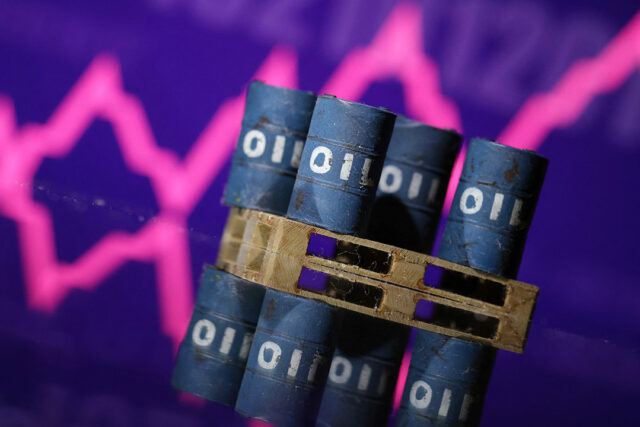
MINIATURES of oil barrels and a rising stock graph are seen in this illustration. — REUTERS/DADO RUVIC/ILLUSTRATION

ABU DHABI — Western sanctions on Russia and Iran are creating record volumes of oil stored onboard vessels, preventing a supply glut from forming in global markets, Gunvor Group’s CEO said on Wednesday.

The European Union, United Kingdom and the United States have imposed a raft of sanctions against Russia over its war in Ukraine, with the latest US embargo targeting Russia’s two top oil producers Rosneft and Lukoil last month.

Surplus oil supply has cushioned the impact of trade disruptions caused by the sanctions, keeping markets stable and reducing price volatility, Torbjorn Tornqvist, CEO of Swiss-based commodities trader Gunvor Group told the ADIPEC energy conference in Abu Dhabi.

However, the sanctions have also led to an “enormous amount” of oil that is dislocated and some of that is being held on tankers, he added.

“This is unprecedented, the size of that. Therefore, obviously, if all sanctions would disappear, this market would clearly be quite oversupplied,” Mr. Tornqvist said.

Global oil prices fell in October for a third month on fears of oversupply as the Organization of the Petroleum Exporting Countries and their allies are increasing output while production from non-OPEC producers is growing.

Oil supply could exceed demand by 2 million barrels per day next year, Mercuria’s CEO and co-founder Marco Dunand said at the conference, but added that Western sanctions remain a wild card in curbing supply.

“That probably means that from a 2 million barrels a day surplus we move more into the 1 million barrels a day surplus,” Mr. Dunand said.

“It is true that the (global oil) inventories are low. It is also true that oil on the water is high, so the (supply) glut is forming slowly and probably going to hit the market in the next few months.” — Reuters

Apple prepares to enter low-cost laptop market for the first time

APPLE, INC. is preparing to enter the low-cost laptop market for the first time, developing a budget Mac aimed at luring away customers from Chromebooks and entry-level Windows PCs.

The new device — designed for students, businesses and casual users — will target people who primarily browse the web, work on documents or conduct light media editing, according to people familiar with the matter. Apple is also targeting would-be iPad buyers who might prefer a traditional laptop experience instead.

Code-named J700, the machine is currently in active testing at Apple and in early production with overseas suppliers. The Cupertino, California-based company plans to launch it in the first half of next year, said the people, who asked not to be identified because the product hasn’t been announced.

An Apple spokesperson declined to comment.

The move would represent a strategic shift for Apple, which has historically focused on premium devices with hefty profit margins. The company also has vowed not to chase market share with lower-end offerings.

But Apple is facing a growing threat from Chromebooks, the low-cost laptops that run Google’s operating system, Chrome OS. There’s also a potential opportunity to entice Windows customers. Microsoft Corp.’s shift to Windows 11 has rankled some users of the previous-generation software and left them without security updates.

Shares of personal computer maker HP, Inc. briefly dipped to a session low on the news. The stock and that of fellow PC maker Dell Technologies, Inc. were both down about 2% as of 12:03 p.m. in New York. Apple gained less than 1% to $270.25.

Apple plans to sell the new machine for well under $1,000 by using less-advanced components. The laptop will rely on an iPhone processor and a lower-end LCD display. The screen will also be the smallest of any current Mac, coming in at slightly below the 13.6-inch one used in the MacBook Air.

This would mark the first time that Apple has used an iPhone processor in a Mac, rather than a chip designed specifically for a computer. But internal tests have shown that the smartphone chip can perform better than the Mac-optimized M1 used in laptops as recently as a few years ago.

Apple has long used iPhone chips to power the iPad but shifted those devices to its M-series processors for higher-end models a few years ago.

The company has previously experimented with the market by selling a discounted M1 MacBook Air for under $700 through Walmart, Inc. and other retailers. But the upcoming model will be an entirely new design, rather than a discounted older machine.

Apple’s cheapest Mac currently is the $999 M4 MacBook Air — a price that can drop to $899 with educational discounts. Chromebooks, meanwhile, sell for as little as a few hundred dollars, with premium versions reaching about $600.

In schools, Apple’s entry-level iPad paired with the Magic Keyboard Folio is a popular setup, costing roughly $600 combined. The new Mac would fall in a similar range but offer better battery life, the greater flexibility that comes with the macOS software and an integrated keyboard. That could appeal to students and consumers alike.

Apple held about 9% of the global PC market in the third quarter, according to IDC. It ranks fourth in the industry, trailing Lenovo Group Ltd., HP and Dell — all of which sell Windows or ChromeOS devices.

A much cheaper Mac that maintains Apple’s design and works smoothly with the company’s other products could spur a new wave of Mac adoption — particularly in the US, where the iPhone dominates.

Already, the Mac segment was the fastest-growing hardware category for Apple last quarter, rising 13% to $8.73 billion. That growth is expected to decelerate this quarter, but mainly because Apple will only have one new model in the period: the entry-level MacBook Pro with an M5 chip.

The company is planning a flurry of updates in 2026. Beyond the new low-end laptop, Apple has finished work on an M5 MacBook Air due early in the year, as well as M5 Pro and M5 Max-powered MacBook Pros.

Also on the road map: new M5 and M5 Pro Mac mini models and M5 Max and M5 Ultra Mac Studio updates. And there’s a revamped MacBook Pro with an M6 chip and an iPhone-style OLED touch screen planned for late 2026 or early 2027. Apple will debut two new external Mac displays as well. — Bloomberg

Subdued Philippine inflation leaves door open for BSP rate cut in December

A vendor waits for customers at a stall inside Commonwealth Market in Quezon City. — PHILIPPINE STAR/MIGUEL DE GUZMAN

MANILA – Philippine inflation stayed below the central bank’s target for the eighth straight month in October, giving it leeway to lower interest rates again next month to support economic growth.

Annual inflation held steady at 1.7% in October, as slower increases in the cost of food and transport offset the rise in utility, clothing and footwear prices, the statistics agency said on Wednesday.

Inflation in October, which was unchanged from the previous month, was below the 1.8% median forecast in a Reuters poll and less than the central bank’s 2.0% to 4.0% target band.

Goldman Sachs Research said in a note October’s inflation reading could allow for more monetary easing in December.

“We continue to expect the (Bangko Sentral ng Pilipinas) to cut policy rates by another 25 bp in the December 2025 meeting — taking the terminal rate to 4.50%.”

Manageable inflation allowed the BSP to cut its key policy rate for the fourth straight time in October.

Last month, BSP Governor Eli M. Remolona Jr said another rate cut was possible at the BSP’s final policy meeting in December and did not rule out further easing next year, backtracking on earlier guidance that the current cycle was nearing its end.

Excluding volatile food and energy costs, core inflation eased to 2.5% in October from the prior month’s 2.6%.

Contributing to easing food inflation was the 17% annual decline in rice prices, compared with the prior month’s 16.9%.

The Philippines has extended a ban on rice imports that took effect on September 1 until the end of the year to shield farmers from the impact of cheaper imported rice.

The central bank said in a statement after the data that risks to the inflation outlook were limited as price pressures were expected to ease amid stabilising global commodity prices.

However, it said the outlook for domestic economic growth had weakened. “This outlook reflects in part the impact on business confidence of governance concerns about public infrastructure spending,” it said.

“Going forward, the Monetary Board will continue to review newly available information and reassess the impact of prior monetary actions in light of evolving economic conditions and their implications for inflation and growth,” the central bank said.

Third quarter GDP data will be announced on Friday, and economists in a Reuters poll expect the economy to have expanded 5.2% from last year, weaker than the previous quarter’s 5.5%. — Reuters

Typhoon Tino leaves 66 dead, over 700,000 people affected

Philippine Coast Guard (PCG) personnel evacuating people in Cebu province on Nov. 4, 2025. — COAST GUARD DISTRICT CENTRAL VISAYAS FB PAGE

More than 66 deaths and over 700,000 affected individuals were reported following the onslaught of Typhoon Kalmaegi, locally known as Tino, which caused widespread flooding and massive destruction across the Visayas, particularly in Cebu, according to the Office of Civil Defense (OCD).

Diego A. Mariano, deputy spokesperson of the OCD, confirmed that 49 of the reported deaths were in Cebu, mainly due to fallen debris, landslides, and flooding, with some incidents still under investigation.

The six bodies recovered by the Philippine Air Force following a helicopter crash in Agusan del Sur on Tuesday were also included in the total death toll.

In the provinces of Bohol, Capiz, and Leyte, one death was reported in each, all caused by fallen trees.

The Negros Island Region also recorded seven deaths: two were due to fallen debris and drowning, while the causes of the remaining five are still under investigation

Mr. Mariano also confirmed a total of 26 missing individuals, with 13 in Cebu and another 13 in La Castellana, Negros Occidental.

There were also ten reported injuries caused by fallen debris and floodwaters, while the causes of the others have yet to be determined.

Following the onslaught of Typhoon Kalmaegi, a total of 706,549 individuals, or more than 203,000 families, were affected, the National Disaster Risk Reduction and Management Council (NDRRMC) said in its 6:00 a.m. situational report. The council is administered by OCD.

The report also said that most of the affected individuals were from Regions VI, VII, VIII, and CARAGA.

Affected families were already provided with over P31 million in estimated cost of assistance.

Meanwhile, the Department of Social Welfare and Development (DSWD) said that it has already distributed more than 123,000 boxes of family food packs and 1,652 boxes of ready-to-eat goods to areas largely affected by the typhoon as of 6:00 a.m. Wednesday.

The NDRRMC also said that more than 50 cities and municipalities remain without electricity, while power has been restored in 11 areas as of 6:00 a.m. Wednesday.

The Department of Energy said Tuesday it is coordinating with the energy sector to ensure the restoration of power in affected areas. — Edg Adrian A. Eva

Multisectoral push needed to improve PHL media, information literacy, says MVP

MediaQuest Chairman Manuel V. Pangilinan speaks at the Philippine MIL Conference(MILCon) 2025 in Taguig City, Nov. 4, 2025 | Photo Credit | JAYSON MARINAS

The Philippines needs a multisectoral approach in advancing media and information literacy (MIL), aimed at shaping informed and critical-thinking Filipinos, media tycoon Manuel V. Pangilinan said on Tuesday, amid the growing threat of disinformation in the country.

“First, we need the government to champion MIL as a core policy initiative, integrating it into national security, education, and technology,” MediaQuest Chairman Pangilinan said in his speech at the Philippine MIL Conference (MILCon) 2025.

“Second, we need the business sector, not just media companies, but all companies to integrate MIL into their corporate social responsibility frameworks,” he added, underscoring the need to invest in training, tools, and workplaces that train employees with MIL.

Universities and schools must also be responsible in shaping students who can “question bravely and think carefully” to remind the people that freedom of expression comes with an obligation, Mr. Pangilinan said.

“We always speak of nation-building in terms of bridges, towers, fiber, power plants, steel, and iron. But the truest foundation of a democracy is neither one of those — it is truth,” he said.

“People misled cannot move forward, but the people informed cannot be defeated,” he added.

By advocating for the “truth in media” through initiatives like MILCon, he hopes to enable Filipinos to be more discerning with the media outlets they trust and the content they consume. “At the end of the day, it will be the consumer of media who will likely drive this desire to know the truth in anything you read, you watch, or you see,” he told reporters at the sidelines of the event.

“You have to be selective in what you can believe in as to be true. It’s going to be a guide for your academic life or for your business career,” he added.

Social media has emerged as a primary source of information for people around the globe, UNESCO Jakarta Director Maki Katsuno-Hayashikawa said.

“Every day, people watch more than a billion hours of video on YouTube, and almost 3 billion use Facebook often as a primary source of information about the world,” she said at the same event.

“Globally, 20% of the 18 to 24-year-olds use TikTok as their main source of news,” she added.

In the Philippines, a report by the Reuters Institute revealed that 66% of the respondents use social media for news weekly. The study added that Facebook remains a ‘critical’ medium for news in the country, while younger audiences and creators rely on TikTok.

NOT JUST TROLLS
MediaQuest Chief Executive Officer (CEO) and Cignal President Jane Jimenez-Basas said that the significant number of Filipinos using social media for news further presses the need for MIL.

“The enemy has evolved; it is no longer just fighting trolls in the comment section,” she said in her speech. “It is fighting the highly sophisticated threat of synthetic media, deep fakes, and algorithmic bias that can warp political outcomes and destroy trust in seconds.”

The MediaQuest executive underscored that the recent functional literacy report from the Second Congressional Commission on Education (EDCOM 2) mirrors the state of MIL in the country.

“Without strong literacy and comprehension skills, these children are highly vulnerable to misinformation, manipulation, and the failure to engage critically with what they encounter online and offline.”

Functionally illiterate Filipinos have doubled to 24.8 million over the past 30 years, according to a report by EDCOM 2.

The commission said the increase in functional illiteracy stems partly from the Department of Education’s (DepEd) involvement in too many interagency bodies, which has diverted its focus from basic education.

Mr. Pangilinan also raised his concerns about the widening literacy gap and warned against corruption that could further worsen the situation.

“It’s a serious problem, and it won’t help that you reduce the budget for education and move it to somebody as you take money from the many and insert it into the pockets of the few,” he said during a panel discussion.

“The temptation to shortcut is very high. Especially if you want to attain a certain level of wealth in your life,” he added.

START AT THE TOP
In terms of dealing with corruption within organizations, addressing the problem must begin at the “top,” said Mr. Pangilinan.

“The solution is to start at the top because you cannot wipe out corruption in one go,” he said. “Start with big-ticket items. Forget about the petty crimes first because that’s hard to deal with – it’s endemic within the system.”

“When you start with the big amount first, then slowly work down to the middle layer, then the bottom layer, this would take years… It’s been around for quite some time,” he added.

The DepEd said in an official statement on Tuesday that it calls for “full and sustained funding” for all education mandates to address the country’s literacy challenges.

“With the support of President Ferdinand R. Marcos Jr., we are aligning resources, streamlining functions, and focusing on what matters most — foundational learning and literacy recovery,” it said.

The department has proposed a P928.52 billion budget for 2026 to address classroom shortages, student malnutrition, and the lack of academic materials nationwide. — Almira Louise S. Martinez

Philippine annual inflation at 1.7% in October

INDIVIDUALS shop for food items inside a supermarket in Quezon City, Jan. 16, 2023. — PHILIPPINE STAR/ MIGUEL DE GUZMAN

MANILA – Philippine annual inflation stood at 1.7% in October, unchanged from the previous month, the statistics agency said on Wednesday.

Last month’s inflation was below the 1.8% median forecast in a Reuters poll, and brought the year-to-date average inflation to 1.7%, below the central bank’s 2.0% to 4.0% target for the year.

Excluding volatile food and energy costs, core inflation eased to 2.5% in October from the prior month’s 2.6%. — Reuters