Home Blog Page 724

Philippines signs seasonal labor deal for farm workers with South Korea

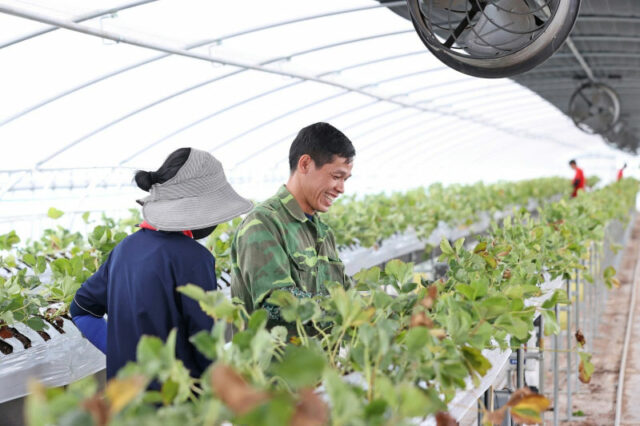
KOREA.NET/IMSIL-GUN COUNTY OFFICE

THE PHILIPPINES and South Korea have signed a joint memorandum on the implementation of South Korea’s Seasonal Workers Program (SWP), with the agreement billed as improving protections for Filipino farm workers in South Korea.

The Department of Agriculture (DA) said in a statement that the agreement between the two governments establishes a framework that will ensure fair labor practices, legal safeguards, and welfare support for Filipino seasonal farm workers in South Korea.

The SWP allows foreign workers to take on temporary jobs in South Korean agriculture and fisheries to fill labor shortages during peak seasons.

Under the agreement, the DA will implement agricultural training, livelihood programs, and reintegration assistance for returning workers.

The DA said it will also work closely with local governments and the Department of Migrant Workers to ensure deployments “match the country’s agricultural priorities and global standards.”

The memorandum also outlines an integrated support system to monitor workers and work with South Korean local authorities.

“This partnership ensures that our seasonal workers are protected, empowered, and equipped to contribute to both nations’ agricultural growth,” the DA said in a statement. — Vonn Andrei E. Villamiel

Peso may trade sideways ahead of delayed US economic data

BW FILE PHOTO

THE PESO is expected to move within a tight band this week as traders wait for a batch of delayed US economic reports following the end of a state shutdown.

It closed at P59.065 a dollar on Friday, 6.5 centavos weaker than Thursday, according to Bankers Association of the Philippines data posted on its website. It was also slightly down from its P59.04 finish a week earlier.

A trader said the peso initially strengthened, touching P58.77, after risk appetite improved when US President Donald J. Trump signed a funding bill restoring government operations. The 43-day shutdown had halted several data releases, leaving investors without economic signals.

Demand for risk assets lifted the peso early on, but sentiment turned after former Party-list Rep. Elizaldy S. Co linked President Ferdinand R. Marcos, Jr. to the flood control scandal, the trader said. That pulled the currency back toward the 59 level.

Mr. Co has accused the President of directing P100 billion worth of projects into the 2025 budget. Malacañang and the Budget department denied the allegation.

The dollar was also supported by cautious remarks from some US Federal Reserve officials, Rizal Commercial Banking Corp. Chief Economist Michael Ricafort said. He noted the peso stayed slightly above the key P59 mark, which had held for more than three years until late October.

He added that political uncertainty, weak foreign investment data and the sharp sell-off in local equities have kept investors guarded. The benchmark stock index fell 2.5% on Friday to its lowest finish in more than five years.

Still, he said seasonal remittance inflows and holiday spending might help temper pressure on the currency as the year winds down. Large foreign-exchange reserves also offer support.

This week, traders will watch for the release of US inflation, retail and labor indicators that were delayed by the shutdown. These reports are expected to guide market expectations for the Fed’s policy path in December.

The trader expects the peso to trade from P58.80 to P59.25 a dollar this week, while Mr. Ricafort projects a range of P58.75 to P59.25. — Aaron Michael C. Sy

Our failing health system: Overcrowded hospitals, understaffed health clinics

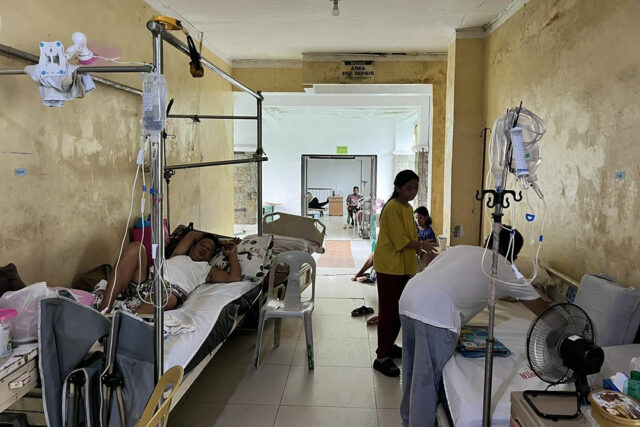
SAMAR HOSPITAL, Oct. 30: Over 200 patients in a 100-bed hospital; excess patients stay in corridors as wards have been full since August — PHOTO TAKEN BY T. TUAZON

In October, three major hospitals in Samar and Leyte asked patients to stop coming to their emergency rooms. North Samar’s Provincial Hospital was “in chaos” (Philippine News Agency, Oct. 27); the Samar Provincial Hospital was “overwhelmed” (Inquirer, Oct. 9), while on Oct. 5, the Regional Medical Center in Tacloban sent an advisory that its emergency room was 193% “over capacity.”

Epidemic? COVID’s return? None of that; there was no disease outbreak, just “an increase in common cases such as diarrhea, measles, respiratory infections, influenza-like illnesses and injuries from vehicular accidents” according to Samar health officials.

Hospital officials were literally begging lower-level hospitals and local health clinics (Rural Health Units in particular) to stop sending patients, asking them to take care of uncomplicated cases.

The East Visayas Medical Center, which President Ferdinand Marcos, Jr. visited in mid-August to look at its Zero Balance Billing program, announced by Oct. 5 that with its 1,100 beds 125% occupied, it could only accept “Level III cases” or those requiring life-saving interventions. It warned that “referred patients may need to remain in the referring ambulances” while attending to patients who came earlier.

At breaking point, the hospitals in Samar and Leyte were asking primary care clinics to provide healthcare for their constituents. That is the way it should be.

Howling in the wind, the primary healthcare system has been on a downward spiral for over a decade, years before the COVID-19 epidemic, which further accelerated the decline of primary care.

FUNDING THE WRONG END OF HEALTHCARE
The Philippine Health Insurance Corp. (PhilHealth) spent P200 billion for hospital-based care and dialysis as of end-September and Department of Health (DoH) reports using 52% (P20.5 billion) of its Medical Assistance to Indigent and Financially Incapacitated Patients Program (MAIFIP) Fund to top up PhilHealth spending, for a total of P220 billion for hospital-based care. Primary care facilities (where 57% of the population goes for healthcare) on the other hand got only P1.3 million in the first six months of 2025. Konsulta/YAKAP clinics, where patients were registered on the average, were paid P510 per registration through First Patient Encounters (FPEs), without having to provide any healthcare.

The Philippines has been neglecting primary care, investing only 4% of current health expenditure for primary care, equivalent to $6 per Filipino, while ASEAN counterpart spending averages $20.

The Universal Health Care (UHC) law specifically directed PhilHealth to craft a comprehensive outpatient benefit package within two years of its enactment. It duly transformed its Tsekap package into the Konsulta package by 2020, allocating P500 per year for every member and beneficiary.

Instead of directly funding primary care in 2,797 government facilities immediately, PhilHealth prioritized registration of its members into Konsulta (now YAKAP) without providing an ounce of care, a tablet of medicine, or a blood test. When the Philippine Statistics Authority conducted a Community Based Monitoring System survey in two provinces in the Samar/Leyte region in 2022, patients were found to be routinely bypassing health centers, going directly to hospitals. These patients reported that less than 10% of their health costs were covered by PhilHealth, making their out-of-pocket costs 90% versus a national average of 44%.

PhilHealth has been seemingly reluctant to roll out the Konsulta package (it would cost P190 billion per year at the expanded rate of P1,700 per Filipino). PhilHealth management instead accumulated large amounts in its reserve as it chose to ration out primary care.

With its reserves spent on expanded and increased hospital benefits, PhilHealth now finds itself strapped for resources after two years of underfunding and non-funding and giving up P60 billion to the National Government. The constitutionality of the transfer is being challenged by a petition at the Supreme Court.

Primary care health services which are starved of funding are deteriorating while the system prioritizes higher levels of care. The absence of preventive public healthcare is now being felt by hospitals where up to 33% of their patients could have been managed at primary care clinics1.

CAN’T DELIVER FULL BENEFITS
The data would suggest that it would be a futile exercise for patients to even seek care from a Konsulta/YAKAP provider when they get sick. In May 2024 a DoH-funded survey2 of 70 UHC implementation sites showed that only 6.1% of 2,797 accredited Konsulta facilities nationwide could deliver the full Konsulta package.

When the Konsulta package was launched in 2020 by PhilHealth, it accredited all 2,797 government facilities, without checking if they could deliver the entire package. After four years of waiting for the local government units (LGUs) to implement the package with DoH assistance and achieving only single digit in terms of percentage of facilities able to deliver the full Konsulta package, the primary care system has failed. Patients are choosing to bypass health clinics/primary care that can only register them and instead go directly to the hospitals for healthcare.

LGUs have not been funding local health systems at the levels required by the UHC law, covering only 9.3% of health expenditure by 2023, barely increasing from 8.9% in 2020. On the other hand, DoH and PhilHealth management were more worried about their agencies’ performance and passively waited for LGUs to catch up.

Moreover, the local health system has been marginalized by attention-seeking national programs which compete with local health service delivery without improving people’s health, such as LAB for all caravans, BUCAS centers, and Purok Kalusugan programs.

HIGH-END HEALTHCARE VS PRIMARY CARE
A poorly advised President delivered a coup de grace of sorts to the health system when he miscommunicated Zero Balance Billing for all government hospitals in his State of the Nation Address last July. It was no coincidence that Samar Provincial Hospital started seeing increasing numbers of patients in August, with over 200 patients occupying its 100-bed capacity facility.

The unraveling of the health system in Leyte/Samar that followed is an example that exposes the extreme vulnerability of the current state of UHC in the Philippines.

Yet the best solution that DoH and PhilHealth can come up with is to ask for more resources to shore up the Zero or No Balance Billing program for national hospitals and probably extend assistance to local hospitals.

Without the benefit of assessing the entire health system, the administration can only offer unsustainable measures like increasing subsidies that cost the most — secondary and tertiary hospitals and specialty medical centers.

But the political leadership does not allocate sufficient resources for primary care, which can reduce higher end healthcare costs. Every new hospital benefit announced by PhilHealth reduces its capacity to fund primary care.

RESCUING THE PHL HEALTH SYSTEM
One can only suggest that the first steps to change course can begin with the current health budget deliberations.

The proposed 2026 PhilHealth General Appropriations budget will only cover P53 billion in premiums of the indirect members. The premiums of all indirect contributors — which are used to fund benefits of all PhilHealth members — are guaranteed by the UHC law. But the proposed 2026 PhilHealth budget will only cover less than a third of reimbursements made by indirect members in 2025, which is expected to exceed P160 billion.

Further, the expansion of the MAIFIP program, an example of abetting multiple funding streams, would result in diminishing PhilHealth’s role to give financial healthcare protection to all Filipinos. Different health funding programs are administratively costly, and they inflate health costs, according to the Philippine Institute for Development Studies-Health Economics and Finance Program team.

PhilHealth’s operations will exceed P300 billion in 2025, overshooting its P286-billion budget. PhilHealth’s 2026 budget, conservatively, should be north of P360 billion. The MAIFIP fund should thus be transferred to cover PhilHealth’s funding gap, particularly in covering reimbursements. With reimbursements soaring to 94% from 2024 to 2025, PhilHealth needs all the resources it can get to cover costs.

The shares of the Philippine Amusement and Gaming Corp. (PAGCOR) and the Philippine Charity Sweepstakes Office (PCSO) for UHC could be used for primary care, separate from the reimbursements for hospital care. The Department of Budget and Management (DBM) must release to PhilHealth P42 billion from the 2023 and 2024 General Appropriations Acts, which the DBM impounded. Another P42 billion, the combined amount for 2025 and 2026 due from PAGCOR and PCSO as mandated by the UHC law, must be allocated to PhilHealth. These amounts can be repurposed to cover the 2026 spending for YAKAP/GAMOT.

Congress can also provide a special provision that will limit benefit expansion in hospital care for the next two years at least, to be lifted only when the comprehensive outpatient benefit package at primary level is largely in place.

These are our urgent proposals to save the Philippine healthcare system.

1 “How to reduce Out of Pocket spending in the Philippines,” PIDS Health Economics and Finance Program

2 Final Report Universal Health Care (UHC) Survey, DoH, June 2024


Juan Antonio Perez III, MD specializes in public health administration, primary healthcare, and has worked with nine Health Secretaries and three NEDA Secretaries since 1992. He was undersecretary for Population and Development and executive director of the country’s Commission on Population and Development up to Sept. 8, 2022 when he retired. He occasionally writes for Action for Economic Reforms.

Pope hosts Hollywood stars at Vatican, laments decline in movie-going

Pope Leo XIV | Screenshot from Vatican Media Livestream

VATICAN CITY — Pope Leo told a group of leading Hollywood actors and filmmakers on Saturday that cinemas were struggling to survive and that more should be done to protect them and preserve the shared experience of watching movies.

Screen stars Cate Blanchett, Monica Bellucci, Chris Pine, and Viggo Mortensen were among those invited to the private Vatican audience, along with award-winning directors Spike Lee, Gus Van Sant, and Sally Potter.

Leo, the first US pope, said cinema was a vital “workshop of hope” at a time of global uncertainty and digital overload.

“Cinemas are experiencing a troubling decline, with many being removed from cities and neighborhoods,” he added. “More than a few people are saying that the art of cinema and the cinematic experience are in danger. I urge institutions not to give up, but to cooperate in affirming the social and cultural value of this activity.”

Box office revenues in many countries remain well below the levels recorded before the COVID-19 pandemic, with multiplexes in the United States and Canada just suffering their worst summer since 1981, excluding the COVID shutdown.

LOGIC OF ALGORITHMS MUST BE RESISTED
Leo said cinema, which marks its 130th anniversary this year, had grown from a play of light and shadow into a form capable of revealing humanity’s deepest questions.

“Cinema is not just moving pictures; it sets hope in motion,” he said, adding that entering a theater was “like crossing a threshold” where the imagination widens and even pain can find new meaning.

A culture shaped by constant digital stimuli risks reducing stories to what algorithms predict will succeed, he said.

“The logic of algorithms tends to repeat what works, but art opens up what is possible,” he said, urging filmmakers to defend “slowness, silence and difference” when they serve the story.

The pope also encouraged artists to confront violence, war, poverty, and loneliness with honesty, saying good cinema “does not exploit pain; it recognizes and explores it.”

Australia’s Cate Blanchett said his call carried weight.

“His Holiness’ words today were a real charge not to shy away from difficult, painful stories,” she told reporters. “He really urged us to go back into our day jobs and inspire people.”

The pope praised not only directors and actors but the vast array of behind-the-scenes workers whose craft makes movies possible, calling filmmaking “a collective endeavor in which no one is self-sufficient.”

At the end of his speech, the long list of invitees met the pope one-by-one, many offering him gifts, including Spike Lee, who gave him a New York Knicks basketball shirt emblazoned with “Pope Leo 14.”

“It was a surprise to me that I even got an invitation,” Mr. Lee told reporters. “I’ve been to Rome many, many times. But (this was) the first time in the Vatican City and the first time meeting the pope. So it was… a great day, a great day.”

Ahead of Saturday’s meeting, the Vatican shared four of the pope’s favorite films: Robert Wise’s family musical The Sound of Music, Frank Capra’s feel-good It’s a Wonderful Life, Robert Redford’s heart-wrenching Ordinary People, and Roberto Benigni’s sentimental World War II drama Life Is Beautiful. — Reuters

Monde Nissin partners with Asia Pacific College to develop industry-ready graduates

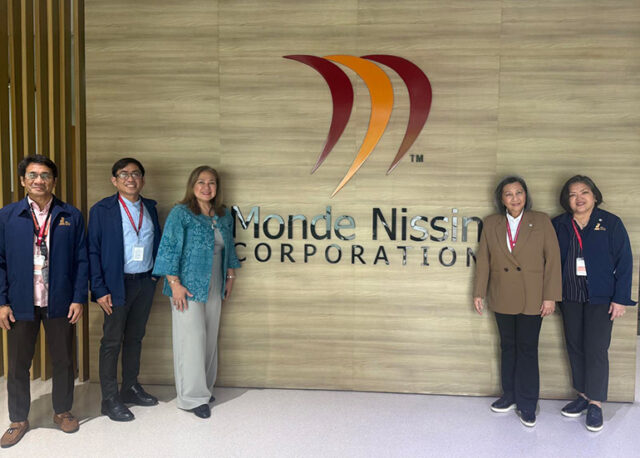
Monde Nissin Corp. officially partnered with Asia Pacific College (APC) through a Memorandum of Agreement (MoA) marking a significant step toward stronger collaboration between the academe and the food manufacturing industry.

The partnership establishes Monde Nissin as APC’s first industry partner in the food manufacturing sector, reflecting a shared commitment to nurturing the next generation of Filipino professionals through education, innovation, and real-world learning experiences.

It reinforces Monde Nissin’s ongoing investment in early career development through its flagship programs: MondeXplore Internship Program, which provides students with immersive, hands-on learning across various business functions, guided by industry mentors; Emerging Leaders Program, a six-month intensive track for engineering graduates aimed at developing the next generation of Product Supply leaders; and the Excelerate Program, an 18-month management trainee program designed for high-potential talents in Consumer and Customer Development, equipping them with frontline exposure and strategic leadership skills.

The MoA signing was led by Luz Mercurio, chief people & culture officer of Monde Nissin; and Dr. Ma. Teresita “Tata” Medado, president of Asia Pacific College, alongside leaders from both institutions. The event included a meaningful dialogue on potential future collaborations and a guided plant tour of the Lucky Me! Noodle Factory, where APC representatives gained first-hand insights into Monde Nissin’s operational excellence and world-class manufacturing practices.


SparkUp is BusinessWorld’s multimedia brand created to inform, inspire, and empower the Philippine startups; micro, small and medium enterprises (MSMEs); and future business leaders. This section will be published every other Monday. For pitches and releases about startups, e-mail to bmbeltran@bworldonline.com (cc: abconoza@bworldonline.com). Materials sent become BW property.

LRMC in talks with DoTr for concession fix

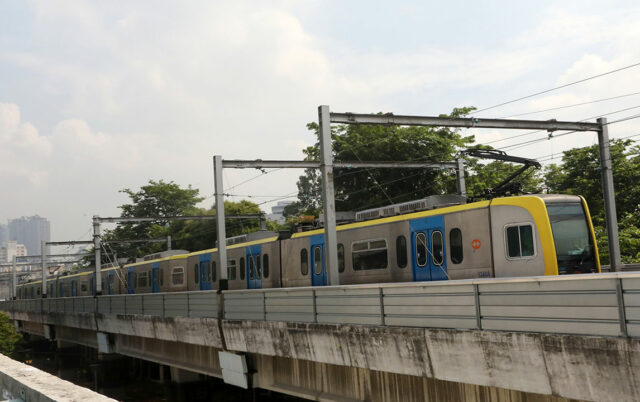
PHILIPPINE STAR/EDD GUMBAN

LIGHT RAIL MANILA CORP. (LRMC), the operator of Light Rail Transit Line 1 (LRT-1), said it is gearing up for a financial rebound, citing renewed shareholder support and fresh talks with the Department of Transportation (DoTr) for the rebalancing of its concession agreement.

“LRMC has been encountering problems for the past 10 years, primarily due to some obligations of the government that they were not able to fulfill, then definitely we’re not in a good financial position at the moment. But we’re about to turn the corner,” LRMC President and Chief Executive Officer Enrico R. Benipayo said at the Metro Pacific Investments Corp. (MPIC) briefing in Hong Kong last week.

The LRT-1 operator is now in talks with the DoTr and the Department of Finance (DoF) for some tariff adjustment, Mr. Benipayo said, noting that under its concession agreement, the company is allowed to increase fares by a certain percentage every two years.

“In fairness to this current administration, this is where we had our first tariff increase… The current government, particularly the DoTr and the DoF, is actively in discussion with us to be able to resolve the concession agreement,” he said.

LRMC assumed operations and maintenance of LRT-1 in September 2015 under a P65-billion, 32-year concession agreement with the Light Rail Transit Authority and the DoTr.

Under the agreement, the operator may seek a fare adjustment once every two years. In April, the Transportation department approved LRMC’s petition for fare adjustments, though the new fare matrix remains below the company’s requested rates, resulting in a fare deficit of P2.17 billion.

LRMC is also seeking discussions with the government to rebalance its concession agreement, which would allow the company to extend its current concession period, Mr. Benipayo said.

“The rebalancing is, and in principle they have agreed, like an extension of our concession period, and some other tweaks in the concession agreement so that the project can be restored to its financial position,” he said, noting that the company is also working double time to complete the extension of Cavite Extension Phases 2 and 3.

Earlier this week, MPIC Chairman, President, and Chief Executive Officer Manuel V. Pangilinan said the company is considering selling its stake in LRMC, citing mounting losses as ridership numbers failed to recover from the pandemic impact.

MPIC holds its 35.8% stake in LRMC through its unit, Metro Pacific Light Rail Corp., while Sumitomo Corp. owns 19.2% and Macquarie Investments Holdings (Philippines) Pte. Ltd. holds 10%. LRMC is a joint-venture company of MPIC, AC Infrastructure Holdings Corp. (a unit of Ayala Corp.), Sumitomo, and Macquarie Investments Holdings.

LRMC’s ridership averaged around 450,000 daily passengers in 2019, dropping to 350,000-370,000 in 2023. By November 2024, just before the opening of the LRT-1 Cavite Extension Phase 1, daily ridership was 323,000.

Mr. Benipayo said LRT-1’s ridership has increased to 390,000 daily year to date.

“First, we are working with the government so that they pay our claims. That is the first thing. Second is we are talking to our lenders to refinance our debt, and the third one is we would like to start the discussions with the government to rebalance the concession agreement,” he said.

LRMC is now also in active negotiations with its foreign partners for some value-up initiatives to improve passenger experience, and other operations and maintenance activities to increase its ridership, he said.

MPIC is one of the three key Philippine units of Hong Kong-based First Pacific Co. Ltd., along with Philex Mining Corp. and PLDT Inc. Hastings Holdings, Inc., a unit of MediaQuest Holdings under the PLDT Beneficial Trust Fund, has a majority share in BusinessWorld through the Philippine Star Group, which it controls. — Ashley Erika O. Jose

Trump cuts tariffs on beef, coffee and other foods as inflation concerns mount

REUTERS/PAULO WHITAKER

WASHINGTON — US President Donald Trump rolled back tariffs on more than 200 food products, including coffee, beef, bananas and orange juice, in the face of growing angst among American consumers about the high cost of groceries.

The new exemptions — which took effect retroactively at midnight on Thursday — mark a sharp reversal for Mr. Trump, who has long insisted that the sweeping import duties he imposed earlier this year are not fueling inflation.

“They may in some cases” raise prices, Mr. Trump said of his tariffs when asked about the move aboard Air Force One on Friday evening. But he insisted that overall, the US has “virtually no inflation.”

Democrats have won a string of victories in state and local elections in Virginia, New Jersey and New York City, where growing voter concerns about affordability, including high food prices, were a key topic.

Mr. Trump also told reporters aboard Air Force One that he would move forward with a $2,000 payment to lower- and middle-income Americans that would be funded by tariff revenues next year.

“The tariffs allow us to give a dividend if we want to do that. Now we’re going to do a dividend and we’re also reducing debt,” he said.

The Trump administration announced framework trade deals on Thursday that, once finalized, will eliminate tariffs on certain foods and other imports from Argentina, Ecuador, Guatemala and El Salvador, with US officials eyeing additional agreements before year’s end.

Friday’s list includes products US consumers routinely purchase to feed their families at home, many of which have seen double-digit year-over-year price increases.

It includes over 200 items ranging from oranges, acai berries and paprika to cocoa, chemicals used in food production, fertilizers, and even communion wafers.

The White House, in a fact sheet on the order, said it came on the heels of “significant progress the President has made in securing more reciprocal terms for our bilateral trade relationships.”

It said Mr. Trump decided certain food items could be exempted since they were not grown or processed in the US, and given the conclusion of nine framework deals, two final agreements on reciprocal trade, and two investment deals.

Ground beef, as of the latest available data for September, was nearly 13% more expensive, according to Consumer Price Index data, and steaks cost almost 17% more than a year ago.

Increases for both were the largest in more than three years, dating back to when inflation was nearing its peak under Mr. Trump’s predecessor, Democrat Joe Biden.

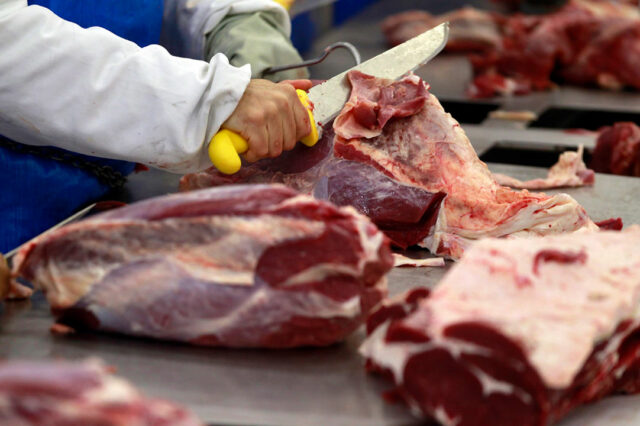
Although the US is a major beef producer, a persistent shortage of cattle in recent years has kept beef prices high. Banana prices were about 7% higher, while tomatoes were 1% higher.

Overall costs for food consumed at home were up 2.7% in September. The tariff exemptions won praise from many industry groups, while some expressed disappointment that their products were excluded from the exemptions.

“Today’s action should help consumers, whose morning cup of coffee will hopefully become more affordable, as well as US manufacturers, which utilize many of these products in their supply chains and production lines,” FMI-Food Industry Association President Leslie Sarasin said in a statement.

Distilled Spirits Council President Chris Swonger said that excluding spirits from the European Union and Britain “is yet another blow to the US hospitality industry just as the critical holiday season kicks into high gear.”

“Scotch, Cognac and Irish Whiskey are value-added agricultural products that cannot be produced in the United States,” Mr. Swonger added.

Asked if further changes were planned, Mr. Trump told reporters aboard Air Force One, “I don’t think it’ll be necessary.” “We just did a little bit of a rollback,” he said.

“The prices of coffee were a little bit high, now they’ll be on the low side in a very short period.”

Mr. Trump has upended the global trading system by imposing a 10% base tariff on imports from every country, plus additional specific duties that vary from state to state.

Mr. Trump has focused squarely on the issue of affordability in recent weeks, while insisting that any higher costs were triggered by policies enacted by Biden, and not his own tariff policies.

Consumers have remained frustrated over high grocery prices, which economists say have been fueled in part by import tariffs and could rise further next year as companies start passing on the full brunt of the import duties.

The top Democrat on the House of Representatives Ways and Means Committee, Richard Neal, said the Trump administration was “putting out a fire that they started and claiming it as progress.”

“The Trump administration is finally admitting publicly what we’ve all known from the start: Trump’s Trade War is hiking costs on people,” Mr. Neal said in a statement.

“Since implementing these tariffs, inflation has increased and manufacturing has contracted month after month.” — Reuters

Philippine bond yields decline

By Isa Jane D. Acabal

YIELDS on Philippine government securities fell last week due to strong demand and as investors expect the central bank to cut interest rates sooner following a sharp slowdown in economic growth.

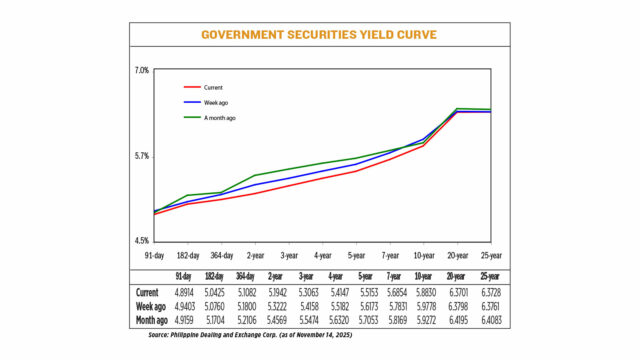
Benchmark yields fell by an average of 7.3 basis points (bps) week on week, according to PHP Bloomberg Valuation Service reference rates as of Nov. 14. The drop was broad-based, covering short-, medium- and long-term tenors, although late profit-taking trimmed some gains.

At the short end, yields on the 91-, 182- and 364-day Treasury bills slipped 4.89, 3.35, and 7.18 bps, respectively, to 4.8914%, 5.0425%, and 5.1082%. Yields on medium-term bonds — those maturing in two to seven years — also dropped, with the biggest declines seen in the two- to five-year securities. The seven-year bond followed with a slightly smaller decrease.

At the long end of the curve, yields on 10- to 25-year bonds also slipped, though by smaller amounts. Trading activity fell sharply from the previous week, showing investors turned cautious after the mid-week rally.

“The weaker-than-expected GDP (gross domestic product) print contributed to a strong bid in the first half of the week, driving yields lower particularly at the front end, as markets priced in a softer growth outlook and the possibility of earlier policy easing,” Lodevico M. Ulpo Jr., vice-president and head of fixed-income strategies at ATRAM Trust Corp., said in a Viber message.

The economy expanded 4% in the third quarter, the slowest in more than four years. The disappointing result shifted expectations toward earlier rate cuts by the Bangko Sentral ng Pilipinas, with some traders speculating that the Monetary Board might not wait until its scheduled meetings.

The tone was reinforced on Tuesday when the Bureau of the Treasury fully awarded P22 billion in Treasury bills as bids swelled to P98.31 billion, more than four times the offer. The strong demand pulled short-dated yields lower and encouraged fund managers to lock in remaining carry, analysts said.

“Market  participants likely tried to lock in yields, with the dismal third-quarter GDP growth reading spurring further rate cut expectations,” Marco Antonio C. Agonia, an  economist from the University of Asia and the Pacific, said in an e-mailed reply to questions.

A bond trader noted that early-week optimism extended across maturities. “Initially, yields dropped on bets the BSP will cut rates, and some quarters even looked at the possibility of an off-cycle adjustment given the drop in equities,” the trader said.

However, part of the week’s rally faded on Friday after profit taking, especially in the four- to 10-year tenors, which nudged yields slightly higher from the previous day. “Political risks from the flood control scandal resurfaced,” Mr. Agonia said, adding that this triggered caution on the middle and longer sections of the curve.

Mr. Ulpo said the market’s tone shifted further after global yields climbed late in the week amid renewed rate hike concerns in the United States.

Rising global yields and heightened risks tied to the flood control corruption mess and uncertainty on government execution added a risk premium to longer-dated bonds, contributing to a modest bear-steepening of the curve, he added.

Market attention turned to the US after President Donald J. Trump signed legislation ending the 43-day federal government shutdown, restoring the release of key economic data.

“The resumption of US government operations refocused markets on the global rate narrative, particularly the Fed’s more hawkish-leaning rhetoric amid concerns over still-sticky inflation,” Mr. Ulpo said.

This week, he expects a defensive stance as investors weigh a mix of domestic governance risks, tepid growth and the prospect of tighter financial conditions abroad.

Mr. Agonia sees upward pressure on yields if the political fallout from the flood control scandal escalates. “Market participants should also look out for more signals from Fed officials regarding the possibility of a December cut,” he added.

Vindication

PHOTO BY KAP MACEDA AGUILA

As it turns out, Toyota’s multi-pathway approach to carbon neutrality is the correct answer

WHO’S LAUGHING NOW?

At the outset of the battery electric vehicle (BEV) “revolution,” that tipping point when more brands decided they would be striving toward rolling out fully electric powertrains sooner than later, global auto leader Toyota — through its then-president and CEO Akio Toyoda in particular — had faced stinging rebuke for not being on board the BEV train.

Even as the rest of the auto industry looked upon full electrification as the silver bullet to greenhouse gas emissions (GHGs) — emitted primarily through the burning of fossil fuels — while addressing transportation needs of people and goods, Mr. Toyoda and Toyota have maintained consistently that carbon is the enemy. Furthermore, carbon neutrality — a state of net zero carbon where actions that redound in emissions are matched by ones to reduce to offset them — is a more realistic, viable dream to aspire to for our planet, according to Mr. Toyoda.

Back in 2022, at the Queen Sirikit National Convention Center in Thailand, the leader doubled down on his viewpoint, declaring that Toyota will not espouse a “one-size-fits-all approach to (its) products and powertrains.” He insisted that people “need to be realistic about when society will be able to fully adopt battery electric vehicles and when… infrastructure can support them at scale.” The executive was in town primarily to celebrate the 60th anniversary of the founding of Toyota Motor Thailand Company (TMT) — the manufacturing and distribution subsidiary of the Japan-headquartered car maker.

Mr. Toyoda (now chairman of Toyota Motor Corp.) crucially added then, “Just like the fully autonomous cars that we were all supposed to be driving by now, I think BEVs are just going to take longer to become mainstream than the media would like us to believe. And frankly, BEVs are not the only way to achieve the world’s carbon-neutrality goals. Personally, I would rather pursue every option, not just one — options such as emission-free synthetic fuels and hydrogen. I still believe hydrogen is as promising a technology for our future as BEVs.”

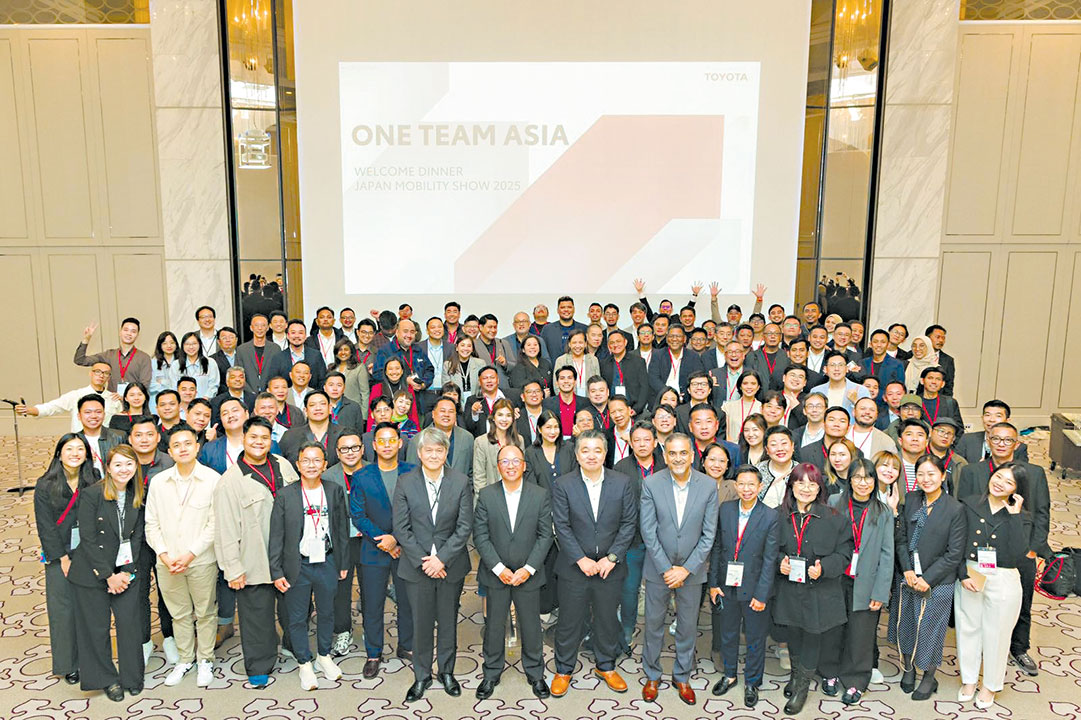
So it was quite understandable for Toyota Motor Asia Executive Vice-President Pras Ganesh to gloat a bit as he recently addressed a delegation of media practitioners (which included this writer) and content creators from Southeast Asian markets. A sizeable country contingent was flown to Tokyo upon the invitation of Toyota Motor Philippines Corp. (TMP) to experience the biennial Japan Mobility Show (JMS), but there was plenty of time for Toyota executives to also talk about the firm’s intentions — particularly in our part of the world — on the sidelines.

“Since that particular time, a lot has changed,” he began. “If you start looking at the announcements of almost all the other automotive companies, most… especially the traditional (ones), have all changed their approach. Many of them have also started talking about abandoning a BEV-only approach, (and are tackling) the need to introduce more hybrids, and the need for more time to make the transition. They have also in some ways admitted that they have to move away from the initial plan for a single technology.”

As many brands veritably kick the BEV can further down the road, Toyota remains engaged to the “fundamental focus” first elucidated in JMS 2023. Mr. Ganesh stated that it’s still “about how Toyota (wants) to tackle carbon neutrality.” Echoing the words of Mr. Toyoda, he stressed that carbon, not a particular powertrain, is the enemy. The playbook for the group of auto marques is about reducing the emission of carbon through its mobility products — and at scale.

The executive explained, “If you think about speed and scale, the most important thing is to find a solution that meets the needs of all customers. That was the reason why we heavily focused on what we call multiple pathways. We actually need all technologies. We need low-carbon ICEs (internal combustion engines), hybrid electric vehicles, plug-in hybrid electric vehicles, battery electric vehicles, fuel cell electric vehicles. We need all of these for different purposes, and we need to make sure that we introduce them and scale them in each of the markets.”

The electrification discussion, posited the executive, is a lot more nuanced than, well, flipping a switch.

AGAINST THE GRAIN
“Unfortunately, the world was quite different (then),” he recalled. “We got bashed heavily, we got criticized significantly by many people. They said Toyota’s approach of multiple pathways was inappropriate,” Mr. Ganesh rued.

Toyota was the outlier who wasn’t locked in on BEVs alone — and instead went against the grain. The company distilled the discussion and work toward carbon neutrality into three areas: emissions, economics, and customer acceptance. It should be, the executive continued, about finding the “cleanest solution based on available energy sources in the market” and, quite simply, what “the customer, government, and industries could afford.”

Speaking of governments, the Toyota executive said states have also realized that “pushing for a single technology brought with it risks and issues,” and are now thinking more inclusively by “maybe not giving that many subsidies for BEVs.” Governments now see the need to involve many technologies or powertrains in the transition. This further underscores the wisdom in ditching (for now) an exclusively full-electric path.

And, of course, customers are said to have gained, in practice at least, a much better understanding of Toyota’s multi-pathway approach. Expressed in real terms here in the country, we have seen the marked increase of hybrid vehicle sales in the country, where Toyota Motor Philippines (TMP) paces sales. As of September YTD, TMP (through the Toyota and Lexus brands) has sold a total of 13,041 xEVs (electrified vehicles) comprised of 45 BEVs and 12,996 traditional hybrids (HEVs).

The full-tilt sprint to pure electric has laid bare the limitations of an admittedly still-nascent charging infrastructure. Even as BEV makers continue to improve and fine-tune their models (and increase range), the improvements cannot fully quell range anxiety. The fact of the matter is that our public charging infrastructure is far from ideal. Notwithstanding improved range, more readily available charging points are prerequisites for greater adoption.

THREE WAYS OF WORKING
Even as Toyota and its family of brands remain in lockstep with the vision to provide mobility for all and to strive toward carbon neutrality, Mr. Ganesh said that the values the company purveys are predicated on “three ways of working,” particularly in the Southeast Asian region.

First is striving to be “best in town,” a thinking that comes with a willingness and patience to play the long game. “Toyota and the Toyota group do not think short term,” he stressed. Part of that means identifying products that are suited to each market — products that, themselves, are nothing less than outputs of people, organizations, and an ecosystem that work together to deliver both good products and good customer experience. “Toyota affiliates, plants, distributors, and dealerships should always aim to be the best in town… that people in their respective towns trust the most.”

Developing supply chains can take time too, enthused Mr. Ganesh, but is essential to breed competitiveness to help Toyota survive times both good and bad.

“We try to bring in the right technology that actually meets the market needs,” he stressed. “We have also been steadily developing our R&D (research and development) capability to be able to deliver products that we can source for your markets or even beyond (them) to what we call the global south… A lot of these activities have been in Thailand, but now we’re expanding more and more development beyond it (such as in) Indonesia.”

Next, Toyota espouses the idea that customers come first — exactly why the automaker does not push a single powertrain where it may not be exactly feasible. Its vehicles are meant “for everyone and for every journey,” and Mr. Ganesh said that they don’t want to commodify these products. “Toyota believes in the emotion and passion that we can give customers,” sharply focused on specific needs — not necessarily those that are trending. It means always making ever-better cars, a famous quote from the TMC chairman himself. It also means providing an aspirational value for each vehicle made.

There’s a reason we don’t see certain models here, say, a large Tundra pickup designed for the US market made to travel long distances and bearing heavy loads and such. However, we’ll have compact urban vehicles like the Yaris Cross or family-oriented models like the Innova. “The roads help us design the vehicles… We need mobility solutions that fit our diverse lifestyles… diversity requires diverse solutions,” explained Mr. Ganesh.

Finally, there’s “start by doing,” which more specifically delves into the aforementioned drive to carbon neutrality. The fundamental thinking behind it is that there’s no time to waste: Climate change is real, global warming is real. “We have to take action to reduce carbon emissions whenever we can, wherever we can,” said Mr. Ganesh.

The mix of vehicle powertrains will change in time, hinged on managing the use of energy as optimally as possible. “When I talk about electric vehicles. I have to be able to find the most optimum renewable energy source to make that electric vehicle as clean as possible,” he declared. “When it comes to our (other powertrains), we have to be able to find the most effective, appropriate energy source and ensure that we’re able to optimize that energy source and the distance driven for us to be able to reduce our carbon footprint.”

The multiple pathways approach is therefore about broadening a way of thinking on mobility and viability of energy sources and market readiness/appetite while keeping a keen eye on carbon neutrality.

Mr. Ganesh asked, “What is the right energy source, and what is the right match between the vehicle side and the energy side?”

INTERIM WINS
For the next five to 10 years, Toyota expects the primary energy source required for mobility will still be fossil fuels. The critical element is realizing the most efficient use of these fuels. More sustainable and clean biofuels or even so-called flex-fuel engines are also on the rise in development and are being explored by Toyota as realistic answers to the energy and sustainability demand for mobility.

This is not to say, of course, that the brand is averse to BEVs. Instead, Mr. Ganesh said it’s important to think of how renewable energy can be used to recharge batteries for this powertrain. “What is the right renewable energy source in each of your markets? Is it based on solar, wind, hydro, geothermal power? What is the right, appropriate source?” Hydrogen also is another viable option as far as Toyota is concerned, particularly for the use of commercial vehicles, but the per-kilogram cost needs to go down, and it needs to be made more widely available.

The rare earths question for the manufacture of batteries also comes into serious play. “We recognize that battery supply is still limited.” He showed us a diagram demonstrating that a BEV’s (in this case a bZ4X) high-capacity (71.4 kWh) battery can provide the needs of five plug-in hybrid electric vehicles (PHEVs) or 55 Corolla Cross units or 92 Yaris Cross units. “Obviously, by utilizing the battery source as effectively as possible… we’re able to reduce CO2 (emission). This is very much in line with our way of thinking where we feel that efficiency and scale are the most important thing when we talk about carbon neutrality.”

Toyota clearly knows what it’s talking about, and what its position is — sober and backed by hard data and on-ground experience. This is Toyota taking the reins of sustainability as the number-one automaker — with a uniquely sweeping perspective and unparalleled ability on how to tackle the issue of making the planet safer and healthier for the next generation, while providing much needed mobility for all.


The Vietnamese economy overtakes the Philippines: From economic strategies to governance and flood control

LANDMARK 81 the tallest building in Vietnam. — STOCK PHOTO | Image by jet dela cruz from Unsplash

By Cesar Polvorosa, Jr.

(First of two parts)

In 1975, North and South Vietnam reunited after decades of devastating war and emerged with its GNI per capita at just around $100. In stark contrast, the Philippines — then regarded as one of Southeast Asia’s leading lights posted a GNI per capita of roughly $400 or quadruple that of Vietnam. Fast forward to nearly 50 years later, the hierarchy has reversed. In 2024, Vietnam’s GNI per capita reached $4,490, overtaking the Philippines’ $4,470 for the same year. The gap is expected to widen to around $100 in Vietnam’s favor by 2025. Using GDP per capita (PPP), a measure of real living standards, the divergence is even more striking: for 2025, Vietnam is projected at $17,480 which is far above the Philippines’ $12,913 (IMF World Economic Outlook, April 2025).

I remember visiting the Vietnamese refugees at the Bataan Refugee Camp during a field trip of our UP Development Studies class decades ago and I can’t help but ask: how did Vietnam accomplish this remarkable transformation, and what major factors prevented the Philippines from keeping pace? The answer lies in contrasting development models, foreign investment strategies, governance quality, demographic trajectories, education systems, and the political economy of reform. More recently, the comparison also extends to how both countries respond to global disruptions such as the Trump administration’s tariff shock and to long-term resilience challenges like flood control, climate change, and corruption.

DIVERGENT ECONOMIC MODELS
Vietnam pursued an export-oriented manufacturing strategy which has proven significantly more successful over the past half century than the Philippines’ service-heavy, remittances-dependent model. Export performance alone tells a compelling story. Vietnam’s exports amount to an astonishing 105-107% of its GDP, making it a true export powerhouse in Asia. The Philippines, by contrast, has exports equivalent to only a paltry 27-32% of GDP.

Vietnam’s industrial transformation has been anchored by major multinational investments, most notably Samsung, which has turned the country into a critical global electronics manufacturing hub. Beyond foreign giants, Vietnam is nurturing its own champions. Its first fully electric vehicle manufacturer, VinFast has begun exporting EVs to the United States and Canada, symbolizing the country’s ambitions to climb the technological ladder.

The Philippines’ path has been dramatically different. Instead of manufacturing, its growth pillar had been Overseas Filipino Workers (OFWs) and the Business Process Outsourcing (BPO) sector. In 2024, the country’s 2.2 million OFWs sent home $38.5 billion in remittances, which is an extraordinary lifeline that supports millions of households. The BPO sector added another $38 billion in service exports in 2024, with forecasts of $40 billion in 2025. These inflows fuel consumption but do not necessarily spark industrial deepening or lay the foundation for economic diversification.

The contrast is sharp: Vietnam built factories while the Philippines built call centers. These choices continue to shape the trajectory of both economies.

FDI AND THE INVESTMENT CLIMATE
A major platform of Vietnam’s success has been its sustained ability to attract foreign direct investments (FDIs). From 2010 to 2023, Vietnam accumulated $168 billion in FDI inflows which far outpaced the Philippines’ $107 billion. Vietnam’s transformation began with the Doi Moi reforms of 1986, which shifted the country from central planning to a market-oriented economy 11 years after reunification. These reforms created a stable policy environment, encouraged industrial clustering, improved infrastructure, and transparency.

The Philippines, meanwhile, has been stifled by regulatory inefficiencies, bureaucratic red tape, and infrastructure deficits. Although the Philippines has recently introduced reforms to liberalize sectors and improve competitiveness, its overall investment environment still lags. The Philippines ranked 95th out of 190 economies in the former World Bank Ease of Doing Business Index, compared with Vietnam’s 70th. While the Philippines scores higher in some measures of economic freedom, Vietnam outperforms in property rights security which is essential consideration for foreign investors. In the successor 2024 World Bank Business Ready Report, Philippines only scored 48 vs 65 of Vietnam under Business Entry (ease of registering and starting LLCs).

Vietnam’s aggressive pursuit of reforms allowed it to embed itself deeply in global supply chains, while the Philippines has struggled to break free from its structurally narrow economic base.

THE ELUSIVE UPPER MIDDLE-INCOME STATUS
Both countries are on the cusp of achieving Upper Middle-Income Country (UMIC) status, defined by the World Bank as economies with GNI per capita of at least $4,516 (Atlas method, 2024 threshold). With Vietnam at $4,490 and the Philippines at $4,470 in 2024, both stand within striking distance. By 2025-26, both are expected to cross this important milestone.

Yet the symbolism differs. For Vietnam, UMIC status crowns decades of export-driven transformation after its war devastation. For the Philippines, it represents a long-delayed ascent after many false dawns over the past decades due to political disruptions, uneven reforms, and governance setbacks.

SHORT-TERM ISSUES: THE TRUMP TARIFF SHOCK
Global uncertainty intensified dramatically in 2025 when US President Donald Trump announced sweeping tariff increases under his “Liberation Day” policy. On June 2, the US raised steel tariffs from 10% to 25% and slapped punitive 46% reciprocal tariffs on Vietnamese exports. As of Aug. 7, the US imposes a standard 20% tariff on most imports from Vietnam with a 40% penalty for transshipped goods. In exchange, Vietnam agreed to zero tariffs on many US products and expanded market access. The agreement restored business confidence and preserved Vietnam’s core competitive advantages of low labor costs, strong infrastructure, and reliable manufacturing ecosystems.

The Philippines faced its own tariff shock. The Trump administration imposed a 19% tariff on the country from early August. While smaller than Vietnam’s initial hit, the Philippines lacked negotiating leverage and strategic visibility in Washington. The relatively modest tariff did not reflect strength; it reflected the country’s diminishing relevance in America’s trade calculus.

For the Philippines, the economic risks are multi-layered: reduced export competitiveness, weakened investor sentiment, downward pressure on the peso and potential strain on remittances (the US is the largest source).

Both Vietnam and the Philippines now face a challenging reconfiguration of supply chains, and the full effects of the tariffs will only be clear after implementation. In the short term, these shocks will likely moderate growth prospects.

(To be continued.)


Cesar Polvorosa, Jr. is professor of Economics and International Business at a Canadian University. He is an occasional contributor to current affairs publications including the Philippine Star and Interaksyon. His literary publications in North America and Asia have been anthologized.

Venus Williams, Gwendoline Christie among 2026 Pirelli Calendar stars

GWENDOLINE CHRISTIE — PIRELLICALENDAR.PIRELLI.COM

LONDON — Actors Tilda Swinton, Isabella Rossellini, and Gwendoline Christie are among the models starring in the 2026 Pirelli Calendar, which photographer Sølve Sundsbø says looks at the human connection with nature.

The 52nd edition of “The Cal” features famous faces interpreting elements like tennis star Venus Williams posing with a fiery design, model Eva Herzigova underwater, and singer FKA Twigs covered in sand.

“The main point for me was the casting, to work with women that I could relate to, both in terms of age and in terms of having worked with them already,” Norwegian-born Mr. Sundsbø told Reuters.

“We wanted to work with sensuality, we wanted to work with women, we wanted to work with nature… then you have to find a way of doing that, that doesn’t feel derivative of things that’s gone in the past, but has echoes of what the calendar has been before.”

The Pirelli calendar was first published in the 1960s with a limited run and has usually been gifted to the Italian tire maker’s clients.

In recent years, it moved away from featuring images of barely dressed models to more artistic themes, featuring celebrities.

“It has moved with the times and changed and expressed beauty and society in different ways,” Ms. Christie, whose 2026 calendar theme is ether, said. “I love that progressiveness.”

Completing the 2026 calendar cast are actors Luisa Ranieri, Du Juan, and Adria Arjona, model Irina Shayk, and fashion designer Susie Cave. — Reuters

PLDT revives REIT listing plan for ePLDT unit

WIKIMEDIA COMMONS/PATRICKROQUE01

PLDT Inc. is exploring strategic options for its data center business, with the real estate investment trust (REIT) listing now back on the table, its chairman said.

“We want to reduce our debt. I think we are in for tougher times ahead and it is best that we create some liquidity for PLDT,” PLDT Chairman and Chief Executive Officer Manuel V. Pangilinan told reporters.

The company is in talks with a multinational group for a possible acquisition of stake in

VITRO, Inc., the data center unit of the PLDT Group under ePLDT, Inc.

“The process continues. Off and on, I think we probably need a partner now. We are willing to sell a minority stake in our data center,” he said. “Or possibly do a REIT. That’s being considered. Because we want to reduce our debts. I think we’re in for tougher times ahead. And it’s best that we create some liquidity for liquidity. We don’t want to see a credit downgrade for PLDT.”

PLDT had previously announced plans to finalize the sale of a minority or 49% stake in VITRO to a foreign entity for over $1 billion after talks with Japan’s Nippon Telegraph and Telephone Corp. (NTT) failed to progress.

In August, Mr. Pangilinan said the company had resumed talks to sell a stake in its data center business.

ePLDT is currently negotiating with several companies to sell 49% of its data center business, valued at $1 billion.

REITs are companies that own real estate-related assets, generating income from properties like land, buildings, and real estate securities. They are created to provide an alternative to illiquid real estate investments, offering a liquid asset class. Publicly traded property stocks, such as REITs, enable investors to access real assets.

Earlier this year, PLDT inaugurated VITRO Sta. Rosa, its 11th data center amid its goal to continue expanding its data center business.

The facility, located on a five-hectare site in Sta. Rosa, Laguna, is said to be the country’s largest data center campus, with a capacity of up to 50 megawatts (MW). Across all sites, VITRO data centers have a combined capacity of nearly 100 MW.

The company also said it is moving closer to building its 12th and largest data center. The facility will rise in General Trias, Cavite, and will have a capacity of up to 100 MW — double that of VITRO Sta. Rosa.

PLDT posted a third-quarter attributable net income of P6.93 billion, down 28.26% from P9.66 billion in the same period last year, as higher expenses offset revenue growth.

It reported revenues of P53.71 billion, slightly up from P53.36 billion a year ago, while expenses rose to P42.36 billion from P39.62 billion.

Hastings Holdings, Inc., a unit of the PLDT Beneficial Trust Fund subsidiary MediaQuest Holdings, Inc., holds a majority stake in BusinessWorld through the Philippine Star Group, which it controls. — Ashley Erika O. Jose