Home Blog Page 7225

On the road to transforming payments

Digital payment solutions are expanding in recent years. But majority of Filipino adults, as of 2019, remain unbanked. Furthermore, cyberthreats that escalated amid the lockdown are also a concern.

The Bangko Sentral ng Pilipinas (BSP) seeks to improve the digitalization of payments in the country as charted in its Digital Payments Transformation Roadmap 2020-2023. The objective is to establish “an efficient, inclusive, safe, and secure digital payments ecosystem that supports the diverse needs and capabilities of individuals and firms, towards achievement of the BSP’s mandates.” From this goal, the central bank envisioned two strategic outcomes.

One is a strengthened consumer preference for digital payments through shifting 50% of the total volume of retail payments to digital, as payment services are also a gateway of Filipinos to enter the formal financial system. This aim involves growing the number of financially included Filipino adults to 70% by onboarding them to the formal financial system through payment or transaction accounts.

The other outcome is to develop more innovative and responsive digital financial services with innovative financial products and services attending to consumer needs; the Philippine Identification System (PhilSys) for Know-Your-Customer (KYC) compliance; and next-generation payment and settlement services.

To accomplish these goals, the central bank noted three critical areas that the country should focus on for a successful road to a cash-lite economy.

The first of these three pillars is digital payment streams that comprise the BSP’s key initiatives to create digital payments use cases that would catalyze wider adoption among consumers and businesses. The second is enhancing digital finance infrastructure to support digital payment expansion and facilitate seamless transactions. Lastly, to ensure the alignment of these payment streams and systems with global best standards and practices, digital governance and standards should be formulated and implemented.

In the road map, the BSP also recognized broader challenges in developing digital payment ecosystem and financial inclusion, such as shifting mind-sets, the digital divide, and the lack of fast and reliable internet connectivity.

BSP Governor Benjamin E. Diokno said in a statement that with the launch of the three-year road map last October, the central bank aims “to hit two birds with one stone. We are securing the digitalization of payments, and increasing the number of Filipinos with access to financial services.”

The road map has seen some progress as some of its priority actions for 2020 to 2021 are pushing through.

One of the BSP’s strategic initiatives under digital payment streams is to expand QR Ph, the National QR Code standard, by implementing person-to-merchant (P2M) payments. Its pilot launch was held in April, and it was fully implemented in October.

Initially, the first use case of QR Ph launched in November 2019 is for digital person-to-person (P2P) transfers. By end-August this year, 23 InstaPay participants offer QR Ph P2P payment services to their clients. QR Ph P2M drew on such successful launch and adoption of QR Ph P2P.

According to the BSP, the implementation of QR Ph P2M would let businesses, including micro, small, and medium enterprises (MSMEs), and merchants experience the benefits of digital payments. Customers, on the other hand, have more convenient means to pay when purchasing from merchants. For payment service providers, they can potentially expand their customer base, strengthen business relationships with their accredited merchants, and enhance their financial products by participating in this facility.

Meanwhile, regarding digital finance infrastructure, the BSP’s key payment infrastructure development initiatives deal with supporting PhilSys to promote financial inclusion and innovate digital financial services; enhancing the Philippine Payment and Settlement System (PhilPaSS) into PhilPaSSplus; and moving towards an open banking ecosystem.

PhilPaSSplus was set to go live by June this year as the enhanced, next-generation version of the PhilPaSS, the country’s real-time gross settlement system. The BSP announced on Aug. 26 that the system is on live run.

The PhilPaSSplus, according to Mr. Diokno in a BusinessWorld report, will improve the safety and efficiency of retail and large-value transactions. Additionally, with the latest technology, the PhilPaSSplus will also significantly develop risk reduction, security levels, business continuity provisions, liquidity management, and data and information generation.

To support the increase of payment digitalization, the BSP’s initiatives under digital governance and standards involve Open Banking and Application Programming Interfaces Standards; Data Governance and Ethical Use of Data Policy; Adoption of the ISO 20022 International Messaging and Communication Standard; and Cybersecurity Policies and Measures, such as the development of Cybersecurity Maturity Model Framework and conduct Cybersecurity Controls Self-Assessment.

The BSP has achieved its target set in 2015 to reach 20% of digital payments volume by 2020. The 2021 edition of the country’s digital payments status report notes the volume of monthly digital payments in the previous year rose to 20.1% and 26.8% in terms of value.

“These figures demonstrate that the Philippines has made tremendous strides toward growing an inclusive digital payment ecosystem,” Mr. Diokno said in the report.

“We are optimistic that digital payments adoption will sustain the upward momentum during the post-pandemic years and would allow us to achieve the 50% target by 2023,” he added. — Chelsey Keith P. Ignacio


Toyota Motor Philippines: Progressing cashless society through integrated e-wallet

Going over the demands in the new normal, an option to provide digital payment solutions for consumers is accelerating across industries to provide a safer and convenient means to pay for essentials.

Toyota Motor Philippines (TMP), for its part, further speeds up its drive towards digitalization by venturing into online payment channels for customers. The undertaking, while a way to adapt to the ‘new normal’ living, also expands the cashless society in the country.

Toyota’s journey towards being cashless with TOYOTA Wallet started in Japan in 2019. Thailand followed, adopting a digital wallet as well a year after. The Philippines then joined in by launching its myTOYOTA Wallet this year.

TMP, together with Toyota Financial Services Philippines (TFSPH), released the myTOYOTA Wallet app to enhance customer experience by a digital wallet that brings together a range of payment options in one app, which is also connected to the whole Toyota ecosystem that now accepts mobile payments.

myTOYOTA Wallet is Toyota customers’ gateway to a wide and growing range of new possibilities

Through the new app, customers in the Philippines can pay for their Toyota transactions in services such as periodic maintenance, vehicle repair, purchasing parts and accessories, and vehicle insurance payments.

myTOYOTA Wallet offers two account types for customers: the Basic account has a P100,000 transaction limit per year; while the Upgraded account allows a P100,000 transaction limit per month or P1.2 million per year.

The application process only needs a few taps. After registering using an e-mail or mobile number, adding personal details, and signing in with username and password, customers can then easily link their selected credit and debits cards.

To activate an upgraded account, customers also need to take a photo of their ID and a selfie for verification. Approval status will be notified after one or two days.

myTOYOTA Wallet allows the user to connect up to three credit and debit cards, as long as the card is supported by Visa or Mastercard. Customers can choose to pay electronically through the myTOYOTA app or scan QR codes with the app at any Toyota dealer nationwide. They can also be assured of the safety of transactions in the app with its features that include point-to-point encryption, one-time password, and mobile PIN authentication. myTOYOTA Wallet is thus made to be flexible, easy, and secure for Toyota customers.

Click to enlarge.

As Toyota’s cashless society expands globally, customers can look forward to more features and expanded services beyond cars. Following the app’s launch, electronic money services will soon be available, TMP told BusinessWorld in an e-mail.

TMP has been enhancing its digitalization over the past year. Aside from presenting online payment options, it also has a mobile app, myTOYOTA, which provides customers with a unified platform to access the entire information and services they need like car buying, after-sales, and maintenance via a single app. It also opened a virtual showroom to let interested buyers explore the interior and exterior of vehicles.

TFSPH, a part of Toyota’s network of sales finance companies under Toyota Financial Services Corp., commits to enhancing its financial services through kaizen or “continuous improvement” activities. The unit creates value for customers through reliable financial products and services that meet their unique needs and expectations.

Toyota Financial Services Philippines Corp. is supervised by the Bangko Sentral ng Pilipinas.


Spotlight is BusinessWorld’s sponsored section that allows advertisers to amplify their brand and connect with BusinessWorld’s audience by enabling them to publish their stories directly on the BusinessWorld Web site. For more information, send an email to online@bworldonline.com.

Join us on Viber to get more updates from BusinessWorld: https://bit.ly/3hv6bLA.

BSP likely to hold rates steady — poll

BW FILE PHOTO

By Luz Wendy T. Noble, Reporter

THE BANGKO SENTRAL ng Pilipinas (BSP) is widely expected to keep rates steady on Thursday to continue supporting the Philippine economy’s recovery.

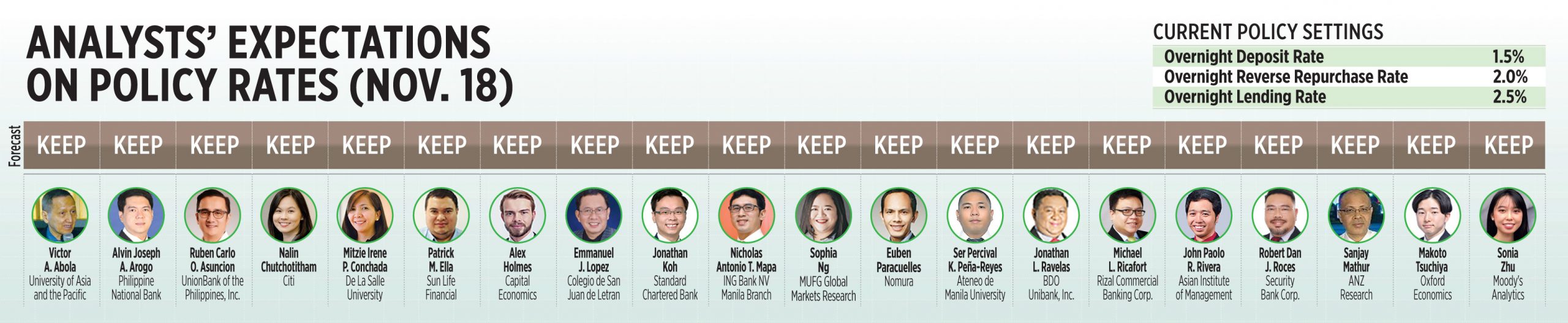
Twenty economists in a BusinessWorld poll held last week unanimously forecast that the Monetary Board would maintain the overnight reverse repurchase rate at a historic low of 2% during its Nov. 18 meeting.

“The BSP may continue to be patient and continue its accommodative monetary policy stance given the current domestic, external and financial developments,” BSP Governor Benjamin E. Diokno told reporters via Viber on Sunday.

Despite the stronger-than-expected gross domestic product (GDP) growth data in the third quarter, analysts think there is still a need to keep an accommodative policy stance because recovery has yet to firm up. 

“I think the BSP will keep policy rates unchanged. The economy is still weak and the recovery has to have strong legs [at least two more quarters of robust growth] to run before the BSP revises its rates,” said Victor A. Abola, an economist at the University of Asia and the Pacific.

ANZ Research Chief Economist for Southeast Asia Sanjay Mathur said it is not yet clear whether the third-quarter growth could be sustained.

Data from the Philippine Statistics Authority showed GDP rose by 7.1% year on year in July to September, a turnaround from the 11.6% decline a year earlier but slower than the 12% annual expansion in the second quarter. A strict lockdown was implemented in Metro Manila for two weeks in August to curb a Delta-driven surge in coronavirus disease 2019 (COVID-19) infections. On a quarter-on-quarter basis, GDP grew by 3.8%.

Economic managers are optimistic that the 4-5% growth target for 2021 is attainable as GDP expanded by 4.9% in the first nine months.

“The GDP prospects appear bright…These latest forecasts suggest that the country’s real output will revert to its pre-pandemic level by the third quarter of 2022, if not sooner,” BSP Governor Benjamin E. Diokno said in a Viber message to reporters on Sunday.

Mr. Diokno may likely be able to confirm whether economic growth is truly on the mend once the base effects from 2020 fade, ING Bank N.V. Manila Senior Economist Nicholas Antonio T. Mapa said. The economy contracted by a record 9.6% in 2020 amid long and strict lockdowns.

“We expect BSP to consider tightening sometime in the first half of 2022, after a considerable number of positive GDP data points give palpable evidence that the recovery is sustainable and as we inch closer to 2019 levels of GDP,” he said.

Ensuring sustained accommodative policy would help to solidify recovery as lower financing costs spur greater demand for credit, Rizal Commercial Banking Corp. Chief Economist Michael L. Ricafort said.

“This [credit] is in turn expected to help in stimulating more investments and job creation,” Mr. Ricafort said.

Capital formation, which is boosted by lending, rose by 22% in the third quarter, a reversal of the 39.5% contraction a year earlier but slower than the 80.3% rise in April to June.

Bank lending posted a second straight month of growth in September, expanding by 2.7% year on year.

Bank lending started to expand in August after eight straight months of contraction since December, with analysts saying it reflected the lag in monetary policy easing that began last year. The BSP slashed rates by 200 basis points in 2020 to support the pandemic-stricken economy.

While still above target, inflation has eased for two straight months. This strengthens the case for the BSP to maintain its policy settings, analysts said.

“The inflation rate remains elevated so I think the BSP will retain its policy rate at its next meeting,” said Mitzie Irene P. Conchada, an economist from the De La Salle University.

ANZ’s Mr. Mathur said inflation continues to be driven by supply issues but appears to be easing.

The consumer price index rose by 4.6% in October, easing from 4.8% in September as food prices increased slower.

This brought inflation year to date to 4.5%, which is still above the 4.4% forecast by the BSP for 2021 as well as the 2-4% target. Mr. Diokno said inflation could even be at a slower 4.3% this year given recent developments.

“With inflation likely to be within target next year, we continue to expect the BSP to be in no hurry to raise its policy rate before the fourth quarter of 2022, and ensure ample liquidity support for the nascent economic recovery,” said Nalin Chutchotitham, Citigroup, Inc. economist for the Philippines.

Mr. Diokno earlier said prematurely hiking interest rates could pose more harm to economic recovery than increasing it too late.

The Monetary Board kept interest rates unchanged at its September review, even as it raised its inflation expectation due to low supply. Officials said monetary policy support was needed to boost domestic demand and market confidence.

After Thursday’s meeting, the BSP will have its last policy review this year on Dec. 16.

GDP on track to hit pre-pandemic level by Q3 2022

PHILIPPINE STAR/ MICHAEL VARCAS

THE PHILIPPINE ECONOMY is expected to return to its pre-pandemic level by the third quarter of 2022, Bangko Sentral ng Pilipinas (BSP) Governor Benjamin E. Diokno said, citing the decline in coronavirus infections and the improving vaccination rate.

Mr. Diokno told reporters in a Viber message gross domestic product (GDP) growth prospects “appear bright,” after GDP expanded by 7.1% in the third quarter.

“Based on recent developments including the ramped up vaccine rollout and the ebbing COVID-19 (coronavirus disease 2019) cases, the Development Budget Coordination Committee GDP growth targets of 7-9% in 2022 and 6-7% in 2023 look doable,” he said.

“These latest forecasts suggest that the country’s real output will revert to its pre-pandemic level by the third quarter of 2022, if not sooner,” he added.

This is more optimistic than Mr. Diokno’s statement in September when he said the economy could only return to its pre-pandemic level by the fourth quarter of 2022 or the first quarter of 2023.

More than a third (34.14%) or 36.907 million of the Filipinos have been fully vaccinated against COVID-19.

The number of new COVID-19 infections have also declined in recent weeks, while mobility curbs have been relaxed in Metro Manila. The Health department reported 1,926 cases on Sunday, bringing the active cases to 28,102.

Mr. Diokno said the central bank could “continue to be patient and continue its accommodative monetary policy stance.”

He cited October inflation which eased as food supply conditions improved.

The consumer price index stood at 4.6% in October, slower than 4.8% in September as food prices increased slower. This brought inflation year to date to 4.5%, which is still above the 4.4% forecast by the BSP for 2021 as well as the 2-4% target.

“With sufficient slack in the labor market and the expected higher participation rate as workers re-enter the workforce, there is little likelihood of a wage hike as the vaccine rollout quickens and consumer confidence rises while economic activity expands,” he said.

Mr. Diokno said this contrasts with the inflationary pressures in the United States, European Union and United Kingdom, which are due to supply chain bottlenecks and higher labor costs.

“The threat of the peso depreciation is fading as the peso is expected to appreciate, with the prospect of stronger overseas Filipino remittance inflows in the last few weeks of the year in time for the Christmas holidays,” he said.

The peso ended Friday trading at P49.85 a dollar, gaining 31.5 centavos from its P50.165 close on Thursday, based on data from the Bankers Association of the Philippines. The currency also appreciated by 48 centavos compared with its close of P50.33 per dollar a week earlier.

The BSP chief also ruled out asset price bubbles, which could potentially threaten financial stability.

“There appears to be no pressure on rising real estate prices. The increase in real property prices in the National Capital Region (NCR) is either flat or slightly down, though there is a slight increase in prices in few places outside NCR,” he said.

In the second quarter, the BSP’s Residential Real Estate Price Index declined by an annual 9.4%, worse  than the 4.2% decline in the first quarter. This was mainly caused by the decline in condominium units and single houses.

The Monetary Board will have its policy setting meeting on Thursday, Nov. 18. All 20 analysts polled by BusinessWorld expect it to keep interest rates unchanged. — Luz Wendy T. Noble

Changes to BOT law’s rules may be too late, analysts say

PHILIPPINE STAR/ MICHAEL VARCAS

By Jenina P. Ibañez, Senior Reporter

PLANNED CHANGES to the rules implementing the Build-Operate-Transfer (BOT) law could be too late after the announcement was made just eight months before a new administration takes over, political analysts said.

“Since we’re already in the election season, it is ill-advised to amend the said implementing rules and regulations, even if the concerned administration officials claim that it is meant to promote transparency and to fast-track the approval of proposed PPP (public-private partnership) projects,” Philippine Political Science Association President Dennis C. Coronacion said in a Viber message.

Political strategist Gerardo Eusebio said any amendment might not be feasible given the time left for the administration, “and especially if the administration’s presidential candidate will not win.”

“The administration would certainly seek to stay on top of it because they consider the former to be one of their more successful, tangible flagship projects,” he said in a Viber message.

President Rodrigo R. Duterte recently named Socioeconomic Planning Secretary Karl Kendrick T. Chua as the chairman of an interagency committee that will amend the rules of Republic Act (RA) 6957 as amended by RA 7718.

RA 6957 or the Build-Operate-Transfer Law authorizes the private sector to finance, build, operate and maintain infrastructure projects.

The National Economic and Development Authority (NEDA) and PPP Center had said the amendments aim to protect the public from “excessive payments and undue guarantees arising from PPP projects, and promote the interests of Filipinos, who ultimately pay for the costs and returns of private proponents of PPP projects.”

The committee plans to start stakeholder consultations in December and come out with the amended rules by the first quarter of 2022.

Changes to BOT rules are likely a gesture from the outgoing administration to provide a social safety net for PPP and other development projects so that the government and Filipino taxpayers don’t get pushed into a fiscally aggravating position, said Marlon M. Villarin, a political science professor from the University of Santo Tomas.

The government’s stance is that private companies should embrace legally demandable accountability and better transparency measures, he said in a mobile phone message.

The Duterte administration previously steered clear of PPPs due to allegedly disadvantageous provisions such as subsidies and guarantees.

Experts have said well-designed PPPs could accelerate the country’s “Build, Build, Build” program.

Ragnar Gudmundsson, International Monetary Fund (IMF) representative to the Philippines, said PPPs could help mobilize financing for priority infrastructure projects.

“What matters is to ensure that PPPs are well managed so that they deliver results without adverse impacts on fiscal space and debt sustainability through unwarranted guarantees and contingent liabilities,” he said in an e-mail.

Byunghoon Nam, an ASEAN+3 Macroeconomic Research Office (AMRO) senior economist on the Philippines, said in an e-mail there is no reason for the Philippines not to take advantage of PPP-type projects, as long as safeguards are in place.

He said BOT rule changes seek to improve the design and management of PPP projects.

“Tighter controls could reduce the infrastructure investments funded by PPPs in the short term. Nevertheless, if the amended rules are properly implemented, more transparent and efficient management will lead to more financially viable PPP projects, preventing unnecessary fiscal payments and guarantees,” he said.

The “Build, Build, Build” program includes 112 priority projects worth P4.687 trillion. The government aims to complete 29 before Mr. Duterte steps down from office in mid-2022, while 51 projects are ongoing and 28 are in the pipeline.

BusinessWorld forum tackles PHL recovery roadmap

NEARLY TWO YEARS since the start of the pandemic, the Philippines is on the road to recovery. Armed with the lessons from the crisis, the government and the private sector are aiming to ensure the economy will become more sustainable, resilient and inclusive.

BusinessWorld, the Philippines’ leading business newspaper, returns with the BusinessWorld Virtual Economic Forum with the theme, “Recovery Roadmap PH: 2022 and Beyond.”

Local leaders and international experts will join the two-day forum on Nov. 24 and 25 to discuss the economic outlook and industry trends.

On the first day, keynote speakers include International Monetary Fund Director of the Asia and Pacific Department Changyong Rhee and Global Green Growth Institute Director-General Frank Rijsberman.

Finance Secretary Carlos G. Dominguez III will deliver a keynote speech on the second day, sharing his insights on the “Digital Economy Transformation and Inclusion in the Post-COVID Era.” World Economic Forum’s Head of Shaping the Future of Manufacturing Francisco Betti will discuss “Tech and Industry 4.0 Trends Shaping our Future.”

The first panel on Nov. 24 will focus on “Pandemic Shifts: How COVID-19 Will Transform our Tomorrow.” Panelists include Iluminada T. Sicat, senior assistant governor for the Monetary Policy Sub-Sector of Bangko Sentral ng Pilipinas; Sagarika Chandra, director for Asia-Pacific Sovereigns at Fitch Ratings; and Steven G. Cochrane, chief economist for Asia-Pacific at Moody’s Analytics. BusinessWorld Editor-in-Chief Wilfredo G. Reyes will moderate the panel.

For the panel “Creating a Culture of Business Resilience and Sustainability,” speakers include Jose Teodoro “TG” K. Limcaoco, president and chief executive officer (CEO) of the Bank of the Philippine Islands; Jaime T. Azurin, president and CEO of Meralco Powergen Corp.; Joseph Sigelman, CEO of Atlantic Gulf & Pacific Co.; and Raoul Antonio E. Littaua, president and CEO of The Insular Life Assurance Co. Ltd. BusinessWorld Managing Editor Cathy Rose A. Garcia will moderate.

Breakout sessions will tackle topics such as smart cities, climate change and clean energy. Speakers include Dr. Enrico C. Paringit, director of the Department of Science and Technology – Philippine Council for Industry, Energy, and Emerging Technology Research and Development; Srinivas Sampath, director of the Urban Development and Water Division of the Southeast Asia Regional Department of the Asian Development Bank; Rafael Fernandez de Mesa, president of LIMA Land and head of Aboitiz Economic Estates, Aboitiz InfraCapital, Inc.; and David T. Leechiu, CEO of Leechiu Property Consultants.

For the session on climate change, speakers include Emmanuel M. de Guzman, secretary of Climate Change Commission; Oliver Y. Tan, president of Citicore Power, Inc.; and Angela Consuelo S. Ibay, head of Climate Change and Energy Programme at WWF-Philippines.

There will also be a fireside chat with Eric Feigl-Ding, an adjunct senior fellow at the Federation of American Scientists, on “Strengthening the Public Health System.” Jean-Marc Arbogast, country manager for the Philippines at International Finance Corp. will speak with Daniela Luz Laurel, a columnist for BusinessWorld, on “Investing in Circular Economy as a COVID-19 Recovery Strategy.”

For the “Ask the Expert” session, Anthony Oundjian, managing director and senior partner at Boston Consulting Group, will discuss rebound tactics for pandemic-hit sectors.

Meanwhile, the second day of the forum will tackle digital transformation and technologies.

For the first panel “Accelerating the Growth of Emerging Industries,” speakers include Paolo Maximo F. Borromeo, president and CEO of Ayala Healthcare Holdings, Inc.; Angeline Tham, CEO of Angkas; and Vince Yamat, managing director of Globe’s 917 Ventures. It will be moderated by Andrew J. Masigan, a columnist for BusinessWorld.

The second panel on “Improving the Country’s Telecoms Connectivity” will feature Leo Urbiztondo, Jr., director of Government Digital Transformation Bureau at the Department of Information and Communications Technology (DICT); Jesus C. Romero, chief operations officer at Converge ICT Solutions; and invited speaker Joel Agustin, SVP, Program Delivery for Mobile & Fixed Networks at Globe Telecoms, Inc. Arjay L. Balinbin, senior reporter of BusinessWorld, will moderate.

A breakout session on data privacy and cybersecurity features Raymund E. Liboro, chairman of the National Privacy Commission; Raymond Medina, highly technical consultant for Cybersecurity Bureau of DICT; Yeo Siang Tiong, general manager of Kaspersky Southeast Asia; and Angel T. Redoble, chairman and founding president of the Philippine Institute of Cyber Security Professionals. BusinessWorld Senior Reporter Jenina P. Ibañez will moderate.

Another breakout session on upskilling the workforce will include Lars Wittig, country manager of International Workplace Group PHL; James Matti, managing director of Willis Towers Watson; and Suchita Prasad, leader of McKinsey Academy, Southeast Asia and senior expert of McKinsey & Co.

There will be two separate fireside chats with Jonathan Wong, chief of technology and innovation at the United Nations Economic and Social Commission for Asia and the Pacific; and Rafaelita M. Aldaba, undersecretary for the Competitiveness and Innovation Group at the Department of Trade and Industry.

For the “Ask the Expert segment,” Patricia Buenaventura Nichol, an expert partner for Hong Kong at Bain & Co., and Florian Hoppe, partner and head of Bain’s digital practice in Asia-Pacific will share their insights on digital consumers.

The BusinessWorld Virtual Economic Forum 2021 will be hosted on an interactive platform that will open networking opportunities for attendees.

The entire two-day forum will be hosted by Regina Hing, business news editor of Cignal TV, Inc.

Registration for the BusinessWorld Virtual Economic Forum 2021 is now open at www.bworldonline.com/BWVEF2021.

BusinessWorld Virtual Economic Forum 2021 is made possible by Gold sponsors: LT Group, Inc., Globe Telecom, Inc. and AG&P; Silver sponsors: Aboitiz InfraCapital, Inc., GT Capital Holdings, Inc., BDO Unibank, Inc. and SM Investmens, Inc.; Bronze sponsors: Maynilad Water Services, Inc., Manila Electric Co., SGV & Co., McDonald’s and Robinsons Supermarket; and with the support of Asia Society Philippines, British Chamber of Commerce of the Philippines, French Chamber of Commerce and Industry in the Philippines, Management Association of the Philippines, Nordic Chamber of Commerce of the Philippines, Philippine Chamber of Commerce and Industry, Philippine Franchise Association, Busybee, One News and The Philippine STAR.

For inquiries, please contact Shai Cordero through e-mail at marcom@bworldonline.com.

Price, valuation seen key as SPNEC secures nod on IPO

By Keren Concepcion G. Valmonte, Reporter

INTEREST in firms with environmentally relevant initiatives will draw investors to the P2.7-billion initial public offering (IPO) of Solar Philippines Nueva Ecija Corp., (SPNEC) but its final price and valuation will be more closely watched, analysts said.

Both the Philippine Stock Exchange (PSE) and the Securities and Exchange Commission (SEC) have approved of the planned public offering, SPNEC said in an e-mailed statement on Friday.

Net proceeds from the IPO will be used by the renewable energy (RE) company to partly finance the first phase of its 500-megawatt (MW) solar project. Construction is expected to begin before the end of 2021.

“We thank the PSE and SEC for approving this IPO, which aims to give the public a new option to invest in RE and increase the RE capacity of the Philippines,” Solar Philippines Founder Leandro L. Leviste was quoted in the statement.

Analysts said the IPO might be attractive to investors, given the current interest in investing in firms that have strong ESG (environmental, social, and governance) businesses or initiatives.

“The Solar [Philippines] IPO would potentially create some market interest or excitement, being part of the renewable energy story theme, in view of the ESG compliance observed by some local and global investors in recent years,” Rizal Commercial Banking Corp. Chief Economist Michael L. Ricafort said in a Viber message on Saturday.

Meanwhile, Diversified Securities, Inc. Equity Trader Aniceto K. Pangan noted that RE is now a “much-sought power source.”

“RE as a source of electrical power are a much-sought power source at these times due to the harmful effects of fossil or carbon related fuels in the environment,” Mr. Pangan said in a text message on Saturday.

“Aside from this, demand for power remains critical as seen even during [these] pandemic times and especially post-pandemic wherein strong economic growth will be [experienced],” he added.

Analysts said that the attractiveness of the offer will be dependent on the IPO’s final offer price and valuations.

“The markets would also look at the company’s fundamentals and valuations, relative to other renewable energy companies in the country as well as in other ASEAN or Asian countries,” Mr. Ricafort said.

The exchange said in a notice on Friday that it approved the listing of up to 8.12 billion common shares, inclusive of IPO shares, of SPNEC. The Leviste-led energy firm plans to offer up to 2.7 billion common shares to the public for as much as one peso per offer share.

According to its preliminary prospectus dated Nov. 12, the company may net up to P2.59 billion from the offer. It plans to use P1.003 billion of the net proceeds to fund the 50-MWdc (megawatt-direct current) “Phase 1A” construction and development of its 500-MW solar project.

SPNEC plans to spend around P200 million for the construction of an approximately 10-kilometer (km), 230-kilovolt (kV) transmission line, which will be used by the entire plant to service the full 500-MWp (megawatt-peak) target capacity.

The company said the line will traverse Cabanatuan City and Santa Rosa and Peñaranda towns in Nueva Ecija.

“Phase 1A is expected to commence operations in 2022,” SPNEC said. “The company also intends to commence construction of the transmission lines in the last quarter of 2021, and complete it by the commercial operations date of Phase 1A in 2022.”

Meanwhile, P23 million has been earmarked for its lease expenses for fiscal year 2022 “over project lands and for leases on the right of way.”

SPNEC said it aims to start the operations of Phase 1A “sooner” so the company can use cash flows from the business to additionally finance the construction of Phase 1B and Phase 2 of the project.

“At this time, the total project cost for Phase 1 is P4.875 billion, approximately 25% of which will be funded via equity and the remaining 75% will be funded via debt,” SPNEC said.

“At this time, the total project cost of the company’s 500-MWdc solar PV (photovoltaic) power project is estimated to cost around P11.906 billion, inclusive of estimated financing and capitalization costs and value added taxes, but are exclusive of any IPO-related fees and expenses,” it added.

On the other hand, P33 million is earmarked for general corporate purposes.

The company said “any amount in excess of” P1.332 billion will be used to acquire land for future expansion of the project. SPNEC has yet to “identify and finalize the exact location” and it will also “finalize the agreements with various yet to be identified landowners subject to due diligence.”

“The project’s future expansion areas may be located outside the area blocked off under the existing SESC (solar energy service contract), in which case the Company will process the necessary amendment to ensure existing SESC will cover future expansion areas (as permitted under the rules of the Department of Energy, secure the relevant government permits or approvals therefore (as may be necessary)) and secure corporate approvals therefore,” SPNEC said.

The PSE said the “conduct of the IPO and the listing of the company’s shares is subject to its compliance with all of the post-approval conditions and requirements of the Exchange.”

It is said to be the first time that a firm has been given the green light to list under the Supplemental Listing and Disclosure Requirements for Renewable Energy (RE) Companies, which was approved by the PSE in 2011.

The rules are said to allow “development-stage project companies” to list at the local bourse. However, they are subjected to certain requirements such as having a valid and subsisting service contract awarded by the Department of Energy (DoE).

Solar Philippines incorporated SPNEC in 2016 and scored a DoE service contract for the project in 2017.

“I am pleased that the PSE can support a renewable energy company with its fund-raising requirements,” PSE President and Chief Executive Officer Ramon S. Monzon said in a separate e-mailed statement on Friday.

“The need for RE is more amplified now as more companies are turning to RE as part of their climate action program.

SPNEC aims to conduct its offer period from Dec. 1 to 7, while its listing on the main board of the local bourse is tentatively slated for Dec. 17. The company aims to list under ticker symbol “SPNEC.”

The company has assigned Abacus Capital and Investment Corp. to be the issue manager and leader underwriter of the offer, while Investment Capital Corp. of the Philippines was engaged as a participating underwriter.

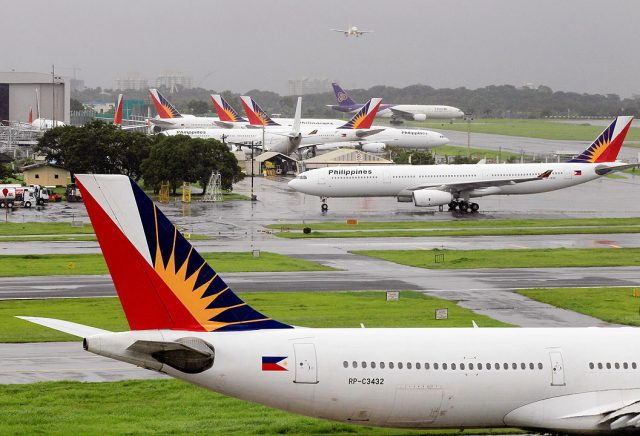
US court expected to decide on PAL reorganization plan next month

REUTERS

By Arjay L. Balinbin, Senior Reporter

THE United States Bankruptcy Court for the Southern District of New York is expected to decide next month on either to approve or reject the reorganization plan of flag carrier Philippine Airlines, Inc. (PAL).

“[T]he hearing at which the court will consider confirmation of the plan (the confirmation hearing) will commence on Dec. 17, 2021 at 10 a.m., prevailing Eastern Time before Honorable Shelley C. Chapman, United States bankruptcy judge,” a hearing notice dated on Nov. 12 said.

An industry source told BusinessWorld in a phone message on Nov. 11 that “if [the confirmation of plan hearing] goes well, this will pave the way for emergence from Chapter 11.”

The deadline for filing objections to the plan is Dec. 10, according to a copy of the notice from the airline’s claims agent Kurtzman Carson Consultants LLC.

As part of its plan, PAL intends to exit unprofitable markets and continue to fly on those routes that are, or can be made, profitable, while reintroducing capacity in line with evolving demands.

PAL expects to exit its recovery phase by the end of 2022, as operating activities “generate more consistent positive monthly cash flow.”

It expects an operating income of $220 million in 2022 and $364 million in 2023, the airline said in its plan of reorganization.

The airline filed a voluntary petition for relief under Chapter 11 of the US Bankruptcy Code in the US Bankruptcy Court for the Southern District of New York on Sept. 3.

In September, PAL officials expressed confidence that the flag carrier would exit the Chapter 11 process before the end of the year.

PAL Holdings, Inc. (not included in the Chapter 11 filing) had said that billionaire Lucio C. Tan’s private firm Buona Sorte Holdings, Inc. (BSHI) would inject “fresh and additional capital” amounting to P12.75 billion ($255 million) into the listed parent company of PAL.

BSHI would also provide a five-year loan of $250 million to PAL.

PAL Holdings trimmed its third-quarter attributable net loss to P5.28 billion from a loss of P7.92 billion in the same period a year ago.

Its gross revenue for the quarter climbed 66.7% to P14.12 billion from P8.47 billion previously.

For the nine months to September, PAL Holdings’ attributable net loss was reduced to P21.83 billion from a loss of P28.85 billion last year. Gross revenue went down by 29% to P32.16 billion from P45.29 billion previously.

The company’s consolidated operating expenses as of the third quarter of the year decreased to P42.75 billion or 36.7% lower than last year’s same period total of P67.52 billion, mainly due to the significant reduction in the number of flights operated.

PAL Holdings said expenses related to grounded aircraft, which were recognized this year under other charges, as well as lower manpower costs as a result of PAL’s retrenchment program in mid-March of the current year contributed to the decrease in operating expenses.

A tough time(piece)

A TOUGH new watch by Tudor was created with a collaboration with the French Navy’s combat swimmer unit, the Commando Hubert.

The new watch, launched in a press conference last week, is called the Pelagos FXD. It is a diver’s watch, waterproof up to 200 meters, with grade X1 Swiss Super-LumiNova luminescent material filling.

“We never lose track of time, even in the darkest of nights,” the company said in a presentation.

The glowing markers on the hands and around the dial are surrounded by a bidirectional rotatable bezel in titanium with a ceramic insert. The dial itself is in matte blue, and the piece is powered by the Manufacture Calibre MT5602, certified by the Official Swiss Chronometer Testing Institute (COSC) with a silicon balance spring and a 70-hour power reserve. This particular movement exceeds the standards set by the COSC. The COSC allows an average variation in the daily running of a watch of between -4 and +6 seconds in relation to absolute time in a single movement; but the Manufacture Calibre MT5602 insists on a variation between -2 and +4 seconds in its running when it is completely assembled.

The watch is worn with either a navy blue fabric strap, or else a one-piece rubber strap.

The watch has a 42mm satin-brushed titanium case with fixed strap bars, machined from a single block of titanium. “There can be no weak point,” said the company.

The case back is engraved with the Marine Nationale (French Navy) logo and the inscription “M.N.21” (Marine Nationale 2021), inspired by the original engravings of the 1970s and ’80s.

The new watch isn’t the first collaboration between the brand and the French Navy: back in 1956, the Groupe d’Étude et de Recherches Sous-Marines (G.E.R.S.), a scientific body attached to the French Navy and based in Toulon, took delivery of some Oyster Prince Submariner watches in order to assess them in real-life situations. They were references 7922 and 7923, both waterproof to 100 meters (330 ft) and fitted with self-winding and manual movements, respectively. The waterproofness of these watches was judged to be “perfect” and their performance “entirely correct” by the G.E.R.S. commanding officer at the time. Persuaded by the potential of the instruments offered by the brand, they quickly placed more orders, enabling TUDOR to attain the status of “official supplier to the French Navy” in 1961.

The most famous Tudor divers’ watch used by the French Navy is the reference 9401, with a blue dial and bezel. This model was launched in the mid-’70s and was supplied to the French Navy until the 1980s. It continued to be used into the 21st century, particularly at the French Navy’s diving school, as well as by combat swimmers. According to a statement, “Although officially removed from the French Navy’s supply stocks some 20 years ago, it can still be seen sometimes today on the wrists of reserve and retired sailors alike.”

Tudor is available in boutiques in Bonifacio Global City, Trinoma, SM Mall of Asia, Okada, City of Dreams, Shangri-La Plaza, The Podium, Makati, and Cebu. — J.L. Garcia

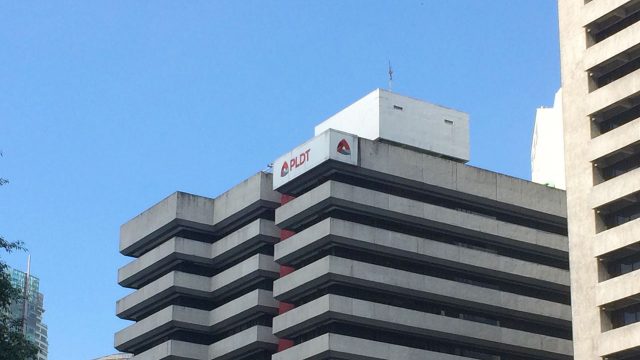
PLDT expects ‘big growth’ in 2022

BW FILE PHOTO

PLDT, Inc. on Sunday said it anticipates “big growth” in the coming year, as it expects to surpass its one million new fiber customers target for this year.

“We are in a position of strength both in the home and enterprise segments, and are determined to stay head,” PLDT and Smart Communications, Inc. President and Chief Executive Officer Alfredo S. Panlilio said in an e-mailed statement.

“We have new ports coming in that will enable our Home team to offer our services to all Filipinos that remain unserved. As this continues to be a huge demand, we look forward to big growth as well next year,” he added.

PLDT said it breached the 800,000 new installations mark as of end-September.

Its Home business saw more than 324,000 new fiber customers in the previous quarter.

“Demand for easy installation and reliable connectivity at home continues to drive PLDT’s Home business growth streak as more customers adjust to the digitalization of hybrid work and school setups,” PLDT noted.

The telco’s fiber footprint now spans over 615,000 kilometers, with over 12.7 million homes passed and 5.3 million ports ready for service.

As of the third quarter, PLDT’s attributable net income declined 4.6% to P18.8 billion from P19.7 billion a year ago.

PLDT’s telco core income, which excludes the impact of asset sales and Voyager Innovations, climbed “10% year on year, or P2.1 billion, to P23.1 billion in the first nine months of 2021, helped by lower tax rates,” the company said in a statement.

PLDT Home saw its revenue increase 25% to P35.3 billion for the January-September period. Its third-quarter revenue went up 29% to P12.6 billion.

Hastings Holdings, Inc., a unit of PLDT Beneficial Trust Fund subsidiary MediaQuest Holdings, Inc., has a majority stake in BusinessWorld through the Philippine Star Group, which it controls. — Arjay L. Balinbin

Shopee’s 11.11 sale sets new record of over 2 billion items sold

Shopee said 5 million hours of live streams were watched on Shopee Live during the 11.11 Big Christmas Sale, which included a performance by the K-Pop boy band, NCT 127.

One Pinoy shopper spent over P466,000

FILIPINOS have a reputation as being serious shoppers, and one particularly serious shopper spent over ₱466,000 during Southeast Asian e-commerce site Shopee’s 11.11 Big Christmas Sale. The company said that in a single order, the Quezon City-based shopper bought motorcycle parts, electric tools, game consoles, smartphones, and tablets.

That serious shopper was just one of many as Shopee announced that it had set two new records at its recent 11.11 online shopping festival: over 2 billion items were bought by shoppers across the region, which includes Taiwan, during the festival period, smashing its previous record in 2020; and shoppers’ visits spiked 5.5 times within the first two hours of Nov. 11 compared to an average day.

In the Philippines, the 11.11 Big Christmas Sale attracted more shoppers from outside the metro, Shopee said, with most orders in the country coming from South Luzon, followed by Metro Manila.

“It brings us great joy to see the impact of our 11.11 Big Christmas Sale on shoppers, businesses, and our local communities,” said Martin Yu, Director at Shopee Philippines, in a statement. “The digital economy continues to present many opportunities for growth, and we want to enable more people to benefit from this growth by increasing e-commerce adoption and helping more consumers and businesses go online. At the same time, we are humbled that we can use our platform to give back to the wider community and support those in need. We look forward to creating more impact for our users in the months ahead.”

According to the Shopee statement, the sale saw the number of shoppers from rural and smaller towns increase five times when compared to a regular day. It also said that more than 3.5 billion messages were sent on the in-app Shopee Chat on Nov. 11, “as shoppers were able to interact live with sellers and get more information prior to making their purchases.”

It also noted that more shoppers used ShopeePay to pay for their Shopee orders across the region, “especially outside big cities where ShopeePay transactions grew nine times from an average day,” it said in a statement.

Local sellers who had joined the 11.11 sale for the first time “saw their orders surge 18 times compared to an average day,” said the statement.

The e-commerce company noted that Filipinos “have consistently prioritized health essentials and home decor during Shopee’s past sales, and the 11.11 Big Christmas Sale was no different.” Shoppers stocked up with 3 million face masks and bought over 800,000 wallpapers, it pointed out.

The brands that attracted the most orders among Filipinos during the sale were Uni-Care, Unilever Beauty, Xiaomi, NIVEA, and INSPI.

Aside from the bargains, the 11.11 sale also included entertainment, notably live-streaming of the K-Pop boy band NCT 127, among others. The site said 5 million hours of live streams were watched on Shopee Live during the sale, and that over 270 million plays were recorded on Shopee Prizes in the Philippines.

Over 1.2 million offline payment vouchers were claimed through ShopeePay “Deals near Me,” Shopee’s location-based feature, it said. Almost 100,000 users used ShopeePay to pay their utility bills, taking advantage of rewards in the form of cashbacks, it noted.

Globe aims to launch more potential unicorns

GLOBE Telecom, Inc. said the success of GCash operator Globe Fintech Innovations, Inc.’s (Mynt) latest funding round motivates the company to launch more potential unicorns in the near future.

“We believe that our strategy to use the telco business as a platform to become a digital solutions group by exploring adjacencies in high-growth areas such as fintech (financial technology), healthtech (health technology), adtech (advertising technology), and e-commerce, among others, will embolden us to launch more potential unicorns in the near term and pave the way for us to become a leader in the digital space,” Globe President and Chief Executive Officer Ernest L. Cu said in a statement on Friday last week.

Globe recently announced that Mynt had raised over $300 million in fresh funding, bringing its valuation to more than $2 billion (double unicorn status).

GCash now has more than 51 million registered users, 3.9 million digital touchpoints, over 94,000 cash-in and cash-out agents, and more than 750 billers.

Globe said GCash is on track to triple its gross transactions handled to P3 trillion this year from the record P1 trillion reported last year.

The telco saw its attributable net income for the third quarter increase 11.8% to P4.91 billion from P4.39 billion in the same period a year ago.

Total revenues for the period grew 3.8% to P38.09 billion from 36.68 billion previously.

“The rising data consumption and broadband usage in the country remains the biggest driver for this period’s improved topline,” Globe said.

“Total data revenues accounted for 80% of total service revenues from 76% last year,” it added.

As of September this year, the telco’s attributable net income increased 12.8% to P17.90 billion from P15.87 billion in the same period in 2020.

Total revenues for the January-to-September period grew 4.1% to P113.55 billion from P109.10 billion in the previous year.

Globe Telecom shares closed 1.15% lower at P3,430 on Friday. — Arjay L. Balinbin

ADVERTISEMENT
ADVERTISEMENT