Home Blog Page 7188

BoC beats 10-month collection goal

BW FILE PHOTO

THE BUREAU of Customs (BoC) on Monday said it surpassed its 10-month collection target by 2.4%, putting the agency on track to meet its full-year goal.

In a House Public Accounts Committee hearing, Customs Commissioner Rey Leonardo B. Guerrero said the BoC collections reached P525.37 billion as of end-October, exceeding the P513.19-billion target. He said the figure is also 17.1% higher than the P448.95-billion collection during the same period in 2020.

The BoC has consistently beat its monthly collection targets since January.

Mr. Guerrero said the latest tally gives him confidence the agency will hit the P616.7-billion full-year collection goal set by the Development Budget Coordination Committee. In 2020, the BoC collections fell by 14% to P537 billion due to the slowdown in international trade.

“To address smuggling… we have established our Customs Operations Center to profile shipments and take out high-risk shipments and possibly (those) containing contraband. We also intensified our scanning capabilities… (by) acquiring additional X-ray (machines),” Mr. Guerrero said in a mix of English and Filipino.

The BoC has confiscated P23-billion worth of smuggled items during the period ending October, more than double the P10.6-billion worth of smuggled items seized in 2020. Customs confiscated P20.6-billion worth of smuggled items in 2019.

The agency collected P133.58 billion in excise taxes on imported oil products so far this year.

Mr. Guerrero also said that the BoC intensified its post-clearance audit of importers which generated P1.41-billion worth of revenues this year.

REVENUES FROM PORK IMPORTS
Meanwhile, the BoC collected P3 billion from swine meat imports as of mid-November, and estimated P3.4 billion in foregone revenue after the government cut tariffs to stabilize pork prices.

A total of 197 million kilograms (kgs) of pork have entered the country from April 7 to Nov. 12 this year, or since President Rodrigo R. Duterte’s orders to lower pork import tariffs took effect, the Department of Finance said on Monday.

The government cut pork tariffs to improve inventory and ease prices amid an African Swine Fever outbreak that depleted pork supply.

Mr. Guerrero said pork imports started going up in March and steadily grew until May.

The volume of pork imports went up by more than six times to 24.45 million kgs in April compared with the same month a year earlier.

“This dramatic increase in pork import volumes continued in May, when a total of 36.5 million kgs entered the country, representing a 506% hike from the 6.02 million kgs imported during the same period in 2020,” DoF said.

Pork imports of 33.62 million kgs in June was more than six times than a year earlier, then dropped to 31.18 million kgs in July, which was still more than four times than the year before.

In August, pork imports reached 23.82 million kgs, or less than four times the previous year. Pork imports reached 25.73 million kgs in September and 19.36 million kgs in October. — Jenina P. Ibañez and Russell Louis C. Ku 

Philippines creates its own pandemic response scorecard

PHILIPPINE STAR/ MICHAEL VARCAS

By Jenina P. Ibañez, Senior Reporter

THE PHILIPPINE government has created its own scorecard to assess its pandemic response as it extends the fourth phase of its national action plan against the coronavirus disease 2019 (COVID-19).

The National Economic and Development Authority (NEDA) introduced the scorecard on Monday as it criticized global indices showing the Philippines scored poorly in handling the COVID-19 outbreak.

“We are being compared against the other countries and there’s no consideration for country-specific COVID context,” NEDA Undersecretary Rosemarie G. Edillon said at a briefing.

As vaccinations lagged, the Philippines remained at the bottom of Bloomberg’s COVID Resilience Ranking last month, which ranked the best and worst places to be during the pandemic. The country improved to 103rd out of 121 countries in the Nikkei Asia COVID-19 Recovery Index after ranking last a month earlier.

Ms. Edillon said these indices are useful because the Philippines can learn from how other countries reopened their economies.

But she noted that under the international rankings, indicators like the reopening of the economy or COVID-19 case count are equally weighted, which means that one indicator is used as if it could be substituted for another.

“The goal of the National Action Plan (NAP) Phase 4 is to manage COVID-19 towards a healthier and resilient Philippines,” she said. “The goal really is to balance these health and economic objectives.”

The fourth phase of the national action plan started in July and will be enforced until 2023. The phase focuses on sustaining a “new normal,” enforcing the updated Philippine Development Plan, and implementing the national vaccine roadmap.

Earlier phases focused on mitigating economic impacts, planning for vaccination, and managing health risks.

The phase 4 action plan aims to monitor COVID-19 case recurrences and outbreaks, standardize border control, reach COVID-19 immunization of 70 million Filipinos by the end of this year, and create a sustainable nationwide immunization program by 2023.

The plan also aims to promote aggressive contact tracing and enforce a plan to catch up on long-term COVID-19 impacts on learning and the supply chain.

The government’s scorecard assesses the country’s infection management, vaccine rollout, and socioeconomic recovery under this NAP Phase 4.

Under this scorecard, the government gave itself a score of 4.42 in September and 4.83 in October out of a total possible score of 9.

Infection management and vaccine scores improved as the number of critical COVID-19 cases declined and as more people received the jab. But the socioeconomic score fell as flight activities worsened.

“We had many flight activities that were allowed in September, but because of the surge in (COVID-19) cases then we brought that down in October,” Ms. Edillon said.

She expects the score in November to improve, but did not offer targets.

Metro Manila is currently under a more relaxed Alert Level 2, as new COVID-19 cases continued to drop. As of Monday, the Health department reported 984 new COVID-19 infections, bringing the active caseload to 19,798.

According to the Johns Hopkins University Coronavirus Resource Center, the Philippines has now fully vaccinated 30.52% of the population.

The Nikkei index assessed how much closer a country is to recover in terms of infection management, vaccine rollouts, and social mobility, while the Bloomberg index measures the effectiveness of COVID-19 handling with the least social and economic upheaval.

DoF eyes foreign government buyout of shares in coal-fired power plants

PHILSTAR FILE PHOTO

THE DEPARTMENT of Finance (DoF) is considering the possibility of getting foreign governments to buy out their citizens’ shareholdings in corporations that run coal-fired power plants in the Philippines.

Finance Secretary Carlos G. Dominguez III in a press release on Monday said the proceeds from the buyouts can be donated to fund a Philippine initiative to transition to clean energy.

These buyout proceeds could go into an Asian Development Bank (ADB) partnership that aims to fund the early retirement of coal-run power plants and replace them with renewable energy alternatives.

“If we can get the foreign governments to buy out those shareholders and donate the shares of that company to a government — to our government — or to a group, including ADB and other agencies, we can actually shut down that plant,” Mr. Dominguez said at the recently concluded 26th United Nations Climate Change Conference of the Parties (COP26) held in Glasgow.

“And that foreign government would actually be making a contribution to reducing a coal-fired power plant.”

Some overseas companies, DoF said, have significant stake in the continued operation of the coal plants.

The ADB energy transition mechanism is a public-private finance program that plans to reduce coal-fired power generation by retiring coal plants and supporting renewable energy use.

The Philippines will pilot the project to buy and repurpose the coal-fired power plants in Mindanao while the capacity of the Agus-Pulangi hydropower plant is being upgraded.

“(The mechanism) will bring together concessional resources from donor governments and philanthropies, in close coordination with global climate change-focused funds, to leverage large amounts of commercial capital to trigger a decisive shift towards decarbonization,” DoF said.

The energy transition mechanism is made up of two multibillion-dollar funds, with one focused on quicker early plant retirement, while the other one is devoted to new clean energy investments in power generation, storage, and grid upgrades.

Multilateral banks, private institutional investors, philanthropic contributions, and long-term investors will provide capital for the project, ADB said.

A two- to three-year pilot phase would raise funds needed to speed up the retirement of five to seven coal plants and invest in clean energy in the Philippines and Indonesia.

Mr. Dominguez said employees working at a Mindanao coal-fired plant set for closure will be retrained to work in other energy projects.

“There are not a lot of people actually working in that particular coal-fired power plant, or in any coal-fired power plant. So it’s very easy to retrain them to do other projects,” he said.

He has been pushing for climate financing from wealthier economies that have not offered enough to help developing nations reduce their carbon footprints. Such countries bear the most responsibility for their historic emissions, he said.

The Philippines has committed to reduce greenhouse gas emissions by 75% from 2020 to 2030. Of the 75% target, just 2.71% can be achieved with internal resources, while the remaining 72.29% would rely on international assistance. — Jenina P. Ibañez

More Filipinos opening bank deposit, e-money accounts

PHILSTAR

AN INCREASING number of Filipinos are opening bank deposit and e-money accounts, but improved financial literacy is needed to ensure they will not fall prey to investment scams and risky lending schemes, Bangko Sentral ng Pilipinas (BSP) Governor Benjamin E. Diokno said.

“The number of Basic Deposit Accounts opened in 2019 was only 4 million. As of the second quarter of 2021, we now have 7.4 million accounts with an aggregate amount of P 4.9 billion,” Mr. Diokno said during the opening of the Financial Education Stakeholders Expo on Monday.

Active e-money accounts surged by 93% to 34.7 million in 2020 from 17.9 million a year earlier, he added.

By 2023, the central bank hopes 70% of Filipino adults will have a formal transaction account.

“The volume of digital payments increased dramatically, from the 14% pre-pandemic level, to a little above 20% in 2020,” Mr. Diokno said. The BSP hopes to make the Philippines a cash-lite society by 2023 where 50% of payments are done online.

Filipinos’ financial behavior has changed during the pandemic.

“They are prioritizing saving, availing health and life insurance, and preparing for retirement to provide better financial opportunities for themselves and their families during and beyond the pandemic,” Mr. Diokno said.

However, Filipinos’ financial literacy lags behind other countries. Mr. Diokno cited a World Bank survey which showed Filipino adults could only answer three out of seven questions on financial literacy. He noted Filipinos scored low in inflation, interest computation, and simple division. 

A BSP study in the fourth quarter last year showed one in 100 Filipinos have been a victim of investment scams, he said. Five in 10 Filipinos obtain loans from informal money lenders, while five in 10 still keep their savings at home.

“Many Filipinos are still delaying saving, mismanaging credit, bypassing legitimate investment opportunities, or falling victim to investment scams,” he said.

Against this backdrop, Mr. Diokno said financial education is crucial, which is why the BSP partnered with various stakeholders to reach out to more Filipinos.

The BSP’s financial education partners include the Armed Forces of the Philippines, Bureau of Fire Protection, Civil Service Commission, Commission on Higher Education, Department of Agriculture, Department of Education, Department of Social Welfare and Development, Department of Trade and Industry, Overseas Workers Welfare Administration, and the Philippine National Police.

One of the BSP’s strategies is to craft targeted financial education content for priority sectors including learners, teachers, civil servants, overseas Filipino workers, farmers, etc.

“Our key objectives include protecting financial consumers from various online threats and cyber risks, building trust in the digital finance ecosystem, and increasing uptake of digital financial services,” he said. — Luz Wendy T. Noble

FLI bullish on growth after strong home sales

FILINVEST Land, Inc. (FLI) is optimistic in maintaining its growth momentum due to the “improving business environment” and because of its strong residential business segment.

“The business environment is improving and our growth in sales and revenues in the residential segment mirrors the same trend,” FLI EVP and Chief Strategy Officer Tristaneil D. Las Marias said in a statement on Monday.

“We are also more prepared now in our construction sites which allowed us to sustain our construction progress better this year despite the reimposition of lockdowns,” he added.

According to a separate disclosure to the exchange on Monday, FLI’s attributable net income grew 71% to P569.68 million in the third quarter from P332.83 million year on year. Its topline also rose 6% to P4.29 billion from P4.04 billion.

Real estate sales went up by 36% to P2.87 billion from P2.12 billion in the same period last year. Residential sales from the third quarter cushioned the 26% decline in rental services to P1.42 billion from P1.92 billion.

For January to September, FLI profit grew 21% to P3.19 billion from P2.63 billion last year. Total revenue inched down 0.38% to P12.47 billion from P12.51 billion.

However, revenues from its residential business posted a 23% growth to P8.19 billion from P6.67 billion. FLI said the growth was driven by its continued construction progress and the 17.5% increase in reservation sales, which totaled P14 billion.

Meanwhile, FLI said “rental revenues remain sluggish,” declining by 27% to P4.28 billion from last year’s P5.84 billion because of pandemic restrictions. 

FLI remains optimistic in maintaining its growth momentum.

“As the economy continues to reopen, we see mobility and business activity further improving in the fourth quarter. We are optimistic that we will be able to sustain our growth momentum onwards,” Mr. Las Marias said.

The listed property developer spent P6.7 billion in capital expenditures as of September this year, 44% of which were spent on residential developments, 32% on office developments, and the balance on retail, innovation or logistics parks, and land acquisition.

FLI-sponsored real estate investment trust (REIT) Filinvest REIT Corp. (FILREIT) also raised P12.58 billion from its initial public offering (IPO) in July. FILREIT made its market debut in August, while proceeds from its IPO will be used to fund its office, industrial, retail, and residential projects.

“The proceeds from the [FILREIT] IPO will allow FLI to accelerate growth in its various businesses as we prepare for the economic recovery,” FLI President and Chief Executive Officer Lourdes Josephine Gotianun-Yap said.

FLI shares on Monday declined 1.80% or two centavos to close at P1.13 each. — Keren Concepcion G. Valmonte

PSE OK’s Philippine Estates’ P1.45-B stock rights offering

BW FILE PHOTO

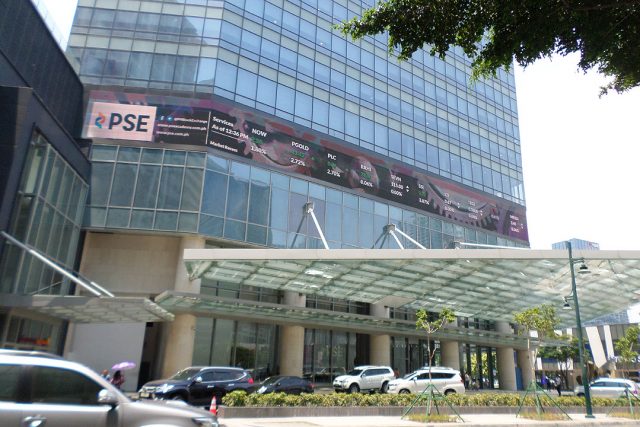
THE Philippine Stock Exchange (PSE) has approved the P1.45-billion stock rights offering of Philippine Estates Corp., proceeds of which will be used for land acquisition and for general corporate purposes.

“The exchange’s approval of the listing of the right shares is subject to the company’s compliance with all applicable requirements and post-approval conditions of the exchange,” the PSE said in a listing notice on Monday.

According to its preliminary prospectus dated Nov. 18, Philippine Estates is planning to offer 1,445,549,830 common shares for one peso apiece.

Philippine Estates is offering the rights shares to all eligible shareholders, who will be entitled to subscribe to one rights share for every one common share held as of Dec. 2.

The company said the offer shares will be issued from its unissued authorized capital stock.

Philippine Estates’ principal shareholder, The Wellex Group, Inc., which holds 10.6% of the total outstanding shares of the company as of Sept. 30, will subscribe to its entitlement shares at the initial round and second round of the rights offer.

The company said The Wellex Group will also subscribe to the remaining entitlement shares that would not be taken up in the second round of the rights offer.

Philippine Estates is planning to conduct the rights offer from Dec. 6 to 13 for eligible shareholders and on Dec. 15 for the principal shareholder. Meanwhile, it is targeting a listing date of Dec. 24.

“Proceeds from the stock rights offer are intended to be used for the acquisition of land for the company’s pipeline of projects and the remaining balance to be used for general corporate purposes,” the company said in a disclosure on Monday.

The company has engaged Abacus Capital & Investment Corp. as the issue manager and underwriter for the transaction.

Shares of Philippine Estates went up by 17.39% or eight centavos on Monday to close at 54 centavos apiece. — Keren Concepcion G. Valmonte

EEI joint venture bags P11-B propane plant project in Saudi Arabia

EEI Corp. and Al Rushaid Petroleum Investment Co.’s (ARPIC) joint venture firm Al Rushaid Construction Co. Ltd. (ARCC) has bagged an P11-billion deal to build a propane dehydrogenation (PDH) plant project in the Kingdom of Saudi Arabia.

The PDH plant is for the Advance Polyolefins Industry Co., a joint venture of Advanced Global Investment Co., which is wholly owned by Advanced Petrochemical Co. and SK Gas Petrochemical.

ARCC is also tasked to build the plant’s utilities and off-site facilities, which “consist of water and air essential to plant utility production facilities that produce steam, auxiliary facilities, and water treatment facilities,” under the deal made last month.

In a disclosure to the Philippine Stock Exchange on Monday, EEI said ARCC is in charge of the “civil, building, steel structure, mechanical, tank, piping, painting, electrical and instrumentation works of the project for a total of 25 months.”

It added that the PDH plant will have a capacity of 843,000 tons of propylene annually “by removing hydrogen from propane” to feed two polypropylene plants 400,000 tons each per year “for production of specialty polymers by manufacturers of face mask, automotive, pipes, food packaging and textile industries.”

Construction of the plant will be done by Italian engineering company Tecnimont, while propane feedstock will be provided by Saudi Arabian oil company Aramco under a long-term contract.

Work for the PDH plant started this month and is expected to be completed in November 2023 with a total of 3,769 workers.

Aside from the PDH plant, EEI said ARCC secured seven other projects this year.

EEI has also secured two contracts this year, one with Cebu Landmasters, Inc. to build a 40-storey mixed-used building at the Cebu Business Park and another with SM Development Corp. to build a 52-storey residential tower in Malate, Manila.

“EEI Corp. maintains a substantial backlog of projects that is sufficient to sustain the business in the next three to five years. But what’s more important is that we are well-positioned to win more contracts as we continue to bid for mega infrastructure projects here and abroad,” EEI Corp. President and Chief Executive Officer Roberto Jose L. Castillo said.

Shares in EEI at the local bourse went up by 1.4% or nine centavos on Monday to end at P6.52 apiece. — Bianca Angelica D. Añago

Converge eyes MSCI Index inclusion

By Arjay L. Balinbin, Senior Reporter

CONVERGE ICT Solutions, Inc. on Monday said its shareholder, Coherent Cloud Investments, B.V., sold 420 million shares for P30 each, a move seen to bring the listed company closer to the MSCI Index.

The transaction, which reduced Coherent Cloud’s interest in Converge to 10.25% from 15.83%, increased the Dennis Anthony H. Uy-led company’s public float, or shares that can be publicly traded and are unrestricted, from 20.4% to 26%.

Coherent Cloud is owned by US private equity firm Warburg Pincus.

This puts Converge “in a stronger position to be included in the MSCI Index at the upcoming index reviews,” Converge Co-Founder and President Maria Grace Y. Uy said at a virtual briefing.

Philstocks Financial, Inc. Senior Research Analyst Japhet Louis O. Tantiangco said the MSCI index is a gauge “very much followed” by the global investment community.

“So, a stock’s inclusion in the said index may boost sentiment towards it,” he said in a phone message.

Inclusion in the MSCI “will allow for increased exposure to global funds and, consequently, higher value turnover for the stock,” Regina Capital Development Corp. Equity Analyst Anna Corenne M. Agravio said by phone.

Converge Chief Financial Office Advisor Matthias Vukovich said the increased free float will allow the company to fulfill the different criteria for MSCI Index inclusion, “which includes the value of the free float and the percentage of the free float.”

The 420 million shares account for about 5.6% of the outstanding common shares.

“Now, with our investible market cap increased by 5.6%, we believe that it will significantly improve our trading liquidity, allowing for greater investor participation and trading of our stocks,” Mr. Vukovich said.

For her part, Ms. Uy said: “There was strong reception from high quality investors (global and domestic) that enabled us to increase the base size of the transaction and accommodate the robust investor interest.”

Converge’s attributable net income for the first nine months of the year went up by 137% to P5.20 billion from P2.19 billion in the same period in 2020.

January-to-September revenues increased by 76% to P18.83 billion from P10.68 billion last year.

Converge ICT shares closed 1.44% lower at P30.80 apiece on Monday.

Del Monte Pacific approves issuance of dollar-denominated senior notes

DEL MONTE Pacific Ltd.’s (DMPL) board of directors has approved the issuance of a benchmark-sized US dollar-denominated Regulation S offering of three-year unrated senior notes.

In a disclosure to the exchange on Monday, DMPL said the size and the terms of the notes will be determined at a later date. No other details were disclosed.

“The notes are not and will not be registered with the Philippine Securities and Exchange Commission,” DMPL said.

“Any future offer or sale of the securities in the Philippines is subject to the registration requirements under the Philippine Securities Regulation Code, unless such offer or sale qualifies as a transaction exempt from these requirements,” it added.

The company tapped Credit Suisse as the sole global coordinator for the planned transaction and UnionBank of the Philippines was assigned as the domestic lead manager.

A series of fixed income investor calls in Asia and Europe will be arranged beginning on Monday, while “an offering of the notes may follow.”

On Monday, shares of DMPL at the stock exchange went up by 0.82% or 12 centavos to close at P14.80 each. — Keren Concepcion G. Valmonte

Nine new Pinoy silent films premiere in 15th Int’l Silent Film Fest

NINE new silent Filipino short films join this year’s lineup at the 15th edition of the International Silent Film Festival Manila, which will run from Nov. 24 to Dec. 3.

The film festival is presented by the Japan Foundation, Manila, the Embassy of Italy with the Philippine Italian Association, Instituto Cervantes, the British Council, the Goethe-Institut, the Embassy of France, and the Film Development Council of the Philippines (FDCP).

“This is a very important time where culture and the arts are truly gaining momentum once again, after almost two years of lockdown. And we want to lead this creative and memorable revival with this international silent film festival,” Japan Foundation Manila Director Ben Suzuki said at an online press conference on Nov. 17.

This year the festival will feature six classic silent films from France, Germany, Italy, Japan, Spain, and the United Kingdom, and nine short films especially produced by the FDCP to represent the Philippines. The films will be accompanied by original musical scores from Filipino musicians.

The program will be screened online via the FDCP Channel (https://fdcpchannel.ph/isffm2021).

The festival will open with the screening of Orochi (Serpent), a 1925 action film by Futagawa Buntarō that will be live scored by Munimuni band.

The invitational opening ceremony will be held on Nov. 24 at the newly renovated Manila Metropolitan Theater. Health and safety protocols will be in force.

The rest of the film festival’s screenings and international round table webinars will be accessible online from the Nov. 25 to Dec. 3.

Instituto Cervantes will screen Carceleras (José Buchs, 1922) on Nov. 25 (3 p.m.). It will be followed by the first panel discussion at 5 p.m. titled “How to Watch a Silent Movie.” At seven in the evening, The Philippine-Italian Association will screen Giulio Antamoro’s Pinocchio (1911).

The British Council will screen Dr. Wise on Influenza (1919) on Nov. 26, (3 p.m.). This will be followed by a panel discussion on the “Restoration and Reinventions in Film Archives,presented by speakers from the United Kingdom, Germany, France, and the Philippines. The Goethe-Institut concludes the second day of the festival with the screening of Das Wachsfigurenkabinett/The Waxworks (1924) directed by Paul Leni and Leo Birinski at 7 p.m.

The French embassy will screen The Foreman on Nov. 27, 3 p.m., followed by a masterclass on the “History of Silent Films in the Philippines,presented by speakers from the Philippines. The Japan Foundation, Manila closes the third day of the festival at 7 p.m. with the screening of Futagawa Buntarō’s Orochi (Serpent) (1925).

The films will be available on demand at the FDCP Channel from Nov. 28 to 30.

SILENT FILM LAB
Meanwhile, the Filipino films included in the International Silent Film Fest are the finalists of the Mit Out Sound (MOS): International Silent Film Lan 2021, which was launched by the FDCP in May.

Nine filmmakers worked with nine composers to produce nine short silent films. The films (Set A) are Ang Tatlong Hambog by Sari Katharyn; Ing Tianak by EJ Gagui and Marienel Calma; Alingasngas Ng Mga Kuliglig by Vahn Leinard C. Pascual; Ang Pagsuyo sa Paru-Paro ng Gabi by Racquel De Guzman Morilla; and Dikit by Gabriela Serrano; and (Set B), Ha-Ha-Hambog by Kate Torralba and Jopie Sanchez; I Need More Than Tofu and Other Vegetables by Hector Barretto Calma; Putol (The Cut) by Nikolas Red; and Ang Pagdadalaga Ng Dalagang Bukid by Jose Carlos Soliongco.

“From an open call, we arrived at nine filmmakers who went through a series of intensive film labs. They went through a storytelling, musical scoring, and editing labs to come up with nine Filipino short silent films,” FDCP Chairperson and CEO Mary Liza Bautista Diño-Seguerra said during the Nov. 17 press conference.

The workshop and competition aimed “to discover new talents and, at the same time, encourage the production of new silent films in the Philippines.”

The film lab had the theme “reimagining the past with the present.” The nine filmmakers produced silent short films drawing inspiration from Filipino silent film classics.

“We want to support the advocacy of championing silent films and creating more awareness on the importance of silent films and what they played, in the cinema that we have now. So, what we are doing right now is we want to discover and breed new filmmakers who will give love and embrace this format,” Ms. Diño-Seguerra said.

The nine films produced during the first edition of MOS will be screened online from Dec. 1 to 3.

The film festival will culminate with a closing ceremony and the awarding ceremony for the best productions of Mit Out Sound.

For more information and schedule details, visit www.facebook.com/InternationalSilentFilmFestivalManila. — Michelle Anne P. Soliman

Globe says it has anti-spam capabilities

GLOBE Telecom, Inc. on Monday said it had spent $7.25 million for the enhancement of its anti-spam capabilities since the pandemic started.

The amount forms part of Globe’s capital expenditures for the rollout of its cybersecurity and data privacy infrastructure.

“We take unsolicited and fraudulent messages seriously, and protecting Globe customers from these scams remains a top business priority,” Globe Chief Information Security Officer Anton Reynaldo M. Bonifacio said in an e-mailed statement.

Several mobile-phone users have been receiving spam text messages about employment opportunities.

The National Privacy Commission said last week that it would look into the reports.

This year, the company deactivated 5,670 confirmed spam numbers and blocked nearly 71 million spam messages, Globe said.

Globe added that it had partnered with some commercial banks, as well as Lazada and Shopee, “to minimize not just spam but also scams and phishing activities.”

“Given the ongoing pandemic, many businesses are struggling to get their products across to consumers. This has contributed to a surge in unsolicited marketing campaigns from digital marketers or spammers, who use existing number databases culled from public information or online data,” Mr. Bonifacio said. — Arjay L. Balinbin

Private construction remains sluggish, says DMCI

Listed DMCI Holdings, Inc.’s construction firm D.M. Consunji, Inc. (DMCI) logged a lower order book in the first nine months amid weak private construction.

In a disclosure to the exchange on Monday, DMCI said its order book reached P51.7 billion as of end-September after securing new contracts worth P4.5 billion.

New contracts included a mall, medical building, power plants, and a train depot. It also booked additional work amounting to P2.6 billion from its ongoing projects.

“Private construction remains sluggish because of weak economic conditions. Bidding for big-ticket infrastructure projects is starting to pick up, and we hope to benefit from this soon,” DMCI President and Chief Executive Officer Jorge A. Consunji said in a disclosure to the exchange on Monday.

The P51.7-billion order book in the first nine months is 18% lower than DMCI’s P63.4-billion order book in the same period last year, which included a P958-million newly-awarded project.

However, DMCI swung to profitability in the third quarter after logging a net income of P143 million, a turnaround from the P155-million loss in the same period last year.

For the nine-month period, the company recorded a P785-million net income, a reversal of the P76-million net loss a year ago as eased quarantine restrictions led to higher construction accomplishments and “lower extraordinary costs related to COVID-19 (coronavirus disease 2019) containment.”

Some of DMCI’s recently completed major contracts include the Anchor Piers for the Cebu Cordova Link Expressway with Acciona of Spain, Ikea Pasay City with SM Prime Holdings, Inc., the Malampasan to Silang East section of the Cavite-Laguna Expressway, Bued Viaduct and Roadway, The Viridian in Greenhills, and The Royalton at Capitol Commons.

Ongoing projects include the viaduct and depot for the North-South Commuter Railway, section 1 of the NLEX-SLEX Connector Road, Skyway Stage 3 Quirino Ramp, Poblacion Water Treatment Plant, CAMANA Water Reclamation Facility, The Estate Makati, Empress and Maven at Capitol Commons.

On Monday, DMCI Holdings shares at the local bourse declined by 1.28% or 10 centavos to close at P7.69 apiece. — Keren Concepcion G. Valmonte

ADVERTISEMENT
ADVERTISEMENT