Home Blog Page 7171

Sardines save the day

Sardine Miso Ball Soup — MEGAGLOBAL.COM.PH

IT’S easy for some of us to take sardines for granted, but for many, a can of sardines is the only thing keeping them away from sure hunger.

Mega Global Corp., the company behind Mega Sardines and Mega Tuna, is once again holding its give-back program, Mega Bigay Sustansya, now on its third year. They are doing this with the cooperation of the Mega Tiu Lim Foundation (bearing the name of the Mega Global family) and Reach Out Feed Philippines, which will prepare and deliver meals house to house, as well as provide a nutritional assessment of all recipes used in the program, and also analyze and evaluate the results of the program.

Dawn Cabigon, founder and director of Reach Out Feed Philippines gave a figure related to hunger and malnutrition, which should raise some alarm. “What we know is that it is up by 20% from 2019,” she said, citing data from the Social Weather Stations (SWS) collected from the end of 2020. “A 20% increase in involuntary hunger [means] people even then who have access to food now do not have access to food, even [more] so nutritious food.”

The feeding program, expanding out of Luzon, aims to support 870 children from various barangays across six areas through a 60-day nutrition program. These areas are Batangas, Navotas, Valenzuela, Samar, Surigao del Sur, and Zamboanga. Beneficiaries are children aged four to 12 years old, who will receive two nutritious meals daily for 60 days. “We want to intervene, especially since we are catering to kids ages four to 12 years old. This is a very crucial time in their development,” said Ms. Cabigon during a Zoom press conference on July 29. “Even if you say this is just a simple feeding program, this will have life-changing effects and long-term effects on the lives of these kids and their future.”

Speaking about the areas in which they will serve, Marvin Tiu Lim, Chief Growth and Development Officer for Mega Global Corp. said, “There are so many communities in need throughout the country, so we can’t help all at once. We really decided to make sure that the communities where we are present… around our plants, around where we are — are first being served.” He hopes that, “In the next few years, we’ll expand even more throughout the country.”

At the beginning and end of the program, the weight, height, and mid-arm circumference of the children will be measured to gauge their progress. To encourage parents to support the nutrition program for their children, Mega Global will provide incentives to select participants who fit the program’s criteria — biggest gainer, most improved, and other categories. To further ensure that the progress made is sustained, Mega Global will also be developing leave-behind materials containing affordable nutritious recipes made from ingredients that are easily accessible to the families. At present, Ms. Cabigon shares that the kids and parents like the lumpiang sardinas (sardine spring rolls), sardines with misua (sardines in a noodle soup), and sardines with ampalaya (sardines sauted with bitter gourd)

But how nutritious are sardines anyway? Mr. Tiu Lim was very proud to answer. “Aside from Omega-3, many of you might not know that sardines have a lot of calcium and protein in it,” he said. “There are so many nutrients, because it’s all fresh.” He reminded people that their product costs about P18-P19 a can.

“It’s a very, very nutritious product at a very, very good price.” — Joseph L. Garcia

Megaworld gets 39% profit boost from office leasing, retail, hospitality units

ANDREW L. Tan’s listed property firm Megaworld Corp. posted a 39% growth in net attributable income to P2.6 billion in the second quarter compared with last year’s P1.9 billion on the back of improved performance across its office leasing business, and its retail and hospitality arm.

“We attribute the steady recovery of our businesses to our ability to identify opportunities amidst the pandemic, as we continue to focus our efforts to create products and services that meet the evolving needs of our customers,” Kevin Andrew L. Tan, chief strategy officer of Megaworld, said in a statement on Wednesday.

The company’s core revenues for the quarter went up by 20%, amounting to P11.2 billion as all of its business units recovered. Meanwhile, its rental income went up by four percent to P3.2 billion.

Rental income for Megaworld Premier Offices inched up by four percent to P2.7 billion.

“The company has been seeing bright prospects ahead on the back of the steady growth outlook for the BPO (business process outsourcing) sector, which makes up the bulk of Megaworld’s office locators,” Megaworld said.

Megaworld Lifestyle Malls sustained its growth since the third quarter last year, logging a five percent increase in rental income to P537 million.

Meanwhile, Megaworld Hotels & Resorts went up by 16% in hotel revenues to P389 million due to the “stable performance” of its in-city hotels and after it launched its Kingsford Hotel in Westside City in March.

Megaworld’s real estate sales went up by 29% during the April-to-June period, closing with P7.6 billion as construction activities improved.

The company’s attributable net income for the first semester inched down by seven percent year on year to finish the period with P5 billion, while consolidated revenues amounted to P22.2 billion. Megaworld’s core revenues stood at P20.6 billion.

Rental revenues declined by 13% to P6.3 billion from P7.2 billion, real estate sales dipped by five percent to P13.5 billion, reservation sales for the period amounted to P37.2 billion, and hotel revenues shed 21% to P724 million from P918 million.

Shares of Megaworld at the stock market improved by 0.72% or two centavos on Wednesday, closing at P2.80 each. — Keren Concepcion G. Valmonte

UK considers blocking Nvidia takeover of Arm over security

THE UK is considering blocking a takeover of Arm Ltd. by Nvidia Corp. due to potential risks to national security, according to people familiar with the discussions.

Nvidia, the biggest US chip company by market capitalization, announced in September a $40-billion deal to acquire Arm from Japan’s SoftBank Group Corp., as part of a push to spread its reach in the surging market for semiconductors. SoftBank has been selling assets to raise cash for buybacks and fresh investments in startups.

In April, UK Culture Secretary Oliver Dowden asked the Competition and Markets Authority (CMA) to prepare a report on whether the deal could be deemed anti-competitive, along with a summary of any national security concerns raised by third parties.

The assessment, delivered in late July, contains worrying implications for national security and the UK is currently inclined to reject the takeover, a person familiar with government discussions said. The UK is likely to conduct a deeper review into the merger due to national security issues, a separate person said.

No final decision has been taken, and the UK could still approve the deal alongside certain conditions, the people added. Mr. Dowden is set to decide on whether the merger needs further examination by the UK’s competition authorities.

“We continue to work through the regulatory process with the UK government,” said an Nvidia spokesperson in a statement. “We look forward to their questions and expect to resolve any issues they may have.”

Shares in Nvidia were little changed on Tuesday, while SoftBank fell 1.5% in Tokyo on Wednesday.

“If regulators do block the deal, it will impede Nvidia’s ability to dominate the computing-chip market, but we believe investors already had low expectations that the deal would be completed,” said Anand Srinivasan, BI senior semiconductors industry analyst.

CHIP TECHNOLOGY
A spokesperson for the CMA declined to comment. A UK official declined to comment.

Arm owns the most widely-used set of standards and designs in the $400-billion chip industry. Its technology is at the heart of most of the world’s smartphones and is finding an increasing role in computing, including in server machinery that runs corporate and government systems.

The Cambridge-based company has acted as a neutral party which sells chip blueprints and licenses its standards to a wide range of major technology companies, many of whom are fierce competitors. Ownership by Japan’s SoftBank, which acquired it in 2016 and which doesn’t overlap with Arm’s customers, has preserved that neutrality.

It is unclear how Arm’s change from Japanese to American ownership will affect UK national security. However, since SoftBank’s acquisition, the semiconductor technology has become a new focus for politicians.

The chip industry became a central part of former President Donald Trump’s trade war with China and the US has taken action to restrict that country’s access to know-how that’s primarily owned by the US companies that dominate the industry. US government restrictions on the sale of chip technology to China already govern some of Arm’s inventions, as the company has operations there.

Newport Wafer Fab Ltd., based in Wales, is currently under review from the UK government after it agreed to be sold to a Chinese manufacturer for around 63 million pounds ($87 million).

CRITICAL ASSETS
Prime Minister Boris Johnson has moved to protect critical national infrastructure including barring Chinese-owned Huawei Technologies Co. and he is also planning to press ahead with a flagship nuclear project without Chinese funding, according to a person familiar with the matter.

Arm’s position at the heart of the chipmaking industry means the deal has already raised concerns, because Nvidia directly competes with Arm’s customers like Qualcomm, Inc., Intel Corp. and Advanced Micro Devices, Inc. Others have publicly endorsed the change of ownership.

Some of Nvidia’s rivals have said they would be ready to invest in Arm to help it continue independently, if Nvidia isn’t allowed to buy it. The deal is also subject to regulatory approvals in China, the European Union and the US.

Nvidia has pledged to maintain Arm’s independence if the takeover is completed and invest heavily to increase its reach. But any takeover deal is likely to attach conditions such as maintaining the about 3,000 UK staff, and keeping the company’s headquarters in Cambridge.

Nvidia Chief Executive Officer Jensen Huang has said he remains confident that regulators will approve the company’s acquisition of Arm.

Ever since SoftBank acquired Arm for $32 billion in 2016, its founder Masayoshi Son has positioned the chip designer as the cornerstone for his strategy of investing in AI-driven startups. Arm accounted for about 10% of SoftBank’s net asset value as of the end of March, its third-largest shareholding after Alibaba Group Holding Ltd. and the Vision Fund investment unit.

Son has been stepping up startup investments through his Vision Fund 2 and the money from an Arm sale could help finance that effort. Nvidia has committed to paying SoftBank $2 billion whether the acquisition goes through or not.

If the deal is blocked by regulators, SoftBank is likely to pursue an initial public offering (IPO) of Arm, according to two people familiar with the matter. In a blog post in July, Arm CEO Simon Segars said, “The combination of Arm and NVIDIA is a better outcome than an IPO.” — Bloomberg

Sardine Recipes

Sardine SALAD

THESE sardine recipes are not the same ones that will nourish kids across the country, but they should do in a pinch if you are trying to do something more exciting with your can of  sardines. These recipes are from the Mega Global website.

SARDINES SALAD

Ingredients

2 cans of sardines, drained (the brand recommends their Spanish-style sardines)

1 cup of finely chopped vegetables (such as peppers, celery, and carrots)

1-½ tablespoon of Greek yogurt

1 tablespoon of mayonnaise

½ tablespoon of mustard

¼ teaspoon of smoked paprika

salt (to taste)

Instructions

Place sardines in a bowl. Mash with a fork (until they eventually resemble canned tuna).

Finely chop some vegetables, such as peppers, celery, and carrots.

Mix everything together, making a dressing out of the yogurt, mayonnaise, mustard, and paprika.

SARDINE MISO BALL SOUP

Ingredients

3 cans of sardines in oil, drained

1 to 2 teaspoons of grated ginger, unpeeled

1 to 2 teaspoons of red miso

3 tablespoons of flour

Chinese cabbage

1 to 2 spring onions, finely chopped

1 tablespoon of sesame oil

salt and pepper (to taste)

Instructions

Chop the cabbage into bits. Chop the onion as well.

Finely slice the sardines.

Grind the sardines using a mortar and pestle or a food processor. Combine the ginger, red miso, flour, and salt and pepper to the mix. Continue grinding until it transforms into a thick paste.

Pour around a liter of water into a pot over medium heat. Once it boils, toss in the Chinese cabbage.

Form the sardine paste into bite-size balls. Add them to the soup.

Simmer the soup briefly.

Dissolve the miso for 2 to 3 minutes. Pour a small amount of sesame oil before serving.

Sprinkle the soup with pepper and onion.

SARDINE RICE BOWL

Ingredients

1 can of sardines (in tomato sauce)

1 cup of cooked rice

1 egg, fried or poached

red pepper flakes

Instructions

Warm sardines in microwave.

Serve the sardines over rice.

Place the cooked egg on top.

Sprinkle some red pepper flakes.

Maynilad given ‘five years’ to list on PSE

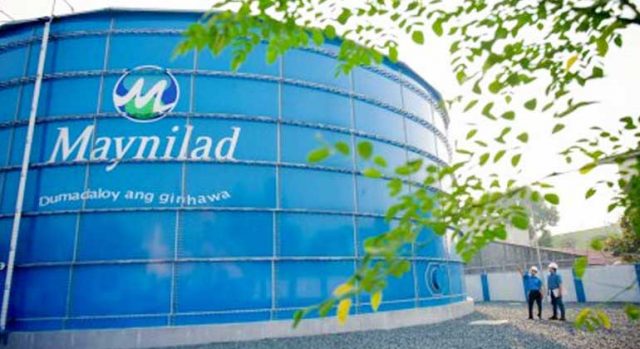
METRO Manila’s west zone water supplier Maynilad Water Services, Inc. said on Wednesday it has five years to list on the Philippine Stock Exchange (PSE) under the revised concession agreement.

“Under the revised concession agreement or RCA, we are given five years from the effective date of the agreement which is no more than six months when we signed the agreement on May 18,” Maynilad President and Chief Executive Officer Ramoncito S. Fernandez said at a virtual briefing.

“Maynilad will definitely exert all efforts to list within the prescribed deadline, although inability to do so… will not be considered a breach of our RCA,” he added.

Maynilad signed the agreement with the Metropolitan Waterworks and Sewerage System on May 18. The deal removed what President Rodrigo R. Duterte called “onerous provisions,” such as the non-interference clause and its ability to charge corporate income tax to consumers.

Under the deal, Maynilad’s concession period would continue for 15 years, or from 2022 to 2037. Maynilad agreed to freeze tariffs until Dec. 31, 2022, and to remove corporate income tax from among its recoverable expenditures as well as the foreign currency differential adjustment.

Maynilad also agreed to cap the annual inflation factor to two-thirds of the consumer price index and impose rate caps for water and sewerage services to 1.3x and 1.5x, respectively, of the previous standard rate.

The company also agreed to the “removal from the Republic of the Philippines’ (RoP) Letter of Undertaking of the non-interference of the Government in the rate-setting process, and the limitation of the RoP’s financial guarantees to cover only those loans and contracts that are existing as of the signing of the RCA.”

Metro Pacific Investments Corp., which has a majority stake in Maynilad, is one of three Philippine units of Hong Kong-based First Pacific Co. Ltd., the others being Philex Mining Corp. and PLDT, Inc.

Hastings Holdings, Inc., a unit of PLDT Beneficial Trust Fund subsidiary MediaQuest Holdings, Inc., has an interest in BusinessWorld through the Philippine Star Group, which it controls. — Arjay L. Balinbin

Ease of doing business, infrastructure to boost small firms’ digital shift

By Arjay L. Balinbin, Senior Reporter

INVESTING in infrastructure and improving business conditions are critical components in accelerating the digital transformation of small and medium-sized enterprises (SMEs) in the Philippines, an industry expert said.

“It’s the infrastructure where Huawei can play a big role, but there’s also that part in terms of how we manage the ease of doing business,” Jose W. B. Decolongon, chief operating officer and managing director of Corporate Foresight, Embiggen Consulting, said at Huawei’s July 29 online forum titled “Accelerate Digital Economy for Inclusive Integration in Asia-Pacific.”

“Obviously, technology can play a big role. If we have [enough internet] coverage, then it will really help. Also, the mechanisms to make sure we make the best use of the coverage,” he added.

Mr. Decolongon noted the Philippines has around 73 million people out of its 108 million population who are already accessing the internet.

“That’s good, but we can be better… There’s also the question of speed. The Philippines, for example, has one of the slowest speeds in the region,” he said.

PLDT, Inc., a major telecommunications player, said on July 26 that the Philippines’ fixed and mobile internet speeds have more than doubled between June 2020 and June 2021.

Citing Ookla’s latest Speedtest Global Index, PLDT said in a statement that in June this year, the average mobile internet download speeds in the country were at 32.84 megabits per second (Mbps) or twice as fast as the speeds posted in the same period in 2020. It said fixed broadband download speeds have nearly tripled to 66.55 Mbps compared to June 2020.

“The latest Speedtest Global Index reflects the Philippines’ fixed broadband download speeds are just behind Vietnam’s 74.46 Mbps, but well ahead of ASEAN countries Laos (44.56 Mbps), Brunei (38.56 Mbps), Indonesia (26.17 Mbps), Cambodia (26.10 Mbps) and Myanmar (24.86 Mbps),” it said.

“Similarly, the country’s mobile internet download speeds are just under Vietnam’s 43.02 Mbps but also ahead of ASEAN neighbors Laos (30.01 Mbps), Malaysia (26.03 Mbps), Cambodia (25.52 Mbps), Myanmar (22.16 Mbps) and Indonesia (22.14 Mbps),” PLDT added.

In terms of ease of doing business, Mr. Decolongon said: “Even though some government agencies are quite fast as they are doing everything online, there are others… [where] it will take you months to actually get all the requirements done because things still have to be done on paper, and we have to submit stuff in person. Obviously, that becomes a challenge if you have quarantine regulations.”

“Our SMEs also need to know some simple stuff like in terms of marketing and having the skills to actually know… the opportunities in exploring the digital space,” he noted.

“Security and being able to manage fraud and cybercrime are also very important. In the Philippines, we have 50% that are reported and addressed. That is still a number we can improve on. Being able to improve that, we will increase the trust and confidence of sellers and buyers in digital platforms,” Mr. Decolongon said.

For his part, Alvin P. Ang, economics professor at Ateneo de Manila University, said the digital divide is “the biggest challenge of the digitalization process because it’s so fast and it’s really going to leave a lot of rural areas behind.”

“Suffice it to say that there is no substitute for making basic telecoms or technology infrastructure a public good,” he said.

He added that stakeholders should look at the economy and the social networks of people in rural areas.

“That is where education is very powerful. The education system, whether it is delivered online, hybrid or face to face, must put in context the foundational elements of digitalization,” Mr. Ang said.

“We have to invest in [people] and give our rural areas an opportunity to catch up by at least providing them with basic skills to get through the technology highway.”

Hastings Holdings, Inc., a unit of PLDT Beneficial Trust Fund subsidiary MediaQuest Holdings, Inc., has a majority stake in BusinessWorld through the Philippine Star Group, which it controls.

Robinsons Retail reports ‘improved’ quarter

ROBINSONS Retail Holdings, Inc. said in a disclosure on Wednesday that it saw an “improved second quarter performance” as the company finished the period with a P724-million attributable net income.

The figure is 0.7% higher than last year’s P719 million as most segments posted sales growth due to longer operating days. Consolidated net sales for the quarter went up by 2.7% to P35.83 billion from P34.9 billion.

“The advances in our second quarter results and our capability to remain agile keep us confident despite continuing uncertainties in the operating environment,” said Robina Y. Gokongwei-Pe, president and chief executive of Robinsons Retail.

Robinsons Retail generated P751 million in net income, up by 0.7% from P746 million.

The improvement in sales in the second quarter led to a 17.8% growth in gross profit to P8.16 billion from P6.92 billion year on year. Meanwhile, the company’s operating income rose by 2.9% to P1.17 billion from P1.14 billion due to “sustained cost management.”

In the January-to-June period, the company’s net income attributable grew by 1.7% to P1.67 billion from P1.64 billion. Its net income inched up by 0.5% to P1.77 billion from P1.76 billion.

However, some of the company’s year-to-date numbers “still bore effects of the pandemic.” Robinsons Retail’s net sales for the first semester declined by 4.7% to P71.45 billion from P74.96 billion year on year as same stores sales growth (SSSG) dropped by 10.2%.

“The decline was due to lower sales from Supermarket, which came from a high base in 2020,” Robinsons Retail said. “This was partially buoyed by robust sales improvement from the DIY and drugstore segments.”

The company ended the six-month period with a gross profit of P16.32 billion, up by 4.2% from P15.66 billion year on year. Its operating income dropped by 17% to P2.33 billion from P2.81 billion.

“We will stay focused on delivering to customer needs while we continue to leverage on opportunities in e-commerce,” Ms. Gokongwei-Pe said.

Robinsons Retail said its e-commerce sales grew four times in the first six months. Its online platform, GoRobinsons, is now running eight banners.

It also recently invested in Edamama, an online shopping platform for mothers that caters to baby products and services.

The company also participated in the latest funding round for mobile application GrowSari, which connects sari-sari store owners or neighborhood shops with inventory infrastructure and other tools to manage their businesses.

“The goods sold to these sari-sari stores are sourced from Robinsons Supermarket,” Robinsons Retail said.

“These investments allow for potential synergies that would enhance customer experience and improve performance of the Company in terms of growth and improved efficiencies,” it added.

Shares of Robinsons Retail at the stock market declined by 0.94% 50 centavos on Wednesday, closing at P52.50 each. — Keren Concepcion G. Valmonte

Huawei to invest in PHL tech startups

REUTERS

SHENZHEN-BASED multinational company Huawei Technologies Co., Ltd. plans to invest $100 million in technology startups in Asia-Pacific countries, including the Philippines.

In an e-mailed statement to reporters on Tuesday, Huawei said the investment “aims to build a sustainable startup ecosystem” in the region “over the next three years.”

“Huawei has been helping Singapore, Hong Kong, Malaysia, and Thailand build their startup hubs,” it added.

Huawei also said its four additional startup hubs are the Philippines, Indonesia, Sri Lanka, and Vietnam, where the company targets to recruit 1,000 startups into its accelerator program and shape 100 of them into scale-ups.

“Startups and SMEs (small and medium-sized enterprises) are the innovators, disruptors, and pioneers of our times. 34 years ago, Huawei was a startup with just 5,000 dollars of registered capital. Recently, we have been thinking: How can we leverage our experience and resources to help more startups address their challenges? Doing so would allow them to seize the opportunities posed by digital transformation, achieve business success, and develop more innovative products and solutions for the world,” Huawei Senior Vice President and Board Member Catherine Chen said.

Zhang Ping’an, chief executive officer of Huawei’s Cloud Business Unit, said: “Starting today, we are stepping up our support for startups through four new initiatives, aimed at cloud-plus-cloud collaboration, continuous tech innovation, global and local services, and high-quality business ecosystems.”

Huawei announced in July its intention to invest $150 million in digital talent development in the Asia-Pacific region over the next five years through its Seeds for the Future Program 2.0.

The company said the program will benefit three million people in the region, including the Philippines. — Arjay L. Balinbin

On liquor deals, bans, and recipes for the ECQ

Manila Vice

WITH liquor bans about to be imposed, or already in place in some cities in the National Capital Region (NCR) because of the Enhanced Community Quarantine (ECQ)(here we go again), we won’t judge you if you decide to stock up on these “essentials.” Here are a couple of places to get deals from (before Friday’s lockdown) and some recipes for drinks to make you happy when stuck at home. Just remember to drink responsibly and safely within your own homes.

INTRODUCTORY DISCOUNTS AT LIQUOR.PH
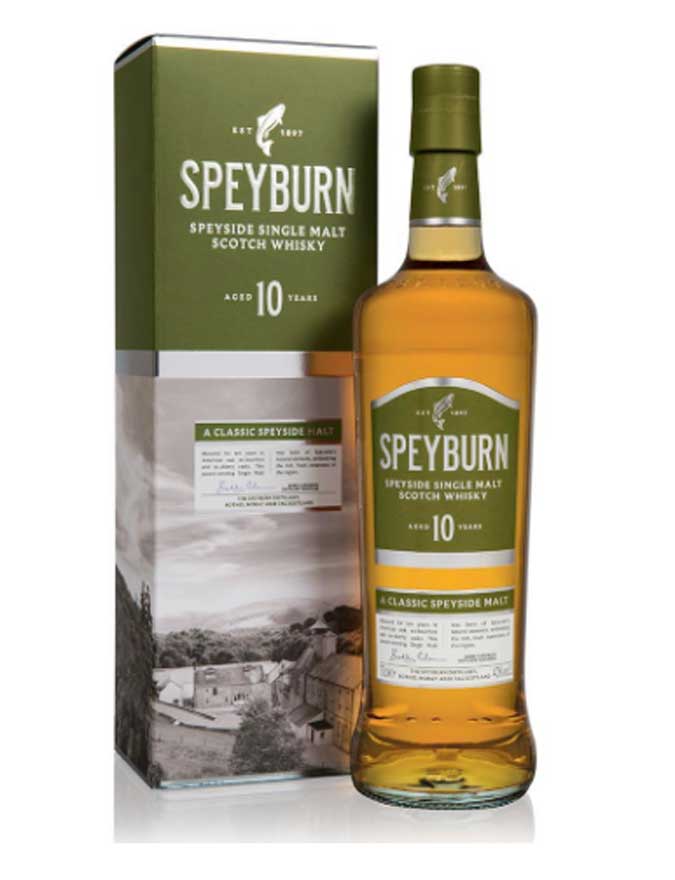
Online liquor store Liquor.Ph is offering introductory discounts for a new brand in its roster: Speyburn Scotch Whisky. The brand is offering a Speyburn Set of the 10-, 15-, and 18-Year whiskies for P9,999 (from a price of P12,506).

Other whisky bundle offerings include a 28%-off deal on the Balbair 99, 04, and 05; bringing the price down from P13,983 to P9,999. For an extra gift, one can get an Old Pulteney 12-year-old with a nosing glass for P4,999, down from the price of P6,250.

Finally, picking up your items in their Makati site will come with a P200 discount (available on the website).  Visit liquor.ph for more details.

BOOZY.PH SUSPENDS SOME OPERATIONS
First, a heads-up: Boozy is suspending operations in some cities for the duration of the ECQ, the highest quarantine level. Valenzuela has been out of the game since July 27, and Navotas operations have been suspended since April 15, while Parañaque lost Boozy service on Aug. 2. Delivery operations in Quezon City and San Juan are slated to be suspended during the official ECQ period, from Aug. 6 to 20 (fingers crossed that it isn’t extended) — so order NOW.

Barokes Wine (in a can) is available at P845 for a bundle of four, down from P876. Buzzballs cocktail balls (with real fruit juice), are offered at P928 for a bundle of four, down from P996. Two six-packs (the fun kind) of San Miguel Lemon Flavored Beer in can gets you a free belt bag, for the sum of P698. Finally, for something fancier, a bundle of four of Hendrick’s Gin (a delightful tipple with notes of cucumber and roses) gets you a Hendrick’s tea set, with teapot, cups, and saucers. Prices range from P8,600 to P11,396 (for the Midsummer Solstice variety).

Boozy.ph offers free delivery for purchases above P2,000. Visit boozy.ph for details.

DON PAPA SUGARLANDIA RECIPES
Don Papa is releasing another edition of its seasonal Endless Sugarlandia campaign, this time with (temperate climate) Summer. The cocktails for the campaign, inspired by Miami, Florida, were created by New York City-based mixologist and Don Papa brand ambassador Ben Rojo. Don Papa gave instructions for making the cocktails at home (so you could pretend to be somewhere else). —  JLG

Manila Vice

In one blender, combine Don Papa, pineapple, coconut milk, and coco-muscovado syrup with ice and blend until frothy.

In another blender, combine Don Papa seven-year-old rum, strawberries, coco-muscovado syrup, and eight leaves of Thai basil with ice and blend until frothy.

Pour the pineapple mixture into a glass rimmed with freeze-dried coffee, then pour the strawberry mixture over in a distinct layer using the back of a spoon.

Garnish with a fan of pineapple leaves and a wedge of fresh pineapple.

Golden Hour

Combine Don Papa, mango nectar, and bitters in a shaker with ice and shake vigorously to incorporate.

Strain over ice into a highball glass rimmed with chili powder and sea salt. Add ginger beer, then top with a scoop of mango sorbet.

Garnish with toasted black sesame and a bouquet of fresh mint.

Hearts on Fire

Combine Don Papa, sour cherry juice, and quinaquina in a rocks glass rimmed with lava salt, add ice and stir until chilled.

Garnish with gold leaf and freshly torched rosemary.

Neon Night

Combine Don Papa, almond orgeat, yuzu juice (the later can be replaced with three parts lemon and one part mandarin juice), and blue curaçao in a shaker without ice and shake vigorously to incorporate.

Pour into a glass filled with pebble ice, adding more to create a crown over the glass.

Garnish with a wheel of fresh dragon fruit and sprinkle with crushed, freeze-dried raspberry.

Vineyard tourism is a big source of carbon emissions. Want to help? Then buy more wine

KYM ELLIS/UNSPLASH

IN a non-COVID year, Australia’s vineyards host more than eight million wine tourists. While these visitors benefit wine producers and regional communities, they also generate a substantial amount of greenhouse gases.

If fact, our recent research showed tourist visits to vineyards comprise more than one-third of the industry’s total carbon footprint.

Wine tourism — also called “cellar door” visits — involves visiting vineyards, wineries, wine festivals and events to taste, drink, and buy wine.

The Australian wine industry has already been forced to adapt to the effects of climate change. If it fails to curb emissions associated with wine tourism, the industry is contributing to its own demise.

In 2019, wine tourism contributed A$9.3 billion to the Australian economy — creating more jobs and economic output than any other part of the industry. It promotes exports and provides vital financial support for small winemakers and family farms that rely on cellar door sales to visitors.

When wine tourists aren’t in vineyards and tasting rooms, they often visit local restaurants, as well as cultural attractions such as museums, concerts and festivals.

Wine tourism gives travelers the chance to experience a region’s terroir — the particular geology, landscape, soil and climate that come together to make a region’s wine special.

Wine grapes however are particularly susceptible to temperature changes. In fact, the wine industry has been described as “the canary in the coal mine” for the way climate change will affect agriculture.

In Australia, winemakers have already been forced to adapt to heatwaves, drought, increased fire risk, and salinity.

Previous research commissioned by Wine Australia has found global warming will bring many changes to the industry. For example, Australian winemakers may struggle to grow cool-climate varieties such as chardonnay and pinot noir.

Despite the industry’s vulnerability, the environmental sustainability of wine tourism is rarely addressed by either the industry or the academic literature. Our recent research sought to close this knowledge gap.

Past research into the wine industry’s carbon footprint has examined factors such as the emissions created by shipping the wine in heavy glass bottles.

Our research examined wine tourism activities that create carbon emissions, such as those associated with transport, accommodation, food and shopping. We traced how much wine tourists spend on the journey and the energy required to produce those services. We then allocated a share of total emissions to cellar door visits.

We found Australian wine tourism generates 790,000 tons of greenhouse gas emissions each year — one-third of the industry’s total carbon footprint. This translates to an average 101 kilograms of carbon emissions per winery trip, per person.

Domestic overnight wine tourists contributed the majority of environmental impacts (82%). However, due to their higher spending at wineries, their carbon emissions were lower than that of travelers from overseas when measured per dollar of spending.

We estimate one-quarter of wine tourists in Australia come from overseas, and long-haul flights form around 75% of international wine tourism’s carbon footprint.

Because of factors such as shorter flights, visitors from countries nearer to Australia — such as New Zealand, Hong Kong, China, and Singapore — produce 20-40% fewer emissions per dollar spent than visitors from the United States and the United Kingdom.

Given the emissions associated with international wine tourism, Australian wineries should target visits by domestic tourists. This would benefit both the environment and regional economies starved of international visitors during the pandemic.

In terms of overseas travelers, the Australian wine industry should target short-haul markets such as China, Japan, and Singapore. This would reduce the industry’s reliance on tourists traveling to Australia on emissions-intensive long-haul flights.

Many of us will be wine tourists at some point — perhaps for an afternoon, overnight, or even on an overseas trip to a famous wine region. So, what can you do about your carbon footprint?

Visit accredited wineries that commit to reducing their greenhouse gas emissions. And while you’re there, buy more bottles than you might have otherwise.

The typical Australian wine tourist buys three or four bottles at the cellar door. Why not make it a half dozen or more? A trip in which you buy 10 bottles is more environmentally friendly than 10 trips where you buy one bottle each time. And join the wine club for direct shipping.

Our cellar door purchases can also boost the bottom lines of wineries and enable them to invest in environmental sustainability. Few virtuous acts taste as good.


Ya-Yen Sun is a Senior Lecturer, The University of Queensland while Donald L. Drakeman is a Distinguished Research Professor, University of Notre Dame.

SMFB income jumps as units finish strong

SAN MIGUEL Food and Beverage, Inc. (SMFB) posted a 137% increase in its consolidated net income for the first half to P17.36 billion on the back of stronger performance across its divisions.

SMFB said in a statement on Wednesday that its consolidated revenues for the January-to-June period rose 20% to P146.79 billion, while its earnings before interest, taxes, depreciation, and amortization (EBITDA) went up 66% to P29.28 billion.

The company’s operating income for the period more than doubled to P23.04 billion due to better volumes and selling prices across divisions and continuous cost-containment initiatives and operational efficiencies.

“Our performance in the first half reflects the agility and adaptability of our food and beverage businesses, in the face of unprecedented challenges brought about by the coronavirus disease 2019 (COVID-19). As the situation continues to evolve, the flexibility and resilience we developed this past year will enable us to move forward and pivot quickly as needed,” SMFB President and Chief Executive Officer Ramon S. Ang said in the statement.

SMFB’s food group posted an 11% increase in its first-half consolidated revenues to P72.24 billion due to double-digit volume growth of its protein and animal nutrition businesses.

Consolidated EBITDA of the food group doubled to P11.44 billion while operating income rose more than three-fold to P8.36 billion on stronger gross profit and reduced selling, general, and administrative expenses.

“Protein revenues climbed 20% during the period due to strong demand for poultry products through retail channels, including community resellers, and the recovery of food service accounts. The segment also benefitted from stable poultry supply and favorable prices,” the company said.

“Core products within the prepared and packaged food and flour portfolio posted good volumes as they continued to be top-of-mind, essential items for consumers nationwide,” it added.

Net income of SMFB’s beer business for the first semester rose 89% to P9.51 billion, citing stronger sales volumes.

Consolidated revenues of the company’s beer business grew 27% to P54.33 billion as sales volumes rose 15% due to the easing of quarantine restrictions and lifting of liquor bans, while its operating income climbed 64% to P12.08 billion. EBITDA of SMFB’s beer unit also rose 52% to P14.75 billion.

SMFB’s spirits business recorded a 66% increase in net income to P2.09 billion, while its revenues rose 36% to P20.23 billion.

Income from operations went up 45% to P2.61 billion, while EBITDA rose 35% to P3.10 billion.

“The spirits business continued its strong performance in the first semester as volumes increased 21% year on year. It continued to introduce relevant marketing campaigns and promotions, expand distribution, and sustain supply chain efficiencies,” SMFB said.

Meanwhile, SMFB said it recently launched the SMC Hub, an online shopping platform that offers the company’s different product lines in an effort to expand product reach and provide consumers with an option for no-contact buying methods.

“While our country still faces some uncertainty due to the pandemic, we are committed to doing everything we can to help mitigate its impacts. Moving forward, we will continue to invest in areas that will boost our recovery, maximize shareholder value, while fulfilling the needs of our consumers, communities, and the country,” Mr. Ang said.

On Wednesday, shares of SMFB at the stock exchange rose 0.12% or 10 centavos to close at P82.50 apiece. — Revin Mikhael D. Ochave

Tencent vows fresh gaming curbs after ‘spiritual opium’ attack zaps $60B

SHANGHAI — China’s Tencent Holdings Ltd. said on Tuesday it would further curb minors’ access to its flagship video game, hours after its shares were battered by a state media article that described online games as “spiritual opium.”

Economic Information Daily cited Tencent’s Honor of Kings in an article in which it said minors were addicted to online games and called for more curbs on the industry. The outlet is affiliated with China’s biggest state-run news agency, Xinhua.

The broadside re-ignited investor fears about state intervention after Beijing had already targeted the property, education and technology sectors to curb cost pressures and reassert the primacy of socialism after years of runaway market growth.

“They don’t believe anything is off limit and will react, sometimes overreact, to anything on state media that fits the tech crackdown narrative,” said Ether Yin, partner at Trivium, a Beijing-based consultancy.

China’s largest social media and video game firm saw its stock tumble more than 10% in early trade, wiping almost $60 billion from its market capitalization. The stock was on track to fall the most in a decade before trimming losses after the article vanished from the outlet’s website and WeChat account on Tuesday afternoon. The article later reappeared later in the day with the historically loaded term “spiritual opium” removed and other sections edited. The stock ended down 6.1%. 

Shares of European and US gaming companies also took a hit.

Activision Blizzard, which has the largest exposure to Chinese markets among its US peers and was due to report after the closing bell, was down 3.8%.

Electronic Arts, the company behind Sims, was down 2.8%. Take-Two Interactive Software, which gave an annual forecast late on Monday that disappointed investors, was down 7.6%.

Shares of Amsterdam-listed Prosus, which holds a 29% stake in Tencent, fell 6.9%, while European online video gaming stocks Ubisoft and Embracer Group fell about 5% and 3.7%, respectively.

In the original article, the newspaper had singled out Honor of Kings as the most popular online game among students who, it said, played for up to eight hours a day.

“’Spiritual opium’ has grown into an industry worth hundreds of billions,” the newspaper said. “No industry, no sport, can be allowed to develop in a way that will destroy a generation.”

Opium is a sensitive subject in China, which ceded Hong Kong Island to Britain “in perpetuity” in 1842 at the end of the First Opium War, fought over Britain’s export of the drug to China where addiction became widespread.

Tencent in a statement said it will introduce more measures to reduce minors’ time and money spent on games, starting with Honor of Kings. It also called for an industry ban on gaming for children under 12 years old.

The company did not address the article in its statement, nor did it respond to a Reuters request for comment.

The article also hit rivals’ shares. NetEase, Inc. dropped more than 15% before paring losses to end down 7.77%. Game developer XD Inc. fell 8.1% and mobile gaming company GMGE Technology Group Ltd. dropped 13.59%.

Outside of gaming, investors were also caught off guard by the State Administration for Market Regulation (SAMR) on Tuesday saying it would investigate auto chip distributors and punish any hoarding, collusion and price-gouging. The semiconductor stock index subsequently fell more than 6%.

CHILD WELLBEING
The reposted Economic Information Daily article, in a shift of tone, said that authorities, game developers and families had to work together to combat child addiction to online video games, and parents had to be responsible for supervision.

Chinese regulators have since 2017 sought to limit the amount of time minors spend playing video games and companies including Tencent already have anti-addiction systems that they say cap young users’ game time.

In practice, it is difficult for companies to stop children accessing games online because users can lie about their age.

But authorities have in recent months placed fresh focus on protecting child well-being, and said they want to further strengthen rules around online gaming and education. Last month, they banned for-profit tutoring in core school subjects, attacking China’s $120-billion private tutoring sector.

That added to other regulatory action in the technology industry, including a ban on Tencent from exclusive music copyright agreements and a fine for unfair market practices.

At one point on Tuesday, Tencent was briefly de-throned as Asia’s most valuable firm by market capitalization by chipmaker Taiwan Semiconductor Manufacturing Co. Ltd. — Reuters