Home Blog Page 7134

MVP Group enables National Vaccinations Days with connectivity, pilots booster employee vaccinations

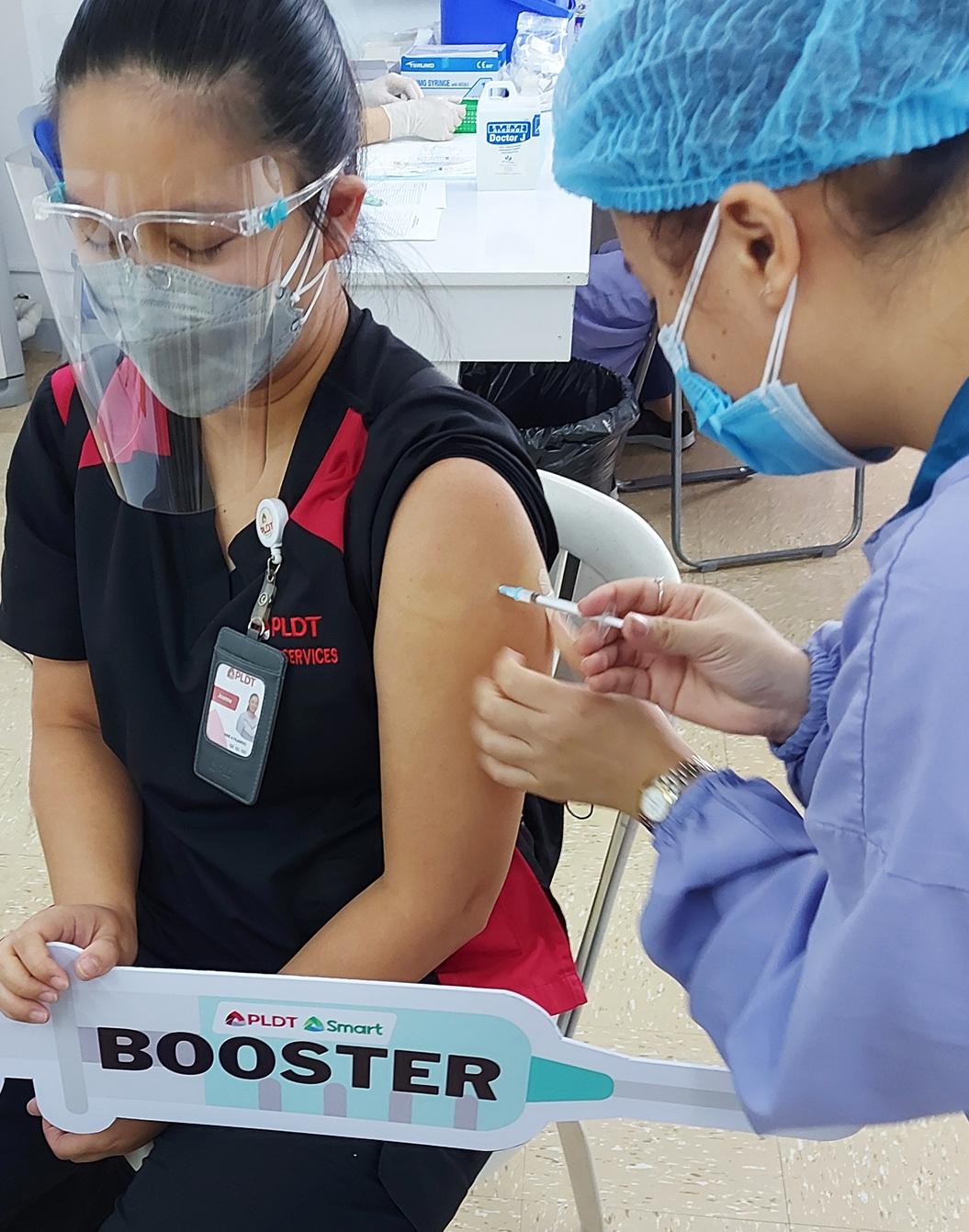
Various companies chaired by business leader Manuel V. Pangilinan provided PLDT Inc. (PLDT) and Smart Communications, Inc. (Smart) connectivity and communications support to ensure seamless operations during the government’s pilot Bayanihan, Bakunahan National Vaccination Days (NVD). The massive inoculation drive of the National Task Force against COVID-19 (NTF) and National Vaccines Operation Center (NVOC) from November 29 to December 1, 2021 also coincided with the MVP Group’s pilot COVID-19 booster vaccination for qualified non-medical employees and their dependents.

MVP Group’s donations for the NVD were facilitated on behalf of Taskforce T3 (Test, Trace, Treat) by the Philippine Disaster Resilience Foundation, where Pangilinan sits as co-chair. “Seeing several communities easing back to normalcy is largely attributable to the success of vaccination efforts. We are committed to continuously work together for safe and equitable vaccinations,” Pangilinan said.

Php 1.5 million worth of electronic load from Smart was jointly funded by PLDT-Smart Foundation, Metro Pacific Investments Corp., and One Meralco Foundation for the NVD, which targeted 34,000 encoders around 11,000 vaccination sites nationwide.

Furthermore, PLDT and Smart boosted network coverage in key NVD vaccination sites to help prevent delays in data transmission.

To culminate the NVD, the MVP Group Vaccine Force also kicked off COVID-19 booster vaccinations for qualified employees and dependents on December 1 at the Our Lady of Lourdes Hospital in Manila. This followed recent booster inoculation of Metro Pacific Hospital Holdings Inc. frontliners, who were among the first to receive COVID-19 vaccines at the first quarter of 2021, as well as pediatric vaccinations for 12 to 17 year-old dependents of MVP Group’s over 66,000-strong workforce.

More groupwide sites will administer company-procured Moderna booster vaccines under the MVP Group’s #WeGotYourVac COVID-19 nationwide immunization program until the end of the year, leading to more booster vaccinations within the first quarter of 2022. Selected dates are targeted to coincide with Phase 2 of the government’s NVD slated on December 15 to 17, 2021.

NTF and NVOC targeted to inoculate 9 million people for its pilot NVD run. The next three-day inoculation drive aims to achieve the goal of completely inoculating 54 million Filipinos by yearend.

“I believe the rollout of safe and effective vaccines has been vital to getting to where we are now, ready to hopefully celebrate a much happier Christmas season with family, friends, and colleagues,” Pangilinan said.


Spotlight is BusinessWorld’s sponsored section that allows advertisers to amplify their brand and connect with BusinessWorld’s audience by enabling them to publish their stories directly on the BusinessWorld Web site. For more information, send an email to online@bworldonline.com.

Join us on Viber to get more updates from BusinessWorld: https://bit.ly/3hv6bLA.

Siemens Healthineers launches new CT scanner to revolutionize medical imaging

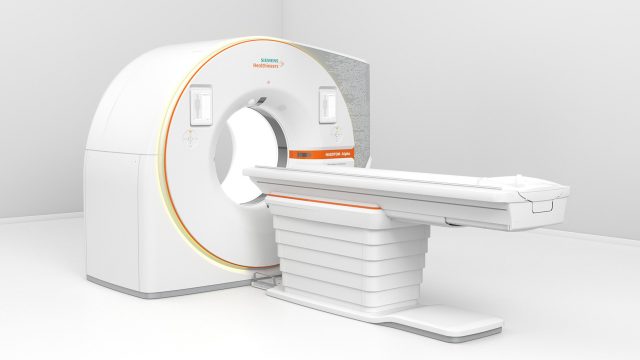
Germany-based medical technology firm Siemens Healthineers has introduced the world’s first CT scanner with photon-counting technology, promising to provide higher quality medical imaging impossible with conventional CT scanners.

The ‘Naeotom Alpha’ was designed to excel in all technical parameters related to image quality, touting an increase in resolution and a reduction in radiation dose. As of present, the Naeotom Alpha has already been cleared for clinical use in the USA and Europe, with more than 20 systems installed, and over 8.000 patients scanned.

“CT exams are widely accepted in a clinical setting, and over 300 million exams performed globally per year. Why is that? CT is known to be fast, it is accurate, and it provides to-the-point decision-making support for radiologists and their referrals. This is the basis we build on, and we move on from that basis because we see that innovation into CT imaging will see further clinical use,” Philipp Fischer, Head of Computed Tomography at Siemens Healthineers, said in a press conference.

“We see that for three different reasons: the access to CT imaging is always increasing in many countries around the globe; we see that the prevalence of diseases in which CT imaging plays a crucial role in treating is also increasing over time; and the clinical relevance of CT imaging is getting higher and higher.”

Mr. Fischer explained that CT imaging is becoming more popular as a first-line diagnostic tool for major diseases like coronary artery disease, as well as playing larger roles in different methods of therapy and even in areas like preventive care and early detection.

Yet, despite its growing relevance, conventional CT imaging has reached technical limitations, namely that resolution can only be improved by small margins and dose cannot be reduced significantly. This is where photon-counting technology can enable drastic improvements.

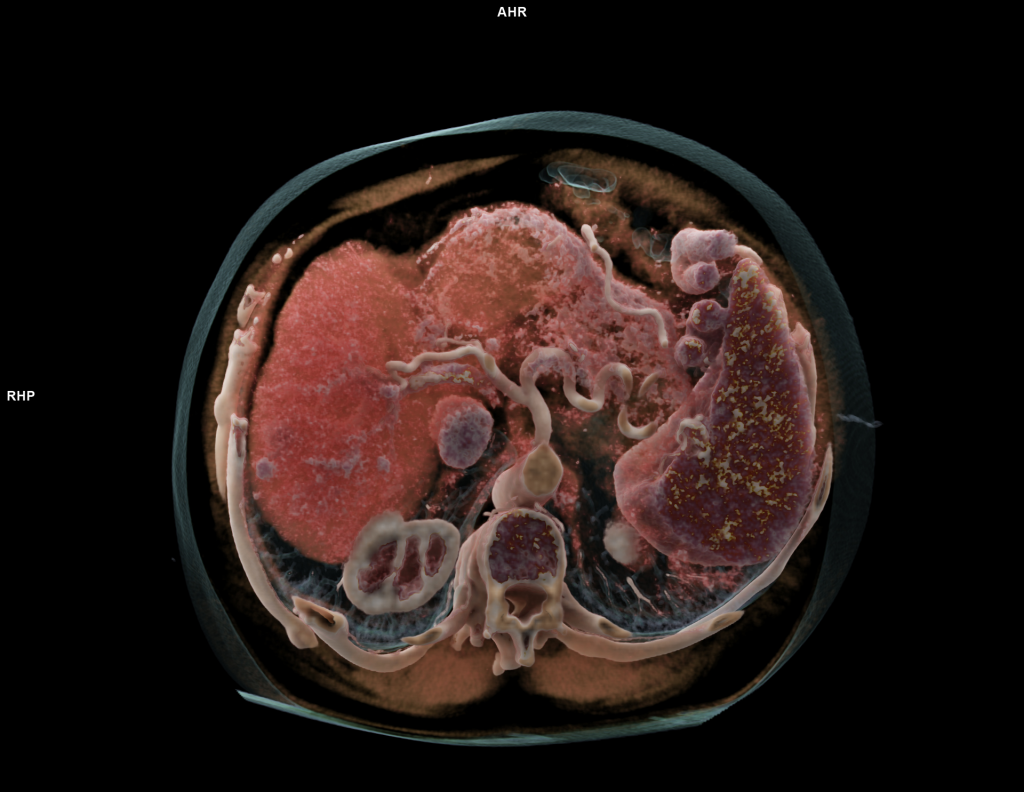
These improvements, according to Siemens Healthineers, include an increase in resolution and a reduction in radiation dose by up to 45% for ultra-high resolution (UHR) scans compared with conventional CT detectors with a UHR comb filer. Photon-counting scans also contain more useable data, due to the fact that photon-counting technology directly detects each X-ray photon and its energy level instead of first converting it into visible light as with conventional CT imaging.

These aspects combined open up new capabilities, such as scanning a patient’s lung at a high scan speed and getting high-resolution images with inherent spectral information– without the patient having to hold their breath. This spectral information also helps to identify materials inside the body that can even be removed from the image should they obstruct an area of interest. This helps physicians to assess issues quickly and offers the possibility to start treatment early.

Through the reduction in radiation dose, regular examinations, such as lung cancer screenings using CT imaging can become routinely available for larger patient populations. And the high resolution reveals even small structures, taking clinical decision-making to a new level of confidence. The technical complexity of photon-counting CT imaging does not mean increased complexity for the user, thanks to myExam Companion from Siemens Healthineers.

The standard monoenergetic images provided by Naeotom Alpha in every scan allow radiologists to eliminate sources of imprecision.

“More than 15 years ago, work on photon-counting CT and this clinical vision started at Siemens Healthineers. We always believed in the tremendous clinical value and relentlessly worked on it together with our partners,” Mr. Fischer said.

“Today, with the introduction of Naeotom Alpha, we are taking a huge step in furthering patient care in a wide range of clinical domains by effectively showing things impossible to see with conventional CT scans. This required a radical rethinking of practically every technological aspect of computed tomography.”

Profound impact in many clinical fields

Naeotom Alpha brings the first ever combination of dual source and photon-counting detector. Dual source temporal resolution allows us to scan patients at any heart rate.

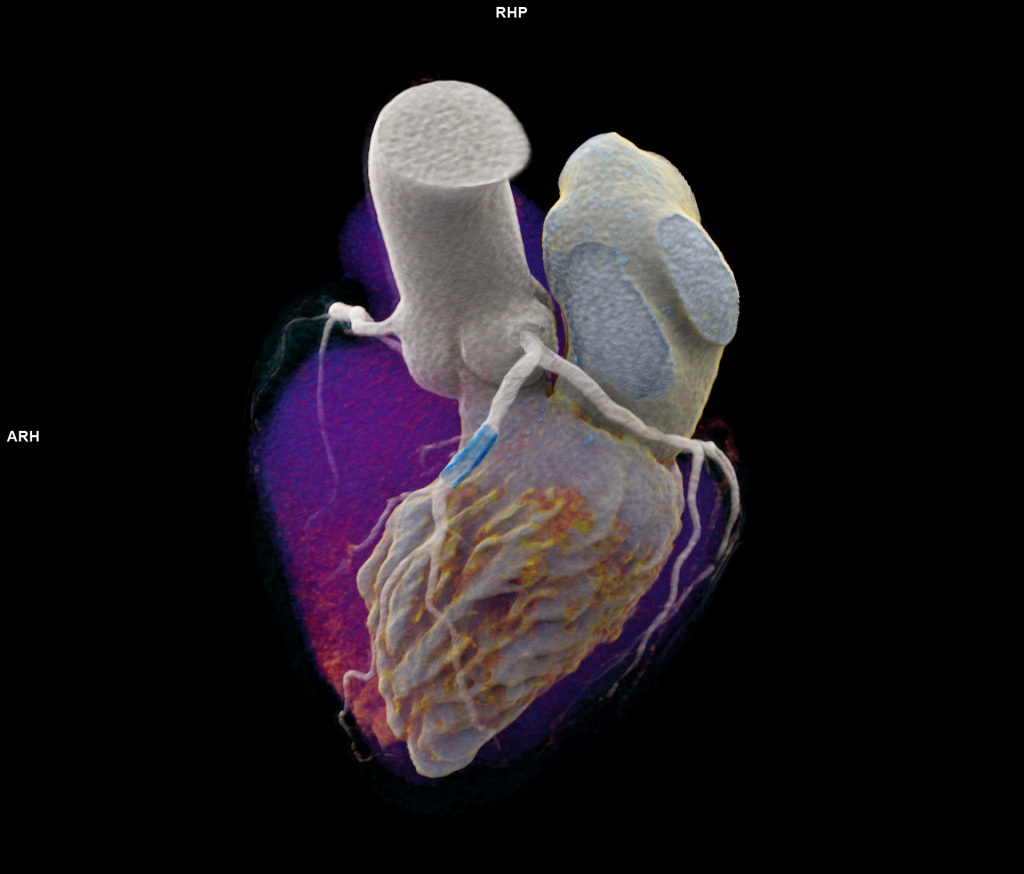
The clinical fields of cardiac imaging, oncology, and pulmonology all have their own unique demands of medical images. In cardiac imaging, it is capturing the heart while moving, which therefore requires speed.

Naeotom Alpha delivers speed through its Dual Source design and benefits from spectral information and high resolution for removing obstructions caused by calcifications. This enables diagnostic assessment and allows more patients to benefit from CT imaging –even those with a high calcium burden.

The high precision offered by Naeotom Alpha is also highly beneficial in oncology, where reliable and consistent evaluation of disease progress is the most important factor. Therefore, clinical images need to be as conclusive and consistent as possible to make the right decisions.

In pulmonology, images need to contain all meaningful answers in as few scans as possible to avoid delays in treatment and potentially severe consequences for patients. These needs are met and often exceeded by Naeotom Alpha’s features. Its clinical images inherently carry more information than ever possible before for precise diagnosis, follow-up, and treatment.

Lung Images of a post-COVID patient with photon-counting CT. Photo-counting technology allows for simultaneous acquisition and visualization of detailed structures (center image) combined with functional information (image on the right). For comparison, an image acquired with conventional CT technology (on the left).

In over 15 years of research into photon-counting CT imaging, Siemens Healthineers has filed over 500 patents related to this technology and collaborated closely with clinical partners to test and validate the clinical capabilities and use cases. Six prototypes have been evaluated and improved on over the years. In 2021, the company presents the world’s first CT scanner with the new technology, released for clinical use.

More than 20 systems have already been installed and are used in clinical routine. So far, over 8000 patients have been scanned. With a rotation speed of 250 milliseconds and two X-ray tubes and detectors (Dual Source), Naeotom Alpha is not only the first photon-counting CT system on the market, but is also a very powerful, fast, and precise CT scanner.


Spotlight is BusinessWorld’s sponsored section that allows advertisers to amplify their brand and connect with BusinessWorld’s audience by enabling them to publish their stories directly on the BusinessWorld Web site. For more information, send an email to online@bworldonline.com.

Join us on Viber to get more updates from BusinessWorld: https://bit.ly/3hv6bLA.

Group of 67 nations in WTO agree to cut red tape in services trade

PIXABAY

GENEVA — Sixty-seven World Trade Organization (WTO) members agreed on Thursday to pare back regulations such as licensing requirements placed on service providers operating in foreign countries, a move that could save $150 billion in annual trade costs.  

The group of developed and some developing countries from Peru to the Philippines committed to greater transparency, legal certainty and an easier regulatory process with electronic applications and clear and reasonable fees.  

The signatories, also including the United States, China, and EU members, are a minority of the WTO’s 164 members, but represent 90% of all services trade.  

The Organisation for Economic Co-operation and Development (OECD) has estimated that implementing looser regulations in the larger G20 countries could reduce trade costs by up to 6%, with annual savings rising to $150 billion.  

Banking, information technology, telecoms, architecture and engineering would be among the service sectors benefiting most.  

The deal aims to provide clarity to services companies that are often obliged to submit multiple paper documents to regulators and are left in the dark about how their applications are processed.  

The European Services Forum, whose members range from Apple to Zurich Financial Services, warmly welcomed the conclusion of negotiations on a deal, saying the industry had been calling for something like this for more than 20 years.  

The agreement included a provision against discriminating between men and women, a first of its kind in a WTO deal. It also provides for a seven-year transition period for developing countries to comply.  

While a majority of WTO members have not signed up to the accord, they are free to do so and their businesses would still benefit from more transparent and efficient regulatory regimes of the 67 participating members. — Reuters

Cultivating a culture of innovation

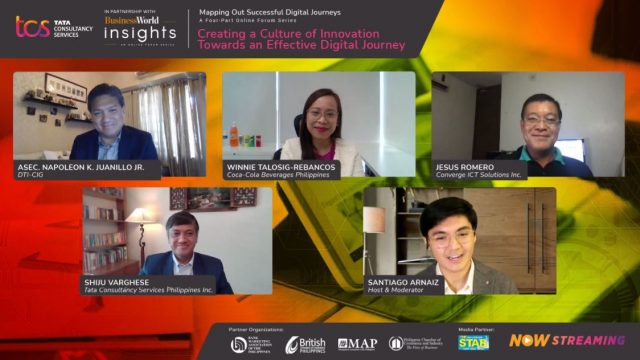
Tata Consultancy Services, BusinessWorld Insights kickstart series on Mapping Out Successful Digital Journeys with discussion on innovation culture

Transforming the organization from the traditional business-as-usual setup to a digitally-enabled one can be accelerated further with a culture that embraces innovation.

A company practicing a culture of innovation supports a creative or unorthodox way of thinking among its people. And given the pressing need for digital transformation among organizations nowadays, an innovation culture can be valuable to develop in venturing into the digital journey.

But how can an organization start cultivating a culture of innovation? BusinessWorld Insights and Tata Consultancy Services held a discussion themed “Creating a Culture of Innovation Towards an Effective Digital Journey” on Nov. 18, gathering experts to share practices necessary in innovation culture.

From the government’s part, among its initiatives in fostering a culture of innovation are the Regional Inclusive Innovation Centers (RIIC) of the Department of Trade and Industry (DTI).

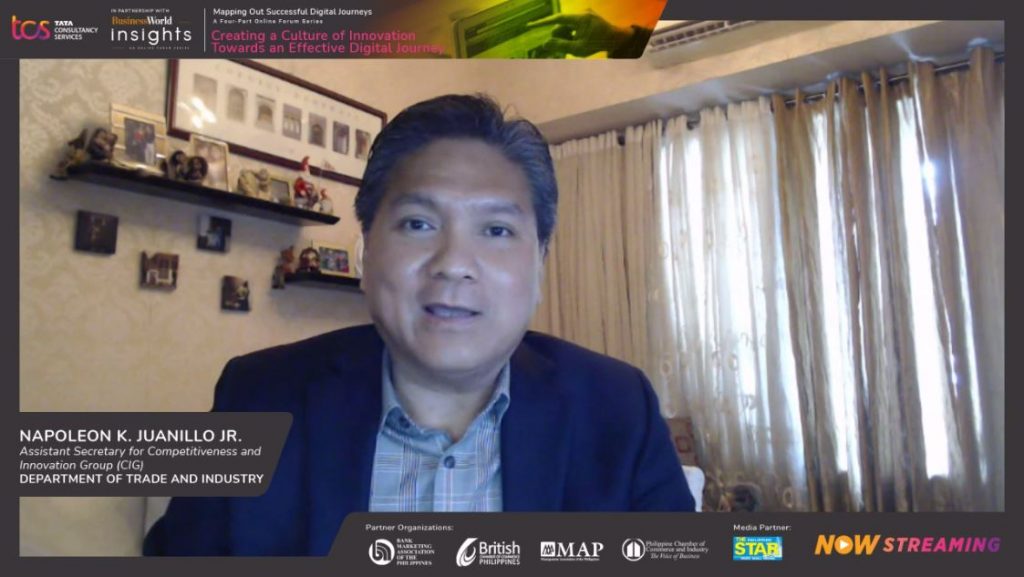
The RIICs are almost like a ‘frontline project’ of the agency, according to Napoleon Juanillo Jr., assistant secretary for Competitiveness and Innovation at DTI.

“These are virtual or physical platforms for collaborative programs purposely to generate products, processes, or service innovations that are deemed important to the goal of inclusive growth and development of their respective regions,” Mr. Juanillo explained about RIICs.

“There is no one-size-fits-all for regional digitalization or competitiveness. We have to allow each region to craft its own innovation charisma as it were,” he added.

Moreover, the inclusiveness in the project also means that it provides everyone a chance, especially the micro, small, and medium enterprises (MSMEs), to access shared facilities, expertise, and resources for their improvement and growth as well as form partnerships with different stakeholders in the regions.

“I think that [our RIICs are] a primary bedrock we need for cultivating an innovation culture among Filipinos and to see innovation as something that can be salient to all the things that we see around us,” Mr. Juanillo said.

But while government initiatives, like the RIICs, are aggressive in developing a culture of innovation in the Philippines, Mr. Juanillo said that the government is also hobbled by internal barriers and bureaucratic roadblocks that somewhat delay the innovation journey.

“So, in a sense, we’re heavily dependent on the private sector in assisting and working with the government in instilling this culture,” he said. “The private sector is actually at the forefront of bringing this culture to the Philippines.”

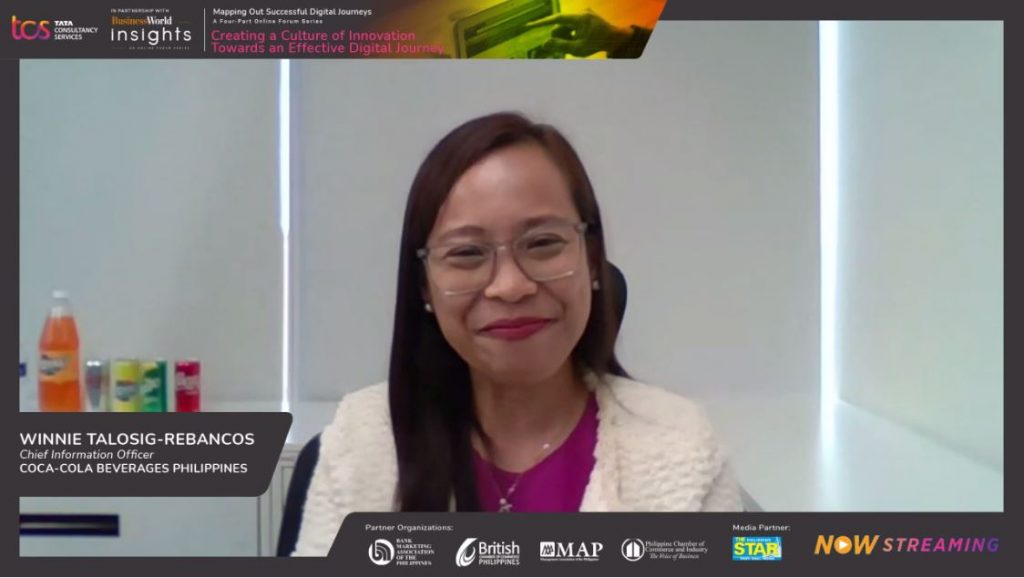
For Coca-Cola Beverages Philippines, Inc. (CCBPI) chief information officer Winnie Talosig-Rebancos, leaders have a crucial part to take in fostering an innovation culture in an organization.

“Culture of innovation can only become part of a company’s DNA if it starts from the leadership,” Ms. Rebancos said. “In CCBPI, we encourage everyone to innovate, to improve ways of working.”

To push for this matter, CCBPI’s first cultural move was when its CEO renamed its head office as a support center. “It changed the impression that ideas are always centralized from the head office if we move that notion,” she said. As such, people have become more empowered to generate ideas and propose improvements.

In addition, their organization believes in progress over perfection. “There is no small idea to begin with, as long as it generates results. So whether it’s huge or not, we start with step one, and then we continuously improve,” she said.

“Every company’s senior leadership team plays a huge role in creating a culture of innovation,” Ms. Rebancos stressed. “We need to learn that people grow the business. And our main responsibility as leaders is to provide opportunities where they can [invest in] themselves.”

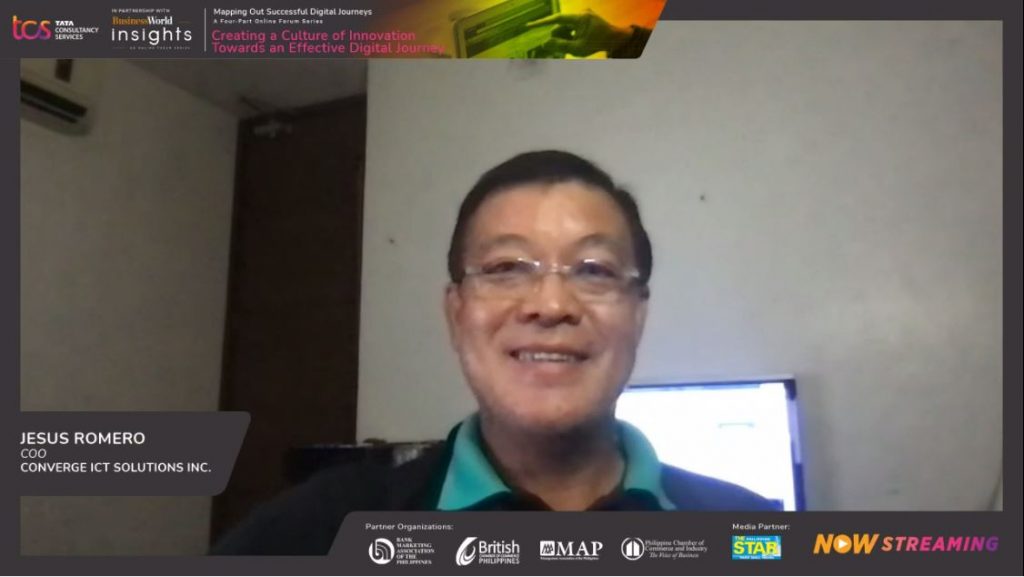
An organization also has to set a stage where innovation can prosper, said Jesus Romero, chief operating officer of Converge ICT Solutions, Inc.

For Mr. Romero, people need to sense that innovation is encouraged in the organization. They have to be assured that they would not be punished for making mistakes, and there are ways to help transform ideas into reality.

“There are a lot of smart people out there. But maybe they don’t really know how to turn their ideas into real beneficial innovations. So there must be an enabling function — experts who would guide, coach, and motivate everyone in the organization,” he said.

He also believed that if one does not fail, one is not trying new undertakings. “But please fail originally,” he reminded. “I will tolerate that sometimes you make a mistake, but please don’t make the [same] mistake over and over again.”

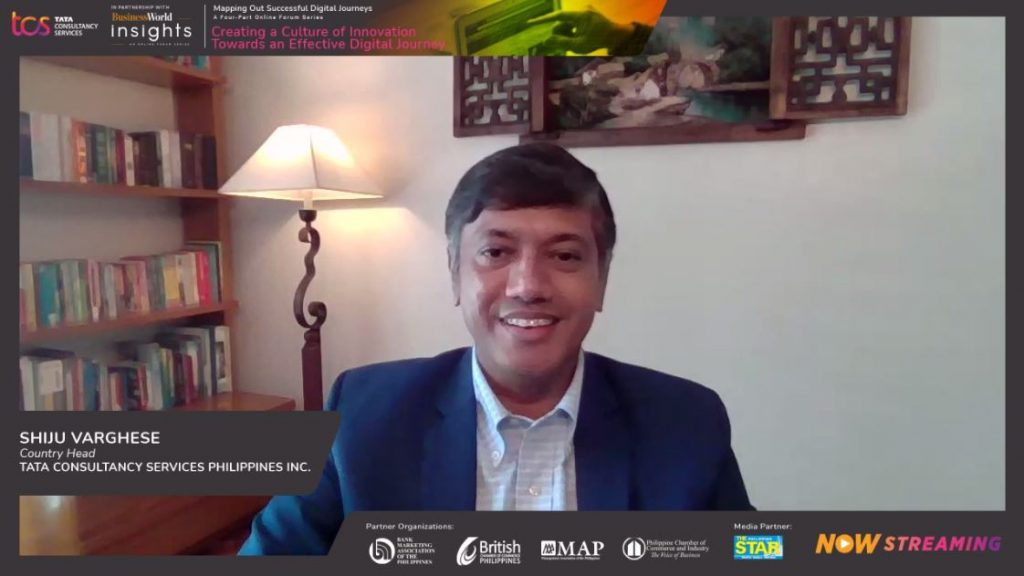
Meanwhile, for Shiju Varghese, country head of Tata Consultancy Services Philippines, Inc., the first step in forming a culture of innovation is embracing digital.

“For those companies that aim to make the shift from the traditional way of functioning to digitally-enabled processes essentially means going digital is often the first step in creating an innovation culture,” he said.

Also among the initial steps are building innovation labs and rewarding the people for bringing in such a culture.

Organizations have to articulate an innovation strategy as well. “An innovation strategy must address how innovation will create value for potential customers, how the company will capture a share of that value, and what type of innovations to pursue,” Mr. Varghese cited.

“A company’s unique competitiveness should dictate the innovation portfolio for itself and not replicate what others are doing,” he added.

“No organization can exist without innovation now,” Mr. Varghese remarked. “Today, every company is a technology company. Companies either create technology or are users of technology. Innovation culture prepares an organization to embrace the digital journey.”


Spotlight is BusinessWorld’s sponsored section that allows advertisers to amplify their brand and connect with BusinessWorld’s audience by enabling them to publish their stories directly on the BusinessWorld Web site. For more information, send an email to online@bworldonline.com.

Join us on Viber to get more updates from BusinessWorld: https://bit.ly/3hv6bLA.

IGNITE 2021 CYBER: Fueling opportunities for startups

Having experienced the effects of the COVID-19 crisis, organizations may be looking for innovations that can support their rebound and growth.

IGNITE PH, with a focus on “Corporate Innovation Towards Recovery and Growth” this year, once again spotlighted startups and their innovations on the IGNITE 2021 CYBER WILDFIRE Pitch Event held on Nov. 16 to 19. The country’s largest international innovation conference sought to promote collaboration by providing global opportunities for startups.

Startups from the Philippines, Singapore, Japan, and Korea participated in the four-day pitch event, which covered five different themes including Social Good, Digital Transformation, Health and Wellness, K-Startups, and Travel Tech.

IGNITE 2021 CYBER partnered with Shell LiveWIRE, Japan External Trade Organization (JETRO), ROHTO Pharmaceutical, Y&Archer, and Korea Tourism Organization (KTO).

Kicking off the first day of IGNITE’s WILDFIRE Pitch Event with Shell LiveWIRE were startups Panublix, Agro-DigitalPH, and Sachi Group. Among these startups, Agro-DigitalPH won this year’s Shell LiveWIRE Final Pitch Day. A startup seeking to empower farmers and fishers, Agro-DigitalPH has developed several cloud-based applications that cover the digital food value chain.

“We are advocates of change and are committed to uplift the lives of food producers through education and establishing a food system that puts a premium on trust and transparency,” said Henry James Sison, Agro-DigtalPH’s CEO.

The startup hoped to work with Shell Foundation in digitizing its farming and fishing communities, which can expand its market opportunities.

Six community enterprises for this year’s Shell LiveWIRE Acceleration Program were also featured on IGNITE. These included Coron Natural Farms, Kure, Seeds & Scales Vegetables Farms, RMC Oil and Eco Solutions, San Isidro Multi-purpose Cooperative, and Solchi Solutions.

Shell LiveWIRE is the global flagship enterprise development program of Shell. The program is now in its second year in the Philippines and has drawn over 500 local startups, social and community enterprises.

“On behalf of the Department of Trade and Industry, we recognize the untiring efforts of Shell in promoting entrepreneurship, mentorship, innovation, and employment to strengthen local economies through Shell LiveWIRE,” expressed Department of Trade and Industry (DTI) Secretary Ramon M. Lopez in his keynote talk.

“On our end, we want to assure you of DTI’s continued support and facilitation of the industry’s concerns,” he added.

Digital transformation, innovation from Japan

The second day of IGNITE, supported by JETRO, focused on Digital Transformation and featured ten startups from Japan. JETRO is on the mission to create innovation through direct investment in Japan and support Japanese startups to expand overseas.

The startups that presented were RevComm, Inc., Asilla, Inc., Global Mobility Service, Axelspace Corp., Trustdock, Inc., Net Smile, Aidemy, Inc., Kotozna, Inc., Tenchijin, Inc., and Sagrih.

“This pitching session is designed for Japanese startups to expand their presence in the Philippines and the ASEAN market,” said Kazuo Nakamura, executive director of JETRO Manila, in his closing remarks. “Through business interaction and collaboration between Japanese startups and ASEAN companies, I believe it will lead a new business, acceleration of the digital transformation, and further technological innovation in this region.”

The day initially began with a keynote about internal collaboration for digital transformation by Richard B. Dasher, Ph.D., director of the US-Asia Technology Management Center at Stanford University.

“It’s best to look globally for partners in digital transformation. There is an intrinsically global aspect of cloud computing and all these new digital tools. They have no natural geographic borders. So, you should aim for a world-class technology core and be prepared to make that interface with localized components,” Mr. Dasher said.

He also considered that startups typically bring newer things than one can get from partnering with large, established firms. “You get more learning through a partnership with a startup company that sees a more emerging view of the world than you would just by relying on a big system integrator or provider,” he said.

IGNITE’s Day Two with JETRO also held a panel discussion moderated by Manny Ayala, managing director at Endeavor Philippines. The panel consisted of Nick Broomfield, global client director for Transformation Consulting at dentsu international; Ee Ling Lim, head of APAC Business Development at 500 Startups; Xavier Marzan, managing director/CEO of F(DEV), who shared how their organizations look at digital transformation and innovation.

Supporting health & wellness, Korean startups

The third day of IGNITE featured Health and Wealthness startups on the first part with ROHTO, then K-Startups with Y&Archer on the second part.

ROHTO’s core business deals with pharmaceuticals, cosmetics, and other health products.

In her introduction of ROHTO’s vision, researcher Florence said, “We believe that there are some unanswered needs yet to be explored in ASEAN countries, especially in the area of healthcare, food, and wellness. So one of the things that ROHTO can do is to support local startups that currently address those issues, and that’s why we’re here in IGNITE today.”

Three startups pitched on the event, namely Pascific, MedHyve, and reach52. Winning the competition was Pascific, which aims to improve access to precision healthcare in the Asia-Pacific, bagging the $5,000 equity-free funding and a chance to work with ROHTO.

“For ROHTO, we promise added revenue streams from Pascific initiatives, added R&D excellence for existing and new IP/product development, and added channels for the promotion of current and future ROHTO products,” Dr. Richie Soong, managing director of Pascific, shared in his pitch.

Y&Archer, a professional global business accelerator company from Korea, supported the second part of IGNITE’s Day Three. The K-Startups presented were ChangSeol Build System, Inc., Dr. K Healthcare, Mirae CIT, Inc., 2HAE Lifestyle, Onesoftdigm, ExoCoBio, Inc., The KEII Platform, and ERANGTEK.

More startups from Korea shined on the fourth and final day of this year’s IGNITE, supported by KTO. The startups for the day, which focused on Travel Tech, were Tripbtoz, Travolution, Vutler, KAFLIX, 3i, Inc., Glorang, Uniquegood Company, Dazayo, INFOIN, and WeAreFriends Co. Ltd.

In his opening message on the IGNITE 2021 CYBER’s final day, KTO’s Tourism Companies Support Department Executive Director Deoksoo Ahn said, “This event is a great opportunity for the startups to directly receive feedback and make connections with investors. We need you as much as you need us.”


Spotlight is BusinessWorld’s sponsored section that allows advertisers to amplify their brand and connect with BusinessWorld’s audience by enabling them to publish their stories directly on the BusinessWorld Web site. For more information, send an email to online@bworldonline.com.

Join us on Viber to get more updates from BusinessWorld: https://bit.ly/3hv6bLA.

BSP vows to keep easy money policy

Photo by Michael Varcas, The Philippine Star

Diokno says ‘not so concerned’ about Omicron

By Luz Wendy T. Noble, Reporter

Bangko Sentral ng Pilipinas (BSP) Governor Benjamin E. Diokno on Thursday vowed to continue keeping an accommodative monetary policy, as he downplayed the possible impact of the Omicron variant of the coronavirus disease 2019 (COVID-19) on the economy.

“We will continue our accommodative monetary policy until needed by the National Government. We’re not so concerned with the new variant [Omicron]. I think there’s too much exaggeration on the impact of that,” Mr. Diokno said at an online briefing on Thursday.

The Monetary Board has maintained policy rates at record lows to support the economy’s nascent recovery. Its last policy review for the year is scheduled on Dec. 16.

The World Health Organization (WHO) last week called Omicron “a variant of concern,” its highest rating. According to Reuters, WHO epidemiologist Maria van Kerkhove said that data should be available on Omicron’s conta-giousness in the next few days.

So far, the variant has not yet been detected in the Philippines, but the government has already closed its borders to South African countries and other countries in Asia and Europe where Omicron infections have been recorded.

The Philippines has also suspended the two-week trial reopening to foreign tourists from Dec. 1 as officials considered the risk from the variant.

Mr. Diokno on Wednesday said that while economic activity is improving, emerging variants may pose risk when a big part of the population remains unvaccinated.

Data from the Department of Health (DoH) showed 36.869 million Filipinos are fully vaccinated as of Dec. 1. The government hopes to fully vaccinate 54 million Filipinos by the end of the year.

The economy expanded by 7.1% year on year in the third quarter. This brought year-to-date gross domestic product growth to 4.9%, near the upper end of the government’s 4-5% target for 2021.

“I think the best thing really to do for the Philippines is vaccinate, vaccinate. And we have sufficient vaccines available,” Mr. Diokno said.

Security Bank Corp. Chief Economist Robert Dan J. Roces said the National Government support will be more crucial in mitigating the possible impact of the Omicron variant.

“Non-monetary policies should be sufficient to mitigate any impact [of Omicron], if at all, as monetary policies may only do so much,” he said in a Viber message.

“In the case of virus containment, it seems a one-size-fits-all approach is detrimental to recovery, so a targeted containment even down to the barangay level may be better,” he added.

Amid concerns over the variant’s transmissibility, UnionBank of the Philippines, Inc. Chief Economist Ruben Carlo O. Asuncion said it is important to apply the best practices from the pandemic response.

“If it [Omicron] will bring a resurgence, then we have to apply the learnings and adopt best practices. If needed, there should be tighter border controls, better tracing and treatment as were done by countries that became suc-cessful in dealing with community spread,” Mr. Asuncion said in a Viber message.

Mr. Asuncion said policy makers should consider “disincentivizing” unvaccinated people, like requiring COVID-19 testing prior to joining public activities or eating out in restaurants.

NEDA seeks law to prepare PHL for future pandemics

The chapel of Quezon City General Hospital was converted into a COVID-19 intensive care unit to handle severe cases amid the Delta-driven surge in August. -- Photo by Michael Varcas, The Philippine Star

THE National Economic and Development Authority (NEDA) wants a pandemic funding flexibility law that will help the government respond more quickly to public health crises.

Socioeconomic Planning Secretary Karl Kendrick T. Chua said the proposed law would be similar to the National Disaster Risk Reduction and Management Act or Republic Act No. 10121, which was designed to protect the pop-ulation from natural disasters.

The law provided for the creation of the National Disaster Risk Reduction and Management Council (NDRRMC).

“We have the NDRRMC law. This is for natural disasters. That is able to help, and if we have similar bill for the pandemic then it will help us prepare for future health emergencies. What the NDRRMC law lacks, the pandemic flexibility bill will complement. For instance, providing budget and financial flexibility,” he said at a webinar on Wednesday.

But Mr. Chua said the existing law does not provide enough funds and financing flexibility for national public health emergencies.

“If we have a similar bill for the pandemic, then it will help us prepare for future health emergencies,” he said.

He said the proposed measure should relax data privacy rules in the interest of public safety.

Electronic government transactions should be allowed, from procurement to audit report submissions, he said, adding that national and local policies should be aligned during health crises.

“We (should) have better preparedness of healthcare facilities, workers, equipment, and materials,” Mr. Chua said.

“Our concern right now is the number of available healthcare workers, so one example is an emergency or medical reserve corps similar to other countries, where we can immediately tap these healthcare temporary workers to fill in the gap.”

He said his proposal would strengthen the government’s ability to respond to future health emergencies and roll out health and social protection measures.

The pandemic funding flexibility bill is part of Mr. Chua’s 10-point policy proposal aimed at speeding up and sustaining economic recovery from the effects of the coronavirus disease 2019 (COVID-19).

In addition to the pandemic flexibility bill, he said the country should change its metrics in assessing COVID-19 cases, shifting from counting the total number of cases to the total number of severe or critical cases.

NEDA last month presented a government pandemic scorecard after the Philippines posted poor scores in global indices measuring its handling of the COVID-19 pandemic as vaccinations in the country lagged.

The Philippines remained in last place out of 53 countries measured in the November edition of the Bloomberg Covid Resilience ranking. Mr. Chua said the country should expand its vaccination rate, expanding access to the COVID-19 jabs to children.

Under 34% of the Philippine population has been fully vaccinated, data from the Johns Hopkins University tracker showed. The Philippines recorded 564 new COVID-19 cases on Thursday, and has a total active case count of 15,188.

Mr. Chua said that the country’s economy must be further reopened, removing age-based restrictions and containing local case spikes through localized lockdowns.

Further reopening the economy would help the Philippines achieve its growth targets and reduce unemployment and poverty rates, he said.

Third-quarter gross domestic product (GDP) went up by an annual 7.1%, slower than the revised 12% growth in the second quarter after the government placed strict restrictions in Metro Manila to curb the Delta-driven surge in COVID-19 cases. Year-to-date economic growth is at 4.9%, within the government’s 4-5% GDP growth target.

Mr. Chua added that the Philippines should reopen schools, standardize travel regulations, align international travel requirements with global policies, speed up digital transformation, and use the lessons learned from this pandemic to make the country more resilient against future health crises.

“We have a load of experience, domestic and internationally, so we have to put them together in a pandemic playbook,” he said. — Jenina P. Ibañez

Philippines’ 5G download speed nearly 10x faster than 4G — report

This photo shows 3D printed objects representing 5G on a motherboard, April 24, 2020. -- REUTERS/Dado Ruvic /Illustration/File Photo

THE Philippines has shown the biggest improvement in download speeds globally, with average fifth-generation (5G) wireless technology download speeds nearly 10 times faster than the older 4G technology, according to the latest report by independent mobile analytics company Opensignal.

“The Philippines has the greatest uplift in download speeds, with average 5G download speeds 9.8 times faster than 4G,” Opensignal analyst Ian Fogg said in the “Benchmarking the Global 5G Experience — November 2021” report.

The Philippines had an average 5G download speed of 140.6 megabits per second (Mbps) during the data collection period from Aug. 1 to Oct. 29.

The Philippines also topped the uplift chart for mobile video streaming “with a 5G video experience score that is 34% higher than using 4G,” Mr. Fogg said.

“The new 5G network generation offers a very significantly faster average 5G download speed in every market Opensignal has analyzed to date,” he said.

The country’s major mobile operators, Globe Telecom, Inc. and PLDT’s Smart Communications, Inc., are using 4G and 5G wireless technologies that provide higher bandwidth and faster download and upload experiences.

Taiwan and Israel trailed the Philippines in Opensignal’s 5G Global Top 15 list for the most improvement from 4G to 5G download speeds. Taiwan and Israel’s 5G experience was 8.9 times faster than their 4G experience, although Taiwan’s download speed was 320 Mbps and Israel’s stood at 189 Mbps.

In its previous global 5G analysis released in September, Opensignal found Taiwan’s 5G download speeds to be the most improved from 4G with a rate of 11.7 at 370.6 Mbps, followed by the Philippines’ 145.5 Mbps, which was 10.1 times faster than its 4G.

The Philippines also ranked among the world’s top 15 for 5G Reach, which “measures the extent of the mobile experience in all the locations that matter most to everyday users.” The Philippines ranked 15th with a score of 3.5. Hong Kong topped the list with a score of 6.5, followed by South Korea with 6.4.

“In most global markets, we are still in the 5G rollout phase. However, 5G is becoming increasingly common,” Mr. Fogg said.

Smart said that it has deployed over 4,400 5G sites in more than 4,000 locations in the country as of October.

For its part, Globe said its 5G service is available in over 1,900 locations in the country as of end-September.

According to Smart, it has 800,000 5G users as of October, a 200% increase from December 2020.

Meanwhile, Globe said it has more than 770,000 5G devices connected to its network as of June 2021.

“In 2022, Opensignal expects 5G to become an even more important part of life,” Opensignal’s Mr. Fogg said.

“Whatever happens, 5G already underpins mobile services for many and helps to speed connectivity and sidestep congestion. And, in future, 5G will be the foundation of everyone’s mobile experience,” he added.

Hastings Holdings, Inc., a unit of PLDT Beneficial Trust Fund subsidiary MediaQuest Holdings, Inc., has a majority stake in BusinessWorld through the Philippine Star Group, which it controls. — Arjay L. Balinbin

Bonds from Philippines, India most at risk amid variant threat

Philippine Star/Michale Varcas

BONDS from India and the Philippines look to be most vulnerable to further economic slowdowns in Asia as the threat from a new coronavirus variant revives virus resurgence fears.

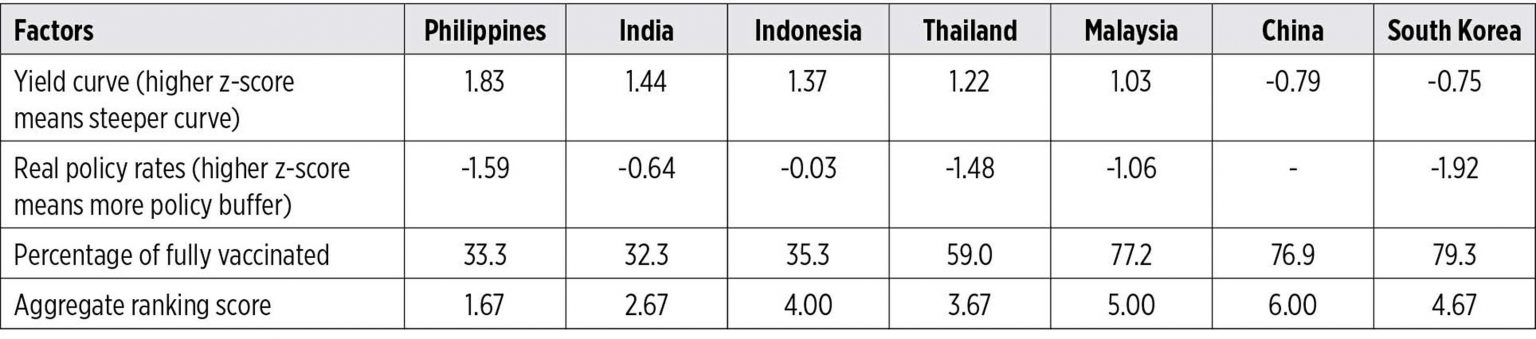
The two nations have the steepest yield curves among seven Asian countries, which means any additional fiscal stimulus would come at a higher cost for the governments. Their scope for monetary easing would also be limited by higher inflation, with lower vaccination rates compounding the stress on their economies.

News on the Omicron variant roiled global markets this week as travel bans and doubts about the effectiveness of existing vaccines on the new strain weakened economic recovery bets. Sentiment stabilized as South African health experts, including the doctor who sounded an alarm on the variant, signaled symptoms linked to the strain have been mild so far. Still, investors are watching if results from the World Health Organization’s research on Omicron reveal worrying signs.

“In the event Omicron turns out worse than the Delta strain, India and the Philippines may see some deterioration of the fiscal and debt outlook due to weaker government revenues and the need for extended stimulus in 2022,” according to Duncan Tan, a strategist at DBS Bank Ltd. in Singapore. No known cases of Omicron have been detected in India and the Philippines so far.

The yield spread between two- and 10-year government bonds from India and the Philippines is the widest compared with the five-year average. That’s because India’s borrowing program for the current fiscal year ending March 2022 is already near a record high, while the Philippine budget deficit is at an all-time high this year.

The pressure on Indian bonds may be exacerbated as the central bank ended its announced bond purchase program in the quarter ended September. Rising yields in the Philippines have prompted the government to reject some tenders at auctions in October while auctions in November attracted weak demand.

INFLATION HURDLE

Along with fiscal constraints, higher inflation in India and the Philippines could narrow the scope for monetary easing. Philippines has the tightest real policy rate, or nominal policy rate after adjusting for inflation, compared with the five-year average. The nation’s inflation has been mostly hovering above the central bank’s 2%-4% target since January. November inflation figures will be released Dec. 7.

While India’s real policy rate offers a bigger buffer than some of its Asian peers, that gap is expected to shrink as price pressures are seen picking up amid fading base effects and supply-chain constraints. Korea’s real policy rates are tight relative to the historical mean but the central bank’s 50-basis-point rate hike since August has created space for future cuts, if needed.

India has the lowest vaccination coverage in the region, with only 32.3% of the population fully inoculated, followed by the Philippines at 33.3%, according to data compiled by Bloomberg. Lagging vaccination rates would not only make their economies vulnerable to a resurgence in existing strains but also signal a slower rollout of potential new vaccines to combat variants. — Bloomberg

PHL decarbonization seen drawing major investments

ACENERGY.COM.PH

THE Philippines’ decarbonization drive is viewed as a “massive” investment opportunity because of the sheer volume of renewable capacity needed to make significant progress towards a green economy, McKinsey & Co. said.

“Our modelling shows that more than 100 gigawatts or more than 100,000 megawatts of additional capacity in renewables will be needed for the Philippines to accelerate and move towards (decarbonization),” McKinsey & Co. Senior Partner Vishal Agarwal said on Wednesday at the Arangkada virtual forum.

The Philippines currently has about 26,000 megawatts of installed power capacity of all types. Mr. Agarwal did not elaborate on the assumptions behind the 100,000 MW estimate, or whether the projection contemplates renewa-ble sources working side by side with non-renewable ones.

The United Nations defined “green economy” projects as low carbon, resource efficient, and socially inclusive, while preventing the loss of biodiversity and making fewer demands on the ecosystem.

Mr. Agarwal said business opportunities are plentiful in renewable energy, large-scale battery storage, advanced solar power system technology and assembly, and grid modernization.

He also noted the increasing opportunities in other sectors such as transportation in using biofuel for road transport and aviation; the industry sector in carbon capture, carbon dioxide storage and usage; in the waste sector in switching to waste-to-energy; and in the land use, land-use change and forestry in domestic and international carbon trading.

“It is a tough task, but it is important for us to have a not narrow view how much emissions the Philippines or each country is having, to look at on the risk (that) climate change (imposes) on the Philippines,” Mr. Agarwal said.

He noted that the Philippines is the 35th largest polluter in the world and is considered the fifth most-affected by climate change over the last 20 years.

“It is also very important to look at this as an opportunity for value creation that enables us to accelerate towards more and more sustainability,” he added.

The Philippines has committed to reduce its greenhouse gas emissions by 75% by 2030. Around 72.29% of this total will rely on climate financing, technology, and capacity development support from developed countries. — Marielle C. Lucenio

Cryptocurrency transactions up 362% at midyear

BANGKO SENTRAL NG PILIPINAS GOVERNOR BENJAMIN E. DIOKNO — PHILIPPINE STAR/ GEREMY PINTOLO

CRYPTOCURRENCY transactions in the Philippines rose 362% as of the first half, in line with the broader growth in digital financial transactions, the central bank said.

“The volume of transactions involving virtual assets grew 362% year on year to nearly 20 million in June 2021. These transactions were worth P105.93 billion in June, up 71% over the same period,” Mr. Diokno said in an online briefing Thursday.

The Bangko Sentral ng Pilipinas (BSP) said such transactions with virtual asset service providers continue to gain traction, though they come with risks.

“Deal only with registered virtual asset service providers. Be reminded that virtual assets are not considered legal tender and not insured by the Philippine Deposit Insurance Corp.,” Mr. Diokno said.

He said the value of e-money transactions rose 62% year on year.

Mr. Diokno said there are 64 licensed electronic money issuers (EMIs), of which 35 are non-bank EMIs.

In November, the BSP announced that it will close applications period for non-bank financial institutions seeking to become EMIs.

Mr. Diokno said all applications received by the BSP until Dec. 15 will be processed on a first-come, first served basis, and those are found to be deficient will be returned and not attended to.

“We have to recalibrate our approach in order to have a better understanding and ability to deal with the evolving nature and increasing complexity of e-money solutions and market players,” he said. — Luz Wendy T. Noble

Trade dep’t views RCEP as beneficial to agriculture

REUTERS

THE agriculture industry will benefit from the Regional Comprehensive Economic Partnership (RCEP) trade agreement by providing opportunities to farmers, the Department of Trade and Industry (DTI) said.

Trade Assistant Secretary Allan B. Gepty said RCEP offers enhanced market access, trade facilitation, consultation services for resolving trade issues, and more investment in research and development for the agricultural scienc-es and manufacturing.

“Our farmers and producers should view RCEP as an opportunity for them to have a stable access to cheaper farm inputs and implements such as fertilizer, pesticide and farm machinery,” Mr. Gepty said in a statement Thursday.

“They can also export their products to the RCEP region at a preferential and more trade facilitative arrangement, and in the process RCEP will encourage investment in food processing and even R&D… In sum, our agricultural sec-tor will reap these benefits while at the same time enjoying tariff protection on certain agricultural products,” he added.

RCEP involves Southeast Asian countries, China, Japan, South Korea, Australia, and New Zealand.

Mr. Gepty said some agricultural products that are deemed politically sensitive in the Philippines are excluded from the schedule of commitments, which means that these products will remain protected by tariffs.

The protected products include pork, poultry meat, potatoes, onions, garlic, cabbage, sugar, carrots, and rice.

According to the DTI, 74% of the country’s imports of fertilizer are from RCEP partners like China, Indonesia, Malaysia, South Korea, Vietnam, and Japan, while 70% of imported insecticides are from China, Malaysia, Indonesia, Japan, and South Korea.

It added that 78% of imported agricultural machinery is from Thailand, China, and Japan.

Mr. Gepty said RCEP provides more flexibility on trade, contrary to the allegations that it will restrict trade remedies.

Farmer groups and nongovernment organizations recently issued a statement declaring their opposition to RCEP due to the lack of consultation.

“RCEP parties can still avail of the safeguard measures provided for in the World Trade Organization (WTO) agreement, thus, the RCEP transitional safeguard measure is in fact an additional trade remedy for the farmers. The RCEP Agreement even provides a mechanism to modify concessions should there be a need to do so,” Mr. Gepty said.

Mr. Gepty said the DTI is urging the Senate for its immediate concurrence to the RCEP agreement, which is set to take effect on Jan. 1, 2022.

Currently, six ASEAN members — Brunei, Cambodia, Singapore, Laos, Thailand, and Vietnam — and four ASEAN free trade partners — Australia, China, Japan, and New Zealand — have turned in their respective instruments of ratification.

“The size of the market alone and the extent of economic activities happening in the region demand that the country be part of this free trade area. This is not to mention that this is an ASEAN-led free trade agreement (FTA),” Mr. Gepty said. — Revin Mikhael D. Ochave

ADVERTISEMENT
ADVERTISEMENT