Home Blog Page 7117

Cicero isn’t a model for saving the state, but a symbol of what destroyed it

AUGURMM- COMMONS.WIKIMEDIA.ORG

When writer Caitlin Flanagan announced the opening of the University of Austin — a proposed private liberal arts college that is “anti-cancel culture” and welcomes academics treated like “thought criminals” — in November, she made a strange claim: that Cicero defended the dying Republic (apparently against Julius Caesar).

Cicero, had Twitter existed during his time, would be immensely pleased to see this — he had often said he “saved the state,” from the Catilinarian Conspiracy — an abortive attempt to overthrow the economic and political power of the Roman state.

Cicero was Rome’s leading public speaker and one of its two consuls. Although his political powers were diminished in later years, his public and private correspondence provides a detailed look at political life in Rome.

Conservative writers often use him as an example of someone who defended the Republic by standing up to Caesar or stood up for Rome’s constitution in the face of executive overreach. Some even believe that Cicero “nobly held the Republic together” during the last decades of the Republic, or even that “he serves as the republic itself.”

Cicero himself promoted this view, but modern historians see it differently. Although he privately disapproved of Caesar’s power, Cicero publicly supported him and directly contributed to the end of the Roman Republic — the reign of Caesar’s nephew Augustus.

Many people have heard of Caesar’s dictatorship. But they might be less aware that Caesar became dictator after a civil war between himself and his friend and rival, Pompey the Great, or that “dictator” was a legal office in the Roman Republic.

The unusual thing about Caesar’s dictatorship didn’t come until a month before his death, when Caesar was named “dictator perpetuo” or “dictator in perpetuity.” This event arguably triggered his assassination.

Once Caesar had been installed as the head of the Roman state, Cicero quickly became a member of the dictator’s “court.” This was humiliating and alienating for him.

Cicero tried to spin his position as useful: he could use his close contact with Caesar to win extra pardons. But he wasn’t successful in convincing everyone. Those who eventually assassinated Caesar didn’t trust him enough to join their plot.

Cicero however believed that the assassination hadn’t gone far enough, and more murders were necessary to save the state.

Although he had been happy to learn of Julius Caesar’s assassination, Cicero supported Caesar’s young nephew, who would later become Rome’s first emperor, Augustus.

Cicero promoted Augustus’ interests until Augustus turned on him. Augustus found a better ally in Antony — Caesar’s former right-hand man who had replaced him as Rome’s quasi-legal leader.

Augustus and Anthony teamed up with a third man in what is now called the Second Triumvirate. To support this political program, they initiated a purge targeting wealthy citizens whose estates could fund their army. Political enemies were also targeted, and at the top of the list was Cicero.

Although it is tempting to fit Cicero into the template of a martyr, his contemporaries had a different view.

At the height of his career, Cicero was forced into exile because he had murdered Roman citizens without trial — and Rome’s representatives of popular sovereignty disapproved.

Upon his return, he wrote works of political philosophy, including “On the State,” a work which promoted the idea of benevolent dictatorship as a stabilizing measure. Cicero had achieved his political aims before his exile by invoking what I have called a “rhetoric of terror” to ensure his extrajudicial murders would not be questioned.

Ancient historians, as well as modern scholars, struggled with Cicero’s legacy. Writing shortly after Cicero’s death, the historian Livy admitted that Cicero’s death was tragic, but “he suffered at the hands of his enemy no more cruel fate than he would himself have inflicted had he been equally fortunate.”

Biographer Plutarch lamented Cicero’s “love of power,” which led him to ruin. Even Cicero’s near-contemporary Asinius Pollio admitted, “he invited enmity with greater spirit than he fought it.”

Confusing what Cicero had actually said and done throughout his life for a heroic character “Cicero” who died for the Republic has become commonplace.

Cicero’s silver tongue secured his reputation. His speeches are masterpieces of rhetoric and remained part of an elite education from his own day until the early 20th century. But we shouldn’t forget that they are rhetorical, and therefore they are intended to persuade, not to inform.

In talking about the University of Austin, Flanigan said: “We have a strange little goal: we’re going to teach you to think for yourself. Then you’ll be free.” But “thinking for yourself” is smoke and mirrors; everyone thinks their own thoughts. But thinking critically, the goal of a university education, requires asking hard questions.

Cicero co-operated with Caesar to save his life; he promoted Augustus to powers outside of constitutional norms to regain clout after Caesar’s death; he advocated political murder not only once, but multiple times.

Oddly enough, conservatives remember Cicero’s “willingness to surrender power for the sake of the republic.” But they should reconsider. Because he isn’t a model for saving the state, but a symbol of the political calculations and binary thinking that destroyed it.


Jaclyn Neel is an assistant professor, Greek and Roman Studies, Carleton University.

2022 will be ground zero for innovation in e-commerce

JCOMP-FREEPIK

THE PAST 18 months have taught players in the retail, logistics, and e-commerce sectors a lot about consumer behavior. While assumptions around customer expectations for fast delivery have historically been at the center of the conversation, attitudes and expectations are changing fast.

The consumer of today wants knowledge and accountability; they want to know where their order is and have real-time access to accurate information of when they can expect to receive it.

This is particularly so in Southeast Asia, where online shopping habits are deeply entrenched among consumers and where the e-commerce market has grown exponentially. It is expected that e-commerce gross merchandise value (GMV) could reach $120 billion by the end of the year — doubling the figures from 2020.

For consumers in the region, same-day or next-day deliveries are also no longer a value-add service. Consumers are becoming more impatient and, in many instances, are expecting this level of service by retailers and logistics players. At the same time, they are also less willing to pay for any additional shipping costs.

In many ways, such demand is the impetus behind the increasing popularity of on-demand delivery providers like the region’s Lalamove and Thailand’s Line Man. With the aim of making on-demand deliveries possible for a mix of retailers including restaurants and brick-and-mortar stores, these industry players are known to be able complete deliveries in less than two hours.

ENSURING A STRONG LAST MILE IS KEY
With this, it has become important, now more than ever, for retailers to have a robust last mile that is both fast and affordable for the Southeast Asian consumer. But how can retailers ensure this?

Given the increasingly competitive e-commerce landscape in Southeast Asia, retailers are finding it more expensive to try and acquire new customers. As a result, it becomes essential that they focus on building brand loyalty and ensuring high-quality customer service. With last mile being an extension of the brand and an important part of the consumer’s delivery experience, this is an area that retailers simply cannot afford to get wrong.

Failing to provide transparency, communication, and visibility of order and delivery details will lead to a bad experience for the online consumer, and while retailers are ramping up their e-commerce offerings, most have yet to conquer this critical component.

The only way for retailers and logistics providers to be able to service this growing demand and master the last mile, is through rapid innovation and digital investment. As the region starts to move out of lockdown, consumers’ habits and behaviors will also start to again change, which may make timely and accurate online fulfilment even more challenging.

Is having your own delivery network the way to go?

Many retailers will then be asking themselves whether it is time to start investing in their own delivery networks to gain a competitive advantage. Following in the footsteps of companies like Amazon, some retailers will be assessing their e-commerce volumes and working out whether it makes commercial sense to deliver their own packages — especially in metro areas like Jakarta, Indonesia and Bangkok, Thailand.

If retailers opt for this path, they can offer a prioritization model, whereby a customer can decide how long they are willing to wait for a particular order. Retailers need to start asking customers: “When do you need it and how much are you willing to pay to receive it?” and build a network that caters to these preferences and expectations.

If customer expectations are managed, then e-commerce can become an opportunity rather than a burden. A lack of innovation in this space will result in costs eating into profits, and no business wants to find itself in the difficult position of deciding whether to lose revenue or keep a customer happy.

Many retailers and logistics providers in Southeast Asia have reported record sales and profits in the last year, with numbers from the recent Singles Day an example of the potential that e-commerce in the region holds.

As consumer expectations continue to change, this phenomenon will evolve over the next two to five years and requires a commitment to innovation from retailers and logistics providers alike. Whether the solution is eventually brands starting their own delivery networks or implementing more automation at warehouses to get parcels packed and delivered quickly, it all comes down to control through technology and end-to-end visibility.


Mitch Bittermann is the executive vice-president Ecommerce Asia, TMX.

Omicron should be a wake-up call for the World

SCIENTISTS don’t yet know where the new coronavirus strain dubbed Omicron first developed, or even whether it was incubated in humans or animals. Still, two things are clear. The yawning gap in vaccinations between rich and poor countries only increases the risk of more such variants emerging. And bridging that divide will require focusing on demand as much as supply.

High-minded pledges from rich countries and exhortations from global-health officials have barely made a dent in the problem. Almost no low-income countries are on track to meet the World Health Organization’s goal of vaccinating 40% of their populations by the end of this year. Among the 92 countries covered by the WHO’s Covax initiative, the median vaccination rate is only 14%.

Even if rich countries reserve more shots for boosters, supply shortages should no longer pose the main roadblock to improving those numbers. According to one analysis, G-7 and European Union countries together should still have more than enough excess doses by the end of 2021 to meet the needs of poorer nations. Previously pledged donations need to be shipped out much faster, as President Joe Biden’s administration has just promised to do. Wealthy nations should also follow the example of the US and allow poorer ones to take their place in the delivery queue, so doses can go directly to where they’re needed most.

The more daunting challenge is illustrated by South Africa, where the Omicron variant was first reported to the World Health Organization (WHO) on Nov. 24. The same day, the country turned away vaccine deliveries from Johnson & Johnson and Pfizer, Inc. because of a lack of demand. As of last month, half of the countries covered by Covax were using less than 75% of their existing vaccine supply; presumably, they’d also have trouble absorbing new shipments.

Although the hurdles to converting vaccines into vaccinations in such places are complex, wealthier countries can help. Greater transparency and predictability about vaccine deliveries would allow local governments more time to prepare for inoculation campaigns. Funding, technology, and transportation are needed to set up reliable, low-temperature supply chains to preserve vaccines and distribute them deep into rural areas. Through partnerships developed in the fight against HIV/AIDS and other diseases, the US in particular can help train and pay the armies of vaccinators needed to put shots into arms. Countries will need technical assistance to track initial shots, make second appointments, and monitor and quickly investigate any adverse reactions.

Combined, those efforts should help developing nations reduce friction and reach those willing to be inoculated. The more difficult task, as rich countries have themselves found, is overcoming deep-seated suspicion of COVID-19 vaccines.

That effort needs to be intensely local. Wherever possible, authorities should work with community groups, particularly churches and women’s organizations, to assuage doubts about the vaccines’ safety. Public campaigns should be tailored to local conditions and delivered on the platforms, particularly social media and messaging services, where disinformation is most rife. Rising hesitancy should be monitored closely and rumors quashed quickly. Where cash incentives might help, international financing should be made available.

Finally, rich-country governments shouldn’t wait to address looming problems. They should be working with manufacturers to increase the supply of raw materials needed to produce COVID-19 therapeutics, including promising new treatments from Merck & Co. and Pfizer. Donor nations should fill the gap in funding for surveillance and tests, which need to be widely available for those pills to be useful. And they should head off an anticipated shortage in syringes that could undercut vaccination efforts in 2022.

Admittedly, if vaccines do need to be tweaked for Omicron, prompting a new wave of inoculations, it’ll be hard to keep rich nations focused on these priorities. They should remember that unless far more of the world is vaccinated soon, those won’t be the last shots they’ll need.

BLOOMBERG OPINION

Biden, Putin set for Ukraine call

WASHINGTON/MOSCOW — US President Joseph R. Biden and Russian President Vladimir Putin on Tuesday were set to hold a high-stakes video conference call that Mr. Biden was expected to use to try to dissuade Moscow from invading Ukraine, where thousands of troops are massed near the border.

Ahead of his first direct talks with Mr. Putin since July, Mr. Biden consulted with European allies on Monday to discuss plans for sanctions against Russia and seek a strong allied stance in support of Ukraine’s territorial integrity and sovereignty.

Mr. Biden spoke to French President Emmanuel Macron, German Chancellor Angela Merkel, Italian Prime Minister Mario Draghi, and British Prime Minister Boris Johnson.

They called on Russia to de-escalate tensions and return to diplomacy and said their teams will stay in close touch, including in consultation with NATO allies and EU partners, on a “coordinated and comprehensive approach,” the White House said.

Mr. Biden’s team has identified a set of economic penalties to impose should Russia launch an invasion, a senior Biden administration official said.

A separate source familiar with the situation said targeting Mr. Putin’s inner circle has been discussed but no decision had been made. Sanctions against Russia’s biggest banks and the ability to convert rubles into dollars and other currencies were also being considered, another source said.

White House spokeswoman Jen Psaki said it remained unclear whether Mr. Putin had made a final decision to invade Ukraine.

The secure video call, with Mr. Biden speaking from the White House Situation Room, was expected to occur at about 1500 GMT on Tuesday.

Ukraine and NATO powers accuse Russia of building up troops near the border, sparking fears of a possible attack. Moscow denies any such plan and accuses Kyiv of building up its own forces in its east, where Russian-backed separatists control a large part of Ukrainian territory.

The senior Biden administration official said Mr. Biden would warn Mr. Putin of severe economic penalties if he launches a war.

The United States has urged both countries to return to a set of agreements signed in 2014 and 2015 and designed to end a separatist war by Russian-speakers in eastern Ukraine.

“He will make clear that there will be very real costs should Russia choose to proceed, but he will also make clear that there is an effective way forward with respect to diplomacy,” the official told reporters.

The two leaders head into the talks with scant room for compromise. In Moscow, Kremlin spokesperson Dmitry Peskov said the talks would focus on what Russia regards as NATO’s creeping expansion towards its borders, as well as long-term security guarantees for Russia.

Mr. Putin has said he wants legally binding guarantees NATO will not expand further eastwards and a pledge that certain types of weapons will not be deployed in countries close to Russia, including Ukraine.

Mr. Putin was expected to raise the possibility of holding another US-Russia summit with Mr. Biden too. They last spoke by phone in July and men met face-to-face at a summit in June in Geneva.

“Of course it (the agenda) is bilateral relations, which remain in quite a lamentable state,” Mr. Peskov told reporters. “And then it’s the questions that loom large on the agenda. Primarily tension around Ukraine, the theme of NATO advancement towards our borders, and President Putin’s initiative about security guarantees.”

International tensions have risen steadily over Ukraine and the Black Sea region. Russia’s Defense Ministry said on Friday it had scrambled fighter jets to escort two US military reconnaissance planes over the Black Sea.

On Monday, US General Mark Milley, Chairman of the Joint Chiefs of Staff, met virtually with all the NATO chiefs of defense about “significant security developments across Europe.”

At the United Nations, spokesman Stephane Dujarric told reporters on Monday the meeting between Mr. Biden and Mr. Putin “is extremely important, given the current context of what we see going on in many parts of the world.” — Reuters

Mixing Pfizer, AstraZeneca shots with Moderna give better immune response — UK study

PHILIPPINE STAR/ MICHAEL VARCAS

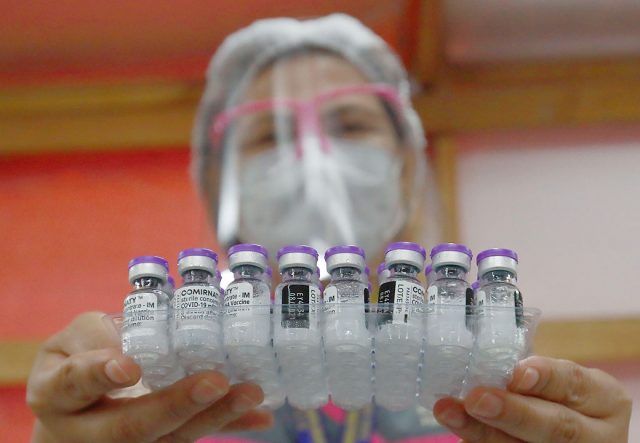
A MAJOR British study into mixing COVID-19 vaccines has found that people had a better immune response when they received a first dose of AstraZeneca or Pfizer-BioNTech shots followed by Moderna nine weeks later, according to the results on Monday.

“We found a really good immune response across the board…, in fact, higher than the threshold set by Oxford-AstraZeneca vaccine two doses,” Matthew Snape, the Oxford professor behind the trial dubbed Com-COV2, told Reuters.

The findings supporting flexible dosing will offer some hope to poor and middle income countries which may need to combine different brands between first and second shots if supplies run low or become unstable.

“I think the data from this study will be especially interesting and valuable to low- and middle-income countries where they’re still rolling out the first two doses of vaccines,” Mr. Snape said.

“We’re showing…you don’t have to stick rigidly to receiving the same vaccine for a second dose…and that if the programme will be delivered more quickly by using multiple vaccines, then it is okay to do so.”

If the AstraZeneca-Oxford vaccine is followed by a Moderna or Novavax shot, higher antibodies and T-cell responses were induced versus two doses of AstraZeneca-Oxford, according to researchers at the University of Oxford.

The study of 1,070 volunteers also found that a dose of the Pfizer-BioNTech vaccine followed by a Moderna shot was better than two doses of the standard Pfizer-BioNTech course.

Pfizer-BioNTech followed by Novavax induced higher antibodies than the two-dose Oxford-AstraZeneca schedule, although this schedule induced lower antibody and T-cell responses than the two-dose Pfizer-BioNTech schedule.

No safety concerns were raised, according to the Oxford University study published in the Lancet medical journal.

Many countries have been deploying a mix and match well before robust data was available as nations were faced with soaring infection numbers, low supplies and slow immunization over some safety concerns.

Longevity of protection offered by vaccines has been under scrutiny, with booster doses being considered as well amid surging cases. New variants, including Delta and Omicron, have now increased the pressure to speed up vaccination campaigns.

Blood samples from participants were tested against the Wild-Type, Beta and Delta variants, researchers of the Com-COV2 study said, adding that vaccines’ efficacy against the variants had waned, but this was consistent across mixed courses.

Deploying vaccines using technology from different platforms — like Pfizer and Moderna’s mRNA, AstraZeneca’s viral vector and Novavax’s protein-based shot — and within the same schedule is new.

The results may inform new approaches to immunization against other diseases, he said.

The study also found that a first dose of the AstraZeneca-Oxford vaccine followed by any of the other candidates in the study generated a particularly robust response, consistent with findings in June.

The study was designed as a so-called “non-inferiority” study — the intent is to demonstrate that mixing is not substantially worse than the standard schedules — and compares the immune system responses to the gold-standard responses reported in previous clinical trials of each vaccine. — Reuters

US House could vote to hike debt limit this week, senior Democrat says

WASHINGTON — The US House of Representatives could vote this week to raise the federal government’s $28.9-trillion debt limit, the chamber’s No. 2 Democrat told reporters on Monday, without providing details on how such an effort might unfold.

Treasury Secretary Janet Yellen has urged Congress to act by Dec. 15 and a bipartisan think tank warned last week the US government could run out of ways to cover its obligations by late this month, which would trigger an unprecedented default that would rock the global financial system.

“Hopefully we will be able to resolve a way that that (a debt limit bill) can be done in the next few days,” House Majority Leader Steny Hoyer told a news conference.

Top Republicans have been calling on President Joseph R. Biden’s Democrats to hike the debt limit without Republican votes, using a process known as reconciliation. Democrats note the increased debt is needed largely to cover the cost of tax cuts and spending programs during former President Donald Trump’s administration, which congressional Republicans supported.

But Democratic leaders in the House and Senate were searching for a way to win passage.

Senate Republicans also expressed optimism that Senate Majority Leader Chuck Schumer and his Republican counterpart, Mitch McConnell, would soon work out a debt ceiling agreement.

“I don’t think that anybody wants to see the full faith and credit of the United States damaged. And so, I’m an optimist,” Senator John Cornyn said after a meeting with Mr. McConnell and other leading Republican lawmakers.

Mr. Cornyn said he believes the Treasury could extend its debt ceiling deadline into January, possibly by using money from the Highway Trust Fund.

“But I don’t see any reason to delay the conversation,” he said of ongoing talks between Mr. Schumer and Mr. McConnell. “If they can get this behind us, I think we’d all be better off.”

Mr. Hoyer said it was possible that Democrats would attach the debt-hike initiative to a national defense authorization bill now moving through Congress.

A sizeable number of liberal Democrats voted against House passage of the defense bill and attaching the debt limit to it could ruin chances for getting enough Republican votes as well after the Senate passes a revised version.

AMONG SEVERAL MAJOR INITIATIVES
The debt limit is just one of several major initiatives that Democratic congressional leaders want to debate before the end of the year.

Mr. Schumer also wants additional votes on voting rights reforms, which have been repeatedly blocked by Senate Republicans, and Mr. Biden’s $1.75-trillion “Build Back Better” domestic investments bill this month.

Mr. Schumer noted that the Senate parliamentarian still has to review many components of the legislation, including an immigration provision, and decide whether they qualify to be included in the bill under a special budget reconciliation process that imposes tighter controls than regular legislation.

He did not say how he would advance voting rights legislation if Republicans engage in an expected filibuster that would require 60 votes in the 100-member chamber to break a deadlock. Many Democrats have been urging Mr. Schumer to push for a change in the Senate’s filibuster rule.

Last week, following a meeting Mr. Schumer held with a group of Democrats, Senator Jon Tester said he doubted a showdown over the filibuster could be staged this month given the Senate’s heavy legislative schedule.

“There’s just too much stuff on the docket,” he told Reuters. — Reuters

New England Pats rush to 7th straight win after beating Buffalo Bills

NEW ENGLAND Patriots running back Damien Harris (37) runs the ball against the Atlanta Falcons in the first quarter at Mercedes-Benz Stadium. — REUTERS

DAMIEN Harris rushed for 111 yards, including a career-long 64-yard touchdown in the first quarter, as the New England Patriots beat the American Football Conference (AFC) East rival Buffalo Bills (14-10) in Orchard Park, NY, on Monday night for their seventh straight win.

On the fifth of his 10 carries, Harris took a pitch to the left from quarterback Mac Jones and cut back inside through the gap before rushing up the middle untouched into the end zone with 5:18 remaining in the opening quarter.

It was the Patriots’ longest run since Curtis Martin rumbled for a 70-yard touchdown on Sept. 21, 1997, versus Chicago.

New England (9-4) maintained the No. 1 seed in the AFC following Baltimore’s loss to Pittsburgh on Sunday. Buffalo (7-5) lost for the fourth time in seven games after winning four of its first five.

On a wet and windy night, the rookie Jones attempted only three passes, completing two for 19 yards. His first completion came on a wobbling ball to Jonnu Smith for a 12-yard gain late in the first quarter.

The Patriots ran 32 consecutive running plays before Jones attempted his next pass in the fourth quarter. Jones’ three attempts were the fewest in any NFL game since Bills quarterback Joe Ferguson went 0-for-2 in a game in 1974.

Buffalo trailed by four after Tyler Bass missed a 33-yard field-goal attempt wide right against the wind with 7:28 remaining. Later in the fourth quarter, Josh Allen drove the Bills to the Patriots’ 18-yard line before his pass on fourth-and-14 was batted down by Myles Bryant for a turnover on downs.

Rhamondre Stevenson ran for 78 yards on 24 carries for New England, which rushed for 222 yards while holding Buffalo to 99 yards on the ground.

Allen finished 15-of 30 for 145 yards and one touchdown while rushing for 39 yards on six carries.

The Patriots converted a two-point conversion after Harris’ touchdown run to go up 8-0.

After a muffed punt by New England’s N’Keal Harry, Allen hit Gabriel Davis for a 14-yard touchdown pass to make it 8-7 with 2:02 left in the first. Nick Folk’s 41-yard field goal early in the second quarter put the Patriots up 11-7 heading into half time.

Bass’ 35-yard field goal with 6:35 left in the third brought the Bills within 11-10, before Folk tacked on a 34-yarder with 13:01 left in the fourth. — Reuters

Streaking Grizzlies knock off Miami Heat

DESMOND Bane and Dillon Brooks each scored 21 points as the Memphis Grizzlies won their fifth straight game — all of them without ever trailing — beating the host Miami Heat (105-90) on Monday night.

Steven Adams added 17 points and a game-high 16 rebounds for the Grizzlies, whose winning streak has coincided with the knee injury that has sidelined star guard Ja Morant for five games.

Heat reserve Tyler Herro led all scorers with 24 points on 11-for-19 shooting. Kyle Lowry added 17 points and eight assists.

Miami, which lost for the fourth time in five games, got star forward Jimmy Butler back from a tailbone injury only to lose him again.

Butler, who had missed four straight games, took a hard fall to that same body part with 8:15 left in the first quarter. He remained in the game but then departed for good with 8:04 left in the third.

He finished with 10 points, five rebounds and four assists. But Butler was hit with a technical after he got injured. He wanted a foul on Jaren Jackson, Jr. but didn’t get the call.

Memphis also suffered an injury as rookie first-round pick Ziaire Williams sprained his left ankle in the second quarter and did not return.

Miami missed nine of its first 10 shots, falling behind 20-6. By the end of the quarter, though, Miami cut its deficit to 34-25.

Memphis stretched its lead to 50-35 with 5:09 left in the second quarter. But Miami closed its deficit to 60-49 at half time.

De’Anthony Melton of the Grizzlies released a free-throw-line jumper just before the first-half buzzer and the ball bounced off the backboard and rim after the horn sounded.

For the first half, Memphis shot 52.3% from the floor, including 7-for-13 on 3-pointers (53.8%), and 7-for-7 on the foul line.

Memphis stretched its lead to 82-67 by the end of the third quarter, and the Grizzlies cruised from there.

For the game, the Grizzlies outrebounded Miami 47-36. Memphis shot 42.7% from the floor, including 13-for-33 on three-pointers (39.4%).

Miami shot 46.1% from the floor, including 6-for-22 on three-pointers (27.3%).

The Heat have lost three straight home games. — Reuters

Late Gray show gives Everton 2-1 comeback win against Arsenal

LIVERPOOL, England — Everton eased some of the pressure on manager Rafa Benitez as they ground out a comeback 2-1 home win over Arsenal in the Premier League on Monday, with Demarai Gray netting a stunning stoppage-time winner after setting up the equalizer.

Brazilian forward Richarlison, who had two goals scrapped for marginal offsides after VAR checks, had leveled in the 79th minute after Gray hit the crossbar, canceling out Martin Odegaard’s first-half opener for the visitors.

The outcome left Arsenal seventh on 23 points from 15 games, four points outside the top four, while Everton, who announced on Sunday that director of football Marcel Brands had left his position, climbed to 12th on 18 points.

Everton captain Seamus Coleman praised the home fans who lifted the Toffees in the face of adversity after they fell behind, having also singled out Gray’s fine performance.

Everton dominated the first half and created several half-chances before Richarlison headed in a 44th-minute free kick from Andros Townsend, only for his effort to be chalked off.

Norwegian Odegaard then scored on the stroke of half time from Arsenal’s first purposeful move, steering the ball superbly past goalkeeper Jordan Pickford as he got on the end of Kieran Tierney’s cross from the left.

Richarlison thought he had equalized in the 57th minute when he drove the ball inside the near post from close range, but Everton was again denied by VAR leaving the Brazilian shaking his head in disbelief.

But it was third time lucky for Richarlison as he beat Arsenal keeper Aaron Ramsdale with a looping header from a rebound after Gray’s long-range shot cannoned off the woodwork, setting up a frantic climax.

With a share of the spoils looming, Gray sent the home fans into raptures when he cut inside two players and beat Ramsdale with a thunderbolt from 25 meters which went in off the post, giving Everton their first league win in nine games. — Reuters

US officials to boycott Beijing Olympics over rights ‘atrocities’

WASHINGTON/BEIJING — US government officials will boycott the 2022 Winter Olympics in Beijing because of China’s human rights “atrocities,” the White House said on Monday, just weeks after talks aimed at easing tense relations between the two superpowers.

The diplomatic boycott, which leaves athletes free to travel to Beijing to compete, has been encouraged by some members of Congress and rights advocacy groups for months.

Beijing threatened unspecified “resolute countermeasures” against any such move before Monday’s announcement, which is certain to further strain relations already at their lowest point in decades.

President Joseph R. Biden, Jr.’s administration highlighted what Washington says is genocide against minority Muslims in China’s western region of Xinjiang.

“US diplomatic or official representation would treat these games as business as usual in the face of the PRC’s egregious human rights abuses and atrocities in Xinjiang, and we simply can’t do that,” White House press secretary Jen Psaki told a daily press briefing, referring to the People’s Republic of China.

“The athletes on Team USA have our full support,” Psaki added. “We will be behind them 100% as we cheer them on from home.”

The move comes despite an effort to stabilize ties with a video meeting last month between Biden and China’s leader Xi Jinping.

China’s embassy in Washington called the boycott “political manipulation” as no invitations had been extended to US politicians.

“In fact, no one would care about whether these people come or not, and it has no impact whatsoever on the Beijing 2022 Winter Olympics to be successfully held,” embassy spokesman Liu Pengyu said.

Secretary of State Antony Blinken has said the United States consulted allies on a “shared approach” to the Beijing Games. It was unclear if they would follow the US lead.

“Canada remains deeply disturbed by the troubling reports of human rights violations in China,” Canada’s foreign ministry said in a statement. “We were notified of the US decision and we will continue to discuss this matter with our partners and allies.”

The Australian and Japanese governments said they were also still considering their positions for the Games, which will begin on Feb. 4.

“We will consider matters such as the meaning of the Olympic Games and our diplomatic relations, and would like to make our own decision based on what is best for our national interest,” Japan’s Prime Minister Fumio Kishida told reporters.

New Zealand Deputy Prime Minister Grant Robertson said his country would not be sending government officials but that decision was based largely on coronavirus disease 2019 (COVID-19) concerns and preceded the US boycott.

“We’ve made clear to China on numerous occasions our concerns about human rights issues — as recently as the Prime Minister talking to President Xi,” Robertson told reporters, according to state broadcaster TVNZ. “They’re well aware of our view on human rights but we’d already made that decision not to attend.”

Stefano Sannino, chief of the European Union’s diplomatic service, said on Friday that boycotts were a matter for individual member states, not common EU foreign policy.

Russian President Vladimir Putin is the only leader of a major country who has accepted China’s invitation.

US State Department spokesman Ned Price told reporters the government would not dictate private sector practices, but said firms should be “fully cognizant” of what is transpiring in Xinjiang.

The diplomatic boycott puts corporate Olympic sponsors in “an awkward spot” but was less concerning than a full boycott including athletes, said Neal Pilson, a former president of CBS Sports who has overseen Olympics broadcast rights deals.

A spokesperson from Comcast-owned NBCUniversal said it would broadcast the Games as planned.

POTENTIAL RETALIATION
The International Olympic Committee (IOC), which has faced criticism for turning a blind eye to China’s right record, said the Games should be “beyond politics.”

Sarah Hirshland, chief executive of the US Olympic and Paralympic Committee, said Team USA was “excited and ready to make the nation proud.”

Many US athletes argued it would have been unfair to ban them from the Games, and some US lawmakers who supported not sending officials had said it was in US interests for its national anthem to be playing in Beijing as Americans received medals.

Human rights groups welcomed the move, but said Washington could do more to hold China accountable.

For China, which denies all rights abuses, Biden’s move is less a threat to the Games and more of an optics problem that Beijing fueled by threatening retaliation, experts said.

“It would have been a non-story if let alone,” said Lisa Delpy Neirotti, an associate professor of sport management at the George Washington University School of Business. “We typically do not send a large government delegation anyway, especially in COVID times.”

Beijing says it opposes the politicization of sports, but it has punished American sports leagues in the past, including the National Basketball Association for crossing political red lines.

Scott Kennedy, a China expert at the Center for Strategic and International Studies in Washington, said Beijing’s options to retaliate included limiting bilateral dialogue, stalling visas, or hamstringing athletic delegations and journalists at the Games.

The United States is next due to host an Olympics in 2028 in Los Angeles, raising questions of how China might respond. — Reuters

Constant change

Pro basketball head coaches get hired and fired all the time. And as habitués of the sport know, the reasons aren’t always clear. Ideally, they should be; after all, the best basis for tenure is performance borne off measurable objectives. Yet, hoops annals are littered with examples of bench tacticians let go due to seeming whim and fancy.

To be sure, franchise owners do have the right to base their decisions on their — and, just as importantly, on their charges’ — emotional intelligence. In fact, it’s critical, especially when much of success is based as much on nurturing relationships as on mastering Xs and Os. The problem lies when there is a discernible lack thereof on the part of the doer; when underpinnings are perceived as wobbly at best, the second-guessing of choices becomes inevitable.

William Shakespeare once wrote, “Uneasy lies the head that wears a crown.” And he’s right; what is true of the title character in King Henry IV is true of any mentor. It’s why Frank Vogel, just 13 months and change removed from steering the Lakers to a championship, is said to be on the hot seat. It’s why not a few quarters put Billy Donovan in the same position — that is, before the Bulls’ outstanding start to the 2021-22 season. And it’s why the Mercury parted ways with Sandy Brondello, never mind their immediate past Cinderella finish.

When there is no one else to blame for unmet expectations, the head coaches are invariably the first to go. For the most part, the development takes off from the notion that, in a crisis, shaking the tree — any tree — is welcome. Owners aren’t wrong to disrupt the status quo. That said, there needs to be a method to the madness. Else, gains will not last beyond the short term.

Only time will tell if Vogel gets the axe, or if Donovan justifies the reprieve, or if Brondello truly signifies addition by subtraction. Regardless of the outcomes, however, this much is clear: given the need to make up for an inability to deliver, the desperate feel they need to rely on the only constant: change.


Anthony L. Cuaycong has been writing Courtside since BusinessWorld introduced a Sports section in 1994. He is a consultant on strategic planning, operations and Human Resources management, corporate communications, and business development.

Peso recovers as Nov. inflation slows for third straight month

BW FILE PHOTO

By Luz Wendy T. Noble, Reporter

THE PESO on Tuesday strengthened against the dollar on better job data and after inflation eased to the slowest level in four months.

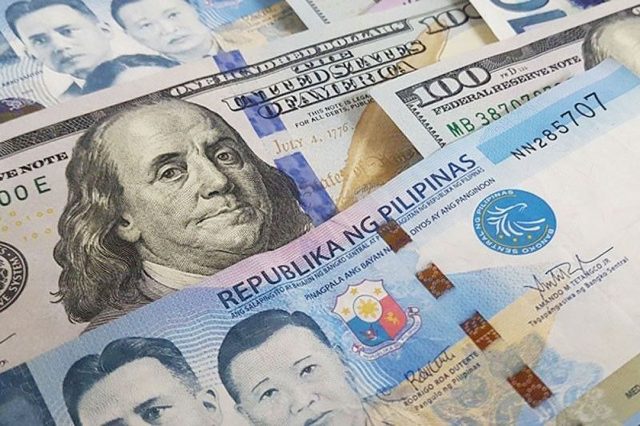
The local currency closed at P50.375 a dollar, appreciating by 3.5 centavos from Monday’s close, according to data posted on the Bankers Association of the Philippines website.

The peso opened Tuesday’s session at P50.35 a dollar, weakened to as much as P50.40 and appreciated to as much as P50.23. Dollars exchanged increased to $944.35 million from $690.84 million on Monday.

Markets will be closed on Wednesday for a religious holiday.

The peso strengthened after November inflation slowed for the third straight month, Michael L. Ricafort, chief economist at Rizal Commercial Banking Corp. said in a Viber message.

Inflation slowed to 4.2% in November from 4.6% in October, the local statistics agency reported on Tuesday. This was still above the Philippine central bank’s 2-4% target for the year and faster than the 4% median estimate by 18 analysts in a BusinessWorld poll last week.

The slower increase in food prices mainly caused easing inflation last month, the Philippine Statistics Authority (PSA) said.

Inflation in the 11 months to November was 4.5%, still above the 4.3% forecast by the Bangko Sentral ng Pilipinas.

The decline in the country’s jobless rate had also boosted the peso, Mr. Ricafort said.

The unemployment rate in October fell to 7.4% from 8.9% in September. The number of jobless Filipinos fell to 3.5 million from 4.25 million.

Mr. Ricafort expects the peso to move within P50.28 to P50.48 a dollar on Wednesday.

ADVERTISEMENT
ADVERTISEMENT