Home Blog Page 7061

Senators considering transfer of PhilHealth control to DoF
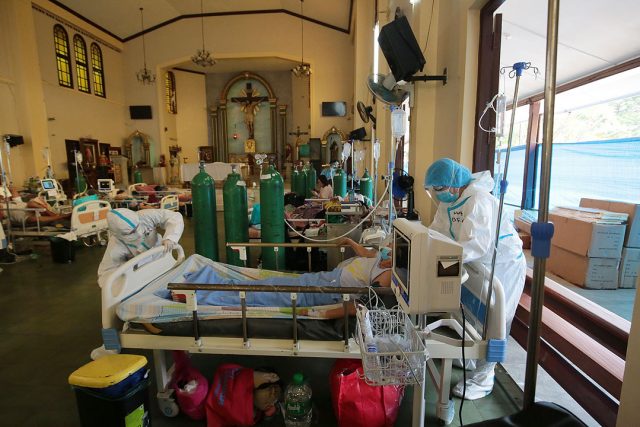
PHILSTAR FILE PHOTO

By Alyssa Nicole O. Tan

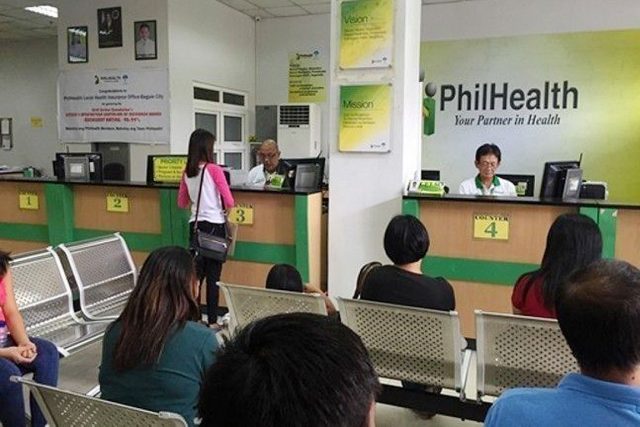
SENATORS said on Tuesday that they are considering transferring control of the Philippine Health Insurance Corp. (PhilHealth) to the Department of Finance (DoF) in order to better align the government-run health insurer’s practices with those of the financial services industry.

The legislators aired the proposal after an association of private hospitals threatened to call a “PhilHealth holiday,” in which they will refuse to honor PhilHealth coverage from patients seeking treatment.

“I think PhilHealth should be under the DoF instead of the DoH and should be headed by a finance rather than a health expert (and not) someone who has no background and experience in either field,” Senator Panfilo M. Lacson, who is running for President, said in a statement.

PhilHealth deals with health insurance, not health, he said. As such, “we need somebody there who knows how to… manage funds, not a health practitioner.”

“It makes perfect sense for PhilHealth to be headed by one who is also adept in finance,” Senator Mary Grace Natividad S. Poe-Llamanzares said in a Viber message, noting that it is possible to find qualified managers with backgrounds in both public health and finance.

“More than re-arranging the bureaucracy, it might be more beneficial to just appoint the right person for the job. A true public health and finance expert must be at the helm of PhilHealth, not just any bureaucrat with close ties to the appointing authority,” she added.

Senator Juan Edgardo M. Angara, who chairs the Senate Finance committee, also expressed support for the proposal. “The suggestion to have more finance professionals is sound, as well as actuaries and management experts.”

PhilHealth, he added, could have been a “game-changer” because of the Universal Health Care law, but it lacks efficiency and proper management. “Sorry to say but PhilHealth is one of the weak links right now in the country’s health system.”

This year the DoF took over the Philippine Crop Insurance Corp., which was formerly managed by the Department of Agriculture, to bring its costs more in line with financial industry benchmarks, and to expand its coverage to more farmers.

BusinessWorld queried the DoF for comment but it had not replied at the deadline.

At a briefing on Tuesday, PhilHealth said reconciliation talks are now taking place with the Private Hospitals Association of the Philippines, Inc. (PHAPi) in Iloilo to address the latter’s concerns.

PHAPi President Jose Rene De Grano had called for a “PhilHealth holiday” as a protest against unpaid claims, with seven Iloilo hospitals taking the lead in moving to reject PhilHealth coverage.

“We will show our support for these hospitals who are cutting ties (with PhilHealth). We are encouraging our members to not accept PhilHealth (claims) starting Jan. 1 until Jan. 5,” Mr. De Grano said earlier. PHAPi has over 600 members, according to its website.

PhilHealth said it is working to address problems being raised, after having paid more than P155 billion worth of claims during the pandemic.

It added that around P11.64 billion in claims have been paid to partner hospitals through the Debit Credit Payment Method, a scheme that aims to fast-track the reimbursements.

PHAPi, the state insurer said, should reconsider as “eventually, it will be the Filipino people who will suffer the consequences.”

“It is disheartening that some hospitals have to resort to this,” according to Senator Maria Lourdes Nancy S. Binay-Angeles in a Viber message. “It is saddening because the issue with PhilHealth has been raised several times under Senate committee hearings yet until now, there is still no clear solution to this problem.”

“To be honest, the move for a PhilHealth holiday has been long in coming ever since we found out about the anomalies last year,” Ms. Poe said. “We can hardly fault the private hospitals for taking more drastic measures this time around.”

Ms. Binay said that this is a “serious matter” that merits an emergency meeting of the PhilHealth board and all cabinet secretaries — not just the representatives.

“PhilHealth and the DoH should get their act together to prevent more hospitals from disengaging,” she said, as the coronavirus is still ongoing, and the country has to prepare itself for the possible surge of new variants. 

“What is the use of health insurance if you can’t use it? In the end, it is not PhilHealth or the hospitals who will suffer, but the people,” Ms. Binay said.
HMOs post sharp decline in third-quarter profits

PHILIPPINE STAR/ MICHAEL VARCAS

HEALTH MAINTENANCE organization (HMO) profits declined in the third quarter after a surge in claims outweighed revenue growth, according to the Insurance Commission.

The HMO industry posted a 40.87% decline in overall net profit to P4 billion in the third quarter.

“This substantial decrease in the total net income is driven by the 11.95% increase in total expenses notwithstanding the 2.61% increase in total revenues, year on year,” Insurance Commission Dennis B. Funa said in a statement on Tuesday.

Revenue grew to P39.27 billion in the third quarter due to the growth in membership and enrollees’ fees and a surge in administrative services only network access and processing fees.

Healthcare benefit claims hit P23.8 billion in the third quarter, up 23.67%.

Unaudited financial statements of 28 HMOs indicate asset growth of 27.59% year on year to P63.21 billion, “driven by a corresponding growth in the value of the industry’s investment portfolio despite the decrease in cash and cash equivalents,” Mr. Funa said.

Investments in subsidiaries, associates, and joint ventures rose more than 38 times, while investments in property increased more than 15 times.

Equity industry-wide rose 17.24% to P15.22 billion in the third quarter.

Liabilities rose 31.27% to P47.98 billion.

“This was due to the increase in health plan liabilities, administrative services only (ASO) fund, and deferred tax liability,” Mr. Funa said.

The industry’s capital stock increased by 17.21% to P3.22 billion in the third quarter. — Jenina P. Ibañez

Shell makes first payment on import tax due under protest

PILIPINAS SHELL Petroleum Corp. (PSPC) made a first payment to the Bureau of Customs (BoC) of P1.7 billion under protest to cover disputed alkylate import taxes levied against it, the Department of Finance said.

“BoC received P1.7 billion from Shell Phils. Balance due on Jan. 10,” Finance Secretary Carlos G. Dominguez III said in a Viber message to reporters Tuesday.

The BoC had directed the company to make its first payment on the P3.49 billion in allegedly unpaid taxes by Dec. 27.

Earlier this month, PSPC agreed to pay taxes on alkylate imports shipped from 2014 to 2020, doing so under protest pending a court ruling.

Customs Commissioner Rey Leonardo B. Guerrero in a letter to PSPC President Lorelie Q. Osial said the oil company’s accreditation could be suspended if it fails to pay.

He said the potential suspension is not a threat, but a “proper recourse” that can be taken by the bureau after the Supreme Court lifted the temporary restraining order that had restricted the government from collecting the taxes.

“I am certain that the suspension of Pilipinas Shell’s import accreditation with the BoC will be reconsidered if the second installment is not received on the date indicated,” Mr. Dominguez said.

PSPC had agreed to remit the P3.49 billion, under protest, to continue importing fuel. The courts would still have to decide on whether or not alkylate is subject to excise tax, the company said.

Mr. Dominguez has said that the demand for payment “levels the playing field” with other oil companies that pay taxes on their alkylate imports. — Jenina P. Ibañez

Palace assures budget signing before end of 2021

PHILSTAR

A PALACE official said on Tuesday that he expects the proposed P5.024-trillion budget for 2022 to be signed before the end of the year after the original Tuesday target date was not met.

“We assure the public that the budget will be signed. President (Rodrigo R.) Duterte will sign the budget before Dec. 31,” Cabinet Secretary Karlo Alexei B. Nograles said at a televised news conference.

Mr. Nograles said the budget is still being reviewed by the executive department. “So ilang araw na lamang po at matatapos na rin iyong review (The review will be completed in a few days) and the President will immediately sign the budget.”

A day before the expected signing of the spending plan on Dec. 28, Senate President Vicente C. Sotto told reporters that he “received word now of a postponement” with “no reason given.”

Any news of a potential delay could affect the investment climate, according to John Paolo R. Rivera, an economist with the Asian Institute of Management. “It means something is not right and a risk has just emerged.”

“Not signing the budget on time poses the risk of using the 2021 budget in 2022. This is problematic because the needs of 2021 are different from the needs of 2022” Mr. Rivera said in a Viber message. “Investors will be cautious because it may signal how financially constrained 2022 will be.”

“Any delay could weigh on sentiments in local financial markets and could adversely affect economic recovery prospects and investment valuations,” Michael L. Ricafort, chief economist at Rizal Commercial Banking Corp., said in a Viber message.

“The approval of the 2022 national budget would fundamentally improve economic recovery prospects, as made more urgent by the pandemic in view of the need to also have funding available for various COVID programs,” he said.

Mr. Nograles said the government is expected next year to generate about P3.3 trillion in revenue.

The spending plan will also be funded by borrowing, with 77% sourced domestically, he said. “All revenue streams needed to fully implement the budget for 2022 are already programmed.”

The 2022 budget was ratified by the two chambers of Congress just a day before Typhoon Odette made landfall on Dec. 16.

Odette, the strongest storm to hit the Philippines this year, has directly affected 4.24 million people, according to government estimates. — Kyle Aristophere T. Atienza

Anti-poverty programs need better data, PIDS study finds

PHILSTAR

THE GOVERNMENT is hindered in designing effective anti-poverty programs by limited data, according to a study by the Philippine Institute for Development Studies (PIDS).

The PIDS discussion paper, known as “Eradicating Poverty in the Philippines by 2030: An Elusive Goal?” found that households that experience shocks need safety nets to help them avoid falling into transient poverty.

“Since the data do not distinguish between the chronic and transient poor, the two groups are treated homogeneously and the programs designed for them are the same,” PIDS President Celia M. Reyes said in the report, released Monday.

“Lack of understanding of the dynamics of poverty can lead to inappropriate interventions.”

She said the statistics agency should redesign its family income and expenditure survey to improve how it studies poverty.

“It will also provide the necessary information for designing and budgeting for these different interventions,” she said.

The proportion of Filipinos whose income fell below the per capita poverty threshold rose to 23.7% in the first half of 2021 from 21.1% three years earlier, the Philippine Statistics Authority said.

This meant the number of poor people rose by 3.87 million to 26.14 million.

The National Economic and Development Authority has said that the coronavirus disease 2019 (COVID-19) pandemic affected progress made in reducing poverty due to the income and jobs lost due to lockdown restrictions last year.

The PIDS report noted that the lowest labor productivity is in agriculture, which employs the majority of the poor.

“The agrarian reform program, implemented to reduce poverty and inequality, has contributed to the fragmentation of land, making it difficult for farmers to realize benefits from economies of scale,” she said.

Typhoons also significantly damage agricultural production and reduce farmer income.

“Agricultural insurance can be a good risk management tool but has limited coverage and implementation issues,” she said. “Greater capacity building for local government units in preparing for disasters, will be helpful in dealing with the shocks.”

Ms. Reyes said the poor also have less access to education, and noted inadequacies in reproductive health services and health insurance.

To improve the government’s response to poverty, the paper said education incentives should be targeted at the chronic poor, while distinct programs for the chronic and transient poor would improve the design of social protection programs. — Jenina P. Ibañez

DTI says fireworks retailers in Bulacan more compliant this year

PHILSTAR

THE Trade department said on Tuesday that it issued violation notices to three companies selling fireworks in Bulacan, but noted that compliance among retailers in the province has improved this year.

“Out of 26 firms inspected, three were issued notices of violation for apparent noncompliance of technical regulations,” the Department of Trade and Industry (DTI) said in a statement.

But the department noted that “there has been an improvement in the compliance of fireworks retailers in Bulacan as compared to last year’s enforcement operation.”

“In 2020, the DTI-FTEB’s (Fair Trade Enforcement Bureau) monitoring and enforcement team reported that only one, out of 15 monitored establishments, was compliant and the remaining other 14 firms were selling 1,271 pieces of unlicensed fireworks with a retail value of P280,416.00, which the team had confiscated,” the department said. 

The DTI’s Bureau of Product Standards (BPS) said that as of Dec. 22, only six licensed manufacturers are permitted to make and supply fireworks.

The department identified the manufacturers as Dragon Fireworks, Inc., Diamond Fireworks, Inc., Leegendary Fireworks, Inc., Pegasus Fireworks, Phoenix Fireworks, and Double L Fireworks.

“These companies passed the necessary requirements and testing conducted by the BPS,” the DTI said.

DTI-Consumer Protection Group Undersecretary Ruth B. Castelo reminded the public to only buy licensed fireworks produced by authorized manufacturers.

“These products underwent the conformity assessment process, including inspection and testing prior to market distribution to ensure the safety of the general public,” she said.

The department said that consumers should report illegally labeled products and unauthorized firework retailers. — Arjay L. Balinbin

PHL has enough calamity response laws — solons

PHOTO FROM PHILIPPINE COAST GUARD

EXISTING Philippine laws are sufficient for the implementation of quick response measures during disaster situations, solons asserted on Tuesday after President Rodrigo R. Duterte said “stupid laws passed by Congress” restricted him from immediately declaring a state of calamity. 

“That law should be changed. And it behooves upon this Congress, if they want to, or the next President, may I advise: try to repeal the law,” Mr. Duterte said in a taped public address and meeting with Cabinet members aired late Monday.

Under Republic Act 10121, or the Philippine Disaster Risk Reduction and Management Act of 2010, a state of calamity may be declared by the President upon the recommendation of the national council — or NDRRMC — based on a damage and needs assessment.

In 2011, then President Benigno S.C. Aquino, Jr. declared a national state of calamity on Dec. 20 in the aftermath of typhoon Sendong (international name: Washi), which affected Central Visayas and four regions in Mindanao. The late president made a similar national declaration in Nov. 2013 after super typhoon Yolanda (international name: Haiyan) battered mainly the central part of the Philippines, with Eastern Visayas suffering the biggest damage and death toll.

“(T)he declaration of a State of National Calamity will hasten the rescue, recovery, relief, and rehabilitation efforts of the government and the private sector, including any international humanitarian assistance,” reads part of the proclamation for typhoon Yolanda.

Mr. Duterte on Dec. 22 declared six regions — Western Visayas, Central Visayas, Eastern Visayas, Mimaropa (Mindoro, Marinduque, Romblon, Palawan), Northern Mindanao and Caraga — under a state of calamity.

Senate President Vicente C. Sotto III said the President does not even have to declare a state of calamity to prompt emergency operations.

“They should refer to RA 8185,” he told BusinessWorld, referring to an amendment to the Local Government Code that gives local councils the authority to proclaim a localized state of calamity and tap emergency funds.

“Why wait for the President when you are empowered to do so?,” said Mr. Sotto  who was one of the primary authors of the law.

Senator Francis N. Tolentino, who chairs the Senate local government committee, said the passage of a proposed law creating a new department on disaster management led by a Cabinet-level secretary, which will replace the NDRRMC, will further improve response measures by streamlining the bureaucracy.

It “will facilitate and speed up relief, recovery, and rehabilitation efforts as it will simplify the command structure and eliminate existing overlapping bureaucratic functions!” said Mr. Tolentino, who filed the proposal in 2019 under Senate Bill 211.

A counterpart measure in the House of Representatives was approved on final reading last Sept. 20 under House Bill No. 59589. The bill has been transmitted to the Senate and is currently pending at the committee on national defense.

Senator Emmanuel “Manny” D. Pacquiao, a presidential aspirant in the May 2022 elections, said establishing a new department is not enough and Congress should create a “super-agency” that will handle both disaster management and “long-term strategies on how to deal with climate change.”

Bayan Muna Party-list Rep. Rep Eufemia C. Cullamat, for her part, said the problem is not in legislation but the Duterte administration’s implementation.

“President Duterte should stop making excuses for his incompetent administration and just admit that they were unprepared as usual in dealing with calamities,” she said in a Viber message to reporters.

She disagreed with the President’s proposal to remove the assessment criteria for a state of calamity declaration.

“What President Duterte is suggesting is a perfect recipe for corrupt and despotic government officials to take advantage of.”

IMPACT UPDATE
As of Dec. 28, reported deaths from typhoon Odette stood at 397, up from 389 the previous day, based on the NDRRMC’s running count.

There were also 83 persons reported missing and 1,147 injured, while over 500,000 are displaced with more than 50% of them staying in evacuation centers.

Agricultural damage, meanwhile, has risen to P6 billion, according to the Department of Agriculture (DA).

This covers 288,677 hectares of land and an estimated production loss of 118,426 metric tons (MT), affecting over 68,991 farmers and fisherfolk.

“Looking at the losses by commodity, the fisheries sector has been hit hardest, followed by rice and coconut,” Agriculture Secretary William D. Dar said in a taped meeting with the Cabinet aired on Tuesday.

At the time of the briefing, losses in the fisheries sector amounted to P1.8 billion, followed by rice and coconut at P1.7 billion and P1.5 billion, respectively. Rice losses had since increased to P1.9 billion, based on the DA’s latest report.

“If you look at the total production loss of rice this year to date, we have lost almost 700,000 MT, and this is 3.4% of the 20.3 million MT target this year,” Mr. Dar said.

Agricultural damage was reported in the six regions under a state of calamity, along with Calabarzon (Cavite, Laguna, Batangas, Rizal, Quezon), Bicol, Zamboanga Peninsula, Northern Mindanao, Davao, and Soccsksargen (South Cotabato, Cotabato, Sultan Kudarat, Sarangani, General Santos City).

Prior to the typhoon, the DA employed various impact-mitigation measures to soften the blow from the calamity, the secretary said.

“We advised farmers and fisherfolk to harvest matured produce and along this area, we have saved about P665 million. We also had the prepositioning of seeds for rice, corn, high-value crops, drugs and biologics for livestock and poultry,” he said.

The DA will be providing at least P2.9 billion worth of assistance to affected agri-workers. This includes P1 billion for the rehabilitation of storm-hit areas, P500 million worth of rice, corn, and vegetable seeds.

“We have ongoing distribution of the indemnification to affected farmers. The PCIC (Philippine Crop Insurance, Corp.) has P828 million to pay almost P12,000 on average per farmer. We can pay almost 69,000 farmers,” Mr. Dar said.

Other DA initiatives include debris management and provision of planting materials, the facilitation of insurance and loan programs, and the repair of fishing boats. — Marifi S. Jara, Alyssa Nicole O. Tan, Jaspearl Emerald G. Tan, and Luisa Maria Jacinta C. Jocson

Close contact of 4th Omicron case tests positive for COVID

MARITIME INDUSTRY AUTHORITY

THE HUSBAND of the fourth Omicron variant case in the Philippines has tested positive for the coronavirus and sequencing is underway to determine if he is carrying the same variant, according to Health authorities.

The 37-year-old Filipino took a COVID-19 test on the same day as his wife, Health Undersecretary Maria Rosario S. Vergeire said in a Viber message to reporters on Tuesday. They were isolated for 10 days upon the release of results.

“After a 10-day isolation, both were discharged asymptomatic,” Ms. Vergeire said. “They will be retested based on existing protocols.”

The husband and his 38-year old wife arrived in the country from the United States on Dec. 10.

The sample of the husband “will be processed now for sequencing,” Ms. Vergeire said.

She said their household members have also been isolated and will be tested based on existing protocols.

The government has imposed stricter quarantine and international border controls to mitigate a potential surge from the more transmissive coronavirus variant, but eased local mobility and other restrictions have been maintained since mid-November as cases dropped. 

The Philippines posted 421 new coronavirus infections on Tuesday, bringing the total to 2.84 million.

The death toll from the coronavirus hit 51,213 after two more patients died, while recoveries increased by 248 to 2.78 million, the Department of Health (DoH) said in a bulletin.

There were 9,750 active cases, 489 of which did not show symptoms, 3,766 were mild, 3,343 were moderate, 1,778 were severe, and 374 were critical.

The DoH said 97% of the reported cases occurred from Dec. 15 to 28. The top regions with new cases in the recent two weeks were Metro Manila with 170, Calabarzon with 55, and Central Luzon with 39.

The agency said the reported deaths all occurred in September.

The agency said two duplicates were removed from the tally, while two recoveries were relisted as deaths.

It said 100 patients had tested negative and were removed from the tally. “These 100 are recoveries.”

Two laboratories did not operate on Dec. 26, while 16 laboratories did not submit data. “Based on data in the last 14 days, the 18 labs contribute, on average, 2.9% of samples tested and 2.4% of positive individuals,” the department said.

The Philippines aims to fully vaccinate at least 54 million Filipinos by yearend, as it confronts threats from the heavily mutated Omicron variant.

The Philippines on Tuesday took delivery of more than two million doses of the vaccine made by AstraZeneca Plc.

The shipment was paid for by the private sector, according to a Facebook livestream of the state-run People’s Television Network, Inc.

About 202 million doses of coronavirus vaccines have been delivered to the country as of Dec. 27, vaccine czar Carlito G. Galvez, Jr. said in an interview with reporters, based on the livestream. About five million more doses are expected to arrive before yearend, he added.

Most of the new AstraZeneca doses will be used as booster shots, presidential adviser for entrepreneurship Jose Ma. “Joey” Concepcion III said in the same interview.

About 47.86 million Filipinos or 62.05% of the target population have been fully vaccinated against the coronavirus as of Dec. 23, Cabinet Secretary Karlo Alexei B. Nograles told a televised news briefing. The government has already injected 1.48 million booster or additional doses, he said. — Kyle Aristophere T. Atienza

Distribution of temporary shelter materials, repair kits underway — DHSUD

DAMAGED houses in the province of Dinagat Islands, where tropical cyclone Odette (international name: Rai) made its second landfall on Dec. 16, 2021. — DINAGAT ISLANDS PIO

THE PHILIPPINE government, in partnership with humanitarian organizations, has already started distributing temporary shelter materials and repair kits for damaged houses in areas affected by Typhoon Rai, locally known as Odette, according to the housing department.  

The government estimates that more than 500,000 residential structures were affected by the super typhoon, including over 167,417 that were completely destroyed and 341,368 that were partially damaged. 

A total of 5,598 shelter-grade tarpaulin sheets were handed over to local government units in Cebu, Bohol, Southern Leyte, and Caraga region, the Department of Human Settlements and Urban Development (DHSUD) said in an emailed statement.

The agency said authorities also distributed 14,000 more shelter-grade tarpaulin sheets, 250 modular tents for evacuation centers and 1,310 solar lamps in other typhoon-hit areas.

It added that 700 shelter repair kits, which contain corrugated galvanized iron sheets, lumber, plywood, tarps, nails and carpentry tools were sent to the Caraga region on Monday, while 300 more kits are set to arrive in Maasin City, Southern Leyte on Friday. 

President Rodrigo R. Duterte on Monday night asked the Department of Social Welfare and Development (DSWD) to use tarpaulin sheets and lumber from uprooted coconut trees as materials for the shelter of people displaced by Odette.

The purchase of the materials should be done within 48 hours, Mr. Duterte said at a taped Cabinet meeting. 

“Buy trapal, the appropriate size for a family of maybe six people,” the President told Social Welfare Secretary Rolando Joselito D. Bautista, saying that he “saw in some areas that people are sleeping with only plastics over their heads.” 

“Don’t conduct bidding process,” he said. “But it’s also okay if they want it… But it will delay the assistance needed for the situation.” 

WATER 
Assistance for water supply, one of the most pressing needs among typhoon survivors, has also been continuously coming in from various sectors.  

The Manila-based Norwegian Training Center, recognized as a world-class institution that mainly caters to Filipino seafarers, said on Tuesday that its social responsibility arm brought bottled water and other supplies to Cebu. 

It also said the Norwegian Shipowners’ Association, which established the training center in 1990, has also provided financial assistance to the Philippine Red Cross, which has been carrying out emergency and relief operations. 

In Negros Occidental, communities have been using a Japanese technology for water purification as supply lines have yet to be fully restored.  

The Japan International Cooperation Agency (JICA) said in a statement that the city government of Sagay, which was its pilot site for the Aqua Cube technology, has shared the portable facility to other localities.  

Aqua Cube, developed by Japanese firm INADA Inc., can purify as much as 2,000 liters per hour. 

“JICA welcomes the use of Japanese technology to help supply fresh drinking water in Typhoon Odette-hit areas. It’s worth noting how partnerships with private sector, local government, and international bilateral partners can impact the recovery of affected areas and address their basic needs in this difficult situation,” said JICA Philippines Chief Representative Azukizawa Eigo. — Kyle Aristophere T. Atienza 

PHL buys 2 warships as South China Sea tensions fester

MALACANANG PHOTO

THE PHILIPPINES signed a deal to purchase two corvettes from Hyundai Heavy Industries Co. Ltd., beefing up its defense capabilities in a region that has become more militarized due to competing claims in the South China Sea.

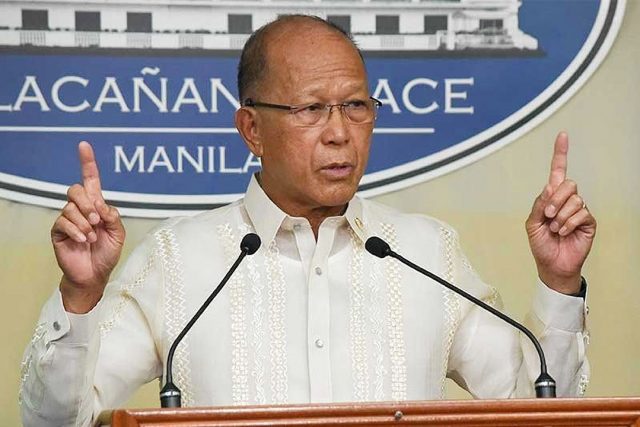
The warships, part of a P28-billion ($556 million) project for the Philippine Navy, are capable of anti-ship, anti-submarine and anti-air warfare missions, Defense Secretary Delfin N. Lorenzana said in speech during the signing of the deal on Tuesday.

The country earlier bought two frigates also from Hyundai Heavy, and expects “ease of maintenance and repairs” with a common shipbuilder for all its naval platforms, Mr. Lorenzana said. It also plans to sign a deal with PZL Mielec of Poland for 32 Black Hawk helicopters.

The Philippines has been boosting its military strength and is planning a return to full drills with the US amid tensions with Beijing over its expansive territorial claims in the resource-rich South China Sea. In November, the country accused China of firing water cannons to prevent its boats from resupplying a South China Sea outpost. — Bloomberg  

Senator reminds typhoon-affected small businesses to tap gov’t loan windows

BFP CARAGA

A SENATOR called on the Department of Trade and Industry (DTI) to boost its information campaign about available government loan programs for small businesses in typhoon-affected areas to prevent them from turning to loan sharks, illegal lending schemes, and other informal lenders.   

“What’s important now is for them to have the capital to return to doing business, in this way they can save jobs and stop the possible rise of prices in basic commodities,” Senator Sherwin T. Gatchalian said in a statement on Tuesday.   

He said the DTI should emphasize the availability of soft loans, which provides a longer grace period for repayment and lower interest rates, and financial grant programs for calamity-affected micro, small and medium enterprises (MSMEs).  

The senator also cited that MSMEs can avail of collateral-free loans through Small Business Corp., the micro-lending arm of the government under the Trade department.  

Under the Pondo sa Pagbabago at Pag-asenso Program, enterprises with an asset size not exceeding P3 million can borrow up to P200,000 with a 2.5% interest rate per month.   

The program also has the Enterprise Rehabilitation Financing Facility, which provides immediate loans for recovery, and covers all-natural and man-made calamities that affect micro-businesses in vulnerable areas.   

The loan facility can be tapped in areas declared under a state of calamity or reported to be severely devastated. 

Mr. Gatchalian said that through government initiatives like these, struggling MSMEs do not have to turn to usurpers or informal lenders that usually offer disadvantageous terms. — Alyssa Nicole O. Tan 

Senator bats for buildings that can be used as agri facility and for emergency evacuation 

TAYTAY MDRRMC

A SENATOR is proposing the construction of post-harvest facilities that can double as evacuation centers in the aftermath of typhoon Rai, locally known as Odette.  

Senator Francis “Kiko” N. Pangilinan, who is running for vice president next year, said these dual-purpose buildings will benefit farmers as well as residents during calamities.   

“Yearly, we are being visited by storms. As part of our disaster risk mitigation, (the) government should put enough budget for the construction of these dual-purpose buildings,” he said in a mix of English and Filipino in a statement on Tuesday. 

“The ground floor can be used as an evacuation center while the roof, cement, and flat can be used as drying areas,” he said. 

Mr. Pangilinan said the recent typhoon, the 15th and strongest to hit the country this year, underscored the importance of evacuation centers and higher allocation for calamity funds.   

“We need to be more prepared,” he said.  

Measures for “disaster-proofing” will also prepare the country for other effects of climate change, he added. — Alyssa Nicole O. Tan 

ADVERTISEMENT
ADVERTISEMENT