THE PESO retreated versus the greenback on Wednesday amid cautious sentiment due to stock market losses.
The local unit ended trading at P50.19 per dollar on Wednesday, weaker by 24 centavos from its P49.95 finish on Tuesday, based on data from the Bankers Association of the Philippines.
The peso opened Wednesday’s session strongest at P49.93. Its weakest showing was its close of P50.19, while its intraday best was at P49.90. Dollars exchanged increased to $1.063 billion on Wednesday from $916 million on Tuesday.
The peso weakened versus the greenback following the third straight day of losses in the local stock market, Rizal Commercial Banking Corp. Chief Economist Michael L. Ricafort said in a Viber message.
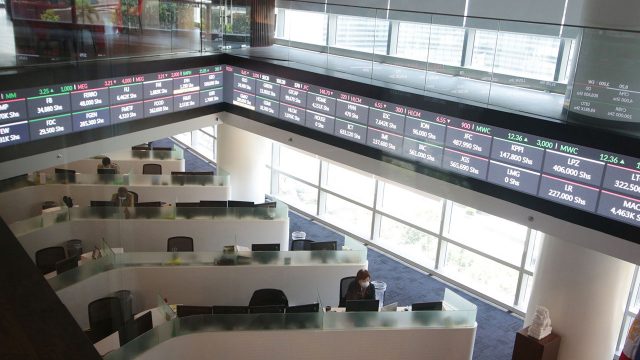
The Philippine Stock Exchange index shed 47.87 points or 0.66% to close at 7,119.19 on Wednesday.
The broader All Shares index also dropped by 0.22% or 8.45 points to end trading at 3,797.22.
Meanwhile, a trader said the peso also depreciated due to concerns on higher oil prices.
Reuters reported that oil prices increased by more than 3% on Tuesday due to worries on the impact of the Omicron variant to holiday travel plans. Brent crude rose by $2.46 or 3.4% to $73.98 a barrel, while the US West Texas Intermediate crude increased $2.51 or 3.7% to $71.12 per barrel.
For Thursday, Mr. Ricafort gave a forecast range of P50.10 to P50.30, while the trader expects the local unit to move within P50.05 to P50.20. — Luz Wendy T. Noble with Reuters
DESPITE global equities’ recovery, Philippine stocks declined further on Wednesday after the President said funds are depleted amid mounting losses from Typhoon Odette and resurfacing fears from the Omicron virus variant.
The benchmark Philippine Stock Exchange index retreated 47.87 points or 0.66% to close at 7,119.19 on Wednesday, while the broader all shares index lost 8.45 points or 0.22% to 3,797.22.
“The stock market ended still in the red today despite the recovery in the global equities. Investors remained apprehensive about the economic impact of Typhoon Odette, which battered major parts of the Visayas and Mindanao,” Papa Securities Corp. Equities Strategist Manny P. Cruz said in a Viber message.
The Department of Agriculture on Wednesday said Odette hurt the farm sector, which accounts for 10% of the country’s economic output, leaving around P2.6-billion damage for the farming and fisheries sectors.
Philstocks Financial, Inc. Senior Research Analyst Japhet Louis O. Tantiangco noted that the agricultural and infrastructure damage together with other disruptions in the Visayas and Mindanao could weigh on the economy’s recovery.
Diversified Securities, Inc. Equity Trade Aniceto K. Pangan said in a text message that the market remained on the decline after Philippine President Rodrigo R. Duterte remarks.
In a televised meeting with Cabinet officials on Tuesday night, Mr. Duterte said: “I am really worried because, let me be frank to the public, our money here in the Philippines is depleted [by the pandemic], even coping up with the growing expenses for the typhoon victims.”
Mr. Pangan said the comment “indicated that we have depleted funds to address Omicron-driven coronavirus disease 2019 (COVID-19) surge thus insinuating of possible stricter restrictions to contain and limit cost through localized lockdown in order to contain the spread of this new variant.”
Last week, Mr. Duterte also said in his talks with government economists that the budget had been “immensely depleted” by COVID. The government announced three confirmed Omicron cases in the country.
Meanwhile, Luis A. Limlingan, head of sales at Regina Capital Development Corp., said that the index finished lower due to investors taking profit ahead of the holidays.
The stock exchange will close at 12:10 p.m. on Dec. 24 and Dec. 31.
Meanwhile, most sectoral indices closed in the red except for industrials, which gained 146.79 points or 1.44% to 10,339.77; and mining and oil, which climbed 43.77 points or 0.48% to close 9,042.93 on Wednesday.
Holding firms fell 126.50 points or 1.80% to 6,877.84; property dropped 20.30 points or 0.63% to 3,156.21; financials lost 4.01 points or 0.25% to 1,600.53; and services decreased 0.33 points or 0.01% to 1,979.74.
Value turnover declined to P6.03 billion on Wednesday with 1.61 billion issues traded from the P6.86 billion recorded on Tuesday with 955.83 million shares traded.
Advancers closely beat decliners, 86 against 83, while 69 names closed unchanged.
Foreign net selling fell on Wednesday with P173.79 million from the P372.02 million net outflows the previous trading day. — Marielle C. Lucenio
With increased reliance on digital infrastructure due to the pandemic, cyber-attacks have become more lucrative, threatening organizations and institutions worldwide. This will continue in 2022, and individuals, businesses, and authorities must prepare for it, according to American multinational cybersecurity company Palo Alto Networks, Inc.
At a virtual press briefing on Thursday, the company announced its cybersecurity predictions for the coming year, zeroing in on the trends to watch out for.
Citing the 2021 Unit 42 Ransomware Threat Report, it pointed out the increase in profit from ransomware attacks in 2021, with the average ransom paid by an organization in the first half of the year reaching 28,529,924.43 PHP — 82% more than the year before.
“Due to the rising value of cryptocurrency and anonymity in ransomware payments, cybercriminals will have more funds and resources to launch bigger attacks on critical infrastructure,” Palo Alto said in a statement.
To combat this, it recommended investing in cybersecurity capabilities, running exercises to identify security gaps, and undertaking ransomware readiness assessments to determine level of preparedness.
Just this December, two of the biggest telecommunications companies in the Philippines, PLDT group and Globe Telecom, Inc., shared their recent increase in investments in cybersecurity given the many risks in a hyper-connected world.
“Cybersecurity is a team sport where everyone — individuals, businesses, and the authorities — needs to work together to safeguard the data and integrity of assets belonging or connecting to any organization’s network,” added Palo Alto.
This is the kind of vigilance that all people and sectors in a country must consistently have to protect against cyber-attacks, according to Vicky Ray, principal researcher for Palo Alto Networks’ Unit 42 cyber research team.
“With the help of private-sector threat intelligence, governments should continue to leverage all instruments of national power to raise the consequences for attackers and reduce the profitability of their attacks,” she explained via e-mail.
Another form of risk that plagued the country is text scams offering fake jobs, which grew in number over the past few months amidst high unemployment and underemployment among Filipinos.
Ms. Ray noted that there are now many ways in which threat actors are able to get sensitive data and personal credentials, with unauthorized access to an organization’s e-mail system to commit fraud or data exfiltration being a prevalent attack in 2021.
Partnerships and collaboration are the best way to combat this: “[Cybersecurity providers] have access to threat intelligence and information on the activities of ransomware gangs, while the infrastructure of [cloud and telecommunications operators] is used by ransomware actors to propagate attacks.”
Putting these two together, with the authority of the government to back it all up, can form an effective united front, according to Palo Alto.
Five major shifts in human behavior will shape the world coming into the new year, according to the Fjord Trends 2022 report by Accenture, a global professional services company. The dominant theme – after two years of disruption – is the need to respond to the changes in how people relate to the planet, technology, brands, and each other.
POST-TRAUMATIC GROWTH An era of post-traumatic growth has taken shape this pandemic, the report found. It is manifesting in greater personal strength, stronger spirituality, deeper relationships, a more profound appreciation for life – and a growing agency enabled by side hustles. Today, for example, two million of the estimated 50 million plus creators on YouTube, Instagram, and Twitch make six-figure incomes from revenue models such as advertising, paid subscriptions, merchandise, or live and virtual events.
Companies no longer only compete with each other. They also compete with everything else individuals want to do with their lives outside of work.
The five report trends will challenge business leaders to rethink their approach to design, innovation, and growth, said Bronwyn van der Merwe, Accenture Interactive’s Asia Pacific (APAC) design lead and general manager for Fjord APAC.
“Against the growing sense of agency that people have over their lives and changes in employee expectations and mindset, companies across industries must look inward and act immediately on any weak spots within their organization that might drive employees to quit,” she said in an e-mail to BusinessWorld.
Ms. Van der Merwe pointed out that among the companies that have responded to this change are software corporation SAP and graphic design app Canva, both of which provide flexible work environments and options.
CARE-FOCUSED LEADERSHIP Staff retention hinges upon how organizations improve wellbeing across the board, the report also found. Worldwide, the pandemic has yielded a willingness to dialog on mental health challenges.
Examples of businesses that address this need are online fashion retailer Zalora, which gives full-time employees mental health benefits, and hotel booking platform RedDoorz, which provides counselling sessions to its employees in Singapore, Indonesia, and the Philippines.
Ms. Van der Merwe further shared that Accenture offers its employees tools like Thriving Mind, a self-directed learning experience for mental health.
“How organizations design for all aspects of care – thoughtfully, with inclusivity and accessibility, with the right balance between physical and digital, and always having the individual’s best interests in mind – will be an important differentiator and a source of competitive advantage,” she told BusinessWorld.
VALUES-DRIVEN CONSUMPTION The other three behavior trends found by the report are the shift from immediate consumer gratification to a greater consciousness about the environment; the burgeoning cultural explosion in the metaverse; and the expectation to get answers at the moment of interaction.
“As consumers overhaul all of their relationships, brands will be faced with two big responsibilities: taking care of the world today while also building its future in a way that’s good for the planet, for business, and for society,” said David Droga, CEO and creative chairman of Accenture Interactive, in a press statement. “The key lies within deeply understanding the impacts of those relationships and aspirations and converting them into potent business strategies that drive relevance and growth.”
Businesses, as per the report, need to protect brand reputation by synchronizing marketing, customer service, and the supply chain. They also have to make strategic choices on how they answer customer queries in a way that builds trust.
As values-driven consumption continues to rise, brands likewise need to design for the balance between affordability and sustainability. This, the report said, presents an opportunity for brands to break new ground.
“Companies that offer ‘regenerative business,’ whether using recycled materials to create new products, or simply providing restoration services that extend a product’s life, will take the lead over their competitors in the coming years,” said Kelvin T. Si, Accenture Interactive’s delivery lead in the Philippines, in another e-mail to BusinessWorld.
An earlier Accenture report found that at least seven in 10 APAC consumers look to brands to make it easier for them to buy or consume sustainably, added Ms. Van der Merwe.
“All businesses must think about how they can create a better world in the process of doing business, in a time where supply chains are fragile, natural ecosystems are stressed out, and consumers are looking to brands for direction,” she said.
Fjord Trends 2022 is crowdsourced from across Accenture Interactive’s worldwide network of about 2,000 designers and innovators in more than 40 locations.
SINGAPORE – The rapid intensification that turned this week’s Typhoon Rai (local name: Odette) into the strongest storm to hit the Philippines this year surpassed all predictions, forecasters said, leaving nearly 400 people dead and almost a million displaced.
While it’s unclear exactly how global warming is affecting the intensification of such storms, the UN’s climate change agency has found it is “likely that the frequency of rapid intensification events have increased over the past four decades” as temperatures rise.
Before Rai underwent a process of rapid intensification, forecasters at first warned of a storm that could bring “considerable damage”, with winds of up to 165 kilometres (103 miles) per hour.
“But the situation evolved very fast,” said Nikos Peñaranda, a forecaster who studies thunderstorms at the Philippines’ national weather bureau, speaking on Tuesday. “Our models weren’t able to predict the way the storm intensified, and it exceeded all our predictions.”
In rapid intensification of storms, warm ocean water and differing wind speeds near the eye of the storm act as fuel to whip it up into a more severe event. In the case of Rai, the storm turned into a category 5 supertyphoon, with speeds similar to when a passenger airplane starts to lift off the ground.
When it made landfall, winds of up to 210 km/hr were uprooting coconut trees, ripping down electricity poles, and hurling slabs of corrugated tin and wood through the air.
A lack of real-time data and case studies of similar storms in the region made it difficult for forecasters to predict just how much Rai, or Odette as the storm is known locally, would intensify, said Peñaranda.
“The challenge in forecasting rapidly intensifying events is just that the speed with which this occurs, often in a matter of hours, leaves less time for disaster risk reduction mobilisation and evacuations,” said Clare Nullis, media officer specializing in climate change at the World Meteorological Organisation (WMO).
Hurricane Ida, a category 4 storm, experienced a similar intensification in the Gulf of Mexico hours before it slammed into the U.S. state of Louisiana in August.
Ocean temperatures near the surface and at depths of up to 200 metres are rising around three times faster in this region than the global average, according to the WMO, making it fertile ground for more intense, less predictable storms.
In the past three decades, the Philippines has recorded at least 205 tropical cyclones, the highest of any Asian country, according to EM-DAT, a publicly available database on disasters run by the University of Louvain. Nearly each one of has taken lives and caused millions of dollars worth of damage.
By comparison, China, the second-most affected country, has seen 139, and Bangladesh, also prone to storms, has seen 42. — Reuters
Wilcon Depot, the Philippines’ leading home improvement and construction supply retailer, opened a new provincial store in the capital city of Bukidnon—Malaybalay on December 17, 2021.
With the hopes to end the year significantly, the company’s commitment to bring their high-quality products and excellent customer experience to more Filipinos nationwide has been fulfilled to the Bukidnon homeowners and builders.
New home in Malaybalay City
Wilcon Depot sees Bukidnon as the perfect home for its 73rd store nationwide. Aside from being a tourist destination, Malaybalay City envisions itself as a prime agri-industrial center in Northern Mindanao with a vibrant economy.
Wilcon Depot Malaybalay is its first-ever store in the province and 9th store in the Mindanao region. It is also the 10th store to open this 2021. With a total selling area of over 7,000 square meters, the newly-opened store carries the wide product selection that Wilcon offers ranging from Tiles, Sanitarywares, Plumbing, Furniture, Home Interior, Building Materials, Hardware, Electrical, Appliances, and other DIY items.
Customers can shop daily from 8:00 AM to 7:00 PM at Wilcon Depot Malaybalay located at Purok 2, Sayre Highway, San Jose, Malaybalay City, Bukidnon.
Grand store opening celebration
Wilcon brings top-of-the-line products and home solutions with the highest quality standards, innovative, and sustainable features to all Bukidnons.
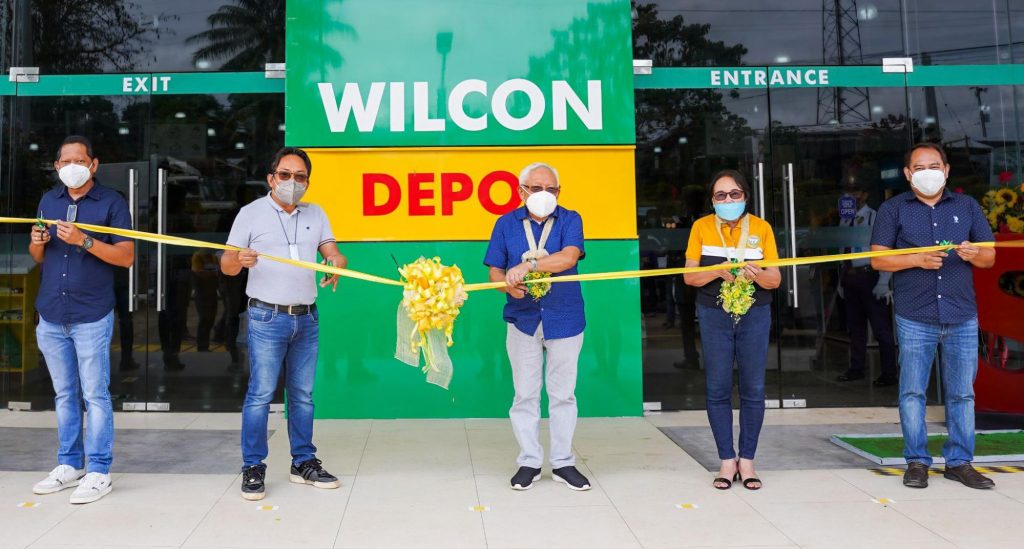
(L-R) Wilcon Depot AVP for Engineering Nicholas Agbing, Project Manager Isagani Robles, Malaybalay City Mayor Florencio Flores, Barangay Chairman of San Jose Bebina M. Kee, and Wilcon Depot AVP for Sales and Operations Ruben Flores
The store opening was celebrated with a ribbon-cutting ceremony led by Wilcon Depot AVP for Sales and Operations Ruben Flores and AVP for Engineering Engr. Nicholas Agbing with Malaybalay City Mayor Florencio Flores, Jr.
Wide product offering
Wilcon Depot Malaybalay offers limitless home and building products and solutions. Discover the various exclusive brands and in-house brands like GROHE and KOHLER Sanitarywares, FRANKE Kitchen Systems, POZZI Bathroom Solutions, Sanitarywares, Whirlpool Bathtubs, Ceramics, and Shower Enclosures, ARISTON Water Heaters, GEBERIT Monolith Puro, MACROAIR HVLS Fans, BULL Outdoor Products, RUBI Tile Cutter, and REHAU Premium PPR pipes.
Sanitaryware Section
Premium quality Italian tile brands such as NOVABELL, ENERGIE KER, GARDENIA, IMOLA, HERBERIA, OPERA, CASTELVETRO, KERADOM, NAXOS, DOM, and VERSACE alongside with Spanish tile brands ALCALAGRES, GRESPANIA, ROCERSA, CIFRE, EMIGRES, KEROS, TESANY, ONIX, OSET, VITACER, GRUPO HALCON, MYR, ECO CERAMICA, and ETILES are showcased in their Tile Studio.
Asian tile brands are also available like ARTE, SOL, LOLA, HUANQIU, VERONA, PICASSO MOSAIC, ROMAN, MULIA, KIA, CHINA NATURAL GRANITE, BASEL, SAIGRES, and GEMMA.
Tile Section
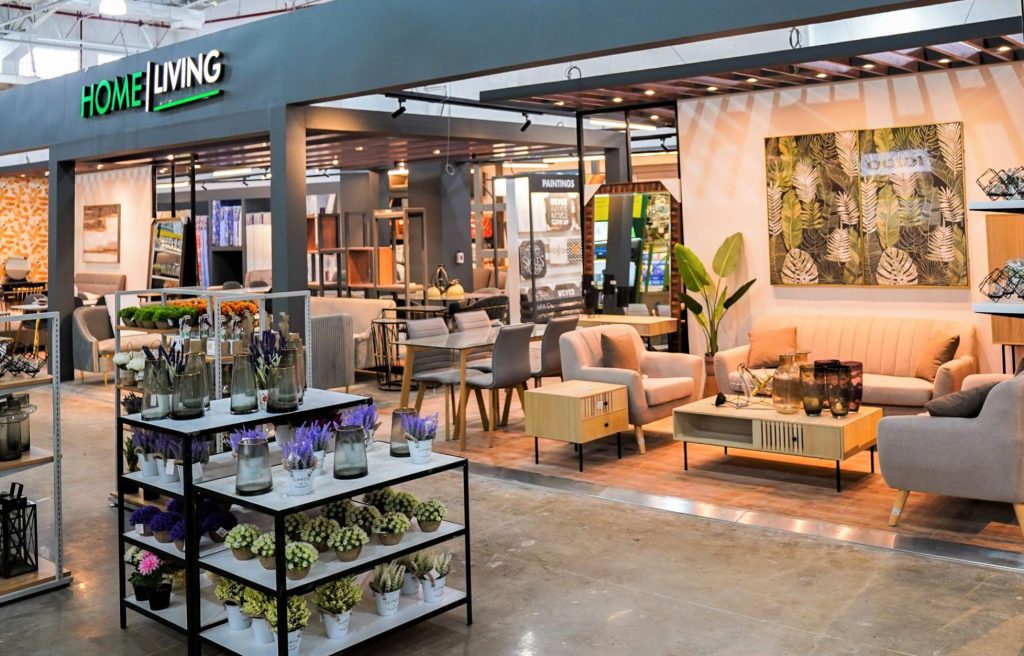
HERITAGE Furniture and HEIM Home Interior, Furniture, and Decor are exhibited at the Home Living Showroom. The Appliance, Kitchen, Lighting section displays HAMDEN Kitchen Appliances, KAZE Ceiling Fans and Air conditioners, and ALPHALUX Lighting Solutions.
Home Living Section
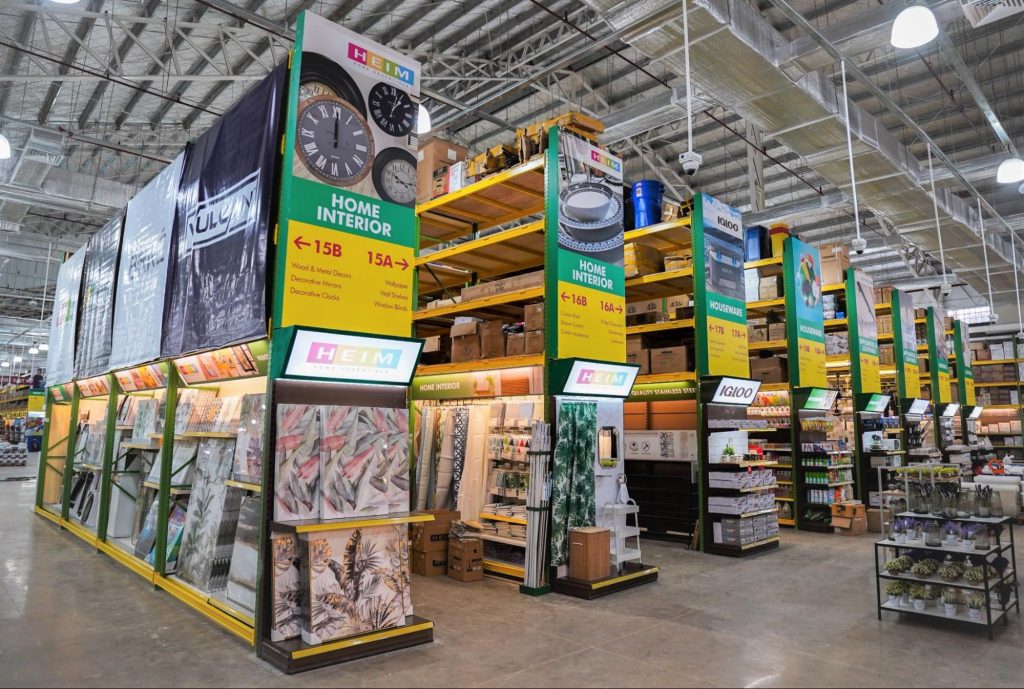
HOMEBASICS and INTERDESIGN Housewares, BIRKE faucets and Bathroom Accessories, SEFA Specialty Bathroom Faucets, Bathroom Accessories, Shower Heads, and Kitchen Organizers, SUNCRUST BBQ Grills, LANDJACK Bicycles, CROWN and PRUSSIA Kitchen Sink QUARTEX Quartz Kitchen Sink, ELECTRON Generators, DIRECT HARDWARE, TRUPER Tools, P.TECH Builder’s Aid and Quartz Stone, FOREST Wood Products, IGLOO and RUBBERMAID Coolers, UNITED SOLUTIONS Outdoor trash bins, and SOLUTHERM PPR pipes and 304 stainless Steel Pipe Fittings are displayed in the DIY Section of the store.
DIY Section
Bigger and better home shopping experience
Wilcon Depot Malaybalay also provides the utmost customer satisfaction. It has redefined the home and building shopping experience through its Design Hub, Home Living Showroom, Tile Studio, and Architects, Builders, Contractors, Designers, and Engineers (ABCDE) Lounge, including their value-added services such as ample free parking spaces, reliable delivery service, and tile cutting service.
ABCDE Lounge
For a bigger and better home shopping experience, valued customers can also shop online at Wilcon by visiting shop.wilcon.com.ph. Shop for all your all-around home needs and have your items delivered right at your doorsteps or choose to pick-up in store. Online store customers can conveniently pay with their credit card, debit card, BancNet, and GCash.
To ensure a safe and convenient shopping environment in all Wilcon stores, the company continuously prioritizes the implementation of safety protocols for the health and well-being of both employees and valued customers. Wilcon also offers Browse, Call, and Collect or Deliver, and Wilcon Virtual Tour services to complement the in-store shopping experience. In addition, Wilcon provides contactless payment options like bank transfers, GCash, PayMaya, Instapay, PesoNet, WeChat, and Alipay for customers’ convenience.
Wilcon makes loyalty more rewarding for their valued customers by offering exclusive perks and discounts. The Wilcon Loyalty Mobile App allows customers to earn and check their points and convert their purchases to rewards after signing up. The Wilcon Loyalty Mobile App is available for download at the Google Play Store and App Store for free.
Store expansion plans
Wilcon Depot now has 18 branches in Metro Manila and 55 stores in key cities and municipalities of Luzon, Visayas, and Mindanao.
The newly-launched stores represent Wilcon’s relentless commitment to providing its valued customers a more convenient and better home shopping experience by offering thousands of high-quality home improvement and building needs and excellent customer experience.
These store openings are part of their #FlyingHighTo100 store expansion campaign, wherein the company aims to have 100 operating stores nationwide by 2025, barring any unexpected external factors.
Start building big ideas for your home and shop now at Wilcon Depot Malaybalay at Purok 2, Sayre Highway, San Jose, Malaybalay City, Bukidnon from 8:00 AM to 7:00 PM.
Spotlight is BusinessWorld’s sponsored section that allows advertisers to amplify their brand and connect with BusinessWorld’s audience by enabling them to publish their stories directly on the BusinessWorld Web site. For more information, send an email to online@bworldonline.com.
WASHINGTON – U.S. President Joe Biden announced on Tuesday more federal vaccination and testing sites to tackle a surge in COVID-19 driven by the Omicron variant, and said 500 million free at-home rapid tests will be available to Americans starting in January.
Biden offered both a warning to the unvaccinated, who he said have “good reason to be concerned,” and reassurance that those who are inoculated can gather for the holidays despite the new variant sweeping the country.
“No this is not March of 2020,” Biden told reporters at the White House. “Two hundred million people are fully vaccinated, we’re prepared, we know more.”
Biden‘s remarks came as some cities and states imposed new measures aimed at protecting the public, including stricter vaccine mandates.
Striking a dire tone about the risks to the one-in-four American adults who are not fully vaccinated, Biden said they “have a significantly higher risk of ending up in the hospital or even dying.”
Biden noted that former President Donald Trump has also received his booster shot. “Maybe one of the few things he and I agree on,” he said.
The measures laid out on Tuesday include activating new pop-up vaccination clinics run by the Federal Emergency Management Agency and federal testing sites starting this week, including in hot spot New York City.
Biden also said that some 1,000 military doctors, nurses and medics have been deployed to support hospitals already being overwhelmed by COVID-19 patients in some areas.
Biden‘s pandemic response has been criticized https://www.reuters.com/world/us/rising-cases-omicron-highlight-holes-bidens-covid-strategy-experts-say-2021-12-20 for focusing on vaccines at the detriment of testing and masking, and for underestimating the impact of the anti-vaccine movement in the United States.
In his speech, Biden said Americans had a patriotic duty to get vaccinated and called out social media companies and TV networks for “peddling lies and allowing misinformation that can kill their own customers.”
The new federal measures will not be fully in place by Christmas, leaving many Americans scrambling to find available tests ahead of holiday gatherings and travel – and confused about whether it is safe to press ahead with their plans.
The Omicron variant, which was first detected last month and now accounts for 73% of U.S. cases, is causing infections to double in 1.5 to 3 days, according to the World Health Organization. It is not yet known whether it causes more serious illness than the Delta variant.
The rapid rise of infections is once again disrupting life across the country, canceling events from Broadway shows to professional sports.
In New York, Washington and other U.S. cities there were long lines for COVID-19 tests as people sought to find out if they were infected before celebrating the holidays.
“If I don’t, I could take a chance of sending it home to my family, and I’m not trying to do that,” said Ronald Tives as he lined up in Washington’s Farragut Square on Tuesday.
$100 FOR A BOOSTER IN NYC
With new infections spiking, local officials are also taking steps to encourage vaccinations, including boosters, and increase testing and mitigation measures.
New York City Mayor Bill de Blasio announced on Tuesday a $100 incentive for residents who get a COVID-19 vaccine booster at city-run sites by the end of the year.
The city’s public hospitals said they would ban most visitors. Starting on Wednesday, only hospitalized infants and children, women in labor and dying patients can have visitors. They must be fully vaccinated or show a negative COVID-19 test from the past 24 hours.
In California, Governor Gavin Newsom said on Twitter that all healthcare workers would be required to receive booster vaccines. The state is expected to announce additional measures on Wednesday.
Chicago will require patrons to present proof of COVID-19 vaccinations for entry to restaurants, bars, gyms and some other indoor spaces, effective Jan. 3, Mayor Lori Lightfoot said on Tuesday.
Biden noted that the Omicron variant is so contagious that it will infect vaccinated Americans but that they will be far less likely to become seriously ill.
These breakthrough infections are rising among the 61% of the country’s fully vaccinated population, including the 30% who have gotten booster shots.
Still, Biden told Americans that those who are vaccinated and follow guidance around using masks, especially while traveling, should feel comfortable celebrating the holidays as planned.
New COVID-19 cases rose 19% in the United States in the past week and are up 72% since the start of December, according to a Reuters tally.
The number of hospitalized COVID-19 patients has increased 27% this month, with hospitals in some areas already strained by the Delta variant that emerged earlier this year.
There have been more than 51 million infections and 810,000 coronavirus-related deaths reported in the United States since the pandemic began, the most of any country. – Reuters
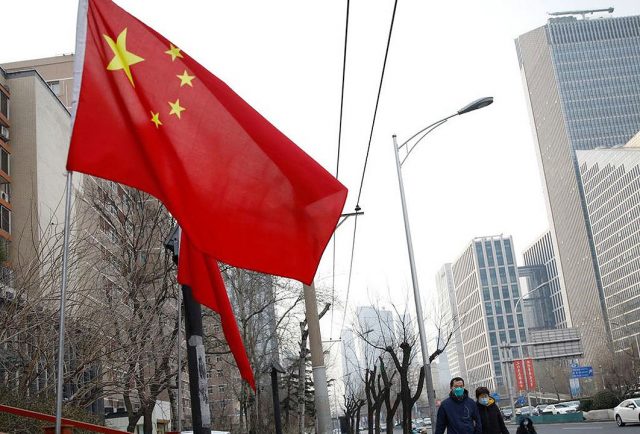
SHANGHAI – China has the confidence, condition, and ability to keep economic growth at a reasonable level, a senior state planning official told the Xinhua News Agency.
The world’s second-largest economy faces multiple challenges heading into 2022, amid a property downturn and with strict COVID-19 curbs in some areas hurting consumer spending.
China should evaluate the likely impact of policies on growth before implementation, and “be prudent” in rolling out those with contractionary effects, Ning Jizhe, deputy head of the National Development and Reform Commission (NDRC), said in the interview that was published on Wednesday.
The country will make preparations for next year’s economic work in advance and “strive to stabilize economic operations in the first quarter, the first half and even the whole year”.
China issued 1.46 trillion yuan ($229.21 billion) in the 2022 advance quota for local government special bonds to help spur investment and support the economy, the finance ministry said last week.
China will step up government spending, strengthen support to manufacturers and small companies, and ensure price stability, Ning added.
China will also work to stabilise industry supply chains, focus on solving chip shortage issues, and step up monitoring of commodity prices, said Ning, who is also the head of the National Bureau of Statistics.
To aid economic growth, China will continue to implement proactive fiscal policies, step up efforts to build an integral domestic market, while further shortening the foreign investment “negative list”, Xinhua quoted Ning as saying.
China uses a so-called negative list to ban or limit foreign investment in some industries, such as telecoms or resources.
China will also combine cross-cyclical and counter-cyclical measures to prevent wild economic volatility, Ning said. – Reuters
WASHINGTON, Dec 21 (Reuters) – Russia continues to move away from commitments it made to join the World Trade Organization in 2012, the U.S. Trade Representative’s office said on Tuesday, citing agricultural import restrictions and import substitution policies.
In an annual report to Congress on Russia‘s WTO compliance, USTR said Russia in 2021 introduced new tracking systems for consignments of goods through supply chains and has maintained non-science-based agricultural import restrictions.
“Over the past year, Russia has continued its trajectory of an economy moving away from the guiding principles of the WTO: non-discrimination, freer trade, predictability, transparency, and fair competition,” USTR said in the report.
“Rather, Russia maintains restrictive at-the-border measures, institutes behind-the-border measures to inhibit trade, and implements an industrial policy seemingly driven by the guiding principles of import substitution and forced localization.”
The United States has raised concerns about Russia‘s actions and will “use all appropriate means to resolve the matter and keep Russia’s markets open to U.S. exports,” USTR said.
The report noted that U.S. bilateral work with Russia on agricultural trade issues has been limited since 2014 due to Russia‘s actions in eastern Ukraine, and engagement in the WTO on Russia‘s access barriers has been limited. But the agency said it will continue to meet with industry stakeholders to discuss their concerns and strategies to remove such barriers.
The report did not mention any new U.S. trade measures that could be taken against Russia should Russian President Vladimir Putin invade Ukraine. If that should happen, U.S. officials are considering tough export control measures to disrupt Russia‘s economy, a Biden administration official told Reuters, including halting Moscow’s ability to import smartphones, key aircraft and auto parts and other materials. – Reuters
British Columbia will shut gyms, bars and nightclubs while allowing fewer people at tables in restaurants and cafes through the Christmas holiday period to curtail the spread of COVID-19, the Canadian province’s government said on Tuesday.
The temporary restrictions, to take effect on Wednesday and stay in place until Jan. 18, also include a ban on all indoor social events and gatherings, and a capacity limit of 50% for all concerts, sports games and theatres.
Coronavirus infections are rapidly increasing in Canada, with several of the 10 provinces reporting big jumps as Omicron replaces Delta as the dominant variant.
“COVID-19 cases continue to increase at a concerning rate, and we must take stronger measures to help protect British Columbians and ensure our health-care system is there when people need it,” said the province’s health minister Adrian Dix.
The neighbouring province of Alberta, where cases are also rising, said it would restrict attendance in venues that can hold more than 1,000 people to 50% capacity, a move that will also apply to National Hockey League games and the World Junior Hockey Championship, which begins on Dec. 26.
Montreal, Canada’s second-largest city, declared a state of emergency earlier on Tuesday to combat the virus.
Quebec, Canada’s second most populous province, has also shut bars, gyms and casinos, and ordered people to work from home to try to reduce the rapid spread of the Omicron variant. – Reuters
AstraZeneca Plc said on Tuesday it is working with Oxford University to produce a vaccine for the Omicron coronavirus variant, joining other vaccine-makers who are looking to develop the variant-specific vaccine.
“Together with Oxford University, we have taken preliminary steps in producing an Omicron variant vaccine, in case it is needed and will be informed by emerging data,” a spokesperson for the company said in a statement.
Oxford did not immediately respond to a request for comment outside business hours.
The Financial Times first reported the news, citing Sandy Douglas, a research group leader at Oxford.
“Adenovirus-based vaccines (such as that made by Oxford/AstraZeneca) could in principle be used to respond to any new variant more rapidly than some may previously have realised,” Douglas told FT.
A lab-study last week found that AstraZeneca‘s antibody cocktail Evusheld retained neutralising activity against the Omicron variant.
Vaccine makers Pfizer/BioNTech and Moderna also previously said they were working on Omicron– specific COVID-19 vaccines. Moderna said hopes to start clinical trials early next year. – Reuters
As 2021 comes to a close, many are restless about the possibility of entering another year living with the COVID-19 pandemic. The extent of the virus’ impact has left lasting impressions on the Philippine business community, and small and medium enterprises (SMEs) particularly felt the brunt of it most of all.
These effects are expected to linger. According to a recent report by the United Nations Conference on Trade and Development (UNCTAD), global trade growth for 2022 remains uncertain due to continued disruptions in worldwide logistics networks, increases in shipping costs, and a slowing global economic recovery.
“Lower-than-expected economic growth rates are generally reflected in more downcast global trade trends. Rising commodity prices and inflationary pressures may also negatively affect economic prospects and international trade flows,” the Global Trade Update said.
Moreover, the report said the recovery this year, which was characterized by large and unpredictable swings in demand, have resulted in an increased stress on supply chains.
“Logistic disruptions and high fuel prices have further contributed to supply shortages and spiraling shipping costs. In particular, the backlogs across major supply chain hubs that have characterized most of 2021 could continue into 2022 and therefore negatively affect trade and reshape trade flows across the world,” the report added.
Global trade in 2021 is expected to reach an estimated $28 trillion, a 23% increase from 2020. Much of this boost was due to a strong recovery in demand following the easing of pandemic restrictions, economic stimulus packages, and increases in commodity prices. However, other variables such as the global semiconductor shortage, geopolitical factors and the regionalization of trade flows, governmental policies affecting international trade, and debt burdens muddy the outlook for the coming year.
Despite the uncertainties, the Department of Trade and Industry (DTI) is keeping optimistic. DTI Secretary Ramon M. Lopez recently affirmed his confidence that the country may reach 6%-7% gross domestic product growth in 2022, as long as the proper management of the COVID-19 and the reopening of businesses continue.
“If all programs are set in place and the continuous recovery from the pandemic, we might be seeing 6% to 7% (growth) next year, being also an election year,” he had said.
“We keep on hearing and we keep on reminding that we need to manage this, and I guess (everyone) is still following the public health protocol for us to maintain this kind of momentum we are seeing and not have the surge like what is happening right now in EU (European Union) countries,” he added.
Mr. Lopez cited DTI research that while around 10% of business establishments remain closed, 20% of which have permanently stopped their operations, many new enterprises are registering their businesses amid the pandemic.
“People still have to earn and find another livelihood. So they must have closed that business but they are opening another businesses. Of course, they have to continue to earn, to pivot, (to) look for new businesses. That is the reason why we have the data, over the years, the number of businesses that are renewing and registering new businesses, we count them all, the numbers continue to grow,” he said.
Data from the DTI show that as of end-August this year, total number of registered businesses rose to 2.08 million from 1.5 million at end-2019. In addition, there exists 5 million to 6 million entrepreneurs in the informal sector.
“There’s good news there, that entrepreneurship is alive in the country and that Filipinos are entrepreneurial. They find ways to earn, especially those who lost their jobs, so they shifted fast and now we’re seeing this growth,” Mr. Lopez added.
The optimism is not unwarranted. The Asian Development Bank (ADB) backed Mr. Lopez’s positive outlook for 2022 with a forecast of their own released this December, which stated that the country will remain on a steady, if more modest, growth path in 2021 and 2022, supported by an acceleration in the government’s vaccination program and a sharp drop in COVID-19 cases.
According to the supplement to the Asian Development Outlook (ADO) 2021, the Philippine economy will grow 5.1% in 2021 and 6.0% in 2022, up from the bank’s September forecast of 4.5% in 2021 and 5.5% in 2022.
“The Philippine economy has shown impressive resilience,” ADB Philippines Country Director Kelly Bird said.
“Growth momentum has clearly picked up on the back of the government’s vigorous drive to vaccinate Filipinos against the COVID-19 virus. Public spending on infrastructure and continued vaccination of the population will help the country further accelerate its recovery in 2022,” he said.
Vaccination has allowed the economy to slowly reopen, boosting consumer and business confidence. More than 57 million Filipinos, or nearly 65% of the target for vaccination, had received at least one COVID-19 vaccine dose as of Dec. 8, 2021. In addition to the government’s purchases of COVID-19 vaccines, the World Health Organization-supported COVID-19 Vaccines Global Access (COVAX) facility also donated supply for the country’s nationwide vaccination program. — Bjorn Biel M. Beltran