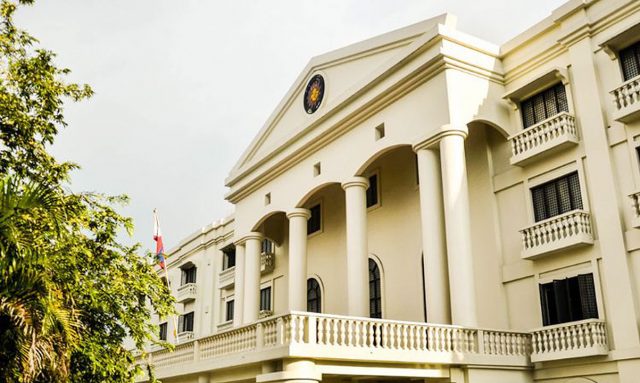
THE BUDGET department said on Wednesday that it expects President Rodrigo R. Duterte to sign the proposed P5.024-trillion budget for 2022 after Christmas.
“We expect the 2022 budget measure will be signed before the year ends, so it’s between, perhaps, after Christmas until the 29th,” Budget Undersecretary Tina Rose Marie L. Canda said in a televised Palace briefing.
Mr. Duterte late Tuesday said he plans to raise P10 billion for the recovery effort in the wake of Typhoon Odette (international name: Rai).
About P6 billion is expected to come from the 2022 national budget, Ms. Canda said. “It will be available in a couple of days once the GAA or the General Appropriations Act is signed for 2022.”
At the briefing, Cabinet Secretary Karlo Alexei B. Nograles said the Palace has yet to receive a copy of the spending plan, which was ratified by the House of Representatives and the Senate last week.
“It will go through a vetting process; only then can we say when it will be signed,” he said.
Senate President Vicente C. Sotto III and Senate Finance Committee Chairman Juan Edgardo M. Angara told BusinessWorld that the President is set to sign the spending plan on Dec. 28.
Mr. Sotto said in a text message that he will sign the budget bill on Thursday. “I was informed he is scheduled to sign on the 28th.”
Mr. Angara, meanwhile, said the devastation from Typhoon Odette, the strongest storm to hit the country this year, is one of the reasons for the budget bill’s early approval.
“I’m sure that’s one reason,” he said in a Viber message. “But even in normal times, governments want to have a budget in the new year in order to function properly.”
Typhoon Odette is estimated to have taken about 150 lives, according to government reports.
The storm tracked through northeast Mindanao, the Visayas, and Palawan last week, adding to the burden of dealing with the coronavirus pandemic.
On Dec. 15, health authorities confirmed the detection of the country’s first cases of the highly mutated Omicron variant.
ELECTION-RELATED government spending restrictions could prove to be a drag on economic expansion next year, bucking the trend in emerging Asia, Pantheon Macroeconomics said in a report.
Pantheon Senior Asia Economist Miguel Chanco said the Philippines is the only economy in which it expects growth to slow down next year, which would force the central bank to remain accommodative.
“History shows indisputably that government spending hits a brick wall when Presidential elections take place, shaving 40% off quarterly trend growth, on average, in the same quarter of the last three elections,” he said.
“Fiscal policy is likely to impose a persistent drag beyond the ballot, given that the country is the only one left in the region which has yet to engineer a nominal consolidation of its COVID-era budget blowout.”
The Commission on Elections said the public works ban for the May national elections will run from March 25 to May 8, 2022.
Aimed at preventing politicians from using public resources for their election campaigns, the ban covers disbursement and spending as well as construction activity.
Pantheon estimates gross domestic product (GDP) growth of 5.5% this year, and 4.5% next year.
The 2021 forecast is at the high end of the government’s projection of 5-5.5%, but Pantheon’s 2022 projection is lower than the government’s 7-9%.
In contrast, Pantheon expects more rapid GDP growth in other emerging Asia economies next year. It expects the Indian economy to grow 7.2% this year and 9.2% in 2022, while Indonesian GDP is seen expanding 3.8% this year and 5% next year.
Mr. Chanco said that investment in the Philippines will likely “remain on the sidelines” until after the May elections.
“Elections in the Philippines are rarely fought on economic policy. But they still carry significant event risk, particularly if Ferdinand R. Marcos, Jr., the current frontrunner and the son of an ex-dictator, wins,” he said.
Consumption will likely be tepid, he added, in response to household savings that were drawn down during the economic downturn.
Rizal Commercial Banking Corp. Chief Economist Michael L. Ricafort said 2022 growth could be slowed down by mobility restrictions imposed in response to any Omicron outbreak, as well as elevated inflation caused by global supply chain disruptions.
He said election-related spending could also be cut down due to the impact of the pandemic on business activities, which would reduce campaign contributions.
“The greater shift to social media amid social distancing and the observance of minimum health protocols/standards (could also) reduce the election year’s contribution to GDP, compared to previous Presidential elections,” he said in a Viber message.
“Increased government spending, especially on infrastructure, could still be a growth driver/major pillar for economic recovery program for 2022, as it may be accelerated before the election ban.” — Jenina P. Ibañez
THE GOVERNMENT needs to support the financial technology (fintech) industry in meeting its needs for funding and talent development if the segment is to grow, the Philippine Institute for Development Studies (PIDS) said.
In a discussion paper, Analysis of the FinTech Landscape in the Philippines, released on Tuesday, PIDS said few educational institutions offer degree programs directly related to fintech.
It noted weak growth in the availability of venture capital between 2010 and 2017, with the Philippines continuing to lag other major Southeast Asian economies.
PIDS also flagged the absence of data on the sector, which means its progress cannot be assessed with accuracy.
“While the sector benefits well from a coordinated and forward-looking group of regulators, there needs to be some review of policies and laws,” it said.
“In particular, there needs to be a policy related to fintech that would define and monitor the progress of the sector.”
Fintech business activities increased during the pandemic after lockdown restrictions limited to face-to-face transactions.
“The increasing trend in payments and adoption of digital technology was driven by the restrictions imposed to curb the spread of the virus. Companies have also adopted digital payments and fintech in order to reduce cost and improve efficiency,” the report said.
But the fintech ecosystem has not yet caught up with this growth.
Written by Francis Mark A. Quimba, Mark Anthony A. Barral, and Jean Clarisse T. Carlos, the report recommended that the government help update university curricula to prepare graduates for fintech careers.
“Skills should not be the only focus but also the availability of venture capital to support the growth of startups,” they said. — Jenina P. Ibañez
THE AVERAGE consumption of well-milled rice in the top income tier in 2018 was more than six times the total of the poorest consumers, the Philippine Statistics Authority (PSA) said in a report.
Per capita consumption of well-milled rice for the year was estimated 10.46 kilograms (kg) for the first decile, or the lowest-income group and 65.53 kg for the 10th decile, or the highest-income group, according to the Family Income and Expenditure Survey by the PSA.
The national average for consuming well-milled rice was 32.60 kg, with residents of Calabarzon (Cavite, Laguna, Batangas, Rizal, Quezon) posting the highest tally of 53.80 kg per capita. The National Capital Region (NCR) came in at 46.25 kg, and the Cordillera Administrative Region 41.05 kg. Bicol and Eastern Visayas were the lowest on the scale with 8.67 kg and 11.77 kg, respectively.
Per capita consumption of corn was higher in the lower-income deciles, with the first and third deciles consuming 24.34 kg and 12.84 kg respectively. On the other end of the scale, the ninth decile averaged 2.72 kg.
Per capita consumption of corn was 9.14 kg, with Zamboanga Peninsula leading at 48.16 kg, followed by Northern Mindanao at 36.64 kg, and Central Visayas 35.18 kg. Ilocos Region was bottom of the table with 0.20 kg per person.
For regular-milled rice, average per capita consumption in 2018 was 66.52 kg, with Eastern Visayas coming in at 104.03 kg per person. Consumption of regular-milled rice was highest in the third income decile at 74.57 kg.
Consumption of subsidized rice sold via the National Food Authority (NFA) averaged 4.13 kg per capita for the year, with Bicol Region the most dependent on the NFA at 7.65 kg per person. The first income decile posted a per-capita average of 7.21 kg.
The average per capita consumption of pork was 6.35 kg. Residents of the NCR averaged 8.83 kg, followed by Calabarzon with 8.62 kg and Central Luzon 7.66 kg.
The national average for chicken was 6.89 kg, with the NCR posting a per capita tally of 12.94 kg. Mimaropa (Mindoro, Marinduque, Romblon, Palawan) came in at 9.85 kg, and Calabarzon 9.18 kg.
On average, per capita consumption of galunggong (round scad) was 3.90 kg, with Zamboanga Peninsula and the NCR the top consumers at 6.22 kg and 4.74 kg, respectively. — Luisa Maria Jacinta C. Jocson
With Christmas just around the corner, company Christmas parties, family reunions, and other gatherings fill our calendars left and right. Even though this year many of these celebrations will be virtual due to the pandemic, we always find a way to make them memorable. The upcoming holiday season also brings the highly anticipated year-end break that every employee looks forward to for much-needed R&R before welcoming the new year.
For accountants, however, the end of the year signals the upcoming busy season, including keeping tabs on the things to be done before the year ends. For instance, they must ensure that expenses up to the last day of the year are well-documented and recognized in the companies’ books in preparation for the finalization of the audited financial statements and the income tax return in the next year. These procedures may involve calling the company’s suppliers to inquire about the amount that would be payable on its year-end purchases even before they receive the actual billing, which normally happens only in the following year.
Why is it so important for businesses to account for expenses at year-end? Is it not more efficient to claim the expenses in the following year when these are paid? If you claim expenses only when they are paid, would such treatment give rise to any potential tax issues in future tax audits by the BIR?
WHAT DOES THE TAX CODE SAY? Under Section 34 of the National Internal Revenue Code, otherwise known as the Tax Code, to be considered deductible, a business expense must be ordinary and necessary, and must have been paid or incurred during the taxable year in carrying on the trade or business of the taxpayer; and must be substantiated with sufficient evidence. Additionally, taxes required to be withheld from expenses should have been remitted to the BIR in accordance with the current withholding tax rules.
As mentioned, one of the requirements for deductibility of an expense is its having been paid or incurred during a specific taxable year.
Do bear in mind that during a tax investigation, it is standard procedure for the BIR to request supporting documents for expenses claimed for the year. If such documents indicate that the taxpayer claimed a deduction for goods and services purchased in the prior year, the BIR may potentially disallow such prior period expenses claimed in the current audited year.
WITHHOLDING TAX COMPLIANCE Another area with potential tax implications is year-end expenses, the issue being whether withholding taxes on accrued expenses were withheld and remitted during the period. This situation often happens when the taxpayer’s withholding tax policy is based on actual payment rather than when it is recorded in its books as an accrued expense.
Under Revenue Regulations No. 2-98, otherwise known as the Withholding Tax Regulations, the obligation to deduct and withhold the tax arises at the time an income is paid or becomes payable, or when it is accrued or recorded as an expense or asset in the payor’s books, whichever comes first.
Notably, the proper timing for withholding taxes on expenses arises not only upon actual payment of such expense. The inclusion of the line, “whichever comes first,” triggers the taxpayer’s obligation to remit withholding taxes to the BIR even upon recording such transactions as an expense or asset (e.g., prepaid expenses) in the books.
While withholding taxes are remitted, albeit belatedly by taxpayers who only withhold upon payment, the imposition of administrative penalties (i.e., 25% surcharge, 12% interest, and compromise penalties) for failure to withhold taxes on time is unavoidable if the late withholding is raised as an issue during a tax audit.
WHAT IF THESE WERE MERE ESTIMATES? One contention that taxpayers may have against the requirement of withholding upon booking the expense is that, at year-end, they merely estimated the amount for recording purposes. The amounts recorded are still subject to change once billed by the supplier or paid the following year.
This contention may be raised during a tax audit, provided the books reflect the expenses as such. For the book-entry of expenses, taxpayers have the option of recording them as accruals or provisions. But what’s the difference?
Under the accrual method of accounting, the determinative question is, when do the facts present themselves in such a manner that the taxpayer must recognize income or expense? As held in a Supreme Court case (G.R. No. 172231), the accrual of income and expense is permitted when the “all-events test” has been met. This test requires (1) fixing of a right to income or liability to pay; and (2) the availability of reasonably accurate determination of such income or liability.
The all-events test requires that the right to income or liability be fixed and determined with reasonable accuracy. However, the test does not demand that the amount be known absolutely, only that it must be determined with “reasonable accuracy,” which implies something less than an exact or completely accurate amount. Thus, estimates not supported by bills, contracts, or facts to establish the amount of liability with reasonable accuracy may not be deductible yet. They can instead be considered provisions.
A provision is an existing liability of uncertain timing or amount. It is not yet an incurred expense, hence, not deductible for income tax purposes, and the company has no obligation yet to withhold taxes in the year the provision was recognized.
Thus, recording a provision properly may help avoid withholding tax and deduction issues during tax audits. Be that as it may, given the thin line between an accrual and a provision, companies still often record accrued expenses in their books instead of provision accounts. It may be also due to the limitation of adding new accounts into the system or other factors.
I hope the above reminders and explanations will help suppliers empathize and support accountants/finance personnel who request for the amount of their payables at year-end. This will probably help grant their accountant’s wish to spend the holidays with a clear and relaxed mind, optimistically ending 2021 on a high note.
The views or opinions expressed in this article are solely those of the author and do not necessarily represent those of Isla Lipana & Co. The content is for general information purposes only, and should not be used as a substitute for specific advice.
Steven Lloyd Co is an assistant manager at the Tax Services Department of Isla Lipana & Co., the Philippine member firm of the PwC network.
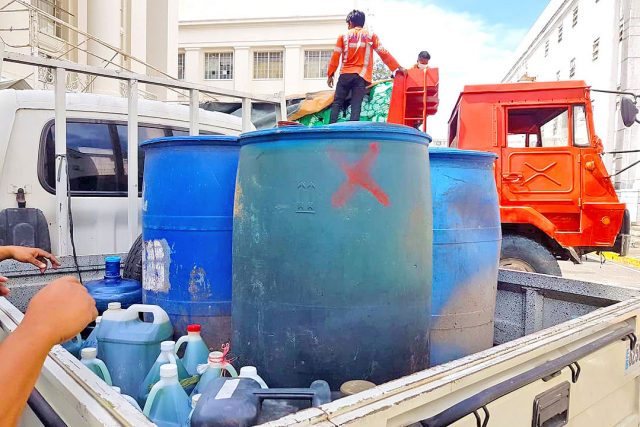
OVERALL DAMAGE to infrastructure and the agricultural sector has reached more than P3.56 billion while 554,316 people have been displaced by typhoon Rai, locally named Odette, based on the government’s running assessment of the trail of destruction left the by strongest storm to hit the country this year.
The number of deaths verified by the national disaster management agency stood at 177 as of Wednesday, but the police on Monday said it had so far logged 373 reports of people who died. Another 38 people are missing and 275 injured.
The Department of Public Works and Highways (DPWH) said on Wednesday that the damage caused by Odette to public infrastructure hit P585.8 million.
Broken down, a P231.9-million damage was recorded in Region 4-B or Mimaropa, composed of the provinces of Mindoro, Marinduque, Romblon, and Palawan.
Damage in Western Visayas was P35.5 million, Eastern Visayas had P173.4 million, and P145 million in Region 13 or Caraga, which includes Surigao City and Siargao.
“Other regions have yet to submit report on estimated damage to roads, bridges, and flood-control structures,” DPWH noted.
The department’s top official estimated on Tuesday that the damage caused by typhoon Odette to infrastructure and agriculture in Southern Leyte, located in Eastern Visayas, could reach P3 billion.
“Damage here could reach P3 billion,” DPWH Acting Secretary and Southern Leyte Rep. Roger G. Mercado told DZMM TeleRadyo in an interview.
He said the estimate covers “infrastructure [such as] public buildings, private buildings, and houses,” as well as “agriculture and fisheries.”
The department has so far reopened 34 roads in the typhoon-hit areas.
Twelve roads were still closed to traffic, including Puerto Princesa North Road, Tagbilaran North Road, and Cebu-Toledo Wharf Road.
“An immediate response fund of P100 million was released for the clearing and response operations,” the department said.
TELECOM AND POWER Meanwhile, PLDT, Inc. and its wireless arm Smart Communications, Inc. said they had already reconnected Surigao City.
“The group is also first to restore wireless services in other municipalities in Surigao del Norte including Tubod, Bad-as, and Taganito in Claver,” the companies said in an e-mailed statement.
Globe Telecom, Inc. said the provinces of Antique, Biliran, Guimaras, and all of Samar are the latest areas where it had successfully restored services.
“Globe is also the first to restore network services in Del Carmen, Siargao Island, San Jose in Dinagat Islands, Lipata Seaport, Surigao City and Surigao Airport,” it said in a statement.
In the power sector, the National Electrification Administration (NEA) said it has estimated an initial P373.12 million worth of damage based on reports from 10 electric cooperatives.
The cost is expected to increase when all affected cooperatives submit their reports.
There were at least 79 cooperatives affected by the typhoon, of which 46 are now under normal operations, 12 have partial power interruption, and seven still have total power loss. The rest have yet to submit an update.
The Energy Regulatory Commission (ERC) has ordered the National Grid Corporation of the Philippines (NGCP) and distribution utilities in affected areas to expedite power restoration and to ease electricity bill collection.
“The directive will also be applied to NGCP, Power Sector Assets and Liabilities Management Corp. (PSALM), generation companies, and the Wholesale Electricity Spot Market (WESM),” ERC Chairperson and Chief Executive Agnes Vicenta T. Devanadera said in a statement.
Meanwhile, Petron Corp., a subsidiary of San Miguel Corp., assured the public that it has sufficient fuel inventory in the Visayas and Mindanao.
“Our biggest challenge however is quickly and safely reopening damaged service stations. Despite limitations, all our teams are working hard to address this,” Petron President and Chief Executive Officer Ramon S. Ang said.
AGRICULTURE Agricultural damage hit P2.6 billion, affecting 34,747 farmers and fishermen, and over 60,451-hectares of farmland, the Department of Agriculture (DA) said.
The volume of production loss was estimated 87,640 metric tons.
These losses were reported in 10 regions — Calabarzon, Mimaropa, Bicol, Western Visayas, Central Visayas, Eastern Visayas, Zamboanga Peninsula, Northern Mindanao, Davao, and Caraga.
The provinces of Batangas, Palawan, and Surigao del Sur were also reported to be experiencing problems in food transport and distribution.
Depending on the extent of damage, it will take a while for the agricultural sector to recover, according to Roehlano M. Briones, a senior research fellow at the Philippine Institute for Development Studies.
“There’s no amount of quick turnaround that you can do within the quarter. I would say it will take a quarter to a year to recover,” he said.
“What takes long is the replacement of tree crops, and the restoration of infrastructure and irrigation damage,” he added in Filipino.
However, Mr. Briones said Odette’s damage will likely not impact the Agriculture department’s production growth target of 2% for the year.
“Considering the whole of agriculture, P2-billion damage is still not big enough to cause a big change in growth targets. There’s no need to change the growth target at the national level if your range of damage is just a few billion pesos,” he said.
The DA will provide at least P1.75 billion to assist farmers and fishermen, along with the distribution of seeds for various crops, fingerlings, and drugs and medicine for livestock.
INSURANCE Meanwhile, insurance companies have been instructed to speed up processing claims related to typhoon Odette, the Insurance Commission said.
The commission in a circular signed Monday said all insurance and reinsurance companies, pre-need companies, mutual benefit associations, and health maintenance organizations must streamline company procedures to quickly process claims related to the calamity.
The organizations were also ordered to relax the timeline for completing claim requirements and improve services for customer claims.
The commission said there may be more claims against insurance companies and other organizations it regulates as the death toll and damage assessment increase.
Insurance Commissioner Dennis B. Funa in a press release on Wednesday said the guidelines will help facilitate immediate processing of these claims.
“It is our hope that the circular letter will aid our fellow kababayans to ease the burden of recovering from the devastating typhoon and that, in the truly Filipino spirit of bayanihan, our regulated entities will follow the direction provided by this commission,” Mr. Funa said.
SPECIAL CUSTOMS LANE As international assistance pour in, the Customs bureau has ordered ports nationwide to set up one-stop shops that will facilitate the speedy processing of goods intended for typhoon survivors.
“The OSS shall be available 24 hours and seven days a week. It shall be responsible for coordinating with other concerned government agencies in the processing of donated relief goods to facilitate its immediate release,” the bureau said in a statement on Wednesday.
The Foreign Affairs department has also organized a national OSS to handle all concerns relating to donations.
Among those that have recently delivered or pledged relief and recovery assistance include the European Union (EU), which allocated €1.7 million (P95.99 million) in humanitarian funding to cover provisions of food, water, shelter, and other urgently needed household items, as well as cash grants to victims.
The EU said its partner humanitarian organizations will also strengthen healthcare services, including hygiene promotion to mitigate the spread of waterborne diseases.
The United States, through the US Agency for International Development (USAID), provided P10 million to support communities devastated by the typhoon.
“The United States is providing P10 million in immediate support, including food and shelter for communities affected by Typhoon Odette,” US Embassy in the Philippines Chargé d’Affaires ad interim Heather Variava said in a statement.
USAID is partnering with Action Against Hunger to provide food, water, hygiene supplies, and other relief items to Surigao del Norte and Dinagat Islands.
Korean Ambassador Kim Inchul, who met with Foreign Affairs Secretary Teodoro L. Locsin, Jr. to discuss assistance to typhoon-hit areas, said his government will provide $2 million (P100.27 million) for humanitarian assistance and $50,000 (P2.5 million) worth of in-kind donation.
Other pledges came from: New Zealand, $500,000 (P16.9 million); Hungary €54,000 (P3.05 million); Ireland, €250,000 (P14.12 million) through World Food Programme Philippines and United Nations Philippines; and Singapore, $60,000 (P3 million) as seed money to support the Singapore Red Cross’ public fundraising
Other countries that have earlier announced assistance include Japan, China, Canada, and the United Kingdom.
GOVERNMENT FUND Meanwhile, Philippine senators on Wednesday refuted the claim of President Rodrigo R. Duterte that government funds have been depleted due to the pandemic, citing sources that can be tapped for the typhoon emergency response.
“I am saddened by the President’s statement that the government has no money to assist the typhoon victims,” said Minority Leader Franklin M. Drilon in a Viber message.
He said the Finance department can do a “cash sweep” of released but undisbursed funds parked in the bank accounts of national government agencies and government-owned and -controlled corporations.
Senator Panfilo M. Lacson, Sr. suggested that the NDRRMC be immediately convened so its Cabinet members can mobilize Quick Response Funds from different agencies and other appropriations.
Senator Juan Edgardo M. Angara, who chairs the Senate finance committee, said that while it may be true that this year’s calamity funds have already been used up, next year’s budget may be tapped by the national government as soon as the President signs the 2022 expenditure program, which is expected next week.
“Over P20 billion may be used to help victims (of the typhoon) and those who lost their homes and livelihood,” he said in a Viber message in Filipino.
The United Nations Office for the Coordination of Humanitarian Affairs estimates that as of Dec. 21, there were 139,000 damaged houses across central and southern Philippines. — Arjay L. Balinbin, Marielle C. Lucenio, Luisa Maria Jacinta C. Jocson, Jenina P. Ibañez, and Alyssa Nicole O. Tan
THE PHILIPPINES on Monday reported 261 coronavirus infections, bringing the total to 2.84 million.
The death toll from the coronavirus hit 50,916 after 122 more patients died, while recoveries increased by 395 to 2.78 million, the Department of Health (DoH) said in a bulletin.
There were 9,238 active cases, 507 of which did not show symptoms, 3,153 were mild, 3,400 were moderate, 1,801 were severe, and 377 were critical.
The agency said 95% of the reported cases occurred from Dec. 9 to 22. The top regions with cases in the recent two weeks were Metro Manila with 74, Calabarzon with 32, and Central Luzon with 20.
It said 12% of the reported deaths occurred in December, 14% in November, 32% in October, 22% in September, 8% in August, and 4% in July, 2% in June, 1% in May, 2% in April, 1% in August 2020, 2% in July 2020, and 1% in April 2020.
The Health department said four duplicates, which were recoveries, were removed from the tally. The agency said 192 patients had tested negative and were removed from the tally. Of these, 189 were recoveries.
It added that 113 recoveries were relisted as deaths. Two laboratories did not operate on Dec. 20, while 12 laboratories did not submit data.
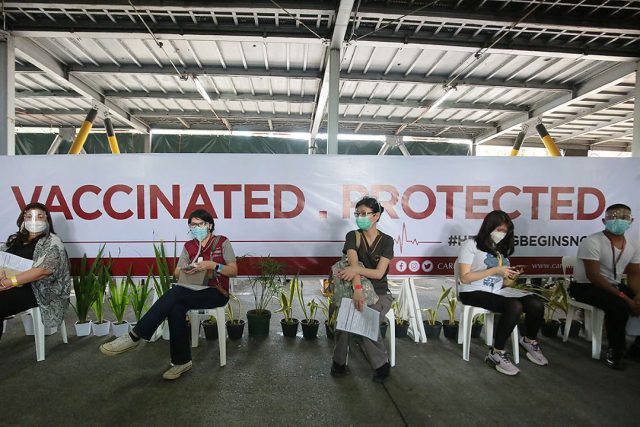
The government aims to vaccinate at least 54 million Filipinos by yearend, as it seeks to prevent an outbreak of the highly contagious Omicron variant.
Health authorities have already shortened the interval for booster shots against the coronavirus disease 2019 (COVID-19).
Adults can get a booster shot three months after the second shot of a two-dose vaccine, the Health department said in a press release. Recipients of a single-dose vaccine can receive a top-up shot after two months, it added.
“We are exploring all possible options to safely mitigate the effects of more transmissible variants of COVID-19,” Health Secretary Francisco T. Duque III was quoted as saying. “The approval came at an opportune time as several countries also re-strategized in light of the Omicron and other COVID-19 variants that may emerge.”
The Health chief said those who are yet to receive their primary vaccine doses should be prioritized.
The Health department separately said in a Viber message that there are around 19.37 million people eligible for boosters. Of these, around 1.2 million already received their top-up shots, it added.
More than 45.28 million people or 58.71% of the target population have been fully vaccinated against COVID-19 as of Dec. 21, Cabinet Secretary Karlo Alexei B. Nograles said at a televised news briefing.
The country has injected 1.2 million booster or additional doses, he added.
At the same briefing, Kezia Lorraine Rosario of the government’s vaccination operations center said at least five million doses of vaccines were injected during the country’s vaccination drive from Dec. 15 to 21.
However, the government suspended the inoculation drive in some areas due to the threat of typhoon Rai, locally named Odette, the strongest typhoon to hit the country this year. — Kyle Aristophere T. Atienza
THE LATE dictator’s son Ferdinand “Bongbong” R. Marcos, Jr., through his lawyer, presented on Wednesday a government document proving that the presidential candidate settled the deficiencies and fines relating to the unpaid taxes for which he was convicted.
In a press conference, lawyer Victor Rodriguez showed a certification issued by a local office of the Bureau of Internal Revenue (BIR) on Dec. 9, 2021 indicating that he paid penalties worth P67,137 in 2001. The amount was the same with what was stated in a decision by the Court of Appeals, which upheld his tax evasion conviction in 1997.
The document refutes a certification from the Quezon City trial court, which stated that Mr. Marcos had not settled a fine that it had slapped on him in 1995 for failing to pay his taxes.
The court document, which was requested by a lawyer for a group seeking to have Mr. Marcos disqualified from the presidential race, certified that “there is no record on file of compliance of payment or satisfaction of the decision of the regional trial court dated July 27, 1995 or the Court of Appeals dated Oct. 31, 1997.”
“The BIR already answered the tax issue. There is no greater authority when it comes to income tax return at payment of taxes than BIR,” Mr. Rodriguez said in mixed English and Filipino when asked why there was no court record of his client’s tax deficiencies payment.
“Tell me what agency or authority is more superior than the BIR when it comes to enforcement of tax?” he said.
Mr. Rodriguez said their camp did not immediately release the proof “because those who are filing charges against him should be the one to provide evidence” of their accusation.
SURVEY Meanwhile, Mr. Marcos led by a wide margin in a presidential preference survey this month by pollster Pulse Asia Research Inc.
Mr. Marcos was chosen by 53% of the 2,400 respondents as their preferred successor to President Rodrigo R. Duterte, Pulse Asia said on Wednesday. Vice President Leni G. Robredo, the opposition leader, came in second with 20%.
The survey was conducted Dec. 1-6, with a margin of error of plus-or-minus 2%.
Mr. Marcos’ running mate and the president’s daughter, Davao City Mayor Sara Duterte-Carpio, led the vice-presidential race, picked by 45% of the respondents. Senate President Vicente “Tito” C. Sotto ranked second with 31%.
Amid the upsurge in popularity, Mr. Marcos is facing several petitions before the elections commission to disqualify him or cancel his presidential bid, mostly citing his tax conviction in 1997.
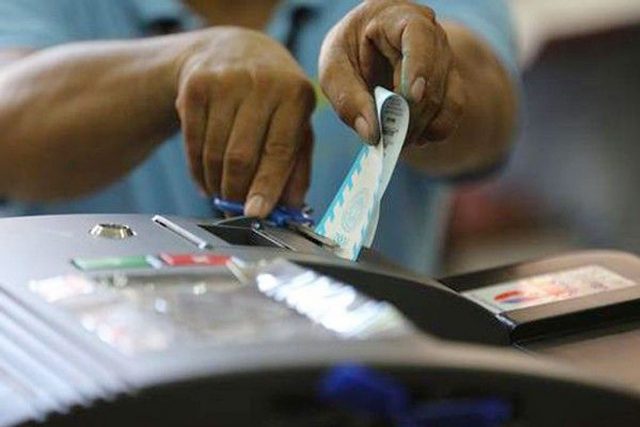
National elections will be held on May 9, where some 8,000 government positions are up for grabs. — Kyle Aristophere T. Atienza and Bloomberg
A COALITION of civil society groups and other sectors has appealed to three social media platforms to set up systems that will help counter the spread of fake news online, particularly those relating to the Philippines’ 2022 elections.
The Movement Against Misinformation (MAD) sent open letters to TikTok, Google and Youtube to advocate for transparency, accountability, and increase resources to counter false information connected to the national and local polls in May.
In the letter to TikTok, MAD requested the short video streaming platform to have an in-app guide to the 2022 elections in the country, work with reliable and independent fact-checking groups, and publish their standards for flagging content as electoral misinformation.
In a separate letter to Google and YouTube, the group urged the online platforms to tap content moderators and fact-checkers who are fluent in Filipino to stop people who spread fake news.
They also asked the social media firms to reveal their criteria for marking content as wrong election information and inform users about political or issue-based content.
MAD Chairman Antonio La Viña, in an online conference on Wednesday, said they intend to put pressure on these platforms to take down malicious content as soon as possible.
“We will not rule out legal action, but we will be in a cooperative mode with the social media platforms to get them to implement and execute their policies,” Mr. La Viña said.
Philippine Bar Association President Rico V. Domingo noted that people are inclined to go to court since there are platforms that do not comply with their legal commitment.
“What we would like to do right now, when we chronicle the responses of the major platforms, is to have a forceful and assertive monitoring of their responses,” the lawyer said.
MAD previously wrote an open letter about countering fake news during the past elections to Facebook, now rebranded as Meta.
Meta replied acknowledging their role in the electoral process and listed initiatives taken, including coordinating with the Commission on Elections. — Jaspearl Emerald G. Tan
THE CEBU provincial government will provide banks with fuel under a loan arrangement to help run generators at maximum daily capacity while power supply restoration is still ongoing in the aftermath of typhoon Odette that struck on Dec. 16.
Cebu Gov. Gwendolyn F. Garcia called a special meeting Tuesday to address long queues outside banks as residents scrambled to get cash from automatic teller machines, the provincial government said in a statement.
Among those who attended the meeting were representatives from the Philippine Veterans Memorial Bank, Landbank of the Philippines (LANDBANK), BDO Unibank, Inc., and Rizal Commercial Banking Corp. along with Mayor Michael L. Rama of Cebu City, which serves as the province’s commercial center.
The bank representatives said one branch needs at least 60 liters of diesel fuel daily to run a generator set for a maximum of six hours only to avoid overheating.
Bank branches also need to keep the aircondition units running to keep doors closed for security reasons, the provincial government said.
Apart from banks, there have also been long queues at fuel stations in Cebu City and other parts of the province.
The governor has earlier ordered restrictions on fuel purchase and rates to avoid hoarding and a spike in prices, especially in areas outside the urban centers.
The fuel that will be provided to banks will be included in the provincial government’s daily purchase order. — MSJ
THE PHILIPPINE Army has set up satellite communication systems in some areas struck by typhoon Odette (international name: Rai) to help speed up the government’s disaster response operations.
Army Chief Maj. Gen. Romeo Brawner, Jr. said they have deployed satellite phones and VSAT (very small apperture terminal) at their headquarters in Puerto Princesa in Palawan, at the Visayas Command, and the Mactan Air Base in Cebu. Two more VSATs would be installed in Tacloban City and in Lahug.
“In this time of crisis, communication is vital for our Commanders and leaders to address the needs of our people better,” Mr. Brawner said in a statement posted on the Navy’s Facebook page.
Typhoon Odette, the 15th and strongest storm to hit the country this year, struck down trees, electric poles and communication lines across central and southern Philippines.
Power and telecommunication companies have yet to fully restore services in various areas. — Jaspearl Emerald G. Tan
CONSULAR Offices in the Visayas and Mindanao have resumed operations after temporary closure due to last week’s typhoon, the Department of Foreign Affairs (DFA) announced on Wednesday.
However, affected offices will cater first to those scheduled from Dec. 21, while passport applicants with appointments last Friday are advised to wait for a new schedule.
The affected Consular Offices are those in: Bacolod, Butuan, Cagayan De Oro, Clarin, Davao, Dumaguete, General Santos, Iloilo, Puerto Princesa, Tacloban, Tagum, and Zamboanga.
The Consular Office and temporary off-site passport processing centers in Cebu will remain closed this week as telecommunication and power supply services have yet to be fully restored. — Alyssa Nicole O. Tan