Home Blog Page 699

St. Luke’s opens 40-bed charity ward for indigent Filipino patients 

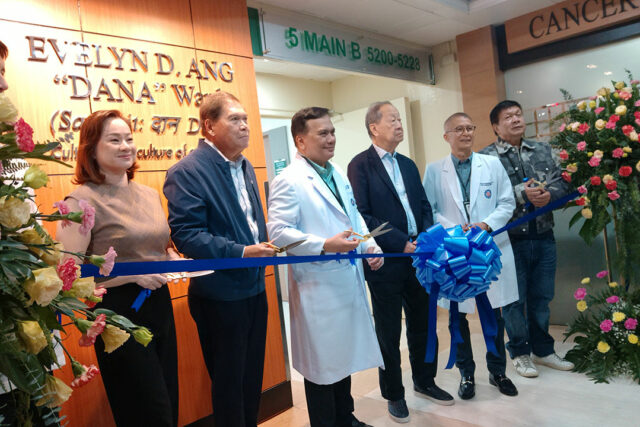
St. Luke’s officials led by CEO Dennis P. Serrano (3rd from left) at the official opening of the charity ward. — EDG ADRIAN A. EVA

A 40-bed capacity charity ward was unveiled by St. Luke’s Medical Center (SLMC)–Quezon City on Monday, which seeks to provide free, high-quality healthcare to indigent Filipino patients. 

Called the Evelyn D. Ang/ Daña Charity Ward, it is a general medical ward funded through the St. Luke’s Medical Center Foundation Inc. (SLMCFI) along with its key donors. 

SLMC President and Chief Executive Officer (CEO) Dennis P. Serrano said that the poorest patients identified through social service evaluation will be prioritized and will receive fully free medication, while patients identified at a higher tier will have a partial or majority portion of their hospital bills covered. 

“If you are ill and you cannot afford healthcare, this is the place for you,” Mr. Serrano told reporters on the sidelines of the launch event. 

The ward, which has been operating since Nov. 10, is providing both inpatient and outpatient services to indigent patients, especially those in disadvantaged areas within and outside Metro Manila. 

“One of the really poorly served areas medically in our country are the far-flung provinces. So, we provided arrangements so that these patients can be served here,” Mr. Serrano said. 

He also noted that the ward adds to SLMC’s existing social service program, which can cater to at least a hundred patients per year and will be operated under the hospital’s same departments and specialists. 

The Evelyn D. Ang/Daña Charity Ward’s seed funding came from business tycoon Philip T. Ang to cover patients’ bills, along with contributions from other donors through SLMCFI. 

Mr. Serrano said that SLMCFI continuously searches for donors to ensure the charity ward’s continuation in the coming years. — Edg Adrian A. Eva

Holiday spending seen to lift Philippine GDP growth to 5.3% in Q4 

Photo from Wikimedia Commons

The University of Asia and the Pacific (UA&P) on Monday said the Philippine economic growth is expected to pick up in the fourth quarter, driven by a pickup in public spending and holiday-related consumer activity supported by remittance inflows.

In The Market Call released on Monday, UA&P expects gross domestic product (GDP) to expand by 5.3% in the October–to-December period, pushing full-year growth to 5.1%.

If realized, the 5.1% full year growth would be below the government’s target of 5.5-6.5%.

“President Marcos has indicated potential convictions regarding the flood control scandal before Christmas, bolstering confidence,” it said.

In the first nine months, GDP growth averaged 5%, following a third‑quarter slowdown due mainly to weak public spending and subdued consumer and investor sentiment.

UA&P also sees inflation settling at 1.7% this year and 2.2% in 2026.

“This weaker growth outlook will provide a strong case for a December rate cut from BSP (Bangko Sentral ng Pilipinas), which could see USD PHP hover around P58.5 by year-end, as usual OFW inflows bloat for the Christmas holidays,” it said. — Aubrey Rose A. Inosante

Your power to shape the future

“An investment in knowledge pays the best interest.” Benjamin Franklin said it centuries ago, but it still hits hard today.

In a fast-evolving world, understanding money is an important life skill. More than freedom, this gives you the confidence and control to chase your dreams at your own terms. Financial literacy is not just a nice-to-have skill. It is a powerful tool that will equip you to navigate the world that we know today.

To be financially smart is not about “how to be rich.” It is about you, being ready, no matter the situation. Hence, financial literacy will help you make better financial choices, avoid costly mistakes along the way, and turn your goals and passion into reality. When you know how money works, you work smarter.

Your first power move is to learn how to budget. This is a plan that helps you know how much money you have, how much to spend, and how much to save. Contrary to common misconceptions, budgeting is not about depriving yourself. Its real value is in enabling you to track where your money goes and prioritize what matters in terms of spending. Simply put, it is staying in control of your finances. When you know which “spends” to prioritize, you are not avoiding fun; you are just being disciplined and getting ready for the future. Hence, knowing how to budget will guide you to power-move to win in life.

Your second power move is to learn how to save smart. Remember, “save smart”, not simply, “save.” And saving smart means saving in a bank. Keeping your hard-earned savings in a bank is safe. It keeps you protected and ready for opportunities. In the Philippines, bank deposits are insured up to the maximum deposit insurance coverage (MDIC) of ₱1 million per depositor per bank effective March 15, 2025. The MDIC refers to the maximum amount of depositor’s money in an insured bank guaranteed as safe by the government. And that government instrumentality mandated by law to provide deposit insurance is the Philippine Deposit Insurance Corporation or the PDIC.

A bank deposit account, coupled with your strong savings record, can help you fulfill other future needs such as education, securing a house, applying for loans, or even funding your travel goals. Thus, saving is not just for emergencies. If done habitually and religiously, it is your ticket to limitless opportunities.

Your third power move is to stay ahead with financial literacy. Economic and financial knowledge is not just about survival or thriving in a fast-changing world. It is self-empowerment. You do not have to be an economist to win financially. You need to thirst for knowledge and learning. Start small. Grow your money. Be vigilant and understand risks. Knowing how inflation, interest rates, market trends, or future investment decisions will affect your life will help you plan smarter. And as the annual Economic and Financial Literacy Week is observed this year, learn the basics. Live them and use them to realize your life goals.

The key to being a successful saver is to be consistent, to be focused on the goals to save, and to be thinking in the long term. Being a smart bank saver is being a smart spender. You do not just spend money. You use it to realize your goals and shape your future.


Spotlight is BusinessWorld’s sponsored section that allows advertisers to amplify their brand and connect with BusinessWorld’s audience by publishing their stories on the BusinessWorld Web site. For more information, send an email to online@bworldonline.com.

Join us on Viber at https://bit.ly/3hv6bLA to get more updates and subscribe to BusinessWorld’s titles and get exclusive content through www.bworld-x.com.

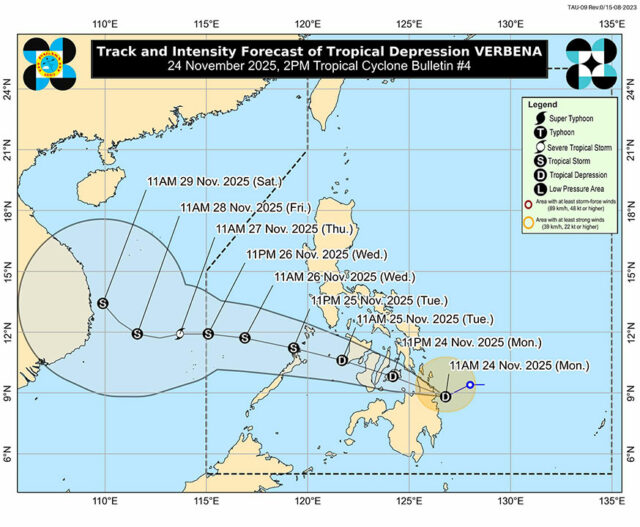
Tropical Depression Verbena to landfall in CARAGA; Signal No. 1 up in more than a dozen areas 

DOST-PAGASA FB PAGE

Tropical Depression Verbena is likely to make its first landfall over the CARAGA Region on Monday afternoon and is expected to bring heavy rainfall and severe winds to more than a dozen areas, the state weather bureau said. 

Verbena, packing 45 kilometers per hour (kph) of sustained winds and 55 kph of gustiness, was last located over the coastal waters of Bayabas, Surigao del Sur, the Philippine Atmospheric, Geophysical and Astronomical Services Administration (PAGASA) said in a 2 p.m. advisory. 

It is moving westward at 25 kph and may further intensify before its initial landfall. 

PAGASA hoisted Tropical Cyclone Wind Signal No. 1 in more than a dozen areas, where up to minor life-threatening winds are expected, including Occidental Mindoro, Oriental Mindoro, Romblon, northern Palawan, Masbate, Antique, Aklan, Capiz, Iloilo, Guimaras, Negros Occidental, Negros Oriental, Siquijor, Cebu, Bohol, Samar, Eastern Samar, Biliran, Leyte, and Southern Leyte. 

It is likewise in effect over Dinagat Islands, Surigao del Norte, Surigao del Sur, Agusan del Norte, Agusan del Sur, Camiguin, Misamis Oriental, and the northern portion of Bukidnon. 

PAGASA also raised a heavy rainfall outlook, warning that up to 200 millimeters of rain may drench large parts of the Visayas. At this rate, flooding is expected in flood-prone areas, and landslides are also highly likely. 

PAGASA also cautioned residents along coastal areas about the possible occurrence of storm surges. — Edg Adrian A. Eva 

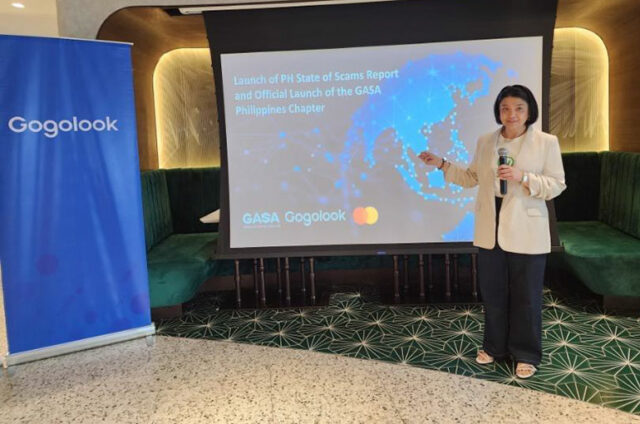
GASA, Gogolook release Philippine State of Scam Report 2025 at GASA PH Chapter launch

Gogolook Philippines Country Head and General Manager/GASA Philippines Vice-Chairperson Mel Migriño

More than three quarters of Filipino adults have encountered a scam in the past year, with an average of one scam attempt happening every two days, according to new findings from the 2025 Philippine State of Scam Report released by the Global Anti-Scam Alliance (GASA) in partnership with Gogolook.

The study, based on a survey of 1,000 adults nationwide, highlights how scammers have intensified their presence across digital platforms, targeting consumers with increasing frequency and sophistication.

Gogolook Philippines General Manager Mel Migriño said the numbers highlight the urgency for a coordinated national response.

“The data shows how scammers continue to evolve, and it reinforces the need for everyone — consumers, businesses, and institutions — to work together in building safer digital spaces. Our focus is to empower Filipinos with tools, awareness, and support so they can protect themselves more confidently,” Ms. Migriño said.

The report shows that 77% of Filipinos have encountered at least one scam, with exposure reaching an average of 239 scam encounters per person annually.

Scam attempts are most commonly experienced on a daily or weekly basis, with 18% encountering scams multiple times a day and 17% multiple times a week.

Another 16% said they encounter scams once or twice a month, while a smaller proportion faced scams every few months or a few times a year.

In terms of actual victimization, 65% of Filipino adults reported being scammed in the last 12 months. Investment scams were the top type of fraud suffered, accounting for 65% of incidents among those who lost money.

The demographic profile of scam victims reflects a broad cross-section of Filipino society. Survey data shows a nearly equal split between men (49%) and women (50%).

Younger generations reported the highest exposure, with 46% from Gen Z and 35% from millennials, compared to older age groups that reported lower scam interaction.

A significant majority of respondents were employed (75%) and two-thirds were parents. University graduates made up the largest educational group at 62%, suggesting that education level alone does not guarantee immunity from fraud.

The study finds that consumers place strong expectations on financial and commercial organizations to safeguard them from fraud.

Thirty-three percent of Filipinos believe it is mainly the responsibility of commercial entities to protect them from scams, particularly online platforms where scammers operate.

Despite this expectation, scam reporting behavior remains mixed. While 74% of those who lost money reported the incident to their payment provider, only 11% were able to recover even part of their losses.

The impact of scams on victims extends beyond financial loss. Eighty-eight percent of those who were scammed said they felt distressed, anxious, or worried due to the experience.

Fifty-seven percent reported that they have since become more vigilant and cautious in their digital interactions, revealing how the emotional toll of scams shapes online behavior.

The report underscores a continuing need for more effective public education, robust digital safeguards, and more responsive reporting channels.

With scam attempts occurring at a rate of almost one every two days for the average Filipino adult, the findings suggest that fraud has become a persistent and evolving threat woven into the nation’s digital landscape.

Moreover, Scam Watch Pilipinas Co-Founder Jocel de Guzman welcomes the State of Scam Report of Gogolook and GASA.

“The Global Anti-Scam Alliance’s State of Scam Report is an important contribution to the Philippines’ evolving anti-scam strategy,” Mr. De Guzman said. “Global insights, paired with our local data and the Quad Model, enable us to design more responsive policies and protect more Filipinos from emerging threats.”

GASA PH Chapter

The rollout of the report coincided with the launch of the GASA Philippines Chapter, formalized through Gogolook and its anti-scam platform Whoscall.

Brian Hanley, GASA APAC director, explained that the scams in the Philippines are affecting more than just people’s online safety — they are affecting daily life.

“When nearly one in three Filipinos loses money to a scam, it’s not just a digital safety issue. It’s a household stability issue,” Mr. Hanley said People are cutting back on daily needs, doubting the tools they rely on, and carrying the emotional weight long after the scam is over. Solving this requires partners working together instead of fighting the problem in silos.”

Ms. Migriño emphasized that the launch of the GASA PH Chapter strengthens the country’s capacity to respond.

“Scammers are evolving every day, using AI, social engineering, and digital manipulation to deceive. Investing in advanced scam detection tools, simplifying reporting pathways, and empowering the public through awareness are crucial steps — and GASA PH creates the platform for this collective action,” she said.

Ms. Migriño serves as the Vice-Chairman of the GASA PH Chapter.

GASA’s 2025 report calls for enhanced collaboration, better reporting infrastructure, and sustained public education to curb the rising tide of fraud and create a safer digital ecosystem for Filipino consumers.


Spotlight is BusinessWorld’s sponsored section that allows advertisers to amplify their brand and connect with BusinessWorld’s audience by publishing their stories on the BusinessWorld Web site. For more information, send an email to online@bworldonline.com.

Join us on Viber at https://bit.ly/3hv6bLA to get more updates and subscribe to BusinessWorld’s titles and get exclusive content through www.bworld-x.com.

The Valeron Tower: Crafted the Takumi way

Quadruple A developer DMCI Homes and Japanese global conglomerate Marubeni Corporation combine their expertise to build The Valeron Tower.

Behind every masterpiece stands a craftsman — a master, steeled by patience and sharpened by time.

In Japan, they are called Takumi. They devote years to pursuing perfection in their craft until excellence becomes second nature.

The Takumi tradition is not simply about skill. It is about surrendering to one’s craft, refining every detail with care, and creating something that will endure.

The same spirit of Takumi is the essence of the collaboration between Quadruple A developer DMCI Homes, the Philippines’ leader in resort-inspired communities, and Marubeni Corporation, one of Japan’s most respected global companies, in building The Valeron Tower — a residential condominium development rising along C-5 Rd. (E. Rodriguez Jr. Avenue) in Pasig City.

The partnership between DMCI Homes and Marubeni enhances construction practices at The Valeron Tower by integrating advanced engineering, quality control, and modern building technologies.

Together, DMCI Homes and Marubeni — guided by the devotion of the Takumi — present The Valeron Tower, an exquisite residential development rooted in Filipino craftsmanship and elevated by Japanese mastery.

Building with Intention

The partnership between DMCI Homes and Marubeni is built on complementary strengths.

Years of collaboration have made both embody discipline, attention to detail, and an unwavering commitment to quality. From water and transport infrastructure to real estate development, DMCI Homes and Marubeni have always been guided by a unified goal: to deliver excellence that stands the test of time.

Now, they begin another chapter in their shared story of quality — their finest expression of Takumi.

Advanced equipment like the Universal Testing Machine and Compression Machine are utilized to uphold precision, quality, and efficiency at every stage of construction.

DMCI Homes contributes decades of local expertise and engineering innovation. Known for quality craftsmanship, thoughtful design, and long-term value, the company relies on its in-house team of engineers, architects, skilled workers, and landscape professionals. It also invests in modern facilities such as its Concrete Batching Plant, Concrete Hollow Blocks Plant, Centralized Rebar Fabrication Facility, advanced equipment like the Universal Testing Machine and Compression Machine, and leading construction technologies including Building Information Modeling (BIM) and Robotic Total Station. These ensure precision, quality, and efficiency at every stage of construction.

Every DMCI Homes project undergoes a rigorous proprietary 102-point inspection and testing process led by the company’s Quality Management Department. Projects are built with superior materials and strengthened by the combined expertise of trusted partner subcontractors, as well as local and international consultants, to ensure enduring quality.

This relentless commitment to craft reflects the Japanese Takumi philosophy: no detail is too small, no standard too high.

Global Perspective

Marubeni, for its part, takes a full-service approach to real estate — covering everything from development to asset and property management. In the Philippines, its presence spans more than a century, marked by high-impact partnerships with DMCI Holdings, Inc. in water, transportation, and infrastructure.

Behind The Valeron Tower’s refined interiors is the DMCI Homes Fit-out Team, whose craftsmanship and attention to detail distinguish the development.

Globally, Marubeni has developed over 80,000 condominium units in Japan and manages a real estate portfolio valued at over 1 trillion yen as of January 2025, with investments across Asia and the United States.

Showing that its commitment extends from planning to hands-on involvement, Marubeni has seconded two experienced expatriates from Tokyo to Manila to support project development of The Valeron Tower. This reflected Marubeni’s genuine dedication to understanding how Filipino communities live, grow, and thrive — and to ensuring that its standards of quality, precision, and Takumi-level mastery are fully integrated into every stage of the project.

It is this combination of global expertise, local insight, and unwavering, hands-on dedication — rooted in the philosophy of Takumi — that shapes every detail of The Valeron Tower.

A Shared Commitment to the Long Term

Every detail of The Valeron Tower, from its layout efficiency to its carefully selected materials, is designed to endure for generations. (Artist’s illustration)

In The Valeron Tower, DMCI Homes and Marubeni find their truest expression of Takumi yet. It is designed as a game-changing model for urban condo living — one that blends comfort with innovation and efficiency with everyday function.

From top-notch amenities to industry-first services like commercial-grade Community Internet and the RideShare Carpool Program, The Valeron Tower reflects a commitment to both form and function. Every detail, from layout efficiency to material selection, is crafted to last for generations.

Marubeni has even assigned dedicated representatives to work closely with DMCI Homes on the project, ensuring the exchange of global best practices and reinforcing a culture of precision and consistency.

As DMCI Holdings, Inc. Chairman Isidro Consunji shared during the unveiling of The Valeron Tower’s Grand Showroom, “We expect this project to be a game changer,” underscoring how the combined expertise of DMCI Homes and Marubeni can bring forward innovations that raise the bar in urban living.

Backed by the technical expertise of DMCI Homes and Marubeni, The Valeron Tower emerges as a game-changer in urban living. (Artist’s illustration)

Rooted in Filipino Craftsmanship. Elevated by Japanese Mastery.

The Valeron Tower stands as a testament to the union of two legacies — rooted in Filipino craftsmanship and elevated by Japanese mastery. It reflects what can be achieved when passion meets precision, and when building goes beyond purpose to embrace integrity, foresight, and heart.

Like the Takumi who devote their lives to perfecting their craft, DMCI Homes and Marubeni Corp. are creating more than homes — they are shaping communities built to endure.

A new landmark is rising in Pasig City — crafted with dedication, mastery, and purpose. Crafted the Takumi way.

The Valeron Tower is a joint venture between DMCI Homes and Marubeni Corp. To learn more about the project, visit www.dmcihomes.com or call (632) 5324-8888 / 0917-880-8800. You may also reach Marubeni Corporation through their website at www.marubeniphil.com.


Spotlight is BusinessWorld’s sponsored section that allows advertisers to amplify their brand and connect with BusinessWorld’s audience by publishing their stories on the BusinessWorld Web site. For more information, send an email to online@bworldonline.com.

Join us on Viber at https://bit.ly/3hv6bLA to get more updates and subscribe to BusinessWorld’s titles and get exclusive content through www.bworld-x.com.
US, Ukraine say they have an ‘updated and refined’ peace framework, but questions remain

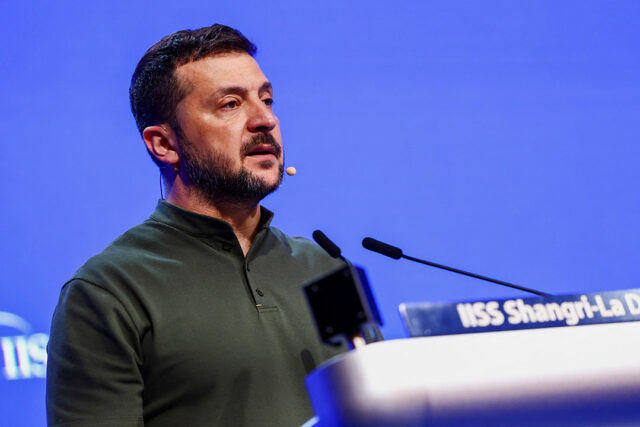
Ukrainian President Volodymyr Zelensky, June 2, 2024. — REUTERS

GENEVA — The United States and Ukraine said they had created an “updated and refined peace framework” to end the war with Russia that apparently modified an earlier plan drafted by the Trump administration which Kyiv and its allies saw as too sympathetic to Moscow.

In a joint statement released after talks in Geneva between US and Ukrainian delegations, the two sides said their discussion was “highly productive” and said they would continue in coming days. They did not provide specifics about a host of issues that must be resolved, including how to guarantee Kyiv’s security from the threat posed by Russia.

In a separate statement, the White House said the new version included strengthened security guarantees, and that the Ukrainian delegation had said it “reflects their national interests.” Ukrainian officials did not provide a separate statement of their own and were not immediately available for comment.

US Secretary of State Marco Rubio, who led the talks, told reporters in Geneva that work remained to be done on questions including the role of NATO, but that his team had narrowed down unresolved issues in a 28-point peace plan for Ukraine championed by President Donald Trump.

Earlier, Mr. Trump said Ukraine had not been grateful for American efforts over the war, prompting Ukrainian officials to stress their gratitude to the US president for his support.

European officials joined the US and Ukrainian delegations for talks after crafting a modified version of the US plan that pushes back on proposed limits to Kyiv’s armed forces and mooted territorial concessions.

The European plan proposes that Ukraine be granted a larger military than under the US plan and that talks on land swaps should start from the front line rather than a pre-determined view of which areas should be considered Russian.

Mr. Trump has said Ukrainian President Volodymyr Zelenskiy has until Thursday to approve the plan, which calls on Ukraine to cede territory, accept limits on its military and renounce ambitions to join NATO.

For many Ukrainians, including soldiers fighting on the front lines, such terms would amount to capitulation after nearly four years of fighting in Europe’s deadliest conflict since World War Two. Mr. Trump has said his proposal is not a final offer.

Mr. Rubio said the United States still needed time to address the pending issues. He hoped a deal could be reached by Thursday but suggested that it could also take longer.

US and Ukrainian officials were discussing the possibility of Mr. Zelenskiy travelling to the United States, maybe as early as this week, to discuss the US peace plan with Mr. Trump, two sources familiar with the matter said on Sunday.

The main idea is that they would discuss the most sensitive issues in the peace plan, such as the matter of territory, one of the sources said. There is no confirmed date for now, the source added.

ORIGIN OF US PLAN STIRS CONTROVERSY
The main talks between US and Ukrainian officials got under way in a stiff atmosphere at the US mission, soon after Mr. Trump complained in a Truth Social post that Ukraine’s leadership had shown “zero gratitude” to the US for its efforts and Europe continued to buy Russian oil.

Mr. Rubio interrupted the meeting to speak to reporters, saying the talks had been probably the best the US had held with Ukraine since Mr. Trump returned to power.

“Obviously this will ultimately have to be signed off with our presidents, although I feel very comfortable about that happening given the progress we’ve made,” said Mr. Rubio.

Andriy Yermak, head of the Ukrainian delegation, was at pains to thank Mr. Trump for his commitment to Kyiv during the brief interlude. Minutes later,  Mr. Zelenskiy also thanked Mr. Trump.

Mr. Yermak did not reappear with Mr. Rubio when the talks ended.

Mr. Rubio has departed Geneva en route back to Washington, a senior State Department official said.

Since the US plan was announced, there has been confusion about who was involved in drawing it up. European allies said they had not been consulted.

Before heading to Geneva, Mr. Rubio insisted on X that Washington had authored the plan after remarks from some US senators suggesting otherwise.

Senator Angus King said Mr. Rubio had told senators the plan was not the administration’s position, but “essentially the wish-list of the Russians.”

A PERILOUS MOMENT FOR UKRAINE
The talks come at a perilous moment for Kyiv.

Russia has been slowly making gains on parts of the front, though Western and Ukrainian officials say they have been extremely costly in terms of lives lost.

The transportation hub of Pokrovsk has been partially taken by Russian forces and Ukrainian commanders say they do not have enough soldiers to prevent small, persistent incursions.

Ukraine’s power and gas facilities have been pummelled by drone and missile attacks, meaning millions of people are without water, heating and power for hours each day.

Mr. Zelenskiy himself has been under pressure domestically after a major corruption scandal broke, ensnaring some of his ministers and people in his close entourage.

He has warned that Ukraine risked losing its dignity and freedom – or Washington’s backing – over the US plan.

Kyiv had taken heart in recent weeks after the United States tightened sanctions on Russia’s oil sector, the main source of funding for the war, while its own long-range drone and missile strikes have caused considerable damage to the industry.

But the draft peace plan appears to hand the diplomatic advantage back to Moscow. Ukraine relies heavily on US intelligence and weapons to sustain its war against Russia. — Reuters

Stewardship, strategy, and the making of true wealth: How Zephaniah ‘Khalid’ Mesa redefines business success

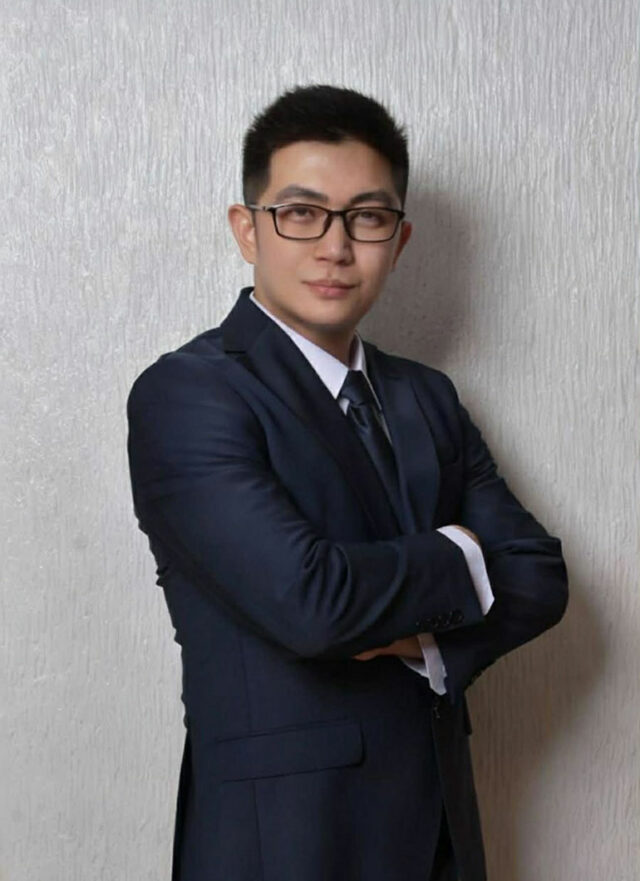
Zephaniah “Khalid” Mesa

In a business landscape often dominated by rapid expansion, aggressive competition, and the relentless chase for returns, Zephaniah “Khalid” Mesa stands out for grounding financial growth in something many entrepreneurs overlook: stewardship. In his business talk, Mr. Mesa dismantles common assumptions about wealth and reframes money not merely as capital but as a responsibility — one that reveals character, tests leadership, and determines whether a business can truly scale sustainably.

A Business Philosophy Rooted in Ownership and Accountability

Mr. Mesa begins with a principle rarely discussed in conventional finance circles: the Ownership Principle. He emphasizes that business leaders who act as though they “own” money often mismanage it. Instead, he frames wealth as a resource entrusted to leaders — something to be grown, multiplied, and allocated responsibly. In business terms, this functions like fiduciary duty: you are not the owner of the capital, but its custodian. This perspective is a departure from typical entrepreneurial bravado. Mr. Mesa warns that misunderstanding “ownership” leads executives to misuse resources, overextend, or make decisions rooted in ego rather than organizational purpose. Effective business leadership, he argues, begins with acknowledging that capital comes with accountability.

Cash Flow and the Principle of Allocation:

Why Mismanagement Is the Silent Killer of Businesses**

One of the strongest ideas in Mr. Mesa’s talk is the Principle of Mismanagement — a concept often seen in business failures. He highlights that many entrepreneurs earning significant sums still feel constantly short, not because they lack cash flow but because they mishandle it.

Mr. Mesa asserts that mismanagement applies not only to money, but to operations, people, relationships, and even time. In corporate settings, mismanaged resources lead to inefficiencies, declining productivity, and ultimately, financial loss. “Whatever you mismanage, you lose,” he stresses — a warning familiar to CFOs dealing with bloated expenses, unproductive teams, and neglected strategic planning.

He reinforces that true financial stability begins with the basics:

  • Margin — Do not spend everything you earn.
  • Contentment — Clearly distinguish needs from wants.
  • Balance — Allocate resources strategically, with long-term growth in mind.

In corporate language, this is resource optimization — ensuring organizations avoid lifestyle inflation, operational waste, and emotional decision-making masked as “business needs.”

Money as a Test of Leadership:

Character as the Foundation of Scaling

Mr. Mesa underscores what many business leaders learn late in their careers: money does not change a person — it magnifies them. In his framework, wealth exposes character, and therefore, leaders must cultivate inner discipline before they can successfully scale operations or expand globally.

He cites the Principle of Testing, stating that those who cannot handle small capital will inevitably fail with larger funds. Business history supports this perspective. Many high-growth companies collapse not during scarcity but during rapid expansion, when lack of systems, governance, and self-management becomes catastrophic.

Mr. Mesa positions money as an amplifier:

  • Good leadership becomes better with resources.
  • Poor leadership becomes destructive when given more capital. This message resonates strongly in today’s climate, where early-stage founders often secure large investments before establishing operational discipline or leadership maturity.

The Middle-Class Trap: Why Partial Success Is the Most Dangerous Zone

One of Mesa’s more provocative statements is about the vulnerability of the middle class. He describes it as the “most dangerous status,” where individuals or businesses appear to be progressing — but are in reality stuck in a fragile equilibrium between success and collapse.

For him, partial success is deceptive. Middle-class businesses — those operating only within a single country or relying solely on local conditions — are exposed to economic downturns, regulatory changes, and market volatility. Mr. Mesa pushes the idea of domination, not as hypergrowth for its own sake, but as diversification and resilience: building enterprises that operate across borders, markets, and economies.

This philosophy mirrors modern global business strategy: multi-market presence as a hedge against local instability.

Tithing Reinterpreted: Discipline, Allocation, and Purpose-Driven Capital

While Mr. Mesa speaks of tithing in a faith-based context, translated into business language, it aligns with intentional capital allocation. He treats the first 10% as “non-negotiable” — a built-in discipline that forces businesses and individuals to operate with structure rather than emotional spending.

The point is not the religious act itself, but the discipline, clarity, and purpose it instills:

  • First allocate.
  • Then operate.
  • Then grow what remains.

In modern finance terms, it’s like an automatic savings/investment mechanism or a mandatory allocation to foundations, CSR, or reinvestment pools.

Mr. Mesa frames it as the “starting line” of money management — discipline before expansion.

Global Mindset, Stewardship Culture: Mesa’s Blueprint for Becoming “Truly Wealthy”

What distinguishes Mr. Mesa’s philosophy is that his concept of wealth is not material accumulation but sustainable, purpose-driven growth — the kind of wealth that can withstand crises, expand internationally, and support long-term impact.

His business philosophy can be summarized as:

  • Stewardship over ownership – Treat wealth as a resource to manage, not possess.
  • System before scale — You cannot expand what you have not disciplined.
  • Character before capital — Money reveals leadership capacity.
  • Global thinking — Do not confine your enterprise to local risk.
  • Purpose-driven wealth — Resources must advance something bigger than personal comfort.

Mr. Mesa’s insights resonate deeply in a world where businesses are rethinking values, sustainability, and leadership responsibility.

A Quiet but Radical Business Framework

Zephaniah “Khalid” Mesa’s talk is not the traditional roadmap to success. Instead of focusing purely on revenue models or market strategies, he begins with the internal architecture of the entrepreneur — discipline, character, purpose, and stewardship.

For business leaders navigating growth in unstable economies, his framework serves as a reminder:

True wealth begins with how you manage what you have today. Scaling begins internally long before it becomes external.

Mr. Mesa’s teachings blend timeless principles with modern strategic thinking — a rare intersection that many entrepreneurs, executives, and corporate leaders will find both challenging and transformative.


Spotlight is BusinessWorld’s sponsored section that allows advertisers to amplify their brand and connect with BusinessWorld’s audience by publishing their stories on the BusinessWorld Web site. For more information, send an email to online@bworldonline.com.

Join us on Viber at https://bit.ly/3hv6bLA to get more updates and subscribe to BusinessWorld’s titles and get exclusive content through www.bworld-x.com.

Denmark’s CIP readies P30.5-billion wind project in Nueva Ecija

Denmark’s Copenhagen Infrastructure Partners (CIP) is planning to develop a 300-megawatt (MW) onshore wind farm in Nueva Ecija at an estimated cost of P30.5 billion.

In a filing with the Department of Environment and Natural Resources, San Jose Onshore Wind Power Corp., a CIP subsidiary, said the project will cover 4,617 hectares across the municipalities of Lupao and Carranglan.

“With a potential total capacity of 300 MW, the project will not only add clean energy to the Luzon grid but also support the Philippine government’s broader objectives of enhancing energy security, diversifying the energy mix, and advancing the transition toward a low-carbon economy,” the company said.

Construction is expected to start in the second quarter of 2027 and be completed by the second quarter of 2029.

CIP is a global investor in renewable energy assets such as wind, solar, and bioenergy. It manages 13 funds and around €32 billion for more than 180 investors worldwide.–Sheldeen Joy Talavera

Separatist candidate wins presidential vote in Bosnia’s Serb region

Flag of Bosnia and Herzegovina in the White Fortress, Sarajevo.—WIKIMEDIA COMMONS/BERNARD GAGNON VIA CC BY-SA 4.0

BANJA LUKA/SARAJEVO, Bosnia — A close ally of Bosnia’s Serb Republic separatist leader Milorad Dodik won a snap presidential election in a tight race with opposition candidate, the election commission said on Sunday, citing preliminary results.

“According to preliminary, unofficial and incomplete results, Sinisa Karan won 50.89% of the votes,” Jovan Kalaba, the commission’s president, said at a news conference.

Mr. Kalaba said that opposition candidate Branko Blanusa of the Serb Democratic Party (SDS) won 47.81% of the votes.

Turnout was low at 35.78%, compared with 53% during a general vote in 2022, he said. More than 1.2 million people were eligible to vote. The election commission announced results based on 92.87% of counted votes.

The presidential mandate will last for less than a year since a general election is scheduled next October.

The election was called after Mr. Dodik was stripped of his office and banned from politics for six years.

Mr. Karan, who currently serves as Serb Republic minister of scientific and technological development, pledged to continue Mr. Dodik’s policies “with ever greater force.”

“As always when the times were difficult, the Serb people have won,” Mr. Karan said after Mr. Dodik had announced his victory at the headquarters of their ruling Alliance of Independent Social Democrats party (SNSD) party in the town of Banja Luka.

The SDS said it would request the repetition of the vote at three polling stations, citing major election irregularities.

Postwar Bosnia comprises the Serb Republic and the Federation, shared by Croats and Bosniaks, linked via a weak central government.

Pro-Russian separatist Mr. Dodik was convicted in February of defying the constitutional court and an international peace envoy, leading to Bosnia’s biggest political crisis since the end of its devastating war 30 years ago.

He repeatedly rejected the verdict but in October unexpectedly appointed a loyal ally as his temporary replacement and annulled a series of separatist laws previously adopted in parliament.

Days later, the United States lifted sanctions imposed against him, his allies and family members, praising the move as a step towards the “stabilization” of Bosnia. — Reuters

China’s Premier pitches to German Chancellor closer collaboration in strategic industries

CARLOS DE SOUZA-UNSPLASH

BEIJING — China’s Premier Li Qiang pitched closer collaboration to German Chancellor Friedrich Merz in new energy, smart manufacturing, biomedicine, and intelligent driving during a meeting on Sunday on the sidelines of the G20 summit, Xinhua reported.

Relations between the world’s second- and third-largest economies have improved significantly over the past month, after Chinese export curbs on chips and rare earths caused major disruptions for German firms and German Foreign Minister Johann Wadephul to cancel a visit to Beijing last month due to China rejecting all but one of his meetings.

German Finance Minister Lars Klingbeil made the first official visit of Mr. Merz’s premiership last week, stabilizing ties by meeting China’s top economic official Vice Premier He Lifeng, as US President Donald Trump’s tariffs weigh on the two major exporters.

Mr. Merz is also expected to visit China soon.

Mr. Li said he “hoped Germany would maintain a rational and pragmatic policy toward China, eliminate interference and pressure, focus on shared interests, and consolidate the foundation for cooperation,” a state media readout released late on Sunday quoted China’s second-ranking official as saying.

For all the friction over Beijing’s support for Russia and its actions in the Indo-Pacific, and Berlin’s vocal criticism of China’s human rights record and state-subsidized industrial policy, the two countries remain bound by a vast and mutually advantageous commercial relationship.

“China is willing to work with Germany to seize future development opportunities … in emerging fields such as new energy, smart manufacturing, biomedicine, hydrogen energy technology, and intelligent driving, Mr. Li said in Johannesburg, South Africa, which is hosting the first G20 summit on the continent.

China bought $95 billion worth of German goods last year, around 12% of which were cars, Chinese data shows, putting it among the $19 trillion economy’s top 10 trading partners. Germany purchased $107 billion of Chinese goods, mostly chips and other electronic components.

But Berlin stands out for China as an investment partner, having injected $6.6 billion in fresh capital in 2024, according to data from the Mercator Institute for China Studies, accounting for 45% of all foreign direct investment into China from the European Union and the United Kingdom.

For Germany, China represents a practically irreplaceable auto market, and is responsible for almost a third of German automakers’ sales. German chemicals and pharmaceuticals firms also have a large presence in the country, although they are facing increasing pressure from domestic competitors. — Reuters

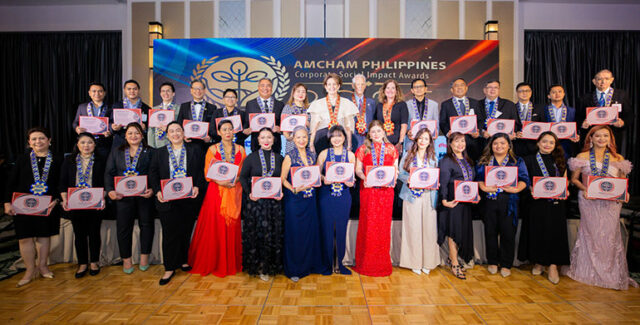
AmCham Philippines recognizes outstanding CSR programs at the 2025 Corporate Social Impact Awards

Photo Courtesy of the US Embassy in the Philippines

The American Chamber of Commerce of the Philippines (AmCham Philippines), in partnership with the US Embassy in the Philippines, successfully concluded the 2nd AmCham Corporate Social Impact (CSI) Awards on Nov. 19 at the Makati Diamond Residences. The program honored exemplary CSR initiatives led by member companies that contribute to sustainable, inclusive, and community-centered development across the Philippines.

Focused on recognizing non-US-headquartered companies, this cycle highlighted diverse organizations advancing positive social impact across six award categories — ranging from education and environmental stewardship to livelihood development and healthcare equity.

In her keynote remarks, US Ambassador to the Philippines, Her Excellency MaryKay Carlson, commended the honorees for their commitment to purpose-driven leadership: “You are demonstrating what it means to lead with a purpose. Together, we can advance the vision of prosperity that is inclusive, sustainable, and full of opportunity for Americans, for Filipinos, and for all of our partners.”

AmCham Philippines President Sara Murphy, in her welcome message, also expressed appreciation for the strong engagement of the chamber’s members, emphasizing, “Together, we’ve continued to uphold our mission of being the voice of business in the Philippines while strengthening our ties with both the public and private sectors.”

Department of Trade and Industry Undersecretary Ceferino Rodolfo likewise addressed the audience, reinforcing the government’s support for corporate efforts that strengthen industries, empower communities, and contribute to national development.

Senior AmCham leaders, including Executive Director Ebb Hinchliffe, joined industry representatives, partners, and program finalists in celebrating the outstanding contributions of this year’s honorees.

The evening’s highest honor, the Impact Excellence Award, was presented to Pilmico Foods Corporation for Project Silk, an inclusive business program that empowers yellow corn farmers and builds more resilient agricultural communities. Project Silk was selected as the overall winner from all Gold Awardees across the second cycle and the first cycle held in May, reflecting its transformative impact, scalability, and strong community engagement.

Category Winners

Education & Future Workforce

Gold: Nezda Technologies, Inc. — Nezda FEES (Free Education for Eligible Students)

Silver: Frontier Tower Associates Philippines, Inc. — Frontier Towers Scholarship Program

Bronze: Quezon Power (Philippines), Limited Co. & San Buenaventura Power Ltd. Co. — Technical–Vocational Scholarship Program

MSME Awardee: Hamlin-Iturralde Corp. (TeamAsia) — My Dream in a Shoebox

Environmental Sustainability & Resource Efficiency

Gold: Aboitiz Power Corp. (Therma Visayas) — Carbon Sink Management Program (CSMP)

Silver: Converge ICT Solutions, Inc. — Countdown to Zero Waste

Silver: Reckitt — Mortein Anti-Dengue Campaign with Makati LGU

Bronze: Quezon Power & SBPL — Mangrove Reforestation Program

MSME Awardee: Raslag Corp. — Agricultural Photovoltaics (AgriPV) Project 2025

Economic Empowerment & Livelihood Development

Gold: Pilmico Foods Corp. — Project Silk 

Silver: PMFTC — Project KainBigan (Food Support for Hunger Alleviation and Disaster Relief)

Bronze: Aboitiz Power Corp. — Skills Training Program

MSME Awardee: Science Park of the Philippines, Inc. — Kaagapay sa Hanapbuhay

Healthcare Equity & Support

Gold: BDO Unibank, Inc. — Rural Health Unit Rehabilitation

Silver: Reckitt — #ComeTogether: Empowering Youth Through Inclusive Sex Education

Bronze: AstraZeneca Philippines — Young Health Programme

Disaster Response & Emergency Relief

Gold: GMA Network, Inc. — Operation Bayanihan

Silver: BDO Unibank, Inc. — Relief and Disaster Response

Bronze: Reckitt — Lysol Disinfect to Protect Mission

MSME Awardee: Clark International Airport Corp. — Relief Aid Mission: Bangon Batangas

Community Impact & Civic Engagement

Gold: Thomson Reuters — Duyan Foundation Outreach event and partnership with children living with HIV

Silver: Pilmico Foods Corp. — Adopt-A-City Program

Bronze: Vena Energy — Water, Sanitation and Hygiene (WASH)

SME: Gerodias Suchianco Estrella Law Firm — Kaanib sa Misyon (Partners in Mission)

The finalists were evaluated by an esteemed independent panel of judges composed of Ma. Corazon Halili-Dichosa, Executive Director of the Board of Investments; Paul Taylor, Senior Commercial Officer of the US Embassy in the Philippines; and Ruy Moreno, President of the Philippine Quality Awards Foundation. The panel assessed each entry based on a comprehensive set of criteria, including Impact, Sustainability, Innovation, Scalability and Replicability, Community Engagement, Strategic Alignment, and Communications and Outreach. To ensure impartiality and fairness, AmCham Philippines was not involved in the judging process in any capacity.

A Continuing Commitment to Corporate Social Impact

The AmCham CSI Awards will continue as a yearly flagship program, with the next cycle once again welcoming entries from both American and non-American member companies. This annual recognition aims to inspire more organizations to pursue impactful, scalable, and community-driven programs that contribute to national progress.


Spotlight is BusinessWorld’s sponsored section that allows advertisers to amplify their brand and connect with BusinessWorld’s audience by publishing their stories on the BusinessWorld Web site. For more information, send an email to online@bworldonline.com.

Join us on Viber at https://bit.ly/3hv6bLA to get more updates and subscribe to BusinessWorld’s titles and get exclusive content through www.bworld-x.com.