Home Blog Page 6874

Filipinos’ financial literacy needs more push, Home Credit survey reveals

Recently, the pandemic pushed many Filipinos to be mindful of their personal finances. However, there’s still immense concern on the state of financial literacy in the country. Both the 2015 World Bank (WB) survey and Central Bank’s 2019 financial inclusion survey revealed that only half of Filipino adults correctly answered financial literacy questions.

This was supported by a survey from Home Credit where only 10% of the respondents correctly answered questions that test their knowledge on various financial concepts.

The said survey was drawn from the consumer finance company’s self-crafted financial literacy quiz found in the My Home Credit App. A two-part quiz, it offers users a chance to answer a series of questions involving personal finance and other financial literacy items.

To get an in-depth analysis of the quiz results, here’s a breakdown of the findings for each question:

Findings of Quiz 1: Basics of Budgeting, Digital Literacy, and Cybersecurity

More than 25,000 respondents took the first quiz that covers topics on basics of budgeting, digital literacy, and cybersecurity. Within May to December 2021, the respondents mostly belong to the age group of 25-39 years old and 63% or majority are female.

From the results, only 10% got all correct answers from the six questions. When asked about managing finances, almost half (as many as 10,000) did not apply the ideal saving formula in their monthly budget; they prioritize expenses first and save what is left.

On interest computation, 57% got the correct answer and the remaining half either got the wrong computation or does not know how to answer. On a related question about inflation, respondents were asked about the impact of inflation and only 41.8% had the right understanding of its effects on their purchasing power and borrowing decisions.

Filipinos seemed to be more knowledgeable on investments and risk diversification. When asked whether they will spread their money to multiple investments or focus on just one, almost 73% chose to put it into multiple investments to limit their losses, 22.5% for one investment and 4.6% do not know the answer.

Aside from inflation and basic numeracy concepts, cybersecurity and safety are also one of the concepts that are not well-understood by the takers with only 43.4% getting the correct answer – a number slightly lower than 47.8% before the covered period.
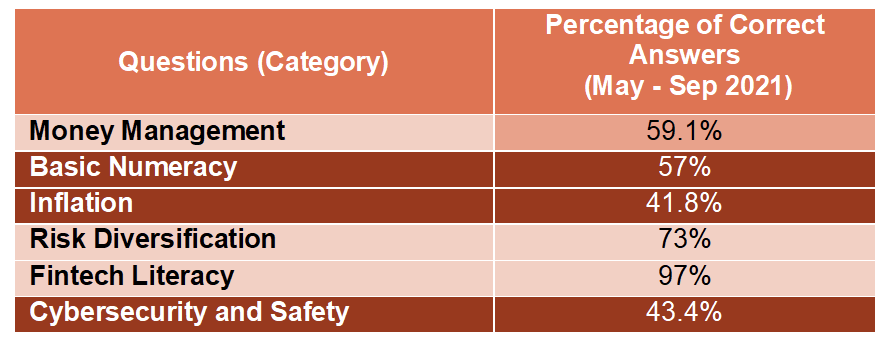
On the flip side, most respondents aced the question on what tasks can be done using digital financial tools at 97%. The social distancing measures brought by the pandemic might be a huge factor on how well-versed Filipinos have become in using fintech tools for daily transactions.

In summary, results show that the respondents’ knowledge on all financial literacy concepts mentioned above are in the intermediate level with scores falling under 3 to 4 out of 6. Basic numeracy, inflation, and cybersecurity and safety are the least understood concepts as indicated in the survey.

Findings of Quiz 2: The Basics of Budgeting, Saving and Borrowing

The second leg of the financial literacy quiz zoomed in on the basics: budgeting, saving and borrowing. Launched in September, it covers the period of launch until September., there are over 19,000 responses, with more females attempting to take the quiz and from the age group of 25-39 years old.

The first three questions concentrated on how to properly plan a monthly budget and how to compute for an emergency fund. Most quiz takers (66.8%) know that every month, they should at least make a budget plan and 88.4% know that the ideal amount of emergency fund should cover 3 to 6 months’ worth of expenses. However, only ¼ of users know how to set a SMART Financial goal.

Regarding the basics of borrowing, almost all (95%) of quiz takers know that paying bills on time every month can help improve their credit score. A total of 77.1% also answered that a consumer finance company is an institution that could help them avail cash or product loans.

On the similar topic of loan application, 83% knows the concept of loan repayment but only half of respondents know what a cooling off period in a loan is about; 65% knows that there are different ways that could help them approve their loans (such as preparing requirements ahead of time, borrowing an amount that you can pay, etc).

Looking at the findings of the second quiz, majority of Filipinos have a proper understanding of the basics of some financial concepts but would need guidance on comprehending more specific terms. Regardless, the results of the second quiz show that the level of financial literacy in the country is promising and would continue to improve if taught properly.

This is where companies advocating for financial literacy come in. One of which is Home Credit Philippines, a longtime financial provider and financial educator both in global and domestic markets. Through Wais sa Home, their financial and digital literacy program, they address the concerns revealed in the survey through various initiatives and activities aimed at driving financial inclusion and raising financial literacy standards amongst Filipinos.

“Our business model and the focal point of our corporate social responsibility efforts is centered on responsible lending. We want to help create responsible borrowers and good payers through financial education and digital financial literacy,” says Home Credit Philippines Chief Marketing Officer Sheila Paul.

To reach a wider audience and have a steady source of important financial and digital literacy concepts, Home Credit is launching its Wais sa Home website soon to allow more people to gain knowledge on basic money management and digital skills.


Spotlight is BusinessWorld’s sponsored section that allows advertisers to amplify their brand and connect with BusinessWorld’s audience by enabling them to publish their stories directly on the BusinessWorld Web site. For more information, send an email to online@bworldonline.com.

Join us on Viber to get more updates from BusinessWorld: https://bit.ly/3hv6bLA.
[B-SIDE Podcast] Strengthening the healthcare system (Part 1)

Follow us on Spotify BusinessWorld B-Side

The days of zero-COVID policies are long past, and learning to live with the coronavirus will require major adjustments to how things were done in the first year of the pandemic. “Coping with it, living with it, adjusting our policies and the way we live with the COVID threat (is) a matter of reducing risk,” said Dr. Regina P. Berba, head of infection control at the Philippine General Hospital (PGH).

In this B-Side episode — the first of two parts on the future of healthcare — Dr. Berba speaks with BusinessWorld reporter Brontë H. Lacsamana about a wide range of topics, including how to take care of the medical frontliners who are taking care of us, how civic spaces have to transform themselves just as hospitals have, and how the universal healthcare law can expand access to quality and affordable health services if implemented properly.

Recorded remotely in December 2021. Produced by Brontë H. Lacsamana, Jino D. Nicolas, and Sam L. Marcelo.

To read the related story, get the January 2022 issue of BusinessWorld In-Depth.

Follow us on Spotify BusinessWorld B-Side

An agile, forward-looking central banker

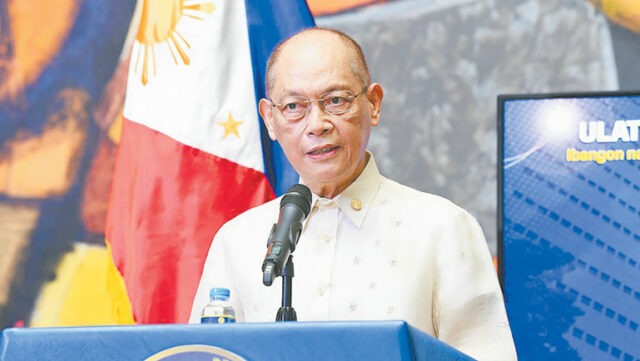
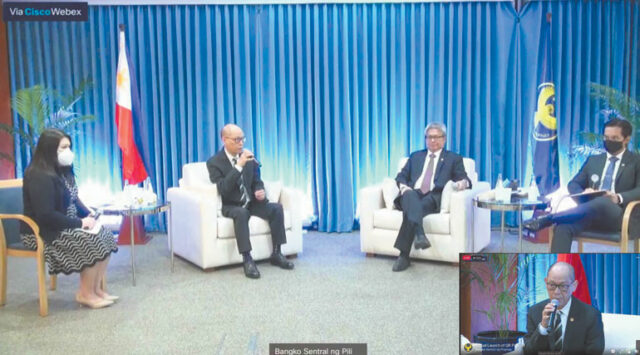
Bangko Sentral ng Pilipinas Governor Benjamin E. Diokno

At the start of this year, the business and banking communities have received great news with an outstanding recognition accorded to one of the country’s long-standing public servants.

The Banker, a publication owned by the Financial Times, recently awarded the Global Central Banker of the Year 2022 to Bangko Sentral ng Pilipinas (BSP) Governor Benjamin E. Diokno. This is the first time for a Philippine central banker to receive the accord. Along with the said honor, the publication also recognized the governor as the Asia Pacific Central Banker of the Year.

In giving the award, the publication cited Mr. Diokno for helping “to see the Philippines through the COVID-19 pandemic” while pushing “ahead with his modernization agenda for the country’s banking system.” It also recognized the governor’s goal of “creating a strong banking sector that supports individual consumers while moving forward with the digital banking agenda.”

The fifth governor of the BSP, Mr. Diokno was appointed in March 2019, taking over the late BSP governor Nestor Espenilla, Jr. Aside from pursuing the BSP mandates of price stability, financial stability, and efficient payments, and settlements system, the governor also endeavors “to bring central banking closer to the Filipino people.”

This is very much evident with his vision of a ‘cash-lite’ economy and a financially inclusive society. Driven by this vision, Mr. Diokno aims to shift at least 50% of retail payment transactions to digital form and achieve 70% transaction account ownership among adult Filipinos by 2023, when his term ends. He is also supporting local payment providers through the use of the national ‘QR PH’ standard for QR code payments, and he strongly advocates for the Philippine ID System.

Mr. Diokno, The Banker also noted, pledged to bolster existing financial literacy programs with additional support in digital skills development in order to ensure that no citizen will be left behind in the move to digital payments.

“He has called for customer centricity across the whole financial space, including insurance and capital markets, to help the underserved feel comfortable and secure accessing financial services. Greater levels of regulation are also being introduced to payment providers to protect consumers from fraud,” the publication continued.

Mr. Diokno was also noted by The Banker for his call for more mergers and acquisitions (M&As) between local banks to strengthen the banking sector through a memorandum of agreement pledging to allow bank M&As to proceed within 55 days. The governor’s support for transition to low-carbon, evidenced by the BSP-headed ‘Green Force’ technical working group and the Philippine Sustainable Finance Roadmap, was also recognized.

Regarding the central bank’s response to the pandemic, The Banker noted Mr. Diokno’s stance of holding interest rates low for as long as possible to maintain stability. “Believing that the current environment is transitory, he decided to hold on to an accommodative monetary policy to support the economy,” the magazine wrote.

As early as February 2020, the BSP cut policy rates by 25 basis points (bps), and then it was cut by another 175 bps before the year ended. Other measures implemented during the pandemic included reducing the reserve requirement ratio to increase the volume of loanable funds in the system and incentivizing bank lending to micro, small, and medium enterprises.

Prior to serving BSP governor, Mr. Diokno served three administrations of the government, particularly under the Department of Budget and Management. He served as Budget Undersecretary from 1986 to 1991, then Budget Secretary from 1998 to 2001 and from 2016 to 2019. He also served as Fiscal Adviser to the Philippine Senate, chairman and chief executive officer of the Philippine National Oil Company, and chairman of the Local Water Utilities Administration.

The following major policy reform contributions are attributed to Mr. Diokno: providing technical assistance to the 1986 Tax Reform Program to simplify the income tax system and introduce the value-added tax; helping design the 1991 Local Government Code of the Philippines; initiating a What-You-See-Is-What-You-Get policy to streamline the release of funds; and sponsoring the internationally lauded Government Procurement Reform Act to modernize, regulate, and standardize government procurement activities in the Philippines.

Outside government work, Mr. Diokno is professor emeritus of the University of the Philippines (UP)-Diliman, having taught Public Sector Economics, Microeconomics, Macroeconomics, and Development Economics, among others, for over 40 years. He was also chairman of the Board of Trustees of the Pamantasan ng Lungsod ng Maynila.

Mr. Diokno has also participated in international conferences hosted by international organizations such as the International Monetary Fund, Asian Development Bank, World Bank, Asia-Pacific Economic Cooperation, and the United Nations.

He authored numerous publications and discussion papers regarding his research interests that have been published in academic journals and policy reports. He also wrote the “Core” column in BusinessWorld years ago.

Mr. Diokno finished his Bachelor’s Degree in Public Administration (1968) and his Master’s Degree in Public Administration (1970) and Economics (1974) at the University of the Philippines. He also holds an M.A. in Political Economy (1976) from Johns Hopkins University in Baltimore, Maryland, USA and a Ph.D. in Economics (1981) degree from the Maxwell School of Citizenship and Public Affairs, Syracuse University in Syracuse in New York. — Adrian Paul B. Conoza

A cash-lite vision for the country

In this October 2021 handout, Bangko Sentral ng Pilipinas (BSP) Governor Benjamin E. Diokno (inset) expressed confidence that the full launch of the QR Ph Person-to-Merchant (P2M) payment facility will pave the way for the digitalization of micro, small, and medium-sized enterprises (MSMEs), including small vendors and sari-sari stores. The governor said that the low-cost and easy-to-use QR Ph P2M, which uses the Quick Response technology and code scanning for payments, will help MSMEs realize greater opportunities for growth. Also in the photo is Deputy Governor Mamerto Tangonan who heads BSP’s Payments and Currency Management Sector (second from right).

As the digital space expands in the financial sector and gets embraced by more and more people, a cash-lite economy is a great possibility. Among those envisioning a cash-lite Philippines in the near future is the country’s central banker Benjamin E. Diokno.

“As Governor of the BSP (Bangko Sentral ng Pilipinas), one of my personal goals is to have not less than 50% of transactions, by volume and value, to be done digitally by 2023. With the pandemic, I am optimistic that this goal will be met even sooner,” Mr. Diokno said in a speech back in 2020. “Of course, this is consistent with my other vision of shifting from a cash-heavy to a cash-lite economy.”

BSP had already been pushing for digital transformation in the country’s financial services even before the pandemic. “We believe that the promotion of financial technology and digitalization will lead us toward achieving financial inclusion,” Mr. Diokno said.

In October 2020, the central bank presented the Digital Payments Transformation Roadmap 2020-2023 (DPTR), which the BSP Governor has referred to as “our blueprint for transforming the Philippines into a cash-lite society” in his speech during an HSBC virtual forum.

One of the strategic outcomes of the roadmap is a strengthened consumer preference for digital payments by converting 50% of the total volume of retail payments into digital, and for 70% of Filipino adults to be financially included. Another outcome is to make more innovative and responsive digital financial services available.

“Our thrust to promote digitalization of payments is also strategically geared towards furthering financial inclusion as we view the two to be mutually reinforcing: they go hand in hand, with each one enabling the other,” Mr. Diokno stressed further in the central bank’s DPTR press release.

The roadmap stated the strategic initiatives and priority actions mostly for 2020-2021.

One of the progress in these initiatives is the launch of the QR Ph person-to-merchant (P2M) payment facility in October.

“With today’s event, we are well on our way to becoming a cash-lite society. This milestone is testament to our commitment to overcome the challenges of broadening digital transformation in the country in our pursuit of the delivery of universal access to safe, affordable, and convenient digital payment services for all Filipinos,” the BSP Governor said during the launch.

In terms of the progress in digital payments adoption, according to BSP’s 2021 edition report on the country’s digital payments status, the volume of monthly digital payments reached 20.1% in 2020, thereby meeting its goal of “20% in 2020.”

Meanwhile, as of the first quarter of 2021, the proportion of banked Filipino adults reached 53%, Mr. Diokno  shared in the said HSBC forum. This included basic deposit and e-money accounts.

“We are optimistic that digital payments adoption will sustain the upward momentum during the post-pandemic years and would allow us to achieve the 50% target by 2023,” Mr. Diokno said in the aforesaid central bank report. “The BSP has laid out regulatory reforms that served as strong foundations and is well-positioned to take advantage of fintechs in boosting the adoption of digital payments toward a cash-lite economy.” — Chelsey Keith P. Ignacio

Improving the country’s healthcare reach and efficiency

Photo from doh.gov.ph

As the Philippines fights the battle against the coronavirus disease 2019 (COVID-19) pandemic, healthcare has become more crucial for many Filipinos. While there are still many hurdles to overcome, recent initial reforms in the system, along with the acceleration of digital, have come in time to attend to Filipinos’ heightened healthcare needs.

Back In April 2021, a report on the country’s healthcare, commissioned and financed by the Embassy of the Kingdom of the Netherlands in the Philippines in cooperation with the Netherlands Enterprise Agency and prepared by Orange Health Consultants (OHC), described Philippine healthcare to be continually changing after a decade of increased public spending on healthcare.

The report also noted that the sector is characterized by “a well-developed private healthcare sector next to the public sector,” as well as a “decentralized” structure, with the National Capital Region and Luzon regions seen to be containing the largest share of both public and private healthcare infrastructure.

“The distribution of health infrastructure as well as human resources is heavily skewed towards [NCR] and Luzon. This physical imbalance is compounded by unequal financial access to health services,” the report noted.

These apparent imbalances in the system are seen to be addressed by the Universal Health Care (UHC) law, or Republic Act No. 11223, which was signed in 2019.

With the UHC law, every Filipino citizen is automatically enrolled in the National Health Insurance Program. Also, the report noted, the law calls for enhancing the effectiveness of health insurance by the major inflow of extra resources to health insurance from restructured sin taxes, as well as for improving local health systems and health infrastructure by means of extra resources to health insurance earmarked to a special fund exclusive for local government units.

As of last October, the Department of Finance said that the UHC will not be compromised by the pandemic, with P80 billion proposed to be allocated this year for the premium subsidies for indirect contributors under the UHC law, which include senior citizens and persons with disabilities.

The following month, the Asian Development Bank (ADB) has approved a $600 million loan to support the UHC program. In a statement, the ADB expects the program to “expand the use of digital tools in and support the Department of Health (DoH) and the Philippine Health Insurance Corp. (PhilHealth) as they implement universal healthcare.” It also said the program will “support local government access to health care workers and facilities, especially in underserved areas.”

Furthermore, OHC’s report stressed that recent reforms in Philippine healthcare also emphasize the strengthening of the Service Delivery Network by means of practicing gatekeeping through a wide network of general p ractitioners and family physicians; complying with established clinical practice guidelines of all medical specialties; providing health services closer to people through mobile clinics, subsidies to patient transport costs, and telemedicine; making emergency medical services available 24/7 even during disasters; and enhancing services by increased use of telemedicine and digital health.

One of the most notable recent advancements in healthcare is that of the increased use of digital tools in efforts to reduce risks of spreading the coronavirus, as well as to make consultations, transactions, and even operations more seamless as possible.

“Digitalization is taking hold in different areas such as e-prescriptions, hospital management information systems, Integrated Clinic Information System (iClinicSys) for primary care facilities, and electronic patients records,” OHC’s report wrote regarding e-health initiatives in the country.

A notable national e-health project is the Philippine Health Information Exchange, a platform designed to integrate and harmonize health data coming from different electronic medical record systems and hospital information systems. It is hoped to address issues such as redundancy in getting information, repeating diagnostic procedures that may have been already facilitated, duplication of treatments, inappropriate medication prescription, and incorrect diagnosis due to insubstantial health history, among others.

Moreover, as OHC’s report observed, the DoH and PhilHealth are collaborating on an integrated decision-support and reporting system to foster and support the optimization of DoH’s nationwide disease registry and PhilHealth’s benefit programs. This partnership aims to develop standards for the continued harmonization of data collection and reporting of PhilHealth, DoH, and partners.

Regarding telemedicine, meanwhile, the DoH and the University of the Philippines (UP) manage the National Telehealth Service Program (NTSP), which aims to expand this service in 4th- to 6th-class municipalities nationwide. Using a mobile and Internet-based interface and triaging system, NTSP facilitates consults between primary care physicians and clinical specialists at UP.

Within the private sector, on the other hand, many telemedicine services have started to surface. Most likely the most well-known among these is KonsultaMD, a subscription-based service that provides 24/7 access to skilled and licensed doctors who can provide safe medical assessment and advice.

While these developments have received a boost, however, challenges have emerged. OHC’s report saw that “the reliance on paper-based administration in the public sector will continue to provide a disincentive” to e-health, while the increased use of telemedicine caused unintended consequences such as billing and reimbursement issues and resistance from doctors to protect physical practices.

Opportunities still abound, nonetheless, for digital solutions to elevate healthcare in the Philippines.

The report notes that e-health, as it picks up fast, creates opportunities to provide systems and software solutions for patient registration and maintenance for patient records, solutions on scoring data to calculate the likelihood of illness and other risks (relevant to complementary health insurance markets), software systems for hospital, laboratory and pharmacy, and clinical decision support services, to name a few.

In its outlook for the Philippines’ health technology market, Ken Research sees the adaptation of technological tools to potentially address difficulties in reaching medical facilities and purchasing medicines, as well as expand healthcare access outside the capital city. “Due to alarming gap in healthcare accessibility and vast unharmonized data, the market is expected to grow exponentially in the coming years,” the market research publisher added in a statement.

In addition, artificial intelligence (AI) has been seen to begin playing a vital role in healthcare. Last June, the Department of Science and Technology launched two AI-powered apps: the CHERISH App that seeks to determine whether a patient has contracted COVID-19 or pneumonia; and the COVID-19 Cases Monitor, a gender-sensitive dashboard that maintains COVID-19 related indicators that are relevant to decision making and appropriate response of the LGU managers. — Adrian Paul B. Conoza

Understanding the complex, multifaceted issues in healthcare

The scope of the pandemic continues to grow and disrupt every aspect of our lives. None is more evident than the disruptions being faced by the healthcare industry.

According to the World Health Organization (WHO), in 2020 alone, COVID-19 was responsible for at least three million excess deaths — deaths that are beyond what would have been expected under “normal” conditions.

The WHO further stated that the pandemic has likely increased deaths from other causes due to disruption to health service delivery and routine immunizations, fewer people seeking care, and shortages of funding for non-COVID-19 services. The second WHO “pulse survey” of 135 countries in March 2021 highlighted persistent disruptions at a considerable scale over one year into the pandemic, with 90% of countries reporting one or more disruptions to essential health services.

After all, due to the undue stress the crisis has placed on global healthcare systems, many of the patients with serious illnesses, those who would have been treated pre-pandemic, are inadvertently not getting the attention they deserve from overworked healthcare staff. Many fail to receive medical attention at all.

“All countries must have the necessary capacity and resources to accurately collect and use health data even in the midst of an ongoing crisis,” Dr. Tedros Adhanom Ghebreyesus, director-general of WHO, said.

“The COVID-19 pandemic has shown the importance of data and science to build back more resilient health systems and equitably accelerate towards our shared global goals.”

The pandemic has revealed significant gaps in countries’ health information systems. Clearly, these gaps are persistent issues that have only been revealed by the current crisis, but have been languishing for far longer. Inequalities by income, age, race, sex and geographic location are made larger as the complex, interconnected threats to global health and well-being are rooted in social, economic, political and environmental issues. Due to its scope, COVID-19 threatens to jeopardize the hard-won health and development gains made in recent decades.

To address those gaps, Mr. Ghebreyesus stressed the importance of national and sub-national health systems, as these systems comprise “the foundation of global health security.”

“Strong and resilient health systems are the best defense not only against outbreaks and pandemics, but also against the multiple health threats that people around the world face every day,” he said.

Navigating issues in the healthcare system

The challenges are daunting. According to the World Economic Forum, the world currently spends approximately $7.5 trillion on health each year, or 10% of global gross domestic product (GDP). While spending has increased steadily, dangerous public health gaps found in rural or conflict-ridden areas where access is difficult and infrastructure is lacking remain difficult to address.

Significant investments could alleviate some of the gaps. A study by the United Nations titled “Primary Health Care on the Road to Universal Health Coverage,” increasing spending on primary health care in just low- and middle-income countries by $200 billion annually could save 60 million lives.

Meanwhile, a shortage of trained healthcare workers is looming. The 2020 State of the World’s Nursing report found that the world would need six million more nurses by 2030 to reach global health targets, and such shortages would acutely impact low- and middle-income countries.

A recent WHO global assessment of health information systems capacity found that only half of countries include disaggregated data in their published national health statistical reports. Investing in strong health information systems, the report stated, is vital to ensure disaggregated data reaches decision-makers and achieve equitable health outcomes.

Creating robust, accessible healthcare for all

To improve access to data, the organization launched the World Health Data Hub to provide an interactive digital platform and trusted source for all global health data, offering easy access to powerful visualization tools that reveal trends, patterns and connections; and draw insights. It will also allow WHO member states to upload and review their data in a secure environment; will be scalable to allow different varieties, volumes and velocities of data; and will provide access to the latest predictive analytics technologies.

The Hub brings together all of WHO’s data assets including the Global Health Observatory, the GPW 13 Triple Billion dashboard, the health equity monitor, and the WHO Mortality Database.

Worldwide, healthcare leaders are stepping up. In McKinsey’s recent Global Leadership Survey which included more than 850 senior executives from nine industries, healthcare leaders indicated that throughout this crisis, they have made significant improvements in the way they communicate with employees, their organizations’ culture and purpose, and their ability to drive execution and accountability and make decisions at speed.

Furthermore, survey respondents noted several changes to catalyze greater organizational speed, including flattening the organization, empowering leaders closer to the work to make decisions, creating clarity and alignment around common objectives and milestones, maintaining the ability to collaborate effectively in remote or hybrid models, and improving access to and disseminating data across the enterprise.

“We are now less than nine years away from 2030,” Dr. Samira Asma, assistant director-general for the Division of Data, Analytics and Delivery for Impact at WHO, said.

“We know where the gaps are and we have the solutions to address them. What we need now is commitment and investment to accelerate progress and reach our goals.” — Bjorn Biel M. Beltran

Propelling Filipino startups and innovations

Photo from pch.vector - www.freepik.com

By Chelsey Keith P. Ignacio, Special Features Writer

In the past years, the Philippines had been advancing its capacity to innovate. Its ranking in the Global Innovation Index went from 100 in 2014 to 50 in 2020, though moving a spot down last year. Startups play a key role in keeping and enhancing the country’s innovation performance especially amid the continuing pandemic and even beyond.

But there are issues to look at to fuel the startups to innovate, as discussed in the recent session of BusinessWorld Insights, in partnership with Globe, on “Empowering Filipino Innovation and Creativity for a Post-Pandemic World.”

While there are still many challenges for the startup ecosystem enablers that need to be faced and addressed, Katrina Rausa Chan, executive director of QBO Innovation Hub and IdeaSpace Foundation, saw the “resilience, diskarte, and problem-solving skill” of local startups which came to fore during the crisis.

“The startups were the first to try to solve the problem, to come up with solutions, to ‘turn calamansi into calamansi juice,’” she observed.

Ms. Chan also believes that the country can be developed as a regional hub of technological innovation.

“The Philippines has so many kinds of ingredients to become an engine for driving innovation,” she said. “It has the right age group, talent pool, a growing economy, and the willingness to adopt new technologies and use them.”

Ms. Chan also admitted that there are some things still “missing” in terms of the country’s regulatory environment and infrastructure, as well as some work to be done on the investment side.

“But absolutely, I think we can position ourselves as a hub, not only as a market but as a creator of technologies because of many factors. [I’m] very bullish about this,” she expressed.

Education and talent development
Since startups and innovations are mostly inclined to technologies, there is a high demand for developers. Luis Sia, co-founder and chief commercial officer of fintech startup PayMongo, is a “strong believer” of the need to teach more Filipinos, even at the basic educational levels, on how to code and about technology.

“I think this is really a skill of the future; it’s being done in many other countries. It’s something that will become very important in having young kids anywhere to participate and be part of the Internet economy,” he said.

Mr. Sia added that the government has a crucial part to play in making sure that people will be given the opportunity to have access to tech education, “especially those who may be inclined to get into courses like engineering, which will be very much in demand as the Internet economy grows over the next five or 10 years.”

He also stressed that the role of startups is not only to hire people but also to train them.

“When you hire developers or engineers, especially out of college, even if they come from the best schools, the real learning comes from the real-world practice,” he explained. “And as startups get and raise funding and are able to scale up their operations, they should also develop programs initially that can train these developers and eventually will benefit the whole ecosystem.”

Supportive and consistent policies
In time with the May 2022 elections, Startup Village President and Co-founder Carlo Calimon wants to see not just new but consistency in policies related to startup innovation.

“Anything that helps enable and makes it easier for a startup to start or maybe fail or just to operate would be good for the startup. But it doesn’t have to be something on the national level, a lot of it can also be on a local level that allows innovation to be tested and executed,” he said.

Explaining how a policy can impede the execution of innovation, Mr. Calimon recalled the food truck craze few years ago. People saw these food trucks in events or parties instead of moving around or parked at the back of a building.

“How come they’re not functioning the way they’re supposed to function? Simple. Because when you apply for a permit, the LGU will say ‘I’m sorry, you cannot operate.’ Why? ‘Because you don’t fall under any category,’” he shared.

“That’s a simple example,” he continued. “What more for a startup that has something new and disruptive [offering] but they cannot execute and sell to be used by real people? So, there has to be that provision or a policy that allows for these things to be tested. Otherwise, you’re killing the startup before they actually start because they’re not able to test their products. They are not able to gain traction. And then eventually they’re gonna run out of money and they can’t even attract an investor no matter how good the idea is.”

He added that there must be more policies that support an entrepreneurial mindset, especially in the beginning stages.

“Starting up is already difficult. Running a startup in the early stages without funding or whether you’re bootstrapping is already difficult. Then all of these restrictions are falling on your lap, and eventually, you’re just going to give up,” he said.

Mr. Calimon also wanted to see an ‘ease of closing down a business’ policy.

“Especially when you’re starting, there’s no guarantee that you’re going to succeed. We are being encouraged to register our businesses. But when we fail, it’s so expensive for us to even shut it down. It would be great to have policies that make things easier for us to start and to fail,” he said.

He further emphasized that there should be “authentic local support.”

“It cannot be tied up to just an election, to be honest. It has to be an ongoing thing. Somebody has to start it, somebody has to continue it,” Mr. Calimon said.

He added, “There has to be continuity from an implementation perspective. It’s not just about the policy all the time. It’s about consistency and maybe fine-tuning and improving the previous policies that are already in place.”

To watch this BusinessWorld Insights session, go to https://bit.ly/3rYIGyy.

Diverse, inclusive local startups for a better tomorrow

By Bjorn Biel M. Beltran, Special Features Writer

Aiming to showcase the best of the Philippine startup scene, tech startup accelerator IdeaSpace Foundation, Inc. held its second virtual Demo Day on Jan. 20 highlighting the work of 14 startups in its 2021 Accelerator Program.

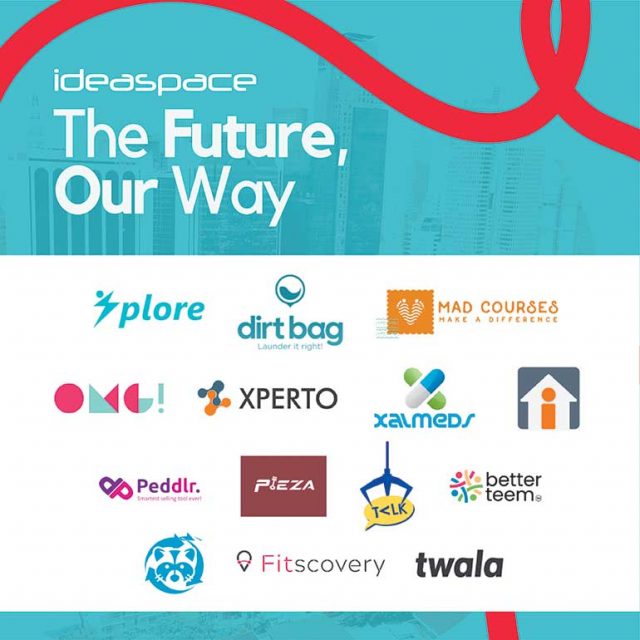
Centering on the theme, “The Future, Our Way”, IdeaSpace featured a diverse and inclusive line-up of startups hailing from all over the country and working in various fields to create a better and more sustainable future for all.

“IdeaSpace celebrates its 10th anniversary this year and our startup ecosystem has changed dramatically since 2012 when we first began operations. The startups that we are showcasing are proof of that. We continue to believe that the elusive first Philippine unicorn is not that far away on the horizon,” Butch Meily, IdeaSpace president, said in his opening remarks.

Kicking off the lineup was Betterteem, a startup focused on providing employee experience solutions and industry-specific actionable insights to businesses and enabling employees with tools that can foster continuous feedback and growth.

Twala utilizes blockchain smart contract technology to enable the digital transformation of businesses by allowing them to easily sign legally binding documents online using any laptop or smartphone and issuing tamper-proof digital credentials.

Through online platforms and a suite of digital services, Xperto aims to help businesses unlock the potential of professional networks as dynamic sources of relevant professional development and life-long learning.

Digitalization is also transforming the health and fitness sector. Splore offers consumers personalized workout programs and classes through a virtual fitness community.

Meanwhile, Fitscovery aims to connect the global fitness sector by offering companies digital platforms to create fitness businesses online and allowing consumers to find trainers and workouts.

Cebu-based Xalmeds brings an accessible and convenient online ordering and quick delivery service to consumers, directly sourcing from manufacturers and fellow importers, and utilizing technology to keep medicine prices and operating costs lower.

Seeking to disrupt the real estate industry, Instahomes aims to give SME property developers access to the digital economy and creating a legally-secure property portal.

Focusing on automotive retail, Pieza PH offers a digital marketplace with end-to-end online selling services such as product cataloging, multi-channel selling, and marketing, up to logistics support nationwide.

OMG! (Oh My Genie!) makes accessible logistics its mission as it aims to offer ultra-fast 30-minute deliveries for online stores in the Visayas-Mindanao region.

Peddlr seeks to empower micro and small businesses with a digital infrastructure that offers an easy-to-use POS system and expenses ledger alongside standard, scalable digital solutions fit for sari-sari store businesses.

Further innovating in underserved markets, Dirt Bag aims to revolutionize the laundry industry in the Philippines by powering its services with technology and logistics – providing convenience and access to its customers while helping laundry business owners maximize their market potential.

Pic-A-Talk gives voice to the voiceless, working with speech language pathologists and special education teachers to offer people with communication disorders and disabilities with an augmentative alternative communication app that is personalized for each user.

Circula Recoon aims to be at the forefront of helping Filipinos transition towards a zero-landfill future and a stable circular economy through its Trash Panda recoverable waste collection service.

Last but not least is MAD (Make a Difference) Courses, which focuses on bringing sustainability education to schools and universities through a combination of live interactions, real-life case studies and automated video content, enabling students to connect to leaders for social innovation, local communities, indigenous tribes, and fellow students.

Meanwhile, Core Capital, alongside Gobi Partners, is looking to further expand the Philippine startup ecosystem through the Gobi-Core Philippines fund, a leading venture capital firm investing in emerging and underserved markets across Asia.

Hack4Food calls for creative solutions to improve agriculture

By Chelsey Keith P. Ignacio, Special Features Writer

Producing a more sustainable agriculture and food system is vital for the country’s growing population. And with clever imagination and novel thinking, the value chain can substantially improve.

The Hack4Food: Agriculture and Food Innovation Challenge 2022 by the Rotary Club of Makati aims to cultivate creativity and collaboration in solving the challenges in the agriculture and food systems. This one-week virtual hackathon is open to all stakeholders, especially the youth, to make a positive impact in agriculture and food challenges.

“The Hack4Food project provides an opportunity to our young IT practitioners [to] apply their creative talent and inventive minds for something profitable and empowering to the sectors that produce our food. Ironically, these are the sectors that continue to be marginalized in Philippine society. They are the sectors that will benefit from an initiative that will improve their lives and stir up their communities,” Atty. Luis Angel Aseoche, president of Rotary Club Makati, said during the launch on Jan. 25.

The Hack4Food challenges cover three areas of focus: education, supporting the environment, and economic development.

“Under the education area of focus, the Hack4Food project challenges the youth to use their creative talent to design value chain systems that would take into account climate change and other risks, as well as develop forecasting models and tools that would guide them in formulating decisions with respect to value chains,” Mr. Aseoche shared.

In terms of supporting the environment, the hackathon aims to encourage farmers to engage in crop diversification, which has been proven to help fertilize the soil.

“This project would also make them veer away from traditional farming methods and practices that denude our forests, start forest fires, kill animals, and harm the environment,” he added.

He also said that the project seeks to improve the lives of farmers and fishermen through practices that result in economies of scale. It also aims to empower them by encouraging them to form groups to create practices that can enhance overall efficiency and productivity, upgrade operations, and increase profit.

Some possible outputs for the Hack4Food are business or value chain model, technology apps, digital farming apps, analytical farming tools, and innovative farming methodology. Participants can also develop other solutions.

The Hack4Food is open to groups of two to five participants or as an individual who must be Filipino citizens within the Philippines. While the competition does not have an age limit, the youth and younger generation are strongly encouraged to participate.

The deadline for registration of participants will be on Feb. 26 at 11:59 p.m. The submission guidelines will be released also on Feb. 26, which the registered participants will receive through their registered emails. The submission deadline for projects or proposals will be on Mar. 5 at 11:59 p.m.

Winners will receive the prizes of P50,000 (first place), P30,000 (second place), and P20,000 (third place).

The Hack4Food is presented by the Rotary Club of Makati, in collaboration with Rotary Club of Bay, Rotaract Club of Makati, and the Analytics Association of the Philippines.

FOTON EC-Parts: Made easily accessible and available nationwide

FOTON Motor Philippines, Inc. (FMPI) aims to raise the bar in after-sales performance as it intensifies the availability of its genuine spare parts nationwide. With easily available stocks stored in strategic dealership locations throughout the country, every road trip, every delivery will surely go as scheduled.

“As the number of FOTON users nationwide grows, we are spearheading efficiency-boosting procedures to address the demand in FOTON spare parts. We want to assure total mobility care for all our clients underscored by a hassle-free customer experience so no one will be left behind,” says FMPI Vice-President for Parts Mike Sta. Maria.

FOTON EC Parts Hotline
With a centralized hotline number, 0999-999-9996, FOTON Genuine EC Parts are a lot easier to acquire! Reachable all around the country, the system lets you easily get in touch with a parts customer service representative and have the parts you need! Through the hotline, you can inquire about the availability of your desired spare parts, place an order, and coordinate the details to achieve a more efficient and timely delivery that fits your schedule!

FOTON EC Parts through FOTON APP
Enabling complete customer service right at your fingertips, the FOTON App features new and easy access to your desired FOTON Genuine EC Parts anytime, anywhere! From preventive maintenance service (PMS) consumables, clutch and brake components, to pumps, hoses, and belts, you can order yours at your most convenient place!

To order your FOTON Genuine EC Parts, download the FOTON App at the Google Play Store through http://bit.ly/FOTONPHAppAndroid or Apple App Store at http://bit.ly/FOTONPHAppIOS.

Massive FOTON EC Parts Warehouse
To ensure the availability of your needed items, FOTON PH prepared the Massive FOTON EC Parts Warehouse dedicated to storing spare parts. Capable of keeping large quantities up to 45,000 line items, the FOTON EC Parts has a huge housing area of 4,100 square meters. This facility boasts ISO-Certified compliance that ensures organized systems and transactions around the clock.

Access to FOTON Genuine EC Parts is truly made easy and convenient!

For inquiries, call your nearest FOTON dealer or sales hotline at 0999-999-9998. You may also explore and reach FOTON PH on various digital platforms via https://linktr.ee/FOTONPhilippines.


Spotlight is BusinessWorld’s sponsored section that allows advertisers to amplify their brand and connect with BusinessWorld’s audience by enabling them to publish their stories directly on the BusinessWorld Web site. For more information, send an email to online@bworldonline.com.

Join us on Viber to get more updates from BusinessWorld: https://bit.ly/3hv6bLA.
Maxicare BestLIFE: The care and help you need to live your best life

Caring for our health and well-being will always be crucial, pandemic or not. But while most of us are aware of this, many may opt to put off addressing some health concerns.

Priorities like work and family can demand much of our attention that we might delay hospital or clinic visits. Also, availing healthcare services can sometimes be a stressful and daunting experience. We need healthcare that fits seamlessly into our busy schedules and never feels like an inconvenience.

Attending to our daily activities, having time for personal interests, and putting health and well-being as the foremost priority are all significant to living our best lives. Maxicare Healthcare Corporation, the pioneering health maintenance organization, continues to fulfill its commitment to help you live your best life by making superior and quality healthcare more accessible. Maxicare offers its BestLIFE services that provide convenient and reliable access to preventive and primary care services through lifestyle-friendly channels such as Primary Care Centers (PCC), Telemedicine services, Member Gateway, HomeCare, and Wellness programs.

Maxicare’s Primary Care Centers can be found across the country and in several cities in Metro Manila. The centers offer a relaxing healthcare experience with a short waiting time, complimentary beverages and Wi-Fi, and a wide array of available services. More than 250 laboratory procedures and various specialists are available at Maxicare’s Primary Care Centers. To make the experience more convenient, members do not need a Letter of Authorization; they simply need to book an appointment and bring their Maxicare Card.

In addition to making such access to primary care more convenient, Maxicare also offers telemedicine services, which include Maxicare 24/7 Teleconsult and Maxicare Videoconsult.

Maxicare Teleconsult lets you consult in just a dial away at the comfort and safety of your home, given that it is best to stay at home to minimize the potential risk of exposure and transmission in this pandemic.

Maxicare also ensures that its doctors are available and continuously provide care, protection, and peace of mind by offering Maxicare Videoconsult powered by the Doctor Anywhere app. Aside from scheduling a consultation with Maxicare doctors, the app also allows access to e-documents such as medical certificates, referral letters, receipts, and consultation history as well as upload laboratory and diagnostic test results. A new feature is also introduced in the app, which lets users schedule an appointment with specialists, including OB Gynecologist, Dermatologist, and Pediatrician.

Sparing yourself from travel, waiting time while offering safe and secure access to healthcare, Maxicare Telemedicine services thus enable you to mind your well-being conveniently at your home and on your own time.

Maxicare’s HomeCare Program, which is covered by its telemedicine services, also includes COVID-19 Telemonitoring. In this program, Maxicare delivers medical care to COVID-19 patients at their homes. It involves close and regular telemonitoring of the conditions of asymptomatic and mild to moderate cases.

Also part of Maxicare BestLIFE is the Wellness Program that gives its corporate members exclusive access to its wellness mobile app and educational resources; a dedicated care coordinator to assist and guide in health management; and their own customized and comprehensive health program.

For more convenience among to its members, Maxicare also made the viewing of benefits and requesting for Letter of Authorization easier through the Member Gateway portal, where they can access their accounts. The portal also allows members to do reimbursements.

With preventive and primary care services made more convenient, easier to access and integrate into your life, Maxicare BestLIFE helps to keep yourself healthy so you can live your best life.

Discover how to live your best life by becoming a Maxicare member today. Visit the Maxicare website to know more: https://www.maxicare.com.ph/.


Spotlight is BusinessWorld’s sponsored section that allows advertisers to amplify their brand and connect with BusinessWorld’s audience by enabling them to publish their stories directly on the BusinessWorld Web site. For more information, send an email to online@bworldonline.com.

Join us on Viber to get more updates from BusinessWorld: https://bit.ly/3hv6bLA.

Inflation likely cooled in Jan. — poll

PHILIPPINE STAR/ MICHAEL VARCAS
Inflation is expected to have eased in January. — PHILIPPINE STAR/ MICHAEL VARCAS

INFLATION is expected to have decelerated in January, as a favorable base effect offset the rise in oil prices and the impact of Typhoon Odette on food supply.

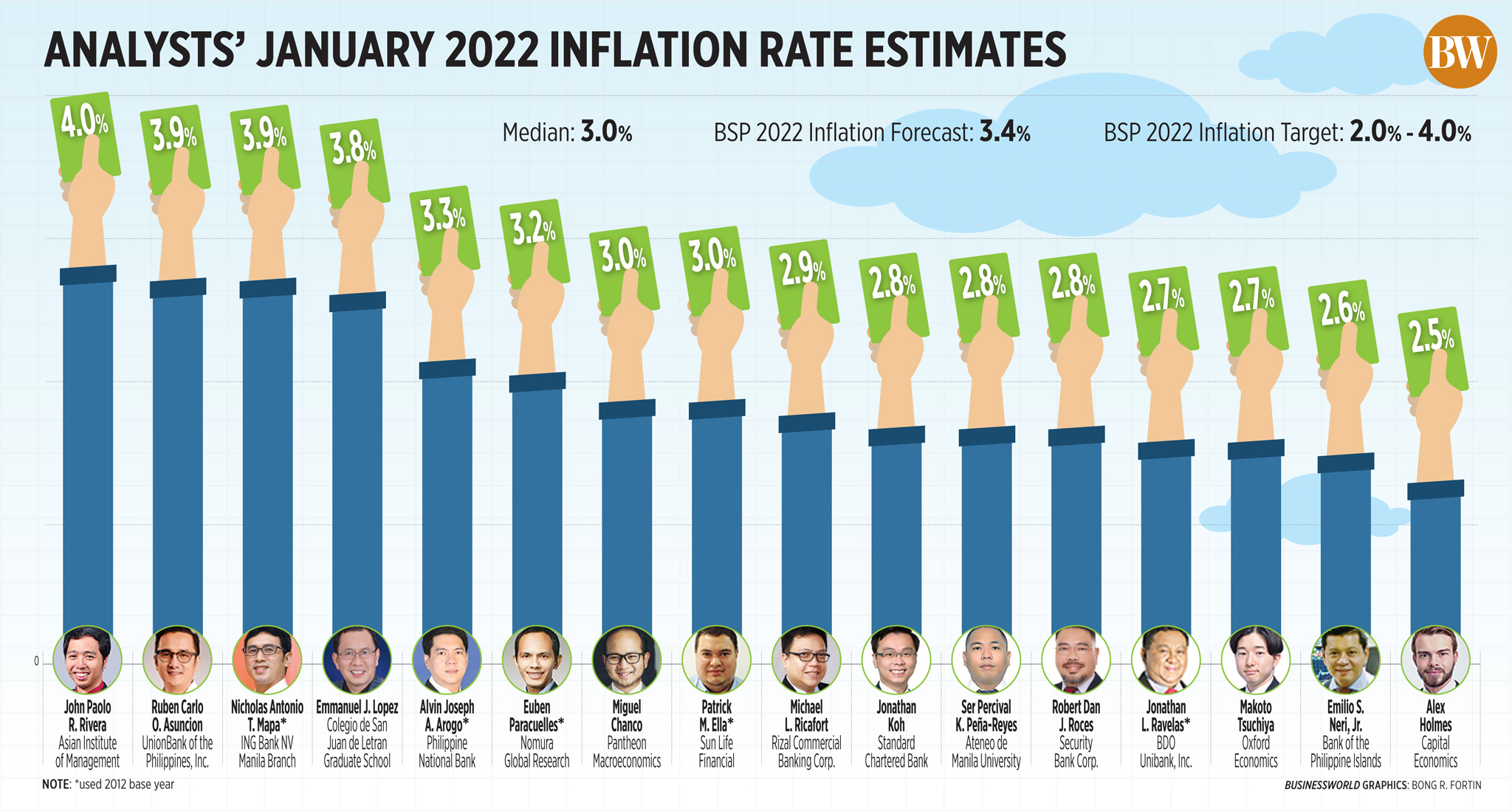
A BusinessWorld poll of 16 analysts last week yielded a median estimate of 3% for January inflation.

If realized, this will be the second consecutive month that inflation will be within the 2-4% target band of the Bangko Sentral ng Pilipinas (BSP). It will also be slower than the 3.6% in December.

Analysts’ January 2022 inflation rate estimates

The BSP is expected to give its inflation forecast for the month today (Jan. 31).

The Philippine Statistics Authority (PSA) will release the January consumer price index (CPI) report on Feb. 4 (Friday). The PSA will change the base year for the CPI to 2018 starting in the January report to reflect changing Filipino household consumption patterns.

Analysts said the base effect will be a major factor for a likely slower increase in the CPI for January.

“We are forecasting a big drop in the headline rate to 2.5% year on year in January, mainly due to a higher base for comparison,” said Alex Holmes, an economist from Capital Economics.

The CPI rose by 4.2% in January 2021, the first time inflation exceeded the target since the 4.4% in January 2020.

The 2018 base year also strengthens the case for a slower inflation reading, analysts said.

In 2018, inflation exceeded the target for most of the year as rice prices soared. It returned to within the BSP target band as rice supply increased due to the Rice Tariffication Law.

Inflation once again quickened in 2020, as pork prices spiked amid low supply due to the African Swine Fever outbreak.

“We think the rebasing could see inflation coming in somewhat lower as food will have a lower weight, and this has been a key driver of the Philippines high inflation over recent time,” Makoto Tsuchiya, an economist at Oxford Economics said.

Standard Chartered Bank economist Jonathan Koh said a “substitution effect” may also cause slower price increases.

“[This means] consumers [are] buying cheaper goods to substitute for expensive items. That will probably affect the weights on the new basket,” Mr. Koh said.

Meanwhile, Security Bank Corp. Chief Economist Robert Dan J. Roces said the Omicron-driven surge in coronavirus disease 2019 (COVID-19) infections may have also caused slower price increases in January.

“[The] impact of Omicron may have either steadied or exerted slight downward price movements in all the other baskets [apart from food and utilities], including the heavyweight restaurants and accommodation basket plus the new personal care basket, as mobility regressed back to pre-November 2021 levels this month,” Mr. Roces said.

Metro Manila and some provinces were placed under a stricter Alert Level 3 until the end of January to curb the spread of the Omicron variant.

On the other hand, some analysts said Typhoon Odette and the continued rise in oil prices may have caused faster inflation this month.

“We expect January inflation at 3.9% year on year that assumes Odette’s supply shocks may be on the low side if higher oil prices and the new CPI weights and year index affect the inflation story,” UnionBank of the Philippines, Inc. Chief Economist Ruben Carlo O. Asuncion said.

Agricultural damage caused by the typhoon reached P13.3 billion, according to the Department of Agriculture.

The Department of Energy said as of Jan. 25, prices of gasoline, diesel and kerosene increased by P4.95, P7.20, and P6.75 year to date.

“We expect delays in the effects from both Typhoon Odette and higher oil prices in December. Moreover, the imposition of stricter lockdowns in January resulted in capacity constraints on domestic transportation,” said Alvin Joseph A. Arogo, vice-president and head of equity research division at the Philippine National Bank.

The BSP expects inflation to slow to within target at 3.4% this year. Headline inflation averaged 4.5% in 2021.

Analysts believe the central bank should have room to keep its monetary stance accommodative and support growth should inflation remain within target again in January.

“In the short run, inflation probably will be less of a concern for the BSP at its meeting next month, due to the near-term impact of the Omicron wave and related restrictions on economic activity,” Pantheon Macroeconomics Senior Asia Economist Miguel Chanco said.

BSP Governor Benjamin E. Diokno has said Omicron’s impact will be shorter than previous waves, adding the surge will subside by the middle of February or March. He said this means the 7-9% economic growth target for 2022 is still achievable.

Daily cases have declined in recent days, prompting the government to put Metro Manila and some provinces under the more relaxed Alert Level 2 starting February. 

Mr. Tsuchiya of Oxford Economics said the central bank may start raising rates by the second half of the year as the improving vaccination rate could bring the economy closer to normalization.

“We have pulled forward our rate hike assumption to the third quarter of 2022 given our expectation for the Fed to hike rates four times this year, which could potentially lead to capital flight and weaker peso,” he said.

Last week, the Federal Reserve signaled it may start hiking interest rates by March to combat runaway inflation.

Mr. Diokno earlier said they would want to see four to six quarters of consecutive economic growth before considering increasing rates.

The economy grew by 7.7% in the last three months of 2021, a third straight quarter of expansion. This brought full-year 2021 growth to 5.6%, rebounding from the record 9.6% contraction in 2020.

The Monetary Board will have its first policy review for the year on Feb. 17. At its Dec. 17 meeting, it kept interest rates at record lows. — Luz Wendy T. Noble

ADVERTISEMENT
ADVERTISEMENT