Home Blog Page 6867

Tom Brady has 15M reasons to delay retirement

TOM BRADY — REUTERS

TOM Brady may have about 15 million reasons against confirming his reported retirement for a few more days.

According to Spotrac, the one-year extension that the quarterback signed last March with the Tampa Bay Buccaneers included a $20-million signing bonus, with $15 million to be paid on Friday.

“Seems like something a guy or gal would want to have process before making any life changing career decisions official,” Spotrac posted on Saturday on Twitter.

Brady, 44, would reportedly forfeit the bonus money if he officially retires before Friday. Don Yee, the seven-time Super Bowl champion’s agent, may have alluded to the situation in his comments about Brady’s reported retirement on Saturday.

“He knows the realities of the football business and planning calendar as well as anybody, so that should be soon,” Yee said. — Reuters

Nadal feels lucky to be part of dominant ‘Big Three’

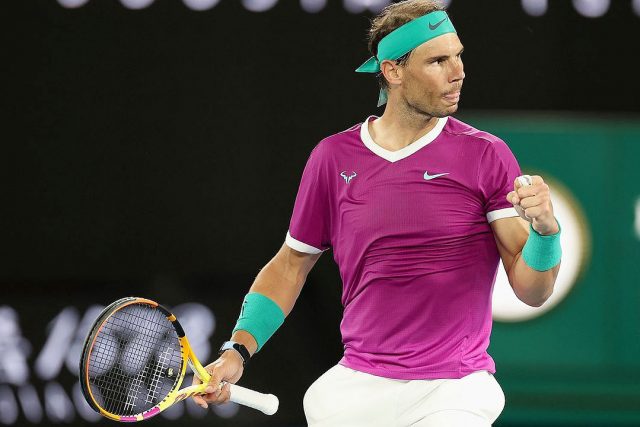
RAFA NADAL — RAFA NADAL FB PAGE

RAFA Nadal said he was lucky to be part of an era of tennis that included Roger Federer and Novak Djokovic after the Spaniard won a men’s record 21st Grand Slam title at the Australian Open to move one ahead of his two great rivals.

Nadal roared back from two sets down to edge Daniil Medvedev (2-6, 6-7(5), 6-4, 6-4, 7-5) in a classic final on Sunday, only months after fearing his glorious career might be over because of a niggling left foot injury.

He then paid tribute to Federer, who missed the year’s first Grand Slam to continue his rehabilitation from knee surgery and Djokovic, who was deported following a dispute over Australia’s coronavirus disease 2019 (COVID-19) entry requirements and his unvaccinated status.

“At the end of the day, it’s just a game and in some way, we achieved more than what we ever dreamed of when we were kids,” Nadal told reporters. “It doesn’t matter that much if one is 21, one is 20, or the other finished 23 and the other with 21. I think we did very important things for our sport and we achieved our dreams and we enjoy it. I feel lucky to be part of this era that has been very special for our sport.”

The 35-year-old, who pulled out of Wimbledon, the Tokyo Olympics and the US Open in 2021 and returned to competitive action last month, said the satisfaction of winning his second Australian Open crown was impossible to describe.

“It’s amazing to have this trophy with me,” Nadal said. “I tried hard during my career here in Australia, finally, it was probably the most unexpected year for me to achieve, one more time this beautiful trophy so I’m super happy.”

Nadal said he was not thinking about his next tournament.

“I have my schedule planned, but I’m enjoying the moment… I need to see how my body recovers from an amazing month and I’m going to make my decision,” Nadal said. — Reuters

Beijing Olympics says 24 new COVID cases detected among games-related personnel

BEIJING 2022

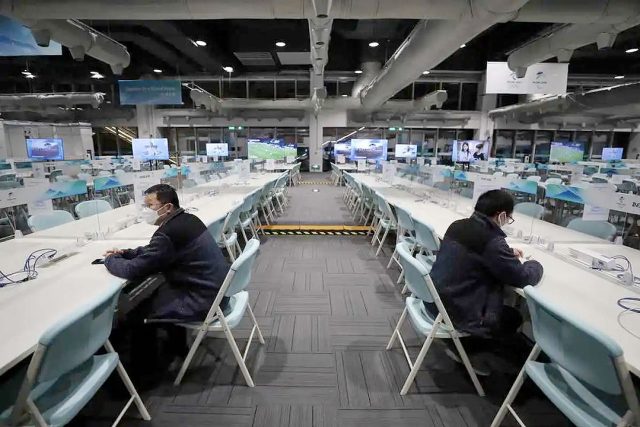
BEIJING — The Beijing 2022 Winter Olympics Organizing Committee said on Tuesday that a total of 24 new coronavirus disease 2019 (COVID-19) cases were detected among games-related personnel on Jan. 31.

Eighteen of the cases were found among new airport arrivals, according to a notice on the Beijing 2022 official website.

Six others were among those already in the “closed loop” bubble that separates all event personnel from the public, five of whom were classified as either an athlete or a team official, the notice said.

A lesser player would have folded, but not Rafa

Rafael Nadal didn’t exactly have the easiest of Australian Open. In fact, it was nothing short of remarkable that he could even be in Melbourne Park for the first Grand Slam event of the year. Considering how much and how often chronic foot issues had sidelined him last season, and how a bout with COVID-19 in the run-up hampered his convalescence, not a few quarters deemed his presence, let alone a victory, an iffy proposition. And yet, when the battlesmoke cleared, he wound up proving yet again that sheer love of the game and unbending will are surefire ingredients to success.

There were, to be sure, not a few scares en route to Nadal’s triumphant return to the top of the sport. His fortnight Down Under was marked with challenges. Matches from the third round on were literally workouts; an extra set with Karen Khachanov, a 16-point, 28-minute tiebreak with Adrian Mannarino, a dramatic set-to with Denis Shapovalov that he said “destroyed” him. And even with a two-day rest, his encounter with Matteo Berrettini in the penultimate contest was no cakewalk. From the outside looking in, it seemed as if the combination of advancing age, susceptibility to injury, relative lack of reps, and the vagaries of the playing surface handicapped his campaign.

If anything, however, Nadal’s ordeal showed that he could continue to lean on his trademark determination to see him through. He was most certainly not favored to claim the championship — not with his immediate past travails, and not with Daniil Medvedev awaiting him in the final. And, indeed, he began as the underdog in his last contest of the fortnight, with a seemingly Sisyphean task before him, a position underscored all the more by his failure to take any of the first two sets. A lesser player would have folded, and he would have had all the right reasons to do so under the circumstances. But not him, and if for no other reason than because he is who he is.

When the battlesmoke cleared, Nadal hoisted the Norman Brookes Challenge Cup high above his head with much-deserved pride. In a long career littered with extraordinary achievements, none was, perhaps, more unexpected than the one that gave him his 21st major title. It placed his weaknesses under a microscope, but, when all was said and done, also shone the spotlight on his singular skills. There’s a reason he’s now ahead of fellow all-time greats Roger Federer and Novak Djokovic in the tally of Grand Slam wins. And with the French Open — which perennially gives him as close to a homecourt advantage as there is in tennis — just around the corner, he’s slated to pad the lead a little but more.

In the aftermath, Nadal chose to delve on the significance of the moment as it pertains to his mortality rather than as validation of his place in the sport’s annals as the best of the best. True, the latter remains a question mark, but there can be no denying he now has a hand on the throne. And all because he simply cannot stop being, well, himself.


Anthony L. Cuaycong has been writing Courtside since BusinessWorld introduced a Sports section in 1994. He is a consultant on strategic planning, operations and Human Resources management, corporate communications, and business development.

To reduce plastic waste leakage, LGUs and port authorities should agree on plastic bans

PHILSTAR

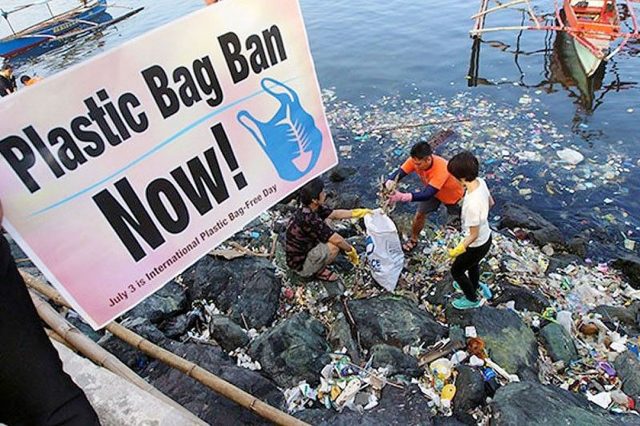
Local governments and port authorities should align on plastic bans to reduce the amount of plastic leaking into the ocean, according to a solid waste management study by World Wildlife Fund for Nature (WWF) Philippines. 

Clean Ports, Clean Oceans: Improving Port Waste Management in the Philippines is a three-year partnership project funded by the Norwegian-based Grieg Foundation that aims to identify and test out scalable waste management solutions for ports to adopt.

Implementing these solutions will be difficult in cities that do not have a single-use plastics ban, said Czarina Constantino-Panopio, project manager of the baseline study on port waste management.

Ms. Panopio noted that a number of local government units do not have regulations that complement Philippine Port Authority (PPA) MC no. 11-2021, which bans the use of unnecessary single-use plastic products in all PPA ports, facilities, and offices.

“What happens when passengers go out the port and the city [the port is in] doesn’t ban any kind of plastic?” she asked at a Jan. 28 event detailing the study. “There needs to be an alignment. It’s challenging to ban plastic in a port if the city the port is in doesn’t have [a ban].”

The study covers three types of waste: vessel-generated waste, port-generated waste, and community-generated waste. It aims to cut in half the plastic waste leakage in Manila North Port, the Port of Batangas, and the Port of Cagayan de Oro.

Not all ports have their own material recovery facility (MRF), the study found. Some that have an MRF use it more as a waste receptacle rather than a facility where the segregation and utilization of waste is done. Not all barangays have functioning MRFs either.

A majority of port- and vessel-generated waste (61% and 67%, respectively) are recyclable, the study also found. Only 4% of these are recovered.

“We don’t want to condemn any port authority with this data. We see this as an opportunity to improve the current collection and management system,” said Ms. Panopio.

RECOMMENDATIONS
Clean Ports, Clean Oceans offers the following recommendations: stricter implementation and review of existing laws and policies; improved coordination among stakeholders; and better data management. It also calls for the monitoring and utilizing of plastic wastes, the installation of functional MRFs, and the carrying out of education campaigns towards sustainable waste management. 

Ms. Panopio added that data management is already being covered by port management offices (PMOs), but at a voluntary level. 

The PPA has around 10 memoranda and/or orders pertaining to solid waste management. PPA AO no. 08-2018, ensures the continuity of SRFs, a system used for receiving waste, in ports under PPA’s jurisdiction. Another, PPA AO 05-2018, provides the legal basis and enforcement of PPA’s programs towards a green and resilient port strategy. 

The Philippines has a total of 552 ports — 271 of which are private — that are managed by 25 PMOs.

Partnership is crucial for sustainability, said Gry Larsen, leader of sustainability and public affairs of the Grieg Group of Companies, which established the Grieg Foundation.

“One challenge of plastic pollution is the lack of data about plastic waste,” she said. “Therefore, this study is a crucial step.” — Patricia B. Mirasol

API technology key to financial inclusion, say fintech experts

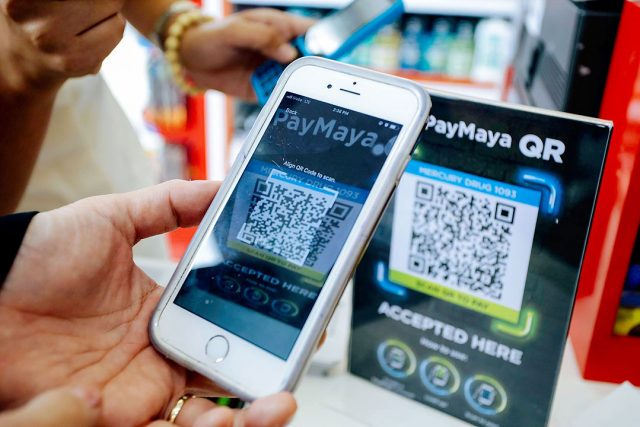
PAYMAYA OFFICIAL FACEBOOK PAGE

Application Programming Interface (API) technology, which uses access points to allow different applications to communicate with each other, is the key to boosting financial inclusion in the Philippines, according to panelists at a fintech summit on Friday. 

Mark Vernon, co-founder and vice chair of the Fintech Philippines Association (Fintech PH), said that “the faster sharing of data to get results” is the main benefit of API, such as when taking out a time-sensitive loan.

“API connections are needed to share data in all its forms,” he said. 

E-wallets like GCash and PayMaya connect to online banking channels through API, doing away with middlemen or intermediary processors. 

Bangko Sentral ng Pilipinas (BSP) released in June an open finance framework, or Circular 1122, which allows consent-driven data sharing among secure institutions.  

BSP Governor Benjamin E. Diokno stated this can “onboard more small and medium enterprises (SMEs) into the formal financial system and provide them with access to digital financial services”. 

“We’re making lots of progress but we still have some way to go,” Mr. Vernon said of the central bank’s actions. “Since the companies that are sharing data are already regulated, then there should just be encouragement from government to enable it.” 

In January, BSP followed up the framework by naming a policy formulation committee of industry stakeholders, represented by banks, electronic money issuers, operators of payment systems, and fintech firms. 

DEMOCRATIZATION OF DATA
Allowing API technology to push the Philippines forward into a world of open finance will translate to faster, wider, and more convenient access to benefits rooted in data, said Jerome Eger, co-founder and chief executive officer of tech firm Smile API. 

“Siloed data is not available to you as an end-user. What API is all about is to remove thresholds to make your own data available to the best use of your interests,” he said. “When this data in the past was owned by incumbent players, big data players, maybe sitting in another country, today it basically means you can now unlock that data.” 

Smile API, launched in the Philippines in 2021, is a Southeast Asian digital platform that streamlines application processes by providing employment data. 

For Todd Schweitzer, chief executive officer of open finance start-up Brankas, an API economy matters because it will be able to reach the unbanked and underserved.

“Open finance is based on two principles — one, customers own their financial data; two, customers should be able to access their financial products beyond bank-owned channels,” he said.  

Brankas, a regional provider of banking-as-a-service APIs for account opening and credit card issuance, doesn’t intermediate or collect data, but “just passes it through with the customer’s consent,” as with all API platforms. 

Mr. Vernon of Fintech PH agreed, suggesting that open APIs can also help with government checking of data, like in setting up online NBI clearance and National IDs. 

“The open finance movement will really allow data to move a lot easier,” he said. — Brontë H. Lacsamana


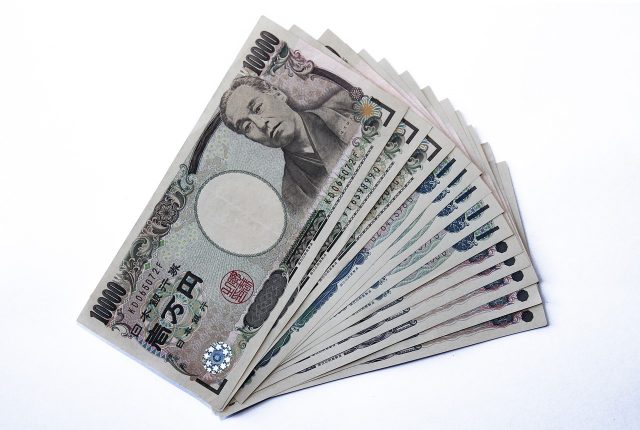
Japan’s top currency diplomat says weak yen has merits and demerits for economy

STOCK PHOTO | Image by Jasmin777 from Pixabay

TOKYO – Japan’s top currency diplomat Masato Kanda said a weak yen brings both merits and demerits to the economy due to the country’s changing export patterns and increasing reliance on imports.

The boost a weak yen gives to Japan’s export volumes has declined compared with the past, as manufacturers target shipments to high-end, state-of-the-art products overseas rather than compete with price cuts, said Kanda, the country’s vice finance minister for international affairs.

A weak yen, however, still inflates the yen-denominated profits Japanese companies earn overseas, he said.

“The demerits of a weak yen is that it pushes up the import cost of energy and food, thereby increasing household burdens,” he said, acknowledging growing domestic concerns about the potential side-effects of a weak currency.

Kanda’s remarks underscore how a weak yen is becoming a tricky political issue for Japan’s finance ministry, which has historically focused on preventing a strong currency from hurting the country’s export sector.

“There are both positive and negative effects (on the economy) from a weak yen. It’s hard to say which is bigger, because the pros and cons of a weak yen differ for each entity,” Kanda told Reuters in an interview conducted on Monday.

Imports play an increasingly important role in Japan’s economy, making up 16% of gross domestic product (GDP) now, compared with just 9% two decades ago, he said.

“We need to guide policy based on the understanding that the mechanism in which exchange-rate moves affect the economy has changed,” he said.

But Kanda stressed that global energy and commodity inflation, rather than the weak yen, was mostly to blame for pushing up the cost of living for households.

“At least for now, the rise in imported goods prices is due largely to rising energy costs and global inflation,” he said. – Reuters

U.S. weighs more troops to eastern Europe beyond 8,500 on alert

STOCK PHOTO | Image by Daniel Hadman from Pixabay

WASHINGTON – The Pentagon said on Monday it is in active discussions with Eastern European allies about possible U.S. troop deployments to NATO’s eastern flank, as Washington moves to reassure jittery NATO allies in the face of a Russian military buildup near Ukraine.

Any decisions on new troop movements would be separate from the some 8,500 forces in the United States who were put on alert last week to potentially bolster a NATO rapid response force, the Pentagon said, adding context to President Joe Biden’s comments on Friday about potential near-term deployments to Eastern Europe.

Pentagon spokesman John Kirby said the troops that Biden was referring on Friday to could potentially be redeployed from within Europe.

“We’re going through the rigorous work of providing options for the commander in chief should he decide to do that … in close consultation with the actual allies themselves,” Kirby said.

Separately, the U.S. military last week put about 8,500 troops inside the United States on alert to be ready to deploy to Europe, largely to fill the ranks of a NATO rapid response force should the alliance call them up for duty.

Russia denies planning an invasion. But, having engineered the ongoing crisis by surrounding Ukraine with forces from the north, east and south, Moscow is now citing the Western response as evidence to support its narrative that Russia is the target, not the instigator, of aggression.

Russia, which seized Crimea from Ukraine in 2014 and backs pro-Russian rebels fighting government forces in eastern Ukraine, is demanding sweeping security guarantees including a promise NATO never admit Ukraine.

Russian Foreign Minister Sergei Lavrov is expected to speak by phone with U.S. Secretary of State Antony Blinken on Tuesday, a State Department spokesperson said.

Biden stressed diplomatic efforts aimed at averting a conflict.

“We continue to engage in nonstop diplomacy and to de-escalate tensions,” Biden told reporters in the Oval Office. – Reuters

Peru bans Repsol from unloading oil until further notice after spill

LIMA – Peru Environment Minister Ruben Ramirez said on Monday the government will temporarily suspend Repsol‘s offshore oil unloading operations following a spill of over 10,000 barrels that has caused widespread environmental damage.

Ramirez said the suspension of operations would last until the company “can offer technical guarantees that another spill will not happen.”

“In addition, (the company) has not shown clear cleaning actions.”

Repsol said in a statement it considered the decision to be “disproportionate and unreasonable” and the company would “make every effort to avoid the risk of shortages of essential products.”

Repsol‘s La Pampilla refinery is the largest in Peru, and the company said it accounts for 40% of the Peruvian fuel market.

Outgoing Peruvian Prime Minister Mirtha Vasquez, who resigned from her role on Monday, said the administration had been working on an international lawsuit against Repsol over the “gravity of the environmental disaster.”

“I hope this continues,” she said on Twitter.

Repsol has said 35% of the oil spilled has already been recovered but it will not finish cleanup tasks until late February.

The spill took place on the Pacific Ocean just off the coast of Lima on Jan. 15, which the company has blamed on unusual waves triggered by a volcanic eruption thousands of miles away in Tonga.

The Spanish company has faced widespread backlash for the spill and Peruvian President Pedro Castillo has called it the biggest ecological disaster to affect the country in recent years.

Prosecutors are weighing criminal charges against executives over the spill and successfully petitioned a judge to bar four of them, including the company president, from leaving Peru for the next 18 months.

Peru‘s government has said the spill involved 11,900 barrels of oil, while the company said the number was smaller, involving 10,396 barrels. – Reuters

US CDC warns against travel to Philippines, Brazil, Singapore over COVID-19

WASHINGTON – The U.S. Centers for Disease Control and Prevention (CDC) on Monday advised against travel to a dozen countries because of high rates of coronavirus infection, including Mexico, Brazil, Singapore, Ecuador, Kosovo, Philippines and Paraguay.

The CDC now lists nearly 130 countries and territories with COVID-19 cases as “Level Four: Very High.” It also added Anguilla, French Guiana, Moldova and Saint Vincent and the Grenadines to its highest level on Monday.

The U.S. State Department also raised its travel advisory for Mexico and some of the other nations listed by the CDC to “Level 4: Do Not Travel.”

Since mid-December, the U.S. government has added more than 60 countries and territories to its list of places to avoid, citing the Omicron coronavirus variant.

The CDC also raised travel warnings for 11 countries and territories to “Level Three: High” that urges unvaccinated Americans to avoid non-essential travel: Bhutan, Brunei, Comoros, French Polynesia, the Gambia, Guinea, Guinea-Bissau, Honduras, Liberia, Nepal and Oman. It now lists about 53 countries and territories at High.”

The CDC lists 16 countries at “Level 2: Moderate” or “Level 1: Low” and 40 other destinations are listed as unknown.

The United States agreed last month to lift travel restrictions on eight southern African countries that were imposed in November over Omicron, including South Africa. — Reuters

India’s budget likely to spur spending to support economic growth

STOCK PHOTO | Image by jorono from Pixabay

NEW DELHI – India is likely to step up spending on infrastructure, health services and social programmes in its annual budget on Tuesday, to try to set the economy on a firmer footing as it fights a spike in COVID-19 cases and rising inflationary pressure.

Finance minister Nirmala Sitharaman is expected to announce more spending on roads, railways, besides higher subsidies for affordable housing amid growing public criticism over inadequate relief following the economic disruption after the outbreak of pandemic in 2020.

A government report on Tuesday warned that growing risks of global inflation led by rising crude oil prices could hit the economy, while projecting growth of 8% to 8.5% next fiscal year compared to 9.2% in current fiscal year and 6.6% contraction in the previous year.

The budget comes days before the start of elections in five states, including the most populous, Uttar Pradesh, which could spur Sitharaman to promise higher rural spending and subsidies on food and fertiliser, economists and officials said.

“The fiscal position appears much healthier than expected ahead of the (budget) announcement,” said Shilan Shah, economist at Capital Economics, Singapore in a note.

The strong revival in revenue receipts, which rose 67% during April-November period from a year earlier implied that the government has a “fiscal space to provide additional support if necessary”, Sanjeev Sanyal, principal economic adviser at the finance ministry told reporters on Monday.

Policymakers are worried that private consumption, which makes up nearly 55% of GDP, is still below pre-pandemic levels amid rising levels of household debt, while retail prices have increased by nearly 10% since the coronavirus outbreak began in early 2020.

But the government looks unlikely to offer any major relief measures to struggling consumers, focusing instead on beefing up spending on transport and healthcare networks, which analysts estimate could rise between 12% and 25% in the next fiscal year.

“We will focus on reviving the economy through higher investments, while individual and corporate taxes will be kept steady,” one government official, who sought anonymity, told Reuters, adding that reviving growth would be a priority.

To attract investments that create jobs and spur growth, Sitharaman could also boost incentives tied to production in more industries, the official said.

Food processing and exports are two areas that could see more production-linked incentives, two senior government officials said, adding no major budget changes were likely on individual and corporate taxes, in view of rising government debt and subdued private investments. – Reuters

U.S. states, other nations back Mexico’s lawsuit against gun makers

STOCK PHOTO | Image by Carlos Andrés Ruiz Palacio from Pixabay

BOSTON – Thirteen U.S. states and two Latin America and Caribbean nations on Monday threw their support behind a lawsuit from Mexico that accuses several major U.S. gun makers of facilitating the trafficking of weapons to drug cartels, leading to thousands of deaths.

The states and the countries of Antigua and Barbuda and Belize filed separate briefs urging a federal judge in Boston to not dismiss Mexico’s $10 billion lawsuit against companies including Smith & Wesson and Sturm, Ruger & Co.

The companies have argued Mexico has failed to establish its harms were attributable to them and that a U.S. law, the Protection of Lawful Commerce in Arms Act, protected gun makers from lawsuits over their products’ misuse.

Mexico’s lawyers in a filing on Monday countered that the law only precludes lawsuits over injuries that occur in the United States and would not shield the companies from allegations over the trafficking of guns to Mexican criminals.

Democratic attorneys general from 13 states including Massachusetts, California and New York along with the District of Columbia agreed, saying even if that law applied extraterritorially, the statute would not bar Mexico’s claims.

Representatives for the companies did not respond to requests for comment. Other defendants include Beretta USA, Barrett Firearms Manufacturing, Colt’s Manufacturing Co and Glock Inc.

In a lawsuit filed in August, Mexico claimed the companies undermined its strict gun laws by designing, marketing and distributing military-style assault weapons in ways they knew would arm drug cartels, fueling murders, extortions and kidnappings.

Mexico’s lawsuit said over 500,000 guns are trafficked annually from the United States into Mexico, of which more than 68% are made by the manufacturers it sued.

Lawyers for Antigua and Barbuda and Belize argued countries in their region had likewise faced violent gun crimes and that U.S. gun manufacturers “must not be permitted to hold hostage the law-abiding citizens of an entire region of the world.” – Reuters

ADVERTISEMENT
ADVERTISEMENT