Home Blog Page 678

[B-SIDE Podcast] Information is a public good

Follow us on Spotify BusinessWorld B-Side

In this B-Side episode, BusinessWorld speaks with Guilherme Canela, director of the Division for Digital Inclusion Policies and Digital Transformation of the United Nations Educational, Scientific and Cultural Organization (UNESCO), on why access to information is a human right.

Information isn’t just paperwork – it actually saves lives. Knowledge sharing, furthermore, can curb corruption and improve government efficiency.

Recorded on the sidelines of the 2025 International Day for Universal Access to Information (IDUAI) global conference, which focused on the theme “Ensuring Access to Environmental Information in the Digital Age.”

Interview by Patricia Mirasol
Audio editing by Jayson Mariñas

Follow us on Spotify BusinessWorld B-Side

Intellicare at 30: Leading the ripple of care for a healthier Philippines

30 years ago, a small team with a big vision set out to redefine healthcare in the Philippines. From its humble beginnings in 1995 with just 10 employees, Intellicare has become the country’s preeminent health maintenance organization (HMO), serving over 1.2 million members and more than 3,000 corporate accounts nationwide.

As Intellicare marks its 30th anniversary, it reflects on a legacy built on values that continue to ripple across families, organizations, communities, and the nation, such as integrity, honesty, fairness, hard work, and an enduring sense of humanity.

“Intellicare was born out of care for life beyond one’s own. That pebble of care has rippled outward for three decades — touching lives, strengthening organizations and communities, and shaping a healthier Philippines,” Intellicare Chairman Mario M. Silos said.

FROM NOBLE VISION TO STRONG LEADERSHIP

Intellicare was founded on Nov. 21, 1995 by Chairman Mario M. Silos, who believed that genuine care should begin within the organization. This principle became the cornerstone of Intellicare’s mission to make quality healthcare efficient, accessible, affordable, and compassionate.

In 2003, the brand name Intellicare was officially adopted, ushering in a new era of growth. Seven years later, Intellicare had achieved a 90% client retention rate, a record that continues today and a clear reflection of trust and service excellence. By 2016, membership surpassed the 1-million mark, cementing Intellicare’s position as one of the top HMOs.

Today, Intellicare operates with a nationwide network of over 2,400 accredited hospitals and clinics and 69,000 multi-affiliations with medical professionals, ensuring comprehensive care for members across key provinces and regions. The company is also duly licensed by the Insurance Commission with an authorized capital stock of ₱1 billion, ensuring financial stability and the capacity to serve its clientele.

Intellicare’s strength lies in both its personalized service delivered with integrity and its strong corporate governance framework, which ensures transparency, ethical conduct, and compliance with regulatory standards.

The company also champions environmental, social, and governance (ESG) principles, aligning operations with sustainability goals. From digital transformation that reduces paper waste to community health programs under its CSR brand H.E.A.L.S, Intellicare is committed to creating long-term value for stakeholders and society.

A testament to its commitment to maintaining the highest standards in data security and privacy is Intellicare’s ISO/IEC 27001:2022 certification for Information Security, Cybersecurity, and Privacy Protection, which the company proudly obtained in 2025.

IMPACTFUL, TANGIBLE CARE

Intellicare’s impact goes far beyond its members. By ensuring access to quality healthcare through its accredited hospitals, clinics, and doctors, Intellicare helps sustain the healthcare ecosystem and supports medical practitioners and institutions nationwide. This creates a virtuous cycle of healthy employees leading to healthy organizations, families, communities, and ultimately, a healthier nation.

Intellicare also advocates for preventive care and wellness by adopting a more holistic approach that includes wellness programs, strategic partnerships, and digital innovations, such as the AGORA app, making Intellicare services more accessible and member experiences more seamless.

Intellicare’s story is best told through the voices of those it serves. Every expression of gratitude fills hearts and reaffirms the organization’s nobility of purpose. Whether it’s providing relief and support in times of need, delivering professionalism with a personal touch, going above and beyond the call of duty, treating someone like family, or simply showing empathy because it is the most human thing to do, each of these acts reflects the true essence of Intellicare.

To honor these moments, Intellicare introduced the Circle of Care series, a collection of real experiences that remind everyone why the organization exists. Each story creates ripples that touch lives, families, and communities, proving that care is not just a service, but a commitment that transforms.

In addition to supporting its members, Intellicare is acknowledged by its medical network for being a reliable partner in advancing sustainability and meeting its obligations responsibly.

CARING FORWARD

As Intellicare celebrates 30 years of leadership, its mission remains clear: to lead the ripple of care — creating healthier workplaces, families, communities, and a stronger nation. With a foundation built on compassion and a vision powered by innovation, Intellicare is poised to continue transforming healthcare for generations to come.

Looking ahead, Intellicare is embracing data-driven, digital innovations for outcome-based health management.

Intellicare is enhancing provider and member support through a dedicated helpline for affiliated doctors and the rollout of Print-on-Demand kiosks in identified accredited facilities for quick Referral Control Sheet printing. It is also embracing AI-powered tools and upgrading systems to streamline internal processes, improve manpower efficiency, and enhance member experience. Health management programs are expanded to focus on preventing and managing lifestyle diseases such as diabetes and hypertension.

“In the last 30 years — and in the years ahead — Intellicare remains steadfast in our commitment to integrity and sustainable healthcare management,” says Jeremy G. Matti, president of Intellicare. “Our integrity in what we do enables us to deliver high-quality and sustainable healthcare to employees and their families, ensuring access and financial security for Filipino households.”

To know more about Intellicare, visit their website intellicare.com.ph, or their social media accounts, @Intellicare on Facebook or @IntellicarePH on Instagram, and linkedin.com/company/intellicare-ph on LinkedIn.


Spotlight is BusinessWorld’s sponsored section that allows advertisers to amplify their brand and connect with BusinessWorld’s audience by publishing their stories on the BusinessWorld Web site. For more information, send an email to online@bworldonline.com.

Join us on Viber at https://bit.ly/3hv6bLA to get more updates and subscribe to BusinessWorld’s titles and get exclusive content through www.bworld-x.com.

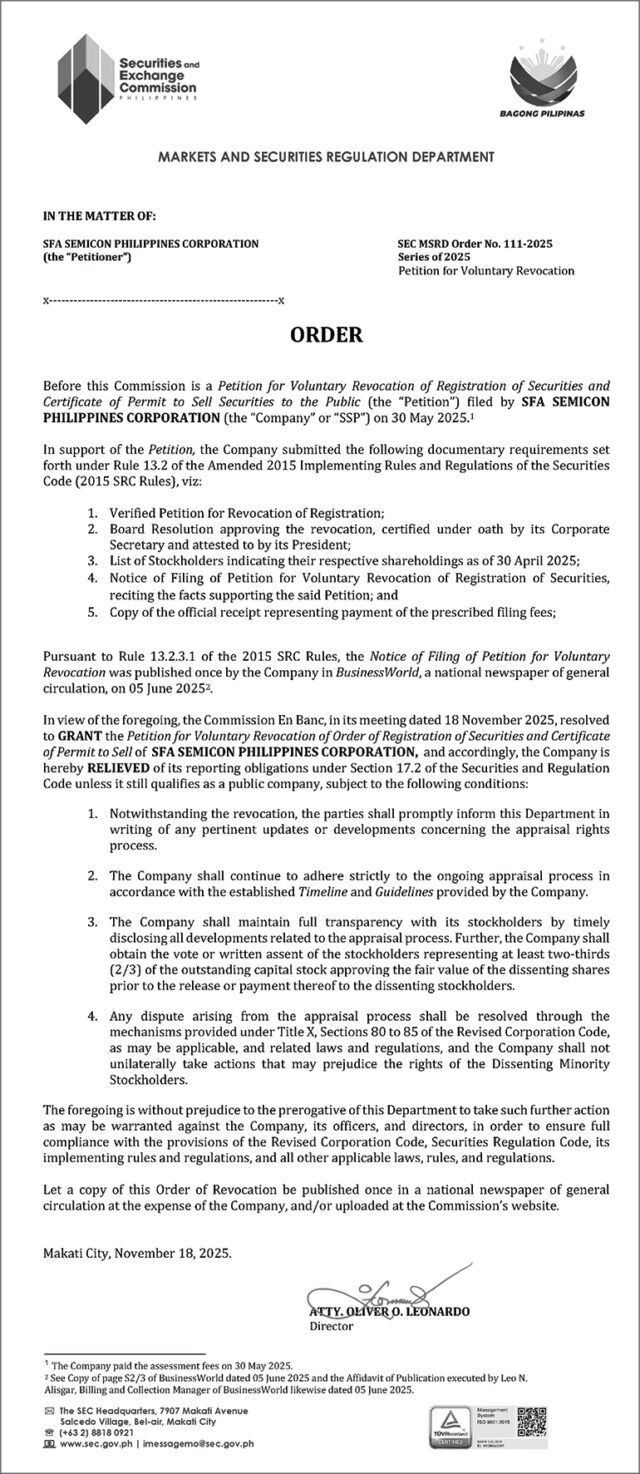
SFA Semicon Philippines Corp.’s Petition for Voluntary Revocation granted by the SEC


Spotlight is BusinessWorld’s sponsored section that allows advertisers to amplify their brand and connect with BusinessWorld’s audience by publishing their stories on the BusinessWorld Web site. For more information, send an email to online@bworldonline.com.

Join us on Viber at https://bit.ly/3hv6bLA to get more updates and subscribe to BusinessWorld’s titles and get exclusive content through www.bworld-x.com.

BoP position swings to $706-million surplus in October

A picture illustration shows a $100 banknote laying on $1 banknotes. — REUTERS

By Katherine K. Chan

THE PHILIPPINES’ balance of payments (BoP) position swung to a surplus in October, narrowing the country’s external position gap in the 10-month period, the central bank said.

Data from the Bangko Sentral ng Pilipinas (BSP) showed that the country’s BoP registered a surplus of $706 million in October, a turnaround from the $724-million deficit seen a year ago.

This was also wider than the $82-million surfeit in September and marked the third consecutive month that the BoP stood at a surplus.

“The Philippines’ balance of payments registered a $706-million surplus in October 2025, reflecting improved external accounts,” the BSP said in a statement released late on Wednesday.

BoP refers to the country’s economic transactions with other nations. A surplus indicates more funds entered into the country, while a deficit shows that the country spent more than it received.

The BoP surplus in October brought the country’s 10-month deficit to $4.609 billion, a reversal from the $4.393-billion surplus in the same period last year.

“For January-to-October 2025, the BoP recorded an overall deficit of $4.6 billion, showing signs of narrowing as inflows strengthened,” the central bank said.

Rizal Commercial Banking Corp. Chief Economist Michael L. Ricafort noted that the BoP surplus in October was the best in eight months or since February 2025.

In a note, Mr. Ricafort attributed this to improved weather conditions and the expected tail-end of the seasonal rise in imports in the third quarter.

He said the seasonal increase in remittances and export sales would be positive factors for the country’s BoP position in the fourth quarter.

Jonathan L. Ravelas, a senior adviser at Reyes Tacandong & Co., said in a Viber message that increased inflows from exports, remittances and the business process outsourcing sector likely boosted the country’s BoP surplus.

“If global conditions stabilize and imports normalize, we could see the BoP deficit narrow further by yearend,” he added. “But watch out for (US Federal Reserve) policy and oil prices — they’re still key risks.”

Mr. Ricafort also said US President Donald J. Trump’s recent move to exempt some agricultural products from reciprocal tariffs would also help improve the country’s balance of trade and external position.

“For the coming months, BoP data would improve further if anti-corruption measures and other reform measures, especially in further leveling up the country’s governance standards, are taken seriously, just like 10-15 years ago, as these help further improve international investor sentiment or confidence (in) the country,” he added.

The central bank expects the overall BoP position to end at a $6.9-billion deficit this year or -1.4% of gross domestic product.

DOLLAR RESERVES
Meanwhile, the BSP said the country’s latest BoP position reflected the 1% increase in gross international reserves (GIR) at $110.2 billion at end-October from $109.1 billion at end-September.

“The rise in reserves to $110.2 (billion) gives us a solid buffer against external shocks,” Mr. Tacandong said.

In the 10-month period, the level of dollar reserves was equivalent to 7.4 months’ worth of imports of goods and payments of services and primary income, well above the three-month standard.

“Specifically, the latest GIR level ensures availability of foreign exchange to meet balance of payments financing needs, such as for payment of imports and debt service, in extreme conditions when there are no export earnings or foreign loans,” the central bank said.

It also covers around 3.8 times the country’s short-term external debt based on residual maturity.

The country’s gross reserves are made up of foreign-denominated securities, foreign exchange, and other assets such as gold. Aside from financing its external obligations, these are used by the central bank to help stabilize the peso and also serve as a buffer against global economic disruptions.

The BSP sees dollar reserves settling at $105 billion by yearend.

DoF warns VAT rate cut could slash P1 trillion in revenue and risk credit rating downgrade

SHOPPERS look for canned goods at a supermarket in Mandaluyong City. — PHILIPPINE STAR/MIGUEL DE GUZMAN

By Kenneth Christiane L. Basilio, Reporter

THE Department of Finance (DoF) expressed “strong reservations” regarding a proposal to lower the value-added tax (VAT) rate, warning it could cost the government more than P1 trillion in foregone revenues through 2030 and undermine its fiscal consolidation efforts.

In a position paper submitted to the House of Representatives dated Oct. 22, the DoF said House Bill (HB) No. 4302, which proposes to cut the VAT rate to 10% from the current 12%, would lead to substantial revenue losses over the next five years.

A copy of the position paper, which was signed by then-Finance Secretary Ralph G. Recto, was obtained by BusinessWorld on Thursday.

“The estimated impact of the proposed VAT rate reduction is at an annual average of P339 billion from 2026 to 2030… This proposal will translate to a higher fiscal deficit and derail the administration’s fiscal consolidation efforts and plan,” the DoF said.

“Introducing this proposal at this time would risk fiscal stability, equity and growth.”

Based on DoF estimates, the revenue impact of the proposed VAT rate reduction would reach a total of P1.694 trillion from 2026 to 2030. This includes P1.11 trillion in foregone revenues for the Bureau of Internal Revenue and P583.6 billion for the Bureau of Customs.

The DoF said reducing the VAT rate to 10% will increase the deficit by one percentage point of gross domestic product annually.

“The proposal will result in credit rating downgrades, which in turn increase our borrowing costs due to higher interest rates,” it said.

The proposed measure will also compromise debt sustainability, the DoF said.

“Lowering the VAT rate and losing a steady stream of government revenues of around P339 billion yearly would significantly slow down the pace of reduction in the debt ratio planned by the government, leaving the country more vulnerable to fiscal shocks,” it said.

The Philippines has imposed VAT on most goods and services since 1988, including essentials such as food and fuel. Raised to 12% from 10% in 2005, it has become a key revenue source, though critics have argued it disproportionately burdens working-class Filipinos.

The DoF said VAT is an important revenue source for the government, accounting for around 26.5% of total tax take and 29.9% of government revenues.

“VAT, as a consumption tax, grows in tandem with the economy, making it one of the most predictable sources of government revenue and, at the same time, one of the most difficult to evade,” the DoF said.

Batangas Rep. Leandro Antonio L. Leviste filed HB No. 4302 in September seeking to lower the VAT rate, arguing the current tax system is “regressive” and should be reduced to make taxation more progressive.

The DoF said the current VAT system is “relatively neutral and slightly progressive” as most of the goods and services purchased and consumed by poorer households are already not subject to VAT.

“The proposed reduction of VAT will benefit higher-income households who have a larger share in formal consumption,” it said, explaining that lower‑income families tend to have only “small shares” of spending subject to the tax. “The richer households will substantially benefit more than the poorer households.”

While the Philippines has the highest VAT rate in Southeast Asia, the DoF said that a reduction in the rate will not automatically make the VAT system more competitive. It noted the Philippines has the lowest VAT efficiency in the region as it provides a significant number of VAT zero-ratings or exemptions to some sectors.

The DoF said the bill is not an “anti-inflation tool” and won’t automatically lower consumer prices.

It also noted that the bill’s provision giving the President the authority to temporarily return the VAT rate to 12% will disrupt the National Government’s fiscal program.

“The proposal will erode revenue stability and predictability… Making (the VAT) rate dependent on the yearly deficit projection of the Development Budget Coordination Committee would mean uncertainty for revenue and cash programming, budget planning and investors’ decisions,” it said.

“The proposed VAT rate increase based on the deficit target breach would also mean business and consumers facing unpredictable tax burdens, higher compliance costs and deterring long-term investments,” it added.

Digital VAT collection nears P7 billion — BIR

REUTERS

By Aubrey Rose A. Inosante, Reporter

THE PHILIPPINE government has collected almost P7 billion from a 12% value-added tax (VAT) on digital services, the Department of Finance said, providing a lift to revenue intake at a time when slower growth and a corruption probe are weighing on collections.

The Bureau of Internal Revenue (BIR) has raised P6.57 billion since the digital VAT took effect in June, based on a document obtained by BusinessWorld.

Of the total, the BIR collected P2.78 billion from nonresident digital service providers as of Oct. 23. 

Meanwhile, final withholding VAT from business-to-business transactions reached P3.79 billion as of Sept. 25 — almost entirely from foreign platforms — with P3.77 billion remitted by private withholding agents and P5.85 million by government agencies,

Under the law, a 12% VAT is now imposed on nonresident digital platforms such as Netflix, Spotify, Amazon and Lazada.

“It likely reflects higher digital consumption in e-commerce, streaming, and online services, improved compliance from platforms now formally registered with the BIR, and tighter monitoring of cross-border service providers,” John Paolo R. Rivera, a senior research fellow at the Philippine Institute for Development Studies, said in a Viber message.

Mr. Rivera noted the tax haul shows the digital economy is becoming a meaningful source of government revenue and is now being treated on par with traditional industries.

“The shift toward cashless payments and online transactions also made digital activity more traceable,” he said.

Former BIR Commissioner Romeo D. Lumagui, Jr. earlier projected the agency will collect P10 billion in VAT from digital services this year, well above the initial P3.62‑billion target.

For 2026, the Marcos administration seeks to collect a P21.37-billion revenue from digital VAT. It is targeting P22.81 billion in digital VAT collection in 2027 and P23.41 billion in 2028.

Analysts said the BIR is on track to reach P10‑billion digital VAT target this year, buoyed by rising technology spending and increasing compliance by nonresident platforms.

Eleanor L. Roque, a tax principal of P&A Grant Thornton, said the BIR has already collected P6.57 billion in the early stages, making the P10-billion target “easily achievable.”

“I think there are still nonresident digital service providers who are still going through the compliance process. There are companies that are still waiting for some clarification on whether they are covered,” she said in a Viber message to BusinessWorld on Thursday.   

Ms. Roque noted that initial “birth pains” such as VAT portal delays were quickly addressed by the agency.

“The digital economy may post slower income growth as a result of taxes they paid for the government. However, the industry is still poised for large growth due to higher activity and spending on technology,” Reinielle Matt M. Erece of Oikonomia Advisory and Research, Inc. said in a Viber message.

Mr. Rivera also added that hitting the P10‑billion goal is “still possible.”

“Strong holiday e-commerce activity could lift collections, but hitting the target will depend on sustained platform compliance and continued digital spending despite recent economic headwinds,” he said.

DICT chief targets to raise digital economy’s share to GDP to 12.5%

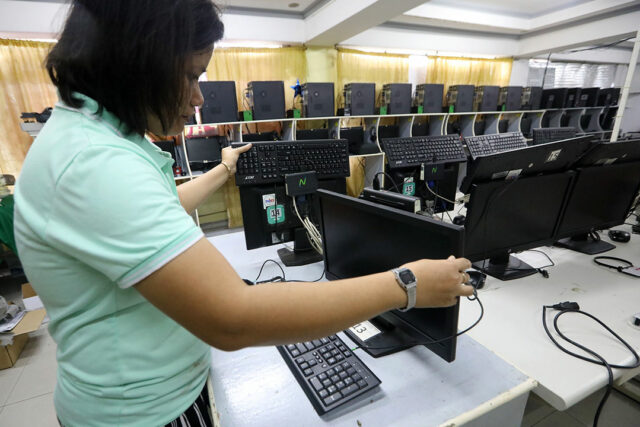
A TEACHER checks computers at a school in Manila. _ PHILIPPINE STAR/EDD GUMBAN

THE DEPARTMENT of Information and Communications Technology (DICT) is aiming to increase the share of the digital economy to gross domestic product (GDP) to 12.5% by 2028, by fast-tracking digital infrastructure projects and attracting more hyperscalers to operate in the country.

“We are not settling for linear growth. We are aiming, as the President says, for hyperexponential growth. We are targeting a rocket ship trajectory to 12.5% (of GDP) by 2028,” DICT Secretary Henry Rhoel R. Aguda said during the Pilipinas Conference 2025, a forum hosted by Stratbase ADR Institute, on Thursday.

The digital economy’s contribution to the Philippine economy was little changed at 8.5% in 2024 from 8.6% in 2023. However, its share to GDP has steadily declined from the peak of 9.2% in 2021.

“The Philippines is in a state of digital decline. We are falling behind,” he said.

“Every point we lose is a missed chance for better jobs, higher income, and a future where every Filipino can take part in the digital age.”

According to the Philippine Statistics Authority’s definition, the digital economy is composed of digital transactions covering digital-enabling infrastructure, e-commerce, digital media and content, and government digital services.

Mr. Aguda noted that the Philippines had already missed its opportunity to fully digitalize, and was overtaken by Southeast Asian neighbors like Vietnam, where the digital economy accounts for 18.3% of its GDP, and Malaysia, where the digital economy makes up 23% of GDP.

“While we were comfortable, our neighbors were hungry… While the rest of the ASEAN (Association of Southeast Asian Nations) took advantage of the pandemic to digitize, we did not,” Mr. Aguda said.

The DICT chief said many hyperscalers, or major tech firms that build massive data centers to support cloud computing, artificial intelligence (AI), and high-volume digital workloads, are bypassing the Philippines in its expansion plans.

China and Indonesia are hosting six of the largest hyperscalers, while five are operating in Singapore and Malaysia, he added.

“We are lagging and this has to change,” Mr. Aguda said. “We need to make the Philippines the logical landing point of data in Asia.”

The government has set an ambitious target to increase its data center capacity to at least one gigawatt from the current 200 megawatts, the DICT said earlier.

While the Philippines’ talent pool and location can attract hyperscalers, Mr. Aguda said there is a need to improve connectivity infrastructure and digital adoption. 

“Many of our companies have not adopted digital economy practices. We are still running analog businesses in a very digital world,” he noted. “That is a recipe for obsolescence.”

To achieve this, the DICT said it is cutting red tape to roll out its National Fiber Backbone to ensure free internet access nationwide. It is also looking to drive digital adoption across industries, and is institutionalizing cybersecurity and governance to protect the country’s critical infrastructure.

The DICT is also aiming to boost digital adoption through integrated government services in its eGovPH Super App. It is also looking to support more startups and further push for AI adoption in government, Mr. Aguda said.

“To attract the hyperscalers who have passed us by, we must give them more than just bandwidth. We must give them security and resilience,” Mr. Aguda said.

On the sidelines of the event, Stratbase ADR President Victor Andres “Dindo” C. Manhit emphasized the need to safeguard the country’s cybersecurity.

“As we move into a more digital economy, we need to secure the digital space. If not, the general population, private companies, and government agencies might be vulnerable,” he said.

In 2024 alone, the Philippines recorded 1.8 million cases of on-device cyberattacks against businesses, making it the third-most attacked county in Southeast Asia, according to global cybersecurity firm Kaspersky.

Mr. Manhit said that the country’s young, tech-savvy population could help the Philippines catch up with its neighbors in growing its digital economy.

Meanwhile, Mr. Aguda said he is in talks with the Philippine Stock Exchange (PSE) to ease listing requirements for technology startups.

“We have a lot of tech startups in the Philippines that have been waiting, for the longest time, to be able to raise money in our capital markets,” he told reporters on the sidelines of the forum.

He said that many Philippine tech startups, especially in industries like blockchain and digital wallets, are ripe for public listing.

“If we are able to fix the listing rules — and PSE said it is definitely open — and then we get underwriters to fund the initial public offering… I’m confident that next year, that there’s startups who will list,” Mr. Aguda added. — Beatriz Marie D. Cruz

Major music labels strike deals with new AI streaming service

STOCK PHOTO | Image from Freepik

THE WORLD’S LARGEST music companies have licensed their works to a music startup called Klay, which is building a streaming service that will allow users to remake songs using artificial intelligence (AI) tools.

Klay is the first music AI service to reach a deal with all three major record labels, Universal Music Group NV, Sony Music, and Warner Music Group Corp., according to people familiar with the deals. Klay plans to announce its agreements in the coming days, said the people, who asked not to be identified discussing confidential plans.

Klay is building a product that will offer the features of a streaming service like Spotify, amplified by AI technology that will let users remake songs in different styles. Klay has licensed the rights to thousands of hit songs so that it can train its large language model.

The company has positioned itself as a friend of the industry, offering assurances that the artists and labels will have some control over how their work is used. Klay is led by music producer Ary Attie and also employs former executives from Sony Music and Google’s DeepMind, an AI laboratory.

The music industry has been battling AI companies, alleging illegal use of their songs. The labels sued Suno, Inc. and Udio for copyright infringement, claiming they illegally used their music to train their systems to spit out work that sounds similar.

Music companies know that artists are already using AI tools in producing new songs and are trying to embrace the technology while policing copyrights, which are their most valuable assets. The biggest services in music, including Spotify and YouTube, are also working on AI tools.

The record industry is now in the midst of a dealmaking spree when it comes to AI. Universal Music and Warner Music have both settled their suits against Udio and have licensed their work to the company for a forthcoming product. They have also done deals with Stability AI. None of the major labels has done a deal with Suno, the biggest player in the emerging area of AI music. The company was valued at $2.4 billion in its most recent fundraising. — Bloomberg

Confronting gaps in the Philippine education system

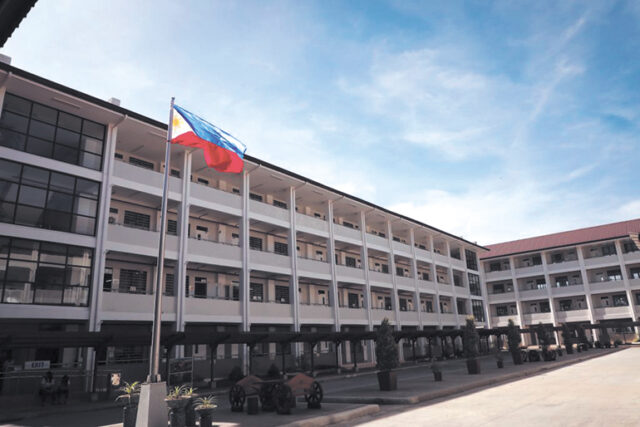
Photo from deped.gov.ph

The country’s education system shows strain across many stages of learning, starting from early childhood and stretching through college. Yet, it remains one of the least supported areas in public policy.

According to the Philippine Statistics Authority, 24 million Filipinos ages 10 to 64 are functionally illiterate. About 5.8 million cannot read or write at a basic level. In 2024, one in five high school graduates reached adulthood without basic reading, writing, arithmetic and comprehension skills.

The World Bank found that 91% of 10-year-old Filipino children struggle to read simple text. The government point to the coronavirus pandemic as part of the reason the problem grew worse.

Despite this, many parents still believe that children under age 5 are “too young” for school. Long distances to child development centers limit access, while many families rely on relatives or older siblings for childcare because at least 40% of parents work away from home.

According to the Second Congressional Commission on Education (EDCOM 2), teachers feel the weight of these early gaps once children reach Grade 3. Many students perform one to two grade levels below what is expected.

Learning camps engaged only 10% of students who needed extra help. Only a little more than half of those targeted completed assessment requirements. Several policies meant to support reading, math and science improvement have been pending since 2023.

Lost learning days also add to the problem, as class suspensions due to weather, local holidays and other disruptions wipe out a large portion of the school year. In some regions, students already missed more than 40 school days. EDCOM 2 link these absences to steep drops in Grade 4 Math and Science performance.

Selective schools like the Philippine Science High School System face capacity limits. Between 2022 and 2025, more than 5,800 students who passed the entrance exam were unable to secure a slot. Private school students passed at higher rates than those from public schools, highlighting concerns about foundational learning differences.

The Department of Education (DepEd) rolled out reforms under the MATATAG curriculum, but schools report delays. As of January 2025, only 35 of 90 needed textbook titles for Grades 4 and 7 reached classrooms.

Program oversight also affects students in arts, journalism, languages, sports, science and technical-vocational tracks. EDCOM 2 reports show that many schools run these programs with unclear guidelines or inconsistent resources.

On the other hand, the Alternative Learning System (ALS), created to help out-of-school youth and adults, has low reach. Out of an estimated 4.9 million out-of-school youth, only around 600,000 enter the program, and only half of those finish. Funding remains at P7 million per region regardless of population size. Many community learning centers operate in makeshift spaces, and several policy guidelines under the ALS Act of 2020 remain pending.

College participation hovers at nearly 35%, which remains below the regional average. The Bangsamoro Autonomous Region in Muslim Mindanao (BARMM) records the lowest participation.

Dropout numbers in higher education remain high, with BARMM recording a 93% attrition rate. Several other regions show dropouts above 50%.

Free tuition under Republic Act No. 10931 helped more families enter college, but the rise in enrollment placed state universities near full capacity. Local universities accept more students, though many offer fewer academic programs.

The Tertiary Education Subsidy adjusted its rules to focus aid on the poorest students. However, reductions in subsidy amounts may limit the courses these students can take, especially those that already have limited slots.

The Commission on Higher Education updates program requirements at long intervals. Reviews often happen once every 11 years. Current policies lean toward a single model focused on research output, even though many schools operate on much smaller scales. Only a small portion of the population enters graduate studies, keeping the country’s research activity below global and regional averages.

Meanwhile, Filipino students ranked among the lowest performers in the Programme for International Student Assessment’s 2022 creative thinking test, scoring an average of 14 points. This figure placed the Philippines in the bottom tier out of 64 participating nations.

Facing resource shortage

Education spending remains at 3.6% of gross domestic product, which falls below the range advised by United Nations Educational, Scientific and Cultural Organization. About 5,000 campuses function without electricity, and around 10,000 have no clean water supply.

In terms of teacher’s competency, 66% of teachers use low to medium-low levels of effective classroom practices, and no teacher reached the high level of effective pedagogy. A World Bank review reported that a high school Math teacher answered only 31% of subject-related questions fully, and about 62% of high school teachers handle classes outside their field of study.

School space issues remain widespread, as the country lacks more than 165,000 classrooms. Urban centers deal with overcrowded rooms, while many rural schools rely on aging buildings that struggle to withstand harsh weather. Only about 30% of public school structures are considered in good condition. To manage space shortages, many campuses use shifting schedules that split students into morning and afternoon groups.

Decades of education reforms

Since 1946, administrations have tried to widen learning opportunities. The 1987 Constitution affirms every learner’s right to quality education, but shortages in funding, teacher development and school facilities continue to slow improvement in classrooms nationwide.

One major measure to close the education gap is the Academic Recovery and Accessible Learning Program Act, or ARAL, which aims to help students who struggle with reading and basic math.

The Education department aims to align its recovery programs with the ARAL Act. A draft policy unifying the National Reading Program and the National Mathematics Program into the P3 framework is under final review to reinforce literacy and numeracy in higher grade levels.

For early childhood education, the Early Childhood Care and Development Systems Act directs local governments to establish their own offices, hire permanent child development staff and upgrade facilities. A joint circular between DepEd and the Department of Budget and Management instructs low-income local governments to set up child development centers.

However, national standards for early learning are still under discussion, and participation is low. Only about 1% of children aged 0 to 2 are enrolled in early learning programs, along with 21% of those aged 3 to 4.

The National Learning Recovery Program stands as the widest effort so far, reaching more than 2.7 million learners across more than 35,000 schools. A separate tutoring initiative, Tara Basa, supported more than 62,000 students across different regions.

With these initiatives, early assessments reported improvements. English reading proficiency grew by 15% among participating learners, while the number needing full intervention fell by 32%. Filipino assessments showed a 25% rise in grade readiness and a 36% drop in those who required a full refresher.

Investments in learning materials also increased. As of October 2024, more than 7 million pieces of science and math equipment, and more than 200,000 technical-vocational tools had been purchased. More than 49 million textbooks for subjects such as Science, Social Studies and Math were also acquired.

Procurement in 2023 and 2024 included more than 22 million pieces of science and math equipment and more than 779,000 units of technical-vocational tools. Textbook and learning material deliveries reached more than 58 million pieces. Packages included assistive laptops for learners with disabilities, along with more than 55,978 information and communication technology packages for schools nationwide.

“Education is not solely the responsibility of one sector,” said Education Secretary Juan Edgardo “Sonny” M. Angara in Filipino. “DepEd acts collectively — together with government agencies, local governments, and the entire community — for the future of the youth.” — Mhicole A. Moral


When cries of resistance seep through the cracks

A look at the 2025 QCShorts International Program 2

By Brontë H. Lacsamana, Reporter

THE QCINEMA International Film Festival’s shorts program this year has expanded to a whopping 26 films, spread out across five sections. In QCShorts International 2, five filmmakers turn their attention to the realities that ignite pockets of resistance — within communities, families, and entire societies.

This specific program, titled “The Center Cannot Hold,” takes its name from Elyn Saks’ 2007 memoir on a tumultuous psychological journey, which in turn is named after a line from William Butler Yeats’ apocalyptic poem “The Second Coming.” Such is the lineage of losing grip on a centered reality, tuning into the voices of people that seek to fight back in the most unlikely of ways.

Besides offering glimpses into unexplored countrysides in Southeast Asia, these five films make up a fragmented yet interconnected — but admittedly overwhelming — experience.

VOX HUMANA
The experience begins with an invitation to listen. The setting is a landscape so dreamlike, with the wind ruffling the leaves in the trees, blowing through stalks of grass on the mountainous terrain. Forceful human voices, a storm of horses galloping in, a man’s nails tracing the rough grit on an old wall — images and sounds interrogate the ties that bind humans with the earth.

Don Eblahan’s poetic narrative, coming home from the Toronto International Film Festival, presents scenes of a futuristic ethnographic endeavor. A sound recordist listens, the authorities watch, the biologist is witness to the power of the indigenous. We can only look and listen to the reckoning amid the disconnect.

WHEN THE BLUES GOES MARCHING IN
This time, there is a straightforward conversation. The voice of a young man relays a harrowing dream to his father, whose experiences are unknown to us, but may possibly be a connecting thread in Indonesia’s history of restless energy, protest, rage, and hope. We see photographs of these events, rendered in blue cyanotype. We hear a student activist’s impassioned protest poem.

Beny Kristia’s personal documentary is intimate but also large in scope, as it traverses one person’s thoughts and feelings inside the larger story of a nation’s attempt to reorient itself. While simple and straightforward, it is a monument to memories of struggle that is full of heart.

A METAMORPHOSIS
A confusing yet intriguing watch is Lin Htet Aung’s lo-fi broadcast that mimics the aesthetics of Myanmar’s state television propaganda. It combines entrancing visuals, like distorted digital images and short fuzzy videos, with an old man’s voice singing a Burmese lullaby.

Coming across as almost eerie, it pulls back a (seemingly unmoving) curtain to unveil the strange liminal spaces that have emerged from a country under dictatorship. Using what has been a nationalist medium, this film fights back creatively, valiantly, though it also has potential as a video installation played on an old box television.

HOY, HOY, INGAT!
A recipient of the QCShorts 2025 grant, Norvin de los Santos’ ode to two siblings clawing their way out of urban poor miseries is the most entertaining and heartwarming short of the bunch. A precocious young girl and her hardworking older brother take a battered family jeepney to go on an adventure, an escape from the hell that is Manila.

Tales about the underprivileged don’t always get to be treated with such pure playfulness and empathy. In a world where the metropolis is forever under construction, the slums and jeepneys under threat of being swept away in favor of large commercial developments, Bhing and Baby’s story is a little dream that is worth seeing.

SI KARA: ANG BABAYE NGA NAG DABA-DABA
Set in Bacolod, Dale’s absurd comedy is another recipient of the QCShorts 2025 grant. It’s a showcase of what cinema out of Negros Occidental can offer, as the character of Kara undergoes a series of trials where the heat built up in her body becomes so unbearable the changes in her lifestyle and environment ramp up. It’s a riot to watch, as toxic pink human gases poison the rivers and rumble in the mountains.

Many of it is lowbrow humor, for sure, with endless poop and fart jokes. But a lot is expressed — the neon painted people in a club dancing to budots and the motionless body of Kara in a boiling-hot room — all reflecting a fever dream that has gripped Filipinos. Contending with a climate that grows hotter and a social landscape that grows more chaotic day by day, this short concludes a strong set that truly presents how people can resist larger forces with images imagined.

QCShorts International 2 is screening on Nov. 21, 3:45 p.m., at Fisher Mall, and 9:20 p.m., at Gateway 2.

Stuff to Do (11/21/25)


Listen to carols at The Peninsula

THE Peninsula Manila celebrates Christmas in November with some of Manila’s finest choirs performing in The Lobby. Performing on Nov. 21 is the Servus Dei Vocal Ensemble. The carol-filled month will end with the Mapúa Cardinal Singers on Nov. 28. The performances will take place from 7 to 7:45 p.m. on those dates, with P1,500 as the minimum consumption amount for each guest who dines at The Lobby.


Go to the Modified Signals concert at The M

AS PART of the experimental sound scene, Jigger Cruz, Seething Mass (Arvin Nogueras + Maia Reyes), and Pow Martinez are converging for a night of original compositions and improvised collisions on Nov. 22 at The Metropolitan Museum of the Philippines (also known as The M), at 30th St., BGC, Taguig. Through a hybrid mix of synthesizers, drum machines, and analog tools, the artists will “sculpt an atmosphere that slips between clarity and distortion, with interplay between machine-driven precision and human expression.” The night begins at 6 p.m. Ticket details can be found at The Metropolitan Museum of Manila’s site and pages. The concert coincides with Jigger Cruz’s ongoing mid-career exhibit, Hail Holy Eyes, at The M.


See Teatro Meron stage Ang Medea

TEATRO MERON is presenting Ang Medea, a restaging of Euripides’ classic, translated into Filipino by the late National Artist for Theater Rolando S. Tinio. Fresh from last year’s sold-out run, this production returns with a cast of theater veterans led by Miren Alvarez-Fabregas as Medea, with Teroy Guzman, Yan Yuzon, Bryan Sy, Joseph dela Cruz, Katski Flores, Gold Soon, Pickles Leonidas, and Joel Macaventa. The director is Ron Capinding, founder and artistic director of Teatro Meron. Performances run until Nov. 28 at the Special Exhibition Hall of The Mind Museum, Bonifacio Global City. Tickets and schedules are available via Ticket2Me.


Enjoy Dulaang UP’s twin bill

A TWIN BILL, titled Para Kay Tony: Tungo sa Ginintuang Alaala, featuring classic plays will pay homage to Dulaang UP founder and National Artist for Theater Antonio “Tony” Mabesa. The first half is a staging of Kalahating Oras sa Isang Kumbento by Filipino playwright Wilfrido Ma. Guerrero as translated by Lilia F. Antonio. The story follows Yolanda, a student at a convent school, who seeks comfort and companionship after being expelled. University of the Philippines (UP) Diliman Theatre Arts student Lloyd Sarmiento Uy serves as director. The second play features National Artist Rolando Tinio’s May Katwiran ang Katwiran, about Senyor, a wealthy haciendero who persuades his servant to join him on a journey across the mountains. The staging is directed by Theatre Arts student MJ Briones. The production runs until Nov. 30 at the IBG-KAL Theater, UP Diliman.


Have a family-friendly evening at the theater

MANY YEARS AFTER Chitty Chitty Bang Bang in 2017, Newport World Resorts’ production company, Full House Theater Company, has returned to family-oriented productions with Shrek The Musical at the Newport Performing Arts Theater. Younger audiences will delight in the slapstick antics and fairytale creatures, while older viewers catch the clever writing, sly wordplay, and lessons embedded in the story. This allows the show to resonate as a true family experience. The musical stars Jaime Wilson as Shrek and Topper Fabregas as Donkey. Shrek The Musical is based on the DreamWorks Animation Motion Picture and the book by William Steig. It features book and lyrics by David Lindsay-Abaire and music by Jeanine Tesori. Tickets are available at Ticketworld, Newport World Resorts Box Office, and Helixpay. They range in price from P1,500 to P4,500. For inquiries, contact Customer Care at 7908-8888 or info@fhtcentertainment.com.


Rock on with Janno Gibbs

CITY OF DREAMS MANILA’S CenterPlay turns the spotlight on multi-hyphenate artist Janno Gibbs who is set to perform on Nov. 26 at 9 p.m. The singer, songwriter, actor, and comedian is performing for the second time at the CenterPlay Concert Series, which features some of the best of the local OPM (Original Pilipino Music) scene. Mr. Gibbs is behind notable hit songs including “Fallin,” “Binibini,” “Pinakamagandang Lalaki,” “Ipagpatawad Mo,” and “Sana Dalawa Ang Puso Ko,” among many other hit songs. The concert also highlights performances from bands Highschool Playlist and Le Chic as well as from a DJ who are set to perform alternately from 7 p.m. to 2 a.m. Janno Gibbs Live at CenterPlay will be followed by Ariel Rivera on Dec. 3 and Jaya on Dec. 17. Guests can reserve a seat or a table with consumables starting at P3,000. VIP couch seats for a party of eight, and smaller seatings are also available. For reservations and information, call 8800-8080 or e-mail guestservices@cod-manila.com, or visit https://www.cityofdreamsmanila.com/en/whats-on/concert-series.


Watch TP’s musical on Gregoria de Jesus

TANGHALANG PILIPINO’S (TP) newest production for its 39th season is a groundbreaking original musical that reimagines the life of revolutionary Gregoria de Jesus through the sound of Pinoy pop music. With music by Nica del Rosario and Matthew Chang, and a book by Nicanor Tiongson and Eljay Deldoc, the show stars Marynor Madamesila and is directed by Delphine Buencamino. It is ongoing until Dec. 14, with performances at 3 and 8 p.m., at the Tanghalang Ignacio Gimenez (CCP Black Box Theater), CCP Complex, Pasay City. VIP tickets cost P2,000 while regular tickets are P1,800.


Watch a French film or two

THE 28th edition of the French Film Festival, Manila’s annual rendezvous for lovers of global cinema, will take place from Nov. 24 to 30 at SM Aura and SM City Manila Cinemas. The festival is a presentation of the Embassy of France in the Philippines and Micronesia in partnership with SM Supermalls and SM Cinema. This year’s selection spans newly released features, beloved classics, animated titles, and cross-cultural collaborations. Films include: Partir un jour by Amélie Bonnin (2025), 13 jours 13 nuits by Martin Bourboulon (2025), La Petite Dernière by Hafsia Herzi (2025), Coutures by Alice Winocour (2026), Elsewhere at Night by Marianne Métivier (2025), Dracula by Luc Besson (2025), La Plus Précieuse des Marchandises by Michel Hazanavicius (2024), Le Roi et l’Oiseau by Paul Grimault (1980), Le Pharaon by Michel Ocelot (2022), Call My Agent (Erik Matti), and Dix pour cent (Cédric Klapisch). In partnership with the Animation Council of the Philippines, audiences can look forward to Animahenasyon (Nov. 25-26) at the Samsung Hall, SM Aura, featuring screenings, talks, and an awards night celebrating the vibrancy of animated filmmaking. The Festival is also hosting a two-day Co-Production Conference on Nov. 27-28 at the SMX Convention Center, SM Aura, in partnership with the Film Development Council of the Philippines and France’s National Center for Cinema and Animation. The conference will gather French and Filipino producers, directors, and industry experts, fostering new creative relationships and future film projects. Screenings continue from Dec. 1-6 at the Alliance Française de Manille, with special programs also held at UPFI (Nov. 25-26) and Benilde School of Design and Arts (Nov. 28). For the 28th French Film Festival screenings, at SM Aura and SM City Manila, admission is free. For schedules and information on the festival events, visit the French Embassy’s Facebook page: https://www.facebook.com/FrenchEmbassyPH.

Solving the woes of Philippine education through PPPs

Photo from deped.gov.ph

A Filipino adage dubs education as the greatest inheritance a parent can give to their child. Such is the importance of learning in the Philippines, where it is a right and where the government is mandated to ensure its accessibility and quality for all its citizens.

However, recent controversies have left much to be desired in the sector. Data from the Philippine Statistics Authority in April showed that while over 90% of Filipinos can read and write, just 70% can comprehend what they read. Furthermore, the Department of Education’s (DepEd) classroom backlog currently stands at an estimated 148,000, based on the latest data shared by the department. Further inflating the issue is the masses’ current public distrust of government institutions.

Given these challenges, exploring the role of public-private partnerships (PPPs) becomes all the more crucial in seeking ways to improve the current Philippine education system. DepEd Secretary Juan Edgardo “Sonny” M. Angara hinted at such solutions as the key to addressing the perennial problem of classroom backlogs.

Ang tinutulak natin ngayon is mag-PPP tayo, public-private partnerships. Ibig sabihin, malakihan, bulto-bulto, 1,000 classrooms. Magpapa-bid tayo ng isang libong school buildings at i-o-offer natin sa private sector na magko-construct. (What we are pushing for now is to do public-private partnerships. This means large-scale, in bulk — 1,000 classrooms. We will [also] put 1,000 school buildings up for bidding and offer them to the private sector to construct),” Mr. Angara said in a statement.

With limited resources and a protracted classroom shortage, the Education Secretary likewise called for increased awareness on the Adopt-A-School Program, underscoring the law’s tax benefits to the adopting company or enterprise.

Baka hindi alam noong ibang negosyante o ibang nagdo-donate, ibang charitable organizations, ipaalam niyo sa kanila na kapag nagdo-donate sila ng school building, maide-deduct nila doon sa kanilang taxable income. (Some businessmen or other donors, other charitable organizations, might not know this — inform them that when they donate a school building, they can deduct it from their taxable income),” Mr. Angara also noted.

Marami lang hindi nakakaalam na may batas na ganoon. So, with the help of the community, sana maipaalam natin sa kanila. (Many just don’t know that such a law exists. So with the help of the community, hopefully we can make them aware of it),” he added.

Aside from the Adopt-A-School Program, another PPP program being eyed by the agency is the leasing of idle private school buildings abandoned during the pandemic. Mr. Angara recently mentioned his work with property developers and other government agencies in identifying campuses that can be leased and converted into temporary classrooms.

“We need to think creatively if we want to move fast,” he said. “Kung may mga paaralan at gusaling nakatengga at maaari namang magamit, buksan natin ito para sa mga kabataang nangangailangan ngayon.” (If there are schools and buildings that are idle and could be used, let’s open them for the young people who are in need right now.)

Beyond current projects, the DepEd recently released its Quality Education Development Plan 2025-2035, where it defined PPPs as a lever the department can use to “enhance innovation and access to resources and expertise.” The education agency added that combining the government’s extensive reach with the private sector’s agility and innovation enables the delivery of more effective and efficient educational solutions.

Additionally, the document revealed several areas ripe for potential PPP collaborations with the DepEd, including expanding voucher programs, leasing private properties, improving school digitization, and constructing classrooms in schools with overcrowded populations and inadequate facilities. Similarly, the agency’s reform team is also mulling the feasibility of using PPPs for other basic education elements like digitalization for modern schools and classrooms.

In the past, PPPs have resulted in significant improvements in the education sector that have benefited thousands of students over the years. One such endeavor is the successful implementation of the PPP School Infrastructure Project (PSIP) in 2012 and 2013, which built nearly 12,000 classrooms, benefitted 400,000 learners, and generated 11,000 local jobs.

PSIP provides a framework and key insights that can guide stronger implementation of future PPP initiatives. The upcoming phase of PPPs for classroom construction is expected to introduce additional features, including the provision of digital learning devices for teachers and students, enhanced internet connectivity, and the adoption of solar power in schools to ensure classrooms are equipped for the future.

PPPs have worked wonders in various sectors in the Philippines, improving transportation, infrastructure, and other areas of the country. As the education sector seeks long-term, sustainable growth and reforms, leveraging these collaborations could be the catalyst that finally bridges gaps in access, quality, and equity for Filipino learners. ­— Jomarc Angelo M. Corpuz