Home Blog Page 668

Expired medicines: A public health and environmental issue we can solve together

FREEPIK

Every year, millions of Filipino households accumulate expired medicines such as forgotten pain relievers, half-used bottles of children’s vitamins, or leftover antibiotics. While these items may seem harmless, their improper disposal poses real risks to public health, community safety, and the environment.

According to Josefino Tapia, Vice-President for Operations of Zuellig Pharma, expired or unused medicines should never be flushed down the toilet, thrown directly into household trash, or burned unless no other safe disposal options are available. These common but harmful practices can lead to long-term environmental damage and unsafe community conditions.

Flushing medications into the sewage system can contaminate waterways, harm aquatic life, and jeopardize drinking water quality. Unlike the US Food and Drug Administration (FDA), the Philippine FDA does not maintain a “flush list” of medicines allowed for toilet disposal. This is because wastewater treatment systems in the Philippines are not designed to filter out pharmaceutical compounds, allowing residues to enter rivers, lakes, and marine ecosystems. Over time, these substances can accumulate in the food chain, threatening biodiversity and potentially affecting human health.

Throwing medications into the trash also carries risks. Discarded medicines, especially controlled substances, may be retrieved and misused, contributing to substance abuse in both urban and rural communities. Meanwhile, burning expired medications with household waste can release toxic fumes and violates environmental regulations.

Improper disposal is also prohibited under various environmental laws, which classify pharmaceutical waste as hazardous and mandate proper segregation and treatment. These include Republic Act 6969 (Toxic Substances and Hazardous and Nuclear Waste Control Act), RA 9003 (Ecological Solid Waste Management Act), RA 9275 (Clean Water Act), and RA 8749 (Clean Air Act).

Keeping expired medicines at home can also result in accidental ingestion, especially among children and the elderly. Sharing unused medications may lead to incorrect dosing, allergic reactions, or dangerous drug interactions. Environmental exposure to antibiotic residues can contribute to antimicrobial resistance by allowing bacteria in soil and water to develop potentially harmful resistance traits.

Mr. Tapia recommends disposing of expired medicines through authorized take-back programs. Some hospital pharmacies or local government units (LGUs) accept expired medicines during special collection drives or community health campaigns. These are typically coordinated with the Department of Health (DoH) or waste handlers accredited by the Department of Environment and Natural Resources (DENR).

However, Mr. Tapia noted that most pharmacies and drugstores in the Philippines are unable to accept expired medicines for disposal due to regulatory limitations. Only select institutions participate in take-back activities, and these efforts remain limited and not yet standardized nationwide.

When no official disposal program is available, households are encouraged to follow safe, DoH- and DENR-aligned disposal practices. Without crushing tablets or capsules, expired medicines should be mixed with undesirable solid waste such as coffee grounds or sawdust. The mixture should be placed inside a sealed container to prevent leakage and then disposed of with household trash. Personal information on prescription labels must be removed before discarding packaging to protect privacy.

The research-based pharmaceutical industry supports responsible medicine disposal as an essential practice to safeguard public health, protect the environment, and ensure compliance with national waste management laws.

Zuellig Pharma, a member of the Pharmaceutical and Healthcare Association of the Philippines (PHAP), complies with applicable regulations on product recall and disposal. The company provides disposal services for supply chain partners, including expired medicines from hospitals, pharmacies, and healthcare providers but does not operate consumer take-back programs due to regulatory constraints.

It disposes of expired medicines through DENR-accredited treatment, storage, and disposal (TSD) facilities. These facilities use methods such as high-temperature incineration to safely destroy expired drugs. The process involves secure quarantine of expired products, proper labeling and inventory for regulatory reporting, transport by licensed haulers, and documentation through waste manifests and certificates of destruction. Strict chain-of-custody protocols prevent diversion or misuse. All disposal activities are reported to the DENR Environmental Management Bureau and FDA, with regular internal and third-party audits to ensure compliance.

By disposing of expired medicines responsibly, we protect people, communities, and the environment. This protection begins with small, deliberate actions. The next time we clean out our medicine cabinet, let us choose the path that keeps everyone safer. Our everyday choices matter more than we know.


Teodoro B. Padilla is the executive director of Pharmaceutical and Healthcare Association of the Philippines, which represents the biopharmaceutical medicines and vaccines industry in the country. Its members are at the forefront of developing, investing and delivering innovative medicines, vaccines and diagnostics for Filipinos to live healthier and more productive lives.

Philippine bond yields end mixed as markets position for possible BSP cut

YIELDS on Philippine government securities were mixed last week as traders positioned for a possible rate cut by the Bangko Sentral ng Pilipinas (BSP) in December.

Short-term Treasury bill rates slipped, reflecting expectations that the Monetary Board could lower borrowing costs at its Dec. 11 meeting. Moves across the rest of the curve were uneven, with some medium- and long-tenor bonds drifting higher as investors factored in inflation risks linked to a softer peso.

“The declines on the short end reflected market expectations of continued BSP rate cuts in December and in 2026,” a bond trader said.

Governor Eli M. Remolona, Jr. said earlier this month that a reduction is possible and would likely come in a quarter-point step. The central bank has lowered policy rates several times since mid-2024 as growth momentum cooled and inflation stayed subdued.

Investor sentiment remains fragile following revelations of irregularities in state flood-control spending, which some economists say may drag public outlays and slow expansion. Former Finance Secretary Ralph Recto recently said full-year growth might settle below 5%, adding to expectations of a rate reduction.

Inflation held steady in October while staying within target, according to data from the Philippine Statistics Authority. Still, pressure from the weaker peso has kept some medium- and long-tenor yields slightly elevated as markets assess potential pass-through to consumer prices.

The peso softened against the dollar late last week, with trading volumes thinning as investors awaited delayed US economic releases following the government shutdown.

Despite the mixed performance across the curve, traders said the broader backdrop still favors lower yields.

“The fundamental case for lower yields remains intact,” the trader said. “We have below-target inflation, subdued growth momentum and a favorable bond supply calendar. Given this environment, the balance of risks for peso government security yields is clearly skewed to the downside.”

A second trader said any further softening in US data could strengthen the case for a Federal Reserve rate cut in December, easing pressure on the BSP and supporting a domestic policy move. Markets are also watching speeches from Fed officials for fresh guidance ahead of next month’s meeting.

Bond turnover for the week was slightly lighter, with participants taking smaller positions as they waited for clearer signals from both the Fed and the BSP.

Overall, traders expect yields to continue drifting lower, barring any surprise from global data releases or sudden shifts in currency sentiment. — Heather Caitlin P. Mañago

Japanese seafood caught up in escalating diplomatic dispute with China 

STOCK PHOTO | Image from Freepik

TOKYO/BEIJING — China has indicated it will ban all imports of Japanese seafood, two government officials in Tokyo said, in what appears to be the latest salvo in an escalating diplomatic dispute between Asia’s top two economies.

Tensions between the two countries ignited after new Japanese Prime Minister Sanae Takaichi said this month that a Chinese attack on Taiwan threatening Japan’s survival could trigger a military response.

China has demanded she retract the remarks and urged its citizens not to travel to Japan, resulting in mass cancellations that could deal a sizable blow to the world’s fourth-largest economy.

Asked about the seafood restrictions at a press conference, China’s foreign ministry spokesperson Mao Ning said: “Under the current circumstances, even if Japanese seafood were to be exported to China, it would find no market.”

She reiterated that if Takaichi did not retract her remarks, China would have to take “stern and resolute” countermeasures.

Japan’s Chief Cabinet Secretary Minoru Kihara told reporters Tokyo had not received any official notification from the Chinese government about a ban on seafood.

Beijing just months ago partially eased restrictions on Japanese seafood that had been imposed due to Tokyo’s decision two years ago to release treated wastewater from its Fukushima power plant, the site of a 2011 nuclear meltdown that followed a massive earthquake and tsunami.

China informed Japan’s ministry of agriculture, forest and fisheries on Wednesday that current import procedures were not sufficient, indicating a likely re-imposition of the blanket ban, Japanese government officials said, requesting anonymity due to the sensitivity of the matter.

China said the move was due to concerns about Japan’s screening method, the officials said, adding they believe it was likely further retaliation for Takaichi’s remarks.

Facing a wave of vitriolic responses by a Chinese diplomat in Japan and Chinese state media aimed at Takaichi, Japan warned its citizens in China to step up safety precautions and avoid crowded places.

Tokyo has said Takaichi’s remarks in parliament are in line with the government’s position, suggesting no breakthrough is imminent.

China said in June that it would resume importing Japanese seafood products from all but 10 of Japan’s 47 prefectures.

The re-imposition will be a painful blow for many companies eager to re-enter a market that previously accounted for more than a fifth of all Japan’s seafood exports.

Nearly 700 Japanese exporters had applied to re-register for shipments to China, Agriculture Minister Norikazu Suzuki told reporters on Tuesday. However, only three had been approved to date.

Before the 2023 ban, China was Japan’s top scallop buyer and a major importer of sea cucumbers.

More immediately, China’s travel boycott could have far-reaching consequences for Japan’s shaky economy.

Tourism accounts for around 7% of Japan’s overall gross domestic product, according to the World Travel & Tourism Council, and has been a major driver of growth in recent years.

Visitors from mainland China and Hong Kong account for around a fifth of all arrivals, official figures show.

More than 10 Chinese airlines have offered refunds on Japan-bound routes until Dec. 31, with one airline analyst estimating that around 500,000 tickets have already been canceled.

A person at a state-owned Chinese bank said staff were informally told by managers that requests to travel to Japan would not be approved for the time being. The person declined to be named due to the sensitivity of the matter.

An annual meeting of academics from both countries in Beijing has been postponed, China’s foreign ministry said, citing the political fallout.

Another event promoting Japan–China friendship in the western Japanese city of Hiroshima has also been canceled.

Japanese artists have  been caught up in the furore.

Performances by Japanese comedians at an upcoming festival in Shanghai have been canceled due to “unavoidable circumstances,” entertainment firm Yoshimoto Kogyo said.

Screenings of upcoming Japanese films in China have also been suspended, while a Japanese boy band canceled a fan event in Guangzhou earlier this week citing “force majeure.”

Other Japanese celebrities popular in China have tried to head off potential backlash with messages showing their support for China.

“China is like my second homeland to me and all my friends in China are my cherished family — I will always support One China,” Japanese singer MARiA wrote on Weibo. — Reuters

Dyed hair and nail art ok! More Japanese firms relax rules in tussle for workers

STOCK PHOTO | Image by kazuend from Unsplash

TOKYO — When 22-year-old Hinako Mori moved to Tokyo last year, she chose to work part-time at Don Quijote, a major discount retailer, for one main reason — it doesn’t care what color her hair is.

Sporting ash blonde locks with light and dark blue streaks when interviewed, Ms. Mori likes to dye her hair different colors every six weeks.

It was very different when she worked at a major Japanese convenience store chain that mandated black or dark brown hair.

“One time, I dared to dye my hair blonde. But the next day, I was told to either wear a wig or use spray-on color,” said Ms. Mori. “It was very stressful.”

RETAILERS RELAX RULES
Squeezed by Japan’s tight labor market, more companies are this year following in the footsteps of Don Quijote, a Pan Pacific International group company. It relaxed its rules around hair and nail polish three years ago and says nearly a quarter of its employees now have brightly colored hair. When brown is included, 55% of its employees have non-black hair.

Drugstore chain Fuji Yakuhin, for example, has done away with a plethora of rules for non-pharmacist employees. It now allows any hair color, nail art, heavy makeup, as well as all kinds of rings, whereas previously only wedding rings were permitted. Similarly, the operator of Tokyu Store supermarkets has dialed back restrictions on hair colors, hair styles, accessories, nail polish, and piercings.

Japan, Inc. has been gradually relaxing its dress codes over the past two decades. The catalyst was a 2005 Ministry of Environment “Cool Biz” campaign that encouraged the ditching of jackets and ties to cut down on air conditioning costs during summer.

Since then, summer dress codes have become more casual, uniforms are no longer mandated for many department store employees and white gloves for taxi drivers were made optional.

The newest changes around hair color, nail polish, and accessories are predominantly taking place at smaller companies facing more acute labor shortages than bigger firms and don’t have as much leeway to offer competitive wages.

But some big listed firms have relaxed dress codes this year. Japan Airlines last week joined subway operator Tokyo Metro and domestic budget carrier Skymark Airlines in allowing staff to wear sneakers to work.

LABOR CRUNCH PRESSURE
Japan, a rapidly ageing country with limited immigration, has seen its working-age population tumble 16% since a peak in 1995, according to OECD data. That’s set off fierce competition for staff.

Two-thirds of Japanese firms have said the labor shortage is having a serious business impact, a Reuters survey shows. It was the leading cause of Japanese bankruptcies in April-September, with the number of failures hitting their highest level in 12 years for a first-half period, according to Tokyo Shoko Research.

That’s given young people more power, at least with regard to part-time work.

Two-thirds of students believe they should be able to choose their appearance when working part-time, according to an April survey by job information and recruitment firm Mynavi. One-third said they had withdrawn job applications because of dress codes at potential employers.

“Students aren’t just looking for work experience or to earn money; they seem to be seeking something more in their jobs — a sense of freedom or comfort,” said Shota Miyamoto, a researcher at Mynavi. But he added they did not expect the same of full-time work.

While Japan may be loosening up, some aspects of personal appearance that have become common in the West, like multiple or facial piercings, are still a bridge too far for many companies. Workers with tattoos — art traditionally associated with the yakuza in Japan — are generally asked to conceal them so as not to intimidate customers.

The latest changes have also yet to permeate many traditional big-name Japanese companies. Sumitomo Mitsui Banking Corp, for example, says it doesn’t have policies about hair or nail polish, but it’s generally understood among employees that their personal appearance shouldn’t create waves. — Reuters

Moving up

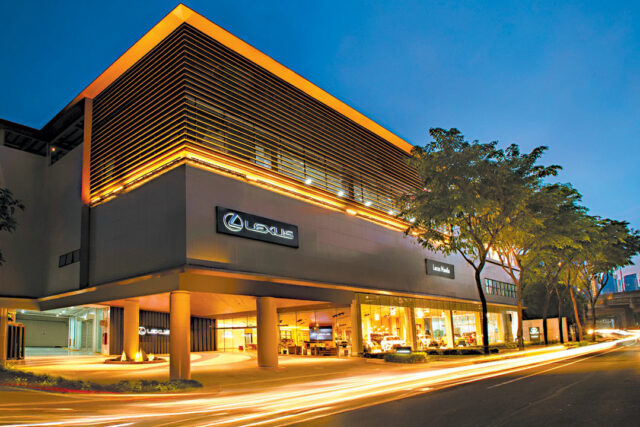
Lexus Manila Gallery is on 8th Avenue Cor. Col. Santos Street, Grand Central Park, North Bonifacio Global City, Taguig. — PHOTO FROM LEXUS PHILIPPINES

Lexus Manila Gallery is the new home befitting the country’s leading premium auto brand

LEXUS in the Philippines recently moved into its new home — a multi-storey facility that’s not just reflective of the auto brand’s premium nature but truly befitting its luxury-segment leadership here.

What a difference 16 years can make.

Not too long ago, it seemed that Lexus was more of an experiment than anything — a bold move by Toyota Motor Philippines to bring in the brand, and during a period of global economic uncertainty, no less. Rising on a 4,000-sq.m. lot on the corner of 8th Avenue and 34th Street in Bonifacio Global City, Lexus Manila remained the marque’s showroom and facility in the country. Three floors and 10,000 sq.m. of everything Lexus — which at the outset had as its centerpiece an atrium garden with real balete trees and mint plants underneath a skylight — was eventually outgrown by the brand’s success. Underscored Lexus President Masando Hashimoto in a speech at the recent inauguration of the facility, “When we opened our… showroom that year, we sold 172 units.”

This makes its segment dominance — first attained in 2023 and repeated last year (with 53.5% market share to the tune of 2,263 units) — an even more noteworthy achievement. Word has it that Lexus is set to do a “three-peat” by the time 2025 is done and dusted.

With total cumulative sales breaching 12,000 vehicles since its humble beginnings, Lexus Philippines (through Lexus Manila) made an easy choice to pack bags for a more appropriate location. “The decision to move to a bigger and better facility is intended to cater to the enhanced lifestyle of luxury customers,” said Lexus Philippines in release.

The growth, continued Mr. Hashimoto, is also mirrored in the expansion of the model line from five to 12. “With each vehicle built in Japan at our Tahara, Motomachi, Miyata, and Iwate plants, every Lexus delivered to our customers carries the finest ‘made in Japan’ craftsmanship and quality,” he stated.

And Lexus Manila Gallery, as the dealership facility is now called, is just further down 8th Avenue from its original location — and, while we’re at it, right after the “semi-permanent” Lexus at Mitsukoshi brand space.

Lexus Manila Gallery isn’t just defined by the design and elements that go into the physical structure. Averred Lexus Philippines Chairman Alfred Ty: “In Lexus, our philosophy is to treat each customer as we would a guest in our own home. It is what we call the omotenashi spirit. Our goal is to provide number-one quality in every vehicle and deliver the omotenashi experience to every single guest.”

Mr. Ty maintained to guests at the inauguration, “In the past 16 years, our team has tried to craft a personal relationship with each one of you, or as personal as you would allow us to be, because we believed this was how we could provide the best service possible. Whether it would be pocket events about coffee making and appreciation, calligraphy basics or bonsai making.”

The executive looks fondly upon the old location, describing it as one his late father (business magnate George SK Ty) loved. “It was intimate and personal. It had allowed the outdoor feature to come inside with an indoor garden. It is also where we were able to welcome late Honorary (Toyota Motor Corp.) Chairman Dr. Shoichiro Toyoda and also current Chairman Akio Toyoda.

But the four-storey facility, which stands on 4,200 sq.m. of prime real estate, of course ticks important boxes — particularly by enhancing the service capacity of the brand by “at least 50% of the original for both productive bays and holding stalls,” reflecting a meaningful capacity scaleup. It gets 12 service bays, and is also 40% larger than the original location (which, for now, is retained as a used-car showcase/depot).

Lexus Manila Gallery, with a total floor area of around 10,000 sq.m., boasts a sprawling eight-car showroom on the ground floor, with an additional pocket showroom on the third floor that also doubles as a lounge complete with Ogawa massage chairs and even a golf simulator.

As in the previous facility, Lexus Manila Gallery is imbued with an unmistakably warm, homey, and inviting ambience, obviously in keeping with its aforementioned omotenashi vow. Generous use of wood also lends a decidedly Lexus character as in other Lexus facilities — particularly Intersect locations. Artworks featuring stylized Lexus vehicles on canvas tastefully dot the location, as well as a delightful mélange of merchandise, brand and dealership achievements, and even a kiddie LX 570 in the showroom.

Just before the elevator on the left side of the ground floor — just past the huge service reception lounge with comfortable couches — is a bar where signature coffee blends are served using Lexus Crafted in-house sumiyaki beans (not for sale, unfortunately) which are charcoal-roasted using a Japanese technique. Other offerings include mocktails, juices, desserts, cookies, and brownies.

At its core, the raison d’être for new dealership is simple: To reflect the vision of what Lexus is as it evolves for the future. “This vision is echoed by our global chairman Akio Toyoda, who recently said: ‘Lexus is now poised to evolve further. The keyword is discover. Lexus doesn’t imitate anyone.’ Guided by this, we will continue to deliver unique products and experiences to customers in the Philippines,” concluded Mr. Hashimoto.

The Lexus Manila Gallery is located on 8th Avenue Cor. Col. Santos Street, Grand Central Park, North Bonifacio Global City, Taguig. It is open from 8 a.m. to 7 p.m. Mondays through Saturdays, and 10 a.m. to 6 a.m. on Sundays. After-sales service reception is from 7:30 a.m. to 5:30 p.m. Mondays through Saturdays.

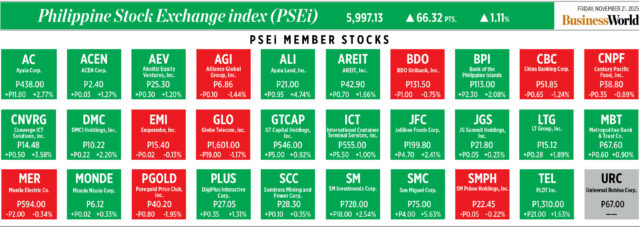
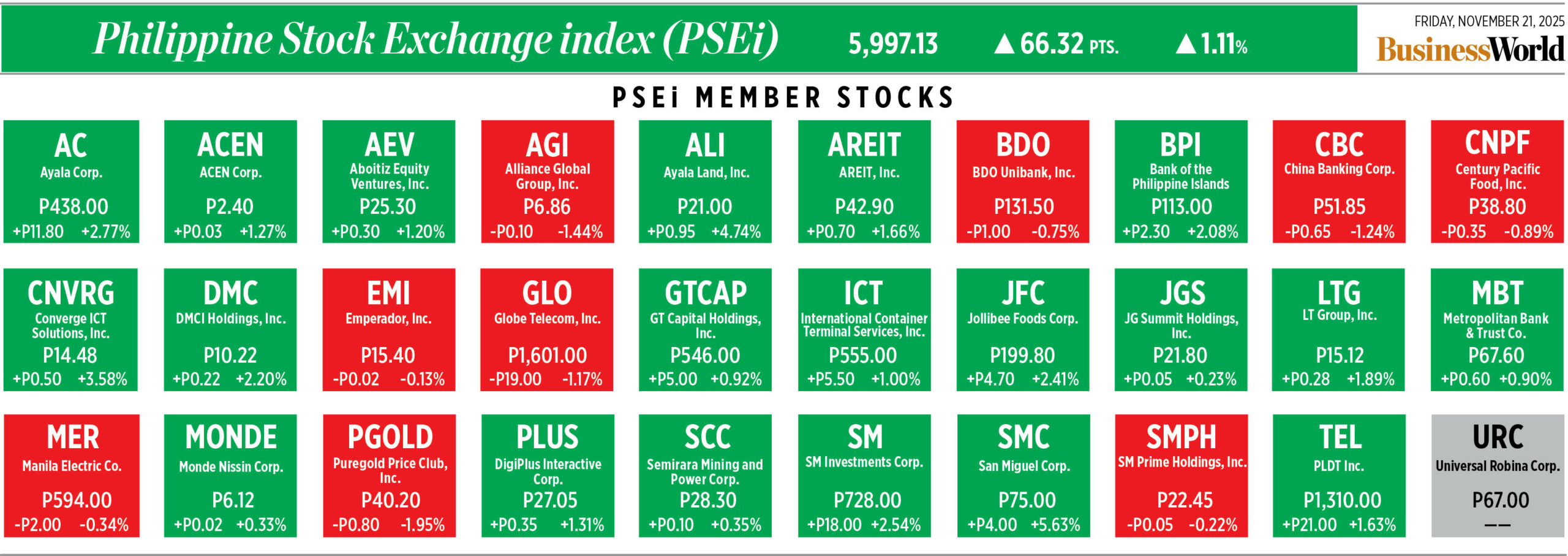
How PSEi member stocks performed — November 21, 2025

Here’s a quick glance at how PSEi stocks fared on Friday, November 21, 2025.


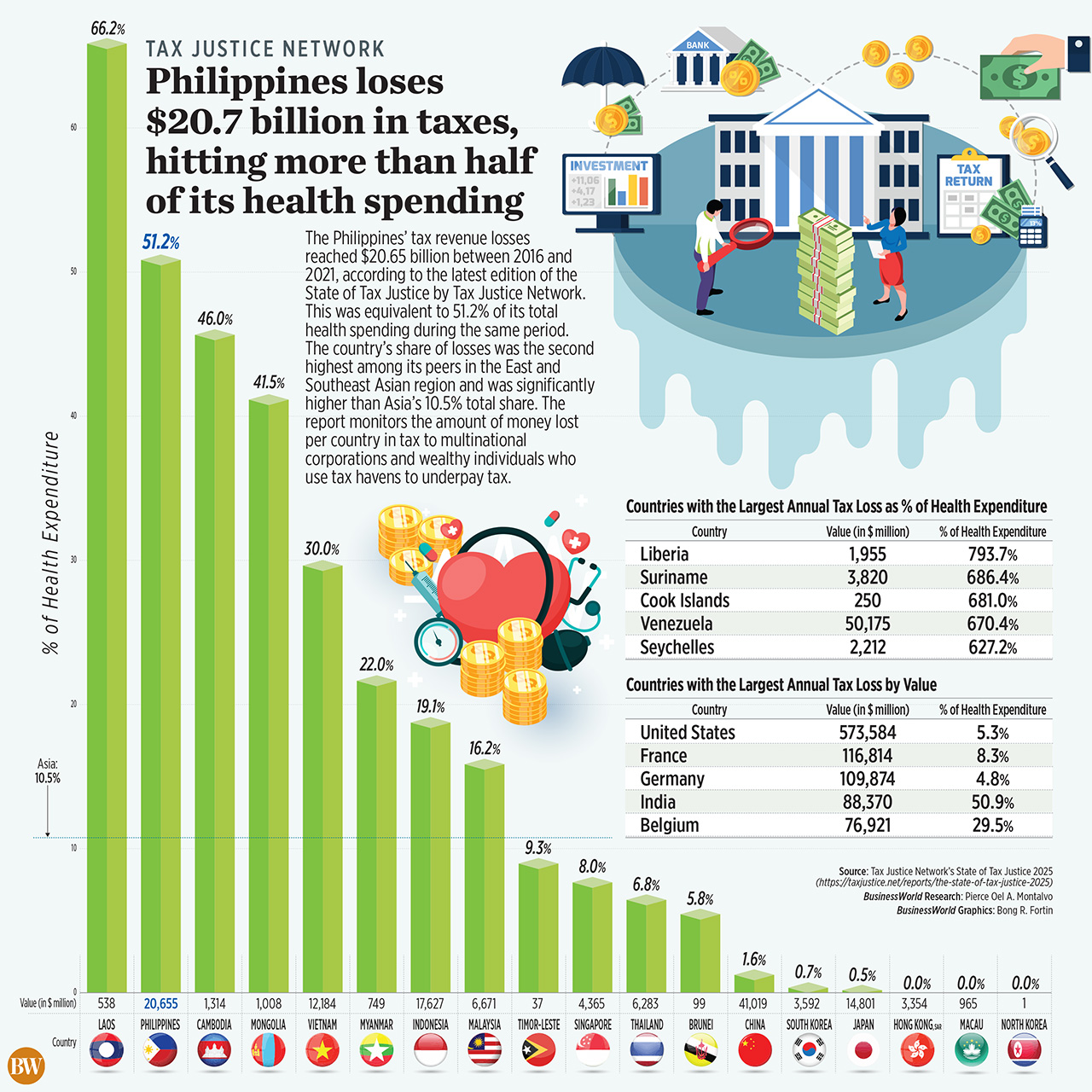
Tax Justice Network: Philippines loses $20.7 billion in taxes, hitting more than half of its health spending

The Philippines’ tax revenue losses reached $20.65 billion between 2016 and 2021, according to the latest edition of the State of Tax Justice by Tax Justice Network. This was equivalent to 51.2% of its total health spending during the same period. The country’s share of losses was the second highest among its peers in the East and Southeast Asian region and was significantly higher than Asia’s 10.5% total share. The report monitors the amount of money lost per country in tax to multinational corporations and wealthy individuals who use tax havens to underpay tax.

PHL stocks may extend gains if catalysts hold

BW FILE PHOTO

By Alexandria Grace C. Magno

PHILIPPINE STOCKS may extend their advance this week after the market staged a strong rebound and moved close to the 6,000 level, analysts said.

“Local shares rebounded this week and almost breached the 6,000 zone, as investors capitalized on multi-year low valuations,” online brokerage 2TradeAsia said in a note.

On Friday, the Philippine Stock Exchange index (PSEi) climbed 1.11% or 66.32 points to 5,997.13. The broader all-share index rose 2.5% or 83.5 points to 3,418.52.

Week on week, the PSEi gained 412.78 points from its 5,584.35 close on Nov. 14.

“The local market has shown signs of life last week, bouncing strongly on the back of positive narratives,” Philstocks Financial, Inc. Research Manager Japhet Louis O. Tantiangco said in a Viber message. “However, technically, the market is still considered to be on a downtrend.”

“To negate its current trend, it must establish a high exceeding its previous one at 6,141.87 touched last Oct. 20, and a low shallower than its last one at 5,584.35 touched last Nov. 14,” he added.

Despite last week’s rally, he said the market remains undervalued. As of Friday’s close, the bourse was trading at a price-to-earnings ratio of 10x, below its five-year average of 17.3x and the regional average of 17.9x.

Latest financial results have also been encouraging, with 23 of the 30 index members posting bottom-line growth.

To keep bargain hunting active, Mr. Tantiangco said more positive catalysts must emerge. Without these, the market may slip back into profit taking, given persistent worries about corruption issues and the economy’s outlook.

He added that traders might also take cues from peso movements. An appreciation against the dollar could support sentiment, while a decline may weigh on the market.

On the technical front, Mr. Tantiangco said the PSEi ended last week above its 50-day exponential moving average (EMA). “Holding position above the 50-day EMA leaves the 6,000 resistance level as the next target. The market’s MACD (moving average convergence/divergence) line has crossed above the signal line, implying short-run bullish momentum. Major support is at 5,800,” he said.

Meanwhile, 2TradeAsia said near-term downside might be limited by holiday liquidity, the US Federal Reserve’s planned end to quantitative tightening in December, and typical year-end window dressing.

Still, it warned that global uncertainty calls for disciplined positioning in high-quality companies with strong balance sheets.

“Stay nimble as opportunities arise when sentiment overshoots fundamentals,” it said. The brokerage placed immediate support at 5,800 and resistance at 6,000, with secondary resistance at 6,100.

Capacity still main issue for coco industry after tariff break

PHILSTAR FILE PHOTO

By Vonn Andrei E. Villamiel

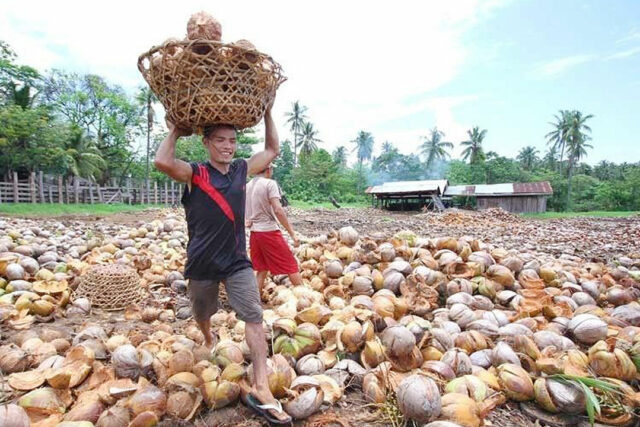
THE coconut industry stands to gain the most from the recent US tariff concessions, though analysts said the extent of these gains will depend on industry capacity and regional competition.

In an executive order, the US exempted from tariffs more than 200 agricultural commodities that it does not produce in large quantities. As such, some Philippine agricultural goods will no longer be subjected to the 19% reciprocal tariff.

Coconut and its derivatives are the Philippines’ top agricultural export to the US. In 2024, the Philippines exported P558 million worth of coconut oil to the US, accounting for 4.6% of the total, according to the Philippine Statistics Authority.

Charles R. Avila, president of the Confederation of Coconut Farmers’ Organizations of the Philippines, said the tariff exemptions are a “crucial relief to farmers and exporters.”

Mr. Avila told BusinessWorld via Viber that when Philippine exports, including coconut products, were charged higher tariffs, the initial response was to find alternative markets.

“Our immediate reaction, then, was that the US is not the only market there is for coconut. Europe has been big for the longest time and will be shifting now from oil palm to coconut products … there’s also Asia ready to gobble up anything coconut,” he said.

Agriculture Secretary Francisco P. Tiu Laurel, Jr. has said the tariff exemptions remove the doubts that had held back producers and exporters.

“Now people can plan, invest, and expand… As far as the DA is concerned, we have to start planting more … so that we can export more to the US,” Mr. Laurel told reporters on the sidelines of the 3rd Philippine Hydro Summit last week.

However, analysts also pointed out that the tariff exemptions are not specific to the Philippines. The US decision applies to all supplying countries, as part of its efforts to tame rising domestic food prices.

“The Philippines doesn’t suddenly have a monopoly on the opportunity to export duty-free to the US. Every other country exporting the same agri products to the US basically gets the same chance so the Philippines is not suddenly better off than its competitors and is really just in the same situation it was before Trump’s bullying tariffs since early this year,” IBON Foundation Executive Director Jose Enrique A. Africa told BusinessWorld via Viber.

Because of this, gains will ultimately boil down to production-side factors and regional competition, analysts said.

Samahang Industriya ng Agrikultura Executive Director Jayson H. Cainglet told BusinessWorld via Viber that the Philippines faces stiff competition within Southeast Asia. “For coconut oil and coconut water, Indonesia is now producing them at scale. For bananas, Indonesia, India, Vietnam, and China are our competitors,” he said.

Mr. Cainglet also said these countries enjoy government support and subsidies, giving them an advantage in scaling production and maintaining competitiveness.

“The pressure and responsibility are actually on the government to undertake strategic interventions to boost domestic value-added to gain a market edge. More high value-added processing and refining by Filipino firms will create and capture more value domestically,” Mr. Africa said.

He said the government should also take steps to allow small farmers and domestic producers to benefit from exporting agricultural products, such as by ensuring higher farmgate prices.

Eduardo Mora, a coconut farmer and former sectoral representative to the National Anti-Poverty Commission, told BusinessWorld via Facebook Messenger that much needs to be done to translate trade gains to farmer welfare.

Sa bahagi ng magsasaka ng niyog, ang nagtatakda ng presyo ng raw material ay ang bumibili ng aming copra mula sa Pilipinas papuntang ibang bansa. Ang makikinabang dito ’yung negosyante at ’yung bibili, hindi naman mga magsasaka. (For coconut farmers, the price of raw materials is dictated by traders who export them to other countries. It is the businesses, not the farmers who will benefit,)” he said.

Mr. Mora said the government should also invest in building production capacity and developing local industries.

Kaya naman ng Filipino na paunlarin ang industriya. Kailangan ng value-added processing para dito na sa Pilipinas gawin at mga Filipino, mga magsasaka ang makinabang. (Filipinos can develop their industries. We need value-added processing, so it can be produced here in the Philippines, and Filipino farmers will benefit),” he said.

100% public-school connectivity expected by year’s end, DICT says

DPWH.GOV.PH

THE Department of Information and Communications Technology (DICT) said it is expecting to connect all public schools to the internet by the end of 2025.

“We’re at 80%. It just so happened that (there have been) typhoons,” Information and Communications Technology Secretary Henry Rhoel R. Aguda told reporters last week.

“Our target is 90% (of public schools) by end-November and 100% by December. We had to temporarily pause deployment due to typhoons Tino and Uwan,” he said.

Mr. Aguda said the DICT is looking to connect more schools to its internet nodes ahead of more possible weather disturbances by year’s end.

“Science and Technology Secretary (Renato U.) Solidum, Jr. just informed me that two more (typhoons) are expected. But hopefully, they’ll be weak.”

Internet connectivity in schools is hindered by unreliable electricity and underutilization of state infrastructure budgets, the Second Congressional Commission on Education has said.

The National Fiber Backbone project is expected to result in faster and more reliable internet connectivity in remote areas. About 70 million Filipinos are expected to benefit from the project, the DICT said.

The fourth and fifth phases of the national fiber backbone will be completed next year. It is expected to bring high-speed internet to Mindanao via a 1,000-kilometer high-speed government-owned fiber network connecting Butuan, Cagayan de Oro, Bukidnon, Zamboanga, and Davao.

The first phase, which covers 1,245 kilometers with 28 nodes, links Laoag, Ilocos Norte to Quezon City. It was completed in April last year, and has an initial 600 gigabits per second optical spectrum capacity. — Beatriz Marie D. Cruz

Palawan ecozone ready for locators by mid-2026

PHILSTAR FILE PHOTO

THE Philippine Economic Zone Authority (PEZA) said it is expecting to host the first locator at the Palawan Mega Ecozone (PMEZ) by mid-2026.

“We are looking at four to six months processing time for the presidential proclamation, and by mid next year, we can start hosting locator companies,” PEZA Director General Tereso O. Panga told BusinessWorld.

“We will offer a very low lot rental rate to the first set of investors that will sign up with us, provided they undertake all the land improvements at their own cost,” he added.

PEZA signed a joint memorandum circular (JMC) on the development of the ecozone with the Bureau of Corrections (BuCor) on Thursday.

The JMC formalized the transfer of the exclusive use and possession of the BuCor-administered portion of the Iwahig Prison and Penal Farm for ecozone development.

The mega ecozone is geared towards strengthening domestic production and create quality jobs for local communities.

The zone is projected to employ 480,000 direct jobs in the region.

Mr. Panga said he expects the ecozone to attract new investments and housing locators with complete supply chains.

“There is much interest in the PMEZ and when we can put it into operation. I have received queries on this and interest to invest as developers and locators,” he said.

According to PEZA, some investors that have inquired about locating include Thai conglomerate Charoen Pokphand Group.

Other firms have also signified interest, including a Taiwanese aqua farm operator, a Peruvian producer of Stevia, a Philippine exporter of coconut-based products, and a power generation company.

“PEZA is open to joint ventures for the development of embedded utilities or facilities. We plan to allocate huge areas to sub-developers or facilities providers to accelerate the development of the property,” Mr. Panga said.

“This will all be based on a master plan that will be commissioned by both BuCor and PEZA,” he added. — Justine Irish D. Tabile

Biodiesel group urges caution on proposed biofuels act changes

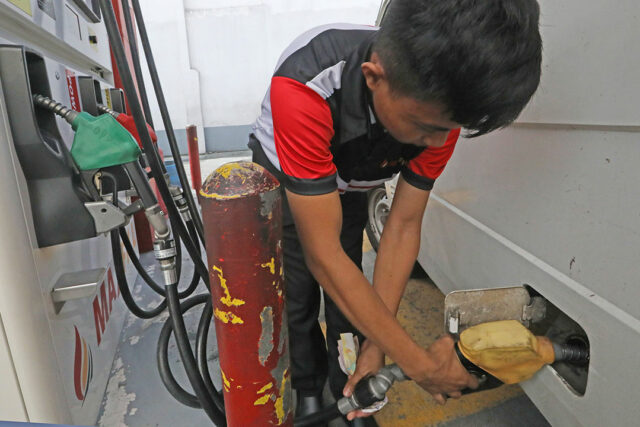
An attendant fills up a vehicle at a gasoline station in Manila, Sept. 18, 2023. — PHILIPPINE STAR/EDD GUMBAN

THE Philippine Biodiesel Association (TPBA) recommended caution on proposed changes to Republic Act (RA) No. 9367, or the Biofuels Act of 2006, particularly on the suspension of the coco-biodiesel program when blended diesel hits certain price triggers.

In a statement over the weekend, the group said that while it acknowledged the intent of House Bill (HB) No. 4151 to protect consumers, the proposed measure needs to be evaluated “with a complete understanding of its wider implications.”

RA 9367 requires that all liquid fuels contain locally sourced biofuel components.

HB 4151, otherwise known as the Murang Langis Act, seeks to grant the president the authority to suspend the program if the price of blended diesel is at least 5% higher than that of pure diesel.

TPBA said blended diesel “is not always more expensive” and in fact, at par or cheaper than pure diesel, particularly during global oil volatility.

Citing studies by the Department of Energy (DoE) and the University of the Philippines’ National Center for Transportation Studies, TPBA said that although higher biodiesel blends cost a little more per liter, they promise mileage gains that translate to consumer savings.

The group said that the DoE is already ensuring energy security and balancing stakeholder needs, which it hope to “preserve that momentum.”

“Our contribution to the discussion is simply to highlight additional considerations to help ensure that all angles are fully evaluated. We believe this approach supports the spirit of HB 4151 and the broader goals of government,” TPBA Executive Director Ramon Taniola said.

TPBA said that millions of Filipinos depend on the coconut industry, and the biodiesel mandate has become one of the most stable domestic markets supporting farmers at a time of global commodity uncertainty.

“Any potential changes to the mandate… should take into account how stability affects replanting, modernization, and long-term productivity programs,” the group said.

The government started ordering the increase of the coco methyl ester (CME) blend in diesel to 3% (B3) in October last year, in a bid to reduce pump prices and support the local industry. CME is a biodiesel component derived from coconut oil.

Oil firms are due to increase the coco biodiesel blend to 4% by Oct. 1, 2025, and to 5% by Oct. 1, 2026.

The implementation, however, has been suspended due to the high cost of coconut oil.

This week, oil industry analysts are projecting a possible increase of P0.80 to P1 per liter for diesel. Since January, the price of diesel has increased by P24.05 per liter. — Sheldeen Joy Talavera

ADVERTISEMENT
ADVERTISEMENT