Home Blog Page 6630

Bridgerton — how period drama made audiences hate the corset

LIAM DANIEL/NETFLIX

WHEN you think of a corset, you might imagine period drama dames sucking in as they cling onto a bedpost as a feisty lady’s maid aggressively laces them in. Nextflix’s hot Regency inspired drama Bridgerton features similar such tortuous scenes.

In the run up to the show’s second season, Simone Ashley, who plays the new heroine Kate Sharma, complained to Glamour Magazine about the horrors of wearing a corset. She claimed that her corset caused her “a lot of pain” and “changed her body.”

In the first season, Prudence Featherington (played by Bessie Carter) was tight-laced into a corset. Prudence’s mother urges her daughter on: “I was able to squeeze my waist into the size of an orange-and-a-half when I was Prudence’s age.” Rather unnecessary, when regency gowns fall from an under-bust empire line, which obscures the waist. Unlike their later Victorian counterparts, Regency corsets focused on enhancing a lady’s assets, not shrinking her waist.

This scene is ubiquitous in period dramas, from Elizabeth Swan fainting in Pirates of the Caribbean, to Rose DeWitt Bukater unable to breath in Titanic, and, of course, Mammy’s iconic line, “Just hold on, and suck in!,” as Scarlet O’Hara clings to a bedpost in Gone with the Wind. It may be on screen shorthand for the restricted lives of historical women, but it stems from a fundamental misunderstanding of historical corsets and women alike.

After centuries of women (and some men) wearing corsets to support and shape the body, it was Victorian men who taught us to hate corsets. Corset-related health issues were a myth, constructed by doctors, to promote their own patriarchal perspectives. So, you might be surprised to hear that period dramas are perpetuating Victorian misogyny.

The list of medical complaints that 19th-century doctors attributed to the corset seems unending. Constipation, pregnancy complications, breast cancer, postpartum infection, and tuberculosis were all blamed on the corset. One Victorian doctor, Benjamin Orange Flower, author of the 1892 pamphlet Fashion’s Slaves, claimed that “if women will continue this destructive habit, the race must inevitably deteriorate.”

As science has developed, the medical root of these illnesses has been identified, and the corset’s culpability disproved. The corset offers an example of gender bias within medical research. The many ailments of George IV, one of the many men to wear a corset in the 19th century, were never blamed on his corset wearing.

Some corsets were even specifically designed to be healthy and supportive. Lingerie company Gossards published Corsets from a Surgical Perspective in 1909, which promoted the flexibility and supportive possibilities of the corset, which could “preserve the lines demanded by fashion, but without discomfort or injury.”

But the hourglass shape of the late 19th-century period was not what women of the Regency desired. They were only interested in their breasts, as Hilary Davidson has shown. Breasts needed to be lifted and separated into two round orbs. Regency corsets (or “stays” as they were known) were often short, always soft, and never heavily boned. Their purpose was bust support, never restriction. I wonder what regency women would have thought of modern bras with straps that pinch and underwire that rubs.

Historical corsets were ingenious, light and bendy. Whalebone (which is baleen from the mouth of a whale, and is not actual bone) is wonderfully flexible, and molds to the body beneath it — and many corsets were simply reinforced with cotton cording. Corsets reduced back pain from bad posture and had expanding portions for pregnancy.

The problem then in the depiction of corsets in period dramas is not “historical accuracy,” an idea widely debunked by historians, including Bridgerton’s own historical advisor. Bridgerton’s costumes are joyously reminiscent of designer George Halley’s highly embellished and brightly colored empire line fashion designs from the 1960s. Bridgerton’s costumes are historically inspired fantasy.

Bridgerton is to Regency England what Game of Thrones is to the Wars of the Roses, and there is nothing wrong with that. It is a fantastical reimagining, creatively inspired by the past. The idea that its costumes should be “historically accurate,” or that such an aspiration is even possible, is not what is at stake here.

This is an issue of historical fallacy. Women of the past had agency over their bodies and how they were dressed. They were clever about how they achieved the fashionable proportions, padding out the hips and bust, rather than reducing the waist. Like the show’s famed dressmaker, Madame Delacroix, many of the professionals dressing them were themselves women. We strip away that agency and ingenuity when we assume historical women were passive dolls, dressed up and cinched in by a patriarchal society.

For historical women, corsets were a support garment, which allowed them to follow the fashionable silhouette without having to diet, exercise, or have cosmetic surgery. It would be a refreshing change to see period dramas embrace this feminist history of the corset, instead of falling back on a misogynistic stereotype.


Serena Dyer is a Lecturer in History of Design and Material Culture at the De Montfort University in Leicester, UK.


Volvo wants the planet safe as well

Volvo S90 — PHOTO FROM VOLVO PHILIPPINES

The Swedish auto brand takes climate change seriously

AS FAR AS I can remember growing up in the Philippines, we’ve always recognized Scandinavian car brand Volvo as one of the strongest champions of vehicle safety. To this day, that has not changed — but did you also notice how the brand has now taken a fiercely proactive stance when it comes to climate action?

As a matter of fact — and among other achievements — Volvo has recently been cited by the global environmental non-profit CDP as one of the leaders (together with only a small number of companies) in taking real actions toward becoming a climate-neutral company.

“Receiving the prestigious A-score from the CDP shows that we are on the right track, and hopefully, we can inspire other companies to do even more,” shared Volvo Cars Head of Global Sustainability Anders Karrberg.

Furthermore, Volvo also clinched the Smart and Safer Mobility Award at the 2021 Europa Awards, for its active efforts to address several motoring concerns, primarily in the fields of accessibility and environmental impact. This, alongside the company’s customer-centric approach in delivering cleaner and data-driven solutions for our local urban mobility ecosystem.

If you will remember, Volvo Cars has already long disclosed its goal to transform into a fully electric car maker by 2030. Imagine, that’s only eight years away. This production transformation is a major component in its quest to become a climate-neutral company by the year 2040.

In alignment with this, Volvo Philippines will this year be offering a beautiful range of hybrid vehicles powered by a new B6 engine. This modern B6 engine features a state-of-the-art 2.0-liter, four-cylinder turbocharged engine connected to a 48-volt hybrid system. The new Volvo S90 and XC90 variants already feature this, and do not sacrifice performance in exchange for fuel economy, mind you. At its core is an Integrated Starter Generator (ISG) that spits out an additional wave of power to enhance its already impressive 295 horses and 310 lb-ft of torque.

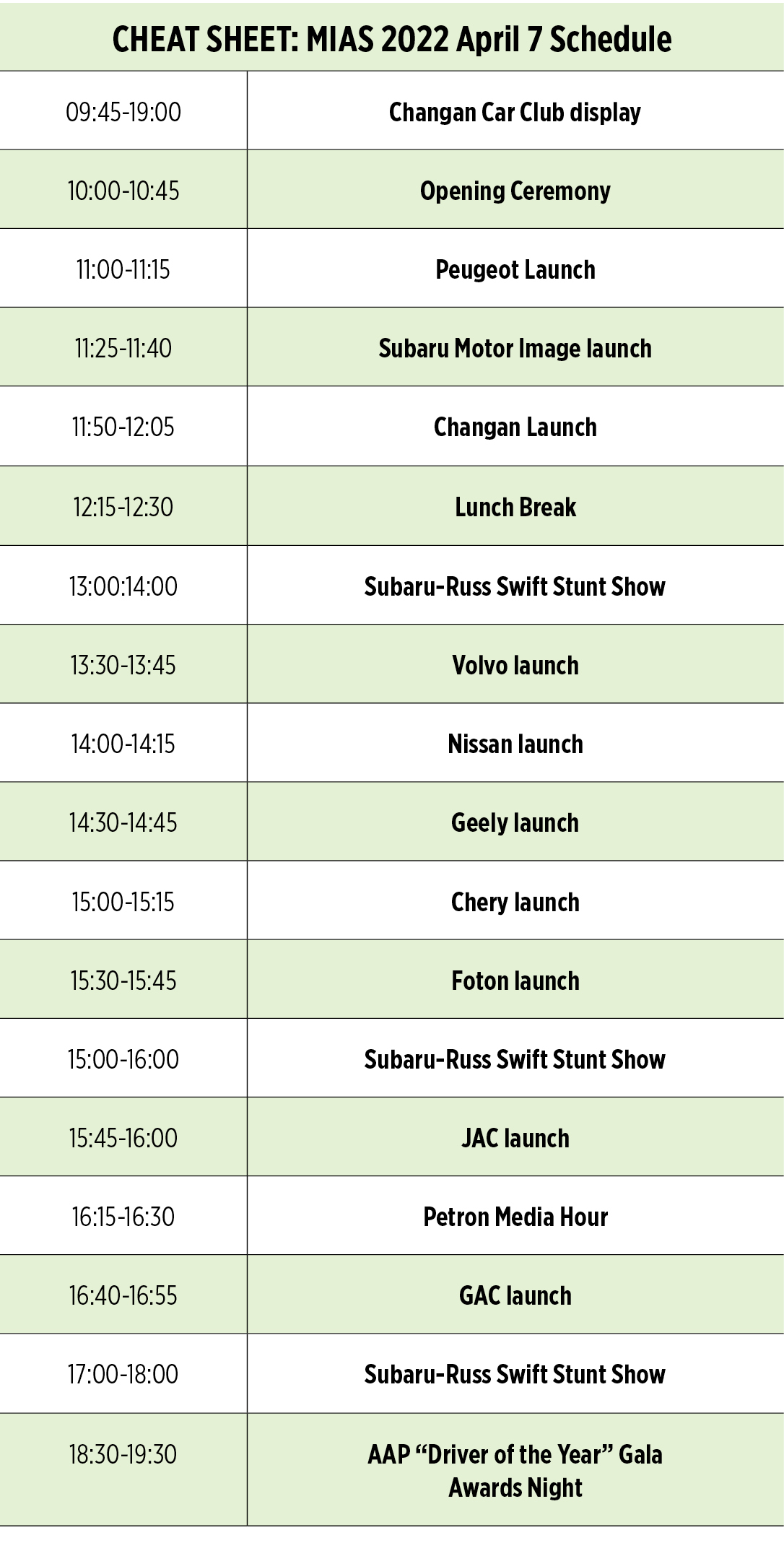
And to make things more exciting and hopefully bring the vehicles closer to the people, Volvo Philippines will be showcasing its latest local fleet of hybrid vehicles at the upcoming Manila International Auto Show (MIAS) — finally back in the metal — at the World Trade Center this week after a COVID-19 hiatus since 2020.

And since we already mentioned this disastrous COVID pandemic, might I also add that Volvo Cars now also highlights an advanced kind of air purifier that keeps the cabin air quality more sterile than ever before. It is the tiny details like these that keep Volvo vehicles at the forefront of transportation technology that marry comfort and connectivity with every aspect of passenger safety.

As our country’s local charging infrastructure (or lack thereof) still implies that hybrid vehicles are our current best bet when it comes to consumer convenience in the journey to vehicle electrification, Volvo Philippines is happy to exhibit its 2022 Volvo Boost Hybrid Range, and to offer special deals and promotions alongside them, at the upcoming largest vehicle trade show in the country.

SL Agritech in P2-B social finance issuance

RICE producer SL Agritech Corp. announced that it became the country’s first private corporation issuer of a social finance instrument worth P2 billion.

“DNV made a second party opinion assuring [the] fund will enable us to raise capital for a project that has ‘social’ benefits. The funds will be drawn in one or more tranches over three years,” SL Agritech said in a statement.

The issuance is to be managed and arranged by MIB Capital Corp. and has been approved by DNV Business Assurance Pty. Ltd.

“SL Agritech currently meets the criteria established in its Eligibility Assessment Protocol [that is] aligned with the stated definition of social bonds and loans,” DNV said in a statement.

“There has been a steadily increasing demand for sustainable bonds such as SL Agritech’s social finance instrument,” said Konsintr Puongsophol, Asian Development Bank financial sector specialist.

“Global sustainable bonds doubled to $1.5 trillion in 2021 from $745.4 billion in 2020,” he added.

SL Agritech said that it is engaged in a continuing expansion every two years. Its hybrid rice plant production and seed processing sites including expansion sites are found in Talavera, Nueva Ecija; Banay Banay, Davao Oriental; Victoria, Tarlac; and Matanao, Davao del Sur.

“Through our plant expansion program, we are able to help more farmers and provide employment to those in the agricultural sector.  We are contributing to the economic growth in the target locations and nearby rural communities,” SL Agritech Vice-President for Rice Operations Christopher Brian C. Lim said.

“Both oil and food are very important for us. Right now, during this Russia war, the price of wheat and food has risen. There is a good opportunity for farmers to plant and yield more for us to be self-sufficient. In this season, we have to be self-sufficient in food,” he added.

A review and finalization of the terms of the issuance will be done from April 18 to 27, while the signing of the financing facility will be on May 2.

The social financing instrument will be made available to 19 primary institutional lenders.

SL Agritech said it recently established its social finance framework and corporate social and sustainability committee to oversee socioeconomic development projects.

The projects include a contract growing program for rice and hybrid seeds that provides farmers inputs, tools, and technology in advance. SL Agritech then buys back farmers’ harvest at prevailing price plus a premium.

The hybrid rice technology demonstration program is a nationwide farmers’ education that guides farmers on implementing farming technology using hybrid seeds from planting to harvesting.

The company is also continuing the research and development of hybrid seed varieties in terms of yield, good tasting quality, and pest resistance to ensure a sustainable food system.

It is also planning plant expansion programs aimed at generating more employment for farmers and agricultural sector, promoting economic growth in rural communities. — Luisa Maria Jacinta C. Jocson

Yields on government debt climb on expectations of faster inflation

YIELDS on government securities (GS) went up across the board last week on expectations of faster inflation and potential rate hikes by various central banks.

GS yields, which move opposite to prices, went up by an average of 5.54 basis points (bps) week on week, according to the PHP Bloomberg Valuation Service Reference Rates as of April 1 published on the Philippine Dealing System’s website.

At the short end of the curve, yields on the 91-, 182-, and 364-day Treasury bills (T-bills) on Friday picked up by 2.81 bps (to 1.3493%), 0.81 bp (1.5347%), and 0.56 bp (1.7434%), respectively, from their March 25 finish.

The belly of the curve likewise climbed as rates of the two-, three-, four-, five-, and seven-year Treasury bonds (T-bonds) increased by 3.6 bps (to 3.3857%), 7.35 bps (4.0737%), 10.2 bps (4.7063%), 6.1 bps (5.1729%), and 2.79 bps (5.6271%), respectively.

The long end of the curve also rose, with yields on the 10-, 20- and 25-year T-bonds gaining 23.94 bps (5.9587%), 1.13 bps (5.5605%), and 1.7 bps (5.5512%).

“Bond yields continued to reflect expectations for faster inflation and potential rate hikes by the BSP (Bangko Sentral ng Pilipinas),” ING Bank N.V. Manila Senior Economist Nicholas Antonio T. Mapa said in an e-mail on Friday.

“To some extent sentiment took its cue from developments related to the conflict in Eastern Europe as well as the borrowing plan for the second quarter,” Mr. Mapa added.

“The GS market sustained its defensive ways this past week as dealers and investors are still hesitant to build up major positions in anticipation of more interest rate hikes ahead, led by the US Federal Reserve,” a bond trader said in a Viber message.

“Moreover, the rise in local yields was tempered by relatively lower global oil prices this past week,” the bond trader added.

The BSP chief has said the central bank is looking to end its pandemic-driven accommodative policy by the second half. BSP Governor Benjamin E. Diokno last week signaled the key policy rate could reach up to 2.75% by next year.

The central bank has kept its key rate untouched for the 11th straight meeting last month despite warning that its inflation target might be breached this year due to surging global oil prices brought by the Russia’s invasion of Ukraine.

On Thursday, the central bank said March inflation could breach its target amid local oil price hikes and peso depreciation.

The BSP estimated that inflation for March could settle between 3.3% to 4.1%, with the midpoint at 3.7%.

If realized, this would be faster than February’s 3% but slower than March 2021’s 4.1%. The midpoint also matched November 2021’s pace and would be the quickest pickup since the 4% print in October last year.

The Philippine Statistics Authority will release March inflation data on April 5, Tuesday.

On Friday, global oil prices dipped ahead of a meeting of International Energy Agency member countries to discuss a release of emergency oil reserves alongside the US planned release of up to 1 million barrels of oil per day for six months, Reuters reported.

Brent crude futures were down 6 cents or 0.1% to $104.65 a barrel by 1055 GMT on April 1. US West Texas Intermediate crude futures were down 37 cents or 0.4% at $99.91.

Central banks around the world have been tightening their monetary policies to temper inflation even in the face of risks to economic growth.

The Fed hiked its policy rates for the first time since 2018 by 25 bps last month to combat its surging inflation that reached a 40-year high. It signaled more aggressive hikes in the coming meetings.

Meanwhile, the Bureau of the Treasury announced on Wednesday it plans to borrow P200 billion from the domestic debt market in April, smaller than the P250 billion programmed last month. Broken down, the government targets to borrow P60 billion from its weekly T-bill auctions and P140 billion via T-bonds.

For this week, ING’s Mr. Mapa said investors are likely to get direction from the upcoming March inflation report as well as international developments.

“As for particular tenors, next week features both a bills and bond auction and we could see some action on the belly of the curve,” Mr. Mapa said.

Yields will continue to trade sideways with an upward bias this week, the bond trader said.

“The local bond market will have a full plate this week as market players gear up for the release of March CPI (consumer price index) on Tuesday and the three-year FXTN (fixed rate Treasury note) auction issuance (indicative range at 4.00% to 4.25%),” the bond trader said.

The Treasury will offer P35 billion worth of fresh three-year bonds on Tuesday.

The government borrows from local and foreign sources to help fund its budget deficit seen to hit 7.7% of the country’s economic output this year. — Lourdes O. Pilar with Reuters

NGO helping develop market for organic nano-fertilizer

SHUTTERSTOCK

A SOCIAL enterprise has joined the effort to grow the market for organic fertilizer, particularly a type of nano-fertilizer which will soon be manufactured in the Philippines, as a response to the global shortage of fertilizer that is threatening to dampen global food production.

Ignite Impact Fund Founder Maria Antonia G. Arroyo said in a statement that her organization is pressing for greater adoption of organic fertilizer after the Russian invasion of Ukraine disrupted the global supply of synthetic fertilizer, of which Russia is a major manufacturer.

“We believe that BioPrime is definitely aligned with our mission to help these sectors and bring them out of extreme poverty, which is why their organic fertilizers are such a welcome development,” she said, referring to a US-made fertilizer that claims to increase yields for rice, corn, sugar, coffee, banana, cacao, tobacco, pineapple, vegetables, and tree crops.

“In trials with Philippine Rice Institute, BioPrime has been proven to reduce the need for synthetic fertilizers, which is currently at record high prices, and pesticides, lowering farming costs,” Ignite Impact Fund said.

In mid-March, BioPrime Agri Industries, Inc. announced that it is planning to develop nano-fertilizer facilities in the Philippines, which it plans to use as an export base for the region.

“The production facility will have a targeted capacity of 48 tons per year, employing more than 100 Filipinos in this high-technology agri initiative. Our product provides an avenue for the Philippines to implement an effective balanced fertilization program and planned production volumes can supply more than 3 million hectares of rice lands targeted to produce at least 22.4 million metric tons (MT) of rice per year,” BioPrime Chairman Ben Mead said in a statement.

“Farmers save money because they have less input costs, and they make more money because the yield is improved. It’s just a very exciting development for agriculture in the Philippines,” Mr. Mead said.

“Given that we’ve demonstrated that BioPrime works and it can have a highly significant impact in improving the returns to farmers, now is absolutely the time for the Philippines to embrace this technology,” he added.

BioPrime fertilizer’s components are microbial stimulators, enzymes, and mineral electrolytes that stimulate the microorganisms in the soil.

It claims to restore soil integrity, promotes microorganism activity, and reduces pest pressure. — Luisa Maria Jacinta C. Jocson

Rhenz Abando, Letran dominate University of Perpetual Help, 68-57

RHENZ ABANDO OF LETRAN — NCAA/GMA

By Joey Villar

RHENZ Abando showed he’s worth the investment as he dished out an MVP performance to power Letran to a 68-57 dismantling of University of Perpetual Help System DALTA (UPHSD) on Sunday and into the top of the 97th NCAA basketball tournament at the La Salle Greenhills Gym in Mandaluyong.

Mr. Abando, a transferee from University of Santo Tomas, unleashed a monster line of 24 points including three long treys, five rebounds, four assists, three steals and a steal to lift the Knights to their third straight win and straight to the top.

Letran picked up Mr. Abando, already an established star, during University of Santo Tomas’ turbulent times in the other league — the UAAP — amid the coronavirus disease 2019 (COVID-19) pandemic two years ago.

And after just three games, Mr. Abando has proven he is money in the bank.

“We just treated this game as if it was a championship game because this is a short season and we have no chance to get back if we lose, that’s why we gave it our best,” said the 22-year Mr. Abando, who moved from España to Muralla two years ago.

It was Mr. Abando who set the pace for the reigning titlist in the first half, pouring in eight points to lead, 28-23.

He then scattered 16 in the second half when the Knights eventually blew the Mike Saguiguit-coached Altas away.

Louie Sangalang and Allen Mina chipped in 10 points apiece while Christian Fajarito and Jeo Ambohot provided the muscle inside and combined for 22 rebounds and nine points.

Jeff Egan and Kim Aurin bounced back from a lethargic effort last time by dropping 15 and 12 points, respectively, but had no answer to Mr. Abando in the end as the Las Pinas-based dribblers fell to their second defeat against a win.

It didn’t help that Jielo Razon, the other of UPHSD’s big three, fired blanks on this one and missed all his eight shots after erupting for 22 points including six booming triples in a 63-58 loss to San Sebastian on Friday.

The scores:

Letran 68 – Abando 24, Sangalang 10, Mina 10, Caralipio 6, Fajarito 5, Ambohot 4, Paraiso 4, Yu 2, Olivario 2, Reyson 1, Guarino 0, Tolentino 0, Javillonar 0

Perpetual 57 – Egan 15, Aurin 12, Omega 8, Nunez 6, Barcuma 5, Abis 4, Ferreras 4, Sevilla 2, Boral 1, Razon 0, Martel 0, Cuevas 0, Pagaran 0

Quarterscores: 13-10; 28-23; 54-36; 68-57

World heritage at risk amid Ukraine war, UNESCO says

The Saint Sophia Cathedral in Kyiv, Ukraine. — UNESCO/KO HON CHIU VINCENT

PARIS —  Dozens of churches, historical sites and museums have been damaged by the war in Ukraine, the UN cultural agency said on Friday, adding that it was particularly worried about the northern city of Chernihiv.

UNESCO said last month it had bolstered protective measures for Ukraine’s endangered cultural heritage in light of Russia’s invasion, such as using a “Blue Shield” emblem to mark its cultural sites and monuments.

“We are very concerned about both the situation at the humanitarian and (cultural) heritage levels. Humanity’s heritage is in danger (in Ukraine),” Ernesto Ottone, UNESCO’s assistant director-general for culture, told a news conference.

UNESCO’s first preliminary list of totally or partially damaged sites featured 29 religious sites, 16 historical buildings, four museums, and four monuments, it said.

UNESCO chief Audrey Azoulay wrote to Russian Foreign Minister Sergei Lavrov at the beginning of March to remind him that Russia is a signatory to the convention for the protection of cultural heritage at the time of war, the agency said.

Having initially said Moscow had not responded, UNESCO later said it had received an answer, in which Russia said it was aware of its obligations and was “committed” to them.

At talks this week, Moscow, which calls its actions in Ukraine a “special military operation” to demilitarize the country, said it would reduce offensives near Kyiv, the capital, and the nearby city of Chernihiv to build trust.

Kyiv and its allies say Russia is pulling troops out of those areas, not as a goodwill gesture but to regroup, because they have taken heavy losses. — Reuters

CTA partially grants Chevron Holdings’ tax refund claim

THE Court of Tax Appeals (CTA) has partially granted the appeal of Chevron Holdings, Inc. for a tax refund claim to the modified amount of P49.8 million of unutilized value-added tax (VAT) attributed to zero-rated sales for the four quarters of 2014.

In a 33-page resolution on March 16, the court’s first division ordered the commissioner of internal revenue (CIR) to refund or issue a tax credit certificate representing the holding firm’s excess VAT for 2014.

The petitioner is a corporation duly organized and existing under the state of Delaware in the United States. It is licensed under the Securities and Exchange Commission and the Bureau of Internal Revenue to transact business in the Philippines as its regional operation headquarters. The company provides information technology and finance, and human resource to its subsidiaries in the Asia-Pacific and North America regions.

CIR, the respondent, has the authority under the law to decide, approve and grant claims for tax refunds.

The company’s appeal was for the court to reconsider a previous decision to grant excess VAT at a reduced P6.4 million, claiming that it is entitled to P84.2 million of excess VAT attributable to zero-rated sales for 2014.

It added that the court made a mistake that the documents submitted by the company were insufficient to prove its entitlement to the full amount of P84.2 million.

“It bears stressing that a claimant has the burden of proof to establish the factual basis of his or her claim for tax credit or refund,” the CTA said.

After re-evaluating the supplemental evidence submitted by the company, the CTA ruled that the petitioner sufficiently proved that it was entitled to a total VAT refund of P49.8 million or an additional amount of P43.3 million from the previous tax refund.

“In view of the foregoing, as petitioner was able to discharge its burden for its entitlement to a refund in the total amount of P49.8 million, representing its excess and unutilized input VAT attributable to zero-rated sales for the first to fourth quarter of CY 2014, the court finds no reason not to grant the same to petitioner,” the CTA ruled. — John Victor D. Ordoñez

A ‘physical’ MIAS 2022 to happen from April 7-10

The Manila International Auto Show in 2019 — PHOTO BY KAP MACEDA AGUILA

THE COUNTRY’S preeminent motor show will mark its first physical staging since the COVID-19 pandemic hit. The Manila International Auto Show (MIAS) will return for a 17th run — opening the doors of its usual haunt, the World Trade Center Metro Manila — from April 7 to 10.

Known as the biggest and most anticipated auto show in the country, “MIAS has conquered both on-ground and online execution through the past years to deliver the brands’ promise undeterred by different situations,” co-organizer Worldbex Services International said in a release.

Before the pandemic hit, the last physical staging of MIAS collected some 200 companies across a 33,000-sq.m. total exhibition space. The spectacle featured 400 cars, trucks, and motorcycle displays — attracting an excess of 140,000 visitors. After the pandemic struck, MIAS Wired saw the auto show take its attractions and features online via an interactive platform where automotive brands reached more people to showcase their products. MIAS Wired was participated in by 20 exhibitors and garnered more than 100,000 online booth visits during its five-day staging.

“With the restrictions finally easing up and the economic comeback looking unstoppable, the most anticipated rally of the biggest auto show in the country will stage its event back on-ground this 2022. This year’s installment is promised to be a bigger and bolder presentation for its crowd and its stakeholders. In this regard, we gladly inform everyone that preparations are already in place to ensure that the 17th edition of MIAS will be safe and fruitful,” continued Worldbex.

BSP sets internal audit rules for trust corporations

BW FILE PHOTO

THE CENTRAL BANK is allowing trust corporations that are part of a bigger group to perform an internal audit, either by itself or through a central unit of its parent.

Circular No. 1141 signed by Bangko Sentral ng Pilipinas (BSP) Governor Benjamin E. Diokno said the internal audit function of trust corporations shall assess and complement other control initiatives like risk management and compliance.

“In any case, the audit shall ascertain whether the institution’s trust and other fiduciary business and investment management activities have been administered in accordance with laws, Bangko Sentral rules and regulations, and sound trust or fiduciary principles,” the circular said.

The BSP said that a permanent audit function should be established, either under the trust corporation itself or its parent bank or non-bank financial institution.

The circular allows the board of directors of a trust corporation to conduct internal audit that can supplement or replace an annual audit cycle.   

“The audit may be conducted in intervals commensurate with the assessed levels of risk in trust and investment management operations,” the circular said.

The BSP said the head of the group internal audit of a trust corporation must define audit strategies, methodology, scope, and quality assurance measures. These should be set in consultation and coordination with the board of directors or audit committee of the trust corporation.

The central bank also gave trust corporations leeway to outsource internal audit activities, provided these will not be given to a trust corporation’s own external audit firm.

The BSP has been undertaking various reforms in the trust industry. Last year, trust corporations were allowed to sell unit investment trust funds (UITFs) through individual and institutional agents to level the playing field with banks that have broad distribution networks.

Latest central bank data showed there are 37 BSP-supervised financial institutions with trust authorities, including banks, trust corporations, and other non-bank financial intermediaries.

The assets under management of the trust industry reached nearly P5 trillion as of end-September 2021, based on BSP data. — L.W.T. Noble

Ukraine sunflower oil crisis hits food from chips to cookies

RUSSIA’S invasion of Ukraine has disrupted the supply of almost half of the world’s sunflower oil exports, forcing companies to turn to less desirable alternatives such as palm oil in products ranging from potato chips to cookies. 

Thousands of items, also including ready meals and even wrapping paper, use sunflower oil. Prices are surging and the ingredient will only become more scarce from the summer as Ukrainian farmers may struggle to grow and export the crop.

“Sunflower oil prices have gone up 1,000%, but it is less about the price as the oils are often only a small constituent part of the products,” said Richard Walker, the managing director of grocery chain Iceland Foods. “The real challenge is getting your hands on it.”

Just as the food industry was getting a handle on dealing with Covid-related shortages, Russia’s invasion of Ukraine has exacerbated the situation with the war driving up prices of basic ingredients such as wheat. US President Joe Biden has warned that the world will experience food shortages and countries should prepare for alternative sources. 

Walker said 450 products Iceland Foods sell are affected and while many can use alternatives, such as rapeseed oil, the grocer will have no choice but to “regrettably” use palm oil in about 30 to 40 products. This is a reversal of a high-profile pledge the grocer made in 2018 to remove all palm oil from its own-brand lines over concerns about its links to forest destruction.

“I just don’t know how long this will go on for,” Iceland’s Walker said, adding that it would only use sustainably grown palm oil.  “The only alternative to using palm oil under the current circumstances would simply be to clear out our freezers and shelves of a wide range of staples.”

Wm Morrison Supermarkets said it too will have to use sustainable palm oil in some products when they are unable to switch to alternatives such as rapeseed oil.

Russia’s invasion has caused a humanitarian disaster in Ukraine and disrupted trade in foods across the world, sending wheat and corn prices to the highest in a decade. Ukraine is a key supplier of grains to countries in the Middle East. Meat prices are also under pressure as the cost of the feed used for cattle and pigs rises.

Ukrainian farmers are pressing ahead with spring planting, but will face challenges as they grapple with shortages of workers, fuel and fertilizers. Russia has blocked Ukraine’s ports, cutting off the traditional export route. Ukrainian President Volodymyr Zelenskiy said on Thursday that Russian troops are targeting agriculture, placing land mines in farms and destroying machinery.

“Where sunflower oil exists as an ingredient in products, retailers will be substituting it with other safe oils, such as rapeseed oil,” said Andrea Martinez-Inchausti, Deputy Director of Food at the British Retail Consortium. For food like potato chips which use sunflower oil as a key ingredient, retailers will add information on substitute oil onto existing labels, she said.

For pre-packaged sandwiches, sellers are having to put up signs explaining some ingredients may have changed because the packages were printed in advance, according to the British Sandwich & Food to Go Association. Philippines-based Monde Nissin said it’s substituting UK-sourced rapeseed oil for sunflower oil in its meat alternatives.

Companies using sunflower oil for frying have been replacing it with palm oil, soybean oil and rapeseed oil, industry group Fediol said. Andrew Crook, president of the UK’s National Federation of Fish Friers, said his own shop in Euxton in northwest England has seen prices for 20-liter sunflower oil drums rise to 40 pounds from 30 pounds in the past two weeks. They typically go through eight or nine a week and might have to switch to palm oil at some point, though he values sunflower for its “nice, clean taste.”

That raises concerns that higher food prices and the need to search for supplies further afield will water down Europe’s food standards and push companies to opt for ingredients that may be more harmful to the environment. Palm oil and soy have come under increasing scrutiny in recent years over their role in deforestation, prompting plans for EU import curbs

Rapeseed oil is seeing the highest increase in demand, according to Hemeline Macret, head of oilseed market analysis at Strategie Grains. “It’s used for food already and palm oil is not very popular because of its bad image.” Soybean oil isn’t used in many food recipes because it’s often made from genetically modified soy, she said.

The war is exacerbating an already strained supply chain, with transportation snarls and harvest setbacks pushing food prices to record highs. Soaring costs for basic foods in import-dependent Middle Eastern and North African countries are putting people’s resilience at a “breaking point,” according to the United Nations’ World Food Programme.

“If this war doesn’t stop soon, supply disruptions could last from now to 2023,” Hemeline Macret said. — Bloomberg

Gin Kings-Bolts matchups were incredibly close, says Tim Cone

By Olmin Leyba

ENJOYING a whopping 3-0 upperhand against Meralco head-to-head in the PBA Governors’ Cup finals doesn’t in any way give Barangay Ginebra a false sense of security heading into their latest titular duel.

“It’s the opposite. You start thinking of the odds, you start thinking, oh-oh, this gotta change some time,” Ginebra coach Tim Cone said in the recent Power and Play program on Radyo Singko.

“Do we have a secret formula against them? We certainly don’t. I wish we did.”

He pointed out that their prior faceoffs with Meralco were actually down-to-the-wire situations. In 2016, Justin Brownlee knocked down a booming trey at the buzzer to clinch it in Game 6, 91-88. The following year, before 54,000 fans, the Gin Kings beat the Bolts in Game 7, 101-96, and two years later, Ginebra won in five against their injury-hit rivals.

The rivals met again in the 2020 Philippine Cup semifinals in the Clark bubble and Mr. Cone’s troops needed a last-second triple from Scottie Thompson to prevail in the do-or-die Game 5, 83-80.

“Every series has been incredibly tight and could have gone either way. I worry about it, you know, one shot here or there could have gone in their favor this time,” said Mr. Cone.

The multi-titled mentor said Meralco import Tony Bishop and tall guards led by Chris Newsome present matchup issues for his crew.

“(Mr.) Bishop is tough to handle because he can do so many things, he can beat you in so many ways. He’s not incredibly strong in any one thing but he’s really good at many, many things. He can shoot from the perimeter, he can get to the basket, he’s a great rebounder, he’s a long defender, he can post up,” said Mr. Cone.

Mr. Newsome, he noted, has always been “difficult to guard” with his size and power; so do his backcourt peers like Bong Quinto and Allein Maliksi.

“They have a big guard lineup. There’s a lot of issues but the biggest thing is they play really, really well together,” Mr. Cone observed.

The Gin Kings and the Bolts kick off their fourth championship confrontation on Wednesday at the Smart Araneta Coliseum.

ADVERTISEMENT
ADVERTISEMENT