Home Blog Page 6626

DTI says few manufacturers are seeking higher prices; SRP adjustment under study

ONLY limited numbers of manufacturers are seeking permission to raise prices of basic goods, the Department of Trade and Industry (DTI) said, with adjustments to the suggested retail price (SRP) list under consideration.

Trade Assistant Secretary Ann Claire C. Cabochan said in a Laging Handa briefing on Thursday that the department is weighing the impact on the broader economy before acting.  

Pinag-aaralan natin, kasi kapag nagbibigay tayo ng SRP bulletin na may price adjustment, alam naman natin ’yung magiging epekto din niyan kasi tataas pa ’yung presyo (It’s being studied, because if we allow an SRP adjustment, we all know that the impact would be higher prices)” Ms. Cabochan said.

Hindi naman lahat ay humihingi din ng increase as of this time, may ilan-ilan po. Titignan natin kung justified ’yung increase (Not all are asking to increase prices — it’s only a limited number. We will see if the reason for their requests is justified) and if it is, then that is the time (the) DTI will make adjustments,” she added.  

The SRP list was last updated by the DTI on Jan. 27, with 73 out of 216 stock keeping units authorized to raise prices due to the higher production costs.

The Philippine Amalgamated Supermarkets Association has estimated that the prices of basic necessities have increased by 3% to 6% while non-essential items have seen their prices increase between 8% and 15% in reaction to rising fuel prices.  

Ms. Cabochan said that the DTI sees no reason to order a price freeze with commodity prices rising due to the Russian invasion of Ukraine.

She said Republic Act No. 7581 or the Price Act authorizes a price freeze after the declaration of a state of emergency.

“As of this time and sinabi na ito ni (Trade) Secretary Ramon M. Lopez, na hindi pa natin nakikita ’yung (Secretary Lopez has said that he does not as yet see) circumstances that will give rise to a declaration of state of emergency,” Ms. Cabochan said.  

“Under a price freeze, the affected products are only basic necessities listed in the Price Act. The price freeze does not include prime commodities,” Ms. Cabochan added.

According to the DTI website, basic necessities include rice, corn, cooking oil, fresh milk, fresh eggs, and fresh fruit. These products will be covered by any price freeze.

Prime commodities include flour, onion, garlic, processed and canned pork, processed and canned beef and poultry meat, and fertilizer.

Since the beginning of 2022, the prices of gasoline, diesel, and kerosene have increased by P20.35 per liter, P30.65 per liter, and P24.90 per liter, respectively. — Revin Mikhael D. Ochave

Hog, rice industries say lowered tariffs produced no benefits, cut gov’t revenue

PHILSTAR FILE PHOTO

PORK PRODUCERS and rice farmers said lower tariffs for pork and rice failed to benefit consumers and producers, with retail prices remaining high.

“What we have heard from the National Economic and Development Authority (NEDA) is that lowering the tariff will benefit consumers. What we observed is that consumers didn’t benefit from it at all. There really are no savings. Our request is to help protect local producers. Imported manufactured goods competing with locally produced goods should, by law, face higher tariffs,” National Federation of Hog Farmers, Inc. President Chester Warren Y. Tan said at a virtual hearing called by the Tariff Commission.

The government sought to liberalize imports of these commodities via lower tariffs in response to an inflation crisis in 2021.

In May 2021, President Rodrigo R. Duterte signed Executive Order (EO) No. 134 and 135, lowering the tariffs on pork and rice imports from non-ASEAN countries from 50% to 35%.

A previous inflation crisis in 2018 led to the initial liberalization of the rice market, via the passage of the Rice Tariffication Law, or Republic Act 11203, the next year.

Mr. Tan said the hog sector would prefer to revert to the original tariff scheme.

Samahang Industriya ng Agrikultura Chairman Rosendo O. So said that the current tariff arrangement has caused the government to forego revenue it would have earned under the old tariff scheme.

“If the tariff of pork was not lower, the government should have collected around P22 billion on the imports of 2021. Because of the lowering of tariffs, we only collected around P10 billion. The government lost around P12 billion… Lowering tariffs did not help improve the retail price,” he added.

“Hog farmers… had to stop repopulation efforts (because of the imports). We are already telling the government, if there are many imports incoming, you will lose hog raisers,” he added.

The hog industry is still seeking to bounce back from the African Swine Fever outbreak, which thinned the Philippine herd and caused many growers to exit the business.

Federation of Free Farmers (FFF) National Manager Raul Q. Montemayor said that the reduction in tariffs on rice imports from non-ASEAN countries had no impact on overall prices and also resulted in foregone tariff revenue that could have been used to help rice farmers.

“There was no increase in rice supply from non-ASEAN sources despite cost advantages of some non-ASEAN exporters. There was a large number of supplier countries, but volumes were negligible,” he said.

“We hope the tariff outside ASEAN be made higher… Imports are not the solution, local produce is more dependable if only the government supported it,” Mr. So added.

In a statement, the FFF said that imports from non-ASEAN sources amounted to only 1.78% of total imports in 2021, down from 2.36% in the previous year, even though rice from India and Pakistan are competitive against their ASEAN counterparts.

“At the same time, importers opted to bring in expensive grades of rice instead of the regular rice commonly purchased by poor consumers. As what happened with the Rice Tariffication Law or RTL, the benefits of lower tariffs were captured either by importers or rich consumers,” the FFF added.

Mr. Montemayor urged the government to return the tariff to 50% and focus efforts on supporting farmers.

“We should encourage local production and incentivize farmers through input support and assurance of stable prices. We should also intensify the accumulation of buffer stocks,” he added.

NEDA told the commission that lower tariffs were intended to increase supply and bring down prices.

“There are several objectives that went into this. One is to increase supply, which we achieved. We really expected to bring down prices, but true enough, it did not happen. But what did happen, which is very crucial, is the stabilization of prices. If we did not have this additional supply, we may have had rocketing prices, in those periods where production was still not coming out. The inflation rate of meat has really come down,” NEDA Undersecretary Mercedita A. Sombilla said.

“When we are able to contain the rise of inflation, that affects the purchasing power of consumers, and that alone helps them. We shouldn’t say that consumers did not benefit from this. They probably did not benefit much from lowering meat prices, but they benefitted from preventing inflation rates going up,” she added.

The Tariff Commission is hearing a proposal to extend the effectivity of the EO beyond its scheduled expiry on May 15, 2022. — Luisa Maria Jacinta C. Jocson

No SDGs expected to be met by 2030 in Southeast Asia

UN.ORG

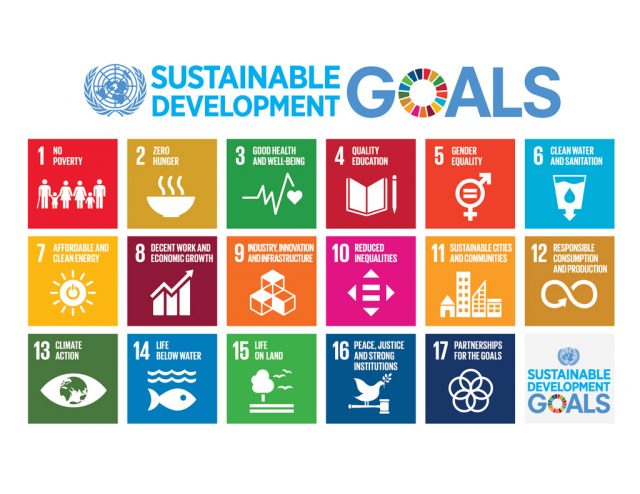
SOUTHEAST ASIA is behind the pace in meeting any of the 17 sustainable development goals (SDGs) by 2030, according to the United Nations Economic and Social Commission for Asia and the Pacific (UNESCAP).

“Southeast Asia is not on track to achieve any of the 17 Goals by 2030, given the current pace of progress by countries in the subregion,” UNESCAP said in a report released on Thursday.

According to UNESCAP, slow progress has been noted in SDG 4, or educational quality, adding that there are signs of regression in inequality indices and low proficiency in reading and mathematics among young students. 

“Cambodia, Indonesia, the Philippines, and Thailand recorded less than 50% of lower secondary students achieving minimum reading and mathematics proficiency for both sexes,” the report found.

However, UNESCAP said there has been some progress in Southeast Asia in SDGs related to poverty (SDG 1); industry, innovation, and infrastructure (SDG 9); and life on land (SDG 15).

 “The subregion remains on track to eradicate poverty for individuals living below international and national poverty lines, including in Indonesia and the Philippines, which have the highest prevalence of poverty in the subregion with 5 to 6% of the population living below $1.90 a day,” UNESCAP said.

“Factors negatively affecting the progress of SDG 1 are losses due to natural disasters and the continued lack of government spending on basic services (education and health),” it added.

The report also found a lack of progress in SDG 8 or decent work and economic growth, and SDG 17 or partnership for the goals.

“Relatively stable rates of gross domestic product (GDP) growth and increased economic activity contributed to progress towards decent work and economic growth (Goal 8). However, regression in improving efficiency in use of natural resources (material footprint and domestic material consumption) as well as a lack of progress towards compliance with labor rights have undermined overall progress,” UNESCAP said.

“Partnership for the goals (Goal 17) also showed little progress in the subregion because most governments’ revenue fell below 30% of GDP and technical cooperation for official development assistance was significantly reduced,” it added.

Meanwhile, UNESCAP said Southeast Asia is regressing on five SDGs — SDG 6 or clean water and sanitation, SDG 11 or sustainable cities and communities, SDG 12 or responsible consumption and production, SDG 13 or climate action, and SDG 14 or life below water.  

The report found that increased greenhouse gases emissions and casualties from various disasters affected the region’s efforts towards achieving SDG 13, while responsible consumption and production was affected by increased material consumption and material footprint, setting back efforts to achieve SDG 12.

“A reverse trend in clean water and sanitation (Goal 6) occurred owing to increased water stress and the inability of countries to protect and restore water-related ecosystems. Sustainable cities and communities (Goal 11) was greatly affected by road traffic deaths and human and economic loss from disasters,” the report said.

“Southeast Asia needs to accelerate progress or reverse current trends in Goals 4, 6, 8, 11, 12, 13, 14, 16 and 17 if the subregion is to meet the 2030 deadline. The trends in these goals must be reversed if the subregion is to make sufficient improvement towards achieving the SDGs by 2030,” it added. — Revin Mikhael D. Ochave

ADB sees stronger RCEP income effect vs TPP

THE Regional Comprehensive Economic Partnership (RCEP) is likely to have greater impact on incomes than the Trans-Pacific Partnership (TPP), the Asian Development Bank (ADB) said.

In a study, the ADB found that RCEP implementation adds $263 billion to global income, based on 2030 baseline projections, Cyn-Young Park, ADB director for Regional Cooperation and Integration, Economic Research and Regional Cooperation Department said in a webinar on Thursday.

The RCEP is a trade deal involving Australia, China, Japan, South Korea, New Zealand and the 10 members of the Association of Southeast Asian Nations (ASEAN). It has been in force in 11 countries since Jan. 1.

Meanwhile, the Comprehensive and Progressive Agreement for Trans-Pacific Partnership (CPTPP) is expected to add $188 billion.

“The income gains (for RCEP) are somewhat greater than those from the CPTPP,” she said.

The CPTPP is a trade deal among Australia, Brunei, Canada, Chile, Japan, Malaysia, Mexico, New Zealand, Peru, Singapore, and Vietnam.

“In terms of export effects, the patterns are quite similar to income effects,” Ms. Park said.

RCEP adds $496 billion to world exports, while the CPTPP adds $312 billion.

President Rodrigo R. Duterte ratified RCEP on Sept. 2, 2021. The Senate failed to give its concurrence before it adjourned on Feb. 3 for the election break.

Groups such as the Federation of Free Farmers have said that safeguards for the agriculture sector need to be in place before the Philippines signs on to the deal.

Trade Assistant Secretary Allan B. Gepty has said that delayed participation in the RCEP will send the “wrong signal” to investors and put Philippine businesses at a disadvantage in the region. — Jenina P. Ibañez

Energy efficiency companies want their projects to qualify under BOT law

PHILSTAR FILE PHOTO

ENERGY efficiency entities have asked the Public-Private Partnership (PPP) Center to include energy efficiency and conservation (EE&C) investments to the list of qualified projects under the Republic Act 6957 or the Build-Operate-Transfer (BOT) Law, in order to facilitate the industry’s access to private-sector financing.

“It is clear that the (revised implementing rules and regulations) of the BOT Law should qualify energy efficiency and conservation projects. We therefore seek explicit inclusion of ‘energy efficiency and conservation’ among the listed eligible types of projects,” Philippine Energy Efficiency Alliance President Alexander D. Ablaza said in a comment submitted to the PPP on Wednesday.

Mr. Ablaza also noted that while section 2.2 of the IRR mentions climate change mitigation, there is a need to mention explicitly ‘energy efficiency and conservation’ projects because climate change mitigation may not be the only purpose or intent of such project.”

“If energy efficiency projects become eligible for PPP transactions under the amended BOT law, through an expanded IRR, government entities may be able to implement energy efficiency projects without allocating taxpayer funding or general appropriations,” he said in a Viber message.

The alliance also sought the synchronization of Government Energy Management Program Guidelines with the BOT IRR’s detailed guidelines for the approval of projects as EE&C projects which are smaller in size, uncomplicated in scope, possessing low to zero negative impacts, which would allow such projects to access a simplified, fast-track project approval process with the corresponding endorsement of the Department of Energy through its Energy Utilization Management Bureau, it said.

The PPP Center is currently soliciting comment on proposed amendments to the IRR of the BOT Law. — Marielle C. Lucenio

Customs plans extended payment hours to facilitate release of goods

THE Bureau of Customs (BoC) plans to roll out a day-and-night payment system for exporters to speed up the release of goods currently being delayed by the limited hours of Customs operations.

The current payment system is only open from 8 a.m. to 5 p.m. daily, Customs Commissioner Rey Leonardo Guerrero said in a webinar on Thursday.

“We’re working with the Philippine clearing house center for us to be able to come up with an upgraded version of this payment system… which will allow 24/7 payment for these shipments, or particularly exports.”

Mr. Guerrero said exporters can also open a pre-payment account for their shipments.

Meanwhile, Mr. Guerrero also addressed corruption allegations at his bureau.

Most presidential candidates at a televised debate held by CNN Philippines last month indicated that they would investigate the Bureau of Customs for corruption if they won the presidency.

“That was really a sad awakening for us because all the while we were confident that we were doing our best to address all of these issues,” Mr. Guerrero said. “The bad impression that the bureau has acquired over many decades of neglect cannot be erased in just two or three years. This is something we have to work on.”

The bureau reported that it transferred 721 of its employees to other offices and ports last year following an anti-corruption campaign.

Customs dismissed three employees and suspended 17 over the course of the year. Another 19 were relieved from their posts but remain in active service.

“We tried our best to investigate and follow up the prosecution of those found involved in malpractice or in graft and corruption. However, the decision, the outcome of the cases, is actually outside the jurisdiction of the Bureau of Customs. This is a concern that we have raised with the agencies concerned,” Mr. Guerrero said.

The Philippines fell two spots to 117th place out of 180 countries and territories in the 2021 Corruption Perceptions Index.

Transparency International gave the Philippines a score of 33 out of 100, which is based on perceived levels of public sector corruption, a “historic low” for the country. — Jenina P. Ibañez

Travel reopening points to greater use of digital payment products — Visa

THE reopening of borders promises greater use of digital payment systems, according to the Visa 2021 Global Travel Intentions study.

Visa said in a statement that 63% of Filipinos who intend to travel plan to resort to digital payments due to safety concerns and comfort with the up-and-coming payment channels.

Some (34%) expressed a preference for mobile payment systems while traveling, with credit cards cited by 24% and debit cards by 31%.

The study also found interest in travel insurance products that protects them from COVID-19-related risks including the cost of medication and treatment (59%), quarantine charges (52%) and hospitalization (41%).

“These findings reflect the changing outlook Filipinos have on traveling as the coronavirus disease 2019 (COVID-19) situation evolves. We have seen a rebound in travel in many parts of the world as borders open, and Filipinos are optimistic about traveling again,” Visa Country Manager for the Philippines and Guam Dan Wolbert said.

“Similar to other markets, Filipino travelers are conscious about following safety protocols and also want to feel that they have sufficient access to health protection… while they are abroad,” he added.

More than half (56%) of respondents in the Philippines are interested in international leisure travel in a travel bubble setup.

Preferred destinations were the US, Japan, Hong Kong, Canada, and Thailand. Other destinations generating interest are South Korea, Australia, and Dubai.

Key considerations cited by those intending to travel are free COVID-19 tests (57%), access to hospital care (51%), and flexibility in changing travel plans (37%).

“As we see the number of COVID-19 cases trending downwards in the Philippines and the government’s decision to start opening our borders, we share the optimism of Filipinos that the road to recovery is beginning,” Mr. Wolbert said. — Luz Wendy T. Noble

Senator: Data breach could impair elections

PHILIPPINE STAR/EDD GUMBAN

By Alyssa Nicole O. Tan, Reporter
and John Victor D. Ordoñez

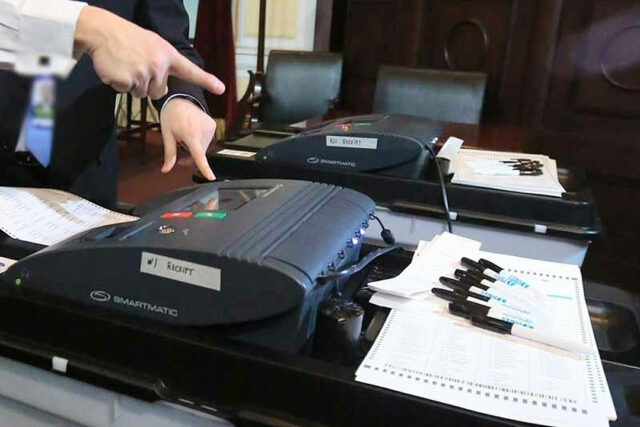
SMARTMATIC SGO Group, the software contractor for this year’s elections, had experienced a “very serious” data breach that could compromise this year’s elections, a senator said on Thursday.

“While it is being investigated further by both the National Bureau of Investigation, Cybercrime Investigation and Coordinating Center, National Privacy Commission and other groups, we have to admit that a very serious breach occurred,” Senator Maria Imelda Josefa “Imee” R. Marcos told a news briefing.

“It may not be technically hacking; however we feel that it compromises the processes and operations of Smartmatic in very serious means,” said the senator, who heads a joint congressional oversight committee on the automated election system.

The Manila Bulletin in January reported about the data breach, which prompted the investigation. Sensitive voter information might have been compromised after a group hacked the servers of the Commission on Elections (Comelec), downloading more than 60 gigabytes of data that could compromise the May 9 elections, it said.

“I am concerned that our election gatekeepers were lacking in ensuring the integrity of the May 9 elections,” Senate President Vicente C. Sotto III said in a statement.

“The people’s right to an honest and credible election is enshrined in our Constitution and the Comelec is tasked to ensure that the results of the elections are not tainted with doubt and especially, that the conduct of the electoral exercise was not attended by anomalies.”

Mr. Sotto said the Comelec system did not appear to have been compromised, citing testimonies given at a closed-door hearing on Thursday.

Comelec spokesman James B. Jimenez told an online briefing streamed live on Facebook he was confident the breach would not affect the election outcome. “From the very beginning, Comelec is fully in-charge of the elections, even in this case when no hacking occurred.”

“We will definitely act on what was mentioned in the executive session,” Election Commissioner George M. Garcia told the same briefing in mixed English and Filipino, referring to the closed-door Senate hearing. “We will strengthen what we have now.”

Ms. Marcos noted that despite the denial about the hacking, the media was right. A Smartmatic employee had taken his laptop out, allowing a certain group to copy some data.

“We are a little worried about the degree, depth and breadth of the data that had been released and are still publicly available as far as I know,” she said, citing fears that a hacking syndicate might have been involved.

Mr. Sotto said the Senate would start an investigation into the security breaches.

“We will find out how deep and wide the neglect has taken,” he said. “We will invite election and technical experts to find out how serious the security breaches have been and what the impact will be on the May 9 election.”

Meanwhile, newly appointed Comelec Chairman Saidamen B. Pangarungan said they would fast-track the resolution of pending lawsuit.

“We have agreed to expedite all pending petitions here in the en banc and its divisions,” he told a news press briefing streamed live on the Comelec Facebook page.

Comelec has yet to decide on several cases seeking to disqualify ex-Senator Ferdinand “Bongbong” R. Marcos, Jr.

The election body would also pursue the random ballot testing requested by election lawyer Romulo B. Macalintal, Mr. Garcia said.

Mr. Macalintal on Wednesday asked Comelec to examine randomly selected ballots in the presence of representatives of political parties and candidates so they can test the security of the printing process. He also asked Comelec to provide candidates and political parties an inventory of the ballots per province, city and municipality, and allow observers during the remaining printing process.

Meanwhile, Comelec would also no longer require candidates and political parties to apply for campaign permits to hold rallies and sorties, after the lockdown in many parts of the country was eased, Mr. Garcia said.

Senators earlier urged the election body to review impractical campaign guidelines.

Mr. Garcia said candidates would still be barred from shaking hands, hugging, kissing and going arm-in-arm with political supporters.

Also on Thursday, Comelec said it had reorganized its divisions after new appointments.

Mr. Pangarungan said the First Division would be composed of Commissioners Socorro B. Inting, Aimee P. Ferolino and Aimee Torrefranca-Neri. The Second Division will be composed of Marlon S. Casquejo, Rey E. Bulay and Mr. Garcia.

Groups step up drive vs presidential run of Bongbong Marcos

EX-PHILIPPINE President Ferdinand E. Marcos and his family at the presidential palace on the day of his 1965 inaugural. — MALACANANG.GOV.PH

CIVIC groups have intensified their campaign against the son and namesake of the late dictator Ferdinand E. Marcos after the country’s tax agency disclosed that it had demanded billions of pesos in estate and income tax payments from his heirs.

In a statement, Akbayan Party-list asked the public to reject former Senator Ferdinand “Bongbong” R. Marcos, Jr.’s presidential ambition so the government could go after his family’s ill-gotten wealth.

“Based on our initial computation, the Marcoses’ tax debt to the government can employ 1.97 million workers at the prevailing regional minimum wage and 21.6 average working days a month,” it said. “This would reduce the unemployment rate by 4.49 percentage points.”

In a statement, Akbayan said the public should reject the only son and namesake of the late dictator Ferdinand E. Marcos in the May 9 presidential election “in order to fully retrieve his family’s ill-gotten wealth, including their unpaid estate taxes.”

“They robbed the Filipino people of nearly two million jobs and better opportunities,” it said. “The family of Bongbong Marcos are not only plunderers, they are also job killers.”

In a separate statement, the Campaign Against the Return of the Marcoses and Martial Law (CARMMA) said the Marcos family has not only refused to return what they have stolen, “they also continue to lie about the billions of unpaid taxes to the government.”

“That Marcos, Jr. has the audacity to run for president amid his and his family’s refusal to pay their dues is nothing short of abominable,” it said. “A liar, convict and tax evader should never be allowed to run for any public office — especially the highest position in the country.”

The group said the money could be used to fund social services amid surging global fuel prices. 

Marcos lawyer and spokesman Victor D. Rodriguez did not immediately reply to a text message seeking comment.

Mr. Marcos on Wednesday cited “fake news” surrounding their unsettled estate taxes. “Let’s leave it to the lawyers to discuss it because the so-called facts that they quote are not facts at all,” he told a news briefing. “Whatever the court orders me to do, I will do.”

“The Bureau of Internal Revenue (BIR) did send a written demand letter to the Marcos heirs on Dec. 2, 2021 regarding their tax liabilities,” Internal Revenue Commissioner Caesar R. Dulay said in a letter to Aksyon Demokratiko party on March 14.

Aksyon Demokratiko Chairman Ernesto M. Ramel, Jr. had inquired from both BIR and the Presidential Commission on Good Government (PCGG) this month about the status of the tax deficiencies. Aksyon Demokratiko is the political party of Manila Mayor Francisco “Isko” M. Domagoso, who is also running for president.

Mr. Ramel sought clarification from the PCGG on March 9 whether the government had reached a deal on the taxes.

If there was indeed a deal, PCGG must disclose the details because these are a “matter of public interest,” he said. “If your answer is ‘No,’ then this is another proof that the camp of Marcos, Jr. has again lied as they always do in so many issues about their family, including their ill-gotten wealth.”

He earlier said the Marcos family’s refusal to settle the taxes is a clear demonstration of “abuse of power, disregard for the laws enforced by the government and lack of respect for citizens who religiously pay the taxes imposed on them.”

Mr. Rodriguez earlier said the pieces of property subject to the tax were still under litigation. He also said PCGG and BIR had agreed to wait for a decision on the case before collections were enforced.

PCGG, the agency created in the mid-1980s to recover ill-gotten wealth of the dictator and his cronies, on March 11 said there was a “verbal understanding” between it and BIR to collect estate taxes on all Marcos assets except those that had been seized by the government, as well as Swiss funds in escrow.

“It may not be accurate to state that the said agreement was ‘to determine with accuracy the fair and just tax base to be used in computing estate taxes, if any’ because as early as 1993, BIR already executed its final assessment when it levied and sold 11 real properties in Tacloban City,” it said in reply to Mr. Ramel’s inquiries.

PCGG said BIR in 1991 assessed the estate of Ferdinand Marcos P23.29 billion in estate taxes, P184.16 million in unpaid income taxes of Mr. Marcos and his wife Imelda for 1985 and 1986 and P20,410 in unpaid income taxes against the dictator for 1982 to 1985.

In 1993, BIR levied and auctioned off 11 Marcos properties in Tacloban after the family failed to file an administrative protest. The lots were awarded to the state in the absence of bidders, PCGG said.

The Supreme Court in 1997 denied a plea by Marcos, Jr. to void the levies as it ruled the tax assessments had become final and unappealable.

The P23-billion estate tax had ballooned to P203.8 billion due to interests and penalties after the Marcoses refused to pay it, Mr. Ramel said this week, citing computations by retired Supreme Court Justice Antonio T. Carpio in a Sept. 30, 2021 column for the Philippine Daily Inquirer.

Akbayan said Mr. Marcos could not dismiss the arguments as “fake news” since government agencies have confirmed the unpaid taxes.

The dictator stole as much as $10 billion (P522 billion) from the Filipino people, according to government estimates, earning him a Guinness World Record for the “greatest robbery of a government.”

PCGG, created in 1987 to recover ill-gotten wealth of the family and their cronies, has recovered about P171 billion. — Kyle Aristophere T. Atienza


Tourist arrivals in PHL reach over 96,000 since Feb. 10 border reopening 

BOHOL TOURISM OFFICE

TOURIST arrivals in the Philippines reached over 96,000 in just over a month since the reopening of international borders for foreigners from visa-free countries on Feb. 10, the Department of Tourism (DoT) reported.  

From Feb. 10 to March 15, weve received already 96,096 touristsWere pleasantly surprised, at least it is continuous. And this was only from visa-free countries,Tourism Secretary Bernadette Romulo-Puyat said in mixed English and Filipino during a radio interview on Thursday.    

Ms. Puyat said the tourism industry is optimistic about keeping the momentum as full reopening for all nationalities will take effect on April 1.   

Starting April 1, the IATF (Inter-Agency Task Force for the Management of Emerging Infectious Diseases) approved that all countries will be allowed to enter,she said.   

The Philippine government has lifted the quarantine requirement, but arriving international passengers are still required to present a negative coronavirus test result.  

(They) have a choice, either negative RT-PCR 48 hours before departure or a negative lab-based antigen test. It should be lab-based and not the home test kit. The lab-based antigen captures those that continue to test positive but have recovered already,Ms. Puyat said.   

In a separate statement on Thursday, DoT reminded hotels and other accommodation establishments on the relaxed guidelines on room occupancy under Alert Levels 1, 2, and 3.   

The department made the clarification after receiving reports of hotels insisting that guests could not share rooms if they are from different households.   

The hotels are also allowed full room occupancy, regardless of whether the leisure guests are from the same household or not, subject to minimum public health standards,it said. 

Tourism contributed 12.8% to the countrys economic output in 2019. This dropped to 5.4% in 2020 due to the global coronavirus pandemic. Revin Mikhael D. Ochave  

Think tank, ex-military official say PHL should step back from ‘wars of the giants’ 

PHILIPPINE STAR/KRIZJOHN ROSALES
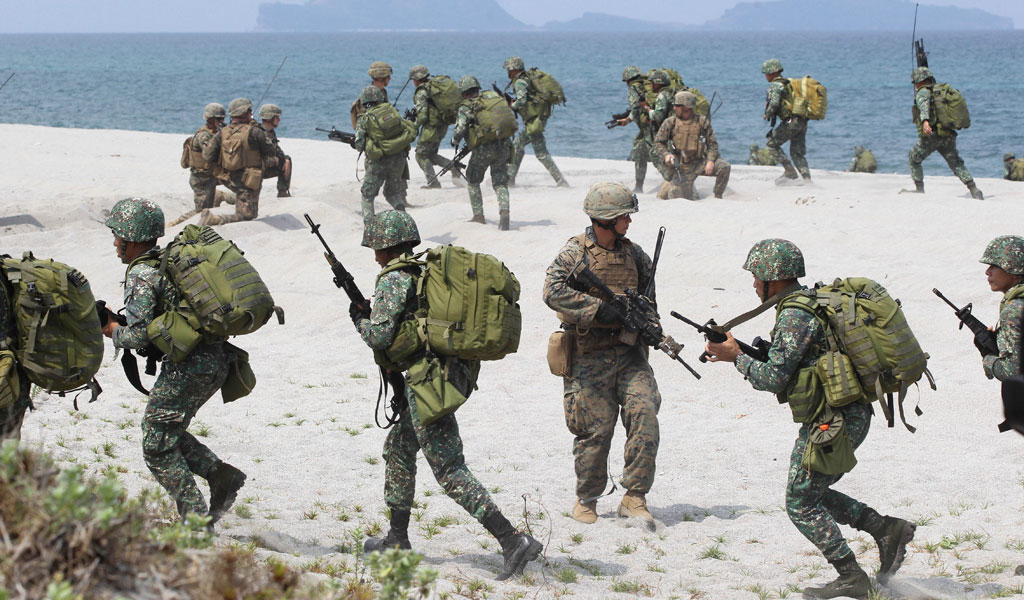
Philippine and United States soldiers are shown in this May 2018 photo during the annual joint military training exercises called Balikatan. — PHILIPPINE STAR/ KRIZJOHN ROSALES

A GLOBAL think tank and a former intelligence chief on Thursday said the Philippines should take a step back and avoid getting involved in conflicts between world superpowers. 

We are like ants that will be stepped on if two elephants fight, so I am advocating for non-alignment, for complete neutrality in the current happenings,said Victor N. Corpus, former chief of the Armed Forces of the PhilippinesIntelligence Service, referring to the Russia-Ukraine conflict and the involvement of the United States as a member of the North Atlantic Treaty Organization. 

Let us not involve ourselves in the wars of the giants, he said during the Pandesal Forum. 

Philippine BRICS Strategic Studies (Phil-BRICS) Director Adolfo Q. Paglinawan said in the same forum that the government should focus on economic recovery from the coronavirus pandemic.  

Economic recovery should be our urgent, highest priority right now, not war games,he said 

Phil-BRICS political analyst Anna Rosario Malindog-Uy brought up the Philippinesdecision to allow the US to use the countrys military facilities when necessary.  

This, she said, will make the Philippines a US’ defense outpost in times of conflict, dragging the country into the frame as a sacrificial lamb, a pawn or a cannon fodder for the US, serving a US military interest not the interest of the country.” 

She acknowledged that the Philippines Mutual Defense Treaty (MDT) with the US may oblige it to open its facilitiesas an assembly area or jumping board for operationsshould a military conflict with China arise.  

I think the next administration should really review the Mutual Defense Treaty, weigh it against the economic aspects and the historical aspects of the matter and not just dependence on American protection,Mr. Paglinawan said. 

The Philippines-US MDT provides that both sides must help each other in case of any external aggression. 

Meanwhile, the Department of Foreign Affairs reported on Thursday that another 19 Filipino seafarers affected by Russias invasion of Ukraine arrived on Wednesday. 

This brings the total number of repatriations to 329. Alyssa Nicole O. Tan 

Iloilo City government to implement 4-day work week 

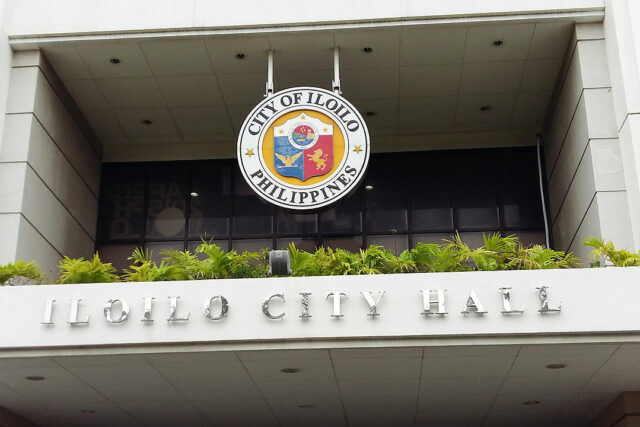
THE ILOILO City government will implement a four-day work week starting the last week of March as part of fuel-saving measures for employees, Mayor Jerry P. Treñas announced on Thursday. 

In order to help our employees cope with the present increases of fuel, the city will start adopting the 4-day work week as suggested by NEDA (National Economic and Development Authority) chief Karl Chua starting the week after next,he said in a statement.  

Mr. Chua, secretary for socioeconomic planning, made the recommendation during a Cabinet meeting Tuesday.  

Mr. Treñas said the city government will also tap modern jeepneys for point-to-point transport service for its workers.  

We are also going to make use of our modern jeeps to ferry our employees from the district plazas to the City Hall and back every day,he said.  

The mayor said the local government is also open to adopting recommendations on other energy conservation measures. MSJ