Home Blog Page 6597

Ukraine accuses Russia of war crimes after bodies found bound, shot

President of Ukraine Volodymyr Zelenskyy/Flickr

BUCHA, Ukraine — Ukrainian authorities were investigating possible war crimes by Russia after finding hundreds of bodies, some bound and shot at close range, strewn around towns near Kyiv after Kremlin forces withdrew to refocus their attacks in other parts of the country. 

In the town of Bucha, 37 km northwest of Kyiv’s city center, Reuters reporters saw a man sprawled by the roadside, his hands tied behind his back and a bullet wound to his head. 

Bucha’s deputy mayor, Taras Shapravskyi, said 50 of some 300 bodies, found after Russian forces withdrew from the city late last week, were the victims of extrajudicial killings carried out by Russian troops. 

Reuters could not independently verify those figures or who was responsible for the killings. 

Russia’s defense ministry said in a statement issued on Sunday that all photographs and videos published by the Ukrainian authorities alleging “crimes” by Russian troops in Bucha were a “provocation,” and no resident of Bucha suffered violence at the hands of Russian troops. 

Satellite images showed a 45-foot-long trench dug into the grounds of a Ukrainian church where a mass grave was found this week. Reuters reporters in Bucha visited a mass grave at one church that was still open, with hands and feet poking through the red clay heaped on top. 

Pictures of the destruction and apparent violence towards civilians sparked widespread condemnation of Russia and leader Vladimir Putin. US Secretary of State Antony Blinken described the images as “a punch in the gut,” while United Nations Secretary-General Antonio Guterres called for an independent investigation. 

“Putin and his supporters will feel the consequences,” said German Chancellor Olaf Scholz, adding that Western allies would agree on further sanctions in the coming days. 

Japan said it would consult with allies about additional sanctions. 

“Japan takes deaths of innocent civilians in Ukraine extremely seriously. We are really shocked,” Chief Cabinet Secretary Hirokazu Matsuno told a regular news conference. 

Germany’s Defense Minister Christine Lambrecht said the European Union must discuss banning the import of Russian gas — a departure from Berlin’s prior resistance to the idea of an embargo on Russian energy imports. 

The UN Security Council will discuss Ukraine on Tuesday — as scheduled — and will not meet on Monday as requested by Russia, said Britain’s mission to the United Nations, which holds the presidency of the 15-member council for April. 

Russia had requested the Security Council convene on Monday to discuss what it called a “provocation by Ukrainian radicals” in the town of Bucha after Kyiv accused Russian troops of killing civilians there. 

Russia has previously denied targeting civilians and has rejected allegations of war crimes in what it calls a “special military operation” aimed at demilitarizing and “denazifying” Ukraine. Ukraine says it was invaded without provocation. 

Human Rights Watch said it had documented “several cases of Russian military forces committing laws-of-war violations” in the Ukrainian regions of Chernihiv, Kharkiv and Kyiv. 

Ukraine’s foreign minister called on the International Criminal Court to collect evidence of what he called Russian war crimes. The foreign ministers of France and Britain said their countries would support any such probe. 

However, legal experts say a prosecution of Putin or other Russian leaders would face high hurdles and could take years. 

WIDESPREAD FIGHTING
Russia has pulled back forces that had threatened Kyiv from the north, saying it intends to focus on eastern Ukraine. 

Ukraine’s General Staff said Russia expected to mobilize about 60,000 reservists. 

“The military-political leadership of the Russian Federation has begun measures to covertly mobilize reservists in order to bring military units to wartime status,” the general staff said on Monday. 

Reuters could not independently confirm the claim. 

Explosions were heard in the early hours of Monday in the cities of Kherson and Odesa, in the south, while air raid sirens sounded across the country’s east. 

British military intelligence said Russian troops, including mercenaries from the state-linked Wagner private military company, are being moved into the east. 

Serhiy Gaidai, the governor of eastern Luhansk region, said Russia was building up forces to break through Ukrainian defenses. 

“I am urging residents to evacuate. The enemy will not stop, it will destroy everything in its path,” he said in comments carried on Ukrainian television. 

Ukrainian President Volodymyr Zelenskyy appeared in a video aired at the Grammy Awards in the United States and appealed to viewers to support Ukrainians “in any way you can.” 

“What is more opposite to music? The silence of ruined cities and killed people,” said Mr. Zelenskyy. 

Missiles struck near Odesa on Sunday, with Russia saying it had destroyed an oil refinery used by the Ukrainian military. The Odesa city council said “critical infrastructure facilities” were hit. 

Ukraine evacuated more than 2,600 people from the southeastern port of Mariupol and the region of Luhansk on Sunday, Ukrainian Deputy Prime Minister Iryna Vereshchuk said. Ukrainian officials were in talks with Russia to allow several Red Cross buses to enter Mariupol, she added. 

The Red Cross abandoned earlier attempts due to security concerns. Russia blamed the charity for the delays. 

There was little sign of a breakthrough in efforts to negotiate an end to the war, although Russia’s chief negotiator, Vladimir Medinsky, said talks were due to resume on Monday via videoconference. — Simon Gardner/Reuters

Indonesia’s GoTo sells stake in Philippines e-wallet Coins.ph

SINGAPORE — GoTo Group, Indonesia’s biggest tech firm, said on Monday it had sold its majority stake in Filipino e-wallet Coins.ph, signalling the end of it efforts to capture the Philippines market.

Ride-hailing and payments firm Gojek, which merged last year with e-commerce leader Tokopedia to form GoTo, had acquired the stake in 2019 as it planned a full expansion into the Philippines. But the plan was halted in the same year after regulators did not grant it a ride-hailing license.

The Philippines, with a young, digitally-savvy population of 110 million, has seen increased investments from regional tech firms, including GoTo rivals Sea and Grab.

“Our focus on international operations remains in place,” said a GoTo spokesperson. 

“We are committed to our core market in Indonesia as well as to our deepening investments in Vietnam and Singapore.”

GoTo said last week it plans to raise $1.1 billion in its upcoming initial public offering (IPO) in Jakarta, in one of Asia’s biggest IPOs so far this year. — Reuters

Climate change could cost US budget $2T a year by end century — White House

Image via US Fish and Wildlife Service Southeast Region/Flickr

WASHINGTON — Flood, fire, and drought fueled by climate change could take a massive bite out of the US federal budget per year by the end of the century, the White House said in its first ever such assessment on Sunday. 

The Office of Management and Budget (OMB) assessment, tasked by President Joseph R. Biden, Jr., last May, found the upper range of climate change’s hit to the budget by the end of the century could total 7.1% annual revenue loss, equal to $2 trillion a year in today’s dollars. 

“Climate change threatens communities and sectors across the country, including through floods, drought, extreme heat, wildfires, and hurricanes (affecting) the US economy and the lives of everyday Americans,” Candace Vahlsing, an OMB climate and science official, and its chief economist Danny Yagan, said in a blog seen by Reuters ahead of publication on Monday. “Future damages could dwarf current damages if greenhouse gas emissions continue unabated.” 

The analysis found that the federal government could spend an additional $25 billion to $128 billion annually on expenditures such as coastal disaster relief, flood, crop, and healthcare insurance, wildfire suppression and flooding at federal facilities. 

Just last year, a record heatwave and drought in the US West gave rise to two massive wildfires that tore through California and Oregon and were among the largest in the history of both states. 

The severe drought that has gripped parts of the US West since mid-2020 is likely to persist or worsen this spring due, the National Oceanic and Atmospheric Administration said in March. 

US military bases, including Offutt Air Force Base in Nebraska and Tyndall Air Force base in Florida, have suffered billions of dollars in damage in recent years from floods and hurricanes. 

The OMB said increased wildfires could boost federal fire suppression costs between $1.55 billion to $9.6 billion annually. Nearly 12,200 federal buildings and structures could be flooded as seas rise with replacement costs of nearly $44 billion. 

Absent policies and actions to slow the rate of greenhouse gas emissions, world temperatures are on pace to rise more than 2 degrees Celsius above pre-industrial levels by the end of the century. 

The grim OMB assessment came hours before publication of a      long-awaited UN climate science panel report on methods of curbing the emissions, a report that some scientists say may downplay certain potentially devastating scenarios due to its consensual nature in which 195 governments had to sign off on it. 

Mr. Biden, a Democrat who positioned himself as a champion for tackling climate change when he took office in January 2021, has been forced to support hiked domestic oil drilling and liquefied natural gas exports to Europe as Russia’s war on Ukraine spikes energy inflation. 

The president’s “Build Back Better” bill, which contained hundreds of billions of dollars in funding to fight climate change and support clean energy, has been stalled in the narrowly-divided Senate by Republicans and West Virginia’s conservative Democrat Senator Joe Manchin, the founder and partial owner of a private coal brokerage. 

Mr. Biden late last month submitted a $5.8 trillion budget plan to Congress with a focus on deficit reduction in an apparent overture to Mr. Manchin has said he could not vote for the bill because it would worsen deficits. Mr. Biden’s budget plan calls for nearly $45 billion to tackle climate change in fiscal year 2023, an increase of nearly 60% over fiscal year 2021. — Timothy Gardner/Reuters 

What political upheaval in Pakistan means for rest of the world

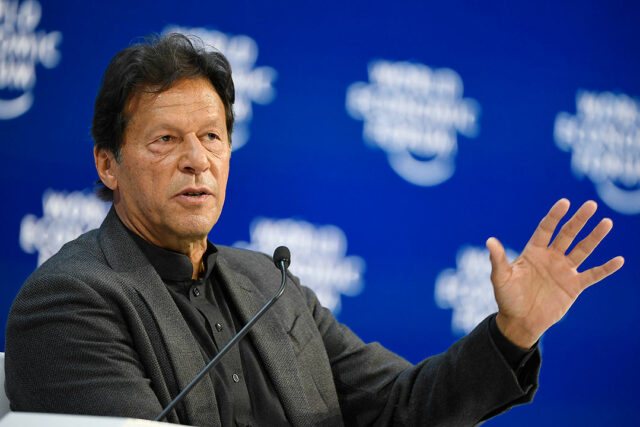
World Economic Forum/Valeriano Di Domenico

WASHINGTON/ISLAMABAD — Pakistan Prime Minister Imran Khan blocked a no-confidence vote he looked sure to lose on Sunday and advised the president to order fresh elections, fueling anger among the opposition and deepening the country’s political crisis. 

His actions have created huge uncertainty in Islamabad, with constitutional experts debating their legality and pondering whether Mr. Khan and his rivals can find a way forward. 

The nuclear-armed nation of more than 220 million people lies between Afghanistan to the west, China to the northeast and nuclear rival India to the east, making it of vital strategic importance. 

Since coming to power in 2018, Mr. Khan’s rhetoric has become more anti-American and he has expressed a desire to move closer to China and, recently, Russia — including talks with President Vladimir Putin on the day the invasion of Ukraine began. 

At the same time, US and Asian foreign policy experts said that Pakistan’s powerful military has traditionally controlled foreign and defense policy, thereby limiting the impact of political instability. 

Here is what the upheaval, which many expect to lead to Khan’s exit, means for countries closely involved in Pakistan: 

AFGHANISTAN
Ties between Pakistan’s military intelligence agency and the Islamist militant Taliban have loosened in recent years. 

Now the Taliban are back in power, and facing an economic and humanitarian crisis due to a lack of money and international isolation, Qatar is arguably their most important foreign partner. 

“We (the United States) don’t need Pakistan as a conduit to the Taliban. Qatar is definitely playing that role now,” said Lisa Curtis, director of the Indo-Pacific Security Program at the Center for a New American Security think-tank. 

Tensions have risen between the Taliban and Pakistan’s military, which has lost several soldiers in attacks close to their mutual border. Pakistan wants the Taliban to do more to crack down on extremist groups and worries they will spread violence into Pakistan. That has begun to happen already. 

Mr. Khan has been less critical of the Taliban over human rights than most foreign leaders. 

CHINA
Mr. Khan has consistently emphasized China’s positive role in Pakistan and in the world at large. 

At the same time, the $60-billion China-Pakistan Economic Corridor (CPEC) which binds the neighbors together was actually conceptualized and launched under Pakistan’s two established political parties, both of which want Mr. Khan out of power. 

Opposition leader and potential successor Shehbaz Sharif struck deals with China directly as leader of the eastern province of Punjab, and his reputation for getting major infrastructure projects off the ground while avoiding political grandstanding could in fact be music to Beijing’s ears. 

INDIA
The neighbors have fought three wars since independence in 1947, two of them over the disputed Muslim-majority territory of Kashmir. 

As with Afghanistan, it is Pakistan’s military that controls policy in the sensitive area, and tensions along the de facto border there are at their lowest level since 2021. 

But there have been no formal diplomatic talks between the rivals for years because of deep distrust over a range of issues including Mr. Khan’s extreme criticism of Indian Prime Minister Narendra Modi for his handling of attacks on minority Muslims in India. 

Karan Thapar, an Indian political commentator who has closely followed India-Pakistan ties, said the Pakistani military could put pressure on a new civilian government in Islamabad to build on the successful ceasefire in Kashmir. 

On Saturday, Pakistan’s powerful army chief General Qamar Javed Bajwa said his country was ready to move forward on Kashmir if India agrees. 

The Sharif political dynasty has been at the forefront of several dovish overtures towards India over the years. 

UNITED STATES
US-based South Asia experts said that Pakistan’s political crisis is unlikely to be a priority for President Joseph R. Biden, Jr., who is grappling with the war in Ukraine, unless it leads to mass unrest or rising tensions with India. 

“We have so many other fish to fry,” said Robin Raphel, a former assistant secretary of State for South Asia who is a senior associate with the Center for Strategic and International Studies think-tank. 

With the Pakistani military maintaining its behind-the-scenes control of foreign and security policies, Mr. Khan’s political fate was not a major concern, according to some analysts. 

“Since it’s the military that calls the shots on the policies that the US really cares about, i.e. Afghanistan, India and nuclear weapons, internal Pakistani political developments are largely irrelevant for the US,” said Ms. Curtis, who served as former US President Donald Trump’s National Security Council senior director for South Asia. 

She added that Mr. Khan’s visit to Moscow had been a “disaster” in terms of US relations, and that a new government in Islamabad could at least help mend ties “to some degree.” 

Mr. Khan has blamed the United States for the current political crisis, saying that Washington wanted him removed because of the 

recent Moscow trip. — Jonathan Landay and Gibran Naiyyar Peshimam/Reuters

China expects sharp drop in holiday travel due to COVID outbreaks

Beijing Capital International Airport. — Wikimedia Commons

BEIJING — China’s transport ministry expects a 20% drop in road traffic and a 55% fall in flights during the three-day Qingming holiday due to a flare-up of coronavirus disease 2019 (COVID-19) cases in the country. 

More than 27 Chinese provinces and regions have recently reported coronavirus cases, mostly the highly transmissible Omicron variant, forcing the authorities to impose stringent mobility restrictions or even city-wide lockdowns. 

Chinese typically travel back to their hometowns to worship their ancestors during the tomb-sweeping festival. 

The average daily number of vehicles on the roads are estimated to reach 39–40 million during the holiday, which kicked off on April 3, down 21% from the same period last year, according to a statement from the Ministry of Transport. 

The number of planned flights was forecast to decrease by 55% this holiday from the year before, with air travelers also at only 20% of last year’s levels, the ministry said. 

China on Sunday reported a total of 13,287 new daily cases for April 2, the highest level since February 2020. 

The country’s “dynamic clearance” COVID policy has dampened consumption of transportation fuels in China. The two-stage lockdown in financial hub of Shanghai, starting from March 28, could reduce fuel demand by 200,000 barrels per day. 

Authorities across China have also implemented anti-COVID measures at entertainment sites during the Qingming holiday, including limiting the number of tourists and requesting for negative nucleic testing results from inter-provincial travelers. — Reuters

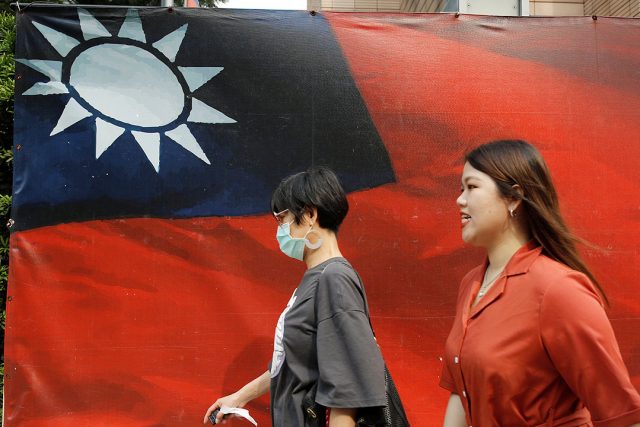
Taiwan says new COVID cases won’t affect reopening plans

REUTERS

KAOHSIUNG, Taiwan — A recent rise in Taiwan’s domestic coronavirus disease 2019 (COVID-19) cases will not affect plans to gradually reopen as hardly any of the new infections have caused serious illness, Premier Su Tseng-chang said on Sunday. 

Unlike large parts of the rest of the world, Taiwan has kept the pandemic well under control due to strict and early control measures, including an efficient contact and tracing system and largely closing its borders. 

In the first quarter of this year Taiwan reported 1,266 domestic cases, and only one death, though the government has been on alert as infections spiked over the past week or so, while remaining at comparatively low numbers, with 183 new cases on Sunday. 

Speaking to reporters in the southern city of Kaohsiung, Mr. Su said the “new Taiwan model” in combating COVID-19 was a “normal life, active epidemic prevention and steady opening.” 

“Although the number of confirmed cases will increase, more than 99.7% of them are mild or asymptomatic, so don’t worry, we can open up step by step steadily and live a normal life,” he added. 

The government has not raised its alert level despite the new cases and only tweaked existing rules, confident its measures already in place will be effective and unconcerned about health facilities being overwhelmed. 

Taiwan has maintained mandatory mask wearing, including while people are outside, and almost 80% of the population have had two vaccine shots while more than 50% have had three. 

Taiwan is gradually relaxing quarantine rules for all arrivals on the island. In March, the government lowered the amount of time to be spent in isolation from 14 days to 10, and hopes to reduce it further in the months ahead. 

However, Taiwan has not reopened to most foreign visitors, generally limiting those who can come in to citizens and residents. 

Taiwan has reported only around 24,000 COVID cases since the pandemic began and 853 deaths. — Reuters

[B-SIDE Podcast] Cancel culture 

The social media hive mind is as fast as it is vicious. Say or do something triggering and you could find yourself going viral and getting canceled. 

“The common definition of cancel culture is that it’s a form of public shaming. Sociologically, it’s society’s way of regulating itself. When we cancel somebody, you’re making a moral judgment,” says Nicole C. Curato, a Professor of Political Sociology at Centre for Deliberative Democracy and Global Governance at the University of Canberra. “The key to understanding cancel culture is that there’s an element of unmet expectation.”

In this B-Side episode, Ms. Curato tells former BusinessWorld reporter Marielle C. Lucenio what it means to get canceled and whether businesses should risk taking a political stand knowing that they could face backlash.

Nina Ellaine Dizon-Cabrera, founder and chief executive officer of Colourette Cosmetics, also shares what it was like when Twitter tried to cancel her in November 2020, after she used the hashtag #NasaanAngPangulo.

Recorded remotely in February 2022. Produced by Earl R. Lagundino and Sam L. Marcelo.

Philippines’ progress in fighting financial crimes

To keep the integrity of financial institutions and the economy in general, activities that lead to the diversion of resources away from economically- and socially-productive uses must be prevented from thriving. Fighting and preventing these activities, particularly money laundering and the financing of terrorism, have been regarded as essential in keeping economies stable.

With global institutions like the Financial Action Task Force (FATF) taking the lead in these areas, the Philippines has likewise been active in anti-money laundering and combating the financing of terrorism (AML/CFT), although the FATF’s latest evaluation reveals that much more needs to be achieved.

In the Philippines, the Anti-Money Laundering Act (AMLA) of 2001 serves as the framework by which efforts AML/CFT efforts are pushed. In efforts to improve its the country’s AML/CFT drive, the AMLA was amended several times, the latest of which was signed by President Rodrigo R. Duterte in January 2021. The Anti-Money Laundering Council (AMLC), the country’s financial intelligence unit (FIU), is tasked to implement AMLA, along with the “Terrorism Financing Prevention and Suppression Act of 2012.”

Republic  Act  No. 11521, which is said to further strengthen AMLA, gives additional powers to the AMLC, namely: applying before a competent court for a search and seizure warrant and a subpoena; preserving, managing or disposing of assets pursuant to a freeze order, preservation order or judgment of forfeiture; and implementing targeted financial sanctions against the proliferation of weapons of mass destruction and its financing. The amendment also expands the list of covered persons, which now includes real estate developers and brokers and Philippine offshore gaming operators (POGOs) and their service providers.

For over two decades now, AMLC has been steadfast in pushing AML/CFT in the Philippines. Its current chairman, Bangko Sentral ng Pilipinas Governor Benjamin E. Diokno, recalled the council’s recent initiatives last year at an annual AML/CFT summit.

“The AMLC is closely coordinating with law enforcers, such as the National Bureau of Investigation and the Philippine National Police, as they are the primary investigators for predicate crimes. For the first eight months of 2021, the AMLC has filed a total of 85 cases, varying from civil and criminal cases and involving over P1.31 billion and other assets,” Mr. Diokno started sharing in a message during the summit.

The BSP governor also noted the continued progress in the National Anti-Money Laundering and Countering the Financing of Terrorism Strategy (NACS) for 2018 to 2022, which is aimed at coordinating efforts of relevant agencies in AML/CTF.

“The NACS has also integrated the International Co-Operation Review Group (ICRG) Action Plan to ensure a whole-of-nation approach in addressing our country’s shortcomings in its AML/CTF system,” he added.

AMLC, Mr. Diokno continued, is sharing its risk assessments, strategic studies, and typologies with law enforcement agencies and covered persons to increase awareness of money laundering and terrorism financing typologies and red flags.

FATF, in a statement last month, recognized the country’s progress in AML/CTF. “Since June 2021, when the Philippines made a high-level political commitment to work with the FATF and APG (Asia/Pacific Group on Money Laundering) to strengthen the effectiveness of its AML/CFT regime, the Philippines has taken steps towards improving its AML/CFT regime, including by increasing the resources of its FIU and utilizing its targeted financial sanction framework for terrorism financing, ahead of any relevant deadlines expiring,” the global financial crime watchdog said on its website.

Additionally, AMLC Executive Director Mel Georgie B. Racela said in a recent BusinessWorld report that more financial intelligence analysts, investigators, and lawyers were hired to boost the operational capabilities of their units on compliance as well as litigation and evaluation. “Relevant Philippine authorities continue to work together in strengthening the country’s AML/CFT measures and in showing progress toward effectiveness,” Mr. Racela added.

In spite of these efforts, however, the Philippines is yet to get out of FATF’s “gray list” of jurisdictions subjected to increased monitoring for “dirty money” risks.

In the same statement, FATF calls for the Philippines to keep working on implementing its action plan by demonstrating that effective risk-based supervision of designated non-financial business and professions is occurring, as well as that supervisors are using AML/CFT controls to mitigate risks associated with casino junkets.

Among several organizations actively collaborating in combatting financial crimes, the Philippine Amusement and Gaming Corp. (PAGCOR) is expected to play an important role in mitigating risks associated with casino junkets.

Aside from creating the PAGCOR Anti-Money Laundering Supervision and Enforcement Department (PASED), PAGCOR signed a memorandum of agreement with AMLC in 2020, enjoining both parties to cooperate in the area of capacity building to enhance both of their capabilities in addressing AML/CTF issues and concerns. Last January, PAGCOR was recognized by AMLC for its invaluable contribution AML/CFT efforts.

Furthermore, FATF also seeks progress on how the Philippines implements new registration requirements for money or value transfer services and applies sanctions to unregistered and illegal remittance operators, as well as on how it implements measures with respect to non-profit organizations without disrupting their legitimate activities.

The watchdog also sees the need to ensure that beneficial ownership information is accurate and up-to-date and that its access is streamlined for law enforcement agencies.

Moreover, the task force said it will keep checking for increases in the use of financial intelligence; in money laundering investigations and prosecutions; and in the identification, investigation, and prosecution of terrorism financing cases. It will also monitor for enhancements in the effectiveness of the country’s targeted financial sanctions framework for both terrorism financing and proliferation financing. — Adrian Paul B. Conoza

Towards strengthening anti-money laundering in the country

The Philippines has been deemed to be vulnerable to money laundering and terrorism funding. This, according to the Philippinest AML (Anti-Money Laundering) Report, is due to its growing economy and geographic positioning within major trafficking routes. Strengthening AML laws and regulations is therefore crucial to address the risk and fight financial crimes.

Money laundering is an illegal process of making assets or cash obtained from criminal activities appear to have come from legitimate sources. Simply put, from the word itself, money laundering makes dirty money look clean.

Back in 2000, lacking basic legal AML framework, the Philippines was blacklisted by the global money laundering and terrorist financing watchdog Financial Action Task Force (FATF), falling under its list of Non-Cooperative Countries and Territories (NCCT).

It was on Sept. 29, 2001 when the Republic Act (RA) No. 9160, otherwise known as the Anti-Money Laundering Act of 2001 (AMLA), was signed into law.

It declared the policy of the State “to protect and preserve the integrity and confidentiality of bank accounts and to ensure that the Philippines shall not be used as a money laundering site for the proceeds of any unlawful activity.”

Under the AMLA, the State should also “extend cooperation in transnational investigations and prosecutions of persons involved in money laundering activities wherever committed.”

The law also created the Anti-Money Laundering Council (AMLC), which is tasked to implement the AMLA. AMLC is composed of the Bangko Sentral ng Pilipinas Governor as chairman, and the commissioner of the Insurance Commission and the chairman of the Securities and Exchange Commission as members, acting unanimously in the discharge of its functions.

But despite the RA 9160, the country remained on the NCCT list. The AMLA was then first amended through RA 9194 signed in March 2003. The amendments included the reporting of suspicious transactions, among others. The country was removed from the NCCT list in February 2005.

However, due to the lack of laws on counter-terrorism financing (CTF) and other required regulations, the Philippines was placed on the grey list in February 2010. It had to address the identified AML/CTF deficiencies until December 2011, which it failed to meet and was downgraded to the dark grey list in February 2012.

AMLA was further amended through RA 10167, and RA 10168 or the Terrorism Financing Prevention and Suppression Act of 2012 was signed, bringing the country back to the grey list yet urged to fully address the remaining deficiencies.

In February 2013, through the signing of RA 10365, AMLA utnderwent its third amendment. That year, the country exited the grey list but remained on the watchlist. The FATF still expressed concerns about the casino sector risk and the lack of coverage under the AMLA. Casino operatzions were later covered under the AMLA through the passage of RA 10927 signed in July 2017. The country was then removed from the watchlist.

Looking to further strengthen anti-money laundering regulations, AMLA was amended through RA 11521 signed in January 2021 and took effect on Feb. 8 last year. Part of such amendments, among others, include additional powers to AMLC and new covered persons.

Among the powers granted to AMLC are to apply for the issuance of a search and seizure order and subpoena before a competent court and the authority to “preserve, manage or dispose assets pursuant to a freeze order, asset preservation order, or judgment of forfeiture.”

The law also added “real estate developers and brokers” and “offshore gaming operators, as well as their service providers” as covered persons. It also required real estate developers and brokers to report single cash transactions that exceed P7.5 million to AMLC.

Furthermore, under the RA 11521, “the implementation of targeted financial sanctions related to the financing of the proliferation of weapons of mass destruction, terrorism, and financing of terrorism, pursuant to the resolutions of the United Nations Security Council” is added in the declared policy of the State.

The Philippines has returned to FATF’s list of “Jurisdictions Under Increased Monitoring” or the grey list in June 2021.

The watchdog, in a statement last month, said the country should continue to implement measures concerning casino junkets, beneficial ownership, non-profit organizations.

It nonetheless recognized the country’s progress since June last year, when it made “a high-level commitment to work with the FATF and APG (Asia/Pacific Group on Money Laundering) to strengthen the effectiveness of its AML/CFT regime.” — Chelsey Keith P. Ignacio

IHAP in the new normal

Further driven to boost Philippine capital markets

By Adrian Paul B. Conoza, Special Features Assistant Editor

Investment houses, while appearing to be rarely mentioned compared to commercial or universal banks and other financial institutions, play significant roles in the Philippine economy. As institutions that work primarily for corporations and the government, the country’s investment houses have grown into essential developers and drivers of the Philippine capital market, and they have also been playing a part in shaping the direction of the Philippine economy.

These values are what the Investment House Association of the Philippines (IHAP) continues to uphold for over four decades. IHAP President Robert M. Lehmann recognized that the association, through its member institutions, provides a major impetus to the Philippine economy by suggesting reforms and improvements in the financial markets and by forming innovative financial packages — all with the aim of efficiently harnessing capital into productive endeavors and investments.

“These endeavors and investments in return result in improving the lives of our countrymen, creating jobs, generating taxes for our government, and creating wealth for our people,” Mr. Lehmann told BusinessWorld in an e-mail. “Ultimately, our hope is that these endeavors and investments… result in the formation of more capital that would fuel a continuous cycle of economic growth.”

Mr. Lehmann, who is also the president and chief executive officer of Amalgamated Investment Bancorporation, noted that the numbers speak for how the IHAP has been fulfilling its mission “to catalyze and nurture reforms in the Philippine financial markets for our stakeholders.”

“Over a 10-year period the total outstanding bonds have grown from P277.53 billion in 2012 to P1.38 trillion in 2022. Volumes have grown almost fivefold. In terms of the number of issuers, there are 53 companies with bonds listed in the Philippine Dealing Exchange Corp., up from just 17 companies in 2012,” the IHAP president shared.

Growth was also shown in the number of listed companies, Mr. Lehmann added. From 230 in December 2012, the number increased to 281 in February this year. IHAP members, in particular, have underwritten a total of P394.52 billion in initial public offerings (IPOs) over the past 10 years.

Mr. Lehmann also shared that the total market capitalization in the Philippine Stock Exchange (PSE) stands at P18.251 trillion as of February 2022, compared to only P9.314 trillion 10 years ago. Average daily trading volumes in stocks in 2021 stand at 26.46 billion with an average amount of P12.35 billion, versus 2.68 billion with an average amount of P4.42 billion in 2011.

Moreover, Mr. Lehmann noted as well that in spite of the massive economic impacts of the coronavirus disease 2019 (COVID-19) pandemic, many IHAP members experienced a “pretty good” 2021 as they were found to be fulfilling the projection of capital markets leading the country’s economic recovery.

To recall, Finance Secretary Carlos G. Dominguez III said in a statement last year that “the reforms being initiated and pushed by the Duterte administration to further deepen the Philippines’ capital markets will let the economy emerge stronger and more resilient in the aftermath of the prolonged COVID-19 pandemic.”

Noting that boost in Philippine capital markets, Mr. Lehmann cited a record number of 11 IPOs, totaling P127.377 billion, that were listed in the PSE and underwritten by IHAP member institutions between March 2020 and end-2021. These IPOs included five real estate investment trusts (REITs) totaling P61.024 billion. In addition, member institutions of IHAP underwrote approximately P182 billion in bonds and preferred shares in 2021.

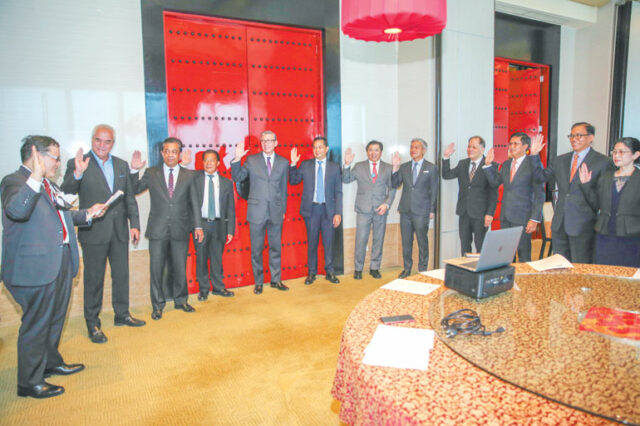
With a newly-inducted board of directors and officers for this year, including Mr. Lehmann, IHAP aims to further drive the growth of capital markets — in time with further eased restrictions and a more reopened economy in the “new normal.”

“The vision has always been to work for the continued growth of the capital markets with the goal of making the Philippines a major global capital market center,” the IHAP president stressed.

Achieving this vision, he continued, will entail active participation in the Capital Market Development Council; as well as close cooperation with the Securities and Exchange Commission (SEC), Bangko Sentral ng Pilipinas, Department of Finance, PSE, and legislators in pushing for reforms; improving current practices and procedures; and ensuring strict adherence to rules, regulations, and laws pertinent to the capital markets.

“[W]e shall work with the SEC to try and find ways to further streamline present procedures and processes in registration without sacrificing safeguards and controls. We shall work on reforms on how to make the capital markets more accessible and inclusive,” Mr. Lehmann said.

Sustaining capital market growth, the IHAP president added, also means pursuing inclusivity and sustainability by making the capital markets accessible to as many enterprises and investors as possible.

By upskilling employees of IHAP member institutions through informative and value formation seminars and workshops, the association also envisions that investment house professionals “would not only be the best and the brightest but also the most honest, fair and upright.”

IHAP also looks forward to guiding its members in quickly adapting to the challenges investment houses are facing. These challenges, Mr. Lehmann notes, include a faster shift to digital transactions, climate change, shifts in geopolitics that have major global implications, shortages in food and vital resources, possible new pandemics, and major disruptive technological breakthroughs.

“IHAP will assist its members by initiating and encouraging regular exchange of ideas and information to keep all our members abreast of the changes happening in the world and maintain a spirit of cooperation and coordination among our members,” Mr. Lehmann said.

With the elections coming near, while other organizations have expressed hopes for the next administration specific to their concerns, the IHAP president shares his hopes for the electorate.

“For the coming elections, we are hoping that… the Filipino voter would seriously study the platforms and background of all the candidates and come out with an intelligent choice on the right candidate that would truly fulfill his promises and work solely for the greater good of the Philippines,” Mr. Lehmann said.

PAGCOR fulfills nation-building functions amidst the pandemic

Despite suffering a sharp de­cline in its revenues due to the suspension of gaming opera­tions, the Philippine Amuse­ment and Gaming Corporation (PAGCOR) still managed to make significant contributions to national coffers and to nation-building amidst the global health crisis.

From a high of P81.97 billion in 2019, the state-run gaming firm’s earnings from gaming operations, regulatory fees and other income dipped to P36 billion in 2020 and P35.48 billion in 2021. This did not prevent the agency, however, from fulfilling its vital obligations and instead ramped up its provision of necessary aid to the government and other beneficiaries.

At the height of strict com­munity quarantine restrictions in 2020 and 2021, PAGCOR re­mitted a total of P44.53 billion (P21.61 billion in 2020 and P22.91 billion in 2021) to the government through its mandated contributions and other corporate social responsibility programs.

Of these contributions, P29.74 billion went to the Bureau of the Treasury, representing the 50% government share.

The agency’s remittances to the National Treasury include the P60 million annual contri­butions to the Dangerous Drugs Board (DOB), an agency tasked to create policies and strategies on drug prevention and control.

Half of PAGCOR’s remittances to the National Treasury are also being channeled to the Philip­pine Health Insurance Corpora­tion (PhilHealth) to help fund the Universal Health Care (UHC) Law or Republic Act No. 11223. Aside from funding the UHC law, PAGCOR released a total of P990.982 million worth of grants to the health sector during the height of the pandemic.

Apart from the 50% nation­ al government share, the state­ run gaming firm’s remittances in 2020 to 2021 to the Bureau of Internal Revenue (in the form of franchise tax) totaled to P3.13 billion; P7.64 billion to the So­cio-Civic Project Fund of the Of­fice of the President; P1.48 billion to the Philippine Sports Commission (PSC); P22.02 million to the Board of Claims and P147.57 million for cities and local gov­ernment units hosting a Casino Filipino branch.

PAGCOR likewise paid P289.34 million in Corporate Income Tax, while its cash dividends for 2019 and 2020, released in 2020 and 2021, respectively, reached a total of P23 billion. Said amount comprised the P18 billion cash dividends for 2019; P811.28 million cash dividends for 2020 and P4.18 billion ad­vanced cash dividends that may be applied against future divi­dends obligations.

The agency also tapped its casino licensees to help fund the government’s fight against COVID-19. Licensed casinos are required to establish foun­dations for the protection, con­servation and restoration of Philippine cultural heritage, improvement of public schools in the country and provision of quality healthcare services.

Hence, through their founda­tions, the integrated resorts and casinos joined hands with PAG­COR and contributed over P1.1 billion aid to various hospitals, local government units, government offices and communities in 2020. In 2021, these founda­tions also allocated P902.57 mil­lion to COVID response.

Another major project relat­ed to infrastructure that PAG­COR prominently undertook amidst the pandemic was the construction of Multi-Purpose Evacuation Centers (MPECs) nationwide.

Since the MPEC project was launched in November 2020, the state-run gaming firm has already released a total of Pl.87 billion to kickstart the construc­tion of 73 evacuation centers in various parts of the country.

PAGCOR also unveiled in 2021 the “PAGCOR Village”, a charitable project that seeks to safeguard the living conditions of families displaced by the the eruption of Taal Volcano in Batangas in 2020.

A brainchild project of Chair­man and CEO Andrea Do­mingo, the PAGCOR Village — which has a funding of P150 million — was launched on Feb­ruary 18, 2021 and are undergo­ing construction in the towns of Agoncillo, Lemery, Balete, Mataas na Kahoy and Taal.

The strict lockdowns and temporary suspension of its gaming operations likewise failed to stop PAGCOR from remitting P712.38 million to the PSC in 2020 and P774.99 million in 2021 as part of the govern­ment sports agency’s 5% man­dated income share from the state-run gaming firm.

On top of these remittanc­es, PAGCOR released a total of P45.19 million in 2021 up to March 2022 for the retirement benefits and cash incentives of athletes and their coaches who brought honor to the country after participating in major in­ternational sports competitions. One of these notable remit­tances was the P38.50 million cash incentives released by the agency to the athletes who made history after clinching medals in the 2020 Tokyo Olympics.

PAGCOR also extended aid to other government agencies, non-government organizations, law enforcement agencies, and casino host communities, among others, as part of its COVID-19 response. From 2020 to 2022, the agency released a total of P356.24 million in financial grants to vari­ous local government units, state colleges and national government agencies.

The state-run gaming firm likewise released a total P161.30 million at the onset of the pan­demic up to the present for the purchase of food and non-food items, which were distributed to calamity victims, commu­nity and healthcare frontliners and marginalized communities gravely affected by the lock­downs.


Spotlight is BusinessWorld’s sponsored section that allows advertisers to amplify their brand and connect with BusinessWorld’s audience by enabling them to publish their stories directly on the BusinessWorld Web site. For more information, send an email to online@bworldonline.com.

Join us on Viber to get more updates from BusinessWorld: https://bit.ly/3hv6bLA.

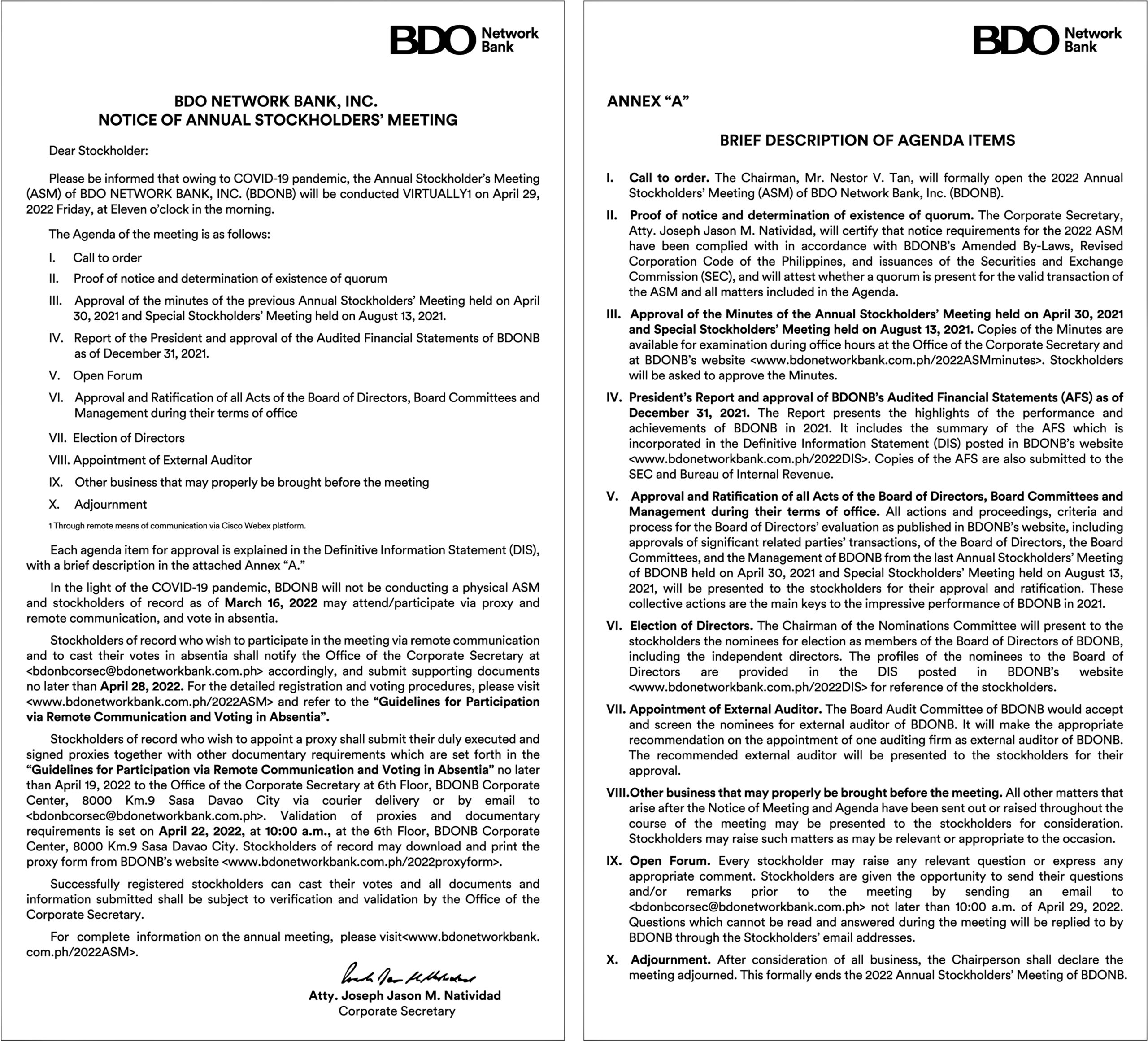
BDO Network Bank, Inc. to conduct annual stockholders’ meeting virtually on April 29

click to enlarge

Spotlight is BusinessWorld’s sponsored section that allows advertisers to amplify their brand and connect with BusinessWorld’s audience by enabling them to publish their stories directly on the BusinessWorld Web site. For more information, send an email to online@bworldonline.com.

Join us on Viber to get more updates from BusinessWorld: https://bit.ly/3hv6bLA.

ADVERTISEMENT
ADVERTISEMENT