Home Blog Page 6570

Household subsidy for poor families rising to P500 by May

PHILSTAR FILE PHOTO

THE monthly household subsidy for poor families will increase from P200 to P500 and is set for distribution by May, a senior legislator said on Thursday.

“The low-income household subsidy is definitely pushing through. I think the Executive has already found some funding sources in the form of unused cash balances,” House Ways and Means Chairperson and Albay Rep. Jose Ma. Clemente S. Salceda said in a statement.

“President (Rodrigo R.) Duterte also followed up with an instruction to increase the monthly subsidy from P200 to P500. I am quite positive that we will start distributing those subsidies before the elections.”

The Department of Social Welfare and Development (DSWD) will oversee the household subsidy, he said, noting that he “explicitly requested for an exemption of all DSWD aid transactions from the COMELEC (Commission on Elections) election spending ban.”

The fuel subsidy to be distributed to drivers under the Pantawid Pasada Program will also continue, to head off any fare increases and second-round effects from oil prices, he added. 

“That said, we will continue to follow up with implementing agencies when there are delays in the implementation,” Mr. Salceda said. 

“My reservation with targeted programs such as these has always been that they take a while to fully implement, compared with outright exemptions or universal cash transfers. But, as this is the direction the executive has decided to take, we will provide policy support or appropriations support as needed.”

Separately, Samar Rep. Edgar Mary S. Sarmiento, who chairs the House Committee on Transportation, welcomed the poll body’s decision to lift the ban on distributing the fuel subsidy.

“We are very happy that the Comelec has finally given the go signal for the LTFRB (Land Transportation Franchising and Regulatory Board) to resume the distribution of the fuel subsidy,” Mr. Sarmiento said in a statement.

“This is definitely not enough to ease the burden of our drivers and operators because the cost of fuel remains very prohibitive but at least, this fuel subsidy is a reminder that the government is doing everything to help them.” — Jaspearl Emerald G. Tan

SRP for imported galunggong set at P180 in NCR

PHILIPPINE STAR/ MICHAEL VARCAS

THE Department of Agriculture (DA) has set the suggested retail price (SRP) for imported medium-sized galunggong (round scad) in wet markets in the National Capital Region (NCR) at P180 per kilogram.

“Considering the effects of rising fuel prices due to the Russia-Ukraine conflict (and) aggravated by the pandemic, (which raised the) prices of agricultural commodities… there is a need to manage the prices of basic necessities,” the DA said in an administrative circular issued on Thursday.

The circular estimated that one kilogram of medium-sized, female galunggong will consist of 11 to 20 pieces.

“The state shall ensure the availability of basic necessities and prime commodities at reasonable prices at all time, without denying legitimate business a fair return on investment,” the circular read.

The DA has the authority to regulate prices, particularly for agricultural goods.

The administrative circular will take effect immediately after its publication on the DA website and will remain in effect for 60 days from its approval. — Luisa Maria Jacinta C. Jocson

Back taxes collected from shuttered firms hit P2.95 billion in 2021

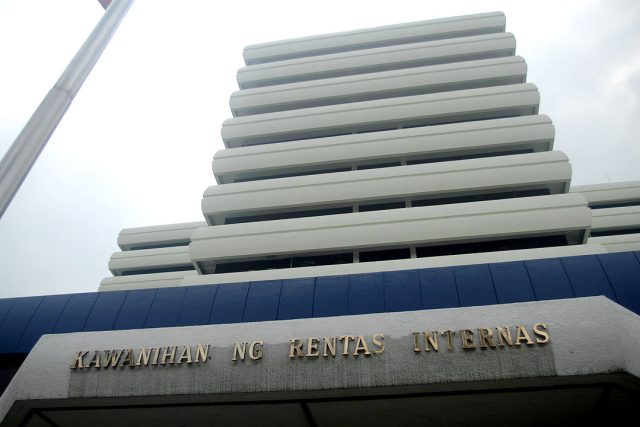
THE Bureau of Internal Revenue (BIR) collected P2.95 billion in 2021 worth of back taxes from 523 companies which were shut down for tax violations, the Department of Finance (DoF) said in a statement on Thursday.

The shuttered companies fell foul of the BIR’s Oplan Kandado crackdown, which targets establishments that do not comply with tax laws.

The 2021 total is nearly five times the 2020 collections. Two years ago, 209 establishments were shut down by Oplan Kandado.

BIR Commissioner Caesar R. Dulay added that last year, the bureau collected an additional P122.40 million in registration penalties after inspecting over 120,000 establishments.

Mr. Dulay said that under the bureau’s Run After Tax Evaders program, 137 cases were filed before the Department of Justice involving P4.4 billion worth of tax liabilities, in 2021 while 17 cases were filed before the Court of Tax Appeals involving an estimated P1.4 billion worth of unpaid taxes.

The BIR had collected P3.91 billion in taxes from Philippine Offshore Gaming Operators (POGOs) as of December 2021.

An Act Taxing Philippine Offshore Gaming Operations, or Republic Act No. 11590, took effect on Oct. 9, 2021, which imposed new taxes, including a 5% tax on gross gaming revenue.

The DoF expects collections from POGOs to hit P76.2 billion by 2023.

Mr. Dulay added that the BIR has expanded its social media presence to boost awareness of tax laws and bureau circulars. The bureau logged 9.6 million views of its Facebook content, while its YouTube channel has 10,000 subscribers.

The BIR hopes to collect P2.4 trillion this year. In April, the BIR’s collection target is P256.89 billion. — Tobias Jared Tomas

LGUs urged to meet norms for transaction processing time

BW FILE PHOTO

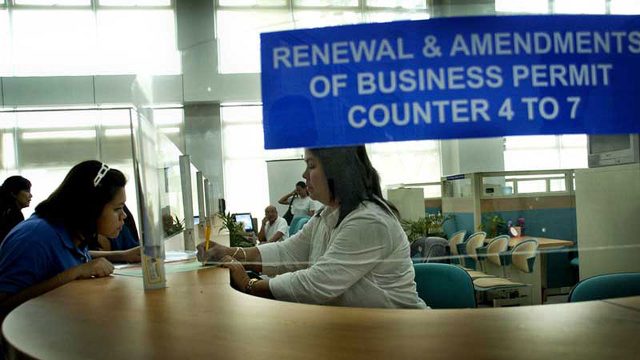
LOCAL GOVERNMENT UNITS (LGUs) have been reminded to meet standards for transaction processing times and minimize backlogs, the Anti-Red Tape Authority (ARTA) said.

“Each LGU should always remind all of their offices… to observe the 3-7-20 processing time and maintain a zero-backlog program,” ARTA Director General Jeremiah B. Belgica said at a webinar on Thursday.

“All applications and all transactions in government should have a period by which people can reasonably expect government action. It is better for an application to be denied instead of being delayed or unacted upon because the denied applicant can reapply or submit an appeal,” he added.  

The 3-7-20 rule refers to the three days allowed to process simple transactions, seven for complex transactions, and 20 for highly technical applications.

“We should not just monitor compliance once a year, but for all government agencies and LGUs, we are encouraging that (they) make this as a regular staple,” Mr. Belgica said.  

According to Mr. Belgica, the agency chiefs and LGUs are responsible for ensuring that applications and permits are processed within the recommended period.

“The heads of agency (are responsible) in the implementation of the provisions of Republic Act 11032 (Ease of Doing Business and Efficient Government Service Delivery Act) as well as ensuring that applications and permits are acted upon within the prescribed processing time,” Mr. Belgica said.

“The zero-backlog program should be shepherded by the head of the agency. The partner of the local chief executive is the committee on anti-red tape,” he added. — Revin Mikhael D. Ochave

Golden rice registered with seed industry council

IRRI

GOLDEN RICE was recently approved for registration with the National Seed Industry Council, according to the Philippine Rice Research Institute (PhilRice).

“This (means) it is now fully recognized by the Bureau of Plant Industry. If ever farmers plant this, they can now apply for crop insurance, they are now at the same level as other varieties. It’s much easier now that it’s registered,” PhilRice Research Specialist Reynante L. Ordonio said in a virtual briefing.

“Golden Rice is a complementary solution to existing vitamin A deficiency preventions. Rice is life for Filipinos and an integral part of our diet,” he added.

Golden rice is a genetically modified, biofortified crop engineered to produce beta-carotene, which is not normally present in rice. Beta-carotene is converted into vitamin A when metabolized by the body.

The taste of golden rice is the same as white rice, Mr. Ordonio said.

The variety was designed to lower malnutrition and growth stunting in poor countries.

“There are successful complementary solutions, like biofortification. However, vulnerable groups are being missed and this is where golden rice can help as a tool in the basket of interventions,” he said.

“Especially during the pandemic, we find it all the more difficult to consume a diversified diet,” he added.

Biofortification is the process of breeding crops to increase their nutritional value. This can be done through conventional selective breeding or genetic manipulation.

“Because rice is widely grown and eaten, even a small increase in the micronutrient content in the grain could have a significant impact on human health,” Mr. Ordonio said.

“In other countries, they already have orange sweet potato, yellow cassava, and sweet rice as a product of biofortification,” he added.

Golden rice is targeted for distribution to provinces with high malnutrition levels, like Quirino, Catanduanes, Samar, Antique, Lanao del Norte, Agusan del Sur, and Maguindanao.

Mr. Ordonio said the next step in seed certification lies with the National Seed Quality Control Services (NSQCS).

“We want to make everything formal to facilitate deployment to farmers, most importantly to seed producers, because they need the seed class,” he said.

“It would depend on the NSQCS on when they will allow us to have the certification so the planting can be done by wet season. Hopefully, by the wet season we can proceed with planting. The seeds will be produced by PhilRice,” he added.

High iron and zinc rice (HIZR) is another genetically modified rice that was developed to improve the uptake of the two nutrients.

“Previously, as proof-of-concept, iron concentrations in a well-polished rice grain were achieved with no yield penalty, and the dietary target of the iron and zinc in the polished grain has been achieved under field conditions,” Mr. Ordonio said.

This year, HIZR is being prepared for a field trial in Batac, Ilocos Norte and Muñoz, Nueva Ecija.

There are also plans to stack HIZR with Golden Rice in a project led by the International Rice Research Institute. — Luisa Maria Jacinta C. Jocson

Facebook deletes 400 accounts before elections

FREEPIK

META Platforms, Inc. on Wednesday suspended a network of more than 400 accounts, pages and groups before general elections in the Philippines as the Facebook parent moves to crack down on hate speech and misinformation.

“To help keep people safe during the upcoming Philippine general election, we’ve built new products and developed stronger policies in collaboration with the Commission on Elections, election watchdogs, independent fact checkers and civil society organizations,” it said in a blog post.

The company said these efforts expand its ability to remove harmful content and networks if it sees them, connect more people to credible election information, promote digital literacy and civic engagement and provide more transparency into political ads.

“We’re also activating an Elections Operations Center, so we can detect and respond quickly to any potential abuse of our services related to the Philippine election,” Meta said.

Concerns about online hate speech have increased as candidates and supporters increasingly turn to social media for the May 9 election amid a coronavirus pandemic that has disrupted traditional campaign methods.

Meta said the people behind the more than 400 accounts and pages had claimed to be “hacktivists” and relied primarily on authentic and duplicate accounts to post and amplify content about Distributed Denial of Service attacks, account recovery and defacing news websites in the Philippines.

It added that it had seen inauthentic behavior operators from various countries become active on the margins of the upcoming Philippines elections.

It said it had removed several clusters of activity that switched the focus of their Pages and Groups to the elections to increase their following.

One page that mainly shared nonpolitical dance videos renamed itself to become “Bongbong Marcos News,” while another page that started off as supporting a politician later changed its name to “Your Financial Answer” and began posting loan advice.

It also cited deceptive efforts to pose as authentic communities. The Facebook parent said it had removed multiple clusters of activity from Vietnam, Thailand and the US that posed as members of local communities in the Philippines in an apparent attempt to monetize people’s attention on the election.

“In February, we identified a cluster of pages operated by spammers in Vietnam who used virtual private networks to make it look like they are based in the Philippines,” it said. “They posed as supporters of political campaigns or local news entities and used names like Philippines Trending News, Duterte Live, Related to Francis Leo Marcos and Pinas News.”

The pages claimed to share live footage while purporting to be local news sources on the ground in an attempt to drive people to their clickbait websites filled with ads.

Last month, the country’s presidential candidates pressed on the need to hold social media companies liable for the spread of misinformation.

Meta said advertisers in the Philippines must complete its ad authorizations process and include ‘Paid for by’ disclaimers on ads about elections, politics and certain categories of social issues.

The move by Meta comes after it changed its stance on Ukraine that temporarily allowed calls for violence and narrowed its content moderation policy to prohibit calls for the death of a head of state. 

The company said it uses artificial intelligence technology that it trained in Filipino to help it detect and remove hate speech, bullying and harassment and content that violates its violence and incitement policies.

“In addition, we reduce the distribution of content that our technology identifies as likely to be violating those policies, to prevent it from spreading quickly,” it said. “If we determine that this content violates our policies, we remove it. We have content moderators who can review content in both Filipino and Cebuano, in addition to Filipinos working across the company.” 

With the coronavirus pandemic disrupting traditional campaigning, candidates and supporters are increasingly turning to social media to reach voters, prompting concerns about online hate speech and disinformation.

“Social media platforms should be made accountable because they are housing disinformation,” Vice President and opposition leader Leni Robredo said during a national debate this month.

Retired boxing champion Senator Emmanuel “Manny” D. Pacquiao, who is also running for president, said creators of fake news should be punished.

Another candidate, Manila City Mayor Francisco “Isko” M. Domagoso, said social media companies should be held accountable for allowing fake accounts on their platforms.

Frontrunning candidate Ferdinand “Bongbong” R. Marcos, Jr. did not participate in the presidential debate organized by the country’s election body.

Analysts say the popularity of Mr. Marcos, the namesake and son of the Philippines’ late dictator, stems from an effective social media strategy targeting the youth.

More than 67 million Filipinos are eligible to vote on May 9 to select the Southeast Asian nation’s next president, vice president and roughly 18,000 local officials. — Norman P. Aquino with Reuters


Palace says alert level effective in economic revival

PHILIPPINE STAR/ MICHAEL VARCAS

THE COUNTRY’S effective coronavirus alert level system has made Filipinos become more optimistic about economic growth, according to the presidential palace.

In a statement, presidential spokesman Jose Martin M. Andanar said the system had facilitated economic reopening ang job recovery.

“Our people have more reasons to feel confident about the future, especially now that President Rodrigo Roa Duterte has signed Executive Order No. 166, which adopted a 10-point policy agenda to accelerate and sustain the economy from the COVID-19 pandemic,” he added.

More than half of adult Filipinos thought the Philippine economy would improve in the next 12 months, the Social Weather Stations (SWS) said, citing a Dec. 12-16 poll.

It said 30% of Filipinos thought the economy would stay the same, while 7% said it would worsen.

“The Dec. 2021 net economic optimism was a continuing recovery from the mediocre -9 in July 2020, mediocre -5 in Sept. 2020 and high +24 in Nov. 2020,” SWS said. “This is the highest since the excellent +44 in Sept. 2016.”

SWS said 45% of adult Filipinos expected their quality of life to improve, 42% said it would stay the same and 3% said it would worsen in the next 12 months. The December poll found that 43% of Filipino families considered themselves poor.

The poll had an error margin of ±2.6 points. — Kyle Aristophere T. Atienza

Leni endorsed for president after anti-China stance

PHOTO FROM PHILIPPINE COAST GUARD

VICE-PRESIDENT Maria Leonor “Leni” G. Robredo on Wednesday visited Occidental Mindoro in western Philippines, where she was endorsed by a local lawmaker who cited her strong stance in the sea dispute with China.

Ms. Robredo and running mate Senator Francis “Kiko” N. Pangilinan got the support of key local officials and a fisherfolk community, whose members had been left for dead in 2019 by a large Chinese fishing vessel that rammed their small fishing boat near a Philippine-claimed area in the South China Sea.

The fishermen issued a manifesto of support for the opposition tandem, Ms. Robredo’s office said in a statement on Thursday.

The ramming incident on June 9, 2019 happened near the resource-rich Reed Bank, which the Philippines calls Recto. The 22 Filipino fishermen, who were left in the open sea after their boat sank, were rescued by Vietnamese fishermen.

Ms. Robredo visited the fishermen days after the incident. Each of the fisherfolk got cash aid from the vice president.

Occidental Mindoro Rep. Josephine Ramirez-Sato, who is running for governor, endorsed the opposition tandem in a campaign rally.

“One woman bravely faced China and said she would not let them oppress our fellowmen in our own country,” Ms. Sato said at the rally in Filipino, based on a video posted on Facebook.

Filipinos will choose President Rodrigo R. Duterte’s replacement on May 9. Political analysts have said the country’s sea dispute with China is a major election issue.

Fitch Solutions Country Risk and Industry Research said in a report last year Philippine presidential frontrunner Ferdinand “Bongbong” R. Marcos, Jr. “appears one of the few candidates to agree with Duterte’s policy of engagement.”

Local civic groups and foreign policy experts have accused him of parroting China’s mantra in its sea dispute with the Philippines. 

Ms. Robredo has said the next government should not deal with China until it recognizes a 2016 ruling by a United Nations-backed tribunal that voided its claim to more than 40% of the waterway.

She has also called for a coalition of nations against China’s militarization of the sea.

Meanwhile, presidential spokesman Jose Martin M. Andanar said Mr. Duterte would support candidates who would continue his policies.

Mr. Duterte, 77, has said he would retire from politics once his six-year term ends in June. Domestic and international groups have criticized his war on drugs that has killed thousands. — Kyle Aristophere T. Atienza

Comelec to hold trial run of health protocols for COVID-symptomatic voters 

NAMFREL

THE COMMISSION on Elections (Comelec) will hold a public demonstration of the procedures and health protocols that will be implemented for voters who exhibit coronavirus symptoms when they cast their ballots on May 9, according to an election commissioner.  

A date has yet to be set for the simulation exercise.   

Election Commissioner Aimee Torrefranca-Neri, who has just been appointed to head the poll bodys committee for the new normal,said it is crucial to ensure that health standards are followed and COVID-proofingthe elections.  

“An election is a super-spreader event and we are not out of the woods yet,” she told a news briefing on Thursday.    

Comelec Spokesman James B. Jimenez earlier said that voting sites will have isolation polling places, which are separated booths or classrooms for voters who show symptoms of coronavirus disease 2019 (COVID-19).   

The isolation stations and protocols will be similar to what was implemented in last year’s Palawan plebiscite, the first electoral exercise conducted in the country amid a pandemic.   

Non-partisan coalition PARTICIPATE earlier asked Comelec to designate personnel with medical training or knowledge for these separate voting stations.  

Ms. Neri said Comelec will create its own medical advisory board to help provide and develop more timely policies and guidelines for the public.   

The election body also plans to partner with medical groups to set up medical desks in polling venues to attend to voters with health-related issues during the election day.   

The help-desk will prioritize individuals who are deemed vulnerable due to pre-existing conditions.  

There are about 67.4 million registered voters, representing close to 60% of the Philippine population.  

Mr. Jimenez said in January that there will be around 105,000 voting precincts this year compared to 80,000 during the 2019 elections in consideration of physical distancing.  

Last month Comelec issued an order allowing persons with disabilities, senior citizens, and pregnant voters to cast their ballots in special voting areas that will have ramps, sign language interpreters, and accessible washrooms.  

“While we exercise our right of suffrage, we must also protect the sanctity of life and right to health of our population,” said Ms. Neri. John Victor D. Ordoñez 

Persistent rains trigger flooding in Davao, Caraga regions  

TRENTO MUNICIPAL INFORMATION OFFICE

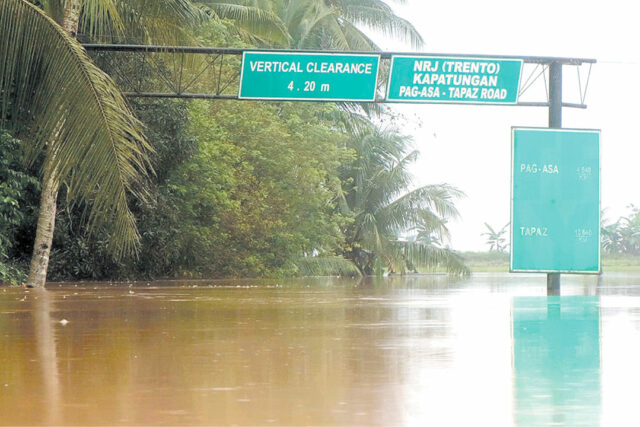
PARTS of the Davao and Caraga regions in southern Philippines were flooded since Wednesday following persistent rains brought about by a low pressure area, local authorities reported.  

The town of Trento in Agusan del Sur province was among the worst hit with 15 out of its 16 villages affected, prompting the municipal government to declare a state of calamity.   

Work in both public and private offices and classes in all schools were suspended on Wednesday, and remained in effect on Thursday as rains were expected to continue in the coming days.  

The municipal disaster management office reported that more than 2,600 families have been affected while damage to agriculture was initially assessed at P87 million.  

Landslides in some areas also cut off power supply.  

The provincial government of Agusan del Sur, meanwhile, said response teams from the different local government units as well as police, military, coast guard, and fire bureau have been deployed for response measures and continued monitoring.  

As of today, floodwaters have generally subsided,the provincial information office said, However, moderate rain is expected to continue through the next 2-3 days.”  

As of Thursday 10 a.m., the low pressure area was estimated at 215 kilometers east-northeast of Hinatuan, Surigao del Sur in Mindanao, the countrys southern mainland, according to state weather agencys bulletin.    

The Philippine Atmospheric, Geophysical and Astronomical Services Administration (PAGASA) said the low pressure area moving in a northwest direction remains less likely to develop into a tropical depression in the next 24 hours.”   

The weather disturbance is embedded along the Intertropical Convergence Zone (ITCZ), bringing moderate to heavy rains over Caraga, Northern Mindanao, Zamboanga Peninsula and the Visayas in central Philippines.   

Light to moderate with at times heavy rains are also expected in the rest of Mindanao, and the regions of Mimaropa and Bicol. 

Under these conditions, scattered flooding and rain-induced landslides are likely,PAGASA warned, especially in high-risk areas as identified in official hazard maps and in areas with significant rainfall in previous days.  

In Davao City, residents along Davao River were preemptively evacuated Wednesday night.   

The city disaster management office reported on Thursday morning that several sections of the river overflowed and were gradually increasing.”  

The rest of the river channels are still monitored within safe levels,it said.   

Flooding and landslides were also reported in other areas of the region, including parts of the provinces of Davao Oriental and Davao de Oro. MSJ 

Almost 2,700 traffic personnel to be deployed to minimize Holy Week road congestion — MMDA  

PHILIPPINE STAR/ RUSSEL PALMA

ALMOST 2,700 personnel will be deployed in the capital regions major roads and Catholic churches starting April 8 to help manage the expected increase in vehicular volume during the Holy Week that begins Sunday.     

Majority of the traffic personnel will be assigned to roads leading to provincial bus terminals, seaports, airports, and major churches, to ensure the safety of thousands of commuters expected to travel to nearby provinces to take advantage of the long Holy Week break,Romando S. Artes, chairman of the  

Metropolitan Manila Development Authority (MMDA), said in a statement on Thursday.   

He said MMDA will be working with the police, local government units, traffic bureaus, and other related agencies.    

The auxiliary traffic teams will be active until April 18, a day after Easter Sunday.   

There will also be teams stationed at various points to provide roadside emergency services.   

Simultaneous sidewalk clearing operations against illegal vendors within the vicinity of major churches will also be conducted,MMDA said.   

“These contingency measures are aimed to ensure a peaceful, orderly, and meaningful observance of Lent,” said Mr. Artes. 

In Catholic-majority Philippines, Thursday and Friday of Holy Week are declared as national holidays. 

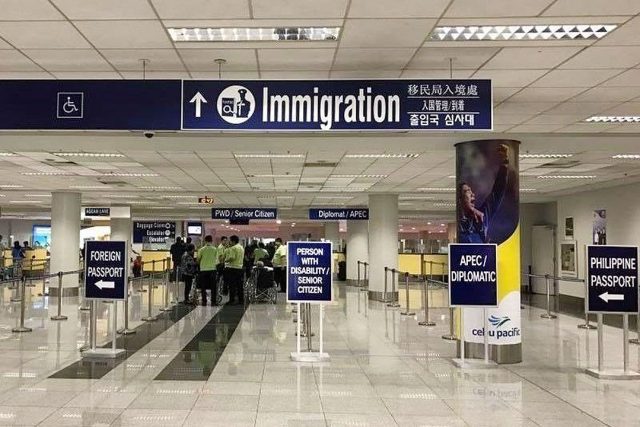
Immigration officers on full duty with expected influx of travelers during Lenten break

BUREAU OF IMMIGRATION FACEBOOK PAGE

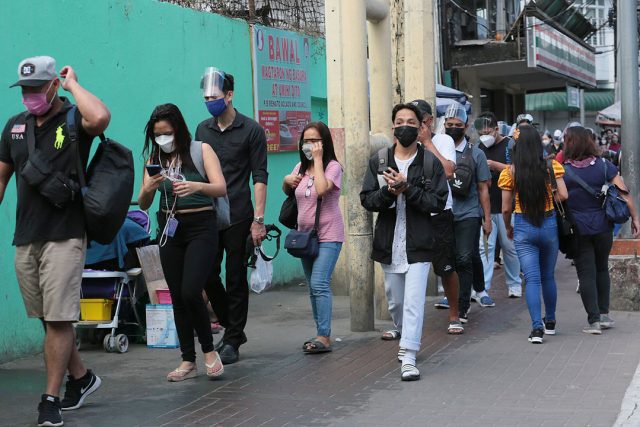
THE IMMIGRATION bureau is anticipating an influx of arriving and departing passengers starting this weekend as the Philippines observes the Lenten holiday, the first in two years with eased travel restrictions due to the global coronavirus pandemic.   

As such, immigration officers assigned at international airports across the country have been prohibited from going on leave during and after the Holy Week to ensure sufficient manpower to serve the traveling public during the break, according to the Bureau of Immigration (BI).  

“Normally there is always a rise in the volume of arriving passengers before the Holy Week and increase in the number of departing passengers after the Lenten break,” BI Port Operations Divisions Carlos B. Capulong said in a statement on Thursday.   

Mr. Capulong noted that apart from Filipinos who will be traveling abroad or coming home, the country has also opened its borders to vaccinated foreign tourists from all countries.   

Data from the bureau show that passenger arrivals at the airport has been averaging at 13,000 to 15,000 daily in April, up from 6,000 to 9,000 in March.  

The Department of Tourism (DoT) reported on Tuesday that more than 186,000 foreign tourists have arrived since border reopening on Feb. 10 for non-visa countries, and for all countries effective April 1.   

The tourism sector’s contribution to the country’s economy in 2019 was 12.8%. This dropped to 5.4% the following year due to the global pandemic.  

DoT said that over a million workers in the tourism industry were affected by the pandemic. John Victor D. Ordoñez