Home Blog Page 6561

Voyager raises $210 million to become 2nd Philippine ‘unicorn’

MANILA – Philippine technology startup Voyager Innovations said on Tuesday it has raised $210 million in its latest funding round, making the company the country’s second “unicorn” with a valuation of more than $1 billion.

Voyager, which serves 47 million people through its consumer platforms that include e-wallet and digital payments, said the fresh capital will fund its digital banking venture and other services like cryptocurrency and micro-investments.

SIG Venture Capital, the Asian venture capital arm of SIG, Singapore-based global investor EDBI, and investment holding company First Pacific Company Ltd, participated in the funding round as new investors, Voyager said.

Voyager’s existing shareholders like PLDT, private equity firm KKR & Co Inc, China’s Tencent Holdings Ltd and International Finance Corp (IFC) also joined the capital injection.

The latest funding increased the valuation of Voyager to $1.4 billion, it said. In June, Voyager raised $167 million for its expansion programme, bringing in a unit of the World Bank Group’s IFC as a new investor.

Voyager’s rival, Mynt, is the only other Philippine unicorn, or startups that have reached at least $1 billion in valuation. Mynt is partly owned by Globe Telecom, Bow Wave and Ant Financial, the financial technology arm of Alibaba.

The Philippines is among the fastest-growing fintech markets in Southeast Asia, with adoption of digital services surging during the pandemic. Its internet economy grew 93% to $17 billion in 2021, and is expected to expand to $40 billion by 2025, according to a report by Google, Temasek, and Bain & Co. — Reuters

War’s impact on PHL ‘minimal’ — BSP

Ukrainian expatriates and Filipinos held a small protest against Russia’s invasion of Ukraine outside a mall in Makati City, Feb. 28. — PHILIPPINE STAR/ MICHAEL VARCAS

THE CENTRAL BANK on Monday said Philippine banks have “minimal” exposure to Russia and Ukraine, as the war continues for a seventh week.

Bangko Sentral ng Pilipinas (BSP) Governor Benjamin E. Diokno said cross-border deposit liabilities of Philippine banks to Russia and Ukraine amounted to less than 1% of the banking industry’s total deposit liabilities as of end-September last year.

“The cross-border financial exposure of Philippine banks to Russia and Ukraine is minimal. As of end-September 2021, Philippine banks have cross-border deposit liabilities to Russia and Ukraine amounting to only $672,200 and $969,200, respectively,” he said in a Viber message to reporters on Sunday evening. 

Local lenders have no cross-border financial assets with Ukraine and Russia, the BSP chief added.

Mr. Diokno said two Philippine banks have P254.12 million in investments, through their trust departments, in two Russian banks — VTB Bank Public Joint Stock Co. and the Russian Agricultural Bank — as of December 2021.

“This represents less than 1% of (the two Philippine banks’) total assets under management,” he said.   

Mr. Diokno also said inflows from both Russia and Ukraine account for less than 1% of the total cash remittances last year.

“Nevertheless, BSP is aware that the crisis could indirectly affect the flow of remittances of overseas Filipinos from the two warring countries,” Mr. Diokno said.

Central bank data showed that cash remittances from Russia and Ukraine in 2021 amounted to $2.261 million and $121,000, respectively. Both are relatively small compared with the $3.745 billion worth of inflows that come from Europe and the $31.417-billion total from all over the world in the same year.

The BSP chief also noted the country’s direct trade links with Russia and Ukraine are “negligible.” Exports to Russia only amounted to $120 million or 0.2% of the Philippines’ total exports in 2021, while exports to Ukraine reached $5 million.

“In brief, trade financing transactions of banks with Russian counterparts are inconsequential,” Mr. Diokno said.

He reiterated that the country will continue to see limited economic fallout from Russia’s invasion of Ukraine.

“The economic fallout from the Russia-Ukraine on the Philippine economy is limited for three reasons: first, the country’s geographic distance from the conflict area; second, the country’s limited economic and business links with both Russia and Ukraine; and third, its strong macroeconomic fundamentals,” Mr. Diokno said.

Reuters reported on Saturday that S&P lowered Russia’s foreign currency ratings to “selective default” on increased risks that Moscow will not be able and willing to honor its commitments to foreign debtholders.

Russia is facing more sanctions from Western economies over its invasion of Ukraine.

The BSP earlier acknowledged the war’s impact will spill over to the Philippine economy, mainly through rising inflation.

In its March 24 meeting, the BSP raised its inflation forecast for 2022 to 4.3%, which is already above the 2-4% target.

In March, headline inflation quickened to 4% from 3% in February, already reflecting the impact of the Russia-Ukraine war on global oil prices and commodity prices. 

There have been global concerns over possible energy supply disruptions due to the crisis. Russia is one of the world’s major oil exporters, while Ukraine is a major global wheat exporter. — L.W.T.Noble with Reuters

Shipping industry struggles to reach pre-pandemic cargo volume

REUTERS
Cargo and other vehicles are pictured on board the interisland roll-on, roll-off ferry in Dalahican port in Lucena, Quezon, March 10, 2016. — REUTERS

By Arjay L. Balinbin, Senior Reporter

THE FUEL CRISIS is making it more difficult for the domestic shipping industry to reach pre-pandemic cargo volumes this year, the Philippine Liner Shipping Association (PLSA) said.

“It’s still up and down. It’s still below 2019. The 2021 numbers did not meet the 2019 numbers. It’s very tough,” PLSA President Mark Matthew F. Parco told BusinessWorld in a recent phone interview.

Data from Philippine Ports Authority (PPA) showed that domestic cargo throughput in 2021 reached 96.86 million metric tons (MT), down by 7.2% from 104.43 million MT in 2019 before the coronavirus pandemic crisis.

Last year’s domestic cargo volume, however, was 3.5% higher than the 93.59 million MT recorded in 2020.

“We were [initially] hopeful that 2022 would get us there (pre-pandemic level),” Mr. Parco said.

“But with the spike in fuel prices and the overhang of the Ukraine war, it’s going to be a problem because if the fuel prices spike up more, people will have less money to spend, and then we still have to pay our fuel bills. So that is the problem,” he added.

Since the start of the year, local prices of gasoline, diesel, and kerosene posted a net increase of P16, P26, and P24.10 per liter, respectively. Oil firms are set to implement a price rollback on Tuesday.

Some shipping companies in the country have started increasing their freight fees due to the continued rise in oil prices.

The average increase in freight fees is 25%, according to Mr. Parco. Domestic ship operators are authorized to set their own shipping rates under Republic Act No. 9295.

For his part, Chelsea Logistics and Infrastructure Holdings Corp. President and Chief Executive Officer Chryss Alfonsus V. Damuy said cargo “volume should be better this year.”

“The challenge now is the cost to operate, not limited to fuel. For the passenger [business], it may take a while still,” he said in a phone message to BusinessWorld.

In a statement last week, Chelsea Logistics said its freight business “continued to recover with a 30% year-on-year increase in revenues to P2.727 billion — already surpassing the P2.688 billion in revenues in 2019 prior to the COVID-19 pandemic and the first lockdown in March 2020.”

“We are hopeful of a further recovery this year while we need to carefully monitor world oil prices as they will certainly have a negative impact on our margins,” Mr. Damuy said.

In a phone interview, Philippine Exporters Confederation, Inc. President Sergio R. Ortiz-Luis, Jr. said the volumes will go up, “but definitely slower than what we hope for.”

According to data from the PPA, export cargo volume reached 70.54 million MT last year, up by 17.1% from 60.25 million MT in 2020 and 14.3% higher than the 61.69 million MT in 2019.

However, Mr. Ortiz-Luis said that delays, shipping costs, and shortage in vessel space are “worsening” due to pandemic-induced disruptions and the ongoing Russia-Ukraine war.

Some nonprofit hospitals, schools may have to pay 25% income tax, BIR says

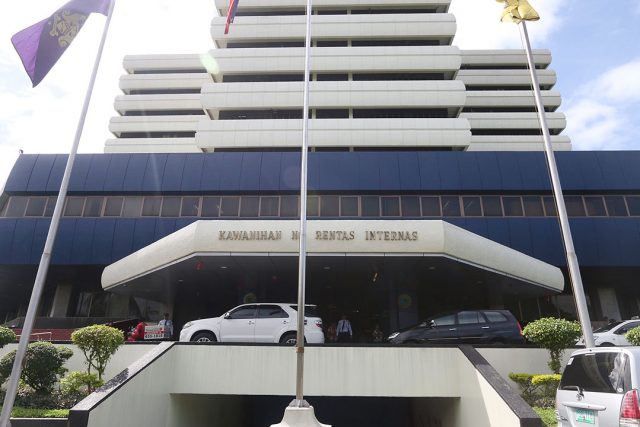
PRIVATE SCHOOLS and nonprofit hospitals may have to pay the 25% regular corporate income tax if their gross income from unrelated business activities exceeds 50% of the total income, the Bureau of Internal Revenue (BIR) said.

BIR Revenue Regulation No. 3-2022 sets the implementing rules and regulations for Republic Act No. 11635 which amended the National Internal Revenue Code to clarify the income tax rate for private schools and nonprofit hospitals. The regulation was signed on April 7 and published in a newspaper on Monday.

Under the BIR rules, nonprofit hospitals and private schools will be imposed a 10% preferential corporate income tax rate after June 30, 2023.

Also covered by the rules are nonstock, nonprofit educational institutions whose net income or assets benefit a member or specific person.

These institutions are currently imposed a 1% corporate income tax rate from July 1, 2020 to June 30, 2023 due to the Corporate Recovery and Tax Incentives for Enterprises (CREATE) Act.

However, the BIR rules stated that the 25% corporate income tax will be imposed on the entire taxable income of private schools and nonprofit hospitals if their gross income from unrelated trade, business, or other activity exceeds 50% of the total gross income from all sources.

The BIR said unrelated trade and business means any activity that is “not substantially related to the exercise or performance by such educational institutions or hospitals of its primary purpose or function.”

For other nonstock and nonprofit educational institutions, a 25% regular corporate income tax will be imposed on its revenues or assets that are not used exclusively for educational purposes.

The BIR rules said “nonprofit” means all net income or assets of the institution and all its activities are conducted not to generate profits.

However, it clarified that nonprofit institutions will not be prohibited from granting transportation allowance for attending meetings and other compensation to the Board of Trustees, officers, employees of the institutions.

“(This) shall not necessarily be considered a private inurement that would negate the status of institutions as nonprofit,” the BIR said, adding that these will be subject to proper reimbursement or liquidation.

The BIR said it will review such expenses on a case-to-case basis.

Coordinating Council of Private Educational Associations, which represents over 2,500 private educational institutions with over 300,000 school personnel, previously said the new law would help “save” the education sector from “excessive taxes and collapse” as the pandemic continues.

As of Sept. 2021, enrollment in private schools was 1.4 million, down by 57% from a year earlier, and just 66% of the 4.3 million seen in 2019, according to the Department of Education’s Learning Enrollment Survey Quick Count data. — Tobias Jared Tomas

PXP Energy suspends exploration on DoE directive

PXP Energy Corp. and its subsidiary Forum (GSEC 101) Ltd. have put on hold activities for two petroleum exploration service contracts as directed by the Energy department until the issuance of the “necessary clearance to proceed.”

In a disclosure on Monday, PXP said “this was the first time” that the company, along with Forum, learned of the requirement for clearance from the Security, Justice and Peace Coordinating Cluster (SJPCC) before undertaking the work obligations that the Department of Energy (DoE) has required.

PXP is the operator under Service Contract (SC) 75 and Forum is the operator under SC 72.

SJPCC is composed of the Department of the Interior and Local Government, Department of Foreign Affairs, Department of National Defense, Department of Justice, and the Office of the Presidential Adviser on the Peace Process with the National Security Council as secretariat.

SC 75 was awarded by the DoE on Dec. 27, 2013 and covers an area of 6,160 square kilometers in the offshore northwest Palawan basin.

On Sept. 9, 2015, the department granted force majeure to SC 75’s work commitments effective December of that year until the DoE notifies PXP to resume its petroleum exploration-related activities.

SC 72 within Recto Bank is a concession acquired by Forum, which became its operator in April 2005. It is located in the West Philippine Sea, west of Palawan Island and southwest of the Malampaya gas field. Forum plans to drill two wells over the Sampaguita field once the force majeure is lifted.

The force majeure was lifted by the DoE on Oct. 14, 2020.

In the disclosure, PXP said the directive from the DoE to put on hold exploration activities was received on April 6.

“PXP and Forum, however, understood the suspension to be temporary,” it said, considering that the DoE has been keen for exploration activities to be conducted since the lifting of the force majeure.

It added that both operators had been closely coordinating with the DoE regarding the planned exploration activities, which are part of their respective work obligations under SC 75 and SC 72.

PXP said the company and Forum, through their letters dated April 8, expressed their willingness to resume activities immediately and no later than April 11. But if they have not received written confirmation from the DoE by April 10 that they can resume their activities on April 11 at the latest, they will consider the suspension of work issued by the DoE “to be indefinite.”

It said a force majeure event “will entitle them to be excused from the performance of their respective obligations and to the extension of the exploration period under SC 75 and SC 72.”

It said PXP and Forum have not received advice from the DoE that they can resume their exploration activities, prompting them to terminate all the supply and services agreements to carry out their work obligations.

PXP added that the decision was meant “to mitigate losses arising from what now appears could be an indefinite suspension of exploration activities.”

PXP holds a 50% interest in SC 75. Forum Energy Ltd., in which PXP holds a direct and indirect interest of 79.13%, has a 70% participating interest in SC 72 through its wholly owned subsidiary Forum. PXP has a total economic interest of 54.36% in SC 72.

On Monday, PXP shares at the local bourse slid by five centavos or 0.92% to close at P5.40 apiece. — Ram Christian S. Agustin

Power rates up in April as generation charge rises

CUSTOMERS of Manila Electric Co. (Meralco) will see more than a 50-centavos per kilowatt-hour (kWh) increase in their electricity bill in April or around P107 for a typical household consuming 200 kWh.

In a virtual briefing on Monday, Meralco officials announced that the overall rate for residential users inched up by P0.5363 per kWh to P10.1830 per kWh from P9.6467 per kWh in March.

“This summer season, in terms of upward rate adjustments, consumption patterns are also expected to increase. We try to find ways wherein we can somehow mitigate the impact of these factors that are in play,” said Meralco Vice-President and Head of Corporate Communications Agapito D. Zaldarriaga.

Consumers using 300 kWh, 400 kWh, and 500 kWh can expect a monthly increase of P160.89, P214.52, and P268.15, respectively.

Meralco said higher charges from independent power producers (IPPs) and the electricity spot market prompted an increase in the generation charge.

As a component of the month’s price increase, the generation charge accounted for P0.3987. The other charges are transmission at P0.0071, taxes at P0.0915, and other charges such as subsidies and system loss at P0.0390.

The generation charge in April rose to P5.8724 per kWh from P5.4737 per kWh the previous month. Meralco’s distribution charge stayed unchanged since July 2015.

The increase in IPP charges to P1.4885 per kWh is influenced by the scheduled maintenance of the power plant of Quezon Power (Philippines) Ltd. Co., the Malampaya facility’s insufficient supply of natural gas that resulted in First Gas Power Corp.’s Santa Rita plant acquiring pricier liquid fuel to ensure continuous supply, and further depreciation of the peso versus the greenback.

“There is a consistent depreciation over the past months in terms of the impact of the peso and dollar exchange rate. March is at P51.74, a depreciation from 51.27 in February,” Mr. Zaldarriaga added.

Meanwhile, prices at the wholesale electricity spot market (WESM) remained elevated in March caused by the thinning of reserves in the Luzon grid, which recorded peak demand that exceeded annual figures from 2019 to 2021 to 11,617 megawatts.

Jose Ronald V. Valles, head of Meralco’s regulatory management office, said the company coordinated with the Energy Regulatory Commission and some of the company’s suppliers for the deferral of generation costs, leading to lower charges from power supply agreements (PSAs) by as much as P0.1068 per kWh.

“On top of the deferred generation charges, the impact of the quarterly repricing of the Malampaya natural gas for the April supply will be reflected in the generation charge in May,” he added. 

The increase in electricity rate was also offset by the continuation Meralco’s P13.9-billion distribution rate true-up refund to P0.4684 per kWh, which has been implemented since March 2021.

IPPs, WESM, and PSAs account for 31.0%, 17.4%, and 51.6% of Meralco’s energy requirement, respectively.

Meanwhile, Meralco expressed its preparedness to deliver uninterrupted electricity service for the national and local elections on May 9, zeroing in on the critical sites identified by the Commission on Elections.

To ensure fully working electrical facilities in time for the elections, Meralco has conducted inspections and maintenance activities for its distribution assets along with election sites in its franchise area.

As a member of the energy task force election under the Energy department, Meralco will be actively communicating with other energy stakeholders in ensuring continuous power supply, and will form a dedicated emergency response team.

Meralco’s First Vice-President and Chief Commercial Officer Ferdinand O. Geluz said the company had completed 100% inspection of 2,905 sites, including 2,773 polling centers, 119 canvassing centers, and 13 other vital election sites.

Mr. Geluz also said Meralco had identified polling and canvassing centers that would need improvements and corrections, and would also continue “intensified inspection and maintenance” for its major facilities.

Meralco’s controlling stakeholder, Beacon Electric Asset Holdings, Inc., is partly owned by PLDT, Inc. Hastings Holdings, Inc., a unit of PLDT Beneficial Trust Fund subsidiary MediaQuest Holdings, Inc., has an interest in BusinessWorld through the Philippine Star Group, which it controls. — Ram Christian S. Agustin

Global-Estate posts P1.3-B profit on strong demand, sales growth

MEGAWORLD Corp. subsidiary Global-Estate Resorts, Inc. (GERI) announced on Monday that its income attributable to parent company shareholders grew by 21% P1.3 billion in 2021 due to strong demand and real estate sales.

“For 2021, we continued to capitalize on the strong demand for properties in the provinces. Aside from the intrinsic attractiveness of owning a place that allows you to commune more closely with nature, the past couple of years also highlighted the potential of owning real estate as an investment,” GERI President Monica T. Salomon said in a statement.

“In fact, the underlying land values for our offerings continued to appreciate at a brisk pace in spite of the pandemic,” she added.

Net income rose by 15% to P1.5 billion while consolidated revenues reached P5 billion, with no comparative figure given.

Real estate sales were the biggest contributor to revenues with a 3% increase to P3.7 billion in 2021, in line with the expansion in construction activity.

In the fourth quarter, real estate sales were up 49% to P1 billion.

The company said that demand also came from leisure developments, with reservation sales growing by 25% year on year to P17.2 billion.

Its Boracay Newcoast development led the company’s property sales with P4.1 billion last year, followed by Eastland Heights and Alabang West at P3.6 billion and P3.4 billion, respectively.

Meanwhile, leasing revenues declined by 34% to P409 million as “consumer confidence remained subdued for the majority of 2021.”

Revenue from hotel operations also dropped by 27% to P146 million from P201 million in the previous year as a result of travel restrictions.

However, hotel revenues in the fourth quarter increased by 231% to P78 million due to a resurgence in bookings from the easing of lockdown restrictions.

“The increased economic activity in the last couple of months of the year has really been a boon for us. Furthermore, the relaxation of travel requirements will help sustain the ramp up in operations of our hotels which rely a lot on leisure and tourism-related activities,” Ms. Salomon added.

GERI has eight integrated tourism developments across the country covering more than 3,300 hectares of land in Batangas, Cavite, Aklan, Iloilo, and Rizal, among other locations.

At the stock exchange on Monday, GERI shares remained unchanged at P0.88 apiece. — Luisa Maria Jacinta C. Jocson

Preserving the memories of a film

FOR author, playwright, screenwriter, and film scholar Clodualdo “Doy” Del Mundo, Jr., evoking sadness in the reader of his books is never the goal. But writing which requires recollection sometimes inevitably involves sadness, especially if what is remembered is something that is lost.

Such is the case with his latest book, Ang Daigdig ng mga Api: Remembering a Lost Film. Directed by National Artist for Film Gerardo De Leon, Ang Daigdig ng mga Api (The World of the Oppressed) is now lost because effective and efficient archiving facilities were not available at the time it was made.

Ang Daigdig ng Mga Api premiered at the first Manila Film Festival in 1966 where it garnered eight awards, including Best Picture and Best Director. Starring Robert Arevalo and Barbara Perez, the film tells the story of Filipinos living in penury and follows the stories of the suffering of agricultural workers under the hands of their overseer and landlord.

Wala na ang pelikulang Ang Daigidig ng mga Api, nasa alalala na lamang ng mga nakapanood nito (Ang Daigdig ng mga Api no longer exists, it only remains in the memory of those who had seen it),” Mr. Del Mundo said in a speech at the book launch on April 6 at the Cinematheque Centre Manila.

People’s memories are fallible, said Mr. Del Mundo making archiving challenging when one relies on oral history.

“Films are different. Hindi pwedeng memory lang or i-kwento lang (You can’t rely on memory or oral stories). It’s audiovisual,” Mr. Del Mundo told BusinessWorld shortly after the launch.

It is important to know that there was a film that captured audiences’ emotions and opened their eyes to the situation of farmers in those times,” Mr. Del Mundo said in Filipino.

To “re-create” elements of the film for the book, Mr. Del Mundo collected existing materials such as photographs, archived articles on the director, and a copy of the sequence treatment by the film’s screenwriter Pierre Salas. He also conducted interviews via phone and e-mails with the film’s lead actors.

The resulting book was co-published by the Film Development Council of the Philippines (FDCP) and the De La Salle University (DLSU) Press.

MORE BOOKS ON FILM
FDCP Chairperson and CEO Mary Liza Diño-Seguerra said that the organization is looking forward to engaging in more partnerships regarding preservation of Filipino films. With the goal of increasing the amount of literature on Philippine cinema, Ms. Diño-Seguerra told BusinessWorld that the FDCP is currently partnering with authors to write books about Philippine films.

Among the recently released titles are PH Movie Confidential by professor and entertainment journalist Nestor Cuartero, and a series of books on the history of Philippine cinema by film director and historian Nick Deocampo.

“We want to enrich our literature in film. I hope that through this program of the FDCP, we can reach out to more authors who want to write about significant topics on cinema,” Ms. Diño-Seguerra said.

Ang Daigdig ng mga Api: Remembering a Lost Film is the latest addition to the Philippine Film Archive (PFA) library.

In Nov. 2020, the PFA, a division of the FDCP, became an associate member of the Federation of International Film Archives, an institution founded in France which focuses on the preservation of and access to the world’s film heritage.

Ang Daigdig ng mga Api: Remembering a Lost Film is priced at P800 (softbound) and P1,000 (hardbound). For inquiries about the book and orders, contact De La Salle University Publishing House at 524-4611 loc. 271 or e-mail dlsupublishinghouse@dlsu.edu.ph. — Michelle Anne P. Soliman

PT&T targets to connect 7M homes, businesses in next two years

LISTED diversified telecommunications company Philippine Telegraph and Telephone Corp. (PT&T) announced on Monday that it plans to further expand its coverage in the adjacent regions of the National Capital Region (NCR) through its partnership with a US investment firm.

The company said it is working with US-based Continental Advisory Services (CAS), LLC and Urban Logistic Advisory Services (ULAS), Inc., to “upgrade its network infrastructure and expand coverage in its high growth yet still underserved service areas” in the neighboring regions of the NCR.

“This important step will expand PT&T’s footprint 10x over in the next 2 years, translating to 7 million homes and businesses passed,” it said in a disclosure to the stock exchange.

Under the partnership, the company’s US-based partner, CAS/ULAS, will share technical expertise in the areas of integrated engineering and outsourced logistics services.

PT&T is hoping to “rebound” as a “major” telecommunications and information and communications technology player in the country.

James G. Velasquez, the company’s president and chief executive officer, said: “Partnering with CAS/ULAS comes at a crucial time as PT&T seeks to sustain its growth momentum, having experienced a streak of nonstop growth quarter by quarter from 2017 and through the pandemic.”

“We are confident this development will place PT&T on a stronger track towards our goal of becoming the partner of choice for broadband connectivity and cutting-edge digital transformation solutions in the markets we serve,” he added.

PT&T’s net loss after tax widened to P40.53 million in the first nine months of 2021 from a loss of P30.43 million in the same period in 2020.

It recently partnered with Kacific Broadband Satellites Ltd., a Singapore-based next-generation broadband satellite operator, to “offer high-speed satellite internet at a more economical cost.” — Arjay L. Balinbin

Why Ed Sheeran’s court victory sounds good for the music industry

ED SHEERAN

THERE’s a good chance you’ve heard a song by Ed Sheeran called “Shape of You.” It’s been streamed over 3 billion times on Spotify and viewed over 5 billion times on YouTube.

The song “Oh Why” by Sam Chokri is less well known. But Chokri claimed that Sheeran had copied it when composing his hugely successful track.

That long-running claim has now been dismissed after a judge decided that, while the two songs are similar, Sheeran had “neither deliberately nor subconsciously copied” Chokri’s composition. The verdict was no doubt a relief for Sheeran, and should be celebrated by anyone who values creativity.

It was also a good chance for the music industry, which has changed so much in recent years, to get a clear sense of what is (and what isn’t) protected by a law that is often misunderstood.

Put simply then, the test for copyright infringement has two parts. The first (in a music case) is about whether the alleged infringer has heard the piece of music they are accused of copying. After all, you can’t copy something you haven’t heard. But it is very hard to present actual evidence that someone has heard a song before, so the legal standard is set quite low.

In fact, this test has been overcome in other situations, such as a case in the US where 3.8 million views on YouTube was considered enough to assume that the singer Katy Perry had heard a song.

In the Sheeran case, Chokri’s side argued in court that Sheeran habitually and deliberately copied and concealed the work of other songwriters. Chokri’s lawyer said: “Mr. Sheeran is undoubtedly very talented, he is a genius. But he is also a magpie. He borrows ideas and throws them into his songs, sometimes he will acknowledge it but sometimes he won’t.”

They claimed Sheeran could have heard their song via social media, through music industry contacts, or simply through his own interest in the UK music scene.

Sheeran said that to the best of his knowledge he had never heard Chokri’s song before, but when questioned in court, he couldn’t completely rule out the possibility. “That is why we are here,” he said.

This highlights a problem with this part of the legal test, since music is so easily and widely disseminated thanks to streaming technology and social media. It is hard for anyone to deny the possibility that they have heard any song before.

But the judge decided that despite Chokri’s “undoubted” talents, and efforts by his management team to create some hype around the 2015 release of “Oh Why,” the song had enjoyed “limited success.” As a result, the likelihood that Sheeran had heard it was not that great.

The second part of the copyright infringement test is about how similar the songs are — and this is where things get complicated, because copyright law is not supposed to protect ideas, it only protects original expressions of ideas.

Essentially this means that common musical elements are freely available for everyone to use and draw upon, allowing the creative process to flow. But this has to be carefully balanced against giving copyright protection to artists for their original creations so that they can protect, control and be paid for their work.

In the Sheeran case, both sides presented expert evidence from musicologists about how similar — or dissimilar — the songs were. Chokri’s side highlighted the tune, vocal phrasing, harmonies and the fact that the lyrics “Oh I” (Sheeran) and “Oh why” (Chokri) were used as part of a “call and response” in both songs.

Sheeran’s side pointed out differences such as the mood, differences in the harmonies and the response, both melodically and rhythmically. They also argued that the parts which are similar are so common in music that it was merely a coincidence.

The judge agreed with Sheeran, noting the similarities but also significant differences. The similarities, he said crucially, were “commonplace.” Commonplace elements are not — and should not — be protected by copyright, so cannot be infringed.

The 11-day trial which led to the judgment in Sheeran’s favor would have been an expensive and stressful experience. But on the plus side, as such a high-profile case, it has helped to update the role of UK copyright law in the modern music industry.

The first part of the copyright test was considered in the context of music streaming, which makes it harder to prove you’ve never heard a song before. And the second part of the test, about the similarities between songs, clarified what parts of musical expression are protected, and what is available for everyone to use.

The law must strike the right balance between protecting and encouraging creativity. In recent years there has been a growing trend of accusations over copying, which has become a major concern for songwriters. Sheeran has even said he now records all his songwriting just in case a claim is made later so that he can prove how he came up with his own song.

Copyright is supposed to encourage artistic endeavor, not stifle it. Thankfully, the outcome of this case puts the balance back where it belongs, only protecting original expressions of creativity. It should come as a relief to songwriters — and the music fans who enjoy their work.


Hayleigh Bosher is a Senior Lecturer in International Property Law at the Brunei University London.


Duterte extends franchise of Smart Broadband, five others

PRESIDENT Rodrigo R. Duterte’s office on Monday released approved laws extending the franchise of Smart Broadband, Inc. and five other telecommunication firms.

Mr. Duterte signed Republic Act No. 11678, which extends for another 25 years the franchise given to Smart Broadband, Inc., a subsidiary of Smart Communications, Inc., which is chaired by Manuel V. Pangilinan.

Smart Communications is the wireless subsidiary of PLDT, Inc, one of the country’s major telecommunication providers.

Mr. Duterte also renewed for another 25 years the franchise granted to Odiongan Telephone Corp., Mati Telephone Corp., Bicol Telephone and Telegraph, Inc., Marbel Telephone System, Inc., and Yulo Telephone System, Inc.

Mr. Duterte also signed laws approving the franchise bids of Capricom Broadcasting Network, Sulu-Tawi-Tawi Broadcasting Foundation, and Southern Luzon State University.

In July 2020, his allies in Congress rejected the franchise application of ABS-CBN Corp., the largest television network in the Philippines.

Last year, the media giant announced a partnership with rival TV5 Network, Inc, which is owned by Mr. Pangilinan’s MediaQuest Holdings, Inc., to allow more of its content to air on free television across the country.

In 2021, Mr. Duterte said he would bar ABS-CBN from using free TV and radio frequencies even if it gets a fresh franchise from Congress. — Kyle Aristophere T. Atienza

ADVERTISEMENT
ADVERTISEMENT