Home Blog Page 6523

Macron or Le Pen: France votes for new president
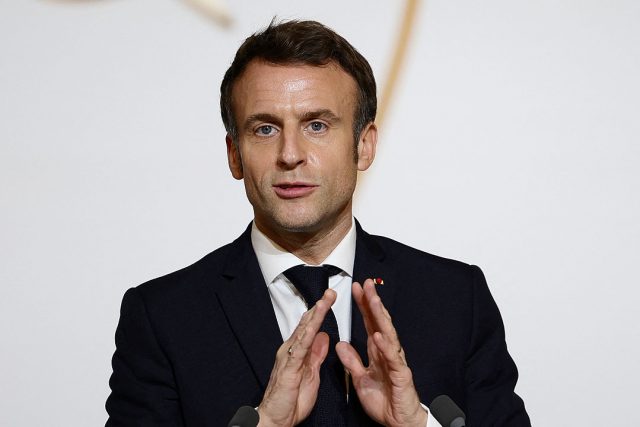
French President Emmanuel Macron delivers a speech at the Elysee Palace in Paris, France, February 1, 2022. — REUTERS

PARIS — The French began voting on Sunday in an election that will decide whether pro-European Union (EU), centrist President Emmanuel Macron keeps his job or is unseated by far-right euroskeptic Marine Le Pen in what would amount to a political earthquake.

Opinion polls in recent days gave Mr. Macron a solid and slightly growing lead as analysts said Ms. Le Pen — despite her efforts to soften her image and tone down some of her National Rally party’s policies — remained unpalatable for many.

But a surprise Le Pen victory cannot entirely be ruled out, given the high numbers of voters who were undecided or not sure if they would vote at all in the runoff presidential vote.

With polls showing neither candidate able to count on enough committed supporters, much will depend on a cohort of voters who are weighing up anxiety about the implications of a far-right presidency against anger at Mr. Macron’s record since his 2017 election.

If Ms. Le Pen does win, it would likely carry the same sense of stunning political upheaval as the British vote to leave the European Union or the US election of Donald Trump in 2016.

Polls open at 8 a.m. (0600 GMT) and close at 8 p.m. (1800 GMT). Initial projections by pollsters are expected as soon as polls close.

“Each of them has a huge weakness,” Bernard Sananes of pollster Elabe said. “Emmanuel Macron is considered arrogant by more than one in two voters and Marine Le Pen remains scary for half of them.”

Mr. Macron, 44 and the winner in the same matchup five years ago, has warned of “civil war” if Ms. Le Pen — whose policies include a ban on wearing Muslim headscarves in public — is elected, calling on democrats of all stripes to back him against the far-right.

Ms. Le Pen, 53, has focused her campaign on the rising cost of living in the world’s seventh-largest economy, which many French say has worsened with the surge in global energy prices. She has also zeroed in on Mr. Macron’s abrasive leadership style, which she says shows an elitist contempt for ordinary people.

“The question on Sunday is simple: Macron or France,” she told a rally in the northern French town of Arras on Thursday.

Ms. Le Pen’s message has resonated with many voters.

“She is close to the people. She can really give purchasing power to the people, make the people smile, give the people oxygen,” prison guard Erika Herbin, 43, said after the rally.

DISLIKE FOR MACRON
Others, such Ghislaine Madalie, a hairdresser in Auxerre, in central France, strongly disagree.

Ms. Madalie said she would vote for Mr. Macron after backing the far-left Jean-Luc Melenchon in the first round on April 10, for fear of what a Le Pen presidency would be like. But she added that many of her clients would vote for the far-right candidate because they dislike Macron.

“I find that disastrous because she is racist,” Ms. Madalie, 36, whose family has roots in Morocco said of Ms. Le Pen. “I am anxious, for me and for my children.”

Ms. Le Pen, who has also been criticized by Mr. Macron for her past admiration of Russian President Vladimir Putin, rejects accusations of racism. She said her plans to give priority to French citizens for social housing and jobs and scrap a number of welfare benefits for foreigners, would benefit all French, independently of their religion or origins.

Jean-Daniel Levy, of Harris Interactive pollsters, said opinion surveys showed Ms. Le Pen was unlikely to win, because that would require huge shifts in voter intentions.

If Mr. Macron does win he will face a difficult second term, with none of the grace period that he enjoyed after his first victory, and protests likely over his plan to continue pro-business reforms, including raising the retirement age from 62 to 65.

If she unseats him, Ms. Le Pen would seek to make radical changes to the country’s domestic and international policies, and street protests could start immediately. Shockwaves would be felt across Europe and beyond.

Whoever wins, a first major challenge will be to win parliamentary elections in June to secure a workable majority to implement their programs. — Reuters


Top US officials set to visit Kyiv

Army soldier figurines are displayed in front of the Ukrainian and Russian flag colors background in this illustration taken, Feb. 13, 2022. — REUTERS/DADO RUVIC/ILLUSTRATION

KYIV — US Secretary of State Antony Blinken and Defense Secretary Lloyd Austin were to visit Kyiv on Sunday to discuss Ukraine’s request for more powerful weapons after months of combat with invading Russian forces.

The visit, announced by Ukrainian President Volodymyr Zelensky on Saturday, would be the highest-level visit by US officials to the country since the start of the war on Feb. 24.

The White House has not confirmed any travel plans for Mr. Blinken and Mr. Austin. The State Department and Pentagon declined comment.

As the war enters its third month, there is no end in sight to the fighting that has shocked the world, killed thousands, uprooted millions and reduced cities to rubble.

“Tomorrow we will discuss this exact list of weapons that are essential for us and the pace of deliveries,” Me. Zelensky told a dramatic Saturday evening news conference in an underground metro station.

“We would like to have… powerful heavy weapons. As soon as we have (more weapons), as soon as there are enough of them, believe me, we will immediately retake this or that territory, which is temporarily occupied.”

Mr. Zelensky’s comments came as Russia resumed its assault on defenders making a last stand in a giant steel works in Mariupol, days after Moscow declared victory in the key southern port city and said its forces did not need to take the plant.

The attack on Mariupol, the biggest battle of the conflict, has raged for weeks. Capturing the city is seen as vital to Russia’s attempts to link the eastern Donbas region with Crimea, the Black Sea peninsula Moscow seized in 2014.

Moscow-backed separatists have for years held territory in the Donbas region, which contains the areas of Donetsk, including Mariupol, and Luhansk.

Luhansk Governor Serhiy Gaidai noted that fighting was continuing on the Orthodox Easter holiday.

“Usually we would come to our churches with Easter baskets. But now this is impossible,” Mr. Gaidai posted on his Telegram channel. “Seven churches in Luhansk region have been mutilated by Russian artillery.”

Reuters could not independently verify the report of the destroyed churches.

Ukraine estimates tens of thousands of civilians have been killed in Mariupol and says 100,000 civilians are still there. The United Nations and Red Cross say the civilian toll is at least in the thousands.

A new attempt to evacuate civilians failed on Saturday, an aide to Mariupol’s mayor said.

Oleksiy Arestovych, a political adviser to Mr. Zelensky, said Ukrainian troops in the steel complex were holding out and attempting counterattacks. More than 1,000 civilians are also in the plant, according to Ukrainian authorities.

Ukraine’s military said on Sunday that Russian forces were continuing their offensive in the east of the country to establish full control over Donetsk and Luhansk, and ensure a land route to the annexed Crimea peninsula, adding they were attacking both military and civilian infrastructure.

It said Russian forces were also partially blockading the northeastern city of Kharkiv, and had moved Iskander-M missile launchers some 60 km (40 miles) from the Ukrainian border. The Iskander-M system fires short-range ballistic missiles that can hit targets 500 km away.

In Donetsk and Luhansk, Ukrainian forces said they repulsed 12 attacks on Saturday, destroying four tanks, fifteen units of armored equipment and five artillery systems, among others. Reuters could not independently confirm the reports.

In the Black Sea port of Odesa, at least eight people were killed, Mr. Zelensky said on Saturday. Two missiles struck a military facility and two residential buildings and two more were destroyed, the Ukrainian armed forces said.

The death toll could not be independently verified. The last big strike on or near Odesa was in early April.

‘MISSILE TERROR’
Mr. Zelensky said Russia had already fired most of its missile arsenal at Ukraine.

“Of course, they still have missiles left. Of course, they can still continue the missile terror against our people,” he said.

“But what they have already done is a powerful enough argument for the world to finally recognize Russia as a state sponsor of terrorism and the Russian army as a terrorist organization.”

Russia has denied targeting civilians in its “special military operation.”

The Russian defense ministry said it used high-precision missiles to destroy a logistics terminal in Odesa containing weapons supplied by the United States and European nations.

Russian General Rustam Minnekayev said on Friday Moscow wanted control of the whole of southern Ukraine, comments Ukraine said indicated Russia had wider goals than its declared aim of demilitarizing and “denazifying” the country. Kyiv and the West call the invasion an unjustified war of aggression. — Reuters

WHO says at least one child has died after increase of acute hepatitis cases in children

THE World Health Organization (WHO) said on Saturday that at least one child death had been reported following an increase of acute hepatitis of unknown origin in children, and that at least 169 cases had been reported in children in 12 countries.


The WHO issued the figures as health authorities around the world investigate a mysterious increase in severe cases of hepatitis — inflammation of the liver — in young children.

The WHO said that as of April 21 acute cases of hepatitis of unknown origin had been reported in the United Kingdom, the United States, Spain, Israel, Denmark, Ireland, the Netherlands, Italy, Norway, France, Romania and Belgium. It said 114 of the 169 cases were in the United Kingdom alone.

The cases reported were in children aged from one month to 16 years, and 17 had required liver transplantation, it said. It gave no details of the death that it said had been reported, and did not say where it occurred.

The WHO said a common cold virus known as an adenovirus had been detected in at least 74 cases. COVID-19 infection was identified in 20 of those tested and 19 cases were detected with a COVID-19 and adenovirus co-infection, it said.

The WHO said it was closely monitoring the situation and working with British health authorities, other member states and partners.

US health officials have sent out a nationwide alert warning doctors to be on the lookout for symptoms of pediatric hepatitis, possibly linked with a cold virus, as part of a wider probe into unexplained cases of severe liver inflammation in young children. — Reuters

MILF backs Robredo for president

Bangsamoro Chief Minister Ahod B. Ebrahim and Vice President Maria Leonor G. “Leni” Robredo during the latter’s visit to the regional government complex in Cotabato City on March 16, 2022. | BANGSAMORO INFORMATION OFFICE

THE POLITICAL party of a former Muslim rebel group that had signed a peace deal and is now leading the transitional government in the Bangsamoro region in the countrys south on Saturday endorsed the presidential run of Vice President Maria Leonor “Leni” G. Robredo. 

The Moro Islamic Liberation Front’s United Bangsamoro Justice Party (UBJP)  made the endorsement on the 57th birth anniversary of Ms. Robredo, who was welcomed by Bangsamoro officials in March during a visit to the regional seat of government. 

MILF chairman and Bangsamoro Chief Minister Murad B. Ebrahim said at a media event that Ms. Robredo and the UBJP are compatible in terms of values and principles, based on a video posted on Facebook. 

The May 9 voting will be the first national and local electoral exercise where the UBJP will be participating as an accredited political party, decades after the MILF launched its rebellion for autonomy in the mid-1970s. 

The partys establishment manifests MILFs transition from armed revolution to peaceful political participation in governance.  

At the same event, the political party’s candidate for Maguindanao governor, 2nd District Representative Esmael TotoG. Mangudadatu, announced his support for Ms. Robredo. 

In February, Mr. Mangudadatu and his allies backed the candidacy of Manila City Mayor Francisco “Isko” M. Domagoso. 

Mr. Mangudadatu switched to Ms. Robredo after she and her running mate Senator Francis N. Pangilinan have attracted thousands of supporters in their campaign rallies across the country, which led political observers to say that the opposition tandem is now gaining momentum. 

The Maguindanao lawmaker has yet to clarify whether he’s still supporting the vice-presidential run of Davao City Mayor Sara Z. Duterte-Carpio. 

Decades of conflict between the government and Muslim rebels have obstructed development in most parts of what is now the Bangsamoro Autonomous Region in Muslim Mindanao (BARMM).  

The administration of the late President Benigno S.C. Aquino III, who endorsed Ms. Robredo in the 2016 vice-presidential race, laid down the foundation for the creation of the BARMM through a peace deal agreement signed in March 2014.  

The consequent Bangsamoro Organic Law signed by Mr. Duterte in July 2018 paved the way for BARMMs establishment.  

In the 2016 vice-presidential race, Ms. Robredo got 566,455 votes in the now-defunct ARMM, against the 331,762 votes received by the late dictator’s son Ferdinand “Bongbong” R. Marcos, Jr. 

At that time, ARMM had about 1.86 million registered voters with a high 82.23% actual turnout. For this years elections, BARMMs registered voters had increased to 2.58 million.  

At least four massacres of Muslim communities under the elder Marcosmartial rule gave rise and strengthened the Moro armed resistance in southern Philippines.   

Marcos Jr. already got the endorsements of four out of the five BARMM provincial incumbent governors who are all running for reelection. These are:  

Sulus Abdusakur SakurMahail Tan, Tawi-Tawis Yshmael MangSali, Maguindanaos Mariam S. Mangudadatu, and Lanao del Sursn Mamintal BombitAlonto Adiong Jr. 

The only governor in the Muslim region to back Ms. Robredo’s candidacy is Basilans Hadjimn JimS. Hataman-Salliman. His brother, former ARMM governor and current Basilan Rep. Mujiv S. Hataman, has also endorsed Ms. Robredo.  

Frederique Constant’s new Passion Collection timepieces feature works of Filipino artist Dex Fernandez

In a first for the watchmaking house, the limited-edition new collection will feature one-of-a-kind hand-painted dials from the internationally acclaimed artist, to be sold in a private online auction.

The past few years have seen watchmaking collaborations across a whole spectrum of genres. From streetwear to survival gear to cartoon characters: more and more concepts are making their way into the watchmaking landscape. And now, Frederique Constant’s Passion Collection brings Philippine art into the world of luxury watches as well.

Filipino artist Dex Fernandez

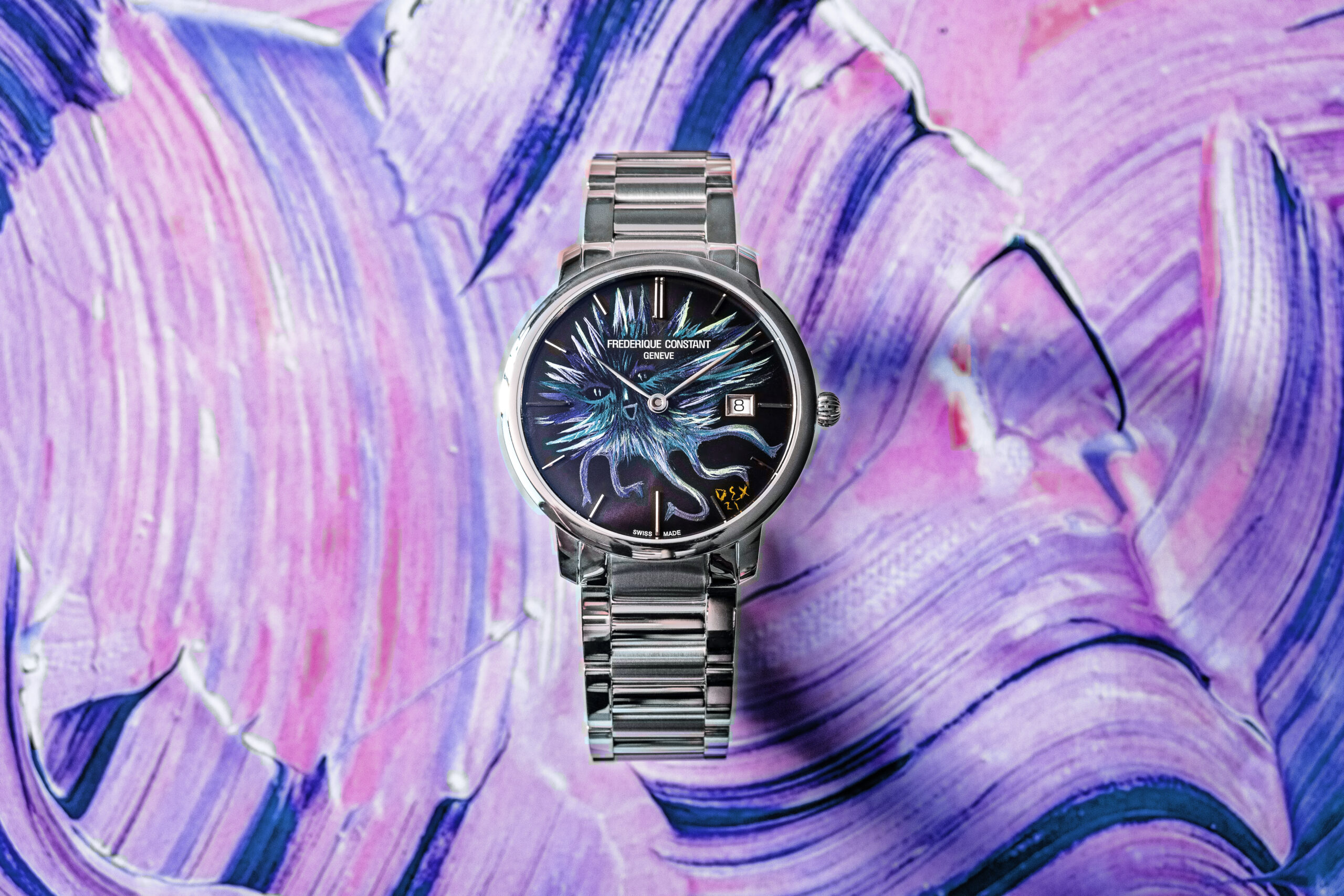
Swiss brand Frederique Constant has partnered with Filipino artist Dex Fernandez for a limited-edition release of five remarkable timepieces — each watch bearing a unique piece from the artist. All five watches are hand-painted and are set to be sold at the “Wear Your HeART” private auction. It is the first time the brand is doing anything of this sort, and for Mr. Fernandez to be chosen for the collaboration speaks volumes.

“Indeed, this will be the first time we commission an artwork on our timepieces, so we are very excited about this project,” said Niels Eggerding, Frederique Constant managing director.

Founded in 1988, Frederique Constant is a watchmaking brand from Geneva, Switzerland, that creates luxury timepieces. With its hands-on production process that’s completely in-house, it’s managed to produce high-quality watches that remain accessible. The partnership with Mr. Fernandez is their entry into the world of one-off timepieces: something highly sought after by collectors.

Mr. Fernandez’s work is a collection of pop-infused psychedelia that takes several disciplines to create, including photography, painting, and layering. His illustrations have appeared on walls across the Philippines, Indonesia, and Japan, and some of his works have been exhibited in New York, Tokyo, Paris, and Singapore.

His work also comes with its own quirks, particularly his animal mascot — the garapata — which he believes represents the Filipino character. Garapata is the Filipino word for “tick,” a parasitic arachnid that feeds on blood and is a cousin to the spider. Still, despite what the image may suggest, Mr. Fernandez sees something else in the creature.

“They embody the Filipino character: they’re both resilient and they go everywhere,” Mr. Fernandez said. “They always look for a host. So now, Garapata found a new host in Frederique Constant.”

Garapata has since become his signature style in street art. And just like the arachnid which he believes represents Filipinos, his work can appear anywhere, often straddling the line between high and low art.

For the collaboration with Frederique Constant, Mr. Fernandez has hand-painted his signature character onto the dial of each watch in the collection. But it wasn’t without its challenges: one of them being the limited space he could work on.

Having roots as a graffiti and fine artist, he is used to creating art on a much larger scale, using walls or larger canvases to get his message across. In this collaboration, he could only use parts of the dial, making sure that the watch remained legible even while his art appears on it.

“It’s like telling a story in five words,” Mr. Fernandez said, and goes on to say that the paintings in the watch aren’t just for decoration. Each one has a meaning attached to it.

“You have to look deeper and you will see the message,” he said. “Given the situation we are all in at this time, I really thought of inspiring concepts to motivate the wearer as well as the people who will see the watch.”

The Passion Collection

The whole collection is based on the idea that time can be spent or saved. And since we can’t make more of it, it should always be spent on something we’re passionate about. For the Passion Collection, Mr. Fernandez’s miniaturized paintings serve up several themes, each one encouraging the wearer to live their own passion:

Balance (starting bid: P200,000)

This symmetrical dial highlights the times of the day when the hour and minutes hands are perfectly aligned at 9:15 and 12:30.

10:10 (starting bid: P200,000)

The 10:10 position of the hands is traditionally used to show the features of the dial unhindered, but this one also has a coded message: that happiness is a state of mind.

Flow (starting bid: P250,000)

The design is all about riding the tide of time, with Garapata characters shown in various poses across the dial.

Move (starting bid: P250,000) 

This is a piece that encourages the wearer to let go and be free, and insists on not being stuck in a single place.

Solidarity (starting bid: P250,000)

The help of people around us is what keeps us going, and this dial shows Garapata characters linked with each other to convey the message. 

Living Your Passion

“‘Live your passion,’ has always been Frederique Constant’s guiding principle,” Mr. Eggerding explained. “It’s the relentless pursuit of innovation and excellence that make our watches special. That’s why we partnered with Dex Fernandez, an artist who understands that passion.”

“Art and watchmaking are very complimentary and very similar,” he continued. “Creating a watch is an art form, there are so many things to consider to make the final work look grand.”

“Watchmaking is a precise science and pays homage to the skills of the watchmaker, the human being, to incorporate art into the aesthetic beauty of a timepiece would only elevate its value and make the piece even more unique.”

And now, with this collection, we see what both fields can do when they work together. Each watch in the collection is entirely distinct from all the others, and only five pieces have been produced, making them highly collectible.

“This is a rare opportunity to own a special object,” Mr. Fernandez said. “I hope it goes to a good collector who will enjoy the watch and the message of my work.”

But knowing the spirit of the Garapata, these watches are likely to head anywhere, and they’ll keep ticking as long as they have a host to wear them.

The Wear Your HeART auction for the Passion Collection will be conducted in a private online group from May 4 to 11. Registration for the auction is open until April 29. If you’re interested in placing a bid, get in touch with Nikko Tiongson: galacnikko@gmail.com or +639178430516.

Learn more about the Passion Collection here: tempus.com.ph/passion-collection/.

This event is sponsored by Tempus, a retail watch concept of Wizer Industries, Inc.


Spotlight is BusinessWorld’s sponsored section that allows advertisers to amplify their brand and connect with BusinessWorld’s audience by enabling them to publish their stories directly on the BusinessWorld Web site. For more information, send an email to online@bworldonline.com.

Join us on Viber to get more updates from BusinessWorld: https://bit.ly/3hv6bLA.

Pag-IBIG home loan releases reach record-high P24.2B in Q1 2022, up 16%

Pag-IBIG Fund released a record-high P24.20 billion in home loans during the first quarter of 2022, an increase of P3.26B or 16% compared to the P20.94 billion released during the same period in 2021, its top officials announced on Thursday (April 21).

“We are happy to report that we have again posted a record-high in home loan releases in the first three months of 2022. Our strong start this year means that more Filipino workers have been helped by Pag-IBIG Fund in acquiring their own homes. The sustained growth in our home loan disbursements also contributes to the economy, as we continue to help our members and the country recover from the pandemic,” said Secretary Eduardo D. del Rosario, who heads the Department of Human Settlements and Urban Development and the 11-member Pag-IBIG Fund Board of Trustees.

Del Rosario added that the amount of home loans released by the agency during the first quarter enabled 22,210 members to acquire their own homes, a 7% increase from the 20,712 members helped during the same period in 2021. He further added that out of the total amount, P1.78 billion were released as socialized home loans benefitting 4,114 Pag-IBIG Fund members belonging to the minimum-wage and low-income sectors.

Meanwhile, Pag-IBIG Fund Chief Executive Officer Acmad Rizaldy P. Moti noted that the agency’s performance at the start of the year is a continuance of its record-high achievement in 2021 when the agency surpassed P100 billion in home loan releases.

“After coming off a record-setting 2021 with P100.8 billion in home loans released, we have yet again set another record-high in housing loan takeouts for the first quarter of 2022. Our performance in the housing loan front is an indication of the trust of our members in our programs. More importantly, our record-high numbers show the increasing number of Filipino workers we have enabled to have homes of their own. We aim to keep our loan interest rates low and help more Filipinos become homeowners. That is the Lingkod Pag-IBIG way,” said Moti.

To know more about Pag-IBIG Fund services, visit https://www.pagibigfundservices.com/virtualpagibig/.


Spotlight is BusinessWorld’s sponsored section that allows advertisers to amplify their brand and connect with BusinessWorld’s audience by enabling them to publish their stories directly on the BusinessWorld Web site. For more information, send an email to online@bworldonline.com.

Join us on Viber to get more updates from BusinessWorld: https://bit.ly/3hv6bLA.

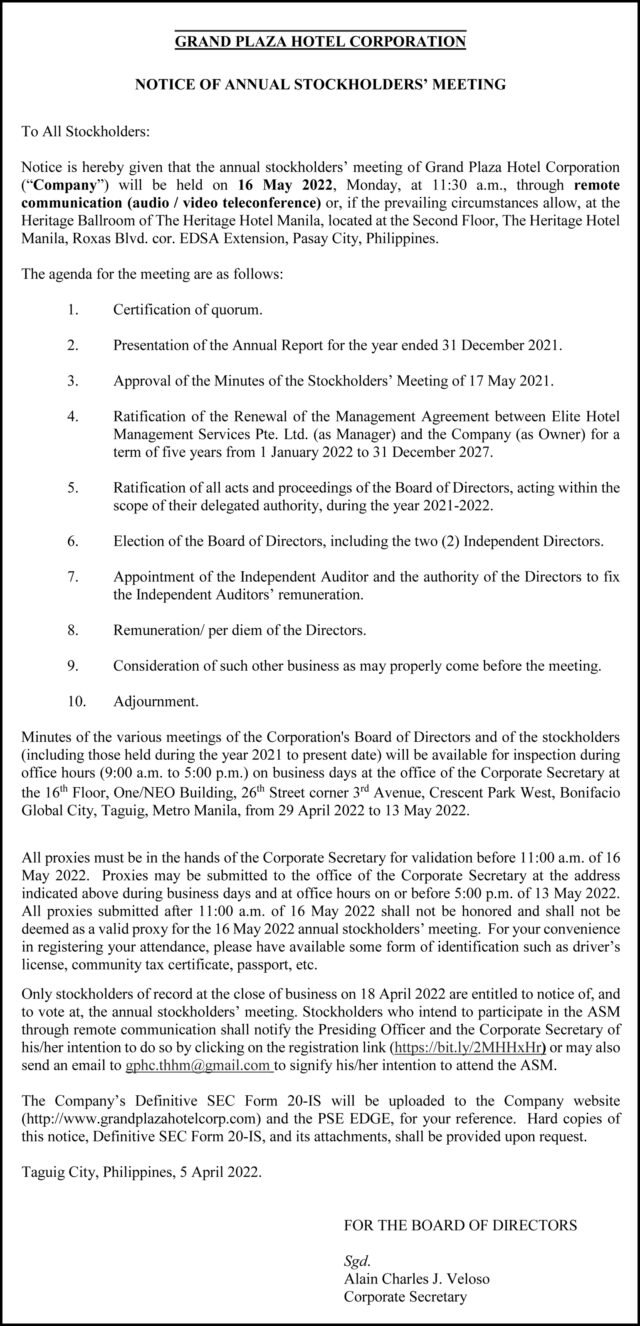
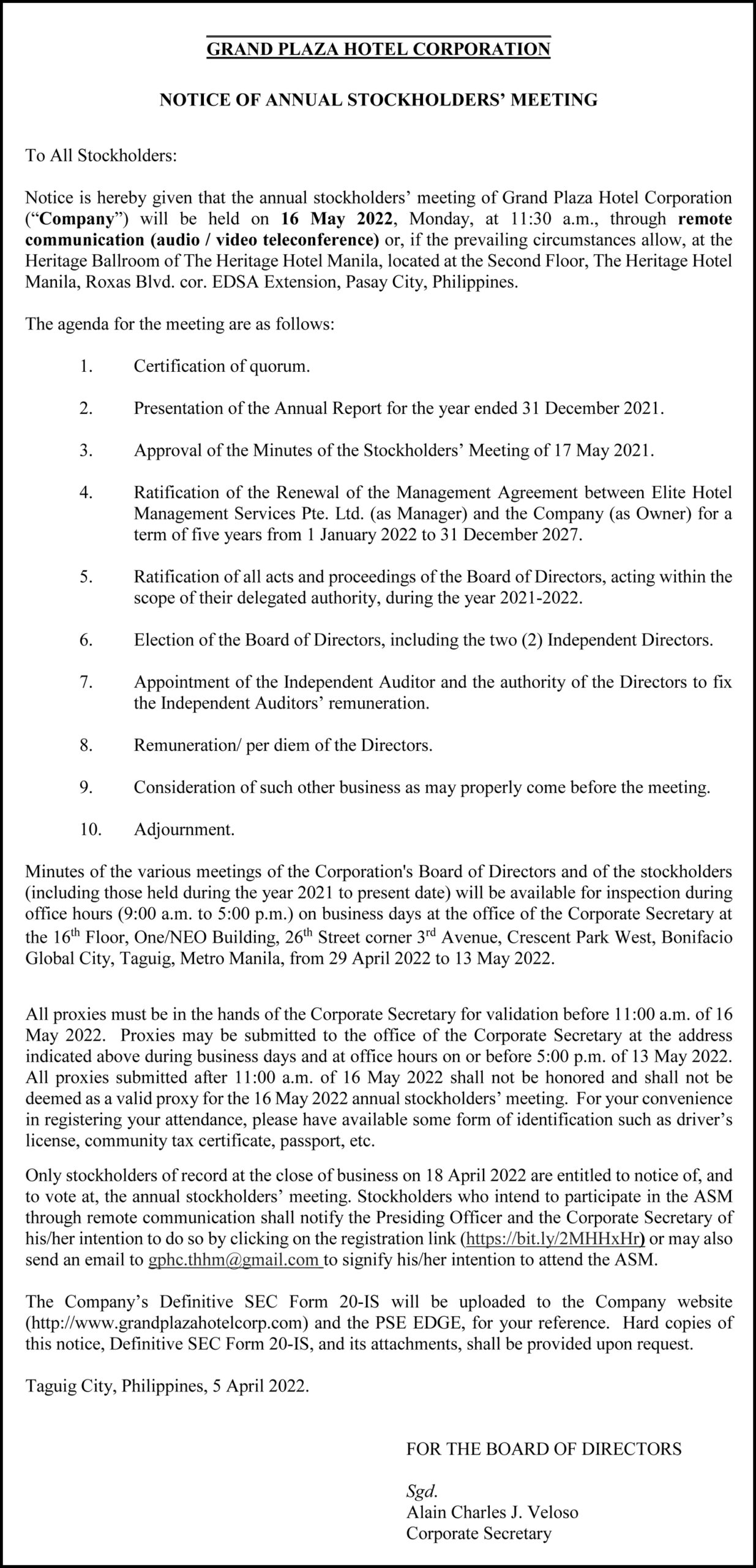
Grand Plaza Hotel Corp. to conduct annual stockholders’ meeting through remote communication on May 16

Click to enlarge.

Spotlight is BusinessWorld’s sponsored section that allows advertisers to amplify their brand and connect with BusinessWorld’s audience by enabling them to publish their stories directly on the BusinessWorld Web site. For more information, send an email to online@bworldonline.com.

Join us on Viber to get more updates from BusinessWorld: https://bit.ly/3hv6bLA.

PHL needs to grow over 6% to cut debt

A HEALTH WORKER prepares to administer a coronavirus disease 2019 vaccine at a vaccination facility in Quezon City, June 23, 2021. — PHILIPPINE STAR/ MICHAEL VARCAS

THE Philippine economy needs to grow above six percent annually in the next five to six years to reduce the country’s debt, Finance Secretary Carlos G. Dominguez III said on Thursday.

“The biggest challenge for the next administration is really to grow out of the debt that we incurred during the pandemic, which was natural because our revenues went down due to the lockdowns and we increased expenditures,” he told Bloomberg Television. “The next administration would have to design policies and stick to very strict fiscal discipline to grow out of this debt problem.”

The national election will be held on May 9, with the new administration taking over in July.

The Philippines borrowed P1.3 trillion and received grants worth P2.7 billion to fund its pandemic response, including coronavirus vaccines.

The Department of Finance (DoF) has said it would take 40 years to pay off these pandemic-related loans and grants.

“Some of our debt has a 40-year term, so we assumed debt at very, very favorable terms, in terms of tenor as well as interest rates,” Mr. Dominguez said.

“So, we’re not worried about the repayment, but we have to really grow out of the debt. In other words, expand our economy by better than 6% per year, over the next five or six years.”

The Philippines ended 2021 with P11.73 trillion in outstanding debt, pushing the debt-to-gross domestic product (GDP) ratio to a 16-year high of 60.5%. This is higher than the 60% threshold considered manageable by multilateral lenders for developing economies.

Outstanding debt stood at a record P12.09 trillion at the end of February.

The government set a 7-9% GDP growth target this year, and 6-7% in 2023, as it expects the economy to bounce back from the pandemic.

However, the Russia-Ukraine war would weigh heavily on the Philippine economy’s recovery, Mr. Dominguez said, citing the impact of the war on oil and grain prices.

UnionBank of the Philippines, Inc. Chief Economist Ruben Carlo O. Asuncion said the Philippines is likely to achieve more than 6% GDP expansion in the next few years since it was the “norm” before the pandemic disrupted the growth momentum.

The outlook may be clouded by uncertainty from geopolitical risks, China’s potential economic slowdown, and global monetary policy tightening, he said in an e-mail.

“All these put pressure on trade performance, remittance inflows and real investment,” Mr. Asuncion said. “Moreover, there are domestic uncertainties from the results of the May national elections. Investors are weighing carefully and watching the internal developments that would form part of future investment expansion decisions.”

ING Bank N.V. Manila Senior Economist Nicholas Antonio T. Mapa, said the country is unlikely to sustain more than 6% growth in the next few years.

“We believe the country will continue to post robust growth in the coming three years,” he said in an e-mail. “We believe however growth momentum has been significantly impaired by the pandemic and several headwinds point to growth moderating to roughly 5% through to 2024.”

“We could see growth fall below the official 7-9% target, and even below the 6% threshold set out by Mr. Dominguez.”

Several multilateral institutions’ growth projections for the Philippines are below the government’s 7-9% target.

The International Monetary Fund (IMF) and ASEAN+3 Macroeconomic Research Office (AMRO) gave a 6.5% GDP growth forecast for the Philippines this year, while the Asian Development Bank (ADB) expects a 6% expansion.

For 2023, AMRO sees the Philippine economy expanding by 6.5%, while the IMF and ADB both forecast 6.3% growth.

Only the World Bank gave lower than 6% GDP projections for the Philippines — 5.7% GDP for 2022 and 5.6% for 2023 and 2024.

EYE ON FED
Meanwhile, Mr. Dominguez said the Philippines would be closely watching the Federal Reserve’s monetary policy normalization before making its own policy adjustments.

“We don’t want to be behind the eight ball here because if the US raises their interest rates, people in the Philippines will, of course, want to follow those rates. We have to make sure we balance the need to grow, the need to fight inflation and the need to preserve our capital,” Mr. Dominguez, who sits on the Monetary Board, said.

The US Federal Reserve in March began raising interest rates by a quarter percentage point to tame decades-high inflation. 

The Bangko Sentral ng Pilipinas (BSP) has kept rates steady to support economic recovery.

In March, inflation in the Philippines quickened to 4%, matching the upper end of the central bank’s 2-4% target.

BSP Governor Benjamin E. Diokno has said inflation could breach the target in the second half due to surging global oil prices. He has said they were still keen to start raising interest rates by the second half, when they expect the economy will have likely returned to its pre-pandemic level.

The Monetary Board’s next two policy-setting meetings are scheduled for May 19 and June 23. Its first review in the second half is on Aug. 18. — Tobias Jared Tomas

2021 trade deficit widest in 3 years

BW FILE PHOTO

By Bernadette Therese M. Gadon, Researcher

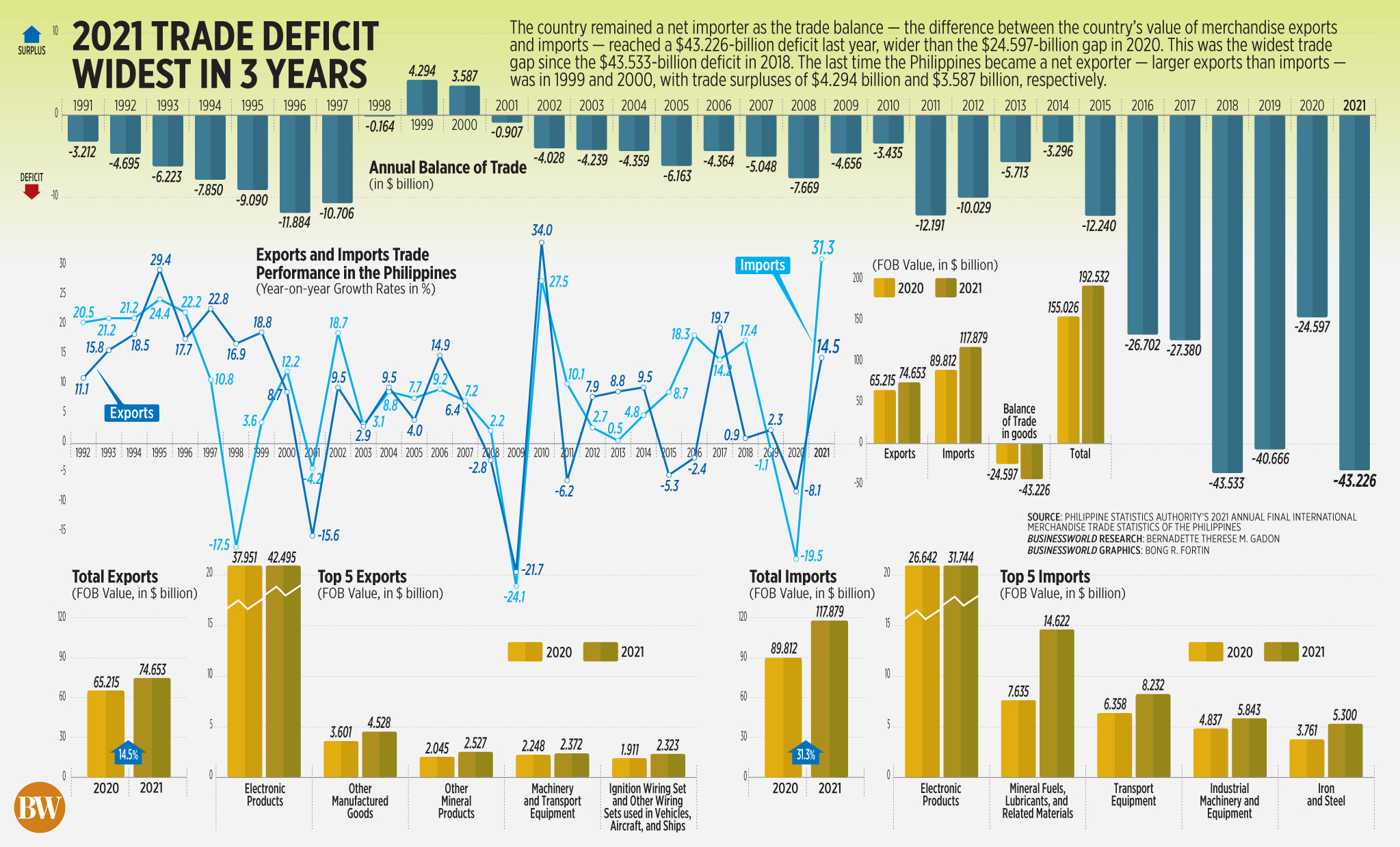
THE Philippines’ trade deficit further widened to a three-year high in 2021 as imports continued to outpace exports amid a coronavirus pandemic, latest data from the Philippine Statistics Authority (PSA) showed.

Final results of the PSA’s international trade data showed the value of outbound shipment of goods jumped by an annual 14.5% to $74.653 billion last year, a turnaround from the 8.1% drop in 2020.

This was the fastest since the 19.7% increase in exports in 2017.

2021 Trade deficit widest in 3 years

Imports likewise surged by a record 31.3% year on year to $117.879 billion from $89.812 billion. Last year’s import growth was a turnaround from the 19.5% decline in 2020.

Last year’s import growth surpassed the 30% full-year target set by the Development Budget Coordination Committee — the inter-agency body that sets the government’s macroeconomic assumptions and targets. Exports, meanwhile, missed the 16% goal.

Both exports and imports were at record levels last year, according to the PSA data dating back to 1991.

The country remained a net importer as the trade balance — the difference between merchandise exports and imports — reached a $43.226-billion deficit last year, wider than the $24.597-billion gap in 2020.

This was the widest trade gap since the $43.533-billion deficit in 2018.

The last time the Philippines became a net exporter was in 1999 and 2000 with trade surpluses of $4.294 billion and $3.587 billion, respectively.

Total trade — the sum of exports and imports — rose by 24.2% to $192.532 billion from $155.026 billion in 2020.

In an e-mail, ING Bank N.V. Manila Branch Senior Economist Nicholas Antonio T. Mapa said the jump in trade was due to base effects because 2020 was “an abnormal year” due to the strict lockdowns that caused supply chain disruptions.

He said 2021 was “an exceptional year,” as the economy gradually reopened. Trade levels in the past two years were still below 2019 levels.

“Although we did see a bit of catch up in terms of restocking of inventory and return to some level of normalcy for business activity, the pace of global trade had yet to fully normalize,” he said.

“One reason for this was the fact that the Philippines still faced two lockdown episodes in 2021,” he added, referring to the strict lockdowns implemented to curb a surge in coronavirus disease 2019 (COVID-19) infections in April and August last year.

The country experienced an Omicron-driven COVID-19 surge in January this year, but infections have considerably declined since then. Metro Manila and other areas have been under the most lenient alert level since March.

“The export sector was dominated once more by the mainstay electronics sector, which not only benefited from base effects but also from the stark pickup in demand for these products due to the global chip shortage,” Mr. Mapa said.

“Imports were dominated by the spike in fuel imports, driven by an increase in both volume and value.”

Manufactured goods, which accounted for 82.9% of exports last year, rose by 15% annually to $61.867 billion.

Electronic products, which made up 56.9% of the total export receipts and almost a third of manufactured goods, grew by 12% to $42.495 billion.

Semiconductors, which accounted for 41.7% of exports and more than a fourth of electronic products, increased by 7.4% to $31.161 billion.

Exports of mineral products went up by 16% to $5.908 billion last year from $5.093 billion in 2020. These goods accounted for 7.9% of exports last year.

It was followed by other manufactured goods (up 25.7% annually to $4.528 billion) and other mineral products (up 25.7% to $2.527 billion).

Imports of raw materials and intermediate goods, which accounted for 40.7% of the total import bill last year, jumped by 32.7% to $47.988 billion.

With a 30.1% share of the total, capital goods climbed by 19.2% to $35.471 billion from $29.752 billion.

Consumer goods, which accounted for about 16% of the total bill, rose by 22% to $18.852 billion.

The United States was the main destination of the country’s products, with a 15.9% share at $11.849 billion. It was followed by China (15.5% at $11.553 billion) and Japan (14.4% at $10.725 billion).

China was the country’s major source of imports with $26.799 billion, accounting for 22.7% of the total. It was followed by Japan’s $11.108 billion (9.4% share) and South Korea’s $9.351 billion (7.9%).

The Philippines had trade surpluses with Hong Kong ($6.663 billion), the United States ($4.098 billion) and the Netherlands ($1.683 billion).

It had the widest trade deficits with China ($15.246 billion), Indonesia ($7.579 billion) and South Korea ($6.777 billion).

Mr. Mapa expects demand for electronics this year to remain robust, but it could moderate as global growth slows due to the Russia-Ukraine war. Demand for food exports might  rise this year, he added.

“This year, we face new headwinds in the form of renewed supply chain bottlenecks and the disruption brought about by the Ukraine war. Both the International Monetary Fund and World Bank have trimmed their respective global growth projections which suggests that global trade will likely moderate in the near term,” he said.

The IMF raised its Philippine economic growth forecast this year to 6.5% from 6.3%. The World Bank cut its outlook for the country to 5.7% from 5.8% due to the impact of Russia’s invasion of Ukraine.

Both projections fell below the government’s 7-9% target for 2022.

The government expects exports and imports to grow by 6% and 10% this year.

Food prices to continue rising on Russian war — MUFG

PHILIPPINE STAR/ RUSSELL PALMA
Officials from the Trade department check the prices of basic goods at a supermarket in Makati City, April 21. — PHILIPPINE STAR/ RUSSELL PALMA

THE Russia-Ukraine war may drive food prices even higher in Asian countries, including the Philippines, according to MUFG Global Markets Research.

In a note on Monday, MUFG said the war in Ukraine might add 2.5-3.5 percentage points to the level of Asia’s food inflation. This assumes food commodity prices increase by 15%.

MUFG noted that the Philippines is one of the Asian economies with relatively faster food price increases from July 2020 to January 2022, the same period when the Food and Agriculture Organization (FAO) of the United Nations recorded a food price index of 45%.

MUFG estimates food prices in the Philippines rose by 8.2% from July 2020 to January 2022.

In February and March, the FAO food price index rose by 17%, amid worries over supply disruptions and shortages since the Russia invaded Ukraine on Feb. 24.

With the war’s end still nowhere in sight, MUFG said food inflation might quicken in the next few months.

“We do expect a higher degree of pass-through, due to recovery in domestic demand in Southeast Asian countries as these countries’ coronavirus disease 2019 (COVID-19) restrictions are being lifted, Asian countries are to further digest the 45% wheat price hike in February and March and face an additional 15% wheat and food commodity price increase,” MUFG said.

Philippine inflation quickened to a six-month high of 4% in March, reflecting the impact of the war on fuel prices. Food inflation accelerated to 2.6% from 1.2% in February.

MUFG said Asian economies would likely adopt alternative food procurement strategies amid the war, noting food culture in the region could tame the impact of rising wheat prices.

“The fact that rice is an important staple for most of Asian countries and rice price is low can also help cushion some supply stress. We don’t see a food crisis given what is happening,” it said.

ING Bank N.V. Manila Senior Economist Nicholas Antonio T. Mapa said food production in the Philippines might be affected by the spike in the cost of wheat and fertilizer.

“The country imports wheat from Ukraine and Russia. More expensive wheat costs have already filtered through to inflation for flour bread and other bakery products,” he said in an e-mail.

“Russia is also a supplier of components for fertilizer and the conflict will push input costs for farming even higher,” he added.   

Global supply chain disruptions caused by the war will drive food inflation higher, Asian Institute of Management economist John Paolo R. Rivera said.

“This uncertainty directly and indirectly puts pressure on food prices due to supply constraints,” he said in a Viber message.

“Policy directives must be able to ensure that we take advantage of domestic supply, farmer produce should be patronized, as well as alternative sources such as from neighboring countries,” he added.

This year, the faster rise in food, transport and utility costs could drive both headline and core inflation beyond the Bangko Sentral ng Pilipinas’ (BSP) 2-4% target, Mr. Mapa said.

The central bank now expects inflation to hit 4.3% this year.

“BSP may attempt to point to the supply side nature of the 2022 inflation breach as reason for standing by and delaying rate hikes. However, it is now becoming clear that second round effects have surfaced and inflation expectations are fast becoming de-anchored,” he added.

The BSP has kept its policy rate unchanged at 2% since November 2020 to support economic recovery.

The Monetary Board will hold its next policy review on May 19.

BSP Governor Benjamin E. Diokno has said they might raise rates by the second half. He said they were prepared to take “preemptive action” should inflation go significantly beyond the target. — Luz Wendy T. Noble

A return of two icons

After a 2-year pandemic break, Sharon Cuneta and Regine Velasquez reunite onstage

TWO icons in the Philippine music scene, Sharon Cuneta and Regine Velasquez-Alcasid last performed together in a sold-out show in Oct. 2019. The show went on to earn an Aliw Award for Best Collaboration in a Concert. A rerun planned for 2020 was one of the many casualties in the live events industry when the coronavirus pandemic shut down the country. But now that the pandemic is waning (for now), they are finally getting back together.

The two singers return to the concert stage with the Iconic Concert on June 17 and 18 at the Marriott Grand Ballroom.

At a press conference on April 18 at the Marriot Hotel streamed via Facebook, the two singers made light of being called “legendary.”

Kung maka-legend ka ha,” said Ms. Velasquez-Alcasid said jokingly. Ms. Cuneta quipped: “Alamat na kami parang si Maria Makiling.”

Yet “legendary” is a description that is apt. Ms. Cuneta, after all, marked her 40th anniversary in the entertainment industry in 2018 with the My 40 Years, Sharon concert, while Ms. Velasquez-Alcasid celebrated her 30th anniversary in showbiz in 2017 with the R3.0 concert.

Just because the pandemic kept most people indoors, this did not prevent the singers from performing.

Ms. Velasquez-Alcasid said that she continued to sing at home and at fundraising events. “[My husband] (singer-songwriter Ogie Alcasid) has been encouraging me to sing, because I had anxiety, and singing really helped me a lot,” she said. “I get to also entertain people via internet.”

While the upcoming concert is Ms. Cuneta’s first singing gig in a long time, she has been busy taping episodes of FPJ’s Ang Probinsyano and joining campaign rallies with her husband Senator Francis “Kiko” Pangilinan, who is running for vice-president in tandem with presidential candidate Leni Robredo.

“I have missed singing very much,” said Ms. Cuneta. “I feel like starting over again. It’s like a muscle that hasn’t been really worked out. So, I have to do all these vocalizations again,” Ms. Cuneta added.

The concert, the singers said, is a repeat of the 2019 show with “a couple of changes” in the repertoire, and a scaled down audience capacity — 4,000 compared to the SMART Araneta Coliseum’s 16,500 in 2019.

“We need to get out of our homes and feeling our audience,” said Ms. Velasquez-Alcasid. “The two years has robbed all of us of experience.”

“Personally, I need to see a live audience. I need to be on stage. This has been my life,” she added.

“When I’m with Regine on stage, it’s like a comfort zone because we are with someone you trust completely, because she’s a very generous co-performer,” Ms. Cuneta said of her co-star.

The singers will be performing solos and duets of their greatest hits.

Kung ano ang gusto ni Regine, ‘yun ang gagawin ko. (Whatever Regine wants is what I will do). It was full trust, because she is so knowledgeable about music and all my songs,” Ms. Cuneta said. “I believe in her so much and she just came up with a beautiful repertoire.”

The concert is produced by Full Theater Company and is directed by Paolo Valenciano, with musical direction by Louie Ocampo and Raul Mitra.

After the show in June, it will go on tour in the United States in July.

Tickets to the Iconic Concert are now available at all TicketWorld and SM Tickets outlets, with ticket prices ranging from P15,470 (SVIP Zone 1) to P2,800 (Bronze Zone). For inquiries, call Ticketworld at  8891-9999, or SM Tickets 8470-2222. — Michelle Anne P. Soliman

Vista Land to shift to vertical housing in cities

VISTA LAND & Landscapes, Inc. will focus on vertical housing in cities and slowly leave the mass housing business, its chairman Manuel B. Villar, Jr. said. — PHOTO FROM VISTAESTATES.VISTALAND.COM.PH

By Luisa Maria J.C. Jocson

VISTA LAND & Landscapes, Inc. will be focusing on vertical housing in cities with the launch of their new Vista Estates development and slowly leave the mass housing business, its chairman Manuel B. Villar, Jr. said.

“We want to launch a major shift in Vista Land. We are leaving mass housing. No more socialized housing. We are changing to vertical. That is the ball game,” Mr. Villar said in a press conference on Thursday.

“These areas are so expensive it doesn’t make sense to not make it vertical, in fact, some are nearby existing malls,” he said in a mix of English and Filipino.

Vista Land is launching its Vista Estates program, an integrated, mixed-use urban development for commercial, residential, or office spaces.

Under the program, some 44 estates are expected to be developed in the span of a year across 23 cities nationwide. Each estate spans approximately 100 hectares and will cost around P136 billion to develop.

“I was supposed to launch this two years ago, but the pandemic happened. We can put so many buildings nationwide in key cities. This is the way of the future and we should have done this five years ago. For the next five years, this will be our shift. Our percentage of vertical [housing] will go up,” he said.

“To be fair, the per capita of Filipinos have come up significantly. We are close to moving up [as] an upper middle-income country,” he added.

Mr. Villar said Vista Land will continue to develop horizontal housing in provinces, while cities will be shifting towards vertical real estate.

“We will remain the leader in housing… horizontal is my bread and butter. Inevitably, the vertical will exceed the horizontal. As to when, we don’t know,” he added.

Vista Land is the holding company of the Vista Group, which is engaged in the development of residential subdivisions and construction of housing and condominium units.

It has six wholly-owned subsidiaries, namely: Brittany Corporation; Crown Asia Properties, Inc.; Vista Residences, Inc.; Camella Homes, Inc.; Communities Philippines, Inc.; and VLL International, Inc. The company also has an 88.34%-owned subsidiary, Vistamalls, Inc.

At the stock exchange on Wednesday, Vista Land shares went up by two centavos or 0.76% to close at P2.65 apiece.

ADVERTISEMENT
ADVERTISEMENT