JAYSON Tatum scored 29 points before fouling out late in the fourth quarter as the Boston Celtics never trailed and completed a four-game sweep of the Brooklyn Nets in their Eastern Conference first-round series by holding on for a 116-112 victory Monday night in New York.
The second-seeded Celtics, who lost to the Nets in five games in this round last season, await the winner of the Milwaukee-Chicago series. The Bucks lead the Bulls three games to one.
In front of a number of Boston fans who made the trip to New York, the Celtics led by as many as 15 before sweating out the final minutes after Tatum was called for a pair of offensive fouls.
Tatum, who hit the buzzer-beating layup in the series opener and scored 39 points in Game 3, made 9 of 16 shots, including the tiebreaking 3-pointer early in the second quarter that gave Boston the lead for good.
Jaylen Brown added 22 points for the Celtics, who shot 47.2% and won each game in the series by single digits. Marcus Smart added 20 points and 11 assists, Grant Williams hit four 3-pointers and contributed 14 points and Al Horford chipped in 13.
Kevin Durant scored 39 for his best game of the series but missed two 3-pointers in the final minute as Brooklyn ended a season it had entered as an NBA title favorite. Seth Curry added 23 points, Kyrie Irving finished with 20 and the Nets shot 50.6%.
Despite never trailing, the Celtics sweated out some dicey moments in the fourth after Tatum picked up his fifth foul when he charged into Blake Griffin with 8:17 left. After Tatum went to the bench, the Nets cut the deficit to 102-99 when Goran Dragic hit a 3-pointer with 5:24 left.
The Celtics held a 109-103 lead when Tatum fouled out with 2:49 remaining and the Nets drew within 109-108 on Durant’s 14-footer with 1:28 left.
On the next possession, Brown hit a layup to make it 111-108 with 62 seconds left and Durant missed a tying 3-pointer seven seconds later.
After Brown missed a jumper with 29.6 seconds to go, Durant split two free throws with 22.2 seconds to make it 111-109. Smart missed a layup, but Horford swooped in for the putback with 13.7 seconds left and a 113-109 lead.
Following a timeout, Durant’s 3-pointer was long with 10.3 seconds remaining and Smart iced the game by hitting three free throws over the final 7.1 seconds left. — Reuters
HONG KONG AND SINGAPORE — The National Basketball Association (NBA) yesterday announced that the league will expand its presence in Asia-Pacific by opening an office in Singapore.
The Singapore office joins the league’s Manila and Mumbai offices in reporting into NBA Asia Managing Director Scott Levy based in Hong Kong and will expand the league’s existing efforts in the region, which include live game distribution, youth development programming, interactive fan events, merchandise sales and social responsibility efforts.
“Over the past two decades, Asia-Pacific has proven to be a major growth region for the NBA,” said Levy. “Opening an office in Singapore reflects the enormous opportunities to build on that positive momentum by working more closely with our valued partners and bringing our passionate fans in the region closer to their favorite NBA teams and players.”
NBA games and programming reach fans in the region through the league’s 20 media partners that span 11 countries and territories and eight languages. NBA League Pass — the league’s premium live game subscription service – has recorded double-digit subscriber growth in the region over the last three seasons. The league also has more than 35 million followers on social media across the region.
The NBA has staged 17 preseason and regular-season games in the region, most recently in 2019 when the Houston Rockets and Toronto Raptors played two preseason games in Tokyo, Japan, and the Indiana Pacers and Sacramento Kings played two preseason games in Mumbai, India, which marked the first games that teams from a North American sports league played in India.In 2013, the Rockets and Indiana Pacers played a preseason game in Manila, Philippines.
Since 2007, the NBA has engaged more than 40 million boys and girls across the region through the Jr. NBA, the league’s global youth basketball program. The Jr. NBA Coaches Academy — the NBA’s train-the-trainers initiative that aims to further local development by establishing standards for how the sport should be coached – has reached more than 88,000 teachers across seven countries regionwide.
With the opening of the Singapore office, the NBA now has offices in 15 markets worldwide: Beijing, Dakar, Hong Kong, Johannesburg, Lagos, London, Madrid, Manila, Mexico City, Mumbai, New York/New Jersey, Rio de Janeiro, Shanghai, Singapore and Toronto.
Considering the names on the Nets’ marquee, it was only proper for them to get top billing heading into the 2021-22 season of the National Basketball Association. Unfortunately, they then went through a tumultuous campaign that all but negated their seeming talent advantage. From the injury to vital cog Joe Harris to COVID-19 protocols decommissioning All-Star Kyrie Irving to the departure of disgruntled star James Harden to the issues surrounding new acquisition Ben Simmons, they found themselves needing to hurdle one obstacle after another. All the same, respect for the otherworldly skills of Kevin Durant had pundits deeming them the opponents nobody wanted to face in the first round.
Not the Celtics, though. From the outset, head coach Ime Udoka made clear that the green and white would not be “running from anybody.” And taking off from his pronouncements, his charges made sure they walked the talk. Against their impressive chemistry and steely determination, the Nets wound up buckling under pressure — not just bowing out of the first round, but getting swept. The supposedly unstoppable force that was Durant proved eminently vulnerable, making only 32 of 83 field-goal attempts in the four-game series. Meanwhile, Irving was marginally better with a 28-of-63 clip, but just six of 13 in the clincher.
To be sure, the Celtics’ suffocating defense caused the Nets’ ostensibly passive output. As good as Durant and Irving may be in isolation, the extremely coordinated coverage limited their effectiveness off the dribble. And they certainly weren’t helped by their coaches, who had them operating out of predictable sets. As good a playmaker Nash was in his heyday, he appeared overwhelmed by the moment. Given the unceremonious exit of the black and white, it’s fair to argue that his job is on the line; he was middling at best in his second year with a clipboard in hand, all the factors beyond his control notwithstanding.
True, the set-to ended with the third-lowest point differential for a sweep in league history. Then again, even casual observers who managed to see each game would not be hard-pressed to conclude that the Celtics were superior in every aspect. There’s a reason the Nets were blanked despite the opportunities that came their way. And as they take stock of their future, they would do well to acknowledge their frailties. Great players on a team do not always a great team make, and they just showed why.
Anthony L. Cuaycong has been writing Courtside since BusinessWorld introduced a Sports section in 1994. He is a consultant on strategic planning, operations and Human Resources management, corporate communications, and business development.
Pope Francis once wrote: “Inequality is the root of social evil.”
Life on the ground is a paradox. While global attention revolves around economic growth, there are also serious contradictions like income and wealth gaps among people, exploitation, unemployment, and social tensions stemming from excesses and deprivation, corruption and plunder.
Amid this reality, 193 members of the United Nations, including the Philippines, adopted the UN’s Sustainable Development Goals (SDGs) in 2015, building on the principle of “leaving no one behind.” Goal No. 10 is “Reduced Inequality.”
In the Philippine context, the COVID-19 pandemic exposed and even exacerbated the country’s long-standing socio-economic inequality. Prolonged government lockdowns, while intended to curb the spread of the virus, led to an economic recession, record-high unemployment rates, and more people falling into poverty. Unfortunately, not everyone had the capacity and resources to get by in the midst of a crisis as enormous and unexpected as the pandemic that broke out in early 2020. Worse, the most vulnerable segments in society became the collateral damage of the government’s knee-jerk measures in responding to the emergency.
In fact, the Philippine Statistics Authority (PSA) reported in December 2021 that the poverty incidence in the country in the first half of 2021 jumped to 23.7% — translating to 26.14 million Filipinos — from 21.1%, or 22.26 million Filipinos in the same period in 2018. This indicates that 3.88 million more Filipinos became poor, therefore reversing the downward trend in poverty incidence before the pandemic hit.
Recently, the think tank Stratbase ADR Institute organized a virtual town hall discussion (vTHD) entitled, “Bridging the Gap: Reducing Inequality in the Philippines for Inclusive Growth.” During the virtual forum, members of the academe and the business community presented several solutions that may help address the complex issue of inequality in the country.
Dr. Ronald Mendoza, dean of the Ateneo School of Government (ASOG) observed the weak upward mobility among people due to the unavailability of decent jobs as well as the calamity-prone nature of the Philippine landscape, which affects the health and economic well-being of most Filipinos. He also noted that there has been a concentration of power among political families. Empirically, this power inequality results in partisan or parochial governance that conflicts with the expectations and interests of their respective constituents.
Dr. Mendoza said that inequality is self-reinforcing. “We need to break free from this anti-democratic, anti-inclusive growth trap,” he emphasized.
“We failed to build a more inclusive democracy. In a nutshell, we managed to liberalize the economy but we failed miserably to liberalize our politics. Eventually, even if you liberalize your economy, you will still hit a ceiling due to bad governance and because of that, failure to liberalize politics,” Dr. Mendoza further stressed.
Indeed, prohibiting political dynasties is a good first step in flattening the social inequality curve. When political power is not concentrated in a few families, the incumbent leaders have less reason to protect self-interest. Public office should not be turned into a family business; this contradicts the intent of the fundamental law of the land.
Beyond political reform, much also needs to be done simultaneously in other areas, such as in public finance, education, agriculture, and law enforcement, among others.
Dr. Charlotte Justine Diokno-Sicat, Research Fellow in the Philippine Institute for Development Studies (PIDS) called for the need for improved and innovative public sector governance, such as through strategic investments in both physical and human capital in both the national and local governments. “In bridging the gap and reducing inequality in the Philippines for inclusive growth, every single Filipino has a role to play,” she further emphasized.
Meanwhile, Dr. Carlos Primo “CP” David of the National Institute of Geological Sciences at the University of the Philippines Diliman recommended the creation of self-contained food production areas in order to improve the country’s agriculture sector and ensure food security.
In the same forum, Prof. Victor Andres “Dindo” Manhit, president of Stratbase ADR Institute, highlighted the critical role that the government plays in addressing inequality and national development. “The government should provide a conducive environment for the private sector to thrive as an effective partner to government in making public services available, especially to those who need help the most,” he said.
Hence, a collective effort is needed to reduce persistent inequalities in Philippine society. In certain countries, this is done through the development of a strong middle class that has access to more equitably distributed wealth, availability of jobs through a sustainable economy, good social security, and corruption-free governance, among others.
Amid these circumstances, however, all hope is not yet lost. A turnaround can still happen if voters elect servant-leaders who champion the rule of law and bring out the best in people.
Indeed, the paradox on the ground can still take a dramatic turn from self-enforcing social miseries when people realize how much power they actually have in their hands.
We should use the power of the ballot in the May 2022 elections to make the forthright decision to finally break free from the clutches of social inequality.
Venice Isabelle Rañosa is a research manager at the think tank Stratbase ADR Institute.
In the midst of an otherwise bleak environment for the Philippine entertainment industry during the two-year COVID-19 pandemic, one bright spot was the June 10, 2021 release of the Netflix exclusive, anime-influenced series entitled Trese that put the spotlight on Filipino talents in animation, acting, creative writing and directing. Trese was directed by Filipino-American Jay Oliva, CEO of Lex & Otis: Tiger Animation, and produced by Base Entertainment, a film company based out of Jakarta and Singapore that finances content for the Indonesian and international market. The crew members in production and voice casts of the English and Filipino dubs were predominantly Filipinos, with some help from foreign actors and actresses such as Canadian Shay Mitchell and Fil-American Nicole Scherzinger. This animated TV series was based on a Filipino comics series written by Budjette Tan and illustrated by Kajo Baldisimo. The scriptwriters were all Filipinos, i.e., Zig Marasigan, Mihk Vergara, and Tanya Yuson. Three days after its release, the six-episode animated series managed to enter the top TV shows list on Netflix in 19 countries. It ranked first in the Philippines and landed a spot in the top 10 lists of Netflix Canada and Netflix UAE.
It was easy for me to identify with the plot of Trese because it featured Balete Drive in Quezon City as the location of a crime scene. In the decade of the 1970s during the Martial Law years, I was residing on N. Domingo St., Quezon City, very close to the supposedly dangerous street where a “kaperosa” (white lady) was allegedly haunting taxi drivers. I had some friends who lived on Balete Drive whom I visited from time and time, during which I had a first-hand experience of the eerie feeling of passing under huge and leafy balete trees, notorious among superstitious Filipinos for harboring all types of spirits, both good and bad. I never expected that this widespread ghost story during those troubled times would become the subject of a TV series that would put Filipino creative artists on the global scene.
The success of Trese gives hope to the proponents of the Philippines as a film industry hub in Asia. It also gives a clue on how this seemingly overambitious goal can be achieved. We can be a film hub of Asia, or for that matter the creative industry center of Asia, only if — as in the case of Trese — we are able to leverage our abundant talents in the creative industries by partnering with other countries that can provide the funding, the technology, and the market access. This strategic approach will parallel what we have done in the BPO-IT sector in which we are already an important hub — competing with India — because we have learned how to attract multinational companies from all over the world to make full of use of our digital and other talents. This is one sector where we should never replicate our disastrous mistakes in adopting a “Filipino First” and “Self-Sufficiency” policies that accounted for our being left behind by our Asian neighbors in economic development.
One bleak view of the future of the Philippine film industry was expressed by film buff and ANIMA (Kroma Entertainment) consultant Joe Caliro in a talk he gave in a webinar sponsored by the American Chamber of Commerce of the Philippines entitled “Is the Philippines the next global film production hub?” Caliro bluntly stated that cinemas are dead in the Philippine entertainment world. As a result of the long lockdowns occasioned by the pandemic, people’s viewing habits have drastically shifted away from going to movie houses to watching TV film series. In his words, “The only films that are actually getting attention are these big blockbusters. The smaller films just cannot make it in the cinemas… I am a film buff so I continue to go to the cinemas. The irony is, I saw Unchartered this weekend and I paid P900 to see a film. Now you want to kill the industry? The cinemas should better figure out that you can’t be charging P900 for a single ticket to see a movie.”
These comments may miss the point about the future of the film industry in the Philippines. The important question is not whether people will continue to watch their favorite films in the movie houses. Movie houses may or may not survive the change in consumer behavior. As the Philippines transitions towards becoming an upper-middle-income economy in the coming years, we can be certain that Filipinos will spend a bigger percentage of their incomes on entertainment, which will always include watching films, if not in movie houses then in their homes through all forms of streaming like those offered by Netflix and many other streaming alternatives such as Amazon Prime Video, HBO Max, Hulu, Crackle, YouTube, Paramount Plus, Disney Plus, Discovery Plus and many more which can keep one entertained on one’s smartphone, tablet, or smart TV. The future of film in the Philippines or anywhere else has little to do with the survival of the movie house business!
As Charmie Joy Pagulong wrote in The Philippine Star (March 10), the key question is whether or not the Philippine film industry can, as was demonstrated by Trese, produce more content for the world. She quotes Joe Caliro who attributed the success of international series like the Squid Game and Money Heist to content that is “complex,” replete with multiple story lines and characters.
In contrast, the Philippines is “stuck with the traditional window of theater, Subscription Video on Demand (SVOD), free to air, etc.” If the Philippines would like to be at the same level as South Korea as a global film hub, the Government has to give substantial support to the industry, combining direct funding with substantial incentives. The South Koreans do not follow the traditional window and they start and build networks.
Mr. Caliro insists that our film industry should not produce films for Filipinos. Instead, they should produce Filipino films for the world. He gave as examples ANIMA executive Quark Henares and Reality Entertainment’s Erik Matti and Dondon Monteverde for being at the forefront in pushing Filipino content onto the global scene, such as the first Filipino original series on HBO and now on HBO Max, On the Job: The Missing Eight (OTJ). OTJ was originally a movie that took over $2 million to produce. “You need that kind of budget to get the attention of an international audience. It was complex. It had a great character build. The soundtrack of that movie alone was the cost of an average of two Filipino films. It takes that kind of bravery to go out there and make that kind of content.”
The big funding that is needed to support the growth of the Philippine film industry can be reasonably expected from foreign sources, as in the case of the successful animated film Trese as well as from a more enlightened Philippine Government that can follow the example of its South Korean counterpart. As Mary Liza B. Diño, Chairperson and CEO of the Film Development Council of the Philippines (FDCP), reported in the webinar sponsored by the American Chamber, there are a significant number of Philippine government programs for the film industry in the Philippines. Pursuant to RA 9167, the FDCP was instituted as the national agency under the Office of the President responsible for film policies and programs to ensure the economic, cultural, and educational development of the Philippine film industry. The FDCP is charged with encouraging and assisting the local film industry to create quality films —from development to production, to distribution and exhibition — and to conduct film-related events that enhance the skills of the Filipino creative talents. Instead of leaving the various stakeholders of the industry to their individual initiatives and devices, the Government will take a lead role in the Philippine film industry’s participation in domestic and foreign film markets and local and international film festivals to promote and position Philippine cinema to be globally competitive. It is also tasked to preserve and protect films as part of the country’s national cultural heritage through the appropriate archiving.
There are other State-sponsored programs that can help the private sector to be globally competitive in the international market. Pursuant to Presidential Executive Order 674, Series of 2007, the Philippine Film Export Service Office (PFESO) was created to promote the country as a viable and effective location site and post-production service provider in the Indo-Pacific region. Through its banner program, FilmPhilippines, the Film Philippines Office (FPO) offers location incentive programs to attract a range of international film and audiovisual projects for full-on production and post-production in the Philippines, as well as foreign producers looking to do international co-production with Filipino producers. We have some of the most attractive location sites with our 7,100 islands that are getting more and more accessible through the Build, Build, Build program given the greatest push during the Duterte Administration. In fact, an international Travel and Leisure magazine rated Palawan as the best island resort in the world (note that Palawan is made up of 2,000 islands). We also have a predominantly English-speaking population that will facilitate the communication of the film crews of foreign productions with the local population. In addition, FPO has the UniPhilippines Program that will implement several programs and assistance mechanisms to support Filipino films and filmmakers to participate in international film festivals and films markets to continuously expose Filipino films to the global arena, both culturally and commercially.
It is also notable how Filipino-made teleseryes (TV series) are gaining global following, as reported by Michelle Anne Soliman in this paper on April 11. ABS-CBN has sold more than 50,000 hours of TV content in more than 50 countries. For example, the ABS-CBN romance drama Bagong Umaga, known globally as New Beginnings, is aired in more than 41 countries, including Kenya, Ghana, and Madagascar. Its action-drama series Asintado is aired with a French dub in Africa’s French-speaking region including the Ivory Coast, while La Vida Lena is airing in Myanmar under the Burmese title Maya Galeisar. GMA is not far behind. Its Spanish-dubbed versions of Little Mommy, For Love or Money, and A Place in Your Heart also debuted in Ecuador. Early GMA dramas syndicated in Southeast Asia in the past 15 years included Marimar, Dyesebel, Encantada, and Mulawin.
Having been significantly influenced by both Spanish and American culture, but still retaining a distinctly Asian flavor, plots of Philippine films can have a universal appeal. It is also a distinct advantage that in the United States, Fil-American singers are very well known. In the last Grammy Awards for outstanding singers in the US, among the nominees there was a preponderance of Fil-Americans. Among the well-known Fil-American artists are Bruno Mars and Olivia Rodrigo.
Our film industry can strengthen its global following as long as we help it flourish with both generous state support and a great deal of foreign funding and technology transfer. It is hoped that the next President will give the greatest attention to the Film Development Council of the Philippines, which is directly under the Office of the President.
(To be continued.)
Bernardo M. Villegas has a Ph.D. in Economics from Harvard, is professor emeritus at the University of Asia and the Pacific, and a visiting professor at the IESE Business School in Barcelona, Spain. He was a member of the 1986 Constitutional Commission.
Republic Act No. 11659 or RA 11659, which amended Commonwealth Act No. 146 or the Public Service Act, was signed into law by President Duterte on March 21, 2021 and took effect 15 days after its publication in a newspaper of general circulation.
Probably the most notable amendment made by RA 11659 is the provision defining, or effectively limiting the scope of, a “Public Utility” — which limited the coverage of the nationality or foreign-ownership restriction provided under Section 11, Article XII of the Philippine Constitution for the operation of public utilities.
For decades, we relied on jurisprudence for the definition of “Public Utility,” which equated it to “public service” as broadly described in the Public Service Act. With the amendment by RA 11659, the term “Public Utility” is now limited to the operation, management, or control for public use of (i) distribution of electricity; (ii) transmission of electricity; (iii) petroleum and petroleum products pipeline transmission systems; (iv) water pipeline distribution systems and wastewater pipeline systems, including sewerage pipeline systems; (v) seaports; and (vi) public utility vehicles.
Due to the foregoing amendment, operation, management, and control of other public services, which were previously considered as public utilities, are now open to full ownership by foreign entities. A lot of discussions have already been made on this subject whenever RA 11659 is being talked about.
Another notable amendment made by RA 11659 is in Section 6 of RA 11659, which amended Section 16 of the Public Service Act. By virtue of this amendment, individuals may no longer be granted a franchise for the operation, maintenance, or control of a public service.
Note that the old provision reads:
“(a) To issue certificates … Provided, That thereafter, certificates of public convenience and certificates of public convenience and necessity will be granted only to citizens of the Philippines or of the United States or to corporations, co-partnerships, associations or joint-stock companies constituted and organized under the laws of the Philippines; …”
Meanwhile, the amended provision now reads:
“(a) To issue certificates … Provided, That any certificate authorizing the operation, maintenance or control of a public service shall only be issued to corporations, partnerships, associations or joint-stock companies that are constituted and organized under the laws of the Philippines.”
The removal of “citizens of the Philippines” is interesting since this makes individuals ineligible to apply for, and be issued with, any franchise, certificate of public convenience, or certificate of public convenience and necessity for the operation, maintenance, or control of a public service, including a public utility. Otherwise stated, the Public Service Act, as amended, now only allows the issuance of a franchise, certificate of public convenience, or certificate of public convenience and necessity for the operation, maintenance, or control of a public service, including a public utility, in favor of corporations, partnerships, associations, or joint-stock companies that are constituted and organized under the laws of the Philippines — or simply, Philippine domestic juridical entities.
Due to the foregoing amendment, what will now happen to franchises, certificates of public convenience, or certificates of public convenience and necessity issued in favor of individuals? Most common of these are the certificates of public convenience issued by the Land Transportation Franchising and Regulatory Board to individual operators of public utility vehicles such as jeepneys, UV Express, mini-buses, and taxis; and the franchises issued by the local government units in favor of individual operators of public utility tricycles.
As most of us commuters are probably aware, a lot of these individual franchise holders are either the drivers themselves or operators of only a small number of vehicles. Further, with respect to public utility tricycles, unless they are operated by cooperatives, they are most likely operated by individuals.
We may, thus, wonder whether the removal of “citizens of the Philippines” in Section 16 of the Public Service Act, as amended, was a mere oversight. Otherwise, did our Congress intend to corporatize the operation, maintenance, and control of all public utility vehicles, including jeepneys, UV Express, mini-buses, taxis, and tricycles?
In the meantime, we shall wait for the implementing rules and regulations to be issued by the administrative agencies affected by the amendments to the Public Service Act, especially those to be issued by the Department of Transportation and the Land Transportation Franchising and Regulatory Board.
Nevertheless, as the Public Service Act has been amended and is currently worded, individual public utility vehicle operators may have reached the terminal. n
This article is for general informational and educational purposes only and not offered as and does not constitute legal advice or legal opinion.
Mervin Kenneth C. Ignacio is an associate of the Corporate & Special Projects Department of the Angara Abello Concepcion Regala & Cruz Law Offices (ACCRALAW).
LVIV, Ukraine/KYIV — Russia’s foreign minister told the world not to underestimate the considerable risks of nuclear conflict, and NATO’s supply of weapons to Ukraine “in essence” meant that the Western alliance was engaged in a proxy war with Russia.
Interviewed by Russian state television, Foreign Minister Sergei Lavrov was asked about the importance of avoiding World War III and whether the current situation was comparable to the 1962 Cuban Missile Crisis.
“The risks now are considerable,” Mr. Lavrov said according to a transcript of the interview on the ministry’s website.
“I would not want to elevate those risks artificially. Many would like that. The danger is serious, real. And we must not underestimate it.”
Ukraine’s Foreign Minister Dmytro Kuleba said he regarded Russia’s scaremongering as a sign of weakness.
Russia had lost its “last hope to scare the world off supporting Ukraine,” Mr. Kuleba wrote on Twitter after Mr. Lavrov’s interview. “This only means Moscow senses defeat.”
During a visit to Kyiv on Sunday, US Secretary of State Antony Blinken and Defense Secretary Lloyd Austin promised more military aid for Ukraine.
The US State Department on Monday used an emergency declaration to approve the potential sale of $165 million worth of ammunition to Ukraine. The Pentagon said the package could include artillery ammunition for howitzers, tanks and grenade launchers.
Moscow’s ambassador to Washington told the United States to halt shipments, warning Western weapons were inflaming the conflict.
Mr. Lavrov said: “NATO, in essence, is engaged in a war with Russia through a proxy and is arming that proxy. War means war.”
Russia’s two-month-old invasion of Ukraine, the biggest attack on a European state since 1945, has left thousands dead or injured, reduced towns and cities to rubble, and forced over 5 million people to flee abroad.
Moscow calls its actions a “special operation” to disarm Ukraine and protect it from fascists. Ukraine and the West says this a false pretext for an unprovoked war of aggression by President Vladimir Putin.
The United States is due to host an expected gathering of more than 40 countries this week for Ukraine-related defence talks that will focus on arming Kyiv, US officials said.
Britain said all tariffs on goods coming into the country from Ukraine under an existing free trade deal will be axed and it would send new ambulances, fire engines, medical supplies and funding for health experts to help the emergency services.
Russia’s foreign ministry said on Monday that it had declared 40 German diplomatic staff personaenon gratae in a retaliatory move after Berlin expelled the same number of Russian diplomats.
WAR RAGES IN SOUTH, EAST Russia has yet to capture any of the biggest cities. Its forces were forced to pull back from the outskirts of Kyiv in the face of stiff resistance.
“It is obvious that every day — and especially today, when the third month of our resistance has begun — that everyone in Ukraine is concerned with peace, about when it will all be over,” President Volodymyr Zelensky said late on Monday.
“There is no simple answer to that at this time.”
Having failed to take the capital Kyiv, Moscow last week launched a massive assault in an attempt to capture eastern provinces known as the Donbas, which if successful would link territory held by pro-Russian separatists in the east with the Crimea region that Moscow annexed in 2014.
Ukraine’s general staff said on Tuesday that Russia’s offensive continued in the eastern Kharkiv region with Russian forces trying to advance towards Zavody.
Russia’s defense ministry earlier said its missiles destroyed six facilities powering the railways that were used to deliver foreign weapons to Ukrainian forces in the Donbas region. Reuters could not verify the report.
The head of Ukraine’s state rail company said that one railway worker had been killed and four injured by Russian missile strikes on five Ukrainian railway stations on Monday.
Ukrainian forces have repelled five Russian attacks and killed just over 200 Russian servicemen, said the Ukrainian military command in the southern and eastern sectors.
Five tanks were also destroyed, along with eight armored vehicles, it said in a statement.
Russia is probably attempting to encircle heavily fortified Ukrainian positions in the country’s east, the British military said in an update on Tuesday.
Reports say the city of Kreminna has fallen, with heavy fighting in the south of the city of Izium, as Russian forces try to advance towards the cities of Sloviansk and Kramatorsk, Britain’s defense ministry said on Twitter.
The governor of Russia’s Belgorod province, Vyacheslav Gladkov, said Ukraine had fired on two villages, and at least two people were wounded. Reuters was unable to verify the Ukrainian or Russian reports.
Russian forces were continuing on Monday to bomb and shell the vast Azovstal steel plant in Mariupol where fighters are hunkered down in a city ravaged by a siege and bombardment, Ukrainian presidential aide Oleksiy Arestovych said.
Moscow said it was opening a humanitarian corridor to let civilians out of the plant but Kyiv said no agreement had been reached. — Reuters
THE TWITTER LOGO is displayed on a screen on the floor of the New York Stock Exchange in New York City, US, Sept. 28, 2016. — REUTERS
WASHINGTON — Republican lawmakers welcomed news that billionaire Elon Musk, who calls himself a free speech absolutist, was purchasing Twitter, Inc., but Democrats slammed it as a sign that more needed to be done to rein in Big Tech.
Mr. Musk, owner of Tesla and SpaceX, clinched the $44-billion cash deal on Monday.
Conservatives have accused the social media platform of bias against right-leaning views. They cheered the prospect of fewer controls under Mr. Musk, who has criticized Twitter’s moderation.
“Free speech is making a comeback,” tweeted US Representative Jim Jordan, a member of the Freedom Caucus of conservative House Republicans.
Mr. Jordan and other Republicans have been critical of Twitter for banning former President Donald Trump and other notable conservatives.
Mr. Trump’s account, which had more than 88 million followers, was his primary communication tool during his presidency. He repeatedly used Twitter to claim his defeat in the Nov. 2020 election was due to widespread voter fraud, and he urged supporters to come to Washington on Jan. 6, 2021 and march on the US Capitol to protest the election result.
Days after the storming of the Capitol, Twitter said it was permanently suspending Mr. Trump’s account due to the risk of further incitement of violence.
Political activists expect Mr. Trump could get his account restored after Mr. Musk’s takeover of Twitter. But Mr. Trump, who has hinted he wants to run for president again in 2024, said on Monday that he will not return to Twitter even if his account is reinstated and would stay on his own social media startup, Truth Social.
Truth Social, which launched in February, joins other newer companies that bill themselves as champions of free speech and hope to draw users who feel their views are suppressed on more established platforms. But so far none have come close to matching the popularity of their mainstream counterparts.
Senator Marsha Blackburn, another Republican, said on Monday: “I am hopeful that Elon Musk will help rein in Big Tech’s history of censoring users that have a different viewpoint.”
Mr. Musk has said Twitter’s algorithm for prioritizing tweets should be public and has described user-friendly tweaks to the service, such as an edit button and defeating “spam bots” that send overwhelming amounts of unwanted tweets.
“Free speech is the bedrock of a functioning democracy,” he said in a statement on Monday. He also tweeted: “I hope that even my worst critics remain on Twitter, because that is what free speech means.”
Amid concerns from human rights activists that the deal could lead to unfettered hate speech, Democratic lawmakers called for more accountability.
Senator Elizabeth Warren, a progressive and a critic of the tech platforms, called the deal “dangerous for our democracy.”
“Billionaires like Elon Musk play by a different set of rules than everyone else, accumulating power for their own gain. We need a wealth tax and strong rules to hold Big Tech accountable,” she said on Twitter.
White House spokesperson Jen Psaki declined direct comment on Mr. Musk’s deal but added: “The president has long talked about his concerns about the power of social media platforms, including Twitter and others, to spread misinformation.”
Representative Ro Khanna said the deal was a reason to pass a bill to protect the data of people who go online.
“We need safeguards in place that give users more control over their data and ensure fairness and transparency,” Mr. Khanna said in a statement. — Reuters
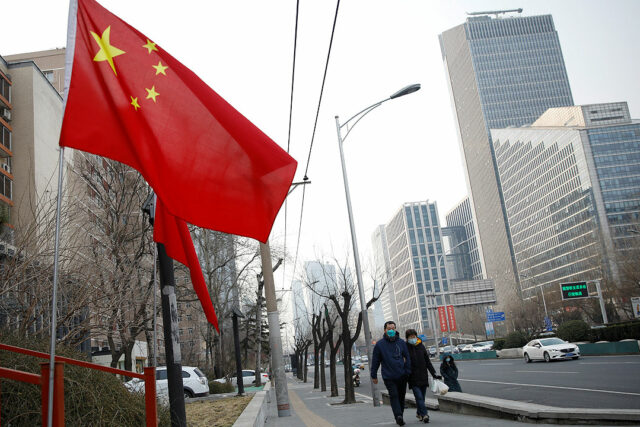
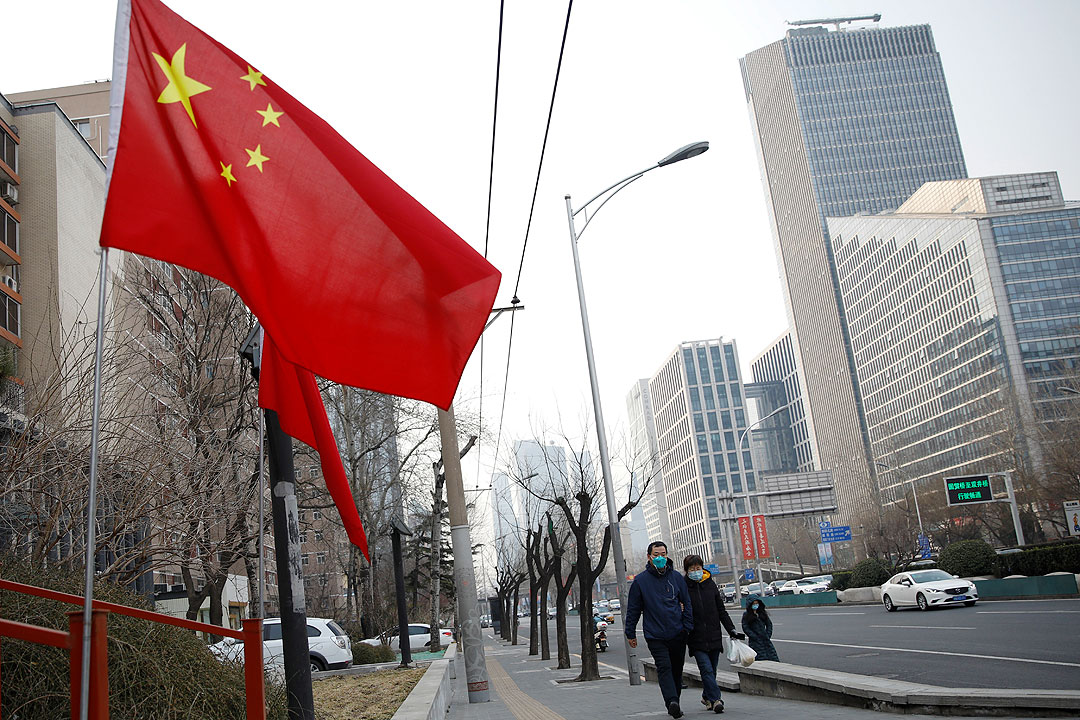
PEOPLE wearing face masks walk along a street in Beijing, China Feb. 24, 2020. — REUTERS
BEIJING/SHANGHAI — Three-quarters of Beijing’s 22 million people began lining up for coronavirus disease 2019 (COVID-19) tests on Tuesday as authorities in the Chinese capital raced to stamp out an outbreak and avert the kind of city-wide lockdown that has shrouded Shanghai for a month.
Beijing residents also began stocking up on food and supplies on worries of any sudden localized lockdowns, as frustration with tough curbs continues to mount in Shanghai, the Chinese financial and commercial hub that is home to 25 million people.
Videos on social media show people leaning out of Shanghai windows to beat pots and pans in anger, or play “Do you hear the people sing?”, a protest anthem from the musical Les Miserables, on flutes and trumpets.
Trying to avoid a similar fate by acting early, Beijing began mass tests of 3.5 million people in its most populous district Chaoyang on Monday. By the end of the day, authorities listed 10 other districts and one economic development zone for mandatory tests this week, covering a total of 20 million people and ordering 16 million for tests on Tuesday.
The orders come days after dozens of infections were found. Shanghai waited for about a month and more than 1,000 cases before launching city-wide testing in early April.
Liu Wentao, a Beijing cook, said he was concerned at how fast COVID was spreading, but was confident the capital could handle it.
“The virus controls are stronger than in other places, I don’t think it will be like Shanghai,” he said on his way to get tested.
Beijing recorded 33 new COVID cases for April 25, up from 19 the day before with no deaths reported so far in the outbreak. The total case load is miniscule compared with hundreds of thousands in Shanghai.
Shanghai reported 52 new COVID deaths on Tuesday, up from 51 the day before. That takes the official death toll to 190, all reported from April 17 onwards, although many residents have said relatives or friends died after catching COVID as early as March, casting doubt over the statistics.
In the capital, schools, stores and offices remained open, but the iconic Lama temple said it would be closed to tourists from Wednesday, while Beijing’s National Theater would close for the rest of the month.
Officials have urged residents to refrain from leaving the capital and avoid gatherings for the upcoming April 30-May 4 Labor Day holidays.
BAD WEATHER In Shanghai, strict enforcement of measures continued, but plans for a city-wide PCR testing exercise were somewhat derailed by the weather forecast, with hail expected later.
While authorities say they have relaxed some curbs, most in Shanghai are still either confined to their homes or cannot leave their residential compounds. Even those who can go out have few places to go, with shops and most other venues closed.
In areas where leaving home is allowed, residents were asked to take rapid antigen tests on their own, rather than line up for PCR testing in the rain. In the rest of Shanghai, daily PCR tests remained mandatory.
Online videos showed leaking roofs at quarantine centers. Officials on Tuesday said they would conduct maintenance works.
The prolonged lockdown has fueled frustration over lost wages, family separation and quarantine conditions, as well as access to medical care and food, with residents struggling to dispose of trash and make basic errands.
The Shanghai government did not immediately comment on signs of growing discontent.
Asymptomatic and symptomatic new cases dropped slightly to 15,319 and 1,661, respectively, while cases outside quarantined areas were flat at 217. Other Chinese cities that have been under lockdown began easing restrictions once such cases hit zero.
The fallout from any lockdown in Beijing is expected to be much smaller than that on economic powerhouse Shanghai, however.
“If there is a lockdown in Beijing, I think it has less impact on businesses because most of these positions can be done from home,” Beijing-based Joerg Wuttke, president of the European Union Chamber of Commerce, told Reuters. “There is less trucking involved, there is less packaging involved, there is less production going on.” — Reuters
LONDON — Human activity is contributing to an increasing number of disasters, with 350 and 500 medium-sized or large disasters a year occurring globally in the past two decades and more frequent events expected, according to a UN report.
The number of disasters —many of them weather-related such as fires and floods, but also other hazards such as pandemics or chemical accidents — could reach 560 a year, or 1.5 a day, by 2030, putting millions of lives in danger, the UN Office for Disaster Risk Reduction (UNDRR) said in its global assessment report.
Climate change is causing more extreme weather events, it said, adding humans have made decisions which are too narrow in focus and have been over-optimistic about the risk of potential disasters, leaving them unprepared.
The impact of disasters has also been heightened by growing populations in areas more prone to natural catastrophes, the report said.
“The world needs to do more to incorporate disaster risk in how we live, build and invest, which is setting humanity on a spiral of self-destruction,” said Amina J Mohammed, UN Deputy Secretary-General, who presented the report at UN headquarters in New York.
“We must turn our collective complacency to action.”
Disasters disproportionately impact developing countries, which lose an average 1% of gross domestic product (GDP) a year to them, compared to 0.1-0.3% in developed countries, the report said.
The Asia-Pacific region suffers the highest damage, losing an average of 1.6% of GDP to disasters annually.
Developing countries also tend to be under-insured.
Only 40% of disaster-related losses since 1980 were insured. Insurance coverage rates in developing countries were sometimes close to zero, the report said.
“The financial system really needs to get ahead of this curve, because otherwise there’s a lot of built-up risk that isn’t being priced into how we make decisions,” Jenty Kirsch-Wood, coordinating lead author of the report, told Reuters. — Reuters
From left to right: Helen Zafra, Visayas-Mindanao sales director of Primeworld Land Holdings, Anthony Leuterio of Filipino Homes and Sherwin Uy of Primeworld Land Holdings
The Township subdivision in Butuan City, Agusan del Norte inaugurated its Fiona Model Unit on a Filipino-summer fiesta themed event last April 23.
Primeworld Land Holdings, Inc. (PLHI) developed the 14.5-hectare residential land located in Brgy. Baan, Butuan City, Agusan del Norte to make every Butuanon’s dream of owning a home much nearer to the city proper come true.
(From L-R) Anthony Leuterio (CEO, Filipino Homes), Johnny Uy (Chairman, Primeworld Land Holdings, Inc.), Sherwin Uy (Executive Vice President, Primeworld Land Holdings, Inc., Ar. Alex Tan (President, Hamm-Asia Global Builders)
In partnership with Filipino Homes’ team managers from Luzon, Visayas and Mindanao, PLHI facilitated the blessing of the Fiona Model House, and subsequently launched the single detached unit variation.
As the event marked the very first Filipino Homes Mindanao Tour, Helen Zafra, Visayas-Mindanao sales director of PLHI; and Anthony Gerard Leuterio, chief executive officer of Filipino Homes, both shared their companies’ commitment of helping the people of Butuan come home to their dream home in their hometown.
“In November 2021, last year, we launched Township Subdivision to mark a milestone of commitment to provide one of humanity’s most fundamental need – a home. To many of us, home means safety, comfort, a feeling of belongingness, and more importantly, it means family. Our promise to you in Primeworld is to build good homes for you and your family’s safety, security, and comfort,” Ms. Zafra said in a speech delivered during the event.
PLHI Chairman Johnny Uy and Hamm Asia Global Builders (AAA General Contractor for the project) president Alex Tan, together with the Executive Committee members Nichole Tan, Nelba Pangilinan, and Executive Vice-President Sherwin Uy witnessed the development milestone.
Sherwin Uy, EVP of Primeworld Land Holdings, Inc. delivers the Opening Remarks
“The Township is Primeworld’s second project in Butuan City, and is 7x larger than the company’s first project (Miraville I),” Mr. Uy said during his opening remarks.
He added, “This is a very important milestone for us – as our future homeowners may have a better look and feel of their future homes with the Fiona model unit. We celebrate our partner sellers and brokers, around 300 in attendance, who are equally committed to provide quality service to our fellow Filipinos.”
Primeworld Sales and Marketing Team
PLHI is currently offering the Fiona Unit, a two-storey townhouse with a total lot area of 60 sq.m. and a total floor area of 48 sq. m. starting at P2M. Buyers can choose between the twohome types: 2-Storey Single Detached, 2-Storey Townhouse.
In a gated community of 1,026 units with modern amenities and 24/7 roving security, future residents of The Township can guarantee peace of mind that comes from living in a well-situated neighborhood in Mindanao.
The developer also ensured that the important establishments, such as schools, hospitals, and commercial areas, are easily accessible from the subdivision through 5-10 minute rides. Weekly, 40 flights are scheduled from Manila to Butuan Airport, which is only a 20-minute ride from the subdivision.
Guests at the Filipino-summer fiesta themed event last April 23.
Aside from the convenient distance to the standard necessities, living in The Township grants one’s wish of reaching the riches of Agusan del Norte at any day.
ADVERTISEMENT
In just a 15-minute to an hour ride from the subdivision, residents and their guests can explore the historic Magellan’s Landing Site and Balangay Shrine, the natural beauties of Lake Mainit and Bolihon beach, the newest discovered white sand mixed with corals shoreline, the cultures and fourth-century artifacts exhibited at Butuan National Museum, the uncharted caves of Caraga and Agusan’s refreshing hot springs.
With Butuan consistently securing a spot on the list of the Most Competitive Cities by the National Competitiveness Council of the Philippines, investors see upsurge of economic activities from retail, construction, housing, tourism and logistics in the city, becoming a major investment hub in the country for the next years.
“We remain optimistic in the local real estate market and committed to building affordable homes for every Filipino family nationwide,” Mr. Uy said.
Spotlight is BusinessWorld’s sponsored section that allows advertisers to amplify their brand and connect with BusinessWorld’s audience by enabling them to publish their stories directly on the BusinessWorld Web site. For more information, send an email to online@bworldonline.com.
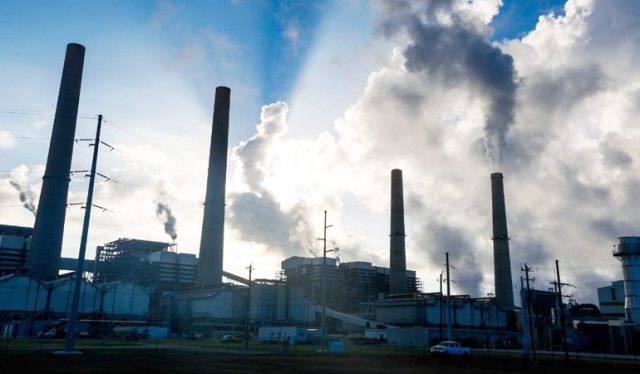
WASHINGTON – The global capacity of power plants fired by coal, the fossil fuel that emits the most carbon dioxide when burned, rose nearly 1% last year as the world recovered from the COVID-19 pandemic, according to a research report by a U.S. environmental group.
The Global Energy Monitor (GEM) report found that global coal plant capacity grew 18.2 gigawatts to about 2,100 GW or about 0.87%. Scientists and activists have urged the world to move off coal to cleaner energy sources such as solar and wind power and in some cases, nuclear power.
“It’s up by a small number,” said Flora Champenois, a research analyst at GEM about the capacity rise. “But it comes at a time when the world needs a dramatic fall in the capacity, not any rise.”
Last year’s surge in new coal plants of about 25.2 GW in China, the world’s top climate polluter, nearly offset coal plant closures in the rest of the world of 25.6 GW, the report said. China has pledged to bring greenhouse gas emissions to a peak “before 2030” and achieve carbon neutrality by 2060.
But its recent focus has shifted towards energy security, following disruptive power cuts and geopolitical uncertainties since Russia’s invasion of Ukraine. Countries like Germany have also been reconsidering using more coal to replace Russian natural gas. Read full story
The United States, the second largest carbon emitter, pledged with about 40 countries at last November’s U.N. climate talks to end international finance for most fossil fuel projects by the end of 2022. But the Biden administration may soon consider calls for exemptions to its pledge as energy markets tighten on Russia’s invasion of Ukraine, a senior U.S. official said this month. Read full story
Despite last year’s capacity rise, the capacity of global coal plants being built in 2021 fell from 525 GW in 2020 to 457 GW, a decrease of 13%, the report said. – Reuters