Home Blog Page 6495

Election campaign period boosts consumer confidence, store sales 

THE campaign period for the May 9 local and national elections has helped to improve consumer confidence and sales of supermarkets nationwide, according to the Philippine Amalgamated Supermarkets Association, or Pagasa.

Pagasa President Steven T. Cua said in a mobile phone interview with BusinessWorld that poll campaigns had helped increase confidence among consumers. The campaign period ended on May 7.

“Campaigns helped build consumer confidence as some participants went out for the first time since March 2020, especially at rallies of national candidates, or stepped out more often than they usually do,” Mr. Cua said.

Additional sales for supermarkets were seen during the campaign period, he said, although the increase happened only in “spurts.” He declined to provide any specific figure.

“There were additional sales during this campaign period especially for supermarkets, which operate as wholesalers; meaning either they have a separate price when you buy on a per-case basis or they stocked up enough for candidates to buy in bulk for campaigns,” Mr. Cua said.

“I’d say not so much [increase]. There were increases but in spurts only. Most of these purchases were rather unplanned as candidates are not assured of attendance at their local mini-rallies. National candidates would source direct from distributors and/or supplier/donors,” he added.

According to Mr. Cua, the top item that was sold during the campaign period was bottled water.

“Top item sold during these campaign rallies was bottled water. Most local candidates expect supermarkets to carry enough stock for them to buy at any one time. So, supermarkets with stocks for items included in loot bags during campaigns also made extra sales during this period though on a rather limited scale,” Mr. Cua said.

Meanwhile, Philippine Retailers Association Vice-Chairman Roberto S. Claudio said in an e-mail interview that the campaign period helped only a bit in the recovery of the local retail industry.

“On the election period helping in the recovery of the retail industry, not so much. It helped in giving marginal income to people involved in the campaign efforts of politicians. [But] savings from consumers during the lockdown period and ‘revenge’ spending fueled more the recovery of the retail industry,” Mr. Claudio said.

Further, Mr. Claudio said the local retail industry is on its way to pre-pandemic figures, as the campaign period coincided with the improving consumer confidence.

“The campaign period coincided with the regaining consumer confidence in consumption spending. Lower coronavirus disease 2019 (COVID-19) cases and high vaccination have improved and consumers have started to go out and spend time and money on eating out, which benefit our restaurants and fast foods. Outdoor and recreation spending have also started for consumers who have been quarantined for so long,” Mr. Claudio said.

“The retail [industry] is on its way to pre-pandemic levels. We are seeing this in the March-April sales performances. We just hope that the new Omicron variants will not get out [of] hand again,” he added. — Revin Mikhael D. Ochave

Yields rise on Fed moves, April inflation data

By Lourdes O. Pilar, Researcher

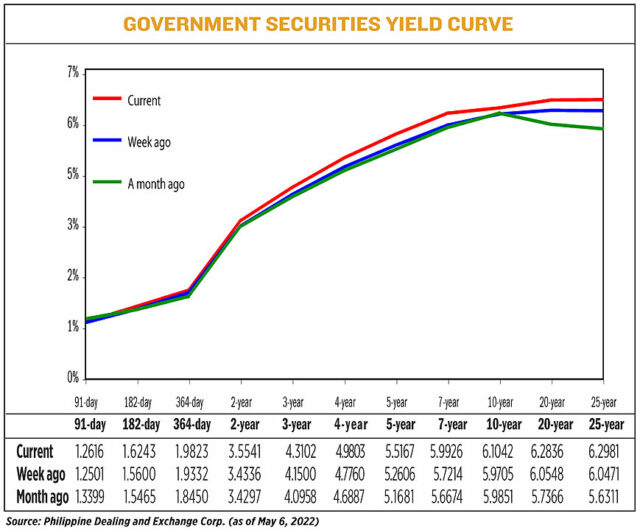
YIELDS on government securities (GS) climbed across the board last week as investors turned cautious following the US Federal Reserve’s latest rate hike and after local April inflation print went above market expectations.

GS bond prices dropped as yields rose by a week-on-week average of 15.92 basis points (bps), based on PHP Bloomberg Valuation Service Reference Rates as of May 6 published on the Philippine Dealing System’s website.

The rates at the short end of the curve increased, with the rates of the 91-, 182- and 364-day Treasury bills (T-bills) going up by 1.15 bps, 6.43 bps and 4.91 bps, respectively, to 1.2616%, 1.6243% and 1.9823%.

At the belly, the two-, three-, four-, five-, and seven-year T-bonds saw their yields climbed by 12.05 bps (to 3.5541%), 16.02 bps (4.3102%), 20.43 bps (4.9803%), 25.61 bps (5.5167), and 27.12 bps (5.9926%), respectively.

The long end saw higher movements as the 10-, 20-, and 25-year debt jumped by 13.37 bps, 22.88 bps and 25.10 bps to yield 6.1042%, 6.2836%, and 6.2981%, respectively.

“GS yields continued to drift higher due to surging headline inflation and over the anticipated 50 bps rate hike from the US Fed,” First Metro Asset Management, Inc. (FAMI) said in a Viber interview on Friday.

“Early in the week, sentiment was already defensive due to BTr’s (Bureau of the Treasury) aggressive award on its three-year FXTN 03-27 re-issuance offer — priced at an average rate of 4.598%, +17.3bps from last traded levels,” FAMI added.

The bond trader said that the news of US Fed hike and inflation did not help sentiment for local bonds as yields rose on a week-on-week basis.

“The local bond market had a full plate this past week and more so in the coming days as the results of the Philippine national elections loom and the release of the first-quarter GDP (gross domestic product) print due out on Thursday,” the bond trader said in a Viber message.

The US Fed raised its benchmark overnight interest rate by 50 bps, the biggest rate hike in more than two decades, Reuters reported last week, adding that the 75 bps moves were now unlikely to happen.

The Fed also said it would start next month to trim the roughly $9-trillion stash of assets accumulated during its efforts to fight the economic impact of the coronavirus pandemic as another tool to bring inflation under control.

“We expect other central banks, including the BSP (Bangko Sentral ng Pilipinas), to start with their tightening cycles too,” FAMI said.

On Thursday, inflation heated up in April to more than three-year high of 4.9% amid higher food and utilities prices. April’s print was faster than 4% in March and zoomed past the 4.6% median estimate in a BusinessWorld poll. It also breached the BSP’s 2-4% target this year and settled near the upper band of 4.2-5% forecast that month.

It was the fastest consumer price growth since the 5.2% in December 2018.

A day before the April inflation data was released, the Treasury on Wednesday fully awarded the P35-billion reissued three-year papers with a remaining life of two-years and 11 months at an average rate of 4.598%.

The average yield fetched was 34.8 bps higher than the coupon rate of 4.25% when the papers were first offered on April 8. Accepted yields ranged from 4.3% to 4.85%. Tenders reached P41.49 billion against the P35-billion program.

Meanwhile, a separate BusinessWorld poll conducted late last week showed a first-quarter GDP growth median estimate of 6.7%.

If realized, this would be the slower than the revised 7.8% growth in the fourth quarter, but a turnaround from the 3.8% contraction in the January-March period last year.

The Philippine Statistics Authority will release the GDP report on May 12.

For this week, the bond trader expects that “bearish sentiment for bonds still has legs and that may cause for yields to rise further amid inflation fears and that the BSP may have to step in sooner rather than later.”

FAMI said that the more pressure put for BSP to raise policy rates, yields will likely move higher in the near term.

BSP Governor Benjamin E. Diokno signaled last month the central bank may consider a rate hike in June, when economic output and employment data firmed up.

The central bank has maintained its key rate at record low of 2% since November 2020 to prop up the economy.

US Treasury movements and weekly BTr auctions will also add up to volatility in the bonds market, FAMI said.

Suzuki presents all-new Celerio, starts at P708K

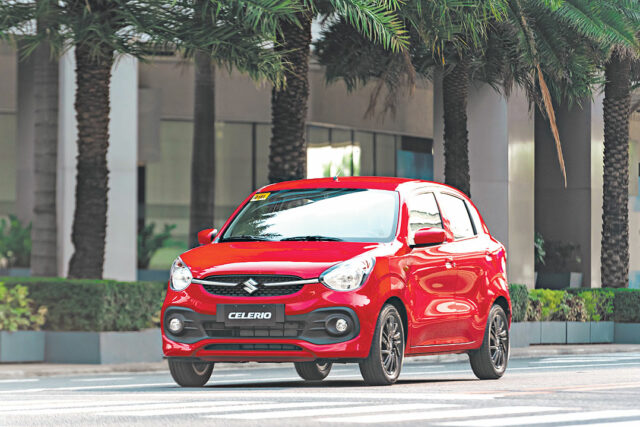
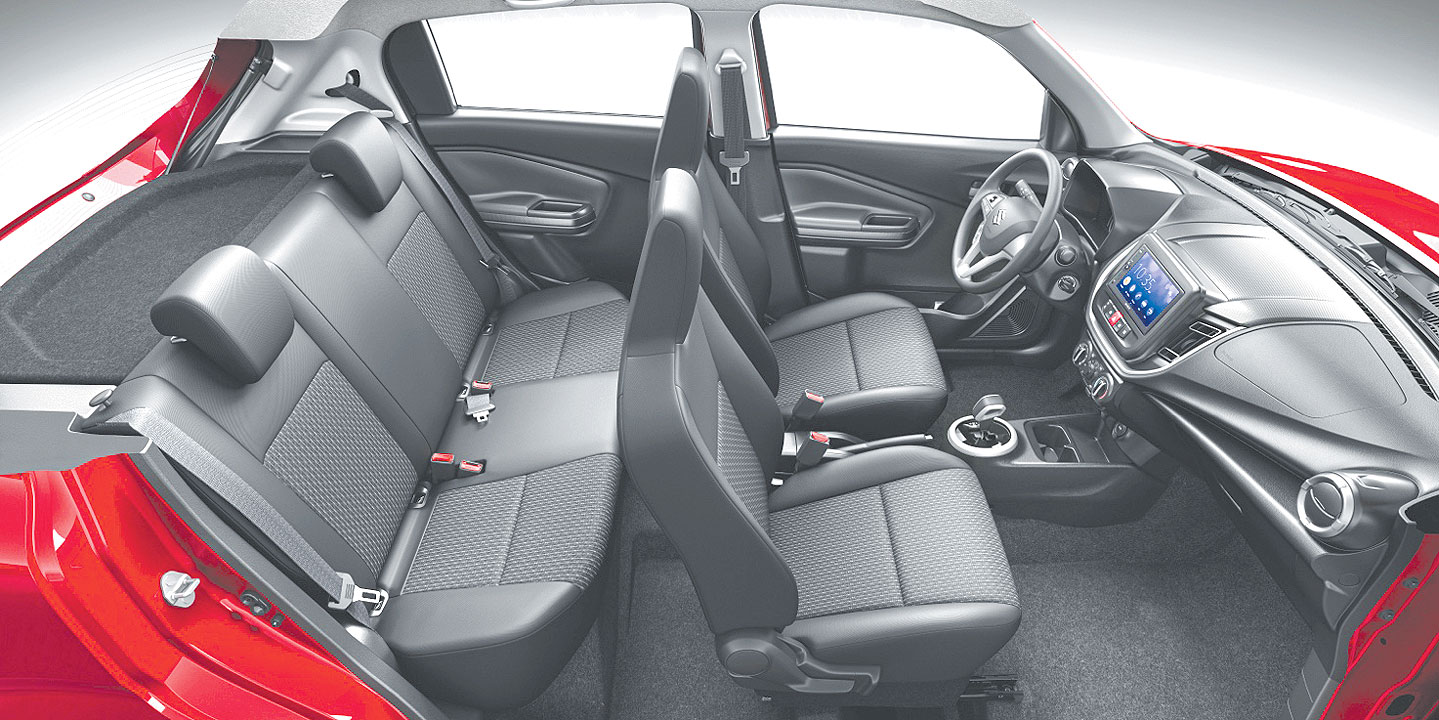
Suzuki Philippines rejoins the subcompact fray with an all-new iteration of the Celerio. — PHOTO FROM SUZUKI PHILIPPINES

SUZUKI in the Philippines has always been known for being the country’s compact car specialist. Now, to be fair, it has offerings that do not fit the bill (take the Vitara and XL7, for instance) but even a cursory glimpse at the brand’s portfolio indeed reveals subcompact/compact options that have been hits for their segment- and price-point-defying propositions.

The Suzuki Celerio is certainly one of them. The nameplate debuted globally in 2008, although it appeared as a rebadged Alto (remember that one?) or A-Star in select markets. In 2014, it was finally spun out as its own model to completely supplant the A-Star.

In the local market, the Alto was quietly culled from Suzuki showrooms. Perhaps it proved to be too small a vehicle — with the current iteration stretching 3,395 millimeters — for the purposes of the average Pinoy car buyer.

The new Celerio is out to prove that the company’s aspirations in the segment are alive and well. The outgoing second generation of the Celerio spanned 2014 to 2021, but not before, according to Suzuki Chief Engineer Kazushi Uchiyama, building a “favorable reputation” for class-leading cabin and luggage space, fuel efficiency, and ease of use and driving.

Mr. Uchiyama said in a statement that these same values which resonated in our market now make a comeback in the third-generation Celerio, and are complemented with qualities that Suzuki is confident will get the attention of more browsers and, of course, buyers. In fact, Suzuki Philippines is expecting to sell 400 to 500 units a month. SPH GM for Automobile Norihide Takei said that the car has “evolved into a compact car that will make people’s lives easier,” boasting both practicality and individuality. He added that the Celerio represents an effort to provide as much space as possible in a small vehicle. As for the vaunted fuel economy, Suzuki Philippines said that an Automobile Association Philippines-observed test yielded a 28.25kpl thirst rate for the subcompact.

The all-new iteration of the Celerio grows in length (plus 95mm to 3,695mm), height (plus 15mm to 1,555mm), width (plus 55mm to 1,655mm), and wheelbase measurement (plus 10mm to 2,435mm) — and even clears the ground more (plus 25mm to 170mm). These numbers translate to increased space within the cabin as well, providing more shoulder and legroom for both front and rear occupants. The cargo hold expands by 60 liters for a total of 295 liters; with added capacity offered by 60:40 folding rear seats.

Under the Celerio’s hood is a 1.0-liter Dualjet (good for 49kW [around 66hp] and 89Nm) that is said to deliver “comprehensive advantages in thermal efficiency,” leading to enhanced compression ratio and reduced friction. The dual injection system, reported Suzuki, makes fuel “more readily combustible” leading to better performance. The three-cylinder K10C mill replaces the old K10B.

New to the model is an Engine Auto Stop Start System (EASS), which turns off the engine when the vehicle is at a standstill. This positively impacts fuel economy and lessens air pollution. The EASS automatically engages depending on the car’s “electrical load during the stop.”

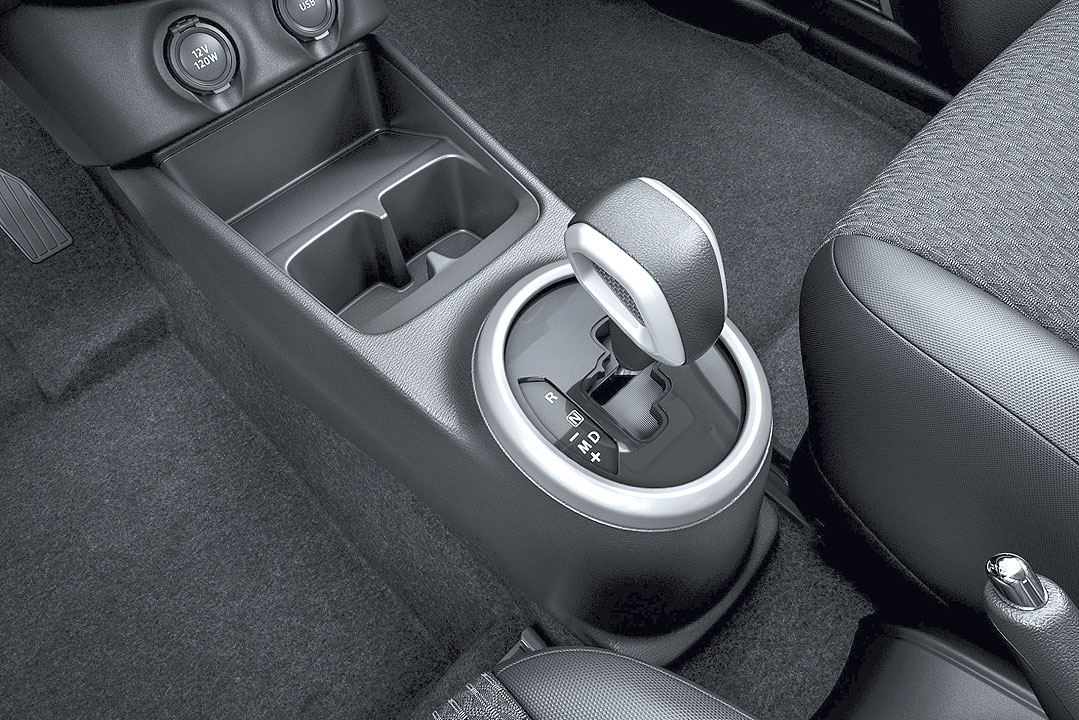
Also debuting on the nameplate’s higher variant is Suzuki’s so-called Auto Gear Shift, previously seen in the Dzire. The feature is basically an “automated manual transmission” with an Intelligent Shift Control Actuator which operates the shift and clutch. The manual transmission gets a five speed which Suzuki said features an optimal gear ratio for reduced torque loss.

Meanwhile, audio control buttons make an appearance on the steering wheel — a price point bonus. These allow the driver to control a Sony XAV-1500 system with an anti-glare touchscreen, Weblink 2.0, Bluetooth, and USB connectivity.

The Celerio rises on the Heartect platform — a rigid and light chassis that promises to deliver fuel efficiency and enhanced driving performance, with reduced NVH. In case of a collision, the platform is expected to better disperse impact energy — also helped along by the company’s proprietary TECT (Total Effective Control Technology). Front air bags will also deploy in case of a crash, while seatbelts in the front seats have pretensioners and force limiters.

Further to safety, the Celerio now offers pedestrian injury mitigation measures. The bonnet, front windscreen wiper area, front bumper, and other parts will absorb impact energy in the event of contact with a pedestrian — with the goal of mitigating head and leg injuries to the same.

The all-new Celerio is also equipped with an electronic stability program, brake assist, hill hold control, anti-lock brakes, and rear parking sensors. A MacPherson strut and rear torsion suspension system is expected to result in a smoother ride.

The brake booster on the all-new Celerio is larger by an inch versus the previous eight inches. Front wheels get discs, while the rear wheels are fitted with drum brakes. The hatchback can muster a tight 4.7m turning radius. Coupled with its small profile, the Celerio will prove a cinch to maneuver and park.

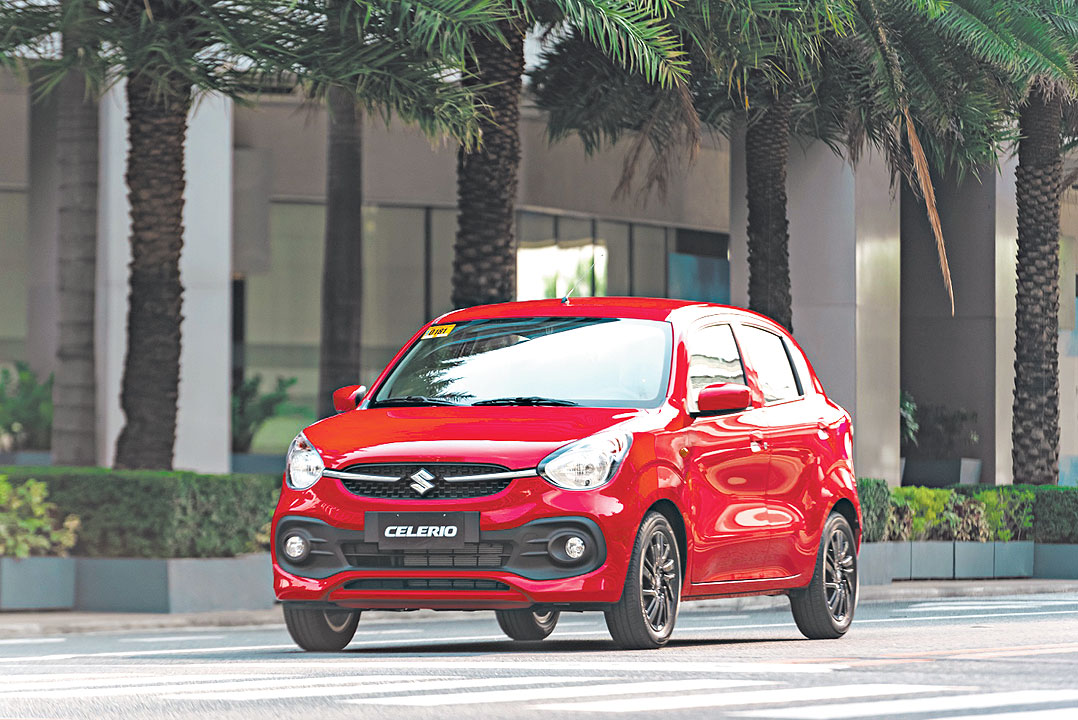
On the outside, the Celerio bears a raised appearance akin to its sibling S-presso. Suzuki added that its dynamic look “makes the model look (larger) than its actual size.” Lots of curves on the metalwork also result in a sexy, sculpted posture. The flared rear fenders and rear lamps pushed to the sides also aid in exaggerating width.

The all-new Suzuki Celerio is available in Fire Red, Speedy Blue Metallic, Arctic White Pearl, and Glistening Grey Metallic across Suzuki’s 72 dealerships nationwide. It comes in two variants — the GL MT (at P708,000) and the GL AGS (P754,000). — Kap Maceda Aguila

Agriculture output in Q1 seen flat following typhoon damage, ASF

AGRICULTURAL PRODUCTION in the first quarter of the year is estimated to have been little changed due to typhoon damage and the continuing impact of the African Swine Fever (ASF) outbreak, analysts said.

Pampanga State Agricultural University professor Roy S. Kempis said “not much” is expected from the agriculture industry in the first quarter.

“Flat growth may emerge that will not be far from the growth rate (from the previous quarter),” he said.

He estimates that the value of production in the agriculture sector will remain flat, between minus 0.5% and 0.5%.

The value of production in agriculture in the fourth quarter last year rose by 0.6%. In the first quarter of 2021, output declined by 3.4%.

In 2021, agricultural output contracted by 1.7%.

Mr. Kempis said that crops and fisheries will remain a “bright spot” for output in the first quarter, but overall output will remain hampered by the livestock sector due to the resurgence of ASF early in the year.

“This will be driven by crops, fisheries and poultry in the same order of importance. Not much can be contributed from the livestock sector. Instead, it will be the Achilles heel because of ASF and the reluctance of livestock farms to open again soon,” Mr. Kempis said.

As of March 2022, ASF was still active in five regions, nine provinces, seven municipalities, and 12 barangays.

According to the statistics authority, the industry has lost 3 million hogs to the disease or to precautionary culls between 2019 and 2021.

“Livestock is expected to still be struggling. A capital-intensive industry, this will take more time to rebound, perhaps three to five years,” Mr. Kempis added.

He added that a negative outcome can emerge because of agricultural damage by Typhoon Odette (international name: Rai), which struck only two weeks before the first quarter of 2022.

The Department of Agriculture reported that crop damage due to the typhoon amounted to P13.3 billion.

The storm affected 533,709 farmers and fisherfolk across 462,766 hectares of agricultural land, with the volume of lost production at 273,062 metric tons (MT).

Regions mainly affected were Capiz, Iloilo, Negros Occidental, Cebu, Negros Oriental, Eastern Samar, Leyte, Southern Leyte, the Surigao Provinces, Davao de Oro, and Agusan del Sur.

“It will take time for these provinces to fully recover. And this may not happen in the first quarter.  These provinces are rice producing areas especially those in Western Visayas which can be considered the second most important rice producing area after Central Luzon,” Mr. Kempis said.

“Likewise, these affected provinces include rich marine fishing grounds in the bays of Eastern Visayas and Western Visayas. Their marine fishing grounds not only involve fish capture but marine aquaculture. The latter’s sea-based aquaculture farms could have been devastated by the typhoon. Repairs may not be enough but additional capital investment may be necessary. And the latter could be a challenge, albeit temporarily not only in fisheries but also in crops and poultry,” he added.

United Broiler Raisers Association President Elias Jose M. Inciong said that demand was also down in the first quarter because of the Omicron surge and lockdowns in January.

“Producers would have been conservative at the time, especially broiler raisers. Costs were (also) already on the high side even before the Ukraine war,” he said in a Viber message.

Mr. Kempis said that coming from the fourth quarter in 2021, there was a period of enhanced consumption because of the holiday season that also served as an incentive to produce more.

“The first quarter is expected to feature a slowdown in consumption and in turn production, processing and manufacturing of food shall also slow down,” he added. — Luisa Maria Jacinta C. Jocson

Philippines completes Southeast Asian Games team roster

PSC COMMISSIONER RAMON FERNANDEZ
PSC COMMISSIONER
RAMON FERNANDEZ

HANOI — Team Philippines has finalized its fighting roster for the 31st Southeast Asian Games here following the conclusion of the delegation registration meetings organized by the host nation.

Commissioner Ramon Fernandez of the Philippine Sports Commission (PSC), the country’s chef de mission in the Games reports the accreditation of the entire 981-strong delegation, including 641 Filipino athletes from 38 sports.

Mr. Fernandez was ably assisted by his deputy chefs de mission Pearl Managuelod and Carl Sambrano in securing the identification cards ahead of the opening ceremony being prepared by host Vietnam on May 12.

“We have to make sure that everything will be in order before our athletes compete for medals. There should be no distractions as they focus on their respective events,” said Mr. Fernandez.

A total of 318 officials and 18 support staff will back up the athletes, whose participation and preparations were bankrolled by the PSC, the government arm in sports, to the tune of P232 million.

The Philippine kickboxing team began its quest for medals on Sunday with four kickboxers gunning for bronze medals in their opening quarterfinal bouts.

Jomar Esteban (men’s -57kg) and Carlos Alvarez (men’s -67kg) opened the nation’s campaign in the full-contact event while Kurt Ludan (men’s -54kg) and Jean Claude Saclag (men’s -63.5kg) are booked in the low-kick discipline.

“We have been making the rounds to the venues where our athletes will compete. Our athletes are in high spirits,” said Mr. Fernandez.

The men’s football team blanked Timor Leste, 4-0, in its opening match and faced host Vietnam last night.

Filipino-American Ariana Drake was likewise scheduled to take a plunge on Sunday at the start of the diving events of aquatics at the My Dinh Aquatics Center in Vietnam.

Based in Los Angeles, California, the 17-year-old Ms. Drake saw action in the women’s 1-meter springboard and will participate in the 3-meter springboard on Tuesday.

Investors buy MREIT as Q1 earnings bring optimism

MARKET PLAYERS rallied behind MREIT, Inc. last week on the back of optimistic first-quarter earnings report thanks to last year’s acquisitions.

A total of 111.84 million MREIT shares worth P1.96 billion were traded from May 2 and 4 to 6, data from the Philippine Stock Exchange showed. When compared, MREIT would be the most actively traded stock last week.

Financial markets were closed on Tuesday in observance of the Eid’l Fitr holiday.

The real estate investment trust (REIT) arm of Megaworld Corp. closed at P17.66 per share, inching up by 0.9% from April 29’s closing price of P17.50 apiece. Since the first trading day of the year, the stock’s price has gone down by 8.6%.

“MREIT’s movement [last] week has been driven primarily by a P687.2 million reported net income in the [first quarter] of 2022, due in part to its portfolio expansion efforts as it scooped up properties by the end of last year,” Globalinks Securities and Stocks, Inc. Head of Sales Trading Toby Allan C. Arce said in a Viber message.

“However, the prospect of rising interest rates, plus the ongoing economic headwinds caused by high commodity prices, could erode demand for REITs and chip away at the organic growth prospects of commercial REITs like MREIT,” he said.

AAA Southeast Equities, Inc. Research Head Christopher John Mangun noted MREIT was one of two listed REITS that outperformed in the market last week.

“MREIT is currently trading at a 20% discount to its price back at the beginning of the year. Perhaps investors are wary that a tightening of restrictions may be implemented after the election,” he said in a Viber message.

For the January-to-March period, MREIT generated P901.56 million in revenues. Meanwhile, the company’s net profit stood at P687.17 million, a turnaround from P12.48-million loss last year.

The company was incorporated in October 2020 and started its operations in June 2021.

In December last year MREIT acquired four commercial properties worth P9.1 billion. The acquisition further expanding its portfolio’s gross leasable area (GLA) by 25% to 280,000 square meters (sq.m.) from 224,000 sq.m. since its stock market debut in September 2021.

As of March, MREIT’s fair values of its investment properties stood at P59.3 billion.

In addition, the company is eyeing to buy four more prime properties worth P5.3 billion this month, which could expand its GLA portfolio by 16% to 325,000 sq.m.

“If the acquisitions go through in the second quarter, we may see earnings at around P800 million,” Mr. Mangun said.

He pegs the stock’s support level at P17.25 and its resistance level at P18.80.

For Mr. Arce, he forecasts a net income of P790 million for the second quarter and P2.3 billion for the entire year.

“MREIT’s solid Q1 performance is seen to sustain its growth. Rent escalation, steady occupancy and aggressive acquisition plans puts MREIT on track to deliver targeted returns to its shareholders in 2022,” Mr. Arce said.

Mr. Arce’s support level for MREIT this week ranges from P16.70 to P17.00 while resistance at P18.00 to P18.38. — Ana Olivia A. Tirona

Stretching out Mother’s Day to a full month

THE WORK of a mother never ends, so why should pampering and taking care of oneself stop after Mother’s Day? Rustan’s is stretching out the celebration by holding a month-long Mom and Baby Fair from May 5 until June 6, as part of its “Moms in Full Bloom” campaign.

One of the events is a workshop on Modern Sleep for Newborn Babies, conducted by Love to Dream at Rustan’s Shangri-La on May 15, 2 p.m. Learn about routines, rhythms, and other solutions to allow tiny tots to get the best snooze for their development.

For other kiddie needs, Rustan’s is offering discounts on children’s items: 10% off on Carter’s, Baby Care, Beaba, Bebe Chic, Spiffles, Tiny Buds, and more kiddie brands. Every weekend from May to June, one can score 10% off on all items from TafToys and 10% off selected items from Crayola, Melissa & Doug, and Best Way. One can have an additional 15% to 30% off on items from Enfant, Mamaway, Swaddle Designs, Aprica, and Pigeon, among others. For baby essentials, some picks from Chicco, Lilymoms, Okie Dog, Cradle, Cycles, and other brands can be had for up to 50% off.

As for exclusives for mothers, luxury brands from all over the world are up for grabs. One can earn five times more frequent shopper program points (FSP) on their Rustan’s cards with every purchase from Bugatti, Lladro, Swarovski, Ralph Lauren, and other home accents from May 5 to 15. Moms can revel in the scents and other self-care essentials from Acca Kappa, L’Occitane, and Diptyque. For a minimum purchase of P7,500 of Acca Kappa products, Beauty Addict members will receive a travel-size Sakura Tokyo Bath & Shower Gel (50 ml), mini oval brush, and a White Beauty pouch. For brands like MAC, Clinique, Anastasia, and Bobby Brown, discounts and free samples are available throughout the fair.

A free gift awaits mothers who like to dress up in Criselda Lontok, Lady Rustan, Lotus, and Luna clothing. Shoppers can expect a free gift for a minimum single-receipt purchase worth P5,000 from these brands from May 13 to 15.

Finally, mothers and their children can sign up for a virtual playdate with Oxo Tot on June 4, 3:30 p.m., via Zoom, ideal for ages one to four years old. To register, purchase an OXO Tot Play Date Kit (P800) and sign up at https://tinyurl.com/oxototplaydate. Get a special rate of P500/child for any purchase of OXO Tot products at Rustan’s branches and website. Slots are limited and registration closes once the slots are filled, and keep proof of purchase for validation. — JLG

Dollar buffers dipped as of end-April

THE country’s dollar buffers slipped as of end-April as the national government paid some of its foreign debt obligations and with the lower valuation of the central bank’s gold reserves.

Preliminary data released by the Bangko Sentral ng Pilipinas (BSP) on Friday evening showed the gross international reserves (GIR) as of end-April stood at $106.756 billion, down by 0.51% from the $107.308 billion in the prior month. The country’s foreign exchange buffers also slipped 0.8% from the $107.705 billion seen a year earlier.

“The month-on-month decrease in the GIR level reflected mainly the National Government’s (NG) foreign currency withdrawals from its deposits with the BSP as the NG settled its foreign currency debt obligations and paid for various expenditures as well as the downward adjustment in the value of the BSP’s gold holdings due to the decrease in the price of gold in the international market,” the BSP said in a statement.

The dollar reserves seen last month were enough to cover seven times the country’s short-term external debt based on original maturity and 5.5 times based on residual maturity.

It is also equivalent to 9.4 months’ worth of imports of goods and payments of services and primary income.

Ample foreign exchange buffers protect an economy from market volatility and serves as a guarantee for the country’s ability to pay its debts in the event of an economic downturn.

Broken down, the BSP’s foreign investments stood at $90.706 billion as of end-April, slipping by 0.8% from the $91.457 billion a month earlier and by 0.53% from the $91.188 billion a year earlier.

Buffers in the form of gold were valued at $9.277 billion, or lower by 1.3% than the $9.402 billion as of end-March and by 0.35% from the $9.31 billion a year earlier.

The country’s reserve position in the International Monetary Fund (IMF) also dipped 3.11% to $765.4 million from $790 million in the prior month and by 4.8% from the $803.8 million as of end-April 2021.

Meanwhile, foreign currency deposits increased 19.7% to $2.116 billion from $1.768 billion in March, although it declined by 60% from the $5.173 billion a year earlier.

Special drawing rights — or the amount the country can tap from the IMF — was kept at $3.89 billion for the second straight month. It was more than three times the $1.229 billion seen as of April 2021.

In the coming months, GIR will be boosted by continued inflows of remittances and foreign direct investments as the global economy recovers from the pandemic, Rizal Commercial Banking Corp. Chief Economist Michael L. Ricafort said in a Viber message.

Tourism receipts as the country reopens its doors to foreign tourists will also boost the country’s dollar buffers, he added.

The BSP projects the GIR to reach $108 billion by the end of 2022. — Luz Wendy T. Noble

Sporty spice rack

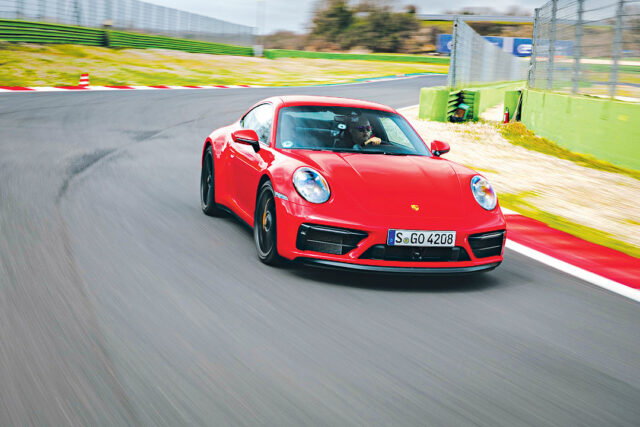
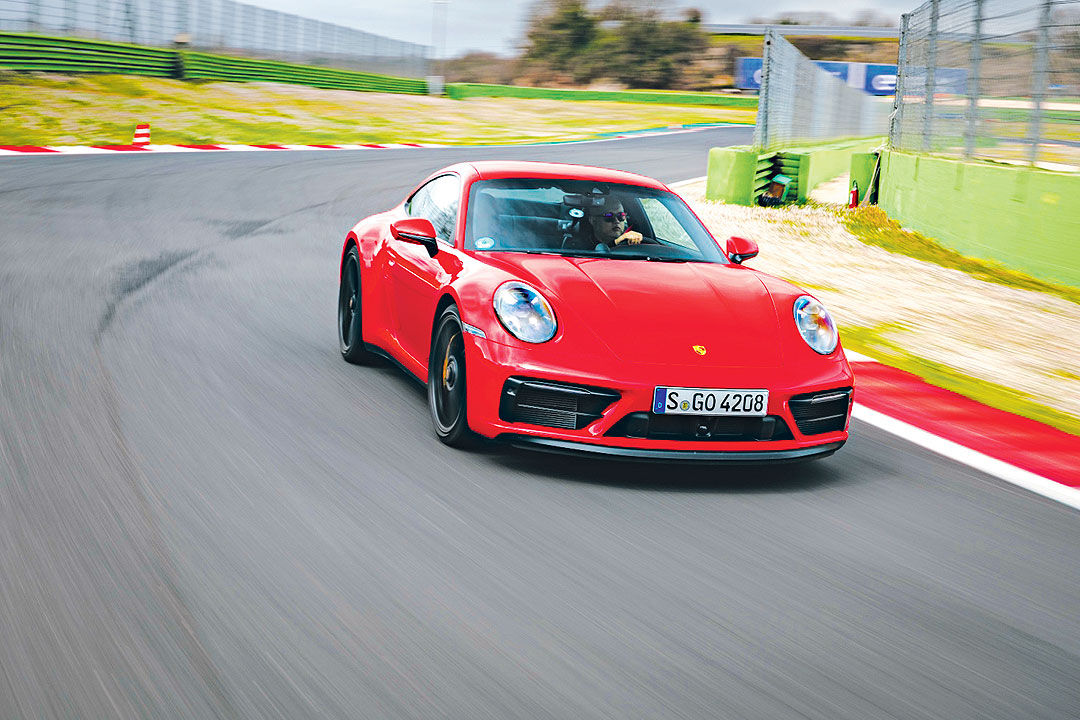
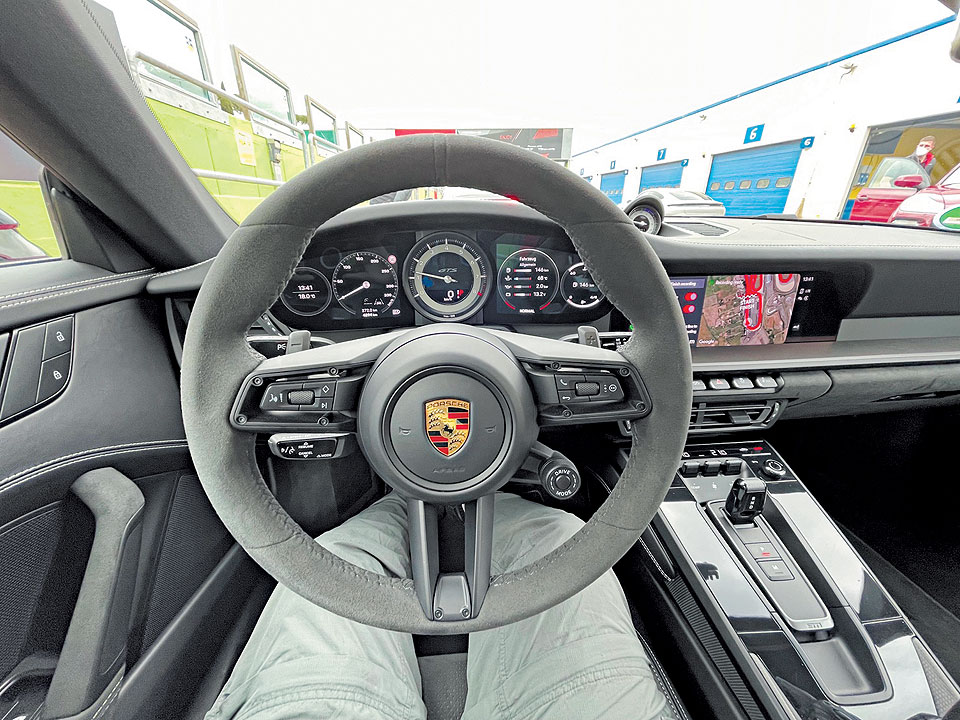
The author rounds a curve at the Autodromo Vallelunga in Italy behind the wheel of a Porsche 911 GTS.

Tracking Porsche’s GTS range in Italy

ROME, ITALY. There’s a spring nip in the air as I deplane and head into the belly of the Aeroporto Internazionale di Roma-Fiumincino. The busiest airport in the country has also been known — pre-COVID-19 pandemic, at least — as one of the busiest airports in all of Europe. This is my first taste of airline travel since the outbreak, and I am equal parts nervous and excited.

Not even 20 minutes after traveling by van, I arrive at the QC Termeroma, a rustic-looking spa resort. This is where we rest our bones while waiting for the main purpose of our brief jaunt in Europe.

The agenda is GTS, or Gran Turismo Sport, three letters that stand for a lineup-wide trim for Porsche. But what, indeed, does GTS stand for? For starters, Porsche must have deliberately chosen Italy to acquaint us to its related offerings, as an homage to the term itself (gran turismo, of course, is Italian for “grand touring”). Grand touring has always been known for heightened performance (hence the video game Gran Turismo, by the way).

And when you talk performance, well, why shouldn’t Porsche come to mind? But some six decades removed from the release of the iconic three numbers (yes, 911), the brand says there’s still some specialization going on. “Within the portfolio, engineers and designers have developed a wide array of models. There’s a Porsche for virtually every situation,” says the firm in its GTS literature. “If you want a car that is packed with excitement, three letters are all you need: GTS models are especially dynamic and agile derivatives that still manage to impress in everyday use. They offer a balance of performance and everyday practicality.”

Adds Porsche Asia Pacific Head of PR and Communications Brendan Mok during our one-on-one talk: “For Porsche, GTS means the sweet spot between what you can use every day, and what can provide you with a little bit of entertainment and fun when you’re out on the track. It has special enhancements, a little bit more power and a little bit more performance while being to (fulfill) daily driving duties that you might want in a car. It’s really an all-arounder.”

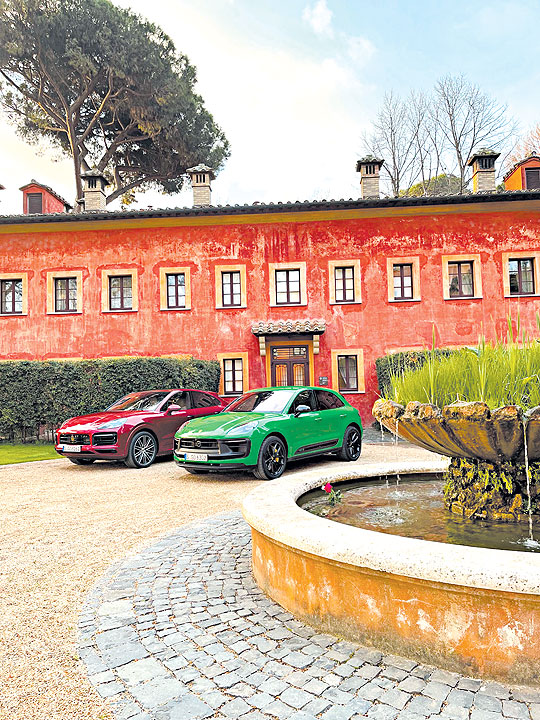
Thankful that an imminent threat of rain doesn’t fall, we head off the next day for the track. How many times in your life will you be asked to choose the car you want to take? I’m willing to guess not very many, so I make a quick decision on a rather spicy-looking red Macan GTS. You might fault me for not jumping aboard a 911 or a 718 but, hey, I love an elevated driving position — particularly if the drive is long and winding. I’ll tell you how that went in a future article, but suffice it to say this GTS at least satisfies the “everyday” portion of the role most nicely.

But fast-forward after a two-hour meandering past the coast of the Tyrrhenian Sea, the Macan drops us at the doorstep of the Autodromo Vallelunga Piero Taruffi. First built as a 1.773-kilometer sand oval in 1959, the circuit hosted the Rome Grand Prix from 1963 onwards, and added a new loop in 1967 when the track became owned by the Automobile Club d’Italia. Significantly, half a mile was added to Vallelunga in 2004. In case you’re wondering, it is an FIA test circuit as well.

Lapping the Vallelunga aboard a snarling 911 is surely one for the bucket list, and it proves to be as raw as it sounds. With a zero-to-100kph time of 3.3 seconds, power of 480ps, and torque of 570Nm, the vehicle hugs the turns of the circuit with German precision. The bucket seat keeps me in place, but my innards seem to be on autopilot — rearranging themselves along with the heavy lunch I had just snarfed. Lead instructor Björn Leiss, who is pacing me, reacts to my willingness to speed up.

Next in line is the 718 GTS (a Cayman). Powered by a four-liter, six-cylinder, naturally aspirated mill, it outputs 400ps and 420Nm — surpassing its S counterpart by a hefty 50ps. Porsche says the powertrain of these models is “essentially the same as that of the 718 Cayman GT4 and 718 Spyder. The Cayman GTS proves more playful on the course. When I say playful, it shows its limits more readily than the self-assured 911. And that means it is more unforgiving toward me when I fail to brake correctly or hit the apex the right way.

The Panamera GTS, on the other hand, simultaneously feels large, stately, and mad. It’s a sports car luxury saloon, if you ask Porsche, but that only means it’s going to pamper you then give you g-forces to remind you that it’s a Porsche and not an unhurried, starched brat. A four-liter V8 bi-turbo gives the car its numbers (zero-to-100kph in 3.9 ticks, 480ps, and 620Nm). The GTS gets a Sport Design package with lots of exterior accents in black as standard. It gets lots of Alcantara on the inside. It’s not as willing to change directions as its smaller brethren because, well, that’s physics for you, but the Panamera is also its own “best of both worlds” paradigm.

As for the Taycan GTS, where do I begin? Having driven a base version of it in our local roads, I wasn’t exactly surprised by the massive amount of torque on demand, and an acceleration that will spill your coffee onto your rear passenger. But that all this drama unfolding within a whisper-quiet cabin is just, well, surreal. The GTS can sprint from a standstill to 100kph in 3.7 ticks — a result of its 598ps and 850Nm of output, and reaping a whole lot of “OMGs,” I suspect.

I just keep reminding myself to keep my lunch down else I look like the absolute newbie.

An interview should do the trick, paired with a cappuccino because, well, we’re in Italy.

“The GTS started with the 904 GTS in 1964. That was really a racecar, but for the sake of homologation it had to have some creature comforts and basically license plates,” says Mr. Mok. “That kind of philosophy has carried onto all future GTS models like the 924 GTS, 928 GTS — and eventually GTS versions of all our model lines… with the most recent addition being the Taycan.”

Generally speaking, how does someone distinguish a GTS from the lower S and higher Turbo variants?

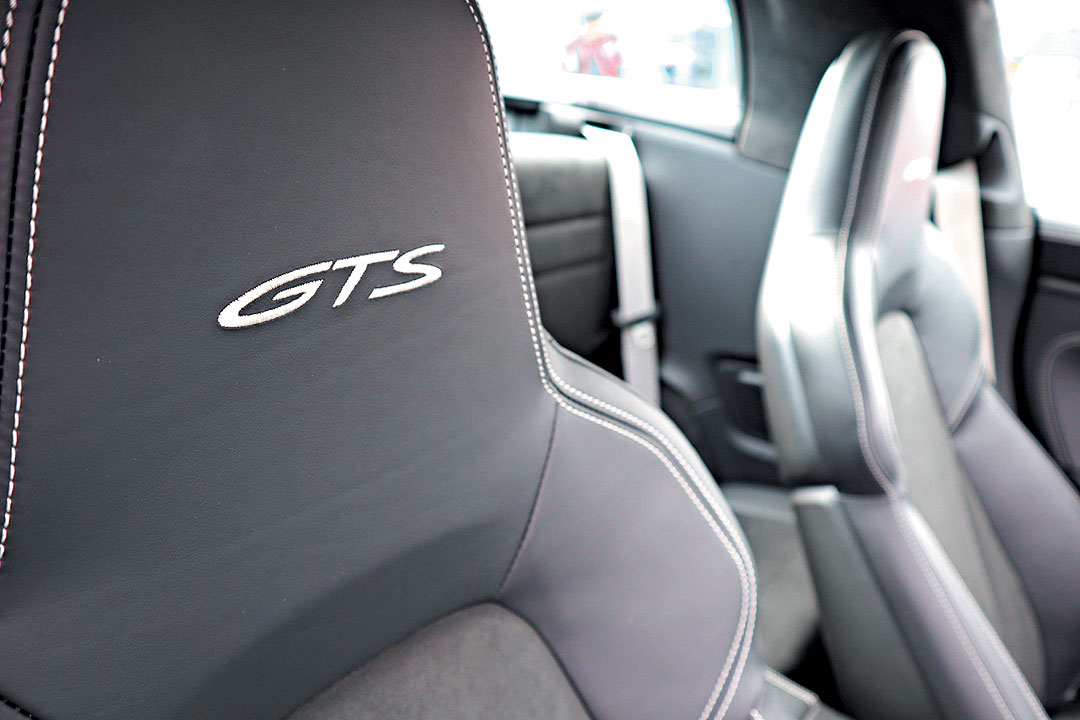
“We’ve got some really cool exterior differentiators. For example, the headlights and taillights are dark-tinted. We see some very nice black contrast accents on the car and also very special aerodynamic changes on some of the models, especially in the 911,” he continues. There are lots of touches inside, for sure: black leather Race-Tex, Alcantara, and a tachometers colored red or green. “That’s an extra shot of raciness in the car,” Brendan adds with a grin.

What should one expect in the a GTS if he or she is going to track it? “You’re going to really have fun on track,” he stresses. “The suspension system is different, the brakes have been uprated so you can go hard on them, and expect to gun away from every corner.”

And, says a wise man, make sure that lunch is a light one before you head out onto the track.

Modi faces a dilemma: Keep Indian voters happy or feed the world

REUTERS

A GROWING food security threat is set to push Indian Prime Minister Narendra Modi into a conundrum: continue sending wheat to countries hit by dwindling supplies from the war in Ukraine or stockpile food at home to fend off high inflation.

Severe heat waves have damaged wheat yields across the South Asian nation, prompting the government to consider export restrictions, Bloomberg News reported. While the food ministry said it sees no case yet for controlling wheat exports, it’s a question that will gain momentum and carry political ramifications for Mr. Modi and his ruling Bharatiya Janata Party.

Mr. Modi has sought to burnish his reputation as a dependable global leader, but he faces frustration on home soil about record-high inflation, one issue that brought down the previous government and paved the way for his ascension to power.

“At a time when the world is facing a shortage of wheat, the farmers of India have stepped forward to feed the world,” Mr. Modi said this week at a gathering of the Indian diaspora in Germany. “Whenever humanity is faced with a crisis, India comes up with a solution.”

After the war hampered logistics in the Black Sea region, which accounts for about a quarter of all wheat trade, India has tried to fill the vacuum.

Egypt, the world’s top buyer, recently approved India as a source for wheat imports. Last month, Piyush Goyal, the food and commerce minister, said India hopes to become a permanent exporter of wheat, shipping as much as 15 million tons this year, compared with about 7.2 million in 2021-22. Officials are pushing the World Trade Organization to relax rules so that India can export from state reserves, Mr. Goyal said.

But the country’s domestic challenges have come into sharper focus in recent weeks. Hundreds of acres of wheat crops were damaged during India’s hottest March on record, causing yields to potentially slump by as much as 50% in some pockets of the country, according to a Bloomberg survey.

Franck Gbaguidi, senior analyst at political risk consultancy Eurasia Group, said damage to crops will limit India’s ability to fill broader supply shortages, regardless of whether exports move forward or not. Wheat consumption in the world’s second-most populous nation is estimated at 107.9 million tons, according to the US Department of Agriculture.

“With the current impact of the heat waves, India’s claim to ‘feed the world’ by exporting wheat surpluses — if granted permission by the World Trade Organization — now rings hollow,” he said.

With supply chains disrupted by the war, skyrocketing freight rates and extreme weather events, domestic inflation is also surging, especially for cereals and edible oils. In a sign of concern, India raised its key interest rate in a surprise move on Wednesday, sending bonds and stocks tumbling. In March, retail inflation rose to a 17-month high of 6.95%.

In an online briefing, Shaktikanta Das, governor of the Reserve Bank of India, said inflation pressures are becoming more acute, particularly on food. Retail prices for wheat averaged about 29 rupees a kilogram on May 5, up around 7% from a year earlier. And flour made from the grain traded at close to 33 rupees, an 8% rise from last year, according to government data.

“This is one big policy dilemma his government is facing: capitalizing on the opportunity to project Modi as a world leader versus a possible domestic food shortage that may affect his popularity and electoral prospects,” said Shilp Shikha Singh, assistant professor at the Giri Institute of Development Studies in the city of Lucknow.

Still, Ms. Singh said the Bharatiya Janata Party will likely prioritize protecting the prime minister’s reputation as a statesman on the world stage, even as his government faces local elections scheduled for late this year and weighs the trade-offs of exporting more wheat.

Since taking office in 2014, Mr. Modi has angled for a greater role in shaping global affairs, whether by spurring foreign investment through liberalizing India’s tax codes or supplying millions of coronavirus vaccines. That decision laid bare the consequences of overstepping: When the Delta variant devastated India in 2021, the government rushed to boost domestic vaccine supplies after sending so many abroad.

The Indian government said on Thursday that it doesn’t see a reason right now for controls on wheat exports. But the calculus could change: Wheat output is on track to fall to 105 million tons in 2021-22, according to the latest estimates. That’s down from a previous forecast of 111 million tons (an all-time high) and last year’s harvest of 109.6 million tons.

Ms. Singh said the decision to dial wheat exports up or down ultimately lies with the prime minister’s office.

“The image of Modi is significant and the party invests heavily in it,” she said. — Bloomberg

Trading declines on US rate hike, higher inflation

BW FILE PHOTO

INVESTORS remained cautious as stocks ended lower during the first week of May, driven by the US Federal Reserve’s rate hike, the release of local inflation data, and amid the upcoming national elections.

The benchmark Philippine Stock Exchange index (PSEi) sank by 109.02 points or 1.58% to close at 6,759.90 on Friday, while the broader all shares index dropped by 41.46 points or 1.13% to close at 3,621.70.

Week on week, the PSEi gained by 28.65 points from its close of 6,731.25 on April 29.

“The PSEi declined on May 6, 2022, the last trading day before the presidential elections,” Rizal Commercial Banking Corp. Chief Economist Michael L. Ricafort said, adding that the drop is “similar to the recent declines in the US stock markets.”

In an e-mail, he said the market’s movement comes amid the continued increase in interest rates or bond yields that could increase borrowing and financing costs for some listed companies.

Mr. Ricafort added that this development “could also deliberately slow down the US and global economy with potential risk of recession as an unintended consequence in an effort to clamp down elevated inflation, in view of continued aggressive Fed rate hike or monetary tightening signals.”

Diversified Securities, Inc. Equity Trader Aniceto K. Pangan said in a text message, “The market moved in consolidation as the Fed increased policy rate by 50 basis-points (bps) as expected with thin trading with most investors on the sidelines, [and] as the Philippine election nears.”

Philstocks Financial, Inc. Senior Research Analyst Japhet Louis O. Tantiangco said that the local market also fell on Friday following the negative cues from Wall Street’s overnight decline.

“This came as interest rates in the US rose with their 10-year bond yield breaching the 3.00% mark,” he added.

Wall Street’s main indexes extended losses on Friday and long-dated US treasury yield surged as investors worried that the Federal Reserve will need to be more aggressive than expected in raising interest rates to combat inflation, Reuters reported.

Tech-heavy Nasdaq registered its lowest close since 2020, notching a fifth straight weekly loss, its longest losing streak since the fourth quarter of 2012. The S&P 500 also posted its fifth straight weekly loss.

On Friday, two of the Federal Reserve’s most outspoken policy hawks pushed back on the view that the US central bank missed the boat on the fight against high inflation, citing a tightening of financial conditions that began well before the Fed began raising interest rates in March.

Earlier this week, the Fed raised its policy rate to a range of 0.75% to 1%. Critics say that is far too low to fight inflation running at three times the Fed’s 2% target, Reuters reported. 

Back home, the local statistics authority released the country’s April inflation data on Thursday.

April’s inflation rose by 4.9% from 4% in March and 4.1% in April a year ago, primarily due to faster pickup in food, utilities, and transport prices.

This was higher than the 4.6% median estimate in a BusinessWorld poll last week and near the upper bound of the 4.2-5% forecast range given by the Bangko Sentral ng Pilipinas for the month.

The stock market also closed on May 3, Tuesday in commemoration of Eid’l Fitr.

On Friday, the MidCap index retreated by 13.28 points or 1.18% to 1,116.11 and the Dividend Yield index lost 4.70 points or 0.29% to close at 1,614.94.

Decliners overwhelmed advancers, 107 versus 60, while 61 names ended unchanged.

Value turnover increased to P5.95 billion with 653.6 million shares changing hands from P5.68 billion with 1.06 billion issues seen on the previous day.

Foreigners turned sellers with P851.7 million from P135.2 million in net inflows seen on Thursday.

Philippine financial markets will be closed on May 9, Monday for the national elections. — Luisa Maria Jacinta C. Jocson with Reuters

Blackwater Bossing eye big men Baltazar and Rosser

LA SALLE 6-foot-8 big man Justine Baltazar — PHILSTAR FILE PHOTO

REBUILDING Blackwater is excited to exercise its rights for the top selection in the coming PBA Season 47 Rookie Draft with eyes on big men Justin Baltazar and Brandon Ganuelas-Rosser and backcourt dynamo Sedrick Barefield.

“For our No. 1 pick, we narrowed our choice among Baltazar, Barefield and Rosser,” Bossing coach Ariel Vanguardia told The STAR yesterday.

Mr. Baltazar, a 6-foot-8 La Salle standout capable of playing multiple positions, Mr. Barefield, a 6-foot-2 Fil-Am guard who played in the G League, and Mr. Rosser, a 6-foot-7 Fil-Am inside-outside operator, led the 75 hopefuls who have entered their names in the May 15 Draft.

The Bossing are determined to take advantage of their three first-round picks to beef up and turn their fortunes around after a woeful 46th season that saw them skid to their 29th straight loss. After choosing first, Mr. Vanguardia’s team takes the ninth and 10th selections.

“The other two (first-round) picks will depend on our first pick. If we pick Mress. Baltazar or Rosser, we will look for a wing for the succeeding picks. If Mr. Barefield, we will be looking for bigs,” said Mr. Vanguardia.

The Bossing actually ended Season 46 on a bright note as they toppled top seed Magnolia Hotshots in their final elims assignment, 101-100, last March 9. This enabled the franchise to snap their league record skid and avert a winless season while building some momentum moving forward.

Blackwater and the 11 other ballclubs will get a closer look at their prospects during the Draft Combine on Wednesday and Thursday at the Gatorade Hoops Center in Mandaluyong.  Draft proper will be on Sunday at Robinson’s Place Manila. — Olmin Leyba

ADVERTISEMENT
ADVERTISEMENT