Home Blog Page 6466

Man accused of tackling comic Dave Chappelle on stage is charged with assault

A PUBLICITY photo of Dave Chappelle for the comedy show Dave Chappelle and Friends, part of the ongoing Netflix is a Joke festival. — PHOTO FROM NETFLIXISAJOKEFEST.COM

LOS ANGELES — The man accused of tackling comedian Dave Chappelle to the stage floor during a performance at the Hollywood Bowl in Los Angeles was charged on Wednesday with felony assault with a deadly weapon.

The attack on Mr. Chappelle, 48, occurred Tuesday night during a sold-out appearance by the Emmy-winning entertainer as part of an 11-day Netflix is a Joke festival, featuring many of the leading names in stand-up comedy.

A Los Angeles Police Department spokesperson said the suspect had in his possession a replica handgun containing a knife blade when he attacked Mr. Chappelle.

A short time after the assault, Mr. Chappelle was joined onstage by fellow comic Chris Rock, who took the microphone and quipped, “Was that Will Smith?” — a reference to his own experience of being slapped by the Hollywood star during the live Oscars telecast on March 27.

Mr. Chappelle appeared to emerge unscathed from Tuesday’s attack and went on with the show, ad-libbing jokes about the incident and about what happened to the suspect, who was seen being chased down onstage by security personnel.

Mr. Chappelle said it was fortunate his assailant was “clumsy,” adding, “He’s back there getting stomped,” according to video footage of the altercation posted online by the celebrity news website TMZ.com.

Photos of the suspect seated on an ambulance gurney afterward showed his face visibly bruised and his right arm apparently dislocated or broken.

Police later identified him as 23-year-old Isaiah Lee, who was being held in jail on a $30,000 bond after being charged.

No court hearing was immediately scheduled for Mr. Lee, according to online jail records.

FOLLOWS ‘CANCEL CULTURE’ CONTROVERSY
There was no word from authorities about a motive for the attack, which according to The Los Angeles Times unfolded after a routine in which Mr. Chappelle, attired in a business suit, talked about comedians worrying more about personal safety these days and introduced his own security guard on stage.

Mr. Chappelle drew a backlash last year for material presented in his Netflix comedy special The Closer that some in the LGBTQ community branded as ridicule of transgender people. Supporters of the comedian viewed the material in question as a cry against “cancel culture.”

The comedian himself alluded to the controversy from the stage shortly after he was tackled on Tuesday, quipping, “It was a trans man,” eliciting laughter from the crowd.

The assault occurred as the comedian, headlining a multi-act show billed as Dave Chappelle and Friends, was acknowledging a producer who was working at the show’s DJ booth.

Video of the incident shows the suspect charging onto the stage, apparently from the audience, and launching his upper body into Mr. Chappelle, slamming his shoulder into the comedian’s ribs and chest.

Both men fell to the floor before scrambling back to their feet, and the suspect darted away, chased briefly by Mr. Chappelle at first. He dodged a swarm of people for several seconds before they tackled him near the back of the stage.

The incident sparked immediate comparisons to the Oscar-night clash between Mr. Smith and Mr. Rock, an unprecedented incident at the globally televised event that prompted concerns that other performers might face copycat assaults.

“As unfortunate and unsettling as the incident was, Mr. Chappelle went on with the show,” his spokesperson, Carla Sims, said in a statement on Wednesday, crediting Mr. Rock and fellow comedian-actor Jamie Foxx with helping to “calm the crowd.”

Following the attack, she said Mr. Chappelle introduced the final act of the show, the hip-hop musical duo Black Star. Other comedians on the bill included Earthquake, Leslie Jones, Jeff Ross, Sebastian, Jon Stewart, and Michelle Wolf.

Mr. Chappelle was “fully cooperating with the active police investigation of this incident,” Ms. Sims said.

A representative for the Hollywood Bowl, one of the most famous entertainment venues in Los Angeles, told Reuters the incident was under investigation, declining to comment further. — Reuters

Live shows return to Resorts World Manila

MONICA SILVESTRE/PEXELS

NOW that the world is opening up after two years of restrictions and lockdowns due to the coronavirus pandemic, Resorts World Manila (RWM) has brought back live entertainment. This even though there were worries about changing pandemic statuses and whether the audience was willing to come back.

“When the lockdowns first started, live entertainment was one of the first to go. It took almost two years before restrictions were first eased enough to allow shows with live audiences, so we eagerly grabbed the opportunity to stage our first concert late last year,” a Resorts World Manila representative wrote in an e-mail to BusinessWorld.

After a 20-month hiatus, in December last year Resorts World Manila’s (RWM) Full House Theater Company staged Ang Muling El Bimbo: AHEB Homecoming Concert, a concert featuring the songs of the successful original musical Ang Huling El Bimbo performed by the show’s cast.

“Looking back, it may not have made financial sense at the time, given the 50% capacity limit, but we went ahead anyway,” the RWM representative said, citing that “it was not about business then” but about the “support for Filipino performing artists and the people who make live entertainment possible.”

With the shift to the least restrictive COVID Alert Level 1 in March 2021, the Newport Performing Arts Theater (NPAT) has staged a series of live concerts: Gigi De Lana’s Domination on March 5, Shanti Dope and Gloc-9’s RAPsody on April 2, and the Basil Valdez and Jamie Rivera concert Love and Light on April 30.

Up next is Jon Santos’ comedy show LivesScreaming on May 14.

“When we first announced Gigi De Lana’s concert, the venue capacity was capped at 50%. But by the time of her actual concert, restrictions were further eased, and we were able to entertain audiences at full capacity,” the RWM representative said.

Despite the recent ease in pandemic restrictions, there was hesitation about going full swing with live events.

“We had no way of gauging an audience’s willingness to return to the theater and watch performances when they have been doing it online for the past two years,” the RWM representative said.

Aside from physical exposure of the public, the financial exposure for the company was also considered.  “Breakeven points for each show vary because the basis is always total production cost,” the RWM representative said.

REFURBISHING
There have been a number of changes in the NPAT now that it has reopened. For one thing, its seating capacity has been increased to 1,710 from 1,500 before the pandemic. NPAT’s air filtration system has also been upgraded.

The entire Newport Mall is also going through a metamorphosis. RWM’s Newport Grand Wing recently officially opened Hotel Okura Manila with its Grand Atrium. The Newport Garden Wing has been renovated to be better aligned with the garden theme.

“Our entertainment calendar is also filled with world-class performances from both local and international acts. Our stages are set from the Newport Grand Wing’s The Grand Bar and Lounge to the Newport Garden Wing’s Bar 360 and El Calle Food & Music Hall, and the Newport Performing Arts Theater,” the RWM representative said.  Michelle Anne P. Soliman

The Final Pitch looking for investor-judges for new ASEAN edition

AFTER seven successful seasons in the Philippines, business reality TV show The Final Pitch is expanding to the rest of the region via The Final Pitch ASEAN (TFPA) which will feature high-growth startups and strategic investors from Southeast Asia. The show is now searching for business leaders to represent select Southeast Asian countries as investor-judges in the show.

They are looking for investor-judges from Singapore, the Philippines, Malaysia, Indonesia, Thailand, and Vietnam who can make investments in startups that want to scale up and expand to their home countries.

“They have to be in a position to be able to invest in high-growth companies but at the same time will serve as strategic partners for the expansion of any scale-up that wants to enter their respective countries. They have to be successful diversified family conglomerates or seasoned investors looking at investing in mostly series A and up startups,” The Final Pitch creator and host John Aguilar said in a statement.

Apart from gaining access to a pipeline of some of the best startups across the region, the investor-judges will also have the opportunity to showcase their countries and respective businesses through the show.

The show will start selecting investor-judge candidates from each country within the next two months through a regional roadshow. To be considered as a TFPA investor-judge, interested parties may e-mail admin@dragonsnest.co or contact the show at 0917-656-9215.

Mr. Aguilar stated that the ASEAN version will follow the same format as the Philippine edition.

“The world is looking at Southeast Asia as an emerging tech region. There are so many challenges here but there are also many opportunities. And there are a growing number of future unicorns that are being born as we speak. We are looking at expediting their exponential growth across Southeast Asia with TFPA,” Mr. Aguilar said.

The show is scheduled to start filming in the fourth quarter of 2022. Apart from the investor-judges and the companies presenting themselves to them, The Final Pitch ASEAN is also looking for brand and broadcast partners in the aforementioned countries.

Mr. Aguilar hopes to bring the show’s format to the region as a stepping stone in a long-term goal to license the show across these different countries. — MAPS

PLDT raises 2022 capex guidance to P85 billion 

By Arjay L. Balinbin, Senior Reporter

PLDT, Inc. revised its capital expenditure (capex) guidance for the year to P85 billion from P76-80 billion to support the company’s updated requirements for home broadband and data center businesses.

The capex will also support “upgrades of the towers and their passive infrastructure assets,” PLDT Chief Finance Officer Anabelle L. Chua said during a press briefing on Thursday.

The company saw its first-quarter attributable net income increase by 56% to P9.1 billion from P5.8 billion in the same period a year ago.

Telco core income, excluding the impact of asset sales and Voyager Innovations, increased by 9% to P8.2 billion from the same period in 2021.

Consolidated service revenues grew by 3% to P46.4 billion during the period.

The company said data and broadband, which grew by 8% to P36.6 billion, contributed 79% to its total service revenues.

Earnings before interest, taxes, depreciation, and amortization (EBITDA) improved by 10% to P25.5 billion.

“EBITDA margin was at 53% in the first quarter of 2022, from 51% in the previous year. Normalized for the impact of Typhoon Odette, EBITDA for the first quarter of 2022 would have been higher by 12% year on year to P26.1 billion,” PLDT noted.

PLDT and Smart President and Chief Executive Officer Alfredo S. Panlilio said the company is moving in lockstep with its customers’ shifting needs as the pandemic-related restrictions ease.

“Our superior, reliable integrated network continues to sustain hybrid work and learning setups, keep loved ones connected online, deliver entertainment content, as well as support businesses and e-commerce.”

Meanwhile, PLDT’s consolidated net debt reached $4.42 billion in the first quarter, while net-debt-to-EBITDA stood at 2.33x.

Gross debt was at $4.997 billion, “with maturities well spread out,” the company noted.

“Only 16% of gross debt are denominated in US dollars and 4% are unhedged,” it noted, adding that it maintained its credit ratings from Moody’s and S&P Global at investment grade.”

According to Mr. Panlilio, the growth in service revenues “will be underpinned by our continued rollout of fiber ports and LTE/5G, our data center expansion, and our commitment to delivering the best customer experience.”

PLDT Chairman Manuel V. Pangilinan said the company must “stay the course in order to generate greater free cash flow from higher revenues, cost optimization and the sale of our towers — the last of which could enhance income this year and in succeeding years.”

“Further, all of these should enable us to deleverage, reducing net debt to EBITDA back to 2.0x — enabling us to pay special dividends, and fortify PLDT’s balance sheet,” he added.

PLDT shares closed 2.28% higher at P1,932 apiece on Thursday.

Pastor sues Kanye West, saying Donda track ripped off sermon

AN IMAGE from the music video of Kanye West’s song “Come to Life.”

A TEXAS minister is suing Kanye West, saying the rapper, producer and entrepreneur used a recording of one of his sermons without permission in the song “Come to Life.” Dallas County, Texas, pastor David Paul Moten sued Mr. West, his label Universal Music Group, and its subsidiaries Def Jam Recordings and the West-founded G.O.O.D. Music on Tuesday in Dallas federal court. The copyright infringement lawsuit says at least two sections of “Come to Life” feature excerpts from Mr. Moten’s sermon.

UMG and an attorney for Mr. Moten did not immediately respond to requests for comment on the lawsuit. Mr. West, who legally changed his name to Ye last year, could not immediately be reached for comment.

Mr. Moten claims samples from his sermon comprise over 20% of “Come to Life,” which appeared on Mr. West’s hit album Donda last year. Named for Mr. West’s late mother, Donda went to the top of the Billboard charts and was nominated for a Grammy award for album of the year.

Mr. Moten said in the lawsuit that Mr. West has shown an “alarming pattern” of “willfully and egregiously sampling sound recordings of others without consent.”

Mr. West has previously settled lawsuits over samples of a Hungarian singer on the 2013 song “New Slaves,” a child’s prayer on the 2016 song “Ultralight Beam,” and a theater work about Jamaican activist Marcus Garvey on “Freeee (Ghost Town Pt. 2),” a 2018 collaboration with rapper Kid Cudi. — Reuters

D&L earnings rise 12% led by exports, oleochemicals

By Luisa Maria Jacinta C. Jocson

D&L Industries, Inc. reported on Thursday that its first quarter net income rose 12% to P780 million, propelled by the strong performance of its oleochemicals division and higher exports.

“We are doing better compared to all the first quarter periods in the previous years, so that is something we are excited about. Compared to all [previous] quarters, we had good growth in net income and in revenues,” D&L President and Chief Executive Officer Alvin D. Lao said in a virtual briefing.

The company’s first quarter earnings represent the highest income level for the company in three years, despite the Omicron surge in January.

“Considering the surprise turn of events in the early part of the year such as the Omicron surge and Russia-Ukraine conflict, our first quarter results show that momentum is definitely there with the easing of restrictions and opening up of businesses,” Mr. Lao added.

Barring another unforeseen event, Mr. Lao said that by annualizing its first quarter earnings, the company would yield P3.1 billion.

“In the near term, demand will likely be defined by two opposing forces — continued economic reopening on one hand, and generally higher prices of basic commodities on the other. As a capability-driven company that enables other businesses, we continue to see various opportunities to help our customers navigate the ever-changing business environment whether in the form of coming up with new innovative products or sourcing raw materials in an environment full of supply chain disruptions,” he added.

In the first quarter of the year, prices of the company’s key raw materials, such as coconut and palm oil, increased significantly.

Average coconut oil and palm oil prices were up by over 50% year on year due to the ongoing Russia-Ukraine conflict and the proposed Indonesian ban on palm oil.

“D&L is so far able to weather the volatility in raw material prices as it is able to adjust its selling price regularly to reflect higher input costs. As shown in the chart below, D&L’s revenues have been increasing since the pandemic, evidencing the company’s ability to pass on higher raw material prices,” the company said in a statement.

D&L said its high margin specialty products (HMSP) segment and commodity segment, which sells straight oils for food application and biodiesel, saw a recovery from levels recorded in the fourth quarter of 2021.

In the first quarter, commodity sales grew by 56% while HMSP sales grew by 29%.

“This demonstrates that margin compressions due to higher input costs are temporary and that margins should eventually recover once commodity prices start to stabilize,” the company said.

“Both divisions performed well given new customers under food which required straight oils and the continued economic reopening which resulted in higher biodiesel demand,” it added.

The company said that while its focus remains on growing its HMSP segment, the company’s commodity segment continues to have “strategic” importance.

“While average margins in the commodity segment are lower, it is income accretive and helps the company cover some of its fixed costs while requiring very little resources,” it added.

Meanwhile, exports jumped by 45% for the quarter. Export contribution to total revenues stood at 34%, with coconut-based products under food and oleochemicals as the main drivers.

Of its segments, the Chemrez unit recorded earnings growing 57%, driven by the oleochemicals division, which saw its volume grow by 11%.

Under the oleochemicals division, the company sells various coconut oil derivatives that are categorized as either commodity (biodiesel) or high margin coconut oil-based products mostly for exports.

Meanwhile, its plastics segment reported a 20% income increase.

“The margin expansion mainly came from the colorants and additive division due to the election-fueled demand for higher margin plastic colorants used in tarpaulins which are used as campaign materials,” the company said.

“Meanwhile, the drop in volume was mainly due to the disruptions brought about by the Omicron surge in January and the global shortage of semiconductor chips used in automotives which resulted in lower demand for wire harnesses,” it added.

Meanwhile, consumer products original design manufacturer (ODM), previously referred to as aerosols, saw its income decline by 31% due to higher raw material prices.

The food ingredients business also saw its income drop by 19% in the first quarter.

“The drag mainly came from the Omicron surge in January. With Alert Level 3 in place for almost the entire month of January, mobility was once again restricted with only limited capacity allowed in public transportation and food establishments,” Mr. Lao said.

D&L is working on expanding its Batangas plants, which is set to start commercial operations in January 2023.

The facility will mainly cater to the company’s export business in the food and oleochemicals segments.

“It will add the capability to manufacture downstream packaging, thus allowing the company to capture a bigger part of the production chain. For instance, while the company primarily sells raw materials to customers in bulk, the new plants will allow it to ‘pack at source,’” it said.

The total capital expenditures for the expansion is expected at P9.1 billion. As of end-March, the company has spent around P7.2 billion.

In September, the company executed its maiden bond offering, raising P5 billion to help fund the remaining capital expenditure budget for this expansion.

D&L is engaged in product customization and specialization for the food, chemicals, plastics and consumer products ODM industries.

The company’s principal business activities include manufacturing of customized food ingredients, specialty raw materials for plastics, and oleochemicals for personal and home care use.

At the stock exchange, D&L shares ended higher by 30 centavos or 4.29% to finish at P7.30 apiece.

Loan growth at 21-month high in March as economy reopens

BW FILE PHOTO

By Luz Wendy T. Noble, Reporter

LENDING GROWTH continued to pick up in March, even as the expansion of liquidity slowed, as the economy reopened further amid declining coronavirus cases.

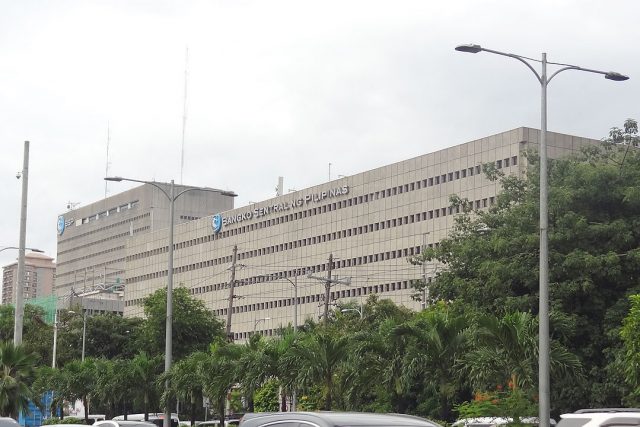
Data from the Bangko Sentral ng Pilipinas (BSP) released on Wednesday evening showed outstanding loans by big banks rose by 8.9% to $10.055 trillion in March from $9.253 trillion a year earlier.

This is faster than the 8.8% in February and is the quickest expansion since the 9.6% posted in June 2020.

Inclusive of reverse repurchase agreements, bank lending rose by 8.7%. Month on month, credit growth stood at 0.2%.

“Lending activity has gained further traction as the country’s improved coronavirus disease 2019 (COVID-19) caseload continues to support market confidence,” BSP Governor Benjamin E. Diokno said in a statement.

Metro Manila and some provinces have been under the most relaxed Alert Level 1 since March as infections gradually declined after the Omicron surge that peaked in January. With restrictions eased, more businesses were able to increase their operating capacity.

The continued expansion of bank lending in March likely also reflected some borrowers’ rush to secure financing amid expectations of higher interest rates in the coming months as central banks begin tightening their policy settings, Rizal Commercial Banking Corp. Chief Economist Michael L. Ricafort said in a Viber message.

The US Federal Reserve in March started its tightening cycle with a 25-basis-point (bp) hike. At its meeting this week, the Fed fired off a bigger 50-bp increase and unveiled its plan to reduce its asset holdings to help tame multi-decade high inflation.

Meanwhile, Mr. Diokno last month said they may consider a rate hike in June if there is evidence that economic recovery has gained ground. This is more hawkish compared with previous statements that the BSP would only start increasing borrowing costs in the second half of the year.

The Monetary Board will have its next policy review on May 19.

Credit for production activities increased 9.5% in March, slower than the 9.7% growth seen in February. The increase was driven by borrowings for real estate activities (19.7%); information and communication (28.4%); manufacturing (10%); wholesale and retail trade, repair of motor vehicles and motorcycles (8.7%); and financial and insurance activities (6.2%).

Household borrowings likewise expanded by 3.6% in March, faster than the 0.9% in February. This was driven by credit card loans (12.1%), as vehicle loans (-4.2%) and salary-based borrowings (-5.5%) continued to decline.

“The BSP continues to see scope to safeguard the momentum of economic recovery amid increased uncertainty over the outlook for growth and inflation,” Mr. Diokno said.

“Moving forward, the BSP stands ready to take appropriate preemptive action as needed in ensuring non-inflationary and sustainable growth in line with our primary mandate to promote price and financial stability,” he added.

Mr. Ricafort said loan growth may quicken further in the coming months as the economy continues to reopen.

“Resumption of in-person schooling, further boosting of local and foreign tourism, would help to further increase economic activities as well as demand for loans,” he said.

However, higher inflation and interest could drag down bank loans as well as domestic liquidity, Mr. Ricafort noted.

Headline inflation in April surged to 4.9%, the fastest since the 5.2% logged in December 2018. This is above the BSP’s 2-4% target and the 4.6% median estimate in a BusinessWorld poll last week.

The central bank expects inflation to average by 4.3% this year mainly due to rising oil and commodity prices brought about by the Russia-Ukraine war.

M3 GROWTH SLOWS
Meanwhile, M3 — the broadest measure of domestic liquidity — expanded by 7.6% in March. This is slower than the 8.5% pace seen in February.

Domestic claims rose 7.3% in March, softer compared with the 8.8% in February.

Net claims on the central government rose 13.3%, much slower than the 21% in the prior month.

Meanwhile, non-foreign assets (NFA) grew by 8.4%, quicker than the 6.5% in February.

“The expansion in the BSP’s NFA position reflected the higher level of gross international reserves relative to the same period a year ago. Likewise, the NFA of banks increased as banks’ foreign assets grew at a faster pace on account of higher investments in marketable debt securities and deposits maintained with nonresident banks,” the central bank said.

“The BSP will continue to monitor domestic liquidity conditions to ensure adequate support for the recovery of the domestic economy, as allowed by the evolving outlook on inflation and growth,” it added.

SMC net income up 3% to P13.9B as revenues jump

SAN MIGUEL Corp. (SMC) announced on Thursday a 3% rise in consolidated recurring net income to P13.9 billion as revenues surged on the back of strong volume growth and better selling prices across its businesses.

“Overall, we are off to a good start this year, with volumes and revenues showing robust growth,” SMC President and Chief Executive Officer Ramon S. Ang said in a statement.

First-quarter consolidated revenues climbed 57% to P316.8 billion while consolidated income from operations jumped 25% to P40.1 billion.

“While we are still seeing mixed results from our businesses due to the Omicron surge disruption at the start of the year and significant increases in raw material prices, we are well-positioned to build on our gains,” Mr. Ang said.

“Economic activity is returning to pre-pandemic levels, our work force has been fully vaccinated, and we have managed to keep the virus under control. With these, we are confident we can sustain our target levels of growth,” he added.

Of the conglomerate’s business units, San Miguel Food and Beverage, Inc. (SMFB) earlier reported a 1% rise in net income to P9.2 billion.

Consolidated revenues were up 9% to P83.1 billion, driven by volume growth and better selling prices across multiple categories in its beer, spirits, and food divisions. Consolidated operating income was slightly higher at P12.7 billion after rising input costs on raw materials and utilities.

Meanwhile, San Miguel Brewery, Inc. recorded consolidated revenues of P29.7 billion, up 3% from last year’s P28.8 billion, mainly due to growth in its international operations.

Operating income stood at P6.8 billion, at par with the previous year’s level and despite the increase in beer taxes implemented at the start of the year.

Ginebra San Miguel, Inc.’s net income grew 34% to P1.4 billion, while revenues were up by 11% to P12.6 billion a year ago. Operating income rose 39% to P1.8 billion, driven by higher volumes, continuing cost management and innovative brand-building initiatives.

SMFB division San Miguel Foods recorded a 13% growth in first-quarter revenues to P40.8 billion, supported by higher volumes and enhanced sales mix that focused on higher value-added products.

“Significant increases in the prices of major raw material, along with supply chain challenges and skyrocketing fuel prices, squeezed margins, resulting in an 8% decline in operating income to P4.2 billion,” SMC said.

In response, it said the food business “maximized the use of alternative raw materials, implemented purposive fixed costs cuts, and optimized utilization of company-owned production facilities as well as capitalized on synergies in logistics and distribution.”

Its power arm, SMC Global Power Holdings Corp., reported a 57% rise in consolidated revenues to P43 billion, brought about by higher average realization prices for bilateral contracts with fuel pass-on charges and higher prices at spot sales.

Petron Corp. earlier said its net income more than doubled to P3.6 billion, while consolidated revenues surged by 107% to P172.3 billion, aided by the recovery in demand and higher international prices.

Meanwhile, infrastructure arm SMC Infrastructure registered consolidated revenues of P6.2 billion, up 44% from the previous year. Operating income surged by 108% to P2.5 billion.

SMC shares were up by 0.19% or 20 centavos to close at P106.50 at the stock exchange on Thursday. — Luisa Maria Jacinta C. Jocson

Tearful Amber Heard testifies ex-husband Johnny Depp turned violent

Johnny Depp and Amber Heard in a scene from the 2011 film The Rum Diary. — IMDB.COM

AQUAMAN actor Amber Heard choked back tears on Wednesday as she testified that ex-husband Johnny Depp physically abused her, starting with slaps after she laughed at one of his tattoos and escalating to a “cavity search” of her body for cocaine.

Ms. Heard took the witness stand for the first time in a widely followed US defamation case brought by Mr. Depp, saying the actors had a “magical” relationship until it turned violent.

Mr. Depp’s first physical outburst, Ms. Heard said, came after she asked what was written on one of his faded tattoos. She said he replied “Wino, and she laughed, thinking it was a joke.

“He slapped me across the face,” Ms. Heard said. “I didn’t know what was going on. I just stared at him.”

Ms. Heard said he slapped her twice more and said “you think it’s funny, bitch?”

Mr. Depp, 58, testified earlier in the trial that he never hit Ms. Heard and that she was the one who was the abuser.

The star of the Pirates of the Caribbean films and others is suing Ms. Heard, 36, for $50 million, saying she defamed him when she claimed she was a victim of domestic abuse. Ms. Heard has counter-sued for $100 million, saying Mr. Depp smeared her by calling her a liar.

Ms. Heard, who alternated between crying and speaking calmly, said she stayed with Mr. Depp because she wanted to believe his apologies and promises to never hit her.

But, Ms. Heard said, Mr. Depp assaulted her “several times,” usually when he was drinking or using drugs. During a weekend away with friends in May 2013, Ms. Heard said, Mr. Depp became angry and accused her of inviting what he perceived as suggestive advances from another woman.

That evening, Ms. Heard said Mr. Depp tore her dress, ripped off her underwear and stuck his fingers “inside” her.

“He proceeds to do a cavity search,” she said. “He’s looking for his drugs, his cocaine.”

Earlier, psychologist Dawn Hughes testified that Ms. Heard had told her that Mr. Depp had put his fingers up her vagina to search for cocaine.

TRADING ACCUSATIONS
The case hinges on a Dec. 2018 opinion piece she authored in the Washington Post. The article never mentioned Mr. Depp by name, but his lawyer told jurors it was clear Ms. Heard was referencing him. The couple’s divorce was finalized in 2017 after less than two years of marriage.

Mr. Depp, once among the biggest stars in Hollywood, said Ms. Heard’s allegations cost him “everything.” A new Pirates movie was put on hold, and Mr. Depp was replaced in the Fantastic Beasts film franchise, a Harry Potter spinoff.

In his earlier testimony, Mr. Depp said the fight over the “Wino” tattoo, which was originally the name of former girlfriend Winona Ryder, “didn’t happen.”

He said Ms. Heard was the one who became physically aggressive during their relationship, at one point throwing a vodka bottle that severed the top of his right middle finger. His lawyers showed evidence from Mr. Depp’s hospital visit to have his finger surgically prepared. Jurors also heard recordings of arguments between the two, and Mr. Depp said her behavior left him “broken.”

Ms. Heard has denied that she injured Mr. Depp’s finger. Her attorneys have argued that she told the truth in the Washington Post piece and that her opinion was protected free speech under the US Constitution’s First Amendment.

A state court judge in Virginia’s Fairfax County, outside the nation’s capital, is overseeing the trial, which is expected to last until late May.

Less than two years ago, Mr. Depp lost a libel case against The Sun, a British tabloid that labeled him a “wife beater.” A London High Court judge ruled he had repeatedly assaulted Ms. Heard.

Mr. Depp’s lawyers have said they filed the US case in Fairfax County because the Washington Post is printed there. The newspaper is not a defendant. —Reuters

Duran Duran, Eminem, Dolly Parton among 2022 Rock Hall inductees

PHOTO FROM ROCKHALL.COM/2022INDUCTEES

LOS ANGELES —  Rapper Eminem, 1980s new wave band Duran Duran, and country music legend Dolly Parton are among the performers who will be inducted into the Rock & Roll Hall of Fame this year, organizers said on Wednesday.

Other new entrants at a November ceremony in Los Angeles will be rocker Pat Benatar, pop group Eurythmics, and singers Lionel Richie and Carly Simon.

After nominees were announced in February, Ms. Parton said she wanted to bow out of contention because she did not feel she had earned a rock-and-roll honor.

The “Jolene” singer, 76, changed her stance, telling National Public Radio in April she would “accept gracefully” if chosen. Previous inductees have come from outside rock, including country stars Hank Williams and Johnny Cash.

Eminem, 49, courted controversy in the early 2000s with rapid-fire lyrics about rape and murder. Despite criticism, the Detroit native helped expand the popularity of hip-hop and in February performed at the Super Bowl halftime show.

The five-member Duran Duran became popular with hits such as “Rio” and “Girls on Film” and accompanying videos played on MTV. Eurythmics, the British duo of Annie Lennox and Dave Stewart, also emerged during the 1980s with “Sweet Dreams” and other synthesizer-heavy hits.

Ms. Benatar, 69, dominated music charts with songs such as “Heartbreaker” “Love is a Battlefield,” “We Belong,” and “Hit Me with Your Best Shot,” also in the 1980s. Ms. Simon, 76, is a singer-songwriter known for “You’re So Vain,” “Anticipation” and other songs of the 1970s.

Mr. Richie, 72, achieved success as a solo artist in the late 1970s and early 1980s with the ballad “Hello” and the upbeat “Dancing on the Ceiling.”

Rock Hall inductees are chosen via ballots sent to more than 1,000 artists, historians, and members of the music industry.

The general public also had a say via votes cast online or at the Rock & Roll Hall of Fame museum in Cleveland. The top five acts among public voting were submitted as a single fan ballot. — Reuters

China Bank net income rises in Q1

CHINA Banking Corp. booked a higher net profit in the first three months of 2022 as interest earnings improved and loan loss provisioning declined.

The lender’s net income was at P4.9 billion in the first quarter, rising 37% from the P3.6 billion in the same period of 2020, it said in a statement on Thursday.

This translated to a return on equity of 16%, while return on assets stood at 1.7%.

China Bank’s net interest income rose 15% to P10.8 billion from P9.3 billion in the same period of 2021. This was driven by the 11% growth in interest income to P12.6 billion and the 8% decline in interest expense to P1.9 billion.

Net interest margin improved to 4.3%.

Meanwhile, fee-based income fell 50% to P1.7 billion in the first quarter from P3.4 billion a year prior. This was dragged by lower trading gains which offset the improvement in service charges, fees, commissions, and trust fees.

The lender’s revenues decreased 2% to P12.5 billion from P12.7 billion.

For the first quarter, China Bank’s operating expenses dropped 8% to P5.7 billion from P6.2 billion a year earlier. This improved the lender’s cost efficiency ratio to 46%.

Meanwhile, gross loans jumped 10% to P632 billion as of end-March, driven by higher demand from both corporate and consumer borrowers.

China Bank’s non-performing loan (NPL) ratio was steady at 2.5% as of end-March, which it noted is lower than industry average. NPL coverage increased to 119%.

Amid an improved economic outlook, the bank cut its loan loss reserves by 65% to P780 million.

The bank’s assets increased 12% to P1.1 trillion as of end-March.

Meanwhile, deposits rose 8% to P879 billion, with its checking and savings account ratio at 64%.

“Our effective asset-liability management and solid capital structure have allowed clients to access our balance sheet and enabled us to achieve better-than-industry growths in assets, loans, and equity,” China Bank Chief Finance Officer Patrick D. Cheng said.

“Moreover, the growth of CASA deposits continued to improve our funding cost.”

The bank’s total equity rose 15% to P125 billion as of end-March. With this, its common equity Tier 1 ratio and capital adequacy ratio stood at 15.5% and 16.3%, respectively, both above minimum regulatory requirements.

“We are determined to expand our business to CASA and launch growth and to future-proof our growth by focusing on asset quality, digital banking, transformation, and ESG implementation,” China Bank President William C. Whang said at the bank’s virtual annual stockholders’ meeting on Thursday.

He said the bank will also continue their digitization efforts to allow new customers to open an account online.

China Bank’s shares closed at P27.50 apiece on Thursday, up 80 centavos or 3% from its previous finish. — Luz Wendy T. Noble

Globe income jumps to nearly P14B, invests P21B in capex projects

GLOBE Telecom, Inc. saw its net income for the first quarter increase by 86% to P13.7 billion year on year, mainly due to an improved topline and the partial sale of its data center business.

“The sustained revenue momentum was powered by the gains from data-related products and services as internet use remained an essential service for learning, e-commerce, telecommuting and entertainment,” it said in a statement on Thursday.

Globe’s first-quarter financial report showed its service revenue grew by 4% to P39.2 billion.

The company noted that its overall data revenues across mobile, broadband and corporate data accounted for 81% of total service revenues, up from 79% previously.

Its mobile business revenues in the first quarter grew by 2% from P26.3 billion the previous year, primarily because of the prepaid brands.

The company’s mobile subscriber base grew by 10% from the previous year to 87.4 million.

Meanwhile, revenue of its home broadband business fell by 4% to P70 billion, but it is “still better than pre-pandemic levels,” Globe noted.

At the same time, the company announced that it invested P21 billion in capital expenditure (capex) projects in the first quarter of the year, 10% more than the level in the same period last year.

It said about 82% of the capex went to data-related requirements to handle the surge in demand for digital services.

“We are pleased with our performance in the first quarter, as the top-line growth momentum was sustained. We saw encouraging results particularly in the mobile business as the government continuously eased pandemic restrictions and the economy opened up,” Globe Telecom President and Chief Executive Officer Ernest L. Cu said.

“We are likewise optimistic about the growth prospects for the new ventures in Globe’s expanding portfolio. We believe that our ceaseless innovation through various digital platforms, backed by the growing investment in our data network will strengthen our leadership in the digital space,” he added.

Globe Telecom shares closed 7.47% higher at P2,388 apiece on Thursday. — Arjay L. Balinbin

ADVERTISEMENT
ADVERTISEMENT