Home Blog Page 6464

NCR retail price growth accelerates in November

PRICE GROWTH of retail goods in the National Capital Region (NCR) accelerated to its highest level in more than two-and-a-half years in November, with consumer demand not dampened by the higher cost of goods.

Preliminary data from the Philippine Statistics Authority (PSA) indicate that the general retail price index (GRPI) rose 2.3% from a year earlier, against the 2.1% posted in October, and the year-earlier rate of 1.3%.

The November result matched the rise seen in May 2021 and was the highest increment since the 2.7% expansion in April 2019.

In the 11 months to November, Metro Manila’s retail price growth averaged 2%, against the year-earlier 1.2%.

The PSA attributed November’s uptick to a double-digit increase in mineral fuels, lubricants and related materials, whose prices rose 25% year on year from 22.1% in October.

Other commodities where prices accelerated included chemicals, including animal and vegetable oils and fats (1.3% in November from 0.8% in October); food (2.1% from 1.9%); machinery and transport equipment (0.4% from 0.3%); miscellaneous manufactured articles (0.3% from 0.2%); and manufactured goods classified chiefly by materials (1.2% from 1.1%).

Beverages and tobacco price growth slowed to 4.4% in November from 6% in October, while that of crude materials, inedible except fuels eased to 0.9% from 1%.

ING Bank N.V. Manila Senior Economist Nicholas Antonio T. Mapa said the rise in retail prices in November was due to higher production costs caused by supply chain bottlenecks as well as strong consumer demand.

“Looking at recent PMI (Purchasing Managers’ Index) figures, we’ve noted that increase material costs may have forced producers to pass on price increases to customers and finding its way to higher retail prices,” he said in an e-mail interview.

The country’s manufacturing PMI in November jumped to an eight-month high of 51.7 from 51 posted in October, as new orders increased that month.

A PMI reading of above 50 indicates that manufacturers are gearing up to increase production by placing more orders, making the statistic a leading indicator for future economic conditions; a reading below 50 signals a contraction.

Mr. Mapa also noted that the anticipation of the holiday buying rush also contributed to the increase in prices, which further improved as cases of coronavirus disease 2019 (COVID-19) continued to drop in November.

According to the Department of Health, 1,455 new COVID-19 cases were recorded at the start of November, which gradually decreased to 322 cases by Nov. 30.

However, a fresh surge brought by the highly mutated Omicron variant, which was first detected in South Africa, is currently surging through the Philippines.

“The ongoing wave of infections has just as quickly knocked down both business and consumer sentiment, which could sap inflationary pressures on retail prices in the near term,” Mr. Mapa said.

The monthly GRPI is also used as a deflator of the National Accounts, particularly on the retail trade sector, and serves as the basis of business forecasting in that sector. — Bernadette Therese M. Gadon

Locally manufactured COVID-19 drug awaiting FDA approval

LLOYD LABORATORIES, Inc. said it is awaiting approval from the Food and Drug Administration (FDA) to begin manufacturing Molnupiravir, an oral drug to treat coronavirus disease 2019 (COVID-19).

“Once cleared, within no time at all we can make the capsules available to people in the Philippines. We are ready for the manufacturing of the product immediately. If the FDA gives the clearance tomorrow, from five to seven days we can make it available to the market,” Vice-President for Research and Development Chandra Shekhara Reddy Nagareddy said in a briefing on Thursday.

On Monday, the Board of Investments approved the application lodged by Lloyd Laboratories to register the drug manufacturing operation for incentives.

The pharmaceutical company said it submitted all compliance documents and is waiting for emergency use authorization (EUA) from the FDA to begin manufacturing the drug.

“We will be able to serve all hospitals who require it, no limitations,” said Business Development Director Christopher M. Bamba. “We currently have a lot of inquiries from government hospitals. It will be fast for us to move forward once we get the EUA.”

Lloyd Laboratories obtained a Compassionate Special Permit to manufacture the drug for Recuenco General Hospital in Taguig, which it provided with 600 capsules.

The company said it has the capacity to manufacture 1 million capsules — either 200 mg or 400 mg —per batch, with each batch to take three or four days.

“We are not yet allowed to distribute to drugstores, only hospitals and local government units, as these are limited and controlled products,” Mr. Bamba added.

Lloyd Laboratories said that as affordability is a top concern, the drug will be 30 to 50% cheaper than imported drugs on the market.

“We are not paying any royalties to anyone. That is skipped from the equation. It will also be locally manufactured, so imports were limited to active pharmaceutical ingredients (API) or the raw materials,” said Mr. Bamba. “We are able to (adopt) a low-price strategy, being a local manufacturer and generic company.”

Lloyd Laboratories received technology transfer to produce the drug from India’s Optimus Pharma Pvt. Ltd.

Meanwhile, the company also said it is currently working on manufacturing a COVID-19 vaccine with Chinese pharmaceutical group Livzon Mavpharm, Inc.

The vaccine carries a provisional name of VO-1 and will be a recombinant vaccine that introduces a fusion protein to patients. Antonio D. Ligsay, medical consultant and head of the clinical trials, said facilities in the Philippines have the capacity to produce pre-filled syringes.

The first two phases of the vaccine project have been completed in China. The third phase of clinical studies is currently being administered in the Philippines, Indonesia, and Russia. The study involves 21,500 test subjects, of which the Philippines provided 12,000. — Luisa Maria Jacinta C. Jocson

Gov’t agencies told to draft energy efficiency plans

THE Department of Energy (DoE) on Thursday ordered all government agencies, including foreign service posts, to draft Energy Efficiency and Conservation Programs.

The DoE said the plans are a requirement of the Government Energy Management Program (GEMP).

In a resolution published on its website, the DoE, which heads the inter-agency committee on energy efficiency and conservation, ordered the implementation of the newly approved GEMP guidelines.

The Inter-Agency Energy Efficiency and Conservation Committee (IAEECC) Resolution No. 5 Series of 2022 covers all government entities including local governments, government-owned and -controlled corporations, government subsidiaries, state universities and colleges, and foreign service offices.

The government agencies are expected to outline their energy conservation measures, set energy cost reduction targets, and prepare similar measures for their motor vehicle fleets.

All government entities are encouraged to reduce electricity costs and fuel consumption by at least 10% from a base period set by the DoE.

Government entities have also been ordered to manage their electricity consumption by setting their office air conditioners to 24 degrees Celsius at the lowest setting, and for only six hours daily. The allowed operating period is eight hours during the dry season.

Air conditioning units should also be set to fan mode during lunch breaks, except in offices with no noon breaks.

Government agencies are also encouraged to purchase energy-efficient vehicles such as those using alternative fuels.

Agencies that reduce their electricity and fuel costs by 10% or more can apply their accumulated energy savings to upgrade their facilities, while those that fail to meet the norm can only use 50% of savings for such upgrades.

Philippine Energy Efficiency Alliance (PE2), an association of energy efficiency entities, welcomed the resolution.

“PE2 sees this as an enabling policy (allowing the) concerned national government agencies, especially those represented in IAEECC, to craft their respective implementing guidelines to finally allow private sector expertise and capital investments to be mobilized for energy efficiency projects in the public sector through the energy service companies (ESCO) performance contracting model,” PE2 President Alexander D. Ablaza told BusinessWorld in a Viber message.

Mr. Ablaza added that the alliance hopes that the GEMP guidelines trigger long-term policy measures which effectively remove the policy, procurement, financing and budgeting barriers which have prevented energy service companies in the last few decades to sign energy performance contracts with government entities.

The resolution sets guidelines for the evaluation, approval, procurement, implementation, and financing of government energy efficiency projects under the broader scope and objectives of GEMP. — Marielle C. Lucenio

Philippines posts record coronavirus infections

EN.WIKIPEDIA.ORG

THE PHILIPPINES posted 34,021 coronavirus infections on Thursday — a fresh record — while active cases reached 237,387, also the highest since the pandemic started.

This brought the total to 3.09 million, while the death toll increased by 82 to 52,736, the Department of Health (DoH) said in a bulletin. Recoveries rose by 4,694 to 2.8 million.

The agency said 47.9% of 78,866 samples on Jan. 11 tested positive for coronavirus disease 2019 (COVID-19), way above the 5% threshold set by the World Health Organization (WHO).

Of the active cases, 7,332 did not show symptoms, 225,408 were mild, 2,881 were moderate, 1,468 severe and 298 were critical.

DoH said 98% of the latest cases occurred from Dec. 31 to Jan. 13. The top regions with new cases in the past two weeks were Metro Manila with 16,793, Calabarzon with 7,131 and Central Luzon with 3,745 infections. It added that 45% of deaths occurred in January, 6% in December, 2% in November and 7% in October.

It said 246 duplicates had been removed from the Thursday tally, 180 of which were reclassified as recoveries, while 44 recoveries were relisted as deaths. Seven laboratories failed to submit data on Jan. 11.

DoH said 45% of intensive care unit beds in the country had been used, while the rate for Metro Manila was 58%.

The country is struggling to contain a fresh spike in infections spurred by the highly mutated Omicron variant.

The Health department has shortened the quarantine and isolation periods for coronavirus-stricken people who are fully vaccinated.

Fully vaccinated people with mild or who don’t show symptoms should be isolated for seven days, down from 10 days, Health Undersecretary Maria Rosario S. Vergeire told an online forum on Wednesday streamed on Facebook.

The quarantine period for fully vaccinated close contacts who don’t show symptoms was also cut to five from seven days, she said. Unvaccinated or partially inoculated contacts must be quarantined for two weeks. The 10-day isolation period partially vaccinated and unvaccinated people remains.

Ms. Vergeire said regardless of vaccination status, people with moderate symptoms should get quarantined for 10 days. She added that DoH kept the 21-day isolation for severe and critical cases, and people whose immune system had been compromised.

RISKS AND BENEFITS
DoH modified the quarantine rules after it allowed hospitals to cut the quarantine and isolation periods for fully vaccinated health workers.

Ms. Vergeire said hospitals could shorten to five days the isolation period for fully vaccinated health workers who have received booster shots “upon careful assessment of benefits and risks.

She said fully vaccinated medical frontliners who have been exposed to positive individuals should get quarantined for five days.

She said the recommendations were updated because different guidelines travelers, the public and specific sectors had caused confusion.

“Prolonged quarantine and isolation duration has been causing a strain on our healthcare system and our economy,” Ms. Vergeire said. “Our experts believe that specifically for the Omicron variant, the benefits of shortening quarantine outweigh the risks.”

Health Secretary Francisco T. Duque III on Wednesday said deaths and hospitalizations were lower than during the surge spurred by the Delta variant.

The number of deaths continues to go down because severe and critical cases were lower, preventing hospitalizations and deaths, he told an online forum.

Mr. Duque noted that based on their study of 8,500 hospital admissions, there were only about 700 severe cases.

WHO Director-General Tedros Adhanom Ghebreyesus earlier noted that while the highly mutated Omicron variant appears to be less severe than Delta, it should not be categorized as mild.

“Just like previous variants, Omicron is hospitalizing people and it’s killing people,” he said on Jan. 6, based on an article published by The Tampa Bay Times.

Omicron might soon become the dominant coronavirus strain in the country, replacing Delta, WHO representative to the Philippines Rabindra Abeyasinghe separately told a televised news briefing on Wednesday.

He said Omicron is dominant based on a recent sequencing of samples collected from the National Capital Region (NCR) and returning overseas Filipinos. This was inconclusive since the country has few sequencing results from the other regions, he added.

Omicron had now dominated Philippine coronavirus infections, Mr. Duque said on Tuesday, citing the latest genome sequencing. He said 60% of the samples were positive for the Omicron variant. — Kyle Aristophere T. Atienza

Lawmakers reject transport ban on unvaccinated

PHILIPPINE STAR/ MICHAEL VARCAS

By Alyssa Nicole O. Tan, Reporter

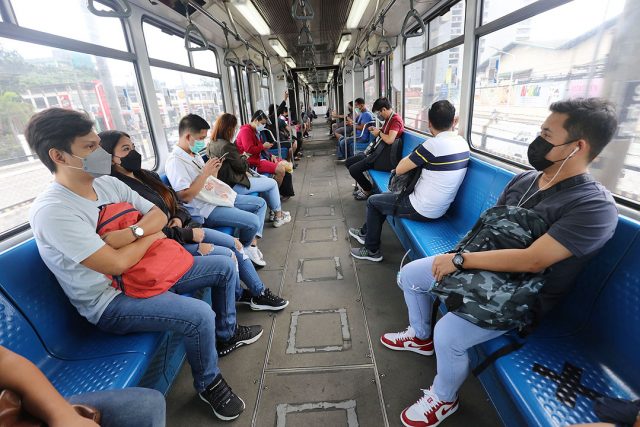
SENATORS on Thursday rejected a government plan to ban unvaccinated people from public transportation in the National Capital Region.

“There should be no discrimination among the riding public,” Senate President Vicente C. Sotto III said in a statement. “Instead of barring them from riding public transports, the Department of Transportation should come up with brighter ideas on how to protect the unvaccinated from the deadly virus.”

The senator said the government has a duty to serve people who don’t want to get vaccinated against the coronavirus. Some coaches or buses should be reserved for unvaccinated riders, he added.

Transportation Undersecretary Artemio U. Tuazon, Jr. on Tuesday issued an order limiting public transportation access to unvaccinated people in the capital region.

Senator Francis N. Pangilinan said the government should incentivize rather than penalize the unvaccinated because they have a choice to refuse vaccines.

Senator Emmanuel Joel J. Villanueva noted that aside from incentives, educating people about the benefits of vaccines should be a top government priority.

“An all-out ban on unvaccinated individuals in public transportation — with little to no viable alternative options — will only create resentment and animosity, and will further discourage them to get jabbed,” he said in a statement.

Senator Maria Lourdes Nancy S. Binay-Angeles questioned the feasibility of the order. She said retrofitting public vehicles was more practical.

She said the ban “does not protect those who are yet to be vaccinated” because it prevents them from traveling to vaccination sites.

Senator Panfilo M. Lacson, Sr. asked whether there are enough vaccines even for people willing to get vaccinated. “It’s unfair.”

“Indiscriminately punishing even the willing but have no choice due to government shortcomings in providing for their protection should first be taken into consideration before taking a drastic action of possibly denying those people their means of livelihood to feed their families,” he said in a statement.

“It is a different matter altogether if vaccines are available to all,” he added.

“Let us promote the vaccination of the willing,” Senator Aquilino Martin “Koko” Pimentel III said in a Viber message. “There is no law that makes COVID-19 vaccination mandatory, and if ever such a law is passed, this would be unconstitutional in my view.”

He added that people who choose not to get inoculated for medical or religious reasons should not suffer, noting that even vaccinated people could be carriers of the virus.

Senator Mary Grace S. Poe-Llamanzares said she understood the proposed ban because majority of those that have died of the coronavirus or were hospitalized were unvaccinated.

“We should encourage everyone to get vaccinated unless they have a legitimate underlying health reason not to,” she said in a Viber message.

Duterte signs bill that shortens adoption process 

OFFICIALGAZETTE.GOV.PH

PRESIDENT Rodrigo R. Duterte has signed into law a measure shortening the process of child adoption in the Philippines. 

Republic Act 11642, which was signed on Jan. 6, cut the waiting time of adoptive parents to at least six months from two to three years. 

It creates a National Authority for Child Care under the Social Welfare department that will handle applications, petitions and other matters involving alternative child care. It also prescribes the time within which adoption petitions must be resolved. 

It penalizes coercion, undue influence, fraud, material inducement and similar acts to induce adoption, as well as exposing a child to danger, abuse or exploitation. — Kyle Aristophere T. Atienza 

Filipino in hijacked UAE cargo ship is safe — DFA official

A FILIPINO in a hijacked United Arab Emirates (UAE) cargo ship was safe, the Department of Foreign Affairs (DFA) said on Thursday. 

“As far as I am aware, everyone seems to be OK so far,” Foreign Affairs Assistant Secretary Eduardo Martin R. Meñez told reporters in a WhatsApp message. 

The Philippine government had not received any more details about the Filipino since it was not the lead negotiator in the hijacking, he said. 

The Filipino was with at least 10 other seafarers aboard MV Rwabee, including seven Indian seamen and one each from Ethiopia, Indonesia and Myanmar. 

The sailors had been taken to a hotel from the ship and the documentation process was ongoing, according to the Times of India, citing an official from the agency that recruited the seamen. They would remain under quarantine for seven days before tickets are issued to them for their return. 

Yemeni Houthi rebels have denied claims that hijacking was as an act of piracy. Lana Zaki Nusseibeh, UAE permanent representative to the United Nations, earlier called the Rwabee a “civilian cargo ship” because it carried medical equipment for a field hospital in Socotra Island, adding that the hijacking was piracy and contradicts international law. 

She said the crime posed a threat to the safety, security and freedom of navigation, apart from disrupting trade operations in the Red Sea and hampering regional stability and security. — Alyssa Nicole O. Tan 

Comelec fixes system issues detected during mock polls

THE COMMISSION on Elections (Comelec) has addressed issues in the automated voting system that were detected during the mock polls held last month.

The hitches were found in vote-counting machines and the consolidated canvassing system in relation to the source code.  

“As we have said earlier when we conducted our trusted build in Alabama (in December), if there is a need to do the trusted build because of some issues which involve source codes, then we need to do another trusted build,” Comelec Commissioner Marlon S. Casquejo said during a Facebook livestream on Thursday of the activity. 

The final trusted build is a process that converts source codes that are written in human-readable programming language into a file that computers can understand.

The thumb drives that have the source codes of parts of the automated election system were sent to the Philippine central bank and the Comelec’s project management office. 

REPORTED HACKING
On the recent report of an alleged data breach in the Comelec system, a poll watchdog suggested the establishment of an in-house response team whose primary role would be to conduct vulnerability scans in the system. 

The National Citizens’ Movement for Free Elections (NAMFREL), in a statement on Thursday, said the Comelec should also consult with information technology experts in probing the supposed hacking incident reported by the Manila Bulletin. 

“Moving forward, NAMFREL recommends to the COMELEC to set up an Incident Response Team (IRT), if it has not done so yet, whose primary responsibility includes developing a proactive incident response plan, conducting vulnerability assessment of the COMELEC’s technology infrastructure including the AES, resolving system vulnerabilities, implementing strong information security practices, and addressing information security incidents,” it said.

Comelec has already said there was no data breach, but the National Privacy Commission has directed the poll body to submit a copy of its internal probe and scheduled a meeting next week. 

COMMISSIONERS
Meanwhile, members of a pro-democracy coalition have called on President Rodrigo R. Duterte to allow the public to participate in the choice of election commissioners as three are retiring next month. 

The group PARTICIPATE said the president should make the appointment of Comelec officials more transparent to maintain the integrity of the polls. 

“These three vacancies to be left by the outgoing members of the Commission are crucial, especially with the ongoing election preparations and the challenges that confront and confound us as we are holding the elections under peculiar circumstances due to the current COVID-19 pandemic,” members of PARTICIPATE said in a statement released on Thursday. 

Set to retire in February are Comelec Chairperson Sheriff M. Abas, and Commissioners Ma. Rowena V. Guanzon and Antonio Kho, Jr.  

The 1987 Constitution provides that poll commissioners shall be appointed by the President with approval from the Commission on Appointments. Each will have a fixed term of seven years, without reappointment. In case of a vacancy, the new appointment will only cover the unexpired term of the predecessor. 

E-RALLY
In another development, an e-rally platform for national candidates in the May 9 elections was launched by the poll body Thursday. 

The Comelec e-Rally channel on Facebook will allow presidential, vice-presidential, senatorial and party-list groups to stream their campaigns for free within a time slot.

The Comelec will soon come up with guidelines on how the candidates can participate in the e-Rally channel. 

Livestreaming of e-rallies will start on Feb. 8, coinciding with the start of the official campaign period for national positions. 

“This platform can ensure that those candidates who have less in followers can still have more views and exposure, so to speak,” Comelec Spokesperson James B. Jimenez said in a statement.

The official campaign period for members of the House of Representatives and local government officials will start on March 25. 

All campaign activities will end May 7. — Jaspearl Emerald G. Tan 

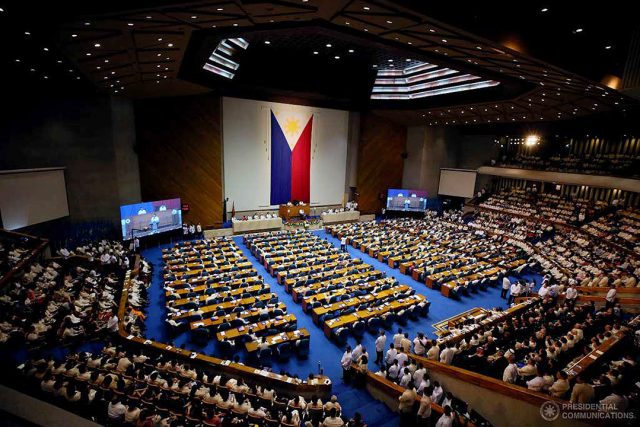
Senator presses House for swift passage of measure on franchise expiration

PCOO

A SENATOR on Thursday called for the House of Representatives’ swift passage of a measure that prevents the automatic expiration of franchises with pending renewal applications to ensure continuity of utility services.

The upper chamber’s version, Senate Bill 1530, was approved on final reading last December, with the revised administrative code providing the non-expiration of a license “where the licensee has filed a timely and sufficient application for renewal, until a final determination on the application has been made.”

“I call on our counterparts in the House to pass this measure, as it remains crucial to the operation of existing franchises that are awaiting renewal by Congress,” Senator Leila M. De Lima said in a statement.

“As stated in the objective of the proposed law, the measure only seeks to address a gap in the continuity of operation of public utilities pending the renewal of their franchises — again, a benefit that is, in the first place, already granted to, and being enjoyed by, holders of executive licensees,” she added.

House Bill 7923, which seeks to amend Section 18 of the Administrative Code of the Philippines, is currently pending with the committee on legislative franchises. 

Parañaque Rep. Joy Myra S. Tambunting, primary author of the House version, did not immediately respond to a Viber message seeking comment. 

The Justice department previously expressed support and claimed that there was “nothing legally objectionable” in the measure, but Solicitor General Jose C. Calida noted his opposition to the bill in a letter to the National Telecommunications Commission.

Ms. De Lima countered that there is nothing unconstitutional in the proposed bill as Congress still has the authority to deny or approve the franchise renewal. 

“It only provides that pending the decision of Congress, the franchise continues to subsist so as to avoid losses both in income and in the service provided to the public during the period between its expiration and eventual renewal,” she said. — Alyssa Nicole O. Tan 

Cabinet members under Ramos back Robredo’s presidential bid 

OVP.GOV.PH

MORE THAN 20 former Cabinet and senior officials under the Ramos administration have backed the presidential candidacy of Vice President Maria Leonor “Leni” G. Robredo, saying the 2022 elections is crucial for the country’s economic recovery.

In a signed statement dated Jan. 12, the 23 former government officials said the country needs a unifying leader who can empower marginalized groups and “bring out the best of servant leadership in government officials and public servants by being the foremost example of integrity, dedication, professionalism, level-headedness, statesmanship, pursuit of excellence, hard work, and true caring and sharing for our fellow Filipinos.” 

The high-level officials under President Fidel V. Ramos said Ms. Robredo can lead the country into the “positive path” considering the May polls is “a critical crossroads for the country” as it emerges from the deep scars inflicted by the pandemic.

They committed to do their “share to help her become the next President of the Republic of the Philippines.”

They also called out the prevalence of fake news and disinformation, which they said could compromise the electoral campaign. They noted deliberate attempts to misuse certain polls and surveys “that may not necessarily reflect and represent true voter preferences.”

They also raised alarm over the “continued patronage and money politics,” which they said have perpetuated dynasties and diverted people’s choices away from electing principled leaders.

Mr. Ramos, who won the presidency in 1992, was endorsed by his predecessor, the late Corazon C. Aquino, who took office in 1986 after the late dictator Ferdinand E. Marcos was toppled by a popular uprising backed by military generals. 

Under his administration, Mr. Ramos, who hails from Pangasinan in northern Philippines, implemented liberal economic programs that encouraged private enterprise and foreign investments. 

The former military general was also known for his so-called Philippines 2000 program, which aimed to make the Philippines a newly industrialized country by the turn of the century. — Kyle Aristophere T. Atienza 

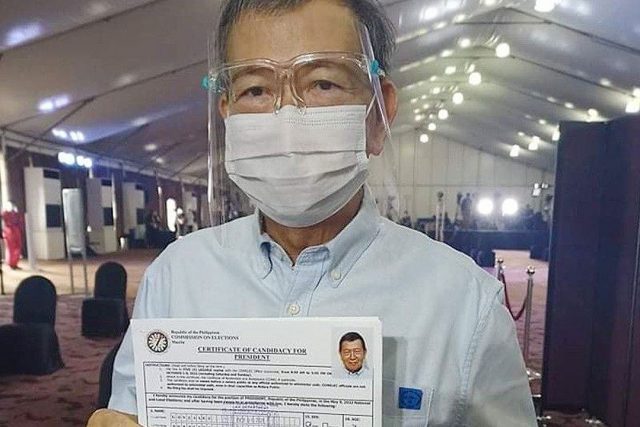
Presidential bet Gonzales: Agri dep’t first to be reformed 

COMELEC

AGRICULTURE will be the first department to undergo reforms under a Norberto B. Gonzales presidency, the standard-bearer of the Partido Demokratiko Sosyalista ng Pilipinas (PDSP) said in a virtual press conference on Wednesday. 

He said agriculture will be his priority to boost food production and generate more income for farmers. 

Kaya ang una kong lilinisin, hindi naman natin malilinis agad… uutusan natin para kumilos agad ay yung (That is why the first to be revamped… we will order to immediately take action is the) Department of Agriculture,” he said. 

Mr. Gonzales, a former defense secretary and national security adviser under the presidency of Gloria M. Arroyo, said food security “is a national security question.”

“We want to make sure that a strategic crop such as rice will be produced by us. And let us not oppress those who produce them,” he said. 

He said rice production could be made more profitable by using more modern equipment.

He also said that stable food supply would mean improved health conditions for the population, which helps provide protection against coronavirus disease 2019 (COVID-19). 

The presidential aspirant also said that the pharmaceutical and drug industry should be strengthened and reorganized to address medicine supply issues. 

His other administrative priorities include cleaning up urban areas and decongesting crowded communities.  

The PDSP party chair advocates for social democracy, which he said is an alternative political philosophy that puts the means of production more in the hands of government. — Jaspearl Emerald G. Tan 

Visayan Electric says addressing reported extortion in post-typhoon restoration

VISAYAN ELECTRIC CO. FACEBOOK PAGE

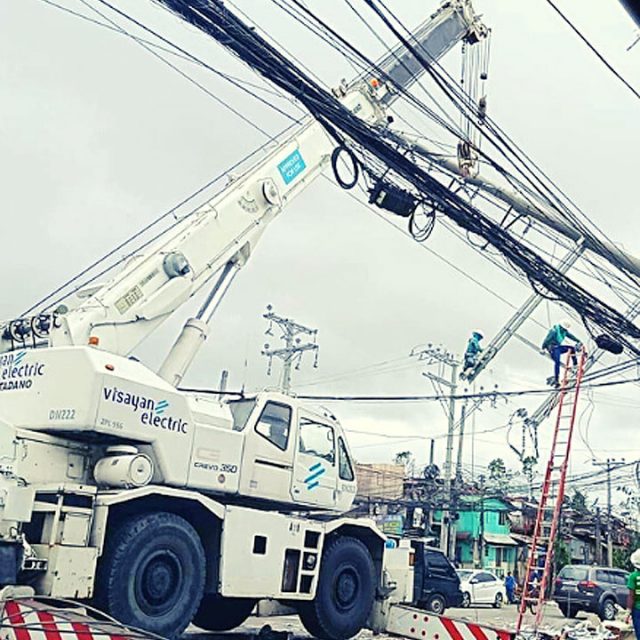
VISAYAN ELECTRIC Company, Inc. (Visayan Electric) said on Thursday that investigation is underway on reports of contractors or linemen extorting money from customers to get priority in having their supply back as restoration works continue in the aftermath of typhoon Odette, which toppled power lines almost a month ago.

“We ask for cooperation from the public not to entertain or participate in these illegal activities,” the Aboitiz-owned utility company said in a statement first released to the Cebu press on Jan. 7. 

The company assured that those who will be proven to have committed “such illegal actions will be penalized accordingly.”

Visayan Electric also warned customers that it would not be liable for “any damage or loss arising out of or in connection with the unauthorized re-energization arrangement.” 

The service provider underscored that restoration of electricity is free of charge and that its teams have been working 24 hours a day to fast-track repair works.

As of Jan. 12, the company said it has reconnected 269,747 customers, with power demand reaching 374 megawatts or about 75% of the pre-typhoon level. 

Visayan Electric, the second largest electric utility in the country, covers an area of about 674 square kilometers with a population of about 1.73 million. 

It’s franchise area includes the cities of Cebu, Mandaue, Talisay, and Naga, and the towns of Liloan, Consolacion, Minglanilla and San Fernando.

The company said damage assessment so far indicates 1,997 poles were affected. Inspection is still ongoing in remote areas.