Home Blog Page 6442

Presidential vote ratio ‘statistically sound’ but election itself marred by disinformation — forum

PHILIPPINE STAR/MIGUEL DE GUZMAN
PHILIPPINE STAR/ MIGUEL DE GUZMAN

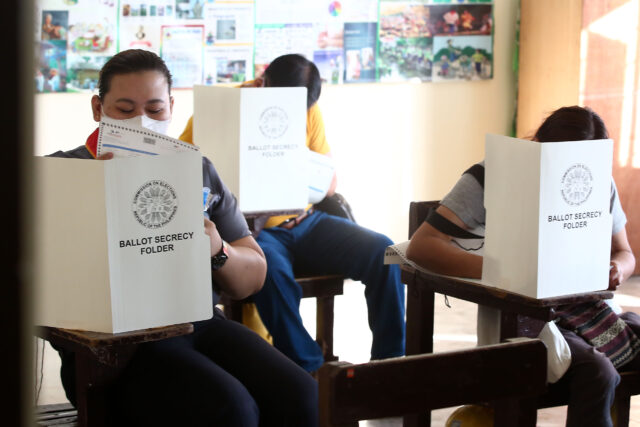
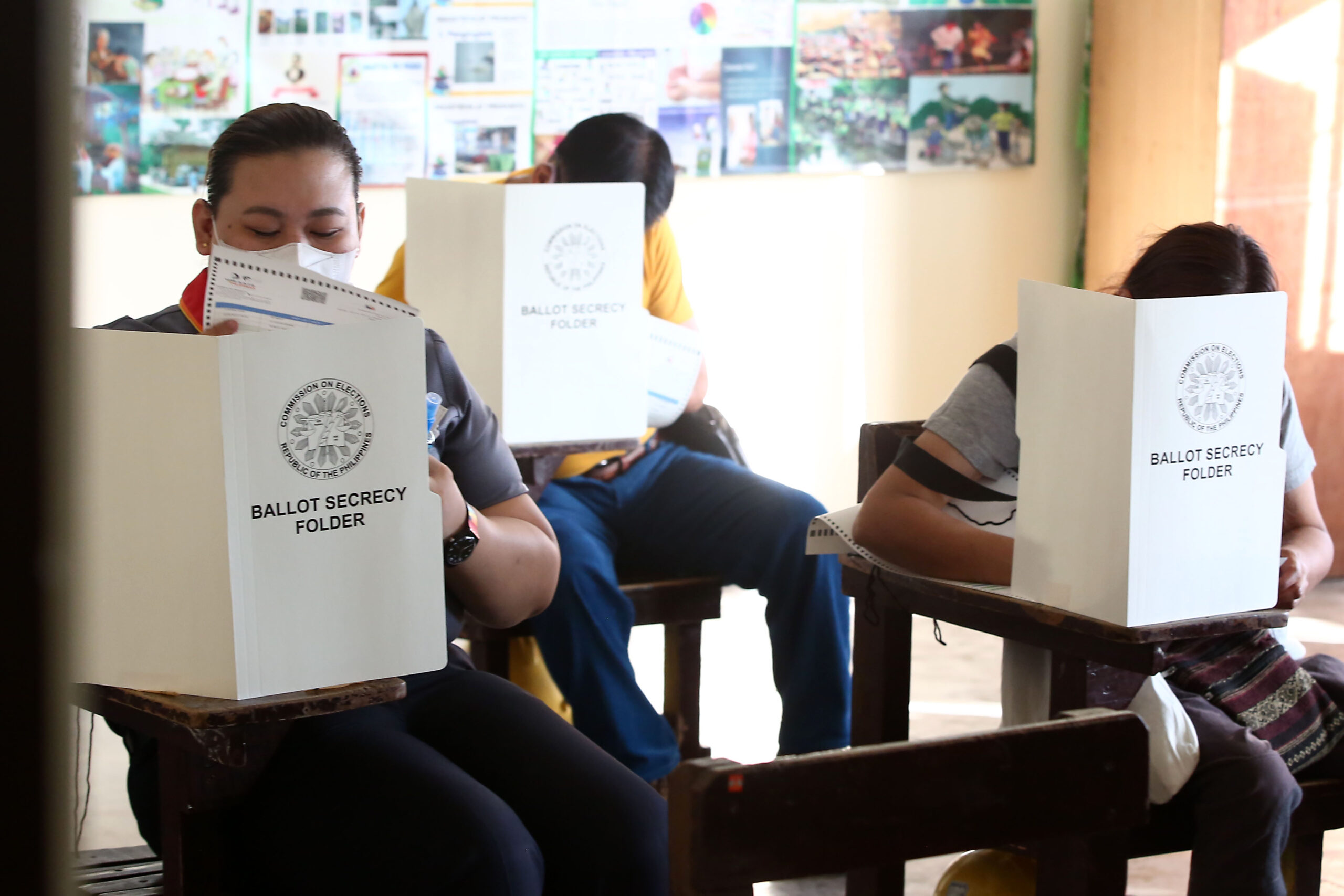
The transmitted vote count for the 2022 presidential election is statistically sound but the period leading up to the May 9 poll was marred by a “multiverse” of disinformation, according to a May 11 forum organized by communication scholars and practitioners. 

“There’s nothing statistically that we can say is unusual, but there is still a possibility that something happened in the course of transmission. The only way to verify that is to cross-check the manual count,” said Erniel B. Barrios, a statistics professor at the University of the Philippines (UP), in a webinar titled “Anyare? Post-Election Analysis” hosted by the Philippines Communication Society.  

Statistics can explain “68:32 magic,” a term coined by netizens to refer to the consistent gap in votes between leading presidential candidate Ferdinand “Bongbong” R. Marcos, Jr., and runner-up Maria Leonor “Leni” G. Robredo.  

“For each number of votes accumulated, that’s a cumulative count. In statistics, that’s possible; that’s statistically sound. It’s not irregular that while the votes we’re counting increase, we get closer to the real proportion,” Mr. Barrios said, as he explained the central limit theorem in the vernacular.  

All eyes turn to the Parish Pastoral Council for Responsible Voting (PPCRV), which will complete its cross-check of manually counted votes by this weekend.   

The main takeaway from the elections, said the panelists, is the power of disinformation, strategic branding, and social media algorithms to shape Philippine public perception.  

“You can get trapped in an algorithm where all you see are the fake news — and the real news or the facts don’t penetrate into your algorithm … That’s why disinformation becomes easier,” said Rachel E. Khan, associate dean of the UP College of Mass Communication and coordinator of Tsek.ph, a collaborative fact-checking platform.   

“Especially if your networks are very narrow, you only have people of the same mindset. Our worldview becomes unreal. We are just in a multiverse,” she said.  

The panelists criticized the use of incomplete polls like Pulse Asia and Google Trends to assume outcomes. “These are based on perception. That can easily change,” said Mr. Barrios. — Brontë H. Lacsamana

Church and politics

FREEPIK
FREEPIK

About 84% of Filipinos are at least nominally Catholic, which makes the Roman Catholic Church in the Philippines potentially the most powerful force in politics and governance. But it is the minority sects, among them and especially the 2.6 million-strong Iglesia Ni Cristo (INC), that have most used their numbers in their perennial focus on electing into public office those whom they think will best serve their temporal interests. The INC on May 3 chose, and told its members to vote for, Ferdinand Marcos, Jr. and Sara Duterte for President and Vice-President, respectively.

The media habitually describes the INC as “influential” due to its widely assumed capacity to command its membership to vote according to the preferences of its leadership. If that assumption is correct, the INC numbers can make the difference between a candidate’s defeat or victory.

Politicians of various stripes have thus sought its support in every election. The INC has always obliged by announcing before Election Day whom it is endorsing for the country’s most important elective posts including those for senators and congressmen.

Rarely has the Catholic Church openly endorsed anyone, although some of its cardinals and bishops, without necessarily speaking for the Church as an institution, have in the past named whom they would prefer not to be President. The late Jaime Cardinal Sin, for example, in 1992 implied in his public utterances that he would prefer someone else other than Fidel Ramos, a Protestant, to be President. In 1998 he described as “catastrophic” a Joseph Estrada Presidency. But his saying whom he did not want to President did not prevent Ramos’ and Estrada’s election, although the “catastrophic” Estrada Presidency was eventually removed from office by direct people’s action in 2001.

In seeming departure from its usual practice, on May 4 some 1,200 Catholic priests and bishops who were apparently speaking for the institutional Church went beyond advising the faithful to elect, without naming names, only those candidates who are honest, incorruptible, competent, etc. They instead announced their endorsement of Vice-President Maria Leonor “Leni” Robredo for the Presidency of the Republic and of Senator Francisco “Kiko” Pangilinan for the Vice-Presidency. Church reservations over endorsing specific candidates in such mundane but crucial concerns as elections seems to have given way to the urgency of addressing the ongoing and worsening political, economic, social, and moral crisis in this, the only (supposedly) Christian country in Asia.

The priests and bishops indeed urged — they did not command — the laity to make the “moral choice” of voting for VP Robredo and Senator Pangilinan on May 9 for the sake of this country and its people. But it was hardly surprising, the alternatives being, for the Catholic Church, no alternative at all.

The Church was a leading participant in overthrowing the Marcos dictatorship in 1986, and it stands to reason that it could not support his son, who, in denying any wrongdoing by his father’s martial law regime, is in effect saying that Church people were wrong in joining the millions who removed Marcos Senior from power and forced his family into exile. It could not have supported Sara Duterte either. But it was only partly due to her father’s antipathy to the Church and his calling the Christian God names. Neither could the Church have endorsed Duterte enablers “Isko” Moreno Domagoso and Panfilo Lacson, or the boxer, death penalty advocate, and former Duterte ally Emmanuel “Manny” Pacquiao.

The involvement of religious groups in politics and governance issues has provoked complaints that it is contrary to the Constitutional mandate for the separation of Church and State. It has also invited comparisons with the Spanish colonial period when the friar orders were among the country’s rulers. As valuable a principle as that separation is, however, its implementation, say Church partisans, should not include the suppression of their sentiments on who they think can best serve and lead the faithful because it would be a denial of its priesthood’s and the laity’ Constitutional rights as citizens to free expression and free choice.

Most Constitutional experts have argued that only the adoption of a State religion would be in violation of the separation of Church and State principle. But that argument ignores the problematic issue of whether, by endorsing this or that candidate, the leaderships of religious groups in effect make their members’ choices for them.

The phrase “command votes” that has been used to describe the INC’s supposed control over its members’ votes aptly defines its seeming usurpation of every citizen’s right to free choice. In addition, the election of public officials with the help of a particular church does put those officials in its debt, to repay which they could use their office in its behalf.

Although generally perceived to be less political than the INC — it persuades rather than commands — Catholic Church influence in governance has nevertheless been fairly evident in the absence of a divorce law and the suspension of the death penalty, among others. Church influence has also prevented the public exhibition of motion pictures it considers inappropriate and immoral, even as its more ardent believers in government support and introduce bills whose purposes are consistent with its teachings.

It is almost impossible to stop or even limit the influence of religious organizations in politics and government. Catholic Church influence has at times been positive, as it was at EDSA in 1986, when nuns and priests risked their lives in confrontations with heavily armed troops, tanks, and helicopter gunships in behalf of the faithful. And there is as well its pivotal role in the suspension of the death penalty during the Macapagal-Arroyo regime.

The Philippine Church may not have been as vocal in the defense of human rights and in the advocacy of political, economic and social change as its counterparts in Latin America, which opposed the most brutal dictatorships there at the cost of the lives of its nuns and priests. Beatified in 2018, Saint Oscar Romero, a Catholic bishop, was among the latter. He was killed in 1980 while celebrating mass by a military death squad for his denunciation of the then ruling junta of El Salvador.

No such sterling example of martyrdom, it seems, has so far arisen in Catholic Philippines. But although historically part of the power elite, the Catholic Church in these isles has at least been equal to meeting some of the most urgent challenges of the times, despite much of the laity’s Sunday Catholicism and weekday atheism. (The churches are crammed to the rafters every Sunday by worshippers who lie, cheat, steal or murder from Monday to Saturday.) One can only hope that despite this and other constraints, it will do more, given the urgent need for solutions to the worsening problems that have haunted the people for decades.

The English novelist Graham Greene, who was a Catholic, admitted that the Church has committed “great crimes” during its long 2,000-year history. He was thinking of the Inquisition’s persecution of “heretics” and its burning “witches” at the stake in the Middle Ages, and Church collusion with the European powers in the conquest, enslavement, and exploitation of colonized peoples. But he declared in his 1966 novel The Comedians that the Catholic Church has never been guilty of the indifference to human suffering that decades later Pope Francis was to condemn as the worst sin of all.

May 4’s endorsement of specific candidates was in affirmation of Greene’s observation. But it should not, and hopefully will not be, the last.


Luis V. Teodoro is on Facebook and Twitter (@luisteodoro).

www.luisteodoro.com

Delivering on campaign promises

BW FILE PHOTO

In all of the four-month campaign period, people witnessed Vice-President Leni Robredo inspiring an amazing resurgence of people power, 36 years after EDSA. Of all the colors, people embraced pink as the symbol of radical love for the Filipino people and the Philippines, quintessential music and poetry composed around it, while T-shirts and tarpaulins could not be mistaken for those of other candidates. A new sense of people power seemed to have been birthed. Post-election, some wise guys would say the movement failed to convert the groundswell into votes because the rest of humanity was turned off. The movement was not Pharisaic, but there was rather unmistakable realization that this country is worth fighting for. That was the spirit of EDSA.

EDSA has not failed. It remains a work in progress. Remember incrementalism, that Rome was not built in a day? Good reforms have accumulated from where we were before 1986.

It is in fact impertinent to blame whatever shortcoming we have incurred along the way to any one family or any political color because it is precisely a people’s movement that is subject to the country’s election laws, appointments and decisions of Commission on Elections (Comelec) officials, the composition of the Supreme Court that resolves election cases, corporate money that funds political campaigns, and most important today, social media.

It is by no means easy to pursue the vision for a progressive and more inclusive Philippines, one where rule of law is supreme, with a globally competitive economy, where the marginalized could hope to break through intergenerational cycle of illiteracy and poverty. It is not all about politics and economics. It is also about values, moral compass if you will. It’s a leading indicator of how leaders would manage the risks and travails of governance, how they would handle stress in Malacañang and the temptations while on the throne. In like manner, character and capability are good metrics of how an electorate could discern the best candidates and provide support to public policy.

Some of us would have to give it to Marcos Jr. for adhering closely to his handlers’ script that to one commentator (with the following hashtags #TheFilipinoRightWing, #Eleksyon2022, and #MarcosDuterte) said was nothing but brilliantly executed according to Sun Tzu’s Art of War. We summarize his analysis:

The script called for pretension: “feign disorder and crush him.” President Duterte pretended to be anti-Marcos Jr. by accusing him of being a cocaine addict. Marcos Jr. tested negative and solidified his base; their candidate was clean. The non-administration candidates wasted time attacking on that front.

The script called for confusion: “The whole secret lies in confusing the enemy, so that he cannot fathom our real intent.” President Duterte announced he would run for vice-president with Senators De la Rosa and Go declaring their presidential candidacies. The non-administration’s ammunition would have to be focused but with multiple targets, confusion ensued.

The script called for non-confrontation: “The supreme art of war is to subdue the enemy without fighting.” Marcos Jr. soldiered on his campaigns by skipping public debates. The non-administration candidates attacked him because he refused to give the electorate a glimpse of his platform. Such assaults on Marcos Jr.’s character further strengthened his base for being the underdog, turning off some pink supporters. Many thought the pink movement was hostile and cultic.

The script called for some irritation: “If your opponent is temperamental, seek to irritate him.” Marcos Jr. irritated all the other candidates by not showing up in most of the public debates. This must have led the other candidates to some “stupid stuff that will inevitably hurt their candidate of choice.” The pink camp imploded.

This commentator, however, failed to explain the role of troll farms and influencers in blogs and Twitter and TikTok in mind conditioning. Remember, Sun Tzu also stressed that “all warfare is based on deception.” Cambridge Analytica’s contribution to rebrand the Marcos name for political mainstreaming cannot be ignored. A whole generation of youngsters, and even the seniors among us, could not have known better because the true narrative is sorely missing from history.

If following the Art of War was all that mattered, there was no need for excessive liquidity to fund crowd transport and attendance, take-homes, and actual support. While anecdotes and sporadic texts and videos may not build into a strong case, we have a lot of these that could probably show a pattern of election irregularities. Is this also part of Sun Tzu’s principle that “according as circumstances are favorable, one should modify one’s plans?”

What then do we expect from a Marcos Jr. presidency?

Barring any electoral protest or adverse Supreme Court decision arising from his disqualification cases, Marcos Jr. will be sworn in as the 17th president of the Philippines on 30 June 2022. Based on the 1987 Constitution, he will take the following oath:

“I do solemnly swear that I will faithfully and conscientiously fulfill my duties as President of the Philippines, preserve and defend its Constitution, execute its laws, do justice to every man, and consecrate myself to the service of the Nation. So help me God.”

First things first. Preserving and defending our Constitution require Marcos Jr., as future chief architect of foreign policy, to ensure our sovereignty in West Philippine Sea is respected, that the peace process should be resumed provided the other parties will renounce the use of arms. Executing the laws of the land requires the presumptive president to implement the law recognizing what really happened during martial law in terms of plunder and violation of human rights, prescribing the tax-free indemnification of the victims, and establishing a martial law museum to perpetuate the memory of that dark moment in Philippine history. Another law is the tax code on which basis the Marcos estate was assessed to be liable for payment of P203 billion including interest and penalty.

Doing justice to every man means those in detention without charges, or those whose prosecution witnesses have already withdrawn, should be released in accordance with due process. It also means imprisoning those charged with crimes against public welfare including corruption and plunder. Consecrating himself to the service of the nation means, among other things, he will work to honor his campaign promises to establish unity, reduce the price of rice to P20 per kilo, making more jobs available to our people, and expanding investment in agriculture and infrastructure.

If the presumptive president could deliver on these expectations, he would disprove his critics and inspire market confidence.

However, as Pantheon Macroeconomics recently declared: “It’s almost impossible to say at this stage what a Marcos presidency would do for the Philippine economy, partly because his campaign is devoid of concrete proposals.”

Now that he seems destined for Malacañang, Marcos Jr. will have to buckle down to work to deliver on things he avoided during the campaign. He will now be in command of state efforts to manage the pandemic and the roadmap to economic recovery. As such, he is expected to be more careful in public finance because the national debt level as it is relative to national output is already elevated. A better version of public-private partnership will have to be explored to minimize the use of state finances without sacrificing the delivery of social services and infrastructure. The presumptive president will have to rethink his vintage view on regulatory agencies like the National Food Authority and public subsidy like the oil price stabilization fund which was abolished ages ago. He will be responsible for what happens to school children’s academic performance unless appropriate intervention is done. We need to go digital.

But Marcos Jr. looks serious in disproving all these reservations against his victory. In his post-election interviews with media, he disclosed that he intended “to hit the ground running.” It is good he stressed that one of his priorities is to form his economic team as soon as possible because that would help ease market jitters given his paternal provenance. “As you can imagine, the economic managers are going to be critical for the next several years because of the pandemic and economic crisis, something that we are looking at very carefully.”

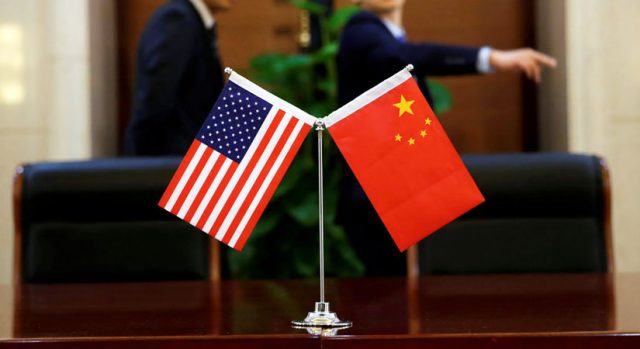
While the US and China heads of state have already reached out to Marcos Jr. to congratulate him and pledged to work with him closely, it is likely only now that the heavy burden of leading more than 110 million people is beginning to sink in.

After the election, we really need to shift from the script to vision casting and serious business of governance. The nation awaits the list of deliverables.


Diwa C. Guinigundo is the former deputy governor for the Monetary and Economics Sector, the Bangko Sentral ng Pilipinas (BSP). He served the BSP for 41 years. In 2001-2003, he was alternate executive director at the International Monetary Fund in Washington, DC. He is the senior pastor of the Fullness of Christ International Ministries in Mandaluyong.

Why one little goof drove Wordle fans nuts

JOSHUA HOEHNE-UNSPLASH

FANS of the daily hidden word game Wordle woke up Monday to a social media uproar. The New York Times, which owns and operates the game, had made a last-minute change to eliminate the word “fetus,” presumably in deference to sensitivities swirling around a leaked Supreme Court opinion on abortion.

Whatever the motive, the execution was botched and a diversion so popular for its simplicity and innocence lost a little bit of its joy.

Wordle players try to identify a five-letter word within six guesses. Green squares indicate which letters in each guess exactly match letters in the answer word, and yellow indicates correct letters in incorrect positions.

The beauty of the game is that it’s easy and social. Players share their solving patterns and statistics on social media, trying to beat their friends.

The botched answer swap spoiled the fun. Software quirks gave some players the original answer word, “fetus,” instead of the substitute, “shine.” And if different people face different answer words, the social competition collapses.

I often start my daily Wordle with the word “spine.” That gave me bragging rights on Monday because it yielded four green squares on my first guess.

If, instead, I had faced the original answer word, “fetus,” my starting word would have been close to a whiff, and it would have taken me many more guesses to solve the puzzle.

But since some people faced one answer word and others faced another, the joy of boasting (and schadenfreude) from social sharing was greatly diminished.

Then there’s the politics. It’s not exactly obvious that a game about word structure and letter patterns would exclude words based on whatever’s in the news, especially since Wordle has famously avoided linking answer words to current events in other ways. (The answer on New Year’s Day was “rebus” and the answer on Valentine’s Day was “cynic.”)

It’s reasonable to avoid inserting potentially traumatic or triggering elements to an otherwise guileless word game. But is “fetus” so troubling that it shouldn’t be considered appropriate, say, for Scrabble?

Once Wordle starts going in this direction, where would its sponsors draw the line? What if the word “trump” makes some people think of a polarizing politician and others of nothing more emotional than a pack of cards? Should we be concerned about accidental product placement? (Tuesday’s fiendishly difficult word was the mascot of a well-known car insurance company.)

The game would take a lot more effort — and would be a lot less fun — if for each guess players had to think about which words the editors might have suppressed.

People play Wordle in loose collectives and like to draw inferences off of other people’s tactics. When I see that people have guessed the answer word quickly, I expect an easier word, with more common letter patterns. By contrast, when I see that lots of people are striking out, I skew my guesses towards words like “quirk” and “vivid” that are bristling with unusual letters. Social clues make it possible to crack a particularly difficult word faster than friends and family.*

But if players can’t be sure that everyone is seeing the same word, then there’s little reason to look at other people’s solutions. Changing the Monday word led to mass confusion as people tried to figure out why their patterns looked nothing like their friends’. (The same thing happened a couple months ago when the Times mysteriously edited out the answer word “agora.”)

If Wordle is to exist in its own world, then editing out words because they have social resonance chips away at expectations players have built up around the game. That harms the social cohesion that gives it its charm.

It’s definitely not a way for Wordle to “shine.”

* This columnist is especially pleased whenever he solves the day’s Wordle in fewer guesses than his mom — except that pretty much never happens.

BLOOMBERG OPINION

Elections and good governance should not involve destroying our institutions

Remember back in 2010 when Noynoy Aquino won the presidency and those who campaigned or voted for the other side got so drained and depressed? So much so that they started severing ties from family and friends, particularly those celebrating Aquino’s victory by lecturing them about their “ignorance” and “corruption,” about how they were obstructing “good governance”? Remember when that losing side went to the streets demanding revolution, gleefully looking forward to the country’s situation deteriorating, perhaps even demise? Remember that?

No? Well because it never happened. After the initial disappointment and after it became clear that Aquino won, most of the opposing voters just shrugged and went back to work. They treated their family and friends as before, regardless of their political stance. And most of all, they hoped for the best for the country.

Compare that with today, what with supposed calls for walking out of schools, the repetitive droning calls to the streets, the invitation to cut ties with family and friends whose only sin was to back the candidacy of Ferdinand Marcos, Jr. And compare that with today’s attitude from many of the losing Leni Robredo side, declaring total withdrawal of support for their fellow citizens and even of the country.

Incredibly, the winning side isn’t even allowed to celebrate: any amount of gleeful sentiment was taken as gloating by the Kakampinks, of laughing at the “pain suffered by those so invested in their campaign,” about the victory they supposedly deserved because, after all, they went house to house. But that’s how elections campaigns are: all get invested in it yet inevitably some will win and some will lose.

And setting aside the childishly self-entitled “trophy for every participant” attitude, what is seemingly sought to be forgotten are the months and months of repeated insults and condescension heaped upon by the Kakampink’s, to the point that merely wearing red or the BBM/Sara facemask in public will make one suffer the indignity of snide remarks, glares, or even deranged haranguing lectures, including accounts of vague victimhood suffered through the “1986 revolution,” whatever that is.

More disconcerting is the attitude of wanting to win at all costs, the willingness to do away with our country’s institutions just to be able to impose one’s will over another.

Our universities, supposedly bastions of free thought and free exchange of ideas have suddenly become unabashed hives of homogeneous political thought. And it is no good to pretend that merely this school official or that school organization endorsed a specific presidential candidate. The fact that such happened with no official declaration made about the university maintaining neutrality speaks volumes. And how a student who happens to back a different candidate or — even worse — backed a candidate which the university explicitly or implicitly opposes will be welcomed inside the classroom has never been explained. So much for safe spaces.

The same with the local Catholic clergy. Never mind the other religions, that is their concern. But for a church that prides itself in being “catholic,” to suddenly do away with centuries and centuries of tradition exercised in every country where the Catholic Church is found, to suddenly back a specific candidate — after it refused to even endorse anyone back in the 2013 elections amidst the heat of the then RH Bill national debate — reeks of politicized egotism. And this never mind the fact that the candidate they backed, Mrs. Robredo, happened to author the RH Law, advocated for the SOGI bills, as well as pushed for civil unions (which, in the form currently discussed, is practically the same as same sex “marriage”). This within the further context that the local clergy meekly remained silent for the past two years, when the churches were closed and many of the Catholic faithful were unable to have access to the sacraments.

But most disgusting, worthy of contempt, is the attitude towards the family, where insulting and cutting off one’s parents, siblings, relatives, and even friends are lauded when such was done for partisan reasons. The sheer arrogance of this, the utter selfishness, to think that one has a monopoly on facts and reason, resulting in individualistically being the sole exclusive determinant of right and wrong, is horribly breathtaking. And sad.

Politicians come and go but the care and safety of one’s personal relationships are precisely why we engage in politics. To believe that politics is the end all and be all is downright massively ignorant and self-centered.

To sum, lawyer and legal scholar Trixie Legaspi-Francisco’s words are worth heeding: “Democracy is governed by its most popularly understood principle: majority rule. The majority vote (or plurality when there are more than two choices) decides the election or the issue. And so, when the People have spoken, the People’s will should be respected — whether you agree with it or not. Democracy is not a weapon you can wield only if it suits you.”


Jemy Gatdula is a senior fellow of the Philippine Council for Foreign Relations and a Philippine Judicial Academy law lecturer for constitutional philosophy and jurisprudence

https://www.facebook.com/jigatdula/

Twitter@jemygatdula

North Korea reports first COVID-19 outbreak

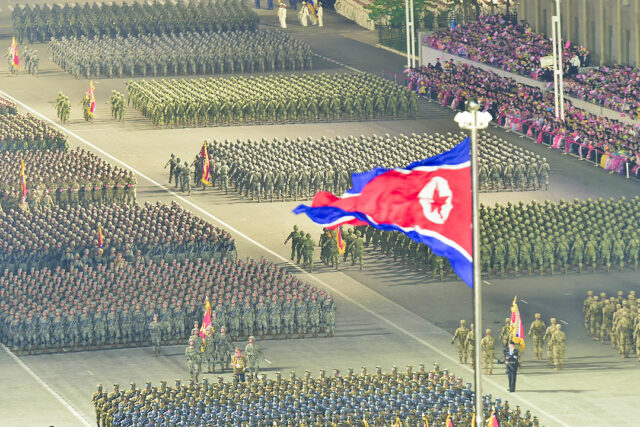
Military personnel take part in a parade to mark the 90th anniversary of the founding of the Korean People’s Revolutionary Army in Pyongyang, North Korea, in this undated photo released by North Korea’s Korean Central News Agency on April 26, 2022. — KCNA VIA REUTERS

SEOUL — North Korea confirmed its first coronavirus disease 2019 (COVID-19) outbreak on Thursday, calling it the “gravest national emergency” and ordering a national lockdown, with state media reporting an Omicron variant had been detected in Pyongyang.

The first public admission of COVID infections highlights the potential for a major crisis in a country that has refused international help with vaccinations and kept its borders shut.

As of March, no cases of COVID-19 have been reported, according to the World Health Organization, and there is no official record of any North Koreans having been vaccinated.

“A most serious emergency case of the state occurred: A break was made on our emergency epidemic prevention front where has firmly defended for two years and three months from Feb. 2020,” official KCNA news agency said.

Samples taken on May 8 from people in Pyongyang who were experiencing fevers showed a sub-variant of the Omicron virus, also known as BA.2, the report said, without providing details on case numbers or possible sources of infection.

The report was published after North Korean leader Kim Jong Un led a Workers’ Party meeting on Thursday to discuss responses to the outbreak

Mr. Kim ordered all cities and counties of the country to “strictly lock down” their regions to prevent the spread of the coronavirus and said emergency reserve medical supplies would be mobilized, according to KCNA.

“The state epidemic prevention work shall be switched over to the maximum emergency epidemic prevention system,” KCNA said.

Although the North has never before confirmed a single coronavirus infection in the country, officials in South Korea and the United States have doubted that the country is COVID-free, as cases of the Omicron variant were widely reported in neighboring South Korea and China.

The isolated North has enforced strict quarantine measures, including border lockdowns, since the pandemic began in early 2020. In July that year, Mr. Kim declared an emergency and imposed a lockdown on Kaesong, near the inter-Korean border, for three weeks after a man who defected to the South in 2017 returned to the city showing coronavirus symptoms.

According to the latest data from the World Health Organization (WHO), 64,207 of North Korea’s more than 24.7 million people received COVID-19 testing; all had been found negative as of March 31.

North Korea has declined shipments of vaccine from the COVAX global COVID-19 vaccine-sharing program and the Sinovac Biotech vaccine from China, suggesting no civilians may have been vaccinated.

South Korea’s presidential office told Reuters that President Yoon Suk-yeol, who was sworn in on May 10, will not link humanitarian aid to the political situation, opening the door to providing support to the North.

The news of the outbreak comes amid reports of preparations for an imminent nuclear test by the North, which has also aggressively pursued a ballistic missile programme, according to US and South Korean officials.

NO VACCINE
Thursday’s KCNA report said Kim told the Workers’ Party meeting that the latest emergency quarantine system’s purpose is to stably control and manage the spread of the coronavirus and quickly heal infected people to eliminate the source of transmission in the shortest period.

A failure to contain infections could be an “unprecedented crisis for the Kim Jong Un regime,” professor of North Korean studies at Kyungnam University in South Korea, Lim Eul-chul, said.

“Given a more inferior vaccination situation and weaker testing capacity and public health infrastructure compared to China, plus the lack of intensive care units, there’s potential for scores of casualties,” he said.

Cheong Seong-chang of the Sejong Institute noted that North Korea’s nationwide lockdown had the potential to be immensely disruptive.

“With time, North Korea is likely to face severe food shortages and, as China is experiencing now, massive confusion,” he said.

South Korea’s central bank in an annual report in July 2021 said the North’s economy suffered its biggest contraction in 23 years in 2020, weighed down by COVID border controls, U.N. sanctions and bad weather.

Professor Yang Moo-jin of the University of North Korean Studies in Seoul said the fact that Mr. Kim called a party politburo meeting at dawn and state media immediately published the deliberations shows the urgency of the situation. It could be an indirect plea to the international community for help, he added.

A South Korea-based website that monitors activities in Pyongyang said this week that residents have been told to return home and remain indoors because of a “national problem” without offering details. — Reuters

EU seeks bigger role in Asia’s ‘theater of tensions’

THE MAIN entrance of the European Union Commission headquarters is seen in Brussels July 1, 2013. — REUTERS

TOKYO — European Union (EU) leaders said on Thursday that the EU wants to become a bigger actor in Asia, which they termed a “theater of tensions,” as they warned of an increasingly assertive China.

After talks in Tokyo, European Commission President Ursula von der Leyen, European Council President Charles Michel and Japanese Prime Minister Fumio Kishida told a joint news conference they would keep up talks on ways to maximize their partnership to tackle Russia over its invasion of Ukraine, in areas such as energy.

But Mr. Michel and Ms. Von der Leyen also said they were aware that regional tensions existed in Asia as well, and said the EU wanted to take on a bigger role.

“The Indo-Pacific is a thriving region. It is also a theater of tensions,” Ms. Von der Leyen said. “Take the situation in the East and South China Sea and the constant threat of the DPRK (North Korea).”

“The European Union wants to take a more active role in the Indo-Pacific. We want to take more responsibility in a region that is so vital to our prosperity.”

Both welcomed Japan’s participation in measures against Russia, including sanctions.

“We welcome the increasingly strong stance Japan is taking against Russia,” Ms. Von der Leyen said at the start of their talks.

Tokyo has joined the European Union and Group of Seven (G7) nations in imposing trade sanctions on Russia, which calls its actions in Ukraine a “special military operation,” that have cramped Moscow’s ability to export its oil and gas.

But Japan is heavily reliant on energy imports, including purchases from Russia. Last week Mr. Kishida said Japan would “in principle” ban Russian oil but it has been more reluctant to disengage from some projects.

The three officials were meeting in the Japanese capital for an annual conference that was held online last year because of the coronavirus pandemic. — Reuters

Biden seeks to keep China in focus by welcoming ASEAN leaders

WASHINGTON — President Joseph R. Biden will host Southeast Asian leaders in Washington this week, seeking to show his administration remains focused on the Indo-Pacific and the long-term challenge of China despite the Ukraine crisis.

A two-day summit with the 10-nation Association of Southeast Asian Nations (ASEAN) begins with a White House dinner on Thursday before talks at the State Department on Friday.

It will be the first-time leaders of ASEAN, created in some of the darkest days of the Cold War, gather as a group at the White House. President Barack Obama was the last US leader to host them, at Sunnylands in California in 2016.

Up to eight ASEAN leaders are expected. Myanmar’s leader has been excluded over a coup last year and the Philippines is in transition after an election.

The White House said discussions were under way with ASEAN about having an empty chair represent Myanmar at the summit to reflect dissatisfaction over the coup.

The ASEAN leaders, accompanied by US Secretary of Commerce Gina Raimondo and US Trade Representative Katherine Tai, will meet US business leaders on Thursday, the White House told reporters in a call. 

The summit takes place ahead of Mr. Biden’s May 20-24 visit to South Korea and Japan, which includes a plan to meet fellow leaders of the Quad countries — Australia, India and Japan — who share US concerns about China’s ambitions to expand its influence in the region and globally.

Mr. Biden’s Indo-Pacific coordinator Kurt Campbell spoke at a think tank on Wednesday of a deep sense in the administration of the need not to be distracted from the Indo-Pacific, and said it would seek to increase US investment and engagement in ASEAN countries.

He said China, Myanmar, Taiwan and Ukraine would be among the issues discussed.

“We believe it’s critical for other countries to both publicly and privately underscore that what has taken place in Ukraine must never happen in Asia,” he said, referring to China’s threats to retake Taiwan by force if necessary.

Mr. Campbell acknowledged critiques that US engagement with ASEAN had waned in many important areas.

“We have to send a signal that the United States will be a steady partner, and that our strategic interests push us and point us into playing a larger role over time,” he said.

Mr. Campbell said on Monday there would be “substantial” discussions with ASEAN on technology, education, infrastructure, and that Washington would soon announce plans to better battle illegal fishing in the Pacific.

Kate Rebholz, acting US ambassador to ASEAN said the summit would bring “an ambitious and forward-looking US-ASEAN vision statement” and new initiatives, including partnerships in public health, climate and economic growth.

Even if the summit is largely symbolic and no dramatic advances are to be expected, analysts and diplomats said the fact it was taking place aimed to show that China remains a leading US long-term foreign policy challenge, regardless of Russia’s actions in Ukraine.

They said it would likely elevate the current US-ASEAN “strategic partnership” by adding a word to make it a “comprehensive” strategic partnership, bringing it into line with the description of ASEAN’s ties with Australia and China.

“The meeting is the message … that the US is in fact capable of walking and chewing gum at the same time, and it’s not distracted,” Bilahari Kausikan, a former permanent secretary of Singapore’s foreign ministry, told the Stimson Center think tank on Monday.

US ‘FALLS FLAT’ ON ECONOMICS
ASEAN countries also share concerns about China and are broadly keen to boost ties with Washington, but they have been frustrated by a US delay in detailing plans for economic engagement since former President Donald Trump quit a regional trade pact in 2017.

At a virtual summit with ASEAN last October, Mr. Biden said Washington would start talks about developing a regional economic framework, but diplomats say this is likely to feature only peripherally this week.

Japan’s Washington ambassador said Biden’s Indo-Pacific Economic Framework (IPEF) is likely to be formally launched in Japan, but its details were still under discussion.

Analysts and diplomats say only two of the 10 ASEAN countries — Singapore and the Philippines — are expected to be among the initial group of states to sign up for the negotiations under IPEF, which does not currently offer the expanded market access Asian nations crave, given Mr. Biden’s concern for American jobs.

There has also been some frustration that ASEAN leaders will get little personal time with Mr. Biden, with no bilateral meetings announced, though the White House said Mr. Biden will have “private time” with each leader.

An adviser to Cambodian Prime Minister Hun Sen, in office since 1985 but making his first White House visit, told Reuters Mr. Biden should spend more time with leaders if serious about elevating ties. — Reuters

Biden eyes new ways to bar China from scooping up US data

REUTERS

WASHINGTON — The Biden administration has drafted an executive order that would give the Department of Justice vast powers to stop foreign adversaries like China accessing Americans’ personal data, according to a person familiar with the matter and excerpts seen by Reuters. 

The proposal, which is being reviewed by government agencies, would also direct the Department of Health and Human Services (HHS) to prevent federal funding from supporting the transfer of US health data to foreign adversaries, according to the excerpts. 

The draft order reflects an effort by the administration to respond more aggressively to national security threats allegedly posed by Chinese companies that acquire reams of U.S. personal data, after failed bids by the Trump administration to bar Americans from using popular social media platforms TikTok and Wechat. 

Former President Donald J. Trump tried to ban the apps in 2020 alleging data collected by them could be given to Beijing and used to track users and censor content. China and the apps have denied any improper use of US data. 

But the courts halted implementation of the bans and US President Joseph R. Biden, Jr., eventually revoked them. 

Spokespeople for the White House, the Department of Justice and the Commerce Department declined to comment. HHS did not respond to requests for comment. 

The document is an initial draft that does not include input from government agencies and may change, according to another person familiar with the matter. 

“What’s clear is the Biden administration is grappling with how to address this new risk frontier in the US-China relationship, which is the Chinese government’s access to Americans’ sensitive data,” said Samm Sacks, a senior fellow at Yale Law School’s Paul Tsai China Center, who examines information and communications policies. 

If implemented, the draft order would grant US Attorney General Merrick Garland the authority to review and potentially bar commercial transactions involving the sale of or access to data if they pose an undue risk to national security, one of the people said. 

The proposal would also instruct HHS to get started on writing a rule “to ensure that federal assistance, such as grants and awards, is not supporting the transfer of US persons’ health, health-related or biological data…to entities owned by, controlled by, or subject to the jurisdiction or direction of foreign adversaries,” according to an excerpt. 

US intelligence has warned about the risks posed by Chinese companies collecting Americans’ personal data by investing in US firms that handle sensitive healthcare information. China’s BGI purchased US genomic sequencing firm Complete Genomics in 2013 and in 2015, Chinese WuXi Pharma Tech acquired U.S. firm NextCODE Health, the National Counterintelligence and Security Center noted in a 2021 fact sheet

The draft order comes as administration officials have grown frustrated with the Commerce Department over delays in rolling out rules and investigating threats under similar powers granted to that department by Mr. Trump in 2019, according to three people familiar with the process. 

Those powers allow the Commerce Department to ban or restrict transactions between US firms and internet, telecom and tech companies from “foreign adversary” nations, including Russia and China. 

But so far, the department has failed to publish long-awaited rules fleshing out a safe harbor process for companies or announce the results of investigations into firms including Russia’s Kaspersky and China’s Alibaba, as previously reported by Reuters. 

The Commerce Department was also explicitly directed by a June executive order to use the new tools to protect Americans’ sensitive data from foreign adversaries via transactions involving apps, but has not made public any progress related to the measure. 

The new draft order gives the Department of Justice the express authority to “monitor compliance with and enforce any prohibitions, licenses, or mitigation agreements” issued under the prior executive orders, “thereby supporting the authority given to the Secretary of Commerce.” 

It also tasks the Secretary of Commerce with establishing which classes of transactions are outright prohibited and which are exempt, another excerpt shows. — Alexandra Alper and Karen Freifeld/Reuters

Vietnam leader interested in Biden economic framework, but needs to study details

Prime Minister Pham Minh Chinh of Vietnam (right) meets with US Secretary of Defense Lloyd J. Austin III in Hanoi, Vietnam, July 29, 2021. Image via Chad J. McNeeley/US Department of Defense.

WASHINGTON — Vietnamese Prime Minister Pham Minh Chinh said on Wednesday that Hanoi was interested in helping the United States realize the aims of its proposed economic framework for the Indo-Pacific, but needed time to study the details. 

Mr. Chinh, in Washington for a two-day summit between President Joseph R. Biden, Jr., and Southeast Asian leaders starting on Thursday, said he had had discussions on Mr. Biden’s Indo-Pacific Economic Framework (IPEF) with US officials earlier on Wednesday. 

“We would like to work with the US to realize the four pillars of that initiative,” he told a question-and-answer session after delivering a speech at Washington’s Center for Strategic and International Studies. 

He said the pillars were supply-chain stability, digital economy, the fight against climate change and a fourth related to labor, tax, and combating corruption. 

“These are very important to the US, to Vietnam and other countries alike,” he said, speaking through a translator. 

However, Mr. Chinh said the “concrete elements” of the initiative had yet to be clarified. 

“We are ready to engage in discussion with the US to clarify what these four pillars will entail and when that is clarified, we would have something to discuss,” he added. “We need more time to study this initiative and see what it entails.” 

Asian countries have been frustrated by a US delay in detailing plans for economic engagement with the region since former President Donald Trump quit a regional trade pact in 2017, leaving the field open to US rival China. 

At a virtual summit with ASEAN last October, Mr. Biden said Washington would start talks about developing what has become known as IPEF, which aims to set regional standards for cooperation, but diplomats say this is likely to feature only peripherally this week. 

Japan’s Washington ambassador said this week IPEF is likely to be formally launched when Mr. Biden visits Japan later this month, but its details were still under discussion. 

Analysts and diplomats say only two of the 10 ASEAN countries — Singapore and the Philippines — were expected to be among the initial group of states to sign up for negotiations under IPEF, which does not currently offer the expanded market access Asian nations crave given Mr. Biden’s concern for American jobs. 

Mr. Chinh hailed the blossoming of Hanoi’s relations with the United States in recent decades and the explosion of bilateral trade to almost $112 billion annually, although he said the two sides should further advance cooperation to deal with the legacy of their hostility in the Vietnam War. — Reuters

Google unveils new 10-shade skin tone scale to test AI for bias

Monk Skin Tone Scale. -- Image via skintone.google

OAKLAND, Calif. — Alphabet Inc.’s Google on Wednesday unveiled a palette of 10 skin tones that it described as a step forward in making gadgets and apps that better serve people of color.

The company said its new Monk Skin Tone Scale replaces a flawed standard of six colors known as the Fitzpatrick Skin Type, which had become popular in the tech industry to assess whether smartwatch heart-rate sensors, artificial intelligence (AI) systems including facial recognition and other offerings show color bias.

Tech researchers acknowledged that Fitzpatrick underrepresented people with darker skin. Reuters exclusively reported last year that Google was developing an alternative.

The company partnered with Harvard University sociologist Ellis Monk, who studies colorism and had felt dehumanized by cameras that failed to detect his face and reflect his skin tone.

Mr. Monk said Fitzpatrick is great for classifying differences among lighter skin. But most people are darker, so he wanted a scale that “does a better job for the majority of the world,” he said.

Mr. Monk through Photoshop and other digital art tools curated 10 tones — a manageable number for people who help train and assess AI systems. He and Google surveyed around 3,000 people across the United States and found that a significant number said a 10-point scale matched their skin as well as a 40-shade palette did.

Tulsee Doshi, head of product for Google’s responsible AI team, called the Monk scale “a good balance between being representative and being tractable.”

Google is already applying it. Beauty-related Google Images searches such as “bridal makeup looks” now allow filtering results based on Monk. Image searches such as “cute babies” now show photos with varying skin tones.

The Monk scale also is being deployed to ensure a range of people are satisfied with filter options in Google Photos and that the company’s face-matching software is not biased.

Still, Ms. Doshi said problems could seep into products if companies do not have enough data on each of the tones, or if the people or tools used to classify others’ skin are biased by lighting differences or personal perceptions. — Reuters

How Wall Street banks made a killing on SPAC craze

REUTERS

NEW YORK — Investment banks have raked in billions of dollars by feeding the frenzy for blank-check companies, and they have done so largely without risking any of their own money on hundreds of deals that have left many investors with punishing losses. 

A look at one of these deals shows how. 

In late 2020, Acies Acquisition Corp. tapped into investor demand for blank-check companies — formally known as special purpose acquisition companies, or SPACs — with an initial public offering that raised $215 million. Among the investment banks Acies signed up to underwrite the IPO were JPMorgan Chase & Co., Morgan Stanley, and Oppenheimer & Co. 

When the offering closed, Acies, essentially a shell company, followed the SPAC template. With the cash it had raised, it had two years to find and merge with a private company seeking a stock market listing, or return the money to investors. Acies’ management team announced it was on the hunt for a business in the “experiential entertainment industry.” 

The team didn’t have to look for very long. Hours after the IPO closed, bankers advising Playstudios Inc. contacted Acies managers to tell them the Las Vegas-based maker of mobile casino games was for sale, regulatory filings show. Those bankers were also with JPMorgan. In early 2021, the two companies announced plans for a merger that valued Playstudios at $1.1 billion. 

In the run-up to the merger and the listing of the combined company’s shares, Playstudios touted a rosy future. It forecast that surging ad sales, a new role-playing game and cross-marketing offerings to game players would bring a 20% rise in revenue in 2021 and a 33% jump this year. 

Since then, the company has scrapped the new game, and revenue fell far short of predictions. Retail investors suffered the consequences. The stock is down more than 50% since shareholders approved the merger last June. 

“Playstudios is one that looks like crap right now,” Dan Ushman, a 37-year-old Chicago-area entrepreneur, said earlier this year. He put about $26,000 into Acies after it announced its deal with Playstudios and soon saw his investment drop more than 35%. 

Investment banks involved in the deal fared much better, having risked none of their own money, based on a Reuters review of regulatory filings. 

JPMorgan, in particular, pocketed hefty fees for its dual role as an underwriter for the Acies IPO and as an adviser to Playstudios — perfectly legal, despite the apparent conflict of interest, if the bank discloses its role, as JPMorgan did. 

The bank has not disclosed its fees, but financial data provider Refinitiv estimates that JPMorgan earned $4.7 million in underwriting fees and $14.2 million as a sell-side adviser. It also received $1.6 million for helping Acies raise additional capital through a maneuver known as private investment in public equity, or PIPE, according to financial research firm Morningstar Inc and a Reuters analysis. PIPEs, which tap big institutional investors, are often necessary to close a SPAC merger. 

Morgan Stanley earned about $5.9 million and Oppenheimer about $1.2 million in underwriting fees, according to Refinitiv estimates. Each bank also got about $1.6 million in PIPE-related fees, according to Morningstar and a Reuters analysis. LionTree Advisors, another Playstudios adviser, earned $6.2 million on the deal, according to Refinitiv estimates, plus $1.6 million in PIPE fees, according to Morningstar and a Reuters analysis. 

JP Morgan, Morgan Stanley and LionTree declined to comment. An Oppenheimer spokesman said the bank had a minor role in the Acies IPO. 

Playstudios noted that the JPMorgan teams it and Acies worked with came from separate divisions of the bank. The company said it has “a robust framework for evaluating, approving, executing and optimizing its game initiatives,” and that it is continually “revisiting the conditions and decision to either advance or suspend an initiative.” 

A CURIOUS PATTERN 

The disparate outcomes of the Acies-Playstudios deal — big bucks for the investment banks that sold it and big losses for retail investors who bought into it — are typical of many SPAC deals. 

For this article, Reuters analyzed hundreds of SPACs spanning roughly two years, reviewed banks’ internal documents and regulatory filings, and interviewed more than two dozen bankers, investors, SPAC managers, lawyers and corporate executives. The examination found that investment banks turbocharged to their benefit what turned out to be a speculative bubble in companies that have often failed to live up to their pre-listing hype. 

The SPAC market has sagged since the collapse of some high-profile blank-check listings amid overall grim market conditions. And in March, the US Securities and Exchange Commission (SEC) proposed new rules that would increase disclosure requirements and potential legal liability for SPACs and their banks. Facing these market and regulatory challenges, some banks have been pulling back from the business. 

Whatever happens to the SPAC market, the Reuters examination reveals in detail for the first time how, over the past couple of years, Wall Street banks have enriched themselves by aggressively promoting the deals in the absence of the legal guardrails and financial risks associated with traditional IPOs. 

Credit Suisse summed it up last year in a confidential client presentation reviewed by Reuters: SPACs “bend the rules” of the IPO market. The Swiss bank has had a role in 136 blank-check deals since the beginning of 2020 through the end of March, according to a Reuters analysis of SPAC Research data. 

A Credit Suisse spokesperson said the language in the presentation pertains to SPAC “market conventions” that give companies and investors more flexibility than in traditional IPOs. The bank is committed to “recommending strategies that conform to all applicable rules,” the spokesperson said. 

In a traditional IPO, underwriters can be held responsible under securities law for any misleading forecasts, projections or other statements made to investors. To protect themselves against liability, banks perform rigorous due diligence on companies whose IPOs they underwrite, and those companies generally do not issue public forecasts about their performance. Banks also buy big chunks of an issuing company’s new shares, risking losses if they can’t resell the stock for more than they paid. 

With a SPAC, a bank’s role as underwriter ends once the blank-check company completes its IPO, but the bank receives a portion of its fee only after the SPAC makes an acquisition. By the time the SPAC announces a merger, SPAC underwriters aren’t responsible for forecasts and other claims about the performance of the company to be acquired and publicly listed. And because blank-check IPOs are typically priced at a nominal $10, banks don’t run the risk of having to sell new shares that fall in value. 

For investment banks, blank-check deals create “moral hazard” — an incentive to take on risk because of little exposure to it — according to Usha Rodrigues, a law professor at the University of Georgia who studies SPACs. That’s because they “don’t have the same liability with a SPAC that they have with a traditional IPO, but banks do get to collect fees if they can get a deal done,” she said. The “companies that merged with SPACs … don’t have the same level of vetting,” which most retail investors do not realize. 

Shares of companies that obtained a stock market listing in a SPAC merger from 2019 through the beginning of March were down roughly 36% on average from when their deals closed, according to data provided by Jay Ritter, a professor of finance at the University of Florida. That’s even worse than the 14% decline in shares of companies that went public through traditional IPOs during the same period, according to Nasdaq Inc. All told, according to Vanda Research, retail investors lost $4.8 billion, or 23%, of the aggregate $21.3 billion they plowed into SPACs from the beginning of 2020 to the first week of April 2022. 

Yet the deals that brought those shares to market have yielded a bonanza for investment banks. Industry tracker Coalition Greenwich estimates that banks booked about $8 billion in SPAC-related fees in 2020 and 2021. That represents roughly 6.5% of total U.S. investment banking fees that major banks collected in that period, according to Coalition Greenwich. 

“The bank has an incentive to push the deal to get closed, at any price, because they want their 3.5% of the SPAC IPO proceeds,” said Mike Stegemoller, a professor of banking and finance at Baylor University, referring to the fees underwriters receive only after a SPAC merger closes. “I think the conflict is with retail investors who are buying common shares of stock … Do you really think banks care about these retail investors? I think there are good incentives not to.” 

Many banks amped up their take by working for both sides of deals, as JPMorgan did with Acies and Playstudios. Reuters identified roughly 50 such cases from early 2020 to November 2021. 

SOURED SENTIMENT 

As the SPAC bubble has deflated, debate over responsibility for investor losses has focused on the executives of blank-check companies. These founding investors — referred to as sponsors — risk losing all of their investment if they can’t find a company to take public through a merger within the two-year window. 

However, founders acquire their shares at deep discounts to the typical $10 offering price, thanks to preferential treatment and fees that can dilute retail investors’ holdings. Likewise, the hedge funds and other institutional investors that account for a lot of the money behind SPACs often obtain their shares in an IPO or subsequent PIPE under favorable terms that put them at an advantage relative to retail investors. 

The SEC put SPACs on notice last year with several enforcement actions against specific companies and their sponsors for allegedly misleading investors about their prospects. Then, in late March, the regulator announced its proposed rules, which would, among other things, establish that investment banks that underwrite SPACs could be held legally liable for false or misleading forecasts or statements about blank-check deals. The SEC will vote on the rules after the public-comment period ends later this spring. 

The SEC declined to comment. In a March 30 statement on the proposed rules, SEC Chair Gary Gensler said “gatekeepers” such as underwriters “should have to stand behind and be responsible for basic aspects of their work” and “provide an essential function to police fraud and ensure the accuracy of disclosure to investors.” 

In its proposed rules, the SEC said that the fees underwriting banks receive when a SPAC closes a deal could indicate participation in the merger, and that banks also have a “strong financial interest” in making sure a SPAC inks a deal. For these reasons, the regulator said, it is proposing increasing banks’ liability. 

To date, investors have not sought to hold major Wall Street banks responsible for false or misleading information alleged in any of the 47 SPAC-related class action shareholder lawsuits filed since 2021, according to a Reuters analysis of a public database maintained by Stanford Law School and attorney Kevin LaCroix, who follows the cases. None of those cases have yet succeeded in court. 

One aspect of SPACs that has already drawn regulatory scrutiny is undisclosed dealings between blank-check companies and their targets before a merger is announced. That’s because investors could be misled if a SPAC privately shakes hands with an acquisition target while publicly stating it is still seeking the best possible merger partner. 

Communications between a SPAC and its acquisition target are part of an SEC investigation of former U.S. President Donald Trump’s $1.25 billion deal, announced last October, to list his new social media venture on the stock market. 

In a December filing, Digital World Acquisition Corp, the SPAC that is merging with the former president’s Trump Media & Technology Group, disclosed that the SEC had asked for documents relating to communications between Digital World and Trump Media and meetings of Digital World’s board, among other things. The SEC stated in its request that its investigation did not mean the agency had concluded that anyone violated the law, Digital World said. 

Trump Media has since launched the Truth Social platform to lackluster effect. 

Trump Media and Digital World Acquisition Corp did not respond to requests for comment. The SEC declined to comment. 

In the Acies-Playstudios deal, pre-existing relationships raise the question of whether the two companies already had a merger in mind, potentially precluding better deals for investors. 

Acies told investors when it launched its IPO that it had not identified a company to merge with and that it would pursue the best opportunity it could find. However, Andrew Pascal, chief executive officer of Playstudios, co-founded Acies with Jim Murren, who was chief executive officer of MGM Resorts Inc when that casino operator invested in Playstudios, as was disclosed in a securities filing. 

Playstudios said it “considered all viable SPAC proposals and eventually made the decision it believed was the best of the available options for the company.” Responding to Reuters inquiries on behalf of Murren and Pascal, Playstudios noted that MGM Resorts, not Murren personally, invested in the company, and that Pascal recused himself from “all Acies deliberations concerning Playstudios” once talks began and “forfeited his economic interest in Acies to avoid even the appearance of having conflicting interests.” 

BACKWATER TO BONANZA 

For decades, SPACs were a backwater of Wall Street, connecting speculators with companies that had no other means of going public. That changed in late 2019 and early 2020, when shares of Richard Branson’s spaceflight provider Virgin Galactic Holdings Inc and sports betting operator DraftKings Inc surged more than 600% after going public through SPAC mergers. Investors stuck at home during the COVID-19 pandemic and flush with cash from government stimulus payments helped drive those gains, and they clamored for more. 

Wall Street banks were happy to oblige and began aggressively promoting the business. In client presentations and other documents reviewed by Reuters, they repeatedly acknowledged the tainted reputation of SPACs and boasted of their ability to bring quality companies to market through blank-check deals. 

In a 2020 presentation, Morgan Stanley said there was a “historical perception of lower quality companies picking (the) SPAC route, although views have improved somewhat.” For its part, Morgan Stanley said it associated “only with the highest quality partners.” 

Some of its past partners include Acies, the SPAC that brought Playstudios to market. Shares of the 51 companies that Morgan Stanley has helped take public through SPACs either as an adviser or by raising money to close the deal since the beginning of 2020 were down 28% on average through late March, according to a Reuters analysis. 

Morgan Stanley declined to comment on the presentation and the performance of shares in companies that went public through its SPACs. 

Citigroup, in a 2019 presentation, said that while SPACs historically had been considered a “four-letter” word, synonymous with poor outcomes, that perception was changing as investors’ appetite for new alternatives grew. 

Companies that Citi helped bring to market through SPACs since 2020, either as an adviser or by raising money to close the deal, were down 38% on average at the beginning of May, according to a Reuters analysis of SPAC Research data. 

Among its many deals, Citi was an underwriter for the IPO of a SPAC called Spartan Acquisition Corp II and an adviser to the company Spartan subsequently acquired, Sunlight Financial Holdings Inc, a financier of solar energy systems. The bank helped Spartan determine its valuation of Sunlight at $1.3 billion, based on Sunlight’s own profit estimates, securities filings show. 

Sunlight later slashed its profit estimates. The shares, after peaking at about $14.33 in early 2021, are now trading at less than $5. 

Citi and Sunlight declined to comment. 

Credit Suisse, in a fourth-quarter 2020 presentation to corporate clients, pointed out that the latitude companies enjoy when issuing business forecasts in SPAC deals can “help improve investor perception of the company.” That would be particularly helpful, it said, for companies that “may have struggled to go public via a traditional IPO.” 

In the same presentation, Credit Suisse highlighted the “creative marketing tactics” it used in the Virgin Galactic deal. These included flying investors and analysts to tour Virgin Galactic’s factory and Spaceport America complex, which the bank said added “a ‘wow’ factor that a regular-way IPO process could not have provided.” 

When Virgin Galactic went public, it wasn’t generating any revenue. Its shares soared in the months after the listing, peaking at $62.80. They subsequently tumbled amid delays in some product testing and are now trading below $10. 

In a 2021 presentation, Credit Suisse asserted that the surge in blank-check deals was being driven by “high quality sponsors” that “seek to partner with blue-chip assets.” Quality aside, share prices of the 56 companies Credit Suisse helped bring to market through SPACs in the past two years were down on average about 32% at the end of March, according to a Reuters analysis of data from SPAC Research. 

A Credit Suisse spokesperson said the bank is “very selective when it comes to choosing SPAC clients,” and that it treats SPAC mergers “much the same way as regular IPOs” in terms of the bank’s internal approval process. When working for a company that could merge with a SPAC, the bank evaluates alternatives and helps identify the “most suitable course of action,” regardless of whether Credit Suisse underwrote the blank-check firm’s IPO, the spokesperson said. 

Virgin Galactic declined to comment. 

Another company Credit Suisse helped bring to market is Paysafe Ltd. The online payments platform was valued at $9 billion in a March 2021 merger with a SPAC. Credit Suisse had underwritten the SPAC’s IPO and acted as an adviser to Paysafe on the subsequent merger. 

The $9 billion valuation was based in part on Paysafe’s forecast that its digital wallets business would see double-digit growth from 2020 to 2023. Securities filings show that banks were involved in discussions on establishing the valuation. 

After Paysafe went public, it had to write down its digital wallets business and make technological improvements to it. The shares are down more than 80% from their January 2021 peak. 

Paysafe decided to go public through a SPAC because it was the “best route to take to public markets,” and hired Credit Suisse because it had worked with the bank on prior deals, according to a company spokesperson. Paysafe has put in place a turnaround plan for its digital wallets business that is “well underway” to “deliver on a new growth trajectory,” the spokesperson said. 

A representative for Foley Trasimene Acquisition Corp II, the SPAC that acquired Paysafe, declined to comment. 

WAITING IN THE WINGS 

The deal that took car retailer CarLotz Inc public underscores the aggressive tactics banks adopted in their pursuit of SPACs. 

The Richmond, Virginia-based company, which sells used cars on consignment online and through retail outlets, began looking for a buyer through a conventional sale in late 2019 but failed to find one at the $1 billion price it wanted, a source familiar with the matter said. 

Several months later, Deutsche Bank pitched itself as a sell-side adviser to CarLotz, pledging to find a SPAC buyer, according to a person familiar with the situation. The bank sought SPAC buyers that would value CarLotz at a minimum of $750 million, based on the $730 million paid for rival Shift Technologies Inc in a recent SPAC merger, and possibly as much as $2 billion, a source familiar with the matter said. 

And Deutsche Bank already had a bidder waiting in the wings, a SPAC called Acamar Partners Acquisition Corp. Deutsche Bank had advised Acamar as an underwriter on its launch more than a year earlier, and the blank-check company was running out of time to secure a merger. Less than a month after CarLotz hired Deutsche Bank, the bank suggested to Acamar that it make an offer for CarLotz, according to regulatory filings. 

Acamar made a winning offer of $827 million, less than CarLotz had hoped for, but beating out two other bidders, the filings show. 

In anticipation of its stock market listing, CarLotz started wooing investors with glowing forecasts. It projected it would have almost $1 billion in sales in 2022, nearly nine times its estimated 2020 revenue. It could meet demand, it said, from a diverse supplier base of used cars from corporate fleets. 

About seven months later, a supplier representing more than 60% of CarLotz’s cars sold in the prior quarter paused its relationship with the company. Sales dried up. Revenue for 2021 came to only $259 million. 

CarLotz shares are down more than 90% since they were listed, giving the company a market value of less than $100 million. 

Deutsche Bank did far better. It received fees of approximately $6.7 million as an underwriter and $14.1 million as an adviser, according to Refinitiv estimates. 

CarLotz and Acamar did not respond to requests for comment. 

In an interview, Eric Hackel, head of equity origination solutions at Deutsche Bank, declined to comment on the CarLotz deal specifically. In general, he said, the bank’s due diligence for a traditional IPO is “a little bit more thorough” than for a SPAC, but it does “a tremendous amount of diligence on companies we underwrite.” 

On deals for which the bank is advising the private company and has also underwritten the SPAC acquiring it, “there’s usually another bank advising,” Mr. Hackel said. Ultimately, he said, “it’s up to the company” if they hire the same bank that underwrote the SPAC to advise them on a deal. 

He noted that retail investors enjoy some of the protections institutional investors have — such as the right to redeem shares for $10 before a deal closes. However, once a deal is done, Hackel said, retail investors “have to make their own decisions. They have to do their own diligence.” 

Kyle Brown, a 30-year-old accountant in Groton, Connecticut, invested in CarLotz. “We lost the totality of our investment with the exception of $35,” he said. “It was about $11,000, $12,000.” Mr. Brown had hoped his investment would help pay for a new house, but he ended up having to find other ways to fund a down payment. — Jessica DiNapoli/Reuters

ADVERTISEMENT
ADVERTISEMENT