Home Blog Page 6398

What is on (and off) the agenda of the WHO Assembly?

IMAGE VIA WHO/P. VIROT

GENEVA — More than 100 world health ministers will meet in Geneva next week for the first in-person assembly of the World Health Organization (WHO) in three years as the United Nations agency seeks to define its future role in global health policy.

The agenda of the World Health Assembly (WHA) is the most packed in the WHO’s 75-year history and is seen as an historic opportunity to move on from the coronavirus disease 2019 (COVID-19) pandemic, which has led to 15 million deaths, and prepare for the next global outbreak. 

However, many of the most pressing topics, such as reforms of the rules around disease outbreaks, will be postponed for later or discussed only in the corridors. 

Here’s a summary of what will and won’t be discussed: 

ON THE AGENDA

  • WHO FUNDING BOOST

Donors agreed on a “pivotal” deal last month to gradually raise their mandatory contributions to the WHO budget to reach 50% of the budget by 2028–2029 or 2030–31. In return, the WHO agreed to study their reform proposals. 

Currently, their set fees represent just a fraction (16%) of the WHO’s total budget, which means it cannot fund some programs since the money is earmarked for donors’ pet projects. The assembly is expected to approve the deal on Tuesday. 

  • RE-ELECTION OF TEDROS

WHO’s Ethiopian Director-General Tedros Adhanom Ghebreyesus is all but certain to be re-elected via a secret ballot on Tuesday, having overcome criticism from his own government and a crisis last year following sexual abuse reports against WHO staff in Congo. 

During the assembly, Mr. Tedros is also set to renew the global health agency’s main “triple billion” goals that aim to boost universal health coverage, improve health and well-being and protect people better in health emergencies. 

  • UKRAINE

The WHO’s Europe region passed a resolution against Russia this month and asked Mr. Tedros to prepare a report on Ukraine’s health emergency. 

Members are also preparing a resolution to be submitted to the assembly, although diplomats say it will stop short of suspending Russia’s voting rights, as some initially sought. 

  • IHR REFORMS

Reforms to the legally-binding rules that govern countries’ obligations on public health emergencies, the International Health Regulations (IHR), will be raised. 

However, the focus will be on a US-led effort to expedite the application of future reforms from 24 months to 12 months, WHO principal legal officer Steve Solomon said. 

Negotiations on other proposed changes will take place later amid initial opposition from some members, diplomats said. 

OFF THE AGENDA

  • COVID ORIGINS

The WHO tasked a scientific advisory panel with probing the origins of the SARS-CoV-2 virus after a preliminary investigation into early COVID-19 cases in China last year left some questions unanswered. A WHO spokesperson said the panel’s report was expected soon but would not be released as part of the assembly. 

  • REFORM OF RULES

Most of the IHR reform negotiations will take place in the two years following the meeting, diplomats say. 

These include sensitive items proposed by Washington like the deployment of expert teams to outbreak sites and a new compliance committee to monitor implementation of the rules, a WHO document showed. 

Russia has also submitted reforms, diplomats say. 

  • PANDEMIC TREATY

The IHR are widely seen as insufficient for dealing with a global pandemic and Mr. Tedros is seeking a new pandemic treaty. Proposals for the new pact might include rules on vaccine-sharing and a proposed ban on wildlife markets. 

Negotiations are set to continue in June and a final treaty, whose legal status is yet to be determined, would not be ready until 2024. 

  • PANDEMIC FUND

The Group of 20 (G20) has agreed to set up a multi-billion-dollar global fund for pandemic preparedness that will be set up outside of the WHO, probably at the World Bank. WHO’s role in the fund is still being decided and it is not on the agenda for the assembly. — Emma Farge and Jennifer Rigby/Reuters 


Ukraine top of the agenda in Davos as business leaders gather

World Economic Forum / Benedikt von Loebell

DAVOS, Switzerland — Russia would normally have its own “house” at the World Economic Forum (WEF) as a showcase for business leaders and investors.

This year the space on the dressed-up main street in Davos has been transformed by Ukrainian artists into a “Russian War Crimes House,” portraying images of misery and devastation. 

Russia has denied allegations of war crimes in the conflict. 

Ukraine is top of the agenda for the four-day meeting of global business leaders, which kicks off in earnest on Monday with a video address by Ukrainian President Volodymyr Zelenskyy. 

“This is the world’s most influential economic platform, where Ukraine has something to say,” Mr. Zelenskyy said in his daily video address on Sunday night. 

As the WEF meeting emerges from a coronavirus pandemic hiatus of more than two years, a deferral from January to May means that attendees are surrounded by spring flowers and verdant slopes rather than navigating icy streets. 

But not only the weather is different in 2022, with Russian politicians, executives and academics entirely absent. 

Russian institutions such as its sovereign wealth fund, state banks and private companies have in previous years thrown some of the most glitzy parties, serving black caviar, vintage champagne and foie gras. 

They even hired Russia’s most prominent musicians and pop stars to perform for top chief executives. 

MARKET MELTDOWN 

Aside from the Ukraine crisis, the post-pandemic recovery, tackling climate change, the future of work, accelerating stakeholder capitalism and harnessing new technologies are among the topics scheduled for discussion at Davos. 

European Commission President Ursula von der Leyen, German Chancellor Olaf Scholz and NATO Secretary-General Jens Stoltenberg are among the leaders due to address the meeting. 

On the business agenda, discussions are likely to focus on the souring state of financial markets and the global economy. 

After a sharp bounceback from the downturn triggered two years ago by the onset of the pandemic, there are now myriad threats to that recovery, leading the International Monetary Fund to downgrade its global growth forecast for the second time since the year began. 

Inflation due to hobbled supply chains emerged as a problem last year, particularly in the U.S. economy. 

That has been compounded since the beginning of 2022 by events including Russia’s invasion of Ukraine and waves of coronavirus disease 2019 (COVID-19) lockdowns across China that have stalled a recovery. 

‘DEFINE TOMORROW’ 

The Ukrainian artists are hoping to get their message of fighting for a better future to world leaders in Davos. 

Visitors are confronted by images such as a badly burned man in Kharkiv after Russian shelling and a film made up of thousands of pictures of dead civilians and bombed houses. 

“This is a place where all influencers and all decision-makers of the world come together,” the artistic director of the PinchukArtCentre in Kyiv, Bjorn Geldhof, told Reuters TV. 

“What is happening in Ukraine will define tomorrow.” 

Russian President Vladimir Putin calls the invasion of Ukraine a “special military operation” to disarm the country and rid it of radical anti-Russian nationalists. 

Ukraine and its allies have dismissed that as a baseless pretext for the nearly three-month war, which has killed thousands of people, displaced millions and shattered cities 

While the WEF meeting may not be back to pre-pandemic levels, with Zurich’s airport expecting the number of flights to be about two-thirds of previous levels, its return comes as a welcome relief to the ski resort’s hotels and restaurants. 

“It is another step back to normality,” Samuel Rosenast, spokesperson for the local tourism board, said last week. —  Sabine Siebold/Reuters


At least seven dead after blaze on Philippine passenger ferry

The remains of the MV MERCRAFT 2 is seen at Baluti Island, Brgy. Cawayan, Real, Quezon, May 23. -- Courtesy of Philippine Coast Guard Facebook page

MANILA – Seven people have died after a high-speed Philippine ferry carrying 134 people caught fire on Monday, with seven passengers still missing, the coast guard said.The ship caught fire just before reaching the port of Real in Quezon province, about 60 km (37.28 miles) east of the capital Manila. It had left Polilio Island at 5:00 a.m. local time (2100 GMT Sunday) and made a distress call at 6:30 a.m.Five women and two men had died, while 120 passengers had been rescued, with 23 of them treated for injuries, the coast guard said in a statement.Pictures shared by the coast guard showed people in life vests floating at sea awaiting rescue, while some were taken to safety by a cargo ship in the area. Fire and thick smoke engulfed the two-storey passenger vessel.It was not immediately clear the cause of the fire, but the Philippines, an archipelago of more than 7,600 islands, has a poor record for maritime safety, with vessels often overcrowded and many vessels ageing.In 1987, around 5,000 people died in the world’s worst peacetime shipping disaster, when an overloaded passenger ferry Dona Paz collided with an oil tanker off Mindoro island south of the capital, Manila. — Reuters

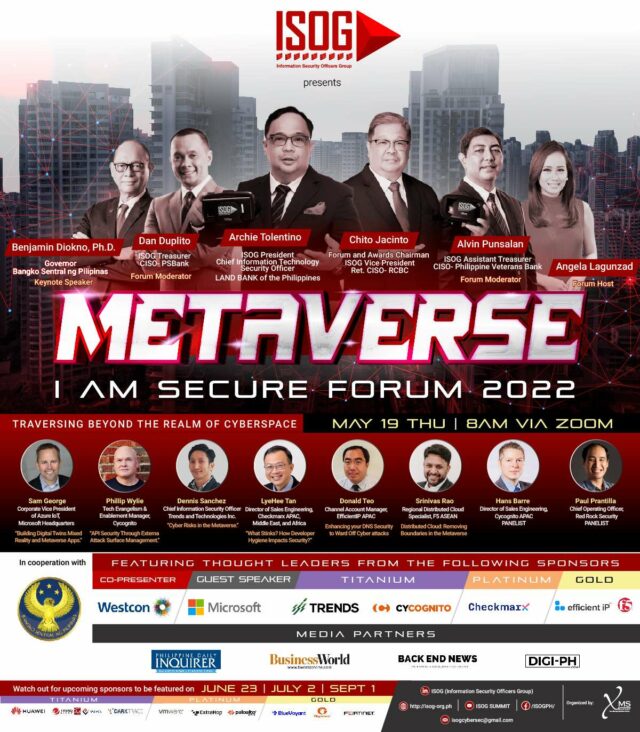
ISOG commences 2022 METAVERSE I AM SECURE cybersecurity virtual forum series

The Information Security Officers Group (ISOG), the leading information security professional organization in the Philippines, successfully held on May 19 the first installment of its 2022 virtual cybersecurity forum series. With the theme Traversing Beyond the Realm of Cyberspace, the METAVERSE I AM SECURE forum gathered more than 500 C-level executives, local and international decision-makers, experts, and cyber leaders for an in-depth discussion on ensuring cybersecurity in the Metaverse.

In the first forum, ISOG focused on how information security professionals must gear up for protecting the banking industry in the Metaverse ecosystem. Highly exposed to cyber threats, financial institutions need to ensure that their cybersecurity capabilities are ready to safeguard institutions in the Metaverse.

“It is imperative that we keep ourselves informed with the new developments offered in the Metaverse, allowing us to be familiar not only with the opportunities it offers, but more importantly the challenges that come with it,” said Archie Tolentino, ISOG President and Land Bank of the Philippines Chief Information Technology Security Officer.

Cybersecurity professionals gained insights and motivation from the keynote speech of Bangko Sentral ng Pilipinas (BSP) Governor Benjamin E. Diokno, Ph.D. The forum participants also learned about mixed reality and metaverse apps from the guest speaker, Microsoft Azure IoT Corporate Vice-President Sam George.

They also learned about the challenges, risks, technologies, and opportunities in the Metaverse from the informative presentations of the event sponsors. The roster of thought leaders who spoke during the forum include Trends and Technologies Inc. Chief Information Security Officer (CISO) Dennis Sanchez, CyCognito Tech Evangelist and Enable Manager Phillip Wylie, Checkmarx Director of Sales Engineering for Asia-Pacific (APAC), Middle East, and Africa LyeHee Tan, Efficient IP APAC Channel Account Manager Donald Teo, and F5 ASEAN Regional Distributed Cloud Specialist (through Westcon) Srinivas Rao.

“This event forum is a great avenue for stakeholders to discuss significant and pressing matters around the metaverse in the banking sector. Our strategic response in forming the standardized regulations in the metaverse for the industry helps us understand the perspectives and, consequently, design an effective solution that benefits all stakeholders,” said Chito Jacinto, ISOG Vice President, and Forum and Awards Chairman.

The forum delegates also participated in an engaging panel discussion entitled Entering the Metaverse Ecosystem, and Addressing Digital Safety in the Metaverse, wherein industry experts answered the delegates’ questions posted on the chat section of the virtual event. The panelists were the event speaker sponsors, Cycognito APAC Director of Sales Engineering Hans Barre, and Red Rock Security Chief Operating Officer Paul Prantilla. The panel discussion was moderated by ISOG Treasurer and CISO of PSBank Dan Duplito and ISOG Asst. Treasurer and CISO of Philippine Veterans Bank Alvin Punsalan.

Hundreds of delegates also won raffle items and received premium giveaways such as the ISOG self-heating hotbox meal & Virtual Reality box.

Organized by XMS, the Metaverse 2022 Forum Series is one of ISOG’s cybersecurity awareness programs in partnership with Banko Sentral ng Pilipinas, Bankers Association of the Philippines, National Privacy Commission, and the Department of Information and Communications Technology. ISOG’s media partners were Philippine Daily Inquirer, BusinessWorld, DIGI.PH, and Backend News.

The remaining events of the Metaverse forum series will be held virtually on June 23, July 2, and Sept. 1.

Since 2015, ISOG has been organizing programs and events to strengthen cybersecurity awareness and secure network infrastructure in the Philippines. For more details about ISOG and their campaigns, visit ISOG’s official website at www.isog-org.ph and socials at LinkedIn: ISOG (Information Security Officers Group), Facebook: ISOGPH, and YouTube Channel: ISOG SUMMIT.


Spotlight is BusinessWorld’s sponsored section that allows advertisers to amplify their brand and connect with BusinessWorld’s audience by enabling them to publish their stories directly on the BusinessWorld Web site. For more information, send an email to online@bworldonline.com.

Join us on Viber to get more updates from BusinessWorld: https://bit.ly/3hv6bLA.

[B-SIDE Podcast] Trolls, TikTok, and the 2022 elections

Follow us on Spotify BusinessWorld B-Side

The use of social media platforms such as Facebook, Twitter, and YouTube during the 2022 elections in the Philippines has exacerbated polarization and personality-oriented politics.

In this B-Side episode, Jonathan C. Ong, associate professor of global digital media at the University of Massachusetts Amherst, explains to BusinessWorld senior reporter Arjay L. Balinbin how disinformation strategists took advantage of social media to add to the political noise. 

In a political system as fragmented as the Philippines’, the volatile nature of social media makes it an effective political tool for disinformation. 

An earlier study co-authored by Mr. Ong identified four organizational models of disinformation production: the in-house staff model, the advertising and public relations (PR) model, the clickbait model, and the state-sponsored model.

The 2022 national elections demonstrated the diversification of the disinformation industry, as shown by the emergence of political campaigning on TikTok, Instagram, and YouTube, among others; the increased ​use of social media influencers and celebrities to amplify political messages, and the acceleration of investment in social media due to the health crisis.

Fake news or disinformation producers refer to themselves as PR consultants, political marketers, spin consultants, or media strategists. Main indicators of success are if their clients are elected into office and if they are able to influence public discourse.

Philippine presumptive president Ferdinand “Bongbong” Marcos Jr. has benefited the most from social media disinformation or misinformation. According to Mr. Ong, the use of social media played a major role in rehabilitating the Marcos brand.

Everyone has a responsibility to fight disinformation. Journalists and fact-checkers should step up efforts to call out false information being spread online as well as expose disinformation actors such as PR agencies that work with politicians.

Recorded remotely on May 6, 2022. Produced by Earl R. Lagundino and Sam L. Marcelo.


For stories of trolls and how they got into troll work, check out Catch Me If You Can, a podcast hosted by Mr. Ong and journalist Kat Ventura.

Follow us on Spotify BusinessWorld B-Side

ESG’s emerging influence in PHL business

Photo from redgreystock - freepik

The year 2021 was considered the “year of ESG (environmental, social, and corporate governance) investing.” As Reuters reported last year, independent fund performance data firm Refinitiv Lipper’s study revealed that a record $649 billion was poured into ESG-focused funds worldwide through Nov. 30, 2021, up from the $542 billion and $285 billion that flowed into those funds in 2020 and 2019, respectively. ESG funds account for 10% of worldwide fund assets, the report added.

Such increased interest spurred by the ESG standard can also be seen recently in the Philippines, with the accelerated push for ESG reporting among companies and for sustainable finance initiatives in the financial ecosystem.

In a brief published by SyCip, Salazar, Hernandez, & Gaitmaitan (SyCipLaw), the emergence of ESG investing in the country was traced back to as early as 2016 when the Securities and Exchange Commission (SEC) issued the Code of Corporate Governance for Publicly-Listed Companies (CG-PLC), which adopted an expansive view of corporate purpose, reinforced the idea of stakeholder governance, and introduced sustainability reporting in the governance framework of publicly-listed companies (PLCs).

Notably, the CG-PLC recommends that “the board of directors have a clear and focused policy on the disclosure of non-financial information, with emphasis on the management of economic, environmental, social and governance issues of its business which underpin sustainability.”

A counterpart of CG-PLC for public companies was issued in 2019, containing the same concepts, principles, and recommendations on stakeholder governance and sustainability reporting as those in the CG-PLC.

Furthermore, in February 2019, SEC released Memorandum Circular No. 4, series of 2019, titled “Sustainability Reporting Guidelines for Publicly-Listed Companies,” which specifies the procedure for sustainability reporting in the Philippines. With the issuance of these guidelines, PLCs are now required to submit a sustainability report as part of their annual report each year.

“The Sustainability Reporting Guidelines seek to, among others, help PLCs identify, evaluate and manage their material economic, environmental, and social risks and challenges, and measure and monitor their contribution towards achieving universal targets of sustainability, such as the United Nations Sustainable Development Goals (UN SDGs), and national policies and programs,” SyCip Law’s brief noted.

One year after SEC’s guidelines on ESG reporting were enforced, SyCip Gorres Velayo & Co. (SGV & Co.) reviewed how PLCs responded to SEC’s requirement to publish sustainability reports.

The firm’s study, titled “Beyond the Bottom Line: Sustainability Reporting in the Philippines,” found that 64% out of the 73 PLCs that submitted sustainability reports for the financial year ending December 31, 2019 used the reporting template provided by the SEC to ensure compliance on the first year. Of these PLCs, 40% released stand-alone sustainability reports, while 30% disclosed sustainability information as part of their annual reports.

The study also found that 77% of the sustainability disclosures were focused on UN SDGs, while 45 PLCs used the SDGs to inform about their sustainability strategy, materiality assessment process and/or material sustainability issues.

Discussing these findings, Benjamin N. Villacorte, a partner at SGV & Co., and Yna Altea D. Antipala, a senior associate of the firm’s Climate Change and Sustainability Services team, observed that while the first year of ESG reporting focused more on compliance, such efforts still met the objective of creating awareness and inclusion of sustainability on the board and management agenda.

“In addition, PLCs can improve their reporting on topics such as waste management to address pressing global concerns; resource management, specifically of materials and water, since unhampered consumption is not sustainable; and the protection and rehabilitation of biodiversity and ecosystems affected by operations to minimize negative environmental impact,” Mr. Villacorte and Ms. Antipala wrote in a BusinessWorld column last year.

They also noted that PLCs can further improve on addressing social issues, “particularly privacy and data security, after the pandemic rapidly shifted professional communications into the digital space.”

Also, the Anti-Corruption & Governance Center of the Center for International Private Enterprise (CIPE) stated that the SEC’s initiatives in “establishing a market-wide culture of sustainability” by mandating ESG disclosures is “admirably forward-looking.”

“They have not only helped the Philippines prepare for impending ESG requirements in the EU and US; they have also helped them adapt quickly to growing due diligence demands in global supply chains,”  CIPE wrote on its website.

ESG standards have also begun influencing sustainable financing, starting from as early as 2018 and 2019, when the SEC promulgated guidelines on the issuance in the Philippines of green, social and sustainability bonds under the ASEAN Green Bond Standards, the ASEAN Social Bond Standards, and the ASEAN Sustainability Bond Standards.

Then, in 2020, the Bangko Sentral ng Pilipinas issued Circular No. 1085, more known as the Sustainable Finance Framework, which requires banks to embed sustainability principles, including those covering environmental and social risk areas, in their corporate governance framework, risk management systems, and strategic objectives consistent with their size, risk profile, and complexity of operations. After the launch of this framework, banks such as BDO Unibank, Inc. and Rizal Commercial Banking Corp. started offering sustainability bonds.

More recently, in February of this year, the SEC, along with the ASEAN Capital Markets Forum, is planning to develop Sustainable and Responsible Fund Standards (SRFS), which aim “to provide disclosure and reporting requirements that can be consistently applied by fund managers” in the jurisdiction of the Association of Southeast Asian Nations.

As BusinessWorld reported the same month, the ASEAN SRFS would make investment funds provide disclosures on ESG initiatives, sustainable and responsible investment objectives, and sustainability investment strategies. The standards to be developed will also require disclosure of the processes in place to ensure ESG compliance. — Adrian Paul B. Conoza

Post-pandemic corporate sustainability trends

Recently, ATRAM, an independent asset and wealth manager company, awarded Philippine businesses who gradually crafted initiatives that address multiple, interlinked impact areas concerning the 2030 Agenda for Sustainable Development of the United Nations (UN).

Sustainability teams on Globe Telecom, Bank of the Philippine Islands and Axelum Resources Corp. were hailed as ATRAM Sustainable Investing Champions for Wellness, Progress, and Fairness.

According to PWC, a multinational professional services network, companies must recognize the need to reorient strategic directions in these challenging times to protect their profitability and enhance business reputation — incorporating uptick sustainability strategies that integrate Sustainable Development Goal (SDG) 1: No Poverty, SDG 3: Good Health and Well-Being, SDG 5: Gender Equality, SDG 8: Decent Work and Economic Growth, SDG 9: Industry, Innovation and Infrastructure, SDG 10: Reduced Inequalities, SDG 12: Responsible Consumption and Production, and SDG 17: Partnership for the Goals.

Considering the span in which the country recovers from the pandemic, local and foreign analysts speak of how the future of the economy may depend highly on specific market trends that revolve around corporate sustainability.

In the Breaking the Digital Divide seminar that featured a panel of experts discussing the current state of the Philippines’ hospitality and professional services industries, YCP Solidiance Partner Anna Rellama talked about how forward-thinking companies invest funds in operations and emerging business trends such as digitalization, customer dynamics, hybrid work setups, offsite IT infrastructure and evolving employee-employer relationships.

The seminar also tackled how these organizations can also manage to allocate for the environmental, social, and governance (ESG) metrics of their businesses especially when facing crises.

According to MassChallenge, a global startup accelerator, ESG can help promote industry resilience, collaboration and participation in climate change action, a well-rounded approach to corporate sustainability inclusive of four pillars — Social, Human, Economic, and Environmental.

Looking to the future, several corporate sustainability trends are likely to continue into the second half of 2022 based on the current adoption rates cited by a London-based strategic global market research provider Euromonitor International.

It identified circular economy, climate action, environmental pollution mitigation, commodity price volatility, and resource security as the five key trends propelling the global sustainability agenda.

The circular economy, which was gaining traction pre-pandemic among consumers and businesses, was negatively impacted by COVID-19. In June 2021, around one fifth of professionals reported a pause or delay in initiatives related to waste and recycling. Year 2020 highlighted activities such as renting and buying second-hand products being badly affected by the outbreak.

The survey shows that this pandemic-induced consumer behavior is set to see a reversal of trends where only 13.5% of professionals surveyed expect lower demand for second-hand products to be a permanent change while most professionals (74.2%) report planned investments in recycling initiatives in 2021-2026.

Moving from a linear to a circular world is not only a way to decouple economic growth from the use of resources and avoid unnecessary waste, with market analysts, it is also a tool to reduce emissions and combat climate change.

The report recorded an increasing number of businesses promising to decarbonize supply chains, logistics and portfolios, creating opportunities for green growth and innovation in clean products, services and technologies.

A total of 51.8% of professionals reported that their company is investing or planning to invest in pollution-related initiatives between 2021 and 2026. One fifth of them expect investments in electric vehicles, and others to support suppliers decrease unnecessary emissions, while only 13% foresee investments in the development of carbon capture technologies.

The report also cited that the average consumption of renewable energy has been rising, with China leading the way. However, COVID-19 caused a crash in oil prices which made renewable energies far less competitive and delayed work on certain solar and wind projects.

But the shift to renewable energies is expected to continue, as action to reduce carbon emissions remains a priority for companies, consumers, investors and governments worldwide. According to the survey, 42.3% of professionals stated that their company is investing or planning to invest in the switch to renewable energies.

On the other hand, the report recorded a growing consumption and competition over finite resources alongside climate change. This puts business trades at risk of disruptions to the supply, increased costs of production, and introduction of new tax regulations.

The research noted that the unhampered increase in energy prices appears to have affected prices of other commodities (especially food and metals) through increasing production expenses due to higher energy costs, domestic inflation, and exchange rates.

In conclusion, as the world is highly dependent on resources extracted in emerging and developing countries, based on this recent report, eco-innovation and cross-sector collaboration are seen as keys to reducing costs of resource- and energy-efficient technologies that propels collective sustainability.

The UN believes that ending poverty and other deprivations must go hand-in-hand with strategies which improve health and education, reduce inequality, and spur economic growth – all while tackling climate change and working to preserve oceans and forests.

Hence, investors and business owners are encouraged to perceive ESG as a form of social responsibility — a broader obligation to society as they reinforce a more sustainable future, especially in the post-pandemic world as it conveys a company’s resiliency to unforeseen global or local crises.

Overseas, small and large companies publish reports about their ESG initiatives. Locally, companies need to comply with the Philippine Securities and Exchange Commission’s (SEC) Sustainability Reporting Guidelines for Publicly Listed Companies on a “comply or explain” basis as part of efforts to help them assess and manage their economic, environmental and social impacts in the country.

To amplify the call towards sustainability in the business sector, the SEC is planning to make sustainability reporting for publicly listed companies in the Philippines mandatory beginning 2023. — Allyana A. Almonte

Laying the groundwork for an emerging EV industry

The mainstream adoption of electric vehicles (EVs), once seen as a dream akin to science fiction, could possibly be in the Philippines’ near future.

Among President Rodrigo R. Duterte’s final undertakings as the country’s chief executive is the approval of Republic Act No. 11697, or the Electric Vehicle Industry Development Act (EVIDA), a law aiming to regulate and develop the Philippines’ electric vehicle (EV) industry. The measure outlines the regulatory framework for the manufacturing and adoption of EVs, and includes quotas for their adoption by various industries such as cargo logistics, food delivery companies, tour agencies, and utilities providers.

According to the Palace, the main goal of the policy is to promote the industry as a “feasible mode of transportation to reduce dependence on fossil fuels.” The administration adds that the law governs “the manufacture, assembly, importation, construction, installation, maintenance, trade and utilization, research and development, and regulation of electric vehicles.”

The roadmap will feature an annual work plan to “accelerate the development, commercialization, and utilization of EVs” and recognizes preferential parking slots for EVs and charging stations in dedicated spaces as key to their adoption. In fact, the law stipulates that establishments with 20 or more designated parking slots should dedicate 5% of their space for the use of EVs and provide charging points.

The law also sets manufacturing standards for “EVs, batteries, and facilities, including recycling facilities, parts and components, and charging stations and related equipment”, to be overseen by the Department of Energy, which will also lead the EV adoption campaign.

EVIDA has breathed new life into an industry that has long been fighting for more mainstream attention. As the law provides for the creation of a Comprehensive Roadmap for the Electric Vehicle Industry, it will create a concrete the development plan for the EV industry en route to widespread commercialization of the technology.

The law has also put into the spotlight other measures to push for EV adoption in the Philippines, such as the Department of Trade and Industry’s (DTI) proposal for a zero-tariff for EV imports against the current 30% tariff.

The Chamber of Automotive Manufacturers of the Philippines, Inc. (CAMPI) said the proposal to suspend tariffs is consistent with EVIDA and will support overall EV adoption.

“CAMPI supports all EV technologies including hybrid electric vehicles (HEV), plug-in hybrid electric vehicles (PHEV) and battery electric vehicles (BEV). All these have potential for fuel consumption reduction and vehicle emission mitigation in the mid- to long-term,” CAMPI President Rommel R. Gutierrez said in a statement.

“The scope of the proposal is consistent with the definition of EVs under EVIDA, which includes HEVs, PHEVs, BEVs and light electric vehicles,” it said.

The group shared further insight into the adoption of EVs in the private vehicle market, saying that EV adoption is growing as its members begin to offer original equipment manufacturer EVs.

“Private vehicles accounted for approximately 94% of the total vehicle fleet (excluding trailers and motorcycles) in 2021. In terms of fleet size, there is no doubt that electrification of private transportation will substantially reduce fuel consumption and vehicle emissions,” CAMPI said.

“While there are many factors affecting the wide-spread adoption of EVs, the group is optimistic that EVIDA measures and the 0% tariff proposal put the automotive industry in the right direction in terms of vehicle electrification,” it added.

Another benefit of EVIDA is that it will create investor interest in the country, especially in the technology sector, as it revs up manufacturing capacities.

“With EVIDA, the Philippines is now in a stronger position to further attract tech investment and create high-value jobs by taking advantage of the ongoing global shift to electric vehicles (EVs),” Trade Secretary Ramon M. Lopez said in a statement.

“This measure (is) a move towards lessening direct usage of oil products in transport, thus, signifying reduced air and noise pollution in urban areas. This will also reduce the transportation sector’s direct dependence on oil, especially amidst rising fuel prices affecting both businesses and consumers,” he added.

EVIDA directs the Board of Investments to create an EV Incentive Strategy (EVIS) that will provide fiscal and non-fiscal inducements to reduce the production cost gap between EVs and traditional vehicles. According to Trade Undersecretary Rafaelita M. Aldaba, the law will be critical in the context of rising competition in the ASEAN region to attract EV investment.

“The EVIS will allow the government to provide competitive and industry-specific fiscal and non-fiscal support to attract private sector investments in strategic EV segments, especially manufacturing, which is a crucial step in deepening our participation in the regional automotive value chain,” Ms. Aldaba said.

DTI said that EVIDA will serve as a blueprint for a comprehensive and coordinated policy direction among national government agencies in terms of promoting EV to ensure investors’ confidence and attract EV-related investments, as well as positioning the country to reap the benefits of investing in the emerging global EV industry.

“EVIDA aims to promote innovation in the field of clean energy and sustainable transportation while developing a sunrise industry in the country and generating more employment,” DTI said. — Bjorn Biel M. Beltran

Accelerating 5G adoption and empowering digital lifestyle

Filipinos are known to be digital-savvy, with the Philippines having been dubbed as the social media capital of the world. Even before the new normal pushed more people to the digital world, many Filipinos have already been exploring it.

According to the Digital 2022 report on the Philippines, there were 76.01 million Internet users in the country in January this year. And Internet users (aged 16-64) in the Philippines spent an average of 10 hours and 27 minutes using the Internet each day.

With many Filipinos present online, they surely want to have a smooth experience in the digital space. This makes the fifth-generation network or 5G sound promising.

The latest generation of mobile technology, 5G is said to be 10 to a hundred times faster than 4G. Aside from higher speeds, 5G also has lower latency and larger capacity.

Thousands of 5G cell sites have now been fired up across the Philippines. As of October, Smart Communications has the widest 5G network coverage in the country, with over 4,400 5G sites in more than 4,000 locations. Globe has fired up more than 2,000 5G cell sites as of February. DITO, the country’s third operator, recently launched a 5G home broadband service in select areas in Metro Manila.

The 5G take-up in the country has also been rapidly increasing, though a small fraction still of the total user base, according to UK mobile analytics company Opensignal Ltd in the country’s 5G Experience Report  in October.

Smart said it has around 800,000 5G users on its network in October, which was a 200% increase from the number of its 5G users in December 2020. Meanwhile, Globe said it has detected over 1.62 million devices in its 5G network as of the end-December 2021, and expected to have higher 5G device penetration this 2022.

But how’s the digital experience for 5G users in the country so far?

Opensignal’s “Benchmarking the 5G Experience — Asia Pacific — March 2022” recorded that the Philippines has 136.6 Mbps (megabits per second) 5G download speed and 408.7 Mbps in 5G peak download speed. While the country’s 5G upload speed is 13.6 Mbps.

In addition, among the 10 Asia-Pacific markets in the report, the Philippines saw the greatest uplift when comparing the 5G versus the 4G mobile network experience.

“Impressively, the average 5G download speeds seen by our users were 8.9 times faster than average 4G speeds in the Philippines,” Opensignal analyst Ian Fogg said in the report.

Meanwhile, the country’s 5G availability and 5G reach scored 11.1% and 3.7, respectively. “While not as large, the numerous islands and challenging interior of the Philippines also mean that the scores of 11.1% and 3.7 are similarly impressive,” Mr. Fogg wrote.

Looking at the operators in the Philippines, Opensignal’s Mobile Network Experience Report released in April showed that Smart topped in 5G Availability and 5G Reach with a score of 14.7% and 4.4 points, respectively.

“Our Smart 5G users spent the most time connected to 5G and found a 5G signal in the most locations, making it the outright winner of the 5G Availability and 5G Reach awards,” Opensignal senior analyst Sam Fenwick said in the report.

Smart also won in the 5G download speed and 5G upload speed, scoring 149.9 Mbps and 14.6 Mbps, respectively.

South Korea topped all the speed measures (5G Download Speed [438 Mbps], 5G Peak Download Speed [866.9 Mbps], and 5G Upload Speed [36.1 Mbps]) in the Opensignal 5G Experience report on 10 APAC markets in March. The country is also on top in 5G Availability (30.7%) and 5G Reach (6.6).

“5G is the future of mobile services, although 4G remains in use everywhere, as do 3G and even 2G in some markets,” Mr. Fogg said. “Across Asia Pacific, operators are continuing to expand their 5G services because of the advantages of this latest technology in serving users. In many markets, operators have either just launched 5G services, or are preparing for their first launch.”

The 5G advantage

So how would such presence and further expansion of 5G empower digital lifestyle?

The faster Internet speed, lower latency, and larger capacity promised by 5G can bring a better digital experience, transforming entertainment and business or industry operations.

But while 5G is designed to give more capacity for using social media or video streaming, according to Ericsson, 5G could also provide new innovative use cases like securely streaming high-quality video from an ambulance to the hospital and empowering various new types of smart devices and industry digitalization. 

Aside from enabling high-resolution videos, 5G can further power immersive experiences. Hence, 5G could support businesses looking to create innovative and more creative ways to engage with consumers.

5G, most notably, is also designed to connect other devices more than just smartphones. “For a smart watch that runs on a small battery, 5G can provide a connection that consumes very little energy. For an industrial robot, 5G can provide an extremely stable and fast connection,” Ericsson explained on its website. “This is valuable because, in the future[,] we will see more and more new types of connected devices, each requiring connections with different levels of performance and characteristics.”

While it is shown to enhance and transform day-to-day life, 5G has also been considered to have the capacity to pave the way for more innovations. — Chelsey Keith P. Ignacio

Richer environment, support needed to grow Philippines’ next unicorns

By Adrian Paul B. Conoza, Special Features Assistant Editor

Given an innovative environment and more sources of support, the Philippine startup community has the potential to grow the next unicorns, or startups with a valuation of over $1 billion. This was stressed in the second part of the BusinessWorld Insights series on Philippine startups held recently.

Rene “Butch” Meily, president of IdeaSpace Foundation, Inc. and QBO Innovation Hub, expressed his optimism that the local startup space can soon have its next unicorns, albeit they are hard to find.

“If even a few of these companies turn into unicorns, it’s going to lift all boats. We’re all going to benefit. And that’s the great thing about the startup ecosystem: Somebody’s success is a success for everybody,” Mr. Meily said. “The more successes we have, the more investors will come in, [and more] young people will want to start their own companies, and the more companies are going to go public. It’s a virtuous cycle.”

Ideaspace Foundation runs founder-focused programs for early-stage tech startup founders solving emerging market issues. The foundation also has an Opportunity Fund which enables them to invest in early-stage startups.

The QBO Innovation Hub, meanwhile, provides support to startups across various sizes and development stage through programs like networking events, feedback & mentorship sessions, and an incubation program.

Mr. Meily also noted that the digitization of micro, small, and medium enterprises, which compose about 98% of the Philippine economy to date, can be an opportunity for startups to turn into unicorns.

“There are human resource platforms that are promising, but there are also startups which are helping businesses export products. There’s a number of these ideas and companies that are out there that have a lot of potential for growth,” Mr. Meily noted, adding that there are as well a number of businesses that look into digitizing sari-sari stores.

For Anna Irmina B. Navarrete, co-founder and president of Kickstart Ventures, Inc. (KVI), the pressure to become a unicorn must be removed among Philippine startups. “What we want to focus on is creating companies that are sustainable, that are scalable, that are massively successful,” she said.

Ms. Navarrete stressed that the Philippines can be a leader in the startup industry, as much as it has become in the business process outsourcing industry and in terms of companies that have expanded globally from a Philippine base.

“The Philippines has succeeded at creating and supporting industries and companies that solve real problems, created jobs, and served employees, customers, shareholders, and communities. I think we (startups) can do the same thing,” she said.

KVI launched in 2012 its first fund which focused on helping consumers and businesses adopt digital. Then, in 2015, it unveiled a bigger fund to make investments in telco, media, and associated technologies. More recently, in 2020, it introduced the Active Fund, which looks into technologies that support the future of data, work, home, and life.

While becoming a unicorn apparently takes much time and effort, progressing into a camel, or a startup that can survive a crisis without a sky-high valuation, can be the initial step for startups to take.

“Camels might be more practical, they’re easier to build, they are more resilient. Unicorns have this need to grow so fast, almost at all cost; while camels are more focused on profitability,” Mr. Meily said. “I think what you’re going to need in order to survive and be a successful company [is] to do well first, and that means making money… Unless you do that, you might not survive the ‘deserts’.”

Yet, for both camels and unicorns to thrive, cultivating an inclusive and innovative environment is seen to be necessary.

“Whether we talk about camels or unicorns, still we really need to focus on building the foundations and ensuring that we have a robust startup and innovation ecosystem,” Dr. Rafelita M. Aldaba, Undersecretary of the Department of Trade and Industry (DTI), said during the online forum.

She shared in detail the policies and initiatives that DTI has set in place together with other government agencies to further enhance the Philippine startup ecosystem.

The policy reforms include the Ease of Doing Business Act, Philippine Innovation Act, Innovative Startup Act, and the One Person Corporation, which is included in the Revised Corporation Code.

Moreover, Ms. Aldaba shared about the Startup Venture Fund, a P500-million fund being implemented by DTI and the National Development Company that aims to help startups develop their products, scale up, and expand.

The Undersecretary also mentioned DTI’s Regional Inclusive Innovation Centers (RIICs), which she said are intended to “connect our startups with large small and medium enterprises along with government, co-working spaces, accelerators, incubators, research and development labs, universities, and funders.”

To date, there are eight RIICs, with the first four established in Legazpi, Cebu, Cagayan De Oro, and Davao.

“With continuous government support and whole-of-nation thrust towards creating an innovative society, I also truly believe we’ll be able to have an environment where camels and unicorns can thrive and develop,” Ms. Aldaba said. “We also remain committed to fostering the development of the country’s startup ecosystem through the implementation of the Innovative Startup Act and the Philippine Innovation Act.”

Ms. Navarrete of KVI added that the Philippines already has in place many of the essential market characteristics for unicorns to thrive.

“We’ve got a young demographic, high mobile and broadband penetration, and an openness to try new things. Especially when you think about the last two years, we now have a new Filipino consumer who is much more digital, much more willing to test new things,” she explained.

KVI’s president also pointed out that freely sharing information is a key for startups to be successful that they can progress into unicorns. “When you look at big success stories globally, these have come because information, data, and science are respected,” she said. “Conversely, when you think of… startups [that] have had spectacular failures, [they have] come from disinformation, fraud, and abuses.”

Another aspect within the environment that should be improved further, for Mr. Meily, is entrepreneurship among Filipinos.

“There’s always been this tendency to play it safe… and we hear this time and again, ‘Okay ka na diyan, huwag ka nang umalis’ (‘Stay there, don’t go elsewhere’). I think we need to cultivate a new type of culture where it’s okay to take a chance, to fail, and to start again,” he said. “If we can get that entrepreneurial mindset that you don’t have to go abroad or work in a big company to be successful, you can start your own company and create wealth for yourself, your employees, and the country.”

Key findings, recommendations from Ecosystem Mapping Report for the country presented

Thirty-three key stakeholders converged on May 18 at Dusit Thani Manila and online to validate the ARISE Plus Philippines’ Ecosystem Mapping Report and to discuss the key recommendations and findings for strengthening Philippine entrepreneurship. ⁠— www.facebook.com/ARISEPlusPh

By Chelsey Keith P. Ignacio, Special Features Writer

Highlights from the International Trade Centre (ITC) Ecosystem Mapping Report for the Philippines were presented at the workshop on “Strengthening Philippine Entrepreneurship: Findings and Key Recommendations from the Ecosystem Mapping” held last May 18.

The Ecosystem Mapping Report provided a ‘bird’s-eye-view’ of the business supporting organizations operating in the country. It included insights into service overlapping and gaps in the offerings and recommendations formulated based on the findings for the institutions in the network.

The report, which has also been conducted in other countries, followed the ITC’s methodology. Its three pillars include service mapping and gaps analysis, network analysis, and user experience analysis.

ITC National Expert and Startup Village Founder Carlo Calimon went over the report’s first pillar. “There are many [ecosystem] players, whether it’s incubators, accelerators, investor groups, associations, and the like. And at the end of the day, their objective remains the same: to support the development of entrepreneurs in the country,” he shared.

He also explained the eight gaps identified regarding the service offerings, among which concern government support and leadership for the ecosystem, limited access to funding (especially for the idea to the startup stage), and lack of focus on areas outside Metro Manila.

One of the identified overlaps is duplication of programs, with majority of the support focused on the idea to the early- stage entrepreneurs. Another overlap is high competition as organizations compete for limited resources like funding and the startups themselves because of comparable service offerings.

“In the Philippines, what we’ve seen compared to other ecosystems that ITC has mapped is there’s an abundance of actors in the ecosystem,” Claire Sterngold, Ye! community manager at ITC, noted. “However… while you have a lot of actors in the ecosystem, we’re still exhibiting more of a hub and spoke model where we have a number of actors with a high degree centrality, where they have high numbers of connections coming into them. But then, the bridging capacity, the betweenness centrality, between factors that are connected to the key node is not quite there. And that’s where the network analysis can provide guidance and insights into how these networks can be strengthened.”

Key insights presented from the report’s network analysis are that connections are concentrated in Manila; the potential growth through differentiating connections; setting up a country guide that could provide information to entrepreneurs; and expanding the support beyond the technology sector.

Furthermore, despite various support available, one of the six key findings from the report’s user experience analysis is that entrepreneurs do not know where to go for support. “So it’s not about a lack of presence or support programs; it’s about a lack of awareness of said programs,” said Chino Atilano, an ITC national expert and TimeFree Innovation founder.

Credibility is another challenge for young entrepreneurs. “It hinders them from doing business with different corporations, potential customers and potential partners, just because of their age and most especially if they’re also female,” Mr. Atilano shared.

Nine recommendations are presented in the report to help strengthen the country’s support ecosystem for startups, especially for the youth and women-led.

The Ecosystem Mapping Report will be published on the website of the Department of Trade and Industry (DTI) by the end of the month.

“The report is a welcome addition to our continuing effort to better understand the Philippine entrepreneurship ecosystem and work together to further foster innovation and collaboration between and among government agencies at both the national and local levels, the stakeholders from industry, startups, MSMEs, youth and women entrepreneurs, academe, and other sectors,” DTI Undersecretary Dr. Rafaelita M. Aldaba said.

Aside from the introduction of the mapping report, the workshop also included a panel discussion and breakout discussions. It is organized together with the DTI under the ARISE Plus Philippines, a European Union-funded project that seeks to cultivate inclusive economic growth in the country through improved international trade performance and competitiveness as well as economic integration.

Edutech platform Bitskwela helps Filipinos understand bitcoin, cryptocurrency better

Photo from www.bitskwela.com

By Bjorn Biel M. Beltran, Special Features Writer

Cryptocurrencies, once only acknowledged and traded in the more obscure recesses of the Internet, have been steadily gaining more attention among investors over the past few years. It would be difficult not to, as last November, bitcoin, the most popular cryptocurrency, hit an all-time high of more than $68,000, pushing the value of the crypto market to $3 trillion.

Bitcoin now hovers around $30,000, plunging the market’s value to around half of what it was. The market’s volatility has led to a number of investors losing vast amounts of money due to improper risk management and lack of understanding about cryptocurrency in general.

“Personally, I know some people who lost a lot of money due to improper understanding and risk management investing in this space,” Jiro Reyes, chief executive officer of crypto edutech platform Bitskwela, told BusinessWorld in an interview.

Citing research done by the Organization for Economic Cooperation and Development (OECD), Mr. Reyes pointed out that 74% of Filipinos are aware of cryptocurrencies today, but 83% of them do not understand it well.

“This is absurd given that the Philippines is actually number 15 in global cryptocurrency adoption, reaching 76 billion in transaction volume from June 2020 to July 2021,” he said.

In addition, the Philippines ranked first out of 20 countries in terms of ownership of NFTs or non-fungible tokens that are traded digitally. About a third of Filipino Internet users claim to own these tokens, according to a December online survey by Australian information service provider Finder.

“That is a good thing, right? But if you pair it with the lack of education and crypto-literacy in the Philippines, you come up with a population that is investing into an asset class they do not understand, leading to billions and billions of pesos being lost in crypto-related scams locally,” Mr. Reyes said.

“That’s what we’re here to solve at Bitskwela, in all languages for all Filipinos.”

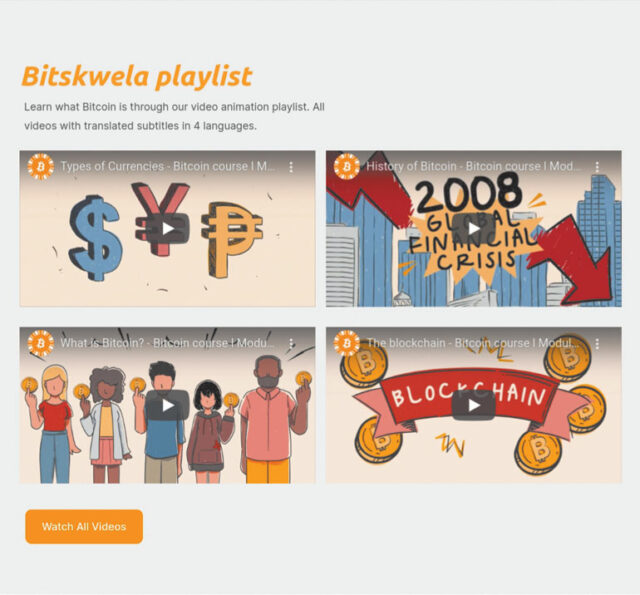
Bitskwela (bitskwela.com) is a Filipino-led edutech platform that strives to make bitcoin and cryptocurrency education accessible to all Filipinos of any ethnicity. The platform currently offers 13 modules and a five-minute crash course on cryptocurrencies in English, Tagalog, Cebuano, and Ilocano, translated by professional translators who are native speakers of their respective languages.

Bitskwela is also planning on expanding their content to cover other major Filipino languages such as Ilonggo, Bicolano, Waray, Pampango, and Pangasinense, as well as offer alternative learning resources such as blogs, podcasts, newsletters, quizzes, webinars, and face-to-face events for a more holistic learning environment.

“Cryptocurrency is just a tool. I have lots of friends who tackled cryptocurrencies, they failed at it, now they hate it. What I’ve noticed overall is rooted in the lack of education and the lack of understanding,” Mr. Reyes said.

“We’re helping people in general tackle the space better. Sadly, the common mindset people have when tackling cryptocurrency is ‘Okay, I’ll throw money into this cryptocurrency, or this NFT, or this game, and I’ll be rich overnight’.”

He hopes that by teaching cryptocurrency, Filipinos can also indirectly gain a better understanding of financial literacy and risk management to help them make informed decisions regarding their money, especially as the crypto industry continues to grow and develop at a rapid pace.

“We see the fast pace of the crypto industry as an opportunity rather than a risk. With the exponential growth of the industry comes lots of things that Bitskwela can simplify into digestible forms for the common Filipino,” he said.

ADVERTISEMENT
ADVERTISEMENT