Home Blog Page 6354

Australia PM Albanese appoints record number of women to diverse cabinet

REUTERS

Australia‘s new federal ministry was sworn into office on Wednesday, with Prime Minister Anthony Albanese appointing a record number of women to a diverse cabinet team that includes religious minorities and Indigenous Aboriginals.

A total of 10 women were included in Mr. Albanese‘s 23-member cabinet, surpassing the seven in the previous Liberal-National coalition government led by Scott Morrison.

Industry Minister Ed Husic and Youth Minister Anne Aly became Australia‘s first Muslim federal ministers at a ceremony in the national capital, Canberra, while Linda Burney, wearing a kangaroo-skin cloak, became the first Aboriginal woman to hold the Indigenous Australians ministry.

Mr. Albanese formed an interim ministry, that included 4 other key members, two days after the May 21 election so he could attend a Quad group meeting in Tokyo, attended by U.S. President Joe Biden and the leaders of Japan and India.

Deputy Prime Minister Richard Marles – who was part of the interim ministry along with Penny Wong in foreign affairs, Jim Chalmers as treasurer and Katy Gallagher in finance – has been assigned the defense portfolio.

Don Farrell is the new trade minister and Tanya Plibersek the environment minister, while Clare O’Neil will be in charge of home affairs and Chris Bowen takes energy.

Former Labor leader Bill Shorten will be minister for government services.

Mr. Albanese on Tuesday said Labor will govern in its own right, claiming 77 seats in the 151-seat lower house, letting it form a majority government without the support of climate-focused independents and Greens. Read full story

Securing a majority lowers the risk for Labor that it would have to negotiate with 16 crossbenchers to pass legislation, although it will still need to win additional support for legislation in parliament’s upper house. – Reuters

N.Korea hails progress in fight against drought despite COVID wave

FREEPIK

North Korea has made progress in its fight against drought, and rice planting is under way nationwide even as the country ramps up efforts to tame its unprecedented coronavirus wave, state media said on Wednesday.

The reclusive country has been waging a battle against its first-ever COVID-19 outbreak since declaring a state of emergency and imposing a nationwide lockdown last month.

The outbreak triggered concerns over a potential food crisis amid an “all-out fight against drought, in a country that lacks vaccines and medical supplies and has already been hit by international sanctions over its weapons programs. Read full story

The anti-drought efforts have made progress after the central and local government organs and even art groups mobilized “all capacities and means” to improve irrigation and helped with rice planting, the official KCNA news agency said.

“All farmlands that could suffer drought were located without exception, and farmers were informed of reasonable watering methods according to soil humidity and lighting conditions in order to prevent crop damage,” KCNA said.

Agriculture authorities have come up with “meticulous farming strategies”, including maximizing the efficiency of rice planting machines and securing high-quality fertilizers, it added.

Droughts and flooding have long posed seasonal threats to North Korea, and major natural disasters could further hurt its isolated economy. Leader Kim Jong Un has warned of a tense food situation due to the pandemic and last year’s typhoons. Read full story

KCNA said 93,180 more people showed fever symptoms as of Tuesday evening, bringing the total to 3,738,810. It did not report any new deaths, and the toll was 70 a day before.

State media has said the COVID wave has shown signs of abating, after the daily numbers of people with fever topped 390,000 about two weeks ago.

North Korea has never confirmed how many people have tested positive for the virus. But experts have said the released figures could be underreported, which could make it difficult to assess the actual scale of the situation.Reuters

Yellen says she was ‘wrong’ about inflation path; Biden backs Fed

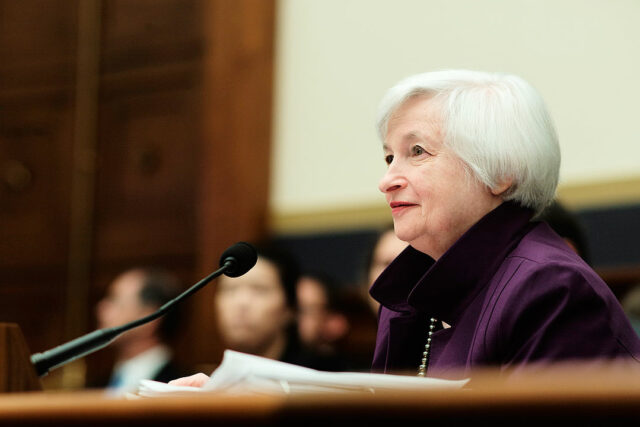
US Treasury Secretary Janet Yellen. — US FEDERAL RESERVE

U.S. Treasury Secretary Janet Yellen said on Tuesday that she was wrong in the past about the path inflation would take, but said taming price hikes is President Joe Biden‘s top priority and he supports the Federal Reserve’s actions to achieve that.

Asked in a CNN interview whether she was wrong to downplay the threat that inflation posed in public statements over the past year, Ms. Yellen said: “I think I was wrong then about the path that inflation would take.”

“As I mentioned, there have been unanticipated and large shocks to the economy that have boosted energy and food prices and supply bottlenecks that have affected our economy badly that I didn’t at the time fully understand,” Ms. Yellen said, adding that the shocks range from Russia’s invasion of Ukraine to recent COVID-19 lockdowns in China.

“So really, the shocks to the economy have continued, but inflation is the number one concern for President Biden,” Ms. Yellen said.

Mr. Biden “believes strongly and is supportive of the independence of the Fed to take the steps that are necessary” to reduce inflation, Ms. Yellen said, adding that unemployment was also nearly as low as it has ever been since World War Two.

A Treasury spokesperson said later: “The Secretary was pointing out that there have been shocks to the economy that have exacerbated inflationary pressures which couldn’t have been foreseen 18 months ago, including Russia’s decision to invade Ukraine, multiple successive variants of COVID, and lockdowns in China.”

Mr. Biden met earlier on Tuesday with Fed Chair Jerome Powell and underscored that he “respects the independence of the Federal Reserve,” a White House official said.Read full story

Ms. Yellen said the Biden administration was taking action to try to supplement the Fed‘s effort by reducing the cost of prescription drugs and health care and by pushing proposals in Congress to boost the use of renewable energy.

While she said a recent decline in core inflation data was encouraging, she noted that oil prices remained high and Europe was working on a plan to ban imports of Russian oil.

“We can’t rule out further shocks,” Ms. Yellen said. – Reuters

K-pop supergroup BTS meets Biden, speaks at White House

BTS in 2019 Clockwise from left: Jin, RM, Jungkook, J-Hope, Suga, V, and Jimin — DISPATCH/EN.WIKIPEDIA.ORG/

South Korean boy band BTS, a fundraising juggernaut for U.S. social justice causes, met with President Joe Biden at the White House on Tuesday to discuss hate crimes targeting Asians.

The K-pop stars made brief statements to reporters prior to the meeting, calling for a halt to crimes targeting Asian Americans.

“We were devastated by the recent surge of hate crimes, including Asian American hate crimes,” band member Jimin said through a translator. “To put a stop on this and support the cause, we’d like to take this opportunity to voice ourselves once again.”

The meeting came as Asian American and Native Hawaiian/Pacific Islander month in May drew to a close following a sharp upswing in hate crimes against the community in the past year.

Attacks against people of Asian descent have escalated as some politicians and pundits have encouraged Americans to blame China for COVID-19. Read full story

While the meeting was closed to press, the White House said one goal was to “discuss the importance of diversity and inclusion and BTS‘ platform as youth ambassadors who spread a message of hope and positivity across the world.”

The musicians are known for using their lyrics and social campaigns aimed at empowering youngsters since making their debut in 2013. Their fan base extends into older demographics, tying their spending clout to an internet-savvy generation that harnesses the power of social media.

In June 2020, BTS fans raised about $1 million in one day in the #MatchAMillion online campaign for U.S. social justice causes, matching the band’s donation to Black Lives Matter.

The group’s management Big Hit Music said it was honored to be invited to the White House.

“As we are visiting as artists representing South Korea, we look forward to discussing various topics including inclusion, diversity, anti-Asian hate crimes, culture and art,” Big Hit Music said. – Reuters

Transformation redefined: Putting transformational leadership at the heart of business

By Leo Salvador

In a post-pandemic world, the idea of revisiting and building on existing corporate management policies has never sounded more enticing. Inspiring others and being visionaries for change has become the goal of companies and their leaders, intent on looking past actions that did not work and channelling a renewed optimism that after all the upheavals during the pandemic, lessons gleaned can help foster business growth.

That said, more businesses are cultivating a culture that places emphasis on transformational leadership. This is an old concept gaining increased interest today, more than four decades after James MacGregor defined transformational leadership in 1978. He mentioned that the idea of transformation is not just directed towards leaders but to all employees, fresh graduates and new hires included. At the heart of this principle is the realization that as challenges to business arise, corporate management must prepare for them by being more proactive, going beyond old solutions, and introducing new policies that inspire employees to innovate and be more resilient to change.

The benefits of transformational leadership

Transformational leadership, or the ability to engage people to change and improve, covers the ways leaders can assess and satisfy the needs of their team members. Its benefits are many. Think lower turnover costs. Because leaders who employ this type of leadership style have been found to keep their staff inspired, employee turnover rates are reduced. And as staff are more engaged and motivated, their productivity levels increase.

Likewise, results of the McKinsey Global Report also show that when companies take on more transformative policies and actions, they become much more likely to succeed in its corporate goals and agenda. Looking at it in a broad perspective, the benefits of incorporating transformative leadership styles is more boon than bane for business.

Ultimately, there are four factors unique to transformational leadership that businesses can consider implementing in the workplace.

Idealized influence

When leaders become effective role models, their team and staff tend to trust and respect their decisions more easily. This is the core principle behind idealized influence as a factor of transformational leadership. Because they are perceived as exemplary figures of the organization, their staff identifies with them and are able to emulate their actions.

Inspirational motivation

When managers aim to persuade and continuously motivate their teams, they are also able to foster team spirit. Inspirational motivation suggests that when leaders are able to express clear goals and evoke a sense of commitment and positive, collective action among their peers, they contribute to overall work productivity and growth of their company.

Intellectual stimulation

When the pandemic hit, new ways of work had to be implemented. This scenario did more than just keep leaders on their toes; it allowed them to tap their inner resilience and think of innovative ways to keep business going. Intellectual stimulation suggests that leaders must go beyond challenging the norms and go out of their way to foster an innovative, creative mindset among their colleagues.

Individualized consideration

Aside from training, coaching and mentoring contribute a whole lot in making assessments and keeping communication open between staff and leaders. When these initiatives are rigorously maintained, management is able to encourage employees to reach not just their individual goals in the company but also help them advance their careers.

When these factors are met, corporate management will be able to help employees grow and transform their individual actions into more meaningful business efforts. Aside from following these steps, leaders, will also be able to benefit from engaging in various executive learning and training programs, where they will be able to learn more about transformative leadership through formal, leadership-led discussions.

While there is no one-size-fits-all solution to hasten and improve the transformation leadership process, businesses can create their own policies which take into account ways that can further inspire and motivate all employees. This, along with business resiliency efforts, can pave the way for companies to get sturdier footing amidst a volatile business environment.


Leo Salvador is the Senior Manager from the Knowledge and Management Group of P&A Grant Thornton. He is part of the Senior Leadership in Finance Program, a speaker-led training and discussion on transformational leadership organized by P&A Grant Thornton and the Financial Executives Institute of the Philippines (FINEX). To know more about the program, you may contact the FINEX Academy through: Michael Vinluan, Executive Director, FINEX – mbvinluan@finex.org.ph. Or Shaine Cervantes, Administrative Assistant/Support Staff, FINEX Academy – wdsecervantes@finex.org.ph


Spotlight is BusinessWorld’s sponsored section that allows advertisers to amplify their brand and connect with BusinessWorld’s audience by enabling them to publish their stories directly on the BusinessWorld Web site. For more information, send an email to online@bworldonline.com.

Join us on Viber to get more updates from BusinessWorld: https://bit.ly/3hv6bLA.

Larger than life vivo ads across Metro Manila encourage Filipinos to ‘Own Your Masterpiece’

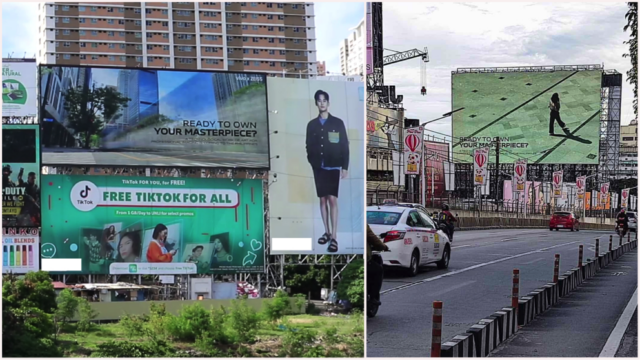
vivo’s digital billboard displays in various locations in NCR are hinting to a masterpiece that is soon to come to the Philippines

With central business districts and cities gradually coming back to life, flocks of commuters and motorists once again frequent the highways in Metro Manila. One thing that may spice up the transit for those traveling through major thruways are vivo’s digital billboards posing the question: “Ready to own your masterpiece?”

vivo’s billboards feature striking images of everyday-life scenes highlighting masterpieces in the ordinary. From the patriotic shot of the Philippine national flag, to a candid photo of a kalesa rider, to people passing through a city bridge, the photos depict simple moments in life, presented in grand and vivid portraits. Paired with the challenge of owning your masterpiece, vivo’s ads inspire the desire to make every moment count.

A masterpiece in the making?

Aside from the booming headline, the vivo ads also include a teaser statement saying “a technological work of art for professional imaging is coming to the Philippines.” As one of the country’s leading smartphone brands, this could be a nod to vivo’s partnership with ZEISS to deliver state of the art tech devices.

For the techies and digital enthusiasts, this is also a cause for excitement. With many devices and gadgets rumored to soon hit the local market, it leads one to wonder which model in particular vivo is gearing to launch.

Given the quality of the photos featured in the ads, the “technological work of art” that may soon be announced may be a high-powered camera in the body of a vivo smartphone that can enable Filipinos to capture their own masterpieces. Until more details are revealed, tech fans and commuters catching sight of the billboards are to wonder what the vivo ads could be alluding to.

Can you spot the masterpieces?

Excitingly, vivo has announced via its social media channels that it will be giving away prizes for those who will be able to spot and take a selfie with these larger than life ads. Announcing their Find the Masterpiece promo, vivo said that they will be accepting entries from their followers from May 31 to June 7. Those who will be able to take a snapshot with one or two locations may win vivo merchandise. Meanwhile, those who can catch all three billboard locations will be eligible to win tickets to the Clark Hot Air Balloon Festival. Five winners of the said grand prize, along with the consolation prize winners, will be announced on June 8.

The billboard locations will be revealed via the official vivo Fam PH community page. So for those looking to score merch and Clark Hot Air Balloon Festival tickets from vivo, the search is on!

For more information on vivo’s latest news and updates, please head to vivo’s official Facebook, Instagram and YouTube channels.


Spotlight is BusinessWorld’s sponsored section that allows advertisers to amplify their brand and connect with BusinessWorld’s audience by enabling them to publish their stories directly on the BusinessWorld Web site. For more information, send an email to online@bworldonline.com.

Join us on Viber to get more updates from BusinessWorld: https://bit.ly/3hv6bLA.

BSP sees inflation above 5% in May

PHILIPPINE STAR/ RUSSEL A. PALMA
Pump prices have steadily increased since the start of the year. — PHILIPPINE STAR/ RUSSEL A. PALMA

HEADLINE inflation likely quickened and breached 5% in May due to higher pump and food prices and a weaker peso, the Bangko Sentral ng Pilipinas (BSP) chief said on Tuesday.

May inflation may have reached between 5% and 5.8%, BSP Governor Benjamin E. Diokno said in a Viber message. This is well above the 2-4% target of the central bank for this year.

The consumer price index last hit the 5% level in December 2018 and stood at 5.2% that month.

May inflation data will be released by the Philippine Statistics Authority (PSA) on June 7. Headline inflation was at 4.9% in April, the highest in more than three years.

“The continued increase in domestic petroleum prices, higher prices of key food items, and peso depreciation are the primary sources of inflationary pressures during the month,” Mr. Diokno said.

Pump prices of gasoline, diesel, and kerosene have jumped by P25.55 per liter, P29.10 per liter and P25.20 per liter, respectively, as of May 24 year to date, Energy department data showed.

PSA data also showed increases in the price of pork and vegetables in some trading centers in the first phase of May (May 1-5) versus the last phase of April (April 15-17).

Meanwhile, the peso remained at the P52-per-dollar mark in May, closing the month at P52.37 on Tuesday, down P1.37 or 2.69% from its P51 finish on Dec. 31, 2021.

These upward pressures could have been offset by lower electricity rates of Manila Electric Co. (Meralco), as well as the decline in rice and liquefied petroleum gas (LPG) prices, the BSP chief added.

Meralco said households will likely see a decrease of around P24 in their May electricity bill as distribution-related refund offset an increase in power generation charge. The overall rate went down to P10.063 per kilowatt-hour (kWh) in May from P10.183 per kWh in April.

Oil companies also cut the price of LPG by P5.73 to P5.75 per kilogram (kg) or about P63.03-P63.29 per 11 kg cylinder as of May 1.

On the other hand, average retail prices of special rice dropped by about 25 centavos to P4 in the first phase of May versus the second phase of April.

“Looking ahead, the BSP will continue to monitor closely emerging price developments to enable timely intervention to arrest emergence of further second-round effects, consistent with BSP’s mandate of price and financial stability,” Mr. Diokno said.

The BSP chief last week said they are likely to raise key interest rates by another 25 basis points at its next policy review on June 23 following a hike of the same magnitude at its May 19 meeting to curb growing inflationary pressures.

At the May meeting, the central bank upwardly revised its average inflation forecast for 2022 to 4.6% from the previous forecast of 4.3%, exceeding the 2-4% target band. For 2023, the BSP’s inflation forecast was hiked to 3.9% from 3.6% previously. — BVR

Bank lending jumps 10% in April, fastest in 2 years

BW FILE PHOTO

BANK lending jumped by 10% in April, reflecting the rebound in economic activity as restrictions were eased alongside the steady decline in coronavirus disease 2019 (COVID-19) cases.

This was the fastest growth in bank lending in 23 months, or since the 11.2% in May 2020.

Preliminary data from the Bangko Sentral ng Pilipinas (BSP) showed outstanding loans of big banks expanded by 10.1% to P9.9 trillion in April from P8.99 trillion in the same month of 2021.

The growth in bank lending was faster than the 8.9% seen in March.

On a month-on-month seasonally adjusted basis, bank lending net of reverse repurchase (RRP) placements with the BSP inched up 0.9%.

Inclusive of RRP placements with the BSP, bank lending was 9.8% up in April.

“Credit conditions continue to improve as economic activity rebounds amid a manageable domestic COVID-19 caseload,” the BSP said in a statement.

Borrowings for production activities jumped by 10.3% to P8.74 trillion in April, fueled by double-digit expansion in loans for real estate (18.7%), manufacturing (12.4%); and information and communication (26.9%).

Consumer loans also rose by 6.7% to P879.39 billion, a faster pace than the 3.6% seen in March.

Credit card loans expanded by 16% in April, while salary-based general purpose consumption loans went up 2.2%. Motor vehicle loans dropped 3.1%.

“A steady improvement in overall credit activity and stable financial market conditions have allowed the BSP to continue rolling back its pandemic-induced liquidity interventions,” the central bank said.

The BSP said it will keep a close watch on “evolving credit and liquidity conditions to ensure that appropriate level of liquidity is available to nurture the momentum of economic recovery, while containing inflation pressures.”

The continued expansion of bank lending in April likely reflected some borrowers’ rush to secure financing in view of the increase in long-term interest rates locally and globally amid elevated inflation, Rizal Commercial Banking Corp. Chief Economist Michael L. Ricafort said in an e-mail.

The central bank is likely to raise its key interest rate by another 25 basis points (bps) at its next policy meeting in June.

The BSP delivered its first interest rate hike since November 2018 when it raised its benchmark interest rates by 25 bps on May 19 as it tries to temper rising inflationary pressures.

The Monetary Board will have its next policy review on June 23.

MONEY SUPPLY
As lending increased, the BSP said M3 — which is considered as the broadest measure of liquidity in an economy — grew by 7.3% to P15.3 trillion in April. This was slower than the revised 7.7% growth in March.

On a month-on-month seasonally adjusted basis, the BSP said M3 was “broadly unchanged.”

“The continued expansion in domestic liquidity indicates that liquidity remains sufficient to sustain the economy on a firm recovery path. A strong rebound in economic activity has also allowed the BSP to gradually withdraw its extraordinary liquidity intervention,” the central bank said in a statement.

The BSP said domestic claims rose by 9% in April, higher than the revised 8.1% in March, thanks to improved bank lending to the private sector and increase in net claims on the central government. 

“Claims on the private sector grew by 6.5% in April from 5.6% in March with increased bank lending to non-financial private corporations and households,” the central bank said.

“Meanwhile, net claims on the central government rose by 17.6% in April from 16.3% (revised) in March owing to the sustained borrowings by the National Government.”

Net foreign assets (NFA) in peso terms rose by 5.2% in April, from the revised 8.2% in the prior month.

“The slower expansion in the BSP’s NFA position reflected the decline in gross international reserves relative to the same period a year ago. Meanwhile, the NFA of banks continued to expand, albeit at a slower pace, on account of higher investments in marketable debt securities as well as loans and receivables with nonresident banks,” the BSP said. — Keisha B. Ta-asan

ADB approves another $250-M loan for PHL

A man walks through a mud-covered cornfield in Tuguegarao after heavy flooding due to Typhoon Ulysses, Nov. 19, 2020. — PHILIPPINE STAR/MICHAEL VARCAS
THE Philippines is one of the countries considered most vulnerable to climate change. — PHILIPPINE STAR/ MICHAEL VARCAS

THE Asian Development Bank (ADB) approved a $250-million loan to help the Philippines’ efforts in climate change adaptation and mitigation.

“This is ADB’s first climate action policy-based loan. It will support the Philippines develop, deliver, and finance a holistic approach to address climate change by transitioning to low-carbon pathways, strengthening the ability of vulnerable sectors to adapt to climate change, and increasing conservation of land and marine resources,” ADB Vice-President for East Asia, Southeast Asia, and the Pacific Ahmed M. Saeed said in a statement.

The Philippines is considered one of the countries that are most at risk from the climate crisis. An average of 20 typhoons hit the Philippines every year, bringing strong winds and heavy rain that cause flooding and damage to infrastructure. The archipelagic country is also facing threats from rising sea levels.

The ADB noted the Philippines is fourth in the Global Climate Risk Index, which ranked countries most affected by extreme weather from 2000 to 2019.

“We have a climate emergency… The Philippines has adopted important climate actions and goals that will help address these threats and challenges and guide a green and resilient recovery after the COVID-19 pandemic,” Mr. Saeed said.

The ADB said the Climate Change Action Program is expected to boost the Philippines’ efforts to achieve its commitments under the Paris Agreement, and to assist vulnerable sectors in the transition to a climate-resilient and low-carbon economy.

“The new program targets policy reforms and will help the Philippine government build planning, financing, and institutional systems to scale up climate action. It will support reforms to enhance the resilience of farming and fishing communities to the increasing impacts of climate change and reduce greenhouse gas emissions through the deployment of renewable energy, energy efficiency, and sustainable transport,” the multilateral lender said.

The program was prepared in tandem with the Agence Française de Développement, which also provides $172 million to the Philippine government.

According to the ADB, policy-based loans transfer the loan amount to a government’s general budget. The funds are only released when the borrower completes policy reforms or actions that have been agreed with ADB.

On Monday, the ADB announced it approved a $400-million policy-based loan to help the Philippines further deepen its capital markets.

The ADB is one of the Philippines’ biggest sources of official development assistance, with average annual lending of $1.9 billion in the last five years. — CRAG

Tax reform laws added P229 billion in revenues in 2021

BW FILE PHOTO

THE implementation of tax reform laws generated P228.6 billion in additional revenues for the government in 2021, exceeding the target by 14%, the Department of Finance (DoF) said on Tuesday.

In a report to Finance Secretary Carlos G. Dominguez III, the DoF Domestic Finance Group said the implementation of the Tax Reform for Acceleration and Inclusion (TRAIN) law, the Tax Amnesty Act, and the sin tax reform laws helped boost the tax take.

DoF Undersecretary Valery Joy A. Brion said revenues from TRAIN reached P171.1 billion in 2021, surpassing the target by 8.3%.

She said the sin tax laws, which raised excise tax on cigarettes, heated tobacco products, vapor products and alcoholic beverages, contributed P52.9 billion to last year’s revenues. This exceeded the target by 22.7%.

The Tax Amnesty Act, on the other hand, generated additional revenues of P4.6 billion last year.

The DoF said the implementation of these laws, which are part of President Rodrigo R. Duterte’s Comprehensive Tax Reform Program (CTRP), helped generate P576 billion in additional revenues from 2018 to 2021.

Mr. Dominguez said the tax reform laws plus the Corporate Recovery and Tax Incentives for Enterprises (CREATE) Act makes Mr. Duterte’s CTRP nearly 90% complete.

From 2018 to 2021, TRAIN contributed P476.1 billion in additional revenues, while sin tax reforms and tax amnesty added P85 billion and P14.6 billion, respectively.

Mr. Dominguez said the tax reform packages helped the Duterte administration hike infrastructure spending to above 5% of gross domestic product, and increase allocations for healthcare and pandemic response programs.

Security Bank Chief Economist, Robert Dan J. Roces said that the revenue uptake for the said period could have been higher if not for the pandemic.

“But given this, closely tied into the collection is the economic reopening, with higher revenues a function of looser mobility curbs, which in turn is a function of better health outcomes,” Mr. Roces added in an e-mail.

ING Bank N.V. Manila Senior Economist Nicholas Antonio T. Mapa said in an e-mail the outgoing administration deserves credit for passing key tax reforms.

“A robust growth momentum provided by previous administrations helped allow authorities the scope to slap additional taxes (income, sin, and excise) as the population was better placed to weather the increase in taxes. This in turn helped secure additional revenues that were used in the various infrastructure, investment, and stimulus projects to help bolster growth momentum further,” Mr. Mapa added.   

Mr. Roces said the incoming Marcos administration should adopt the DoF’s fiscal consolidation plan to improve tax efficiency and revenue effort.

“Additional taxes are never popular and tend to slow overall growth momentum by sapping consumption and investment. With the economy just exiting from the pandemic-induced downturn, perhaps the incoming administration is wary of carrying out relatively unpopular decisions for now,” Mr. Mapa said. — A.M.P.Yraola

Marcos gov’t eyes PPP projects, incoming DPWH chief says

PHILIPPINE STAR/ MICHAEL VARCAS

THE INCOMING Marcos administration will work to entice more investors in its infrastructure program through public-private partnerships (PPPs), focusing on high-impact projects, according to the next head of the Department of Public Works and Highways (DPWH).

“(President-elect Ferdinand R. Marcos, Jr.) said we have to continue to entice and invite the private sector through our public-private partnership, actually particularly in projects that are financially viable for them,” SMC Tollways President and Chief Executive Officer Manuel M. Bonoan said in an interview with ABS-CBN News Channel on Tuesday.

Outgoing President Rodrigo R. Duterte had previously steered clear of PPPs, a mode preferred by the Aquino administration, due to allegedly disadvantageous provisions such as state subsidies and sovereign guarantees.

Asked how the projects will be funded with the government’s depleted budget, Mr. Bonoan said: “We just have to be very selective on high-impact projects that we can now afford at this time — very selective in the sense that these are high-impact projects that can immediately contribute to the economic recovery.”

“We’ve realized that funds are very scarce at this time, although we will actually coordinate with the Department of Finance and the economic managers and get guidance from them on how we will continue with the Build, Build, Build program.”

Mr. Bonoan said Mr. Marcos also wants the DPWH to support the food production and tourism programs.

High-impact projects would include those that address traffic congestion to provide “unimpeded travel for the delivery of goods and services that will redound actually to lesser costs, most probably in the costs of commodities and services,” he said.

“We just have to reprioritize some of the projects in the pipeline, so… we will be selecting infrastructure projects, most especially in the road sector, which is the core function of the department, to get high-impact infrastructure projects that can contribute immediately to propel the much-needed economic recovery of the country,” Mr. Bonoan said.

At the same time, he vowed to address corruption and ensure the quality of projects, as well as be “prudent in using our resources.”

“We intend to correct all these. We need to reassess the modality of how our infrastructure [projects] are being undertaken this time and make sure that these are quality infrastructure that we are going to do. There are many things that we can correct immediately.”

Mr. Bonoan said president-elect Marcos instructed him to ensure that unfinished infrastructure projects should be completed as soon as possible so these can help drive economic recovery.

On questions over the role of San Miguel Corp. (SMC) in the government’s infrastructure projects now that he will be heading the DPWH, he said public-private partnerships “are big projects that are not unilaterally decided by the DPWH” and will undergo scrutiny by the government.

In April, DPWH officials said the current administration had completed 12 out 119 flagship projects.

Of the 119 infrastructure flagship projects, seven were completed in 2020, including the P18-billion New Clark City Phase 1 and the P14.97-billion Clark International Airport Expansion Project, and five in 2021, including the P21.97-billion MRT-3 Rehabilitation Project.

The department expects the completion of seven more big projects by June 30 and 12 more by December, including the P45.29-billion Southeast Metro Manila Expressway Project and the P75-billion MRT-7 of SMC.

SMC announced on Tuesday that its infrastructure arm has already started construction on a 20-hectare property in San Jose del Monte, Bulacan that will serve as the train depot of the MRT-7 project.

DICT PRIORITIES
Meanwhile, Ivan John E. Uy, who was tapped by Mr. Marcos to head the Department of Information and Communications Technology (DICT), said the new administration will prioritize digitization and improving the country’s connectivity.

“One of the solutions we are looking at now is the Starlink project of Elon Musk. This will actually provide direct linkage without laying those expensive fiber optic cables,” he said in a separate ANC interview.

Mr. Uy oversaw the formulation of the Philippine digital strategy from 2011 to 2016, according to incoming Press Secretary Trixie Cruz-Angeles. He chaired the Commission on Information and Communication and Technology under the administration of former President Benigno S.C. Aquino III. — Arjay L. Balinbin

Making art that matters

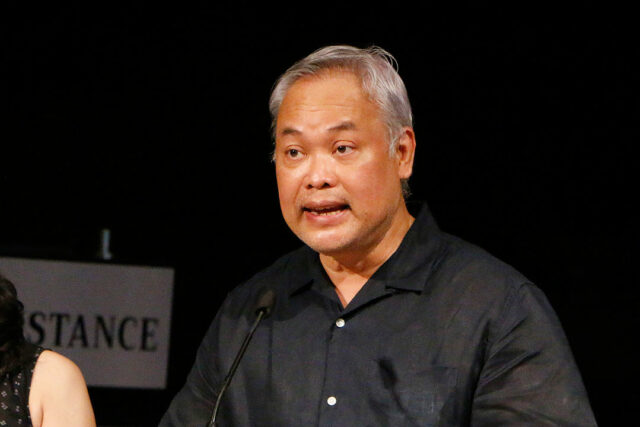
CCP artistic director Chris Millado at the ‘Damay At Dangal’ event last Apr. 9.

A talk with outgoing CCP artistic director Chris Millado

LIKE towns all around the country, Victorias, Negros Occidental held regular town fiestas. So, it comes as no surprise that while growing up there in the 1970s, the young Chris B. Millado developed a fascination with carnivals or the local perya.

“I was very much exposed as a kid to town fiestas,” Mr. Millado told BusinessWorld in an interview via Zoom.

“One of the centerpieces of the town fiesta is the carnival where you have different activities going on,” he said. These included parades, marching bands, games and competitions, and enjoying the food.

“It was a multi-sensory event which stuck with me, and I thought those were the experiences in my youth that drew me to certain cultural experiences…,” Mr. Millado said of what would later inspire one of his proud achievements as the artistic director at the Cultural Center of the Philippines (CCP).

FROM PEOPLE POWER TO MARCOS REDUX
Mr. Millado graduated with a Bachelor of Arts in Theater at the University of the Philippines-Diliman in the early 1980s. While in college, he founded his own theater companies that presented political theater. He joined the CCP after the People Power revolution in 1986 which toppled the dictator, Ferdinand E. Marcos, Sr.

“When I joined the CCP, it was 1986 which was right after People Power revolution and the CCP then was going through a substantial or profound reorientation in terms of democratizing the accessibility to the space, decentralizing the leadership, Filipinizing the content,” Mr. Millado said.

The CCP, after all, had been the pet project of the first lady Imelda Romualdez Marcos whose ideas of “the good, the true, and the beautiful” were reflected in the projects and productions of the CCP.

The reorientation was done under the leadership of then CCP vice-president and artistic director Nicanor Tiongson.

Mr. Millado worked under the CCP Outreach program for just a short while before going on to pursue masteral studies in New York in 1989. He returned to the CCP in 1993, working under the Performing Arts Department before leaving again, this time for a teaching stint abroad. Upon returning in 2000, Mr. Millado became artistic director for Tanghalang Pilipino, one of the CCP’s resident companies. He became CCP’s associate artistic director in 2003, and eventually took on the role of vice-president and artistic director in 2011.

“It did not occur to me at all that in the future, the artistic directorship was going to be part of my life,” Mr. Millado said.

“What was very clear to me was that I wanted to be a theater artist. I want to be a theater director. So, one of the images of the CCP that stuck with me was the Artist’s Entrance… [It] became like some kind of special portal for me,” he said.

Mr. Millado retires this month, just as Ferdinand Marcos’ son, Ferdinand “Bongbong” Marcos, Jr., is to be sworn in as President of the Philippines. There are already questions swirling in cultural circles about how the CCP might refocus now with the restoration of the Marcos family.

HIGHs AND LOWS AS ARTISTIC DIRECTOR
As he anticipates retirement this month, Mr. Millado recalls significant events during his 11 years of service as CCP’s vice-president and artistic director.

Upon assuming the role in 2011, his main goal was to make art matter to everyone. “One of the first things that I looked into was how to make the CCP [come] alive with events now,” he said.

Mr. Millado also aimed at initiating more art festivals to draw audiences in.

“Festivals have a good way of bringing a lot of audiences because of its multi-arts multi-activity platform,” he said. “It is a good way of enjoining many artists and creatives to be part of it at the same time. It’s a great opportunity for a big number of sponsors and partners to come in and collaborate.”

While the position carries the word “artistic,” the designation is more of a management position focused on managing artistic personnel, resources, and content for production and distribution.

Mr. Millado recalled that he was met by a challenge in his first week as artistic director — he was tasked to be the spokesperson during the controversy surrounding the art exhibition Kulo, a group show featuring mixed-media artwork by 32 artists shown at the CCP Main Gallery. Included in the show was Mideo Cruz’s Poleteismo, a mixed-media collage of religious objects placed alongside phallic implements. This particular piece was the focus of much outrage.

“That drew the ire of certain sectors of religious societies, as well as drew during the inquiry from Senate… discussions on how what is freedom of expression, and even through a national conversation,” Mr. Millado said. “For the first few days of my artistic directorship, it was definitely a very difficult conversation.”

However, he saw it as an opportunity in creating a productive discussion on artistic freedom, and the notion of good and bad art.

UPHOLDING ARTISTIC EXPRESSION
Despite drawing flak, Mr. Millado said that showing art which has socio-political commentary was never difficult.

“The way I experienced it since 1986 up to the present time, I would say there was no difficulty at all. The CCP believes in freedom of expression,” Mr. Millado said. “[It] allows for the free flow of ideas, engagement of ideas, conversations however difficult they may be.

“To me, that’s the quality of good art. Because the quality of effective art, the quality of art that matters, is when it engages with you emotionally, mentally, intellectually…” he added. “…at some point it might be beneficial to the way you might view things in the world, in your country, with other people, and so on.”

Mr. Millado hopes that his successor continues to uphold artistic freedom.

“I hope that [next] artistic director continues to be staunchly in defense of artistic freedom, continues to be staunchly in defense of the artist choices, and continues to defend and protect that space, which I feel is essential and necessary for the growth of good art,” he said.

PROUD OF THE FIESTA
Mr. Millado’s proudest achievement was the founding of the Pasinaya Open House Festival, a perya if you will, which is held every February as a way to kick off the activities for National Arts Month.

Founded in 2004, Pasinaya began as a one-day festival where the CCP’s resident companies showcased excerpts of their work. Fifteen years later, it has become one of the biggest festivals in the country, with more than 300 shows and more than 100 participating artists and companies. In recent years, the event has been extended to run for three days, drawing around 50,000 audience members within and outside Manila.

The festival started out with free admissions and later introduced the “pay-what-you-can” and “watch-what-you-can” set up, with a suggested minimum entrance fee of P50.

“The point was to educate our audiences in terms of the value of art, [and] that there’s a lot of resources that go into the creation of music, theater, and so on,” Mr. Millado said.

RETURNING TO CREATIVE PURSUITS
Upon retiring, Mr. Millado plans to return to directing, and his long-abandoned creative pursuit with writing.

“I plan to go back to writing. If someone needs my experience in terms of teaching, I’ll be glad to get back to teaching as well,” he said. Projects with Tanghalang Pilipino are also lined-up for the year.

He said that he will miss “being here in the center, surrounded by art and artists in the middle of their creation” and “the ability to just walk into any space and be surrounded by the spirit of creativity.”

Mr. Millado promised that he will still be around — this time, as a member of the audience.

“I will be there,” he said. “One who will applaud from the bleachers the wonderful work of artists.” — Michelle Anne P. Soliman


ADVERTISEMENT
ADVERTISEMENT