Home Blog Page 6347

Bangsamoro lawmaker files bill on solar energy use in region’s socialized housing projects 

OFFICIALS led by Minister Hamid Aminoddin D. Barra of the Bangsamoro Ministry of Human Settlements and Development (MHSD) break ground for one of three housing projects composed of 200 units launched in Basilan on Jan. 7-8, 2022. — MHSD.BANGSAMORO.GOV.PH 

A BILL mandating the installation of solar energy facilities in socialized housing projects funded by the Bangsamoro Autonomous Region in Muslim Mindanao (BARMM) government was filed before its Parliament on Tuesday. 

Parliament Member Amir S. Mawallil, author of Bill No. 178 or the Renewable Energy for Socialized Housing in the BARMM Act of 2022, said the proposed law is in line with the goal of both the national and regional governments to develop more renewable energy sources. 

Under the measure, the Bangsamoro Government will install solar energy systems in these units that will provide secure, clean, and environment-friendly power services in urban and rural areas, especially in settlements for the disadvantaged, the homeless, survivors of conflicts and atrocities, former combatants, and Internally Displaced Persons,Mr. Mawallil said in a statement.  

The bill includes a provision on acquiring easements from neighboring properties to ensure solar power access in existing and future housing projects.

Mr. Mawallil noted that under the BARMM budget, more than P3.2 billion has been allocated for various housing projects.  

These programs speak of the scale of construction in the upcoming months to provide socialized housing in the region and of the scale of opportunity for promoting and developing the use of renewable energy in the implementation of these programs,he said.  

The biggest housing fund at almost P2.5 billion is under the Kapayapaan sa Pamayanan (KAPYANAN) program of the Office of the Chief Minister.   

The Ministry of Human Settlements and Development has also allocated P671.65 million for affordable housing projects while the Ministry of Interior and Local Government has a P65-million housing budget for former combatants. 

The bill is supported and co-authored by Parliament Members Baintan Ampatuan, Laisa Alamia, Rasol Mitmug, Jr., Suharto Ambolodto, Don Mustapha Loong, Rasul Ismael, Abraham Burahan, Sittie Shahara Mastura, and Paisalin Tago. MSJ 

DTI confiscates P1.4M worth of uncertified goods in Metro Manila  

THE DEPARTMENT of Trade and Industry (DTI) has confiscated P1.4 million worth of uncertified products in the capital region in the first two months of 2022.  

The DTI said in a statement on Tuesday that its Fair Trade Enforcement Bureau (FTEB) confiscated 7,551 pieces of uncertified products after conducting random inspection activities within Metro Manila from Jan. 1 to Feb. 28.  

The number of goods was higher than the 846 pieces of products worth P346,704 seized in the same period last year.   

A total of 181 establishments in the National Capital Region were inspected, 100 of which were issued notices of violation for selling products without the necessary Philippine Standard (PS) mark and Import Commodity Clearance (ICC) sticker as required by the government.   

The seized products include low carbon steel wires, sanitary wares, television sets, cement, extension cords, electric blender, brake fluid, circuit breakers, helmets, plugs, socket outlets, unplasticized polyvinyl chloride (uPVC) pipes, rerolled steel bars, and other consumer products that need to undergo mandatory certification.  

The PS marks and ICC stickers are the guide and assurance of our consumers that the (local or imported) products they purchase are safe and conforming to the relevant Philippine National Standards mandated by the law,Trade Undersecretary Ruth B. Castelo said.  

Trade Assistant Secretary Ronnel O. Abrenica said the increase in confiscated products was due to the recalibration of resources and refocus on regularly conducting enforcement and seizing operations.   

We kicked off the year strong and we will sustain this synergy to foster a heightened consumer protection in the country,Mr. Abrenica said. Revin Mikhael D. Ochave

Peso rises as Russia-Ukraine talks progress

THE PESO strengthened versus the greenback on Tuesday following some developments in the diplomatic talks between Russia and Ukraine.

The local unit closed at P52.415 per dollar on Tuesday, gaining six centavos from its P52.475 finish on Monday, based on Bankers Association of the Philippines data.

The peso opened Tuesday’s session at P52.495 against the dollar, which was also its weakest showing. Meanwhile, its intraday best was at P52.33 versus the greenback.

Dollars exchanged increased to $1.01 billion on Tuesday from $806.55 million on Monday.

“The peso appreciated due to risk-on sentiment amid reports of positive developments in Russia-Ukraine talks,” a trader said in an email.

Ukrainian President Volodymyr Zelenskiy said the negotiations with Russia went “pretty good”, Reuters reported. He said they have engaged with Israeli Prime Minister Naftali Bennett as part of a negotiation effort to end the war with Russia “with a fair peace.”

The discussions between Kyiv and Moscow are expected to continue this Tuesday.

Meanwhile, Rizal Commercial Banking Corp. Chief Economist Michael L. Ricafort in a Viber message said the peso tracked the gains in the local stock market.

The Philippine Stock Exchange index rose by 202.97 points or 2.98% to end at 7,019.92 on Tuesday, while the wider all shares index likewise rose by 55.58 points or 1.53% to 3,694.07.

For Wednesday, Mr. Ricafort gave a forecast range of P52.30 to P52.50 per dollar, while the trader expects the local unit to move within P52.25 to P52.50. — L.W.T. Noble with Reuters

Domagoso vows to improve Masbate’s infrastructure, utility services 

PHILIPPINE STAR/EDD GUMBAN

PRESIDENTIAL candidate Manila Mayor Francisco IskoM. Domagoso has promised residents of the island province of Masbate that he will address their concerns on infrastructure and utility services if he wins in May.   

We will make our rounds, townhall meeting here, townhall meeting there. We will go to the people and learn about their situation,he said in a mix of English and Filipino in a statement.  

Like I did yesterday, I asked the people about their situation in Masbate and they said they have problems with electricity, internet, and access to potable clean water, plus farm-to-market road because there are still many dirt roads, he said.    

The Manila Mayor is currently campaigning in Bicol Region, considered a bailiwick of another presidential contender, Vice President Maria Leonor LeniG. Robredo. The region is also home of the late Senator Raul S. Roco who founded Aksyon Demokratiko, whose standard bearer is Mr. Domagoso.  

Again, we will try to go as far as Albay and try to reach as many Bicolanos as much as possible and go around the country again. After this, I think well be in the Visayas area,Mr. Domagoso said. Jaspearl Emerald G. Tan

Former anti-communist official calls for extended Duterte term through revolutionary government 

A FORMER official of the Philippine government’s anti-communist task force on Tuesday called for a revolutionary government (rev-gov), a move that would overturn the 1987 Constitution and install President Rodrigo R. Duterte as head of a new regime. 

Retired military general Antonio G. Parlade, Jr., who served ass spokesman for the task force, made the call in a pro-Duterte rally in a major thoroughfare near the capital Manila, which was attended by only about 100 people.  

During the rally, Mr. Parlade claimed that a revolutionary government is the only answer to curb alleged corruption in the Commission on Elections (Comelec). 

We support [President Rodrigo] Duterte,their banner read. Rev Gov na.” 

Mr. Parlade filed for candidacy in the 2022 presidential race but was later barred by the elections body due to a technical issue.  

The former military official, who has been opposing anti-establishment calls, told the Commission on Appointments in 2020 that he does not believe in a revolutionary government.  

In a statement, Palace spokesman José Ruperto Martín M. Andanar said Mr. Parlade’s call is part of his “guaranteed freedom of speech and expression.” 

“However, as Defense Secretary Delfin Lorenzana directed the Armed Forces of the Philippines, the retired generals call is better left ignored,he said. Kyle Aristophere T. Atienza 

Shares rebound on bargain hunting ahead of Fed

PHILIPPINE STAR/KRIZ JOHN ROSALES

SHARES recovered on Tuesday on bargain hunting ahead of the US Federal Reserve’s policy meeting.

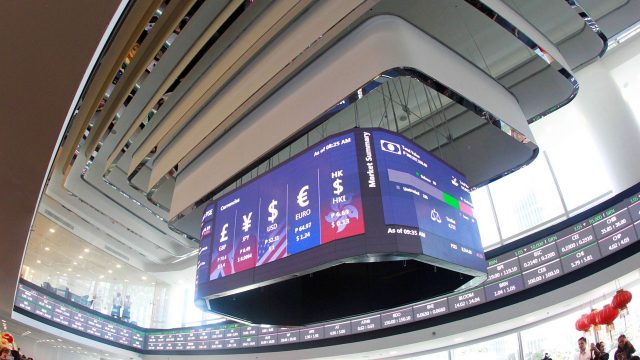
The benchmark Philippine Stock Exchange index (PSEi) rose by 202.97 points or 2.97% to close at 7,019.92 on Tuesday, while the broader all shares went up by 55.58 points or 1.52% to 3,694.07.

“The PSEi is apparently very resilient and that’s due to bargain hunting, accumulation for long-term investing, with investors remaining confident that the Philippine economy is of sound footing and can absorb downside risks from the geopolitical tensions such as our economic reopening measures post-COVID, reforms, low inflation base and relative insulation from the war and economic sanctions,” First Metro Investment Corp. Head of Research Cristina S. Ulang said in a Viber message.

“Investors turned into bargain hunters with many looking ahead to the Federal Reserve’s next monetary policy decision later this week amid an ongoing war in Ukraine and soaring inflation,” Regina Capital Development Corp. Head of Sales Luis A. Limlingan said in a Viber message.

Mr. Limlingan said the market expects the Fed to raise its key rate by a quarter of a percentage point from zero at the end of its two-day meeting on Wednesday.

The US Federal Reserve is set to raise rates for the first time since the pandemic at its meeting which concludes on Wednesday, with traders looking for indications about the pace of future rate hikes, Reuters reported.

Markets anticipate a 25-basis-point rise at this meeting.

Back home, all sectoral indices ended in the green except for mining and oil, which dropped by 453.67 points or 3.69% to 11,812.89.

Meanwhile, property increased by 113.80 points or 3.50% to 3,357.45; financials climbed 48.53 points or 3.06% to 1,629.60; holding firms rose by 193.95 points or 2.95% to 6,760.53; industrials went up by 189.85 points or 2.05% to 9,433.50; and services improved by 13 points or 0.71% to 1,825.41.

Value turnover increased to P9.61 million with 3.61 million shares changing hands from P8.91 million or 2.59 million issues seen the previous trading day.

Decliners outnumbered advancers, 138 versus 76, while 36 names closed unchanged.

Net foreign selling declined to P660.90 million from the P1.52 billion seen on Monday.

Asian stocks were in the red on Tuesday as surging coronavirus disease 2019 (COVID-19) cases in China hit the confidence of investors who are already worried about the Ukraine war and the first US interest rate rise in three years, which could come this week, Reuters reported.

MSCI’s broadest index of Asia-Pacific shares outside Japan was down 1.91%, led by Chinese stocks. The index is down 8.2% so far this month.

Hopes that talks between Russia and Ukraine due to resume on Tuesday could provide a resolution to the conflict prompted a sharp fall in global oil prices.

However, the fourth round of negotiations began on Monday with no major progress seen, adding to the nervousness in equity markets. — L.M.J.C. Jocson with Reuters

League of Provinces seeks freeze on new cities amid enlarged IRA

COMELEC

THE League of Provinces of the Philippines (LPP) called for a moratorium on the creation of new cities and provinces in order to bolster the financial viability of local government units (LGUs).

Speaking at a recent webinar organized by the Philippine Institute for Development Studies and the House of Representatives – Congressional Policy and Budget Research Department, LPP Executive Director Sandra Tablan-Paredes said the creation of new cities and provinces results in a smaller slice of the pie for all LGUs, many of which are dependent on the internal revenue allotment (IRA), their share of revenue generated by the National Government.

“(We) asked for a moratorium on the creation (of new provinces and cities) because it impacts the fiscal viability of existing LGUs,” she said.

Ms. Tablan-Paredes, on behalf of the LPP, which is also known as the Liga, also sought a higher bar for promoting municipalities to cities and for municipalities to rise through the six classes based on income generated.

The IRA is a percentage of the National Government’s revenue from three years prior that LGUs are entitled to as an automatic appropriation. The latest IRA distribution, P522.25 billion from the government’s 2018 revenue, was P121.59 billion shared by 82 provinces, P119.77 billion shared by 145 cities, P178.13 billion shared by 1,478 municipalities, and P103.25 billion shared by 41,902 barangays, according to the Department of Budget and Management.

The Philippines has the second-highest number of subnational governments in the Asia-Pacific, with 43,703 units, second only to India, with 250,706 units, Congressional Policy and Budget Research Department Deputy Secretary-General Romulo Emmanuel Miral, Jr. said at the webinar.  

The Bureau of Local Government and Finance Department Order No. 031.2018, governs the conversion, merger, and abolition of LGUs. The criteria are mainly based on income they generate internally, without accounting for the IRA.

The Supreme Court’s Mandanas ruling struck down the National Government’s previous interpretation of the Local Government Code, which had held that the IRA should be sourced from internal revenue collections — effectively, taxes generated by the Bureau of Internal Revenue (BIR). Instead, the court ruled that the IRA must also include non-BIR collections, such as the revenue generated by the Bureau of Customs.

The increased pot to be shared by LGUs has raised concerns of a rush to be promoted to city or province status, as a means of gaming the IRA allocation process.

In turn, the National Government has responded to the enlargement of the IRA pot by devolving more frontline functions to LGUs starting this year, adding to the potential responsibilities of local governments to go along with the increased IRA.

Ms. Tablan-Paredes estimated that even with enlarged IRAs, LGUs will have between 13 and 23% left over for their own priority projects after funding their mandated functions.

Ms. Tablan-Paredes said she prefers combining LGUs in order to minimize the fragmentation of local governments, create efficiencies for tax collection, and improve economies of scale to minimize administrative and compliance costs. 

However, she pointed out the “political realities” and “lack of political will” is expected to serve as an obstacle for such consolidation. 

“If LGUs are not fiscally viable to deliver basic services, it defeats the very purpose of being an LGU,” Ms. Tablan-Paredes added. — Tobias Jared Tomas

Looming wage hikes, fare increases signal overshooting inflation

PHILIPPINE STAR/ MICHAEL VARCAS

PRESSURE on the government to raise the minimum wage and grant higher fares to the transport industry will cause inflation to overshoot government targets, ING Bank-NV Manila Senior Economist Nicholas Antonio T. Mapa said in a note.

The looming increase in wages and fares, which are known as second-round effects after the prices of basic commodities like fuel and food rise, strengthens the case for inflation breaching the government’s 2-4% target band for a second straight year, Mr. Mapa said.

“Second-round effects beget additional price pressures such as wage and fare hikes, (which will) put more money in the hands of the consumer, which will fan even more price increases as Filipinos push up the prices of already-scarce items,” he added.

As oil prices continue to surge in response to the Russia-Ukraine war, petitions to increase the minimum fare are currently under review. A labor group has also urged the government to increase daily wage in Metro Manila by as much as P470.

Mr. Mapa said such pressures are signs that higher prices may not be transitory.

“Although private transport costs (account for) roughly 3% of the consumer price index basket, the sustained trudge higher of energy products is likely to ripple through to the rest of the consumer basket and more importantly on the Filipino consumer’s psyche,” he said.

Inflation currently remains within target at 3% in February. However, Bangko Sentral ng Pilipinas (BSP) Governor Benjamin E. Diokno has warned that rising oil prices may cause inflation to surpass the target by the second quarter, before slowing in the second half of 2022.

Mr. Diokno has said inflation could hit 4.7% under a scenario where the Dubai crude price, the benchmark for Asia, averages $140 per barrel this year. Dubai crude was $104.38 per barrel on Tuesday, according to Bloomberg. Last month, the central bank raised its inflation forecast to 3.7% from 3.4% previously amid the surge in oil prices.

Mr. Mapa added that the impact of rising wheat prices will also hurt consumers as the Philippines imports 100% of its wheat. He said Russia and Ukraine account for 20% of all wheat exports.

“With energy costs and the price of staples on the uptrend, we are seeing how countries are making a mad dash to secure stable supplies, with surging wheat prices driving a 20% increase in the cost of rough rice on the global markets,” Mr. Mapa said. 

As inflation risks become more pronounced, Mr. Mapa warned that the BSP may already be “behind the curve” as it remains dovish despite expected monetary policy tightening by the US Federal Reserve.

“Against the backdrop of a free-falling currency, a hawkish Fed and projections for an inflation target breach, we can at least say that monetary authorities are likely to struggle to contain the most important aspect of inflation targeting: anchoring inflation expectations,” he said.

The Monetary Board kept key policy rates at record lows in February. Mr. Diokno last week said that the authorities will continue to prioritize supporting economic recovery, but remain ready to respond when needed to address inflation risks.

The BSP will have its next policy review on March 24. — Luz Wendy T. Noble

BoI trials one-stop shop for Calabarzon investors ahead of expected FDI influx

THE Board of Investments (BoI) said it is conducting trials for a one-stop shop for investors seeking to locate in the Calabarzon region south and east of Metro Manila, in expectation of an increase in foreign direct investment (FDI) inflows following the recent approval of laws liberalizing some industries.

BoI Managing Head Ceferino S. Rodolfo added in a recent meeting with departments involved in investment promotion that they need to better coordinate their offerings and facilitate registrations and licensing to prepare for the new wave of investment.  

“With the uptick of the number of investors coming to the Philippines, it is indeed imperative for the members of the IPU (investment promotion unit) network to coordinate more closely,” Mr. Rodolfo said.

The hybrid one-stop shop for investors will be trialed in Calabarzon (Cavite, Laguna, Batangas, Rizal, Quezon) to jump-start the adoption of new tax incentive rules prescribed by Republic Act No. 11534 or the Corporate Recovery and Tax Incentives for Enterprises (CREATE) Act.  

The BoI said it has been conducting training sessions with local government units (LGUs) to boost awareness of business promotion and facilitation among LGU frontliners who may be receiving investment inquiries.

Meanwhile, Anti-Red Tape Authority Deputy Director General Ernesto V. Perez said government transactions need to be digitized “to have less human intervention throughout the process when applicants submit their documents.”

Some of the members of the IPU network are the Department of Trade and Industry (DTI), the Securities and Exchange Commission (SEC), the Bureau of Internal Revenue (BIR), the Department of Agriculture (DA), the Department of Environment and Natural Resources (DENR), and the Department of Finance (DoF).

“Since 2007, the IPU network has been committed to sustaining the government efforts in facilitating issues and concerns with prompt action, streamlining procedures, and having seamless coordination among its members to resolve all investment-related transactions with efficiency,” the BoI said.

The BoI has said that it registered P655.4 billion worth of investment approvals from 235 projects in 2021, missing the target of P905 billion. In 2022, the BoI’s target is P1 trillion worth of investment approvals. — Revin Mikhael D. Ochave  

Domestic trade declines 36.4% by value in fourth quarter

COMPANY HANDOUT

THE domestic goods trade declined 36.4% year on year by value in the fourth quarter to P105.86 billion, the Philippine Statistics Authority (PSA) said on Tuesday, with trade hampered by the effects of Typhoon Odette (international name: Rai) in December and as the quarantine restrictions on movement continued.

According to the PSA’s preliminary Commodity Flow in the Philippines report, the volume of trade in the fourth quarter declined 29.5% from a year earlier to 3.32 million tons.

Commodity flow includes all goods transported by water, air, and rail transport, with shipping accounting for the bulk of the commodities.

UnionBank of the Philippines, Inc. Chief Economist Ruben Carlo O. Asuncion had expected domestic trade to outperform in the fourth quarter as quarantine restrictions eased mid-quarter.

“There might have been a lag in the loosening of movement restrictions, meaning, easing is not immediately applied all over the country and the reopening of certain areas or provinces would largely depend on the (coronavirus disease 2019) situation,” he said by e-mail.

The second-strictest quarantine setting, Alert Level 4, was in force on Oct. 1-15, 2021, in Metro Manila and other parts of the country. The Alert Level was downgraded to 3 on Oct. 16-Nov. 15. Mobility curbs were further eased to Alert Level 2 until the end of December.

“Since domestic trade is largely over water (99.9%), the weather disturbance of December (i.e., Odette) may have been a factor. Finally, another reason for the contraction may be due to the fact that businesses may have already replenished their stocks earlier in anticipation of a rise in demand due to the reopening of the economy,” Mr. Asuncion added.

In mid-December, Typhoon Odette traversed Mindanao and the Visayas, leaving infrastructure and agriculture damage valued at P17.19 billion and P13.3 billion, respectively.

Nine out of 10 commodity categories monitored by the PSA reported a decline in trade by value. Machinery and transport equipment, which accounted for 30.7% of the value of domestic trade, amounted to P32.49 billion, down 12.1% year on year. By volume, machinery and transport equipment grew 5.2% to 374,618 tons.

Animal and vegetable oils, fats and waxes declined 89% by value to P217.83 million, roughly in line with volume decline of 85.6% to 6,627 tons.

Only two other categories saw increases in trade volume apart from machinery and transport equipment — crude materials, inedible, except fuels, which rose 35.5% to 331,844 tons, and food and live animals, which rose 6.7% to 1.13 million tons.

By value, crude materials, inedible, except fuels was the only category that recorded growth, coming in at P3.76 billion, up 30.3%.

The Eastern Visayas was the top source of commodities in the fourth quarter, with outflows amounting to P23.608 billion. It had a domestic trade surplus of P12.78 billion.

Meanwhile, the Caraga region — which includes Agusan del Norte, Agusan del Sur, Surigao del Norte, Surigao del Sur, the Dinagat Islands, and the city of Butuan — was the top destination of commodities. The region took in an inflow of P28.17 billion, for a trade deficit of P24.29 billion.

Mr. Asuncion added: “Consumer and business sentiment can impact domestic trade” in the months to come if oil prices are to remain above $100 per barrel (/bbl) as a result of the ongoing conflict between Russia and Ukraine.

“For the first quarter of 2022, there may be a slight impact as the price shock plays itself out. However, we know that global oil prices have somehow eased recently from a high of $139/bbl and now to $102/bbl, and this may continue to make prices volatile,” he said.

In late February, Russia invaded Ukraine. The conflict brought the European benchmark, Brent crude, surging past $100/bbl for the first time since 2014.

Mr. Asuncion expects an “improving” domestic economy as quarantine restrictions continued to ease further.

The capital region and various parts of the country were placed under Alert Level 3 in January following an Omicron-driven surge in new coronavirus infections. It was downgraded to Alert Level 2 in February then to Alert Level 1, the most relaxed setting, starting March. — Ana Olivia A. Tirona


Agricultural trade deficit widens 31.7% in Q4 to $2.35B

PHILSTAR FILE PHOTO

THE agricultural goods trade deficit widened 31.7% year on year to $2.35 billion in the fourth quarter, the Philippine Statistics Authority (PSA) said, citing preliminary data.

The PSA gave no totals for full-year trade.

In the third quarter of 2021, the deficit was $2.37 billion.

According to the fourth quarter data, imports tallied $4.16 billion, up 26.7% from a year earlier, while exports amounted to $1.82 billion, up 20.8%.

Total fourth-quarter trade in agricultural goods — or the sum of exports and imports — rose 24.9% year on year.

Cereals accounted for the largest share of fourth-quarter imports by value at $901.39 million, or 21.7% of the total.

Agricultural imports from the Association of Southeast Asian Nations (ASEAN) amounted to $1.53 billion or 17% of all goods imported from the region. Indonesia was the top source of farm goods with $483.75 million.

The top commodities imported from ASEAN were animal or vegetable fats and oils and their cleavage products; prepared edible fats; animal or vegetable waxes ($397.71 million), cereals ($347.05 million) and miscellaneous edible preparations ($324.60 million).

In the fourth quarter, the value of agricultural exports accounted for 9.6% of all exports.

The top export was edible fruits and nuts and peel of citrus fruit and melons, valued at $502 million or 27.6% of the total.

Exports to ASEAN amounted to $203.20 million in the fourth quarter, or 6.3% of total exports to the region. Malaysia was the top destination of agricultural exports in the region, accounting for $75.53 million.

The top commodities exported to ASEAN were animal or vegetable fats and oils and their cleavage products; prepared edible fats; animal or vegetable waxes ($62.53 million); tobacco and manufactured tobacco substitutes ($60.71 million), and preparations of cereals, flour, starch or milk; pastrycooks’ products ($17.63 million).

The Netherlands was the country’s top export destination in Europe with $240.61 million or 59.4% of all European shipments, while Spain was the leading source of European imports with $445.89 million or 17.5%. — Luisa Maria Jacinta C. Jocson

Incentives approved for P1.5-billion vessel plying Cebu-Cagayan route

TRANS-ASIA SHIPPING LINES, INC. FB PAGE

THE Fiscal Incentives Review Board (FIRB) approved tax incentives for a P1.5-billion roll-on, roll-off vessel which will serve both the passenger and cargo markets between Cebu City and Cagayan de Oro, the Department of Finance (DoF) said in a statement.

The DoF, whose Secretary, Carlos G. Dominguez III, chairs the FIRB, said the incentives include a four-year income tax holiday, five years of enhanced deductions, and 11 years of duty exemptions on imports. 

The statement did not identify the shipping line that applied for incentives. Mr. Dominguez subsequently named the applicant as Trans-Asia Shipping Lines, Inc., (TASLI) in a message to reporters.

TASLI is based in Cebu and currently operates a Cebu-Cagayan de Oro service four times a week, according to its website.

Trade Undersecretary and Board of Investments Managing Head Ceferino S. Rodolfo said incentives typically are granted because the expected benefits to the economy are likely to outweigh the revenue foregone by the government in waiving taxes.

In the case of incentives granted to a shipping line, the benefits to the broader economy include greater connectivity, improved competition in the shipping industry, and lower cargo costs, he added.

The new vessel will offer reduced travel time between the two ports, the DoF said. The current TASLI service takes nine and a half hours, according to the posted schedule for arrivals and departures on the shipping line’s website.

Trade Secretary and FIRB Co-Chair Ramon M. Lopez says that the project will “continue to generate revenue for the government even after the incentive period, which is a substantial economic benefit the FIRB considers in granting incentive applications.”

The new ship will also enhance the region’s attractiveness as a destination by promising greater passenger safety, welfare, and comfort, Mr. Lopez said.

Cebu is a key trading center in the Central Visayas while Cagayan de Oro is the economic center of Northern Mindanao, home to industry and gateway to the agricultural output of the hinterland.

Mr. Dominguez said the grant of tax incentives “aligns with the National Government’s aim to modernize transportation and to increase competition in the shipping industry in the Philippines.”

In 2021, the FIRB approved the tax incentives applications of five big-ticket projects from the manufacturing and mass housing industries, which took in combined investment capital of P119.5 billion. — Tobias Jared Tomas