Home Blog Page 6336

vivo X80 series available for pre-order

vivo X80

SMARTPHONE brand vivo launched on Thursday the vivo X80, the latest addition to its premium flagship smartphone category.

Co-engineered with optics manufacturer Zeiss, vivo said the X80 series has “powerful professional imaging capabilities suited for capturing moments and masterpieces.”

“The launch of the newest X80 series aims to encourage Filipinos to find art and capture the best moments of their lives in vivid, crisp, and surreal images,” said vivo Philippines senior brand marketing supervisor Kelly Grace Oliveros at the June 9 launch.

The X80 is priced at P45,999 while the X80 Pro, which is the first Pro variant of any vivo X series line released in the Philippines, is priced at P59,999.

Both variants feature lenses with color fidelity and night photography capabilities.

The phone can deliver professional and cinematic videos, including a reproduction of Zeiss anamorphic lenses that can create oval flares in videos and photos in film-standard 2.39:1 aspect ratio.

The X80 Pro variant has the first gimbal portrait camera in a smartphone in the Philippines, providing stability when shooting portraits.

“In 2020, we forged a long-term strategic partnership with Zeiss to promote and develop breakthrough innovations in mobile imaging technology,” said Kathlyn De Vera, vivo Philippines’ public relations executive.

As part of the collaboration, vivo and Zeiss established a research and development program to innovate smartphone imaging capabilities, giving birth to the latest technology in the X80 series.

To enhance the smartphone graphics, the vivo X80 series features a new custom chip as well — the vivo V1+ Chip — designed to improve night video denoising and high dynamic range performance despite unfavorable lighting conditions.

The vivo X80 is available for pre-order until June 17 via vivo’s website, Shopee, and Lazada. The first 10 buyers will get wireless earbuds and a clock speaker while the first 3 buyers of the X80 Pro will get earbuds, a power bank, and a neck massager.

A 50-watt wireless flash charger comes with every purchase of the Pro variant online until supplies last while offline purchases will include a Bluetooth speaker. — Brontë H. Lacsamana

South Korean truckers broaden strike action to chips; Hyundai output slides

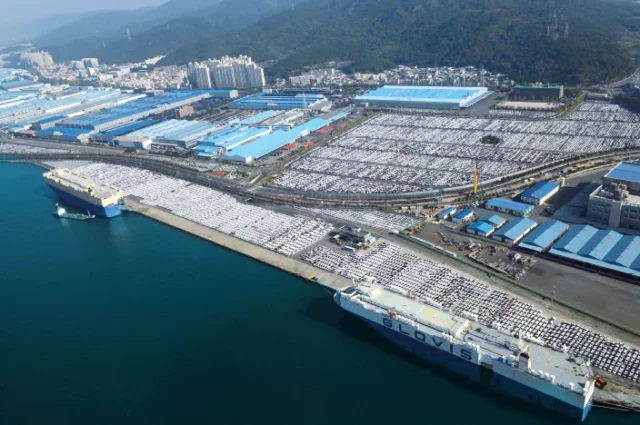
The Ulsan plant of Hyundai Motor Co. — HYUNDAI

ULSAN, South Korea — South Korean truckers embarked on broader and more aggressive strike action on Friday, threatening to severely curtail shipments of raw materials for semiconductors and petrochemical products. 

That comes on top of action at steelmaking giant POSCO and automakers Hyundai Motor Co. and Kia Corp. 

The strike led to a halving of production at Hyundai Motor’s biggest factory complex in the industrial hub of Ulsan on Thursday. Some 1,000 truckers were protesting in front of the complex on Friday, a Reuters witness said. 

“There are some disruptions to our production due to the truckers strike, and we hope production would be normalized as soon as possible,” a Hyundai spokesperson said. 

Hyundai normally makes about 6,000 vehicles a day at its plants in Ulsan, including the high-margin Genesis SUV and Ioniq 5 electric vehicle. 

Entering its fourth day, the strike has disrupted shipments for a wide range of companies and is slowing activity at ports. The movement of containers at Ulsan port, which accounts for about 10% of South Korea’s port traffic, has been suspended since June 7, a government official said. 

About 7,500 members, or about 35% of the Cargo Truckers Solidarity union in the country, are expected to go on strike on Friday, according to South Korea’s transport ministry. The government estimates that about 6% of the country’s 420,000 truck drivers belong to a union. 

Kim Gyeong-dong, a trucker union official, said the union ran out of funds to finance the strike on Thursday and that it was unlikely that strike could last another 10 days. 

South Korea is a major supplier of semiconductors, smartphones, autos, battery and electronics goods and the latest industrial action further raises uncertainty over global supply chains already disrupted by China’s strict coronavirus disease 2019 (COVID-19) restrictions and Russia’s invasion of Ukraine. 

The truckers plan to stop shipments of raw materials for semiconductors that are produced in Ulsan, Park Jeong-tae, a senior truckers union official, told Reuters on Friday. 

Samsung Electronics Co. and SK Hynix, two of the world’s biggest memory chip makers, declined to comment. 

Park added that the number of vehicles entering an Ulsan petrochemical complex has been cut to one tenth of normal levels and truckers would be telling non-union truckers not to enter the complex. 

South Korean President Yoon Suk-yeol, in power for just a month, said on Friday that the government planned to take a neutral stance in the dispute. 

Police said around 30 union members have been arrested so far and it will respond strictly to illegal acts at strike sites. 

The truckers, regarded as self-employed contractors in South Korea, are seeking pay increases and a pledge that an emergency measure guaranteeing freight rates would be extended. The emergency measure was introduced during the pandemic and is due to expire in December. 

The drivers also want freight rates to apply to a wider range of trucks, not just container trucks and cement trucks. 

Shares of Hyundai Motor were up 0.6% as of 0332 GMT, versus the benchmark KOSPI’s 1.2% fall. — Reuters

US approves $120M sale to maintain Taiwanese warships

WIKIMEDIA COMMONS

TAIPEI — The United States has approved a possible $120 million sale of parts to help Taiwan maintain its warships, which the island’s defense ministry said would help ensure combat readiness in the face of China’s “frequent activities” near the island.

The US Defense Security Cooperation Agency said it had delivered the required certification notifying Congress following State Department approval for the sale, which was requested by Taiwan’s de facto embassy in Washington. 

It said the sale covered unclassified spare and repair parts for ships and ship systems, logistical technical assistance, and US government and contractor representative technical and logistical support. 

“The proposed sale will contribute to the sustainment of the recipient’s surface vessel fleet, enhancing its ability to meet current and future threats,” the agency said in a statement, adding that the parts would be sourced from “approved US Navy vendors and/or US Navy stock”. 

Taiwan’s defense ministry said on Thursday the deal was expected to come into effect within one month, and expressed its thanks to Washington for its support in helping Taiwan be able to protect itself. 

“In view of the recent frequent activities of Chinese warships in the sea and airspace around our country, the ship parts that the United States has agreed to sell will help maintain the proper equipment and consumption of our naval ships and meet the actual needs of combat readiness tasks,” it said. 

Neither side gave details of the parts Taiwan would be receiving. 

Most of Taiwan’s main warships are US-made or -designed. 

The democratically governed island has complained of repeated missions by China’s air force in its air defense zone, part of what Washington sees as Beijing’s effort to pressure Taipei into accepting its sovereignty. 

China’s navy has also been conducting increasingly regular missions near Taiwan. 

The United States, like most countries, does not have official relations with Taiwan, but Washington is its biggest backer and is bound by law to provide it with means to defend itself. 

Successive US administrations have advocated the sale to Taiwan of inexpensive, mobile and survivable — or “asymmetric” — weapons that could outlast any initial assault by China’s larger military. 

The US-Taiwan Business Council, which counts defense contractors among its members, welcomed the latest authorization, but charged that President Joseph R. Biden, Jr.’s administration had undertaken “the most significant narrowing of US-Taiwan security assistance” since 1979. 

“There appears to now be little to no US support for substantial Taiwan force modernization efforts, so we should expect to see mostly sustainment and munitions programs through the remainder of President Biden’s term (or terms) in office,” Council President Rupert Hammond-Chambers said in a statement. 

Taiwan’s military was likely to see “the loss of infrastructure, hollowing out of operational experience, and the loss of decades of expertise,” as a result, he said. — Reuters


NASA to form scientific team to study UFOs

FLICKR/NASA HQ

WASHINGTON — The National Aeronautics and Space Administration (NASA) said on Thursday it plans to assemble a team of scientists to examine “unidentified aerial phenomena” —  commonly termed UFOs — in the latest sign of the seriousness with which the US government is taking the issue.

The US space agency said the focus will be on identifying available data, the best ways to gather future data and how it can use that information to advance scientific understanding of the issue. 

NASA tapped David Spergel, who formerly headed Princeton University’s astrophysics department, to lead the scientific team and Daniel Evans, a senior researcher in NASA’s Science Mission Directorate, to orchestrate the study. 

A team of scientists is due to be convened by the fall, then will spend roughly nine months developing a public report on its findings, Mr. Evans said. NASA will spend “anywhere from a few tens of thousands of dollars” to no more than $100,000 on the effort, Mr. Evans added. 

The announcement comes a year after the US government issued a report, compiled by the Office of the Director of National Intelligence in conjunction with a Navy-led task force, detailing observations mostly by Navy personnel of “unidentified aerial phenomenon,” or UAPs. 

Two Pentagon officials testified on May 17 at the first congressional hearing on UFOs in a half century. 

“We’re looking at the Earth in new ways, and we’re also looking the other way, at the sky, in new ways,” Thomas Zurbuchen, the chief of NASA’s science unit, told reporters on a conference call. “What we’re really trying to do here is start an investigation without an outcome in mind.” 

US officials have described UAPs as a national security issue, which NASA echoed. 

“Unidentified phenomena in the atmosphere are of interest for both national security and air safety. Establishing which events are natural provides a key first step to identifying or mitigating such phenomena, which aligns with one of NASA’s goals to ensure the safety of aircraft,” NASA said in a news release. 

Last year’s report said US defense and intelligence analysts lacked sufficient data to determine the nature of UAPs observed by military pilots including whether they are advanced earthly technologies, atmospherics or of an extraterrestrial origin. The two Pentagon officials last month acknowledged many observations remain beyond the government’s ability to explain. 

NASA said in a news release: “There is no evidence UAPs are extraterrestrial in origin.” 

The agency’s involvement is aimed at providing more data, with an aim to leverage NASA’s scientific talent, satellites and sensors otherwise tasked with monitoring Earth’s climate or observing atmospheric conditions, Mr. Zurbuchen said. 

“The first step is to figure out what data is at hand,” Mr. Evans said. 

NASA’s involvement in Pentagon efforts to characterize UAPs has been previously acknowledged by US officials. 

The Pentagon has made public some video of enigmatic objects exhibiting speed and maneuverability exceeding known aviation technology and lacking any visible means of propulsion or flight-control surfaces. — Reuters


China COVID jitters flare up as parts of Shanghai resume lockdown

REUTERS

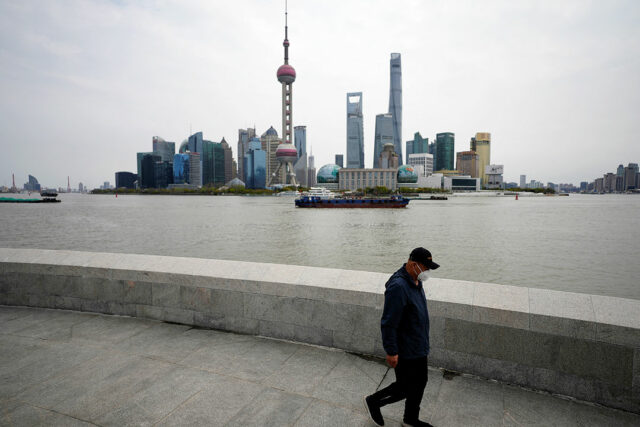
SHANGHAI/BEIJING — Shanghai and Beijing went back on a fresh coronavirus disease 2019 (COVID-19) alert on Thursday after parts of China’s largest economic hub imposed new lockdown restrictions and the city announced a round of mass testing for millions of residents.

The most populous district in the Chinese capital, meanwhile, announced the shutdown of entertainment venues, while news of the lockdown of Shanghai’s Minhang district, home to more than 2 million people, pulled down Chinese stocks.

Both cities had recently eased heavy COVID curbs, but the country has stuck with a “dynamic zero-COVID” policy aimed at shutting down transmission chains as soon as possible.

Shanghai residents in particular are on edge as new cases flare up after the city’s grinding two-month lockdown ended, with officials on Thursday tracing three infections to the Red Rose, a popular beauty salon in the city center that reopened when the city did on June 1.

The shop had served 502 customers from 15 of Shanghai’s 16 districts in the past eight days, a local media outlet, The Paper, reported.

“When is this ever going to end?,” a user of the Twitter-like Weibo commented on the Red Rose, which is in the trendy former French Concession area of the Xuhui district. “I just want to have a normal life.”

Authorities said a preliminary investigation found that some of the salon’s 16 employees did not undergo daily COVID testing as required, and that 90,000 people linked to Red Rose staff or customers had been tested.

While China’s infection rate is low by global standards, President Xi Jinping has doubled down on a zero-COVID policy that authorities say is needed to protect the elderly and the country’s medical system, even as other countries try to live with the coronavirus.

Shanghai’s two-month lockdown, the shuttering of many malls and venues across Beijing and movement curbs imposed in many cities in recent months have battered the Chinese economy, disrupted supply chains and slowed international trade.

Authorities have been keen to revive business and started to relax some curbs in May which helped China’s exports that month to grow at a double-digit pace, beating expectations, but residents, businesses and investors are wary. China’s blue-chip CSI300 index ended 1.1% lower.

“The business climate is not positive because despite the fact that the cities opened, there is still the problem of the zero-COVID policy,” Christophe Lauras, president of the French Chamber of Commerce in China, told Reuters.

“That is to say that every morning people don’t know if they’ll be locked down,” he said.

LOCKDOWNS AND TESTS

Shanghai’s Minhang district said it will conduct nucleic acid tests for the entire population on Saturday and ordered residents to stay home during the testing. Six other Shanghai districts, including some of its largest, also announced a round of mass testing for the weekend.

Several local-level authorities in Shanghai, which is home to 25 million people, have also issued notices saying residents will be subject to two days of confinement and another 12 days of rigorous testing starting Thursday.

Many of the notices were in the central Xuhui district, where green fences and red wooden boards have sprung up in the past week, barricading residents in and triggering fresh public anger.

In Beijing, authorities in Chaoyang district, home to more than 3 million people, ordered entertainment venues and internet cafes to shut on Thursday, while patrons of four bars were told to identify themselves and self-isolate.

China reported 240 new coronavirus cases on June 8, of which 70 were symptomatic and 170 were asymptomatic, the National Health Commission said on Thursday. — Reuters

CDO Foodsphere and Kraft Heinz enter a distribution agreement

On 1 April 2022, a partnership was signed between two of the biggest names in food manufacturing to help bring a better mealtime experience to consumers in the Philippines. Philippine meat processing giant CDO Foodsphere will take charge of the distribution of Kraft Heinz products in the foodservice industry in the Philippines. This includes hotels, full-service restaurants, quick-serve restaurants, canteens, and caterers.

Both companies are major players in the food business. Kraft Heinz is one of the largest food and beverage companies in the world. CDO Foodsphere was recognized by Campaign Asia-Pacific to rank number 14 in the top 100 brands in the Philippines and was the recipient of the ASEAN Business Award in 2020 in the regional category.

“It is good to have this collaboration between our two companies,” says Jerome D. Ong, President & CEO of CDO Foodsphere. “It allows both us to further strengthen and expand the reach of our product portfolios.”

Through their products, the companies bring to life dishes that delight customers and families who go out to eat and spend quality time together.

“We see the Philippines as an important market to grow our Kraft Heinz presence,” said Rafal Walendzik, Managing Director of Asia Trading at Kraft Heinz. “We look forward to our partnership with CDO Foodsphere and chose them because of their credibility and strong distribution network in the local foodservice channel.”

CDO Foodsphere has been in the food processing business for 47 years and is known to introduce innovative products that can win in the market.

With the company now handling the distribution of Kraft Heinz products, both companies are able to expand their presence in various categories. Vice President for Emerging Business Jason D. Ong explained, “With the partnership with Kraft Heinz we can provide customers with their need for condiments and seasonings which complete the delightful mealtime experience. This is important to us and it is good to find a partner in Kraft Heinz who also has consumers at the center of how it operates.”

With the distribution agreement signed, the full implementation commenced on April 10. This is very promising especially with the Philippines being in an election year and maneuvering its way towards recovery from the pandemic.

“We’ve always been passionate about our consumers and our customers. We want them to succeed and we want their businesses to grow,” said Jerome Ong.


Spotlight is BusinessWorld’s sponsored section that allows advertisers to amplify their brand and connect with BusinessWorld’s audience by enabling them to publish their stories directly on the BusinessWorld Web site. For more information, send an email to online@bworldonline.com.

Join us on Viber to get more updates from BusinessWorld: https://bit.ly/3hv6bLA.

Integrating well-being, happiness in business education key to building ‘resilient’ executives

UNSPLASH

By Arjay L. BalinbinSenior Reporter

Madrid, Spain — Business school curricula should include a program aimed at helping future business leaders improve their health, well-being, and happiness to better prepare them for the complex challenges they will face in the corporate world, an expert said.

“Body (health), mind (well-being), and soul (purpose or happiness)” are the three areas that business schools can work on to help students improve their “performance for life,” Lisa Bevill, academic director of the IE University’s Center for Health, Well-being, and Happiness, told journalists at the South Summit 2022 held in Madrid, Spain, from June 8 to 10. 

“So, on body, we talk about vitality. This is a lot around our physical health, motions, sleep, nutrition, movement. Mind has to do with mindfulness, attention, and how we put in study habits, recognizing the interconnection between body and mind,” she added.

Soul is about one’s purpose, she noted. “Our contribution, what’s meaningful to us and the relationships that we develop. Of course, all of those are interconnected in terms of our overall emotional well-being and who we are.”

On what makes these areas relevant to business, she said: “If we think about entrepreneurs, there’s generally the impression that you just have to work hard, push through, and be determined. Of course, all of these are important, but if you neglect your health, then your health is going to stop you, especially if you don’t proactively take it into account earlier on.”

A recent study by management consulting company McKinsey & Company revealed that toxic behavior, a byproduct of stress, is among the leading causes of workplace burnout.

This may lead to “costly organizational issues such as attrition,” McKinsey said in its report.

“Unprecedented levels of employee turnover—a global phenomenon we describe as the Great Attrition—make these costs more visible. Hidden costs to employers also include absenteeism, lower engagement, and decreased productivity,” it added.

Hence, business schools should help cultivate the well-being of their students, Ms. Bevill noted. 

“Through cultivating well-being, we can cultivate greater resilience. We focus a lot on positive emotions as a way to cultivate well-being, and through the abundance of positive emotions, we create better connections. Through those connections, we can have greater creativity. We tap into our cognitive functioning,” she said.

“When we are in poor health, we are running based on fears, threats, or emotions, which diminish our cognitive functioning , our ability to connect with other people, and our ability to think long term,” she added.

“Taking care of our health and building our emotional well-being through positive emotions build our resilience, which allows us to overcome disappointments and to come back after challenges; and for entrepreneurship, that’s critical.”

The South Summit 2022 is co-organized by the IE University. It celebrated its 10th year as the main global meeting point for players in the entrepreneurship and innovation ecosystem. 

On May 17, the South Summit announced the 100 finalists from more than 3,000 applications of its 10th Startup Competition. According to the IE University, 70% of the applications came from 114 countries.

Half of the finalists are from Spain, mainly from Madrid, Barcelona, and Valencia. The other half is from 29 different countries, including the United Kingdom, the United States, Germany, Israel, Switzerland, and Brazil.

Software and cybersecurity projects comprise the majority of this year’s finalists, which include Appentra Solutions, Centraleyes, BizAway, Citibeats, and Opticks Security.

Russia says West risks ‘direct military clash’ over cyber attacks

REUTERS/KACPER PEMPEL/FILE PHOTO

Russia warned the West on Thursday that cyber attacks against its infrastructure risked leading to direct military confrontation, and that attempts to challenge Moscow in the cyber sphere would be met with targeted countermeasures.

The warning comes after Russia’s housing ministry website appeared to be hacked over the weekend, with an internet search for the site leading to a “Glory to Ukraine” sign in Ukrainian.

In a statement, the foreign ministry said that Russia’s critical infrastructure and state institutions were being hit by cyberattacks and pointed to figures in the United States and Ukraine as being responsible.

“Rest assured, Russia will not leave aggressive actions unanswered,” it said. “All our steps will be measured, targeted, in accordance with our legislation and international law.”

The statement, issued by the ministry’s head of international information security, said Washington was “deliberately lowering the threshold for the combat use” of information technology (IT).

“The militarization of the information space by the West, and attempts to turn it into an arena of interstate confrontation, have greatly increased the threat of a direct military clash with unpredictable consequences,” it said.

The websites of many state-owned companies and news organizations have suffered sporadic hacking attempts since Russia invaded Ukraine on Feb. 24, often to show information that is at odds with Moscow’s official line on the conflict.

Moscow says it is carrying out a “special military operation” in the neighboring country to disarm it and protect it from fascists. Ukraine and Western countries dismiss Russia’s claims as a pretext for an illegal invasion.

President Vladimir Putin said in May that the number of cyberattacks on Russia by foreign “state structures” had increased several times over and called on the country to bolster its IT security. — Reuters

Here’s why #PinoyFreedom is more than just a holiday

In anticipation of the 124th anniversary of Philippine Independence, SM Supermalls shares why Independence Day is a pivotal turning point in our history.

It is a celebration of our identity as Filipinos. Independence Day represents the core of our beliefs and our identity as Filipinos – a strong and courageous race willing to fight for freedom’s sake. After almost 400 years of colonization, the raising of our flag and the singing of our anthem serves as more than an obligation; it commemorates the heroism embodied by every Filipino who fought for our freedom. This June 12, 2022 at 8:30 am, come in colors of the Philippine flag and head to the SM Supermalls’ Flag Raising Ceremony as we show love of our country and pay our respects to those who fought to protect it.

It is a celebration of our rich and diverse culture. Each year, the month of June encourages us to exhibit our country’s rich culture in many different ways. Whether it be through food, fashion, or art, all 18 regions across the Philippines have so much to offer! At an SM mall near you, enjoy a taste of Luzon, Visayas, and Mindanao’s diverse cultures through Pinoy Eats and Pinoy Buys until June 12, 2022.

It is a celebration of our love for the country. Putting the country above one’s self is a great honor and responsibility. As Filipinos, it is our duty to keep the flame of patriotism alive by learning Philippine culture and history, to cultivate in us a sense of community and accountability towards our Filipino brothers and sisters. Visit SM City Cebu’s HeroiSM phygital exhibit until June 15, 2022 to explore Philippine history in an #AweSM way!

Celebrate #PinoyFreedom at SM Supermalls!

While we each exude patriotism in our own way, one cannot ignore the pride and enjoyment that comes with Philippine Independence Day celebrations! Commemorate Independence Day in a truly Pinoy way— sumptuous food, the company of loved ones, and great deals on all things local!

At SM Supermalls, activities are lined up to keep #PinoyFreedom alive nationwide! So come and celebrate the #AweSM and historic Philippine Independence Day at an SM mall near you.

For more information, visit www.smsupermalls.com or like and follow @smsupermalls on all social media platforms.


Spotlight is BusinessWorld’s sponsored section that allows advertisers to amplify their brand and connect with BusinessWorld’s audience by enabling them to publish their stories directly on the BusinessWorld Web site. For more information, send an email to online@bworldonline.com.

Join us on Viber to get more updates from BusinessWorld: https://bit.ly/3hv6bLA.

April jobless rate eases as workforce shrinks

Unemployment eased further and job quality improved in April but fewer Filipinos entered the labor force, the government reported this morning.

Preliminary results from the Philippine Statistics Authority’s (PSA) April round of the Labor Force Survey (LFS) showed unemployment rate further eased to 5.7% from 58% in March. It was also lower than the 8.7% jobless rate in April last year.

The ranks of unemployed Filipinos declined by 112,700 to 2.762 million in April from 2.875 million in March. It also shrank by 1.376 million from 4.138 million last year.

It was the lowest unemployment rate since the 5.3% in January 2020.

The quality of jobs improved in April as underemployment rate — the share of those already working, but still looking for more work or longer working hours to total employed population — dipped to 14% from 15.8% in March and 17.2% in April last year.

This was equivalent to 6.399 million Filipinos looking for more work or longer working hours that month, 1.023 million less than March’s 7.422 million. It was also down by 1.054 million from 7.453 million a year ago.

Underemployment rate in April matched the same share in February and the lowest since 12.3% in May last year.

However, April’s labor force size went down month on month by 1.457 million to 48.393 million. On a year-on-year basis, it was larger by 986,600 from 47.407 million.

This translated to a labor force participation rate — the share of labor force to the total population 15 years old and over — of 63.4% in April, lower than 65.4% in March but higher than 63.2% in April 2021.

It was the lowest LFPR in three months or since 60.5% in January.

On a quarterly basis, the number of new entrants to the Filipino workforce reached 1.148 million in April, lower by 508,700 from January’s 1.656 million. However, this was 170,600 higher than last year’s 977,000.

This translated to 2.4% share of new entrants to the workforce in April, lower than 3.6% share in January but higher than 2.1% from a year ago.

The employment rate — the share of the employed to the total working force — was 94.3% in April, inching up from 94.2% in the previous month and 91.3% in April 2021.

This was equivalent to approximately 45.631 million employed Filipinos, shrinking by 1.457 million from 46.975 million in March. About 2.362 million Filipinos became employed from last year’s 43.269 million.

Average hours worked in a week reached 40.1, lower than 40.6 hours a week in March but remained higher than 38 hours a year ago.

Services sector remained the largest employer in April with 58% share. Agriculture and industry accounted for 23.6% and 18.4%, respectively.

The PSA started reporting monthly jobs data in 2021. Prior to that, the agency published employment figures on a quarterly (January, April, July, and October) basis.

The April round of LFS was conducted from April 8 to 30, covering 43,500 sample households. — Bernadette Therese M. Gadon

Filipino luxury: How this Alabang townhome leveled-up the look of a modern Filipino home

Let nature inspire and comfort you in this elevated garden at Likha Residences. — Artist’s Perspective

Today, modern Filipino homes continue to use local materials and convey the spirit of togetherness. Amid the rise of various Filipino-inspired dwellings, the master-crafted townhomes of Likha Residences are among the most remarkable.

Nestled on the quieter, leafy side of Metro Manila, Likha Residences is a residential community celebrating Filipino heritage through vernacular architecture and meaningful spaces. It seeks to nurture family ties, house multiple generations, and meet future demands.

While achieving all these, Likha Residences managed to showcase luxury Filipino design, combining warm elements and lasting elegance.

Bahay Kubo reimagined

The evolution of bahay kubo seemed to have reached its peak with the construction of Likha Residences. The boutique townhouse community promotes the Filipino aesthetic by putting a luxury spin on the best qualities of the nipa hut.

PHINMA Prism, the developer behind Likha Residences, worked with Mañosa & Co. to craft a new and improved look for a modern Filipino home. Of course, the established firm couldn’t be more perfect for the architectural feat. Its founder, national artist Bobby Mañosa, developed a design style inspired by bahay kubo, merging the use of indigenous materials and modern building technologies.

Today, Likha Residences stands as the opulent result of blending the old and new, and preserving the Filipino culture.

Here’s how the development upgraded the look of a Filipino home:

From one-level humble home to a multi-storey luxe residence

Likha Residences, for instance, has three- to four-storey townhomes with durable building materials and calming earth tones from the inside out. It emulates the beauty and simplicity of a bahay kubo, featuring quality wooden materials and handcrafted finishings. The multiple levels, on the other hand, ensure that the modern Filipino family has space for everything — work, leisure, casual gatherings, and more.

From nipa roof to clerestory roof

Inspired by the cooling effect of a bahay kubo’s tall nipa roof, the master-crafted townhomes at Likha Residences come with a clerestory roof. This roof style is placed on top of each unit, warding off the heat while elevating the home’s overall appeal. The roof brings in cool air and lets out stale air. It also permits natural light, which adds a cozy glow to the home.

From one ‘bulwagan’ to multiple, functional spaces

Likha Residences also takes pride in its units with mindfully designed living spaces. The ground floor has a foyer to welcome guests, a storage area, a service area with a common toilet and bath, and a staff’s room.

On the second level, you’ll be reminded of the bahay kubo’s bulwagan — an open space designed for family living, where dining, recreation, sleeping, and other activities can occur.

From bamboo porch to glass balcony

The bamboo porch of a nipa hut has a classic charm, while the glass balcony of a designer townhome has a sophisticated beauty. At Likha Residences, units have two spacious balconies on the second and third floors. Their tempered glass railings let you enjoy the full, lush view of the community without blocking the lovely, natural light.

Merging luxury and rarity

As seen in Likha Residences, the combination of native materials, concrete textures, and functional spaces can augment today’s modern Filipino homes. But besides having these features, the community is distinctly Filipino and luxurious because of its characteristics that are quite hard to find elsewhere, especially in Metro Manila.

A life beyond four walls

Meaningful and luxurious living at Likha Residences can also be experienced outside its designer townhomes. The community has a Filipino-inspired amenity area consisting of a swimming pool, clubhouse, multi-functional hall, fitness gym, and playground. In these leisure spaces, families can form stronger relationships, pursue various relaxing activities, and cultivate a sense of community with other dwellers.

With Likha Residences, the Filipino home has taken a luxury turn. It pays homage to our culture and heritage, featuring the best-in-class materials to create an environment that blends old-world charm and modernity.

This article originally appeared on Lamudi.


Spotlight is BusinessWorld’s sponsored section that allows advertisers to amplify their brand and connect with BusinessWorld’s audience by enabling them to publish their stories directly on the BusinessWorld Web site. For more information, send an email to online@bworldonline.com.

Join us on Viber to get more updates from BusinessWorld: https://bit.ly/3hv6bLA.

The edge of upscale homes and living

Real estate steadily gains demand in many developed and developing countries, making it a sought-after investment as well as a means to redefine one’s status quo by adding luxury to home and lifestyle.

Property experts saw these and the notable resilience of high-end residential property market amid the pandemic as factors that will bring forth tremendous opportunities in the residential segment for the remainder of the year.

In the Philippines, the call to live in a safe, high-quality home has been amplified as people adapt to the new normal and yearn for bigger, private spaces with elegance, style and cutting-edge technology.

To cater to the varying demands and market buying capacity, leading real estate developers in the country have started designing upscale and luxury residential projects.

As defined by the current market, there are certain features that set apart a luxury home and life from the rest. Aside from being unique and exclusive, premium properties also exhibit the perfect blend of art, comfort and functionality in the exterior and interior designs.

Beauty in every architectural detail

Far from a cookie-cutter, a luxury property is often built to suit the taste and lifestyle of the original owner. Home developers and design firms collaborate to compose a luxury property with the same kind of distinction and aesthetic value as the works of art.

The uniqueness of every architectural detail in a luxury home such as having a circular driveway, elevated garage, custom-built parking space, manicured garden, hotel lobby-like foyer, balcony with a surreal view of the whole property, large rooms, art nooks, rounded corners, crown moldings, archways, and stylish hardwood floors, all add up to the value of the home and construction costs. Nevertheless, reputable builders of high-end residential projects try to uphold their reputation through producing high construction quality and after-sales services.

Comfort and functionality rolled into one

A luxury property offers much more than just a place to live. It is a place to relax, be entertained, and escape not far from home. Thus, real estate developers for upscale residential projects continue to innovate and build exceptional amenities such as clubhouses with paradise-like landscaping, and regularly maintained recreational facilities like people’s parks, swimming pools, sports fields, and fitness centers.

In addition, home builders believe that living a luxurious life means having a sense of freedom which translates to breathing in a spacious environment, adequate to carry out indoor and outdoor activities for every resident.

Looking closer, the lavish interior of a luxury home displays a spacious kitchen, tasteful design of bathroom with own spa, hotel-quality bedrooms, walk-in pantry and closets, and a well-furnished home office and library. It also has smart home features for entertainment in a cozy home theater, convenience found with programmable cooking appliances that make food preparations easier, and safety by monitoring the energy consumption of the household and identifying security lapses.

Advantages of luxury living

Surrounded by people who share a common love of living luxuriously, real estate developers see residents of premium properties sharing the same interest and fostering a culture of growth in the neighborhood.

Luxury housing estates also come with lush green gardens to provide the residents with a refreshing environment away from the bustle of the city. Hence, most of the optimistic home builders today construct projects in strategic locations which allow the home owners to have direct access at nearby shopping districts, museums, fine dining, centers for art, and even panoramic views of beautiful landscapes, such as lakes, oceans, rivers, mountainsides, or countryside views.

Aside from location and proximity, ultra-exclusive enclaves showcase top-notch security and privacy via surveillance cameras around the property and 24/7 concierge service.

Some luxury real estate also provides maintenance for electronic devices, but since premium homes use quality materials and more up-to-date appliances, the need for maintenance is seldom.

Lucrative investment

More than just a grand place to live in, luxury properties offer more control over long-term plans as well as investment routes.

Financial gurus noted that as physical space become scarcer, property investments will build up over time, will not drop value anytime and will not carry as much risk as paper investments such as stocks and bonds, where the market forces are always beyond an investor’s control and have limited trading options.

Furthermore, high-value features of a property, such as an excellent location, exclusivity, proximity to important places, or an interesting history, also dictate the overall resale price.

After noticing the drastic change in the way people live today, investment advisors predict that the need for premium homes will continue unfazed by the pandemic, eventually driving their future prices up.

Locally, real estate developers invite every Filipinos to look at luxury living from a new perspective: a home that is no longer just a place for downtime, but a place to express culture, elegance, style, art and technology that transcends time. — Allyana A. Almonte