Home Blog Page 6332

Senators urged to approve RCEP

Vendors arrange their goods at a public market in Manila. — PHILIPPINE STAR/ RUSSEL A. PALMA

By Alyssa Nicole O. Tan, Reporter

THE PHILIPPINES could lose more than half of its import and export markets if it fails to ratify a free trade deal among 15 countries in the region whose economic output accounts for 30% of global trade, economic managers told the Senate on Monday.

“If we don’t join RCEP, we miss out on more than half of the Philippines export markets, and around two-thirds of the country’s import sources,” Department of Agriculture (DA) Director Bien A. Ganapin said during the Senate Foreign Relations Committee hearing on Monday, noting that Philippine exports to Regional Comprehensive Economic Partnership (RCEP) member-countries are at 50.4% of total trade, while imports are at 67.3% of total trade.

The National Economic and Development Authority (NEDA), Department of Trade and Industry (DTI), and DA pitched the world’s largest free trade agreement (FTA) in a list-ditch effort to push the trade deal’s approval by the Philippine Senate.

Senators tackled the RCEP during the plenary, but gave no assurance of its ratification before the last session of the 18th Congress adjourns this week.

“We will do our duty. Pass or fail,” Senate Foreign Relations Committee Chair Senator Aquilino Martin L. Pimentel III said in a Viber message to BusinessWorld.

Trade Secretary Ramon M. Lopez said the delay will lead to difficulties for investors as they will have to comply with the old rules instead of the simplified alternative provided by the RCEP trade deal.

“In weighing the cost and benefits of our participation in this agreement we should look at it from a holistic point of view.  Will this be beneficial to the whole economy? It includes trade facilitation rules, liberal rules of origin, e-commerce, competition, and IP (intellectual property) protection commitments, support for SME development, as well as opening up of trade services,” Mr. Lopez said.

“These other elements are as important as tariff liberalization because they provide stability in the business environment. Our participation in this mega trade deal will further support the country’s economic development.”

Many multinational companies are waiting for the Philippines to join RCEP before deciding to invest, he added.

“If we delay joining here, our opportunities to export and bring our products to other RCEP countries which would have lower entry-level by lowering the tariff level of our products, we won’t be able to experience,” he said, noting fears that the country’s market may be diverted to other RCEP countries due to preferential arrangements.

RCEP has simplified and unified rules that allow exporters and stakeholders to comply with only one procedure instead of several rules listed in various free trade agreements with other economies.

RCEP took effect on Jan. 1, and is already in force in Australia, Brunei, Cambodia, China, Japan, Korea, Laos, New Zealand, Singapore, Thailand, and Vietnam.

President Rodrigo R. Duterte signed the trade deal on Sept. 2, but RCEP requires concurrence by the Senate.

DTI Assistant Secretary Allan B. Gepty said the country will miss out on the enhanced market access under the RCEP, which includes agricultural products such as durian, papaya, preserved pineapple, coconut juice, coffee, canned tuna, and dried tilapia.

“More than this, our competitors in ASEAN (Association of Southeast Asian Nations) will have the advantage in market access and resultantly they will be more competitive. Our neighbors in ASEAN, will enjoy the benefit of convenience in doing business and trade in the RCEP region while our stakeholders will have to contend with the different ASEAN plus one FTAs,” he added.

Mr. Gepty said the decision to ratify RCEP is only a choice between maintaining tariff protection in the 33 products, which is only equivalent to 0.8% of the country’s total imports and 1.9% of total agriculture tariff lines, and receiving the benefits and opportunities on services, investments, exports, trade facilitation, ease of doing business and conducive business environment brought about by the United Nations-backed FTA.

Economic managers said joining RCEP will preserve the current preferential rates for 98.1% of tariff lines, which corresponds to 228 commodities or $16.9 billion of imports.

“If we join the RCEP region with the safety nets and all the flexibilities that we have gained, it’s so easy to navigate, adjust and in parallel, make some adjustments. But if we will approach it sequentially, I think it will be too late for us to join since other RCEP parties will gain the advantage,” Mr. Gepty said.

Socioeconomic Planning Secretary Karl Kendrick T. Chua said the Philippines will lose a “golden opportunity” to take advantage of the opportunities from the fast-growing Asia-Pacific region if it fails to join RCEP.

“We want to learn and be more competitive and the best way is not to be protectionist or inward-looking. It is to get into the global arena, compete and learn what the other countries are doing, and improve ourselves further,” he said.

Last week, President-elect Ferdinand R. Marcos, Jr. said he wants to review the RCEP to determine whether the agriculture sector is adequately protected.


Marcos names BSP official as DBM chief

BUDGET SECRETARY AMENAH F. PANGANDAMAN — COURTESY OF DEPARTMENT OF BUDGET AND MANAGEMENT FACEBOOK PAGE

PRESIDENT-ELECT Ferdinand “Bongbong” R. Marcos, Jr. is tapping another central bank official for his Cabinet, this time  Bangko Sentral ng Pilipinas (BSP) Assistant Governor Amenah F. Pangandaman to head the Budget department.

Mr. Marcos’ spokesperson Rose Beatrix “Trixie” Cruz-Angeles said at a news conference on Monday that Ms. Pangandaman will be appointed as secretary of the Department of Budget and Management (DBM).

Ms. Pangandaman served as DBM undersecretary and assistant secretary during BSP Governor Benjamin E. Diokno’s stint as Budget secretary. Mr. Diokno has also been named Finance secretary.

In a statement, Ms. Pangandaman identified the modernization of the budget system and incorporation of sustainability principles in government spending as her key priorities under the Marcos administration.

“My team and I vow to work with the rest of the economic team and continue the policies and reforms that we have long fought for,” she said. “We will strive to ensure prudent and transparent use of public funds in a way that allows us to regain lost ground while also uplifting the lives of the ordinary Filipino.”

The DBM is responsible for the preparation of the national budget. The outgoing Development Budget Coordination Committee (DBCC) has already said the proposed 2023 national budget is pegged at P5.268 trillion, representing 22.1% of gross domestic product.

Mr. Marcos earlier said he would work closely with the incoming 19th Congress for the speedy passage of the national budget, which analysts say would determine the strength of the Philippines’ economic recovery.

Ms. Cruz-Angeles also announced information technology expert Ivan John Uy will head the Department of Information and Communications Technology (DICT).

Mr. Uy had served as chair of the Commission on Information and Communications Technology under the administration of the late Benigno S.C. Aquino III.

Mr. Cruz-Angeles said Esperanza Christina G. Frasco, who was recently reelected as mayor of a town in Cebu province in central Philippines, would take over the Department of Tourism.

Ms. Frasco is the daughter of Cebu Gov. Gwendolyn F. Garcia, who promised a landslide win for Mr. Marcos and her running mate Sara Z. Duterte-Carpio during the campaign period. Ms. Frasco is currently serving as spokesperson for Ms. Duterte-Carpio.

Broadcaster Erwin T. Tulfo will head the Social Welfare department, Mr. Marcos’ spokesperson said.

Mr. Tulfo is the brother of Raffy T. Tulfo, who secured a Senate seat in the May 9 polls. — Kyle Aristophere T. Atienza

DENR imposes moratorium on new applications for seabed quarry permits

PHILIPPINE STAR/EDD GUMBAN

THE Department of Environment and Natural Resources (DENR) has imposed a moratorium on the acceptance of new applications for special exploration permits or government seabed quarry permits.

The DENR issued Administrative Order (AO) 171-2022 on May 2 after President Rodrigo R. Duterte’s directive to stop accepting applications for reclamation activities.

“The President directed the DENR and the Philippine Reclamation Authority (PRA) to put on hold the acceptance of all new applications for reclamation projects in the country; and ensure that the pending applications strictly comply with all legal requirements,” the order read.

Under the order, there will be a moratorium on the acceptance of all new applications for special exploration permit/government seabed quarry permits until another presidential directive is issued.

A copy of AO 171-2022 was published in a newspaper on Monday. It will take effect after 15 days.

Seabed quarrying refers to the process of extracting, removing and disposing of quarry resources found in offshore areas. It is usually considered for massive land reclamation projects.

The PRA approves bids and awards for contracts for government reclamation projects.

The DENR issues the final permit for any company planning to undertake seabed quarrying and mining.

In 2021, the Mines and Geosciences Bureau (MGB) received six government seabed quarry permit (GSQP) applications, according to MGB Director Wilfredo G. Moncano.

“We have a total of 10 officially accepted GSQP applications. We are waiting for their compliance with the Area Status and Clearance before we proceed to the next stage of evaluation. If they failed to comply with the Area Status and Clearance within the prescribed period, we will be denying their applications,” he said in a text message.

Mr. Moncano said that there were another four GSQP applications filed before the moratorium that were still not officially accepted.

Meanwhile, Rizal Commercial Banking Corp. Chief Economist Michael L. Ricafort said that the DENR’s order was a step towards ensuring that the local mining and quarrying industry remain environmentally sustainable.

“There is a need to align the global best practices on mining activities, in terms of sustainability and minimize adverse impact on the environment. Increased international compliance with [environmental] standards by both international and local regulators in recent years would place more stringent environment standards, by carefully weighing the environmental damage or impact of those activities over the long-term compared to economic gains derived,” he said in a text message.

“This is also consistent with the increased need to sustain the country’s marine resources amid the country’s importation of fish in recent months,” he added.

In December 2021, the government lifted the four-year ban on open-pit mining.

In April, President Rodrigo R. Duterte had also lifted the nine-year moratorium on granting mining permits. — Luisa Maria Jacinta C. Jocson

ADB greenlights $400-M loan for PHL capital development

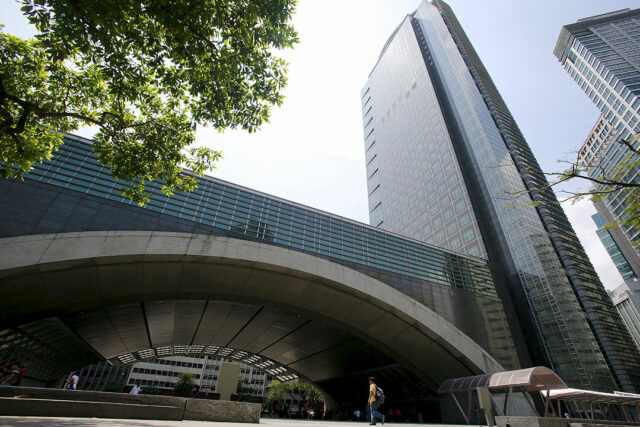
Ayala Land Inc’s Tower One office building is seen at the heart of the Makati business district, March 11, 2016. — REUTERS/ROMEO RANOCO

THE Asian Development Bank (ADB) on Monday said it has given the greenlight for a $400-million policy-based loan to help the Philippines further develop the domestic capital market and increase financing for infrastructure projects.

In a statement, the multilateral lender said the loan will assist the Philippines’ efforts to create an efficient domestic debt market, and boost institutional participation in the market, specifically insurance firms and pension funds.

The ADB said the additional supply of long-term finance will help the country address an infrastructure financing gap estimated at around P2 trillion a year up to 2030.

“As the Philippines steers its economy towards sustainable and resilient growth after the devastating COVID-19 pandemic, it will require various sources of long-term financing to support the recovery of its industries and micro-, small-, and medium-sized enterprises; provide social protection; and fund its infrastructure development priorities,” ADB Principal Financial Sector Specialist for Southeast Asia Stephen Schuster was quoted as saying.

Mr. Schuster said a more diversified investor base will ease fiscal constraints in the country.

The further development and growth of the insurance and pension sectors can fuel economic growth and reduce poverty, the ADB said.

The policy loan will help build an enabling environment for more investment products aimed at long-term investors.

Compared to its peers in the region, the Philippines’ pension funds and the insurance sector accounts for a combined 12% of the country’s gross domestic product, versus Thailand’s 30% and Malaysia’s 80%. 

“There is huge potential in tapping this sector for long-term funds since they have long investment horizons and low leverage. These investors can offer better debt pricing and longer maturities in local currency and are less likely to sell or retreat during short-term market corrections,” ADB said.

The ADB is one of the Philippines’ biggest sources of official development assistance, with average annual lending of $1.9 billion in the last five years.

In 2021, the ADB lent around $2.2 billion to the Philippines, the bulk or 92% of which went to pandemic response programs. — TJT

Tax breaks give Converge more room for expansion

LISTED fiber internet service provider Converge ICT Solutions, Inc. said the approval of its tax incentives will allow more room for the company to further expand its fiber network to reach its goal of covering 55% of households in the Philippines.

“Securing tax breaks from FIRB (Fiscal Incentives Review Board) will allow Converge more room for expansion of FTTH (fiber-to-the-home) ports towards our 2023 goal of deploying 7.5 million to 8 million ports to cover 55% of Philippine households,” said Maria Grace Y. Uy,  co-founder and president of Converge, during the company’s annual stockholders’ meeting on May 27.

The FIRB recently approved the application for tax incentives of Converge and three other telecommunications companies.

The tax incentives granted to Converge include a four-year income tax holiday, five years of enhanced deductions, and 11 years of duty exemption on equipment and raw materials. These were granted to Converge for its fiber optic network for high-speed internet broadband, with a total project cost of P150.6 billion.

Finance Secretary and FIRB Chairman Carlos G. Dominguez III said in a statement that the government expects Converge to deliver on its performance commitment of “faster and cheaper internet access” in remote areas, as “this will not only address our pain points with regard to connectivity but also provide more employment opportunities to our people in rural areas.”

SkyTowers Infra, Inc., Frontier Tower Associates Philippines, Inc., and Transcend Towers Infrastructure Philippines, Inc. were also granted tax incentives.

Converge said it believes the FIRB approval was a recognition of the “missionary nature” of its project, which is expected to “bring connectivity to marginalized areas of the Philippines.”

“Broadband connectivity is one of the priority sectors that have a direct impact on AmBisyon Natin 2040, the government’s long-term vision for the nation,” it said in a statement.

Converge, which saw its attributable net income increase by 27% to P1.97 billion in the first three months of the year, targets to roll out fiber-to-the-home infrastructure to cover more than 1,200 unserved and underserved towns nationwide.

Converge ICT shares closed 1.70% lower at P26.05 apiece on Monday. — Arjay L. Balinbin

Anne Curtis ends hiatus with comeback concert

ANNE Curtis makes her comeback to the concert stage in Luv-Anne: The Comeback at Resorts World Manila’s (RWM) Newport Performing Arts Theater on June 11.

Four years since her last concert and three years since welcoming her first child, taking a break in Australia and spending time with her family during lockdown, Ms. Curtis said that she is ready to start working again.

Luv-Anne was originally… supposed to be a digital concert,” Ms. Curtis said during an online press conference on May 25. “It made sense to do an online concert back then because everyone was at home. And then more so because another lockdown happened.”

Ms. Curtis added that the production team waited for a period of normalcy to push through with a live concert.

“I had visited Resorts World, I sat on the stage to have a feel of it, kung kaya ko siya (If I could manage it),” Ms. Curtis said. “It felt it was the right amount of people I could be comfortable performing live with. I feel like it is a great way to reintroduce this world to me.”

According to a press release, Ms. Curtis’ concert includes “birit* songs numbers” and “palaban** fashion” renditions of popular international and OPM hits, and special guest performances.

“I’ve been doing dance rehearsal twice to thrice a week just to get movement in my body again. I’ve been doing band rehearsals and voice lessons,” Ms. Curtis said of preparations.

The concert is directed by Paolo Valenciano, with creative direction by Georcelle Dapat-Sy, and musical direction by Louie Ocampo.

For the upcoming show, Ms. Curtis has been training with Singer, voice professor, and singing voice therapist Katherine Frances Valdellon Molina (better known as Kitchy Molina).

Nakapahinga talaga yung voice ko, gumanda… (My voice was well rested, it improved…),” she said. “I won’t say sobrang ganda pero may improvement. (I won’t say it’s super nice but there is improvement).

Luv-Anne: The Comeback is produced by Frontrow Theatre Management in cooperation with Resorts World Manila and Viva Artists Agency. Tickets are now available at all TicketWorld and SM Tickets outlets and range in price from P2,500 to P10,000. For inquiries, call Viva (0908-814-4601), Ticketworld (8891-9999), or SM Tickets (8470-2222). For more information about Luv-Anne: The Comeback and RWM’s entertainment schedule, visit www.rwmanila.com. — Michelle Anne P. Soliman

* Sustained high notes while singing.

** Combative

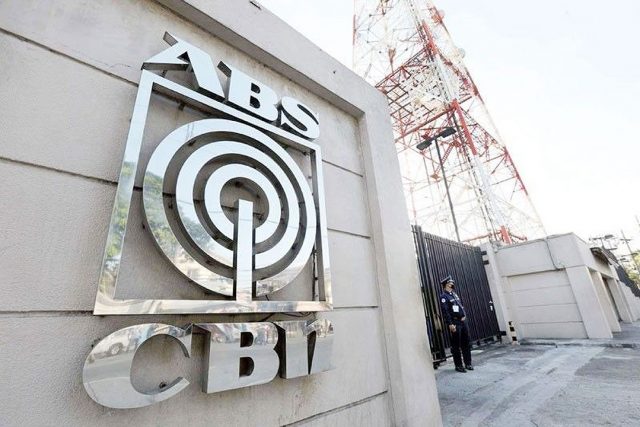
ABS-CBN sees improved Q1 performance, cuts losses

PHILSTAR

ABS-CBN Corp. has seen its attributable net loss for the first quarter of the year narrow to P1.38 billion from a loss of P1.95 billion the previous year.

The company’s total revenues for the quarter climbed 18.6% to P4.65 billion from P3.92 billion in the same period in 2021, its first-quarter report showed. Its total expenses remained at P5.77 billion.

ABS-CBN’s advertising revenues increased 59.8% to P1.49 billion from P929 million previously, while consumer sales grew 5.8% to P3.17 billion from P2.99 billion.

The company said the increase in advertising revenues is attributable to both political placements and growth in regular advertising as it continues to expand its coverage through partnerships.

“Consumer sales increased by P174 million mainly resulting from the licensing and syndication of the company’s films and programs library,” it noted.

As of March 31 this year, ABS-CBN’s total consolidated assets stood at P53.4 billion, 1.5% higher than total assets of P52.6 billion as of Dec. 31, 2021.

The company said its net debt-to-equity ratio was at 1.45x and 1.46x as of March 31 this year and Dec. 31, 2021, respectively.

Under President Rodrigo R. Duterte’s government, lawmakers who supported him rejected the franchise application of ABS-CBN, the former rival of GMA Network, Inc. in the broadcasting space.

The House of Representatives committee on legislative franchises deemed the broadcast network critical of Mr. Duterte and “undeserving” of the privilege.

“Despite the non-renewal of the company’s franchise, ABS-CBN remained committed in producing meaningful and quality content to continue to be of service to the Filipino worldwide,” the company said.

It launched in 2020 its Kapamilya Channel on cable TV, and subsequently, its digital streaming channel Kapamilya Online Live.

“On Oct. 6, 2020, a new milestone was again reached by ABS-CBN where it was able to secure a partnership with Zoe Broadcasting to blocktime ABS-CBN’s programs under the Channel 11 A2Z. These initiatives allowed ABS-CBN to be welcomed back to Filipino households. Launching these platforms allowed the company to generate P1.5 billion in advertising revenues in the first quarter of 2022,” the company said.

ABS-CBN shares closed 3.03% higher at P10.20 apiece on Monday. — Arjay L. Balinbin

ABS-CBN partners with Viu to stream PHL Flower of Evil adaptation internationally

ABS-CBN and PCCW’s pan-regional OTT video streaming service Viu will stream the Philippine adaptation of the Korean thriller Flower of Evil (2020) in 16 markets across Asia, the Middle East, and South Africa.

The series is the first Viu Original Adaptation from the Philippines, and it stars Lovi Poe and Piolo Pascual.

The series is Ms. Poe’s first drama series with the network since joining ABS-CBN in September 2021, and Mr. Pascual’s first drama series in four years.

“The way we adapted it is very Pinoy,” Mr. Pascual said of the series during an online press launch on May 23. “At the end of the day, it’s not about copying but coming up with something new.

“Projects, when they come, you just take it as they are, so I never wanted to compare any of my work to anything else…,” Mr. Pascual added. “It’s a matter of accepting the whole story and portraying something na hindi mo pa nagawa (which you have not done before).”

“I’m really grateful,” Ms. Poe said of the opportunity to work with Mr. Pascual. “This is my first [Kapamilya] show and I’m paired up with someone who is really amazing, and really genuine and nice.”

INVESTIGATING A SERIAL KILLER
Flower of Evil follows a couple and their daughter. However, the wife and daughter are unaware that the man has successfully changed his identity to hide a scandalous past. His wife, who is a police detective, is then tasked with investigating an unsolved serial murder case that leads her to the man she married.

“You give them the benefit of the doubt first and then that’s when you’re being a detective comes to figure things out,” Ms. Poe said of her role.

“This latest offering puts Filipino talent front and center in the way we do storytelling, supported by a powerhouse cast and a world-class production team,” Viu Philippines’ Country Manager Arianne Kader-Cu said in a statement.

“Our partnership with Viu on the local adaptation of Flower of Evil is a major milestone for ABS-CBN Entertainment. This is an opportunity for us to showcase excellent Filipino content and talent to the global audience in the 16 markets of Viu,” ABS-CBN Entertainment’s Chief Operating Officer for Broadcast Cory Vidanes said in a statement.

“Our local adaptation of the Korean hit love story Flower of Evil, a compelling and powerful narrative on love for family, search for truth and justice, is the unanimous choice to open our regional partnership with Viu,” Ms. Vidanes added.

Also in the cast are Agot Isidro, Edu Manzano, Denise Laurel, Joross Gamboa, Joem Bascon, Epy Quizon, Rita Avila, Jett Pangan, Pinky Amador, Joko Diaz, and JC de Vera.

ABS-CBN and Viu’s collaboration aims to bring premium Asian entertainment to more viewers worldwide. The partnership began in March with the streaming of ABS-CBN’s adaptation of the BBC One drama series The Broken Marriage Vow.

Flower of Evil is currently in production and is scheduled to premiere in June. It will stream on Viu 48 hours before its domestic television broadcast. — Michelle Anne P. Soliman

Alsons sets focus on two hydro facilities in 2022

ALSONS Consolidated Resources, Inc. (ACR), said in a disclosure on Monday that it will be focusing on advancing the development of two hydroelectric power projects in the Zamboanga Peninsula and Negros Occidental this year.

These are the 21-megawatt (MW) hydro power plant in Zamboanga del Norte, which is being developed by ACR’s Sindangan Zambo-River Power Corp.; and the 42-MW Bago river hydroelectric power plant in Negros Occidental, the company’s first power project outside of Mindanao.

“The Siguil, Sindangan, and Bago river hydro power plants will be the first three of at least eight run-of-river hydroelectric power plants that ACR plans to develop in the years to come,” ACR Executive Vice-President Tirso G. Santillan, Jr. said.

The company’s initial hydro power project, the 14.5-MW Siguil hydro plant in Sarangani province, will be starting commercial operations in the second quarter of 2023.

“This is all in keeping with the Department of Energy’s mandate to ensure that all key areas have access to readily available sources of renewable energy,” Mr. Santillan said.

In 2021, the company’s attributable net income rose 24.4% to P404.56 million from P325.11 million while consolidated revenues increased by 6.2% to P10.05 billion from P9.46 billion.

“Despite a challenging business environment and the impact of the COVID-19 (coronavirus disease 2019) pandemic, we managed to achieve higher revenues and net income attributable to parent due to operating efficiencies and cost cutting measures,” ACR Chief Finance Officer Alexander Benhur M. Simon said.

The company said that its 210-MW Sarangani Energy Corp. baseload power plant was a key revenue and income driver, delivering a combined output of 974 gigawatt-hours last year from 952 gigawatt-hours in 2020.

Sarangani Energy currently provides power to key areas in Mindanao, including Sarangani province, General Santos, Cagayan de Oro, and Iligan.

In the first quarter of 2022, ACR recorded a 2.9% decline in attributable income to P90.16 million from P92.88 billion a year ago despite a 23.6% rise in revenues to P2.67 billion from P2.16 billion previously.

For the rest of the year, Mr. Simon said, “We expect higher revenues and profit margins as we continue to realize incremental revenues from ancillary services and additional utilization of the available capacity of [Sarangani Energy].”

ACR said that its 100-MW Western Mindanao Power Corp. diesel plant in Zamboanga City was another growth driver for the company.

The plant is the only major power generation facility in the Zamboanga Peninsula. The plant provides power to Zamboanga City and supplies vital ancillary services to stabilize the power grid in Western Mindanao.

ACR has a portfolio of four power facilities with an aggregate capacity of 468 MW serving over eight million people in 14 cities and 11 provinces.

At the stock exchange, ACR shares remained unchanged at P1.01 apiece on Monday. — Luisa Maria Jacinta C. Jocson

Top Gun: Maverick debuts to stratospheric $124 million

Tom Cruise in Top Gun: Maverick — IMDB.COM

LOS ANGELES — Tom Cruise may have pulled off one of the most daring stunts of his career — getting audiences to go to the movies for something that doesn’t involve superheroes.

Top Gun: Maverick pulled in blockbuster ticket sales in its opening weekend, collecting $134 million from a record 4,732 North American cinemas. Paramount and Skydance’s all-American action adventure is expected to collect $151 million through Monday, defying expectations while also setting a new high-water mark for Memorial Day opening weekends. That’s thanks to dazzling reviews, heaping doses of nostalgia and getting Mr. Cruise back in the cockpit to perform real aerial stunts as pilot Pete “Maverick” Mitchell.

Top Gun: Maverick is the highest-grossing debut in Mr. Cruise’s 40-year career, and his first to surpass $100 million on opening weekend. War of the Worlds, which opened to $64 million in 2005, previously stood as Cruise’s biggest opening weekend.

Audiences over 40 years old, the people who were top of mind when Paramount greenlit a sequel to 1986’s Top Gun, turned out in force, which is impressive because that demographic has been the most reluctant to return to theaters. The film’s positive word of mouth should be helpful in reaching younger audiences, who were not alive when Top Gun opened 36 years ago.

David A. Gross, who runs the movie consulting firm Franchise Entertainment Research, called the film’s three-day figure “outstanding.”

“The source material remains strong, the execution is excellent, and Tom Cruise makes it work impeccably well,” he says.

Top Gun: Maverick continues a stellar box office streak for Paramount, marking the studio’s fifth movie this year to open in first place. Without the assistance of comic books or raging dinosaurs, the studio’s 2022 slate — also consisting of Sonic the Hedgehog ($182 million in North America), The Lost City ($100 million in North America), Scream ($81 million in North America), and Jackass Forever ($57 million in North America) — has resonated in theaters in a big way. It’s an impressive rebound since Paramount hardly released any movies during the pandemic, instead sending big titles like Chris Pratt’s The Tomorrow War, director Aaron Sorkin’s The Trial of the Chicago 7, and Eddie Murphy’s Coming 2 America to streaming services.

Despite countless delays (the Top Gun sequel was scheduled to open in the summer of 2020 until COVID-19 scrambled those plans), Mr. Cruise was adamant that “Maverick” not follow in the footsteps of those films. The two-year wait has already started to pay off since the film has been rapturously reviewed. It has a 97% on Rotten Tomatoes and an A+ CinemaScore.

Joseph Kosinski directed the PG-13 Top Gun: Maverick, which picks up decades after the original and sees Maverick train a new group of cocky aviators for a crucial assignment. The cast includes Miles Teller, Glen Powell, Jon Hamm, Jennifer Connelly, and Val Kilmer, who played Iceman in the first Top Gun.

Top Gun: Maverick also needs theaters to justify its hefty $170 million production budget, which does not include the tens of millions spent on promoting the movie to audiences worldwide. Those efforts included a splashy premiere at the Cannes Film Festival, which culminated with eight fighter jets flying over the Croisette (the French government paid for those). Skydance Media co-produced and co-financed the film. — Reuters