Home Blog Page 628

Inflation risks ‘tilted to downside’ ahead of next BSP rate decision

Marketgoers purchase fresh vegetables at the Marikina Public Market, Oct. 10, 2022. — PHILIPPINE STAR/WALTER BOLLOZOS

THE Bangko Sentral ng Pilipinas (BSP) views the risks to inflation to be weighted towards the downside ahead of its next decision on interest rates, a central bank official said.

“To answer the question on under what conditions we might consider easing further… We need to make sure that inflation stays within target. The risk will be clearly tilted to the downside,” Lara Romina E. Ganapin, director of the BSP’s Monetary Policy Research Group, said during the Philippine Economic Briefing in Mabalacat, Pampanga on Monday.

“Expectations, which are a very important channel, should remain well-contained and well-anchored, (showing) no signs of second-round effects. And of course, we also need to look at growth risk,” she added.

The BSP’s policy rate is currently 5% after the Monetary Board last month lowered borrowing costs by 25 basis points (bps) for a third straight meeting.

It has now cut benchmark interest rates by a total of 150 bps since it began its easing cycle in August 2024.

BSP Governor Eli M. Remolona, Jr. said the current key rate is now at a “sweet spot” for both inflation and output, but one more reduction is possible within the year to support the economy if needed, which would likely mark the end of the rate cut cycle.

In August, inflation picked up to 1.5% from 0.9% a month earlier. It was the sixth straight month of inflation coming in below the BSP’s 2-4% target range. 

In the first eight months, inflation averaged 1.7%, in line with the central bank’s full-year target.

The economy grew 5.5% in the second quarter, driven by a rebound in agriculture output and stronger household spending. During the first quarter, growth had been 5.4%.

“We could still see some risk from supply shocks because there are still ongoing geopolitical tensions from the Ukraine-Russia conflict. There are also impacts from the adverse weather conditions,” Ms. Ganapin said.

She added that the central bank is also monitoring external developments such as US tariff policy, policy shifts in other countries and the Federal Reserve’s monetary policy stance.

“We remain vigilant, of course, to safeguard price stability and to support sustainable growth,” Ms. Ganapin said. — Katherine K. Chan

PHL pharmaceutical market estimated at $2 billion this year as UHC drives growth in generics segment

Illustration photo shows various medicine pills in their original packaging in Brussels, Belgium, Aug. 9, 2019. — REUTERS/YVES HERMAN/ILLUSTRATION

THE pharmaceutical market is projected to generate $2 billion in revenue this year and keep growing until 2029, driven by demand for generic drugs, the Board of Investments (BoI) said.

“Definitely, there is more potential for the pharmaceutical industry, especially since steady growth is expected to continue at an annual rate of 4.1% through 2029,” the BoI said in a statement on Monday.

“This upward trend is expected to be largely driven by the increasing demand for generic drugs due to the government’s efforts to make healthcare more affordable and accessible to all Filipinos,” it added.

The market’s growth is expected to expand opportunities for innovation, investment, and broader access to essential medicine, it said.

However, BoI Industry Development Services Executive Director Ma. Corazon Halili-Dichosa noted that the Philippine pharmaceutical industry remains import-dependent.

“From 2019 to 2024, the Philippines saw a steady rise in pharmaceutical imports, peaking in 2021,” she said.

“Exports, on the other hand, remain almost nil relative to our imports and have been declining. For the first semester of 2025, exports have declined 25% while imports increased by 5%,” she added.

The BoI has been implementing the Integrated Roadmap for the Philippine Pharmaceutical Industry (IRPPI) since 2023 to make the industry’s value chain more agile and resilient.

The government hopes to increase the capacity of domestic manufacturers to produce 60% of medicine registered in the Philippines.

It also hopes to make the country a leading producer of essential pharmaceutical products and services.

According to Ms. Halili-Dichosa, key updates in the roadmap include the issuance of the guidelines for pharmaceutical economic zones, finalization of the Tatak Pinoy Strategy, simplified export processes for Philippine products, and the planned establishment of the Virology Institute of the Philippines. — Justine Irish D. Tabile

Greenhouses to feature in new ‘protected cultivation’ strategy

DA

THE Department of Agriculture (DA) said its new strategy for food production focuses on keeping supplies reliable and affordable in the face of potential disruptions from climate change, and will involve a major push for the use of greenhouses.

The heavy July rains and the resulting floods upended supply chains and raised food prices, pointing to the need to reconfigure the DA’s efforts towards achieving scale and making crops more resilient through “protected cultivation,” it said.

The so-called “White Revolution” project is geared towards ensuring that the growing population can be adequately fed. The term “White Revolution” is taken from the South Korean agricultural boom beginning in the 1970s, which employed white plastic film in the construction of greenhouses.

Agriculture Secretary Francisco P. Tiu Laurel, Jr. was quoted as saying: “We cannot afford to rely on good weather anymore. Protected cultivation is no longer optional — it’s a necessity.”

A key component of the plan involves locating production areas in “corridors” closer to urban markets to make distribution networks less prone to failure. These areas will feature improved post-harvest systems to maximize the shelf life of produce and facilities that allow crops to grow regardless of climate conditions, such as greenhouses.

The goal is to have the first of these corridors operational by July 2026, the DA said.

Agriculture Undersecretary Cheryl Marie Caballero has ordered an inventory of all greenhouses set up during past DA programs to see if they can be tapped to jump-start the “White Revolution.”

Mr. Laurel said President Ferdinand R. Marcos, Jr.’s vision for agriculture involves “a modern, climate-resilient, tech-powered agriculture sector that truly supports our farmers while ensuring food security.”

The Philippines currently has a trade deficit of $11.71 billion due to its substantial food imports. Cutting this deficit by $1.71 billion would result in at least P60 billion being redirected to local producers. — Andre Christopher H. Alampay

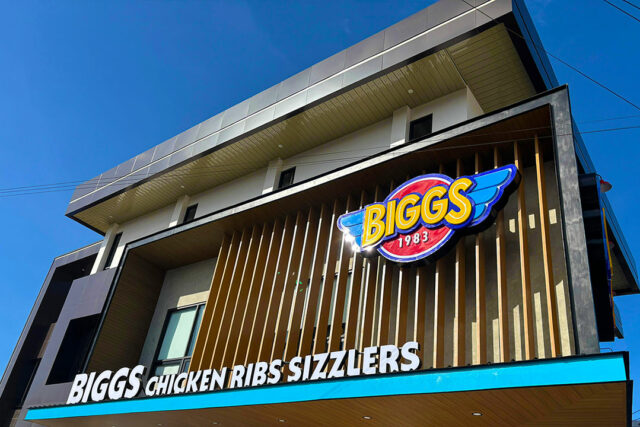
Bicol-based diner chain BIGGS eyes expansion in Calabarzon

BIGGS.PH

By Justine Irish D. Tabile, Reporter

BICOL’s leading restaurant chain, BIGGS, Inc. is planning to open 90 branches in Calabarzon, citing promising demand in the region.

“The bigger picture is the 10-year plan for 120 stores. The six-year plan is 55 stores. Around 90 are earmarked for Calabarzon, and then 30 for Bicol,” Emil Capili, chief operating officer of BIGGS, told BusinessWorld.

“Calabarzon is around 2.5 times the economy of Bicol. It is a big region,” he added.

He said the market in Metro Manila is too competitive for the company’s risk appetite.

“We saw that if we compete in Metro Manila, there are so many challenges and the risk exposure is very high. We saw that Calabarzon has unsatisfied demand (for) restaurants,” he said.

He said most restaurants in Calabarzon are quick-service, like Jollibee and McDonald’s, presenting an opportunity for homegrown brands like BIGGS.

He added that the chain is set to open a branch in Lucena City within the month.

“It will be our first branch in Calabarzon and Quezon Province and will be the biggest; it is 750 square meters,” he added.

After Lucena City, he said that the company is planning to open branches in the municipalities of Candelaria and Tiaong, also in Quezon Province.

He said that the company is hoping to triple its revenue after six years.

“Currently, our annual revenue is P1 billion. So the target for the next six years is to triple it to around P3 billion. That’s our goal,” he said.

“We plan to achieve that through setting up more stores. Every store that we establish is around P6 million per month of sales; that is around P72 million in additional sales annually,” he added.

He said that fast-casual and casual dining are among the restaurant industry’s growth segments.

“Normally, there are a lot of players here, like the Bistro Group and the Moment Group, because there are no barriers to entry,” he said.

He said that the casual dining segment is therefore “ripe for the picking” in the absence of a clear number one.

ADB to be tapped for study on protecting Manila Bay coastline

PHILIPPINE STAR/EDD GUMBAN

THE Department of Public Works and Highways (DPWH) said it plans to tap the Asian Development Bank (ADB) to fund the feasibility of a project to protect the Manila Bay coastline.

“We will submit a request to ADB under IPIF (infrastructure preparation and innovation facility) for an in-depth feasibility study for this project,” Public Works and Highways Secretary Vivencio B. Dizon told the House Appropriations Committee.

Mr. Dizon was responding to a query about construction plans around the bay to minimize floods in Metro Manila and Central Luzon.

The Manila Bay shoreline touches Metro Manila, Bulacan, Pampanga, Bataan, and Cavite.

Coastal protection forms part of the around Manila Bay Integrated Development Plan.

“This will be a major feasibility study. I am quite confident that the ADB will accept this so that we can start this project,” Mr. Dizon said.

The project also called the Manila Bay Integrated Flood Control, Coastal Defense and Expressway Project, is designed to reduce the risk of flooding via a coastal dike which will also serve as a roadway to improve vehicle flow.

In August, the DPWH tapped the Japan International Cooperation Agency to expedite the updating of flood control master plans for the Pasig-Marikina and Cagayan River basins.

Last week, the DPWH trimmed P255 billion from its 2026 budget. It removed mostly local flood control projects.

The DPWH’s proposed budget for 2026 is now been reduced to P625.78 billion, 28.9% lower than the original proposal.

President Ferdinand R. Marcos, Jr. last week called for a “sweeping review” of the 2026 public works budget after the failure of many flood-control projects during the July rains. — Ashley Erika O. Jose

Israel, South Dakota removed from bird products import ban

REUTERS

THE Department of Agriculture (DA) said it lifted a ban on bird product imports from Israel and the US state of South Dakota, following the successful containment of highly pathogenic avian influenza (HPAI) in those locations.

Veterinary authorities in Israel and South Dakota had reported zero new cases of bird flu since mid-July to the World Organization for Animal Health (WOAH), fulfilling a key condition for such bans to be lifted.

The import ban had included domestic and wild birds, poultry meat, day-old chicks, hatching eggs, and semen for artificial insemination.

It marked the latest instance of a ban being lifted since the recent removal of a ban on such products from Argentina. — Andre Christopher H. Alampay

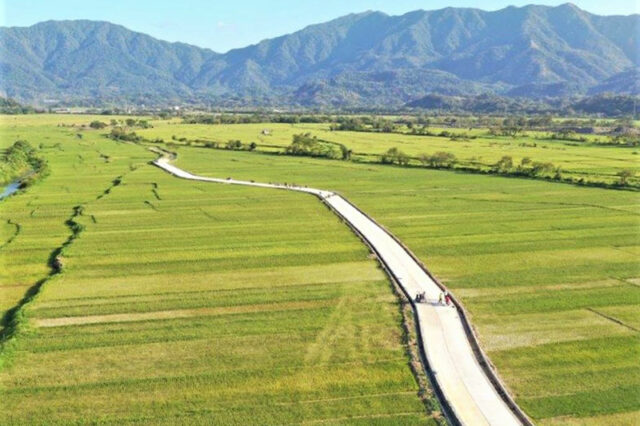
Farm roads turned over to ARBs in Ilagan, Isabela

DPWH.GOV.PH

FARM-TO-MARKET roads have been opened in Ilagan, Isabela, targeted to benefit agrarian reform beneficiaries (ARBs), the Department of Agrarian Reform (DAR) said.

The package consists of three new roads constructed for P47 million and other items designed to improve the ARBs’ market access and productivity, the DAR said.

DAR Cagayan Valley Regional Director Primo C. Lara said the roads also make travel faster and safer for farmers.

“(They) will also connect them to bigger markets, improve their incomes, and uplift the socio-economic conditions of entire agrarian reform communities,” he said.

Efficiencies in the transport of produce are also expected to reduce post-harvest losses, particularly during the rainy season.

Ilagan Mayor Jose Marie L. Diaz said: “The dream of a Bagong Pilipinas begins with giving our farmers new hope and a better future.”

The package for Ilagan includes farm machinery and Certificates of Condonation with Release of Mortgage.

The New Agrarian Emancipation Act (RA 11953) authorizes the condonation of farmers’ unpaid debt and estate taxes. — Andre Christopher H. Alampay

Who can audit you? Understanding the importance of a Letter of Authority

“With great power comes great responsibility.” This famous line serves as a reminder to Spider-Man to use his power for the greater good. In the realm of taxation, the power to tax is often described as the power to destroy and should therefore be exercised with caution.

To limit such power, taxation must respect the taxpayer’s right to due process. One of the most important safeguards in the tax system is the requirement for a Letter of Authority (LoA) before any audit or investigation can begin. The LoA is not merely a procedural formality — it is a legal prerequisite that ensures the taxpayer’s right to due process is respected.

What Is a Letter of Authority?

A Letter of Authority is an official document issued by the Commissioner of Internal Revenue (CIR) or a duly authorized representative. It empowers specific revenue officers to examine and audit the books of account and other financial records of a taxpayer for a specific period. The LoA must clearly identify the officers assigned to the case, including their names and positions.

The audit team typically consists of the Group Supervisor (GS) and the Revenue Officer (RO).

This is a vital part of the assessment, as only those named in the LoA are authorized to participate. Any involvement by individuals not listed in the LoA constitutes a violation and renders the assessment null and void.

WHY THE LOA MATTERS
The LoA serves as a legal boundary that protects taxpayers from unauthorized or excessive scrutiny. It ensures that the audit is conducted by officers who have been properly designated and that the taxpayer is aware of who is examining their records. This transparency is essential to maintaining trust in the tax system and upholding the principles of fairness and legality.

There are instances where one or both cases of officers assigned to an audit are transferred to other revenue districts. As a result, either a new revenue officer or a new team will be assigned to handle ongoing audits.

In such a scenario, it is mandatory that a replacement LoA be issued bearing the new team’s composition. Failure to do so violates the taxpayer’s right to due process and undermines the legitimacy of the audit.

THE ROLE OF THE GROUP SUPERVISOR
A common point of confusion is whether a group supervisor must be named in the LoA, especially when their role is primarily supervisory rather than directly investigative. This issue was addressed in the recent case of Brilliant Creations Publishing, Inc. v. Commissioner of Internal Revenue, decided by the Court of Tax Appeals (CTA).

In this case, the CTA emphasized that “all ROs must be armed with an LoA issued by the CIR or an authorized representative to conduct an audit or examination of a taxpayer.”

The CTA cited the landmark case Commissioner of Internal Revenue vs McDonald’s Philippines Realty Corp., where it was held that when a revenue officer is reassigned or transferred, the substitute or replacement revenue officer must be issued a separate or amended LoA. Failure to do so violates the taxpayer’s right to due process, usurps the statutory power of the CIR or his duly authorized representative to grant the power to examine the books of account of a taxpayer,  and does not comply with existing BIR rules and regulations.

The CTA further clarified that a group supervisor is considered a revenue officer. Under Revenue Administrative Order (RAO) No. 02-90, 78 a GS is classified as Revenue Officer II, III, or IV and is tasked with supervising and reviewing the work and audit reports of subordinate Revenue Officers.

The CTA also noted the responsibility of a GS, stating that “all group supervisors and section chiefs shall be responsible for the work performance of their subordinates, and it shall be their responsibility to closely supervise and review their work and audit reports.”

As such, the Court ruled that Group Supervisors are Revenue Officers themselves under RAO No. 02-90 and are not exempt from the requirement of a valid LoA when participating in audit activities. Their designation as supervisors does not negate their classification as ROs. The RAO merely defines their additional responsibility to oversee and review the work and audit reports of their subordinate ROs.

LEGAL IMPLICATIONS OF NONCOMPLIANCE
The Court stressed that any audit activity or assessment undertaken by a GS without an LoA is void. In the cited case, since the GS was not granted an LoA, his participation in the audit was unauthorized, rendering the deficiency tax assessment null and void.

WHAT TAXPAYERS SHOULD DO
Given the importance of the LoA, a taxpayer must be vigilant during an audit. He or she must ensure that the person conducting the examination is explicitly authorized in the LoA to safeguard their right to due process.

CONCLUSION
Just as Uncle Ben reminds Peter Parker to use his powers responsibly,  the Court reminds us that the power to tax is not the power to destroy, as long as the courts uphold the rule of law. When the rules are followed, the tax system works not as a tool of destruction, but as a mechanism for justice and accountability.

Let’s Talk Tax is a weekly newspaper column of P&A Grant Thornton that aims to keep the public informed of various developments in taxation. This article is not intended to be a substitute for competent professional advice.


Eljah Dominic V. David is an associate from the Tax Advisory & Compliance practice area of P&A Grant Thornton, the Philippine member firm of Grant Thornton International Ltd.

pagrantthornton@ph.gt.com

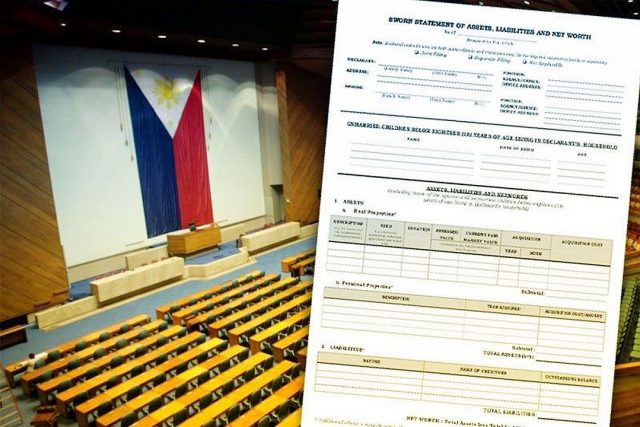
Speaker urges full disclosure of gov’t officials’ net worth amid flood scandal

PHILSTAR FILE PHOTO

HOUSE SPEAKER Faustino “Bojie” Dy III on Monday said all government officials should release their yearly net worth records to help regain public trust amid a widening scandal involving bogus flood control deals.

“Everyone’s SALN (statement of assets, liabilities and net worth) should be visible and open, so we can truly be transparent to Filipinos and restore their trust in us,” he told reporters in Filipino.

Despite longstanding laws enforcing SALNs, public access has been increasingly curtailed in recent years. A 2020 memorandum by the Office of the Ombudsman has tightened restrictions by requiring consent from officials before release.

Net worth records should be made available for inspection and copying after 10 working days from the time they were filed, according to a 2009 Ombudsman memorandum, and should be made available to the public for up to 10 years from its submission.

“It’s necessary for them to see [all SALNs], not just those in Congress,” Mr. Dy said, adding that he’s willing to release his own net worth records if called upon.

House Deputy Speaker and La Union Rep. Francisco Paolo P. Ortega V said there are gaps in laws governing SALNs, specifically in allowing access. “That’s the number one gap there. I don’t see anything wrong with making SALNs public,” he told reporters.

“Reforms to the SALN framework are worth considering,” Ederson DT. Tapia, a political science professor at the University of Makati, said in a Facebook Messenger chat. “At present, the law technically allows public access, but the restrictions and bureaucratic hurdles make it difficult in practice.”

“If we are serious about restoring trust, then SALNs should be treated not just as compliance documents but as instruments of transparency. Mandating their release, while safeguarding against misuse or harassment, would send a strong signal of accountability,” he added.

Mr. Dy said congressmen should let the independent commission take the lead in the investigation into anomalous flood control deals, adding that the House committee investigating bogus flood control deals should turn over its documents to the fact-finding body.

“Most Filipinos no longer believe what’s being uncovered in the House committee,” he said in Filipino. “All the reports and details about what happened at the infrastructure committee need to be submitted to the ICI (Independent Commission for Infrastructure).”

President Ferdinand R. Marcos, Jr. in mid-September created a fact-finding panel into billions worth of bogus flood control deals, which is tasked to investigate irregularities in public works projects involving substandard, incomplete or nonexistent infrastructure.

Reports of irregularities in infrastructure contracts have fueled public outrage after a series of typhoons and monsoon rains earlier this year left Metro Manila and nearby provinces flooded despite extensive flood control projects.

Mr. Marcos said in August that more than 6,000 flood control projects launched since 2022 lacked key details. About P545 billion has been allocated for flood control since then, with P100 billion cornered by top contractors.

On Sunday, thousands of Filipinos marched in the capital in the biggest protest so far against the multibillion-peso flood control scandal, turning weeks of online outrage over corruption into mass street demonstrations that rattled the political establishment.

SENATE SESSION
Meanwhile, the Philippine Senate will delay its regular session on Tuesday to give way to a hearing on alleged corruption in flood control projects, Senator Panfilo “Ping” M. Lacson said.

Mr. Lacson, who heads the Senate blue ribbon committee, asked Senate President Vicente C. Sotto III to move the session to 4 p.m. from 3 p.m. to allow more time for the inquiry. Senate Secretary Renato N. Bantug, Jr. confirmed the change in a notice to all Senate offices.

The committee will examine documents from former Public Works engineer Brice Hernandez, who accused some lawmakers and government officials of inserting funds into the budget and receiving kickbacks from questionable flood control projects.

He had been cited in contempt for lying under oath but was later allowed under heavy security to retrieve evidence from his home.

“The blue ribbon committee is to analyze the documents and other items submitted by Hernandez after he was allowed to return to his home under tight security to retrieve potential evidence to back his allegations,” Mr. Lacson said in a statement.

He added that the investigation must “get to the bottom of the case and hold those accountable to task,” noting that the issue reflects long-standing problems in the handling of public funds for infrastructure.

The senator also called for stronger safeguards in the budget process, saying Congress should bar lawmakers from making further insertions, particularly for infrastructure projects under the Department of Public Works and Highways (DPWH).

“I hope House Speaker Faustino Dy III and Senate President Sotto can agree with the chairmen of the House appropriations committee and Senate finance committee to bar insertions for infrastructure projects especially for the DPWH,” he said. “Because it all starts there, and some lawmakers got greedier and greedier.”

The scandal has fueled calls for greater accountability and tighter oversight of the infrastructure budget, which takes up a large share of annual government spending. — Kenneth Christiane L. Basilio and Adrian H. Halili


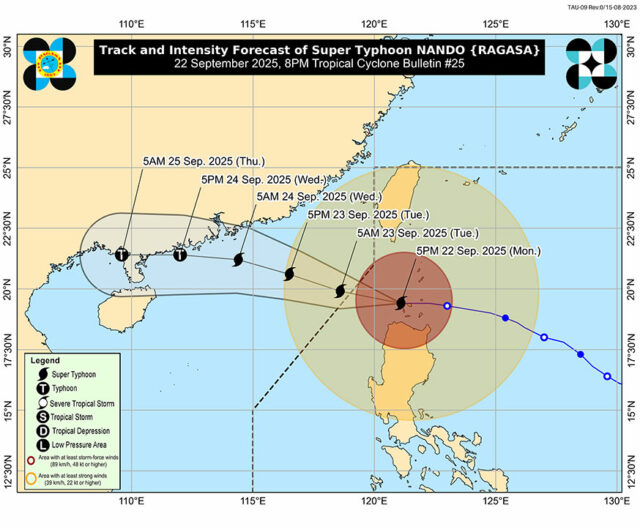
Super Typhoon Ragasa threatens Northern Luzon

PAGASA.DOST.GOV.PH

SUPER TYPHOON Ragasa, locally named Nando, threatened Northern Luzon with destructive winds and torrential rains on Monday, made worse by the Southwest Monsoon.

The cyclone made landfall over Panuitan Island in Calayan, Cagayan province and was moving away from the Babuyan Islands, the state weather bureau said in a 5 p.m. bulletin.

Malacañang suspended classes and government work in Metro Manila and more than a dozen provinces in Luzon, while some local governments suspended classes at all levels as early as Sunday.

The center of the super typhoon was spotted over the coastal waters of Calayan Island. It was moving westward at 2 kilometers per hour (kph) with maximum sustained winds of 215 kph near the center and gusts of 295 kph, the Philippine Atmospheric, Geophysical and Astronomical Services Administration (PAGASA) said.

The Southwest Monsoon and the trough of Nando would bring strong to gale-force gusts over Metro Manila, areas not under wind signal in Central Luzon, Calabarzon, the Bicol Region, Mimaropa, the Visayas and Mindanao until Tuesday, the agency said.

Luzon and Panay Island would continue to experience rains until Wednesday, it added.

Babuyan Islands was placed under Tropical Wind Signal No. 5, while Signal No. 4 was hoisted over the southern portion of Batanes, the northern portion of mainland Cagayan and the northern portion of Ilocos Norte. Wind speeds of 118 kph to 185 kph were expected in these areas in the next 12 hours.

The rest of Batanes, the central portion of mainland Cagayan, the northern and central portions of Apayao and the rest of Ilocos Norte were placed under Signal No.3. Winds packing 89 kph to 117 kph may be expected in at least 18 hours, it added.

Signal No. 2 was hoisted over the rest of mainland Cagayan, Isabela, the rest of Apayao, Abra, Kalinga, Mountain Province, Ifugao, the northern portion of Benguet, the northeastern portion of Nueva Vizcaya, Ilocos Sur and the northern portion of La Union.

Quirino, the rest of Nueva Vizcaya, the rest of Benguet, the rest of La Union, Pangasinan, Aurora, Nueva Ecija, Bulacan, Tarlac, Pampanga, Zambales, and the northern portion of Quezon were placed under Signal No. 1.

Authorities urged residents in high-risk areas to prepare for strong winds, storm surges, flooding and landslides. PAGASA also warned fisherfolk and operators of small vessels to avoid sailing in affected coastal waters. — E.A.A. Eva

Philippine bid for UN Security Council seat may boost regional security role

PHILIPPINE COAST GUARD PHOTO

By Adrian H. Halili, Reporter

THE PHILIPPINES’ campaign for a nonpermanent seat in the United Nations Security Council (UNSC) could boost its role in regional security and its global standing amid tensions with China, political analysts said, as Manila prepares to lobby support during this week’s UN General Assembly in New York.

Hansley A. Juliano, a political science lecturer at the Ateneo de Manila University, said winning a seat would enhance Manila’s diplomatic profile and help align international institutions with Philippine interests.

“The Philippines being part of the UNSC, even in a nonpermanent capacity, helps raise our profile as a regional security hub and further aligns global institutions with us against China,” he said in a Facebook Messenger chat.

The Department of Foreign Affairs (DFA) last week said the Philippines would intensify its campaign during the UN gathering. Foreign Affairs Secretary Theresa P. Lazaro will lead the delegation after Malacañang announced President Ferdinand R. Marcos, Jr. would skip the assembly to focus on domestic issues, including the widening corruption scandal involving flood control projects.

The Philippines has been pushing its candidacy for a 2027–2028 seat, which would give it a two-year term in the council. The election is scheduled for mid-2026, when five of the 10 nonpermanent seats will be contested.

Mr. Juliano noted, however, that Manila’s bid could face obstacles depending on the geopolitical interests of permanent council members. “It is ultimately a question of whether other members of the Security Council block us or mobilize against us as a favor to China, Russia, or any anti-US or anti-multilateral effort,” he said.

Relations between Manila and Beijing have remained tense, with frequent confrontations in the South China Sea where China has built up its presence despite a 2016 arbitral ruling that voided its sweeping claims.

Beijing has refused to comply with the decision, which Manila continues to cite as the legal basis of its position.

Raphael J. Cortez, a diplomacy instructor at De La Salle–College of St. Benilde, said a nonpermanent UNSC seat could give the Philippines a global platform to highlight maritime security concerns.

“Such platform may also be an avenue where the Philippines can openly discuss with great powers the need for international safeguards and assistance concerning countries being affected by territorial disputes,” he said via Messenger chat. “The West Philippine Sea dispute may be the best reference point for such.”

He added that the UNSC’s authority to authorize collective measures, including peacekeeping and preventive action, could give Manila stronger backing from the international community against China’s assertive actions.

Francis M. Esteban, associate dean at the Far Eastern University’s Department of International Studies, said the bid underscores Manila’s intent to strengthen multilateralism and the rules-based international order.

“We ardently believe that international credibility can be achieved by active participation in global governance through the UNSC,” he said. “I am hopeful that our bid will be successful primarily because of the efforts of our top-class diplomats and our growing reputation as an advocate of international law.”

The UNSC is the UN’s most powerful body, with the authority to adopt binding resolutions on peace and security. The five permanent members — China, France, Russia, the UK and US — hold veto power.

Ten nonpermanent members are elected for two-year terms and enjoy voting rights but not veto privileges.

Training manual on union rights launched

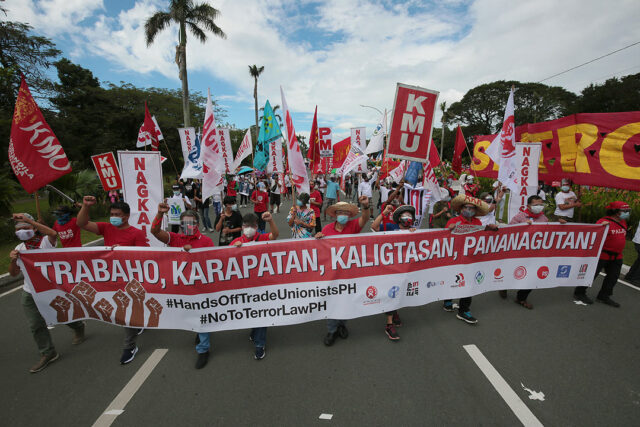
LABOR groups during a Nov. 30, 2020 rally at the UP Diliman campus — PHILIPPINE STAR/ MICHAEL VARCAS

By Erika Mae P. Sinaking

THE PHILIPPINE government on Monday unveiled a training resource on freedom of association to strengthen labor education and address gaps in trade union rights flagged by a 2023 International Labour Organization (ILO) mission.

Executive Secretary Lucas P. Bersamin said the program underscores the administration’s resolve to “uphold democratic institutions and protect human rights through fair and accountable labor systems.”

The initiative, funded by Canada and the European Union, was developed by the Department of Labor and Employment (DoLE) in consultation with employers and workers. It aims to expand labor rights awareness, reinforce dialogue and prevent violations of the right to organize.

“This is not merely a technical exercise,” Labor Secretary Bienvenido E. Laguesma said at the launch in Makati. “The right to freely associate, to organize and to engage in collective bargaining is a human right that ensures dignity and builds trust in the workplace.”

Piloted in August, the freedom of association training includes five modules covering labor rights, violation reporting and the impact of business, gender, climate and migration.

The program is supported by an inter-agency committee created under Executive Order No. 23, which will coordinate with the National Tripartite Industrial Peace Council (NTIPC) to sustain dialogue among labor, employers and the government.

ILO Philippines Director Khalid Hassan said the resource directly responds to recommendations made by last year’s High-Level Tripartite Mission. “It’s a big initiative that can help the Philippines address several labor issues, especially as trade agreements increasingly carry labor provisions,” he told BusinessWorld.

He added that the manual’s integration into DoLE programs reflects institutional buy-in at a time when the Philippines is seeking more trade and investment ties with Canada, the EU, Australia and Germany, where labor standards are a key requirement.

“This manual will play a crucial role in strengthening labor processes and safeguarding compliance,” Mr. Hassan said.

Annie Enriquez-Geron, NTIPC labor representative for freedom of association, said the resource is “another opportunity to deepen engagement and ensure every worker, regardless of status, location or sector, can exercise their right without fear.”