Home Blog Page 6279

Asia Pacific ‘strong target’ for NFTs, Web 3.0 platforms — ad exec 

PIXABAY

Web 3.0, the “upgraded” Internet characterized by decentralization and the increased use of artificial intelligence (AI), will “change the contact points between brands and customers,” according to an advertising and public relations executive. 

“We won’t have a meaningful space [with our clients] if we don’t enter into these systems,” said Alberto Canteli, Havas Group chief executive officer and chairman for the Nordics, CEE (Central and Eastern Europe), Middle East, Southeast Asia, Korea, and Japan. “My personal bet is that, in the coming three to five years, Web 3.0 will make us go through the strongest revolution we have ever seen.”  

Fields such as robotics and AI, Mr. Canteli told BusinessWorld in a Zoom call, will move more interactions into the virtual world. Members of Mr. Canteli’s staff are obliged to have Oculus virtual reality headsets to help them understand how Web 3.0 applications work.  

Havas Group, a global communications group, launched Metaverse in Havas, a unit for brands that want to enter the metaverse, early this year; and Havas Blockchain, which offers training and coaching for firms operating in the blockchain ecosystem, in 2018. 

The Group’s clients typically want to mint their own non-fungible tokens (NFTs), or launch a new platform. 

The Asia Pacific region is “a very strong target” for growth, according to Mr. Canteli.

“We have been winning very important accounts in Korea, the Philippines, and Singapore,” he said, declining to give specifics. “We are in a strong business momentum, and are onboarding big, important, new accounts.”  

According to Mr. Canteli, talent retention is the biggest challenge amid digital transformation. 

“Companies have to conquer the hearts of young people” so they will want to stay, he said. “Salary is an option, but it’s not the key one,” Mr. Canteli added. “It’s [also about] being a company that offers flexibility, continuous training, gender parity, respect.” — Patricia B. Mirasol

US envoy to China expects ‘zero COVID’ policy to persist into 2023

REUTERS

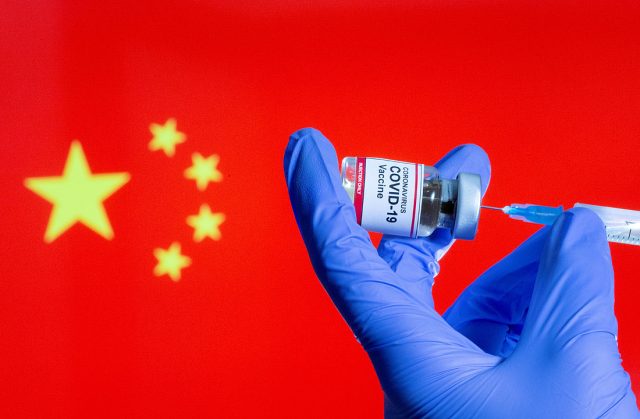
WASHINGTON — The United States’ ambassador to China, Nicholas Burns, said on Thursday he expects Beijing’s “zero COVID” policy to persist into early 2023, and that US businesses were reluctant to invest in the country until restrictions ease. 

The re-emergence of infections in China’s capital Beijing has raised new concerns about the outlook for the world’s second largest economy, which had recently emerged from a long lockdown that shook global supply chains in its most populous city and commercial hub, Shanghai. 

“I think we’re going to have to live with this for a long time,” Mr. Burns told an online Brookings Institution event. 

“My own assumption is that we’ll see the continuation of ‘zero COVID’ probably into the beginning months of 2023. That’s what the Chinese government is signaling,” Mr. Burns said, referring to China’s policy of seeking to stamp out each cluster of new cases, often with strict lockdowns and mass testing. 

“I think there’s a hesitancy to invest in future obligations until they can see the end of this,” Mr. Burns said of US companies. 

Analysts say the Chinese government’s official GDP (gross domestic product) growth target of around 5.5% for this year will be hard to achieve without doing away with the strategy. 

Mr. Burns criticized Beijing for censoring oChinese social media Secretary of State Antony Blinken’s May speech on US policy toward China, in which he said Washington expected Beijing to adhere to international rules. 

“We put the speech on Weibo, and WeChat. And it was censored in about two and a half hours. Just taken away,” Mr. Burns said, adding that the Embassy reposted it days later and it was again removed. 

Mr. Burns also said some assessments within China’s government that the United States is in decline and is therefore becoming more aggressive toward China was not accurate and an “excuse.” 

“I think what’s changed is the newly aggressive behavior of the Chinese government … over the last five to 10 years. And you’ve seen a counter reaction to that,” he said. — Michael Martina/Reuters

The M pays tribute to cartoonist and National Artist Larry Alcala

At the height of his career, Larry Alcala was part of every Filipino’s life. Picture a day in the life in the Philippines: the bright pops of color brought on by passing jeeps and tricycles on Manila’s busy streets, the chitter-chatter of neighborhood gossips outside their houses, children climbing trees and playing wherever they can, and the warmth of the tropical sun shining down on all of this. Of all the Filipino artists who worked with these subjects, perhaps none was more prodigious or influential for generations to come than Mr. Alcala. The common and endearing subjects and scenes portrayed by Mr. Alcala is a fitting celebration and offering for National Heritage Month, with its theme “PAMANANG LOKAL: Binhi ng Kulturang Pilipino.”

Larry Alcala: Slices of Life, Wit, and Humor opened at the SMX Convention Center Aura in Bonifacio Global City, Taguig last May 31. The exhibition featured a collection of archival reproduction of Mr. Alcala’s works alongside works in drawing, print, and digital media of selected artists influenced by Mr. Alcala, including members of the organization Ang Illustrador ng Kabataan (INK), which thrives to this day. The exhibition received curatorial guidance from visual communications educator and award-winning illustrator Professor Ruben “Totet” de Jesus of the University of the Philippines Diliman College of Fine Arts.

In the 2018 essay for the occasion of Mr. Alcala’s conferment to the Order of National Artists of the Philippines, Mr. de Jesus wrote that “Filipinos from all levels of society can appreciate Alcala’s art. His galleries are the dailies. There is mastery in his simplicity. There are messages in his images. Most of all, every Filipino is part of his family.”

The exhibition at the SMX Aura was complemented by the M’s education and public programs from June to July: an M Collab participatory project, inviting 18- to 25-year-old participants to share “à la Alcala” digital art contributions online. M Art Inspires (online conversation) featured insights and stories from Prof. de Jesus, visual artist-illustrator Aldy Aguirre, and writer-speaker Carl Javier. At the end of June, we invite young artists to join our M Online Studio Studies with a storytelling through comics and illustration workshop with visual artist-cartoonist Manix Abrera.

Larry Alcala: Slices of Life, Wit, and Humor was presented by the Metropolitan Museum of Manila and Filipino Heritage Festival, Inc., with support from the National Commission for Culture and the Arts, in partnership with SM and venue partner SMX Convention Center Aura. The exhibition was also made possible with the support from the following partners: BusinessWorld, DDB Group Philippines, Security Bank, and The Manila Times.

For more information, e-mail us at info@metmuseum.ph.


Spotlight is BusinessWorld’s sponsored section that allows advertisers to amplify their brand and connect with BusinessWorld’s audience by enabling them to publish their stories directly on the BusinessWorld Web site. For more information, send an email to online@bworldonline.com.

Join us on Viber to get more updates from BusinessWorld: https://bit.ly/3hv6bLA.

In call with Twitter staff, Elon Musk muses on space aliens, company’s future

Elon Musk addressed Twitter employees for the first time on Thursday, expressing his view that Twitter would need to cut its headcount, but offering few other new details about his $44 billion planned takeover of the social media company.

Mr. Musk appeared via video call 10 minutes late to what turned out to be a freewheeling question and answer session moderated by a Twitter executive, in which Mr. Musk mused about the existence of aliens and other space civilizations and his view that Twitter should help “civilization and consciousness.”

The Tesla chief executive, who is also chief executive officer of rocket company SpaceX, told Twitter staff he wants to raise the service’s user numbers from 229 million to at least 1 billion people and said advertising would remain important for the company, despite previously saying he believes Twitter should not serve ads, according to audio of the meeting heard by Reuters.

“I think advertising is very important for Twitter,” Mr. Musk said. “I’m not against advertising. I would probably talk to the advertisers and say, like, ‘hey, let’s just make sure the ads are as entertaining as possible.’”

Mr. Musk, who was expected to provide assurance to Twitter employees during his first meeting, didn’t offer an update on the deal closing.

He reiterated he was still trying to learn more about bot and spam accounts on Twitter, which he called his biggest concern.

In response to a question about whether he expected layoffs, Mr. Musk said there needed to be “some rationalization of headcount and expenses.”

“Right now, the costs exceed the revenue,” he said, adding “anyone who’s … a significant contributor should have nothing to worry about.”

Twitter employees took to an internal Slack channel in droves during the session, posting memes and complaining that Mr. Musk was not providing useful answers on his vision for the business and employee compensation.

They also demanded on Slack that the moderator press Mr. Musk on his views about remote work, as Twitter currently allows employees relatively free reign to work remotely or in the office.

Mr. Musk said he believed Twitter staff should lean toward working in an office, but expressed willingness to make some exceptions. The bias should be “strongly towards working in person, but if somebody is exceptional, then remote work can be okay,” he said.

The impending takeover of Twitter has been met with widespread skepticism and concern among the San Francisco-based company’s employees, some of whom have worried Mr. Musk will relax rules on certain content.

The billionaire told Twitter staff he believed users should be allowed to say “pretty outrageous things” on the site as long as the content is not illegal.

Twitter shares were down 1.5% and Tesla shares slumped more than 9% in afternoon trading.

Mr. Musk dialed into the call wearing a white shirt and appeared to be sitting in a kitchen, according to a source who watched the call.

When he turned off his video at the end of the Q&A, his avatar appeared to be two hands in the shape of the number 69, an apparent reference to a sex position, the source said. — Sheila Dang/Reuters

Meta, Google, Twitter vow to fight fake news better as EU gets tougher

STOCK PHOTO | Image by terimakasih0 from Pixabay

BRUSSELS — Meta, Alphabet unit Google, Twitter, and Microsoft agreed on Thursday to take a tougher line against disinformation under an updated EU code of practice that could hit them with hefty fines if they fail to do so.

More than 30 signatories including advertising bodies have committed to the updated Code of Practice on disinformation, the European Commission said.

The signatories agree to do more to tackle deep fakes, fake accounts and political advertising, while non-compliance can lead to fines as much as 6% of a company’s global turnover, the EU executive said, confirming a Reuters report last week.

The companies, which include TikTok and Amazon’s live streaming eSports platform Twitch, have six months to comply with their pledges and will have to present a progress report at the beginning of 2023.

“The new code is a testimony that Europe has learned its lessons and that we are not naive any longer,” Commission Vice-President Vera Jourova told a news conference.

She said Russia’s invasion of Ukraine, the coronavirus disease 2019 (COVID-19) pandemic and Britain’s withdrawal from the European Union accelerated the EU’s crackdown on fake news.

Sanctions may include banning companies from Europe, EU industry chief Thierry Breton said.

“If there is consistent flouting of the rules, we can also think about stopping their access to our space of information,” he told the news conference.

Critics such as the Association of Commercial Television and Video on Demand Services in Europe (ACT) said there were grave shortcomings in the revised Code.

“The Review does not offer concrete commitments to limit ‘impermissible manipulative behavior.’ Commitments go no further than a blanket statement to follow the law which is obvious and does not require a Code,” it said. — Foo Yun Chee/Reuters

Continuity as Marcos gives key posts to pro-admin people

FORMER SENATE president Juan F. Ponce Enrile

By Kyle Aristophere T. Atienza, Reporter

Philippine President-elect Ferdinand R. Marcos, Jr., has named more Cabinet members, including a former defense chief who helped organize a mutiny that ousted Mr. Marcos’s father, the late dictator Ferdinand E. Marcos, in 1986.

Former senate president Juan Ponce F. Enrile, 98, will serve as Mr. Marcos’ presidential legal counsel, the latter’s camp said in a press release.

Mr. Enrile, a lawyer, was the defense chief of the older Marcos from 1972 to 1986.

The supposed ambush on Mr. Enrile’s convoy in 1972 was among the reasons cited by the older Marcos for his declaration of Martial Law, which enabled the arrests and deaths of thousands of activists and citizens.

He also served as Finance chief from 1966 to 1968 and Justice chief from 1968 to 1970.

“I will devote my time and knowledge for the republic and for BBM because I want him to succeed,” said Mr. Enrile, who has backtracked on his stance on Martial Law years after it was scrapped by a popular uprising.

Mr. Marcos has also tapped outgoing Justice Secretary Menardo I. Guevarra to head the Office of the Solicitor General, whose main task is to defend the state in the legal arena.

Mr. Guevarra, who started practicing law as early as 1986, was appointed Justice chief by President Rodrigo R. Duterte in 2018. Before holding his current post, he was Mr. Duterte’s deputy executive secretary.

Mr. Guevarra was among the few Duterte officials who openly rejected the practice of tagging activists and ordinary people as communists.

Meanwhile, the Marcos camp said Retired General Jose Faustino Jr. will serve at the Department of National Defense as senior undersecretary and officer-in-charge until he becomes its secretary in November.

“Faustino is being tapped as Senior Undersecretary and Officer-In-Charge of DND, a post he would later assume as Secretary on Nov. 13, 2022, in compliance with the one-year ban on the appointment of retired military officers,” the press release read.

As Defense chief, Mr. Faustino will play key roles in defending Philippine-claimed areas in the South China Sea.

Mr. Marcos is widely seen as a continuity president, picking up from where Mr. Duterte left off.

Mr. Guevarra and Mr. Faustino were appointed to key posts under the current administration, while Mr. Enrile has openly backed some of the key policies of Mr. Duterte.

Mr. Marcos will take his oath as the 17th President of the Philippines on June 30.

On that day, activists and victims of his father’s martial rule are expected to march on major streets in the capital Manila.

Blown off course again, Fed policymakers see near-record uncertainty

REUTERS

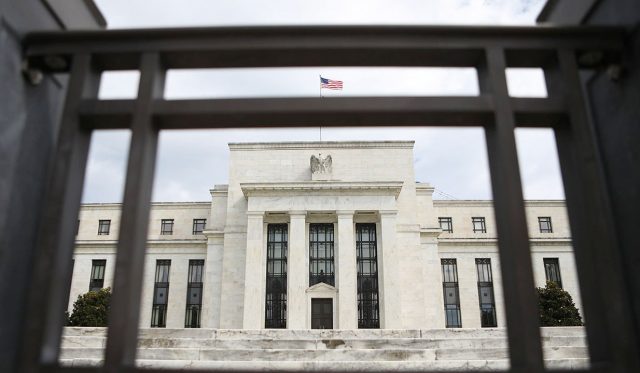
Federal Reserve policymakers are less confident than at any time since the height of the pandemic about what will happen with the economy, data published alongside their forecasts and the Fed’s hefty three-quarters-of-a-point rate hike this week show. 

The last time they were this worried they could be underestimating the coming deterioration in the labor market was in the depths of the Great Recession. But they are even more worried they are overestimating a hoped-for decline in inflation, documents charting confidence and risks seen in their forecasts show. 

The data helps underscore why policymakers are so focused on raising interest rates fast even if doing so causes a bigger dent to growth and unemployment than previously hoped, and why it is clarity on the inflation outlook that will drive policy. 

“It is clear that path of inflation continues to be the key consideration in how quickly the Fed gets to, and how far it moves past, the range of neutral in order to bring inflation down ‘clearly and convincingly,’” wrote Morgan Stanley economists, referring to the standard Fed Chair Jerome Powell has set for declaring victory on price pressures and slowing up on rate hikes. 

All 18 Fed policymakers are more-than-usually uncertain about their inflation and economic growth forecasts, and all but one note the same about their unemployment rate projections, the data shows. The same documents also show that no policymaker believes their forecasts are too pessimistic, and most believe they could be underestimating the risks. 

That means that though Fed forecasts embody the “softish” landing to which they aspire — inflation dropping to 2.2% by 2024, with the economy motoring along at 1.9% and unemployment rising just half a point to 4.1% — they are worried things could be worse, particularly for inflation. 

It also means, as with this week’s last-minute decision to deliver a hefty 75 basis point move after worse-than-expected inflation readings, that what Mr. Powell calls this “extraordinarily challenging and uncertain time” is sure to leave investors hanging. 

RAPID PACE OF RATE INCREASES 

Unquestionably, interest rates will rise, and rise fast: 17 of the 18 Fed policymakers see the target rate at least at 3.6% by next year, two full percentage points higher than today, and five see it above 4%. 

But is that where they will end up? Not even Fed Chair Powell knows. “I think we’ll know when we get there,” Mr. Powell told reporters Wednesday. 

“With the FOMC looking to remain nimble amid heightened uncertainty, guidance set out by communications should not be regarded as written in stone,” Barclays economists said in a note to clients following this week’s Federal Open Market Committee meeting. 

It’s a warning that investors may need to keep in mind as Mr. Powell’s colleagues start Friday to make their first public statements after this week’s policy meeting, and when Powell gives testimony next week before lawmakers on Capitol Hill. — Ann Saphir and Lindsay Dunsmuir/Reuters

Investors say Asia a safe place as Fed hikes but premature to jump in

REUTERS

SINGAPORE/HONG KONG — Asia’s emerging economies are better placed than most other regions to weather a bout of turbo-charged US policy tightening, analysts say, but with a health warning that investors shouldn’t rush in. 

The Federal Reserve raised interest rates by 75 basis points on Wednesday, the largest hike in more than a quarter century, and flagged further steep increases for the rest of the year to curb surging inflation. 

In contrast, only hours earlier China’s central bank kept rates unchanged in the world’s second-largest economy for a fifth straight month. 

Expectations of aggressive US tightening had already caused a violent selloff in global stock, bond, and even cryptocurrency markets, though Asian currencies and stocks rallied on Thursday. 

Foreign investors have pulled money out of emerging Asia, excluding China, for five straight months, worried about inflation and a reluctance in the region to raise rates in the face of slowing global growth. 

Now Asia is under pressure to tighten. 

Galvin Chia, an emerging markets strategist at NatWest Markets, cautions against reading too much into Thursday’s rally, warning the next few weeks could be volatile. 

“There’s still a little bit of room for wiggle about what the Fed will do next,” he said. “I would say investors wouldn’t be jumping on with any sort of bigger, longer-term investment decisions at this point in time. It’s still going to be a little bit choppy.” 

Kerry Craig, a global market strategist at J.P. Morgan Asset Management, said Asian economies have more support from current-account surpluses and stable currencies than in previous periods when Fed rate hikes sucked money out of emerging markets. 

Local markets have sold off this year, though the moves have been far gentler than the violent capital outflows seen in US tightening cycles in 2016 and 2004. 

“But we’re still very cautious and neutral in terms of asset allocations, we’re not saying, ‘Run out and by these things now,’” Mr. Craig said. 

“We’re just saying that they are becoming more appealing, with thinking about where to find growth in portfolios,” and investors can wait to see what happens to growth and inflation. 

WATCHING CHINA 

China remains a wild card. 

The authorities in the communist economy have eased regulatory crackdowns and coronavirus disease 2019 (COVID-19) lockdowns this month, but questions remain about how fast the economy will recover. 

Economists say the People’s Bank of China (PBOC) now has only limited room to ease, given the aggressive Fed and Beijing’s wariness of debt bubbles. 

Divergent Sino-US policies have wiped out China’s yield advantage, triggering a record monthly tumble in the yuan in April as capital left. The Chinese currency has since stabilized. 

Investors pulled $4.9 billion out of emerging markets last month, extending a third month of outflows, according to the Institute of International Finance. 

Foreigners reversed in the last week of May and bought Chinese equities, even as they reduced holdings of Chinese bonds for a fourth month. 

“The word with China is stability and control,” Mr. Craig said. “They want to see there’s a lot more control and stability being factored in, in terms of currency, bond and equity markets while they focus on the economy.” 

Underscoring this caution, China’s cabinet said on Wednesday it will act decisively in ramping up support for the economy, but such efforts should not lead to excessive money issuance and an “overdraft of the future.” 

How other Asia central banks react to their domestic inflationary stresses is key. NatWest’s Mr. Chia points to a selloff in Indonesian bonds this month as evidence investors want to see the dovish central bank change its stance. 

An aggressive Fed will put pressure on Asia to “raise rates, partially because of increased risk of capital outflows and weaker currencies,” said Rob Subbaraman, head of global macro research at Nomura. 

“But also I think many of the Asian economies are now facing their own inflation pressures irrespective of the Fed.” 

Mr. Subbaraman has changed his view on the Bank of Thailand staying on hold, now forecasting it will raise rates at the next two meetings. He also expects “aggressive” rate hikes in India in the second half. — Rae Wee and Alun John/Reuters

How to stay happy, healthy and vibrant

Get complete health protection with FWD Vibrant Critical Illness Plan.

You worked hard for years to get ahead in your professional career, you mustered the courage to become an entrepreneur and succeeded in growing your business, you put in countless long hours and made sacrifices to create a stable life for yourself and your family.

Now you’re at the stage where you have earned enough money and want to celebrate life, live more—and worry less about the future. In short, you want to be happy! You can do all this when you know your health, physical wellness, and finances are secured with a health plan that goes beyond the ordinary.

If there’s one thing we’ve learned during this pandemic, it’s that a healthy life is a happy life. A healthy life starts with preventing illness with proper nutrition, exercise, healthy habits, and screening for illnesses. Remember that life should be about spending time with your loved ones or being productive. Or discovering new passions that make you feel even more alive, or enjoying your well-deserved retirement.

Ensuring that your life is made up of moments that bring you joy means worrying less about things that may come. Having a health insurance plan that fully understands what you want and need out of life is key.

If you’re shopping for health insurance or looking to upgrade your current one, try FWD Life Insurance’s Vibrant Critical Illness Plan. Here are FWD Vibrant’s features that will convince you that this complete health plan is the one you need to stay happy, healthy, and vibrant!

You’re covered from screening to treatment to recovery.

Protecting your health goes beyond covering and treating illnesses. For FWD, protecting your health means getting you covered from screening to treatment to recovery. And because you want to live a life creating and collecting happy experiences and memories, it’s only sensible to find a policy that gives you complete health protection.

You can monitor your health and wellbeing.

Most experts agree that if you are under the age of 50 and in good health, you’re supposed to get a health screening once every three years. However, you can do your body better by getting into the habit of scheduling checkups even while you’re young. Because the best way to reduce health risks is to monitor your health and get an actual lab work done.

FWD’s plan includes a cash incentive so you can monitor your health and wellbeing every two years! To be more specific, you get 0.2% of your benefit amount every two years, starting on your second policy year, spend on medical tests and checkups. The best part is you can get this up to your 10th policy year!

You can claim up to 6x when diagnosed with major critical illnesses.

With more protection, you can focus on getting back into shape. This plan offers up to 6x claims for 57 critical illnesses (3x times for cancer-related sicknesses, 3x for non-cancer sicknesses, including three times for heart attack and stroke).

You also get 25% of the benefit amount up to a maximum of Php 1,000,000 if diagnosed with a covered minor critical illness.

You can focus on your health with less worries.

Receiving a diagnosis of critical illness can be a difficult time. Paying your insurance premium might be the last thing on your mind. FWD understands this, which is why this plan waives all future premiums after the diagnosis and approval of the first major critical illness or disability claim.

You get extra care so you can live life to the fullest.

If you’re diagnosed with a critical illness, a physician will prescribe maintenance medicine to help you continue living your life to the fullest. Sadly, maintenance meds do not come cheap, and they can put a dent in your savings account. A 2019 Pulse Asia Survey published on the Department of Health’s website even reveals that 99% of Filipinos do not buy all their prescription medications because they find medicines expensive.

Fortunately, FWD’s Vibrant Critical Illness Plan has Health Supplement Benefit that gives you 2% of your benefit amount (that’s the amount you were covered for) every month for six months upon your first major critical illness claim to help you with your recovery.

You can celebrate your life and milestones.

You will receive a maturity benefit that is 100% of your benefit amount on your policy anniversary when you reach 100 years old without making any major critical illness claims. Or should you pass away and never made any major critical illness claim, your beneficiary will receive 100% of the benefit amount as a death benefit.

You’re free to boost your benefits.

Most traditional health insurance plans have a definite, concrete set of benefits that don’t allow much room for adjustments. FWD, however, understands that everyone’s situation varies. You may need additional benefits as you grow older or as your health condition changes.

FWD is one step ahead! The Vibrant Critical Illness Plan allows you to “boost” it with additional benefits:

RecoveryPro: A booster that helps with medical expenses. You’ll receive PHP 1,000 to PHP 10,000 for each day of hospital confinement and double that if you’re in intensive care unit (ICU).

SafetyPro: Your family will get 2x the benefit amount if you die from an accident. Your beneficiaries will receive 3x if the accident happens on an official Philippine holiday.

LifePro: This is an add-on that gives your family additional cash benefit when you die. It also provides an additional 20% of the benefit amount if death happens abroad.

No other health plan combines wellness, screening, treatment, and recovery like FWD’s Vibrant Critical Illness Plan.

Check out FWD Vibrant Critical Illness Plan or book an appointment with an FWD financial advisor to find out more about this complete health insurance product, and discover how you can stay healthy, happy, and vibrant and celebrate living!


Spotlight is BusinessWorld’s sponsored section that allows advertisers to amplify their brand and connect with BusinessWorld’s audience by enabling them to publish their stories directly on the BusinessWorld Web site. For more information, send an email to online@bworldonline.com.

Join us on Viber to get more updates from BusinessWorld: https://bit.ly/3hv6bLA.

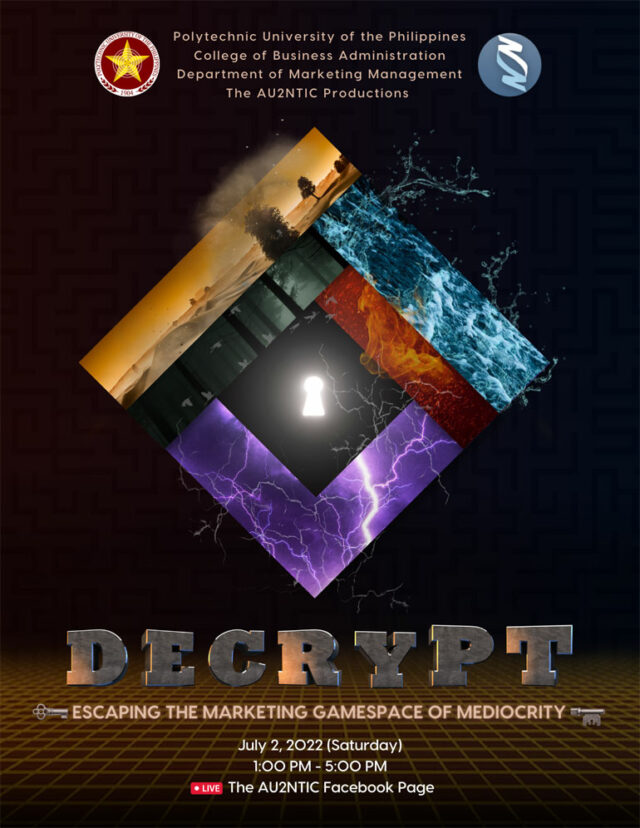
DECRYPT: Escaping the Marketing Gamespace of Mediocrity

The AU2NTIC Productions is a nonprofit academic organization composed of students taking up Bachelor of Science in Marketing Management (BSBA-MM) Section 4-2N in Polytechnic University of the Philippines (PUP) — Sta. Mesa, Manila. It aims to deliver the latest and authentic marketing contents that will inform, entertain, and uplift marketing students.

Its upcoming event entitled, “DECRYPT: Escaping the Marketing Gamespace of Mediocrity,” aims to focus on interconnecting marketing and analytics in the present-day state of pandemic and post-pandemic.

DECRYPT is a free admission webinar of The AU2NTIC Productions to be held online via Zoom and Facebook Live on July 2, 2022 from 1:00 p.m. to 5:00 p.m. It will cater to Marketing students from PUP, including PUP SHS and OUS, as well as partner schools. It has a three-part discussion consisting of three topics with respective subtopics and real-life case studies.

The event will have high-caliber and top-of-the-line speakers, to be called as the gamemasters, to discuss the chosen topics:

1) The Emerging Importance of Value Creation Process for Startup Businesses in the New Normal;

2) Identifying Brand DNA to Develop a Killer Brand Strategy; and

3) Utilizing Marketing Analytics and Data Science in Creating Trends

The topics are bound to represent the life of a business — from creating a value for a startup business, to creating a brand identity and developing a killer brand strategy, up to reaching the end result of being the best-in-class by creating data-driven trends. While value creation and brand identity are strong needs of a business, life does not end from being known and differentiated from competitors. Businesses’ blood is customers — the paying ones. Hence, they will want to create a campaign trend that is important in conversion that can be done through marketing data science. The topics and theme of this webinar are formed in the aim of delivering the message of ‘escaping the mediocrity in the current state of the market’ and dare to be a brand that stands out.

Other much-awaited things for this event are the guest performers, freebies to every student from brand partners, and competitions where the students can join and share their skills and creativity, be recognized for their wits, and win exciting prizes as they attend and participate.

Line up with the bravest players by filling out this pre-registration form: https://forms.gle/ryMpP4GkueX4i5zh7.

Get ready to fearlessly play your own game!

HIGHLIGHTS OF THE EVENT: High-caliber speakers, upskill in marketing and analytics, real-life cases and application of topics, learning at their own convenience, e-certificates, guest performers, pre-event competitions, the announcement of games and raffle winners, freebies, and vouchers

Revlon files for bankruptcy, blames supply chain snags

Cosmetics maker Revlon Inc. has filed for bankruptcy, falling victim to global supply chain disruptions that pushed up raw material costs and prompted vendors to demand upfront payments.

Known for its nail polishes and lipsticks, the 90-year-old company in recent years has lost shelf space and sales to startups backed by celebrities such as Kylie Jenner’s Kylie Cosmetics and Rihanna’s Fenty Beauty.

In its bankruptcy filing, Revlon said supply chain disruptions in the spring prompted intense competition for ingredients used to make its products. At the same time, vendors that traditionally offered up to 75 days for payment began demanding cash in advance of new orders, while labor shortages and inflation added to its troubles, it said.

“For example, one tube of Revlon lipstick requires 35 to 40 raw materials and component parts, each of which is critical to bringing the product to market,” Robert Caruso, who was hired as Revlon’s chief restructuring officer, wrote in a court filing.

“With shortages of necessary ingredients across the company’s portfolio, competition for any available materials is steep.”

The coronavirus disease 2019 (COVID-19) pandemic has lengthened ship delivery times since 2020, pushing up freight costs, while the Russia-Ukraine conflict and lockdowns in Shanghai have added to supply chain disruptions this year.

Shares in Revlon fell as much as 44% on Thursday on the bankruptcy filing before closing down 13%.

The shares had halved in market value between last Thursday and close of trading on Wednesday. Media reports of a potential bankruptcy filing emerged on Friday.

DEBTS MOUNTED

Revlon, which was formed in 1932 by brothers Charles and Joseph Revson and Charles Lachman, started off selling nail enamel. It was sold in 1985 to MacAndrews & Forbes – which remains the controlling shareholder and is owned by Ron Perelman — and went public 11 years later.

Revlon bought Elizabeth Arden in an $870 million skincare bet in 2016 to fend off competition. It houses brands including Britney Spears Fragrances and Christina Aguilera Fragrances.

But the company’s sales lagged over the years and in 2021 fell 22% from its 2017 levels. In contrast, competitors like CoverGirl, owned by Coty Inc., have gained market share by investing heavily to improve supplies.

The company also made headlines two years ago when Citigroup Inc. accidentally sent nearly $900 million of its own money to Revlon’s lenders.

Revlon asked its bankruptcy judge to confirm that the Chapter 11 filing would not stop Citibank’s ongoing appeal over the $504 million it is still trying to recover from Revlon lenders. A quick prompt resolution of the dispute would help its bankruptcy case move forward, it said in court papers.

The mistaken payment is part of a complex battle between Revlon’s pre-bankruptcy lenders, who have jockeyed for control during Revlon’s attempts to defer debt payments.

An attorney representing junior creditors, Clark Whitmore, said in court that the senior lenders’ “feeding frenzy” would destroy value for stakeholders that are lower on the food chain.

Revlon plans to fund its bankruptcy case with $575 million in debtor-in-possession financing from its existing lender base. It listed more than $3.54 billion in liabilities in its court filing late on Wednesday.

The company said none of its international units, except Canada and the United Kingdom, are part of the Chapter 11 bankruptcy proceedings.

Mittleman Brothers Investment Management, which holds about 3% of the company’s stock, expressed hope equity holders would manage a decent payout despite the bankruptcy.

That could happen if Revlon manages higher sales that allow it to overcome supply chain issues, Chris Mittleman said in an email to Reuters. — Reuters

Human capital development should be a central pillar of incoming Marcos admin — ADB

UNSPLASH

By Revin Mikhael D. Ochave, Reporter

LOCAL human capital development should be a central pillar for the incoming Marcos administration to improve the country’s competitiveness ranking, according to the Asian Development Bank (ADB).

Sameer Khatiwada, ADB Southeast Asia Department social sector specialist, said during the webinar of the Asian Institute of Management Rizalino S. Navarro Policy Center for Competitiveness on Thursday that the Philippines needs to address the learning loss incurred due to the closure of schools caused by the coronavirus disease 2019 (COVID-19) pandemic.

President-elect Ferdinand R. Marcos, Jr., is set to take office on June 30.

“As the new administration comes in, the human capital development agenda has to be a central pillar of increasing/enhancing Philippines’ competitiveness,” Mr. Khatiwada said.

“Infrastructure and human capital are the two basic ingredients for growth in investments. The learning loss that we saw because of school closures, I think we have to take this seriously and come up with concentrated efforts in reversing that,” he added.

Further, Mr. Khatiwada said that the long closure of schools due to the COVID-19 pandemic will have a “huge impact” on the country’s human capital development, noting the Philippines’ ranking in the Programme for International Student Assessment (PISA).

“The Philippines was among the few countries where the schools were closed for almost two years. This is likely to have a huge impact. We ought to really be serious about this,” Mr. Khatiwada said.

“If we want to talk about competitiveness of the Philippine economy going forward, unless we invest in human capital development, unless some of these learning losses are reversed or addressed with some targeted measures, I think it will be very difficult to catch up,” he added.

In the 2018 PISA, the Philippines ranked last among 79 participating countries and economies in terms of reading comprehension, and placed second to the last in science and mathematics. The Education department in March announced that it will participate in the 2022 cycle of the PISA, which is conducted by the Organisation for Economic Co-operation and Development (OECD).

Based on the recently released 2022 World Competitiveness Report by the International Institute for Management Development (IMD), the Philippines climbed four spots to 48th out of 63 countries, the highest it had in two years after securing the 45th place in 2020.

The report looked at a country’s competitiveness based on economic performance, government efficiency, business efficiency, and infrastructure.

In 2022, the Philippines improved its economic performance to 53rd, while its infrastructure ranking also increased to 57th. However, the country’s business efficiency fell to 39th while its government efficiency also declined to 48th.

Meanwhile, American Chamber of Commerce of the Philippines Senior Adviser John D. Forbes said that the government should be more flexible on hybrid work arrangements and the tax incentives of registered business enterprises.

“The government doesn’t recognize what’s happening in the world. The workers do not want to go back into the office. They have gone home. They realized that it is nicer to work-from-home (WFH). They don’t have to commute. The government has to be more flexible on this,” Mr. Forbes said.

The government has previously mandated registered business enterprises, including information technology and business process management (IT-BPM) firms, located in economic zones to return to 100% on-site work or risk losing tax perks in a bid to help economic recovery.

ADVERTISEMENT
ADVERTISEMENT