Home Blog Page 6262

Duterte designates Makati building as special ecozone

AYALALANDOFFICES.COM.PH

PRESIDENT Rodrigo R. Duterte has designated Ayala Land, Inc.’s (ALI) office tower in Makati City as a special economic zone.

Mr. Duterte signed Proclamation No. 1392 on June 13, which declared Circuit Corporate Center 2 as a special economic zone-information technology center. A copy of the proclamation was made public on Tuesday.

The office building is located along 3 Theater Drive in Circuit, a 21-hectare mixed-use township being developed by ALI in Barangay Carmona.

According to the proclamation, Circuit Corporate Center 2 will have a gross floor area of 46,817 square meters (sq.m.), more or less.

On the AyalaLand Offices website, Circuit Corporate Center 2 is described as a 17-storey office tower.

However, it was unclear whether the proclamation meant the existing ban on new ecozones in the National Capital Region (NCR) has been lifted.

Sought for comment, Presidential Communications Operations Office (PCOO) Secretary Martin M. Andanar said he had no information on the matter.

In June 2019, Mr. Duterte signed Administrative Order No. 18 that imposed a moratorium on new ecozones in Metro Manila as part of efforts to boost development and investments in the countryside. Buildings designated as ecozones typically receive tax breaks and incentives.

The Philippine Economic Zone Authority (PEZA) has sought the lifting of the moratorium, but was rejected by the Fiscal Incentives Review Board (FIRB).

PEZA Director-General Charito B. Plaza said the application for the building’s designation as a special economic zone may have been submitted before the moratorium was implemented in 2019.

“Maybe this application was before the moratorium in the National Capital Region,” Ms. Plaza said in a Viber message.

David T. Leechiu, Leechiu Property Consultants, Inc. chief executive officer, said in a Viber message that it is vital for the ecozone ban in Metro Manila to be lifted since it means less risk for property developers. 

“(There is) higher chance of (the buildings) getting leased out, therefore higher chance of them reinvesting capital and generating economic activity. Plus, by building more, the real estate tax base and business tax base becomes larger,” Mr. Leechiu said.

He noted many business process outsourcing (BPO) firms still want to expand in the Philippines, and Metro Manila has the best infrastructure and largest skilled labor market.

“Companies grow in Manila first as the risk-free option and only afterwards will they be able to get board approval to expand outside of Manila. They will choose larger labor markets first such as Cebu for Visayas and Clark for Central Luzon, then grow from there. This is the better approach,” Mr. Leechiu added.

Separately, Mr. Duterte also signed Proclamation No. 1394 which designated several parcels of land in Barangay Santiago, Sto. Tomas City, Batangas to be included in the existing Light Industry & Science Park III-special ecozone. — Revin Mikhael D. Ochave

Cebu Landmasters plans to offer up to P8-B bonds

CEBULANDMASTERS.COM

PROPERTY developer Cebu Landmasters, Inc. (CLI) announced that it plans to offer and issue peso-denominated fixed-rate bonds worth up to P8 billion.

The bonds have a principal amount of up to P5 billion and a P3-billion oversubscription option. The issuance is part of an initial offer from its shelf-registered P15-billion debt securities program to be utilized within three years.

“This maiden public bond offer of Cebu Landmasters is part of our strategy to sustainably maintain our growth and expansion plans as we serve the housing needs of the Filipino family,” CLI Chief Finance Officer Grant L. Cheng said in a statement.

“Especially in [Visayas-Mindanao] where the need for quality housing is constantly underserved, CLI is committed to delivering this essential need and contributing to the development of the communities we are helping to build,” he added.

The bonds have indicative maturities ranging from three-and-a-half to seven years, with the periods to be determined during the final offer by the third quarter.

The company tapped Philippine Depository and Trust Corp. as registrar and paying agent; and BPI Capital Corp. and China Bank Capital Corp. as joint issue managers, joint lead underwriters, and joint lead bookrunners.

“We’re excited to bring our story to the public debt markets and we believe we have something unique to offer debt investors,” Mr. Cheng said, adding that the company is pleased to have its “strongest partners” manage the maiden issuance.

CLI said it is planning to use the bonds to support its growth plans, primarily for market investments and land banking activities.

The fresh capital will also be used for large-scale estate projects such as the 22-hectare Davao Global Township, the 14-hectare Manresa Town in Cagayan de Oro, and the 100-hectare Minglanilla Techno-Business Park in Cebu.

In the first quarter, CLI reported that its net income rose by 14% to P811 million. Revenues likewise jumped 53% to P3.56 billion.

Earlier this month, CLI announced that it was planning 21 pipeline projects worth P31.5 billion.

During the company’s annual stockholders meeting on June 7, Mr. Cheng said that CLI had set aside more than P13 billion for its 2022 capital spending to cover land acquisition and construction progress.

He said the company had secured this year more funding facilities at longer tenors and at lower fixed rates.

At the stock exchange on Tuesday, CLI shares ended lower by 1.14% or three centavos to P2.60. — Luisa Maria Jacinta C. Jocson

Razon files P28-billion Prime Infrastructure IPO

PHILIPPINE ports and gaming tycoon Enrique Razon, Jr. on Tuesday launched an up to P28-billion ($515 million) initial public offering (IPO) for his infrastructure and energy holding firm, according to a corporate filing.

The IPO of Prime Infrastructure Capital, Inc. could be the country’s largest this year, despite volatility caused by elevated inflation and an aggressive monetary policy tightening in the region.

Prime Infrastructure in its filing to the regulator said it plans to sell up to 1.93 billion shares, including an overallotment option, at a maximum price of P14.60 apiece. In Philippine filings, IPO prices are typically set above final selling prices, and the number of shares for sale could be cut.

If approved, the company will target October for the offer period and listing on the Philippine bourse, which has seen the listing of seven firms this year. The main index has lost 11% so far this year, tracking regional peers.

Mr. Razon, who Forbes says is the second-richest person in the Philippines with a net worth of $6.7 billion, built his fortune through casino-resort group Bloomberry and global port operator International Container Terminal Services, Inc.

The 62-year-old earlier this month announced his acquisition of a controlling stake in a South China Sea gas field. Reuters first reported his interest in May.

Fresh capital will be used for the Prime Infrastructure’s energy, water, and waste and sustainable fuels businesses.

It is building the world’s largest solar power facility, with a capacity of 2,500-3,500 megawatts (MW) combined with a 4,000 MW-hours (MWh) to 4,500 MWh battery energy storage system.

A banking source prior to Tuesday’s filing told Reuters the amount of capital required in Mr. Razon’s expansion program was too high for the debt or loan market.

Prime Infrastructure hired BDO Capital & Investment Corp., BPI Capital Corp., and CLSA Ltd. to facilitate the deal. — Reuters

Net-zero Picasso: Museums rethink art shows to cut climate impact

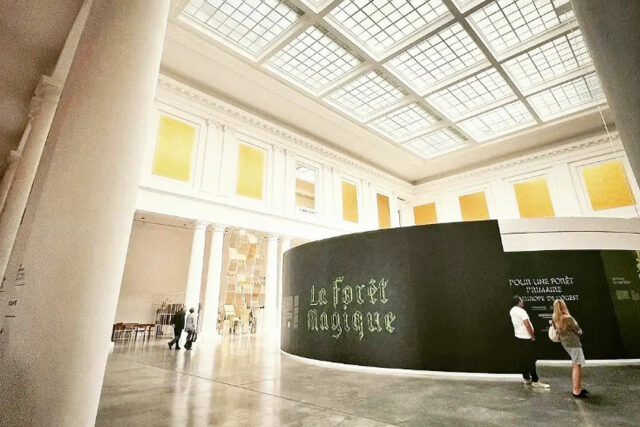
THE PALAIS des Beaux-Arts has a new exhibition, “The Magic Forest,” that recycles 70% of the scenography and staging from an earlier Goya exhibit. One of the ways the museum achieved this was by reusing a “rotunda” room in the lobby that was designed to be multi use. — INSTAGRAM.COM/PBALILLE/

By Joanna Gill

BRUSSELS — When coronavirus forced some of France’s busiest museums to close their doors in 2020, it was a rare chance for reflection.

Curators’ conversations during lockdowns centered on the question: “What kind of world do we want to live in post-pandemic?,” said Julie Narbey, director of the Centre Pompidou in Paris, which houses Europe’s largest modern art collection.

Ms. Narbey said her team concluded over video calls that the pandemic was the “moment to step up a gear on the environment.”

“It’s in our DNA to tackle the big questions of the modern world,” she told the Thomson Reuters Foundation.

This prompted a rethink of how to cut the carbon footprint of exhibitions — from recycling staging and extending the length of major shows to scaling back on overseas loans of artworks.

Such measures appear to be a win-win for museums as they not only slash emissions but can reduce costs.

That is crucial for a part of the economy hit hard by coronavirus restrictions, according to the International Council of Museums. It can also help museums avoid growing criticism for accepting sponsorship of exhibits from fossil fuel companies.

The art world has been lagging behind other industries when it comes to addressing greenhouse gas emissions, said Sarah Sutton, head of Environment and Culture Partners, a US nonprofit NGO advising cultural bodies on sustainability.

“Fortunately, the sector is finally recognizing that it is late to the party, which means we’re finally seeing great interest in these changes,” she said.

Several initiatives have been launched in the past few years — in Europe and the United States — from carbon calculators to consultations and audits of galleries’ efforts to go greener.

“For me, it’s not a question how long will it take but how quickly can we accelerate it,” said Ms. Sutton.

While she said she was “hugely optimistic,” she stressed that more must be done to raise awareness among funders and donors of art museums’ work to become more sustainable.

There has long been an assumption that museums’ climate impacts are too small to warrant change, or art directors equate climate with politics and fear this may hurt funding, she said.

HOME IS WHERE THE ART IS
Paris is home to three of the world’s most-visited art museums: the Louvre, Musee d’Orsay and Centre Pompidou.

In a normal year they welcome millions of visitors, mostly from overseas — producing a substantial carbon footprint.

While there is little museums can do to reduce air travel by tourists, they can cut back on the flights a Warhol or Picasso makes, said Guergana Guintcheva, a professor of marketing at Lille’s EDHEC Business School who has carried out research on museums.

One of the main sources of exhibition carbon emissions comes from transporting artworks from collections around the world, according to the Galleries Climate Coalition (GCC), a global charity providing sustainable guidelines for the art sector.

“For every artwork, there is round-trip air travel — and at least two round-trip journeys for a curator,” said Ms. Guintcheva.

She cited Lille’s Palais des Beaux Arts as having taken a climate-conscious approach with its recent Goya exhibition.

By prioritizing works in its permanent collection and pieces located in neighboring European countries, the museum cut down on freight transport for the art it displayed.

The Centre Pompidou is also focusing on sourcing local artworks rather than taking loans from the United States or Asia.

Some museums are also making exhibitions greener by pooling resources.

Ms. Narbey of the Centre Pompidou said shipping requests can be shared with the Louvre or Musee d’Orsay for transport from the same locations, such as New York, cutting both emissions and costs.

The GCC last month launched its “Sustainable Shipping Campaign” —  calling for an overall reduction in air freight by 2028, and local deliveries to be low or zero emissions by 2025.

LESS IS MORE
Curators are used to creating blockbuster shows including 150 to 200 works, but sustainability advocates say those could be scaled back.

Staging a show requires a large amount of carbon-intensive materials, which are often thrown out at the end of the run. More museums are now seeking to recycle where possible.

At the Centre Pompidou, parts of the staging for the 2020 show “Christo and Jeanne-Claude” were reused in last year’s Hito Steyerl exhibition at the request of the artist.

“She admired Christo and she was interested to follow in their footsteps, but she also wanted, like us, to have a smaller carbon footprint,” said Ms. Narbey.

In Lille, the Palais des Beaux-Arts has a new exhibition, “The Magic Forest,” that recycles 70% of the scenography and staging from the Goya exhibit.

One of the ways the museum achieved this was by reusing a “rotunda” room in the lobby that was designed to be multi use.

Slowing down is also part of the green ethos at some French museums. Extending the duration of major exhibitions instead of having a high turnover of shows can reduce carbon emissions.

This may also prove popular with visitors to the Centre Pompidou who sometimes complain when shows only last three months, Ms. Narbey said.

Yet the public appears largely unaware of museums’ efforts to cut emissions, said Ms. Guintcheva, noting that many people paid little attention to the sustainability notices at the Goya exhibit.

Ms. Sutton of Environment and Culture Partners said tackling climate change was still not a key selling point for many members of the public.

“I see it as matter of credibility more than of visitor attraction, and credibility matters to the funders, policy makers, and community members,” said Ms. Sutton, who previously held various museum roles and taught at universities on the topic.

“Museums and galleries are public benefit organizations. This requires them to do no harm,” she added.

“‘Do no harm’ is a definitive, not a comparable.” — Thomson Reuters Foundation

Financial management platform Lista raises over $5.1M for expansion

LISTA Technologies Pte. Ltd., which operates a financial management platform for small business owners and individuals in the Philippines, announced on Tuesday that it had raised more than $5.1 million in its latest fund-raising round to accelerate the expansion of its services.

This milestone shows that “investors are recognizing the Philippines as a top location for potential investments,” the startup said in an e-mailed statement.

“Lista is planning to expand beyond business management tools and further develop products for personal finances,” it added.

The fund-raising round was led by Singapore-based venture capital firm Openspace Ventures, the early backer of GoTo (Gojek) and Kumu Philippines.

Lista’s existing investors East Ventures, Saison Capital, and 1982 Ventures also participated in the round.

Its new investors include Stephen CuUnjieng, former chairman and chief executive officer (CEO) of Evercore Asia; Aurelien Pichon (Google), Roland Ros (Kumu CEO), and Rexy Dorado (Kumu president).

“About 30% of our user base are Filipinos who do not have any business but want to take charge of their personal finance. They monitor their salary, bills payment, and even savings using Lista,” Lista Co-Founder Khriz T. Lim said.

“We think this is a category that holds a lot of growth potential for us,” she added.

Lista said it has over one million downloads since it was launched in September last year. It aims to help local merchants and individuals better manage, save, and grow their finances through a software that “offers transparency and greater control.

The application, Lista also said, allows both merchants and individuals to conveniently track the flow of money in and out, and see their profits and savings in real time.

“They can record debts and use Lista to help collect receivables with its built-in SMS notification feature that automatically reminds borrowers of due dates,” it added.

The startup aspires to triple in size and expand its product offerings.

“The additional funding will also be used to fill additional key roles including product and engineering especially as the startup is looking into launching new verticals this year,” Ms. Lim said.

Lista hopes to go beyond financial management and launch more financial services, including payments and credit, as well as provide financial services to the country’s underserved citizens. — Arjay L. Balinbin

Good or bad, it’s Hong Kong history says British colonial museum founder

THE COLONIAL badge “harbour picture” redesigned by the museum is seen at the Museum Victoria City, in Hong Kong, China, June 15. — REUTERS/TYRONE SIU

HONG KONG — Bryan Ong has made it his mission to preserve items that tell the story of Hong Kong’s British colonial past even as Beijing increasingly shapes life in the city that is firmly back in the fold of the mainland.

Mr. Ong, 42, has been collecting colonial memorabilia since he was a child and last year opened The Museum Victoria City to put his treasures on display, detached from growing acrimony between China and Britain, fueled in part by the colonial legacy.

“Whether it’s good or bad, it’s part of Hong Kong history,” Mr. Ong said.

His two-story museum displays military medals, badges, royal portraits, stamps, banknotes, newspaper clippings and colonial government leaflets. It doubles as a souvenir shop.

Mr. Ong’s grandmother gave him a medal of a Hong Kong-based British Gurkha soldier as a gift when he was a child, inspiring his fascination with the city’s history.

A partially burnt British flag recovered from a War World Two battle in Hong Kong, when Japanese forces captured the city, is among the museum’s most precious items.

Hong Kong’s colonial era ended on July 1, 1997, after 156 years, marking for China the return of an integral part of its territory separated from the motherland for too long by the designs of colonialists.

After pro-democracy protests in 2019, China moved to crack down on dissent and assert its authority over the city in ways that Britain has said contravened its handover agreement that runs until 2047, drawing angry rebukes from Beijing.

China imposed a national security law on the city in 2020 followed by reforms to remove from public posts anyone seen as disloyal. Education, the media and other sectors have been increasingly under pressure to show patriotism and support for China’s leadership.

Mr. Ong said he was not worried about the fast-changing political environment.

“I am a Hong Kong lad. Not British,” Mr. Ong said, adding he did not think his museum would irk the authorities.

“We will try our very best to preserve the good oldies of Hong Kong,” Mr. Ong said. “Keep calm and carry on.” — Reuters

PetroEnergy to develop offshore wind farms with foreign partner

PETROENERGY Resources Corp. is planning to develop the three offshore wind power projects in its pipeline with a foreign partner, the Yuchengcos’ energy arm said in a regulatory filing on Tuesday.

“These projects will be developed by PGEC (PetroGreen Energy Corp.) alongside a foreign partner,” the listed company said in its information statement submitted to the Philippine Stock Exchange.

PetroEnergy did not disclose the identity of the foreign partner nor the status of its partnership, but it said one of the proposed projects had secured the endorsement of the Department of Energy (DoE) on securing government permits.

The company, through its unit PetroGreen, is developing the offshore wind power projects off the coast of Occidental Mindoro, Iloilo, and Ilocos Norte.

In 2021, PetroGreen secured three wind energy service contracts from the DoE covering three offshore wind blocks.

On Dec. 28, 2021, the Energy department issued to PetroGreen the agency’s formal endorsement for the National Grid Corp. of the Philippines (NGCP) to go hold system impact studies for the three blocks.

“The early issuance will help both DoE and NGCP to plan their grid improvements to accommodate large-scale capacities from these offshore wind projects,” PetroEnergy said.

It said PetroGreen had also secured the DoE’s endorsement to local government units and national government agencies for the northern Luzon project in January 2022.

Onshore, PetroGreen is currently gathering wind data for two years to assess the long-term wind resource to support a potential wind-hybrid power project in San Vicente, Palawan.

The data gathering is the latest development in its Palawan project, which was awarded a wind energy service contract by the DoE in November 2019.

The proposed project is around 130 kilometers north of Puerto Princesa. Activities for the meteorological mast installation program for the San Vicente wind-hybrid power project had been put on hold due to pandemic-related travel restrictions.

In December 2020, PetroGreen’s contractor was mobilized to San Vicente to carry out the installation works for the 60-meter meteorological mast to be used for the wind measurement campaign. The mast was commissioned and turned over to the company in July 2021.

Incorporated in 2010, PetroGreen is 90% owned by PetroEnergy and acts as its renewable energy arm and holding company. It ventured into renewable energy development and power generation through its subsidiaries and affiliate, namely: Maibarara Geothermal, Inc. (65%-owned), PetroSolar Corp. (56%-owned), and PetroWind Energy, Inc. (40%-owned).

PetroEnergy is also into upstream oil exploration and development, including operations in Gabon, West Africa.

On Tuesday, shares in the company slipped by 1.02% or five centavos to close at P4.85 apiece on the stock exchange. — Victor V. Saulon

Liver disease is reversible with lifestyle changes — PCP 

UNSPLASH

By Patricia B. Mirasol, Reporter 

TO AVOID liver cancer, individuals who are overweight, diabetic, or hypertensive should strive to lose enough pounds to stay within the healthy range, get vaccinated against hepatitis B, and drink alcohol in moderation (or skip it altogether). 

These lifestyle changes can help prevent fatty liver disease, “the fastest rising cause” of liver cancer (also known as hepatocellular carcinoma or HCC) worldwide, according to several studies. 

“There’s no safety limits of alcohol, to reiterate our stand,” said Dr. Diana Alcantara-Payawal, president of the Philippine College of Physicians and regional representative of the Global Liver Institute, meaning that the safest number of drinks is zero. 

“When you gain weight in the middle … there’s also more susceptibility to MAFLD, or Metabolic Associated Fatty Liver Disease,” she said at a June 16 webinar by the Hepatology Society of the Philippines.  

MAFLD, previously known as non-alcoholic fatty liver disease, is a condition characterized by a build-up of fat in the liver.  

Fatty liver disease refers to a range of liver disorders not caused by alcohol consumption, autoimmune disease, drug use, or viruses. At least 18 million Filipinos are either suffering from or at risk of it.  

Even those with normal weight — or a body mass index of less than or equal to 23 kg/m3 in Asians — are at risk of the disease if at least two other factors are present. These include: having a waist circumference of more than or equal to 90 centimeters for Asian men, or more than or equal to 80 centimeters for Asian women, as well as high blood pressure of more than or equal to 130/85 mmHg.  

A 2018 study co-authored by Dr. Payawal on the 2003-2018 etiology of HCC in the Philippines found that liver cancer due to hepatitis B has been on a downward trend through the years, thanks to hepatitis B vaccination. On the rise, however, are both non-alcoholic and alcoholic fatty liver disease.  

“We can see this to be an increasing trend as far as the etiology of liver cancer, from a communicable disease because of hepatitis B, to a non-communicable one,” said Dr. Payawal.  

This growing MAFLD trend also extends to the Asia Pacific, including countries like Taiwan and Malaysia, “because of the increasing trend of rapid urbanization [that has led to] less exercise,” she added.  

While a normal liver has less than 5% hepatic fat, a buildup can progress from steatosis (fatty liver without inflammation), steatohepatitis (fatty liver with inflammation), cirrhosis (liver scarring), to HCC (the most common primary liver cancer that occurs in people with chronic liver disease).  

An absence of cirrhosis is reported in 30–50% of Asians with MAFLD-associated HCC, according to Dr. Payawal. Among this group, she added, steatosis can develop straight into HCC or reverse course provided that the patient makes lifestyle changes.    

“The caveat is that there is reversibility in all stages of the disease,” she said. “There is light at the end of the tunnel if you are diagnosed …  There is reversibility all the way to cirrhosis. It is not too late to institute lifestyle intervention, because that is the key to all this,” she said.  

The liver regulates most chemical levels in the blood and excretes a product called bile, which helps carry away waste products from the organ.

A return to live theater and stories about life

TANGHALANG Huseng Batute at the Cultural Center of the Philippines (CCP) opened its doors to the public for the first time since the COVID-19 pandemic hit for the first weekend of live performances for the 17th Virgin Labfest (VLF): Hinga, the theater festival of untried, untested, and unstaged plays.

This writer bought early bird tickets for Sets A and B — the one-act plays are grouped in sets of three — for that weekend, June 16 to 19.

SET A: LIFE IS FULL OF SURPRISES

Mga Balo

Written by Ma. Cecilia De La Rosa, and directed by Adrienne Vergara

Before the show, actor Alon Segarra, playing a writer, roams around the stage, seemingly frustrated, while trying to get work done. Techno music and an all-white set suggest a Black Mirror episode. When the show officially starts, the audience learns that the writer has been awake for 35 hours and is thinking hard about the future of the play she is writing. She then seeks the help of the main characters — two widows (played by Pau Benitez and Skyzx Labastilla) whose husbands were victims of extrajudicial killings (EJKs).

Portable white boxes on the set were used very well — for sound effects when banged to suggest the sound of chaos and gunshots, and, when moved, to clearly set the change of location, from a bedroom to a morgue, the exterior of a neighborhood, and a cemetery.

Mga Balo tackles a writer confronted with who she is writing her play for and why. She worries that stories on EJKs have been told numerous times and is concerned about how to make her play unique. Even if there are many similar stories, it remains a relevant story as many of the victims’ names remain unknown.

Bituing Marikit

Written by Bibeth Orteza, and directed by Carlos Siguion-Reyna

Allan’s second wife, Carmela is dead. He wheels her body into the morgue singing “Bituing Marikit” by National Artist for Music Nicanor Abelardo. Her stepsons Peping, and Butching arrive from Manila, while Bok arrives from Dubai. Something about their stepmother is revealed.

The story is short and simple, and presented very Filipino behavior towards maintaining a family’s image in the neighborhood. The cast singing the kundimanBituing Marikit” fits the message of the play. It does not need much time to show the importance of acceptance, love for family, and the need to disregard other people’s opinions.

Walang Bago sa Dulang Ito

Written by Eljay Castro Deldoc, and directed by J. William Herbert Sigmund Go and Tess Jamias

During the intermission between plays, a paper printed with facts about millipedes was distributed to the audience. Music featuring the sounds of nature played and actors walked around the stage in nicely tailored skin-tone costumes, doing vocal warmups before the show transformed the stage of Tanghalang Huseng Batute into a forest.

Hija (played by Claudia Enriquez), a scientist, is working on her thesis on the behavior of millipedes for her higher education studies. While doing her research and field work, she encounters sexual abuse and victim-blaming from people in positions of power.

The play is able to discuss a serious topic in a light tone. The playwright successfully juxtaposes Hija’s decisions and behavior with how a millipede thrives in its environment.

As the title of the play says, there is nothing new about abuse of power and victimization. But still, each story waiting to be told is a testament to how these transgressions continue unpunished in our society.

SET B: LIFE IS STRANGE FICTION

Liberation

Written by Jerry O’Hara, and directed by Dennis Marasigan

An old lady in a wheelchair appears at the opening scene, exclaiming how sweet it is to hear the word, “Liberation.” Then the scene changes to her memory of the Second World War. In 1945, three Japanese soldiers find themselves in Manila as the Americans enter the city. In the face of death, one soldier goes on a rampage, one holds on what is left of his humanity by sparing the life of a Filipino child, and the other continues to follow orders blindly.

The dialogue between the three Japanese soldiers allows the audience to understand how conflicted they are between fulfilling their duty — they have been ordered to kill innocent civilians — versus taking the high moral ground despite the fact that this is insubordination. The play has a slow exposition and only picks up when the child enters the story. The actors are superb, they carry the dramatic tone of the story and keep the audience attentive.

At the end we learn that the survivor in the story may have been liberated during the war, but the memories of the dark period continue to haunt her. Those who have lived through a dark period such as the Second World War are testaments to our country’s history, which at present is continuously challenged with distortion.

Absurdo Events Day

Written by BJ Crisostomo, and directed by Mara Agleham

Aly and Rain (played by Thea Marabut and Io Balanon) are event coordinators of an End of the World Party. While the rest of the crowd is enjoying their final minutes on earth, the co-workers almost collapse from exhaustion.

It is easy to relate to the play’s example of toxic grind culture. Best friends, Aly and Rain get time alone backstage and reflect on the sacrifices they made for work: time they could have spent with their family and for themselves, rendering overtime at the expense of their physical and mental health. Both characters eventually come to terms with the value of their work, as the world comes to an end.

The play was funny from start to finish, as it also leaves the audience pondering over what matters more to them in a capitalistic society.

Nay May Dala Akong Pansit

Written by Juan Ekis, and directed by Karl Alexis Jingco

The final story in the set is a comedy that plays around the soap opera trope of a protagonist coming home with pansit (a noodle dish) only to find out that someone in the family has died.

The protagonists find that they are trapped in a metaphysical loop of a soap opera, repeating the same scenario over and over again in an attempt to stop their mother’s death.

The actors — Lian Silverio as Kuya, Manok Nellas-Bagadiong as Bunso, Mia Bolaños as Nanay, and Tommy Alejandrino as Tindero — were a delight to watch. The audience gets tired along with the actors as they repeat the scenes and root for them to succeed. The play is so laugh-out-loud funny that I lost count of the scene repetition. Aside from different endings, the scene was acted out in the style of different genres such as horror and a musical, yet still maintained the comedy. It also included a bit of audience interaction and improvisation which made it more enjoyable.

THEATER IS BACK
I am glad that the theater is finally back live. It felt good to see familiar faces and enjoy the energy of a live audience again after two years. The festival remains entertaining as it tackles relevant stories. Every play manages to start a discourse, on the elements of the staging, the themes and issues presented in each play.

While I understand that the organizers of the festival decided to show just one set a day to avoid overcrowding (the pandemic is still, after all, ongoing), it was challenging as a viewer to have to travel back and forth to the Cultural Center for four days to watch each set live. So, I settled for seeing two sets live. I will be watching Sets C and D online.

The 17th Virgin Labfest (VLF) runs until June 26 at the CCP’s Tanghalang Huseng Batute. The 12 featured plays are divided into four sets with performances scheduled at 2 and 7 p.m. The festival’s plays will also be screened online from June 30 to July 10 at ticket2me.net. For more information, visit www.facebook.com/thevirginlabfest. Michelle Anne P. Soliman

Alibaba Cloud hopes to boost financial inclusion in PHL

BW FILE PHOTO

TO HELP boost financial inclusion in the Philippines, Alibaba Cloud, the digital technology and intelligence backbone of Alibaba Group, unveiled on Tuesday a new support program for local financial services companies.

“By leveraging Alibaba Cloud’s IT infrastructure and innovative fintech (financial technology) products, digital financial services can reach more of the country’s unbanked Filipinos,” Allen Guo, country manager for the Philippines of Alibaba Cloud Intelligence, said during a virtual press briefing.

The “Fintech ONE” program hopes to further support the digital transformation journeys of financial services companies in the country, according to the technology company.

Only 29% of adult Filipinos are part of the banked population, leaving some 51.2 million individuals unbanked, the 2019 Financial Inclusion Survey showed.

The Bangko Sentral ng Pilipinas wants 70% of Filipino adults to have accounts in financial institutions by 2023.

Under Alibaba Cloud’s Fintech ONE program, participating fintech companies in the country will be offered access to advanced cloud technologies, free technical training, and professional consultations.

“Each eligible company will receive up to $10,000 in cloud coupons which can be redeemed against Alibaba Cloud products and services as well as support from Alibaba Group’s ecosystem,” the company said.

“Eligible companies will benefit from streamlined access to technology solutions from Alibaba Group’s ecosystem and its affiliated company Ant Group — including those that facilitate e-commerce and payment processes — to help participating companies maximize emerging opportunities in the Philippines,” it added.

The technology company will also help fintech companies in engaging with local and global investors and accelerators to help them grow their businesses.

The company, which offers a complete suite of cloud services to customers worldwide, currently works with various fintech players including GCash and UBX.

“Alibaba Cloud provides a mix of fintech solutions to GCash to handle large volumes of digital transactions with minimal interruption and high-cost efficiency,” it said. — Arjay L. Balinbin

‘Will try to qualify in four events in Paris Games,’ says Caloy Yulo

GYMNASTICS wunderkind Carlos Yulo — REUTERS

By Joey Villar

GYMNASTICS dynamo Carlos “Caloy” Yulo has won almost everything.

But he knew in his heart that for him to become truly great, he must ensnare the one that eluded him most — an Olympic gold medal.

And the pocket-sized wunderkind from Leveriza, Manila vowed to vanquish his Tokyo Games demon as he sees to qualify not just in one event, but four, in the 2024 Paris Games where he hopes to finally deliver his first Olympic mint.

“We will try our best to qualify in four events in the Olympics,” said Mr. Yulo during Tuesday’s presser at The Heritage Hotel Manila in Pasay referring to the floor exercise, vault and parallel bars apparatuses and individual all-around.

“And if I’m going to rate myself on where I am now in terms of my Olympic preparation, I’m eight out of 10,” he added.

Mr. Yulo quietly flew in to the country on Sunday fresh from his scintillating performance in the Asian Gymnastics Championships in Doha, Qatar where he harvested gold medals in floor exercise, vault and parallel bars and silver in individual all-around.

It was in Doha where Mr. Yulo, through his dazzling performance, announced to the world with clarity his true intention of striking gold in Paris.

“When we were in Doha, I asked if Caloy (Yulo) will qualify and win gold in floor exercise, and he answered me ‘no, we will qualify not just in floor, but in floor, vault, parallel bars and individual all-around,’” said Gymnastics Association of the Philippines President Cynthia Carrion.

Mr. Yulo said his team has made tweaks in his routines in preparation for Paris.

“We will try some new elements in vault and parallel bars. The level of difficulty will increase. We’re doing that for the Olympics,” said Mr. Yulo, who was conferred President Rodrigo R. Duterte’s Order of Lapu-Lapu medal from Philippine Sports Commission board member Celia Kiram.

While Mr. Yulo is scheduled to compete in three more competitions this year — two in Japan in September and December, and the World Championships in Liverpool, England in October — the road for the Paris starts next year.

“The Paris Olympics qualifying process starts in 2023 and Caloy will join those events in Baku, Doha, Germany and Cairo,” said Ms. Carrion.

An Olympic gold is the piece of sporting hardware that Mr. Yulo has lacked after emerging as world champion twice, snaring multiple medals in the Southeast Asian Games, and recently, completing a golden-treble in the Asian Championships.

And for the young Filipino gymnast, that gold in Mt. Olympus is ripe for the taking.

Some Omicron sub-variants escaping antibodies from Sinopharm shot — Chinese study

BEIJING — A small Chinese study detailed in The Lancet Infectious Diseases journal showed neutralizing antibodies against some Omicron sub-variants were largely undetectable after two doses of a Sinopharm coronavirus disease 2019 (COVID-19) vaccine, with a booster shot only partly restoring them.  

The study comes as China, which has approved only locally developed COVID shots including the Sinopharm vaccine, strives to improve vaccination rates, maintaining a “dynamic zero COVID” policy aimed at eradicating all outbreaks while many countries have adopted an approach of learning to live with the virus.  

The vaccine, BBIBP-CorV, is one of the two Sinopharm COVID shots approved for use in China, and is also the main shot that the state-owned firm has exported.  

Among 25 individuals who received two doses of BBIBP-CorV vaccine, the neutralizing activity against sub-variants such as BA.2.12.1 and BA.4/BA.5 “was not or only minimally detectable,” researchers said in correspondence published on Monday.  

Neutralizing activity against those sub-variants was observed in just 24–48% of subjects who received a BBIBP-CorV booster shot after the two-dose product, researchers said, citing results from a group of 25 participants.  

The rate improved slightly, to 30–53%, for those who received a third shot made by a unit of Chongqing Zhifei Biological Products, another vaccine approved for use in China, according to data from another group of 30 subjects.  

The study did not discuss the boosters’ efficacy, a rate that reflects how well they could lower the risk of COVID disease or death, which is usually observed in large clinical trials. — Reuters 

ADVERTISEMENT
ADVERTISEMENT