Home Blog Page 6247

AboitizPower starts building 94-MW solar farm in Pangasinan

ABOITIZ Power Corp. said it would immediately begin the construction of a 94-megawatt (MW) peak solar project in Pangasinan after a virtual groundbreaking ceremony on Thursday.

In a media release, the listed energy holding firm said the P4.5-billion project is expected to be completed by the fourth quarter this year and will be built on a 196-hectare land in Brgy. Cayanga.

The project will be the firm’s second solar plant after its 59-MW peak facility in San Carlos City, Negros Occidental.

In December, AboitizPower, through its subsidiary Aboitiz Renewables, Inc. (ARI) awarded the project’s engineering, procurement, and construction contract to JGC Philippines, Inc.

“Cayanga Solar is a very significant project for us at ARI. This marks the beginning of our exciting journey ahead — growing our renewable energy portfolio over the next 10 years to accelerate the Philippine energy transition to more environmentally sustainable sources,” ARI Executive Director David J. Smith said.

Meanwhile, Pangasinan Governor Amado I. Espino III described the project as the province’s milestone for a brighter future.

“This starts our tie-up to provide safe and renewable electric power to our people while protecting the environment for the next generations to enjoy,” he said.

The solar plant will be largely contracted for retail electricity supply. Once completed, it is expected to generate 147 million kilowatt-hours of clean energy yearly, which is equivalent to the yearly power usage of 60,000 households.

“AboitizPower is also looking to develop other renewable energy projects in the region, particularly wind and solar,” the company said.

The power generation, distribution, and retail electricity services company of the Aboitiz group projected a P190-billion investment for clean energy as it targets expanding this capacity to 4,600 MW, or half of its targeted 9,200-MW total generation capacity by 2030.

AboitizPower shares at the local bourse dropped P1.60 or 4.44% to close at P34.40 apiece on Thursday. — Marielle C. Lucenio

How PSEi member stocks performed — February 24, 2022

Here’s a quick glance at how PSEi stocks fared on Thursday, February 24, 2022.


Are Filipinos better off since ‘People Power’?

Are Filipinos better off since ‘People Power’?

Blame for GSP+ loss squarely on gov’t — NGO 

REUTERS

THE looming forfeiture of European trade privileges should not be blamed on European Union (EU) “bullying” but rather on the Philippines’ failure to address human rights issues flagged by the bloc, according to Trade Justice Pilipinas, an organization promoting equitable trade.

The potential loss of access to the EU’s Generalized Scheme of Preferences Plus (GSP+) scheme “was conditioned on the Philippines’ fulfillment of obligations under 27 Human Rights and Labor Rights conventions. It therefore is clear from the start that in order to continue to benefit from the scheme the Philippine government must abide by its commitment to ensure effective implementation of its human rights and labor rights obligations,” Trade Justice Pilipinas Co-Convenor Joseph F. Purugganan said in a statement.

“The blame should not be placed on the European Parliament or any other institution raising concerns over the failure to comply, but should fall squarely on the Duterte administration for not addressing these concerns,” he added.

Mr. Purugganan said the EU’s flagging of human rights issues should not be framed by the Philippine government as “bullying.”

“The program is crystal clear. These special trade preferences, given unilaterally by the EU, are conditioned upon effective implementation of human rights and labor rights conventions. Raising these human rights concerns on the part of the Parliamentarians should not be seen as bullying but rather an effort to push compliance by the Philippines of conditions it agreed upon in the first place,” Mr. Purugganan said.

“The Duterte administration has forfeited these trade preferences by failing to address the worsening human rights situation,” he added.

The European Parliament adopted a resolution that highlighted the human rights situation in the Philippines. It also warned of withdrawing access and privileges enjoyed by the Philippines under GSP+ if the issues are not addressed.

Trade Secretary Ramon M. Lopez said that the Philippines has always responded and complied with the conventions required for GSP+ access.

“The Philippines has been very cooperative with the EU and has repeatedly addressed these concerns in existing dialogue mechanisms. The Philippines remains compliant with the 27 international core conventions on human rights, labor, environment and good governance to enjoy GSP+ treatment,” Mr. Lopez said.  

Currently, the Philippines still has access to GSP+, a unilateral trade agreement that offers zero-tariff entry for more than 6,200 Philippine products shipped to the EU.

The trade agreement began in Jan. 2014 and is set to expire on Dec. 31, 2023.

Philippine products admissible under GSP+ include tuna, pineapple, bicycles, textiles and garments and footwear. — Revin Mikhael D. Ochave

RE companies ask DoE to streamline permit process

RENEWABLE ENERGY (RE) developers asked the Department of Energy on Wednesday to review the project application process to eliminate unnecessary steps that hinder investment.

Going forward, “the Department of Energy (DoE) can make it a bit easier for developers (by) revisiting the processes (and determining) is relevant, what is less relevant. I think we can also shorten certain processes in terms of priorities,” MRC Allied, Inc. Chief of Public Relations and Business Development Maria May P. Militante said at Philippine Solar PV Energy virtual summit on Thursday.

Ms. Militante noted that a typical application requires 179 signatures.

“It’s a constant dialogue between the private sector and the government so a continuous revisiting of all the policies would entice participation in the industry,” she said.

MRC Allied, Inc., a listed property developer, has branched out into renewables with a proposed $16.6-million 12 megawatt (MW) solar photovoltaic park in Central Luzon.

Other developers welcomed DoE initiatives such as the Green Energy Option Program (GEOP), which gives users with power demand of 100 kilowatt-hours the option to source power from accredited RE suppliers.

Fort Pilar Energy, Inc. President Joseph Omar A. Castillo said the DoE’s Green Energy Auction Program (GEAP) has the potential to jumpstart the solar industry.

Mr. Castillo added that the program also makes it easier for developers to secure financing as it offers a bankable business model.

“The micro grid law can also (spur) investment,” he added.

The GEAP aims to promote RE as a primary source of energy by offering users a competitive selection option for their power providers.

Republic Act 11646 or the Microgrid Systems Act was signed into law on Jan. 21, authorizing the DoE to certain areas as unserved and underserved, paving the way for the entry of microgrid service providers.

The Philippines hopes to bring the share of RE in its power generation mix to 35% by 2030. — Marielle C. Lucenio

La Union P4.7-billion bypass 80% complete

DPWH

THE Department of Public Works and Highways (DPWH) said on Thursday that a P4.7-billion bypass road project offering an alternate route to the Manila North Road for travelers from Bauang, San Fernando City, and San Juan, La Union is now 80.12% complete.

“A total of P4.697 billion is required to fully complete the whole stretch of the bypass road, of which, P2.026 billion (was) released from 2018 to 2022,” the department said in a statement.

“The bypass road project based on total released funds managed to reach an accomplishment rate of 80.12%,” it added.

The 22.2-kilometer Bauang-San Fernando City-San Juan Bypass Road project is expected to decongest traffic along the Manila North Road section between Barangay Payocpoc, Bauang and Barangay Taboc, San Juan.

The project, which was started in 2018, has two sections: the 7.8-kilometer Bauang Section and the 14.4-kilometer San Fernando City-San Juan Section.

It is also expected to serve as a link to other major roads such as the Bauang-Baguio Road, San Fernando-Bagulin Road and San Juan-San Gabriel Road that lead to Kapangan, Benguet.

The department said the project includes the construction of 18 bridges, with three already completed, one under construction, and 14 more awaiting funding.

“We understand that a properly-realized road network plays a vital role in nation-building. That is why the DPWH vows to continue providing much-needed road infrastructure to promote economic development all over the country,” Acting Public Works Secretary Roger G. Mercado said.

For this year, the department said it hopes to open 2.64 kilometers for the Bauang Section, as well as the construction of the Bauang Bypass Bridge spanning 895.9 meters, while simultaneously opening another 1.87 kilometers of road for the San Fernando City-San Juan Section.

“The rest of the bypass road project is already programmed for implementation in 2023 and 2024, with funding earmarked at P2.671 billion,” it noted.

“When completed, travel time between the towns of Bauang and San Juan will be cut in half from the current one hour to just 30 minutes,” the department added. — Arjay L. Balinbin

100% adoption eyed for high-yield rice seed

NEDA

LOCAL GOVERNMENT units (LGUs) are being counted on to ensure 100% adoption of high-yield rice seed this year, funded by the Rice Competitiveness Enhancement Fund (RCEF)-Seed Program.

In Zambales, the total area planted to traditional seed has been steadily dropping from 16% in 2018, to 5% in 2019 and 0.06% in 2021, according to the Philippine Rice Research Institute (PhilRice).

“RCEF greatly contributed to the increase of high-quality seed utilization in our province. We commit to achieve 100% high-quality seed utilization this 2022,” Crisostomo R. Rabaca, provincial agriculturist of Zambales, said in a statement.

The RCEF seed program is a six-year initiative to help farmers compete with foreign rice imports, with 42 provinces involved in the rollout of high-yield seed.

PhilRice Executive Director John C. de Leon said the institute is working closely with LGUs, other agencies, seed growers’ cooperatives and associations, and legislators.

“For the second year in a row, our rice farmers (achieved) record production of 19.96 million metric tons of palay (unmilled rice),” he said.

The seed program’s impact on overall rice production for the dry and wet seasons in 2021 was estimated at between 15% and 23%, while its impact on production at targeted provinces was about 38% to 59%, PhilRice said.

In the dry season, 1.65 million bags of seed were distributed to more than 600,000 farmers. During the wet season, 1.76 million bags were distributed to more than 700,000 farmers.

The total area planted with RCEF-issued seed was 466,578 hectares in the dry season and 572,203 hectares in the wet season.

The RCEF is a component of Republic Act No. 11203 or the Rice Tariffication Law, which sets aside P10 billion a year to increase the productivity of rice farmers. — Luisa Maria Jacinta C. Jocson

Counterfeit goods seizures in 2021 valued at record P24.9 billion

BOC

THE GOVERNMENT seized counterfeit goods valued at P24.9 billion in 2021, according to the Intellectual Property Office of the Philippines (IPOPHL).

“Our National Committee on Intellectual Property Rights (NCIPR), which IPOPHL leads as acting chair with the Department of Trade and Industry (DTI) as the chair, has recorded its biggest seizure, with a record-breaking P24.9 billion worth of counterfeit goods seized from its inspection and raid operations last year,” IPOPHL Director General Rowel S. Barba said during a virtual briefing on Thursday.

Mr. Barba said the seizures were conducted in collaboration with other members of the NCIPR, such as the Bureau of Customs, Philippine National Police, and National Bureau of Investigation.

“This surpasses the P23.6 billion worth of goods in 2018. The 2021 haul is also higher by 110% than the P9.8 billion in 2020, showing a return to normal of our raid operations and search,” Mr. Barba said.  

“We target(ed) large warehouses and logistics centers in various cities which proved to be hotspots for counterfeit goods,” he added.

IPOPHL Deputy Director General Teodoro C. Pascua said the seized goods in 2021 were led by counterfeit cigarettes and alcohol. Other top counterfeit items seized were handbags, wallets, and footwear.

According to Mr. Pascua, the proliferation of counterfeit items is due to demand.

“If there is no demand, there is no supply. If the demand falls, supply will also fall. That is very basic,” Mr. Pascua said.  

Recently, the United States Trade Representative (USTR) released its 2021 Review of Notorious Markets for Counterfeiting and Privacy report, which flagged sellers at the Greenhills Shopping Center, San Juan City.

The USTR said vendors in Greenhills Shopping Center boldly display and openly discuss “the illicit nature of the counterfeit goods, instead of discretely hiding the counterfeit goods under the table as they did in the past.”

“Many of the storefronts in this mall sell counterfeit goods, including electronics, perfumes, watches, shoes, accessories, and fashion items,” the USTR said.

Mr. Barba said a technical working group was created to solve the issue of counterfeit goods in Greenhills Shopping Center, adding that there are plans to provide alternative livelihoods to those involved. — Revin Mikhael D. Ochave

SEC orders halt to NWorld investment solicitations

THE Securities and Exchange Commission (SEC) has ordered AlphanetWorld Corp. to stop soliciting investments from the public via an entity known as “NWorld.”

In a statement on Thursday, the regulator said the Commission, sitting en banc, issued a cease-and-desist order against AlphanetWorld and NWorld on Feb. 23. 

AlphanetWorld is registered as a corporation but does not have a license to collect investments from the public, as required under the Securities Regulation Code.

“(T)he Commission holds that the act of NWorld in selling/offering unregistered securities operates as a fraud to the public which, if unrestrained, will likely cause grave or irreparable injury or prejudice to the investing public,” according to the order.

AlphanetWorld was found to have offered investment programs for P4,750 to P19,000 while offering NWorld products through the company’s website.

The investments carried a promise of monthly returns of up to P127,000.

Members were also entitled to 30% discounts on buying NWorld products, and can earn referral bonuses for new investors. 

The SEC said securities must first be registered with the commission before being offered to the public. 

AlphanetWorld President Juluis Allan G. Nolasco and other representatives were also ordered to terminate their online presence.  

The company has also been ordered to freeze bank transactions to ensure the preservation of client funds. — Keren Concepcion G. Valmonte 

Metro ready for Alert Level 1, says DoH chief

By Alyssa Nicole O. Tan, Reporter

MANILA, the capital and nearby cities are ripe for a shift to the most relaxed lockdown amid decreasing coronavirus infections, the country’s health chief said on Thursday.

Infections in the capital region have declined in the past two weeks, while the average attack rate was moderate, Health Secretary Francisco T. Duque III told an online news briefing. It remained at low risk from coronavirus disease 2019 (COVID-19), he added.

Less than 30% of Metro Manila’s health system was used, while 84% or 1.03 million of its 1.2 million seniors have been fully vaccinated, he added.

The Department of Health (DoH) has adjusted the target vaccination rate for the lockdown to be eased further to 80% for the elderly and seriously ill adults. “That is their state, which is truly and genuinely right for de-escalation,” Mr. Duque said.

The agency might conduct house-to-house vaccinations to reach more senior citizens, he added.

Metro Manila mayors this week voted to lower the lockdown in the region to Alert Level 1, the most relaxed in a five-tier system. The 17 mayors don’t have the power to decide on the lockdown level and can only recommend actions to an inter-agency task force against the coronavirus.

About 63 million Filipinos had been fully vaccinated against the coronavirus as of Feb. 23, while 62.09 million have had their first dose. Almost 10 million booster shots have been injected.

Mr. Duque said the government would release guidelines to contain the virus under Alert Level 1, adding that it was ready in case of another infection surge.

“Problems only arise when we have a surge,” he said. “Our health system capacity is ready. We are ready for the worst-case scenario.”

An inter-agency task force was set to endorse the latest lockdown level for the country later on Thursday.

DAILY TALLY
DoH posted 1,745 coronavirus infections on Thursday, bringing the total to 3.6 million. The death toll hit 56,165 after 188 more patients died, while recoveries rose by 2,045 to 3.55 million, it said in a bulletin.

It said 6.3% of 28,246 samples from Feb. 22 tested positive for the coronavirus, still above the 5% threshold set by the World Health Organization (WHO).

There were 55,079 active cases, 637 of which did not show symptoms, 49,927 were mild, 2,788 were moderate, 1,428 were severe and 299 were critical.

The agency said 72% of the latest cases occurred on Feb. 11 to 24. The top regions with new cases in the past two weeks were Metro Manila with 235, Calabarzon with 153 and Central Visayas with 133 infections. It added that 50% of new deaths occurred in February and 19% in January.

It said 112 duplicates had been removed from the tally, 104 of which were reclassified as recoveries, while 126 recoveries were relisted as deaths. Three laboratories failed to submit data on Feb. 22.

DoH said 28% of intensive care unit beds in the country had been used, while the rate for Metro Manila was 26%.

Jose Rene de Grano, president of the Private Hospitals Association of the Philippines, Inc. said the government should ease the lockdown further only after two more weeks. There were also concerns that people might ignore health protocols during the election campaign period.

“That is what we fear,” he told the same briefing. “We are worried that after this, we relax too much and people no longer adhere to minimum protocols, and this leads to another surge,” he said in mixed English and Filipino.

Mr. de Grano said private hospitals were coordinating with local government units to inform the public about the importance of getting vaccinated, including getting injected with booster shots.

He also cited the country’s problem with brain drain, with many health workers seeking greening pastures overseas. “Openings abroad continue, so many are planning to resign and go abroad.”

Also on Thursday, the OCTA Research Group from the University of the Philippines said the country’s COVID-19 situation was looking good this quarter.

“We will be in a very low-risk situation by the second week or middle of March,” OCTA fellow Ranjit S. Rye told an online forum. “We expect it to be that way unless there’s a new variant that comes in, and it’s unlikely at the moment given where Omicron is in the world.”

“We see this to be a good forecast up until May, and we hope that it can be sustained,” he added.

As the country eases lockdowns, decisions made by people and the private sector matter more than government management, he said.

“What we do as individuals will be far more important in sustaining these downward trends,” Mr. Rye said. “The goal now is to keep the economy open.”

OCTA fellow John Q. Wong said people should wear masks, get tested and isolate themselves when needed, while businesses should ensure proper ventilation and provide health insurance, paid leaves and safer workplaces.

The government should continue its vaccination drive, mass testing initiatives and treatments.

The Philippines must vaccinate at least 80% of its population and develop healthcare infrastructure to sustain herd immunity, OCTA fellow Nicanor Robles Austriaco, Jr. told the forum.

He also said people should learn to live with COVID-19. This can be done by setting up protocols and developing a pandemic alert level system similar to that for typhoons.


Comelec, Rappler in election news fact-checking deal

PHILSTAR FILE PHOTO

THE COMMISSION on Elections (Comelec) has tapped a local news website to educate voters against fake news and information.

Comelec on Thursday signed a deal with Rappler, Inc., which will offer a fact-checking portal that will counter disinformation ahead of the May 9 elections, according to a video of the signing streamed live on Facebook.

Different news, civic and research groups will participate in the campaign by monitoring and verifying information on social media platforms.

“This independent institution (Comelec) holds the key to the integrity of our elections,” Rappler founder and 2021 Nobel Peace Prize awardee Maria A. Ressa said at the event at the Comelec office in Manila. “Without facts, you can’t have the truth, without truth you can’t have peace.”

Under the deal, Rappler will work with the election body to produce election podcasts and seminars.

“I invite our countrymen to go out and vote on May 9 and vote based on their conscience and correct information,” Acting Comelec chief Socorro B. Inting said.

Ms. Ressa said it was fitting that the agreement was signed on the anniversary of the 1986 EDSA People Power uprising. “I grew up in an age when news organizations competed against each other, now I believe we are working together to protect the truth.”

“The task of Comelec has become lighter with the help of Rappler,” Comelec Commissioner Aimee P. Ferolino said at the event.

Comelec earlier launched a similar voter education campaign with Impact Hub Manila, which will provide information on candidates to boost voter turnout this year.

Meanwhile, Comelec will hold its presidential debates on March 19, spokesman James B. Jimenez said at Thursday’s event. All 10 presidential candidates will participate, he added.

“The Comelec has been advised of presidential candidate Marcos’s readiness to participate in the debates,” Mr. Jimenez tweeted.

Former Senator Ferdinand “Bongbong” R. Marcos, Jr. will attend the debates if “his hectic campaign schedules permit,” his lawyer and spokesman Victor D. Rodriguez said in a statement.

The Comelec face-to-face debates will have a limited audience to avoid a potential coronavirus outbreak. It will be streamed live on its Facebook page. — John Victor D. Ordoñez

Davao-Marawi bus service, other new Mindanao inter-regional routes launched

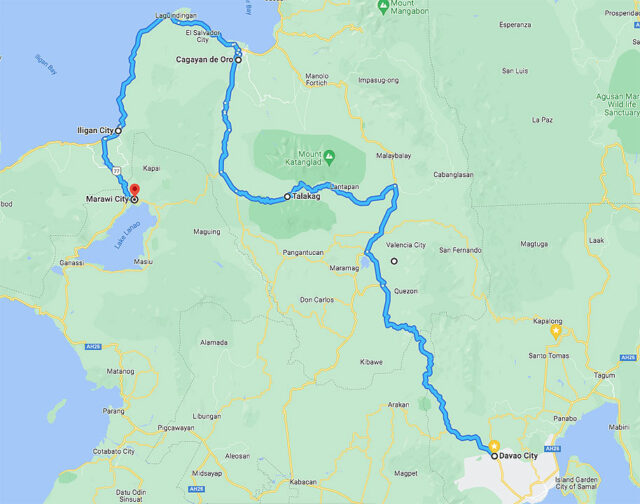
A BUS service between Davao and Marawi — passing through two other urban centers, the cities of Cagayan de Oro and Iligan — and two other routes intended to boost economic and cultural activities within the southern mainland Mindanao were launched Thursday.

Mindanao Star Bus Transport, Inc., a part of the Yanson Group of Bus Companies, will serve the Davao-Marawi line using at least 15 transport units, according to the Bangsamoro Autonomous Region in Muslim Mindanao (BARMM), which includes Marawi and Cotabato. 

Another route is between the cities of General Santos and Dipolog City via Cotabato, which will be covered by Rural Transit Mindanao, Inc.  

Other shorter routes such as between Pagadian City in Zamboanga del Sur and Marawi, and Iligan-Marawi will be served by jeepneys.

“It’s time for Mindanao to have all these,” Mindanao Development Authority (MinDA) Chair Maria Belen S. Acosta said at the launching ceremony held in Marawi City. 

BARMM Chief Minister Ahod B. Ebrahim, in a message delivered by a representative, said these “friendship routes” are “a concrete manifestation of the seriousness of our commitment to helping in Marawi’s rehabilitation.” 

“The friendship routes will bring back normalcy and stimulate commerce, something in which our brothers and sisters in Marawi excel,” he said. 

BARMM Minister of Transportation and Communication Dickson P. Hermoso, for his part, said the opening of these new services will be followed by other initiatives to improve people and cargo movement. 

“BARMM is doing a lot now through its ministries with the legislators so that we can boost and cultivate (socio-economic development) and this includes the launching of inter-regional routes,” Mr. Hermoso said. 

AIR TRANSPORT
Meanwhile, MinDA Deputy Executive Director Romeo M. Montenegro said they are hoping that flights between Davao City and Manado in Sulawesi, Indonesia will resume soon as COVID-related restrictions continue to ease. 

Mindanao and Sulawesi are part of the special economic grouping composed of Brunei, Indonesia, Malaysia, and Philippine under the ASEAN bloc.

International links to and from Davao resumed late last year, with Singapore flights by Scoot Tigerair Pte Ltd. the first to restart commercial operations.

Davao-Manado flights were relaunched in Sept. 2019 with Indonesian flag carrier Garuda Indonesia serving the route until international borders were closed in March 2020. 

“It was a pity that the pandemic struck, the Davao City-Manado flight was picking up already after its launch… (but) once we reopen out connectivity to major international destinations, I hope Davao-Manado to be reopened as well,” Mr. Montenegro said. — Maya M. Padillo