Home Blog Page 623

Regulator lifts trading suspension on Philcomsat Holdings

PHILCOMSAT.COM.PH

THE Securities and Exchange Commission (SEC) has lifted the suspension on the trading of Philcomsat Holdings Corp. (PHC) shares after the company complied with regulatory requirements.

“Upon thorough evaluation of the company’s submissions, the department (Markets and Securities Regulation Department) finds that the company has complied with the directive of the commission on Dec. 29, 2015,” the SEC said in a Sept. 15 order signed by Director Oliver O. Leonardo, a copy of which was posted by PHC on the Philippine Stock Exchange’s (PSE) disclosure portal on Wednesday.

PHC had sought the lifting of the suspension in 2014. In 2015, the SEC allowed only 6% of its shares to be lifted from suspension, subject to the condition that the company distinguish the listed shares from the remaining 94% unlisted shares and submit an updated registration statement.

In August 2025, the company filed updated registration documents and share accounts, along with affidavits of publication and proof of payment of required fees.

After review, the SEC said it found that PHC had met all conditions.

The commission also reminded PHC to comply with all applicable laws, rules, and regulations, noting that it reserves the right to take further legal or administrative actions against the company or its officers for any violations.

PHC’s registration was originally suspended in December 2008 by the SEC’s Corporation Finance Department for 60 days due to the non-filing of its 2006 and 2007 annual reports (SEC Form 17-A) and the first three quarterly reports for 2007, in violation of the Securities Regulation Code.

PHC was incorporated as Liberty Mines, Inc. in 1956 and initially focused on mineral oil and petroleum exploration until it ceased operations in 1992. It shifted to a holding company in 1997 after changing its name.

The company currently holds investments in money market placements and financial instruments. It is managed by Philippine Communications Satellite Corp., which owns 79% of PHC. PHC also owns Philcomsat Management Enterprises, Inc., which in turn owns Professional Stock Transfer, Inc. — Alexandria Grace C. Magno

Sonya’s Garden: Reinventing business in the face of disruption in the hospitality sector

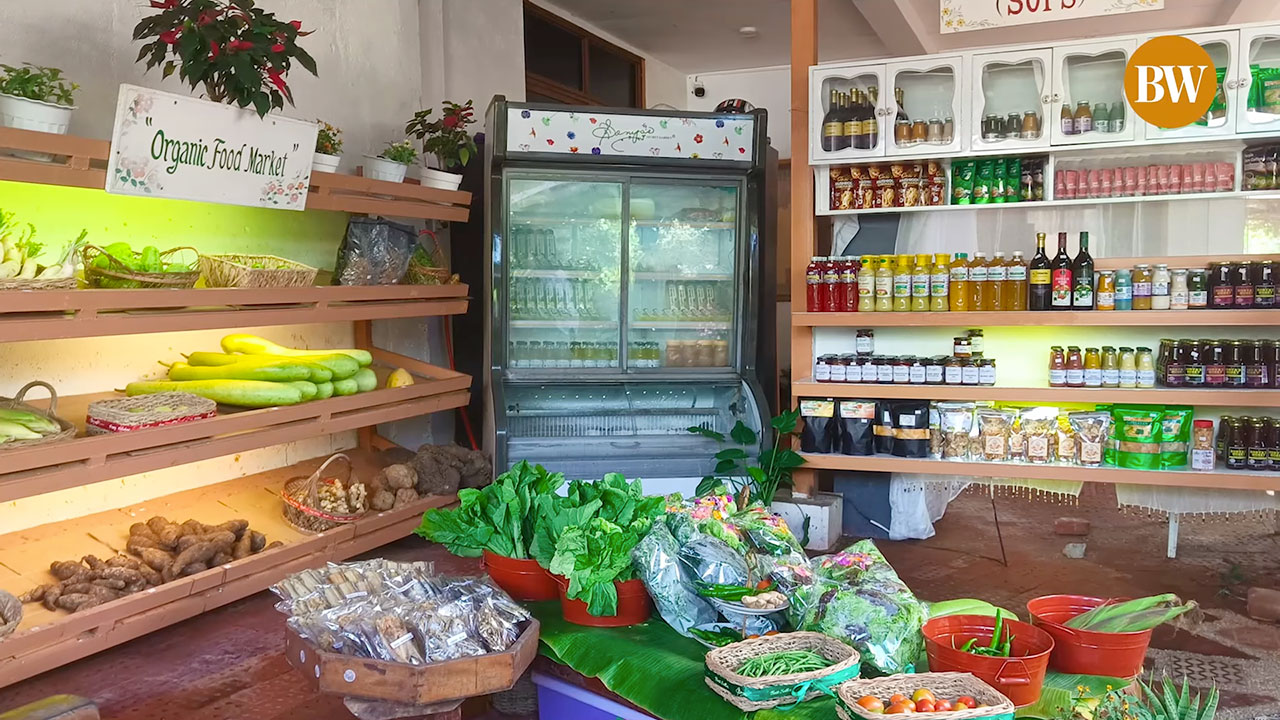
COMING UP with new product offerings has ensured the continued success of Sonya’s Garden, a sustainable farm and hospitality business in Alfonso, Cavite, all throughout its almost two decades in business.

An example of this was during the pandemic, said Sonya Garcia, the business owner.

“We didn’t sit back and complain,” she said in an interview with BusinessWorld.

“What we did was our massage therapists — instead of tending the body — started tending the soil,” she said. “They grew plants and veggies, and then we delivered these to the plantitos (plant dads) and plantitas (plant moms) [through our] distributors in the city.”

The hospitality industry was one of the hardest hit during the COVID-19 pandemic. The Department of Tourism reported that international tourist receipts in the first quarter of 2020 declined to P85 billion, 36% lower than the revenues in the same period the previous year.

BOTTLING ITS PRODUCTS
The erstwhile private retreat also started producing “fast food in a bottle,” with offerings like Basil Pesto in Olive Oil or Puttanesca Sauce, during the lockdown.

“All you do is pour it over pasta or rice and that’s it,” Ms. Garcia said. “You don’t have to go to the market anymore to buy food.”

The company is “hoping to export its products,” she added.

Sonya’s Garden products — including its jams, calamansi (native lemon) concentrate, and salad dressing — are found on the ecommerce platform Lazada at present. Its salads, entrees, and breads are likewise available in the food delivery app Foodpanda.

Ms. Garcia was a banker who left her career to create her private sanctuary. It opened as a business in 1998 after a wedding proposal was held in the garden and word subsequently spread about the place.

The enterprise specializes in farm-to-table food and houses a restaurant, bed and breakfast, spa, bakery, and event venue within the property.

To meet customer demands, it now also offers Filipino food and catering services.

Sonya’s Garden has evolved into health and wellness, with a spa that keeps guests coming back for more, Ms. Garcia told BusinessWorld.

“We have a Korean master acupuncturist with a 99% success rate,” she added. “If you are suffering from different ailments… because of consuming a lot of industrial food, our doctor will be able to help you out.”

IT’S NOT THE MONEY
“Don’t do anything for money” is Ms. Garcia’s tip to aspiring and current business owners.

“Enjoy what you do and take care of your people and their wellbeing,” she said.

In line with this goal, Sonya’s Garden provides its staff — typically locals from the neighboring community – with interest-free loans to enable them to build their homes.

A succession plan is also already in place.

“I want them to run this place the way I would’ve wanted it when I perish from this earth,” Ms. Garcia said. “That is a legacy I will leave to them.” — Patricia B. Mirasol and Edg Adrian A. Eva

LANDBANK may offer sustainability bonds to raise over P20 billion

LAND BANK OF THE PHILIPPINES

LAND BANK of the Philippines (LANDBANK) is targeting to raise over P20 billion through  an offering of sustainability bonds that it could launch in the fourth quarter.

“We’re planning to go to the market. We’re just timing [it and] making sure that we issue within the right window… It will be market-driven, but we do have approvals for a pretty sizeable amount. But certainly, it will be more than P20 billion,” LANDBANK President and Chief Executive Officer Lynette V. Ortiz told reporters on the sidelines of an event on Tuesday.

The upcoming issuance will be branded as “Asenso bonds,” building on the bank’s AGRISENSO lending program, she said. Proceeds will fund projects in the agriculture, sustainability, environment, and social sectors.

The bonds are expected to have a tenor between one and five years, which Ms. Ortiz sees as the “sweet spot” in terms of investor interest, as seen in previous issuances.

“We’re still determining if we’re going to go with one tranche or two,” she added.

She said being part of the positive watchlist of JPMorgan Chase & Co.’s emerging market government bond index will bode well for foreign participation in the Philippines’ capital markets and bond issuances.

JPMorgan this month said that Philippine peso-denominated government bonds have been tagged as “Index Watch Positive,” which is final review phase for inclusion in its Government Bond Index for Emerging Markets (GBI-EM) series.

The Philippines would have a weight of about 1% of the GBI-EM Global Diversified Index if included, according to JPMorgan.

National Treasurer Sharon P. Almanza said the country may see an additional P100 billion in foreign inflows once it reenters the index. The Philippines’ global peso notes were removed from the GBI-EM in January last year due to illiquidity.

Rizal Commercial Banking Corp. Chief Economist Michael L. Ricafort said LANDBANK’s planned bond issue will likely attract both domestic and foreign investors amid growing interest in environmental, social, and governance (ESG) issuances.

Current yield levels also remain attractive for investors as they are still relatively high compared to rates seen in recent years, he said.

“The Philippine bond market could also benefit from possible inclusion in the JPMorgan global emerging market bond index, so timing and market conditions are favorable for new bond issuances,” Mr. Ricafort added.

LANDBANK booked a net income of P25.23 billion in the first semester, rising from P20.7 billion in the same period last year, based on its latest financial statement posted on its website. — Aubrey Rose A. Inosante

realme 15 Series 5G smartphones debut in PHL

REALME PHILIPPINES on Tuesday officially unveiled the realme 15 Series 5G smartphones in the country, which feature powerful cameras and long battery life.

The realme 15 5G (12-gigabyte or GB memory + 256GB storage variant), priced at P23,999, is now available at a limited-time discounted price of P18,999 via the brand’s TikTok Shop.

Meanwhile, the realme 15 Pro 5G’s 12GB+256GB and 12GB+512GB models can be purchased for P20,999 and P23,999, respectively, via its Shopee store. These are lower than their suggested retail prices of P27,999 and P30,999, respectively.

Pre-orders at realme’s partner retailers nationwide run until Sept. 26 and include freebies worth up to P3,897.

Both realme 15 Series 5G phones have a 7,000mAh battery capacity that supports 80-watt SUPERVOOC fast charging.

They also feature AMOLED displays with a 144Hz refresh rate and are rated IP66, IP68, and IP69 for dust and water resistance.

The realme 15 Pro 5G is powered by a Qualcomm Snapdragon 7 Gen 4 processor, while the realme 15 5G has a MediaTek Dimensity 7300+ chip for “smooth gaming, effortless multitasking, and seamless content creation,” the brand said.

The new smartphones have camera systems that are equipped with artificial intelligence (AI) tools, including AI Party Mode that enhances colors and details of photos, AI Smart Remover 2.0, and AI Nightscape for low-light photography.

In particular, the realme 15 Pro 5G has a triple 50-megapixel (MP) camera system made up of a main, ultra-wide, and selfie lens. It can record 4K video at 60 frames per second (fps).

Meanwhile, the realme 15 5G comes with a 50MP main camera, an 8MP wide-angle lens, and a 50MP selfie camera and can capture 4K video at 30fps.

“Both models also support Dual View Video mode, allowing users to capture front and rear perspectives simultaneously.”

The realme 15 Pro 5G has an ultra-slim curved body and comes in the colors Flowing Silver and Velvet Green, while the realme 15 5G has a flat frame and is available in Suit Titanium and Silk Pink.

“Adding to the celebration, realme partnered with Hollyland and Fujifilm to enhance the storytelling experience. The Hollyland Lark A1 wireless microphone ensures clear, professional-grade audio capture for vlogs and podcasts, while the Instax mini Link 3 printer turns digital shots into instant prints, giving fans tangible keepsakes of their favorite memories.” — BVR

Control over the internet highway

STOCK PHOTO | Image by Jannoon028 from Freepik

Big telecommunications players once bristled at the idea of open access, or allowing smaller internet providers to piggyback on their systems. Recently, however, they signaled support for the Konektadong Pinoy Act, which paves the way for just that, and appear to have dropped plans to challenge the new law in court.

Konektadong Pinoy, enacted last month, removed political franchise hurdles. Under the law, those intending to provide internet services no longer need a congressional franchise or a Certificate of Public Convenience and Necessity (CPCN) to do business. Instead, they simply register with the National Telecommunications Commission (NTC).

The law also provides for open access. Big networks must rent out capacity to new players. Also, frequencies held by incumbents that are idle or underused can be reassigned. Moreover, foreign and local satellite providers can interconnect more easily.

This augurs well for a geographically fragmented country that badly needs cheap internet service. It was no small shift for telcos to now consider win-win arrangements, given that they previously warned of possible lawsuits against Konektadong Pinoy for being unfair to incumbents.

Moving forward, I believe that the challenge is fairness, particularly in crafting rules that honor past investments, attract new players, and give the public cheaper, faster internet. If big telcos must allow access to their systems, then they should be compensated fairly.

Frankly, this was a twist I did not expect. I anticipated a protracted legal battle, yet the very companies that had warned of constitutional violations have now publicly supported the Konektadong Pinoy Act. Their change of heart looks pragmatic: better to help shape the rules than fight a long court battle.

After all, public and government support was unlikely to be on their side. Supporters of Konektadong Pinoy could have easily cast incumbents’ opposition as greed and a desire to protect market share and profits at the expense of consumers, with the government as enabler.

With big telcos extending the olive branch, a win-win is possible. But support should not mean surrendering fairness. The challenge for government is to craft the law’s implementing rules, within 90 days, in a way that makes everyone win: incumbents, challengers, and above all, the public.

The enactment of Konektadong Pinoy reshuffled the balance of interests. The biggest winners are ordinary consumers, who stand to gain more choices, potentially lower prices, and wider coverage as smaller internet service providers (ISPs) are allowed to plug into big networks.

New and small ISPs, cooperatives, and even local governments are winners too, since they no longer need to chase expensive franchises or CPCNs. Registration with the NTC is enough, and access to existing infrastructure becomes a right rather than a privilege.

Foreign satellite companies such as Starlink, Amazon Kuiper, and OneWeb also benefit, as they now have a clearer path to integrate into the Philippine market and tap local systems. It will be easier for these broadband projects to offer high-speed internet using low-earth orbit (LEO) satellites.

The government also emerges stronger under Konektadong Pinoy. The Department of Information and Communications Technology (DICT) and the NTC now have greater clarity on how to enforce open access, reassign idle spectrum, and resolve disputes quickly.

But where there are winners, there are losers. The biggest losers are the incumbents (PLDT, Smart, Globe, Dito, and even Converge) who must open their costly networks to others at regulated terms, eroding their former advantage of scale and exclusivity. They also risk thinner margins and greater competition. Congress also loses, as it no longer controls the gatekeeping power of franchises for data transmission, cutting off a traditional source of influence.

Still, these downsides do not mean incumbents are doomed. With fair and equitable implementing rules, big telcos could monetize their networks at scale and earn even more by leasing access to smaller ISPs. Even with competition, they will continue to make money off the back end.

President Ferdinand Marcos, Jr. neither signed nor vetoed the measure. Instead, he allowed it to lapse into law in August. This pragmatic move let him avoid a direct clash with big telcos worried about sunk costs, as well as reform advocates and the public who would have bristled at a veto. By letting the bill lapse into law, Malacañang kept a political distance, and perhaps rightly so.

Konektadong Pinoy is about opening the pipes, forcibly. It lowers barriers for new internet providers, forces big networks to share access at fair prices, and makes better use of spectrum and satellite technology. For PLDT, Globe, Dito, and Converge, this means a government mandate to share their internet highways with others. For new players, it means they no longer need to finance and build their own highways from scratch.

The challenge now is to ensure balance. This is easier said than done. Negotiations and compromises are inevitable. But in the end, incumbents must be treated fairly for their investments, while new players must gain access to benefit consumers.

It is understandable why incumbents initially opposed the law. PLDT and Globe built their networks under old rules: congressional franchises, CPCNs, and billions of pesos invested in fiber, towers, and spectrum. Being forced to share these assets with competitors at government-set terms looked like expropriation.

At first, PLDT and Globe seemed poised to lose control, revenue, market share, and incentive to invest further. Why then the change of heart? Perhaps they realized their legal case was weak, or that the issue had little public sympathy. More likely, they saw that fighting the law risked reputational damage, hurt share prices, and created long-term uncertainty.

By embracing the law, telcos can now join the process of shaping its terms, particularly pricing and transition rules. This ensures that fairness will guide the outcome: incumbents are not punished for investing under old rules, and new players are not priced out.

The way forward should recognize past investments with a fair rate of return and allow transition periods for recovery. Moving ahead, new players should be guaranteed clear and affordable access. The process must be transparent to deliver lower prices and better service to consumers.

One option is rate-of-return protection. Incumbents can recover old investments through regulated access prices that guarantee a fair return over a defined period. Wholesale rates can start higher and drop gradually over five to seven years as costs are recovered and more players enter.

Government can also provide incentives for pioneering efforts, such as limited premium pricing for those investing in underserved areas. Incumbents can also be granted property tax relief for fiber and towers dedicated to open-access compliance.

Alternatively, telcos can spin off or pool passive infrastructure such as ducts, fiber, and towers into a wholesale utility, whether listed or structured as a public-private partnership. All players could then rent access on equal terms. A neutral backbone company or cooperative could manage these assets, with all telcos as equity partners.

PLDT, Globe, and Converge currently own the internet highways, the fiber backbones, towers, and gateways. They remain core providers, but must now also lease space to others at government-set terms. New players will then compete for customers by using these highways rather than building their own.

These telcos also control frequencies, the radio “lanes” used for mobile signals; termination points, where networks hand off calls or data; and gateways such as submarine cables and international exchanges that connect the Philippines to the global internet. What they do not control are satellites, which can beam internet directly to remote areas, bypassing towers and fiber.

With open access, satellite providers beyond Starlink — Amazon’s Project Kuiper, OneWeb, even China’s Guowang — can register with the NTC and provide service. Regional players can also scale up by plugging into incumbents’ network. Enterprises and cooperatives with resources and expertise can also opt to run their own community networks.

Open access promises lower prices through competition, better coverage via satellites and small ISPs, more consumer choice, and perhaps better deals. But these benefits will materialize only if government enforces fair rules that harness the law’s potential.

Will access prices guarantee fair returns while enabling entry? Will incumbents get a recovery period? Will new players be properly screened? Will idle frequencies be reassigned transparently? Will disputes be resolved swiftly? The next 90 days will be crucial, and the government needs all the help it can get.


Marvin Tort is a former managing editor of BusinessWorld, and a former chairman of the Philippine Press Council

matort@yahoo.com

PLDT Enterprise, Camarines Sur gov’t team up on Starlink connectivity

STOCK PHOTO | Image by Hunter Masters from Unsplash

PLDT INC., through its corporate arm PLDT Enterprise, has partnered with the provincial government of Camarines Sur to deploy Starlink’s Low-Earth-Orbit (LEO) satellite technology, the company said.

“We are proud to help empower remote communities through resilient connectivity solutions like Starlink’s technology, as we work together to build a digitally inclusive and future-ready Philippines,” PLDT Enterprise Head of Enterprise Revenue Group Ruby San Pedro Montoya said in a media release on Wednesday.

PLDT said the partnership is part of its goal to equip local government units with digital solutions that enable inclusive growth. Integration of Starlink into PLDT Enterprise’s suite of offerings will complement existing wireless services and allow seamless, scalable connectivity.

LEO satellites, which orbit around 1,000 kilometers above Earth, can increase internet capacity and reduce data transmission delays.

Starlink technology was first deployed by the Camarines Sur government in May 2025 to ensure uninterrupted and secure communications during the national elections.

PLDT said the technology has since been adopted to support mission-critical services, including education for rural schools, healthcare, agriculture, disaster response, and other essential sectors that rely on consistent digital access.

At the local bourse on Wednesday, PLDT shares rose P12, or 1.07%, to close at P1,129 apiece.

Hastings Holdings, Inc., a unit of the PLDT Beneficial Trust Fund subsidiary MediaQuest Holdings, Inc., holds a majority stake in BusinessWorld through the Philippine Star Group. — Ashley Erika O. Jose

Hackers steal client data from Kering’s Gucci, Balenciaga, and McQueen, BBC says

PARIS — Hackers have stolen the private details of potentially millions of customers from luxury brands Gucci, Balenciaga, and Alexander McQueen in an attack on the labels’ French parent company Kering, the BBC reported on Monday.

Kering confirmed the breach in a statement without naming the affected brands, saying it identified in June that “an unauthorized third party gained temporary access to our systems and accessed limited customer data from some of our Houses.”

The attack appears to be part of a wider phenomenon affecting luxury brands and retailers this year.

Breaches have also occurred at Richemont’s Cartier and some of LVMH’s labels. In July, Hong Kong’s privacy watchdog said it was investigating a data leak affecting about 419,000 customers at LVMH’s Louis Vuitton.

The stolen client data includes names, e-mail addresses, phone numbers, addresses, and the total sums spent at the brands’ stores, the BBC report said.

Kering said no financial information, such as credit card or bank account numbers, was stolen.

The hackers, who identified themselves as “Shiny Hunters” to the BBC, claim to have data linked to 7.4 million unique e-mail addresses.

Kering said its brands immediately disclosed the breach to relevant authorities and notified customers according to local regulations. It did not comment when asked by Reuters which countries were affected by the attack. — Reuters

Nonlife insurer ISAC placed under conservatorship

BW FILE PHOTO

THE INSURANCE Commission (IC) has placed nonlife insurer Intra Strata Assurance Corp. (ISAC) under conservatorship after it failed to submit its audited financial statements for 2024.

The company was also served a cease-and-desist order and was prohibited from transacting any new business.

“Notice is hereby given that the Insurance Commission has issued a Cease and Desist Order against Intra Strata Assurance Corp. due to the company’s inability to comply with the requirements of Republic Act (RA) No. 10607 otherwise known as the ‘Amended Insurance Code’ and/or Order of the Commission,” the regulator said in a notice dated Sept. 12.

“In line with this, the Certificate of Authority of Intra Strata Assurance Corp., was suspended. Moreover, the company was ordered to cease and desist from transacting any new insurance business of any kind or character and was simultaneously placed under conservatorship pursuant to Section 255 of the Amended Insurance Code effective Sept. 12, 2025,” the IC added.

In a statement on its website, ISAC said the company already submitted its 2024 annual report and secured its external auditor’s commitment to release its audited financial statements within the week.

The company also requested that the effectivity of the stop order be deemed temporary ahead of the submission of the requirement.

It assured its policyholders that all existing contracts remain valid as the suspension only applies to the issuance of new policies.

“ISAC remains fully committed to honoring its obligations to policyholders,” the insurer said.

It added that they are working closely with the IC and its designated interim conservator to ensure full transparency, good governance, and continued protection of policyholder interests.

ISAC said it has “rectified internal lapses in handling regulatory correspondence and has instituted corrective and disciplinary measures to ensure stricter compliance moving forward.”

“We emphasize that ISAC remains financially sound and committed to serving its policyholders. The company is confident that upon submission of the final audited statements and fulfillment of regulatory requirements, the cease and desist order and conservatorship measures will be lifted.”

Intra Strata’s premiums earned stood at P198.313 million in 2024, while its net income was at P165.43 million. — Aaron Michael C. Sy

YouTube targets creators and consumers in broad generative AI push

REUTERS FILE PHOTO

YOUTUBE rolled out a slew of generative artificial intelligence (AI) products aimed at a broad audience, an effort from the video platform to show its massive investments in AI are bearing fruit.

The features, announced Tuesday, go well beyond the standard AI editing tools YouTube and its social media rivals have introduced in recent years. Many of the latest tools are tailored specifically to creators and shortform segments known as YouTube Shorts, a sign that YouTube is taking ever-bigger swings to compete with ByteDance Ltd.’s TikTok and Instagram owner Meta Platforms, Inc.

Several of its new offerings are powered by Veo 3 Fast, a Google DeepMind model that can in seconds generate realistic video and audio, including dialogue and sound effects, from a simple text prompt on a phone.

“Twenty years ago, YouTube launched with the idea that everyone should have the opportunity to create and find a global stage,” Johanna Voolich, YouTube’s chief product officer, said in a blog post on Tuesday timed to the company’s Made on YouTube event in New York. “Since then, we’ve seen creators shape culture and entertainment in ways we never thought possible.” Ms. Voolich added that YouTube has now paid out more than $100 billion to creators globally over the last four years.

Creators will soon be able to use Veo 3 Fast to add backgrounds, props and special effects to YouTube Shorts. Starting early next year, podcasters will also be able to use Veo to easily generate video clips related to their audio. And those hosting video podcasts — which YouTubers are now watching for 100 million hours each day as the platform far outpaces traditional TV — will in the coming months be able to use AI to create highlight reels of their shows to share widely across social media.

Beyond Veo, YouTube’s conversational AI tool, Ask Studio, will soon give US creators feedback and analytics on their content, becoming their “ultimate creative partner” and “a trusted companion that Creators turn to first,” Amjad Hanif, YouTube’s vice-president of product management for creator products, said in a blog post.

YouTube is also using AI to test ways to better sync its dubbing technology, which the company says has translated more than 60 million videos into 20 languages to help creators reach wider audiences. Soon, a “speech-to-song” capability powered by DeepMind’s AI music model Lyria 2 will let creators turn words or phrases from a video into music to accompany it.

Brands stand to benefit from YouTube’s generative AI push as well: The platform will soon use AI in advertisers’ Google Ads dashboard to recommend creators for brands to work with. It will also use AI in YouTube Shopping to make it easier for sellers and creators to tag products in their videos.

YouTube parent Alphabet, Inc. is not alone in more deeply integrating generative AI into its social media strategy and investing more broadly in AI talent. Meta, which recently went on a months-long hiring spree to build out its new superintelligence lab focused on AI, is leaning into AI-generated advertisements on Instagram and Facebook. Elon Musk, who recently merged his social network X with his AI startup xAI, similarly plans to use AI to overhaul X’s ad business and fact-check posts on the platform.

The AI gold rush is creating fresh challenges for users across every social media platform, from unchecked misinformation to an explosion of video and audio using people’s faces or voices without their permission. As one safeguard aimed at addressing that issue, YouTube is soon expanding creators’ access to a detection tool that will scour the site for AI-generated videos misusing creators’ likenesses and make it easier for that content to be removed.

“Our goal is to build AI technology that empowers human creativity responsibly, and that includes protecting creators and their businesses,” Mr. Hanif said in the blog post. Bloomberg

Nuclear and coal energy for economic prosperity

DUBAI, UAE — This is the second time I’ve seen Dubai Airport and Dubai City from the air and they continue to amaze me. Very modern, very bright at night, attracting many visitors and investors from many countries. I have a long layover in Dubai Airport while waiting for my connecting flight to Madrid, Spain, then I will take a train to Valencia to attend a conference.

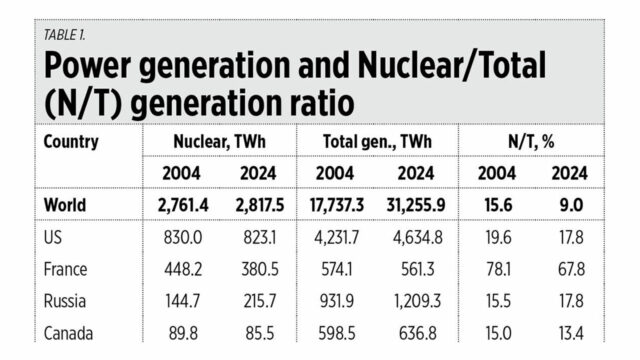
As an economics and energy researcher, I find the United Arab Emirates’ (UAE) moves in energy expansion rather bold and sensical. The share of natural gas fell from nearly 100% of total power generation, down to 68% in 2024 as the use of nuclear energy expanded significantly. From using no nuclear power until 2019, to generating 10.5 terawatt-hours (TWh) with it in 2021, and 40.6 TWh in 2024, contributing 23% of total generation last year. No other country in the world has made this big a jump in nuclear power generation in such a very short period of time.

While the UAE expands its use of nuclear energy, other countries are cutting down, like Germany which shut down all its remaining nuclear plants in early 2024. Other countries that cut their nuclear power use are the UK and Japan, from 80 TWh to 41 TWh and from 286 TWh to 85 TWh, respectively. Nonetheless, there is still a net expansion in nuclear generation worldwide, from 2,761 TWh in 2004 to 2,818 TWh in 2024 (see Table 1).

What is really increasing the power generation of many countries is coal, not intermittent renewables like solar-wind, or gas, or nuclear. In the experience of many Asian countries, as they expand their coal use, their overall power generation increases, and their GDP sizes have expanded significantly, delivered rising prosperity to their people.

The opposite results are seen among many European nations. They deliberately cut their coal use in a mad rush to decarbonization and net zero, and their overall power generation declined. This can be clearly seen in the cases of Germany, the UK, Spain, and Italy (see Table 2).

We need to expand, not reduce, our use of coal for power to sustain growth and fight the perennial yellow-red alerts (due to insufficient power supply and rising power demand) as our Gross Domestic Product (GDP) growth is now among the fastest in the world.

I wish that construction begins soon on Meralco Power Gen’s Atimonan 1 Energy (A1E) plant, a planned 1,200-megawatt (MW) super-critical high-efficiency low-emission (HELE) coal plant, so it can be commissioned by 2030 or earlier.

I also wish that the expansion of Aboitiz Power’s Therma Visayas, Inc. (TVI) in Toledo, Cebu will proceed. Among the three grids of Luzon, Visayas, Mindanao, the Visayas has the thinnest power reserves margin and thus, yellow alerts are more frequently experienced there. The business chambers and organizations in Cebu are very vocal in their support for coal expansion, despite continued opposition by some environmental groups who create zero productive jobs in Cebu.

I will be attending two big energy conferences. First is ENERCON 2025, organized by the University of the Philippines-Los Baños Economics Department, to be held at Vivere Hotel in Muntinlupa City on Sept. 25. Economics faculty and UPLB students, both undergrad and graduate doing research in energy policies, will interact with industry players, government, and independent researchers like me.

Then comes the Philippine International Nuclear Supply Chain Forum 2025, organized by the Department of Energy as Chair of the Nuclear Energy Program Inter-Agency Committee (NEP-IAC), to be held at the Grand Hyatt Hotel in Taguig City on Oct. 2-3. This is a big event with speakers from countries using nuclear energy like the US, Canada, Spain, Japan, and South Korea, so it will be a good learning experience for the audience.


Bienvenido S. Oplas, Jr. is the president of Bienvenido S. Oplas, Jr. Research Consultancy Services, and Minimal Government Thinkers. He is an international fellow of the Tholos Foundation.

minimalgovernment@gmail.com

Peso rises before Fed decision

BW FILE PHOTO

THE PESO continued to rise against the dollar on Wednesday as markets looked ahead to the US Federal Reserve’s policy decision overnight, with focus mainly on potential clues on further easing in the coming months.

The local unit closed at P56.89 versus the greenback, inching up by two centavos from its P56.91 finish on Tuesday, Bankers Association of the Philippines data showed.

The peso opened Wednesday’s session sharply stronger at P56.80 versus the dollar. Its intraday high was at P56.75, while its worst showing was at P56.945 against the greenback.

Dollars exchanged fell to $1.49 billion on Wednesday from $1.95 billion on Tuesday.

“The pair initially traded lower on growing bets of Fed rate cuts, but higher-than-expected US retail sales data pushed the dollar-peso to recover and finish the trading session at P56.89,” a trader said in a phone interview.

The peso inched higher as the greenback touched a multi-month low early in the Asian session on expectations that the Fed would signal more cuts to support the world’s largest economy amid weak data recently, Rizal Commercial Banking Corp. Chief Economist Michael L. Ricafort said in a Viber message.

For Thursday, the trader sees the peso moving between P56.60 and P57 per dollar, while Mr. Ricafort expects it to range from P56.80 to P57.05.

Early in the Asian session, the dollar was on the defensive as global markets counted down to an anticipated rate cut by the Federal Reserve later in the day and waited on signals around the extent of future easing, Reuters reported.

The Fed was expected to cut its benchmark interest rate by a quarter of a percentage point to the 4.%-4.25% range at the end of its monetary policy meeting later in the global day.

The main focus beyond the rate decision will be on Fed Chair Jerome H. Powell’s comments on the outlook for US monetary policy.

“Markets are effectively daring the Fed to over-deliver on the dovish side,” said Dilin Wu, research strategist at Pepperstone. “The bigger question, though, is whether Powell can satisfy markets already leaning heavily on a dovish view, or whether conditions are ripe for a near-term shakeout in both USD and gold positioning.”

The dollar index, which tracks the greenback against a basket of currencies of other major trading partners, edged up 0.1% to 96.723 after a 0.7% slide on Tuesday to the lowest since early July.

The euro was down 0.1% at $1.1855, after touching $1.1867 on Tuesday, its highest level since September 2021. The dollar was little changed at 146.43 yen following a 0.6% slide in the previous session.

“If the (Fed) chair is more dovish than expected, of course, you would expect that to weigh on the dollar, but really, how much more bearish can you get from here?” Mahjabeen Zaman, head of foreign exchange research at ANZ, said on a podcast. “We’ve already got more than five cuts priced in for the cycle.” — A.M.C. Sy with Reuters

Japan’s Sumitomo to acquire 15% stake in PHINMA’s Philcement

PHINMA.COM.PH

JAPANESE cement firm Sumitomo Osaka Cement Co., Ltd. will acquire a 15% stake in PHINMA Corp. subsidiary Philcement Corp. as the local company seeks to expand its manufacturing operations.

In a stock exchange disclosure on Wednesday, Philcement said it signed a share subscription agreement with Sumitomo on Sept. 16 for the acquisition, which will be through the issuance of primary shares.

“The transaction is aligned with Philcement’s strategy and commitment to grow its manufacturing operations and provide Filipino consumers with reliable, high-quality supply of cement products under its legacy brand, Union Cement,” the company said.

The transaction is expected to close before yearend, subject to the satisfaction of closing conditions. PHINMA will retain majority control after the deal.

Philcement, 60% owned by PHINMA, manufactures, imports, processes, distributes, and sells cement products. It operates facilities in Bataan, Pampanga, Zamboanga del Norte, and Davao.

Sumitomo has over 100 years in the global cement industry.

In 2023, the company sold its 9.22% stake in Holcim Philippines to Holderfin B.V., with Holcim voluntarily delisting from the local stock exchange.

PHINMA also operates in education, real estate, steel products, and business process outsourcing. Last month, it increased capital expenditure to P5 billion from P3.8 billion to fund new projects, including a Davao terminal for Philcement.

The conglomerate posted a P455.06-million net loss for the first half, wider than P117.89 million a year earlier.

On Thursday, PHINMA shares rose 2.42% or 40 centavos to P16.90. — Beatriz Marie D. Cruz