Home Blog Page 6214

Dealing with a corrupt labor inspector
I’m the administration manager handling human resource (HR) for a factory with 500 workers. Last week, an inspector made a surprise visit and discovered many issues. He suggested that a favorable report is possible in exchange for a substantial amount of grease money. When I discussed the matter with the chief executive officer (CEO), he advised me to “settle” the issue without delay. I take it to mean he wants to bribe the inspector. Is this the right thing to do? — Miss Deal.

When in doubt, don’t. Go back to the CEO and clarify his intentions. Examine your personal values. How do they align with the values of the CEO and organization? And why would you risk your job to be party to a crime? The answers to these questions are easy if your ethics are well developed.

Bribery is downright immoral and patently illegal. Indeed, you are in a difficult spot if the CEO wants to bribe an inspector. If that happens, prepare to look for another job soon. The potential consequences are not worth it.

I have not heard stories of corrupt labor inspectors in a long time. This happened to me in the 1980s when I was the personnel supervisor at a telecommunications company. The inspector said he was willing to settle for the “SOP” in exchange for a favorable report.

I’m not sure what he meant by SOP, or “standard operating procedure.” Fortunately, it was not standard procedure for us to bribe people, much less government officials. I told the inspector that we were ready to face and correct any adverse findings.

He got the message right away and proceeded to list many violations, including imaginary and flimsy ones. Not satisfied, the poor guy tried to sell me insurance, which I courteously declined. Instead, I thanked him for the visit and gave him a company-branded umbrella and t-shirt.

OTHER FACTORS
This proved to be the exception; there are many honorable and respectable people in government. Nevertheless, management must be ready at all times to deal with good or bad inspectors. Here are some pointers:

One, inspections are often triggered by anonymous tips. It does not matter if you have 50 or 5,000 workers. A tip may come from anyone, including contractual employees or manpower agency temps. Even without such a complaint, be prepared.

Two, treat the labor inspector with respect. Don’t ignore the inspector. Make the visit as comfortable as possible. But don’t forget to ask for the inspector’s identification and mission orders.

Three, download a labor inspection checklist. Even if you think your company is compliant, it’s a good idea to study the 13-page checklist, which is available on the labor department website.

Four, cooperate fully on requests to examine records. It’s also possible the inspector may choose to interview random employees to verify your claims. Don’t volunteer anyone the inspector has not chosen.

Five, penalties for violations are reasonable. Even you don’t think so, being cited is a good reminder of your company’s obligations. Someday, a violation will turn up and your company will have to pay.

Last, persuade your boss to reject the bribery route. If you can’t do that, it means you haven’t established yourself as an authoritative and credible management partner. A friend who is a lawyer in charge of HR at a medium-sized bank would describe your predicament as despicable and a “sad event” in your career.

ENTRAPMENT
When I discussed your case with a high-ranking official at the Labor department, he recommended entrapping the inspector. Unfortunately, many HR executives will not go along with this suggestion. One longtime professional who retired three years ago as a senior vice-president for HR at a multinational bank said the bank’s foreign CEO would not tolerate even the appearance of bribery. Further, it is possible entrapment may endanger the CEO’s standing with the immigration bureau.

Another seasoned HR professional who has served with several major companies in a career of more than 35 years thinks it’s not advisable to participate in an entrapment operation unless the intent of the inspector is to unfairly shut the company down.

Another said it’s the job of the Labor department to police its ranks without the involvement of people from other organizations.

In conclusion, accept this piece of wisdom from Jose Angel Gurria, former secretary general of the Organisation for Economic Co-operation and Development (OECD): “Integrity, transparency and the fight against corruption have to be part of the culture. They have to be thought as fundamental values.” If you happen to work in an organization without those values, prepare to resign as soon as you can.


Consult with Rey Elbo on Facebook, LinkedIn or Twitter or send your questions to elbonomics@gmail.com or via https://reyelbo.consulting
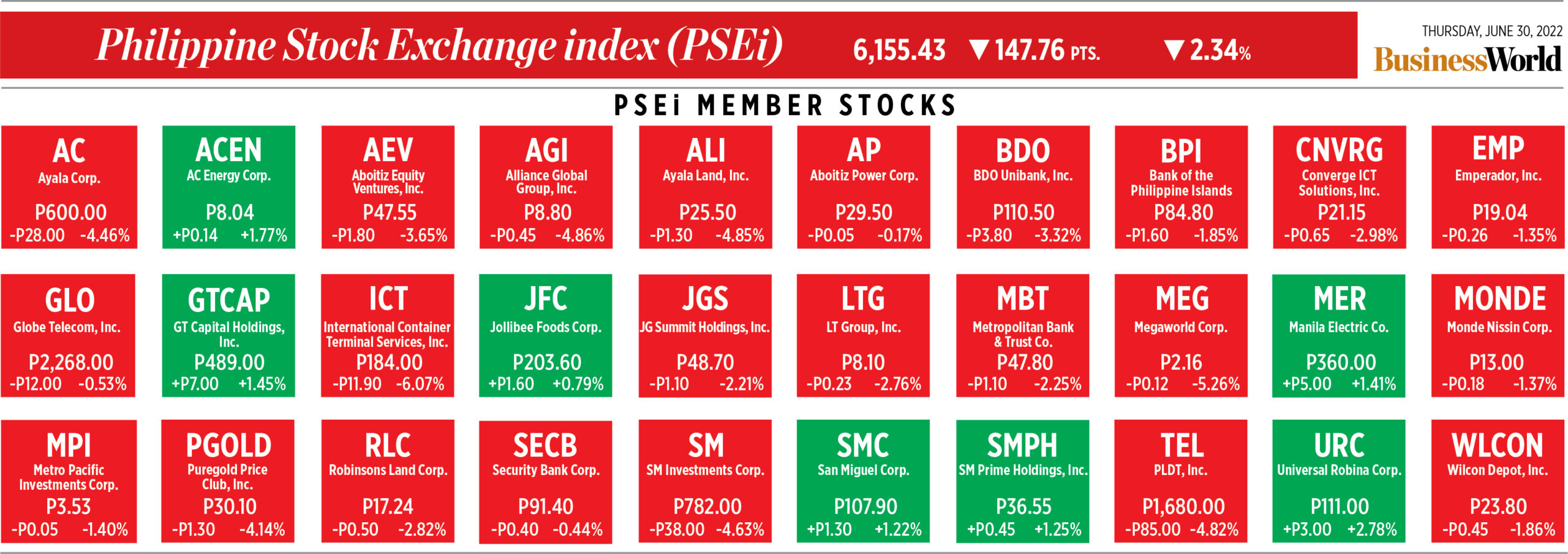
How PSEi member stocks performed — June 30, 2022

Here’s a quick glance at how PSEi stocks fared on Thursday, June 30, 2022.


Peso rebounds on rate hike bets, oil

BW FILE PHOTO

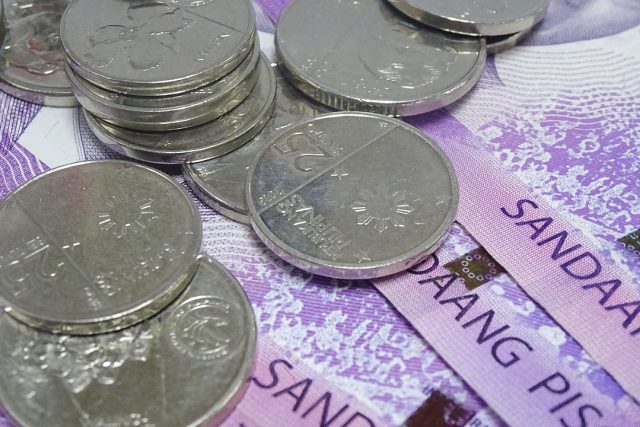
THE PESO rebounded versus the dollar on Thursday, returning to the P54 level, on lower global oil prices and as the incoming Bangko Sentral ng Pilipinas (BSP) chief said they may consider a more aggressive rate hike at their August meeting to temper rising inflation.

The local unit closed at P54.975 per dollar on Thursday, rising by 8.5 centavos from its P55.06 finish on Wednesday, Bankers Association of the Philippines data showed.

The peso opened Wednesday’s session at P55.06 versus the dollar. Its weakest showing for the day was at P55.14, the lowest in over 16 years or since its P55.26 close on Oct. 25, 2005, while its intraday best was at P54.80 against the greenback.

Dollars exchanged inched down to $1.24 billion on Thursday from $1.27 billion on Wednesday.

“The peso exchange rate was stronger today … after the recent decline in global crude oil prices to among one-month lows,” Rizal Commercial Banking Corp. Chief Economist Michael L. Ricafort said in a Viber message.

“The peso was also stronger after the latest signals of the possibility of a bigger local policy rate hike if necessary and depending on economic data,” Mr. Ricafort added.

Oil prices, which have soared in 2022 along with most commodity prices, edged lower on Thursday amid concerns about an unseasonable slowdown in US gasoline demand, Reuters reported.

Brent slipped 0.8% to $115.33 a barrel, while US crude declined 0.47% to $109.27.

Meanwhile, on Wednesday, incoming BSP Governor Felipe M. Medalla told reporters that the central bank may consider a more aggressive rate hike at its Aug. 18 meeting if inflation keeps its upward momentum, but noted the decision will remain data dependent.

Early in June, ahead of the US Federal Reserve’s decision to increase its own rates by 75 basis points (bps) at its own meeting that month, Mr. Medalla said he is not keen on raising borrowing costs by more than 25 bps per meeting.

The BSP last week raised benchmark interest rates by 25 basis points for a second straight meeting to cool rising prices. At that meeting, it raised its average inflation forecast for this year to 5% from 4.6% previously, well above its 2-4% target.

The central bank sees headline inflation picking up further and settling within the 5.7-6.5% range in June. Inflation stood at 5.4% in May, the fastest in three and a half years.

Nomura Holdings Head of Global FX Strategy Craig Chan on Thursday said the BSP’s dovish stance is putting pressure on the peso.

“We’re still going to be seeing the real policy rate becoming more negative… particularly in this current backdrop where there are pressures coming out, namely from the US Fed policy charge,” Mr. Chan said in a webinar.

“Our view is that we are going to be likely breaking new record highs in dollar-peso in the coming one to two months. It’s likely we see P56.50,” he added.

Meanwhile, a trader said in an e-mail that the peso appreciated ahead of likely softer US personal consumption expenditures inflation in May. The PCE price index is the Fed’s preferred inflation gauge.

For Friday, the trader said the peso might appreciate further due to potentially weaker US manufacturing purchasing managers’ index data.

The trader expects the local unit to move within P54.80 to P55 per dollar on Friday, while Mr. Ricafort gave a forecast range of P54.80 to P55.05. — K.B. Ta-asan with Reuters

PHL stocks drop on mounting inflation concerns

REUTERS

STOCKS declined further on Thursday as the Bangko Sentral ng Pilipinas (BSP) said headline inflation could have reached an almost four-year high in June.

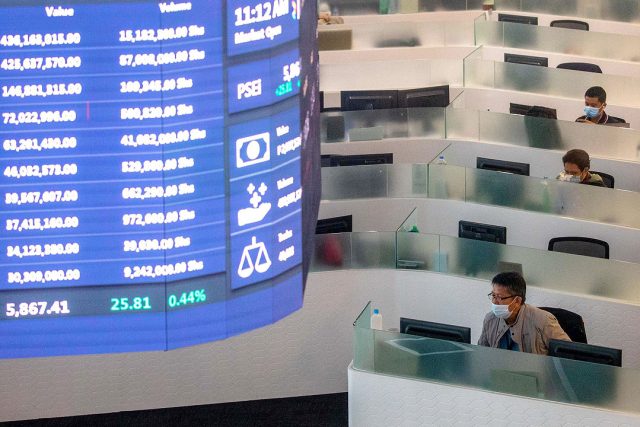
The benchmark Philippine Stock Exchange index (PSEi) plunged by 147.76 points or 2.34% to close at 6,155.43 on Thursday, while the broader all shares index sank by 52.89 points or 1.56% to 3,336.23.

“The market declined amid a lack of positive catalysts at home, coupled with a higher inflation rate expectation this June. The BSP projects the inflation rate this June to settle within 5.7 to 6.5%. This weighed heavily on the sentiment as consumers’ purchasing power is anticipated to weaken. Moreover, the second-round effects are also expected, which may further push the inflation upward in the coming months,” Philstocks Financial Research Associate Claire T. Alviar said in a Viber message.

Ms. Alviar added that the possibility of an interest rate increase bigger than 25 basis points (bps) by the BSP due to rising inflation also weighed on sentiment.

“Philippine shares ended the last trading session of the semester in the red as the streets continued to search for the bottom of a vicious market sell-off. Concerns over a slowing economy and aggressive rate hikes consumed much of the first half of the year and fears of a recession are rising,” Regina Capital Development Corp. Head of Sales Luis A. Limlingan said in a Viber message.

The BSP’s June forecast range is well above its 2-4% target and 5% projection for the year. Its low end would be the fastest monthly print since November 2018’s 6.1%, while the high end would be the quickest since October 2018’s 6.9%.

In May, headline inflation was at 5.4%.

On Wednesday, BSP Governor Felipe M. Medalla told reporters that the central bank may consider a more aggressive rate hike at its Aug. 18 meeting if inflation keeps its upward momentum, but noted the decision will remain data-dependent.

Early in June, ahead of the US Federal Reserve’s decision to increase its own rates by 75 bps at its own meeting that month, Mr. Medalla said he is not keen on raising borrowing costs by more than 25 bps per meeting. The BSP on May 19 and June 23 hiked benchmark interest rates by 25 bps.

Majority of the sectoral indices ended in the red on Thursday, except mining and oil, which climbed by 100.71 points or 0.90% to 11,235.17, and industrials, which rose by 67.16 points or 0.74% to 9,110.72.

Meanwhile, services went down by 66.37 points or 3.86% to 1,649.01; holding firms fell by 202.42 points or 3.41% to 5,720.24; financials retreated by 31.07 points or 2.10% to 1,442.36; and property gave up 32.33 points or 1.12% to end at 2,835.31.

Decliners bested advancers, 117 versus 71, while 47 names ended unchanged.

Value turnover increased to P6.35 billion with 793.85 million shares changing hands from the P4.91 billion with 532.42 million issues seen on Wednesday.

Net foreign selling went up to P843.45 million on Thursday from P645.8 million seen the previous trading day. — Luisa Maria Jacinta C. Jocson

Completing Cabinet team is top task as Marcos begins term

FERDINAND “Bongbong” Marcos, Jr. took his oath of office as the 17th president of the Philippines before Chief Justice Alexander Gesmundo at the National Museum of Fine Arts in Manila on Thursday, June 30, 2022. — PHILIPPINE STAR/KRIZ JOHN ROSALES

PHILIPPINE President Ferdinand R. Marcos, Jr. administered on Thursday afternoon the mass oath-taking of the Cabinet members he has so far nominated.

Mr. Marcos has yet to name the chiefs of some departments that have crucial roles in the Philippines’ pandemic recovery.

“I suppose this is the first act of actual work that we will be doing for this administration,” Mr. Marcos said in a speech before the ceremony held  at the presidential palace.

Mr. Marcos, who was sworn in as the country’s 17th president on Thursday morning, started his six-year term without announcing his secretaries for the Department of Health, Department of Environment and Natural Resources (DENR), and Department of Energy (DoE).

In his inauguration speech that lasted for more than 20 minutes, Mr. Marcos mentioned the global oil crisis, which he partly attributed to the war between Russia and Ukraine.

“Surely, a free world awash with oil can assure supplies or we will find a way,” he said. “We are not far from oil and gas reserves that have already been developed.”

Mr. Marcos also touched on the coronavirus pandemic, mentioning the “gains made and lost, opportunities missed” because of the health crisis that has killed thousands of Filipinos.

The former senator also mentioned climate change, an issue that needs to be addressed by both the DoE and DENR, among and other agencies.

He has also yet to announce the chiefs of the Department of Foreign Affairs, Department of Science and Technology, and the Department of Human Settlements and Urban Development.

Mr. Marcos, 64, earlier said he would take over the Agriculture department to address the “severe” problems facing the sector.

He gave an emphasis on the need to achieve food self-sufficiency during his inaugural speech, which analysts said lack actual plans.

“Food sufficiency must get the preferential treatment the richest free trade countries always gave their agricultural sectors,” Mr. Marcos said. “Their policy boils down to, ‘Don’t do this, we do. Do what we tell you to’”.

“I’m giving that policy the most serious thought if it doesn’t change or make more allowances for emergencies with long-term effects.”

Among the Cabinet members appointed are: Vice President Sara Z. Duterte-Carpio (education), former SMC Tollways president Manuel “Manny” Bonoan (public works); former Philippine Airlines president Jaime Bautista (transportation); Bienvenido “Benny” Laguesma (labor); Susan “Toots” Ople (migrants workers); Benjamin E. Diokno (finance); Alfredo E. Pascual (trade); Jesus Crispin “Boying” Remulla (justice); Ivan John Uy (information and communications technology); Erwin Tulfo (social welfare); Christina Frasco (tourism); and Conrado Estrella III (agrarian reform).

The Philippine economy grew by 8.3% in the first quarter, slightly faster than government expectations, and analysts said that could give Mr. Marcos time to adjust and think of his game plan.

His predecessor, Rodrigo R. Duterte, left a record amount of debt used to bankroll infrastructure projects as well as for the pandemic response. A day before the former president ended his six-year term, the peso sank to its lowest in more than 16 years.—Kyle Aristophere T. Atienza

Transport group to seek another jeepney fare hike 

PHILIPPINE STAR/ WALTER BOLLOZOS

By Arjay L. Balinbin, Senior Reporter

A TRANSPORT group said on Thursday that the increase in the minimum fare for traditional jeepneys is still insufficient for operators and drivers to cope with soaring fuel prices, and that the new administration should expect another fare hike appeal.

Pakunsuwelo de bobo na lang ito (This is just a band-aid solution),” Mar S. Valbuena, chairman of the transport coalition Manibela, said of the increase in the minimum fare for traditional jeepneys to P11 from P9 in all regions starting July 1.

He noted that there has been a significant increase in the price of diesel.

Oil companies on Monday announced another round of hikes, P0.50 per liter for gasoline and P1.65 per liter for diesel. Since the start of 2022, per-liter prices of gasoline, diesel, and kerosene have gone up by P28.70, P41.15, and P37.95, respectively, as of June 14.

Mr. Valbuena said the ideal minimum fare for traditional jeepneys, given the current crisis, is P14, but he acknowledged that this will severely hurt consumers.

“The new administration should come up with a good solution),” he said in Filipino in a phone interview.

The administration of Ferdinand R. Marcos, Jr., who took his oath as the 17th president of the Philippines on Thursday, can continue the subsidy program for public utility vehicle operators and drivers, the transport leader said.

He added, however, that the service contracting program should be reviewed and made more inclusive.

The Marcos administration should also put on hold the implementation of the jeepney modernization program due to the crisis, he said.

Starting July 1, the minimum fare for modern jeepneys nationwide will be P13, according to the Land Transportation Franchising and Regulatory Board (LTFRB).

Transport groups that petitioned for another fare increase have pointed out that while the transport regulator on June 8 granted a P1 provisional increase to the minimum fare for traditional jeepneys in three regions, increasing it to P10 from P9 for the first four kilometers, the cost of diesel was already P81.25 per liter. The P1 increase took effect in the National Capital Region, Region III (Central Luzon), and IV (Calabarzon).

‘NOT ENOUGH’
Transport expert Rene S. Santiago said the latest “increase is not enough to unlock supply.”

Pampalubag loob (conciliatory gesture); headache is transferred to the next administration,” he said in a phone message to BusinessWorld.

“For public utility jeepneys in the National Capital Region, P15 (is the ideal minimum fare) based on my calculation and current diesel price per liter,” he added.

The LTFRB said in its seven-page decision on the recent petition for jeepney fare increase that it is “mindful of the present economic state of every Filipino brought about by the continuous rise in oil prices in the world market and the reeling effects of the pandemic.”

Terry L. Ridon, convenor of public policy think tank Infrawatch PH, called on Mr. Marcos to expand the fuel subsidies given to the transport sector.

“The current level of subsidies (P6,500 worth of fuel) is clearly not enough for ordinary transport operators to survive,” he said in an e-mailed statement.

He said Mr. Marcos can “trim the fat in previous national budgets, in which there was an inflated focus on intelligence funding.”

“If the President wants more money for social programs, he can basically cut confidential and intelligence funding to a quarter of its current size. For context, funding in these sectors was massively expanded by President Rodrigo R. Duterte,” he added.

Another transport group, the Pagkakaisa ng mga Samahan ng Tsuper at Operator Nationwide or PISTON, said the new administration should suspend the implementation of fuel taxes.

There should also be “more government control over fuel retail prices,” PISTON said in a statement.

“That means junking the 1998 Oil Deregulation Law that allowed fuel prices in the country to go unchecked,” it added.

Nonoy Andaya, former Rep. and budget chief, passes away at 53

PHILIPPINE STAR FILE PHOTO

FORMER Camariñes Sur Rep. Rolando “Nonoy” G. Andaya, Jr. passed away on June 30, his family announced. He was 53.

“With deep grief and sadness, we announce the untimely death of our father,” his children wrote in a Facebook post Thursday morning.

“We request for your fervent prayers for his eternal repose, and to allow us, his family, to grieve privately our loss.”

They did not give details on cause of death.

Mr. Andaya lost in the May 9 election to Camariñes Sur Governor Vincenzo Luigi R. Villafuerte, brother of the previous governor.

He served as House Majority Leader for a year in the 17th Congress. He represented the Camariñes Sur 1st District from 1998 to 2006, and again from 2010 to 2019.

From 2006 to 2010, he served as Budget secretary under then President Gloria Macapagal-Arroyo.

His wife Marissa, who was elected in 2019 to the Camariñes Sur House seat, died in 2020 of cancer.

Prior to joining politics in 1998, Mr. Andaya, a lawyer, worked for two years at the Securities and Exchange Commission. — Alyssa Nicole O. Tan

Concepcion recommends an end to free COVID vaccines for all

PHILIPPINE STAR/ WALTER BOLLOZOS

OUTGOING Presidential Adviser for Entrepreneurship Jose Ma. “Joey” A. Concepcion III is recommending a halt to the government’s procurement of coronavirus vaccines, citing the low uptake for booster jabs.

“The government has bought vaccines for our people. But as you can see, our citizens stopped taking the vaccines, then these just go to waste,” Mr. Concepcion said in an interview in ABS-CBN News Channel’s Headstart on Thursday.

“So, we should pass on that responsibility of procuring vaccines to our citizens,” he said, adding that public funds should just be allocated for a limited number of vaccines intended for those who cannot afford it.

“For those who cannot afford these vaccines, I would still recommend that the government sets aside some funds to purchase these vaccines. But, the rest, I believe it should be our citizens,” he said.

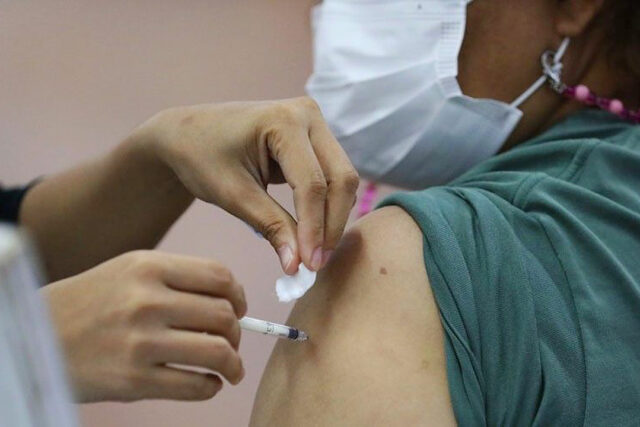
As of June 29, Department of Health data show that only 14.97 million coronavirus disease 2019 (COVID-19) booster shots have been administered while over 70.69 million people already have complete doses.

Mr. Concepcion said authorities should get vaccine makers to apply for certificate of product registration to continue the distribution of COVID-19 vaccines commercially.

“We have to get the vaccine manufacturers to apply for a certificate of product registration. Why is that important? I believe that taking care of our health is not just the role of government. Our Filipino people have to be conscious about that,” he said.

“We have to be practical in what the new health protocols would be. Let’s give that responsibility to our citizens. I hope the President (Ferdinand R. Marcos, Jr.) will (consider),” he added.

In a separate statement, Mr. Concepcion expressed his support for the Marcos administration, saying that he is looking forward to more public-private sector partnership.

“Given the many challenges we are facing today, I agree with the President that the sooner we start, the surer and quicker the prospect of achieving our goals for the future. The private sector is doing what it can to help the government on the health front,” Mr. Concepcion said.

“I think the President understands that the pandemic and the inflation brought by the war in Europe unfairly affected the smallest and the most vulnerable, especially the micro, small, and medium enterprises, and they will need all the help we can give them,” he added. — Revin Mikhael D. Ochave

Groups condemn arrest of youth leaders for hanging anti-Marcos banners

A LABOR coalition on Thursday denounced the arrest of youth leaders who put up banners expressing opposition to President Ferdinand R. Marcos, Jr., who was inaugurated yesterday in the capital Manila.

In a statement, Nagkaisa said members of the Akbayan Youth and SENTRO Youth groups were violently arrested by police officers during a banner hanging activity near the Commission on Human Rights building along Commonwealth Avenue in Quezon City.

“This is unacceptable in a democratic society,” the group said. “We condemn this reprehensible act and it seems this new government is afraid of its own shadow on the eve of its first day of governance.”

Nagkaisa said police officers destroyed the banner and violently dragged three youth leaders to police vehicles.

“Throughout the incident, the officers refused to explain why the arrest was being made and were being very rough with the detained,” it said.

The Akbayan Party-list group announced on its Twitter page that the youth leaders were released from detention on Thursday afternoon.

It noted that the arresting police officers did not file charges against the activists.

“Why would you arrest them for hanging banners on a footbridge?” Renato M. Reyes, Jr., secretary general of progressive group Bagong Alyansang Makabayan, said in a tweet. “Throwback to the Marcosian Martial Law indeed.”

The Philippine National Police (PNP) earlier said protestors are only allowed to hold demonstrations in designated freedom parks such as Liwasang Bonifacio and Plaza Miranda, in Manila.

Mr. Reyes noted in a separate tweet that protestors were requested by police to move their rally venue from Liwasang Bonifacio to Plaza Miranda, to avoid any conflict with Mr. Marcos’ supporters.

“We have been receiving reports that there are groups planning to stage rallies and they have the right to air out their grievances and issues,” PNP Director for Operations Valeriano T. de Leon told CNN Philippines on Thursday.

“But if they will get out of the freedom parks then we can no longer help but provide police response.” — John Victor D. Ordoñez

Local court convicts NDFP spokesperson, 3 others for murder in 1975 shooting

PHILSTAR FILE PHOTO

A REGIONAL trial court in Taguig City has convicted a former peace negotiator and three other members of the communist movement over a shooting incident in 1975, according to the Department of Justice (DoJ).

In a press briefer released on Thursday, the DoJ said the court sentenced the four to life in prison after finding them “guilty beyond reasonable doubt” of killing an individual in Madalag, Aklan.

One of those convicted is Maria C. Araneta-Bocal, a former spokesperson of the National Democratic Front of the Philippines (NDFP), a coalition of progressive organizations.

She was part of the NDFP-Communist Party of the Philippines-New People’s Army panel during peace talks with the government.

The court promulgated the decision on June 21 despite Ms. Bocal not appearing before the court since the government suspended peace talks with communist groups in 2018.

In 2015, she pleaded not guilty to the charge through her legal counsel. Her lawyer filed a motion to withdraw as counsel in April 2022, saying she had no communication with her client in the past three years, adding she did not know where she lived.

BusinessWorld sought Ms. Bocal’s comment through social media pages associated with her though unverified. There was no immediate response. — John Victor D. Ordoñez

Debt-to-GDP ratio projected to peak at 66.8% in 2023

PHILIPPINE STAR/MICHAEL VARCAS

THE debt-to-gross domestic product (GDP) ratio is expected to peak at a “manageable” 66.8% in 2023, but is unlikely to return to pre-pandemic levels in the near term, the Philippine Institute for Development Studies (PIDS) said in a report on Thursday.

At the end of the first quarter, the debt-to-GDP ratio was 63.5%, exceeding the 60% threshold that multilateral lenders consider suitable for developing economies. 

The ratio was 39.6% in 2019, but grew significantly as the government was forced to borrow in order to finance its pandemic spending.

The projection for 2025 is 66.4%.

“The debt increase resulted from a widening fiscal deficit triggered by a steep collapse in government revenue and a rise in public spending to support the country’s public health system and provide relief response to the pandemic,” PIDS said in its report.

It called the debt surge less of a worry in the absence of interest rate shocks, excessive foreign debt, and a steady decline in tax effort.

“There is also a ‘consensus view’ in the government and private sectors that the fiscal deficit will trend downwards, and interest-growth differentials will remain negative as GDP growth normalizes to pre-pandemic levels by 2022,” it said.

Fiscal adjustments for 10-, 20-, 30-year time horizons would entail either raising more revenue or reducing spending, PIDS said.

“For instance, in the 10-year time horizon computation or by 2031, additional annual increases in the primary balance need to range from 1.4 to 3.4% of GDP, assuming that the government has reduced the primary deficit to its pre-pandemic level of 0.81% of GDP.”

To ensure debt sustainability, PIDS said that fiscal policy reforms should be maintained, while policy governing medium- to long-term fiscal consolidation should be carefully considered.

Additionally, the government should continue investing in infrastructure and human capital throughout the recovery from the pandemic. — Diego Gabriel C. Robles

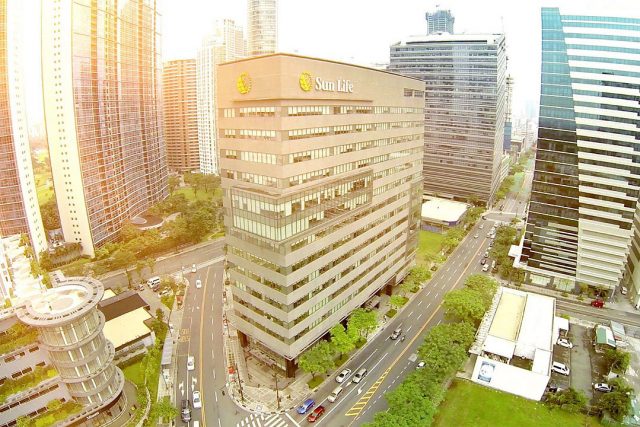
Sun Life unit sees further PHL recovery

THE PHILIPPINES is set to recover over the course of the year even in the face of rising inflation and global supply chain disruptions, with the economy boosted by election spending and the restoration of much business activity as movement restrictions ease, Sun Life Investment Management and Trust Corp. said.

“Fundamentally, the Philippines continues to be strong despite inflation and interest rate headwinds. We’ve been seeing mobility continue to be sustained in spite of certain COVID-19 scares,” the company’s President and Chief Investment Officer Michael Enriquez said in an update of the Sun Life Investment macroeconomic outlook.

The company projects gross domestic product growth of between 6.3% and 10% this year.

“I think the people are starting to become immune, not only from the virus, but (from the fear of) COVID-19, because they really want to get on with their lives and livelihood.”

Increases in the COVID-19 case count have been small, he added, which suggests the reopening of the economy will proceed.

Growth is still expected because demand for key goods in the consumption-driven economy is inelastic, Mr. Enriquez said, meaning that buyers are less likely to be deterred by price increases.

“There has been some confidence already on expansion (and) borrowing by consumers, so definitely, spending is there,” he added, “despite these global headwinds, domestically our economy is okay.”

Mr. Enriquez said that there is also room for investment to grow, particularly on the Philippine Stock Exchange index (PSEi).

“The PSEi is cheap right now… so in terms of risk-reward, there’s a higher upside potential at these levels for the PSEi… compared to downside risk.”

Mr. Enriquez added that “markets generally move higher during Presidential election years.”

The company sees the peso trading at P51-53 or P52-54 by the end of the year and expects the Bangko Sentral ng Pilipinas to tighten policy by up to 75 basis points by the end of 2022. — Diego Gabriel C. Robles

ADVERTISEMENT
ADVERTISEMENT