Home Blog Page 6164

Smart Prepaid empowers subscribers with new Power All 99 offer

Mobile services provider Smart Communications, Inc. (Smart) is giving subscribers both the power to choose how they make the most of their day and the power to enjoy unlimited entertainment as it unveils the new Power All 99 and 149 offers for prepaid subscribers.

With Power All 99, Smart Prepaid enables subscribers to fluidly adapt to a hybrid world – needing online access to school, work, responsibilities, hobbies and everything in between. Because they cannot settle for bite-sized promos that feature only limited access to specific online activities, Smart Prepaid’s solution is to give subscribers the power to do what they want with Power All 99, which comes with 8 GB for all sites and apps, Unli TikTok, and Unli Texts to All Networks valid for 7 days for only Php99.

“Power All 99 comes at a crucial time when many Filipinos have taken their daily activities online and therefore need a value-packed offer that gives them the power to choose and enjoy all their favorite digital activities however they want. This is just one of the many ways we empower subscribers to live more on the back of our superior network,” said Francis E. Flores, SVP and Head of Consumer Business Wireless – Individual at Smart.

Power to choose with data for all sites and apps

Subscribers can use Power All 99 for a wide range of productivity apps at work or school, or for their choice of entertainment on-the-go – whether through streaming videos, listening to music and podcasts, or playing mobile games.

They can also use their huge open access data to browse their favorite websites, share content on social media, make video calls using their favorite apps, and access essential digital services such as e-banking, food delivery, and online shopping.

Power to enjoy unlimited fun with Unli TikTok

Power All 99 also comes with Unli TikTok, so subscribers can enjoy the widely popular app to watch trending videos and uploads by of their favorite content creators – from dance and song covers, food and product reviews, DIY projects, funny pet reels, and mini-vlogs, among other interesting content.

With Unli TikTok, they can access all the fun and enjoyment the app has to offer practically anytime and anywhere – during their commute, mini-breaks, between errands, or their me-time at the end of the day.

Power All 99 also features Unli Text to All Networks so subscribers can stay in touch with their loved ones and friends all the time, no matter their service provider. Subscribers can also enjoy a bigger data allocation of 12 GB of data for all sites, Unli TikTok and Unli Calls to All Networks when they register to Power All 149.

Smart Prepaid subscribers may register to Power All 99 by logging into the GigaLife App or their go-to mobile wallet app, by dialing *123#, or by heading to the nearest retailer or convenience store.

Philippines’ fastest 5G mobile network

Smart offers Power All 99 powered by the country’s fastest 5G mobile network, as certified by Ookla, the global leader in mobile and broadband network intelligence.

Smart also dominated the latest Opensignal Mobile Network Experience Report in 11 out of a possible 16 categories covering the essential aspects of service, including speed, coverage, and experience.

Know more about how Smart Prepaid empowers subscribers with Power All 99 by following Smart’s official accounts on Facebook, Twitter, Instagram, YouTube and TikTok.


Spotlight is BusinessWorld’s sponsored section that allows advertisers to amplify their brand and connect with BusinessWorld’s audience by enabling them to publish their stories directly on the BusinessWorld Web site. For more information, send an email to online@bworldonline.com.

Join us on Viber to get more updates from BusinessWorld: https://bit.ly/3hv6bLA.

Breakthrough at Ukraine grain export talks as heavy shelling continues

REUTERS

ISTANBUL/UNITED NATIONS, New York — Ukraine, the United Nations (UN), and Turkey hailed progress at talks in Istanbul that aim to resume Black Sea grain exports blocked by Russia and ease the risk of starvation faced by millions, but an end to the war remained far off as heavy shelling continued. 

Turkey’s Defense Minister Hulusi Akar said on Wednesday an agreement would be signed next week. Ankara will ensure the safety of shipments in transit and the parties will jointly check grain cargoes in ports, he added. 

But UN chief Antonio Guterres said more work was needed before a deal was finalized. 

“We have seen a critical step forward,” Mr. Guterres told reporters in New York. “We still need a lot of goodwill and commitments by all parties,” he said. 

Ukrainian President Volodymyr Zelenskyy appeared optimistic in late-night comments: “The Ukrainian delegation has reported to me that there is progress. In the coming days we will agree on the details with the UN secretary general.” 

Turkey and Ukraine said a joint coordination center with Russia and the United Nations would be set up. 

“Its task will be to carry out general monitoring and coordination of safe navigation in the Black Sea,” Mr. Zelenskyy’s Chief of Staff Andriy Yermak said on Twitter. 

Russia’s defense ministry did not immediately offer comment. 

Apart from being major global wheat suppliers, Russia is also a large fertilizer exporter and Ukraine a significant producer of corn and sunflower oil. 

A deal is seen as vital for food security, notably among developing nations, and for stabilizing markets. 

But Mr. Guterres warned there was still “a long way to go” before there would be peace talks to end the war. 

Several Ukrainian cities have reported heavy Russian shelling and Ukrainian Foreign Minister Dmytro Kuleba was earlier downbeat on prospects for peace. 

Ukrainian officials said there had been sustained Russian shelling across Donetsk province, which Moscow aims to capture to complete its seizure of the industrialized Donbas region of eastern Ukraine. 

Russian media reported Ukrainian armed forces launched a fresh missile attack in a strategically important Russian-held southern area of Kherson that Kyiv is hoping to retake. 

RIA news agency quoted the Russian-backed administration of Kherson region as saying Russian air defenses shot down five missiles fired at the town of Nova Kakhovka, while the debris of two of the missiles fell near a factory. 

“According to preliminary information, there’s been another hit on a Russian munitions plant, at Sokol,” Serhiy Khlan, an advisor to the Ukrainian head of Kherson province, wrote on Facebook. 

A separate strike on Tuesday in Nova Kakhovka killed 52 people, Ukraine’s military has said. The Moscow-appointed deputy head of Kherson region said that two people were killed, seven were missing and 90 were injured. 

On Wednesday TASS quoted a separatist official, Vitaly Kiselyov, as saying Russian and proxy forces had entered the town of Siversk in Donetsk province and could take it in a couple of days. 

Russia had not conducted any new assaults on the frontline that includes Siversk, but that the town had been fired on by artillery, Ukraine’s armed forces said. 

Reuters could not independently verify the battlefield accounts. 

POSSIBLE BREAKTHROUGH 

Russia’s Feb. 24 invasion of Ukraine caused Europe’s biggest conflict since 1945. Millions have fled and thousands have been killed while cities have been reduced to rubble and fears of a wider conflict in the West have grown. 

The Kremlin says it is engaged in a “special military operation” to demilitarize and “denazify” Ukraine. Both Kyiv and Western nations say that is a pretext for an unprovoked war of aggression. 

Ukraine and the West have accused Russia of exacerbating a global food crisis and fuelling inflation. 

Moscow has blamed Ukraine, saying it refuses to remove mines that it scattered around its coastline to protect itself from Russia’s attack and that threaten shipping. 

The Kremlin also says Western sanctions make it harder for Russia to fund and insure its own maritime freight services. 

Russia’s Interfax news agency quoted Pyotr Ilyichev, head of the international organizations department at Russia’s foreign ministry, as saying Russia wanted to control and inspect grain vessels itself to rule out arms smuggling. 

Before progress was announced, diplomats said that the plan under discussion included Ukrainian vessels guiding grain ships in and out through mined port waters; Russia agreeing to a truce while shipments move; and Turkey — supported by the United Nations — inspecting ships to allay Russian fears of weapons smuggling. 

RIA quoted an unnamed diplomatic source as saying Russia’s demands included the removal of “obstacles to exports” created by sanctions, citing the areas “of shipping insurance, logistics, transportation services and banking operations”. 

A senior UN official, speaking on condition of anonymity, said most of the sticking points in the talks to resume Ukraine Black Sea exports had been overcome, describing the discussions in Istanbul as a “breakthrough.” — Yesim Dikmen and Michelle Nichols/Reuters

Hot inflation fuels bets on supersized Fed rate hike

JCOMP-FREEPIK

The US Federal Reserve is seen ramping up its battle with 40-year high inflation with a supersized 100 basis points rate hike this month after a grim inflation report showed price pressures accelerating.

“Everything is in play,” Atlanta Fed President Raphael Bostic told reporters in Florida, when asked about the possibility.

While he said he still needed to study the “nuts and bolts” of the report, “today’s numbers suggest the trajectory is not moving in a positive way. … How much I need to adapt is really the next question.”

Mr. Bostic has been among the bevy of central bankers in recent weeks signaling support for a second straight 75 basis points rate increase at their upcoming policy meeting July 26–27.

But after Wednesday data from the Labor Department showed rising costs of gas, food and rent drove the consumer price index (CPI) up 9.1% last month from a year earlier, views may be evolving.

Traders of futures tied to the Fed’s policy rate are betting they already have: They are now pricing in a nearly 80% probability of a full percentage-point rise at the coming meeting, according to an analysis of the contracts by CME Group.

That was up from about a one-in-nine chance seen before the report, which also showed core inflation, excluding more volatile food and energy prices, accelerated on a monthly basis.

The expectation that the Fed will get more aggressive to stop inflation is also raising alarm that policymakers will go too far and crater economic growth as well.

Yields on longer-term Treasuries fell, making the so-called yield-curve inversion the most pronounced it has been in more than 20 years.

An inversion is seen as a harbinger of a downturn because it suggests investors are banking on a growth slowdown. Rate futures trading suggests investors anticipate the Fed may need to start cutting interest rates again by the middle of next year.

“The June CPI report was a straight up disaster for the Fed,” wrote SGH Macro Advisors’ Tim Duy. “The deepening yield curve inversion is screaming recession, and the Fed has made clear it prioritizes restoring price stability over all else.”

Other central banks are also feeling the heat with the Bank of Canada on Wednesday raising its benchmark interest rate by 100 basis points in a bid to tame soaring inflation, a surprise move and its biggest in nearly 24 years.

‘RECESSION THREAT IS RISING’

Fed Chair Jerome Powell and other policymakers have become increasingly worried that business and consumer expectations of a torrid rate of future price increases could become entrenched. They have shown they will react swiftly when data worsens.

Ahead of its prior meeting in June, the Fed telegraphed a 50 basis points move before pivoting at the last minute to a three quarter point hike on the back of a worse-than-expected inflation report for May, as well as a downbeat consumer inflation expectations survey the same day.

The persistence of such high inflation and the strength of the central bank’s moves needed to quash it are also once again sharpening fears a recession is on the horizon.

A Fed survey of firms across the country published later on Wednesday showed increased pessimism on the outlook for the economy, with almost half of the central bank’s districts reporting firms seeing an increased risk of a recession, while substantial price increases were reported across all districts with “most contacts expect(ing) pricing pressures to persist at least through the end of the year.”

Fed research published this week based on modeling of bond-market yields puts the chance of a recession next year at about 35% if the Fed sticks to its expected baseline rate-hike path, but at 60% if the Fed removes accommodation faster.

“With supply conditions showing little sign of improvement, the onus is on the Fed to hit the brakes via higher rates to allow demand to better match supply conditions. The recession threat is rising,” said James Knightley, chief international economist at ING.

The Fed began tightening policy only in March, and has already raised its benchmark overnight lending rate by 1.5 percentage points. Financial markets now predict that rate will reach the 3.5% to 3.75% range by year end, higher than Fed policymakers themselves predicted just three weeks ago.

A very tight labor market has so far withstood those swift rate hikes, with unemployment remaining at 3.6%, near a historic low. However, that is seen as a double-edged sword as it also raises concerns that such competition for labor will eventually have to cool to ease inflation.

The US Senate on Wednesday confirmed Michael Barr, a former Treasury official, as the Fed’s vice chair of supervision, filling the last vacant seat on the Fed’s seven-member board. — Lindsay Dunsmuir and Ann Saphir/Reuters

Heatwaves hammer megacities in China’s Yangtze River basin

UNSPLASH

BEIJING — Searing heatwaves swept across China’s vast Yangtze River basin on Wednesday, hammering densely populated megacities from Shanghai on the coast to Chengdu deep in the heartlands. 

More than 90 red alerts, the most severe in a three-rung warning system, were active across China as of 3:30 p.m. (0730 GMT). Most were in the Yangtze basin, which spans nearly 2,000 kilometers. 

Shanghai, China’s commercial capital, issued its second red alert in four days, warning of temperatures exceeding 40 degrees Celsius. Construction and other outdoor activities are reduced or halted under a red alert, historically very rare for the city of 25 million. 

In Nanjing, a nearby city of over 9 million, the summer “has never been hotter,” said one 77-year-old resident. 

The province of Zhejiang south of Shanghai issued a record 51 red alerts in one day, with local media reporting people being admitted to hospitals for heatstroke or even dying from it. 

The hot spell of the past 30 days has been described by Chinese weather watchers as widespread, prolonged and extreme and, due to higher demand for air-conditioning, the load on the power grids of seven provinces and regions has hit a record high, according to state media. 

The hashtag #heatstroke was trending on social media with 2.45 million views on the Weibo platform, with discussions ranging from people being admitted to hospital to the detrimental effects of long-term heat exposure. 

‘LIKE A FOOD STEAMER’ 

In Chengdu, the capital of southwestern Sichuan province, a scheduled outage and upgrade of the grid this week coincided with hot weather, sparking loud protests from some of its 21 million residents on social media. 

“This is a large-scale blackout,” said a netizen on Weibo. 

“Residents can’t be guaranteed their power supply. No one is doing anything about it.” 

In the city of Yanjin, also in China’s southwest, temperatures reached 44 degrees Celsius on Monday, the highest since record-keeping started in 1959, state television reported. 

In the past month, high-temperature events have affected more than 900 million of China’s 1.4 billion people and a total area of 5 million square kilometers, or half of the country, the National Climate Center said on Wednesday. 

In Henan province, maintenance workers cleaned and checked air-conditioners on top of trains that pass through its capital Zhengzhou, a transportation hub in central China, under the piercing rays of the sun. 

“Up here, it is very hot, it is like a food steamer,” Wang told state television,” said one worker, Wang Mian. 

“Our clothes are wet every day. Sometimes they never dry.” — Reuters

Apple hovers above competition even as smartphone market stumbles, sources say 

REUTERS

The global smartphone market may be in the toilet, but the iPhone 13 continues to sell well, and Apple Inc. is expecting its upcoming iPhone 14 to do even better at launch. 

Apple’s slightly higher expectations for the forthcoming iPhone 14 underscore a growing belief among Wall Street analysts that the Cupertino, California company’s sales are likely to hold up better than the broader smartphone industry if major economies enter a recession. 

Apple, which reports its fiscal third quarter earnings on July 28, conveyed its expectations to suppliers in initial forecasts as it carries out trial production of the iPhone 14, sources with direct knowledge of the matter told Reuters. 

With Apple sitting at the higher end of the market, analysts believe that inflation in core items like food and fuel have taken a lesser toll on its relatively affluent user base. That comes as industry watchers such as Fubon Securities Investment Services Co chairman Charles Hsiao believe demand for consumer electronics will slow overall this year and next. 

An economic slowdown in China has already taken a huge bite out of the smartphone market, pulling global sales down 10% year over year to 96 million units in May, the most recent month for which full figures were available, according to Counterpoint Research. It’s only the second time in nearly a decade that the monthly figure has slipped below 100 million handsets, the firm said. 

But two iPhone supply chain sources with direct knowledge of the matter told Reuters that iPhone sales have continued to do well in July despite signs of cooling market demand for other smartphone makers. 

“Others are starting to take a hit,” one of the sources said. 

The second source said July shipments for the iPhone 13 from one factory were a third higher than July last year. That pattern was especially unusual because sales of current iPhone models tend to slow down in July and August as consumers await new models that Apple traditionally releases in September. 

“Judging by shipment, sales of iPhone 13 are fairly good,” the second source said. 

The iPhone has continued to sell well late into its cycle in part because “China demand rebounded sharply after lockdowns ended and the iPhone was a beneficiary” of a June shopping holiday in China, Cowen analyst Krish Sankar wrote in a note to clients. 

In keeping with its annual schedule, Apple has started trial production of the iPhone 13’s successor with the goal of ramping up mass production in August so the devices can start shipping in the fall. The initial shipment forecasts Apple has given suppliers is “slightly higher” than that of iPhone 13 a year ago, the second source said. 

“It’s slightly higher than last year. It’s good, but not explosively good,” the second source said. 

For the just-ended fiscal third quarter, some Wall Street analysts are bracing for a slight decline in iPhone 13 shipments even if volumes are higher at some individual factories. But analysts still expect the iPhone to fare better than rivals. Cowen, for example, expects Apple handset shipments to be down about 1% for the just-ended quarter, while overall handset shipments could be down as much as 13%. 

The divergence between Apple and the Android market is rippling through Apple’s supply chain. 

“For Samsung’s display unit, a better-than-expected performance in Q2 is expected due to shipments for iPhones, which is the only smartphone with strong sales,” said Song Myung-sup, analyst at HI Investment & Securities. 

Cowen held steady its “outperform” rating on shares of chipmaker Skyworks Solutions Inc, noting that it gets about 55% of its revenues from Apple for a radio chip in the iPhone. Skyworks rival Qorvo Inc., by contrast, gets 30% of its revenue from Apple and has greater exposure to the Android phone market. Cowen downgraded Qorvo to “market perform.” 

“Skyworks’ greater relative exposure to Apple in its mobile business likely insulates the company in the near term from significant impacts associated with … downward demand revisions,” Cowen analyst Matt Ramsay wrote in a note to Clients. — Yimou Lee and Stephen Nellis/Reuters

BSP makes surprise 75 bps hike in interest rates

BW FILE PHOTO

MANILA – The Philippine central bank on Thursday raised its benchmark interest rates by 75 basis points in a surprise off-cycle move, and signalled its readiness to take further policy action to contain broadening inflationary pressures, its governor said.

That brings the key overnight borrowing rate to 3.25% effective Thursday, Bangko Sentral ng Pilipinas (BSP) Governor Felipe M. Medalla said in an announcement via Facebook.

The move came ahead of the BSP’s regular policy meeting scheduled for Aug. 18, and follows two back-to-back rate hikes of 25 basis points each in May and June.

“In raising the policy interest rate anew, the Monetary Board recognized that a significant further tightening of monetary policy was warranted by signs of sustained and broadening price pressures amid the ongoing normalization of monetary policy settings,” Mr. Medalla said.

He said the BSP was ready “to take further necessary actions to steer inflation towards a target-consistent path over the medium term in keeping with its price stability mandate”.

Elsewhere in Southeast Asia, Singapore’s central bank tightened its monetary policy on Thursday, also in an off-cycle move, to slow inflation as the city-state joins other countries ramping up efforts to control price pressures.

Philippine inflation surged to the highest level in nearly four years in June, and is widely expected to remain elevated, pushing the full-year average outside the 2%-4% target band. — Reuters

MVP at 76: Success shaped by wisdom, passion, and experience

Manuel "Manny" V. Pangilinan or "MVP" is the man behind the Philippines' biggest and most influential companies.

If experience truly is life’s best and most profound teacher, then Manuel V. Pangilinan, one of the most respected, influential, and powerful men in the Philippine business scene, is a learned man indeed.

Mr. Pangilinan, or more popularly known as MVP, has built his name as the man behind the country’s biggest and most influential companies. His contributions have created household names such as PLDT, Smart, Meralco, and Maynilad. He helms companies in industries ranging from mining to media, from food to healthcare. Even as he turns 76 today, his knowledge and experience continue to grow as he serves at the helm of the First Pacific conglomerate.

His experiences are worth even more, considering that he had had to work his way up to the position he has now. In a graduation ceremony at Manila Tytana Colleges, he recounted his childhood with his parents, with his father working as a bank messenger to make ends meet.

“I grew up in Little Baguio, San Juan. Our house stood right on the boundary of a squatter settlement. From my bedroom window, I could see, smell, and feel the lives of the poor, and see its face,” he had said.

Mr. Pangilinan went on to Ateneo de Manila University (ADMU) to pursue a college degree in Economics, in the hopes that he could go to the United States to try for an MBA. Knowing that his parents could not afford it, however, he gathered what resources he had and eventually landed himself a scholarship through a competition. He achieved a Master of Business Administration (MBA) in the Wharton School of Finance and Commerce as a Procter & Gamble Fellow as a result.

MVP started his career as an executive assistant to the president at Philippine Investment Management Consultants, Inc. (PHINMA) for six years, after which he went overseas with Bancom International Limited, a Philippine investment bank based in Hong Kong.

He claimed that as he was “young enough to make mistakes, to be independent and accountable to myself and my career,” he took the risk to work abroad.

“I knew that if I waited any longer, I’d be too afraid to take risks. I formed First Pacific in 1981 starting from a rented space — 50 square meters, no bigger than your typical classroom — with a team of only six people using modest start-up capital,” he had said.

Now, Mr. Pangilinan serves as First Pacific Co. Ltd.’s managing director and chief executive officer, alongside the following positions within the MVP Group of Companies: president and CEO of Philippine Long Distance Telephone Company and Smart Communications Inc.

He also serves as chairman, vice-chairman, or board director at: Manila Electric Co., Maynilad Water Services Corp., Mediaquest Inc., Associated Broadcasting Corp., Philex Mining Corp., Philex Petroleum Corp., Manila North Tollways Corp., Landco Pacific Corp., Medical Doctors Inc., Colinas Verdes Hospital Managers Corp., Davao Doctors Inc., Riverside Medical Center Inc. in Bacolod, East Manila Hospital Managers Corp., Asian Hospital, Inc., Central Luzon Doctors’ Hospital in Tarlac, De Los Santos Medical Center, Metro Pacific Zamboanga Hospital Corp., and The Megaclinic, Inc.

In 2012, he was appointed as vice-chairman of Roxas Holdings, Inc. which owns and operates the largest sugar milling operations in the Philippines.

He is also the incumbent chairman of the Board of Trustees of San Beda College. Furthermore, he is chairman of the Philippine Disaster Resiliency Foundation, Inc. (PDRF) and the Philippine Business for Social Progress (PBSP) and co-chairperson of the board of trustees of Stratbase Albert del Rosario Institute and the US– Philippine Society.

He co-chairs the US-Philippines Business Society as well. Formerly, he served as chairman of the board of trustees of ADMU and was a member of the board of overseers of the Wharton School.

He serves as an MVP in Philippine sports as well, having been named chairman emeritus of the Samahang Basketbol ng Pilipinas and chairman of the Amateur Boxing Association of the Philippines. He is also currently the chairman of the MVP Sports Foundation, Inc., a privately-funded sports development foundation of the MVP Group of Companies focused on helping its chosen sports, namely badminton, basketball, boxing, cycling, football, golf, taekwondo, rugby, and weightlifting.

In recognition of Mr. Pangilinan’s contributions to the country, the Philippine Air Force awarded him the rank of Lieutenant Colonel (Res) in a promotion list approved by President Duterte in July 2021. In 2006, the Office of the President of the Philippines awarded Mr. Pangilinan the Order of Lakandula with the rank of Komandante. He was named Management Man of the Year 2005 by the Management Association of the Philippines. Mr. Pangilinan was awarded the First Honor

Photo shows “MVP: the man and his Art” commemorative coffee-table book that features Manuel V. Pangilinan’s (MVP) personal and corporate art collections that grace the walls and halls of his home and offices in Meralco, PLDT, and First Pacific. “When one thinks of Manuel V. Pangilinan, the image that comes to mind is that of a businessman, renowned for his work ethic and passion for excellence. But there is another side to the man, one seen by few but reflected in the corridors of his main offices and all over his home. This
is MVP, the art lover, MVP, the collector,” said renowned art writer Cid Reyes who penned the book, which won a Gold Stevie for Meralco from the Stevie International Business Awards last year.

ary Doctorate Degree in Management by Asian Institute of Management in 2016, Honorary Doctorate in Science by Far Eastern University in 2010, in Humanities by Holy Angel University in 2008, by Xavier University in 2007 and by San Beda College in 2002 in the Philippines.

Malasakit exemplified

Not content to rest on his laurels, Mr. Pangilinan and his companies have also been critical in the country’s ongoing efforts to recover from the COVID-19 pandemic. The MVP Group partnered with the Department of Health in a campaign to encourage all sectors to comply with science-backed behavioral changes in preventing the spread of COVID-19. This is alongside MVP Group’s humanitarian initiatives through the Tulong Kapatid alliance of foundations.

In the graduation ceremony, Mr. Pangilinan had said, “Success springs from old-fashioned values — values as fundamental as being honest and truthful — with yourself and with others. And so is being diligent, hard-working and disciplined. But most of all, success is about passion— passion to succeed, passion for excellence, passion to compete.”

In leading some of the country’s biggest companies through what can only be described as the biggest economic and social crisis in recent history, Mr. Pangilinan has outwardly shown the wisdom and compassion that his experience had taught him through the years, the same kind of values he wishes to instill in his employees.

In a statement to PLDT last year, he said, “We confidently face the future – resolute to do our duty well, resolute to uphold our values by deed and by word, resolute to attain our highest goals, in keeping families connected, entertained, and educated; enabling businesses to operate at home or in the office – and simply being a source of strength amidst extraordinary adversity and affliction, and above all, resolute in preserving the ground we have retaken; never again shall we yield.” — Bjorn Biel M. Beltran

Valuable drivers of Philippines’ connectivity

PLDT-Smart Foundation (PSF), PLDT and Smart, FiberHome Technologies, and the Department of Education (DepEd) recently turned over three School-in-a-Bag (SIAB) packages to Batangas City schools to help make sure that there will be #NoLearnerLeftBehind. Each package includes a laptop, a Smart Bro LTE Pocket WiFi, and tablets pre-loaded with #LearnSmart applications and content, for the learning needs of students of Conde Labac Elementary School, Conde Labac Integrated School, and Dumuclay Elementary School.

The past two years saw a heightened need for reliable and steady connectivity, whether one is at home or outside, especially as digital is further embedded into consumers’ lifestyles. The call for telecommunications companies to attend to that demand was even raised by the previous President in his State of the Nation Address in 2020.

Among those providers that have recognized and responded to such increased demand is the PLDT Group, chaired by Manuel V. Pangilinan (MVP).

In his message in PLDT’s most recent annual report, Mr. Pangilinan noted that the group is thriving on new historic highs in spite of the “hyper-competition” in telco and financial technology (fintech), as well as the onslaught of Super Typhoon Odette before 2021 ended.

“Amid the calamity and continuing pandemic, we transformed and performed. Addressing the sustained and shifting demands for connectivity, we scaled new all-time highs on revenues and EBITDA (earnings before interest, taxes, depreciation, and amortization),” the chairman wrote. “We expanded our fixed and mobile networks nationwide, powering more hybrid workspaces and online learning, enabling more businesses to thrive.”

The PLDT Home unit, to begin with, was seen with notable growth, enabled by a fast-tracked nationwide fiber rollout, which led to an increased pace of installations. Exceeding original targets, PLDT’s total fixed broadband customers reached a record-high of nearly three million, a growth of 30% year-on-year (y-o-y). Total fiber capacity of PLDT Home now stands at 5.77 million ports following the completion of 1.7 million fiber ports last year.

From previously P29.3 billion, PLDT Home’s revenues grew 24% to P47.8 billion, which is another record for the particular business. Fiber revenues grew 82% y-o-y to P33 billion, while broadband revenues grew 29%.

Likewise, the Enterprise business of PLDT has performed well in helping businesses and organizations “build back better” in the new normal. In 2021, the corporate business unit earned P42.2 billion, up by 4% from 2020, with fourth-quarter (Q4) earnings surpassing P11 billion for the first time.

Alfredo S. Panlilio, president and chief executive officer of both PLDT and Smart Communications, Inc. (Smart), noted that within data/broadband revenues, information and communications technology (ICT) and corporate data increased by 14% and 6% y-o-y, respectively.

“Wireless Enterprise revenues increased significantly beyond mere connectivity, rising on the back of wireless solutions availed of by enterprise clients,” he added in his message in the group’s annual report.

Furthermore, Mr. Panlilio stressed, the enterprise business seeks to outperform last year’s feats as PLDT’s ICT arm ePLDT, Inc. invests in building its digital transformation domain expertise through the construction of what is seen to be the largest data center campus in the country.

“The soon-to-rise LEED certified, Tier-3 Certified, and Tier-4 Ready hyperscale facility in PLDT’s five-hectare property in the booming industrial city of Sta. Rosa, Laguna will be the most robust facility in our suite of 11 data centers,” the president and CEO explained. “A facility of this caliber only ensures the best possible customer experience not only for our hyperscaler clients, but also for the Filipino end-users consuming their services.”

BW File Photo

Smart, PLDT’s wireless arm, also saw sustained performance in 2021, with full-year revenues of P86.2 billion, 80% of which were contributed by data and broadband. Also, Smart’s 42.6 million active data users posted double-digit growth of 11% y-o-y.

“Strategic brand building campaigns and product innovations, funneled mainly to more than 10 million users of Smart’s GigaLife mobile app, increased brand relevance and enabled stronger customer digital adoption,” Mr. Panlilio added.

Moreover, fifth-generation (5G) technology is seen to be driving the individual wireless business in the years ahead, with data traffic on Smart’s 5G network seen to have grown in Q4 2021 by 72% quarter-on-quarter and over 33 times more y-o-y.

“This growth was driven by aggressive 5G handset and usage offers of Smart Signature, the launch of Smart Bro’s 5G Rocket Wifi, and the Unli 5G offers via the prepaid brands,” Mr. Panlilio wrote, adding that investments in 5G will be maximized moving forward.

PLDT Group’s delivery of connectivity has been recognized by international user-based studies. Smart won Ookla’s Speedtest Awards for Q3-Q4 2021 with a Speed Score of 201.95, while PLDT is regarded the “fastest broadband” in the country  during the same period with a Speed Score of 77.24.

Also, in Opensignal’s first 5G Experience Report for the Philippines, Smart wins outright in five out of seven categories: 5G Availability, 5G Download Speed, 5G Upload Speed, 5G Video Experience, and 5G Games Experience.

Not only is PLDT Group progressing in connectivity, but it has also been an active participant in the fintech space by maximizing the synergies between PLDT, Smart, and PayMaya, the group’s financial technology affiliate, which has recently rebranded as Maya — around six months after Voyager Innovations, Inc. (Maya’s operator) secured a digital bank license.

“With PLDT and Smart’s unrivaled network and PayMaya’s unique end-to-end financial services ecosystem, we are making the everyday lives of Filipinos better through technology,” Mr. Pangilinan wrote.

“Powered by our robust integrated network, PayMaya’s end-to-end financial services ecosystem is expected to make digital payments and e-commerce more accessible to PLDT and Smart customers, aligned with our group-wide commitment to bring world-class services to more Filipinos,” Mr. Panlilio noted.

PLDT’s annual report highlighted that PayMaya garnered 44 million registered customers and half-a-million points of acceptance nationwide as of end-2021. Part of these touchpoints is Smart Padala centers, with over 63,000 agent network touchpoints that largely cater to grassroots communities.

Outside the PLDT Group, Radius Technologies, Inc., a wholly-owned subsidiary by the MVP-chaired MERALCO, has leveraged fiber technology to make enterprises, businesses, and homes more connected.

Under an agreement inked in 2020, the company partnered with pay TV service provider Cignal TV to roll out RED Fiber, a bundle of fiber internet and pay TV services.

Radius also launched its Optical Transport Network Suite in April last year. According to a statement from Radius, this suite “leverages a next-generation, industry-leading network protocol that provides an efficient and a globally accepted way to multiplex different services onto optical light paths, offering up to 200 Gbps (gigabits per second) of network capacity to customers.” — Adrian Paul B. Conoza

Accessible quality healthcare services for Filipinos

The Metro Pacific Hospital Holdings, Inc. hospitals responded right away to the public health emergency during the first months of the pandemic as the number of COVID-19 cases rapidly rose. — mpic.com.ph

Healthcare industry players’ contribution to the country is crystal clear, being at the frontline in the battle against the COVID-19 pandemic or generally being the sector that aids the people in taking care of their health, which should always be a number one priority.

The Metro Pacific Investments Corp.’s (MPIC) hospital unit Metro Pacific Hospital Holdings, Inc. (MPHHI) and tech-based healthcare platform mWell PH are among those industry players contributing to maintaining and strengthening the country’s healthcare.

MPHHI is the largest private hospital group in the country, hence performing a significant part in looking after the well-being of Filipinos. And this is especially evident amid the pandemic.

The MPHHI hospitals responded right away to the public health emergency during the first months of the pandemic as the number of COVID-19 cases rapidly rose. They step up their dedicated COVID-19 bed capacities to treat the patients, reaching 850 total allocated beds within the network by the third quarter of 2020. That year, they were also able to do COVID-19 tests on 170,000 individuals.

By 2021, the number of Filipinos served by MPHHI hospitals has grown. They have conducted 640,000 COVID-19 tests, which was 276% more than the tests they did in the year prior. And of its 3,803 total hospital bed capacity, there are around 964 dedicated beds to COVID-19 patients.

Metro Pacific hospitals have provided quality healthcare services to around 3.1 million out-patients and 95,000 in-patients in 2021.

As they cared for Filipinos’ health, MPHHI also looked after their employees, from the doctors to the direct and outsourced employees, by creating working conditions that ensure their overall health, safety, and well-being. According to MPIC’s integrated report for 2021, 100% of MPHHI’s healthcare workers have been fully vaccinated against COVID-19 by the end of last year.

“MPHHI’s mission of bringing quality healthcare to Filipinos has been reinforced during the pandemic. Its critical role in the health frontline during this difficult time, providing essential medical care to patients with COVID-19 and otherwise, moved the company to fortify every aspect of its hospital operations, from upgrading facilities to protecting its doctors and personnel,” MPIC said in the report.

MPHHI has grown to 19 level 2 and 3 hospitals across the country since its first investment in Makati Medical Center in 2007. Among the hospitals in its portfolio are Cardinal Santos Medical Center, Asian Hospital and Medical Center, Manila Doctors Hospital, Our Lady of Lourdes Hospital, and Davao Doctors Hospital. MPHHI hospitals are also supported by two allied health colleges, a central clinical laboratory, and an expanding network of primary care clinics and cancer care centers.

“MPHHI aims to continue expanding its network, and in turn, increase its contribution to improving healthcare accessibility to more Filipinos,” MPIC said.

Innovating healthcare

Filipinos’ access to healthcare became more challenging due to the safety concerns and implemented restrictions, especially at the height of COVID-19 lockdowns. To cope with such a situation, the healthcare sector innovated and adopted telemedicine. 

To continue providing medical services to patients while maintaining a safe hospital foot traffic amid the pandemic, MPHHI began looking into a ‘new normal’ solution three months into the pandemic, such as virtual consultation, mobile laboratories, remote patient monitoring, e-pharmacy, and continuity of care beyond the hospital room.


In July last year, MPIC officially launched the first fully-integrated one-stop health and lifestyle app in the country with mWell, which was developed to attend to Filipinos’ demand for care and treatment amid the pandemic, given the more challenging connection of patients with doctors and medical professionals.

“Even before the pandemic, Filipinos needed better access to healthcare. Many challenges and limitations hinder medical care and treatment, more so during this COVID-19 crisis. We are truly excited with mWell, the MPIC group’s investment in digital healthcare,” said MPIC Chairman and President Manuel V. Pangilinan.

mWell comprises services that allow everyone to virtually consult with a doctor as well as manage and improve their wellness.

Users can find various primary care and specialized doctors available on mWell, where they can book an online consultation, request an e-medical certificate, and get an e-prescription. 

For those wanting to improve their well-being, mWell also includes programs that empower them to meet their health and fitness goals.

With mWell’s free daily health tracker mWellness SCORE, one can measure their daily amount of exercise, sedentary behavior, sleep, and more through data-driven methods. It also provides fitness programs for those wanting to lose weight, shape up, or for better overall health, as well as healthy and tasty calorie-controlled recipes that nutritionists created.

When needing medicines, users are also enabled by mWell to access e-pharmacy service, with South Star Drug as its first e-pharmacy partner. They can also find healthcare plans through the platform.

“Filipinos will now have better access to healthcare with mWell. mWell makes available online healthcare solutions through a wide and sustainable network of medical experts and services,” Mr. Pangilinan said during the mWell virtual press launch. “With just a few taps, users can do a virtual checkup with doctors, select health and wellness programs, buy medicines, and do a lot more as we strengthen the mWell integrated digital healthcare ecosystem.” — Chelsey Keith P. Ignacio

Championing sports and lives the MVP way

Southeast Asian Games gold medalist and Olympic weightlifting silver medalist Hidilyn Diaz made a courtesy call to PLDT-Smart Chairman and CEO Manuel V. Pangilinan in January 2020 ahead of the 2020 Tokyo Olympic qualifiers. Ms. Diaz, now the country’s first Olympic gold medalist, was a beneficiary of the MVP Sports Foundation, an organization under the MVP Group of Companies that supports Filipino athletes as they train to bring honor to the Philippines in their respective sporting events. In photo (L-R) are PLDT Chief Revenue Officer and Smart President & CEO Al S. Panlilio; PLDT Chairman and CEO Manuel V. Pangilinan; Hidilyn Diaz; Samahang Weightlifting ng Pilipinas President Monico Puentevella; and MVP Sports Foundation Executive Director Ryan Gregorio. — mvpsf.ph

A born leader who worked his way up the ranks is now among the country’s top businessmen. Beyond his business ventures, Manuel V. Pangilinan or MVP is a strong supporter of Philippine athletes through championing sporting programs. He truly lives up to his name and has initials that emphasize his value and impact in the country’s sports scene.

Having been raised by parents who are both sports enthusiasts, Mr. Pangilinan grew fond of basketball, baseball, tennis and badminton. Today, aside from handling numerous roles across some of the Philippines’ leading companies, he is a sports advocate who actively spearheads countless sports organizations and associations in service for the Filipino people.

For two consecutive terms (from 2007-2016), Mr. Pangilinan served as the first president of the Samahang Basketbol ng Pilipinas (SBP), the national sports association for basketball in the country.

Under his watch as the president of the national sports association for basketball, Mr. Pangilinan took the right to host the 2013 FIBA Asia Championships, an international championship for basketball organized by FIBA Asia that served as the qualifying tournament for the 2014 FIBA Basketball World Cup in Spain.

Succeeded by current SBP President Alfredo S. Panlilio, who also served as team governor for the Meralco Bolts at the Philippine Basketball Association (PBA), Mr. Pangilinan became the SBP chairman emeritus at present.

In ramping up their preparations for the country’s co-hosting of the FIBA Basketball World Cup (FBWC) 2023, for Mr. Pangilinan, who also serves as a FIBA Central Board Member, it is vital to keep an eye on the objective, which is to prove that the Filipinos can host a world-class event and even go beyond the expectations and standards of the international audience despite the long pause that occurred as the last time the country hosted the said competition was in 1978.

Being a sports patron, he is extremely happy that FIBA has decided to award the hosting right for the FBWC 2023 to Philippines, Japan, and Indonesia — the first time in the competition’s history that the FIBA Basketball World Cup will be staged in more than one country.

In the field of basketball, it’s no secret that Mr. Pangilinan is a fan and a well-known benefactor of the country’s national basketball team Gilas Pilipinas, as well as collegiate teams from San Beda, Ateneo de Manila University, and University of the Philippines.

Aside from basketball, his support extends to other sports disciplines through serving as chairman of the Amateur Boxing Association of the Philippines (ABAP), the country’s governing body for amateur boxing and establishing the MVP Sports Foundation, Inc. (MVPSF), a privately-funded sports development foundation of the MVP Group of Companies focused on helping Filipino athletes of badminton, basketball, boxing, cycling, football, golf, taekwondo, rugby, and weightlifting.

MVP engrossed in everything sports. Under his leadership, PLDT and Smart Communications, Inc. deployed their fixed and wireless networks to provide critically needed connectivity for the 30th Southeast Asian Games in New Clark City on 2019. His companies’ products, services, and programs on almost all fronts provide physical, psychological, financial, and emotional support to sports heroes and sports fans in every way.
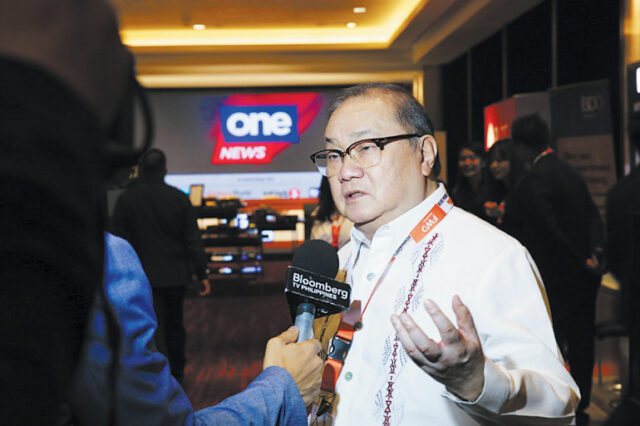


With that, during the 4th Philippine Sports Tourism Awards, Mr. Pangilinan was recognized as the private sector’s Sports Tourism Personality of the Year for 2019.

He has reiterated that his thrust is to make the Filipino athlete relevant internationally and that the only way to improve is to compete against those better than the local gene pool, thus he kept on putting athletes in tournaments all over the world.

As a dedicated sportsman, he has been helping the government churn out champions since 2011. His sports foundation, MVPSF, is geared towards the advancement of the developmental, junior and elite Filipino athletes, national teams and sports agencies like Philippine Sports Commission, the Philippine Olympic Committee and the National Sports Associations (NSAs).

As emphasized by the foundation’s First Vice President and Sports Head, Jude Michael H. Turcuato, MVPSF has been supporting Hidilyn Diaz way before she won the country’s first-ever Olympic gold medal and even later than when she bagged the silver medal at the 2016 Games in Rio De Janeiro.

“We have always believed in the importance of sports in shaping individuals and communities for the better. With this, we want to congratulate Hidilyn in her recent success, and wish her all the best in her upcoming events. She is an inspiration to us all,” said Mr. Pangilinan during a courtesy call of Ms. Diaz ahead of the 2020 Tokyo Olympics qualifiers.

Aside from Ms. Diaz, the foundation also boosted boxers Carlo Paalam, Eumir Marcial, Irish Magno, and Nesthy Petacio; golfers Juvic Pagunsan, Bianca Pagdanganan, and Yuka Saso; the gymnast Carlos Yulo; the rower Cris Nievarez; and, the skateboarder Margielyn Didal.

In response to COVID-19, last January, the MVPSF donated booster shots to SEA Games-bound Philippine team to Vietnam. The booster shots are also intended for the 19th Hangzhou Asian Games set on Sept. 10 to 25.

Currently, following the successful performance of the Philippine team in this year’s SEA Games in Vietnam, PLDT, Smart, and MVP Sports Foundation pledged their support on the move of the Philippine Olympic Committee to establish an incentive trust fund for national athletes who successfully win medals in the Olympics, Southeast Asian Games, and Asian Games.

While the national allocated budget for the sports sector remains small compared to other countries’, MVP, through his sports advocacies, remains at the forefront of providing the necessary support for the majority of the Filipino athletes who, like him, share the same passion for winning and improvement both in sports and in life. — Allyana A. Almonte

Active players in disrupted Philippine media

Filipino businessman Manuel V. Pangilinan has made a mark in the Philippine business community as a chair in numerous household names in telecommunications, electricity, and infrastructure, to name a few. Nonetheless, his leadership also reaches the country’s media landscape through the conglomerate MediaQuest Holdings, Inc. (MediaQuest), home to some of the biggest names in television, print, and digital media.

From acquiring several media companies since its establishment in the 1990s by PLDT through its Beneficial Trust Fund, MediaQuest is seeing its investments come to fruition as the brands it carries are being widely recognized by the general public and also particular demographics.

After a decade of becoming the notable ‘third player’ in what used to be a ‘two-network town,’ TV5 Network Inc. (TV5) has become a more competitive player in the industry, actively stepping up in response to significant disruptions in Philippine media — particularly the shutdown of broadcasting giant ABS-CBN on terrestrial TV — that took place in the midst of the coronavirus pandemic.

Earlier in 2020, TV5 partnered with its sister company, pay TV provider Cignal TV, Inc. (Cignal), with the latter serving as the channel’s main content provider to handle the network’s programming. Following this partnership, the network embarked on collaborations with many production companies such as APT Entertainment, Brightlight Productions, Viva Entertainment, The IdeaFirst, and Cornerstone.

TV5 and Cignal also partnered with ABS-CBN Entertainment to carry the content from the latter, which include several dramas like the long-running FPJ’s Ang Probinsyano, as well as the Sunday noontime variety show ASAP Natin ‘To and, soon, the popular noontime program It’s Showtime.

This boost in TV5’s programming has opened doors for new viewers, which eventually lead to nationwide viewership growth. Nielsen ratings indicated that as of July last year TV5 has registered an 89% growth in total viewership and is now the country’s second most highly rated channel. The network’s weekday primetime block grew from a 5.3 audience share in January 2021 to 12.9 as of end-June 2021, while its weekend primetime improved from a 4.2 audience share to 6.9.

Having expanded its services from direct-to-home satellite to content production, Cignal has likewise seen growth, with Mr. Pangilinan noting in a televised interview that Cignal is on track to hit P1 billion profit in 2021, driven by a “magnificent” performance in the first half of that year, having earned P510 million, up 608.3% from P72 million in the same period in 2020.

“Their EBITDA (earnings before interest, tax, depreciation, and amortization) was close to P2 billion,” Mr. Pangilinan was quoted as saying in a BusinessWorld report. “I think that puts Cignal in a position to help TV5 [grow] without much help from PLDT.”

As a content producer, Cignal is behind channels such as English-language news channel One News, which binds the forces of media outfits The Philippine STAR, BusinessWorld, and News5; Filipino-language channel One PH, bringing together the forces of Pilipino Star Ngayon, The Freeman, radio station Radyo 5 92.3 News FM (owned by MediaQuest asset Nation Broadcasting Corp.), and also News5; sports channels One Sports and One Sports+; and entertainment channels Sari-Sari Channel (in partnership with Viva Entertainment) and BuKo (in partnership with APT Entertainment).

Aside from carrying well-known local basketball and volleyball games, Cignal also served as the official broadcaster for the 2020 Tokyo Olympics, which pushed through last year; 2022 Beijing Winter Olympics last February; and Hanoi 2021 Southeast Asian Games, which pushed through last May.

The company also partnered with the University Athletic Association of the Philippines (UAAP) to carry live collegiate games, as well as additional programming and classic games via the UAAP Varsity Channel — the first of its kind in the country.

MediaQuest, through its unit Hastings Holdings, Inc., is also a big player in the print and digital media through the PhilSTAR Media Group (PMG), which holds some of the country’s leading newspapers such as broadsheet The Philippine Star, the country’s first business daily BusinessWorld, Filipino tabloids Pilipino Star Ngayon and Pang-Masa, Cebu-based English-language paper The Freeman, and Cebuano-language tabloid Banat News.

In the digital space, five of PMG’s six titles have a solid online presence through Philstar.com, owned and operated by Philstar Global Corp. Beyond being an online edition of The STAR, Philstar.com has grown into one of the country’s biggest digital news outlets with its own editorial team and content. Philstar Global Corp. also operates Interaksyon.com, which has evolved from TV5’s news website to a platform publishing features and analyses on social issues and current events from the perspective of social media.

The Philippine STAR’s digital presence has been further enhanced with PhilSTAR L!fe, which expands the paper’s lifestyle content from the physical pages to an online platform brimming with “everything you love, want, need and more,” as the website states, and built on “a connection based on trust and discovery.”

More recently, the PMG intends to make a bigger impact that transcends its regular content and pages as it launched a year-long advocacy titled “Nakakalocal: Love Local, Grow Global.”

Bringing the spotlight on the country’s small and medium enterprises and proudly-made Filipino products, this initiative will set online features, fun bazaars, enriching talks, e-convention, and business pitching and mentoring events in the coming months.

A highlight of this initiative is the search for “STAR36 SMES” which the media group will help in promoting their businesses. Registered businesses with products that present a unique value, have a strong and patriotic vision, support sustainability, and are ethical and socially responsible, are sought for the “STAR36 SMES.” — Adrian Paul B. Conoza

Providing the essentials of the Filipino life

Whether one knows it or not, the MVP Group of Companies is embedded deep into the Manila life. Particularly in Manila, from the water people use to the energy they consume every day, the company has been ceaselessly providing essential services and much needed amenities to the Filipino public.

The Manila Electric Company, also known as Meralco, serves more than 7.5 million people across its over 9,685 square kilometers of franchise area — merely 3% of the total land area of the Philippines, but accounts for 55% of the country’s electricity output. This makes the company the largest private sector electric distribution utility company in the Philippines covering 36 cities and 75 municipalities. Meralco celebrates 119 years of service in 2022, committed to providing reliable and affordable energy.

Meanwhile, Maynilad Water Services, Inc. (Maynilad) is the water and wastewater services provider for the 17 cities and municipalities that comprise the West Zone of the Greater Metro Manila area. It is the private concessionaire of the Metropolitan Waterworks and Sewerage System (MWSS) for the West Zone service area. The company is managed by Maynilad Water Holdings Company, Inc. — a joint venture between Metro Pacific Investments Corp. (MPIC), DMCI Holdings, Inc. (DMCI) and Marubeni Corp.

While PXP Energy Corp. is not as popularly known as Meralco and Maynilad, it is no less important. An upstream oil and gas company incorporated in December 2007 as a wholly-owned subsidiary of Philex Mining Corp., PXP Energy is mainly involved in the exploration and maturation of local and international hydrocarbon resources. It has interests in various petroleum Service Contracts (SCs) in the Philippines and a petroleum block in Peru held directly and through its major subsidiaries, Forum Energy Limited and Pitkin Petroleum Limited.

With such a large reach and influence on Filipino life, it is only meet that such companies realize the weight of responsibility that they shoulder. PXP Energy, for instance, has acknowledged the changing demands of the public towards oil and gas companies.

In its latest annual sustainability report, the company said, “As part of the oil and gas industry, PXP recognizes the challenges and opportunities facing its business and the importance of operating responsibly. The Company is committed to the health and safety of its employees, contractors, and the local community, as well as the preservation of the environment where it has petroleum operations.”

“Social, environmental, and economic sustainability are core principles of PXP’s business culture and growth strategy. To ensure these principles are embedded in the business, PXP developed a management framework and governance system that both promotes sustainability and provides clear guidelines for decision-making throughout the company.”

Part of this growth strategy includes improving operations to strengthen the company’s focus on employee safety, providing them with sufficient healthcare, and giving back to the communities they operate in without endangering the environment.

Maynilad, for its part, acknowledged the immense impact water facilities had on public health and sanitation, and donated clean water to many communities throughout the COVID-19 pandemic.

Maynilad strengthened its hand washing campaign by donating hand wash stations and soaps to several local government units (LGUs) and public schools. The water company also set up a number of hand-wash stations, complete with 1,170 one-liter liquid hand soaps.

Amid the pandemic, Maynilad supported urban poor communities as well through sustaining its livelihood programs such as its pro-poor water service delivery program, Samahang Tubig. Hydration support was also provided to frontliners in the Philippine Navy, Philippine National Police, Metro Manila Development Authority, National Capital Region Police Office, Research Institute for Tropical Medicine, Philippine General Hospital, several local government units, and several other medical centers and clinics.

Meralco also actively participated in helping the country fight against COVID-19 through partnerships with the government and other private institutions. These include energizing more than 90 essential facilities, which include the 525-bed Solaire-PAGCOR Mega Quarantine Center at Bagong Nayong Pilipino in Paranaque City; the 300-bed Mega Quarantine Center at the Philippine Arena Complex in Bocaue, Bulacan; and the 112-bed temporary COVID-19 Health Facility at Ninoy Aquino Stadium in Manila.

Meralco also installed additional facilities to energize mortuary freezers of East Avenue Medical Center, Loyola Memorial Chapels & Crematorium and Arlington Memorial Chapels, both in Quezon City. The firm also energized the government’s partner in manufacturing ventilators for COVID-19 patients, Kinpo Electronics Philippines Inc., in Sto. Tomas, Batangas.

More recently, through One Meralco Foundation (OMF), the company’s corporate social responsibility arm, it implemented its core electrification programs energizing the homes of 7,509 low-income families in the Meralco franchise area and providing solar power access to 16 off-grid public schools and two community livelihood programs.

“There is no direct translation for the word ‘malasakit’. To define it, only actual examples suffice. The ubiquity of community pantries during the pandemic is one good example of what Filipinos mean by ‘malasakit’. It is this same value of malasakit that drives One Meralco Foundation to ‘spread the light’, especially to marginalized communities in the Meralco franchise area and beyond,” Chairman Manuel V. Pangilinan, Vice-Chairman Ray C. Espinosa, and President Jeffrey O. Tarayao said in OMF’s latest annual report.

“With malasakit as our driving force, the unwavering commitment of our trustees, management and staff, and the support of our donors and partners, we remain committed to assisting vulnerable sectors of society, and to innovating constantly so that our interventions remain relevant and helpful to the communities that we serve.” — Bjorn Biel M. Beltran

ADVERTISEMENT
ADVERTISEMENT